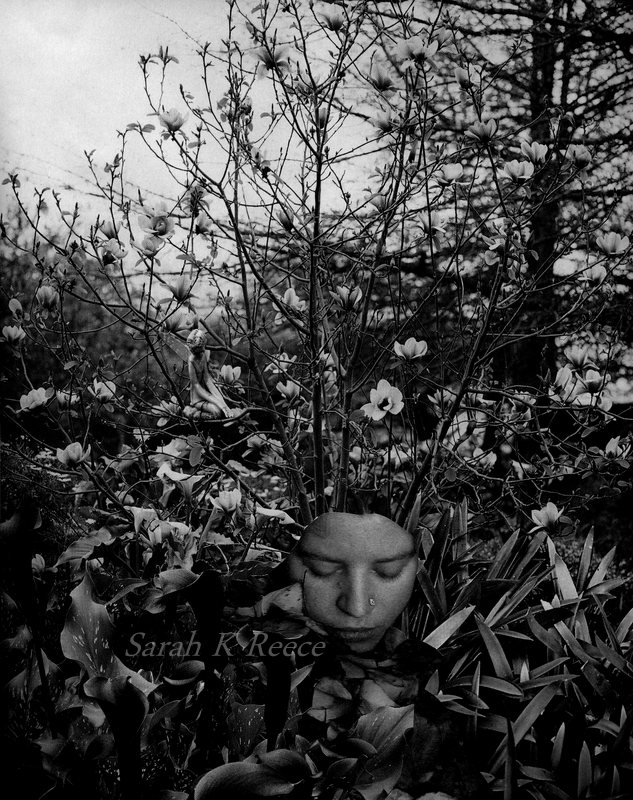
Transformational Breakdown

Hi everyone, I have so many half written posts in drafts at the moment it’s ridiculous. 🙄 Life has been weird lately. My psychologist called it ‘a transformational breakdown’. Haha. That means it feels like we’re having a breakdown, giving birth, and blooming at all the same time.

One night this week we got very cranky while making dinner, drank a bottle of cider, switched to kids who felt stupidly ill because of the alcohol (multiplicity can be dumb that way) then found the couch, a blanket, and Star Trek Next Gen. There’s been a great deal of being very grown up lately and frankly it’s not all that good for us. One of the funky things about our system is that we can kind of shift into whoever is most needed. So if or family need someone unafraid to take a spider out of the house without making fun of them, we can be that. And if someone needs a whole lotta nurturing we’re pretty good at that too. Or research, or arty days in the backyard, or being firm about boundaries or whatever. There’s some things none of us are good at (coughadmincough) but we can adapt and respond to what’s needed of us, at least in personal relationships.

The secret to making this work is kinda the same as the secret to making parenting work for anyone – looking for that Venn diagram overlap area of where your needs and the needs of the kids overlap. If you just meet their needs all the time you burn out. If you just meet your own you’ve got a kid in a 10 hr old nappy. But there’s a kind of dance to figuring out if we all go to the library on Tuesday that will give the eldest time to get books for her homework, we can borrow a new Charli and Lola for the little one and I can pick up the book of knitting patterns and start Grandma’s present, the kids need to get out of the house but I’m really tired so I’ll take them to the playground next to my friends that’s fully fenced so I don’t need to chase them and see if she wants to catch up for coffee…

Of course it can’t all be overlap. Sometimes you do things simply because they need to be done, like dental appointments. Sometimes it is about one person’s needs – there’s no other reason you’d go to a dance by 6 years olds or listen to someone learning to play the recorder. 🙂 There also comes a point where we just need to do our own thing. We lived alone by choice for ages because being hooked into roles and having switches triggered by people around us was tiring and overwhelming. When you’re busy turning into what you think people around you need (or will like, or love) it’s hard to have a sense of self identity, to know who you are or what your own needs are. That’s true of everyone, although perhaps in our case a little more blunt. Sometimes you need to have nobody need you and to just see who turns up. Systems are self balancing, to the best of their ability, they switch out who they think needs to be out. My family are never going to need my poet but we need them out because they take care of our soul and renew our spirit.

We can’t live life with one part forwards all the time without losing out on so much of the world. No one can look at the world through one pair of eyes, one archetype, forever, without missing so much. And while it’s a gift to be able to tune in to what someone else needs and turn into it for them, it’s also a kind of cage if not attended to with some care. Sometimes you need to annoy or even embarrass each other, to be weird, different, inconvenient, and entirely moved upon your own tides. Blue lipstick days. I’m here for you but I’m not here for you, owned by you, of you, made to fit your empty spaces. I’m stranger by far than your dream of a perfect partner, parent, friend, guru.

I don’t buy the dichotomy we’re presented with – that I can be the best ever carer or I can care for myself. To choose between tuning in to another’s needs or my own. We do not recover well when our carers are in crisis and suffering. We are bound in their cages and suffer with them. If I wish to be deeply attuned, my own heart calls too. My life calls too. It’s not one or the other. It’s to listen or to not listen.

“Nothing has a stronger influence psychologically on their environment and especially on their children than the unlived life of the parent.” Jung

So, I am home, finishing EOFY business admin, having meltdowns, having awful fights with Rose because we’re stressed and broke, feeling trapped in the domestic role I never wanted. Hanging washing and more washing and having strange panics about the cleanliness of the house as if attention to the kitchen counters has become a metaphor for how loved I feel, whether my needs are also attended to. I read blogs about autism and books about giftedness and articles about eating disorders and synthesise it all into a treatment program that is working brilliantly, and at night I lie awake hating myself for not being at work.

There’s hope for us. Today we took a break from the hideous interminable admin to chat with a friendly editor and mentor about our multiplicity book and imposter syndrome and how a blog feels generally manageable but a book is something more formal, official, tangible and we can’t quite transition, can’t quite stop researching and let it be a thing, incomplete and unresolved but good enough as it is. She laughed and we laughed and there was more common ground than difference. She reminded me a little of my late friend Leanne, who was also an editor and would have loved this project, if I’d been brave enough to tell her we were multiple while she was still alive.

We are doing well. I am hysterically exhausted. Star is thriving, Rose has been terribly ill with migraine and ear infection but is finally recovering, Poppy is currently unwell with a chest infection and I’m getting very little sleep.

I have withdrawn from work but I’m also hard at work on a new business model and I think I’ve finally cracked something I can actually do for the next 6 months while I’m also on call and caring so much… which is profoundly exciting.

And I’m still working on a new exhibition for later this year. Holding onto bits of my own stuff and upskilling rapidly in how to run a household with multiple disabilities and challenges in a way that everyone gets what they need – including me. We are still here, still together, holding on. Still kind, still in love, still hanging in there, still believing in better days.

I have no idea what’s going to emerge, but I hope the damn ‘breakdown’ part eases up soon.

Sometimes vulnerability is the way back

I’ve had a difficult couple of weeks. Stepping away from work has plunged me into terrible depression. Carer burnout kicks in fast, in the form of long mornings frozen in bed, unable to start my day, long crying jags, flashing irritation, suppressed resentment, and profound self loathing. Fear, frustration, and hopeless despair struggle for the upper hand. I’m caught by the chilling awareness of my own broken places, the insanity of my phantom terrors. Just as surely as I know the things I fear are not real, I am seized by them. Obsessed with them. Simultaneously tortured, and humiliated by my torture.

I believe in welfare, believe in care for the poor, opportunities for those of us with disabilities, I believe in dignity. Yet I am drawn helpless, over and over again into a false but compelling sense of my own failure. I am home taking care of my beautiful girls, yet without the prospect of work and career I feel worthless beyond redemption. I had my chance and I’ve ruined it. I’ve let down everyone who’s ever helped me. I have no excuse for such chronic failure and underachievement.

In darker moments I believe everyone I know is secretly disgusted and embarrassed by me. I am in anguish trying to prove I am worthy, that I have tried hard, that I am not a lazy, selfish, useless bludger. The pain is hard to describe, it’s searing, like a hot brand across my face. It’s deep into my soul. It’s a frighteningly powerful delusion.

I’d not thought of it that way before this last week. I’ve turned my mind to a serious challenge – understand the territory Star is lost in, and devise a way out for her. And we’ve done it. Setting ourselves the task of reading a book or 12 articles about autism or eating disorders a day, we’ve absorbed enough to tailor a treatment that’s so far worked spectacularly well. I am so relieved I can’t put it into words. The sheer joy of watching the colour come back to her checks and sparkle to her eyes is magic.

And instead of proud of myself I am devoured by self hate for quitting work, for being poor, for needing support. I’ve never thought of myself as delusional before, although I understand that it’s how thinking works. We all construct tiny models of reality in our minds, none of them vast or complex enough to capture the real thing. We are all deluded. And like all delusions, knowing it’s false isn’t reassuring, it’s just frightening and painful to have been so captured by something that isn’t even real. It’s a very lonely place to be tortured by your own mind.

We’ve been reaching out more than we usually do, sharing more than we usually share. And it’s helping. Also spending time with friends helps me box back up the dangerous whirlpool of thoughts that snares me. Don’t think about work, don’t try to problem solve money or career. In company I find it easier to compartmentalise it. It gives me breathing room.

In vulnerability I seem to be letting out some of the poison. There’s a kind of awkward confession to it. Having friends share their own madness with me, offering reassurance without expecting that to fix it is healing. Finding a way to put words to my terror of being judged by family and friends and feeling (not seeing because I can’t bear to look but feeling) them wince in pain from the ‘couldn’t be further from the truth’ madness that has me standing on cliffs, running from invisible nightmares, changes something in me, slowly. If the reality checking is sensitive and loving it helps. We know this from psychosis and this process feels exactly like that one to me. I’ve been here before in other ways, not beliefs but senses tangling my inner and outer worlds. The impossible dual truth I have to find a way to hold in my mind: it’s not real, but it’s real to me.

It’s not real that my friend loathe me, that I’m a useless failure, that I’m lazy, not trying hard enough, pathetic, a disappointment. It’s not true and I know this. Yet it’s profoundly true to me, and that must be acknowledged too. Knowing it’s not real doesn’t make it go away.

I’ve shared my distress with friends and family, unpicking it despite the insanity of it. The more I show to safe people, the less it bleeds. There’s no need to tell me how crazy this is, that doesn’t ease it. But being safe to be crazy in front of, that’s a balm when your mind is on fire. I know it’s not real, hold me anyway. Hold me. I’m in so much pain. Hold me.

Friends share their own madness, the terrible shame of poverty, disability, or loss. I am less alone, not the only one on fire. Everyone burns somewhere in the night.

Last week a younger member of our system shared her name with a close friend – the first person apart from Rose who knows her name. We tried this once before, different part, with our therapist. It felt like being shot in the chest. A kind of death. This felt nothing like that. It felt like planting a new flower in a garden. Natural, simple, simply the next step. No one was shot, no one panicked. One step closer to a life that doesn’t feel like hiding in plain sight, hoping for closeness while holding everyone back. Each step brings us closer back to our self. We get windows of time with no fire or pain. Time like normal time where we can breathe and plan and live. The darkness retreats to the edges of our life.

We have a new psychologist and we’re talking about things long forbidden. Not trauma but something for us more vulnerable and unspeakable – giftedness. The potential and the vulnerability of being gifted, smart, capable, and utterly different. Repulsed by elitism and afraid of others’ discomfort and envy we’ve refused to even think about it most of our life. Now we’re reading about people who are strange like we are strange, people who can write at a PhD level but can’t make it through an undergrad program. We’ve opened the box and are using the words and into this unfamiliar space comes grace and gentleness. My terrible fear: that being smart means I should have figured out work and shouldn’t be on welfare, is gently tipped over. Not only is it okay to be smart and need support, being talented itself can be a difficulty for which you need support. I find it easy to do things other find hard, and very much the reverse. I thrive with intellectual challenges and emotional and creative expression. I die without them. The very thing that caused me problems applying for jobs (advised to downplay academic achievements, remove training from my resume, constantly told I’m overqualified despite having no qualifications) is a difference that brings its own problems. Most forms of diversity operate in practice as a disability. I’ve walked around for years with my wings bound, trying to hide what I can do so people will be friends with me and not hate me. If I switch the word gifted for anything else, say, multiple, queer, invisible illness, chronic pain, mental illness, I can taste how sad that is, how much it hurts, how concealment breeds shame.

We steer our ship by desperate, painful questions, ‘why are we the way we are?’ ‘What do we need to thrive?’ ‘Is it okay that we are on welfare?’ For the first time in 10 years, we can sometimes believe that yes, it is okay. We have done our best, done well, not failed, not let anyone down. We are okay. It’s okay that we need support. We are okay just as we are.

Work, Failure, and Identity

My business mentor sent this amazing article to me and it made me cry. https://www.inc.com/magazine/201309/jessica-bruder/psychological-price-of-entrepreneurship.html

So many quotes spoke to me:

Though driven and innovative, hypomanics are at much higher risk for depression than the general population, notes Gartner. Failure can spark these depressive episodes, of course, but so can anything that slows a hypomanic’s momentum. “They’re like border collies–they have to run,” says Gartner. “If you keep them inside, they chew up the furniture. They go crazy; they just pace around. That’s what hypomanics do. They need to be busy, active, overworking.”

I know that place! This is explored in much more detail in Exuberance: The Passion for Life, by Kay Redfield Jamison, which I found very helpful for understanding the intensity I bring to my work and creativity process. My favourite quote from her book is “If exuberance is the Champagne of moods, mania is its cocaine.”

Back to Bruder’s article: from a guy who put everything including his house on the line and only came through with hours to spare at the worst point in his business.

Afterward, he made a list of all the ways in which he had financially overreached. “I’m going to remember this,” he recalls thinking. “It’s the farthest I’m willing to go.”
…emotional residue from the years of tumult still lingers. “There’s always that feeling of being overextended, of never being able to relax,”

I know this place too. I over reached, just before falling completely apart several years ago. I went way beyond my personal resources to attend a conference, and at the end they invited me to create a network and be paid to do so and I came home to choirs of angels singing. Then they all went back to their lives and not one single person moved the plan forward. I waited and sent polite emails and my stomach dropped and my heart broke. As my confidence fell apart, so did every business opportunity I’d been working on. 10 unrelated arrangements with different people fell apart and so did I.

The alternative mental health community has not been a safe haven for me in this way. It has contained essential and valuable ideas, but also Tall Poppy Syndrome, a lot of lone wolves with no community capacity, and significant issues with poverty and hostility to those who make money.

Some make successful businesses and ventures from their skills and experiences. Some, like me, struggle and struggle, looking desperately for a validated way to a fair income. Poverty and all that came with it for me – inexperience with money, self depreciation, discomfort with marketing, had a cost that got bigger every year. At one stage an interstate org was arranging me to visit for a week long series of training and workshops. I was ecstatic. When they asked me for a bio I froze up. They knew I was bad at marketing myself, and good at what I do, but the freeze spooked them and they canned the project. I hated myself so much I wanted to die.

In my little world I hear often of others success. Those chosen to give keynotes at conferences, invited to overseas opportunities, paid consultants with the ear of people who can fund their projects. There’s so much failure and comparison and fuel for self loathing. The standards are impossible. The hurdles to be included and treated as a professional are impossible. Peer work is a nightmare risk, and hidden behind our inspirational heros are so many untold stories like my own of exposure, unemployability, and brutal failure. It’s a cruel trick and the stakes are exceptionally high.

I’m painfully, constantly aware that for many others, my own modest successes represent the same pain and lost opportunities. That people look to me and feel the mix of inspiration, envy, and sadness with which I regard my own role models.

So does cultivating an identity apart from your company… “Other dimensions of your life should be part of your identity.”… it’s important to feel successful in areas unrelated to work.

For me, who has donated thousands of unpaid hours to my networks, considered a tattoo of my own logo, and invested my career with profound meaning about the value of life, my identity, and my place in the world, this advice is profound and difficult to follow.

I am so tangled with my business and career aspirations it’s hard to tell where one end and the other begins. It’s been an incredible challenge to set up any kind of business model because I am the business. Having missed out on formal education and all the doors opened by validated skill sets and access to professional memberships, I have found a side road to my goals where that validation is irrelevant and the professional bodies are largely nonexistent. It’s the Wild West of consulting and freelancing. The clients are gun shy because of slick assholes who overcharge and under-deliver. And the contractors are unprotected from most forms of exploitation, have no minimum hourly rates, unions, or HR. Just this last week a client decided not to honour my invoice and paid me only the amount they arbitrarily decided I should have charged. I’m so glad to have found pathways that bypass the formal with all those issues, and yet I’m so poorly equipped to navigate them. The very qualities that have driven me to freelancing are those that leave me vulnerable. Upskilling is largely a brutal process of learning from my mistakes. The mental health costs can be significant.

I’m tired. Several psychologists over the years have suggested I simply sit back and enjoy my pension. I’ve stopped going to therapy with them after that. There’s meaning in work, inclusion. As Helen Glover put it, you attain citizenship when you pay taxes. I want to be a ‘real person’. At times it’s killing me. Sometimes I have to step back from this capitalist cultural fusion of work, money, and identity. I have to find a way to embed compassion and the context of a culture that is often not kind to those with illnesses and disability into my own understanding of the value of work. I’m starting to shift how I see it all, and transitioning to a clearer business model where I sell certain skills or outcomes rather than clients asking for anything they want I can do- it helps. It puts a small buffer between my business and my soul.

Let me finish with a recent poem I wrote:

My business is not
Who I am in the world.
It is not
My identity, my value, my self respect
Not the sum of me
My place
My impact
My legacy.

My business is a project
One project among many
A way to earn money
Make a difference
A way to be in the world.
It is not the only way
The one, true, right, way
The sum of every effort until now
Validation for all that came before
The reward for every tribulation.
It is just my business, one dream
Among many.

My business is not
Proof that I’ve ‘made it’, or
Evidence I’ve settled, given up, sold out, lost faith.
It doesn’t mean I’ve gone over to the other side
Become a success or failed a character test
It’s something to be proud of but not the only thing
It’s a part of me but I am not
A piece of it.
If it died I would still be here.
My business is not
Who I am in the world.

Star needs surgery

Our lovely Star has badly injured her knee while sparring in her Taekwondo class. A black belt student accidentally kicked her with so much force it’s ruptured the ACL, torn cartilage, bruised the bones, and sprained another ligament. She’s spent a week in a splint from her hip to her ankle, another week going around to medical appointments, and is now in the care of a physio and walking short distances. The knee has begun to seize so she’s on a program of gentle exercise, rest, and ice to squeeze the fluid out of the joint and regain some of her range of motion in preparation for surgery. 

She will need a reconstruction of the ACL, which is done by harvesting from her hamstring muscle/s. Until then she is not able to do any sports or other activities apart from walking. 

This would be tough for any young person but there’s an extra dimension for Star. She’s been struggling with back pain since she came into our family, and we found a gentle and skilled osteopath to support her. Her assessment was that the pain was being caused by chronic muscle tension – related to trauma and anxiety. (On a small level we all do this when stressed – grind our teeth or get tension headaches. Some of us hold more tension through all our body and unless we take care to tune back in and ease the muscles, we can suffer terrible pain as a result) Star’s osteopath eased the pain with massage and recommended a regular exercise program. 

It took a long time for Star to find something she felt comfortable with and we were surprised to discover she turned out to love and excel at Taekwondo. She’d recently graded, getting 94% and progressing to yellow belt. She was in the process of arranging to train an extra day a week, as well as taking on a yoga class with me every fortnight, and with the regular exercise was no longer needing to see the osteopath.

I can’t emphasize how essential care of your body is when there’s trauma or anxiety. I didn’t know this when I was young and went on to develop fibromyalgia and suffer intense pain for many years. Posttraumatic stress is a risk factor for fibromyalgia. I’ve been thrilled to see Star’s back pain reduce and her sleeping improve, and I’m daunted by how we’re going to manage now she’s only able to walk.

It’s looking like it will take a couple of years for her surgery on the public system wait list, so we are currently exploring ways of funding it privately. It will cost about $9,000, plus rehabilitation. Unfortunately when I sought private health cover we were unable to include her in our family cover because she is not our biological child, and she was too young to sign herself up independently. So we expect to have a little cover through the sports club insurance, but most of the cost we’ll need to arrange ourselves. We’re still figuring that out. After the surgery she will still be off sports for another year while her knee strengthens. 

It’s been a big blow for her and us. But we are doing our best to support her through it and scaffold her with the resources she needs to recover. She’s had the most incredible response to it, from using breathing techniques to deal with the initial severe pain while waiting for the ambulance, to her resolution to practice life skills for when things don’t go according to plan. Her willingness to accept and embrace her own real, painful feelings but also look for the positives is admirable. I am so proud of her. We never choose life experiences like this, but we can learn a great deal from them, especially with some support to process and reflect. So that’s what we’re doing!

Sarah & Poppy; what’s going on and what’s helping

Well! This is our garden at the moment, bright with red poppies. 20160816_103851_wm.jpg

I use pseudonyms for my family members on this blog – just because I’m public about my life doesn’t mean they always want to be. I’m also very discrete about information linked to other people, so for example anything I write about Rose or that might impact on her, she reads and has veto power over before I publish it. That means little frog needs her blog name now she’s been born, and Rose and I have picked Poppy. 🙂

Poppy is going really well, she’s healthy and gaining weight well. I am still a bit of a mess and struggling to get back to health. Everyone was so sure that once I’d delivered bubs my health would improve, but heart-breakingly that hasn’t been the case! I am dealing with a stack of problems and making more progress on some than others. It’s taking a lot of emotional energy, keeping pain levels high, and forcing us out of the house (which I hate with a passion at the moment, it’s so hard on all of us) for expensive medical appointments and treatments. We are regular fixtures at the chemist at the moment and I am very fed up about it. Things are by no means all bad – we’re both making sure we get lovely moments of connection each day and Poppy is simply the most beautiful, adorable little tribelet in the history of the world, but this is the other side of things that it’s hard to put into words at times. Here’s my health stuff – skip it if you’re squeamish.

  • A grade 3b tear during Poppy’s birth. No one knows why, I was about as low risk for a tear as it was possible to be. Tears come in grades 1-4 (from grazing through to tearing into the rectum) Mine is pretty bad, I have torn through muscles and into sphincters. It was originally mis-assessed as a grade 2 tear and stitched by my midwife with a local that didn’t work. It was then un-stitched and I was taken to surgery for repair under a spinal block. It was not handled well and the whole experience was pretty traumatic.
  • Due to the tear, urinary incontinence. This was a huge shock to me and very embarrassing. Not to mention extremely painful, having urine burn into damaged skin and stitches. Severe pain, numb areas, and no bladder control at all for the first week caused horrible situation where I was peeing the bed or all over the floor without any sensation or warning. Needless to say, there were quite a few keen would-be visitors I was pretty distressed about seeing me in this state. Things are improving as the days go by and the muscles begin to heal.
  • Severe genital pain. Days of doctors telling me I shouldn’t be in as much pain as I was describing, contradictory advice about whether sitting on my wounds would heal them faster or slower, and my allergies to most pain killers made this a bit of a nightmare. Some of the pain may be nerve pain, which is not responding even to high levels of pain killers. Some pain is improving as things heal. I’m expecting to need pelvic physio care down the track.
  • Thrush, systemically. Genitals, nipples, and mouth. Extremely painful. My tongue swelled up and began to crack as doctor after doctor insisted it wasn’t thrush. Burning pain with every breastfeed from about the second day of Poppy’s life, that got steadily worse each feed. Three courses of antibiotics (for my skin infection, the tear, and then retained membranes) over the past month have destroyed my healthy bacteria levels. Now that all areas are finally being treated I’m seeing rapid improvements across the board – this has been the best news all week. The private lactation consultant we saw on Tuesday picked up on the nipple thrush and within 2 applications of anti-fungal gel I was able to feed for up to an hour without intense pain – I have literally been chewing on my hands to cope with the pain of breastfeeding while people kept telling me it was normal and my skin would toughen up eventually. They were wrong!!
  • Tinea (also known as jock itch, athlete’s foot etc, another fungal infection). This is a bit of nightmare for me because I’m really allergic to tinea. It makes my skin peel off and leaves me with horrible, painful open sores. I often get it when taking antibiotics, same as the thrush. I have it all over my genitals and in my armpits. One armpit has almost completely healed, the other is almost entirely an open infected sore, genital area starts to heal then sloughs the fresh skin a couple of days later. Wearing clothing/underwear is very painful.
  • The open sores caused by the tinea have been colonised with what my gp suspects is a staph infection. I have to be extremely careful not to infect Poppy. I am washing my hands so much they are starting to develop excema. The infections are painful, itchy, and difficult as hell to cure. I am trying a number of different things looking for something effective – often a treatment looks like it is working for a day or two then things flare back up and I have to add something else.
  • Urethritis/urinary tract infection
  • Fissure
  • Painful lumps in my legs and arms – we are unsure exactly what these are at this stage, possibly fatty deposits caused by a reaction to my high hormone levels. If they get worse or don’t go away after I’ve got the more urgent problems under control we’ll investigate further
  • Blocked milk ducts. This means large, hard, hot, painful lumps in my breasts, that could turn into mastitis (an infection). Rose, Poppy and I took a long drive up into the hills yesterday in sheer desperation to see a lovely physio who showed me how to massage the lumps and try to clear the blockages. I spent an hour face down in a hot bath last night doing just that.
  • Major breastfeeding issues. Poppy has been diagnosed with a posterior tongue tongue tie, a disorganised suckling method, and of course I’ve had nipple thrush. We also had latch issues for the first week and my milk came in late. Breastfeeding has been a special kind of hell. I am expressing using our breast pump and Rose is learning how to breastfeed Poppy herself using a supplemental nursing system and my milk. (she has not been able to induce lactation herself) It’s been a steep learning curve for us both and frankly after so many extremely painful feeds I’m pretty traumatised. We are still fighting for breastfeeding at this stage. Poppy is also cluster feeding which I have found really hard to handle, so for example I took over a shift from Rose at 6am this morning so she could get some sleep (we handle the nights in shifts now, the nights are really, really hard on us all) and she fed from 6am – 9am. For the first half hour it was calm and even pleasant. Rose woke to me pretty distraught and in a lot of pain by the second hour. Now that we’ve identified this as an issue we are working on making these less distressing. Half the problem is just identifying what the problems are!
  • Severe sleep deprivation and mental health distress. After 12 days of early labour disrupting sleep, Rose and I were short on reserves. No one got any sleep the night of Poppy’s birth, and the days in hospital following Rose and I managed less than 8 hours in total, over 5 days and nights. I was extremely concerned about harm to bonding and psychosis. Both have been present in small ways. For example, I’ve struggled to remember who Poppy is at times. Rose has gone out and bought some very feminine outfits for her because I find that helps. When she’s dressed in something more gender neutral and it’s night when I’m more tired, I find myself getting confused and thinking Poppy is Tamlorn, which is heartbreaking.
  • Grief. Grief, grief, grief, grief, grief. So many dead babies, so much fear of being judged, told we need to just be grateful, focus on Poppy and don’t think about it, and so on. Rose and I have waited our whole lives for Poppy. We love her so much our hearts burst. We adore being parents. And there is also pain and grief and darkness and fear. There are nightmares where we wake to find her dead. The black hours are really, really black, and we are looking after each other intensely to get us all through them.
  • Trauma. I’ve got a lot of stuff to process about birth and postpartum. I’ve been able to have a debrief with the midwife at the birth, and with our amazing doula, and both were painful and healing and desperately important for my mental health. I know I need more time and safe places to talk and that will be a priority at some point. In the meantime I’m debriefing and talking with people close to me and that’s a huge help too.

So, this has not been a regular postpartum recovery. We are getting help for the breastfeeding and seeing midwives, doctors, physios and so on for my health. We are very, very broke because we had no idea we’d need to save up for this time as everyone was confident my health would improve once Poppy arrived, and as I was so ill by the end of the pregnancy we spent our money on treatments and care then. Our tribe have been helping out which is simply incredible and has made such a huge difference. On good days we stay home and hibernate with our new baby and there are salt baths and naked sunbathing and cuddles and photos and a lot of bonding and hope. Those days or hours are only possible because of the huge amount of support we’ve had around us, and I’m so grateful!

We’ve had some folks not really getting why we have not been up to much in the way of visitors. Postpartum is a crazy vulnerable time for most (there’s a cool article here with suggestions about visiting people who have a new baby I can really relate to!), and for me it’s been extra stressful and vulnerable. There’s not a lot of people in the world I feel okay on any level about peeing myself in front of, being half naked while I learn to breastfeed, having nasty open smelly sores, crying every other hour, and dealing with a massive amount of blood and other bodily fluids of all kinds. It’s not about withholding access to the lovely new baby, it’s about protecting us in a really vulnerable time.

Some folks have been asking what they can do to help and I’ve found that impossible to answer. There are some ideas in that article about visiting, but I’ve also been thinking about what other people have been doing that has really made a difference to us all. Here’s the short list:

  • Meals/food is awesome. Really appreciated!
  • Doing a chore or two when visiting
  • Picking up stuff for us like a hand held shower rose for me to keep my wounds clean more easily, or milk, or filling scripts at the chemist
  • Helping out with our medical costs
  • Touching base via text or messenger and not taking it personally if we forget to write back. I get phone phobic when I’m stressed so don’t take that personally either.
  • Listening ear
  • Recommendations for helpful things (books, lactation consultants etc) and also not taking it personally if we don’t pick up on it/don’t find it helpful/see someone else
  • Clearly communicating things using small words and repeating them when we look glazed or fall asleep mid-sentence
  • Not taking anything personally really, we are in survival mode at the moment and things are tough and we are crazy vulnerable and doing our best to take care of ourselves
  • Goo-ing over photos and commiserating over the tough stuff. Rose and I keep getting stressed when it feels like we’re only sharing (or people are only hearing) one half of the amazing/horrible experience this all is at the moment.
  • Not mixing up the parenting stuff with the health stuff. The parenting stuff is tough and amazing and exhilarating. The health stuff has been a nightmare with no upside. People keep trying to commiserate by telling me being a new Mum is tough which is lovely (and true!!!) but also frustrating for me at the moment because frankly I want more chances to be a new mum and spend less time trying to pick my health up off the floor.
  •  Understanding the context of our lives with Poppy – there’s grief and trauma and a long history behind this amazing rainbow baby. That’s a different experience from what some people have, it’s a bit messier and darker and opens up some old wounds. I keep being told that being a new mum is the hardest thing I will ever do in my life, and I understand that’s coming from a  place of empathy and connection, but for Rose and I it’s not really true. This past fortnight has been crazy difficult, but I’d still say it was easier than some other things I’ve come through, and I’d definitely choose it again over experiences like abuse, homelessness, suicide, and miscarriage.

So there we go. Huge love to all our peoples. I hope it’s helpful to have things laid out more clearly than we’ve been able to until now. I swing between massive gratitude for the good fortune, good care, and love of our friends and even strangers (new friends!) we’ve received over the past few weeks – and feeling overwhelmed, guilty that so many new mum’s in our position don’t get this care, and swamped by self loathing for needing the extra support. It’s all very up and down, this postpartum thing! Thanks for being part of it with us. ❤

Big wins

(written yesterday) Today has been a big win for me. I got dressed in something more than underwear for the first time since giving birth a week ago. This is bloody exciting. 

Rose and I walked to the park with our daughter. I got to feel grass under my feet, sun on my face, the stitch in my side, pain in my yoni, so on and so forth. Post-partum recovery is a bitch. I hadn’t realised how much being in hospital was doing my head in until getting out. I felt actually human being outside.  Leaving the hospital the other night, I wept standing outside in the night, the first time out daughter had been outside in her life. 

When we got home I walked inside with our daughter, slumped against a wall and sobbed with relief. Bringing her home felt like the finish line of a marathon. Home and safe and back in the real world, my own daughter to love and nurture and protect. My milk has come in, and in a big way. I expressed 70mls today for Rose to use to give me a sleep! 

I have the emotional stability of a three year old at Christmas. Hysteria is one second away, as is intense happiness. Rose has been a champion at supporting me and baby girl. 

Breastfeeding has  been insanely difficult and very painful. I’m learning, and getting more feeds that don’t hurt happening, but I’ve had to stop everything else and really focus to do it. My whole world has revolved around it. All the skills I learned about feeding or daughter back when she was constantly underfed and hungry are redundant once my milk finally came in. She has had to figure out how to feed differently too, otherwise I drown her in milk. The whole two steps forward, one step back dance is emotionally wrenching. Breastfeeding is super easy for some people (and I hate of all them at the moment) but for me it’s been a crazy steep learning curve so I’ve done everything I can to make that curve less steep. I focused on learning only one position (football hold) in one location (bed) with one set of needed supplies (two pillows, burp cloth, moo goo, rolled up face washer, water bottle) and focused on getting a latch that didn’t hurt too much. It takes both hands, I need Rose there to feed or water me, and there’s often pain to manage in the way of chafed nipples and sitting on stitches, as well as muscle aches from days spent on bed hunched into weird positions tense and stressed. I don’t wear a top but live in a bra with soft nipples pads, and I swap a bracelet from wrist to wrist to remind me which side I fed on last time. I break a bad latch over and over to get a not too bad one or occasionally a really good one that doesn’t hurt at all. And I don’t try anything else until I’ve got this. 

Once I’ve started getting it consistently, I add in a new challenge, like being able to do it in low light at night, or being able to sustain the latch using only one hand so I can feed myself at the same time. Keeping that learning curve small as possible though because I need all the success I can get. It was a shock to get home from hospital the other day and realise I couldn’t attend my GP appt because I currently can only breastfeed at all in one way and one location, some of the time. I’m working on it! 

Our midwife visited recently and I was in a bad state, I’d been crying hysterically for most of the morning, the lack of sleep was shattering me, nightmares were incredibly distressing, and I’d found that I was starting to get out daughter confused with Tamlorn in my mind, which was scary and sad. My pain levels were intense and I was trembling with misery. She offered to debrief the birth and words just poured out of me, the good and the bad, tears and fear and stress. The jumbled confusion of experiences that were at once both amazing and terrible, surreal, sublime, and traumatic. The relief of being able to talk about it in the past tense, happened not happening, to start to sift and name and find words for it all was like having the weight of a house removed from my body. I had thought that the pain and exhaustion was physiological – hormones, sleep deprivation, fibro, post surgery pain. But a debrief took so much darkness out of my world. ❤

Any plan is better than no plan

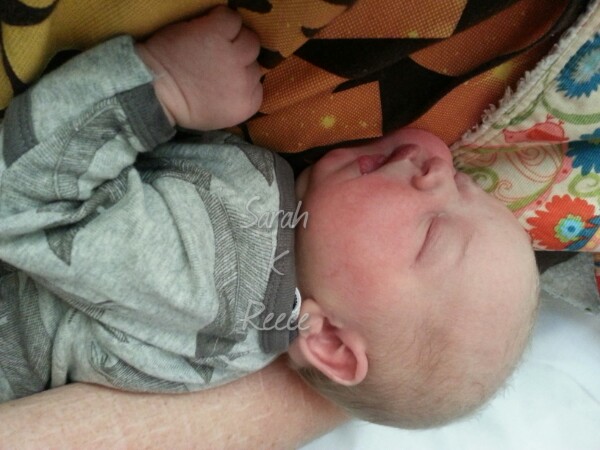
Welcome to my world. Can’t give you a baby photo, light is too low and I’m not using a flash and waking her up for any reason on earth. 

Tough night last night. Screaming, distraught baby, 1.5hrs sleep for me,  and feeding for hours at a time. Breastfeeding is a serious set of new skills with a steep learning curve. My milk hasn’t come in yet and little frog is hungry. 

Rose and I have each had a big meltdown over the day and the midwives have been awesome with us. We’ve got some advice about the feeding and constructed a plan for tonight which is desperately helpful because after not much sleep through all the early labour, I’m so strung out the damn walls were throbbing this morning. There’s nothing quite like the sheer misery of sitting in your own urine for an hour trying to feed a baby with chafed nipples, stitches and torn skin burning, and bubs screaming with distress everytime you try to stop… ‘tough it out and hope it gets better’ is a plan I can only work with for about another 72 hours before things get hellishly bad. We’ve had plenty of little glimpses down some dark tunnels we are very keen to avoid travelling. No wonder people wind up in serious trouble. We’ve only had a taster. 

So we are changing tack now, getting lots of support for the breastfeeding, which is helping a lot – I no longer need to bite my fingers to stop myself pushing her away from my breast due to the pain. We’re having to concentrate hard – no distractions, no multi tasking, watch, learn, focus, ask questions, try it again. I’ve now had 3 hours sleep in 48 and I’m learning as quickly as I can. The sense of hope about having a plan and a sense of why things have been so tough is simply incredible. I can’t do this indefinitely but tonight I can do this. 

I’m also off the stronger pain relief which frankly sucks and it’s making keeping my head together tough as hell but on the other hand it’s easier to focus as long as I get lots of emotional support. I’m traumatised enough to be struggling with body memories of injections and so on and nerve issues with numbness and burning pain which will hopefully improve soon. Poor body. 

Bonding is good and intact, Rose helped me bath little frog, and get some skin to skin time, which I missed out on a bit due to needing surgery after the birth. Little frog is s simply the most beautiful thing in existence and worth every bit of effort and pain. 

Early days 

Today I had my first breastfeed that didn’t bring tears to my eyes with pain. Hopefully we’re figuring this out. To everyone who recommended Moo Goo balm – you are absolutely right, it’s good stuff. 

Still in hospital, it’s pretty intense right now. Little frog is perfect, I feel quite broken, physically. It’s going to take me some time and TLC to recover. Rose has her hands full taking care of both of us. (not how I wanted this to be) The hospital physio has been fantastic and a huge support. And the baby cuddles are amazing. 

Looking forward

image

I’ve started a new oil painting, about walking in the local park at night, as I loved to do with Zoe before I was pregnant. There’s been a lot of art this past week. 🙂

Tomorrow is our baby shower/blessing way. I’m excited. It’s been a sad week too – both Rose and I are waiting on news as each of us has a grandma in end of life care. In both cases they live much too far away for us to visit, which is hard. It’s strange being happy about the baby shower and sad about death and loss at the same time. Rose and I find ourselves feeling vulnerable and anxious, wanting our people around us tomorrow, a sense of connection to our tribe.

We move between grief and joy, the way I move between pain and pleasure in this pregnancy. One hour we curl up in bed and cry and talk about all the sense of unfinished business. The next we pack baby clothes and games and food for tomorrow, ticking off check-lists and making plans.

I’m soaking up every hour I get where I’m not overwhelmed by pain but can find the tremendous hope and joy in carrying our baby; counting the stretch marks like tide lines on my skin, Rose and I holding my generous bump to feel the baby dancing under my skin. Watching for those moments even if they are brief, knowing they will be gone so very soon and I’ll look back on them for the rest of my life, maybe even miss them at times. It’s been a very hard pregnancy, but not every minute is miserable. There’s beauty here too; hope, longing, and love. Looking forward to celebrating that tomorrow.

IDAHOT Picnic & 28 weeks pregnant

image

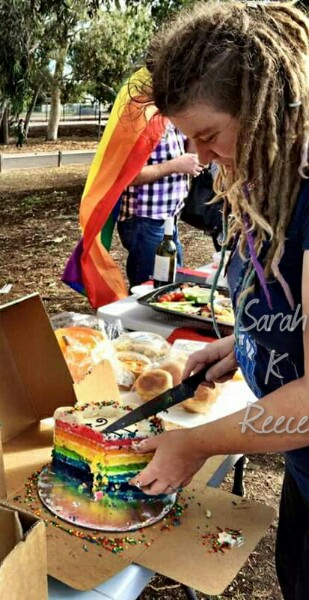
I volunteered to cut the rainbow cake. I usually do this at family events – I took over from my grandpa when I was a young teen, because he used to do that cut a random size slice and then another random size slice thing, and we’d all pass the slices around the table as he went… thin slices got passed on quickly, thick slices were lingered over like a game of musical chairs but with cake. Inevitably some were deeply disappointed with the slice that settled on them. A quick head count and a little math solves that issue!

IDAHOT is the international day against homophobia, biphobia and transphobia. I waddled up following a morning at the printer and framer putting in the final orders for my exhibition, which comes down this Friday! It was a good, fun event and nice to see friends there I haven’t caught up with for awhile. Rose stayed home and used the time to get lots of homework done on my computer. I stayed out and pretended I’m not possessive and territorial about my computer. I’ve coped pretty well with sharing the rest of my home with everyone else, but my computer and studio (ie table) do bring a slightly crazed one-eyed barky critter out in me.

There was a cool badge maker there so I made this for Rose:
image

Pain levels are still very high, I’ve been re-reading Explaining Pain which was a good refresher, but woke at 3am to cry about how hard this is, and sad, and all the wasted years being sick and swamped by pain. Sometimes even the encouraging and helpful triggers such grief and regret. Bubs is head down most of the time, which is causing bad sciatica, hip pain is bad, and heartburn is bad. I have finally put a bit of weight on this pregnancy though, which is great news. Fibro is a bitch, I’m getting bad facial pain, a twitchy bladder (not the same as pregnancy needing to pee every few minutes), muscle cramps in my calves, chronically irritated skin, and fun new sensitivities. I’ve asked for a referral to the psych team at the hospital as I’m getting nervous about how well I’ll recover from birth and worried about being stuck in hospital needing support. The psych team are the only ones who can override the usual rules about partners being kicked out overnight. The prospect of being forced to be left alone overnight in severe pain with our little baby to care for as well as me is a bit harrowing. If anything has gone wrong and I’m feeling emotionally fragile too, hospital is a horrible environment for me. I recall once waking to find night nurse trying to do obs in the small hours of the morning following my appendix being removed. She touched me while I was sleeping and I woke the whole ward with a blood curdling scream and had clawed my way to the far side of the bed before I’d even opened my eyes. When I did I found I was perched on the edge of the bed about to fall/leap out, and the poor nurse was flattened against the far wall. Following that was the slow wail of all the infants in the ward protesting. I don’t know what adding a small baby I feel intensely protective about might do to that reaction but I suspect ‘downgrade it’ isn’t the usual answer.

Baby is growing well, I’ve been doing finger-prick tests and my results are all great re gestational diabetes, and there’s loads of movement and kicks. We’re into the countdown now and I’m looking forward to having more of the house and sheds sorted ready for arrival. In other news, having made us wait an extra 6 or so weeks for our assigned midwife to come back to work, it turns out she’ll be on maternity leave when our baby is due, so we’re being reassigned anyway. There’s a strange sense of hype and disappointment about the whole process with our hospital. We’ve only had two appointments with our midwife so far, the first we spent talking about delivery options and preferences and worries, the second we discovered she’s not going to be here anyway. It’s odd, because I know that we’re very, very lucky to have access to the healthcare we do here in Australia, but there’s this sense of indifference that’s unpleasant, being very small parts of a much larger machine and having very few choices and little power to influence anything. It makes me want to run away and give birth in the bush.

On the plus side though, my appt with the hospital anaesthologist was surprisingly excellent. I’ve never had a good appt with an anaesthetic doctor before, usually they don’t beleive me about my allergies, or they freak out and make me undergo procedures like endoscopies without any. This guy was excellent, he listened, asked intelligent questions, gave me good information about options and how to get the most out of them (did you know gas and air works best if you start it at the beginning of a contraction, count through them, and stop it about 2 breaths before the peak? This allows it time to be effective but lets you ride the last of it without having much in your system for the rest periods, which reduces the chance of side effects). We wound up talking about self hypnosis and he walked me through a short technique for self hypnosis which I took to. It was a good appointment to follow the others with, I felt like there was actually a point to turning up and that in among the grinding machinery of a big public hospital, the endless waiting and being shunted from service to service, there were little treasures of useful information and ideas. Hooray for those.

23 weeks pregnant and sick as a dog

Rose is sick, I am sick, bubs is doing great. We’re both on antibiotics for bacterial infections (tonsillitis for her, sinusitis for me) and I have been so sick and sleep deprived this week I’m desperately looking forward to feeling better. With my drug allergies plus being pregnant there’s almost nothing I can take to help reduce the pain or get me to sleep and I’m now very worn out. Food aversions are even more severe than usual and I’m struggling to eat and keep down fluids, which is scary and stressful and makes me feel like I have an eating disorder and worry about developing gestational diabetes. Every time I read about the importance of a balanced, pregnancy safe diet and regular exercise I kind of want to scream because at the moment I can hardly walk 50 yards. The sheer misery of chronic pain is hard to overestimate, I cry a lot, I’m very irritable, and I feel completely exhausted. I’ve also stopped sleeping, which may be sickness or may be pregnancy insomnia…

Just when I think I’ve learned all the horrible things pregnancy can bring with it, I stumble across something else. Frankly right now I’m wildly over all of this and feel like I’ve been sold a load of rubbish about what pregnancy would be like. I kind of can’t beleive I actually wanted to experience this, was really excited about it and chose to do it. The lovely moments of joy at feeling baby move simply don’t stack up alongside months and months of being madly unwell. I’m perfectly capable of being really excited about feeling my baby move in Rose’s tummy, thankyou very much. I hate complaining because she’d love to carry, and because people sometimes think that means I don’t want to be having a baby or that I’m not grateful we are expecting. But hell this has not been fun!! Fibro and pregnancy and sinusitis especially are kicking my ass and it’s not fun or exciting or joyful or glowy, it’s just stressful and exhausting and bloody miserable and yes I chose this. Argh!

Fortunately froggie is pretty unaware, kicking away every day, especially in response to Rose singing to them. Thankfully! Our GP got out the doppler today and that wonderful heartbeat, so strong and rhythmic, it’s such a relief to hear. I finally have an appointment to meet my midwife for the first time next week, which is a big relief because the bloody hospital has been confusing us no end with all manner of contradictory information.

I am, as you can hear, pretty overwhelmed. Rose has been superb. Pain overwhelmed me last night and she rubbed my back and talked me through a visualisation where I hadn’t spent the day crying on the lounge, sleepless and exhausted, but instead we went out together on a picnic through the beautiful autumn trees. And the pain stayed there in my body and face but for a little while I went somewhere else, with Rose, somewhere peaceful and beautiful where everything was okay. And I saw the wall I have to jump over to reach that place – grief and hurt for every night I’ve ever spent alone with such pain. But last night she took my hand and I lept the wall and away we ran; into the red and golden leaves, into a place of quiet and promise. Into a world where my body is whole, and we sit beneath the trees by the water together, red velvet against grey stone. Her hand in mine, her beautiful hair snagged with a tiara of leaves. She is my home. She is my peace.

22 weeks pregnant

I’m on the upwards swing of my mood cycle, and enjoying it immensely. I have DONE things and FINISHED things and I am back for a little while in the place where hosting an art exhibition actually seems like a good idea. This is unlikely to last so I am getting as much mileage out of it as I can. 🙂

Last week I learned that Centrelink (Australian welfare) had given me until today to gather a very important assortment of supporting documents from individuals and organisations. Considering the Easter long weekend knocked 4 business days out of the already tight timeframe of one week, I have been a very busy person. It’s like war, really. Of paperwork. The most stubborn and well informed person wins, if you don’t starve to death or beat your own brains out against your desk in the process. At least, that’s my take on things. So today I uploaded a stash of documents and I am hoping that I’ve made some pencil-pusher somewhere very happy and they can photocopy them in triplicate and file them all to their heart’s content. I’m done!

Yesterday I picked up a second big collection of prints for my upcoming exhibition and spent the evening cataloguing them and filing the originals safely away. Very time consuming process, but also exciting and satisfying! They are sooooo lovely. I am very excited about showing them to people. And I’m hoping like crazy that my catalogue will make re-orders much easier for me, and adding new information a simple process… please?

I was recently introduced to trello.com and I’ve trialled it this week to help me keep track of my various to do lists… I am managing the household admin for my family, a lot of admin for our amazing teen, everything for my exhibition, and my own personal stuff that needs doing. I’m loving trello. Managing multiple projects is much easier when I can update and modify things online instead of endlessly rewriting my lists as they get harder to read over time. I am taking on admin better than I ever have this year, I’ve accepted that it’s just going to be one of my roles in my family and the faster I adapt to that and the more skills I develop the less stressful it will be. There’s still days I want to set my desk on fire, of course, but I am delegating more and accepting that my fledgling organisational skills are needed and necessary and help my family run more smoothly. I’m also finally counting the admin as ‘housework’ and not double loading myself trying to make sure I do lots of that too- I think growing up it wasn’t treated as a real thing that actually took time and effort and skill, like lots of the things women traditionally did for their families. Repositioning it as important (and something no one else wants to do) and acknowledging that it takes dedication on my part is helping. We keep tinkering with new structures for housework and bedtimes and homework and sharing the very small space we live in now there’s three of us here and bit by bit I feel like we’re muddling our way towards approaches and systems that work for us.

Pregnant still at 22 weeks now. Bubs kicks and does back flips and wriggles around every day, mostly just a nudge here and there, but sometimes a good hour of frenetic dancing I can’t sleep through. It’s pretty awesome to have that constant reminder they are alive. Both Rose and I are still struggling with pretty intense anxiety about them, personally I feel almost obsessed by my fears about having a stillbirth. I still haven’t heard from my midwife despite many phone calls and messages left for her. I have a letter from the hospital telling me she will be in touch sometime, and reminding me that until I have that all important first meeting I’m not officially in the program or allowed to ask for support from them. So irritatingly I’m trekking off to my GP for hand holding and advice about horrible itching (which can be a sign of important things going wrong, or can just be my usual unhappy skin being extra unhappy) and so on. I know having a midwife doesn’t magically make anything safer or better but as the weeks go by it’s getting harder not to resent not having her on board or take it all personally or feel a bit overwhelmed by the fears of something glitching with my health and being kicked out of the midwife program anyway. There’s a whole lot of things I can’t control and won’t be given a choice about, and having that restrict any further is a possibility that feels suffocating.

Health wise I have a lot more energy, thankfully, and the nausea is much rarer. Food aversions are in full force still and unpredictable. Cravings are starting up, so far I’m fascinated by coffee which is unusual for me. I’m restricting myself to 2 cups a week but those I am very much enjoying. Possibly linked to that is that the fibro pain levels are high, and my mornings and nights are nasty. I can barely walk most evenings due to severe back pain and uncooperative nerves that don’t want to bear weight on my legs. Mornings I wake up feeling like I’ve been kicked a few times by a horse. My life currently puts deadlines in front of me that require I drag myself into the world of the living and make things happen. Once the deadlines have passed I usually need some days of seriously not adulting very much at all to recover. Tomorrow will hopefully be one of those days.

Tonight, I’m loading up an online game to reward myself, and in the background I can hear Rose singing our stressed teen to sleep. I adore my peoples. ❤

Pregnancy & Grief

The most wonderful news came in last night – the laws here in South Australia have been changed and just in time for Rose and myself. This means that she will be able to be on our babies birth certificate and has full legal recognition as their parent, alongside me. We were so happy we cried. It makes such a difference for our little family.

I am 15 weeks pregnant now and my bump is too big to fit my jeans or a lot of my skirts comfortably any more, although I still weigh a lot less than I did at the start of this pregnancy. I am experiencing a little less intense nausea and getting about 2 good days out of every week, but the fatigue in particular is still severe and demoralising. My world is home at the moment; I do housework, and household admin, and debriefing for people, and drive people to appointments when needed. A lot of time is needed to rest. Eating is still a bit tough and often takes some time to recover from. I’m hoping that as the pregnancy progresses I might start feeling better and better. Rose is busy and productive with her full time study, and the teen staying with us is a studious school student, so I feel a bit lost without a project of my own, in that rather unglamorous and unrecognised place of spending my health on whatever needs doing I can manage around the edges. I’ve been getting very teary and distressed at the prospect that I might not make it back to paid work or wind up with a degree or a career despite all the work I’ve done towards those goals.

Rose is such a help. She doesn’t get my distress personally – her focus is on being a Mum and that fills her world. I always wanted kids and work outside of the home and I’ve been so ill for the past 6 or so months I’m starting to lose hope. She was up with me until 1am last night while I just cried my heart out. It’s a madly intense grief and it’s all tied up with self worth and a sense of significance and belonging and connection and making a difference in the world… I don’t feel any sense of judgement towards others who need support or are sick, I’m just struggling to navigate it myself. It’s a little better than it was 6 months ago when it actually felt like if I couldn’t figure work out and find a way through I couldn’t survive. Planning a baby has kicked my sense of wanting to financially contribute to my family into overdrive, far beyond my capacity. And where pre-Rose my focus was strongly about contributing to the world – doing something of value whether I got paid or not, with a family I suddenly also needed to bring in money. Those are very difficult values to pair up at the best of times. I feel like I’ve been mangled between them.

It’s become such an obsessive focus for me that I’ve been unable to do other things that I love, like paint, because it doesn’t even feel like I can breathe until I figure this out and am on track for a paid job. Combine that with very poor health and that’s a long time of beating myself up and not breathing. I was chatting with a friend the other day who was angry about someone who was breaking the law and being horribly irresponsible and I mentioned that I was not feeling like I was being very responsible at the moment. She looked at me oddly and said that being on disability support wasn’t criminal or irresponsible. I know that but it actually kind of surprised me too. The kind of urgency I feel is as if what I am doing now is illegal and I must find an alternative. I know it’s not rational but it’s incredibly difficult to put the brakes on it.

I find it so much easier to be brave about my mental health than my physical health, which is the reverse of most people and probably partly a hangover from having all my physical health issues treated as psychosomatic for so long. To talk about having a child while on welfare, in my culture? It takes more courage than I have most days. I get attacked, like everyone who’s poor or queer or has a disability does when they want kids of their own and it’s just too much to bear a lot of the time. Too public, too vulnerable, too much vitriol from too many directions. All spewing the same message of worthlessness, as if I haven’t heard that enough in my life, felt it enough. In some ways being a parent feels like crawling back into the school yard to let the bullies have another go at me. See if you can hit me where it already hurts, some of those wounds aren’t very healed still. I feel an intense grief to be where I am, such a sense of lost years and lost health, so much pain and chaos. So many dashed hopes and so much hard work.

All my accomplishments start to twist in my mind and what I was once proud of, like my extensive voluntary work, I start to feel ashamed of, that I was foolish and trusting and exploited. That I somehow fell short being good enough to pay. That I trusted the wrong people, made the wrong decisions, invested in the wrong career paths, and cared too much about keeping my precious ethics intact to deal with the real world of work – which is that I am nobody and have no power and no voice and should simply have put my head down and done whatever was asked of me. My overinflated sense of personal responsibility and grandiose ideas are the real problems. My sense of connection to and trust in other people twists too. I feel very envious at times, and in some cases very burned and bitter, in others just overwhelmed. It’s a painful place to be in.

One thing that has helped a lot has been reading Mary O’Hagan’s memoir Madness Made Me about her terrible years of suffering and her path into advocacy and activism. Maybe because she makes herself so accessible, I was surprised that her road into paid employment was simpler than I thought it would have been. Maybe she was gutsier than I’ve been about pursuing grants, but I could see for a moment that she was in a time and place where there were opportunities for someone intelligent, passionate, aware of the dynamics of power and with a capacity to doubt all the simple answers. It unhooked me for a minute from my frantic soul searching to figure out where I’ve gone wrong or what else I need to do to try and make it across the divide of activism and into paid employment. Some of the answer here is being in an environment where the opportunities are present. I have a lot of opportunities around me and very few of them are paid, and none of them are employment or regular work. Some of the answer too is that most of the other mental health peers I admire so much and have been trying to emulate haven’t had to deal with the multitude of issues I’ve been hit with such as severe physical illness and years spent as a the carer for other people. Many have experienced one or two of the batch but being hit with childhood bullying and abuse, a repressive religious environment with queer sexuality, family violence, severe physical illness, homelessness, years of intensive caring, major mental health challenges, poverty, isolation… It’s been a complicated life.

Some days it helps to remember that for someone who has come through what I have, still being here is a success. Not having died when I first wanted to at 10 or at 18 or 23 or 27 is a huge deal. I accidentally burned my wrist on an oven tray cooking this evening and it was very triggering because my wrists were often the target of my desire to self injure – such an intense, shameful, private drive that I spent many years learning to understand and dismantle. That’s something I’m proud of too, and it’s something else I can talk about openly and with compassion when I’m connecting with someone else in that kind of pain. It matters that I can do that even if I don’t get a badge with my name on it and a pay check. I’m not useless or lazy. (I’m so scared that I’m useless or lazy)

It helps to remember that I’ve brought things out of nothing and made things that help ease pain. I’m so, so beyond sad that I haven’t been able to grow them bigger, that the DI is just a little website and a few brochures that the spiritual-cause people find too clinical, the clinical and diagnosis people find way too maverick, and the rest find too mainstream. I know it annoys in some way almost everyone connected to it because trying to find a middle ground between all those perspectives is irritating to everyone. It seemed like a good idea anyway, a safe meeting place for everyone. I don’t know. I know that some people found it helpful and if it really is a good approach I’m sorry to everyone else that I couldn’t get the message out any further or louder and that it will probably die with me. I’m just too tired to do much more. But all the little things count too, right, not just the movements that gain momentum and change the world in a big way, it’s also all the little pebbles bouncing down the cliff years before the avalanche that makes the big difference.

That’s another pincer – that what I’ve dedicated my life to wasn’t worth the cost, or that it is important, but I can’t take it any further anyway. Either way I’m swamped in grief.

I want everything to be better before the baby gets here, in an insane way I know I can’t achieve. I want the house to be organised and the back yard to be planted and clean of poop, and to have resolved my work dilemmas (do I have enough spoons to be a part time receptionist and a Mum? How can I know? I know I don’t right now – how many months after the birth is the fibro likely to still be severe? Is there any point in hoping anymore?)… I want to be a better person and eat less chocolate and watch less TV and be calmer and cry less and… sigh. It’s all so painfully vulnerable!

It’s not enough to stop living while I try to force myself through this brick wall. I’ve worked so hard to be here, and it’s not my fault the wall is so high. I need a hand over it and I haven’t found one. I have to be okay with that, at least for now, and that means letting myself grieve, and it also means going back to the things that give my life meaning and joy. If I can’t do ‘real work’ it’s okay to spend time on my voluntary work. It’s okay to make art even if I’m doing it while the rest of my household is out doing real work. If I can’t find a work related project then I’m going to make a life enhancing project I can work on on my better days and get excited about and feel connected to the world with. (hold on, my love, one day there’ll be a place for us) Not so many years ago I was friendless, suicidal, recurrently homeless, terrified of my multiplicity, and deeply wounded. Not so many years I couldn’t shower without assistance or make it through the shops without a wheelchair. I remember a time when my pain was so bad I would scream myself to sleep. Here I am, fattening with a little dragon wriggling inside me, loved and safe in my home and family that’s suddenly 3 of us and waiting on the 4th. I refuse to keep suffering to punish myself for not having recovered further and to motivate myself to reach that one last big goal I can’t seem to secure. It’s okay to fail, it’s okay to fall, it’s okay to hurt about it, and it’s okay to build yourself some kind of compassion and forgiveness out of all that blood and broken bones. It’s okay to live anyway.

What do you do when the dreams burn down? What I’ve always done, mourn and howl and dream new dreams. When the bullies make me bleed I paint my face with it and refuse to become one of them. I find my warrior and call them out on it. I run into the wilds where they can’t trap me. I’m 15 weeks pregnant and sometimes now whole days go by where I’m not afraid the baby will die. It’s the most wonderful and joyful thing, especially last thing at night when I’m lying in bed in the quiet and Rose rests her hand on my bump and all the world is just the sound of our breathing and the warmth of our skin. It’s humming with usefulness and competence on the good days, making phone calls, mopping floors, paying bills, listening to people who need a compassionate ear. And it’s pain and vulnerability, ugly and awkward and embarrassing, it’s snot dripping from my nose and making my sinuses ache, and feeling obsessive but unable to let go, and getting cabin fever from another day aching and hurting on the couch, and getting afraid that maybe I’ve complained too much on Facebook or not said enough to my friends how happy I am to be pregnant. It’s waiting and waiting and waiting and following all the instructions about forbidden foods and drinks and worrying that lying on my back will reduce the blood flow to the baby and going to mummy events and feeling weird and alienated and icked out by the overwhelming pink and pastels and brutal birth stories. It’s strangers touching me and not being able to reply to messages despite feeling guilty, and wanting to make art but feeling like it’s in a locked room and I haven’t done enough to earn the key yet. It’s wanting to but still not being able to talk to or write to this baby directly.

15 weeks pregnant is not a stretch cream or baby formula commercial. It’s life and it’s messy and some of it really, really hurts. And I’m sobbing with sadness about my career at the same time that I’m overjoyed beyond words to be pregnant. It’s feeling useless and horrible on the bad days and proud of myself for making sure my people have clean clothes and for navigating difficult conversations well on better days. It’s not a happy ending, it’s not recovered, it’s not out of danger or no longer at risk.

It’s not without pain, but neither is it without meaning. It’s precious, and it takes courage.

Finding new dreams

Today was a great day. I was sick for a few hours after eating each time, but that left me a few hours where I was up to sitting at my computer… And I have finished the prototype of my photobook based on my hand made art book: Mourning the Unborn. I’ve ordered the first test copy and it will hopefully be here in a week or so. Eee! Then for tweaking and editing and… I’ll be able to show you a finished photobook that’s lovely and simple and nowhere as costly as the original. 🙂

I am not good at the first time I try to do something. I feel anxious and overwhelmed and want to get it right and don’t like experimenting. If I have a hands on teacher I’m sorted, if I’m teaching myself it can take me a long time to gather the skills and develop the confidence to get my prototype off the ground. This drives me crazy and I really admire people who jump in and learn as they go and don’t worry about making it perfect first time. Once I get the first one out there though, all the brakes come off and I’m away laughing. The second of anything is a breeze for me, at least by comparison.

Soooooo, published books have been on my goal list for years. A photobook and a non-fiction self help book are so different I expect the first of each will be a challenge, but I’m determined to get off the starting block and Rose is keen to help me. I think watching me transform from puddle of sick misery to my familiar vibrant self has inspired her to help me find some project to work on in my better moments.

We had a lovely conversation about goals and plans for this year this morning and I’m a little unsettled but also hopeful and releived. I’m finally starting to be able to step back from my intense distress about not working (for pay) and supporting my family the way I want to. I’m accepting that currently I’m so ill it makes no sense to be applying for jobs. So Rose and I have been talking about projects I feel inspired by, that I can pick up and put down between good and bad hours or days, and that might develop into a small passive income stream that helps me feel I’m contributing.

Books/publications are one part of that, and the others we’ve talked about are an etsy store for art prints and so on, and instead of a birthday party every year (which frankly I’m triggered by and rubbish at anyway), organising a small exhibition of art work.

I wish things were different. But I’ve got to work with what I’ve got and where I am. At the moment, that’s very little health and a powerful need to be involved in some way that meets twin needs to feel I’m financially contributing and making some kind of difference to someone vulnerable or in a rough place. Focusing on that feels scary and liberating, and I’m hoping I can get some more of those bright moments when I light up and forget being sick to energize and inspire me through the projects. 🙂

For everyone who’s been patiently waiting for me find some way back from my misery, who’s supported me or sent me encouragement or let me know that in some way I’ve made a difference – thank you so much. You are brilliant and you help me feel like less of a failure. I so appreciate it. ❤

Keys to locked places


I’m 10 weeks pregnant and have been so continually sick that I’ve been unable to enjoy almost any of it. I get a good hour or half day here and there, but the rest of the time I am deeply miserable. The nausea is intense, to the point where I sweat, salivate, and tremble. Sometimes even the vibration of speaking will set off my gag reflex. Smells are intense and mostly horrible. The hot weather has left me weak and exhausted. 2 months of this has thrown me into a perpetual flashback of sick years where this was my life. It’s my nightmare – sick and needing Rose to do everything. Useless, exhausted, and depressed. Housebound, often bed bound. Joint pain, muscle pain, headaches. Thinking with sad longing of my old electric scooter. Visiting friends as long as Rose can drive both ways, and falling asleep on their couch anyway. I’ve been here before and the memories are so painful. I am so tired of being sick.

I know what it’s like to have an unborn child die, and I know that one of the things that burns is hearing women who are pregnant complaining about how difficult they are finding things like morning sickness when you’d give anything to be dealing with that and still have hope of a living child. So I don’t say much.

And I don’t say much because people love to tell me that what I’m going through now is only the tip of the iceberg, that the third trimester is exhausting, that labour is far worse, that chronic sleep deprivation and caring for an infant will make these days happy memories of vigour and health.

And I don’t say much because even my own lovely doctor wasn’t particularly sympathetic about morning sickness that doesn’t involve frequent vomiting, at least until she discovered my significant weight loss and realised I have been very sick. Then she told me that actually lots of women find the first trimester incredibly difficult, and it’s not uncommon for them to be in at their doctors in tears, ashamed and overwhelmed and saying they can’t cope after all and maybe they shouldn’t be doing this.

I don’t say much because I’m grateful grateful grateful and don’t want to lose this baby.

I don’t say much.

I, who have bared so much, find myself silent and stoic, head bowed, making bargains with the universe. If I accept this, will you turn tragedy aside from my family? Does the suffering make my child stronger? I have fought shaming and silencing in so many ways and yet here in a second pregnancy after loss, I find everything has changed. It’s such an effort to share this time, I stir myself from muddy deeps and swim oh so slowly towards the surface, weighted by dread. I fear attack, fear shaming, fear all those who believe that the world is just, that good people are taken care of, that fertility is somehow fair: an indication of boon or blessing or divine right. In my mind I can follow the tortured logic and understand people’s need to calm their own hearts but my heart doesn’t understand, doesn’t forgive, it’s just dark and thick tongued and wordless and afraid.

I didn’t just lose Tam, I’ve lost those beautiful weeks and months of heartfelt joy this time around. That calm certainty that things would be okay; all the stars in their right place and me in mine. (We think we are kind when in fact we are merely happy – CS Lewis) This time around the highs are followed by plunges into deep lows. We talk with qualifiers – if the baby comes, if everything works out. I find myself drawn to stories of tragedy with children and feel like I’m falling into a dark world I can’t get out of. Infants dying in the NICU, 3 year olds with cancer, 7 year olds who drown. I feel like I was so arrogant to think that if I did everything right, I could somehow bypass more savage loss. I could move out of the underclass, plagued by poverty, homelessness, and sickness into a bright ‘normal’ place where things like this don’t happen. That I’ve suffered enough and worked hard enough, earned my way out of more pain, as if life is about what we deserve. Isn’t that the illusion all hopeful parents have? That we can build a pastel coloured wall around our children and keep them from all harm? And when harm comes to your family anyway, the whole strange pastel mummy world seems so bizarre, such a fiction of security. We lie and lie and lie, and create these strange microcosms where nothing casts a shadow and nothing ever dies, and I cannot even breathe in them.

On good days I don’t just feel better, with the health unlocks all the memories of strength, hope, and vigour. I sing and play and work and find myself for moments in the sunlight feeling connected or excited or content. On good days I feel stronger than the bad stories, stronger than the fear and the sense of loneliness and cabin fever. On good days I feel like I will be my own kind of parent, strange and deeply loving, not squeezed into the strange mould I feel advancing upon me, I remember that there’s more than one way to do this right and that authenticity is more important than people pretend, and that some mothers climb trees too and understand both the lure and the fear of the backyard after dark. On good days I can breathe.

Most days, Rose sings to our unborn child, lullabies to quiet all three anxious fluttering hearts. Recently we lay naked in the summer night and she asked me to teach her a new song, something I loved. I thought of us the week before, driving to our first scan, making ourselves face this terrible laying bare of all our hopes and illusions. We sat upright in the car seats, that willing of the body to do what it does not wish to do. We sang to each other, tears masking our faces as we breathed in terror and breathed out our last courage. I sang songs by one of my favourite artists, Nick Cave, and so in bed I sang Into My Arms to her again. There in the warm dark, her fingers tracing my skin, I felt some shadowed part of my heart unlock and found a small sense of peace. A vision of myself rocking a baby and singing Cave rather than inane children’s songs to them in the small hours. It’s the first image of motherhood that exists in my mind beyond the fears of loss and the laughing tales of misery my culture gives me at every turn. I feel like myself in that vision, and in that moment I’m not afraid.

Another night recently we go to bed and I lose my grip on the crumbling stoicism and howl with a broken heart about so many things. How different this pregnancy is and how much I want to enjoy it and feel excited and connected to our growing baby. How deeply sad I am about my business failures and losses, and all the jobs I applied for last year and didn’t get, and the career that I so deeply wanted and have worked so hard for and now… realise that I might never have. Grief, grief like losing a piece of myself. My broken, frozen system, out far beyond all certainties and lost past the edges of the maps. All these dreams. She holds me, my love. She holds me and I weep onto her chest, she soothes me running her hands along my back as I shudder with pain. I find my voice in the darkness and I stop being strong and I stop accepting the pain as my part of the bargain and a little love seeps in through her arms, her kisses. My dark and silent prison unlocks a little. A little light reaches me, and I don’t feel so alone or so afraid anymore.

Facial Blindness

Siiiigh, so a great person introduced themselves to me the morning of the recent conference, tells me they know my partner, and really does it with such aplomb, I’m impressed. We have a brief chat about her work, my blog and so on. I’m looking forward to talking to her more.

That evening a great person sits down next to me, we start talking, I ask about her job, tell her about my partner, and so on. It’s not until she gives me an odd look and says yeah, your partner is great!… that I realise it’s the same person and I’ve just put them through the identical conversation.

Goddamn I hate doing that! Grr dissociation can be a pain!

It was many years before I came across the term facial blindness. I really notice it at conferences! If I want to thank or speak with a keynote speaker, I must be quick enough to get up the front and identity then from close up before they are enfolded by the crowd. This is because I cannot actually identify them by face. I live in fear of shaking the wrong hand and thanking a random audience member for their great presentation…

I have no idea who most of these people are and can’t identify them by sight unless several system members have spent time with them.

How can I be at a mental health conference and experiencing dissociation and still feel like no one would have a clue what that is or be comfortable with me talking about it?

Sigh.

Tony Hill, one of my favourite fictional characters, describes himself as ‘passing for human’. That exactly how my invisible disabilities and diversity makes me feel, like I’m pretending to be normal and getting caught out.

In this case, on my third interaction with the lovely person, I grasped the nettle and mentioned I had facial blindness and that I needed them to cue me about their identify for the first 10 or so times we meet. They took it really well and I felt less the freak. Sometimes we have to be brave to make the invisible, visible, and to speak the taboo.

Poem – The Dog in the Night

On the last hour
Of the last day
Of the conference
I find a way to hear and to speak
Trembling and ticcing, blurting and startling,
We have our first exchange.

She looks at me shrewdly – “It was hard for you to be here?”
“Yes.” I say with feeling
And suddenly they don’t listen because I’m armoured and brilliant
But because I’m naked and passionate.
Showing up was so hard.

Here, on the bay, afterwards,
I wake from a nap
To find the light fading
And the water calls to me, needs me to be
Out by it, watching the light fade from the sky
So I slip my velvet dress on and my woollen warm things
And go stand in it, in my little shoes,
The ones I wear because it is so very easy to slip them off
And go running over the lawn, like a child
Some things are easier to hear in clothes like this, easier to be present for with
Bare feet on grass.

The sky is a windswept fire
The ocean murmers a gentle heart beat
Grass sharp with cold dew
The stars, coming out, faintly, one by one
And I can’t help but wonder
If it is also hard
For my world to show up
Day after day, to a people too busy,
Too sick, too broken hearted to see or hear its language
If there’s some vast, subtle grief beneath the splendour
If the daisies, opening their faces to the sun and going to sleep again with the night
Close their petals with sorrow
If the crickets singing chose that deliberately wistful tune
Or the anxious dog out there in the dark, barking his incoherent warning into the shadows whenever I move
If he isn’t also crying out in a language I can barely understand,
Telling me the hour is late –
The night is vast.

The dolphins in the bay sing of love
But the dog in the night warns of loss
We have so little time left
To learn how to live.

In front of all this splendour
My hands feel so empty
I want to give something
Make something, touch something
Find some token of love and affection
To return to the world
And yet
When I open them,
The moonlight fills them
When I touch them to my face
They smell of the sea.
It is the question, and the answer both.

Poem – Understanding the power of professional detachment

In Day One of the Hearing Distressing Voices Workshop training, I had the awful but insightful experience of roll playing a professional mental health worker. It disturbed me deeply but also fascinated me, and I wrote this poem in my lunch break to try and capture as much as the experience as I could, so that I could reflect on it later.

The context of that role play is that the other workshop participants, those service providers and mental health staff who don’t have a personal experience of voice hearing, are trying to do tasks and engage with these pretend services, while wearing ear buds that are pouring ‘voices’ into their ears from an Mp3 player.

Myself and the voice hearers have been asked to pretend to be doctors and treat them as mentally ill patients – to be polite and respectful but filter everything they did through that framework and to maintain professional detachment in our manner. In some tasks we were actually delivering real psychological assessments (to determine their capacity and state of mind) that are used in residential and inpatient services today.

Role playing the doctor
I was nice
I made eye contact, smiled, shook their hand
Used their first name, didn’t touch without permission, didn’t sit behind a desk, didn’t ask questions about sex or trauma

But I also pushed then through,
Subtly dehumanised them
Didn’t give normal feedback signals
Respond to things they said
Treat them as intelligent adults.

And at the end I wanted to cry
I wanted to throw up
I wanted to run around the room and beg everyone for forgiveness and to know that wasn’t me
I wanted to be touched, to be hugged, to hear the voice of my loved ones
I wanted to be made human again.

My voice was screaming “I hate myself”
My hand was ticking violently in front of everyone
I was rocking
Swaying with nausea and exhaustion and intensity

The most terrifying aspect of it
The darkest part
The most triggering thing
Is that it was…

Easy.

So fucking easy to do.
I had a quota to get through
I had to reduce wait times
I had to get people through assessments as quickly as possible
I was totally secure in my knowledge that I was one of the good practitioners
I was one of the nice ones, I smiled and was polite and respectful
I was exasperated by how many of them there were
How unwilling they were to cooperate
How unwell they were
How slow at tasks
Easily confused
Constantly needing me to slow down, repeat myself
Everyone was filtered through a single paradigm –
Did they make my job easier or harder?

They disobeyed even simple instructions
They treated me as the enemy and the bad guy
They allied against me
They were unhelpful in directing their own recovery
Lacking insight
Bewildered
In need of guidance
Nothing like me or the other doctors.

They tested extremely poorly
The ones who tested better were often more aggressive and hostile
Clearly less unwell
Probably too high functioning for the program.

And I was totally outside of the drama
Above it
Detached
They got angry, frustrated, hurt, petty
But I was completely secure
Armoured in professionalism
Nothing they did could actually hurt me
They simply didn’t have that power
They could irritate me or trigger a little warmth
Share a moment of connection if they talked to me with the right mix of respectful gratitude and equality
But they were like children
I saw the whole picture and they knew nothing
Nothing about the service, nothing about themselves, nothing about mental health or treatment
I was the expert and I was here to try to make them do the things I knew would help them get better
They were mostly an impediment to this process
And they couldn’t make me feel anything, anymore than a 3 year old screaming “mummy I hate you!” had the power to devastate
They just couldn’t.

So they were in the muck
In crisis
Hopeless at caring for themselves
Full of needlessly intense feelings
No capacity to see the whole picture
To appreciate my role or how hard I work for them
It was a thankless job
And they were often degrading to me
But fortunately I’m very secure in the knowledge that I’m doing a good thing in the world
I don’t really need their validation
It’s gratifying when it happens but it’s not necessary
And I’m so glad I’m not like them
So glad I can look after myself, shower, dress well, cook, clean, hold down my job, my relationships
I’m very blessed and I know it
There but for the grace of god…
I’m glad that I make a difference in their lives
It’s good to be able to give back to those less fortunate.

*More discussion in the comments

Moving between worlds

image

The days start pretty well, working from home.

I’m somewhere between hitting my stride, mad obsession, and betting kicked in the head by another sinus infection. Last week I worked all day every day on business and networks – which are growing at a phenomenal rate as all kinds of things are clicking into place about marketing, communication, and finding a language for what it is I do. Changing gears or taking time off is somewhere between very difficult and completely impossible. I had my first migraine in years the other day and had to stop everything and go lie down in a dark room. For me these have only ever been drug allergies… was it a food allergy? Driving home through incredibly bright afternoon light in the hills (if you haven’t experienced Australian evening light when the sky is clear, try driving with a industrial spotlight in your face)… or trying to stop the cascade of information in my head? I don’t know. If it happens again I’ll know more, but one incident is not a pattern.

I am drafting policy documents for the networks and not for profit. I don’t mean to be, but I can’t stop it. Things that never made sense to me are making sense, and in this clarity everything I’ve ever thought, read, or experienced, comes rushing into view… a new perspective. I’m finally learning a new language and everything is translating itself into and out of it. Art and mental health are sparking each other in a continuous loop in my mind. The tip of my index finger has now become permanently numb from writing.

I need to get college homework done. I have 3 artworks and 2 essays due soon, and work do do on 3 journals. It’s almost impossible to make time for it. But I will. Last night I set myself the task – no business or networking work at all until after 5pm today. At all. Even returning a phone call or an email. I don’t have the control to just do one thing, so it needs to be a closed door. Panic and frustration screamed inside me. So then I did whatever I had to until the screaming quieted. I set up my work table. I cleared away all network and business paraphinalia. I checked my do list and updated my post it notes so I wouldn’t forget anything important – and didn’t have to waste mental energy remembering it. I got out my papers and sewing machine and library books and notes and journal and all the inspiration and trappings of one of the art projects I need to work on. I could feel the screaming settle inside and my mind change focus, start to pick up the threads of this project with keenness and interest, start to knaw at the problems and muse about the possibilities. I went to bed with the art project brewing and my mind mollified, like taking a toy that needs washing off a child and giving them a different, but still interesting toy to investigate instead.

Today I’m up. I’ve slept, I’m rested. My sinuses are horrible but I still have half a box of tissues so I don’t need to go anywhere. The lounge is set for art. I’ve filled two buckets with weeds and rose trimmings from the garden – starting by getting my hands in soil. I have water to drink and Radiohead playing. This is how I cross the threshold and shift my focus – I change the environment. I’ve always known this but not known what I was doing. The artists in my system have turned up, like wolves sniffing the air. Something for them. The papers and inks call to my hands. A language of their own.

Out in the yard, I’ve set the sprinklers as the garden was dry. It’s easy to miss that during the cold months, but here in South Australia just because it’s cold doesn’t mean rain has fallen. You need to walk in the garden to notice all the little signs of stress in the plants that ask for water. And I think to myself – that’s another language, of a kind. All these different languages the world speaks. All these different worlds, nested alongside each other. And here’s me, changing shape, colour, name, and mother tongue. Figuring out how to open the doors and cross the thresholds and move between the worlds.

In the grey light, the water drops hang silver on the plants. The garden is strewn with pearls.

Pain and art

Excerpt from my Photography Journal for College, 2014. Topic set for the class “Self Portrait – Reflections – Identity

It’s not about ‘managing’ pain. How do you eat pain? Do you drink it? Or breathe it? Does it stay locked in your body, in muscles like rocks that strain to armour you against the world? In a stomach of snakes writhing, in eyes that are dry and blink too much? Do you find some way to digest it? Grind it down into small pieces with poetry, wash it out with tears? Do you hold onto it, storing each memory, like wine, ink on skin with tattoos? If you are suffering unbearably you had better find a way. All of us will one day need a way to bear unbearable pain. All of us will need ways to grieve, to be emptied, to be changed, to be burned to ashes, and to live.

***

I use the metaphor of fire for pain, a lot. I wonder if I can reflect flame onto my skin? Or into water? The dead leaves in the pool work well as a metaphor. Loss, autumn, winter, death. Rotting down.

There is an ocean of pain in me
Some days the tides
Are high and I drown –
But I do not drown. 

***

When I’m sick my world becomes:

  • Bed
  • Bath
  • Armchair
  • Computer
  • Toilet
  • Fridge

What’s the point?
What am I saying?
What questions am I asking?
What am I showing that hasn’t been seen before?
What am I exploring that I’ve never shown?

I talk about pain and shame but I don’t show photos of my sink full of dishes.
It doesn’t seem like enough to just show the illness. Why? Why do that? It will make people uncomfortable. Feels like self pity. I want to – show something people don’t usually get to see. Tell a side of the story that is about more than loss. What don’t we tell about?

  • Transcendence
  • Spirituality
  • Rage
  • Hope

No one sees me paint in the bath when my pain is bad but I’m desperate to create. There’s something there – raw – an energy – will to overcome.

People think sick people’s lives are boring and worthless. We are useless, lazy or objects of pity. We are defined by our conditions. We are forced to be naked in public – wearing our private personas in the public arena without the protection of a job to use when answering the question “So, what do you do?”. Can I answer that question in a zine in honest, unexpected ways?

So, what am I making for this zine? I want to photograph my soul. I’m crazy.

Identity and art

Excerpt from my Photography Journal for College, 2014. Topic set for the class “Self Portrait – Reflections – Identity

Tutor G in first class – asking us who we are and what represents us. Asks me if I am my dreads. I’m startled by the idea. It seems frighteningly reductionistic. Like seeing me as my gender/skin colour/height/taste in coffee.

I am not these things. Maybe self identity is as much about being able to be seen as something more than a collection of stereotypes and assumptions – the ‘headline grab’ of a person’s life:

“Nothern Suburbs Woman”
“Prostitute”
“Avid Gardener”
“Psychiatrist”
“Father of Three”

Are we not more than these things? More than our job, our body, our family, our disabilities, our losses, our skills, our loves? Is there not something beneath and beyond things? Some capacity for growth and change, some sense of self that can be authentically expressed or violated?

Who would you be
If I took from you

Blue sky
Unscarred skin
the hope of food
What would look back at me
From your cage?

How do you calculate self?
I am not a list of my skills and tastes and interests and fears and qualities and attributes. Do not my masks tell you ask much about me as my face? Do my lies not reveal as much as my truths? Do my fears not tell you as much as my loves? Am I not as defined by what I am not as what I am?

Tutor S says we are a synthesis of these things, that in the glue that binds them we find self.

I think we are more than the sum of our parts, and every time we forget this or fail to see it in others we do a violence.

Reductionism.
Loss. To be consumed – by fear, pain, sickness, grief. To be forged. To not rise above, or avoid, but pass through. Into the shadow. Into terror and anguish.

“I think” she says, “In one way or another, the topic of identity will be your life’s work.”

“I know,” I sigh, “All my works are self portraits, no matter what they look like. I’ve done my best to come to terms with that, it’s that or stop creating.”

“Me too,” she says.

Life and art

Excerpt from my Photography Journal for College, 2014. Topic set for the class “Self Portrait – Reflections – Identity

Is it that I show you the world, or is it that I show you my world?

I think of my wrist poem series. Something I’m ashamed of because it so publicly displays my brokenness. And yet something I wear publicly because I need to display it.

My blog, which is so often about tearing down the image that is being formed of me. Tearing away another layer. Being more vulnerable. I can’t bear to be suffocated by my own ‘public image’.

Walking away from class, having talked about the DID, feeling myself sullen and afraid and angry. The shying away from (their) curiosity. Don’t see me as my ‘identity disorder’. Don’t see me as my pain. Don’t see me as my successes. You don’t see me. (And I don’t see you) Walking in the twilight and a girl smiles at me as we pass each other crossing the road. And suddenly I’m happy again, the spell is broken, I’ve come up out of the dungeon into the autumn air and the world is beautiful and velvet with buses and my mind is full of thoughts and I think of the aspect of my queer identity and how I’ve not even touched on that yet, yet this beautiful girl with dark hair and the lovely generous smile has woken my heart and reminded me of joy. Who am I? I am a student, sitting on the red steps of the Tafe, watching a woman lift a stone from her shoe as night falls and the buses go home, because I have to write these thoughts, because I feel alive again, because she gave me a smile and made my heart glad, because I talked about soul with my tutor and she gave me back my identity as an artist.

Life doesn’t get in the way of making art,
Life is the subject of art.
If pain stops me from painting, then write about pain.
If sickness stops me from sculpting, then document it with photographs.

Go into the places of fear and vulnerability. The things I’m reluctant to explore or display. They’re not distractions, they’re the subject.

The art that I make because I must, to keep myself alive is ‘real art’. The photos I take to document the hard times, the ink on my wrist that stops me from slashing it, the poems in my journals. Even when no one else sees them. They are art. They are not a distraction from the ‘real’ art.

This is art too, this place of rawness, intensity, need. The place I’ve learned to shield and conceal. Does anyone write what they really think in these journals?
What an idea.

It starts with this: put your desk in the corner, and every time you sit down there to write, remind yourself why it isn’t in the middle of the room. Life isn’t a support system for art. It’s the other way around.” ~ Stephen King, On Writing.

Photomontages – illness & identity

Last year I did a class of Photography where we learned the basics of a darkroom, and made photograms, photomontages, acetate negatives, handmade negatives, and zines. The topic chosen for us to explore in the art was ‘identity’ which I wrestled with a lot at the time and found that I slowed down on writing this blog while I was feeling so exposed. I shared that struggle in Choices and Soul. I’ve dug the journal out this week and thought I’d share my work. Here are three photomontages I created about the intersection of disability/chronic illness and identity.

Sarah K Reece

Not Really One Thing or the Other

Sarah K Reece

Fire in My Flesh

Sarah K Reece

Dreaming of Spring

I don’t believe in mental illness (or, rewriting the DSM)

I don’t particularly believe in DID, schizophrenia, borderline personality disorder, or post traumatic stress disorder. I don’t believe in mental illnesses as parallels of physical diseases – cholera is caused by a bacteria – schizophrenia is caused by faulty genes. I believe in people’s experiences. I believe that the pain, confusion, suffering, terror, and risks of what we have called mental illness are real. I believe that people experience multiplicity, mania, hallucinations, tics. But the way we understand them – as symptoms of illness, the process of diagnosis, categorisation, research, and treatment – I’m unimpressed.

I recently read a dark and brilliant review of the DSM by Sam Kriss – written as if the manual was in fact a dystopian novel. It is brilliant, sad, and moving.

The DSM is the ‘psychiatrists Bible’, a massive reference of all the diagnoses we hear about; depression, bipolar, schizophrenia. In my opinion it is a massive project started for very legitimate reasons that has become a horrifying millstone around the necks of many of us.

Every few years it is re-written, updated, with much argument. A diagnosis is removed, or several collapsed together. A dozen or a hundred are added. A few jump categories. A few thousand people are startled to wake up one morning and find their condition doesn’t exist any more. A considerable number of the conditions are very rarely diagnosed, particularly in poorer areas (at least locally) where Depression and Anxiety are the diagnoses favoured by doctors who are not even aware of most of the rest of the options.

The idea behind a manual isn’t a bad one, to my mind. Language is important. Having words for experiences can be profound, the difference between mute suffering and solidarity and strength in the face of adversity. Our diagnostic manuals (the DSM and the ICD) were developed initially as a way of communicating between shrinks. A shorthand for what a patient was struggling with. It was important to define the terms because shrinks working independently, separated by continents, were starting to use the same words to describe vastly different experiences. We were beginning to explore the idea of madness, to break it down and tease it apart and discover that it was not all the one thing but instead many different things. We built new words for these new ideas and then needed to secure their meanings so that the language was useful.

We modelled the language upon the medical language of disease, with the expectation that the same cause and effect approach would be helpful. This causes that. The reality of human psychology is at times, highly predictable. We share certain needs, certain fears are near-universal, certain responses instinctive to most of us. But we are also complex. We have drafted massive tomes about abnormal psychology and have little idea of what, if anything, is left to be understood about normal psychology. We are beginning to grasp the frustrating reality that more than one cause can have the same effect – people develop eating disorders through grief, dissociation, fixation on weight, and chronic digestive diseases. We are beginning to understand that one cause can have different effects – some people with dissociation struggle with eating disorder issues, others with chronic sensory losses, memory issues, or depression. As we attempt to capture these nuances, our manuals get thicker and thicker.

With thicker manuals comes a big issue – more and more human behaviour is gathered into this category of ‘abnormal’. Psychological illness, injury, and normal functioning become tangled. Defining abnormal becomes nearly impossible. For example; if more than 70% of people who suffer three major life stressors in a year will struggle with an episode of depression, is this a normal or abnormal process?

Furthermore, is it an illness? Physically sick people who are fighting infection experience depression during the illness because they should be resting to heal. Are we able anymore to delineate between depression as something that is harming us, sucking the life from us, killing our joy, and the lethargy and pain and inward gaze of grief?

Increasingly mental illness becomes fuzzy, difficult to define. Another marker of ‘abnormal’ has been ‘unusual’. This is why being gay was in the DSM. If more people are straight then gay, doesn’t that make gay abnormal? The dangers of defining human existence by the tastes and appetites of the majority are such that almost certainly all of us are in some way ‘abnormal’, and the cost of this, the rejection of so many people from this hallowed goal of normality, are massive.

Abnormal is often shorthand for extreme. Ah! they say, you simply fail to understand the spectrum! Yes we all experience a little of this and of that, but until you’ve seen mania full blown, an acute psychotic episode, someone so debilitated by anxiety they cannot leave their house, you simply can’t appreciate what real mental illness looks like. This definition seems to work until you look at other examples of ‘extreme behaviours’, at social activists who put their lives at risk for a cause they are passionate about, at kids moving across the country to have a chance to train in the artform they eat and breathe, all the hope and joy and optimism of a couple in love and about to get married. Extreme can be dangerous, can be horrifying and destructive. But its also the place of hope for so many, their centre, their joy.

Abnormal can be shorthand for pain. When I write things like “I don’t believe in mental illnesses” that does NOT mean that I think people are making their experiences up, that they’re weak, lazy, vain, or self indulgent, or that there is not a real, overwhelming experience of profound fear and pain that can destroy people’s lives. The suffering is absolutely, definitely real. I have been there myself, I have been there as others have been broken or battered by it. I don’t actually believe we need a shorthand for pain. People use their own language to describe their experiences. They talk about being broken hearted, or empty, about feeling like their life is on fire, about the void that eats them alive at 3am when all the world is sleeping. A lot of the reason our manuals remain in such use is simply that we have organised our systems of care around this process of diagnosis. It’s a way of discerning those who need help. But I have a massive problem with the kind of help that starts by assuming there is something wrong with the person in pain. Sometimes whatever form the suffering takes does come out of the sky like lightning without warning and seemingly without sense. For others, suffering comes out of loss, trauma, loneliness – things that always cause people pain. There is nothing wrong with someone who hurts when they are harmed. It should be possible to grieve, to suffer, to need time off, to recover, without signing up to the idea that this is wrong and there is something wrong with you. As I’ve said before, if the process of mental health is about not hurting anymore, no matter what, then we’re trying to create psychopaths, not support humans.

‘Abnormal’ is often these days simply a way of referring to anyone who needs time off work or income support. Which again, is heartbreaking. It’s one of the reasons that deeply grieving people are now able to be diagnosed with depressive or adjustment disorders – because without this label of illness doctors are unable to compassionately exempt them from work or support them to access counselling or other treatments. Mental health as an idea starts to become twisted into something hyper-individualistic; someone who experiences none of the extremes of the human experience and never needs help from anyone to navigate life.

The DSM goes beyond a dictionary of terms because it links descriptions of single experiences together into syndromes, collections of symptoms that are given a diagnosis. These clusters shape diagnosis, treatment, and research. For some people, the cluster is a very good fit, describing all of their concerns and neither leaving something out nor adding something in. For many, they are not broad enough, so in order to capture all of the troubling experiences, they wind up with many diagnoses. Because of the medical model framework, this is seen by most as a sign that this person is sicker than someone with only one – or no diagnoses, when it doesn’t indicate anything than not fitting the common clusters! For some, the diagnoses are wildly inappropriate, as they have only one or two markers but wind up being diagnosed with the whole set in a dangerous prediction of their future experiences.

Some of the clusters are so poorly defined that the people group described by them vary so widely meaningful research is nearly impossible. For example, Borderline Personality Disorder requires 5 of 9 symptoms to be significantly present. Some people have all 9, some have one set of 5, others have the remaining four and a single overlapping symptom! To make diagnosis of BPD extra complex, many people who have experienced particularly childhood trauma will have some or all of these experiences for some years, and many people in current life crises will experience them also – yet this disorder describes an enduring pattern that plays out over many years. My experience has been that most young, distressed women in the mental health system will receive this diagnosis at some point. That is NOT to suggest that people don’t struggle with these issues long term, clearly many people do and some are my dear friends! But how the heck are we using one term for two people who potentially share a single experience in common?

Conversely, some diagnoses are defined so tightly that hardly anyone fits. Eating disorders can be like this, where a single symptom such as menstruation can see a woman bounce between one diagnosis and another and back again. In some categories the diagnoses are so narrowly constructed that most people who are struggling with a major issue in that area are given the catch all ‘not otherwise specified’ diagnosis. Which makes me wonder how well we are doing at the initial goal of creating a useful language for people.

The clusters exist for a reason – because they are commonly observed. But there’s two obvious dangers with grouping experiences like this. The first is that ‘commonly observed’ is going to not fit some people. Maybe even a lot of people. Which would be less of a big deal if we treated these syndromes like syndromes, but we don’t. We treat them as scientifically valid disease entities, which is a huge problem when someone doesn’t fit. Generally we start stacking them, which is similar to the effect on the stigma the person experiences. Two diagnoses is twice as bad as one when you have to prove you’re ‘well’ enough to work. Some people wind up with ten or more, each of which is confusing, depressing, and further alienating them from any sense that they might just be a ‘normal’ human having a tough time.

The second major risk with these clusters is the grouping of cause and effect, the mixing up of correlation and causation. For example, schizophrenia, which links experiences such as hallucinations to others such as dulled emotional expression or withdrawing from relationships. Each of these is seen to be part of this disease and yet one can cause the other, can have nothing to do with the other, or might not even be present for someone. Isolation due to bullying makes children more vulnerable to psychosis, for example, but in this case the trauma is a a key cause of the isolation, and both the trauma and the isolation are triggering the psychosis. People who experience hallucinations often find their close relationships become a mindfield of misunderstanding, miscommunication, and power battles about how to navigate the experience. Dulled emotional responsiveness is a common effect of feeling stuck in a double bind. Some voice hearers have no other symptoms of schizophrenia yet find themselves with that diagnosis for the simple reason that no other ‘hears voices but isn’t harmed or impaired’ category exists. Just because things may occur together does not make them all symptoms of a disease. Even more importantly – we cannot easily even perceive things that fall outside of our categories and language, which is why the idea of hearing voices meaning severe impairment has lingered on for so long – voice hearers who are not distressed or impaired don’t tend to volunteer to go round to their local shrink and talk about it!

I agree that we need a language, but I disagree that the DSM provides a good one. Utterly embedded in a language of deficits and loss, there’s little room for individual experience, for hope, for complexity or nuance. Abnormal becomes nebulous, and normal becomes a flatland of limited emotional range reserved for those to whom little has ever happened. Something terrifying happens when people are seen through this lens.

It doesn’t have to be this way. We can structure things differently. Ron Coleman wrote his own DSM Zero, a blank book for people to fill in themselves. Another shrink who’s name I can’t recall said in his mind, the entire DSM could be summed up to three states: “I feel bad, I feel crazy, or I make other people feel bad or crazy.” The rest was merely details. The underlying assumptions of the DSM about sanity and madness, about what is normal, what is human, and where the fault lies when people are suffering, are ones I find toxic. They dislocate people like me from my own self, from my own language and from my sense of being human and part of humanity. We can pull apart the edifice we have created and build something new, the way I have done for myself in understanding my experiences of multiplicity and psychosis. Personally my suggestion is to define terms but not cluster experiences, to make support possible without indicating whether ‘pathology’ is internal or external (ie whether the person is needing extra support because of things happening inside them or to them), and to be willing to use and respect the common terms people find helpful instead of forcing them to learn a new language of complex pseudo scientific terms. I think it’s okay to say broken hearted instead of depressed, or empty and chaotic instead of borderline. I think research becomes more useful when it looks at experiences instead of diseases formed of clusters of experiences, and I think those of us who live outside the bounds of so-called ‘normal’ are more likely to find hope and joy when we aren’t sold a story about ourselves that’s saturated in ideas of mental deficiency and impairment.

Endo & adeno 2: a hidden cost

I’m not pregnant again. And I’m crook, endo and adeno are knocking me around. We’re still moving house, and Rose has hit major unexpected issues with her job, so we’ve spent the afternoon at Centrelink starting the process for unemployment support in case it doesn’t get sorted out. It’s been a really tough couple of days. If you don’t know what endo and adeno are, see Endometriosis & adenomyosis 1. Trying to get pregnant with these is rough, it’s an extra kick in the teeth each month on top of the sad news we’re not pregnant. Right now I’m pretty fed up.

My experience with these conditions has always been pretty horrific. My first period was at 13 and pretty normal. My second happened to fall in a week that I was away with my school for a major convention. I packed a collection of sanitary items and my two school uniforms, completely unprepared for the pain and haemorrhaging I was about to experience. All my pocket money was spent on buying extra pads from the toilet vending machine. I was drenching to capacity a super heavy size pad every hour. I have a vivid memory of sitting by my window on the fourth floor in the small hours of the night, sobbing, my mattress stacked against one wall to dry after I’d tried to sponge it clean, and the floor between the shower and my bedroom wiped down with wads of toilet paper. I felt in that moment that I was the loneliest person in the world.

My periods were always extremely heavy, particularly in the first few days. I struggled to cope. Embarrassing leaks, constantly going to the toilet, and stains on clothes, bedding, and mattresses were suddenly a constant part of my world. Teachers were often suspicious that I was merely trying to get out class and it wasn’t uncommon to have desperate requests to go to the toilet denied. I carried 15 or more pads with me at all times, just in case. Bullies thought it was amusing to steal these or scatter them around the classroom. In later years, homeless or living alone, they were needed in case I was too sick or broke to buy more in that first miserable week.

The pain was severe and nothing provided much relief. My journals from this time are full of distraught descriptions of feeling that my pelvic bones had been turned to hot lead that was burning in my flesh and running down into my thigh bones, that something was raking a sharp stick across the inside of my rib cage, of intense cramps and contractions that exhausted me. I would spend days huddled around hot water bottles, alone in bed, sobbing, or curled around my gut in the bath, or weeping in the toilets at school or work, learning to dissociate to carry on.

My periods also lasted for much longer than usual, around 14 days a month. Literally half my life was now spent bleeding. I experienced a level of body dysphoria usually described by trans teens enduring puberty as the gender they do not identify with. I felt deeply ashamed of my inability to handle menstruation, unable to connect with, care for, or enjoy my developing body.

The worst of all this was that it was happening in a context that normalised it all. I was seen as a bit of a drama queen. Doctors offered neither information nor sympathy. The chronic pain was made a joke of as a rite of passage I had to learn to cope with better. I was an embarrassment to others when I failed to manage discretely. A conservative school and home environment exposed me to constant shaming with inadequate provisions in the way of bins, extra sanitary supplies, or discrete options to clean accidents or hide stains. Menstruation was not to be mentioned as I had a younger brother who was being kept ‘innocent’. Basic supplies such as bins or pads were not kept in the toilet or bathroom at home, despite actually begging for them. As soon as I had a home of my own, I was proud to put both in the bathroom – a woman lives in this house and her needs are not something to be ashamed of!

Unlike other experiences of illness such as the flu, I was not offered much nursing care or emotional support when my pain was related to ‘private matters’. I have the distinct memory of weeping in the toilets at my part time job in child care at 17, dizzy, weak, and in awful pain, but gathering myself to limp back into work, bitterly confused that other girls didn’t seem to find this so hard. Constant invalidation and cultural embarrassment about gynaecological issues meant that endo and adeno isolated me. Deep loneliness, shame, and pain intertwined and each made the whole experience far worse, contributing to self hate, food & body issues, and chronic suicidal feelings.

Painful periods just don’t sound that bad, and that was a huge part of the problem. It wasn’t seen as serious, but this issue alone was enough to cause serious harm to me. At times when pain interrupted sleep and guilt and confusion about puberty and sexual development added to my distress, the beginnings of psychosis can be seen. Nightmares intruded into my blood drenched reality in profoundly disturbing ways. I dreamed of rape, miscarriage, and abortion, of having demons inside me, of clawing babies from my own womb. Waking soaked in blood and knotted with pain blurred nightmare and reality. My usual teariness began to deepen each month into suicidal blackness. I still struggle with profound lows which are partly hormonal and partly basically emotional flashbacks to these awful experiences. I began to believe awful reasons I was suffering, such as punishment for sins, my body hating me, me being evil. People around me treated me as if I was bipolar.

These are the kind of experiences that come to mind when people talk about how mental illnesses would be better treated of they were more visible.

Really?? Ever had facial scars and had to handle the stares before, or needed to use a wheelchair and watched people pull kids away from you as if you’re going to run them over, or, you know, discovered you have blood on the back of your pants and had to walk through the whole shopping centre to get back your your car? Oh, I see, you mean visible, but in a nice, non threatening way that didn’t make people stare, laugh, or treat you weirdly. Good luck with that.

These are horrible, miserable conditions, for many people they cost us deeply. We battle with chronic pain and anaemia, doctors who don’t get it, difficulty accessing treatments, troubles getting support from family and employers, difficulties with our sex life, and fertility challenges. It should be okay to talk about it, easier to get help, and less embarrassing to have to explain regular illness. I shouldn’t have to push back against everyone telling me I’m clearly doing too much when these things knock me out for a week – they’ve little to do with how hard I work or whether I’m taking good care of myself. They definitely shouldn’t be a secret shame that messes up our relationships, mental health, and our lives.