In our group Bridges this week, I gave a talk introducing DID (Dissociative Identity Disorder). We are planning to present a forum on the topic in about 2 months time. It’s a very big topic and there’s a lot of misinformation and confusion out there about it. This talk is by no means comprehensive, but it is I hope a good introduction and overview of the condition.
What is Dissociation?
I’m going to start with a quote by a psychiatrist, Judith Herman:
The psychological distress symptoms of traumatised people simultaneously call attention to the existence of an unspeakable secret and deflect attention from it. This is most apparent in the way traumatised people alternate between feeling numb and reliving the event. The dialectic of trauma gives rise to complicated, sometimes uncanny alterations of consciousness… which mental health professionals, searching for a calm, precise language, call “dissociation.”
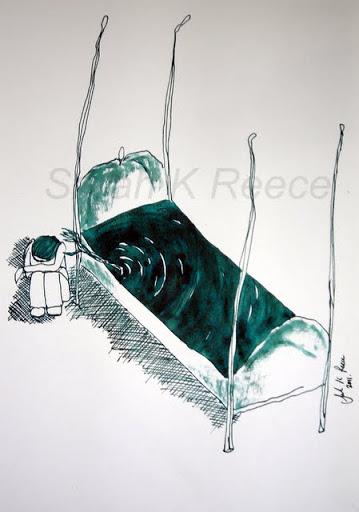
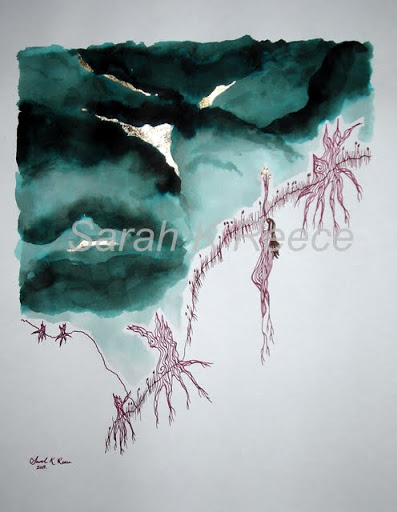
What does that mean? Dis-association is the disconnection between things that are normally associated. In simple terms, dissociation is to be unplugged in some way.

Most of us have experienced a small degree of dissociation. One common example is called highway hypnosis, which is where you may drive say, home from work, and arrive not able to recall any details of the trip. You’ve been driving on autopilot probably thinking about other things. Another example is daydreaming, or getting ‘lost’ in a good book. These are common experiences, and do not indicate a problem of any kind. Dissociation only becomes a disorder when it is severe, distressing or disabling. It can be difficult to imagine what severe dissociation might feel like, but if you have ever stayed awake for a night or two, perhaps studying, then you have some idea. You may have felt confused, foggy, your sense of time might have been different, perhaps the room appeared fuzzy or spun around you, you may not have felt your feet upon the floor. Remembering this experience can help you imagine what someone who experiences severe dissociation may feel like.
Dissociation and Mental Illness
Dissociation is a symptom of a number of different mental illnesses, such as Post Traumatic Stress Disorder, and Borderline Personality Disorder. There is also an entire category of disorders where dissociation is the primary issue, just like the category of anxiety disorders groups different mental illnesses where anxiety is the underlying feature.

Dissociation can happen in may different areas. It depends which area has been ‘unplugged’ as to which symptoms a person experiences. People who suffer from chronic dissociation may struggle with symptoms such as:
- Emotional numbing – where someone cannot connect to their own feelings, feeling flat, empty or numb instead.
- Amnesia – ‘zoning out’/blackouts/lost time, when dissociation occurs in the area of memory, for example suddenly discovering that it is Thursday, and having no memory of Wednesday.
- Time speeding up or slowing down – if you have ever been in an accident you may have experienced this common dissociative symptom.
- Losing sensations – not being able to feel your own body, or feel sensations such as heat, cold, pain, hunger. Dissociation can unplug someone from their own senses, dulling or even removing altogether their sight or sense of hearing or ability to feel pain for example.
- De-realisation – this describes someone’s experience when they are unplugged from the world around them, it may feel like being in a dream, or that they are living in a film. Nothing feels ‘real’. This may not sound so bad but it can be very distressing to experience.
- Depersonalisation – describes being unplugged from yourself, where someone may feel unreal, like being a robot or living in a dream. They may not recognise their own reflection in a mirror, and may have out of body experiences where they seem to be watching themselves.
Many people experience one or more of these without having a mental illness. And people who do have a dissociative disorder may experience only one or all of these. Some people struggle with chronic symptoms, while others experience episodes and then recover.
What is DID?
DID is one of the Dissociative Disorders. In DID, Dissociation occurs primarily in the areas of memory and identity. DID used to be called Multiple Personality Disorder. The name was changed in the DSM to reflect a different understand of the condition. DID is not someone having more than one personality, it is one personality that is divided into parts through dissociation.
Dr Warwick Middleton, an Australian psychiatrist who is the Director of the Trauma and Dissociation Unit at Belmont Hospital in Queensland wrote “It is inaccurate to conceptualise a patient with DID as having ‘multiple personalities’. A more helpful conceptualisation is that such individuals have access to less than one personality.” (at any one time)
We all have parts

Parts Divided
For someone with DID these parts are separated from each other by dissociative barriers. As a result, they develop separately and can be very different from each other. For example, they may have different ages, gender, skills, interests and beliefs.
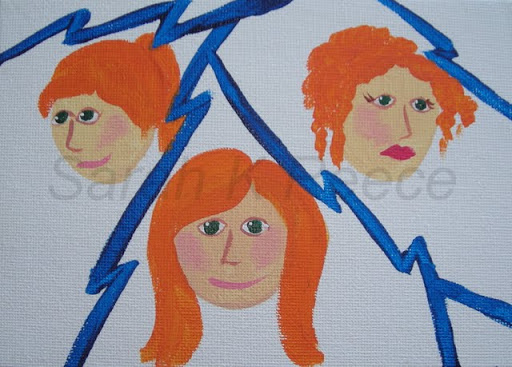
There are some common terms associated with DID it may helpful to know the meaning of.
- Part or Alter – commonly used to describe the different personalities in a person with DID.
- System – this describes the group of personalities that make up the whole person with DID. Many people prefer other terms such as family, tribe, or community.
- Switching – one part going ‘inside’ or away, and another one coming ‘out’ and inhabiting the body. This may be slow or quick, obvious or very subtle.
- Trigger – is anything that makes a switch between parts happen.
- Coming out/Going in – used by people with DID to describe times where they are in control of their body and times where another part of their system is.
- Kids/Littles – refers to any parts that are children or young teens. It is quite common for people with DID to have younger parts, but not everyone does. A person with DID may talk about their ‘kids’ to mean not biological children but their children parts.
- Multiple – a shorthand way of describing someone who has separate parts. People without dissociated parts may be called Singletons.
- Co-consciousness – means that more than one part is aware of what is happening at the same time.
Why does it happen?
The development of DID has a very high association with childhood trauma. In childhood the identity is still forming, and trauma during this time can result in dissociation in this area. It’s important not to make assumptions here, trauma may involve abuse, but there are many other ways children may be traumatized. For example a very ill child who must undergo many painful medical procedures may develop DID. Not everyone who has DID has come through childhood trauma, and certainly many people who are traumatized as children do not develop DID. It is also important to note that while some people with DID have come through extreme abuse, others’ experience was less severe yet they have still developed DID.
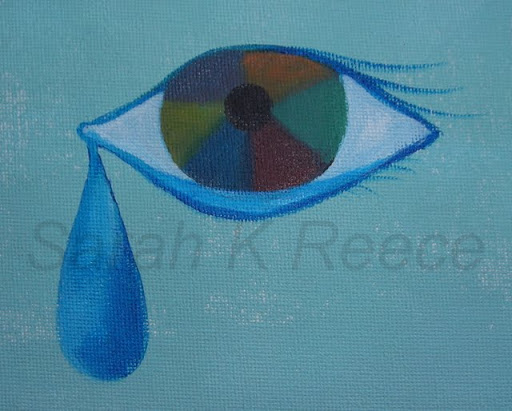
Whilst DID is considered a mental illness, it can also be thought of as a defence mechanism, a way to survive. Psychologist Deborah Haddock writes “Many people with DID baulk at the use of the term disorder. When every ounce of your being comes together to fight for survival, having it termed a disorder can feel discounting to say the least.”
How do people survive trauma?
1. Containment
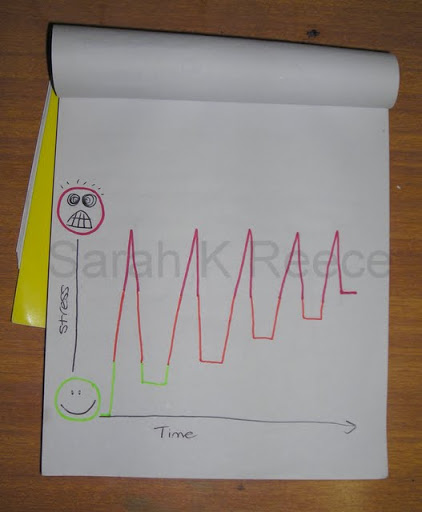
There are, among many others, two key abilities that all people may draw upon to get through a traumatic situation. One of these is containment. This is about being able to compartmentalise experiences. If you have ever put aside your feelings to assist at an accident, then after everyone was safe, gone home and shaken and cried, you have used to containment. You have contained your overwhelming feelings to do what needed to be done, and then felt them later on.

Someone with DID uses containment in an even stronger way, where different parts contain different skills, memories, or emotions. One of the advantages of this is that damage is contained, and healthy areas of functioning are preserved rather than the whole person being overwhelmed and unable to function. An analogy is the way a flock of geese flies. The goose at the front encounters the most air resistance, it has the hardest job while the rest of the flock rest in the slipstream. When the front goose tires, it drops back and another goose takes the lead position. The parts in a DID system may do this, where one part is out, then goes away inside to rest while another comes out.
2.Adaptation

Another way people get through trauma is through our ability to react and adapt to new situations and environments. We’re all capable of drawing on different strengths and skills in different environments. For someone with DID, this ability to adapt can be life saving. For example, a child may develop a part that copes with physical pain by numbing and not feeling anything. They may have another part who goes to school, has none of the bad memories, and is able to behave normally. They may also have another part tucked away inside who keeps fragile characteristics safe from being destroyed by a harsh environment, for example hope, self esteem, or optimism.
Theories
There are two main frameworks used to describe the way separate parts form in a person with DID.

The Smashed Vase theory is that every part of a system is a piece that together makes up the whole person. This explains the way systems can divide up basic characteristics such as emotions, one part manages anger, another expresses joy.

The Alternate Selves theory is that every part is one possible version of who the person could be, given their experiences and history. This explains the way DID systems can continue to split and form new parts, there seems to be no upper limit of how many parts can form. Also the way parts can un-form, meld into each other, and disappear.
The reality for a person with DID may be an overlap of both processes.
Challenges
There are some huge challenges facing a person with DID. Deborah Haddock writes “Most DID patients see several therapists and have an average of seven diagnosis before finally finding someone who understands the dissociative aspect of their behaviour… Confirming the diagnosis of DID is not easy, however. One of the difficulties lies in the nature of dissociation, which compartmentalises behaviours and experience that would normally be connected. Also, the dissociative personality system is usually set up to avoid detection.” In a nutshell, DID generally only works as a defence mechanism if it is hidden and secret. Otherwise, being divided may make someone more vulnerable to abuse.
Dr Middleton writes “For dissociation to be an effective mechanism in protecting individuals from being overwhelmed… it is necessary for the individual to a fairly large degree to dissociate the fact that they dissociate. If they are fully aware of the extent of their dissociation, they they are very close to being overwhelmed by the underlying reasons for it.” DID can be extremely confusing to experience, and even finding the words to express what is happening can be extremely difficult. It is not a very common diagnosis, and not many professionals specialise in the area of dissociative disorders. Even once diagnosed, finding a competent and caring professional to work with may be difficult.
People with DID are not all the same
We tend to think in absolutes, something is black or white, someone is crazy or sane. The reality is less concrete. Dissociation is more a continuum, with normal, healthy experiences at one end, and severe mental illness at the other. Likewise, within the realm of multiplicity, there are a number of continuums, and the result is that there is a lot of variation between one person with DID and another. For example, the degree of amnesia varies considerably. Some people with DID have total amnesia for the times when other parts are out. Others are aware of what is happening, which is called co-consciousness. Some multiples don’t experience the level of amnesia needed to fit in the category of DID, and they may receive a diagnosis of DDNOS (Dissociative Disorder Not Otherwise Specified) instead. Some other differences between people with DID are
- Obviousness of switching – for some people it is obvious when they switch, for others it is so subtle that only someone who knew them very well might be able to tell.
- Number of parts – this can range from just one, to hundreds.
- Switching – some multiples switch all through the day, others only very occasionally, and some people never switch, but they talk to their parts and hear them in their mind.
- Degree of internal control over triggers – some multiples can chose which part is out, others have no control over this.
- Degree of fluidity – some multiples have fixed systems with, say, 5 members who have been there for years. Others are more chaotic, they are difficult to learn about as they are constantly changing with new parts forming and old ones going away.
- Other diagnosis – people with DID may have other physical or mental illnesses which will change how they experience life.
- Degree of disability – some people with DID are extremely unwell and struggle to function, perhaps spending a lot of time as inpatients, while others live and work unnoticed in the community, perhaps with no one around them aware of their condition.
- Polyfragmentation – some people with DID have mini systems within their system, or have parts who have themselves split to form parts of their own.
DID is about identity – it is therefore extremely individual in the way it presents and is experienced.
How can I help a friend with DID?
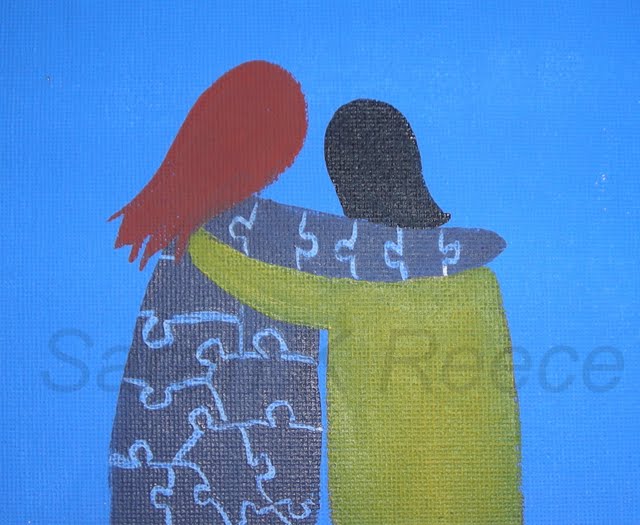
One of the most important things a person with DID needs is acceptance. It can be very stressful and discouraging to have a condition that is uncommon and often misunderstood. Media representations of DID are often dramatic and frightening. It is also important not to be invasive. Some people with DID are comfortable sharing details about their systems, others are not. Asking questions like “who is out now?” or “what are all your names?” can be confronting. It helps if you are willing to cope with inconsistency. Someone with DID may one day love apples and the next hate them, may tell you on different occasions about a film they saw and give you completely different impressions of it. Often, this is misunderstood as lying, when it is just parts with different tastes.
It will also help if you are willing to cope with confusion. Dissociation is extremely confusing by its nature. It may take a long time to work out what is happening. It may take a long time even to determine if the symptoms are dissociation rather than something else. Try not to pressure the person to know more about what is going on for them they can. Learning about this is a process, and the diagnosis of DID often carries a lot of stress and fear for people. Being safe is very important, if you have a friend with DID it is vital that you never take advantage of their multiplicity. If they have child parts, treat them as you would treat children for example. And lastly, although you may have a strong friendship or relationship with one part, do your best to embrace and welcome their whole system, and recognise that your friend is part of a community.
Is there hope?
Yes!
Connections that have been broken can be rebuilt. Trauma can be healed. It is important to find good caring support people, friends or family or professionals. As much as possible, work on learning about your system, increasing communication, self awareness, and self acceptance. Reducing denial, and learning how to ground yourself can also make a big difference. The goal is to come together to function as a team, all protecting and looking out for each other instead of fighting and pulling in different directions. This goal can be reached through cooperation, and/or through integration, which is where the dissociative barriers between parts dissolve, so every part is out all the time.
People with DID can be very vulnerable, but they are also incredibly resilient!
Cameron West, who has DID, writes:
I desperately want to feel like I’m part of this world and somehow connected to the people in it. I guess that’s why I’m here today. I’m hoping that somebody will look into my eyes and tell me they see somebody there, tell me they see Cameron West there. And if they see other people in there, well that’s okay too. It has to be okay. I’m through being disconnected from me. I am who we are, and it’s got to be okay, or I’ve got no chance of a better life.
For more information see articles listed on Multiplicity Links, scroll through posts in the category of Multiplicity, or explore my Network The Dissociative Initiative.