Nurturing

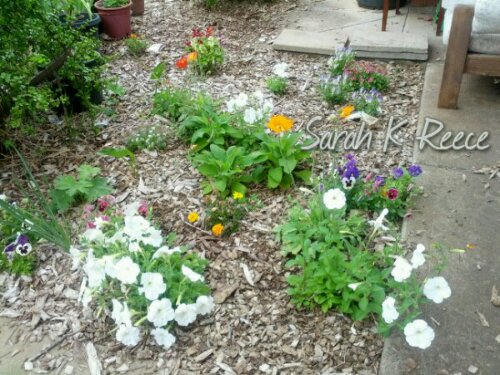
My garden is blooming and beautiful. I love it so much. A number of years ago, when I was extremely unwell with severe dissociation, I read the book Women Who Run With The Wolves, which I loved. One of the suggestions was to grow things, to touch earth and become accustomed to the cycles of nature, of seasons, of life and death, of the needs of things that grow. Since that time, I’ve always had a garden, even if it was only some jonquils in a pot. Many plants have a special link for me, remind me of someone I have loved, or a time in my life, or a dream I’ve had. I bought some of these plants last year to celebrate the news that it seems I have intact fertility and will hopefully be able to have a child.
image

image

image

image

image

image

When I started growing things, I found myself slowly learning things I had forgotten in awful circumstances. In the grips of profound self hate, nurturing my plants was a small but powerful reminder that things grow best when they are loved rather than starved.

There’s a certain stereotype of the young person who has escaped from an abusive background, who find themselves something to nurture – a house full of cats, a volunteer role at the local nursing home, or a garden full of plants to tend. Somewhere in that act, I gradually began to learn how to tend for myself. It’s a process I’ve seen many people go through, people with such amazing qualities of generosity, compassion, tenderness, or wisdom, who have not yet learned how to treat themselves with this kindness, but who pour them out on others in a tangle of love and need and hope. For others they’ve yet to learn how to nurture, how to help something to live, to watch for signs of stress, to learn the language of need for another. They have yet to learn how to be still and listen, the attentiveness of love.

I remember the very first time I grew plants from seed, what a miracle it seemed to me. How magic that from these small inert bits of brown matter, green life springs. The incredible fertility of life, that from one seed, comes a plant that creates many many seeds. That all things die. That some things that I thought would grow, under my care, will not, and others that are thought to be difficult grow readily. Despite all knowledge there is mystery, even in this. Gardens reward attention, knowledge, and skill; with beauty and abundance. These observations are so simple and yet I find them deeply moving. Standing with bare feet on earth, in rain, wind on my skin, hands in soil, I find metaphors for the tending of my soul, of my family and friends, my world.
image

image

image

image

image

image

image

image

image

image

image

I find a sense of peace and connection in my garden. I hope you have or find places in your life that speak to you also.

Renovating the house (and bits of my life)

I am darn excited! As I’ve mentioned before on this blog, I’m a ‘change the furniture around’ kind of person. Part of my dissociation is that I find I numb and disconnect to a home that never changes (see Dissociation and tricks of the brain). It doesn’t have to be massive change – a new bunch of flowers or moving a lamp will do. I’m in the middle of a big shift and repair job inside and out that is making me very, very happy.

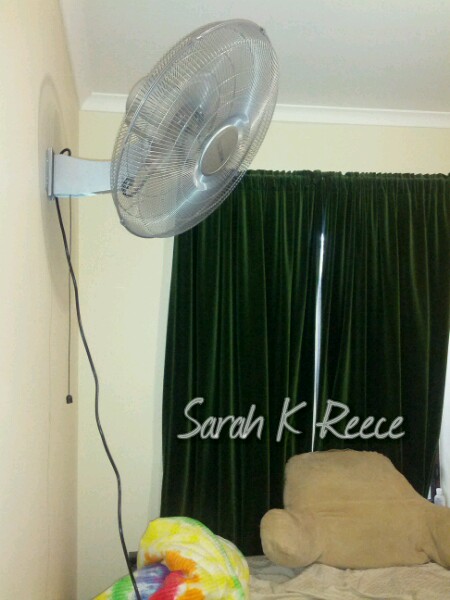
First off, a new fan! I was given a Bunnings voucher from a friend and went and bought this huge, almost industrial wall fan to hang over my bed. It’s amazing!! Far more powerful than a ceiling fan. When I get one of the other projects done – fencing off the window from outside so I can replace the screen without Zoe destroying it, it will be like a completely different room to sleep in. Happy happy.

2014-01-01 18.04.42-1

Another project is improving the airflow through the house. Two screens need replacing and the Zoe fence needs building for that.

Zoe free areas in the house – planning to buy child gates second hand online to keep her out of the kitchen and studio. This will also limit the dog hair to certain areas of the house! Well, ~ish.

Renovate my studio. Again. Hurrah! My whole studio has been clogged up by the dog crate, completely inaccessible and filling up with clothes I can’t reach the wardrobe to hang back up. Tonks knocked a set of hollowed egg shells from an old art project called Taboo over and Zoe kindly chewed them into very small bits and scattered them through everything on the floor ie most of my clothes and hats and scarves and shoes and many art projects. So! The new plan is – no pets in the studio, and no table making it hard to access the wardrobe. The table is now gone, as is the dog crate.

2014-01-01 18.05.19-1

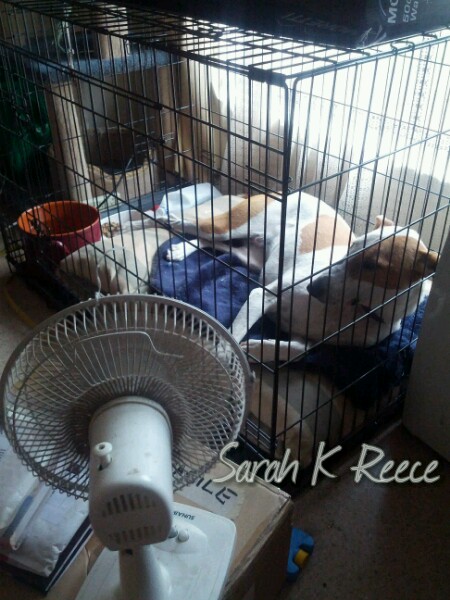
Zoe’s dog crate now lives in the loungeroom where the people are and away from the art supplies. Hurrah! The dining table now lives in the studio where the pets and pet hair is not. This is also a good thing.

2014-01-01 18.05.33-1

This means Zoe inherits the little fan I was using in my bedroom. 🙂

2014-01-01 18.05.54

A new mattress! Part of a Christmas gift for Rose, I’ve upgraded my rather awful matress for a really nice pillowtop I found at a salvos store that begged me to bring it home and see what it would do for sore backs. So far, it’s been a huge success. 🙂 Upgrading old furniture is an important and fun part of the housekeeping process, especially when you shop in the hard rubbish collections.

The last of the lawn is going! I’ve been in the process of replacing all the lawn in my front yard with a mulched garden bed full of herbs and flowers. My Mum has kindly done most of the work on this as I’ve been crook or flat out busy with work. We’ve brought some more mulch down and the last of the grass is being smothered under cardboard. My first seedlings are planted in a mini greenhouse for sprouting, hopefully I will soon be adding chives, thyme, and other seedlings to the garden.

All the curtain rod hangers in the house need replacing to double hangers suitable for an extra rod for netting. This will stop my curtains falling down every other time they’re opened or closed, and keep the neighbours from watching me cook in the kitchen and so on. A small but important detail that I’m really looking forward to!

My new art studio at Rockabilly BODY is still under construction and coming along really well. Once the walls are up and ready I’ll be off there to paint them and start furnishing it.

So there you have it. A catalogue of renovations and exciting changes. My roses are in full bloom, my figs are fruiting, my home is a bit of a mess but will be good before my rent inspection, all going to plan, and my heart is happy. 🙂 I know it seems crazy that it’s so crowded when I live alone in a 2 bedroom unit but between the 2 cats, the dog, Rose being around a lot, entertaining friends and family, and that I’m living here, using a room as a professional arts studio, using another room for my Temporary Body Art business stock/kit/paperwork, storing my library, and running the DI out of the place, my challenges to fit it all in using cheap or free furniture and limited energy are more understandable. Hopefully the new arrangements and also the new studio might improve things a bit, not to mention Rose and my sister moving in nearby when they find a place! 🙂

On setting goals for a new year

2013 is finished. It’s been a mad, mad year. I’ve learned a hell of a lot. I’ve lost a couple of friends, one to suicide and two to fights. I’ve learned how to actually critique criticism that’s sent my way, to evaluate it on the basis of my own values – to take in what would bring me closer to my values, and ignore what would take me further from them. It’s only taken me 30 years and it’s not perfect but WOW what a difference skills like this can make. I’m finally starting to wrap my head around the idea of adulthood in a way that’s exciting instead of skin crawling. Awesome.

One skill I do have that I’m often asked about is goal setting. This is always fun for a multiple because there’s so many, and very divergent, goals, needs, and desires. Every year for the past 5 or so years, I write up a goal list. It’s not a list of resolutions. It’s about things I want to do or try or learn, and it’s there as a reference, partly to help guide choices, and partly to try and make sure no one part’s goals are constantly forgotten. Every year I get some goals done and others get added to the year after or left behind as circumstances change. Every year I’m surprised by some wonderful unexpected opportunities that open up that weren’t on my goal list and I go through those open doors and enjoy a life that isn’t always planned and doesn’t always turn out how I think it will. This is how goals work best for me – as guiding lights. They are the things that help me seek after things I desire in life. I’m always happy to be waylaid, and some goals remain frustratingly out of reach. But there are so many things I love and want to do, this isn’t the end of the world.

So, for example, back in 2011 my personal goals list included items such as:

  • Establish myself as an independent artist
    • get an ABN
    • make a website
    • start a blog
    • arrange business cards
    • attend MYOB training at WEA
    • attend any other available training about business for artists
  • Continue with ACA visual arts degree in Semester 2
  • Continue working with MIFSA/as a peer worker
  • try to pick up about 2 days p/wk total workload
  • Continue working with the Dissociative Disorders workgroup
    • possibly develop a talk for THEMHS
  • Arrange suitable short-medium term living quarters
    • shed?
    • caravan?
  • Apply for training with Lifeline to become a telephone counsellor
  • Apply for training with Radio Adelaide/Poets on Air
  • Take back up Sunflower Shop voluntary position if time permits
  • Publish or get ready for publication a booklet of poems and an introduction to managing DID
  • Investigate becoming a mentor or foster carer with Life Without Barriers
  • Take up learning Japanese
  • Explore Japanese style ink paintings and poetry
  • Develop my camera skills
    • create a portfolio of work based on Singapore trip
  • Develop work for exhibition
    • SAW
    • Mental Health Week
  • Continue to develop my health support system
    • find and begin work with a good psychiatrist
    • continue building my personal library
    • continue to investigate options for health, buteyko, chiro, massage, diet etc
  • Pick up at least one form of regular physical exercise
    • dance
    • pilates
    • martial art/self defense
    • cycling
    • walking
  • Continue to develop social networks – major goal to have at least one physical location (however small) and one person for each member of my system to feel safe and at home with.
    • goth community
    • alternative/hippy community
    • christian community (maybe salvos?)
    • creative community
    • DID/MH support
    • gay/queer/trans community
    • dating and friends

Some of these things were far easier to pull off than others. When life had so many barriers and so few needs being met, I found it was far more effective to focus energy on the goals that were proving easier to meet rather than impose my own hierarchy on them. I also found that sometimes obvious sequences of goals were not that way at all – for example I expected that I would find housing, do a degree, then get work. Things worked differently for me. Housing was phenomenally difficult, whereas I found many passions and work opportunities (usually unpaid, admittedly) first. So part of what makes goal lists work for me is that they are only ideas to navigate by, not things I MUST do or things to make myself feel shame about. I still haven’t taken up Japanese, and I’m okay with that! Maybe I will one day, maybe I’ll never get to it.

I also break my goals down into very small steps. If I try very hard to reach a goal and can’t, I haven’t made the step small enough. For example, I had a number of failed attempts to get back to uni after becoming very unwell and derailing my life plans. Each of these attempts took up all my time and energy, and each time the sense of failure was profound and massively eroding my confidence and sense of hope. I finally decided that this was too big a jump – from bed bound by illness to university. So I did smaller steps. I started to do one day classes at the local WEA. Then I took on two day classes. Then classes that lasted over three or four weeks. I got myself back into routines of travelling to a place to learn each week, of finding my materials from last week, doing homework, navigating parking and the lifts and new people. Then classes that ran over a term. Finally I graduated to term long Tafe ‘Short Courses’, and then I took on semester long classes as an external student, from the visual arts degree in college I wanted to get into. Finally, I enrolled in the degree. I have finished exactly half of my first year so far, and it’s slow and difficult, and I love it, and I’m often very sick and unable to attend. This process has been humbling and frustrating and time consuming, but ultimately far more successful and exciting.

Without To Do lists my life would be impossible. I’m a dissociative multiple who struggles to track information and I have many projects going at once in different life areas. My goals list is another way I check out how things are going in major life domains – social, spiritual, work… and to remind myself about important new journeys I want to take – whether that’s finding a friend to go to the goth clubs with, or exploring the local permaculture groups. Sometimes life is best navigated by going where it takes you. Sometimes you need to run into it, go exploring, try something new, and find new passions, friends, ideas, and experiences to speak to your soul. Goals are best when they are in service of a great life, congruent with your values, and easily cast aside when they come into conflict with values. It’s about living thoughtfully, giving consideration to the life we build every day, so often without thinking about it or realising that our ‘normal’ is a choice and we can make other choices. This is not about success or failure, it’s about maps and star charts and sailing the high seas, about tacking into the wind and setting forth to have a meaningful life.

Power shifts in a multiple system

I gave a couple of talks recently about supporting people through a dissociative crisis (more info and resources here). Some of this talk was focused on supporting people who have parts, and explored some common crisis points for people with parts. One of these I described as ‘civil war’ – ie major power shifts and fights between different parts.

Many people with parts or with DID are a mix of aware and unaware of other parts. An internal war like this can be very similar to the kind of massive conflict that everyone can also go through when there’s a lot of stress and contradictory frameworks for how to respond to it. Sometimes the fighting is as clear and overt as Paul hates the way Sky is running things and her choices about friends or career, and has decided he would do a better job. Sometimes the struggle is underground, messy and confusing and conflicted. When parts are at war with each other they can do a pretty effective job of tying the shoelaces of every other part so that no one can function very well and no one gets any needs met. If this is intense and continues for a long time, profound distrust, loathing, terror, confusion, and dysfunction can result. On the other hand, if one or two parts are more powerful and able to dominate, they can effectively become dictators to the rest of the system. If they are compassionate and caring of weaker and more vulnerable parts their leadership can create great stability and peace. If they are brutal and uncaring awful abuses can occur.

Power is an interesting concept to define in regards to how a multiple system works. It can mean different things. Sometimes having the most life skills gives a part power because all other parts will have to allow a switch at some point to be able to manage life. Sometimes it can be having the ability to stay ‘out’ in the body the longest. Sometimes it’s force of personality, or the capacity to be heard by all the other parts as a voice and so influence them, or the ability to chose which parts can come out and when, or being the most frightening part, or being a part most other parts trust and put faith in, or having a lot of environmental triggers that bring a part out often, or getting along the best with the therapist or other people with power in their world, or having been around a long time, and so on. Some forms of power are the same kinds of power we see in any group of people such as the person who knows a great deal and who’s opinions are therefore treated with respect. Some forms of power are quite specific to the way internal multiple communities can work with regards to switching and control over each other.

People with DID have often come through some pretty awful things. Many of us have had little or no experience with healthy communities. Many of us have had little or no experience with the responsible and ethical exercise of power. So it’s no surprise that sometimes our internal communities are structured in ways that partly work and partly cause harm. If all our role models for strength, leadership, and power were abusive, ineffectual, unaware, or disconnected, it’s a challenge for parts to use their strength and power in ways that are connected, insightful, and empathic. If all our experience of group dynamics is that the strongest get their needs met while the weaker ones struggle, the really vulnerable get humiliated and tortured, and the alienated ones rebel, of course we find similar dynamics in our own systems. One of the challenges of being part of a multiple system is to help the structure become one that brings out the best in each part. Many multiples are a complex combination of some great internal dynamics and some awful. The more awful the dynamics often the more intense the suffering, and sometimes the more severe the dysfunction.

In speaking of my own system, I’ve been through a number of major power shifts, some of which were extremely distressing and some of which have been brilliantly helpful. One of the first civil wars for us was when we were 10. 10 was a bad year. People died. Pets ran away and didn’t come home. We moved house. More pets died. Sarah, ie all of us, crashed. The rather fragile sense of emotional security we’d managed to develop was completely swept away. Death bowled us over like a flash flood through a house of sticks. We became paranoid and suicidal. We started self harming in a creative variety of ways. We decided that we could no longer cope with bullying and loneliness at school and did whatever it took to be ill enough to not have to attend. Chronic, severe tonsillitis led to recurrent hospitalisations, tonsillectomy, and severe secondary infections as our immune system struggled. Nightmares became intense, often we would be sleepless and walk through the house at nights checking on sleeping family members to make sure they had not died. We developed elaborate plans for fighting, restraining, or poisoning possible home intruders who might try to kill a family member. In short, it was a catastrophic collapse of the approaches we had been using to navigate life until then. Crisis.

War ensured. Two primary powerful parts with completely different frameworks tore everyone to pieces in a tug of war over who’s approach was best. One of the parts was primarily concerned with ethics and moral behaviour. She’d been educated in sunday school in a deeply unbalanced ‘turn the other cheek’ way where love, self sacrifice, self hate, and shame were deeply entangled. She was also highly empathic and intelligent and understood that surviving was more than a bodily thing, it was about remaining recognisably human. Her deepest fear was making life choices that meant she could no longer have respect for herself as a person. The other part was primarily concerned with survival. She was lonely and disconnected and made choices in the absence of grounding relationships. She had a pragmatic approach to philosophical challenges such as ‘is it better to be a dead pacifist or a live, lapsed pacifist’ and was unhesitating in responding to violence, deprivation, or abuse rapidly and without concerning herself with ethical frameworks to understand or justify her choices. She could stand up to any authority figure if she believed they were wrong on the basis of gut instinct, and either take punishment or run from it. Her deepest fear was death or being trapped.

We have since come to understand that these very different perspectives are both vital. They balance each other and are both needed. At the time however, all hell broke loose as we began to shift from being ruled by twisted ethics to being ruled by anything goes if it helps us survive. We radically changed our sense of what was acceptable behaviour, for example, parts began stealing, while other parts became suicidal with shame about the stealing which they had only the vaguest and most confusing of senses was not actually being done by them. The brain was a battleground while the body was under assault. The head noise was unbearable, and the sense of disconnection not only from peers or family, but from all other humans, became profound.

TW for religious content

We had terrifying experiences of co-consciousness and became secretly convinced that we were possessed by the devil. On occasions we’d lock ourselves in the bathroom and stand in front of the mirror and watch the switching happen, where the face was the same but the eyes were no longer my eyes, and try to work out how something that felt so profound internally as a switch could make so little visible change from outside. Some parts developed a terror of the mirror and became convinced that another girl lived in it and pretended to be us. We had a psychotic fear that if she walked out of the frame first we would be trapped within the mirror as a reflection and she would inhabit our life. Mirrors became fascinating and terrifying daily encounters with something deeply confusing about ourselves we had no language to explain. Religious experiences within a pentecostal Christian church deepened beliefs of possession and demonic power, and terror that we could not be cured, were personally directly responsible for all suffering and evil in the world and the crucifixion of god, and were beyond redemption. Self harm and painful medical experiences served as self punishment and torture for being evil, and helped to keep suicide at bay. Other parts took on nihilistic beliefs instead that made them suicidally depressed.

End TW

This particular war settled when the twisted ethics part won the upper hand again. A number of things led to this, intense experiences of shame, punishment, and a particular conversation with an adult who was desperately important to her who told her that due to her behaviour they no longer believed that she loved them, and she would have to work hard to be obedient and good enough to prove this to them. As this spoke directly to her worst fears she gathered all her strength in a desperate effort for dominance and won. Life returned to the profound dark/light split of the compliant and rebellious who operated independently and knew little of each other. Stable, but remaining profoundly unhappy, different parts gathering various symptoms of a person in a state of extreme distress, and chronically suicidal.

As an example of a different kind of power shift, we once found ourselves homeless and on the run from an abusive relationship. The part who had been running most of the day to day life was exhausted, broken hearted, and suffering from intense anxiety. The rest of us were becoming increasingly frustrated with her dominant role considering her incapacity. She was used to her role and did not trust anyone else to be as competent. (for more about this, see Understanding Roles) After a great deal of arguing, the rest of us teamed up and deliberately moved her to a place deep in the system, far from the surface, where she could not be triggered out. This was never intended to be permanent and was not done with malice. Then we proceeded to celebrate our newfound freedom and start learning some new skills and discovering what we liked to do.

After a short time things started to go badly wrong. Burying this part so deep had an unexpected side effect. Dissociative containment between her and the rest of us started to break down. Her intense anxiety began to flood the whole system. Parts who by their confident (some might say cocky) nature, simply don’t experience anxiety started having panic attacks. They were not only inexperienced and ill equipped to handle this, it deeply threatened their sense of sense and was putting the whole system at risk of extreme dysfunction.

We quickly brought the anxious part back out to the front of the system, and containment reasserted itself. But the experience was not wasted. Rather than being angry or frightened at her treatment, she was relieved that we’d proved we could function without her intense over involvement. Like a worn out mother of adult children who had displayed surprising capacity she began to step back more and more and allow other parts to take on more roles and skills. Many other parts were made eager by their taste of a life that was direct and personal rather than vicarious and second hand, and they keenly enjoyed the opportunity to develop and grow with more time out. This power shift was slower, but far more stable and effective.

As this is getting very long, I’ll continue in another post. The third power shift I want to share about was as a result of diagnosis and interacting with the mental health system, and it too has proved to be very stable and useful.

For more information see articles listed on Multiplicity Links, scroll through posts in the category of Multiplicity, or explore my Network The Dissociative Initiative.

I am a Tardis

Yesterday was very hard. I woke early because my bedroom retains heat badly and after several days over 40C it was a sweat box this morning. I was weeping with frustration and exhaustion after efforts to rig a temporary screen so I could keep the window open overnight while Zoe was indoors (she destroys it when she’s outdoors) and to drag my small but awkward portable fan into the room, followed by a cold shower still left me dripping with sweat and sleepless.

Work was a 7 hour gig which turned out to be incredibly busy. Rose worked it with me and fell into all the traps I struggled with at first in this line of work, not stretching or taking enough breaks or moving her injured leg around often enough. By the end of the day we were both sitting in the car park in horrible pain and completely exhausted.
Some of the parents were depressingly scary and aggressive with their kids, and the last guy in my line, who’s kid I’m painting after my finish time, unpaid, because they had been in the line, laughs at me when I wince in pain and jibes about how ‘hard’ a job where you sit around all day must be.

Years ago during a time of crisis in my life, pre diagnosis with DID, I can clearly recall one of us saying to the rest of the parts – any of you who will not survive what is going to happen over the next few months, go. Hide in burrows and caves. Come back later. I’ll get us through this. At the time it made little sense to me, but sure enough all our inner kids and more vulnerable or hopeful and gentle parts disappeared for a long time, and severe dissociation descended.

Fast forward to the small hours of the morning now, several intense and distressing conversations with no resolution later and my head is finally almost calm. There’s been screaming and weeping and now a kind of quiet. No one has hidden in burrows. Things are not all okay yet either. Some of us are holding the fort. Some are deep inside, ships far out at sea where their pain can’t harm. Sometimes all us parts are close together, bunched up tight listening to each others thoughts and watching life over each others shoulders. Sometimes we’re spread far apart. At the moment I feel like there are whole deserts and jungles and oceans between us.

Tonight I am a Tardis, much bigger on the inside.

And so we hope. We hurt, safely. We bring what skills we can to the present, what gentleness this easing of pressure inspires. We drink bitter drinks to ground, lay naked in the dark, surrender to the demands of sleep.

Thoughts about peer work and DID and community

It is incredibly hot here again. It’s currently 42.3C and I feel like my face is melting. Hot weather and I do not get along since I developed fibromyalgia. So I’m home, in front of my little portable air con, preparing for my drive off to Mifsa to give the talk Supporting Someone in a Dissociative Crisis this evening. Apparently I decided the best way to prepare for this would be to spend the day on the net getting into big conversations with people.

I’m getting frustrated again that I can’t blog as much as I want to. I have so many things I want to share, my list of posts to write goes into several pages. I’m still hoping to find time to blog about all the great talks I got to hear from at the World Hearing Voices Congress last month. And I’m often in amazing conversations, taking down quotes to write about later but so rarely get to come back to them. I think part of the problem is that often the topics I’m wanting to write about are big ones – suicide, multiplicity, sexuality and so on – and I really want to do a decent job. Sometimes I let myself just spiel and post, but often, especially if it’s a post that I’m hoping will have useful information in it instead of just a bit of a glimpse into my own thoughts and life – it’s not something I can write in a moment. I need to get several parts to read over it, I try and edit it from very different perspectives, and I try and include links to other information or resources when I’ve found them. That’s not a short process. I wish it was. Or I wish I was paid for writing them so I could more easily carve out time each week for those kinds of posts. Which I guess kind of brings me back to my idea about writing a book…

What do you think? A book is a great thing. You can borrow it from a library or friend. You can pick it up and put it down and carry it around with you. You can underline bits and cross things out and write your own thoughts in the margins. But a blog is good too – it’s always free, especially if you use the net at the local cafe or library. You can even contact the author or write comments underneath. It’s a growing, evolving process, with small bites of information. I like the format, it has a lot going for it.

So, today I was talking online with a friend about internet safety, and scams, and how important it is for people to be aware, and I thought to myself I keep hearing this word awareness. I hear it all the time around the ‘days’ we have like the International Day for the Elimination of Violence against Women or raising awareness about MS, or how to talk with people in wheelchairs without driving them nuts. I have a whole stack of physical and psychiatric stuff going on, and my awesome friends likewise, I still have no hope of remembering everything I’m supposed to be aware of. I find myself wondering if a different approach wouldn’t be more helpful – like a ‘how to engage stuff you don’t know much about in a way that doesn’t drive people crazy’ approach. How to generally be a helpful person open to hearing new things you hadn’t considered instead of trying to be aware of every illness, condition, social concern, and so on.

Isn’t this partly what we’re doing in spaces like Hearing Voices groups – the facilitators don’t have to understand everyone’s different perspective or experience, they are just trying to hold a safe respectful space where everyone can speak for themselves and engage each other… maybe we can support better and more respectful ways of engaging with things we haven’t personally experienced that are easier than massive lists of things to be aware of? Even as someone working to raise awareness of mental health experiences such as multiplicity I think this. Maybe if we work together to create a model for engaging with our diverse communities we can relieve some of the burden of anxiety so many of us feel when we are aware we lack awareness and wind up not engaging or falling over our own feet with stress worrying that we’re being unintentionally wildly offensive or upsetting.

On that note… I read a blog post today where a person with DID is expressing deep frustration with some current ‘awareness raising’ stuff going on over in the UK that they feel falls so far short of the mark that it’s actually worse than the usual ignorance and myths about DID. I felt that Bourbon made some really good points about issues with sensationalism in the media, and misconceptions about how parts can function and overlap. I recommend going over to have a read of it – What is DID? (a response to media campaigns). When Bourbon started talking about their (gender neutral as I’m not sure of pronoun preference) perception of what DID actually is, I was concerned. Here’s a brief quote from the end of the article:

In reality, those with DID feel far from special and intruiging.  A life with DID is actually spent hiding away, keeping yourself as small as possible so you don’t get noticed.  There is often so much fear and pain and confusion coursing around you and the whole system it can feel like you are paralysed.  Of course there are teeny tiny moments when life with DID doesn’t feel THAT BAD, but that can only really be fully appreciated when you take note of the alternative extreme lows.

This is where I feel deeply concerned. I don’t know Bourbon, I’ve read a little of their blog today, some of the earlier posts have been made private but they’ve been writing for awhile and I can see a whole lot of work going into being open and supportive about a life with DID and all the challenges that can pose. It’s always difficult to try and respond as respectfully as possible to someone who’s clearly upset about something that really hurts them, while disagreeing with them. We had a bit of a conversation in the comments before they closed them for a break (which is brilliant, and something I wish I’d thought of with this blog instead of closing the comments entirely for the first 2 years. Although sadly that meant it ate my last reply which was quite long and thought through, sigh). I thought I’d share my thoughts about this here too, because there are some amazing people, like Bourbon, out on the net and in their communities, all trying to raise awareness and share information. And yet so often we make each other uncomfortable in some way, or somehow our stories obscure other people’s stories that are very different. It’s not an easy situation, there’s a lot of effort and goodwill and yet the community as a whole can quickly fracture instead of pulling together.

I was going to just pull a few quotes from our conversation in the comments, but then it seemed like that could be picking and choosing to make things fit my perspective best. So I thought I’d quote the lot instead, although I haven’t run that part Bourbon (as they’ve currently closed the comments and I have no way of contacting them). The comments and blog post are both public and I’ve linked to it so I don’t think that will be a concern. Correct me if I’ve got that wrong!

Sarah:

I get that you are really pissed off and feeling unheard but I was uncomfortable with some of the ways you were presenting DID too. I think for me (as someone with DID) one of the ones I wanted to speak to is your statement that having DID is primarily about suffering, with only tiny moments of relief. That really distresses me. I absolutely get that pain and distress is a HUGE amount of the picture for many, many people, but that doesn’t speak to my experience. I suffer when I’ve been hurt and traumatised, and I’m in terrible pain when things have gone appalling wrong in my life with things like homelessness, but it’s not my DID that makes me suffer. That’s a subtle difference but for me, an important one. When anguish and agony are presented as normal – even inevitable and inescapable daily realities for everyone with DID, that worries me. I think we accidentally set people up for much worse experiences when they don’t hear other stories and ways of thinking about their situation. When we expect suffering we miss opportunities for joy and hope and delight and wonder. I don’t think it has to be this way – and that certainly hasn’t been the story of my own life 

Bourbon:

I’m really pleased for you that your DID doesn’t cause great suffering in your life now and I am sorry that you feel distressed by me pointing out that a lot of DID is pain and confusion. Don’t think I don’t delight in the fact that one of my littles experiences true joy for half an hour when with my therapist, or I am not appreciative of the fact that I have an alter who reacts quickly to external danger from other people. But at the moment, whilst I am engaging in heavy duty trauma therapy, this is not what my DID is primarily about. I experience joy in my life that has nothing to do with my DID – and that is what is important for me. Life outside of a disorder is important to me.

I take your point that educating people with all the negatives/realities of DID MAY set people up for worse experiences in their own lives – but what I am not going to do is exaggerate and ‘liven up’ the positives in the eye of the public at the expense of showing what DID is like for a lot of sufferers. Like I said, there are little moments when life with DID doesn’t feel that bad; and maybe I could have actually given some examples, like I have done above, but that is as far as it goes.

Reality with DID is tough. Yes our attitude can soften the edges (because even a little having fun in therapy can be viewed as a negative to the disorder – who actually WANTS to be in a 26 year old body but behaving like a 5 year old?) but the public doesn’t need to be educated about our attitude. They need to be educated about the facts, the symptoms, the reality. Attitude is a side-line; not a focus.

Sarah:

What you’ve said here is that you’re doing heavy duty trauma work and that is painful as all out. I don’t see that as being about the DID, if you’d been awfully traumatised and didn’t have DID you would still be hurting like hell and having some horrible therapy sessions. For me they are separate things – the experience of being multiple and the experience of having been chronically traumatised. While they can be deeply connected it’s not the DID that is hurting. Reality as someone who has been deeply hurt is tough. That doesn’t haven’t to be reality with DID. Yes there’s confusion and shame and challenges, I’m really not making light of that. But then, there is for all life, however we experience it. Challenges like how to feel alive, how to connect with communities, how to learn more about who we are, these are universal quests and struggles, experienced as much by people with deafness, people from backgrounds with money and power, people whose babies die young, as they are for people with DID – and for people who used to have DID. The specific challenges might be unique but the call to find ways to live well with others and ourselves is the same. So I don’t see this as ‘just’ an attitude. It’s an essential aspect of what it is to be human. When we tell ourselves that suffering is our lot we lose the capacity to engage life in any other way. When we hold up as examples other people who share experiences with us and write off their lives as being primarily about pain we shut down other ways our communities can live.

Years ago, when I was early in the stages of diagnosis, deeply distressed and struggling to find a therapist to work with, I called Lifeline one night. I was in the early stages of working with a new therapist who’s approach I was finding deeply distressing. By luck I spoke with this guy who actually knew something about DID. He encouraged and supported me while I wrestled with this dilemma – keep working with a therapist who was approaching DID in a way that felt completely wrong for me, or go against all the advice I’d read about how you MUST have therapy to heal from DID and walk away knowing it might be months or years before I found another one? He said something to me that has always stayed with me “Just because you’re split, doesn’t mean they’re (other people) whole. You can choose to engage this experience as an illness, or you can go on a grand adventure of self discovery.” (which will of course sometimes also be painful and confronting and so on, like all adventures)

Being invited to think about DID in a different way has been life saving for me, in that I have a life with DID. I don’t think of myself as disordered because I have parts. I don’t think of my parts as symptoms of my illness, which made me fear and resent them. I struggle and suffer at times. I also have amazing and wonderful experiences at times. Playing co-consciously with a 5 year old part was a profoundly moving moment for me, because I’ve spent years getting over my sense of shame and humiliation about having a 5 year old part. So much of what we with DID are wrestling with are things that everyone who has been hurt are wrestling with, and things that everyone who is trying to be human are wrestling with. We don’t have to sell people an idea about DID that is about sickness and anguish, not to each other and not to the public.

Bourbon:

I understand the distinction you are making. I really do. I first started blogging on here saying that I was going to refuse to call it dissociative identity disorder because it isn’t a disorder. But since realising the turmoil me and my system are in day to day then I realise how much of a disorder it is. It seems to me your experience of multiplicity isn’t just about trauma. Fantastic. You’ve built a life outside of that. But my DID is all about trauma. We are riddled with it. My system operates by way of abuse. What I mean by that is abuse is still going on, internally because that is what we grew up believing was the norm. It sounds like you are so much further along your healing that you have made peace with your past and become close to your system. I’m young and only two years into my diagnosis. But I am in therapy with an excellent therapist who has been working with DID for twenty years and one who has written books on the subject. So maybe I will find a way to live with DID in joy like you have. Or maybe I will integrate and be cured of this disorder. Who knows where life will take us? Personally, I hope I’m integrated. But we all know, well all DID’ers do, that is a choice.

I appreciate your words. You are very uplifting and hopeful and maybe this post does need a bit of that so thank you for dropping some with us. It hasn’t gone to waste.

Moral of the story: there are positives and negatives to everything (however large or slight) and BOTH need to be expressed if you are wanting to educate the public about DID to give a fair picture.

This is such a thought provoking conversation for me and something I’ve given a lot of consideration to over the years. I really appreciated the way Bourbon heard me out and didn’t get defensive. I have such respect for that willingness to engage with opinions and difference. It’s not easy, especially when you’re already feeling hurt and unheard yourself. I see so much divisiveness in so many communities I care about. I’m coming to the conclusion that it is such a huge challenge to create and be part of healthy communities with diverse members because most of us have never experienced that or even seen it before. Many of the people I come across in my peer work are being abused or belittled by their communities, they are at the bottom of their family and friend social heirachies, low ranking at work or unable to work, isolated from people like themselves and suffering from the impacts of all of these things such as low self esteem, depression, and self hate – all of which are seen as personal deficits by the mental health system rather that social issues. I’m reading an amazing book The Still Point of the Turning World, written by Emily Rapp about her experiences having a terminally ill young child. She talks about her rage at being dehumanised and having her experience, and her son, treated as a case study, as an example of the worst possible thing that can happen to someone, something to make other people feel better about their own lives. She talks about life as a Dragon Mother, her description of the unique agony and priviledge of loving and caring for a dying child. And I think again of The Gap, of how many gaps there are. Of a world of people who are living and hurting, who are divided rather than united by those most human of experiences – pain, suffering, loss, loneliness. 

Then I think about how fractious so many of communities of hurting people are. Love and acceptance start to be treated as limited resources that everyone’s in competition over. The division of people into the camps – people with problems/people who can help – dehumaises both groups as the helpers burn out and the ones with ‘problems’ never have the opportunity to recognise their own gifts of love and compassion. I see a lot of these kind of fractured communities, corporations that work on what is effectively a class structure – with separate facilities, entrances, work and rest areas for each level of client/volunteer/worker/management/upper management and strict rules about how each class is to engage those ‘above or below’ their own. I am at times contacted by hurt and angry members of other DID support groups who want to inform me that a certain member has been removed from their network for ‘faking’ DID or not having ‘real’ DID. I see a lot of hurt, angry, lonely people desperate for someone to reach out to them who alienate everyone who tries to. I keep coming back to an idea – that those of us who are alienated, alienate. Having experienced abusive communities, we reject new ones, or we rebuild new ones with the same imbalances and flaws we’re familiar with and just exchange the roles. It’s such a risk for everyone who feels hurt and disconnected, including me.

Then I think about the challenges of the entire issue of how we as a culture engage with diversity and disability. I’ve written before about whether mental illness is a disability. I drew upon two other communities to explore some of my ideas – that of the Deaf community and that Autie/Aspie communities. I have had brushes but not extensive contact with either groups so my ideas may be uninformed and ignorant – but that’s partly my point – the impressions those of us who have little contact with the communities develop are based party on the most vocal peers who have engagement with the media (and partly on the media itself but that’s another post). So, in this conversation with Bourbon, am I the equivalent of a person with a disability who is not suffering because of it, accidentally drowning out the voice of a more vulnerable person who IS suffering and who desperately needs better supports and resources?

I’ve wrestled with many of these things on this blog – the tension in trying to be seen as a whole person in The Disability Tango. Challenging conventional and sanitised stories of recovery in Recovery is not a one-way street. The risks and usefulness of using labels to describe behaviour and vulnerabilities in Labels – helpful or harmful? About my ambivalence about the way mental illness tangles good and bad experiences together and the way mental health is presented as being ‘normal’ in Mental health needs better PR. I’ve also done my own getting really angry about the limitations of diagnosis and how DID is understood and presented such as Introducing DID brochure and unplanned rant.

So, what is my role? What is a responsible way to present DID? How do I make sure that the voice I have is being put the best possible use? How do we build diversity into the stories we tell about conditions and experiences? I do a few things already – such as whenever I give a talk about DID or dissociation or hearing voices (and so on, or facilitate a group) I love to present with another peer worker whenever I can, and for preference I like to choose someone who has a really different experience from me. I presented at TheMHS with Cary and we deliberately wrote our ‘my story’ experiences to highlight the ways in which we were different (eg. I’ve never been in psych hospital, Cary has had many stays; I find gardening grounding and hate the gym, Cary kills plants by being in the same room with them and runs every morning almost without fail even if she’s injured). I try to write a ‘People with DID are not all the same’ paragraph into every resource I create and explore some of the common differences to reduce the impact that the way my system works has on people’s idea of what ‘normal’ DID is. I love to do as much community consultation as possible when I’m working because so many other people have experiences or ideas I would never have thought of and I learn so much all the time. So that’s a start.

To this other topic – does me talking about DID as if it isn’t all about suffering help or harm other people with DID? As far as my own life goes – it just has to be authentic. I can’t pick an ideal ‘outcome’ and try to pretend my life story speaks to it, anymore than it’s fair to try and force an exhausted and overwhelmed peer worker to try and give messages of hope they can’t currently believe in. All we really have is honesty, as much of it as we are willing to share with each other. And for me, DID is a disability in that it is something about me that is different, for which I need care and support and room to function to the best the way I do. This is a little bit like the difference between creating prosthetic legs that are designed to look as normal as possible and help people fit in and help other people feel comfortable, and designing ones that look and function very differently to a human leg, but allow the person to run marathons. And that’s still coming from a DID is a deficit caused by trauma – model, which doesn’t fit everyone’s experience.

There is profound suffering for many, many people who have DID. The level of stigma for this experience is beyond anything else I have seen in mental health. When a psychologist was in the year long process of diagnosing me, I spent most of that time arguing and trying to convince him I had Borderline Personality Disorder instead. For any of us who know about the extreme prejudice which which many people with BPD and their families are treated by the Mental Health system, this should shock you. I’ve written a little more about this over at the DI page Why are we needed? My people, people like me, are in terrible pain, suffering appalling stigma and discrimination, living in secrecy and fear. Largely ignored and unacknowledged by the wider community and mental health system, people are stuck, in pain, and dying.

So why don’t I equate DID with this suffering? How can I be so indifferent to it? Because correlation is not causation. I do not believe that this anguish is a necessary result of having DID, while at the same time I acknowledge that it is the painful lived experience of many people. A massive amount of this pain is about trauma. Another massive amount of is about stigma and disconnection from community. And the last huge whack of it is about DID systems that are modelled upon dysfunctional communities. This is where my work comes in especially, because the framework we are currently provided to understand DID is, in my opinion, dangerously limited. People are being told they ‘must’ have an inner self helper. People are being told they CANNOT get ‘better’ without 5 years minimum of weekly therapy (and that if they can’t get it they are just screwed). People are being told that having parts means they are sick, that hearing voices means they are sick, that wellness is about being ‘normal’. People are being told that dissociation cannot be cured. People are being told that DID is all about suffering.

We know that there are issues with people living to their labels in DID as in other things. I don’t believe that DID is inherently about suffering, and I don’t believe that people are well served when this is the story we tell. The DID story is deeply tangled with that of suffering but I don’t believe that collapsing the two together helps people. I was utterly incapacitated by these ideas when I was newly diagnosed. I started off very gung-ho once I accepted the diagnosis – I was going to be one of those rare, wonderful patients who did everything right and progressed through therapy at a spectacular rate and was integrated and back studying my psychology degree in a year. I was terrified that most of the DID autobiographies I read ended with people still in a massive amount of pain and unable to work or keep their primary relationships etc. I was tied up in knots by the insistence on a ‘host’ or ‘primary’ or ‘core’ person and the way parts kept getting shuffled into a hierarchy when that felt so so wrong for us. I was scared and alone. I really wished I could talk to other people who had the same things going on, even better to talk to someone else who was maybe a bit further along than I was, maybe a little less scared. I decided to out myself and become a peer worker so that I could try and be that person for other people, to humanise and reduce fear – others’ fear of us, and our fear of ourselves. To some extent, choices I made such as refusing to give out a system map or let anyone know our individual part names was because we now perceived that the standard approach to DID was now the greatest threat to having the kind of life we wanted to lead. Where once that threat was experiences of abuse, it was now the treatment. We grasped onto the lifeline guy’s phrase – ‘A Grand Adventure of Self Discovery’ and used it to navigate every ‘treatment’ offered to us. When ‘trauma recovery’ treatment was more agonising than the original trauma we walked away. When ‘mental health’ was presented as a greyland of limited emotional range and hyprocritical superiority over all the other ‘sick people’ we built our own ideas about health and recovery. When DID was presented as the worst of all possible disorders, impossible to navigate independently, needing extensive treatment from experts, a humiliating, painful, and protracted process of recovery, we asked ourselves is this how we want to spend the next ten years of our life?

What I keep seeing is that when people are supported to find their own paths, instead of being fit into boxes, amazing things happen. I see people who get to have experiences of healthy communities and model their internal communities on those principles – love, fairness, diversity, respect – and these people are not suffering because of their DID. I keep seeing that when people are exposed to ideas about freedom and joy and community, where they are not alone any more, healing and hope can occur. I think that it is extremely important to make room for people who find the psychological model that DID is a mental illness and that they suffer from a disorder, useful and helpful to them. But there are so many people who don’t find that approach helpful, who get hampered by the illness model and can’t find hope or joy or relief from pain when their parts are presented as symptoms of a sickness, that I can’t use this framework in my peer work. Like telling people who’ve had two psychotic episodes they have ‘schizohprenia’ and will suffer from it for the rest of their lives – it’s not only inaccurate it’s such a disservice to the person.

If we struggle against the effects of stigma, if we build better resources and community responses to trauma, if we try to prevent abuse, if we create and model healthy inner and outer communities; I do not believe suffering has to be the lot for people with parts, or that not having parts any more is the only way to not be in pain. Pain is part of our lives, and how we understand it, the stories we tell about it, and the way we respond to pain as communities make all the difference in whether that pain consumes and destroys people, or can become one aspect of lives that are still rich, deep, meaningful, and connected. The same goes for disability, for illness, for trauma, for DID, for anything and everything that opens a Gap and challenges us to find ways of bridging it.

And now I have to run off and give a talk Supporting Someone in a Dissociative Crisis. Wish me luck. 🙂

For more information see articles listed on Multiplicity Links, scroll through posts in the category of Multiplicity, or explore my Network The Dissociative Initiative.

Finding life

In the middle of a hot week here. Today reached higher than 40C,  and tomorrow is forecast the same. Rose and I had a weird, fractious day, but ended it down at the beach, swimming in the shallows in the dark and watching the moon rise. They are so precious, times like this.

I had a good appointment with my psychologist earlier this week, and I realised that in caring for Rose I’d dropped and forgotten all the work we’d been doing lately on self care. The sense of being connected to my own inner wisdom was gone, no intuition guiding my choices, no small voices speaking of deep soul needs. I’d become locked into my roles, feeling exhausted and in chronic pain. It was like feeling the walls close in about me, trapped in a box that was shrinking every day. Focusing more and more energy on Rose (not necessarily in a way that she enjoyed) as I became caught in that most common of caring binds: ‘If I can just make her well, then I’ll be able to get some of my needs met.’ I’ve watched family members burn half their lives away trying to do just that.

I came out of the appointment remembering that my journey is just as important, and that Rose neither wants nor needs a frantic carer driving her into directions that may not be right for her. She needs a gentle nurse and friend, who is still invested in their own life and heart so she is free to care for her own also.

Suddenly that tiny airless box blew open in my mind. The railway tracks were gone, the limits were gone. I felt free, free to call Rose and apologise, free to do anything I wished with the afternoon, to engage it in any way I chose. Where there had been stoic endurance of a trap, there was now freedom to explore what might be possible. My intuition was back, and my joy. The small voices were back and the ear to hear them with.

It’s a strange thing, life. We find it and lose it and find it, all over again.

Rose recovers

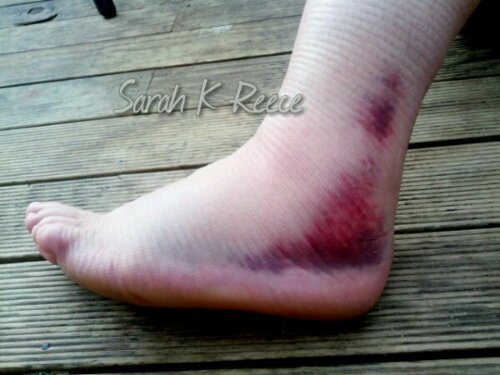
Rose is home now, but rather in the wars. I’ve dressed her injuries, watched an episode of Wire in the Blood to wind down, and now she’s sleeping.
image

image

image

She has a severely sprained ankle with tendon and ligament damage, there’s possibly some small fractures too but the swelling was making the xrays difficult for the doctors to read. We need to go back to a hospital for more tests. She’s in a lot of pain and getting very broken sleep.

Continue reading

Ink not blood city

image

Tonight I’m deeply sad. Treading water, far from land, memories that chill me slowly numb. Wrists that want to weep. The comfort of self destruction, mind turning over all the most delicious ways to die. Riding it down as night falls in my heart, as winter falls, as the sirens call to me with their tongues like knives and I find myself wishing for blades, wishing for someone who would beat me until I could cry and melt the frozen place in my heart. Some part of my mind separate from the engulfing despair, enough control to get the car safely home, no kissing trees with bumpers, enough to shuffle us into bed with inks and books as substitutes for blood and torture and loneliness.

I have memories of love and brokenness, some nights the ghosts rise from graves and their chill comes over me and I’m haunted by that which once comforted me. Smaller losses evoke larger ones, the petty indifference of day calls to the memories of an indifference so large and collective it tore spirit from flesh, it first sang blood into my life.

My inks speak to me and for me and of me and of pain. Sleep aches in my bones like desire, in rest will I be sanctified? [‘I went to reach a pannikin off the shelf, in it was a dead man’s brains’] I’m standing in a field of snow, enchanted by glitter until I realise it’s glass dust from a lifetime of broken dreams. The secret seems to be to love anyway, to be willing to bleed, to dream just one time more. It’s ground into my skin, in the light I have a halo, in the mirror I’m an angel with a scarred face and ruined breasts, ink running from my mouth.

Love, I say to her, darling, (they don’t give a f**k about you, like I do) this is my spirit which was broken for you, put your fingers into my palms and believe.

Experiences of spiritual emptiness and hope

I caught up with my local Hearing Voices group in SA yesterday. It was so good to see everyone again. I love this group, they will always be close to my heart. One of the first places I felt at home and started to see another way of engaging my own pain and loss. One of my first experiences of community. I was so happy to be back, particularly as I’m not a co-facilitator anymore and can just be my own mad self. 🙂

At one point, a member talked about experiences of spiritual emptiness. How I love this group, that these conversations happen. I constantly learn so much, feel so humbled. We talked about emptiness, shame, connection. I talked about my experiences coming home from the World Hearing Voices Congress and starting to struggle. At the congress I had the most amazing experience of connection with a whole room of like minded people. The first night alone in my flat was a transition. I’ve never been particularly good at object constancy. I can’t easily retain a sense of emotional connection to people when they’re not present. For the first 6 months of dating Rose, I would wake up every morning and go and find a photo of her to remember what she looked like, and to try and find that sense of connection to her inside me. I have issues with facial blindness, and often cannot picture the faces of my loved ones in my mind. I disconnect quickly. This can be really tough. I keep a lot of photos on my phone and around my unit to help me with this.

So, at the congress, all the connection, the hugs (we did a seriously AWESOME job of keeping out the parts who would get the most out of and be the least stressed by the congress! Very proud) the amazing conversations, they were all buoying me up. It felt like everyone I’d spoke with was a big red helium balloon, and I was holding the string. Feeling connected to them all, to a whole amazing community of people who treated me with care and respect, was half like flying. I was uplifted and full of hope. I felt like I could do almost anything.

Home alone in the night and the strings started to pull through my fingers. A profound sense of being empty and alone and very small in a very large, dark world crept over me. Hollow inside, doubts crept in, shame, every compliment in my memory twisted into a recrimination, every connection seemed imagined. I fell into the pit.

This time I took that image of the balloon strings slipping through my fingers and asked myself – what would help me hold onto the strings? I found that a question that resonated with me, there was a sense of fumbling in the dark towards answers. I took out my conference name tag and pinned it to my bookshelf where I could see it. I posted how I was feeling on this blog. I got up the next morning and watched Patch Adams over breakfast – marveling at the parallels, at the way so many of us are fighting the same fight, dreaming the same dreams. And how some of us simply cannot fit in, cannot help but be madmen. It’s not about what will work, or what’s practical, or even what will further our ideas best, it’s simply who we are.

I keep listening to small voices inside, keep looking for where my energy is. Keep trying to find ways to be more human, more honest, stronger in myself, more vulnerable in my interactions. I know that I cycle, it’s the nature of the carousel of parts. But I also know that strength deep in the system, that experiences of meaning, connection, community, and hope are deep and profound foundations even for the most wounded and disillusioned of us.

Being counter to mainstream culture can be hard. All of us need ways to keep our dreams alive, to maintain a connection to the things that are meaningful to us. I hope you are able to find ways to grasp the slipping strings in your own life, ways to tolerate the nights that are empty and find your way back to hope again.

A quote from Patch himself (not the movie):

you don’t kill yourself, stupid; you make revolution.

Vive la revolution!

Facilitating is a challenge

Today was good but tough. It was hot. I have a lot of admin and housework since the trip I’m still to catch up on. And a big conversation happened in the DI Open Group on facebook, where I’m the sole facilitator (not by choice!). I’m lying on the grass in the dark at the moment, down the local park with Zoe. It’s beautiful. There’s a cool breeze on my skin, stars overhead. So many things are running through my mind.

I think one of the hardest parts of being a facilitator is that people can very quickly lose faith in you. We’re so used to being lied to, being subject to marketing campaigns, advertising, slick company spin. It’s really difficult to be a genuine, human voice in the role. People quickly start to hear insincerity and feel you’re lying to them, bull shitting, setting them up. Once that trust has been compromised, real conversation is hard. People start looking for ulterior motives. Everyone is desperate to feel people are hearing then, agreeing with them, on their side. It’s a challenge to inspire everyone to also want to hear each other. People struggle not to become defensive or disengage. Conversations, real conversations not just fights, are hard for everyone, ask so much courage, empathy, vulnerability of everyone involved.

As a facilitator I struggle because being in the middle of difficult conversations and trying to hold a safe space can quickly feel like I’m alienating everyone despite my best efforts. I can find myself feeling raw, beaten up, and distrusted by people I care about, whose opinions I respect.

We have an idea on our culture that you can be impartial. I don’t think it’s possible. You can be less invested perhaps… which sometimes means too far away from the topic to have any idea about it, easy to confuse or manipulate. You can be highly invested, such as when someone makes a complaint about a resource I have built, or about my behaviour as a peer worker. Man, is that hard! I’ve worked so hard to try and engage complaints in a non defensive way, to use them as an opportunity to learn and connect and build more genuine relationships. I don’t always succeed, although sometimes this works spectacularly well, and I count among my friends and colleagues some wonderful people who’s first real conversations with me were complaints. It’s still such a challenge to try and genuinely listen, especially if the other person is enraged, or making horrible assumptions about my motives. Sometimes I feel profoundly trapped and silenced by my own role, by the weird double standard work in the sector can bring, where a client can tear you to shreds, but you must keep your mouth shut about your feeling, needs, fears, or concerns. (in front of them at least) On the other hand I’ve also been the client so often, completely ignored, silenced, dis empowered, humiliated, minimised, dismissed, interrogated, asked to account for experiences, needs,  and reactions I can’t even put into words, by people I am deeply intimidated by.

This process sucks. This framework sucks. How do we just sit down as people, and talk? How do we create safe and fair spaces to discuss deeply complex, painful, urgent issues? How do we not burn out the facilitator who needs hugs at the end?

My ideas about the facilitator role have been informed by my experiences in hearing voices groups. I’m not there to privilege one opinion or idea above others. I’m not there to decide the ‘truth’ of why voices happen or what people ‘should’ do. I’m there to make the space a safe one for people to have their own opinions, share their experiences, change their minds, disagree with each other, and still have a space where mutual respect and care can flourish. This is kind a diplomat role – I’m there to try and hear and help everyone feel heard, and to try and support and encourage even people with completely different frameworks to engage each other respectfully. I’m trying to model a way of both having a voice, and listening. Of course, the nature of this role is that it’s depressingly easy to fail. It’s easy as all hell for everyone involved to feel that I’m against them because I’m trying to give space to opinions they disagree with. That I may also disagree with them, but see my role as one of making space for all voices doesn’t necessarily come into things! We’re not used to this model, most of us have never had a genuinely respectful conversation with someone who completely disagreed with us, or whose experiences were totally different from ours. If the topic is really crucial, if people’s lives or sanity hang in the balance, the chances of anyone listening to anyone else decrease, because everyone involved is so stressed, has such a real need to be heard and believed that it drives us. It’s so bloody hard to be patient and hear opinions that we believe are so deeply wrong they sicken us.

Some days I’m so, so tired of being the diplomat, the facilitator in the middle. I’d love to have some one else facilitate these conversations so I can just have my own point of view and argue that.

Some days I wonder if the facilitator role is a bit stupid. Why is it primarily one person’s responsibility for making sure a space stays safe, respectful, and caring? What would it be like to have a difficult conversation in a room full of facilitators, were everyone was working hard to make sure all voices get heard? Wow, I’d like to sign up to that conversation.

I’m so proud of the folks in the Open Group, they did a fantastic job of engaging even though it was really hard. No one has slung any insults, space is being made for different opinions. I keep thinking about the idea that complaints are a chance to become closer, more real, more authentic with each other. I keep thinking about tribal cultures where the whole group sit down together and talk things through, tell stories, sing, dance, talk into the night, for as long as it takes to find some kind of peace with each other. I keep thinking that roles are useful but limiting, even a facilitator role that I value and believe in I also experience at times as very dehumanising. I’ve got some ideas, some experience, some bits of wisdom gleaned from life or other cultures. But wow, it’s a tough gig some days. Thank god it’s not my whole life. I keep thinking that spaces where someone like me holds the space, holds the expectation that we can disagree and still be respectful, holds hope that community and diversity and honesty can all enhance each other instead of being at war, are rare and precious. So, it’s important not to burn out the facilitator. I still have to step out of that role, shed the skin, run naked under stars, laugh from that deep place in my gut where joy lives.

And so do all of us. xx

Safe Sex 7 – Find Freedom

Explicit but not graphic content.

Part of what helps to make sex emotionally safer is freedom. Most of us have a whole host of beliefs about sex that limit, bind, and cause us pain. We live in cages in our minds about sex, partly because of terrible experiences and partly because of cultural myths. There’s a lot of ideas that limit us – from the simplest linking of the experiences of sex and pain – experiences that one always leads to the other; to more complex constructs that bind and confuse us.

I was in a conversation once where someone expressed discouragement about differences between what they and their partner liked. Their idea was that keeping things ‘fair’ meant that both partners got exactly the same experiences during sex. So, if I got a massage so I have to give my partner one. This tit-for-tat system is an unnecessary burden. The goal is intimacy and pleasure for both! If what each partner likes is different there’s no benefit in inflicting something on the one who doesn’t like it! If I love a foot rub but my partner has madly ticklish feet then it’s just silly to feel obligated to give them a foot rub back. It’s not just okay to like different things, it’s quite common! And to like different things at different times – tonight I don’t feel like this, I’d prefer that, and so on. It doesn’t really matter what form sex takes or how different you both are in what makes you feel pleasure and closeness, as long as you are both feeling it.

Another example of freedom being important to emotionally safer sex; I was talking about sexuality and was surprised when a woman told me that she found women attractive and appealing but couldn’t be a ‘genuine’ lesbian because the idea of oral sex with a woman disturbed her. I do not believe this is the case. Sexuality is about who you want to have sex with, it doesn’t say anything about what you do and don’t like during sex. Misconceptions like this create cages that bind people. Our culture weaves different ideas in together to create a big knotted mess that people get tangled in. Lots of lesbians like oral sex. That doesn’t mean you have to, to be a lesbian! Some gay men are brilliant in the kitchen, that doesn’t mean all little boys with an interest in cooking are going to be gay. It’s fun to look at the clusters of experiences that commonly occur – gay men and fashion! But it’s harmful when these become the ‘norm’ and all other experiences get overshadowed. As a young person I knew a kid who was bullied a lot because he was the only straight guy in his drama troupe. Clusters become stereotypes, and people get trapped by them whether inside them or outside them.

The politics of sexuality is highly charged for many people. The language around sexual orientation, gender identity, the politics of sex and morality are relatively new to mainstream Western culture, and in many places are used as distinct categories rather than descriptive language. Language as a general rule can be very helpful as a shorthand way of explaining who we are and perhaps most importantly, if someone might be interested in you. 😉 Categories, where people get stuck in boxes and stereotyped, are often very destructive. There’s a cute ‘Gingerbread Person’ poster where Sam Killerman has worked to untangle these categories back into descriptive language – it’s not perfect, but I do love it as a starting point for seeing gender identity, gender expression, sexual orientation and so on as separate concepts that differ from person to person!

People can become scared of ‘what things mean’ about sex; if I like this does it mean I’m gay/straight/kinky/whatever? It can often help to realise that you are allowed to define yourself. Liking or not liking certain sexual acts does not determine what people or genders you like to do them with! Sometimes the political fighting about rights can chew up vulnerable people who are in the middle in a way that disturbs me. Nobody should be forcing or coercing you to publicly identify or privately see yourself in a way you find distressing, with the exception of holding people to account for ethical behaviour. This is incredibly important to me! On a personal scale this push to put people into boxes limits people’s ability to engage and accept their own sexual desires and lives because of fear of what it might all mean for them. On a public scale, bullying, isolation, and intense distress can result from our tendency to categorize people and assume that we know better than they do what is going on inside them. It’s a form of diagnosis and holds about as much water for me in social settings as it does in mental health.

In Dead Boys Can’t Dance , Dorais and Lajeunesse explore issues of homosexuality, stigma, and suicide. What I was most interested by is that the group of boys at highest risk of suicide is those who were straight, but designated as gay by their peers. These boys suffer all the stigma, rejection, and isolation of being seen as gay, and do not identify with the gay resources and communities who might provide some refuge from these experiences. The process of mis-identifying each other might be less distressing if such stigma were not attached to some of the labels, but I’d still argue that not being seen for who we believe we are, not being believed about who we believe we are hurt us. If there’s anything we’ve learned from the past 100 years of the gay rights movement surely it’s that this harms people?

Another area in which freedom can help us to make sex emotionally safer, is freedom from the cultural beliefs of what it is to love another person. We tend to value our relationships in terms of duration. Only those romantic partnerships that last until the death of one partner are ‘true love’. Only sex between partners in love can be ‘good sex’. Or alternatively – marriage (or monogamy) kills sex, and good sex can only be had between strangers, or casual partners. Many communities that prefer and normalise particular kinds of relationships and sex consider that only their kind of sex is ‘good sex’. (think of the sexual norms of polygamous Mormon communities, and those of the BDSM communities). People are highly diverse! Good sex for one person is another persons dullest evening ever, or even a nightmare. Relationships that had great sex still may not last forever, because life is challenging and people grow and change, and relationships need lots of skills as well as love to thrive. We don’t have to take on these ideas ourselves. Sexual plasticity is an amazing idea the scientific community is exploring. (see The Brain that Changes Itself by Norman Doidge) Briefly put, plasticity refers to our malleability, the way we change over time. Sexual plasticity is why we can find our partner deeply attractive at 20, and still deeply attractive at 50 even though they look rather different. We are to some extent, wired to change. Sometimes this works for us, sometimes we find it frightening or stressful.

Freedom from limiting cultural myths around beauty, about the superiority of youth, the way we de-sexualise people with disabilities or illness. Many mature people love to have sex, and do not deserve to be seen as ‘creeps’ or weird. (See blog and book Better Than I Ever Expected) Emotionally safer sex doesn’t just happen between the individuals involved, it’s a cultural and community concern. How to create aged care resources that respect sexual and gender diversity, and support romantic and sexual relationships? How to support ethical sexual behaviour for people with intellectual disabilities, or at least foster the recognition that many of us, whatever our other challenges, are sexual beings. How to break out of limiting ideas that great sex only happens between the ‘beautiful people’ as if ripped abs means someone will be a generous and wonderful lover?

There are so many areas in which freedom can support us having emotionally safer, and better sex. Sexual morality is a tricky one, in that engaging sex (and life) ethically is a responsibility of all of us. Determining what ethical sex is can be challenging. Many of us draw from our faith communities to help us decide moral sexual behaviour, and this can be deeply rewarding. But for some of us, their moral frameworks around sex are a painfully poor fit, leaving us trapped in self rejection or hypocrisy. Some of us have no faith community and are relieved by the sexual freedoms of Western culture, but also wrestling with our sense that sex should be engaged ethically and trying to find non religious frameworks for that. There’s more than one way of looking at sex. You do not have to be trapped between moral frameworks that are hurting you, and immoral sexual choices that also hurt you (and other people). Go looking at the ways other people and other communities frame ethical sex. This isn’t an easy road, and people’s deeply held beliefs about morality are sometimes nowhere more intense than around sex. For some of us, rejection and revulsion would be the cost of living more authentically to our own beliefs.

There is no right way of dealing with this. Each of us has to decide for ourselves what prices we are willing to pay to be connected with our communities. For some of us the much lauded ‘coming out’ would cost us everything, and we would be at very high risks of suffering violence or suicide. For others, anything but coming out is a slow death. We do not have to walk each others roads. But freedom can mean at the very least, freedom inside ourselves from ideas that make us hate ourselves. Freedom from being trapped into choices between a morality we do not believe, and abusive sexual acting out. Freedom can mean simply the freedom to know who we are and make our choices willingly, bear our burdens with love and not hypocrisy, and seek to help our communities grow into safer and more accepting spaces.

Perhaps one of the greatest freedoms we need to make sex emotionally safer, is freedom from shame. Brene Brown is a brilliant resource in this area, she writes about shame, courage, and imperfection. Here’s a link to a couple of her great TED talks about connection and shame, or watch it below:

Freedom is a key human need, and it’s not as easy as it sounds. It can come at great costs, and expose us to awful risks. It can be painfully vulnerable. It can ask us to deeply wrestle with our beliefs about love, morality, and relationships. It can also be healing, liberating, and deeply peaceful. I hope you are able to find freedom from ideas that are hurting you, to make peace with yourself as a sexual (or asexual) person, and to engage in sex and support others to engage in sex in ways that are ethical, loving, and emotionally safer.

This article is part of a series about emotionally safer sex. Try also reading

5 hours after an assault

Rose and I were unfortunate enough to recently have to exercise all our ‘how to support someone after trauma‘ skills. We’ve talked about it and decided that it may be a useful story to share, in the hopes of helping other people better support their friends and family.

My lovely girlfriend Rose accompanied me to Melbourne recently for the International Hearing Voices Congress. I was given a full three day subsidized access to the congress, but we could only afford to pay for one day for Rose. So, on the Wednesday while I was having my mind blown in amazing talks, Rose was off roaming the city and seeing the attractions.

Rose and I are both passionate about social justice. Neither of us have had easy lives, we’ve both experienced abuse, homelessness, and poverty. We’ve both had PTSD. Rose was first homeless as a 13 year kid, and we both have a particular place in our hearts for other people who find themselves in that place. So, when she came across a guy who was living rough, she bought him a cup of coffee. She sat nearby to share a drink and a chat. And then things went bad. He grabbed her, manhandled her, and tried to kiss her as she struggled and then froze. It seemed like a long time before she was able to break out of being frozen and run away. She was alone in a city she doesn’t know very well, with almost no phone battery left, having a major trauma reaction as many other far more horrific memories and experiences suddenly flooded her.

This is not a nice story to tell, because it touches on prejudices and misconceptions. I want to name some of them. Firstly, the idea that homeless people are dangerous. Like people with mental illnesses (and the two populations have a massive overlap), people who are homeless, and especially those who are roofless are often treated with fear and revulsion. They become invisible, and can go days or weeks without another human being making eye contact, smiling at them, or touching them kindly, even when they live in crowded cities. This fear reaction can trigger exactly what people want to avoid – because being dehumanised alienates people. And alienated people often feel little empathy and a great deal of anger at communities that have rejected them. Homeless people are not more likely to be violent. It could have been the well dressed guy waiting at a bus stop, it could have been someone Rose thought of as friend. The latter is harder to imagine but statistically far more likely. Rose was doing exactly the right thing – treating a guy who was down on his luck like a person, and sharing a little of her good fortune with him. Things going wrong does not always mean you have done something wrong. And sadly, doing the right thing does not shield you from things going bad at times.

The other misconception people often have about an incident like this is around the freeze response. There’s a lot of complex science, neurology, psychology, and outright conjecture about the freeze response that I won’t go into here. Suffice to say, it’s pretty common in both animals and people. If you want to read some more about it, try the blog Understanding Dissociation by Paul F. Dell and look for the term ‘tonic immobility’. I’d also suggest the works of Peter A. Levine. Here’s a quick overview of what I’ve found useful – there are (at least) five basic responses people have to a major life threatening event – Fight or Flight, Freeze, Fold, and the Tend-and-Befriend. Fight we all understand and usually people who fight in the face of something like an assault are applauded and appreciated. Sometimes if their fight response is intense or seen as disproportionate, they are instead lynched. The flight response is also pretty self explanatory and again, there’s usually a pretty warm reception to people who have been able to escape something awful by running – and even those who tried but didn’t make it. After that, things get less clear. Tend and Befriend is about the intense bonding and banding together for survival that people can do when faced with severe threat. It’s often an overlooked response to threat, and not often framed in the more ‘heroic’ light of the fight or flight.

Lastly, we come to freeze and fold. These are the two responses that culturally carry the most baggage. People are rarely applauded for having these reactions, and sometimes the reaction itself is viewed as evidence the trauma was not particularly bad, or even the fault of the victim. Freeze is an extremely common response to threat. It’s difficult to predict, and even people who have previously never frozen in response to a threat can be surprised to find themselves doing so. Freezing often predicts a much rougher time after a trauma (by which I mean a higher incidence of PTSD), which personally I suspect is at least partly the result of the cultural shaming around the freeze response. Freezing can be life saving in some situations. Some animals escape predators that leave them unattended, thinking they are dead. Animals who have frozen are often numb; unafraid and unresponsive to pain. If an animal cannot escape, this is a merciful state. For some people in some terrible situations, the same dynamics apply. Freezing is a powerful, involuntary response of intense immobility. For some people it may be triggered when no other threat response seems like it will work. For others, freezing may be the result of both the fight and flight responses being triggered at the same time.

Where the freeze response immobilises, the fold response is a complete collapse of independent will. This threat response is about extreme submission and compliance. In the short term it can be life saving. It can also (like all of these threat responses) be catastrophic if used in the wrong situation. In the long term it may unfold as stockholm syndrome.

So, in response to a threat, Rose froze. At some point, she then ran. Fortunately, she was able to then stop and think about where would be safest to go. She decided to find the conference. When I found her in a quiet room at the conference, she told me what had happened. She was reluctant to tell me and already feeling a deep sense of shame about the assault. She was also highly stressed and dissociative and in a very traumatised state.

The conference was about an hour by public transport away from where we were staying in Melbourne. We also had bought tickets that night for a ‘Mad Hatter’s Party’ which was being held at a hotel across the city. My first impulse was to cancel the party and get us both home. When I suggested this, Rose was extremely distressed. To buy ourselves time to settle and talk about the evening’s plans, we instead walked to a nearby restaurant. This was a plan she liked. I knew that if I could help Rose to eat and drink, this would reduce her dissociation and help her to communicate what she needed.

We were fortunate in that a nearby restaurant had a fire lit. Rose was extremely cold, which is a common trauma reaction – basically she was in shock. The nearest table to the fire already had people sitting at it, the lovely Lewis Mehl-Madrona and his gracious wife, resting after a big day at the conference. In an unusual step for me, I asked if we could join them so I could sit Rose as close as possible to the fire. We found a risotto on the menu she felt she could stomach in her upset state (digestion shuts down when you are very anxious), and ordered drinks with bitters in them so the strong flavour would help to ground us. I sat next to Rose and kept an eye behind her to make sure that no one came up to her without her seeing them approach. Literally having someone’s back like this is very important at this point. New tiny shocks after a big trauma can embed the sense of terror more deeply, because the reaction to the little shocks is overblown and involuntary. Where people start off distressed and feeling helpless due to the trauma, they move on to feeling distressed and helpless to prevent the ongoing trauma reaction they are having. We both knew this, and as much as possible made it normal that Rose was agitated and hypervigilent. Rose did not wish for the others sharing the table to know what was going on so we did not disclose it.

Food, warmth, company, and drink all helped to ease some of Rose’s dissociation and distress. We started to talk about our plans for that evening. Rose was adamant about not missing the Mad Hatter’s Party, and also very concerned about not being able to cope with it. It was tempting for me to overrule her and refuse to attend. I was very mindful of her need to be heard and to restore some control over events so I tried to work with her instead. She was anxious about the assault making me miss out on something important I had been looking forward to. The thought of this was increasing her shame, guilt, and self loathing where she was blaming herself for the assault, blaming herself for freezing, blaming herself for telling me about it (and ‘ruining my time at the conference’) and blaming herself for having a trauma reaction to it afterwards. I could see that doing the ‘right’ thing and cancelling was actually going to make her distress much worse. So instead I attempted to reduce the intensity of the dilemma. I agreed to go to the party, on a relaxed, let’s-see-how-it-goes approach, with no shame or blame if either of us decided it was a stressful kind of event and wanted to go home early. I made the call that we would catch a private taxi instead of public transport to get home. Rose agreed to leave the party if it was intolerably stressful, and accepted the offer of a taxi with only a token protest about expense. I had no desire to deal with buses myself at that point either.

So, we trekked across Melbourne and found our way to the party. It was loud, cramped, and possibly the least trauma-friendly environment we could have gone to! But Rose was determined, so we found a good seat – from the point of view of not too far from the exit, back to the wall, able to see everyone. Rose ate nibbles as they came around. I bought a jug of lemonade. We shared half an alcoholic drink to take the edge off. (one drink can help, more is generally not a good idea) I couldn’t eat much as my adrenaline was too high.

I put all my own feelings about the assault in a mental box and ignored them. This is a pretty important skill when you’re trying to support someone else. I had a genuinely good time, made some friends, gave out some business cards, danced, had a laugh. I checked back in with Rose frequently. She was happy we had made it but stressed about the crowding and the really loud music. Eventually we decided to call it a night. We held hands tightly as we walked into the night and found a taxi. I didn’t let her hand go until we were both in the car, and then I held it all through the drive ‘home’.

Home that night we gently piled into bed and unpacked our feelings a bit more. I held her hand as Rose bravely opened up about a number of fears and areas of shame that were turning up for her about the assault. We discussed and countered them together. Was it her fault? No. Had she asked for it? No. Could she have seen it coming? Well – maybe, that’s a hard call. If on reflection she thinks she could have been more alert, that’s okay. It still doesn’t mean she didn’t anything wrong and certainly doesn’t make it her fault. Do I still find her attractive? Hell yes! Will I be upset or angry if she doesn’t want to be touched? Not at all. What about if she doesn’t want to be touched again ever? It will be okay. We’ll still be friends, even if we are never romantic partners again. Touch will only happen if and when and how she wants it.

We keep talking and crying. I share how sad I am for her, how angry I feel about it – but not with a lot of emotional intensity. The crucial thing is to be present but allow how Rose is feeling to be paramount. She should know I feel things too, but not be comforting me. My voice and words are sad and gentle but also express quiet confidence that she knows she needs to manage this and will get through it okay. She shares a little about some of the other memories that have been stirred up for her. I listen. She talks about the freeze response, and talks about other responses she’s had to threat. I emphasize that a freeze reaction is involuntary and does not mean she ‘asked for it’ or ‘wanted it’. She finds this helpful and the sense of shame diminishes. We turn the memories over together, the upsides and downsides of different reactions in different situations. It’s always tempting to bury everything in platitudes and reassurance, but this questioning is necessary. Rose, like most of us, needs someone to gently engage with her about the complex moral questions these kind of situations raise.

After a while she asks me to touch her back. I run my hands over her t-shirt. She asks me to go under her shirt and touch her skin. I stroke her back gently, checking that the pressure, pace, and type of touch are what she wants. She shakes and cries a little. I want to hold her tightly but restrain myself. I cry a little too. We lay close and hold hands. After a while she cuddles up under my arm and lays her head on my chest. I can feel my heart beating, like a big sad drum. I hold her close, we tell each other how much we love each other. We go to sleep.

If you’re reading this hoping for suggestions on how to manage with your own partner, I’d suggest reading Intimacy After Abuse, and my series about emotionally safer sex which starts with Safe Sex 1: Checking in.

I’ve always been a creative person… Lady Gaga

Irregardless of your musical tastes, I find this inspiring. She’s not the first artist of whom I’ve thought – if they had turned up in the mental health system at 16, we would have lost them. They found art instead, where it’s okay to be mad! It’s not just okay – it’s perfectly acceptable to not only suffer from madness, but also to use it to every advantage you possibly can. These are the stories I think of as a peer worker when I feel that the script I’ve been given is “Don’t be afraid, reach out for help, get a diagnosis, learn about your condition, you can recover” – and what I actually want to say is “RUN. Never walk into a room you are not sure you’ll be able to walk out of. Learn, but do it secretly, in libraries, online. Don’t let anyone tell you what’s wrong with you, and don’t let anyone save you. Find your tribe.”

recoverynetwork:Toronto's avatarrecovery network: Toronto

Lady Gaga talking on The Graham Norton Show about how she harnesses her voices to inspire her creativity…

lady gaga

Short Clip [45sec]

Full episode [37min]

View original post

Goals for SA

I’ve gone off to the World Hearing Voices Congress as a burned-out and overwhelmed peer worker. I’ve come home as an activist. It’s an amazing transformation.

Sarah K Reece's avatarThe Dissociative Initiative

I (Sarah) am back from the World Hearing Voices Congress in Melbourne, with some new goals, ideas, and supportive people on board. One of the most important of these is a number of people keen to support the development of a Voice Hearing network here in South Australia. Obviously I’m passionate about our DI aims and resources also, which complement the VH network but are also distinct. We are going to have discussions about what we can do and the best format for a new, better supported local network – and how it might be part of many other national and international communities who are also doing work around dissociation, the mad pride movement, alternative paradigms for supporting mental health, social justice, and community development.

Here are the plans for the next weeks and months:

  • Rest, recover, catch up on sleep, look after myself (ongoing!)
  • Write up an article about…

View original post 188 more words

Road Trip

Rose and I are home from Melbourne! We spent nearly 12 hours on the road today and I feel like I could sleep for a month. Sadly I have work in the Barossa tomorrow at noon, which makes me want to chew my own arm off! Still, it will help with the big dent the trip has made in my wallet.

The driving was easier than I expected, we spelled each other in roughly two hour shifts. Our rule was the driver gets to choose the music, volume, and temperature of the car. This worked really well. We also brought a bag of easy to eat snacks, wet wipes and tissues to keep fingers clean, lots of drinks, and plenty of caffeinated options.

The conference was incredible. In fact the whole week was incredible. I have never had so many profound conversations, new relationships, massive paradigm shifts, offers of support, and amazing opportunities in my life. I am so glad I did so much work before I got there to be able to take it all in. My head is still together although I am exhausted. I can recall a lot of the conference and I’ve got pretty extensive notes to help me too. (I plan to do my usual write up on all the talks I went to with links to the speakers for all of you amazing people who couldn’t attend) I feel like I have been eating entire planets and now need down time to rest and digest. The world is a very different place for me than it was a week ago, in so many ways.

How prophetic my dream was, that I still have so much to learn. I have learned so much, and yet that process continues, the more I discover the more horizon I find yet stretching out before me. The world is an amazing place. There is so much hope in my heart. I think I have found new ways forward for myself as an artist, as a peer worker and activist for social change, and as a part of a massive movement on behalf of all of us who suffer and struggle due to dissociation and all the other things so crudely termed ‘mental illness’. I’m not alone with my passion, I have people behind me who care deeply about these things too. And with them behind me, I can suddenly do so many things I could not find the strength for alone. Things are going to change around here!

But first – rest, sleep, dreams, and mulling. First the sitting around in small groups and speaking with people I love and respect, chewing things over, spinning it all into threads we can weave with. I am in love with my life.

World Hearing Voices Congress 2013

The conference is incredible. I’ve ranted, wept, hugged, frantically scribbled notes, sat and thought, connected, and learned so much. I promise I will share things with you when I can. For now – Rose was assaulted while exploring Melbourne, she is physically not harmed but was very distressed. We have managed the situation well and fortunately she’s booked to come in to the congress tomorrow with me. I have my talk ready to go for tomorrow and have done a major re write of the Dissociative Initiative website and added all the notes people may want for the talk. I’m exhilarated, sad, tired, and grateful.

Sarah K Reece's avatarThe Dissociative Initiative

Day one of the Congress is over and it has been an amazing experience with deep conversations about identity, meaning, madness, power, community, and diversity. Dissociation and multiplicity are both featured topics which is exciting and wonderfully inclusive. If you are interested in following the congress as it unfolds, Sarah is sharing quotes and thoughts on twitter @sarahkreece. We will be writing more about the conference once it is over.

View original post

Blissfully happy in Melbourne

Rose and I drove through the night to Melbourne last night. We drove through banks of fog, through fields and scrub, we saw the sun rise, the dawn chorus, the Grampians. It was shattering and magnificent.

image

image

image

We arrived this afternoon, we’ve booked a room in a family home instead of a hostel. I’m thrilled with this decision and feel utterly at home.

We unpacked the car, showered and crashed for some sleep. In the evening Rose woke us to go and find dinner. Our kind hosts directed is to a local Vietnamese restaurant which was just perfect for my fragile state.

image

This evening has been utter bliss. I love Melbourne. Every time I visit I fall more in love with it. We went for a walk and found beautiful second hand book shops. I couldn’t restrain myself from buying a beautiful book on neuropsychology. The shops are quirky, there are hand made art and items every where.  Rose and I find a coffee shop and order chai lattes with honey.  A live jazz band is playing, with a pretty woman in a red cotton dress leading on trumpet.  The tables have lamps that cast soft light onto the yellow plaster walls.  The toilets have long scrawled graffiti conversations all over the walls.  I feel deeply relaxed and at home.

We buy eggs and bread and wine and maple syrup ice cream and come home.  A day ago I was frantically re writing the DI website and preparing my resources for this conference.  I packed into a manic 48 hours about 2 weeks of work.  Much more unusual is that I’ve been able to come down off that manic high so quickly.  We’re switching constructively,  easing the build up of tension before muscles seize,  being able to be entirely in the present moment.  It’s magic.

It’s also been wonderful to have a conference to write for again,  to have the researcher out again,  reading,  thinking,  hungry for material and gnawing big ideas down to small concepts that can be shared.  It felt so good to walk into a bookshop again and want to buy all the books!  We’ve been burned out this year,  we’ve read almost no non-fiction.  Tonight we’ve read more than we have in months.  I’m so deeply looking forward to touching base with my community.  I need this. Seeing all the wild creativity around also woke those longings in me,  to go home and find my paint and ink.  To be liberated from those destructive notions of what art should be,  must be,  how it must be created,  what an artist is,  and to be able to play. 

I feel renewed. Tonight I am utterly content with my world. 

Beautiful dreams

I was sick all yesterday and getting worse by evening. I crept home from Rose’s house last night, expecting to have a bad night of gastro. Somehow instead I slept peacefully, woke feeling fragile but better, and dreamed beautiful poignant dreams. What a blessing unexpected relief is.

One of my dreams was based a little I think on the Celtic notion of some times or places being connection points between worlds. In my dream, those moments in our lives where we’ve been the happiest change the place where it happened, so that it becomes a link to another world. I was going back through my life searching for all those happy moments, visiting the places I’d been when I felt loved, or at peace, moments of hope, kisses in rain, and falling through into another world. It was beautiful. All those memories so vivid. They are not intrusive the way trauma memories are, they take thought to reclaim them from the deeps. A nights spent looking for them was deeply restorative.

In another dream, a woman was sick with mental illness, suicidal and heavy with dark thoughts. I was apprenticed to a healer and learning from them how to help. This woman they sat and talked with for hours, just listening and learning about her. Then they went away and contemplated. Once they were satisfied they understood the nature of her need, they prepared a remedy for her themselves. Then they met with her again and they took her to a potters studio. It was underground, cool and dim. There was stained glass in the windows that turned the light that fell into the studio into many colours. Many potters were working quietly at their wheels, there were people all around but busy with their own art, the murmur of voices.

In one corner was a wheel, by a window, where the light was gold and red. By the wheel was a deep round wooden stool with an embroidered pillow and a little bench. They showed her that she must put her shoes on the bench and sit on the stool with her bare feet on the earth floor. Sitting around a wheel means hugging it between your knees, it’s an open posture, very different to the fetal position the body moves to when depressed or afraid. They told her to sit here and be, to feel the wood of the stool beneath her hands, the old embroidery under her fingers. To worry the tassels. The earth under her bare feet was cool, and the red and gold light that fell into her lap was warm. They said to her, this is your place of healing. When she was ready, when she had drawn all her thoughts inwards and counted them and was ready to speak, then she could create.

When she was ready to touch the clay the healers set up a screen between her and the clay and she formed her pots blind. She began to make these most beautiful, tall, strange pots. After she had formed them, she was offered paints and glazes. She painted them with amazing multicoloured designs, like the light that came through the windows but in the forms of birds and dogs and plants.

The healers said to her, whenever your heart is heavy, come here. And she did, and needed no other treatment. The task of the healers was to listen to the needs of the heart of the person. And in the dream i was amazed and said to myself that I have so much to learn.

So, inspired by a night sweetly tossed in my own mind, memories and dreams falling like light onto my hands, I’m going to work today on my talk for the Hearing Voices Congress next week. There’s a gentle breeze through my window and birdsong on the air. It’s good to be alive.

Fear of the dark

So another sinus infection stakes it’s claim on my face. The locum reckons it’s going bacterial but my enthusiasm to take antibiotics again is negligible. I’m run down and tired and already have thrush so thanks but no thanks! I’ve cancelled work for the next few days as I’m developing signs of a chest infection too. Have to be well enough to drive to Melbourne for the hearing voices congress next week!

Rose has also been sick with gastro, mercifully brief but horribly unpleasant, so we’ve been unhappy comrades in arms for a few days. She’s also been under a lot of badly timed job stress. Yesterday I spent half of it winning medals for being the most useful and supportive girlfriend, and the second half winning medals for being the most overwrought and unhelpful girlfriend. Dammit. Oddly enough when I crashed she rallied in that funky little see-saw turn taking thing couples can do. Thankfully!

My life only tends to work out in small windows before the next really bad thing happens. This makes me pretty anxious and reactive to a whole bunch of triggers suggesting a new crash is about to happen. I once went to see a shrink for help to make new friends. I knew I had DID but wasn’t out about it to anyone, rather was deeply deeply afraid of anyone finding out. I talked with this shrink about how lonely and emotionally unstable I was. We talked about a common painful dynamic for me at the time – having a moment of really good connection with someone, perhaps a new acquaintance, and going home feeling like things are looking up! Excited about my future, really happy with how the conversation went, reassured that I would make new friends. And then the dawning realisation over the next days of weeks that this wasn’t the case. The wonderful day was not the start of a new life, not a sign of good things to come. It was an exception. That friend would be busy for the rest of the year. The acquaintance wouldn’t come back to uni. The compliment from the boss didn’t mean I was going to be rostered on for more shifts.

The shrink advised me to live entirely in the moment. To take everything at face value only and stop hoping that life would get better. It’s the hope that makes you unstable she advised me. Stop thinking about the future. She was right, of course. Her solution was a bit drastic. At the time, without hope that life would get better, I would have killed myself. The instability was painful but worth it for me.

Narrative therapy is a fascinating field I’d love to know more about. A kernel of an idea about it is this : the stories we tell about our lives and who we are are profoundly powerful. In my life two stores compete for my attention. One is a story of hope and acceptance. That how others have hurt me is not my fault. That it is not a failure to be poor, or sick, or hurting. That life can and does get better after awful things have happened, that scars and hearts heal and love and joy live alongside anguish.

The other sorry is darker. That I am broken. Fatally flawed. Doomed. That nothing I can do, not my best efforts, all my strength, all my love, can stop the dark. That nothing works out for me. Life requires risks and my risks send me tumbling into ravines.

This story has weight for me, a lot of evidence behind it. It becomes something I watch for, signs my world is ending again. A dark foreboding. A quiet despair in my heart. So I make plans, wonderful plans for my life. And I have nightmares, where Rose dies, where our child is terminally ill, or abused, where we both end up homeless with little kids in the back seat of the car. The dark eats my dreams. A little voice inside says if you’re thinking of having kids soon, you’ve got a shrinking window in which to kill yourself before you leave them with the burden of a dead mother.

This is horrible and people are often horrified when I talk about it. They try and reassure me that life is better now. But once bad things have happened to you, you know in your bones, they can again. It haunts me. In a weird way it’s a relief when they do happen and I can stop waiting for them, stop being encouraged to believe in an ideology about good things happening to deserving people that I know is mostly an illusion.

That relief reminds of the cycle of domestic violence. You get the slow building tension, then the rage/abuse/violence, then the honeymoon period where everything is wonderful. Then the tension builds again. People get so stressed and exhausted by the tension building stage, the paranoia it inspires, the knowledge that violence is inevitable, that they sometimes deliberately act to trigger it.

So, I’m in a DV cycle with the universe? (Is that what the crisis driven aspect of Borderline Personality Disorder is about?)

Last night, sobbing hysterically as Rose sang to me and rubbed my back, I understood how hard I work to keep believing in hope. Not a pollyana hope, a darker kind of hope. That my life, even with pain, will have meaning. That choices I make count. That I have some power to bring light into my life. That I can build a philosophy that understands loss, death, and failure, so that they wound but do not destroy me. That I can live in today, and dream, and if the sky falls tomorrow I can howl then. Keep building the ideas of failure and tragedy into my world, into my hope, into my love. Keep chasing freedom when the trap closes about me. Get help to hold back the dark. Someone to hold me when the nightmares come.

Tonks has also had a rough day. We took him to the vet this morning to be desexed only to discover that he is a she. She’s now sleeping on a shelf in my studio with her fancy new cone. Poor love.
image

Bringing me back to myself

Last night, Rose was sick and I was coming down with another sinus infection – oh joy! So instead of roaming around Pride March with most of our friends, we stayed home and walked TV. Rose admitted to being a captive audience so I put on one of my favourite movies, Cyrano de Bergerac – the version with Gerard Depardieu. I love it so much, it’s been a couple of years since I watched it. It’s part of my ‘cannon’ of books, films, and poetry that I usually revisit about annually. I wept and wept through it. I know parts of it by heart and yet it still moved me deeply.

It got me thinking about this ‘cannon’ collection and what they mean to me. After Cyrano, I couldn’t help but take up my pen and write a poem about it, about remembering that for me, poetry is the meaning of life. It is how I live and feel and breathe and experience the world! I don’t mean the act of writing, or the ability to turn a pretty phrase. I mean something else – passion, frailty, beauty, something more bohemian. It’s about speaking from your heart, living life large, stargazing, nakedness, joy, grief. I’ve gone too far away from these values. I kept trying to fit myself into a world I will never fit. I miss my pen, my ink, my heart.

So I wrote and remembered what it was to write, I thought about the philosophy of Cyrano that so speaks to me – him admonishing a character who won by secrecy and deception – that he had not won but rather “gave up the honor of being a target”. His pride, his enthusiasm for struggle, his understanding of the emptiness of success and the great courage it takes to love. “Winning’s not the point. The fight is better when it is in vain!” These ideas I cherish. They strengthen me. They bring me back to my own heart, my own ideals. I weep and am restored. I remember what I have been fighting for and why.

This is what my canon of art does for me: it brings me back to myself. I spend my life in a world that does not think or believe or desire what I do. I am small, I lose my way. I imbibe, like poison, ideas that would kill me, would grind me into the dust. Ideas about life and poverty and value. My canon are my defense, they restore me to my own beliefs. They wake passion and courage within me. They remind me that all the ideas of the world are only that, ideas. Little prisons made by the small thoughts of little people. Whereas my dreams, they open up my world. They inoculate me, rejuvenate me, restore my heart to the place where it soars.

This is the difference between believing I am ‘white trash’ when living in a caravan park, and feeling lucky for my gypsy life. I open up my heart and all the world floods in, all life blows through my soul, with such pain and such untempered joy.

So I come back to them, over and over, to heal myself from the wounds of a world that does not live like this or understand it. It is about being deeply alive. It is a way of living that I treasure.

Beautiful Cyrano, who failed in so many ways, and was yet true to himself, lived gloriously. To live a life like his I would be doing well indeed. We measure our lives by standards that mean less than nothing to me. Worse – we get only so little time, so few Autumns, which are eaten by lethal ideas like – death is something that happens to other people, like – I’ll have time to do that next year, like – I must achieve to have worth. We get so little time and it is so easily devoured by the philosophies of the empty and deranged.

In poetry I find my meaning and my hope. It is a philosophy I cherish and must nurture more. It takes me beyond the pain of failure, the prison of sickness, the wounds of deep loss. Beyond nightmares and despair, the pit, the black sea, the place where all the world becomes blood. It is breathing far under that water, it is staring into the face of the nightmare, it is a scream that becomes a song. It is joy at the edge of death. A flower worn close to my heart. Sunlight on my skin, rain on my mouth, lover in my arms. All things, embraced, the cup drunk deeply from. Authenticity over positivity. Honesty over comfort. Passion over an easy life. I have not failed, I have lived. For someone fractured by dissociation, who once walked as the living dead, left numb, deaf, blind by it – this belief in life, this desire to be alive and to experience it is the antidote to my private hell. Learning how to protect it, how to run from buildings on fire, from lovers who carry cages, from hands that trap and bind, that is my task. Burning brightly, I walk in shadow unconcerned. I speak of hope to other hearts. I can remind people that pain does not destroy life, it is a dark thread in a tapestry. That even our tears have beauty.

Always coming home, then, a dance – back out into the world, home again to these keepers of my heart – Cyrano, Bradbury, McKillip. The artists who whisper truths in my ear and keep my heart from cages. How I love them. Bless them all.

Working on my talk about dissociative crisis

I’ve got 20 minutes to talk at the World Hearing Voices Congress about supporting someone through a dissociative crisis. It’s happening in a couple of weeks so I’ve been working on it recently. I met up with Bridges co-facilitator Ben, and we nutted through some ideas until it coalesced into a coherent framework. I love that process. I tend to need to bounce off someone else to think clearly and plan something like this. There’s such a sense of satisfaction about taking the amorphous and ephemeral and being able to find some kind of underlying theme or order to them.

When I asked other people about what they find helpful or not helpful when they have been in a dissociative crisis, I got exactly the answers I was expecting – which is to say, a very high level of contradictory responses. At first this seems hopeless – it’s so much easier to be able to give a straightforward answer – if A, do B. This is the medical model – if infection, give antibiotics. The nature of what helps with dissociative crisis is highly individual, so much so that what will be of great help to one person will make another drastically worse.

But it isn’t hopeless. Many people who have these kinds of experiences are able to be very articulate about what will and won’t work for them. One of the simplest things you can do is just to ask and invite information. If the person is a stranger to you and not able to give you any of that information, there are still many things you can try, within a framework of useful principles such as those of Trauma Informed Care. Having a broad understanding of the kinds of things that people may find useful gives you a bit of focus for a trial-and-error approach with someone in crisis, so I’ll be going into those.

I’m giving this talk free here in SA next week for everyone who can’t attend the conference. Here’s a link to the flyer with all the details. Feel free to share it around, it’s aimed at everyone, staff, people with dissociation, family and friends. You’re welcome to come along. 🙂

Edit: Update, this talk has been postponed due to illness – new dates will be provided soon.

Funding for the Hearing Voices Congress!

I’ve just had great news! I have been offered a subsidy for entrance to the World Hearing Voices Congress at the end of this month, at which I’ll be giving a talk ‘Supporting someone through a dissociative crisis’. The plan is to drive over together with Rose, and use budget accommodation, or mump off someone else with a spare room there. 🙂 I’m so excited! For all the people here in SA who can’t get there, I’m working on plans with MIFSA to offer the same talk here in the near future. 🙂 Stay tuned!

First abusive, anonymous email

Well, it had to happen sometime. I’ve been writing this blog for over two years, and out about having DID and being bisexual, both of which potentially expose me to abuse, violence, or ridicule in various circles. I received this email recently, from someone calling themselves, of all things, Pig Wheeky:

“I know u. I know your secret. Fat stupid ugly girl-no friends-no one loves u-u cling to your fictitious difference-to prove u r not insignificant-dissociative, gay- what next-how can u look in the mirror-how can u pretend in the face of those who have suffered real trauma-kill yourself-your deceit-your lies r unforgivable -u ir sickening-always know that we see through u. U r harming people that have genuinely survived horror-u r unbelievable-i know u dont care-u r borderline and psychopathic-u cant even look after an animal without rspca on your back-i know u -loser-yes i know-and u know what u r-u would b surprised how many of us c through u-u r your own hell-and u will reap. :)”

What fun. There’s nothing quite like linking borderline personality disorder and psychopathy to really give yourself credibility, and the movement between the personal “I” and attempt to sound like an important majority by using “we”. It’s all a bit pathetic.

I’ve received hate mail before, although admittedly from people I’ve known. The internet opens up so many opportunities for people to behave appallingly and hide behind anonymity. This kind of bullying is the crap that people like me face. Being open about these kinds of things leave you vulnerable to people who fear and hate and who give themselves permission to be abusive to those they deem deserving and still feel like ‘good people’ themselves. Bullying in the form of instructions or requests that someone hurt or kill themselves is common and disgusting. It’s taken awhile for policies in schools and the like to catch up with how vulnerable people can be coerced into harming themselves, to the sadistic delight of abusers who don’t even have to get their hands dirty to inflict harm.

Anyone who uses tactics like this has no claim on the moral high ground, and certainly none whatsoever about how to best care for and support people who have experienced trauma. I don’t believe anyone is insignificant. All of us are unique, have our own stories and paths to walk, our own souls to care for. All of us have to wrestle with the task of how to navigate a complex, at times very painful life, and be as human as we can, to grow into the best we can be in values and character. Some of us grow kinder and gentler through the awful things we experience. Some of us grow colder and vicious. Those who become vile are to be treated with great caution, and regarded with deep sadness. Once they too were innocent. Corruption is always a terrible loss of who they could have and should have been, what they could have brought to the world. We who are abused by them are still, oddly, the lucky ones.

Having said that, we need love and care to survive and endure the cruelty and brutality of these kinds of assaults on ourselves. Every day people suffer due to bullying like this. People are made to feel alone, ugly, less then everyone else. The wounds can be deep, can even be fatal. Love heals. Anger cleanses. Hope brings life. In community and with connection we are restored.

Thankyou to all of the people who love and support me, to the community I’ve been so blessed to find. Remember all the people like me who don’t have this. Look for them, shield them from this kind of destructive hatred. Shelter each other. Help each other to be the best we can be.

Presents for littles

Sarah with pony

Rose got us a gift! 🙂 Some of us who are younger like rainbows, one of us used to be called ‘The Rainbow girl’ back when she was young too (she’s grown up now) but we like rainbows still and like the rainbow pony. We have three of them now, two are little toys and this one is big. We have a whole toys and crafts and figurines box at our place by our bed with colouring in books and lego and things like that. It’s so nice!