I am not Sarah

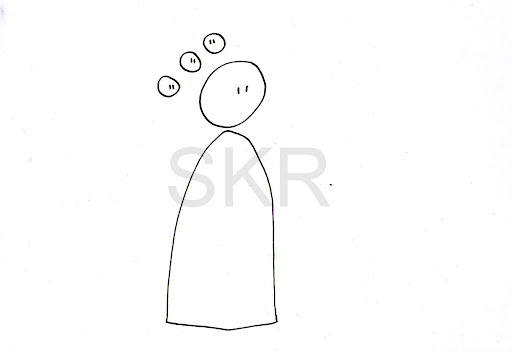
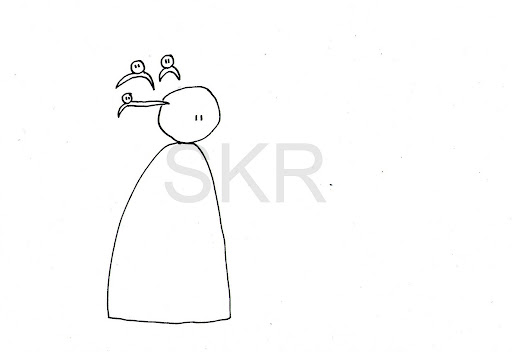
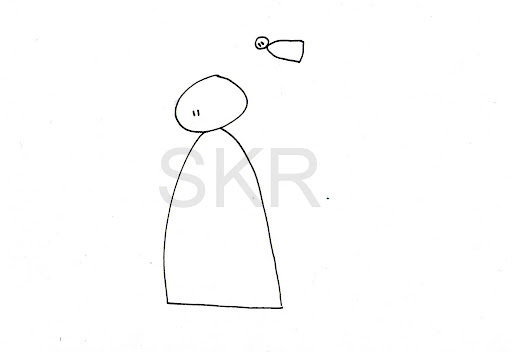
Or at least, not the only Sarah. Sarah is my group name, the name by which all parts go, a tribe name. When you speak to Sarah, you might be speaking to any part. There is no ‘Sarah’ and the parts. Or rather, we are all Sarah, together. This is partly a concession to a world that requires me to function as if we are all one. We have to be able to all sign the name the same way for a credit card use, to present a cohesive sense of who we are or risk people being afraid and unsettled by the changes and differences. This is also a defense against the mental health world, who so love to impose the kinds of internal hierarchy on multiple systems that they themselves are accustomed to living within – orderlies, then nurses, then doctors, then psychiatrists. They don’t really experience any other way of functioning as a group. But I do, and I prefer my way.

That’s not to say there are not leaders, parts who parent and nurture the distressed, stronger who protect more vulnerable and so on. But different roles are now laid over a central premise of equal value, and that choice has led to the kind of trust internally that was utterly unthinkable ten years ago. I used to live in a war zone, parts fighting for dominance, parts afraid of or contemptuous of other parts and trying to suppress them, fear and loathing between parts, overwhelming loneliness, a sense of being incomplete, fractured, ill equipped for life, and in constant turmoil.

When I was diagnosed with DID our first resolution was that we were going to have a fair system inside. It was not going to mimic the worst of my family, the mess of school, painful relationships I’ve had. It was not going to be a place to re-enact abuse, to carry on the cycle of domination and submission, to tear each other to pieces. It was going to be fair, and safe, and equal.

That commitment has brought an internal peace I could not have imagined. It is not a goal I have attained, my system is not perfect. There is always a minority opinion that needs space to be expressed, always we each have to make major compromises about who we are, what we need, how we function, in order to be a group that works together. We over-correct, obsess, struggle, and cry. It’s not a goal we can attain; it’s a direction we are sailing towards. It’s the path we’re on, and because of that, so much of the rest can be tolerated, because there is meaning in our choices and our suffering, because we all pull together in service of values that are deeply held, that means something to all of us. That we all want and deserve freedom, safety, authenticity, and love.

Small changes in language or perspective can make a big difference to how we see ourselves or our world. When I give talks where I share about my multiplicity, or having a conversation with a shrink or friend, the most common way of framing my experience is to say that I, Sarah, have parts, and that they are part of me. I don’t find this helpful. A lot of the literature about DID assumes or creates an internal hierarchy that doesn’t sit well with any of my system. There’s a ‘core self’ and a bunch of ‘alters’ – alternate personalities. Or, even prettier, a ‘host’ – the one usually out, who has turned up to therapy, and a bunch of parts. I really dislike the term host, it evokes for me memories of biology class, parasitic infection of a host. I’m pretty unenthusiastic about the word ‘alter’ too, it also presume a ‘primary personality’ – the ‘real’ one, and a bunch of alters. Some shrinks take this idea so far they refuse to engage with the alters as that is seen as feeding the ‘delusion of multiplicity’, and they only allow the ‘real’ one to come to therapy.

What I have found works much better for me is ignoring a hierarchy of importance entirely. It doesn’t matter who was here first or what role they play in the system. When it comes to having a voice, having needs that should be met, feelings and insights that are legitimate, we are all equal. We all count, we are all ‘real’. None of us are parts that belong to any of the rest of us. We are all parts that together, make up a whole that is much more complex and unusual than any of thought Sarah could be.

I don’t have parts, I am a part. It was difficult for those of us who truly believed that we were Sarah, the only Sarah, to release our tight grip on that identity and let it be expanded to include experiences, values, needs, beliefs, and ways of living in the world that are entirely alien to us. To not be threatened and angry and afraid of this assault on our self perception, but to see that the identity of Sarah was like shelter in a storm, was like a hot air balloon soaring over the sea. To be moved by compassion to share it, rather than fight for sole use, throwing everyone else overboard. To realise at last that we all deserve life, we share one body, we are under one umbrella. When one of us is cut off and alone and rejected and suffering, we all suffer, we are all diminished. So we let go instead of holding tight, and Sarah became more than any of us, a strange chimera, a multifaceted creature of contradictions, united by a set of common values. That has been liberating.

This is not the only way, not the ‘best’ way, not the only language. I don’t share this to impose how I/we function onto anyone else. Other multiples find different language more meaningful, have different ways of resolving conflict and managing life. There is no one right way. I share this in case aspects of it might fit, or spark an idea, be useful in some way, encourage someone still in turmoil that there can peace with parts, or give insight into the inner world all people have to find a way to navigate, even those of you who are not multiples.

For more information see articles listed on Multiplicity Links, scroll through posts in the category of Multiplicity, or explore my Network The Dissociative Initiative.

Abstract accepted!

Well, as I sat about today feeling like I’d lost a round or two with a boxer, into my inbox came a delightful email informing me that my abstracts for a 20 minute talk was accepted for the 25th Annual World Hearing Voices Conference this September! Here’s my abstract:

I hear voices as part of a dissociative disorder, and have done so since I was a child. I was diagnosed with PTSD at 14 and DID at 23. I now co-facilitate groups for voice hearers and people who experience dissociation or multiplicity, and chair a small Australian community group The Dissociative Initiative. Dissociation is often misunderstood and multiplicity especially is seen as rare and bizarre. My experience has been that multiplicity is a spectrum, and some voice hearers are struggling with dissociative issues and experiencing their voices as parts. I will share some of my personal experiences of how dissociation affects me, what it is like to have voices that are parts, and strategies I have used in my own recovery. I will also share a framework for making sense of the array of dissociative experiences, and how to understand ‘multiple personalities’ as a dissociative entity. For people who hear voices that are parts, there can be additional challenges to recovery such as when parts are able to control the body. I will explain some basic principles of working successfully with parts. I hope to inspire people to feel more comfortable and confident in navigating dissociative issues, and encourage people that it is possible to live well with voices who are parts.

The slight hitch is that the conference is in Cardiff, Wales. Which is a bit of swim. I’ve already made a couple of enquiries on the off chance my talk was accepted, but nothing has worked out so far. Now I’ll have to go hunting grants and funds and see if I can find a way to get there. Very exciting!

As I’ve been busy writing biographies which is like pulling teeth, and talk outlines, which are frankly more difficult to write than the talks, I thought I’d also update my pages here on the blog. The articles page is gone, collapsed into the New Here sitemap. I’ve uploaded all the PDF’s of articles into google docs and now just have to update all the links so they go to the right place. My Resources has been spruced up, and About Sarah has been updated. I’ve made a bit of leap in clarifying some of my diagnoses on that page, previously you had to know me or dig into the blog to work things out. Exposure is difficult and I’ve been managing it in staggered doses. Here goes, hey. 🙂

Is DID Iatrogenic?

Working (hah, and living) in the field of dissociation, I often come across the popular idea that multiplicity is iatrogenic, that is, caused by well meaning therapists implanting the idea in the minds of vulnerable clients. It’s almost impossible in the clinical sector to have a conversation about DID without someone raising this concern.

What really interests me is the clinical sector only seem to worry about this possibility with DID. I’ve never heard of anyone worrying about iatrogenic Depression or Schizophrenia. Surely people vulnerable enough to be convinced through suggestion that they are multiples could also become convinced of other symptoms? Iatrogenic mental  illness should be a huge concern for the psychiatric profession if this is the case: the whole process of assessment and diagnosis should be done in a way that reduces the likelihood of iatrogenic effects, with deep sensitivity to power imbalances, vulnerability, adaptation, and living to labels. So, is this what we’re doing? No, we have collared the word ‘insight’ and changed its meaning to ‘agrees with the doctor’. People are put in situations where to prove sufficient ‘insight’ to be allowed out of hospital they must agree that they have – whatever,  lets say Schizophrenia. Two months later a new treating doctor does more tests and changes the diagnosis to PTSD. Where does that leave the ‘insight’? Where does that leave ‘vulnerable people’ and iatrogenesis?

Secondly, when the iatrogenic argument is used as an attempt to explain that DID or multiplicity do not exist, we find ourselves in an unusual situation where apparently a doctor has the power to create a powerful belief and accompanying symptoms in a patient, but it is impossible for highly traumatised people under stress to create this same set of circumstances in themselves. Is the doctor magic? If doctors can do it, why not the rest of us? Of course, this leaves us with old definitions of multiplicity – that the person doesn’t really have parts, merely the delusion of parts – an approach which categorised multiplicity as a form of schizophrenia and led to therapeutic approaches that centred on denying the existence of parts and was generally pretty ineffective. But that’s down to arguments of cause and cure – the iatrogenic argument is still assuming that a ‘multiple state’ can  be created in someone vulnerable, but gifting this act of creation as the exclusive domain of therapists and presuming that no one else in any other context might be able to create this state also. Bizarre.

Do I think that everybody diagnosed as multiple must really be a multiple? Of course not. Mis-diagnosis is so rampart within the mental health system that it is actually the norm. It’s laughable to listen to the spin of the mental health sector about science and support and watch someone be given a diagnosis within a 15 minute assessment during high distress on admission to a psych ward, medicated and treated as if that diagnosis has merit over the next few weeks, and then watch it change as the psych on duty changes, and then again when the roster changes in two months, and then again… I’m  not making that up, I’ve supported people through that process. The whole idea that someone can sit in a room with you for a few minutes when you’re at your most incoherent (or drugged) and know better than you do what is going on inside you is laughable to me. I have huge issues with the DSM, with our diagnostic entities such as schizophrenia, and with the power imbalance of our process of diagnosis, where an ‘expert’ tells a vulnerable person what is ‘wrong’ with them.

Does my stance on DID (that multiplicity is certainly real and possible) mean I don’t worry about iatrogenic effects? Not at all. I’m very concerned because research consistently shows that people live to their labels – children treated as smart do great in tests, those treated as truants act out, those treated as caring are kind. We know this and have demonstrated the powerful effects of labels, obedience, authority, and adaptation in research over and over again and yet we pay very little attention to the massive risks of diagnosis, particularly being diagnosed with syndromes.

Let’s compare for a minute the diagnostic entity of Dysthymia with that of Schizophrenia. Dysthymia is chronic, low grade depression. Schizophrenia is a syndrome, a cluster of symptoms such as hallucinations, delusions, lack of motivation, lack of emotional expressiveness, and so on.

What are the risks of living to these labels? With both, there is an assumption of duration, that you will be ‘sick’ for a very long time, with schizophrenia most people are told they will be sick for the duration of their lives. How concerned are we that people who might not have struggled with these experiences for their lives will now live to that prophecy and fulfil those expectations? We should be very concerned about this!

In the instance of schizophrenia however, the labelling risk goes further. You can be diagnosed on the basis of a single experience such as hearing voices. On the basis of that ONE experience, people are told they have a condition that includes many other debilitating symptoms. We have just increased the likelihood that the person will experience all the rest of the cluster, and that when they do they will attribute them to the illness. It’s no surprise to me that many people with schizophrenia lack motivation, between the stigma, disruption, loneliness, and low expectations isn’t it the slightest bit reasonable that lack of motivation might occur? Is that really an ‘illness symptom’ or a reaction to circumstances?

Diagnoses often cluster many different symptoms and also make predictions about duration of experiences. My experience has been that while certain clusters are more common than others, we each of us have our own personal unique cluster. We should never ever be set up to expect that we will develop a whole range of other crippling symptoms if we don’t already have them! And I believe it is appallingly irresponsible to make miserable predictions about duration or quality of life when we have such an excellent evidence base that tells us people are vulnerable to making prophecies come true, however ill-founded they are.

So yes, I consider that DID is both over and under diagnosed. That in no way means that I assess people to try and determine if they are a ‘real’ multiple – it means I take your word for what is going on with you. I believe you are the expert in your own experience. I don’t care what your diagnoses are,  if you tell me you’re not a multiple, that’s cool. Right up to the point where you switch and introduce yourself as George anyway. 🙂 I think it is unhelpful when people are not dealing with multiplicity to have therapists trying to frame everything in that way – but not more so than therapists framing experiences as psychotic when they’re not or borderline when they’re not. All frameworks have limitations and that of multiplicity is no exception. It’s only valid if it’s helpful! I find it useful, and I find the notion of ‘healthy multiplicity’ useful and the idea that all of us have ‘parts’, that multiplicity is normal and healthy, merely the dissociative barriers are unusual. I’ve known people who needed to be more multiple, who had lost so many of their parts that they had become less then who they really were, shut down and limited and struggling. I’ve talked with people like this about Jungian archetypes, about the tremendous wealth of information and resources within us, about the need to react to life with a full deck of cards to play, not the same two cards over and over. But part of what makes these frameworks useful is that I have explored and adapted them to myself, not had them imposed on me from outside. (That’s not to say I haven’t been diagnosed, I was, but for me I went through a lengthy diagnosis process for myself to be satisfied that the language was accurate, useful, and not iatrogenic – see How do I know I’m multiple?)

For myself, like many other people, the simplest rebuttal to the iatrogenic argument is that my life, experiences, and journals all evidence significant signs of major dissociation and multiplicity long before I ever sat in a therapists office or came across the concept of DID. Not every multiple has this – and lack of it is not proof of iatrogenesis! Many people do have this; journals with different handwriting, different names used in different social networks, chronic amnesia, voices, and internal wars that predate contact with the mental health system. In some cases, a person’s medical notes carry all the evidence of distinct multiplicity documented many years prior to anyone considering a dissociative diagnosis, even noting the different names, ages, and functioning of parts but failing to consider multiplicity and conceptualising the observed behaviour as psychotic, borderline, or bipolar instead. Iatrogenesis is not a reasonable alternative to the possibility that multiplicity really exists. It is often framed in different ways, outside the west cultures may talk about people being possessed by demons or in touch with spirit guides, or speaking to to their ancestors, but the basic underlying experience of separate parts are what we have termed multiplicity and they certainly exist all over the world.

Excerpts from some very early journals of mine, many years before shrinks and therapy:

Oh how I envy you, 
who have nothing to suppress
but who are whole;
in this world.


What is this, that cries so plaintively, arcing wings within me?
Whose voice do I hear when the darkness descends?
If you put your head beneath the water, you can hear the screaming.


In dark mirrors my reflection is a strangers face
I cannot remember the sky or the feel of the rain.


For more information see articles listed on Multiplicity Links, scroll through posts in the category of Multiplicity, or explore my Network The Dissociative Initiative.

DI Constitution draft

Constitutions are kind of tricky things to write when you haven’t done it before! I have been really, really pleased with how the Dissociative Initiative (DI) groups and resources have been going running them from values rather than rules or ‘norms’ and so I really wanted to make sure the DI constitution actually laid out the fundamental values and principles of the organisation. I’m a writer and words and language are my thing, but the language style of constitutions is highly formal and for a poet that is kind of a stretch. 🙂 It’s funny how hard it can be to try and pin down things that are as invisible as values, things I feel in my gut such as the instinct to be caring or respectful, to try and tease out what has (and hasn’t) been working from a group or program and write it into the structure for the next one. I’ve been floundering a bit, trying to find my feet in this area that I’m new in. One of the things I did a little while ago was write off to various organisations to see examples of their constitutions so I could get a better idea of how these things are put together. My favourite inspiration is still definitely the work over at Intervoice which has such wonderful community values. Anyway! Here’s some extracts of our working draft so far, please feel welcome to get in touch if you have any feedback you’d like to give. 🙂 If you want to read the full version I’ve hosted it online here.

Purpose

To promote better life experiences for people whose lives are touched by dissociation and/or multiplicity (and other similar experiences) whether directly (through lived experience) or indirectly (through a social/family/support role); respecting the diversity of ways in which dissociation and/or multiplicity can be experienced and the role that trauma can play in these experiences.

Values & Principles
Members of the Association acknowledge and value:

The principles of Trauma Informed Care

  • avoiding re-tramatising practices
  • respecting autonomy
  • supporting personal control
  • recognising strengths
  • healing occurs in a social and relational context

The Principles of the Recovery Model

  • person-oriented
  • personal involvement
  • self determination
  • hope

Equally the knowledge gained through lived experience and knowledge gained through training
Social Inclusion

  • Reducing disadvantage
  • Increasing social, civic and economic participation
  • People participating in decisions which affect their community

Building community by bridging divides and removing barriers to relationships
Collaboration with others to achieve common objectives
Diversity of the experience and meaning people ascribe to events and opportunities
Peer Work

Vision

We have a vision for a more inclusive community which understands and respects the experiences of our members

Objects (objectives)

  • Educate and raise awareness about dissociation and multiplicity
  • Reduce stigma and discrimination about dissociation and multiplicity
  • Support people who experience dissociation and their supporters
  • Create resources and facilitate access to resources about dissociation or that are ‘dissociation friendly’
  • Promote peer work and recovery
  • To directly address the disadvantage and distress experienced by those who live with dissociation and or multiplicity, and their effects on health and social inclusion.
  • To advocate for informed and ethical research that supports the further development of knowledge about dissociation and multiplicity and which informs recovery and or peer oriented practices.
  • To collaborate with other like-minded associations and organisations in the best interest of the Dissociative Initiative Inc.
  • To engage in any other activities which directly support these objects.

We’ve also had to try and define some difficult concepts. All the important terms in a constitution need to be clearly defined so that any reader can work out what you mean you use the word. I am keen to use definitions that are clear but also broader than medical/clinical terms because I know that different people have different understandings of their experiences of dissociation or multiplicity and I feel strongly that it is important to make everyone feel welcome and at home whatever frameworks they are using. I’m a little envious of the Voice Hearer’s movement in this respect because voice hearer is a neutral term, non-clinical and it presupposes no cause, diagnosis, or outcomes. Dissociation is tricky, poorly defined even in the clinical literature and clearly a clinical term. Multiplicity is non-clinical which is good but on the other hand reflects a whole spectrum of possible experiences which are also difficult to pin down briefly in a formal document. It’s really important to make these resources inclusive that they be defined around people’s experiences rather than diagnoses, but trying to capture that is not simple! Here’s draft one of attempts to do this!

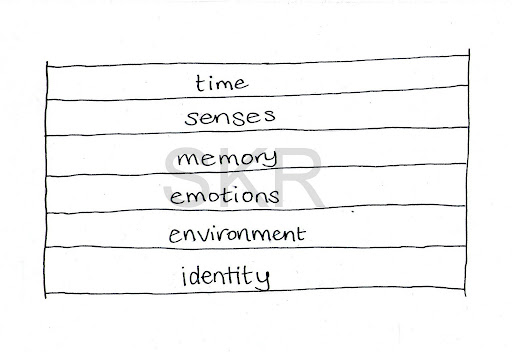
  • “Dissociation” means a disconnection in areas which would normally be connected such as memory, time, senses which may or may not be distressing or disabling, but which impact on a person’s experience of the world.
  • “Multiplicity” means experiencing dissociative barriers between parts of self, occurring on a spectrum of degree, which may be experienced for example as voices, alters, lost time, a sense of being fractured or divided.
  • “Parts” may also be known as “alters”, have a separate sense of self and function independently within the one body, switching with or without amnesia.
  • “Voices” can be understood within the context of multiplicity as parts who speak to each other. Not all voices fit within the framework of multiplicity, and some voices can be parts who also switch.


Multiplicity and relationships

This is an area I’m often asked about; how do people with ‘multiple personalities‘ have relationships? (if you need a refresher on common terms, that link will take you to a relevant brochure) Well, there’s not one answer! Different people adopt different approaches to relationships that suit them. Non-romantic relationships, friendships, family, co-workers, may be a bond between one part or many or all parts in a system. Friends may be aware of the multiplicity or may think they are always interacting with one person. If they only ever meet one part, this would be quite an accurate perception, although they might be surprised by some of the ‘out of character’ seeming hobbies or activities their mate gets up to at other times, or a bit confused by mutual friends who seem to be describing someone quite different. On the other hand, friends may already be meeting and spending time with many different parts, but unaware of this. A pretty common conversation when a multiple discloses their multiplicity is for the friend to to expect to see them switch to someone totally different, and be pretty surprised to hear that they’ve already been meeting 5 different parts without knowing it.

Roles that require specific skill sets are often taken on by parts most suited to them, so for some people only one part ever goes to work, for example. In other cases, parts share roles for example 10 parts may all be involved in different aspects of parenting; organising, nurturing, downtime, play, deep-and-meaningful conversations etc. There’s tremendous variation from person to person about how this works out.

Romance is the area that people can be confused about. I’ve observed a few different basic models about ‘multiple romance’. A common one is that only part has romantic feelings and inclinations, they are the part that forms the romantic relationship, or the only part allowed to form a romantic relationship. So for example, lets say Roxy who has a team of 4 other parts is in love with Justin. One of the other parts sees Justin as a friend, one of the other parts is very young and sees him as more of a father-figure, one of the parts doesn’t particularly like him and prefers not to spend time with him, and one of the parts is rather maternal and protective towards him. Roxy is the only part who spends time with Justin in a romantic way. This is in many ways not that different to relationships between non-multiples – some of the time is spent romantically, some of it as companions, some of it apart etc.

Another model I’ve seen is more than one part having a romantic attachment to the same person. In this example, let’s say Cassandra, Tayla, and Michelle are all parts of one system who are romantically involved with Olivia, but the other 10 parts in their system are not. Olivia has a romantic, girlfriend relationship with all 3 of those parts that is different and distinct to each of them; their tastes, personal interests, and personalities.

Another model involves more than one part with romantic feelings, but creates certain boundaries to maintain a monogamous relationship. For example, Samuel is married to Beth, but other parts Sam, John, and Sally are not in a romantic relationship with Beth. Samuel, Beth, and the rest of the parts have decided that Sam and Sally can express romantic feelings for other people, provided the other people know Samuel and Beth are married and that no physical contact takes place. John is not interested in romantic relationships.

I’ve also seen a model closer to poly-amorous relationships (having a romantic relationship with more than one person at the same time), where more than one part has romantic feelings for different people, and separate romantic relationships are pursued. For example, Stacey, Kelly and Cindy are all parts in the same system. Stacey and Kelly are both in long term relationships, Stacey with Paul and Kelly with Shane, and Cindy enjoys a night out with a new casual partner now and then.

Some multiples have no parts with romantic interests and are contentedly asexual, others choose a celibate lifestyle for many reasons such as reducing internal conflict or healing from past abuse. The complexity of multiple relationships can make it challenging to develop good communication and team functioning whilst trying to maintain everyone’s connection with outside people. Sometimes not engaging romantic relationships is a good option, certainly it’s one I’ve found very necessary for resting and recharging.

Some multiples choose not to develop long term relationships but have casual partners instead. Some multiples have truly poly-amorous parts that have relationships with more than one other person at the same time.

There are also multiples who get into relationships with other multiples. In this case, there can be a very complex web of relationships as every part can have their own unique relationship to every other part. If neither person is aware of the multiplicity that can add an extra layer of confusion to communication. This type of relationship is not as uncommon as you might think, most multiples have felt very ‘different’ without being able to describe exactly how or why, meeting another multiple can be the first time they have functioned similarly to someone else and felt like another person. This sense of kinship can be a strong bond. I have noticed that often the both multiple systems will create pairs or teams that often spend time together and get along – eg a parental adult part of one person’s system may often come out around the child parts of the other’s system, and vice versa. These teams can be asexual, as in the parent-child dynamic, or romantic relationships, and they may be based on similarity; eg both the party girls going out together; or on complimentary pairs, eg a skilled teacher and a keen student. This may not work harmoniously, for example a parental part and a teenage part may fight constantly, or two highly traumatised distressed parts may set each off badly. Not all the parts may ever meet all the other parts, and if some parts go away for a long time, or one or both systems are polyfragmented – that is, having groups of parts that operate completely separately from other groups of parts, then chaos and distress can be caused when relationships are suddenly disrupted or severed. If some parts hate parts of the other multiple the relationship can be fractious or abusive, even if other parts are loving and invested. I have noticed that often one person’s system will ‘lead’ by doing the switching, and the other person’s system will generally ‘follow’ by adapting to those switches, this can be an organic dance between them or can create a power imbalance between them.

Having parts with different senses of their own gender or sexuality is not universal to all multiples, but it is also not uncommon. Sometimes the minority gender or sexuality in a system can feel very isolated and get ‘outvoted’ on being allowed to openly identify or act on any of their feelings. Because multiplicity is often overlooked as a possibility, many people have spent a long time suppressing parts that are very different to them, or being confused by co-conscious switching where sometimes they ‘feel female’ and other times they ‘feel male’. It can be a great help to not have to ‘choose’ one identity but to respect the diversity internally and find ways to reduce shame, stigma, loneliness and misery for all parts. It is particularly helpful, given this, if queer and transsexual support services are sensitive to the needs of multiples and able to provide friendly support.

Sometimes too, parts have formed with a strong sense of identity that has developed in reaction to trauma or distress, for example a frightened abused girl may split and form a part who is a big strong adult man. Later in life that man may conclude that his sense of masculinity was a reaction to a terrible situation rather than an integral part of who they all are. Sometimes parts change their sense of identity and their roles over time. In other cases they don’t. Sometimes parts become more alike, systems with straight and gay parts become bisexual, or an all male system with one female part integrates and considers that part to be his ‘feminine side’. There is more than one way that multiplicity can form, and there is more than one way that people heal, grow, and have relationships. What’s more, people change over time, and models that worked really well at one stage of life can feel restrictive or exhausting or depressing later on.

However unusual or complex these models of relationships may seem, the goal is still the same as any other human being – to love and be loved. To find a place and a way of being in the world that is not lonely, painful, or causing any harm to anyone else. It might be a bit more complicated at times, or involve conversations, decisions, and compromises with other parts to get there, but it’s a good worthwhile goal. It might also help to remember that everyone brings all their parts into their relationships too, their competent adult parts or cheeky teen parts or hurting, selfish child parts. All relationships have to navigate the whole complexity of who a person is, has been, could be, to love them as they are and find ways to create space for growth. All love is complex, mysterious, amazing, and takes lots of work. It is certainly possible to love and be loved by a multiple.

For more information see articles listed on Multiplicity Links, scroll through posts in the category of Multiplicity, or explore my Network The Dissociative Initiative.

Behind the Logo

I developed the Dissociative Initiative Logo when several of us were working on starting up the support group Bridges. I created a fern image in consultation with the Voice Hearing group Sound Minds for their flyers, and I wanted to make something for the Bridges flyers.

I trialled several different designs. I wanted something striking but simple, that would work big on a flyer or really small on a business card. Dissociation is difficult to communicate visually, so I was looking at visual representations of multiplicity because these can be someone’s personal experience of parts, but are also a lovely metaphor for the coming together of diverse people in the Dissociative Initiative. Many people like the image of a jigsaw puzzle for multiplicity, which I understand, but as it is also used to represent autism I thought I would keep looking. I love rainbows as a representation of diversity and acceptance, of not having to change who you are to be accepted, but rather the differences between us creating a beautiful harmony when we pull together, but as rainbows are used to represent GLBTIQ communities I wanted to do something a little different there too. It was very important for me that the image also be gender-neutral and race-neutral.

I trialled patchwork designs, and various natural images of parts that also form a whole – such as the petals of a flower, or leaves on a tree, but none of them were quite right.

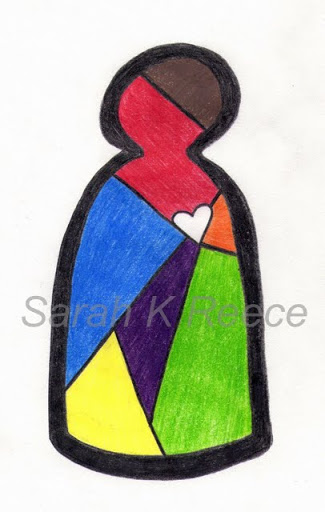
In the end I created this logo, called “The Undivided Heart”. It is modelled on a stained glass window design and uses rainbow colours to represent different parts of a community, who all come together with one heart, a shared purpose – in this case to raise awareness and support people who experience dissociation. As different as we may be in so many ways, we are united by a passion for mental health and a belief that people deserve resources and community.

About Multiplicity

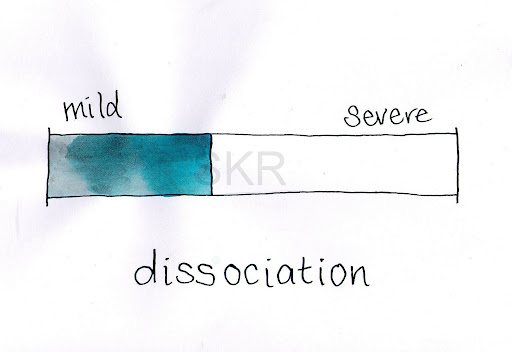
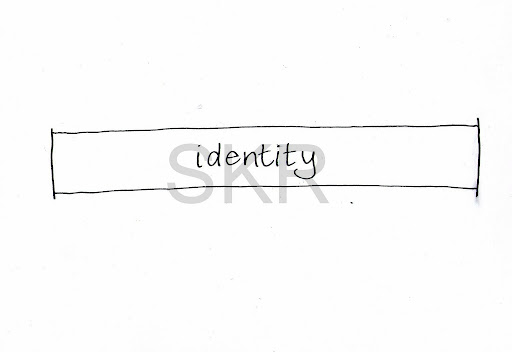
Multiplicity describes a form of dissociation that happens in the area of identity. Dissociation can happen in many different areas, of which identity is one.

To start with a broader understanding of dissociation read About Dissociation. Dissociation describes a disconnection of some kind. Disconnection in the area of identity can occur in a very mild and commonly experienced way, or be quite extensive and severe. We tend to think of multiplicity as being a distinct category of its own, something you either have, or don’t have. Dissociation occurs in degrees of severity in any area, including identity.
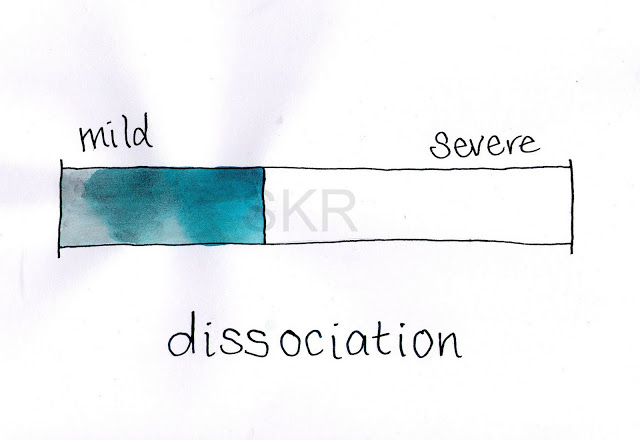
People also often use the diagnosis of Dissociative Identity Disorder (DID) as a shorthand term for the concept of multiplicity. DID describes very high levels of dissociation in the areas of both identity and memory. It is possible to experience multiplicity without memory loss (in fact, this is sometimes part of the goal of therapy for people who have DID) and people with that experience may instead be given the diagnosis of Dissociative Disorder not otherwise specified (DDnos). People with multiplicity issues may also be diagnosed as schizophrenic, psychotic, or other conditions, or not given any diagnosis or framework to make sense of their experiences.

Right down the ‘normal’ end of this spectrum, we all have ‘parts’ if you want to look at things that way.

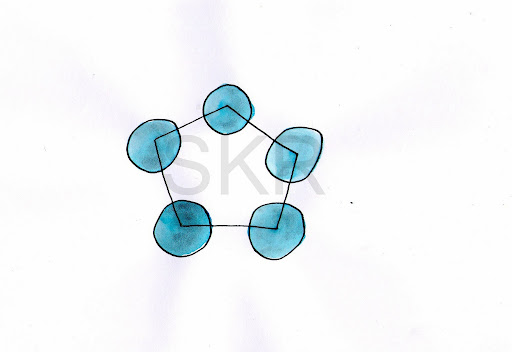
We all play different roles in different areas of our lives. We show different sides of ourselves in different relationships – with our co-workers, our friends, and our children. Some theories of personality and identity development now conceive of the idea that everybody is an integrated network of sub-personalities, united by a single sense of consciousness. So, to a certain extent, we can all relate to the concept of multiplicity. We know what it feels like to be in two minds about something, to have conflict between aspects of ourselves “Part of me wants to go out tonight, and part of me wants to stay home.” We may also have experienced spending time with a new friend, who bring out a side of ourselves we hadn’t known was there. We may feel like we leave parts of ourselves behind – perhaps the part that loves to study and research is left behind as we throw ourselves into parenthood, or our fun and silly part is forgotten about as we try to manage a large company. We may also recover and reconnect with these parts later in life. All of these parts are ‘us’; they are all facets of a single, whole personality, and there is a high degree of connection and cohesion between these parts.
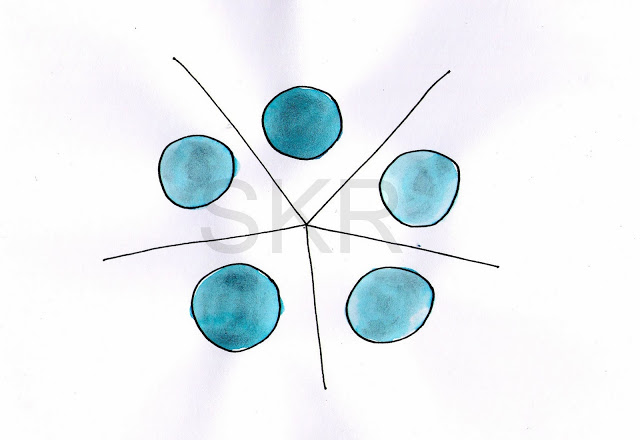
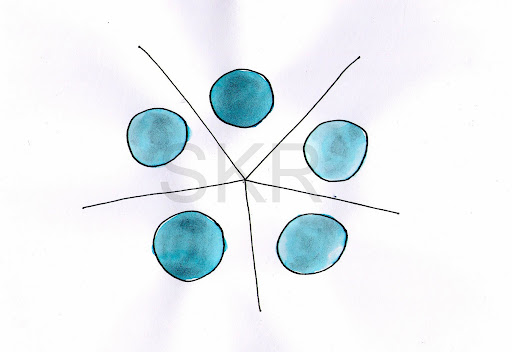
In multiplicity, there are dissociative barriers between these parts, like walls that disconnect them from each and keep them separate. The degree of multiplicity is determined by the extent of this disconnection. So, what are some ways multiplicity might present?

The Doubled Self

This is a really common form of mild multiplicity, particularly for people who have come through some kind of trauma. People talk about ‘the me that’s talking to you now’ and ‘the me that went through that’. They are both the same person, there is a single sense of consciousness and a unified self. There can be a sense of living in two worlds, and that even when the trauma is over, part of them is still stuck in the trauma world. For example, some people describe themselves as having been ‘the day child and the night child’. This is not DID and does not necessarily mean you have a mental illness or need to feel worried. It’s a common form of disconnection.

Rational-Emotional Split

Another really common mild form of dissociation in identity, people can experience a disconnection between their ‘mind’ and ‘heart’. For example, they can remember the facts, dates, information about a traumatic event, or they can feel the emotions associated with it, but not both at the same time. Depending on how this presents, it may be dissociation in the area of emotion, but where it is associated with feeling like there are two distinct parts of you then it may be more useful to consider it a form of mild dissociation in the area of identity.

Like all forms of dissociation, these are not necessarily pathological. In fact some therapeutic interventions, such as the mindfulness approach of developing the ‘observing self’ may be conceived of as a form of mild functional multiplicity that supports and enhances people’s ability to gain useful perspective on themselves and their situation.

My Voices

Some people who hear voices understand their voices as being parts. This is particularly so when the voices have stable personalities of their own and have been heard by the person for a while. The framework of multiplicity is not appropriate or useful for all voice hearers however! There are many other ways of making sense of voices. (see Hearing Voices Links and Information for some resources) But for some people, it helps to think of their voices as parts of them-self, or parts their mind has created. For these people, their relationship with their voices is often the key to whether their voices are comforting assets or disabling and destructive. There is a common idea that how people experience voices is diagnostic; that people who hear voices in their mind have a dissociative condition, while people who hear them through their ears (as if someone else is standing behind them talking) have a psychotic condition. This would be a convenient distinction but research doesn’t support it.

Parts that Affect My Mind

These parts have the ability to affect how someone thinks and feels. They may be able to block memories, take away words, flash images into the person’s mind, block or trigger emotions. These kinds of experiences are often considered to be part of the Schneiderian First Rank Symptoms (FRS), and to mean that the person has schizophrenia. However people who do not have schizophrenia may also experience FRS, and some research suggestions that FRS are actually more common for people who have DID than people who have schizophrenia. The person in this illustration does not have DID, as they do not switch and they do not experience amnesia (dissociation in memory). However, their experiences can be understood as being a form of multiplicity rather than psychosis. Their parts may talk to them (as voices) or be completely outside of their awareness.

Parts that Affect My Body

These parts have the capacity to affect the person’s body (another FRS). People who experience this may describe watching their own hand write in a different handwriting, or having a voice that can move their body and make them safe when they freeze in dangerous situations. This can also be really frightening and people may feel possessed and like they are fighting for control of their own body. They may or may not hear these parts as voices, and may or may not be aware of them or know what they are fighting for control with. If people interpret this experience through a spiritual framework, such as demons possessing them, they may become extremely distressed.

Co-conscious Switching

This person has a high level of multiplicity with at least one self contained, separate part that at times ‘switches’ and operates the body with complete control. Even when the other part is out, this person is still aware of what is happening, or they are filled in on what has been going on. This kind of awareness is called co-consciousness, it means there isn’t amnesia (dissociation in memory) happening for them.

Amnesiac Switching

Dissociative Identity Disorder is the diagnosis for people who experience amnesiac switching. This means that when they switch and another part is out, controlling the body and going about their day, then they are not aware of what is happening. They don’t experience themselves as switching, their perception is that they ‘lose time’ or have blackouts. Minutes, hours, days, weeks, or even years may go by without them knowing what is going on. When they come back out they may discover they’re wearing clothes they would never choose, or that major life changes – house, job, partner, have happened while they were gone.
Where there is more than one other part in a system, there may be different levels of awareness and multiplicity between the parts. For example, imagine a multiple with four parts, Greg, Graham, Greg 2, and Pearl. Greg is amnesiac when Greg 2 or Pearl are out, Pearl is amnesiac for everyone else and doesn’t know she has parts, but Greg 2 is aware of everyone and what is happening all the time. Graham never comes out, he is a part that speaks to Greg or Greg 2, but he doesn’t know about Pearl and Pearl can’t hear him. These things may not be fixed either, perhaps if Pearl was in a situation of terrible danger she might suddenly be able to hear Graham telling her to run to safety. Over time things can change.
Some multiples are in fact highly fluid, with such constant changes that system mapping is impossible and pointless until some degree of stability has been created. On the other hand, some multiples are so fixed that they find their parts are all playing roles and trying to manage people and circumstances that have long since changed. The best functioning – as with all people – seems to be a balance between flexibility (adaptation, growth) and stability.
As with all other psychological symptoms, different things can cause them, including physical illnesses and problems. If you suddenly develop parts or any other form of dissociation it is important not to presume that a psychological process is always at work. Symptoms may in fact be due to an infection or kidney problems for example.
Multiplicity can be both under, over, and misdiagnosed, as with all psychological conditions. There are other psychological processes that can seem similar to multiplicity – such as rapid cycling Bipolar, (where mood changes may be mistaken for different parts) or chronic identity instability as part of Borderline Personality Disorder (where the issue is more a disconnection from a sense of coherent self rather than the division of the self into parts). People who have a high level of adaptation to different environments may seem to ‘change personalities’ in different situations but this relates more to issues around ego boundaries rather than a divided self. Other forms of dissociation can be mistaken for multiplicity, such as when people experience severe levels of amnesia and it is assumed that this must mean that another part has been out, whereas they may not have any multiplicity at all, only memory issues. Ego states are a way of describing ‘normal parts’ and sometimes these will be mistaken for DID when inexperienced people think that feeling like a child again when you’re around your parents, for example, means that you are a multiple. Multiplicity is only one framework among many, if it doesn’t fit or isn’t helping, keep looking. There are many other ways of understanding your experiences, spiritual, social, mood related, biological, and so on. It is also possible that more than one thing is going on, for example you may have multiplicity and bipolar. In that case bipolar symptoms may occur across all your parts, or perhaps only 2 parts have bipolar and the rest do not.
It is really common for people struggling with multiplicity issues to be given many different diagnoses and spend many years in the mental health system before somebody considers dissociation as a possibility. A lack of training and awareness about these issues, as well as sensationalism and controversy have unnecessarily clouded this field and made life a lot more difficult for many people. People with parts are not more special than anyone else, and although multiplicity can seem startling at first, it is really no stranger than the experiences of people who have psychotic episodes, mania, or compulsions. There is a high level of stigma and freak factor around multiplicity that can cause a lot of problems for people who experience this and can make it very difficult to think clearly about. If you’re trying to work this out it can be tough, hang in there and be nice to yourself. You may it helpful to read How do I know I’m multiple?
Whatever is going on for you, there is hope for recovery. What that looks like is different for different people, rather the way it is for voice hearers – when ‘well’ some don’t hear voices any more, other still hear voices but they are positive, others still hear difficult voices but have learned to manage them. Some multiples work on improving communication between parts to be more of a team, or rebuilding connections to function in a less divided way. Some people integrate, where the dissociative barriers come down so that every part is ‘out’ all the time. There’s tremendous variety, and it’s important to note that the degree of multiplicity is not necessarily indicative of loss of functioning. A person with very high levels of multiplicity may function better than someone with none at all. A disability model may fit better than the medical ‘mental illness’ framework, where multiples may live differently to other people but are part of the diversity of human experience rather than ‘sick’ or ‘impaired’. Having said that, for many people dissociation of any form can be extremely challenging, distressing, and disabling. There is tremendous need for more information and support to help people with these experiences to manage them the best they can.

You can find some more information I’ve written here at Multiplicity Links, or over at the website of the Dissociative Initiative. Good luck and take care.
Coping with Nightmares 2

In Coping with Nightmares 1, I’ve written a little about common causes of nightmares and how working on those directly can help. Here I’ve roughly grouped most of my own strategies, the suggestions of other people, or some ideas I’ve read into two different approaches; engaging with the nightmares, or working to reduce their impact. You may find one of these approaches more effective than the other, you may find that some ideas are no help at all to you, or it may be that combining both approaches works best for you. Sometimes it’s not that one approach is or isn’t helpful for you, but getting the timing right, or alternating strategies so you don’t unbalance. I describe this process of picking up and putting down emotionally charged material more here.

Engaging with Nightmares:

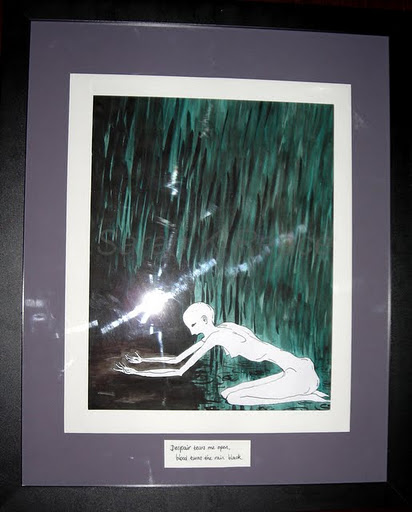
Sometimes the most effective way to help your mind stop sending you nightmares is to engage with the content, process, express, or defuse it. I find this is particularly helpful for recurring nightmares on the same themes. One technique I stumbled upon a few years ago is to paint the scene from the nightmare that has the most emotional weight, the most intensity to it. I’ve found that if I get this out of my head and onto the page, I tend to stop having the nightmare. Here’s one of the milder examples of this type of painting.

I didn’t need to look at the paintings or hang them anywhere. I found them profoundly disturbing and hated the sight of them. Once they were finished I would put them out of sight and only after a lot of time had passed would I take them out and have a look at them. I found just being able to get this feeling or fear or image out of my own head and safely recorded somewhere else was often enough to stop the nightmare.

For nightmares that aren’t recurring I find I need a different approach. There may be a common underlying theme, like being pursued, but the content of each nightmare is quite unique. In this case I find journalling is more useful. Sometimes I find words most useful to explore and express concepts and feelings, and other times visual images have more power for me. Sometimes I find that having written them, I can see themes and symbols more clearly in the content and make sense of what the underlying fears are. Here’s an example from my journal:

31 October 2007
I had one of my only reoccurring dreams – that the world was ending. I have these fairly frequently. They take different forms by the end of the world is always signalled by all the stars falling from the sky. Sometimes it is peaceful and beautiful, sometimes violent and terrifying, where the earth cracks open and monsters come out and devour everyone. Sometimes the stars take hours to all fall, sometimes they come down in a single storm of light, often there’s some kind of pattern, like all the stars falling in a perfect spiral, starting from the centre of the sky and moving down to those by the horizon. It always takes my breath away and fills me with such awe, such a sense of smallness and powerlessness. It’s the most beautiful thing I’ve ever seen.

In this dream, the stars suddenly started to fall from a dark sky, like huge drops of bright rain, leaving only the black void behind them. But as they fell to earth, they suddenly took off in all directions. The truth is, they were enemy spaceships, all this time, and now they are attacking. I call to my crew and launch my spaceship to fight them but I do so with cold despair because I know there are far too many of them and we are doomed to be destroyed. I am so sad and shocked that the stars we’ve always admired and dreamed about were really enemies, watching and waiting, all this time.

And then I wake… I am realising my dreams are not just an escape from reality, but also a form of communication inside me. I’m not too concerned about what they mean so much as letting myself know I accept them. I’m listening. The dreams about the end of the world might seem to be obviously about fear but I think they’re about destruction as much as change. This is not the end of everything, in the dreams, it is the end of everything I have ever known, of how things have always been… Sometimes this transition is peaceful and sometimes it is violent and terrifying, but it’s always frightening, inevitable, and out of my control.

In this case, this was the last dream I have had so far about the end of the world. The dreams progressed until this final one where the stars were revealed to be enemies, and I’ve never had them again. I had worked through and communicated to myself what I needed to. Journaling can be a powerful way to record and contemplate dreams and nightmares.Developing the capacity to lucid dream may also help you to engage with your nightmares in a productive way. There are some suggestions about how to develop the capacity to lucid dream here. Simply put, lucid dreaming is being able to be aware that you are having a dream while you’re in it, and then to change and affect the dream. Personally I don’t find this so useful. I can lucid dream (not always) but I find that my nightmares adapt to my attempts to control them and my subconscious is far more powerful than I am when it comes to changing a dream. If I can create bridges to escape on, my mind can set them on fire. If I can imagine a safe place to hide in, it floods with black water and drowns me. I am not afraid of being physically harmed, but the psychological stress and trauma that come with living through these mock executions is massive. In some of my worst nightmares terrible things happen to me while I desperately try to scream myself awake or cause myself sufficient pain to wake me and it does not work. But for other people, being able to tell the difference between a dream and real life dramatically reduces their distress and may open the way for many other creative options in engaging a nightmare.

Engaging the content of the dream like this can also be done in real life. If you have painted a nightmare, you can respond to that painting with something that is meaningful and comforting to you. Paint in wings to carry you to safety, a sword or lion to protect you, whatever fits and feels right. You can write the dream out and then rewrite the ending in a way that fits. You can treat these re-visioning of your dreams as a way to talk back to your subconscious and tell it what would happen this time if you were in that kind of terrible situation. If you can make yourself feel heard and then engage with the distress, your mind may stop bringing up the nightmares.

Sometimes dreams speak to us of things we have deeply buried. This suppressed material – memories, knowledge, feelings, fears, hopes, can torment us at night when we cannot keep it contained. Sometimes it is not writing about the nightmares that helps, but writing about the memory or fear or aspect of ourselves we hate that helps. Being able to accept the reality of these things instead of fighting and suppressing them can reduce nightmares about them.

Reducing the Impact

In a completely different approach, these strategies are all about reducing your focus on the nightmares and reducing their power to affect you. For example, if you wake following a nightmare, instead of journalling and contemplating it, get straight out of bed, put on some music, make breakfast, engage in other distracting activities before the dream has settled into your memory. Creating a good bedroom space can greatly diminish the distress that nightmares cause. It needs to be a space that is safe and comfortable. Clutter, frightening pictures or shadows, tangling in bedclothes and sheets can all increase the impact of nightmares. Since childhood I haven’t been able to sleep with a cupboard door open in the room. I experience mild stress-related hallucinations and following a nightmare if the wrong cues are around me I will hallucinate the nightmare content in that dazed state between dreaming and awake. Open cupboards for me are portals that things come through. If your bedroom is setting you off, you may need to sleep elsewhere during bad nightmare cycles. You may also find that some approaches that soothe many people with autism who get easily overloaded by sensory input may help you. An easy one to adapt to the bedroom is a weighted blanket. Many people (and most animals) find being gently but firmly held, or nestled under heavy blankets to be calming and reassuring. Another common one I use is white noise to help me tune out other sounds and stay asleep. You can buy devices like this one, or find your own. I like a fan running by my bed for the sound it makes. This site has many other suggestions and ideas for people who have difficult with sensory overload or crave extra sensory stimulation to help them feel calm.

Many people have a strong preference for sleeping with the lights on or off, follow your own even if you feel a bit silly. I cannot sleep with the lights on because then I feel exposed and vulnerable. Try playing music especially sleep inducing music at bedtime. This kind is designed to gently slow your heartbeat and relax you, it can help when you wake panicked too. Reduce your access to the kinds of things that increase your nightmares such as violent movies. Try adding in some neutral content immediately before sleeping so that your brain has something else to form dreams about instead of your own subconscious. I always read in bed before going to sleep, always no matter what. This is essential to reduce the intensity and amount of the nightmares that I have. It doesn’t stop them but it dials them down a bit. Don’t stay up late working, studying, doing housework or arguing. Make sure the bedtime routine has wind-down time in it, a bath, episode of Blackadder, massage, whatever you find relaxing. Grounding techniques can help a lot before sleep or when waking up from nightmares. Consider sleeping with someone else in the bed or nearby to soothe you, or with a companion of some kind. I have a big hairy toy dog. A pet can also be an incredibly non-judgmental and nurturing companion in the night for those of us prone to waking up screaming and distressed.

If you are waking other people up by screaming or struggling, you can quickly get into a miserable feedback loop where you feel so embarrassed or anxious about the effect you’re having on them that your stress level increases and the nightmares get worse. This especially applies if you have young children in the house who are getting scared. Talk to them about what is going on, let them comfort you, and look after yourself. Any general stress reduction techniques that work for you are a good idea, do more of all of them for yourself and anyone else in your house. You need extra time having fun together in these kinds of situations.

You may want to seek counselling or therapy of some kind if you’re having a lot of trouble with nightmares. PTSD is very responsive to good therapy, hypnosis can be very useful, and good emotional support can make a big difference. I hope you’ve found some useful suggestions in these posts. There are some more ideas about managing nightmares here, and there are many books and websites on the topic. If you’re struggling or my strategies aren’t working very well for you, go have a look at what other people are finding effective and hopefully you’ll come across some ideas that make a difference. Good luck.

Coping with Nightmares 1

In Bridges this week we talked about ways we cope with nightmares. Nightmares can be a big problem for me, something I’ve shared about before on this blog in NightmaresListening to your Dreams, and The Gap. Today I particularly want to share some ideas about how to handle it when nightmares are causing you anguish.Firstly, a little information: nightmares are very common in children and much less so in adults. Some people have no recollection of their dreams or nightmares, most probably because they wake up from a different sleep state. Most dreaming happens during the REM part of your sleep cycle. If you wake up out of a different part of the cycle it is much less likely you will recall your dreams. In real time, dreams can last only seconds or up to about twenty minutes. In dream time, anything is possible. The longest time period I have dreamed was about 4 years. When I woke up I had to reverse my way through those 4 years to work out at what point the dreaming had started. Dreams can be incredibly surreal, or so vividly real that you have trouble distinguishing them from real life. For those of us who find dissociation or psychosis can make our daily lives deeply surreal, dreaming and being awake can be difficult to separate. (one way of viewing psychotic experiences is that they are ‘dreaming while awake’)

There’s a lot of speculation as to why we dream and what dreams mean. Every culture and time has come up with their own answers about these things. Personally I conceive of dreams as a connection point between my conscious and subconscious mind, kind of like my conscious self going diving into my subconscious for a time. There are a lot of myths about the nature of dreams, a common one is the idea that if you die in a dream, you will die in real life. That can add a  lot of terror to nightmare experiences. I’ve died in my dreams many times. It’s frightening but it doesn’t hurt me in real life. If we assume for a moment that dreams are the voice of our subconscious, the language it speaks is not literal. Dreams communicate through feelings, symbols and metaphors.

Causes:
There are a number of things that can cause nightmares. The strategy you use to cope with your nightmares may change depending on what is setting them off for you. Illness can generate nightmares, particularly common is sickness that involves fever. Fevers can also generate hallucinations and other psychotic experiences where the line between sleep and awake is blurred and confused. Some medications and substances are known to increase the likelihood of vivid dreams and nightmares, or some medication interactions can set this off. People who have experienced trauma are typically more vulnerable to nightmares following the incident/s. Nightmares are a common symptom of PTSD. More generally, stress can also increase the incidence of nightmares. So, if your nightmares have suddenly flared following starting or withdrawing from a new medication, you may need to consider adjusting your meds. If you’re going through a lot of stress at work or in a troubled relationship, then stress reduction techniques may be more effective in reducing your nightmares.

Cycles:
Nightmare cycles can leave you really exhausted and distressed. I’ve had trouble with this where intense chronic nightmares can leave me badly sleep deprived. Nightmares that are derived from trauma can have a ‘stuck’ quality to them where they loop on the same theme over and over without resolving. I have trouble with re-occurring dreams that replay the same scenario over and over. I’ve also had trouble with cycles where everytime I fall asleep I have intense nightmares that wake me up. My sleep is very broken and not restful, and after a few nights of this I become frightened of sleeping. Sleep deprivation is a common way to set off dissociation, so my waking hours become more fragmented and confusing, and I also find that sleep deprivation makes me more likely to have nightmares. This can become a horrific spiral that shatters my mental health. Breaking this cycle is really important. One thing I use is a high strength sleeping medication to give me a chance to rest. Sleeping meds are not a good long term solution, most are addictive, lose their potency over time, and can leave you feeling pretty terrible the next day. I use a high strength sleeping pill very occasionally (no more than once a year) to help break out a nightmare cycle that has developed into chronic insomnia and severe dissociation. It leaves me exhausted for several days, unsafe to drive or cook, dizzy, and unsteady on my feet. It does however, get me a nights deep sleep and help me recharge.

Another method I’ve found helpful in breaking out of cycles is to express the distress of the nightmares in another way. If the nightmares are my mind screaming about fear or grief or shame, I have found that trying to suppress this can makes the nightmares more entrenched. I have actually broken out of bad cycles just by letting myself fall to pieces and cry about everything that’s overwhelming me. That’s so ridiculously simple it seems mad that it could work, but in a nightmare cycle I know I’m at high risk and I’m working really hard to keep it all together. Falling apart even temporarily is the last thing I want to do but it can express and defuse some of that intense distress and my dreams settle down.

Part 2 tomorrow 🙂

Mental Health needs better PR

The very first mental health article I wrote on this blog, back in August 2011, was about Managing Triggers. I get frustrated by the pathologising of so many human experiences in mental health, and all that I have ever heard of triggers is how to work to reduce their impact. By the time we have eliminated everything deemed a problem, there seems to me to not be very much life left to be lived. I think mental health should be a freedom, an opening up rather than a closing down. It saddens me when so much that merely makes us human is seen as something to be fixed. So when talking about triggers, I talk about positive triggers also. In the hands of people without creative vision, mental health is so often spoken of in a way that makes me hate it. There’s something gone terribly wrong when so many people, I’m thinking particularly of people with a diagnosis of Bipolar Disorder, would not want to have their condition taken away from them. The version of mental health these people are thinking of is so abhorrent they would choose mental illness over it.

One of the strategies that can be used to try and reduce chronic incapacitating sensitivity to triggers is desensitisation. It can be surprisingly effective when paced appropriately. Take the idea too far and you end up with the kind of emotional numbing and insensitivity to life that can characterise dissociative disorders. Frequently within the mental health services, mental health is presented as nothing more than an absence of symptoms. No more soaring mania, no more anguish, no more blood, no more voices. Mental health is silence, clipped wings, drugged stupor, numb blankness. So many of us would rather soar and crash like Icarus than crawl the face of the earth like insects. What we crave is the wildness, the depth, the creativity and imagination and dreams without the agony and destruction. What is so often offered is a flatland that feels so empty and meaningless we are filled with a despair it is almost impossible to speak of to the social workers and the shrinks.

I feel deeply ambivalent about the way that disabilities are tangled with so much that is positive. To return to Bipolar for a moment, folks talk about the boundless energy of mania, the incredible creativity of so many people with this condition. On the one hand, I read about how people need to find the positives in their conditions to help maintain self esteem and find a balance, and that makes sense. On the other hand, I think that if we define the condition in terms of deficits, then the creativity and energy belong to the person, not the condition. And then, the reluctance to be free of the condition (assuming such a thing is possible) disappears. If you could keep the ecstasy, the brilliant creativity and quickness of thought and empathy for those incapacitated by depression, and leave behind the relationship destruction, months of inactivity, suicidal distress, reckless spending, then would you still prefer mental illness?

Mental health is so often presented as being ‘normal’. A normal life is such a small, bland, meaningless thing that I can’t see it being worth any kind of effort to obtain. The box of what normal is, is so small that I have never met anyone who actually fits into it. Recovery to this normal can be a kind of insanity, like new cult members suddenly parroting the party line and telling you they’re happy despite something terrifyingly empty in their eyes. Radiohead sing about this kind of life in Fitter Happier.

I see mental health as freedom from the things that stop me being human. I mowed my lawn today and I wanted to be able to smell it, the smell of fresh cut grass is one of my favourite in the whole world. But the dissociation is too high today, I smell nothing. I work to create a life with love and grief and passion, not to merely disconnect from pain. I pursue and create something so much grander than ‘normal’, something that is uniquely me and mine, an expression of my own soul. Mental health for me is still about soaring, still about voices and pain, but where I can smell the grass.

When I came across this idea that many people (not all of course) would not want to have their mental illness magically taken away from them, I wondered about myself and my own experiences. If I could go back to my own childhood and wish away the dissociation, would I?

No. Not unless I could also wish away the things that were causing it. If the trauma remains, then the dissociation needs to remain too. As much as it has cost me, I also feel it has saved me. In a way, becoming highly dissociative has been a mentally healthy response to circumstances.

So, when writing about triggers last year, I wrote about positive triggers too, things that move us in ways we do not consider to be problems. I wanted to illustrate the idea with a lovely poem by Gwen Harwood, but I couldn’t find it at the time. Today I found it, and here it is:

A Gypsy Tune
Gwen Harwood
Szabolcska once in Paris wept
          aloud in public, in the Grand
Cafe, when a gypsy fiddler played
          a folksong of his native land.
When memory seems a field of graves,
          and youth impossibly remote,
some sobbing air will breathe to life
          pulsebeat by pulsebeat, note by note,
landscapes and lovers, fiends and friends
          long lost, long dead.       Their features glow
with light so absolute you think
they could not join the shades below.

Good mental health everyone. For more about information about how to use triggers to support your mental health, go to Using Anchors to Manage Triggers.

The Dissociative Initiative update

There’s been a lot of work going on behind the scenes lately about the DI. After a lot of thought several of us are going through the process to incorporate the group and turn it into an official association. This involves a lot of paperwork and having to carefully and formally word concepts like Recovery and Peer Work. It’s going to take some time (and funds!) to accomplish, but I’m very excited about this. I’m currently working on a draft of the proposed constitution. I was really inspired by the About Us page for Intervoice, that’s the international Voice Hearing Network. I especially like these values:

Working in PartnershipExperts by training (workers and academics etc) and people who are experts by experience are encouraged to work together, this means that national representatives from the hearing voices initiatives around the world are encouraged to attend our annual working meetings as “pairs” or “groups”. The expectation is that these pairings/groups are ongoing long-term working relationships (as in working together as equals) that continue outside of the meetings and that couple/group prepare their presentations together. The advantage of this arrangement is that the perspectives both the expert by experience and expert by training are included in all discussions and thereby feed into the decision making processes of the organisation.

Bridging the personal and professionalWe believe that we do not need to maintain a worker/psychiatric survivor divide. This has been a very significant contribution to the success of intervoice as an organisation and sets it apart from many other agencies and services working on mental health issues. The process is simple and involved the members (experts of experience and experts by training) committing themselves to bridging the worker/psychiatric survivor divide and developing real relationships with each other, as a result long term friendships have developed. This is more easily accomplished than might be imagined, having common cause and placing a stress of equal value of everyone’s participation tends to breakdown the worker/psychiatric survivor user divide and gives space for a very different way of working and being together.

I’ve asked Ron Coleman, who is a very well known voice hearer and mental health activist for a copy of the constitution of Intervoice and he’s said he’ll pass it on. I’m expecting that to be great reading and good inspiration. There’s quite a few steps in this process yet but I’m excited to have started.

There’s a few reasons I think that becoming incorporated is a good idea. So far everything we’ve done has been as an unofficial community group, and it has been great to have that relaxed environment to discuss ideas and develop resources in. I’m not keen on the corporate, bureaucratic world of paperwork and meetings and in this sentiment I am not alone. Formalising our group does mean having to engage with that world, hopefully while maintaining the informal, friendly and efficient characteristics of a grass-roots group! Becoming an entity will help to raise awareness and network with other organisations, to seek funding to get new projects off the ground, and to maintain our resources and not let valuable work get lost and left behind in busy lives.

I also like the group nature of the process, working together as a board, creating partnerships to work on specific projects etc. This has been the process for the DI since inception. We gave our first talk, Cary and myself, at Mifsa in late 2010. I was so terrified I shook through the whole talk and took about three days to come down off the massive dissociative aftershock. I could not have done this alone. The stigma, discrimination, anxiety, freak factor, and lack of respect for the value of lived experience would simply have been too much. The courage to go forwards has come from groups, and the impetus to persist has come from getting phone calls from distressed, isolated people who’ve been told dissociation doesn’t exist, or nothing will reduce it, from having people weep when they attend Bridges and for the first time meet with other people who have the same challenges, from having people describe these resources as life saving and also desperately insufficient to meet the needs out there. Groups of people are essential to the functioning of the DI and the resources we’ve developed. This is about far more than one person’s ideas or career goals, and it needs to go beyond one person to have any hope of being able to address the scale of the need that is out there.

Bridges Welcome pack

Today folks were all late to Bridges so I got some paperwork done. 🙂 I sorted out my folders for the groups I’m involved in, culled all the out of date stuff, sorted things into plastic sleeves, printed up fresh pamphlets, and created the most comprehensive welcome pack to date for Bridges. I’m really pleased with it! Welcome packs are tricky, to my mind they should not have too much in them, but should answer the basic questions, contain information people might forget and want to look up later, contact details, and references of where to go for more information. I once signed up as a member of a carers organisation, only to be sent a huge plastic folder full of pamphlets and pages. It was so overwhelming I left it for weeks before opening it, read it all through in one sitting, promptly forgot the lot and put it away. That’s not so helpful. Here’s what’s in this one:

  1. The Coping with Hearing Voices A3 poster
  2. The Bridges Flyer (with email addresses on it for myself and Ben)
  3. A brochure about Mifsa’s Services
  4. Fact sheet about Managing Dissociation (the packs contain the Mifsa branded version)
  5. Fact sheet Introducing DID (ditto above)
  6. Dissociation Link postcard (with website address for online resources)
I am so pleased with this, it would have been such a tremendous help to have received a pack like this myself 5 years ago! I am now planning to put together something similar for the Voice Hearing group I co-facilitate, Sound Minds. I print, fold, arrange, and staple the pack together in such a way that it can all be opened and read without having to take out the staple. I couldn’t make these fast enough today, they were being snapped up left, right, and centre. If you would like a pack for yourself or to pass on, please feel welcome to contact me or Ben at Mifsa on (08) 8378 4100 or send an email with your postal address to me at sarah@di.org.au. And if anyone wants to donate an hour to help me fold and assemble some, sing out! 😉

Review of The Flock

I’ve just finished reading a book that was recently donated to the Mifsa library, called The Flock by Joan Francis Casey with Lynn Wilson. I will definitely be adding the book to my own library, it was an excellent read. I was expecting another really dated, sensational, riddled with graphic abuse accounts biography but instead found a really lovely depiction of the challenges and joys of multiplicity and integration. I’ve read so much about this topic now that it is really difficult for me to put myself in the shoes of someone who is new to it all. I’ve been trying to think about the book from that perspective to work out if it is one I would recommend as a place to start reading. At the moment my suggestions are First Person Plural by Cameron West, The DID Sourcebook, Got Parts, and Trauma and Recovery for those who can get something out a fairly dense book that is fantastic but written in more clinical language. These all have good descriptions of multiplicity and dissociation and, aside from the last, are reasonably easy to read. Some of the books out there are painfully technical and difficult to read, some have clearly been written by and for clinicians and are filled with terms like ‘dissociated identity is a failure to achieve crucial developmental goals’ which is a perfectly valid and interesting perspective but worded in a way that makes my teeth ache. I don’t think we need to throw around terms like failure when there’s less painful ways of describing the same process.

The biographies, particularly the early ones, are very interesting to read and I’ve found them very useful to inform and provide background to the current understandings of trauma and dissociation but can be pretty hard going. A couple of them have such graphic accounts of abuse that I nearly vomited reading them. Most are sensational, and rely on the severity of the abuse to try to help a disbelieving public wrap their minds around the idea of multiplicity – I know it sounds way out there but look what I’ve come through, it was so extreme that multiplicity makes sense really. I have a certain sympathy for this approach and it certainly does make sense but it also leaves people with the unfortunate idea that multiplicity is only ever the result of the most extreme and sadistic child abuse imaginable.

When I started reading and gathering information, it was incredibly hard work. Everything had problems. Most of the information was overly simplistic, most of it contradicted everything else I read, some of it contradicted itself, the rest of it was so dense and clinical it was like being beaten to death with a brick. There are squabbles about how to tell ‘real multiples’ from ‘fakers’, horror stories about therapists coercing suggestible people into becoming multiples, things that say hypnosis is useful, things that say hypnosis is incredibly dangerous and totally contraindicated, books that list the ‘types’ of parts every multiple must have (the protector, the inner self-helper, the abused child), sensational descriptions of multiples that seemed to reduce them to circus freaks (not that I have anything against circus freaks!) and ego-massaging depictions of therapists intelligent, courageous, dedicated, and gifted enough to save them. It was a minefield, very difficult to work my through and start to piece together my own framework. Often the books and research left me really drained and depleted, it would take a few days to process them and start to get my head back to (my version of) normal. Fortunately, I’m persistent, and I’m good at working out the underlying principles and themes of books, and linking together information from different books or even different areas of life to build theories and develop frameworks. There’s nothing quite like living a highly dissociative life to make you good at linking up disconnected concepts people don’t usually put together. 🙂

I think I would recommend The Flock, with a couple of caveats. There are some descriptions of abuse – not many, but they are there. They tend to be very contained, you can skip the paragraph and jump past them without too much trouble. The same thing goes for First Person Plural. It is very interesting in that the book is composed of Renee’s memories (one member of the Flock) and the journal entries of her therapist Lynn. It’s great to get an insight into both processes. The most obvious concern I can see that people might have is that the type of therapy that is depicted in it, called re-parenting, is extremely time intensive and not very common. Considering that most of the literature out there subscribes to the idea that multiplicity is always an extremely dysfunctional state and requires many years of intensive therapy, most multiples and their families are already very anxious about their prospects when they can’t find a therapist or afford one. I’ll write more about the role – and limitations – of therapy in my experience shortly, (edit: What’s the point of therapy?) but the short version is that the therapy depicted in The Flock is certainly helpful for them but that doesn’t make it the only way forwards. 🙂

The Flock is essentially focused on the ‘recovery journey’ which is refreshing, and also depicts integration very sensitively. There’s a number of books out there that describe integration as getting rid of all the parts except one. The Flock has an approach I feel is far more ethical – the description of integration as all the dissociative barriers coming down so that all the parts are united – “from that moment on, all of the personalities had all the time, all of the time.” The other biography I’ve read that depicts this understanding of integration is Leah Peah’s Not otherwise specified. Lynn describes herself as “surprised at how comfortable I am with seeing ‘only’ Joan. I don’t miss the separate personalities. Joan’s right. In some miraculous way, they are all there.” Having said that, many multiples feel under a lot of pressure to integrate, often from overzealous therapists who make integration rather than improved quality of life the goal. It’s perfectly possible to create (or at least, simulate) integration without improving quality of life at all. I see no value whatsoever in swapping the diagnosis of multiplicity for diagnoses of bipolar, depression, borderline personality disorder, and so on.

When talking to folks who come for the first time to Sound Minds, the voice hearers group I help facilitate, I often talk about how individual and unique recovery is. Not only is what helps unique to each individual, but what ‘well’ looks like is different too. Some people have no voices when they are well. Some people’s wellness looks like voices with whom they have a positive relationship. Some people still have dreadfully abusive voices even on their best days, but they have learned excellent strategies and coping skills and are not limited by them. There’s not one road out, or one end goal in mind. Sometimes working towards a specific end goal isn’t even all that helpful, just putting one foot in front of the next working to reduce suffering, improve your functioning, find hope, and create a life you can love will take you to goals you could never have imagined or anticipated that are truly wonderful. That’s certainly how I feel about my peer work. 🙂 The same lack of obsessed focus is probably useful when it comes to thinking about ideas like integration.

The last thing I noticed that I’d disagree with or feel concerned about leaving unchallenged is an assertion in the book that DID is always and only ever caused by abuse. Abuse is highly implicated in the formation of DID, but so is neglect, chronic pain, and all kinds of trauma. There’s a lot of people who are afraid that what they went through wasn’t bad enough for them to be DID, or that a diagnosis of DID means some other terrible things must have happened that they are going to remember later. These fears add a lot of unnecessary stress to the situation.

Caveats aside, I’d recommend this book. I found it a beautiful depiction of the Flock’s experience of multiplicity and Lynn’s love and exasperation throughout a challenging but profoundly healing relationship.

Paper has been published!

The TheMHS (The Mental Health Services – a national annual conference in Australia) Book of Proceedings is now published! Cary and myself wrote a paper for this after presenting at the conference in 2011. We only found out about the opportunity to write a paper about four days before it was due, so it was a pretty frantic effort. Cary is an early morning sort of person and I’m an late night sort of person so we worked on it in shifts over a weekend and submitted all 3,000 words of it by 5pm the day it was due… the next morning I got up and anguished over all the errors we hadn’t polished out yet. It’s called Grounding as management of dissociative experiences.

Nevertheless, it was published, and in the Recommended Reading section too! You can read the contents page here. Unfortunately the publication costs $50 to purchase, but as it’s my first published paper I think I’ll try to scrape it together from somewhere and put it on my shelf. Charlie continues to improve ear-wise, although his digestive health is at an all time low – probably due to the high doses of antibiotics he’s on. Hopefully the vet checkup this Thursday will give him a clean bill of health and I can take him off them and the twice daily ear cleans and the twice weekly medicated baths… all of which would give me a little more money to spend on frivolities like the Book of Proceedings. Wouldn’t it be nice if you got a free copy as an author of the paper?

In other exciting news, I am in the complicated process of downloading/purchasing the Adobe Creative Suite 5.5 with In Design – this is the software I will learn to use so I can lay out my booklets for printing. It’s supposed to be a fairly simple process, download the download manager, that sorts out downloading the trial version of the software you want to test. Then just pay for the set you want which activates the trial already loaded onto your computer. A friend has kindly donated the cost for the student version which is fortunately much cheaper than the full price adobe asks, but still too much for my budget to manage.

Yes, well, four days of wrestling with the adobe download manager later, following the instructions in the many online forums full of deeply frustrated people, uninstalling and reinstalling the stupid thing and still not getting anywhere… someone else has downloaded it for me onto their machine, and now we are going to try and transfer it across to mine and see if that works. Pretty please! It’s hard to be patient about this kind of thing, but my frustration is tempered by the knowledge that I really don’t have time to learn how to use it this week anyway. But soon! soon…

Introducing DID Brochure and unplanned rant

I have been busy again today over at Dissociation Link, working on making the pages more informative and easier to read. The Resources page there is in much better shape now and frankly kind of puts my own to shame! (update; not anymore!) I’ve also uploaded another free trifold brochure called Introducing DID.The longer I’ve been involved in mental health, the less interested in the ‘top level’ diagnosis I’ve become. I’m more interested in what we can safely diagnose about ourselves – we know if we hear voices, feel anxious, have nightmares, or suffer compulsions. We might not know the clinical terms or why or what to do about it, but we can self-identify this stuff and go looking for supports. (not that it’s always this simple – took a long time to work out what was going on for me) What’s more, if we don’t get so hung up on the diagnosis, we can share resources and information a lot more easily. Otherwise, people with the schizophrenia label don’t get to benefit from what folks with the eating disorder labels are learning about stress management and relationship developments, for example. Not to mention that the way disorders are classified is often pretty arbitrary; they are syndromes, collections of symptoms and experiences that seem to cluster for many people. For a diagnosis of Borderline Personality Disorder, 5 of 9 possible symptoms must be present. That actually means that 2 people with the same diagnosis of BPD may only share a single symptom in common. The definitions of the eating disorders have become so narrow that most people with an eating disorder do not fit into any of the categories but are instead given the pretty meaningless diagnosis of an Eating Disorder not otherwise specified.

The diagnosis of Dissociative Identity Disorder (DID) requires high levels of dissociation in two areas, identity and memory. People who only have high levels of dissociation in the area of memory get the diagnosis of Dissociative Amnesia instead, but people who experience high levels of dissociation in identity only get stuck with the Dissociative Disorder not otherwise specified label. Why? Multiples who start out DID but go on to develop more co-consciousness would actually have to transition label over to DDnos. In practice this doesn’t happen because the label DID has come to be synonymous with the concept of multiplicity, and the whole point of labels is to communicate a shorthand about what the person is experiencing. As a result, a lot of what we think we know about multiplicity, we know only from the extreme end of the spectrum, from people who exhibit high levels of dissociation in two specific areas. This does not capture or reflect the experience of many people who experience multiplicity with lower levels of amnesia or in a less extreme way. 

This rather resembles the development of knowledge about schizophrenia – originally our entire understanding of the condition was based on the observation of people in psychiatric institutions. Now a much broader picture is emerging – it turns out that many people exhibit only mild symptoms. It turns out that some symptoms, once considered to be sufficient for a diagnosis of the whole bundle of experiences and deficits that make up the schizophrenia label don’t actually go hand in hand with everything else thought to be part and parcel of the condition. For example, there are many voice hearers who meet no other criteria for a diagnosis of schizophrenia. Voice hearing turns out to be common, and not necessarily associated with any of the other symptoms of schizophrenia. 

Schizophrenia as a diagnosis is being enthusiastically questioned all over the world, not least because people seem to do better without the concept of having a life long illness. Capturing experiences like withdrawal and lack of motivation and calling them part of a disorder such as schizophrenia can mean that when someone experiences them they are ascribed to the condition instead of people considering whether they might be the result of loneliness, misery, fear, and grief. 

It is true that certain experiences do seem to go together, that you often find clusters of experiences. It is also true that most of us exhibit a slightly unique cluster, and diagnostic labels cannot possibly capture this. Many of us don’t experience a symptom or two from our own diagnosis, and many of us experience a symptom or two from a different diagnosis, that often goes unrecognised and unsupported. Or, even more depressingly, our cluster gets us several diagnoses and we become badged as complex cases and often feel deeply discouraged about our chances of recovery. Additionally, our unique cluster changes over time, due to growth, stress, better coping, processing, new experiences; or even day to day depending on how tired, stimulated, distracted, nourished, or content we are. This is normal! 

Folks with DID often feel this stress about many diagnoses, because the condition so commonly co-exists with other disorders such as BPD, Posttraumatic Stress Disorder and other Anxiety disorders, Attachment Disorder, Eating Disorders, and so on. It’s common for people with DID to have difficulties with things like self-loathing, chronic suicidal feelings, shame and relationship difficulties, because these are common struggles for people traumatised in childhood, and most (not all) people with DID have been traumatised in childhood. 

All of these experiences occur on spectrums, ranging from ‘normal’ human experiences to those are that quite extreme or disabling or depressing. Many of our diagnoses fail to capture this also precisely because they are giving a label to a condition at the extreme, disabling end of the spectrum, This is often for practical reasons such as ensuring that very disadvantaged people are able to access health care. There are many other problems created by this approach, not least of which is that we lose our spectrum and gain discrete categories instead. You are, or you are not. You have it, or you don’t. Part of what this does is scares the living daylights out of the folks who suddenly find themselves sharing diagnostic categories with people who are profoundly disabled by a severe form of the condition. Someone who experiences comparatively mild stress induced psychosis watches someone else with chronic psychosis and fears they are looking into their own future. The broader culture doesn’t even have the concept of mild psychosis.

The doctors often try to communicate this idea by using the term ‘pseudo-hallucinations’, the hallucinations you have when you’re not really having hallucinations. There’s no evidence to suggest that the mechanisms involved in ‘real’ and ‘pseudo’ hallucinations are any different, merely that in one the ability to reality check remains reasonably intact, while in the other the person loses this capacity and becomes delusional. Once again, these are not discrete categories, there is clearly a continuum between being able to recognise certain stimuli as hallucinatory and losing that capacity. Obviously, under the wrong circumstances it is easy to conceive of someone becoming overwhelmed and pseudo-hallucinations developing into the consuming, delusional kind. 

In the diagnostic categories where severity is the marker of getting the diagnosis, such as Posttraumatic Stress Disorder, we cut off a whole lot of folks who struggle with these issues in a less severe form. (assuming for a minute that people are only given accurate diagnoses which is a pretty ridiculous premise in itself, I realise) All those with moderate struggles around flashbacks, avoidance, and chronic fear have to fend for themselves, and the opportunity for these two groups to meet and share and learn from each other is very rarely offered. This approach cuts off those who are deeply struggling, from those who share the experience but are not as overwhelmed by it. This kind of peer support is incredibly powerful. 

So, I have a brochure called Introducing DID, because that is the kind of thing people are putting into search engines and the language our health professionals are familiar with. But I am frustrated at all the people living in the shadows of this diagnosis, not quite fitting for one reason or another. I am also repulsed by articles and books that talk about ‘pure’ DID, the ‘gold standard’ of DID, and the continual emphasis in written material that DID is the most severe form of the dissociative disorders. If one person is a ‘pure’ DID and someone else doesn’t quite fit the diagnosis, what does that make them? An impure DID? Half-caste? Mudblood? How the heck can a disorder even have a gold standard? And what do we even mean by using the word severe about DID? Do we mean that people with severe dissociation in other areas of their lives aren’t as disabled by it? That they don’t suffer as much? Do we mean that it’s harder to resolve? Where’s the evidence for these ideas? Why is everyone else in the dissociative diagnostic box left feeling as though their struggles and difficulties don’t count? There are people with significant dissociation in identity who are profoundly incapacitated and in chronic pain. There are others who are not even aware of their multiplicity and function in a healthy and unobtrusive way. There are people who experience the most distressing, abusive and overwhelming voices. There are people who’s voices are comforting, amusing, and restorative. I’m not all that interested in DID, I’m interested in dissociation in all it’s forms including multiplicity.

We need to hear more of these stories. We need to recapture our shades of light and dark, the depth and complexity of these experiences. We need to be able to trace our spectrums all the way along their length and link together all those who have so much to offer each other. We need to work on finding all the common ground instead of working on dividing our experiences and our pain into smaller and smaller categories, more compartmentalised and disconnected from each other. We need to speak about experiences and suffering in ways that don’t take away a voice and a sense of legitimacy from those who don’t quite fit the labels we’ve created.

This was going to be brief post, back when I started! Oh well. Apparently I had things to get off my chest. Soapbox packed away, on with my day! The last performance of Cracking Up went well tonight, I got to meet some new people and was given lovely compliments about my work, which I have tucked away in the hope that later I will be able to take them in. I have progressed over the three nights from feeling profoundly humiliated by my work to somewhat indifferent, to occasional small bursts of pride. So hooray for me. 🙂 I have also washed the dog, hung the laundry, eaten three meals, and done a lot more work on Dissociation Link, and that I AM feeling pretty proud of myself about. Hope you had a good weekend too.

Managing Dissociation Brochure

I’ve made some more progress on the site over at Dissociation Link, which is cheering me up no end. There’s now a link to a reworked version of the tri-fold brochure some of you may already be familiar with, called Managing Dissociation. I’ve been able to add in a little bit more information and suggestions, and a friend has kindly proof read it for me, which is awesome because I’m not so good at that!

It’s frankly ridiculous to attempt to justice to such a huge topic in a brochure, even if it does has two sides and small font! But, as I keep reminding myself – firstly, everyone has to start somewhere when learning about this stuff, there’s a huge need for simple, useful information. Secondly, most of us with these experiences get really tired of having to educate people about them all the time, so hopefully some of the usefulness of free resources like this brochure is to be able to print it up and take it along to your doctor, counsellor, partner… whoever, and save yourself one more ‘So what is dissociation anyway?’ conversation.

That’s the theory, anyway! You can check it out for yourself here.

The new, more comprehensive Bridges flyer is also uploaded and linked in everywhere I could find the old link. I’ve tried to answer the kinds of questions people tend to ask me when calling to inquire about it.

Apart from that, the Fringe performance I’m in went well tonight, which was great. We culled a few acts and tightened our performances to make sure we finished on time and it all went well. Nice to be part of theatre again, even if only in a small way with a few poems. 🙂

Coping with medical touch

For those of us with trauma histories, dealing with medical appointments that involve touching can be incredibly difficult. Touch is often an area of great difficulty once it has been used to hurt you in some way. I’ll write more about the whole area later, today I want to talk about medical touch as this was the area we discussed in Bridges recently.

You may feel like you are the only person out there who is so stressed by medical touch that you’d rather have severe infections than go to the dentist, or risk cancer than get intimate checkups at the doctors, but far from it! Most people find these procedures stressful to some extent, and a pretty significant percentage of people are soo stressed and phobic that they avoid them altogether, sometimes with terrible consequences. However alone you may feel, however ashamed and humiliated, you are part of a whole crowd of people feeling the same way. That realisation alone can make a big difference. You are not weak or stupid or pathetic, and being stressed out by these things is nothing to be ashamed of.

You can avoid all the procedures involving touch. The consequences of this choice can range from negligible to catastrophic. This is a very common approach. Many people go down this road, and something I’ve observed is that if this is what you do, you will often stop going back to medical people for anything else either, because you can’t handle the pressure to get your over due extraction/breast exam/prostate check done. Please, don’t do this! If you have to tell your people that you cannot cope with touch but are working on it, please not to harass you, then do it. Unfortunately medical people are not always sensitive to these issues and they may interpret their duty of care as reminding you and pressuring you to have check-ups whenever they see you. Try not to let touch issues cut you off from access to health care in all areas – you need to be able to get medical certificates when you’re sick, pain relief, advice on new symptoms, moles kept an eye on, and so on. Try to limit the possible losses.

If you’re going to have a procedure that involves touch, some planning can make a lot of difference to how you feel about it. Take a bit of time to get to know yourself and work out what will be most calming for you. Will you find it easier to do all the touch things in one hit, or to break them up and spread them out? I’m a n all-in-one-hit kind of person, some of my friends are break-things-up people. Is one gender of doctor easier for you to cope with? Would it help to have a friend drive you home if you’re feeling wobbly afterwards? Are there things you can do to heavily compartmentalise whatever bad memories you’re trying not to stir up before you have the procedure? Can you distract yourself during; by listening to an MP3 player, playing with your bracelet, reciting the periodic table, composing a sonnet (ha ha)? Would it be comforting to take along a soothing item like a teddy, or would that make you feel more childlike and vulnerable? Would having the procedure done by a stranger be easier than going with your regular doctor?

If you’re a multiple, there may be someone in your system who isn’t as bothered about these things. Can you ask them to handle it? Do you need to do or take anything with you to help keep them out? What will you do if they switch?

You always have the right to walk away. Unless the situation is life threateningly urgent, if things start to go badly, say stop, get out, go home, put yourself together and try again another time. If the situation is critical and you are at total overload point, can you use dissociation to dull everything and cope with it? Sometimes creative visualisations can help to disconnect you from intense experiences. This is a little akin to self hypnosis. One I used to use a lot when my pain condition was severe and without relief (I am allergic to most painkillers stronger than paracetamol) is to picture my pain as an oil slick, burning on the surface of water. My body is half submerged and the oil is burning all over me. Then, I would slowly sink deeper and deeper into the water, leaving the burning oil up on the surface. Eventually I would be completely underwater, watching the flames burn on the surface. For me this helped to dull my perception of the pain I was in. It was still there, but a little distant. These kinds of ideas can sometimes help you to pull back from you intense awareness of touch and that agonising sensitivity your skin and body can have when deeply afraid.

Trying things from another angle, sometimes you can reduce the distress by talking yourself through the experience and using intellectual grounding techniques. These are things that help to orient you in time and space, so that you are able to stay in the present instead of getting caught up in flashbacks or emotions associated with bad memories. If  you talk gently and firmly to yourself as if you were a traumatised child, you may be able to start to break the link between touch and painful memories. Explain what is happening to yourself, tell yourself that this person is a doctor/dentist/surgeon/whoever, what they are doing and why. This simply strategy can be surprisingly powerful.

Try to avoid the things that recreate the initial bad memories, whatever they are. The sense of powerlessness that knowing you must have a procedure done even though you absolutely fear and hate the idea can be a strong link to original feelings of powerlessness. Whatever you need to do or say to yourself to break that link will probably help to reduce your stress. You want to try and prevent feeling trapped, helpless, terrorised, violated, overpowered, and abused. You are not going in for a procedure because your doctor is making you (I hope). You are choosing to go in even though you hate it, because you have a health problem that needs taking care of and you are the kind of person who looks after yourself. Same issue, different way of framing it.

You may want to consider recruiting your medical people to help you out in these situations. Hope over at The Road to Understanding DID and Me describes doing this for her recent stressful medical procedure, using a modified letter from the book Got Parts. This won’t always work, depending on the sensitivity of the doctor in question, but it can be very powerful to change the professional involved from a stand in for the abuser, to an ally in helping you get through something difficult as well as possible.

Depending on the procedure and situation, sometimes you may have an easier time if you go to a specialist who does lots of those procedures instead of sticking with a family GP who might do a few a year. Rather the way that blood bank nurses are often the most adept at drawing blood painlessly, the same kind of skill and experience can make things easier for you. For example, for sexual and reproductive health, here in SA we have ShineSA who have doctors and nurses who can perform tests for STI’s, pap smears, and provide information about contraceptive options for you. If the person who is touching you is professional and comfortable with what they are doing, rather than inexperienced and nervous, that can make a big difference to your stress levels.

Anything you can do to create a distinction in your own mind between kinds of bad touch – ‘I’m not very comfortable with this but it is not abuse and is necessary for my good health’ and ‘abuse kinds of touch’ will help. All these different types of touch tend to collapse in together and being able to start to differentiate between them and untangle them from each other can make a huge difference to how you experience and cope with medical touch.

A quick note – sometimes medical people have their own problems, and these are best avoided if at all possible. I mean, drive to the next town rather than let these people touch you. If your doctor is disgusted by touching you, curls their lip in distaste and makes you feel dirty and inferior, don’t let them near you. You do not need anyone who is intimately familiar with you to communicate disgust or revulsion about your body or it’s processes in any way. I mean that even if you have genital warts, scaly infected skin, open sores, whatever. A good medical professional knows you probably feel deeply humiliated and they help you to unplug from that shame and feel more normal about whatever the issue is. They model to you a caring and un-entangled relationship to your body and processes. Some medical folks – like some folks of all professions, have issues around sex themselves. They may behave inappropriately, be flirtatious, drop innuendo, and generally blur boundaries. Don’t let these ones touch you either. Get out, and make a complaint if you can. If you like them, that’s cool – date them, but don’t let them be your doctor! It does not help to collapse and confuse types of touch even further.

Lastly, timing is everything. I once had a doctor ask me about my relationship with my father right before a pap smear. This is not a good thing. If you decide to bring up trauma history or discuss things, try not to do this in the same appointment as the procedure involving touch.

I hope there’s some useful suggestions in there for you, you may have to try a few different approaches before you’re able to find ones that really work for you. Good luck, take care, and go gently.

About Dissociation page

I’m continuing to work on the new website when I have a moment here and there. It’s been a lot slower to get up than I’d hoped, mostly because I was completely over-estimating how much time I’d have to do it in. Typical! I’m happy with the layout and design, just working on filling in and updating all the pages now so that it is easy to navigate and has lots of useful links and up to date information.

Tonight I’ve been working on the ‘About Dissociation’ page that will be an introduction for anyone coming to the site. I’ve decided to use some of the images and structure from my latest talk for the Voices Vic conference. That’s another booklet in the logjam of booklets I’m working on publishing! I’m also planning to update and create links to PDF’s of the factsheets I wrote and then drew upon to write the  information about dissociation and DID for this blog for people to print or download.

So, for all of you who couldn’t get to the talk and haven’t had a chance to see the artwork yet, pop over to the new site The Dissociative Initiative and have a look. 🙂

The Freak Factor

The Freak Factor is the name I’ve given to the stress that feeling profoundly different from other people causes me. I really feel it a lot talking as openly as I do about experiences such as dissociation. It’s a difficult issue for me to manage. It has roots in childhood bullying for me, where other kids found me different and weird, and I was often ostracised. Freak was a favourite insult and something I heard a lot of. In some situations like this people will shut down and become very compliant and try to fit in. In my case I couldn’t fit enough, nothing was going to get me accepted and there was no reward for shutting myself down like that. So I went in the other direction, and celebrated my independence. When the other kids are ‘normal’ and they are the ones who make you hate yourself, then you don’t much want to be normal.

I’ve found it really sad how many anti-bullying campaigns focus on trying to stop the current victims being targeted. Without a shift in the culture of the class, often all this does is changes which kids are the bottom of the heap. The fastest way out for me would always have been to join forces against someone else, or at the very least turn a blind eye.

So, I have an ambivalent relationship to the concept of being a freak. There’s a point at which I’ve taken on that identity, even found safety in it. When normality is presented as cruelty, indifference, conformity, loss, I’m proud to be a freak. I wore bizarre David Bowie type clothes to casual days, glued gems to my throat, wrote poems down my arms, loved my black lipstick, craved freedom and celebrated diversity. With an affinity for the theatre, the gothic, the circus, as someone who wrote poems, struggled with suicide, burned with loneliness and longed for a life with depth, meaning, and passion, freak was a word I reclaimed and wore with pride, the way some people have done with queer and mad.

But freak also touches some deep wounds in me. Finishing the last years at school I had several recurring dreams that haunted me. One of them was of me, standing alone at night in the school ground. The moon was bright and full and the white bricks of the buildings were the colour of fresh stripped bone. I had paint on my hands, crimson paint. On the long wall in front of me, is the word ALIENATED in red letters as tall as I am. I am stretch tall, starvation thin, legs and arms just skin over bone. In my chest is such hopelessness and rage. There’s paint on my hands that changes to blood and back to paint and back to blood again.

The humiliation and rejection were powerful. The need for acceptance, for somewhere I felt I belonged, something greater than myself I could be part of and give myself to, tore me apart.

Getting a diagnosis felt like ‘freak’ by another name. To stand up in front of rooms of people and talk about dissociation when it is so often feared, misunderstood, and sensationalised is to be hit with the freak factor in a huge way. It can feel like the things about me that are different obscure everything else, dominate my identity, overwhelm even the most basic level of shared humanity. The Gap opens under me and I fall into it. Alienation cuts deeps, and my response is suicidal distress. There’s a point at which I cannot bear any longer that the only acceptance I get is when people don’t know – or pretend not to notice – how different I am. There’s a point at which this ‘kindness’ is unbearably painful and I feel like I’ve got my wings pinned, my shape crunched into something unnatural for me. I crave flight, my own shape, my own name, the freedom to be who and how I am, and the need to be known and to be loved. Whereas talking openly often feels like a bug on the dissection table, pinned back as people investigate a curiosity that ceased to be a person the moment I held my hand up and took on the freak label willingly. People often don’t seem to realise that as strange as they might find how I function, for someone like me for whom this has been how I have always worked, I live in a world where everyone else at times is strange and confusing to me.

At the moment the freak factor is causing me a lot of trouble. I find it really destabilising. There’s a huge conflict in me between my desire to raise awareness, educate, and support people around these issues, and the inclination to never tell another soul, to stay home and lock the doors and paint. I’ve been trying to work out ways to reduce it. Bridges is part of this, having the opportunity to sit in a room of people and feel ‘normal’, in the norm, just one of them is so powerful and such a relief. It’s become part of my safe space, something I come back to when I’m exhausted and overloaded dealing with the freak factor and need to recharge. Mates who accept me, places where I feel I can be myself and accepted, instead of those two needs always being in conflict, acceptance always being the reward for keeping secrets and trying to blend in.

I’ve been thinking of doing talks and things like that as a trip into a desert. For a critter like a frog, that’s a lousy environment. I can handle it for a bit, but too long and I’m going to shrivel up. I need to head back to my pond and soak up some water, get my skin wet. I take that sense of being normal back out with me, of being okay, and try to share it for a bit, to help people see another way of looking at this, especially those who have these issues themselves and feel alone and afraid. Maybe I’ll get better at carrying it around with me. Maybe my pond will get bigger over time. Maybe it will always be this difficult. I’m not really sure. Some days I hide out in my pond and get away from the freak feeling and others I neutralise it by turning into something I value. In any case, considering that a lot of what makes me ‘different’ is about self expression and individuality, I’m certainly not looking to deal with the freak factor by turning myself into a ‘normal’ person. Normal has never been my goal. Healthy, functioning, authentic, passionate, genuinely alive, loving, these are the things I want, the growth I seek. I’m aiming a lot higher than normal.

The task is not to become normal. The task is to take up your journey of recovery and to become who you are called to be.

Patricia E. Deegan


The Voices Vic Conference 2

I gave two talks of my own at the conference. They are both on Thursday which makes life easier for me. I’m frustrated that they are scheduled at the same time as some really interesting talks I’d been hoping to attend.

I have to take the train in to the city where the conference is being held early on Thursday and Friday mornings. I am very short of sleep, and I start the day with breakfast and a coffee. The sleep deprivation, not being able to get a seat that faces forwards, and feeling the coffee slosh about inside me for the 45 min train trip leaves me feeling pretty travel sick on the journey in. I am so relieved when our conference bags have mints in them and suck on them until my tummy settles. I know only three people in the entire conference. Some of the spaces are small for the crowd and I am surrounded by a lot of strangers. I am starting to float over myself.

My first one is ‘Voices and Dissociation’, talking about voice hearing from the perspective of multiplicity and dissociation rather than psychosis. I’m standing in a room 5 minutes before I’m due to start. There are about 4 people the room and I’m mentally immediately adapting the talk to become more conversation rather than a lecture. The nervous energy is now high, I feel like I could climb mountains. I’m anxious and also so excited to be here doing this! I check the laptop there to make sure my power point presentation is on it. It isn’t. I get out my backup copy on USB and transfer it over, relieved by my policy of assuming everything will go wrong. I get a glass of water and pull a chair up rather than stand over the small group. Someone comes in and says ‘Why are you in this room’? It turns out my room has been changed. I gather up my gear and rush across the corridor to another, smaller room. This one has most seats full and a generally expectant air. I check the laptop here. Still no sign of my power point. I get out my USB again and transfer it over. I’ve been rehearsing the talk and simply cannot bring it below 24 minutes without losing important steps in the train of thought. I’ve checked this earlier in the day with Indigo, one of the organisers of the Conference. She’s fine with it, as long as I exit the room on time for the next speaker. It just reduces the question time a little. I mentally shift gears again back to a lecture to suit the larger audience.

I try to start a couple of minutes early to compensate for the time issues, but as soon as I’m introduced more people arrive. Then more people. We fill up all the seats. People stand up the back and sit on the floor at the front. I’m aware that as I’m starting from a foundation and building my way up, anyone who misses the first few slides will be at a huge disadvantage so I delay and try to make sure everyone is comfortable and has somewhere where they can see. We start a couple of minutes late, I launch into the talk.

When talking to my supervisor the previous week I expressed my frustration at the level of exposure anxiety these talks cause for me. He’d suggested briefly mentioning in my introduction that I need a bit of sensitivity around these topics, just because I come and talk about them in this format doesn’t necessarily mean I want to discuss them if we bump into each other on the bus. There’s a quiet chuckle from the audience when I say this and I’m pleased that it goes down well. It does take the edge off a little. I break all the rules about pacing and power my way through the talk, aiming for coherency and humanising and hoping people can keep up. I rely heavily on the artwork I’ve painted to help me express complex concepts in a simple way. The room has that intense quiet of a whole bunch of people listening intently. At the end there are more questions than I have time for. I put the address of this blog up as the last slide so people can contact me to ask questions later or look up more in depth information here. I also have business cards there and some paperwork; fact sheets, Bridges flyers and so on. There’s a rush to the front of the room as people want to look at them, and people gathered around me wanting to share their experiences, their concerns about dissociative clients, to express what they thought about the talk.

I am trying to keep eye contact and give all my attention and also drag the group out of the room so the next scheduled speaker can begin. In the corridor people need to talk. The breathless rush of words that sometimes fill Bridges opens up, there is so rarely any opportunity to talk about these things and the talk has pulled the cork from the bottle. I am trying really hard to focus on every person, to give them full attention, to commit names and faces to memories, to write notes on business cards given to me as memory aids later. I know the need, I know the fear, the discrimination, the need for information, for sensitivity, to feel heard and understood and normal and relevant and I’m trying to make sure everyone, everyone, and especially those who hang back, who find it hard to make eye contact, who tell me in quiet tones about their struggles, feels those things even if it’s only for a moment.

Then it’s done, the weeks of work towards this point are done. I am shaking with adrenaline and anxiety, I feel breathless, my vision is blurring. I feel like I’ve just done an intense sprint. My voice is becoming slightly hoarse. I find somewhere quiet and get a very sugary cup of tea and sit on the floor against a wall. I am so excited, it feels like finishing a work of theatre after months of preparation, or handing in the final exam and it has all gone well and I know I’ve done well and people are telling me thankyou and that it was useful or helped in some way.

In a couple of hours I give my second talk with co-presenter Jenny. It’s less personal, less exposing, easier to do. It’s about the development of our groups Bridges and Sound Minds and I’m passionate about the topic, and Jenny is passionate. In our short time we seem to transmit that and the audience is focused, interested, asking questions, following us into the corridor to follow up. People are inspired by our groups, our work, want to learn more or form their own or adapt their own.

I’ve pulled it all off. It doesn’t matter what happens now. I’ve done my bit. All these amazing people have had a chance to hear about dissociation and multiplicity in a way that isn’t sensational, is easy to grasp, has a framework that makes sense and validates and calms fear. People that were alone with these things have words and a language to describe them, have discovered that there is a community out there to connect with, learn from, share with. People tell me they already have people in their voice hearer groups struggling with these issues and now they have some ideas how to support them and where to go for more information. It’s the perfect place and exactly the right people to launch my first talk about the nature of multiplicity.

Sleepless and wired that night the come down is hard. There’s a bizarre culture clash in giving talks for me, an abrupt shift from anonymous and unknown to someone people approach and talk to, a move from work and life that is often solitary and where I have to remind myself that who I am and what I’m trying to do counts, to a sudden flood of appreciation. I love it and I love being able to approach strangers, to suddenly being able to talk to anyone at the conference, not struggling to feel like I fit in drinking tea and listening in on other people’s conversations. And I hate it, can’t believe it or really take it in. And I do take it in, try to lock away in my head to think about later the things people are saying, the flood of positive feedback, hope they will help me keep going. I’m proud of myself, to have created a voice, to have been offered these chances to share my knowledge, my journey, my hopes, to be able to connect with all these strangers, to have their faces become familiar in just a few hours and be able to smile and make eye contact and share lunch together. The whole experience is like breaking a fast with chocolate mudcake, magnificent, unsettling, overwhelming. In my journal that night I write:

Dark and hollow
Deep in the pit
Where I am alone
Empty and solitary
Only the sounds
of water dripping
moonlight
that lays on the wall
like a slash of ice


it’s empty and hollow and
I’m empty and hollow and
I feel all dead now
Numbed and untrusting
Alone and alone and alone and alone
such sadness and such emptiness
no fertile soil here
here, nothing grows
only nightmares
only fever-dreams
all gone, all gone.


Doubt drags me under, fear sucks me empty. I write and I listen and it eases a little, eases enough to sleep, the nightmares just the usual background noise, not too bad tonight, not too bad.

Part 3 here.

Mad Monday

Busy today! The Mental Health Peer Work Cert IV started today and occupied 9.30am – 4pm. There was a lot of talking about cultural sensitivity and an hour DVD about racism that I found deeply disturbing in that I’m not convinced that reversing power roles and swapping who gets betlittled and humiliated is the best way to create harmony between people of different races.

Dashed home to work more on the talk for Melbourne this week – re ordered the content to help it make more sense to someone who doesn’t know anything about dissociation or multiplicity, cut out the poems, and managed in the end to only reduce it by 1 minute running time… I still have to cut another 5 minutes from somewhere. Deeply frustrated!

Then ran off again to Radio Adelaide for more training. Did my first interview with a hand held recorder standing on North Terrace and trying to block out the traffic noise. Fun! Really enjoying this course.

Home again to work more on the talk, print up travel passes, pack, fire off last minute emails, and get ready to go.

Tuesday is a full day of training with Mary O’Hagan at a ‘Recovery approach to Risk’ workshop I have been fortunate enough to get into. I’m very excited about it! That’s a full day, I’ll munch down some dinner, grab my gear and head off to the airport to go to Melbourne after.

Charlie is looking a lot better and booked in to the vet for a checkup on Wednesday… another fortnight’s pay demolished!

And today a big chunk of a molar that’s been slowly dying fell off, leaving a sharp jagged edge that’s cutting into my tongue. The quickest appt I could get with my (superb) dentist is mid March… I hope I don’t get a big ulcer just before having to do these talks!

When I get back I’m going to polish up the Dissociation Link website and launch that with a new newsletter for this month, print new business cards with those details on it, do my Radio Adelaide homework, and book in some nights off to relax. So far I’m keeping all the balls in the air and still eating two meals a day at least and wearing clean socks. I suspect by the end of this week I’m going to be ready to wipe out… although the nervous energy following the talks might keep me wired until a crash on Sunday.

Hope you’re having a good week too. 🙂

Working on my talk for Melbourne

I’ve been working hard this week on putting together my talk for Melbourne. Today I’ve polished the last of the plan, selected some short poems, and painted nearly 30 ink paintings to illustrate various concepts I’ll be talking about. For example:

Illustrating a common split in traumatized people, between heart and mind, or to put it another way, between their emotions and their intellect.

I like using pictures particularly in a situation like this, where the content could happily fill a week of day long workshops but I’ve only been allocated 20 minutes.

One day, I’m going to be better known as a speaker and when I ask for an hour to do a talk I’ll get it!! Considering that nearly every talk I do has to have the basic ‘What is dissociation’ intro to it – and that to properly answer that question would take at least 20 minutes, my job is a hard one!

This is the first time I’ll be doing a talk with such personal content without sharing the spotlight with Cary… I don’t like it! It’s nice to have another person with a dissociative disorder to shoulder the load and ease the freak factor a bit. So, I’ve re-dyed my hair instead which oddly enough is making me feel better about it.

Back to it, still have four more images to paint and then need to rehearse it all and check my time.