The Afternoon Tea was great

*my pdf hosting site scribd is down for maintenance so most of these links won’t work at the moment. It’ll be up in a day so I’ll be back to fix them!

I was really pleased with it. It was really nice to take a moment to celebrate what we’ve been able to accomplish! About two years ago Ben, Cary, and myself starting meeting up to talk about the lack of resources for people who experience dissociation.Cary and I were (to my knowledge) the only two people in Mifsa with a dissociative disorder, both of us had started as participants and had to explain our condition to every support work or staff member involved with us. Initially we talked about how frustrating we found this. Then we started to investigate how we could start to change things.

We ended up holding some ‘community consultations’ where we asked other people who experience dissociation what their experiences in mental health services have been like (mixed – a lot of bad stories, the occasional really great therapist or worker) and what resources they really need. We then had a look at what, practically we could actually get set up.

The greatest ask was for a support type group. Most people with a dissociative disorder have never even had the chance to meet someone else with the same experience. The isolation was extreme, and the level of stigma and discrimination also. Many people talked about being thrown out of hospital while in crisis, told their condition doesn’t exist or they are faking it for attention. The level of anxiety in this population is the highest of any group I’ve ever worked with. The need for sensitivity and confidentiality is also very high. Some people have been told by their support workers that they will lose their support if they ever ‘research’ their condition, as that will be seen as proof they are making it up. The result of this is often deeply internalised self-stigma, and an inability to access information, community, and resources – which are the very things anyone with a mental illness needs. Even the process of community consultation was both confronting and a huge relief for many of the people who came. There have been tears as for the first time people hear someone else talk about something they’ve experienced and kept secret for so long. It’s very powerful and deeply moving to be part of.

So we decided to set up Bridges and put a lot of time and research into deciding on a good format and making sure we could sustain it over time. We launched a new flyer for the group, which has the answers to the most common questions we’re asked about it printed on the flyer here.

The other resources people asked for that we felt we could get up and running without too much trouble was fact sheets that broke down dissociation and multiplicity into simple everyday language so people could take them home to family or friends or in to doctors. The burden of constantly having to try and explain confusing experiences we may not understand ourselves is a huge one and some paper resources can help. At the Afternoon Tea we launched two fact sheets that will be made available at the front desk (on display behind the receptionists). You can download your own in pdf form, one is Introducing DID, the second is Managing Dissociation.

Access to books to read about dissociation was another request we’ve been able to start on. I’ve made my personal library available to anyone at Bridges, and now opened it up broader to anyone who needs some more information be they family, friend, or staff working people who experience dissociation. I do need a deposit to help me replace books that don’t get returned, but it is refunded on return of the book. You can find a list of my personal library here.

We’ve recently been very fortunate to have several books about dissociation from my wishlist donated to the Mifsa library! The admin team are now creating a brand new area the library, Dissociation, and putting the new books into it! I’m so excited about this, when I first came along to Mifsa I looked for information about dissociation in the fact sheets and the library and was deeply disappointed that there weren’t any. Now there are both! The Mifsa library books are free to borrow for Mifsa members (which only costs $10 a year conc), just take the book to the reception and they’ll sort you out. 🙂

Most of the people attending the Afternoon Tea were from organisations outside of Mifsa, which was really good to see. A couple of people came along to ask about Bridges and seek support which I’m always really glad about. I bought along a little gift for myself, Ben and Cary to thank each of us for the work we’ve put into this. I think it’s really important to make time to celebrate and appreciate people, and when there are a lot of voluntary hours involved that is doubly true!

So there we go, done and dusted and now I can work on finishing the powerpoint for my talk in Melbourne this week – it’s almost upon me! I leave Tuesday evening to give me Wednesday to chill out a bit and then both talks I’m doing are on Thursday. Lots of busy-ness will be happening in the next couple of days!

Working on dissociative resources

I’ve been working hard on more resources for people who experience dissociation and those who support us. I’ve been doing this for a couple of years now, and strangely enough instead of getting tired of it all I feel even more motivated and urgent about doing more.

Part of this is that between the group Bridges, and taking various support calls and emails, I am finding myself hearing confidential stories of people’s pain and distress. This is really making me aware just how great the need is on a very personal level. It’s very difficult when I so often encounter apathy about the lack of dissociation appropriate resources – the assumption is that very few people experience dissociation. Even if that were true, we still need support! Feeling like I’m one of the few people who knows how urgent the need is, is making me incredibly driven to do more. It’s taking a lot of effort to slow myself down and look after myself too.

One of the things that really helps me is the Dissociative Initiative, because then I’m not alone in my concerns and my passion to change things for the better. It really helps to have other people share this frustration and the dream. We met up again recently, and trialled for the first time using Skype to include an off-location member. I was thrilled with how well it worked, we can now explore using this technology to help rural people access Bridges! We planned the Afternoon Tea this Friday (see What’s On for details and a pdf invite – all welcome!), new resources we will have ready in time to launch at it, and some upcoming talks.

I’m doing a couple of talks about dissociation soon in Melbourne for the Voice hearer’s conference, and Cary and myself will giving a talk at Mifsa on March 28th. We’ve decided to deliver the talk we gave at TheMHS last year, as that venue was only open to people who could pay the fee, whereas this Forum will be free for everyone. So we’ll be sharing our personal Grounding Kits and explaining strategies we use to help manage dissociation!

We’re also talking about ways to develop some support for carers and family. We’ve noticed that some of the information and support we’re providing is for professionals who are inexperienced at supporting people who experience dissociation and looking for good resources and suggestions about how to help. So we’re thinking about ways to support the support people too. 🙂 One of the great results of this is that we can have a much greater impact by helping other people provide support, than what we can do only by ourselves.

One very big exciting development is a new blog! We run a mailing list for people who like to be kept updated with our newsletter and any news about Bridges, but as it’s getting bigger manually emailing everyone is becoming burdensome. We’ve thought of a few ways of managing this while keeping the list strictly confidential, and for the moment we’re going to try using a new blog and the ‘Follow by email’ option to manage the mailing list on our behalf. Every month when we upload a new Dissociation Link newsletter (see back issues on my Articles page), the blog will automatically send everyone on the mailing list an email about it, with no possibility of me accidentally giving one person’s details out to someone else. That thought makes me very happy!

I also like the idea of people being able to read about Bridges, check times and dates, download their own flyer or factsheets, and gather some real information about who we are and what we do before making contact. Some people are very anxious and I think not having to ask for this information would be helpful, especially if they’ve already asked but forgotten (common with dissociation) and feel too embarrassed to ask again. 🙂 Plus, it will give people interested in learning about the Dissociative Initiative the option not to have to wade through my personal blog full of art and poetry and pictures of cats etc. to find it. 🙂 So this week is going to be busy while I pull everything together ready for Friday. I’ll keep you posted and create links here when things are ready to go.

In the meantime, SmART training about how to do grant applications starts this week – get in quick if you were interested! I’m hoping this will come in handy for applying for support to self publish a booklet, and other projects of the DI (Dissociative Initiative). There’s a few other groups and resources I’ve heard about on my What’s On page too, so have a look, I update it regularly.

Building social support

Some of us find ourselves in a place where we are deeply isolated in our lives. This is sadly a common problem for many people with ongoing mental health problems. Social support is one of the factors that help to build our resilience – our ability to handle difficulties. Isolation has been a major problem for me most of my life, and in my opinion certainly contributed in a big way to the mental health problems I was suffering as a young child. There are many different things that can contribute to becoming isolated, which can change the kind of approach you may find most effective in overcoming it. In my case, some of the things behind my isolation were very simple ones – such as being a creative arty person in a small school with a strong sports focus. Others were compounding issues such as developing PTSD in my teens and finding my peer group weren’t able to support me – their withdrawal distinctly increased my symptoms and distress which only made me more different and awkward and therefore more isolated. This kind of spiral – the experience of mental illness and/or trauma makes you behave differently and need different things, which can lead to your social support withdrawing, which can make the illness and distress worse – is a common one for many people. In addition, withdrawal from social contact is a pretty common symptom in many mental illnesses, so your social network can fall apart or move on while you’re hunkered down in a burrow somewhere. When you start to feel better and look around, it’s a bit like Rip Van Winkle coming home to find the whole world changed and his children grown. But too, for a lot of us isolation is part of the landscape in which vulnerability to trauma and mental illness is then grown.

I’ve rebuilt my life on more than occasion only to have it all burn again, and I’ve learned a few things from mistakes I’ve made over the years. Maybe some of these will be helpful to you.

  1. Sometimes you have to leave. I could bend myself into pretzel shapes trying to make friends at school, but really what I needed is to look elsewhere. There’s a few reasons for this – one of which is that having been targeted by bullies, even students who liked me were afraid of also being bullied if they spent time with me. But that’s another story! It would have been better for me to have been home-schooled and looked for mates in after school drama classes and activities like that.
  2. Borrowing the social network of a friend or romantic interest. It’s nice to be invited out and have people to hang around with. But if things go pear shaped you’ll be left picking yourself up on your own. Some of the energy you’ve invested into those relationships could have been spent making mates of your own.
  3. Putting up with very unequal relationships. It can get tempting to take what you can get and accept some miserable relationships when it seems that nothing else is on offer. I don’t mean never care about anyone else, or don’t be kind to your elderly stroppy neighbour. I mean taking on someone and treating them like your best friend when that’s really not what they are. Confiding personal information that is later used for gossip, nursing them through heartbreak when they never show on your bad days, always paying for the night out when they could afford to shout it now and then.
  4. Expecting more of your mates than they’ve got. When I was a teenager dealing with PTSD my mates at the time freaked out and distanced themselves. That was really painful and unhelpful, but I do get that a bunch of 15 year olds really weren’t equipped or supported to know how to relate to me. They had no idea why I was so reactive and overloaded, and frankly if I’d been given good support from other adults they might have had a model to emulate. Most of us don’t have friends who are deeply educated and experienced in mental health and trauma sensitivity. They are going to get it wrong. (frankly, even if they have loads of information and experience they will still get it wrong! That’s just the nature of being human I’m afraid) I use a lovely quote by Barbara Kingsolver as my own guide:

The friend who holds your hand and says the wrong thing is made of dearer stuff than the one who stays away

We all need contact with other people to maintain mental health. There may be different quantities for different people – some of us need more social contact than others. We also need a range of different kinds of relationships in our lives, from the barest acquaintances to the closest of kindred spirits. Sometimes we may be better at maintaining one kind of relationship than others. Some of us have a couple of really close mates but almost no one else in our lives. It doesn’t matter how awesome the friend is, you still need other layers in your life. Others of us maintain a healthy bunch of friends we see now and then, but never seem to find anyone really close. Some of us find ourselves in a pretty bleak space where we don’t really have anyone.

I started rebuilding my own networks from the outside in. That is, I started looking for acquaintances and people I might hang out with occasionally before I went looking for closer friends. There’s less being asked of someone at this level, so a lot more people will make great acquaintances. A few years back I started going to Mifsa (Mental Illness Fellowship of SA) looking for company. When I first walked in to the activity centre and looked around, I was really disappointed. No one else there seemed to be like me at all. Many of the other people openly asked what I was diagnosed with when they first met me, which I found really confronting. I was at the time very closeted about my mental illnesses and I refused to disclose. On one occasion another participant took this as a challenge and told me they’d be watching me to work out what I had! This wasn’t a great start and I stopped going.

Then it occurred to me that there could have been a whole stream of people like me, with my interests or similar experiences coming through the activity centre over the years – but until one of us stayed put we were never going to meet each other. So I decided to keep going anyway. It helped to have somewhere, however imperfect. Access to resources such as the internet, landline phone, cheap meals and food bank helped get me through some really tough times. And although I wasn’t close to most of the other people there, they were company, someone to play pool with or watch a movie with. Just that basic friendliness meet a need for me.

Sound Minds (Voice Hearers Group) was  a real turning point for me. Again, initially it was less than ideal. I was the only person there with a dissociative diagnosis, and at that time Mifsa had no books, fact sheets, experience or resources of any kind geared to dissociation. I had to explain myself a lot and I was very stressed and sensitive about my diagnosis. But I was accepted, and they let me come and be upset about my life without telling me I should look on the bright side. Out of this the Dissociative Initiative was born and now things are changing. Sound Minds was also originally geared towards education. The first time I went along and shared that I was lonely, the room went quiet. Several other people then shared that they were lonely too, and it was just something to get used to. I went home and decided that a room full of lonely people was daft. Gradually the group became more social, and now I have the whole bunch round to my place for a camp fire catch up regularly.

I’ve started to build networks through the mental health community by turning up to lots of events and being friendly and talking with other people. I’m starting to get to know people. I also want to make connections through different networks – which is part of the motivation for the mad amount of study I do in different areas. But I started much smaller – by looking in places where I had interests (such as art) or felt accepted despite challenges (walking into a building marked “Mental Illness Fellowship”).

I have also found online communities at times to be very supportive. Facebook helps keep me in touch with people I don’t get to see often or those I don’t know well enough to give my details to. Skype keeps me linked in to people a long way away. Some nights just being able to find someone else awake and have a quick chat even if about nothing personal has helped take the edge off. I’ve been part of online groups through Yahoo which helped me to understand a lot more about my mental health and have other people to talk to.

For relationships that have been intense and distant, as in the instance of some family members, I’ve read about relationships under stress and learned about boundaries, polarising, and other common issues. I’ve worked on lowering the intensity and reactivity in these relationships, resetting back to friendly acquaintance if I can and re-growing things gently. I’ve also done a lot of work on myself, accepting myself, learning assertiveness, better communication, and how to better contain the kinds of symptoms that cause me problems in my relationships – such as raw emotional intensity, impatience, ambivalence, emotional disconnection and preoccupation, irritability, and… you get the picture. I’ve had to do a lot of building a better relationship with myself instead of trying to resolve emotional pain through company. Having said that, I’ve been quite stunned at the incredible difference having some emotional and social support has made for me. A lot of that emotional reactivity and instability have settled by themselves. It is too damn hard to do this all by yourself.

I’ve had to let go of some relationships that were really important to me because they weren’t working and sometimes I am just too fragile to handle it. I’ve also had to learn how to accept a relationship that isn’t quite what I wanted or that changes over time. Sometimes you end up in a relationship where you are treating the other person as a best friend and they are treating you as an acquaintance – so you do a lot more nurturing and being involved then they do. It’s been a hard lesson to learn that sometimes if that’s the level of relationship they want or are comfortable with, that’s what it needs to be. Very close friends take time and energy to maintain, and there’s only room for so many in our lives sadly. Sometimes you think someone is awesome but so do a few other folks and they’ve already got their complement of close mates. It’s okay, keep looking, if you’re a good friend and you let things develop at a good gentle pace, you’ll make them.

DID Card

Recently someone gave me a few of these very interesting little cards. They are the size of business card, and use that minimum of space to share vital information about the nature of DID. In the event of a crisis I imagine they could be very helpful!

They also provide a link to a website in the UK – you can find it here. It’s quite comprehensive with a lot of information and resources. I would love to set up something like that here in Australia! I’m going to chat to the members of Bridges and the Dissociative Initiative about perhaps making up our own cards of information like these. One of the things I’d like to see is a second complementary card that discusses dissociation. Something that frustrates me a great deal is that in all the hype over multiplicity, those dealing with dissociation that presents in other ways – such as amnesia, depersonalisation, loss of senses etc. can be overlooked. Multiplicity is one manifestation of dissociation, but severe and chronic dissociation in any other areas can be equally distressing and disabling. I’ve been searching for books on dissociation but not multiplicity for Bridges (as the group offers support to people with either experience) and I’ve been quite frustrated at the appalling lack of information out there! The majority of the books in this field concentrate on either general trauma phenomenology, or multiplicity.

It’s been suggested to me that perhaps considering this gap in the literature, I should write such a book, and I admit I’m giving it serious thought. When to find the time is probably the biggest consideration. What to write, how to structure it, how much research I’d need to do to back up my opinions, and whether to wait until I have professional qualifications in the field for greater credibility are all on my mind. There’s a WEA class on writing non-fiction coming up that I think could help me think about structure, layout and organisation. Part of my concern is also how to make it affordable so those who most need it can access it – perhaps through a grant of some kind? Also, making it shorter, a booklet, may keep costs and therefore prices down. The beauty of this blog is it is free for me to host articles and suggestions, but the net is not accessible to everyone and there is something to be said for being able to underline, asterisks or cross out things in a book if you are so inclined. In rare quieter moments I’m finding myself starting to work out the introductory chapter and the structure… I’m also doing training shortly about how to write grant applications, so I’ll keep this project in mind then. Perhaps I could secure some funding to keep the book inexpensive or even free? Who knows, you have to ask. 🙂

There are some possibilities coming up that perhaps more training and resources will become available here in SA soon. I’m very mindful that at present, while we have the group Bridges, we lack supports for carers/family, and also training opportunities for support workers and professionals. Talks are happening about what we can do in these areas, which is very exciting to me! A year and a half down the road from my first terrified talk about DID, I can now see what I’d like to change about the talk I wrote and better ways to present the information to make it easier to understand. Building a library of books and accessing journal articles in these fields has been absolutely invaluable to developing my framework and understanding of dissociation, multiplicity, trauma, and recovery, as has so many people generously and courageously sharing their personal experiences. There is so much to learn yet, but even the little we know now could make such a huge difference to so many people out there.

It breaks my heart that so many people are suffering so needlessly and so alone with these experiences. I am furious that some staff are still telling people that dissociation doesn’t exist or all symptoms are invented for attention. I am so distressed by the chronic pain, high levels of suicidiality and self harm within a population that has one of the best responses to appropriate support of all the mental illnesses! There is hope and there is help, but so many people don’t know that yet. There’s a lot of work to be done here. I did a course in Mental Health First Aid a little while ago, and it really frustrated me that a dissociative crisis wasn’t mentioned. Most people don’t know what one is, how to recognise or support someone in that situation. We talked about suicide, drug overdoses and panic attacks, which was great. Dissociation is also extremely common, often overlooked, and can be deeply distressing. Knowing how to recognise it and reassure someone in crisis that they are not going crazy, that these experiences are common and can be managed can sometimes make the difference between life and death. This is not rocket science! We can do this. We can make things a whole lot better for a lot of confused, scared, lonely, creative, resilient, amazing people out there who deserve a better deal.

Nesting

Nesting is an idea that may be useful for you to explore if feeling chronically unsafe is part of your life. This may be as part of an anxiety disorder, a dissociative condition, for someone with self harm issues or who is highly reactive to triggers, and so on. The idea of a nest is to create for yourself a bolt hole to retreat to when you are feeling very unsafe and overwhelmed. Kids often instinctively do this, they may hide under the bed or in a cupboard or up a tree when they are scared. If you did this as a kid it may be you can replicate a similar sense of safety for yourself now by tapping into that good memory. I used the term nesting to describe this behaviour because it is so strongly linked in to your environment rather than other techniques that may be about self talk or moving your body in calming ways for example. That’s not to suggest this is in some way a better approach – there’s a lot of options out there and by no means do they all work for everyone. Nesting is also often the term used when a parent prepares a room or nursery for a child, and that has a similar concept behind it – to make a safe, comfortable pleasant place.

For many people, their home is their nest and they feel safe there and don’t need to think any further about it. To them, the idea of creating a nest for yourself may seem a bit ridiculous or childish. But many of us who feel chronically unsafe don’t find our home serves this purpose, and sometimes harking back to childhood and finding a way to calm our ‘inner child’ is more effective than efforts to maintain a mask of being ‘grown up and coping’.

If you can make your home feel safe that would be fantastic. If you live alone, it may be that you need good bolts on your windows, a lovely big dog, your own posters on the walls or music playing to help you feel like you belong and this is your space. If you’ve been burgled or assaulted in your home, this might be a real challenge. It can feel like the walls were torn apart and your sense of security turned out to be an illusion. The memories of people who came into your space may linger and torment you. You can over time reclaim your own space and drive these memories out. But if you’re having trouble with this, you might find it easier to start with something smaller.

It can be ideal if your bedroom is a safe place for you, especially as we spend so many hours sleeping and vulnerable there. For some of us though, the bedroom is the most tainted and difficult room in the house. If this is causing you major problems, don’t be afraid to rearrange. It doesn’t matter if you sleep on the couch or drag your mattress into the kitchen. Whatever you need to do to start to feel a little safe is worth trying. Once you can find a toehold on safety, it may be then that you can start to reclaim more and more territory. Sometimes it’s just finding that first toehold that gets everything started.

Follow your instincts in creating your own nest. If the wardrobe was a safe spot as a child, it may be that you can put a pillow, some stuffed animals, a flashlight and a book in there and hide out whenever the dissociation/flashbacks/panic attacks/urge to self harm etc gets bad. When I was a little kid, I read a book about meteors. It told the unfortunate true story of a woman who went to sleep one night in her rocking chair and was struck by a meteorite and killed. Being a highly stressed child with a vivid imagination, I linked her death to the act of sleeping and developed a terror of sleeping in my bed. For many months I went to bed obediently, then dragged my blankets off to the bottom of my wardrobe where I figured the meteorites wouldn’t be expecting me!

This little story is a great illustration of the kind of logic we have as children, and this kind of logic can sometimes be in play for those of us under high stress. Sometimes if we can put aside our need to look ‘normal’ we can speak our own emotional language and meet those needs. Whenever we do things that communicate to our self that we are looking after ourselves and working to make things safe we’re sending good messages. Sometimes that alone is enough.

One of my ‘nests’ is my bath. It eases joint pain, it wasn’t a tainted location for me, and I find it comforting and safe. My preference is to set up candles and oils and music and nest in properly. I keep topping up warm water and stay there as long as I need to. I find putting my ears underwater where I can’t hear anything but my heartbeat is very soothing. I’ve had some struggles with self harm when I’ve felt very unsafe, and there have been days where I’ve crawled out of bed and into the bath – with clothes or PJ’s still on, and just stayed there until I was safe to walk past the knife block in the kitchen. I think 9 hours was my longest stay. I might feel stupid or really annoyed with myself but I get out of those situations safely and that’s often more than the ER can offer me.

I’ve also used my computer space as a nest sometimes. Surfing the net can be quite trance inducing, hours pass without you really noticing. I’ve used this to reduce building panic or wait out dangerous situations too. When my bedroom has been simply impossible to cope with, I’ve dragged the mattress out into any other room and slept there that night. My bedroom has posters of my favourite artworks, an oil burner, music player, my journals, everything in it that I can use to make myself feel safe and at home. I put the kind of thought into it that expecting parents put into a nursery, and I keep playing around with the contents and arrangement until I find a set up that mostly works. It has to be familiar and to speak to me specifically. I often put up quotes and poems that I find inspiring or reassuring, and I keep my favourite books by my bed where I can reread them whenever I need to. Bolting back to a familiar environment is one of the keys of a good nest. For some people it might be their craft space, their kitchen, their shed, their garden… the possibilities are endless. All it needs to be is close by and some place that feels safe.

Fear and stress often have a regressive effect on us, and this can be really challenging to deal with. We are often deeply committed to our idea of ourselves as rational adults, and when we suddenly present with the emotional logic of a traumatised child it can take a lot of courage to face and meet those needs. But the pay-off can be huge. There’s a lot of ways to work on increasing a sense of safety, nesting is just one suggestion. If it doesn’t appeal to or work for you, try not to be too disheartened. You will find what you need. If you hadn’t thought of it but if it strikes a chord, you might want to go look at your environment with new eyes and see where your nest – or burrow, or eyrie, might be.

Newsletter 3

Here’s the latest Dissociation Link newsletter. You can access it in pdf form here to download, print, or share easily. Please feel free to pass it along. 🙂

(function() { var scribd = document.createElement(“script”); scribd.type = “text/javascript”; scribd.async = true; scribd.src = “http://www.scribd.com/javascripts/embed_code/inject.js”; var s = document.getElementsByTagName(“script”)[0]; s.parentNode.insertBefore(scribd, s); })();

Labels – helpful or harmful?

It’s so interesting to listen to people talk about their experiences with mental illness. I’ve heard such a range of stories, from those who became unwell, received an accurate diagnosis and useful treatment, and drastically improved, to those who first suffered the terror of developing mental illness and then the terror of inaccurate, incomprehensible, and traumatic diagnosis and intervention. One of the areas I’ve noticed people have a range of reactions to is this issue of diagnosis, and whether labelling people’s behaviour and experiences is helpful.

The central idea behind the labels used in mental illness was to be able to group people’s experiences into similar categories and give them a name so that it was easier for one doctor to communicate to another what kind of struggles a person was having, and so that things that were found to benefit the majority of people in a group could be made available for them. Born out of the medical model, mental illnesses are listed as diseases, with the presumption that the processes can be measured, will be found to have a clear cause, and always only involve deficits. The reality is more complex, mental illnesses seem to function more as syndromes – clusters of ‘symptoms’, causes likely to be a combination of factors, and numerous subgroups who experience different sets of symptoms and respond best to different treatments. That’s still a medical model framework, and doesn’t account for people’s experiences that are positive, while still being different from the norm, or for the idea that some psychological processes seen as illnesses may be healthy responses to overwhelming circumstances.

When labels are experienced as helpful one of the things I hear most often is a relief that confusing and frightening experiences have a name. With a name, they can be talked about. There is a language to describe them, to take the intangible and the terrifyingly personal and communicate about it to another person. For myself, I have experienced dissociation for as long as I can remember. I didn’t encounter the word to describe it until I was in my 20’s. Prior to that I had no words to explain what I was experiencing, and no way to understand why I felt different, the nature of the gulf between me and my peers. That difference was formed by many things, such as The Gap, but I wasn’t able to express or understand the tremendous difference in the way I functioned. With no words for it, I was absolutely alone in it, unable even to ask for help. We need names for things to be able to talk about them. Many people are deeply relieved to discover their difficulty has a name, be it depression or mania or dissociation.

I’ve also experienced the enormous relief of discovering that reactions I didn’t like or understand in myself were part of a condition, PTSD, instead of just my own personality. Being able to locate my troubles as separate from me helped me to feel less shame and humiliation about them.

Labels also give us a community. With a label we have a chance of linking up with other people who’ve struggled with the same things and feeling less alone. There is a pool of resources (hopefully) we can seek out, books, community groups, organisations who exist to share information and strategies to manage your particular condition.

This experience of community can also be one of the things people find terrifying about labels. Labels are black and white. Many people have had the distressing experience of being hospitalised and aghast about their new ‘peers’, the other patients. There’s little room for degree, and people remember the extremes and the most unwell. A person diagnosed with MS immediately pictures wheelchairs and severe disability, a person told they have schizophrenia dreads a future of long term hospitalisation and unrelenting psychosis. For those of us who’ve come from a world divided into them and us, the sick and the well, the disabled and the rest of us, it’s a huge shock to the system to suddenly find ourselves in the other camp. We may reject our label, deny, downplay our symptoms, protest about all the things we can still do…. and at some point perhaps, realise that the entire rest of the disability community are saying exactly the same thing, and readjust our view of the world a little.

Where labels hurt is where they define us to the exclusion of all else – a person with Borderline Personality Disorder becomes “the Borderline”, instead of somebody recovering from a mental illness. Labels are also things we live to, children treated as if they are smart, hard working and will do well in school tend to live up to those expectations. The reverse also applies. Told we will be profoundly disabled, we will have our condition our whole life, we will never be able to work again or live without meds or have ‘normal’ relationships or live independently – many of us will live to fulfil those predictions. (a few of us with a tendency towards rebellion will use them as impetus to accomplish exactly whatever we were told we couldn’t) Labels can box us in, hold us back, define our world in a way that is deadening and takes away hope.

Labels can also cut us off from each other and from resources that are labelled in a way we’re not familiar with. I’m constantly coming across information in different areas that have developed independently. Because of our tendency as people to specialise, often useful ideas and resources are locked away in different areas. It needs people with broad interests, or experience in several different areas to link things back together. For example, people struggling with self harm have been developing comprehensive lists of grounding techniques – but few people struggling with dissociation have come across them even though my experience has been they are very helpful for dissociative symptoms. People who have a severe anxiety disorder don’t have access to great work being done about reducing ‘exposure anxiety’ for people with autism. People with MS talk to each other about ways to cope with symptoms such as numbness, muscle weakness, and chronic pain, but no one with Fibromyalgia is likely to pick up a book labelled MS and read about these, even though they have those same symptoms. People with a physical illness or disability are often deeply reluctant to seek help or information for emotional distress such as anxiety or depression because they need to view their symptoms as physical and collecting another label would only depress them further. Labels can set up a false separation between us, and cut us off from communities and information that would be helpful. For people with very rare conditions, labels leave them feeling deeply alone and envying people with more common conditions, and money and organisations to support and advocate for them.

I don’t care if you feel lonely because you have social anxiety, experience the classic negative symptoms of schizophrenia such as withdrawal, or are too exhausted and overwhelmed by your severe arthritis to get out of the house. That experience of loneliness is something each of these people have in common, and each could be a great support to the other. In our Voice Hearer’s Group some people have a psychotic condition, some a dissociative disorder. Some people hear voices as if someone is standing next to them speaking, others hear them within their mind. Some people have no diagnosis, or do not hear voices but hear or see other things. There is tremendous diversity in our labels, but we are united by a difficult experience, a need to speak about it and connect with other people. Labels that encompass whole complex conditions such as Bipolar can be less useful at times than a language to describe things such as anxiety, slow wound healing, or hallucinations. There’s a lot more common ground out there than we may think, and a lot to be learned from other people, however different their labels.

Dissociation and food

I’ve not come across a great deal of information about the relationship between food issues and dissociation. My colleague Cary is working on a thesis on the topic, and it came up the other day in our group Bridges. Many of us who struggle with chronic dissociation also have some difficulties with food. This is by no means all people, dissociative experiences can vary significantly from person to person. What do I mean by food issues? I’m talking about struggles that range from entrenched eating disorders to milder difficulties. Some people have a tendency to starve themselves, others find themselves overeating. Personally I struggle with a binge-starve cycle that slows my metabolism, wrecks my energy levels, and causes my weight to fluctuate. Dissociation and food issues can go hand in hand. People who struggle with over eating sometimes describe ‘unconscious eating’ where they consume food without being aware of it. Most of us know the annoying experience of reaching for a cup of tea and discovering we’ve already drunk it without registering. For some people this goes a step further and they find themselves looking at a clean plate and wondering what they had for dinner, suddenly realising the biscuit packet is empty, or finding themselves roaming through the cupboards looking for snacks whenever their concentration wanders.

Not eating due to dissociation can also be a difficulty. Personally this is something I’ve realised I have quite a problem with. When I’m very dissociative, I tend to lose my sensations, so I can’t feel things very well. That includes the sensation of hunger. Without that cue, I would at times go for several days without realising I hadn’t eaten. This starvation would do nasty things to my blood sugar levels and usually increase my dissociation. It wasn’t until I started fainting that I realised this was quite serious. A combination of sleep deprivation, starvation, and extreme stress has produced the most severe and terrifying dissociative experiences I’ve ever had, something like a drug overdose high. I now have to use the time of day as my cue to eat, and as I do eat more regularly it’s been exciting (but also freaky) that my sense of hunger has been returning.

The binge part of this cycle for me is that erratically I would eat large meals of high sugar foods. With my metabolism slowed down, I don’t tend to feel hungry and I’ve lived for many years on one meal a day. The binging has been a problem since childhood, when I would hoard, an on occasion even steal, sweets. At the time I was confused and deeply ashamed of this compulsion. At times my behaviour seemed to resemble an alcoholic, with sugary foods hidden in stashes that I consumed secretly, at high speed, at times of stress, and felt deep guilt and shame about. I teetered for many years on the edge of adding a purge component to this cycle, and deliberately cultivated a phobia of vomiting to help keep me away from this.

I’ve come to understand my food struggles as being created by a number of different issues. One of them is attachment problems. This is about our experiences as children, and how we now tend to view and react in relationships. For some people with attachment problems, ‘comfort food’ goes a step further and children may hoard food in fear that their needs will not be met and as an attempt to be self reliant. Another component is self image and self loathing issues, born out bullying and humiliation during childhood and teenage years. A deep ambivalence about food and myself makes it difficult to have a healthy relationship with food. Another component for me is intense stress. Sugar cravings are common for people who experience intense stress, because adrenaline and sugar have a relationship in the body. I’ve found I tend to crave sugar when I’m stressed. Another factor for me has been that at times I’ve been threatened or physically assaulted, which is just the kind of situation that makes you wish you were bigger and more imposing. This can lead to weight gain.

Food issues can also be a kind of self harm. There are many ways to play out self loathing, to try to override emotions or memories, and to express pain, and needs around control. People used to living in a disconnected dissociative state may use over eating or starvation to trigger dissociation when they feel overwhelmed. Others may use the discomfort of overeating or the pain of hunger pangs to reconnect them to their body and help to manage dissociation.

So, what can be done about this? Firstly it helps to know that food issues and dissociation often re-enforce each other. They easily form cycles where the dissociation aids the food problems and having problems with food makes you more vulnerable to dissociation. This cycle will need to be broken. For me, I’ve had to move quite slowly on reducing my issues. Several years ago after my most severe dissociative episodes involving low blood sugar and sleep deprivation, I made a rule that I had to eat one meal a day. At the time that was quite a challenge. I also started to examine what was behind my difficult relationship with food, and started to tease out the emotional components and work on them. One of the biggest I started with was the issue of self loathing. Initially I couldn’t imagine a life without it, but I could see how badly it was crippling me and kept working away at it. On bad days I can’t eat, and if I force myself to I will only be terribly ill and likely vomit. I don’t force myself. When stress levels are high, energy is diverted away from the digestive system. There’s only so much I can do and I let myself off the hook on the bad days. The goal is sustainable change, not re-enacting abusive scenarios where I feel terrible and out of control.

A couple of years ago I moved up to two meals a day. I was able to sustain that except for periods of homelessness when I tended to drop back to one or less. Now, on good days I have three meals. Possibly half my week is like this at the moment. I also tried to link food to good experiences – so I often eat a snack or even lunch in my groups because they are such a safe and positive environment for me. And I wanted to remove shame and humiliation from eating. I dismantled my stashes and decided that if I was going to eat something like chocolate, I would do it openly, I would enjoy it, and I would feel no shame, even if I gained weight or people made rude comments. These movements, little by little, have moved me towards a better diet, better energy, and better health. My cholesterol level which had been rising is now low and stable. My weight has stabilised, and my health is better than it has been in many years. I no longer diet, I refuse to engage in fads or restrictions, ‘bad foods’, or an obsession with ‘healthy’ food. My goal has been to tune back in to my body, to eat and enjoy eating, to have fuel, and to get back to the good side of being fussy about food – the pleasure of good food and my love of cooking, the kindness and care of preparing good tasty food for people you care about, and to resolve issues of shame, control, stress, and comfort in my journal rather than my diet.

If you’re struggling with dissociation and food, take heart, you’re not alone! It may be that a two pronged approach – working on reducing the dissociation, and working on understanding and resolving the drive behind the food issues will give you the best chance of making good changes. Food issues can be tenacious, deeply rooted, and re-enforced by the unkindness of our culture. You’re not going to make progress every day, and you may find that things change slowly with back steps and challenges along the way. I’d suggest watching those who have a good relationship with food and their bodies and modelling whatever you can.

If you’re a multiple, you may have food issues broken up among different parts. Sometimes everyone in the system is fine but one part has a major eating disorder. Sometimes the roles around food are broken up, perhaps one part cooks, another eats, and another cleans up the kitchen. Maybe you function just fine around food until the one who eats goes away for a while, or until someone who doesn’t eat ends up being out for a long time. I know that this kind of dissociation can add a whole extra layer of complexity to the situation, it may take a while to even work out what is going on and who is doing what. Be patient and gentle, you will make sense of it at some point and work out what you all need to do to make sure your body stays nourished and taken care of. Getting a hold on food issues may help you drastically reduce your dissociation and be an important part of your recovery. Best of luck to you!


See more like this:

Newsletter 2

Here’s the latest Dissociation Link newsletter, you can access it in pdf form here to download, print or share easily. Please feel free to pass it along. 🙂

(function() { var scribd = document.createElement(“script”); scribd.type = “text/javascript”; scribd.async = true; scribd.src = “http://www.scribd.com/javascripts/embed_code/inject.js”; var s = document.getElementsByTagName(“script”)[0]; s.parentNode.insertBefore(scribd, s); })();

Getting gung-ho about treatment

There’s a lot of room for different approaches to recovery from mental illness. Some people love affirmations, others write journals, some use humour… Something I’ve noticed doesn’t seem to work well very often is an aggressive approach to getting rid of dissociation. Some folks, once they’ve discovered what it is, get very keen about helping people to never dissociate. This dubious goal rather concerns me. Firstly, my personal approach to mental illness is about focusing on what I want rather than what I don’t. I mean, (one of) my goals is to have a passionate, meaningful life, one in which I can participate as fully as possible. My goal is not to get rid of dissociation. They sound similar but really they’re not. Certainly, being crippled by aspects of mental illness is something to work on, but it’s in pursuit of a higher goal. It is never the focus in and of itself. What does this mean? It means whenever my dissociation is low enough for me to enjoy life, I’m not sitting in therapy trying to get rid of the last of it, I’m painting! I’m down at the beach, out with friends, reading books, having a life. Every chance I get. These experiences give me the sustenance I need to get through bad times, they build my self esteem, give me hope, a sense of control over my own life, great comfort and joy. This is what it’s all about. I don’t mind limping a little, and I know that a great deal of the healing and recovery we need happens in normal life, in everyday relationships, in art and running and writing and standing in the rain.

Focusing on getting rid of a symptom like dissociation sets the stage for power struggles, for making assumptions about what is healthy, and for a ‘Russian roulette’ of symptom swapping. Dissociation for many people serves as a protective mechanism. Think of it as a fuse blowing in a house with dangerous wiring. You don’t wire over the fuse, or you risk burning down the house. You sort out the wiring problems so the house is safe, then you work on resetting the fuse. Good therapy always starts with helping people feel safe, and swapping out harmful coping mechanisms with healthy ones. You don’t just start kicking crutches out.

Therapists can become very frustrated with highly dissociative clients, thinking that if they could get rid of the dissociation, then they could get some ‘real’ therapy done. Trying to beat down dissociative defenses with an anxious client is likely make them worse. If therapy is perceived as a threat, the mind will continue to put all it’s energy into disconnecting as much as possible, using any method it can come up with. 

Not only can dissociation be protective, but the current definitions are so broad that getting rid of it entirely doesn’t sound like a good goal to me. If any form of disconnection from the present moment is defined as a form of dissociation, then we need some. We need space to daydream, time to get lost in our thoughts, in books or films. This is not black and white ‘dissociation bad’, ‘connection good’. In order to focus deeply, we disconnect from distractions around us. Creative people often describe this lack of awareness when they are deeply involved in their work. It’s healthy, inspiring, magic. This can be called ‘flow‘, or being ‘in the zone’, absolutely immersed in your task. Experiences of flow are thought to be highly protective against depression and anxiety. Some theories about hypnotic states are that we are all going into and out of different states throughout our days, without even noticing. We disconnect from events around us to ruminate and process thoughts and feelings, drive on auto-pilot, focus intensely during a stressful conversation, warm to friends and ‘come out of ourselves’ in their company, all the time changing our level of awareness of things going on around us and inside us. There can be a natural kind of rhythm to this process, we can have our own cycles of energy and focus, times when we are most focused externally and others when we are most aware of our inner lives. In some of these states we are very receptive, taking in deeply the things we say to ourselves, at others we have all our psychological defenses up. 

The thought of holding up a life where none of these things happen as the goal to strive for is horrifying to me. I value being able to disconnect from the day to day to find a place my heart soars. While I loathe being lost in severe dissociation, unable to see, feel, smell or taste, I also hate the ‘flatland’ of a totally symptom free life that somehow keeps being set up as the goal for people like me. A little madness is not a bad thing, a little dissociation that frees us to dream, likewise. The goal is about freedom, hope, peace, meaning, love, connection, art… being human. Even our weaknesses and limitations can be part of that goal. 

What I need when I’m lost and trying to find my way back isn’t someone trying to carve dissociation out of me like a tumour. I need to find a way back, like coaxing a small terrified creature to come out of the dark. The right person holding my hand can be enough to bring me home. Standing in a thunderstorm can be the intense sense of connection I need for a mind in flight to re-inhabit my body. Sometimes everyday life doesn’t have a strong enough call, it’s the song of the sublime that reminds me of who I am. It’s poems that make me cry and music that makes me feel safe and books that are paper receptacles for my shattered heart. These things that remind me that I am human, that I want to be alive, and that the world is deeper, sadder, richer and stranger than we think. 

Voice Hearers Conference

I found out this week about a Voice Hearer’s Conference in Victoria early next year! I’m quite excited and hoping to attend. I’d also love to speak there. So, I’ve submitted an application for a subsidy for the conference fees, and also two abstracts (written at very short notice!) for possible talks and a short biography. It would be great to have a chance to listen to some other wonderful speakers passionate about voice hearing. I’d also love the chance to share about how voice hearing and dissociation can be related, because in traditional psychiatry voice hearing has been seen as a psychotic symptom. Not all or even most people who experience severe dissociation hear voices, but some people do, sometimes as part of DID or multiplicity. The experience can be similar to those who struggle with psychotic issues such as delusions and disorganised thinking, but there are some differences too and I’d love to share about that and suggestions for approaches working with the voices of people who are dissociative. 

So, here’s my biography, which had to be under 80 words:

I experience voices as part of my dissociative disorder. I co-facilitate two groups at MIFSA, Sound Minds and Bridges, and love delivering talks about mental health. These groups have made a tremendous difference in my life, I’ve learned so much and been able to better manage my own conditions and find ways to ‘pay it forward’. I’m also a poet, artist, and blogger, passionate about educating, inspiring, and reducing stigma around experiences such as mental illness.

And here’s the abstract, under 200 words:

I will share my personal experiences with ‘mental illness’ and voice hearing. I was diagnosed with Posttraumatic Stress Disorder when I was 14, and later a Dissociative disorder, although my troubles started much younger. I now co-facilitate groups, one of them for voice hearers. I will share the experience of voice hearing from a dissociative perspective, other troubling experiences associated with this, and how my recovery journey is unfolding. I will explore the critical role of creativity in my health, and how I’ve worked to develop greater self-awareness and self-compassion to reduce conflict with my voices. Dissociation is an often misunderstood and feared experience, I will explain common dissociative symptoms, how they feel and affect me, and what I find helpful. For many people who hear voices as a part of a dissociative disorder, the classic episodes of wellness and sickness don’t apply, and identity is tangled with the experiences in a way that can make ‘me’ difficult to separate from the ‘illness’. I hope to inspire people to feel more comfortable and confident in navigating dissociative issues, and while the recovery process is very individual I want to encourage people that it is possible to live well with voices.  

I’ve also teamed up with a friend, Jenny, we’d love to present a talk together about how successful our voice hearer’s group Sound Minds has been, and how Bridges has developed from it. Here’s her biography:

I am currently employed at The Mental Illness Fellowship of SA as a peer facilitator of ‘Sound Minds’ a group supporting people who experience voices and as a Community Educator. My voices started at about 5yrs of age. At 22 following a car accident these voices came to the attention of the hospital staff. Psychotic illness was diagnosed. I am now learning the power of living beyond illness. It’s my passion to share this knowledge and help others.

Jenny also contributes to Mindshare, you can see her work here. We had a quick chat to both groups this week to see what they thought of the idea of Jenny and myself not talking so much from our own experiences but going to the conference as ambassadors of the groups, putting quotes and thoughts of group members into the talk. They sounded excited about that so that’s what we’ll do. Here’s our abstract for a joint presentation:

Jenny and Sarah each experience voices and are both peer facilitators of a SA Voice Hearer’s group called Sound Minds. We will share the development of this group from inception in 2009 to now. Sound Minds has encountered challenges and difficulties such as months of low attendance, and the instability of being an open group with regular new members. Over time, the group has grown and developed into a strong, caring community of people with very diverse experiences. We are thrilled with the success of this project and will share members experiences of the difference Sound Minds has made in our lives and our ability to manage our voices. This format has been so successful that in July 2011, after much planning, Sarah started a sister group called Bridges. Bridges runs on the same principles as Sound Minds but specifically with people wanting support for experiences around dissociation and/or multiplicity rather than voice hearing. The principles have translated well and Bridges is also developing into a strong, useful resource. We’re very excited by the benefits both groups are providing to their members, and will share how the voice hearing group format has broader relevance in mental health.

Fingers crossed! Even if this one isn’t our time, I’m excited about doing talks about these topics and I’m sure we’ll give them somewhere.

Newsletter!

Well, this is something new from me! Today I wrote a short newsletter to distribute to the people who’d asked to be on a mailing list about dissociative information. It took a surprisingly long time to do, even though I used some articles from this blog! It’s not perfect but I hope it does the job and if the feedback is positive I’ll look at making it a regular thing to keep people in the loop. Just putting together a mailing list that makes some kind of sense, is private and secure, but can be shared between myself, Ben, and Cary (we’re the three founding members of this little community group who’ve been setting up Bridges and the talks and other Resources) has been quite a headache! I’ve never done anything like this before and it’s all learning on the go.

It’s taken me a couple of hours of reading through forums to work out how to embed the newsletter on this blog, but here we are! You can also go directly to the document here to download it, print or email it if you wish. Please feel free to pass it on to anyone who may find it of use. 🙂
(function() { var scribd = document.createElement(“script”); scribd.type = “text/javascript”; scribd.async = true; scribd.src = “http://www.scribd.com/javascripts/embed_code/inject.js”; var s = document.getElementsByTagName(“script”)[0]; s.parentNode.insertBefore(scribd, s); })();
So, there you go. I think I’m just a glutton for punishment, making extra work for myself! I’d love to hear any feedback or constructive criticism you may have about it. 🙂

Trauma Recovery – Territory

The idea of territory can be a big issue for some people who’ve come through trauma, particularly the ‘interpersonal’ kind – that is caused by other people rather than natural disasters or accidents. It can be a little difficult to describe the kind of chronic anxiety that people can struggle with. Certain kinds of environments can become really stressful such as crowded events, places that are similar to the place where something bad once happened to you, or new places. I’ve had big troubles in this area myself, which is pretty common for someone with PTSD. In my case, I’ve found trying to take on environments like a university campus really challenging and stressful. I’ve found that thinking of this stress in terms of territory has been helpful for me.

On bad days, I don’t feel safe anywhere. It’s hard to even remember what it was like to feel safe. On slightly better days, there’s pockets of the world where I feel like I’m allowed to exist. These spaces feel like my territory. I know them well, I’m comfortable in them, I know where to retreat if I need to, where the exits are, the quiet spots. I feel much more comfortable in these spaces. Home, all being well, is a place like this. I feel much more relaxed because the space is mine, I’m very familiar with it, and I feel like I have the right to enforce my own wishes and preferences. These two aspects are key to my concept of territory; being very familiar with a place, and feeling like I have the right to be there as I am.

When I’ve been really struggling, my territory has shrunk down to nothing and nowhere has felt like my space. Over time, I’ve gained ground, partly by removing myself from some bad environments. I’ve worked on making some spaces feel like my own, such as my own home. The key then has been to try and expand my territory so that there are other environments I feel comfortable in, otherwise my world gets very small. One of the places I was first able to do this was public libraries. Libraries have traditionally been my haven, they are fairly quiet, not usually frequented by bullies, and full of books and information – and internet access, which was pretty important before I had my own computer and connection! One of my local libraries had an indoor garden which I immediately fell in love with. Another had comfy chairs and one of those vending machines with $1.80 nestle hot chocolates. I quickly felt at home. These places became pockets of new territory, like a chain of islands I visited. My goal was greater freedom so I kept adding new places over time, the local supermarket once I’d become really familiar with it, the walking track at the nearby park, a community center.

I’ve moved house a lot over the past 5 years, and I find this very disruptive. The dissociation means it takes a while for information like that to be processed. In a new house I’ll wake in the dark and not know where I am, get disoriented and lost easily when trying to navigate, drive back to my old place when I’m tired. One of the things I do is thoroughly explore a new area. I walk to the nearest parks, find fast food places for emergency meals, the chemist, go read all the community notice boards, collect the information at the local library, read the council pamphlets about community events. Knowing an area well helps me feel more comfortable in it and reduces that sense of permanent disorientation.

In tackling a new environment I take a similar approach. Let’s imagine a new community center. I’d go there sometime there weren’t many people, and investigate. Where are the toilets? The kitchen? The exits? Is there any quiet nook I could retreat to if I needed? Any garden or outside area to escape to? Is the physical environment welcoming or really challenging? Welcoming environments for me have open spaces, comfy seats, and lots of natural light. I’m less comfortable in squeaky clean corporate environments, and poor lighting, cramped space, closed doors and barred windows set my teeth on edge. Then there’s the issue of my place in this environment. How will it function? Are there areas I can’t go? Is it pretty relaxed? Would I get in trouble for ducking to the kitchen for a drink or sitting with my feet on the couch? The more rules and restrictions an environment places on me, the less it feels like my territory, and the more I’m a guest – in some spaces a barely tolerated guest. Where these rules are things I’d never do anyway – please don’t break the windows, it causes me less stress. Where they impinge on my ability to relax and function independently – I have to ask permission to go to the toilet, a staff member will bring me a glass of water if I ask for one, the less comfortable I am in that environment.

If I feel pretty comfortable to be myself, that taking the initiative or operating independently wont get me into trouble, then another thing I do to help myself cope with a new place is turn up early. If there’s an event on at 2pm I want to attend, but I’m feeling anxious, I might turn up at 1.30pm. It may be enough to just sit in my car, or I might be allowed to go and wait in the space. Not walking into a room already full of people but being one of the first to arrive helps me to feel I have a right to be there and that the space is part of my territory. This isn’t a dominating thing, I very much want other people to feel at home there too!

Volunteering helps me a lot with this issue too. Being part of the behind the scenes where you may be there at funny hours or when the place is normally closed, you often have access to screened areas and will spend downtime having a giggle with other volunteers after projects have been completed really help me to feel at home in a difficult environment. When you know where the glasses are kept, that the study door has to be bumped with your hip because it sticks in the heat, and that the third armchair is in that spot to cover a stain on the carpet you feel a much stronger sense of belonging and territory.

It’s not just difficult rules and hierarchy that can derail my ability to feel at home somewhere, rudeness or bullying can also derail me quickly. At one place I was starting to feel more comfortable in, I had an incident one afternoon that was quite minor but affected me strongly. There was a free resource in a particular location that I wanted to access, and another person was in the space. When I asked if I could get past them they were hostile and claimed the space as theirs, with no intention to move any time soon. I wasn’t expecting this and was suddenly unsure if I would be supported by staff in my reasonable request or if the other person would be supported as having the right to occupy it. Because I was only new to this location and my anxiety was pretty high, I felt the impact of this minor conflict. I went from feeling somewhat safe and at home to feeling intensely nauseous and distressed. I suddenly wanted to escape the environment as quickly as possible, but I also knew that if I walked out it would be incredibly difficult for me to come back. In this situation I was able to find a caring staff member to sit with me in a quiet space and let me express my distress. They didn’t tell me I was over-reacting or should be more assertive, they just gave me a glass of water and some sympathy for how upsetting it can be when you encounter a conflict like that you weren’t expecting. This quickly calmed me down and left me in a place where I certainly felt uncomfortable with this other person, but not generalised outwards to the whole environment. I was able to go home and I was able to come back and keep working on making that place part of my safe territory.

Being listened to and respected even if you’re not making much sense or speaking their ‘language’ goes a long way to helping me feel safe in new environments and that my needs and wishes will count and if I stand up for them I’ll be supported. I like to know what the rules are, written and unwritten, feel I could anticipate the reaction of the people running the place to any situation, and have enough space to breathe as my own person within it. Any opportunity to occupy it on an even playing field, to become more familiar with it, or to build connections with caring people there all help me to expand my territory and be more involved in the world around me.


How do I know I’m multiple?

At Bridges, my group for people who experience significant dissociation and/or multiplicity, sometimes people express anxiety about their diagnosis. In fact, this area is surrounded by an intense anxiety that can make it very difficult for people to think clearly or feel okay about whatever is going on for them. Obviously we don’t diagnose each other or try to answer that question for anyone one way or the other, but to let people know they’re accepted and their experience counts whatever it turns out to be.

Some people develop serious mental health troubles, get referred to a psychologist or psychiatrist, and are quickly given an accurate diagnosis that fits their experience well. Some people have a much rockier path to working out what’s going on for them, and in the areas of dissociation and multiplicity, diagnostic uncertainty are pretty common. This can be really tough! Spending long periods of time struggling with diagnoses that don’t really fit, collecting many diagnoses, or having doctors trade them in for a new one every few months can be really confusing. For many people with a dissociative disorder, this is what happens. They may spend many years and receive many different diagnoses before a doctor identifies a dissociative condition.

If you have a psychologist, they can do certain tests where they ask you questions to determine if you experience a lot of dissociation. They may also be observing the kinds of changes in you that suggest multiplicity. Sometimes other parts will communicate with them directly and clear up the uncertainty. Books about DID generally list the obvious amnesia based indicators such as finding clothes and belongings you don’t recall purchasing that aren’t your taste, being approached by people who know you by another name, losing time, finding yourself in places and not being able to recall how you travelled there. If you don’t experience severe amnesia, it’s likely you won’t get these kinds of clues.

Dissociative Identity Disorder (DID) in particular is often treated as sensational, fundamentally different from any other mental illness or condition. There is considerable debate among professionals about how to identify and treat it, and whether the condition even exists. To be fair, every other mental illness in the DSM, and a few that aren’t, also have these kinds of debates. But the sensational way DID is often treated can mean that considering it as a diagnosis carries an extra anxiety. Many people who are diagnosed with DID feel incredibly anxious about this, afraid it may be true, and also afraid it may not be. So how can you know?

Firstly, by bringing the whole concern back down to earth. DID is not special, having it does not make you special, not having it does not make you special. Unlike a medical condition where x bacteria can be shown to cause y disease, the realm of mental health is far less clear. Dissociation occurs on a continuum from normal common experiences, right through to severe disruptive mental illness. Multiplicity likewise, is not black or white, you do or you don’t. Most multiples are actually diagnosed with Other Specified Dissociative Disorder (OSDD, formerly called Dissociative Disorder Not Otherwise Specified or DDNOS) as they don’t quite meet the rigid criteria for DID. Identity instability is a common symptom of several disorders, such as Borderline Personality Disorder, and Posttraumatic Stress Disorder. There is a continuum here also, from the usual human experience of being a person with different sides or parts, different facets to their personality, through to issues around identity instability, an uncertain or absent sense of self, distinct ego states especially related to strong emotion or trauma that can be suppressed or triggered, issues with being susceptible to engaging in expected roles, through to splitting of the personality into distinct parts that perceive themselves as separate and contain their own skills, needs, hopes and memories. This isn’t black and white, and if you’re struggling somewhere on this spectrum it can take a while to work out exactly where.

That’s okay! People with psychotic symptoms may be diagnosed with schizophrenia, then schizoaffective disorder, then psychotic depression. Because none of these conditions is treated in a really sensational manner, having the label change isn’t such a big deal. It should be that way for these issues too. In the end, the label doesn’t matter. What matters is finding a framework that makes sense for you and that helps you move in the right direction. If you’re feeling really anxious and uncertain, these questions may help clarify things a little for you.

  • Do your symptoms/experiences take energy to sustain, or energy to suppress? What happens when you’re tired and worn out – do they get worse or better?
  • Do your experiences predate therapy? For example, very different handwritings, hearing voices, a complex history of mental health problems that disappear and reappear, extensive amnesia.
  • Does the framework of multiplicity make sense to you?
  • Does it help? Is it reducing or increasing stress? (it’s okay if it’s doing both)
  • What happens if you trial the idea that you’re not a multiple? Do members of your system fight to get your attention, or does the internal stress settle down? Do you function better or worse? Is there still things going on you can’t explain?
  • Do any other frameworks fit your experiences? Identity instability rather than switching between parts, trauma related ego states? Do they fit better, worse, or as well as the idea of multiplicity?
  • What do your ‘other parts’ think is going on? Do you agree or disagree?

The thing is, certain types of therapy, such as family systems therapy, parts therapy, schema therapy and so on can be useful for anyone at any place on this spectrum. The basics of trauma recovery (where appropriate) also remain the same. Issues like needing to feel safe, to build your self-awareness, learn more about how to take care of yourself and listen to yourself are also the same. The format may be a little different, but the underlying issues of developing a good, loving relationship with yourself, learning how to manage ambivalence, dealing with triggers and reactivity, reducing dissociation, calming intense distress, reconnecting to buried parts… they’re all the same. I think one of the reasons the condition of multiplicity does fascinate people is because it is just normal human functioning writ large. We can all relate to the themes, although not usually the extent of the divisions. Some (by no means all!) theories of personality are that all people function as a collective, with sub-personalities managing different life areas.

So, from these perspectives, nailing down the exact label becomes less important, it may not even change the focus of therapy or recovery. There are people who hear voices and have a psychotic diagnosis who find a multiplicity framework useful and consider their voices to be parts of themselves. They don’t switch or experience amnesia and their diagnosis remains the same, but a multiplicity framework is useful to them. I’ve also read of other people who are encouraged to view their experiences as multiplicity who feel pushed into that perspective without good cause, and determine that their situation is about abrupt mood changes rather than switching, for example.

The heart of this is that chronic denial can do terrible harm. Anxiety around accepting what is really going on for you can leave you refusing to listen to or look after yourself. It is helpful to find frameworks that fit and work, and hanging onto one that doesn’t – whether you’re a multiple hoping you’re not, or someone with something else going on who’s feeling forced into the multiple label, can be another way of denying what’s really happening with you and what you actually need. Many people, even those at the far end of the multiplicity spectrum, with taped evidence of other parts, just don’t want to know about it. It’s frightening to contemplate sharing your body, not always being in control, not being able to drug or get rid of symptoms quickly, and having to work on something as fundamental to you as your own identity.

Add to that mix fear, ignorance, and huge stigma about these issues even within the mental health community – for example, I know of many people with these concerns who have been denied treatment from mental health facilities and told they were faking their condition for attention- it’s no surprise that people want to put their head in the sand and hope it all goes away. A lot of the pain and stress about multiplicity is about how poorly it is understood and responded to by our wider community, which is an unfair extra burden on those of us trying to find the courage to deal with it. Another aspect of the pain and distress of multiplicity is that for many of us there are deeply destructive trauma histories we are struggling to deal with – and that is the case for many people whether it turns out multiplicity or something else is going on.

There’s often a misunderstanding that the choice is between “I have multiplicity” and “I’m fine”. Whatever is going on that you and your doctor are wondering about DID, it’s often happening in a context of a lot of pain and confusion. Things are going on that are causing you some troubles and for which you’re looking for support. On the other hand, I’ve also heard from people who turned up to a local counsellor for some help with a relationship issue or something else fairly common who found themselves with a question mark about multiplicity because the counsellor thought that feeling like you are younger around your parents means you are switching to child parts. Which caused a whole lot of needless confusion and stress. Everything boils down to this, really:

Whatever is going on, you deserve to have help and assistance to learn about it, work with it, and get on with your life.

So really, the whole question becomes a very simple case of asking what works. What helps you function better, what gives you greater freedom, what makes sense, what moves you forwards and helps you have a life? Hopefully, you’re not trying to work all this through by yourself, but have a good doctor of some kind on board, who isn’t afraid of or fascinated with the idea of multiplicity. Confirmation bias can feed into both over and under diagnosing conditions – this is where we look for information that supports our theory, and disregard anything that doesn’t. If you’re worried this is at play, perhaps you could try and keep two lists – one of anything that suggests you are a multiple, and one of anything that suggests you aren’t, or of alternative possible explanations for what you’re going through. See how it plays out over time and what you end up with. Or, forget about the labels and just go with the framework that’s getting you results. Good luck, whatever is going on for you, you still deserve love and support and you will still be okay!

For more information see a list of my other articles in Multiplicity Links, scroll through posts in the category of Multiplicity, or explore my Network The Dissociative Initiative.
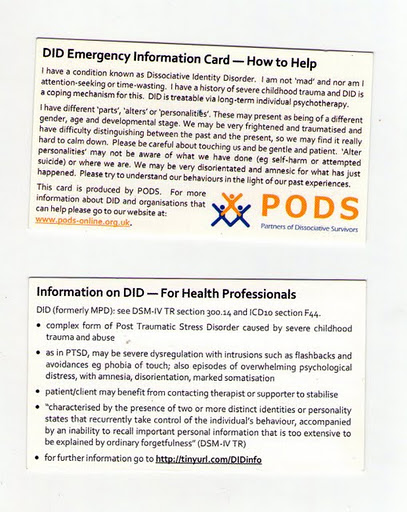
Understanding Roles

One of the topics discussed in Bridges last week was how we take on certain roles in our lives and how this affects us. We all play roles in life as part of our identity development. Teenagers especially may try out different roles over time or in different social settings as they try to balance needs to distinguish themselves as separate  and the desire to belong. We may also be given certain roles or defined in certain ways by our family or our peer group – ‘Paul is the quiet one’. Roles can be part of how we feel a sense of stability and belonging – ‘Mum always makes a cake for our birthday’. Developing our identity is also strongly linked to adopting role models – ‘Shane’s just like Grandpa’. We may struggle to show attributes we haven’t seen in someone else. People often start to adopt the mannerisms and characteristics of others we admire or spend a lot of time with.

Where roles can a problem is when they are limiting in some way, at odds with who we want to be, or have terrible costs we don’t want to pay anymore. We can find that other people’s idea of who we are can be rigid, not accounting for growth and change over time. Paul may long to be a more outgoing kind of guy, Mum may be desperate to swap roles at times, Shane may be rocked when Grandpa behaves badly. Sometimes teenagers identify with rebellious loners and find that the social cost to this kind of identity is depressing them.

Understanding roles can also be very helpful for multiples. There’s often a reason different parts of a system feel and act the way they do. Sometimes systems are very role-bound, Brenda manages work duties, Bren deals with emotions and relationships, Anne holds bad memories, Dilly stops Anne from sharing them. Understanding what role you and your parts play can be very helpful, not only in the outside world, but in relation to each other. Sometimes entrenched hostility, denial, abuse, or acting out can be better understood when you unpick what role the parts are playing and what drives this behaviour. It’s worth noting here that you yourself play a role with regards to your system too. Sometimes multiples, particularly those with a system that has developed as a central person (you), and a group of alters you didn’t used to be aware of, can forget that how you react and relate to the rest of your system is also having an affect. Your lack of awareness may have been the role you played – to suppress and hide the others so you can function day to day.

So, as a singleton or multiple, you’re aware that you’ve somehow become stuck with a role you don’t like. How do you change it? Good question! As usual, there’s more than one way to go about this. I find looking at the way teenagers manage issues around developing identity useful, because it’s not uncommon for them to experiment and try out different roles and approaches to life. They can be quite fluid while they’re finding where they feel most comfortable. It can be a bit trickier as we get older because we get so used to thinking of ourselves in a certain way, and people around us can re-enforce this, making it hard for us to change.

Something to consider is what function the role you’ve been playing has, and if you need to find a new way to perform that function, or if you want to leave it behind completely. Next, what kind of roles are you drawn to? Who do you want to be? Look around for role models, these don’t have to be people in your life, they might even be fictional characters. Look for ways to model what they do. The Magic of Make Believe by Lee Pascoe instructs how pretending to be a person we admire for a short time can help us to step outside our fixed idea of ourself and take on new characteristics. To a certain extent, we are who we think we are. Just because we’re not teens any more doesn’t mean we have to get stuck with roles we chose at 17 for the rest of our lives.

Another way of looking at roles is to borrow from Jungian archetypes. It may be that you don’t want to give up the role you’ve been playing, it’s valuable and useful and fits for some situations. Perhaps a more useful approach would be to expand the number of roles you can play. This idea simply put is that we all contain a whole bunch of different ways of relating to life – broadly speaking, roles. We get stuck when we’ve limited ourselves to only one or two. The idea in this case is to try and connect with some of the archetypes you’ve lost touch with. So for example, a very conservative straight laced person who’s feeling tired and lacking creativity might look for opportunities to play a Trickster role to liven things up. The theory is that all of us have within us the capability for all roles, the kind of flexibility that allows actors to find any character within themselves for a time. It’s a little like the difference between having only three cards to play, and access to a full deck. Being able to access and live out a peaceful, centred role when we’ve been stuck in chaos, or an assertive role when we’ve felt trapped by shyness, or an introspective role when we’ve been exhausted by driven productivity can free us to express many different sides of ourselves and be able to adapt and respond to many different situations in life. 

Some of the books that talk about Dissociative Identity Disorder also explicitly talk about how to change roles. A not uncommon issue is a part within a system who has played the role of abuser to other parts in the system. These can be strong, assertive, independent parts, who may have complex reasons for taking on this role. It may be an attempt to be protective (it will get worse if we tell, I’ll make sure no one does), it may be a form of self loathing and self abuse – in multiples parts may hate themselves, or may express self hatred by hating other members of their system, it may be behaviour that’s been learned and modelled from people in real life – in some cases the only modelling of a strong person who doesn’t get hurt has been an abusive person. More than one reason may be tangled in together, and the initial reason we take on roles can end up being quite different from why we keep hanging onto them. 

Roles are not static things, they are also about relationships. Roles such as parent/child are mutually re-enforcing. Even if you had no intention of playing the role of a parent with someone, if they keep behaving as a child, you may find yourself starting to behave as a parent. We ‘hook’ each other into roles. So roles that are played within systems are also about the relationships between parts. In the example of someone who’s got the role of an abuser, part of helping them put that role down is getting the rest of the system to no longer relate to them as an abuser – with fear and anger. Part of that process is about rebuilding the relationships – helping the abusive part to see the harm they’ve been doing, to develop empathy for the other parts, and to genuinely apologise for the role they’ve been playing. Helping the abused parts to articulate their pain and fear, to learn how that role came into being and why it was played, to start to connect with the strengths and good qualities of that part they haven’t been able to see before, and to let go of the old dynamic of abuser/abused and hook into new roles. 

If you’re struggling to take on new roles, it may help to link a new role to skills and strengths you already possess, instead of totally different ones. Abusive parts are often coached towards being protectors because their strength makes them great at both roles. There’s many different way of framing roles and the ones that feel positive and achievable may well be easier to take on. Good luck!

About Bridges

Our weekly therapeutic group Bridges is going well.  I’m so pleased with how it’s developing. We’ve had no major incidents or problems, and the feedback about the group has been excellent. (‘We’ are a few people working together in the dissociative initiative, a group developing resources around dissociation.) It’s not the ideal space for everyone, but it’s clearly going some way to meet a need in the very under-resourced area of dissociation.It’s actually a pretty exciting project, there are very very few peer-run dissociative groups out there. We did a lot of talking, reading and research before we launched the group to make sure we came up with a good model. It was about a year in the making between discussing creating a group and actually having our first meeting. Part of that time was also spent developing resources such as basic information about DID and Dissociation, and giving talks about the topic to start raising awareness of the needs in this area. We also gathered feedback directly from people with these conditions to check that our assessment of what people wanted was on target.

We ended up drawing a lot from the model used by the Voice Hearing groups, particularly in regards to the open nature of the group – it is held weekly but there is no pressure on people to attend. While a group like this can be a huge support and resource, it can also be unsettling and disruptive, leaving people feeling ‘stirred up’. We wanted people to feel a sense of belonging even if they only chose to come occasionally, and to have the opportunity to self-regulate, that is, to decide for themselves when and how often attending the group was going to be helpful. The feedback we’ve had from people has suggested that this approach is working well, and just knowing that the group is there and available even if someone isn’t attending every week does help to create a sense of being welcome and accepted somewhere.

Some of the group models we encountered exerted a high degree of control over participants, for example, requiring signed documents from treating psychiatrists that the person had a dissociative disorder, was in active current therapy, and had the doctors permission to attend the group. Some of the models were also very regimented, with a strict schedule of discussion topics, and required attendance at each meeting.

We felt these approaches were inappropriate and wanted to create a safe space that was flexible and adaptive to the particular needs of the group members on any given day. We also wanted to emphasise the ‘peer’ aspect of the group, the Voice Hearers groups are ideally faciliated by people who themselves hear voices. This can really help to create an inclusive space where people share from a more equal place. We decided to work according to the following values:

  • Safety everyone has the right to experience a sense of safety and support within the group. We ask people to be mindful of not distressing each other by discussing sensitive things such as graphic abuse memories. Everyone is encouraged is speak up if something they are not comfortable with is being discussed. The personal sharing within the group must remain confidential. Some people attending have not disclosed to other people in their life about their experiences, it is especially important to not accidentally ‘out’ anyone. The group facilitators are available if anyone needs to debrief or wishes to discuss something further outside of the group.
  • Respect each person, their ideas and perspectives. We don’t need to agree with each other and we try to avoid advising each other as the recovery process is very individual and what works for one person may not be the best approach for another. We do share our thoughts, ideas and experiences so that we can learn from each other, but we don’t try to make other people agree with us. We all have the right to understand our experiences in our own way.
  • Recovery the focus of the group is to share, listen, feel heard, and develop strategies to better manage dissociative experiences. It is okay to be struggling or frustrated, but the goal of the group will always be to grow and develop our own recovery journeys.
  • Acceptance the group will aim to make room for all people who benefit from attending and each person is welcome to be however they need to be at the group, as long as safety and respect is maintained. Group members are at different places on the dissociative spectrum, and have different experiences around dissociation or multiplicity. We will not diagnose one another or in any way encourage a worsening of symptoms. Some people may switch during group, and there is no problem with this. While we especially seek to make people with multiplicity at home, no condition or experience is more important than any other.

The format of Bridges is that anyone who experiences dissociation and/or multiplicity is welcome to come along. They can contact us first if they wish, or they can just turn up on a Friday and see how it feels. (Do check MIFSA is open, it will close for a little while over Christmas for example) People don’t need an official diagnosis or even to be certain that dissociation/multiplicity is what they are experiencing. It can be very confusing, and it’s okay to come along while you work out what is going on. People are welcome to bring a support person along with them if they wish, such as a friend, carer or worker. We don’t allow support people to come by themselves unless they also experience dissociation/multiplicity as group members can feel a bit exposed otherwise. We do recommend that people consider bringing a support person or making safe arrangements to get home from group if they anticipate being too stirred up to safely drive or navigate public transport after the group!

I do prepare a range of relevant discussion topics in advance, but we aim to uncover them naturally as people share ideas or concerns within the group. Every week I post here some aspect of our conversation that may be useful, partly for the benefit of people who can’t attend, and partly because many people who experience severe dissociation have difficulty retaining information and having a written history of group topics to refer to can be a useful resource.

I’m continuing to grow our little library so that people who find bibliotherapy helpful (like me!) can freely access relevant books. We would love any donations if you can help! One of my next major goals is to work on developing a way to include rural or house bound people. Another is to see if we can source some funding to pay us a little for our work. There’s also a tremendous need for specific carer support in this area. I went out this week and bought some new supplies for Bridges. I now have a receipts book and coin purse to handle the deposits for my library books, the Bridges notebook for details such as possible discussion topics, and the pencil case, pencils and crayons are for people to draw or colour during group if they wish. The table is always set with books to browse, water and snacks, and colouring in paper. Doing something with your hands can be a useful distraction to calm down when feeling anxious. Colouring supplies also help make Bridges a safe space for younger alters. 

I’m very proud of this group, for everyone who comes along it is such a huge achievement considering the atmosphere of controversy and hostility that sadly dominates conversations about dissociation. I’m hoping this group is a small step in the direction of changing things and improving the support offered to people who experience dissociation.

Listening to your dreams

Not the ‘hearts desire’ kind, the ‘strange stuff your brain gets up to while you’re sleeping’ kind. Although, the overlap of these two rather different concepts with the one word really interests me. In our group Bridges last week we talked about this. There’s a whole fascinating and complicated science to dreams, how they work, when they occur, why some people remember them and some don’t and all sorts of interesting things. But that’s not what I’m going to get into here. As someone with PSTD, dreams and nightmares are a big part of my world. I’m one of those highly creative types who dream furiously, frequently, in colour, and have some control in my dreams. (which doesn’t stop awful things happening – kind of like life) I’m also a highly traumatised person whose subconscious at times seems to be a swamp full of pain and misery, and nightly immersions can be distressing and exhausting. So doctors are often very surprised when I say that were there a medication that could stop all my dreams, I wouldn’t want to take it.

This isn’t masochistic, it’s because my dreams are an important source of information about how I’m travelling. For someone who’s severely dissociative, I am so accustomed to numbing and walling myself off that I can be in quite serious trouble and not notice until I collapse. My dreams are a nightly consultation with my mind in which the truth of how I’m going is revealed. For a few hours I sit in a theatre and watch  my inner world play out upon the stage. I need the information to make good choices in my life.

I’m not a huge fan of interpreting dreams, I think taking them literally and getting hung up details or thinking they are predictive is misguided. It can be kind of fun to read other people’s ideas about what things mean in dreams, but in my experience, people’s personal internal symbolism can be highly specific and unique. Not all dreams are in any way useful. I don’t rely on my dreams to the exclusion of all other sources of information, it’s just one more way to collect data on myself and see how I’m doing and what I need.

When I dream of being hunted I know I’m feeling afraid and overwhelmed. I need to retreat to safe territory, perhaps spend a day at home or cut down on some of my activity for a little while. When I dream of reuniting with people who once loved me I know I’m grieving and lonely. I need to give myself time to hurt and look for a chance to connect socially. When I dream of torture I’ve learned that means I’m under intense stress and at high risk – even if I don’t feel like I am. I use this awareness to help me look after myself better. Dreams can be a way of gauging how you’re going inside, and of helping information to cross dissociative barriers.

There’s another reason I wouldn’t want to stop dreaming. As someone with a severe dissociative disorder, I’m well aware of what walling off your pain can do. I know the weird disjointed feeling of surface calm while deep inside the screaming wont stop. I don’t want to forget I have nightmares. I want to calm my pain so I don’t have so many. As a child I valued my dreams deeply. No matter what happened during the day, at night I was free from the world. I traveled my imagination like an astronaut in space. It was something that couldn’t be taken away from me.

For multiples, dreams can serve as an even more important source of information – communication between parts. Again, this isn’t universal so try not to feel stressed if you don’t work like this. But if you are a multiple it may be worth considering paying some attention to your dreams if you recall them. Some people find that different parts have their own dreams. Some people find that dreams are how deeply buried parts who never come out communicate their fears and desires. It can be a way of system mapping and learning what other parts of you feel and need. You may be able to open a channel of internal communication by letting your system know that you’re paying attention. Try staying in bed in the morning for a moment to reflect on your dreams. If you don’t think about them in the first moments of waking they tend to fade away. Perhaps your dreams will help you listen to yourself and hear an uncensored reply. Or perhaps not. People are funny that way.

Multiplicity – Mapping your system

In Bridges this week we talked about how to start the process of working out what was going on if you are a multiple. This can be a challenging process for a number of reasons. The biggest is simply that most people coming to grips with this situation find the discovery they are sharing their life with other parts very confronting. Denial can slow down the process of learning more about yourself, and so can the emotional shock of making these kinds of discoveries. Multiplicity is a very individual construct, it develops out of an intersection of two entirely unique factors – the environment the person was in as a child, with the specific challenges that posed, and the unique personality and skill sets the child possessed. The result is rather like the formation of a snowflake – no two are alike!

In all the literature I’ve read, I’ve come across three basic ways that multiples tend to learn more about themselves, more specific than the general ideas for building self awareness. ‘System mapping’ refers to learning what parts are in your system. (please translate to your preferred language – inner family, tribe etc.) Method one is to gather information internally. You might ask inside for parts to identify themselves. This is a great approach if your system tends to talk internally and you hear their voices. You may not even need to ask, you may have known for years that there’s an older male voice and a little girls’ voice and a harsh angry voice. You can start to note down the details you have and add in information as you collect it. I do recommend finding a safe place to note down your system map, considering that the information is very emotionally charged and you are prone to dissociation, it’s likely you’ll have difficulty remembering it.

You might start off with only a tiny bit of information and then add to it as your dialogue grows – the older male voice may tell you he hates reading, he’s close to your brother, and his favourite food is hot Indian curry. You can start to build more complete profiles of who’s in your system and what skills they have. Skill sets can be useful to identify as it’s common to have them broken up and distributed among a system. Someone may have financial skills, another is very nurturing and parental, someone else loves boats… Identifying the roles parts have played can also help in understanding how you all work. Sometimes there’s parts who don’t seem to have any skills, or who seem really depressed and overwhelmed. These parts are often still playing vital roles within the system (although they may not feel that way), they may be preserving characteristics such as hope or innocence, or they may be containing distress, feeling shame, misery, or despair to protect the other members of the system from those experiences. Some people find their parts communicate through dreams, so listening to your dreams can also be a way of learning about them.

A second way of starting a system map is to gather information externally. I’ve read of people starting a journal and inviting all their parts to introduce themselves in it. I’ve also come across people tacking a piece of paper to their door or having a whiteboard on which is written ‘Who are you?’ so that as different parts come out, they add whatever details they know and are comfortable with sharing to the list. Some systems have parts who already have names for themselves. Some have parts where 7 all thought they were ‘Kylie’ and are all startled to discover the other 6. Some choose to name themselves once they understand they are multiple. Some identify themselves by a role such as ‘the driver’ or a title, such as ‘the sad one’. Some, especially younger parts, get confused or play games and use more than one name. Some refuse to use names at all. It can take a while to work everything out!

Different parts in a system may have different levels of awareness, or co-consciousness, of each other. So, for example, imagine a system with three parts, Mary, Sally and Greg. Mary may not be aware of either of the others, Sally may only be aware of Mary, and Greg may be aware of them both. Sometimes a useful strategy is to ask everyone in the system to write down who they are aware of and what they know about the system, and then start combining all the individual maps to create a master map. Sometimes there’s one member of a system who keeps track of everyone and once they are happy to share their knowledge, you have a good idea of what is going on for you. Another way to try and start the process of system mapping externally is to construct a timeline and try to identify who turned up at what age. It’s not uncommon for new parts to turn up to manage a new challenge or environment, such as starting school, and that can be a useful way to track the development of a system. Sometimes you can chart your system using photographs or handwriting – you might not yet know which part does that really small neat handwriting, but you can pin down that they first turned up in high school, that they’re not very good academically but love to write creative stories, and that they disappeared for several years in the mid nineties. This can be a good start!

A third way to learn more about your system is from feedback from other people. Sometimes parts are unable or unwilling to engage internally or to identify themselves through the written word. You may be able to map your system by tracking responses from other people. Some people find their parts refuse to talk with them but chat with their therapist or a friend, and the therapist can start the system map or you can catch up on what’s going on for other parts with your friend. Others can deduce based on what they don’t know or remember – you never remember catching up with Holly and her friends but she thinks you’re great – sounds like you might have a hippie part. You never remember turning up to work but you get a paycheck every week and no complaints – sounds like you might have a part who’s good at sales. You bust up every relationship just after starting to get physically close to the other person but never remember doing that – sounds like you have a part who doesn’t cope well with sex. You lose hours every time you have to go past a toy store. Welcome to child parts!

Multiple systems are often geared to hide information. Multiplicity can be a great survival strategy, but if detected can actually leave someone more vulnerable to exploitation. Also, as you learn about the parts in your system, you can’t help but learn about the roles they’ve played, the memories they carry, and other information you may find painful at times. Your system may have been set up precisely to compartmentalise this material so you’re not overwhelmed by it. So try to be patient if your system is blocking all your efforts to learn about it! You might have to do a lot of coaxing and encouraging that it’s safe and you’re trustworthy.

Systems are not always static either. Some systems are highly fluid and in flux, with parts appearing and disappearing all the time. This tends to suggest a person under high stress who feels in chronic danger. System mapping in such a situation is fairly pointless, the highest need is settle the distress and restore some sense of safety and control. Some parts may move between different ages from day to day, which can make them difficult to identify at first. Some may have very strange ideas about who they are, which is often rooted in childhood beliefs about what would keep them safe, profoundly negative self concepts, or reflect spiritual beliefs. Multiplicity becomes a lot less strange seeming when you remember it was ‘built’ by a child. Try not to panic about what you discover, just like anyone else, multiples can change, grow, and adapt. It’s also not uncommon for some parts to hide away, deeply buried, and remain undetected for a long time, so try not to be too surprised or discouraged if you think you’ve worked out your whole system map and later discover an addition to the family.

Don’t feel like you have to choose just one approach to mapping your system, cobble together any information from whatever sources you have available to you. Take your time, be gentle with yourself, and good luck. 🙂

Edit: Mapping your system isn’t always a helpful approach – please see the comments for a great alternative perspective!

For more information see articles listed on Multiplicity Links, scroll through posts in the category of Multiplicity, or explore my Network The Dissociative Initiative.
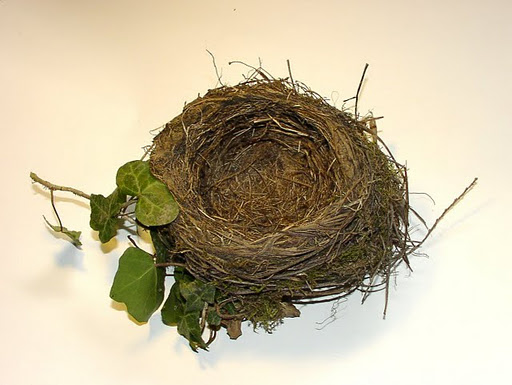
Cary’s Interview

My co-worker Cary facilitates Bridges with me and we do a lot of the dissociation talks and training together. Last year she was interviewed for the Insight program on SBS, and bravely spoke a little about her experiences living with DID. The program ended up with a lot of material from many different people and sadly had to edit her interview quite short, but it was a great show and the interview is well worth a watch. She’s given me permission to link to it here. 🙂

Here’s her bio from the Insight website:

Cary has struggled with mental health issues since primary school.She has suffered psychotic episodes, depression and has been diagnosed with dissociative identity disorder, formally known as multiple personality disorder.She says young people need better services and that medication is not always the answer.

Cary is now helping other young people through the Mental Illness Fellowship of South Australia.

Watch the show here, Cary’s interview starts at 10.19 in part three if you don’t want to watch the whole program.

Introducing Dissociation

Dissociation is not very well understood, and most people think it’s very rare. In reality, mild dissociation is so common that most of us have experienced it! Part of the trouble understanding and talking about dissociation is that the language is clinical and unfamiliar. It’s not particularly easy to spell or pronounce. (many folks throw an extra ‘a’ in diss -a- ociation, but it’s quite long enough with the 5 syllables it already has) Dissociation is the disconnection between things that are normally connected. It’s easiest to think of as being unplugged on some level.

Most of us have experienced a small degree of dissociation. One common example is called highway hypnosis, which is where you may drive say, home from work, and arrive not able to recall any details of the trip. You’ve been driving on autopilot probably thinking about other things. Another example is daydreaming, or getting ‘lost’ in a good book. These are common experiences, and do not indicate a problem of any kind. Dissociation only becomes a disorder when it is severe, distressing or disabling.

Dissociation is not psychosis, although like any symptoms of mental illness, someone can experience both of them. A hallmark of psychosis is the addition of new information, such as seeing or hearing things that other people can’t, whereas dissociation is generally related to a loss of information instead.

Dissociation is a symptom of a number of different mental illnesses, such as Post Traumatic Stress Disorder, and Borderline Personality Disorder. There is also an entire category of disorders where dissociation is the primary issue, just like the category of anxiety disorders groups different mental illnesses where anxiety is the underlying feature. One of these is called Dissociative Identity Disorder

Dissociation can happen in may different areas. It depends which area has been unplugged as to which symptoms a person experiences. People who suffer from chronic dissociation may struggle with symptoms such as:

  • Emotional numbing – where someone cannot connect to their own feelings, feeling flat, empty or numb instead.
  • Amnesia – ‘zoning out’/blackouts/lost time, when dissociation occurs in the area of memory, for example suddenly discovering that it is Thursday, and having no memory of Wednesday.
  • Time speeding up or slowing down.
  • Losing sensations – not being able to feel your own body, or feel sensations such as heat, cold, pain, hunger. Dissociation can unplug someone from their own senses, reducing or even removing altogether their sight or sense of hearing or ability to feel pain for example.
  • De-realisation – this describes someone’s experience when they are unplugged from the world around them, it may feel like being in a dream, or that they are living in a film. Nothing feels ‘real’. This may not sound so bad but it can be very distressing to experience.
  • Depersonalisation – describes being unplugged from yourself, where someone may feel unreal, like being a robot or living in a dream. They may not recognise their own reflection in a mirror, and may have out of body experiences where they seem to be watching themselves. Losing a sense of yourself like this can be intensely distressing unless the person is also experiencing emotional numbing.
  • Other common symptoms include flashbacks, sleep disturbance, psychosomatic pain or body memories, and identity disturbances.

Many people experience one or more of these symptoms on occasion without having a mental illness. People who have a dissociative disorder may experience dissociation in only one or up to all of these areas. Some people struggle with chronic symptoms all the time, while others experience episodes. There’s a wide range of ways dissociation can present and different kinds of difficulties it can cause people. It can be difficult to describe dissociative experiences before you know the terminology. In my case, even reading about it wasn’t enough, it took quite some time for me to realise that the confusing experiences I was having were dissociative.

It can be difficult to imagine what severe dissociation might feel like, but if you have ever stayed awake for a night or two, perhaps studying, then you have some idea. You may have felt confused, foggy, your sense of time might have been different, perhaps the room appeared fuzzy or spun around you, you may not have felt your feet upon the floor. Going into shock following an accident of some kind also resembles a dissociative experience. If you’ve ever been injured you may have felt really cold or numb or had odd tingles or pins and needles in your body. You may have experienced tunnel vision, time may have slowed right down or skipped in little bursts so you felt like you were in the backyard one moment and the ambulance the next. You may have felt dizzy or like you were falling, even if you were already lying down. Everything may have seemed very surreal and strange, as if you were in a dream. You may have become quite confused and reacted inappropriately. Perhaps you started giggling despite having a broken leg. Perhaps you were injured in traffic collision but all you could worry about for awhile was the groceries getting warm on the back seat. Remembering experiences like these can help you better understand the struggles of people who experience severe dissociation.

For someone dealing with severe dissociation, the very first priority must be safety. It is very important not to ignore the risks that severe dissociation poses. Driving a vehicle or even walking near traffic can be very dangerous during a severe dissociative episode. People struggling with chronic dissociation have to adapt their choice of activities to the level of symptoms they experience each day to make sure they stay safe. For example, when dissociative, I tend to burn myself accidentally while cooking.

If memory is affected, using extensive memory aids can greatly assist in maintaining safety and accomplishing goals. I use ‘to do’ lists a lot and set reminders on my phone for appointments an hour before. The kinds of tasks I write on my to do lists vary depending on how well I am that day. On bad days they are very simple things such as brushing my teeth and eating breakfast!

Dissociation can be rooted in trauma or grief. If this is the case for you, it’s important to spend some time working through those experiences instead of just trying to manage symptoms. This doesn’t have to be done in therapy or to mean that you are awash with painful feelings all the time. Finding a balance between expressing and honoring the events of the past and being able to connect with the present can reduce dissociation. Sometimes dissociation worsens when a person feels that the world is not a safe place to be connected to. Working to restore a sense of safety and control can help to reduce symptoms.

Grounding techniques can be very helpful to manage dissociation, and I encourage people to work on developing their own grounding kit. Some people who struggle with severe dissociation are vulnerable to issues with self harm. Sometimes this is as a kind of grounding technique, in other cases people use self harm to trigger dissociative episodes when they feel overwhelmed and want to disconnect. Building self awareness is an important part of managing dissociation, as you learn what triggers or feeds your dissociation and what makes you feel safe, connected and grounded you will be able to tailor your own individual recovery. The more individual the approach to managing dissociation is, the more likely it is to work. It is absolutely possible to go on to have a meaningful, connected, vibrant life, even if you are like me and find that dissociation is something that continues to need managing on a day by day basis.

For a brochure about managing dissociation, click here.

Dealing with your Denial

In Bridges this week we talked about the issue of denial. Whether it’s denial of your mental illness, or denial about trauma in your past, many of us struggle with this issue. Denial can be quite crippling to your ability to function in life. Pretending you don’t have things to deal with or needs and limits that must be worked around can be like setting yourself up to fall, over and over again. If you never accept your situation, you never plan for it, never see the next crash coming, and only snatch a bit of life between episodes of crisis. Ignoring a trauma history can leave you vulnerable to having it scream for attention through psychosomatic illnesses, emotional exhaustion, mental illness, and relationship stress. Suppressing strong emotions is exhausting, and denying the impact of trauma can leave you cut off from part of yourself. Denial can be incredibly costly to our ability to function. We walk about in an illusionary world in our mind, and crash over cliffs we can’t see.

However, denial is also useful in helping us cope. It’s one way of putting some distance between ourselves and something that makes us really uncomfortable. On one level, denial can be a form of containment. First respondents are taught to contain their distress in order to be effective at their jobs. Firefighters, police officers, ER nurses all face situations that are deeply stressful and emotional. All of them unplug from their normal human feelings of fear, shock, horror, and sadness in order to focus, work efficiently, and protect people. It’s as if they contain all those reactions in a box, and put it to one side to do what must be done.

Over time, most people find that containment is breached at times. There are limits to how much we can buffer ourselves, and all of us who experience these kinds of trauma, whether in our personal or professional lives, find that some situations resonate so strongly with us they refuse to be contained. A soldier returns from war with an image of a dead child burned so strongly into his mind he will dream of it for the rest of his life. An abuse victim is able to put aside memories until someone touches their throat the way the abuser did. A nurse excels at maintaining a professional demeanour, but the dying patient who looks so like her mother reduces her to tears. We carry memories and ghosts, and part of recovering from trauma is learning how to live with them, and how to manage when our ability to contain is exceeded.

Denial plays a role in giving us distance, which allows us to focus on the present moment. This is often very valuable in that we can work on building our life without being overwhelmed by the very things we’re trying to escape. When we’ve used denial to help in this way, it can be really hard to let go of. It feels like a comforting friend where facing the reality of our situation feels harsh and frightening. Reality however, has a way of intruding.

We need to work on denial at times when it is not protecting us, but actually leaving us unable to adapt and accept the situation we are in. There’s many ways you can work on your own denial if it’s a problem for you. One of them is spending time with people who are dealing with the same issues. Accepting you have a mental illness is a lot easier when the three new friends you met in group are awesome people with mental illnesses. You can start to see that it might not be the end of the world. Facing traumatic memories is less terrifying when you understand how many other people are dealing with the same issues, so you’re not alone. Sometimes there are concrete things you can do to remind yourself that you are willing to confront and accept these things. Some people write memories in their journal, some blue tack a message to themselves on their bedroom wall, some wear a bracelet with an inscription. Some keep the hospital tag from their last stay, or a page of the notes they wrote in their last episode. Multiples struggling to accept it may keep different handwriting, a collection of photos of different alters, or a recording of different members of their system. My journals serve as a way to keep me connected to the reality of my journey when I start to distort or whitewash parts of it.

Sometimes denial can feel huge and immovable, like you’re trying to push over a mountain. Be kind to yourself. We hang on to things that have worked for us, and are really reluctant to give them up, even if they’re now causing us problems. This is just about conditioning, there’s nothing wrong with you! For some of us, it’s not just us who have issues with denial, it’s our whole family, social circle, culture. Sometimes our denial feels like a mountain because there’s a lot of people contributing to it! It is very hard to come to face something that no one else wants to accept either. It can feel like the end of the world to give up our illusions.

Stripping away denial entirely can also be a problem! We need a bit of buffering from reality at times. It’s okay to pace yourself, dealing with these issues is a process. It takes time, and sometimes little steps is exactly the way to do it. Everyone is different, whatever works for you is right. Sometimes moving too quickly can be really destabilizing, like riding a bike for the first time with no training wheels. It takes us time to adjust to these things. It’s not all that helpful to trade total denial for total absorption with the issue. Neither leave you much room to have a life. And the name of the game here is having a life – not being a good patient and ticking some box that says ‘I’ve faced all my issues’! I don’t spend every minute of my day thinking of myself as a person with a mental illness, or remembering traumatic events in my life. I try to find a balance between facing and dealing with what I need to, and living in the here and now, enjoying myself wherever possible. It’s a tricky line to walk and it doesn’t always work, that’s the nature of the process. Just as there’s no right way to do this, there’s no neat way, and some spills, tears, frustration and mistakes are all part of the deal.


Poem – Dissociation Is

To touch life with gloves on
To sit at a banquet and taste only ash
The void into which I fall
Colours turning grey.

To touch life with gloves on
Nerves burned out by fire
A room with walls so thick I cannot hear the screaming
To sail my little boat away from shores of pain
To drown in that empty place
To feel dead.

To touch life with gloves on
Mirrors that lie to me
Memories that fall like snow
Not knowing if I’m dreaming or awake
To always be alone
To always be lost and looking for home.

To touch life with gloves on
To laugh at pain
To be wild with recklessness
To never flinch
To turn my face from the world
To stand in sunshine and see only night
To ask ‘are you there?’ and not hear the answer
To become so cold that I never feel cold again
To be haunted by life
To be forever falling
To touch life with gloves on.

Grounding Kits

Following on from yesterday’s post, Grounding Techniques, developing a grounding kit is the next step where you pull together all the information you’re learning. What’s important about this? One of the big issues with dissociation is being able to retain information. The point at which you’ll really need your grounding techniques is also the point at which you’re least likely to be able to remember any of them, or even the concept. So, the idea of a grounding kit is to find a way to pull together all your effective grounding techniques and have some way of being able to remember them. Some people literally put together a box of things, a bit like the example kit I took into the TheMHS to explain this idea:

I probably wouldn’t recommend keeping the plant in there though…

People dealing with other issues use a kit like this too, I’ve heard of people who experience depression keeping a kit that has a good book, a block of chocolate, birthday cards with uplifting messages in them, that kind of thing.

But, it doesn’t have to be a literal kit, a list of ideas that you keep somewhere safe can be just as helpful. Many voice hearers who come to Sound Minds love this list of strategies and carry them with them so they can refer to it during stressful times. It’s easy to have a bit of a play about with grounding techniques while you’re not feeling so bad, forget about them, and not have anything to draw upon during a difficult episode. So, a grounding kit is the stage 2 of this process that actually makes sure you have something helpful you can do for yourself the next time your dissociation is bad. This is where self awareness becomes self care – learning what you need, and then actually doing it!

There are two key concepts that help make your grounding kit really effective. The first one is that it must be individualised! That means, specially tailored to you. I tried various techniques for years, like the breathing exercises, really frustrated that other people seemed to find them helpful but they didn’t work at all for me! But, I get given them by doctors, recommended them by ACIS, they’re all around. Now, I think a lot more broadly than that, and I’ve been able to share techniques that do work for me with the people who support me. This means that when they’re trying to be helpful at least now they’re recommending things that have a chance of helping me. The more your kit has been specially tailored to you, the better it will work.

No single technique always works every time. This is kind of frustrating, but it’s important to be aware of. The whole point of working out a bunch of techniques is so that you have lots of helpful options to pick from. Don’t give up on a technique the first time it doesn’t work for you. I find, for example, that some techniques work for me with mild to moderate dissociation, but aren’t strong enough to help with severe dissociation. Many of my techniques aren’t something I only do during the bad weeks, they’re things I do regularly because they prevent chronic dissociation from happening in the first place.

Which brings me to the second key concept that makes grounding kits effective. In order to set up a grounding kit, you have to overcome the denial that you have a problem with dissociation in the first place. The middle of an acute dissociative episode is not the ideal time to be reading up on strategies and trying things out. Ideally, you use the times when you are well to set yourself up for the best care possible when you are struggling. Of course, some of us are dealing with chronic issues and don’t really get weeks or months free of symptoms, but the basic premise still applies. Crisis isn’t the ideal time to be trying to work out your grounding techniques! This means that when you are going along doing pretty well, you should put some time into trying different grounding techniques and seeing how they work on mild symptoms. And, as you collect your grounding kit, you can start to share this information with anyone else in your world who could then better support you through rough patches. Trust me, its a lot easier to explain these ideas to someone else when you’re not in the middle of a panic attack, flashback, or acute dissociation!

You can also have a look at what was going on in your life when you are well, and when you are really unwell to work out what your key grounding strategies may be. So, in my instance, I did no art at all during the years of my most severe dissociative symptoms. Now that was partly the result of how much loss of function the dissociation was causing me. But in my case I’ve also discovered that without regular creative activities, I’m much more vulnerable to dissociation. So these days art/writing is much more a priority for me, because I know now that it’s one of the things that keeps me well. I don’t wait until major dissociation kicks in before I pick up a paintbrush or pen. I build these techniques into my everyday life, and as a result I’ve drastically reduced the degree of dissociation I experience.

When I kick into the denial and get blasé about how important these techniques are for my health, I quickly find my stress level and symptom level stepping up. And I’m learning to pay attention to those early warning signs instead of putting my head in the sand until I’m a complete wreck. But it’s hard work in some ways to keep your worst days in mind when you’re feeling good! It’s tempting to stop looking after yourself, to even feel like a bit of a fraud, as if your bad days couldn’t really be that bad, and maybe if you’d just tried a bit harder you could have pulled yourself through without all the fuss. This is pretty common.

It’s part of the nature of mental illness that it’s episodic. For some of us that means months or years where we travel well, for others the ups and downs are more hour by hour. But all of us feel tempted to put the bad days behind us and dash off into the sunset. There’s nothing wrong with that impulse! It’s great to make the most of those good days, and we all need time off from anxiety about our situation and thinking about our mental health! But, making ourselves spend a bit of time putting in some safety nets just on the off chance we have another bad day – that’s often the key difference between people who live well with even severe mental illness, and those who are always being surprised by it, caught unaware and unprepared. And if it turns out you never need it, that your bad days really are gone forever, that’s awesome, no harm done. But, having a safety net in the form of a grounding kit can make the difference between having another bad day and total catastrophe.

Grounding Techniques

Are ways people manage all kinds of mental health issues. I’ve come across the idea of grounding and being grounded in all kinds of mental health literature, recovering from trauma, handling addictions, managing anxiety, and dealing with self harm issues. It’s an idea that is especially appropriate for people struggling with dissociation of any kind. In this context, a grounding technique is anything you do that helps to reduce your dissociative symptoms. In my experience, anyone who’s been dealing with dissociation for awhile has come up with a few strategies that help them to manage it. They might not always work, or be discrete enough to use in public, and sometimes they can be self-destructive, but if they reduce dissociation for us, we’ll give them a go. It can be really useful to spend some time thinking about what you already use when your dissociation is bad. Do you find mindfulness helpful? Do you look to spend some time with a friend? Do you find regular exercise helps keep you on track?

Everyone is different and people react completely differently to grounding techniques. What is helpful for one person may not work for another, or may even make their dissociation worse! Learning more about yourself and what works for you can make a huge difference in being able to manage your condition and improve your quality of life. This can be a bit of a trial and error process, and at times frustrating especially if you’re trying things other people find helpful that aren’t working for you. So, putting some thought into what you already do that helps can give you a bit of a foundation to work from.

Grounding techniques fall into one or more of a number of categories, and these can make it easier to work out what approaches you tend to respond most to.

  1. Calming – you can find a lot of these techniques in literature about managing anxiety and recovering from trauma. Calming techniques are things like going on a gentle walk, listening to soothing music, doing breathing exercises or yoga, giving your cat a cuddle. Dissociation is often a reaction to feeling stressed and unsafe. Calming techniques work by settling you down so that your stress level goes down, and with it the degree of dissociation.
  2. Intense – some of the self help literature about managing self harm issues have some great suggestions about intense grounding techniques. Intense techniques include things like strong tastes, holding onto ice cubes or taking cold showers, a hard workout at the gym, screaming into a pillow, listening to loud music. Intense techniques work by reaching through the dissociation to reconnect you to your body, feelings, and environment.
  3. Physical – some techniques are about affecting your physical body, a warm soothing bath, the texture of your dog’s soft fur under your hand, grass on the soles of your feet, guitar strings under your fingers. They help to anchor you back in your body and connect you to the environment around you. They can be either calming or intense.
  4. Emotional – these techniques work on an emotional level, they can also be calming or intense. Hugging a stuffed toy that calms you, holding onto a bracelet that your grandma gave you, writing in a journal, watching a film that really moves you, painting your nightmares.
  5. Intellectual – these techniques engage your mind to access information that helps to orient you in the here and now. Examples are asking yourself and answering questions such as “Where am I right now? Who is here in this space with me? What year is it? What can I see, hear, feel, smell around me?” These can be really helpful if you are having trouble with flashbacks or that spacey kind of disorientation where you get confused about what’s happening now and what are memories.

Many grounding techniques work on more than one of these levels – like playing with your dog – it’s physically and emotionally engaging, and if you run around the park and then collapse for a rest it’s both intense and then calming. Sometimes it’s these kind of techniques that affect us on many different levels that are the most powerful. There’s nothing in my world quite as grounding as a lap full of kittens!

So, to give you some examples of what I find helpful, I rarely use intellectual grounding for myself. I do find it useful when waking up sometimes from long complex dreams where I can get disoriented about where reality left off and dreams began. Apart from that, it almost never appears in my repertoire. I’ve found that intense techniques are where I tend to gravitate. Some of the calming techniques, like breathing exercises, actually make my dissociation worse. Whereas I’ve used freezing cold showers to snap out of really bad dissociative episodes quite effectively. Creativity is also really critical for me, I keep journals and basically talk to myself in them. I use them to connect to my feelings and express thoughts and fears that otherwise just knot up inside me. This emotional connection with myself helps a lot to reduce my dissociation. It’s basically a way of telling myself that I’m listening and I care – which is pretty important to make time to do when often you’re getting through your day by ignoring, denying, suppressing, and downplaying your symptoms and feelings. 

Some techniques are much easier to use in public than others, and it’s a good idea to experiment until you find a bunch that are helpful. For example, I use strong tastes a lot. I’ll often order a bitter flavoured drink, something carbonated, or a meal with a vinegar salad or salty olives. Obviously, it helps that I actually like most of these things! But the bitter drinks I didn’t used to like much at all, I just found that the intense flavour helped keep me grounded. Now, they’ve grown on me. 

Another discrete one for me is wearing perfume. I get bothered by strange smells, and at times I hallucinate strange smells simply as a response to feeling really stressed. So, being able to lift my wrist to my face and smell something that is familiar and soothing can be really helpful. 

When sitting down, you can deliberately push your feet into the floor to feel the ground beneath them. When I’m wearing flats, I’ll often slip them off under the table or desk, and rub my soles along the carpet, the sensation is grounding. 

I mentioned self-destructive grounding techniques before – some of us discover by accident that pain can be very grounding, and if we’re prone to dissociation, we may turn to self harm to try and manage it. Obviously, there are many other reasons people self harm, different needs and beliefs that can drive that behaviour. But, this can be one of them, and if it’s that way for you, I’d suggest that you consider some other techniques and see if you can finding something not harmful that also works for you. Sometimes other intense, physical techniques can replace self harming as a way of grounding.

As overwhelming and totally out of your control as it can feel to experience chronic severe dissociation, you can learn to manage it sufficiently to keep safe, feel alive, and get to do things you love. At the outset you may feel totally in the dark, nothing makes sense, your symptoms appear and subside without warning and you are always fighting just to be here. Take a breath. Accept what is going on, and start to investigate it. Knowledge is power, self awareness will give you the keys to better predict, manage and cope with dissociation. You will in time learn what triggers your dissociation, and what your key grounding techniques are that keep your feet on the ground. It may take time, but you will make sense of it and put together your own personal grounding kit, and that puts you back in the driver’s seat.