Adaptation and Control

The capacity to adapt is one my strengths, and it’s a very common one for dissociative multiples. Chameleon like, we often switch to new parts to manage new environments or situations. People who are rigid and inflexible in the way they approach the world usually struggle during times of change or through experiences of trauma. Adaptation has tremendous power to help us navigate complex circumstances and draw upon different personal attributes in different situations.

However, too much adaptation can become destructive. This is something I have really struggled with. The metaphor I use is of having my feet welded to railway tracks. I am not a free agent who can go where they wish, rather I only travel the tracks laid out for me. What this means practically is that I can really struggle to run my own life when I’m stressed. I lose my capacity to initiate anything. I am adept at coping with adapting to what other people around me choose to do, but making choices of my own has been very challenging. I’ve worked very hard to manage these problems and feel more in control of my own life.

For me, I spent a great many years in various stressful situations where I could not escape, and I could not control what was happening. I did not have the power to make major decisions about my life. I could not choose where or with whom I lived, not to go to school, or to influence any of the decisions the adults in my life made. Because many of my experiences were traumatic, this basically trained me that life is something I adapt to, not something I control. I try to carve enough breathing room from the space that is left after everyone else has made their choices. I have been conditioned to be compliant (or passive aggressive) rather than free.

As an adult, this is a useless framework. It severely limits my freedoms, stops me taking charge of my own life, and has tended to play into abusive relationships. I have had to work hard to retrain myself to be the person in charge of my own life. Even now, when I’m very tired or run down, I feel those old train tracks under my feet, and that sense of being trapped by my choices and unable to make changes.

There are many things I’ve done to break this training. The first step for me has been recognising it. There is a particular grief that I feel when I’m trapped in it, a horrible, paralyzing depression that I have learned to recognise means I have lost control of my own choices. Many things can trigger that loss of control. Some common ones for me have been:

    • being dependent on someone else for a basic resource like housing
    • feeling trapped by difficult circumstances such as caring for someone with severe mental illness
    • feeling trapped by choices made by other parts that are not what I would have chosen
    • being paralysed by fear or guilt in a relationship
    • not standing up for myself in a power struggle
    • not saying what I really think or feel
    • feeling betrayed by a part in some way eg. sharing my journal entry without permission, talking in a derogatory way about me to someone, giving away my clothes or belongings

Once we’d started to tease out what sets off this experience, we’ve all started to work on each of the issues. Mandating system wide that no one is to be abusive or disrespectful to anyone else, or to throw out anyone’s belongings was a fairly easy process for us. Learning to say what we really think or feel has been much slower and longer. Many parts have excellent skills in that area and are comfortable and confident. However many are crippled by social anxiety, a desire to please, a fear of abuse, and really struggle to clearly define themselves. We’ve taken a two pronged approach to this – firstly to support all parts to be able to learn these skills as they can, and secondly to switch to more confident parts if they are being overwhelmed and crashing. Both have taken time to develop, and a safe place to retreat back to, to process all the complex feelings associated with it. This process brought up a lot of intense feelings, fear that I was being mean, fear of being perceived as selfish, fear of arguments or hostility, struggling to learn how to disagree in a warm and friendly way, struggling to learn how to set boundaries before I’d become furious and resentful. (or switched to someone furious and resentful!) It was amazing the sense of freedom that came from being able to do very little things like say warmly ‘That’s not been my experience’ in a situation where I felt dominated and everyone else in the room agreed with each other. Just a tiny little sentence like that would lift the sense of crushing weight, of being trapped and owned, and suddenly we were Sarah again, and could breathe.

Most of these issues for me/us have taken a lot of work and a long time, but even very small gains have been powerful. I’m not finished yet, some areas are very strong now and some are much more fragile and rocky, but enough work has been done that I am able to exercise a lot of control in my life now, to make big independent decisions about what I do with my time, who I spend time with, what degree to pursue, how to run my house. I am gradually learning the skills to be the leader in my life, practicing through things like training a strong willed dog, forcing myself to make decisions without checking them out with anyone for their approval, learning how to be more adaptive to internal needs and conflicts instead of accidentally trapping a whole system of parts into choices only a few of us want.

This issue of over-adapting and losing initiative is a very common one for those of us who have been traumatised, particularly through abusive relationships. Breaking the training that making independent decisions is profoundly dangerous can be tricky and take lots of time. But it certainly is possible. If this is a difficult area for you, perhaps a similar approach will be useful – notice what makes it worse and work on those issues. Some days you’ll make progress and other’s you’ll crash and burn, but it’s surprising how it does all add up over time. Everytime you look after yourself, speak up for yourself, make a decision in your own best interest, you exercise a little more power over your own life, you reclaim a little more freedom. And that experience is so thrilling, so liberating, so nourishing, that it all snowballs and becomes easier and easier. If you’re at the start of that process, take heart. 😀


Multiplicity – Is naming parts harmful?

This post follows on from an earlier one called I am not Sarah.

Some people who have, or work with those who have, multiplicity get very anxious about parts having names. There is an idea that naming parts will increase separation, that it supports the ‘illusion of independence’ and will reduce internal harmony and health.

There’s a lot of ideas tied into this premise that I think are worth examining:

  1. The first is that names have power. This is an interesting idea, as an avid reader of fantasy I find it often. The Wizard of Earthsea by Ursula LeGuin is a perfect example, where people have their ‘usenames’ they use everyday, and their ‘truenames’, which they keep deeply secret or share only with those they most trust. To know someone’s truename is to be able to exercise power over them. Our entire field of psychology is based on the idea that to name something through diagnosis is helpful, will aid understanding and communication and help give you power over it also.
  2. The second is that naming a part will make it more separate. I’ve read arguments back and forth between therapists about how to identify parts, which terms are best, about whether to ‘correct’ multiples if they refer to their parts as people. I’ve read of multiples who refuse to name or allow names for their parts, or who become intensely anxious if their parts choose names because of this idea that naming confers independent existence.
  3. The third is that increasing the separation of parts is a bad thing. This comes from the medical model of DID. In this model, you are mentally ill, and it is your parts that indicate you are sick. Health is about getting rid of the parts, through integration or exorcism or suppression or whatever. Once all the parts are gone, you’re well again. Anything that makes the parts more separate or to function more independently of one another is going in the wrong direction as the goal is to merge everyone together or to collapse those parts that are ‘not needed’ and leave just one.

It interests me that each of these ideas are generally ‘accepted truths’, because investigating accepted truth is often fruitful. What do we think, why do we think these things, and how do we know they are right?

Some people read my outing of myself as multiple I am not Sarah, as a declaration that I disagree with allowing parts to have names, forcing everyone to operate under the group name Sarah. Not so!

My system, pre-diagnosis, used to organise itself roughly into a few groups. A handful who thought of themselves as Sarah, and who did a lot of day to day living and surviving. A handful who only turned up in very close relationships and thought of themselves as our middle name, Katherine. A handful who gave themselves no names but were clear that they were not Sarah, and would occasionally write very unhappy poetry about how much Sarah annoyed them. And lastly, the deeply cut off and buried ones who also were without names, without time ‘out’, just buried. Some slept, some screamed.

This is a pretty lousy structure. We’ve re-organised a lot over the years. Part of this process was finding a group name that everyone could shelter under, so that we didn’t have to identify individually. We chose Sarah, and disallowed any individual part from using that name for themselves, and the same with Katherine, because both names had such importance to us, and because the psych approach tends to create a hierarchy according to who has the birth name. The greatest threat to our functioning was now perceived to be the psych system, so we restructured partly to protect ourselves from them.

Everyone in my system (ie, me included) has either a name, or a title, or both. This is what makes it possible to communicate with and about each other. Therapy for example, can become extremely complicated if you are trying to talk about which of 8 Sarah’s you are trying to refer to! We can often deliberately trigger each other out using names or titles – maintaining their presence can be trickier, but calling someone’s name will often make us switch to them. It was engaging this process that was part of convincing us initially that we were multiple. Some multiples discover parts who already have names, so the whole question of whether parts should have names is moot. In my case things got pretty interesting at the point of awareness, with many parts very excited about names or titles (by titles I mean things like “The sad one”, “The librarian”, or “The 7 year old”. none of these are used in my system) Some parts, particularly a couple of younger ones, got very excited and rather confused and chose a lot of names for themselves until we worked out they weren’t remembering their previous choices and were accidentally making system mapping pretty confusing. This was a frightening and confusing time and we were worried that this process might make us ‘worse’.

Now, we’re pretty relaxed about the whole thing. I never give a fixed number for how many parts there are in my system, because I never assume that our system map is completely accurate and finished, and I’m comfortable with that. We have never yet been comfortable about openly identifying as individuals – on many blogs by multiples there will be a page where you can read about their system members – and I’ve always admired that, but it makes us feel incredibly exposed also! Maybe one day.

  1. So what about those first three assumptions? How have they played out for us? Well, names were powerful. Names took us out of darkness, incoherent and terrified. With names, came relationships.
  2. Did names increase separateness? Hmmm, that’s a difficult question to answer. My system has known a lot of internal wars over the years, massive power conflicts, terrible distress from banished members, parts getting lost and not coming out for many years… Relationships were the start of changing all of that. We also all tried to operate as some kind of middle ground between us – between the extremes of adult/child, dark/light, serious/silly, functioning/wounded… the result of which was that nobody was every really able to be who or how they are. All of us were scrunched in a box too small, limited by an idea of who ‘Sarah’ was that was painfully ill-fitting. Instead of continuing to cramp us all, we have changed and expanded the idea of who ‘Sarah’ is. So, in that sense, yes, part of the process has been about becoming more separate, being able to be ourselves.
  3. Lastly, has this separation been harmful? Well, no. My system has spread wings and we’ve all reveled in the freedom to be who and how we are in the world… while actually coming together to share a deep commitment to values that bind us as a tribe and help us function together. Our leaders have inspired us, have treated the wounded ones with care and the hostile ones with respect, and we have come to find value in our differences and to stop being threatened by each other the way we used to be. We are far more separate in some respects, and far more united in others. In this, has been health and peace.

I don’t share my experiences to suggest that this is the ‘right way’. Everyone’s path is unique, and it can help to hear a variety of ideas about paths to recovery. Certainly in my case, names have not been something catastrophic or something to fear. If you have parts who deeply desire names, perhaps fear is not needed. Perhaps this can be the start of awareness and light in processes that have been happening unconsciously and in the dark. Perhaps if you don’t think of them as symptoms of your illness, you’ll be able to relate to them with more warmth.

For more information see articles listed on Multiplicity Links, scroll through posts in the category of Multiplicity, or explore my Network The Dissociative Initiative.

Is Schizophrenia having ‘Multiple Personalities’?

The short answer here is no. Multiple personalities (now called Dissociative Identity Disorder, or DID in the DSM) is classified as a type of dissociative disorder, while schizophrenia is a type of psychotic disorder. Very shorthand descriptions of these types of conditions are:

  • dissociation involves a disconnection of some kind, in this case between parts of identity
  • psychosis involves an addition of some kind – hallucinations, delusions etc.

From the perspective of the DSM they are entirely separate and distinct, with fundamentally different processes involved and treatments. There are certainly huge differences between many of the experiences.

Popular culture often mixes them up, which tends to enormously irritate people with either diagnosis. I have some degree of sympathy for the confusion however, because even the concept of what schizophrenia, or for that matter, multiple personalities, actually is changes quite regularly and I get that folks outside of psychiatry aren’t getting the memo and keeping up.

The longer answer is still no, with some qualifiers.

Schizophrenia roughly translates to split mind. This does not traditionally refer to the idea of split personalities, but instead to divided mental process or a split from reality. Schizophrenia is a fairly poorly defined cluster of symptoms that has changed significantly over the years and since the previous term ‘dementia praecox’. ‘Multiple personalities’ has also been understood in various different ways over the years – as an experience of spiritual possession, a subtype of schizophrenia where the person is in fact suffering from the delusion that they have other personalities, and so on.

Where things get really tricky, even with the current rigidly defined separation between these two conditions, is in the overlap of presentation or experience. And there are a lot of them. Firstly, Schneiderian First-Rank Symptoms, which were once thought to be extremely diagnostic of schizophrenia (and involve experiences such as thought insertion, thought withdrawal, and voices heard arguing) have been shown in some studies to be far more indicative of DID. What this means is that telling the two conditions apart on the basis of observing a person, or even learning what kinds of experiences they are having can be very difficult.


Secondly, psychosis and dissociation often seem to co-occur in my personal experience. Many people with a psychotic condition find that massive dissociation is part of the prodromal (or onset) phase, just prior to a major break. Some people with a dissociative condition, like myself, experience psychotic symptoms such as hallucinations. PTSD is an excellent example of this. Technically classified as an anxiety disorder, people diagnosed with it commonly experience both significant dissociative and psychotic symptoms.

Thirdly the whole area of voices, which I think is what really confuses things in popular culture. The DSM perspective is that voices are hallucinations, while alters are split off parts of personality. The fact that some people who have DID can hear their alters as voices blurs the two categories. Having some people experience their voices as stable personalities who perceive themselves as separate but alive, likewise. There is a considerable space here where people from both diagnostic categories meet. For more on this overlap, see Parts vs Voices. For a lovely description of working with voices as parts, see Creating a New Voice by Indigo Daya.

For some people, the diagnostic labels are very useful and important. It can be a great relief to have a name for distressing or confusing experiences, and I’m not in any way trying to take that away. These frameworks have their uses. But they also have limitations, and when you move beyond the boiled down Psych 101 spin, life is more complex than these discrete packages of symptoms can really capture.

For more information see articles listed on Multiplicity Links, scroll through posts in the category of Multiplicity, or explore my Network The Dissociative Initiative.

Multiplicity – parts getting stuck

One of the topics that came up at Bridges today was parts getting stuck. Now, for some multiple systems, parts are fighting to be out, and sometimes that means that some parts are getting overpowered and stuck inside. This doesn’t just make them unhappy, they are often lonely and unsocialised, not having a voice or getting their needs met, and their unhappiness may well bleed through and cause troubles for the whole system through general distress such as not being able to sleep, nightmares, rashes, the sound of crying or screaming inside and so on.

Another kind of getting stuck can happen when someone comes out and can’t seem to go back inside again. In this case they may be quite overwhelmed and traumatised and not want to be out, or not be able to take on roles being required of them – perhaps they can’t drive, or lack the skills needed at work, or don’t eat. Rather like putting a stick in the spokes of a wheel, what was working gets locked up and stuck and things can get pretty tricky.

I’ve had to deal with both kinds of getting stuck at different times and I’ve learned a few keys to help get things moving again that work for me. The biggest issue for me is always working out what the problem actually is. Before we knew that we were multiple, we still picked a few things that helped with this sense of being stuck. One of them was changing environments – as that often triggers a switch for me. Thresholds of any kind – doorways and windows and the transition from concrete to sand to grass to earth, often have the capacity to draw out of me a different part to engage the new environment. When I am really stuck, I lose my capacity to initiate this change, I spiral down into a dark overwhelmed place where even if I can work out what I need I have lost the power to do it. This is where friends can be really helpful, to help me out of that place.

I can also often call out a different part by using other things that will likely trigger them, such as wearing ‘their’ clothes, putting their music on, going to their favourite places and so on. This was somewhat effective even before I had much information about who was who.

Now that I’ve done more system mapping, most of us can ask for another part by name to trigger them to come out. This is very useful but has the downside of making it difficult to talk about the parts by name without switching.

For me, some switches are automatic – for example in instances where I’ve been physically threatened, there is a particular part who will immediately turn up, without fail (to date). On the other hand, I’ve floundered badly in uni when I’ve ‘lost’ my researcher/study part and the rest of us have struggled terribly because writing essays are not in our skill sets . For us there’s a kind of dance that needs to keep moving for us to keep functioning, of appropriate switching so everyone in the system can be at their best, get their needs met, and use their strengths. We get stuck when this dance stops.

Another approach we’ve found useful to support very wounded parts is to allow them the right not to have to be out or have to try and function. They’re allowed to hide out inside where it’s safe, or to stay in bed. They need rest and peace.

As far as making sure unhappy buried parts get time out, I’ve a couple of approaches that help me. One is to fill my environment with things special to – and therefore triggering of – everyone. My home has to have things in it that represent or speak to every member of the system. Another is to keep a private system map that you check regularly. If you’re co-conscious or can track what you’ve been up to in some way, you can notice if someone hasn’t been around lately and make time for them.

For me, I’m getting much quicker at working out if getting stuck is the problem. Over the past week I’d noticed that although we were getting downtime and rest time overall there was a sense of chronic tension. We figured after a while that probably someone wasn’t getting out to get their needs met and made space for some switching to parts who haven’t been out in a while. That helped a lot.

For more information see articles listed on Multiplicity Links, scroll through posts in the category of Multiplicity, or explore my Network The Dissociative Initiative.

What is co-consciousness?

Co-consciousness is a term used to describe the experience of someone with multiplicity, where more than part is aware of what is going on. For someone with DID (formerly called multiple personality disorder), they have very high levels of dissociation both in identity and memory, which usually means that they are amnesiac whenever a different part is out. Amnesia can cause distressing experiences such as not being able to recall important personal information (name, date of birth, home address), years of your life, or daily struggles such as ‘coming to’ in an unfamiliar place and having no idea how you came to be there. Some people are really aware that they are losing time or memories like this, others are in a kind of confused fog where until someone asks them a question – where did you get those shoes? when’s the last time you ate? what did you get up to on Wednesday? – they’re actually unaware that they’re experiencing amnesia.

With classic DID, not only is the person experiencing amnesia, but they are confused by evidence left behind while other parts have been out. Obvious things may be clothes in the wardrobe that are unfamiliar and not to their taste, family members upset about arguments you don’t recall having, friends who think they know you by a different name etc. 

Co-consciousness describes switching without this amnesia, so that if one part is out going about their day, another part is aware of what is happening. Multiples with high levels of co-consciousness don’t tend to ‘lose time’ or have blackouts, they’re still aware of what is going on. This is mostly how I function, although under stress my levels of amnesia increase. Multiples who have high levels of amnesia often find that to be one of the most challenging and frightening aspects of the condition, and for most, gaining some degree of co-consciousness is an important part of therapy and recovery work. This process usually starts by working on building self awareness and mapping your system

There is a similar but slightly different called co-hosting or co-fronting, which you can read about here: What is co-fronting and blending?.

Co-consciousness can work practically in a few different ways. For some multiples, it’s like they are seeing and hearing everything that’s going on, even though they’re not the one moving the body. For others, it’s more like being told what happened, or watching a short video of memories. I used to be confused as a kid that so many of my own memories are in the third person rather than the first – that is, I see everything happening as if I’m up by the ceiling, looking down on everyone including me. I’ve since discovered that this is an easy way for me to tell when I’ve personally been out running the body and when I’ve just been watching – co-conscious. My own memories are in the first person, co-conscious memories are in the third. This is different for everyone though! I can really struggle sometimes with new friends or in new environments, especially if it wasn’t me who has met them before or been there before. People sometimes notice me pause as I’m asking inside for the information and if I’m lucky whichever part recognises the person or remembers the event will quickly fill me in, or switch out and take over. 

Co-consciousness is incredibly useful, but there are downsides. One of them for me is the mammoth amount of energy it takes for us to track all the different information and memories and hand them back and forth. It’s like I have a whole house full of filing cabinets in each room, and on a busy day I’m mentally running back and forth between them trying to make sure we can keep up and still function as one. The experience of co-consciousness can often confuse multiples who have only been exposed to the ideas of psychosis or DID and don’t feel they fit either box. It can also be distressing to be aware of what is happening but not in control of yourself any more. As a kid I had a number of experiences that frightened me so badly I became convinced I was being possessed by the devil. I often felt at war with myself, trying to stay out and in control, and when I’d switch we would look in the mirror and I would be terrified at this face that was mine and yet somehow clearly not me. Co-consciousness can make you feel both crowded and painfully alone at the same time. These kinds of experiences are called Schneiderian first-rank symptoms and were once thought to be highly diagnostic of schizophrenia. Now we’re discovering they are actually very common for people with dissociation instead.

The technical stuff aside, what does it feel like to be co-conscious? Well, that’s different for different people. In fact, different parts of my system experience that in their own way. Whoever is out is often aware if they’re running everything by themselves or if other parts are ‘close to the surface’ and aware of what is going on. Sometimes those surfacing parts might comment or advise about what they’re observing, sometimes they might be struggling to switch or being triggered to switch. For example, I gave a talk at a locked ward in a psychiatric hospital a little while ago, and it was going well. We got there on time, with the notes and presentation gear, there was quite a group waiting, and we had the right part out who had written and delivered the talk before. There was a slight hitch in that a sad, lonely song was playing over the radio. Music can be a powerful trigger for me, and a sad lonely part was called to the surface by the song and immediately switched and came out. We were panicking a bit because this part could not deliver the presentation, and they knew that and desperately didn’t want to be there. We kept still and quiet and finally the MC turned off the radio to introduce us. Once the music was gone, that part dived back inside and the right part came back out to deliver the talk. Phew! Being a multiple can be very complicated.

My friend Hope has a wonderful description of her take on co-consciousness over at her blog:

Imagine a Combi Van, grab a handful of people and put them in the van. One of those people will drive the van, one may sit next to them. The passenger may just watch where they are going of maybe give directions. They may even pull the steering wheel to try and get the driver to go where they want. The rest of the people are in the back of the van. depending on where they are sitting and if the can see out the windows they may or may not be aware of what is going on and where they are going. They may yell to the driver to go somewhere or slow down. Then right at the back of the van, you may have one or two fast asleep totally unaware of what is happening and where they are going… (click here to read her full article)

For me, my poetry often talks about wells inside, very deep, or an ocean where we are sometimes at the surface and sometimes in the deeps. Here’s a short extract of a poem that describes co-consciousness:

I feel her surfacing 
like a scream rising
like a knot of tears
in my throat – 
Fingernails into palms
I fight to stay
I can feel her so close.

I catch him
glancing at my eyes
perplexed
and I know he sees her
I know they’re her eyes now
but still my face, hands, body
still me if I can just drop my gaze.

In the car, on the drive home, alone
she steps into my skin
wears it a little differently 
adjusts the mirror, tucks
hair behind her ear
weeps alone in the night
as I fall, like a star, and fade out.

For more information see articles listed on Multiplicity Links, scroll through posts in the category of Multiplicity, or explore my Network The Dissociative Initiative.

Multiplicity and relationships

This is an area I’m often asked about; how do people with ‘multiple personalities‘ have relationships? (if you need a refresher on common terms, that link will take you to a relevant brochure) Well, there’s not one answer! Different people adopt different approaches to relationships that suit them. Non-romantic relationships, friendships, family, co-workers, may be a bond between one part or many or all parts in a system. Friends may be aware of the multiplicity or may think they are always interacting with one person. If they only ever meet one part, this would be quite an accurate perception, although they might be surprised by some of the ‘out of character’ seeming hobbies or activities their mate gets up to at other times, or a bit confused by mutual friends who seem to be describing someone quite different. On the other hand, friends may already be meeting and spending time with many different parts, but unaware of this. A pretty common conversation when a multiple discloses their multiplicity is for the friend to to expect to see them switch to someone totally different, and be pretty surprised to hear that they’ve already been meeting 5 different parts without knowing it.

Roles that require specific skill sets are often taken on by parts most suited to them, so for some people only one part ever goes to work, for example. In other cases, parts share roles for example 10 parts may all be involved in different aspects of parenting; organising, nurturing, downtime, play, deep-and-meaningful conversations etc. There’s tremendous variation from person to person about how this works out.

Romance is the area that people can be confused about. I’ve observed a few different basic models about ‘multiple romance’. A common one is that only part has romantic feelings and inclinations, they are the part that forms the romantic relationship, or the only part allowed to form a romantic relationship. So for example, lets say Roxy who has a team of 4 other parts is in love with Justin. One of the other parts sees Justin as a friend, one of the other parts is very young and sees him as more of a father-figure, one of the parts doesn’t particularly like him and prefers not to spend time with him, and one of the parts is rather maternal and protective towards him. Roxy is the only part who spends time with Justin in a romantic way. This is in many ways not that different to relationships between non-multiples – some of the time is spent romantically, some of it as companions, some of it apart etc.

Another model I’ve seen is more than one part having a romantic attachment to the same person. In this example, let’s say Cassandra, Tayla, and Michelle are all parts of one system who are romantically involved with Olivia, but the other 10 parts in their system are not. Olivia has a romantic, girlfriend relationship with all 3 of those parts that is different and distinct to each of them; their tastes, personal interests, and personalities.

Another model involves more than one part with romantic feelings, but creates certain boundaries to maintain a monogamous relationship. For example, Samuel is married to Beth, but other parts Sam, John, and Sally are not in a romantic relationship with Beth. Samuel, Beth, and the rest of the parts have decided that Sam and Sally can express romantic feelings for other people, provided the other people know Samuel and Beth are married and that no physical contact takes place. John is not interested in romantic relationships.

I’ve also seen a model closer to poly-amorous relationships (having a romantic relationship with more than one person at the same time), where more than one part has romantic feelings for different people, and separate romantic relationships are pursued. For example, Stacey, Kelly and Cindy are all parts in the same system. Stacey and Kelly are both in long term relationships, Stacey with Paul and Kelly with Shane, and Cindy enjoys a night out with a new casual partner now and then.

Some multiples have no parts with romantic interests and are contentedly asexual, others choose a celibate lifestyle for many reasons such as reducing internal conflict or healing from past abuse. The complexity of multiple relationships can make it challenging to develop good communication and team functioning whilst trying to maintain everyone’s connection with outside people. Sometimes not engaging romantic relationships is a good option, certainly it’s one I’ve found very necessary for resting and recharging.

Some multiples choose not to develop long term relationships but have casual partners instead. Some multiples have truly poly-amorous parts that have relationships with more than one other person at the same time.

There are also multiples who get into relationships with other multiples. In this case, there can be a very complex web of relationships as every part can have their own unique relationship to every other part. If neither person is aware of the multiplicity that can add an extra layer of confusion to communication. This type of relationship is not as uncommon as you might think, most multiples have felt very ‘different’ without being able to describe exactly how or why, meeting another multiple can be the first time they have functioned similarly to someone else and felt like another person. This sense of kinship can be a strong bond. I have noticed that often the both multiple systems will create pairs or teams that often spend time together and get along – eg a parental adult part of one person’s system may often come out around the child parts of the other’s system, and vice versa. These teams can be asexual, as in the parent-child dynamic, or romantic relationships, and they may be based on similarity; eg both the party girls going out together; or on complimentary pairs, eg a skilled teacher and a keen student. This may not work harmoniously, for example a parental part and a teenage part may fight constantly, or two highly traumatised distressed parts may set each off badly. Not all the parts may ever meet all the other parts, and if some parts go away for a long time, or one or both systems are polyfragmented – that is, having groups of parts that operate completely separately from other groups of parts, then chaos and distress can be caused when relationships are suddenly disrupted or severed. If some parts hate parts of the other multiple the relationship can be fractious or abusive, even if other parts are loving and invested. I have noticed that often one person’s system will ‘lead’ by doing the switching, and the other person’s system will generally ‘follow’ by adapting to those switches, this can be an organic dance between them or can create a power imbalance between them.

Having parts with different senses of their own gender or sexuality is not universal to all multiples, but it is also not uncommon. Sometimes the minority gender or sexuality in a system can feel very isolated and get ‘outvoted’ on being allowed to openly identify or act on any of their feelings. Because multiplicity is often overlooked as a possibility, many people have spent a long time suppressing parts that are very different to them, or being confused by co-conscious switching where sometimes they ‘feel female’ and other times they ‘feel male’. It can be a great help to not have to ‘choose’ one identity but to respect the diversity internally and find ways to reduce shame, stigma, loneliness and misery for all parts. It is particularly helpful, given this, if queer and transsexual support services are sensitive to the needs of multiples and able to provide friendly support.

Sometimes too, parts have formed with a strong sense of identity that has developed in reaction to trauma or distress, for example a frightened abused girl may split and form a part who is a big strong adult man. Later in life that man may conclude that his sense of masculinity was a reaction to a terrible situation rather than an integral part of who they all are. Sometimes parts change their sense of identity and their roles over time. In other cases they don’t. Sometimes parts become more alike, systems with straight and gay parts become bisexual, or an all male system with one female part integrates and considers that part to be his ‘feminine side’. There is more than one way that multiplicity can form, and there is more than one way that people heal, grow, and have relationships. What’s more, people change over time, and models that worked really well at one stage of life can feel restrictive or exhausting or depressing later on.

However unusual or complex these models of relationships may seem, the goal is still the same as any other human being – to love and be loved. To find a place and a way of being in the world that is not lonely, painful, or causing any harm to anyone else. It might be a bit more complicated at times, or involve conversations, decisions, and compromises with other parts to get there, but it’s a good worthwhile goal. It might also help to remember that everyone brings all their parts into their relationships too, their competent adult parts or cheeky teen parts or hurting, selfish child parts. All relationships have to navigate the whole complexity of who a person is, has been, could be, to love them as they are and find ways to create space for growth. All love is complex, mysterious, amazing, and takes lots of work. It is certainly possible to love and be loved by a multiple.

For more information see articles listed on Multiplicity Links, scroll through posts in the category of Multiplicity, or explore my Network The Dissociative Initiative.

About Multiplicity

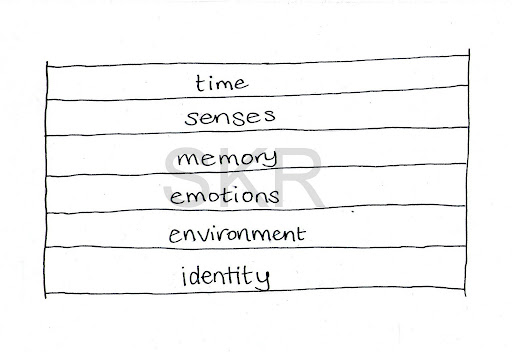
Multiplicity describes a form of dissociation that happens in the area of identity. Dissociation can happen in many different areas, of which identity is one.

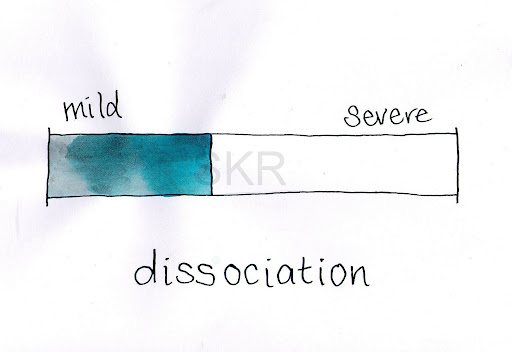
To start with a broader understanding of dissociation read About Dissociation. Dissociation describes a disconnection of some kind. Disconnection in the area of identity can occur in a very mild and commonly experienced way, or be quite extensive and severe. We tend to think of multiplicity as being a distinct category of its own, something you either have, or don’t have. Dissociation occurs in degrees of severity in any area, including identity.
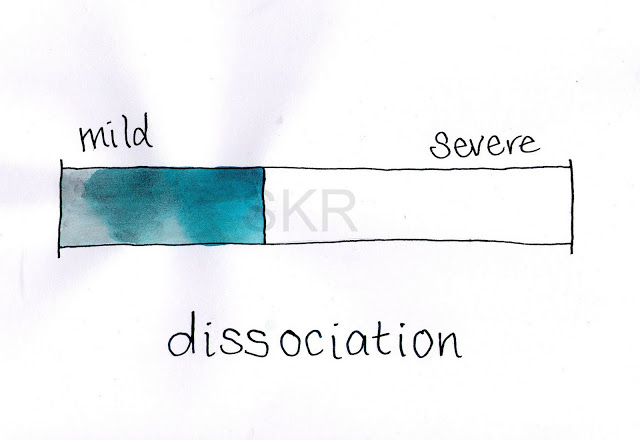
People also often use the diagnosis of Dissociative Identity Disorder (DID) as a shorthand term for the concept of multiplicity. DID describes very high levels of dissociation in the areas of both identity and memory. It is possible to experience multiplicity without memory loss (in fact, this is sometimes part of the goal of therapy for people who have DID) and people with that experience may instead be given the diagnosis of Dissociative Disorder not otherwise specified (DDnos). People with multiplicity issues may also be diagnosed as schizophrenic, psychotic, or other conditions, or not given any diagnosis or framework to make sense of their experiences.

Right down the ‘normal’ end of this spectrum, we all have ‘parts’ if you want to look at things that way.

We all play different roles in different areas of our lives. We show different sides of ourselves in different relationships – with our co-workers, our friends, and our children. Some theories of personality and identity development now conceive of the idea that everybody is an integrated network of sub-personalities, united by a single sense of consciousness. So, to a certain extent, we can all relate to the concept of multiplicity. We know what it feels like to be in two minds about something, to have conflict between aspects of ourselves “Part of me wants to go out tonight, and part of me wants to stay home.” We may also have experienced spending time with a new friend, who bring out a side of ourselves we hadn’t known was there. We may feel like we leave parts of ourselves behind – perhaps the part that loves to study and research is left behind as we throw ourselves into parenthood, or our fun and silly part is forgotten about as we try to manage a large company. We may also recover and reconnect with these parts later in life. All of these parts are ‘us’; they are all facets of a single, whole personality, and there is a high degree of connection and cohesion between these parts.
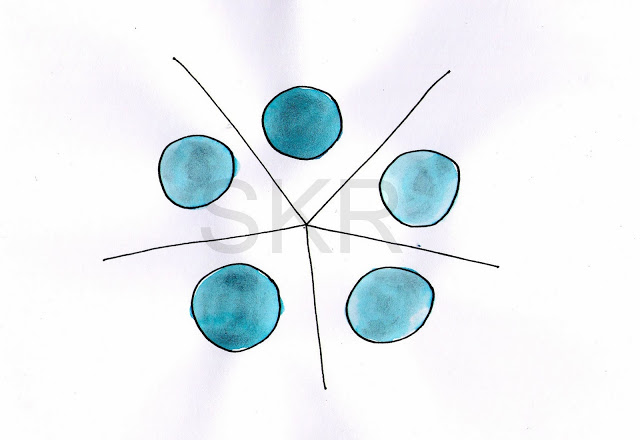
In multiplicity, there are dissociative barriers between these parts, like walls that disconnect them from each and keep them separate. The degree of multiplicity is determined by the extent of this disconnection. So, what are some ways multiplicity might present?

The Doubled Self

This is a really common form of mild multiplicity, particularly for people who have come through some kind of trauma. People talk about ‘the me that’s talking to you now’ and ‘the me that went through that’. They are both the same person, there is a single sense of consciousness and a unified self. There can be a sense of living in two worlds, and that even when the trauma is over, part of them is still stuck in the trauma world. For example, some people describe themselves as having been ‘the day child and the night child’. This is not DID and does not necessarily mean you have a mental illness or need to feel worried. It’s a common form of disconnection.

Rational-Emotional Split

Another really common mild form of dissociation in identity, people can experience a disconnection between their ‘mind’ and ‘heart’. For example, they can remember the facts, dates, information about a traumatic event, or they can feel the emotions associated with it, but not both at the same time. Depending on how this presents, it may be dissociation in the area of emotion, but where it is associated with feeling like there are two distinct parts of you then it may be more useful to consider it a form of mild dissociation in the area of identity.

Like all forms of dissociation, these are not necessarily pathological. In fact some therapeutic interventions, such as the mindfulness approach of developing the ‘observing self’ may be conceived of as a form of mild functional multiplicity that supports and enhances people’s ability to gain useful perspective on themselves and their situation.

My Voices

Some people who hear voices understand their voices as being parts. This is particularly so when the voices have stable personalities of their own and have been heard by the person for a while. The framework of multiplicity is not appropriate or useful for all voice hearers however! There are many other ways of making sense of voices. (see Hearing Voices Links and Information for some resources) But for some people, it helps to think of their voices as parts of them-self, or parts their mind has created. For these people, their relationship with their voices is often the key to whether their voices are comforting assets or disabling and destructive. There is a common idea that how people experience voices is diagnostic; that people who hear voices in their mind have a dissociative condition, while people who hear them through their ears (as if someone else is standing behind them talking) have a psychotic condition. This would be a convenient distinction but research doesn’t support it.

Parts that Affect My Mind

These parts have the ability to affect how someone thinks and feels. They may be able to block memories, take away words, flash images into the person’s mind, block or trigger emotions. These kinds of experiences are often considered to be part of the Schneiderian First Rank Symptoms (FRS), and to mean that the person has schizophrenia. However people who do not have schizophrenia may also experience FRS, and some research suggestions that FRS are actually more common for people who have DID than people who have schizophrenia. The person in this illustration does not have DID, as they do not switch and they do not experience amnesia (dissociation in memory). However, their experiences can be understood as being a form of multiplicity rather than psychosis. Their parts may talk to them (as voices) or be completely outside of their awareness.

Parts that Affect My Body

These parts have the capacity to affect the person’s body (another FRS). People who experience this may describe watching their own hand write in a different handwriting, or having a voice that can move their body and make them safe when they freeze in dangerous situations. This can also be really frightening and people may feel possessed and like they are fighting for control of their own body. They may or may not hear these parts as voices, and may or may not be aware of them or know what they are fighting for control with. If people interpret this experience through a spiritual framework, such as demons possessing them, they may become extremely distressed.

Co-conscious Switching

This person has a high level of multiplicity with at least one self contained, separate part that at times ‘switches’ and operates the body with complete control. Even when the other part is out, this person is still aware of what is happening, or they are filled in on what has been going on. This kind of awareness is called co-consciousness, it means there isn’t amnesia (dissociation in memory) happening for them.

Amnesiac Switching
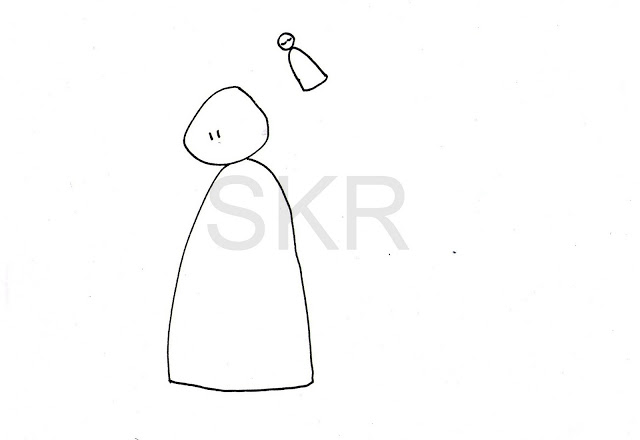
Dissociative Identity Disorder is the diagnosis for people who experience amnesiac switching. This means that when they switch and another part is out, controlling the body and going about their day, then they are not aware of what is happening. They don’t experience themselves as switching, their perception is that they ‘lose time’ or have blackouts. Minutes, hours, days, weeks, or even years may go by without them knowing what is going on. When they come back out they may discover they’re wearing clothes they would never choose, or that major life changes – house, job, partner, have happened while they were gone.
Where there is more than one other part in a system, there may be different levels of awareness and multiplicity between the parts. For example, imagine a multiple with four parts, Greg, Graham, Greg 2, and Pearl. Greg is amnesiac when Greg 2 or Pearl are out, Pearl is amnesiac for everyone else and doesn’t know she has parts, but Greg 2 is aware of everyone and what is happening all the time. Graham never comes out, he is a part that speaks to Greg or Greg 2, but he doesn’t know about Pearl and Pearl can’t hear him. These things may not be fixed either, perhaps if Pearl was in a situation of terrible danger she might suddenly be able to hear Graham telling her to run to safety. Over time things can change.
Some multiples are in fact highly fluid, with such constant changes that system mapping is impossible and pointless until some degree of stability has been created. On the other hand, some multiples are so fixed that they find their parts are all playing roles and trying to manage people and circumstances that have long since changed. The best functioning – as with all people – seems to be a balance between flexibility (adaptation, growth) and stability.
As with all other psychological symptoms, different things can cause them, including physical illnesses and problems. If you suddenly develop parts or any other form of dissociation it is important not to presume that a psychological process is always at work. Symptoms may in fact be due to an infection or kidney problems for example.
Multiplicity can be both under, over, and misdiagnosed, as with all psychological conditions. There are other psychological processes that can seem similar to multiplicity – such as rapid cycling Bipolar, (where mood changes may be mistaken for different parts) or chronic identity instability as part of Borderline Personality Disorder (where the issue is more a disconnection from a sense of coherent self rather than the division of the self into parts). People who have a high level of adaptation to different environments may seem to ‘change personalities’ in different situations but this relates more to issues around ego boundaries rather than a divided self. Other forms of dissociation can be mistaken for multiplicity, such as when people experience severe levels of amnesia and it is assumed that this must mean that another part has been out, whereas they may not have any multiplicity at all, only memory issues. Ego states are a way of describing ‘normal parts’ and sometimes these will be mistaken for DID when inexperienced people think that feeling like a child again when you’re around your parents, for example, means that you are a multiple. Multiplicity is only one framework among many, if it doesn’t fit or isn’t helping, keep looking. There are many other ways of understanding your experiences, spiritual, social, mood related, biological, and so on. It is also possible that more than one thing is going on, for example you may have multiplicity and bipolar. In that case bipolar symptoms may occur across all your parts, or perhaps only 2 parts have bipolar and the rest do not.
It is really common for people struggling with multiplicity issues to be given many different diagnoses and spend many years in the mental health system before somebody considers dissociation as a possibility. A lack of training and awareness about these issues, as well as sensationalism and controversy have unnecessarily clouded this field and made life a lot more difficult for many people. People with parts are not more special than anyone else, and although multiplicity can seem startling at first, it is really no stranger than the experiences of people who have psychotic episodes, mania, or compulsions. There is a high level of stigma and freak factor around multiplicity that can cause a lot of problems for people who experience this and can make it very difficult to think clearly about. If you’re trying to work this out it can be tough, hang in there and be nice to yourself. You may it helpful to read How do I know I’m multiple?
Whatever is going on for you, there is hope for recovery. What that looks like is different for different people, rather the way it is for voice hearers – when ‘well’ some don’t hear voices any more, other still hear voices but they are positive, others still hear difficult voices but have learned to manage them. Some multiples work on improving communication between parts to be more of a team, or rebuilding connections to function in a less divided way. Some people integrate, where the dissociative barriers come down so that every part is ‘out’ all the time. There’s tremendous variety, and it’s important to note that the degree of multiplicity is not necessarily indicative of loss of functioning. A person with very high levels of multiplicity may function better than someone with none at all. A disability model may fit better than the medical ‘mental illness’ framework, where multiples may live differently to other people but are part of the diversity of human experience rather than ‘sick’ or ‘impaired’. Having said that, for many people dissociation of any form can be extremely challenging, distressing, and disabling. There is tremendous need for more information and support to help people with these experiences to manage them the best they can.

You can find some more information I’ve written here at Multiplicity Links, or over at the website of the Dissociative Initiative. Good luck and take care.
How do I know I’m multiple?

At Bridges, my group for people who experience significant dissociation and/or multiplicity, sometimes people express anxiety about their diagnosis. In fact, this area is surrounded by an intense anxiety that can make it very difficult for people to think clearly or feel okay about whatever is going on for them. Obviously we don’t diagnose each other or try to answer that question for anyone one way or the other, but to let people know they’re accepted and their experience counts whatever it turns out to be.

Some people develop serious mental health troubles, get referred to a psychologist or psychiatrist, and are quickly given an accurate diagnosis that fits their experience well. Some people have a much rockier path to working out what’s going on for them, and in the areas of dissociation and multiplicity, diagnostic uncertainty are pretty common. This can be really tough! Spending long periods of time struggling with diagnoses that don’t really fit, collecting many diagnoses, or having doctors trade them in for a new one every few months can be really confusing. For many people with a dissociative disorder, this is what happens. They may spend many years and receive many different diagnoses before a doctor identifies a dissociative condition.

If you have a psychologist, they can do certain tests where they ask you questions to determine if you experience a lot of dissociation. They may also be observing the kinds of changes in you that suggest multiplicity. Sometimes other parts will communicate with them directly and clear up the uncertainty. Books about DID generally list the obvious amnesia based indicators such as finding clothes and belongings you don’t recall purchasing that aren’t your taste, being approached by people who know you by another name, losing time, finding yourself in places and not being able to recall how you travelled there. If you don’t experience severe amnesia, it’s likely you won’t get these kinds of clues.

Dissociative Identity Disorder (DID) in particular is often treated as sensational, fundamentally different from any other mental illness or condition. There is considerable debate among professionals about how to identify and treat it, and whether the condition even exists. To be fair, every other mental illness in the DSM, and a few that aren’t, also have these kinds of debates. But the sensational way DID is often treated can mean that considering it as a diagnosis carries an extra anxiety. Many people who are diagnosed with DID feel incredibly anxious about this, afraid it may be true, and also afraid it may not be. So how can you know?

Firstly, by bringing the whole concern back down to earth. DID is not special, having it does not make you special, not having it does not make you special. Unlike a medical condition where x bacteria can be shown to cause y disease, the realm of mental health is far less clear. Dissociation occurs on a continuum from normal common experiences, right through to severe disruptive mental illness. Multiplicity likewise, is not black or white, you do or you don’t. Most multiples are actually diagnosed with Other Specified Dissociative Disorder (OSDD, formerly called Dissociative Disorder Not Otherwise Specified or DDNOS) as they don’t quite meet the rigid criteria for DID. Identity instability is a common symptom of several disorders, such as Borderline Personality Disorder, and Posttraumatic Stress Disorder. There is a continuum here also, from the usual human experience of being a person with different sides or parts, different facets to their personality, through to issues around identity instability, an uncertain or absent sense of self, distinct ego states especially related to strong emotion or trauma that can be suppressed or triggered, issues with being susceptible to engaging in expected roles, through to splitting of the personality into distinct parts that perceive themselves as separate and contain their own skills, needs, hopes and memories. This isn’t black and white, and if you’re struggling somewhere on this spectrum it can take a while to work out exactly where.

That’s okay! People with psychotic symptoms may be diagnosed with schizophrenia, then schizoaffective disorder, then psychotic depression. Because none of these conditions is treated in a really sensational manner, having the label change isn’t such a big deal. It should be that way for these issues too. In the end, the label doesn’t matter. What matters is finding a framework that makes sense for you and that helps you move in the right direction. If you’re feeling really anxious and uncertain, these questions may help clarify things a little for you.

  • Do your symptoms/experiences take energy to sustain, or energy to suppress? What happens when you’re tired and worn out – do they get worse or better?
  • Do your experiences predate therapy? For example, very different handwritings, hearing voices, a complex history of mental health problems that disappear and reappear, extensive amnesia.
  • Does the framework of multiplicity make sense to you?
  • Does it help? Is it reducing or increasing stress? (it’s okay if it’s doing both)
  • What happens if you trial the idea that you’re not a multiple? Do members of your system fight to get your attention, or does the internal stress settle down? Do you function better or worse? Is there still things going on you can’t explain?
  • Do any other frameworks fit your experiences? Identity instability rather than switching between parts, trauma related ego states? Do they fit better, worse, or as well as the idea of multiplicity?
  • What do your ‘other parts’ think is going on? Do you agree or disagree?

The thing is, certain types of therapy, such as family systems therapy, parts therapy, schema therapy and so on can be useful for anyone at any place on this spectrum. The basics of trauma recovery (where appropriate) also remain the same. Issues like needing to feel safe, to build your self-awareness, learn more about how to take care of yourself and listen to yourself are also the same. The format may be a little different, but the underlying issues of developing a good, loving relationship with yourself, learning how to manage ambivalence, dealing with triggers and reactivity, reducing dissociation, calming intense distress, reconnecting to buried parts… they’re all the same. I think one of the reasons the condition of multiplicity does fascinate people is because it is just normal human functioning writ large. We can all relate to the themes, although not usually the extent of the divisions. Some (by no means all!) theories of personality are that all people function as a collective, with sub-personalities managing different life areas.

So, from these perspectives, nailing down the exact label becomes less important, it may not even change the focus of therapy or recovery. There are people who hear voices and have a psychotic diagnosis who find a multiplicity framework useful and consider their voices to be parts of themselves. They don’t switch or experience amnesia and their diagnosis remains the same, but a multiplicity framework is useful to them. I’ve also read of other people who are encouraged to view their experiences as multiplicity who feel pushed into that perspective without good cause, and determine that their situation is about abrupt mood changes rather than switching, for example.

The heart of this is that chronic denial can do terrible harm. Anxiety around accepting what is really going on for you can leave you refusing to listen to or look after yourself. It is helpful to find frameworks that fit and work, and hanging onto one that doesn’t – whether you’re a multiple hoping you’re not, or someone with something else going on who’s feeling forced into the multiple label, can be another way of denying what’s really happening with you and what you actually need. Many people, even those at the far end of the multiplicity spectrum, with taped evidence of other parts, just don’t want to know about it. It’s frightening to contemplate sharing your body, not always being in control, not being able to drug or get rid of symptoms quickly, and having to work on something as fundamental to you as your own identity.

Add to that mix fear, ignorance, and huge stigma about these issues even within the mental health community – for example, I know of many people with these concerns who have been denied treatment from mental health facilities and told they were faking their condition for attention- it’s no surprise that people want to put their head in the sand and hope it all goes away. A lot of the pain and stress about multiplicity is about how poorly it is understood and responded to by our wider community, which is an unfair extra burden on those of us trying to find the courage to deal with it. Another aspect of the pain and distress of multiplicity is that for many of us there are deeply destructive trauma histories we are struggling to deal with – and that is the case for many people whether it turns out multiplicity or something else is going on.

There’s often a misunderstanding that the choice is between “I have multiplicity” and “I’m fine”. Whatever is going on that you and your doctor are wondering about DID, it’s often happening in a context of a lot of pain and confusion. Things are going on that are causing you some troubles and for which you’re looking for support. On the other hand, I’ve also heard from people who turned up to a local counsellor for some help with a relationship issue or something else fairly common who found themselves with a question mark about multiplicity because the counsellor thought that feeling like you are younger around your parents means you are switching to child parts. Which caused a whole lot of needless confusion and stress. Everything boils down to this, really:

Whatever is going on, you deserve to have help and assistance to learn about it, work with it, and get on with your life.

So really, the whole question becomes a very simple case of asking what works. What helps you function better, what gives you greater freedom, what makes sense, what moves you forwards and helps you have a life? Hopefully, you’re not trying to work all this through by yourself, but have a good doctor of some kind on board, who isn’t afraid of or fascinated with the idea of multiplicity. Confirmation bias can feed into both over and under diagnosing conditions – this is where we look for information that supports our theory, and disregard anything that doesn’t. If you’re worried this is at play, perhaps you could try and keep two lists – one of anything that suggests you are a multiple, and one of anything that suggests you aren’t, or of alternative possible explanations for what you’re going through. See how it plays out over time and what you end up with. Or, forget about the labels and just go with the framework that’s getting you results. Good luck, whatever is going on for you, you still deserve love and support and you will still be okay!

For more information see a list of my other articles in Multiplicity Links, scroll through posts in the category of Multiplicity, or explore my Network The Dissociative Initiative.

Understanding Roles

One of the topics discussed in Bridges last week was how we take on certain roles in our lives and how this affects us. We all play roles in life as part of our identity development. Teenagers especially may try out different roles over time or in different social settings as they try to balance needs to distinguish themselves as separate  and the desire to belong. We may also be given certain roles or defined in certain ways by our family or our peer group – ‘Paul is the quiet one’. Roles can be part of how we feel a sense of stability and belonging – ‘Mum always makes a cake for our birthday’. Developing our identity is also strongly linked to adopting role models – ‘Shane’s just like Grandpa’. We may struggle to show attributes we haven’t seen in someone else. People often start to adopt the mannerisms and characteristics of others we admire or spend a lot of time with.

Where roles can a problem is when they are limiting in some way, at odds with who we want to be, or have terrible costs we don’t want to pay anymore. We can find that other people’s idea of who we are can be rigid, not accounting for growth and change over time. Paul may long to be a more outgoing kind of guy, Mum may be desperate to swap roles at times, Shane may be rocked when Grandpa behaves badly. Sometimes teenagers identify with rebellious loners and find that the social cost to this kind of identity is depressing them.

Understanding roles can also be very helpful for multiples. There’s often a reason different parts of a system feel and act the way they do. Sometimes systems are very role-bound, Brenda manages work duties, Bren deals with emotions and relationships, Anne holds bad memories, Dilly stops Anne from sharing them. Understanding what role you and your parts play can be very helpful, not only in the outside world, but in relation to each other. Sometimes entrenched hostility, denial, abuse, or acting out can be better understood when you unpick what role the parts are playing and what drives this behaviour. It’s worth noting here that you yourself play a role with regards to your system too. Sometimes multiples, particularly those with a system that has developed as a central person (you), and a group of alters you didn’t used to be aware of, can forget that how you react and relate to the rest of your system is also having an affect. Your lack of awareness may have been the role you played – to suppress and hide the others so you can function day to day.

So, as a singleton or multiple, you’re aware that you’ve somehow become stuck with a role you don’t like. How do you change it? Good question! As usual, there’s more than one way to go about this. I find looking at the way teenagers manage issues around developing identity useful, because it’s not uncommon for them to experiment and try out different roles and approaches to life. They can be quite fluid while they’re finding where they feel most comfortable. It can be a bit trickier as we get older because we get so used to thinking of ourselves in a certain way, and people around us can re-enforce this, making it hard for us to change.

Something to consider is what function the role you’ve been playing has, and if you need to find a new way to perform that function, or if you want to leave it behind completely. Next, what kind of roles are you drawn to? Who do you want to be? Look around for role models, these don’t have to be people in your life, they might even be fictional characters. Look for ways to model what they do. The Magic of Make Believe by Lee Pascoe instructs how pretending to be a person we admire for a short time can help us to step outside our fixed idea of ourself and take on new characteristics. To a certain extent, we are who we think we are. Just because we’re not teens any more doesn’t mean we have to get stuck with roles we chose at 17 for the rest of our lives.

Another way of looking at roles is to borrow from Jungian archetypes. It may be that you don’t want to give up the role you’ve been playing, it’s valuable and useful and fits for some situations. Perhaps a more useful approach would be to expand the number of roles you can play. This idea simply put is that we all contain a whole bunch of different ways of relating to life – broadly speaking, roles. We get stuck when we’ve limited ourselves to only one or two. The idea in this case is to try and connect with some of the archetypes you’ve lost touch with. So for example, a very conservative straight laced person who’s feeling tired and lacking creativity might look for opportunities to play a Trickster role to liven things up. The theory is that all of us have within us the capability for all roles, the kind of flexibility that allows actors to find any character within themselves for a time. It’s a little like the difference between having only three cards to play, and access to a full deck. Being able to access and live out a peaceful, centred role when we’ve been stuck in chaos, or an assertive role when we’ve felt trapped by shyness, or an introspective role when we’ve been exhausted by driven productivity can free us to express many different sides of ourselves and be able to adapt and respond to many different situations in life. 

Some of the books that talk about Dissociative Identity Disorder also explicitly talk about how to change roles. A not uncommon issue is a part within a system who has played the role of abuser to other parts in the system. These can be strong, assertive, independent parts, who may have complex reasons for taking on this role. It may be an attempt to be protective (it will get worse if we tell, I’ll make sure no one does), it may be a form of self loathing and self abuse – in multiples parts may hate themselves, or may express self hatred by hating other members of their system, it may be behaviour that’s been learned and modelled from people in real life – in some cases the only modelling of a strong person who doesn’t get hurt has been an abusive person. More than one reason may be tangled in together, and the initial reason we take on roles can end up being quite different from why we keep hanging onto them. 

Roles are not static things, they are also about relationships. Roles such as parent/child are mutually re-enforcing. Even if you had no intention of playing the role of a parent with someone, if they keep behaving as a child, you may find yourself starting to behave as a parent. We ‘hook’ each other into roles. So roles that are played within systems are also about the relationships between parts. In the example of someone who’s got the role of an abuser, part of helping them put that role down is getting the rest of the system to no longer relate to them as an abuser – with fear and anger. Part of that process is about rebuilding the relationships – helping the abusive part to see the harm they’ve been doing, to develop empathy for the other parts, and to genuinely apologise for the role they’ve been playing. Helping the abused parts to articulate their pain and fear, to learn how that role came into being and why it was played, to start to connect with the strengths and good qualities of that part they haven’t been able to see before, and to let go of the old dynamic of abuser/abused and hook into new roles. 

If you’re struggling to take on new roles, it may help to link a new role to skills and strengths you already possess, instead of totally different ones. Abusive parts are often coached towards being protectors because their strength makes them great at both roles. There’s many different way of framing roles and the ones that feel positive and achievable may well be easier to take on. Good luck!

Multiplicity – Mapping your system

In Bridges this week we talked about how to start the process of working out what was going on if you are a multiple. This can be a challenging process for a number of reasons. The biggest is simply that most people coming to grips with this situation find the discovery they are sharing their life with other parts very confronting. Denial can slow down the process of learning more about yourself, and so can the emotional shock of making these kinds of discoveries. Multiplicity is a very individual construct, it develops out of an intersection of two entirely unique factors – the environment the person was in as a child, with the specific challenges that posed, and the unique personality and skill sets the child possessed. The result is rather like the formation of a snowflake – no two are alike!

In all the literature I’ve read, I’ve come across three basic ways that multiples tend to learn more about themselves, more specific than the general ideas for building self awareness. ‘System mapping’ refers to learning what parts are in your system. (please translate to your preferred language – inner family, tribe etc.) Method one is to gather information internally. You might ask inside for parts to identify themselves. This is a great approach if your system tends to talk internally and you hear their voices. You may not even need to ask, you may have known for years that there’s an older male voice and a little girls’ voice and a harsh angry voice. You can start to note down the details you have and add in information as you collect it. I do recommend finding a safe place to note down your system map, considering that the information is very emotionally charged and you are prone to dissociation, it’s likely you’ll have difficulty remembering it.

You might start off with only a tiny bit of information and then add to it as your dialogue grows – the older male voice may tell you he hates reading, he’s close to your brother, and his favourite food is hot Indian curry. You can start to build more complete profiles of who’s in your system and what skills they have. Skill sets can be useful to identify as it’s common to have them broken up and distributed among a system. Someone may have financial skills, another is very nurturing and parental, someone else loves boats… Identifying the roles parts have played can also help in understanding how you all work. Sometimes there’s parts who don’t seem to have any skills, or who seem really depressed and overwhelmed. These parts are often still playing vital roles within the system (although they may not feel that way), they may be preserving characteristics such as hope or innocence, or they may be containing distress, feeling shame, misery, or despair to protect the other members of the system from those experiences. Some people find their parts communicate through dreams, so listening to your dreams can also be a way of learning about them.

A second way of starting a system map is to gather information externally. I’ve read of people starting a journal and inviting all their parts to introduce themselves in it. I’ve also come across people tacking a piece of paper to their door or having a whiteboard on which is written ‘Who are you?’ so that as different parts come out, they add whatever details they know and are comfortable with sharing to the list. Some systems have parts who already have names for themselves. Some have parts where 7 all thought they were ‘Kylie’ and are all startled to discover the other 6. Some choose to name themselves once they understand they are multiple. Some identify themselves by a role such as ‘the driver’ or a title, such as ‘the sad one’. Some, especially younger parts, get confused or play games and use more than one name. Some refuse to use names at all. It can take a while to work everything out!

Different parts in a system may have different levels of awareness, or co-consciousness, of each other. So, for example, imagine a system with three parts, Mary, Sally and Greg. Mary may not be aware of either of the others, Sally may only be aware of Mary, and Greg may be aware of them both. Sometimes a useful strategy is to ask everyone in the system to write down who they are aware of and what they know about the system, and then start combining all the individual maps to create a master map. Sometimes there’s one member of a system who keeps track of everyone and once they are happy to share their knowledge, you have a good idea of what is going on for you. Another way to try and start the process of system mapping externally is to construct a timeline and try to identify who turned up at what age. It’s not uncommon for new parts to turn up to manage a new challenge or environment, such as starting school, and that can be a useful way to track the development of a system. Sometimes you can chart your system using photographs or handwriting – you might not yet know which part does that really small neat handwriting, but you can pin down that they first turned up in high school, that they’re not very good academically but love to write creative stories, and that they disappeared for several years in the mid nineties. This can be a good start!

A third way to learn more about your system is from feedback from other people. Sometimes parts are unable or unwilling to engage internally or to identify themselves through the written word. You may be able to map your system by tracking responses from other people. Some people find their parts refuse to talk with them but chat with their therapist or a friend, and the therapist can start the system map or you can catch up on what’s going on for other parts with your friend. Others can deduce based on what they don’t know or remember – you never remember catching up with Holly and her friends but she thinks you’re great – sounds like you might have a hippie part. You never remember turning up to work but you get a paycheck every week and no complaints – sounds like you might have a part who’s good at sales. You bust up every relationship just after starting to get physically close to the other person but never remember doing that – sounds like you have a part who doesn’t cope well with sex. You lose hours every time you have to go past a toy store. Welcome to child parts!

Multiple systems are often geared to hide information. Multiplicity can be a great survival strategy, but if detected can actually leave someone more vulnerable to exploitation. Also, as you learn about the parts in your system, you can’t help but learn about the roles they’ve played, the memories they carry, and other information you may find painful at times. Your system may have been set up precisely to compartmentalise this material so you’re not overwhelmed by it. So try to be patient if your system is blocking all your efforts to learn about it! You might have to do a lot of coaxing and encouraging that it’s safe and you’re trustworthy.

Systems are not always static either. Some systems are highly fluid and in flux, with parts appearing and disappearing all the time. This tends to suggest a person under high stress who feels in chronic danger. System mapping in such a situation is fairly pointless, the highest need is settle the distress and restore some sense of safety and control. Some parts may move between different ages from day to day, which can make them difficult to identify at first. Some may have very strange ideas about who they are, which is often rooted in childhood beliefs about what would keep them safe, profoundly negative self concepts, or reflect spiritual beliefs. Multiplicity becomes a lot less strange seeming when you remember it was ‘built’ by a child. Try not to panic about what you discover, just like anyone else, multiples can change, grow, and adapt. It’s also not uncommon for some parts to hide away, deeply buried, and remain undetected for a long time, so try not to be too surprised or discouraged if you think you’ve worked out your whole system map and later discover an addition to the family.

Don’t feel like you have to choose just one approach to mapping your system, cobble together any information from whatever sources you have available to you. Take your time, be gentle with yourself, and good luck. 🙂

Edit: Mapping your system isn’t always a helpful approach – please see the comments for a great alternative perspective!

For more information see articles listed on Multiplicity Links, scroll through posts in the category of Multiplicity, or explore my Network The Dissociative Initiative.