Tribe Night

image

At least once a month Rose and I set aside some time to spend just the two of us. No friends or kids or work or stress, just us, celebrating us. Often we don’t call this a date night as not everyone in my system is ‘dating’ her, but instead she’s coined the rather lovely phrase Tribe Night. What we do depends on who feels like they need some time together, and how much money we have. As Rose is still waiting unpaid for her new job to start, tonight is a budget one. We’ve got movies from the local hire store, popcorn, and the half eaten gorgeous gingerbread house that was a Christmas gift from a generous, creative friend who cooked it in her tiny toaster oven in her apartment and probably lost a few more sanity points in the process.

Other favourite tribe night things to do are nights at the beach, hanging out in the trees at our local park, going to the movies, our favourite local Asian fusion restaurant, going out to fun art or cultural events, especially the free kind where dressing up can happen, hanging out in the nude with all the curtains drawn and good music, (some of us are lovers), camping nights away, and for the really introverted, reading together in bed.

Sometimes we have to work around health issues too, I read this gorgeous blog post the other day and thought it had great ideas for not-well hang out times: 10 Crip Date Ideas for the Disabled/Chronically Ill/Mad Person in Your Life

Have a good one folks. Don’t forget romance is not the sole domain of lovers.

One of the weird days

Yesterday was one of those blah days where nothing feels like a good fit. I tried lots of approaches, none of which helped, and shrugged, headed to bed and figured I’d feel differently after a sleep. Well, I was right. I had intense nightmares, of the kind where you wake up and feel so distressed you want to throw up. The content lingers like you’ve watched a vivid, personal horror movie that’s burned images into your mind. It’s been awhile since they were an issue! This morning was meltdown territory as a result, panic and intense dread. I took a bath, read some book, wrote in my journal, and scraped myself together enough for my appointments. Today was admin appointments, getting stranded with a vehicle that needed engine oil, and having a blood test – STILL no bad reactions, even on a horrible day like this one! Did, however, re count my days when I got home and discover I’d done this one a couple of days early by accident and will have to repeat it. Sigh.

I saw a disability employment person and cried about how stressed I feel about my business at the moment, wondering if I should be pursuing employment instead. She ‘reassured’ me that I wasn’t passing up some wonderful opportunity – most people like me with an episodic illness are unable to find good work. We get casual, short term, poorly paid work, issues with workplace bullying, and more often than not – contracted volunteering. So if I’m going to not get paid (or paid well enough to survive) and lose my job every time my health wipes me out for a month – I might as well be running my networks and continuing to build my business. Right? The anxiety levels have been tremendously high about it lately, I think trying to get pregnant is sending me into panic mode a bit. It a hard road to walk sometimes. And a brutal reality to face what my openness about multiplicity and psychosis are costing me – and what they cost millions of other people. I hate this.

On the plus side, I’m continuing to clean the house up (it got a bit swamped over Christmas, plus I need to make room for a guest and also Rose moving in soon), keep the garden alive through the heat, and sort out food and meals.

I feel way better than I did this morning, but still ‘off’. unsettled and not myself. Haven’t settled into the new year yet. I don’t have a sense of being on firm footing. I’m picking up on other people’s feelings, seeing the world through many different eyes (but not ours) – perspectives of friends, authors of books or articles I’ve read, proponents of particular ideologies. I move between them feeling the clashes and contradictions like burning places in my mind. Hot and sparky. Then I feel myself move back from all of them and suddenly nothing seems real. I find myself walking outside of my home and looking at a tree thinking – ah, there it is. Reality. The thing beneath all the theories. I feel slightly swamped and detached at the same time. And oddly lonely. Part of me is waiting to find out if I’m pregnant and it’s impossible to feel much about that so I’m not feeling anything. Not even numb, just like I’m holding my breath. I can’t breathe or feel again until the cycle ends. Last month I actually felt pregnant some of the time. This time I don’t at all. I don’t even feel like I’m completely here. Man, these reactions are unpredictable!

Ticking away in the back of my head, as always is the book. There’s always more reasons not to write it than there are to write it. I feel like I’m slogging through a thicket of brambles each and every time I just sit down at a keyboard or notepad and work on it for an hour. I don’t want to put myself out there as some kind of leader. I don’t want to present myself as an expert or have people follow my advice. I am aware – like most people who deeply investigate a topic – of the truly mammoth amount of material I haven’t yet read, ideas I haven’t digested, communities I can’t possibly represent. I hate it. I can’t do justice to the field. The only thing that keeps me going is reading what’s already out there and realising how huge the gaps are and that even my pitiful efforts are an improvement on some of the rank dogma that is messing with people’s lives. But hells, it’s hard to remember that.

So, here’s to the weird days. The not recovered, not perfect, not trying to lead anyone anywhere days where despite feeling like my brain is not entirely in this dimension I’m still a decent and useful human being. The biggest crisis today wasn’t even mine, I’m a support person in the backdrop of someone else’s rough time. (we have an extra house guest on our couch for a bit) I’m still needed and still loved and we all half limp half dance along together I guess. Missing my friend Leanne like hell. Signing off from the Colony. (she would get that, we used to write. My place was the Colony and her’s was the Outpost. All the shorthand and in jokes that die with a friendship.) Just breathing.

Systems & pathology, & mental health

I’m doing a lot of thinking about these things. Starting up a not for profit like the DI throws you into this world of systems, policy, organisations. Small orgs like ours are often friendship based, very informal, sitting around dining tables. They happen in homes, spare rooms, basements, the local pub. They are relational. People come and go as relationships and life circumstances change. There’s a flexibility and vagueness of roles that is closer to our family structures. People do stuff, they harangue each other about the stuff they’re doing or not doing, they gravitate to roles they like and are most skilled at. Those with the least popularity or power do the jobs no one else likes. Success – and money – often transforms this process. What was a community or a loose organisation becomes a corporation. Every part of the process is systemised. Roles are defined and assigned by management. People rise through a hierarchy to better paid and more respected jobs until they reach the limit of their skills, or their position of incompetence. Relationships are controlled by the organisation and often arrange themselves in a class system where people are only permitted to befriend those in their own pay grade, rather than those above or below their position, and often not the clients, at least within the ‘helping people’ professions.

There’s upsides to the corporate structure. Systems can be highly useful. Little beats the sheer efficiency of a good system. Sound emergency response systems save lives. The efficient distribution of aid in the wake of disasters are often a reflection upon the quality of the system in place to anticipate and manage such needs. Fairness is another benefit, where resources are allocated and people are supported according to need rather than who they know. A third benefit can be transparency – systems are often far easier to examine and assess than are loose collections of relationships in communities. When you’re asking a question about what works and why, or if a group is efficient or fair, systems where everyone operates the same way are far easier to explore.

Where we hit problems are when we implement the wrong systems for the situation, where a system based response is inappropriate and a poor fit to the situation, or when the systems have been constructed on the basis of values or assumptions that cause problems.

There’s a lot of talk in mental health about ‘the system’ and the flaws in it. Often such talk is rapidly derailed into suggestions about why it is so flawed, and who’s fault that is. Our entire psychological services, community sector, and to some extent, our non-clinical support services such as churches, support groups and so on, are all based around systems. The process is often highly mechanistic in that each member or employee, functions as a cog in a machine. If the cog breaks or goes away, you replace it with another cog. Cogs are interchangeable. Cogs have limited control over their roles and tasks. They are moved around and assigned projects by management, who are also cogs. There are assumptions about power and safety that drive common practices such as professional distance. Relationships are either ignored or forced through team-building exercises. These kinds of systems tend to naturally degrade over time into highly complex bureaucratic processes. They consume a lot of resources to function. They often become inflexible and highly inefficient at taking up new technologies, approaches, or research. Communities that are successful at raising money and awareness tend to evolve into organisations, and organisations tend to evolve (I would argue degrade) into corporations with all the legal and social responsibilities and inherited ideas that come with that.

I find the corporate structure deeply unpalatable for many reasons. The astonishing inefficiency of resources is a big one. Where three people in a room will often constantly be seeking for cost effective methods to reach their goals, corporations routinely completely overlook new technologies or methods. They gear towards stability. Having figured out a way to operate, they stick with it. They keep paying massive phone bills despite advances in VOIP technology. They print masses of paperwork needlessly. They attach money to respect and create expensive norms, such as putting visiting guests up in hotels, where the small community would house them in spare bedrooms. They consume. Over time the organisational goals become less about their aims or mission statement, and more about self preservation.

Another problematic aspect of the corporate structure is that it is often very controlling and hierarchical. People at the top tell everyone else what their job is, the best way to do it, how they should dress, interact, and function. We tear down divisive and dehumanising class structures in other aspects of our societies, and rebuild them within corporations. When groups of people are clustered together like this, we often see a loss of diversity, and a loss of individuality. With those losses, other losses are predictable – such as innovation. We also see huge challenges in the area of ethics.

The Neuremberg defence, I was just following orders, nauseates us. We tend to expect and demand that all people are responsible for their individual actions, and answer to a moral as well as a legal code. This is a whole lot more problematic than it sounds at first. Corporations tend to subsume the identity of those involved with them, they set codes of dress and conduct. People are told not only what they are allowed to say, but instructed on what they must believe or value. Obedience is insufficient. An employee who obeys a rule – such as confidentiality, or equal access for GLBTIQ people, or to deny assistance to a person in distress – but who clearly does not believe in this rule is unlikely to remain for long unless a shortage of other workers in that region keeps their position safe. No individual within a corporation is permitted independent moral action, but must instead come into line with the policies and procedures of the organisation or risk being fired. However, no member of the corporation is assigned responsibility for assessing the morality of the organisation as a whole. It is assumed that ethics, and the translation of values into policies (which is a hell of a lot trickier than it sounds) will be key parts of the processes of those few who have the responsibility for writing them.

So we have a diffusion of responsibility for ethics, between a small handful of people in managerial and board roles, enforced across an entire organisation. Many of those people arrive in their positions having first spent years working as regular members of an organisation where their opinions about ethics were specifically prohibited from their work life. Employees in the mental health sector, for instance, are routinely forced into the bystander role where they must watch harm being done, or help not being offered, to someone in need. Sometimes they are forced to be the person who does the harm or withholds the help in order to keep their jobs. Organisations who are fortunate to have highly ethical, insightful, reflective people with excellent management skills and a deep understanding of the complex relationship between values and policy in the management and board will tend towards better practices as a whole. Those who lack either the will or the capacity to create highly ethical practices will not. Groups have a natural tipping point at which the number of people who care – or do not care – about something becomes the dominant organisational culture. Authority also dramatically influences our capacity to think or act otherwise, so the influence of the beliefs of those in such positions upon the workforce as a whole can be significant. The alternative is a fractured organisational culture where the management and workers operate semi independently of each other in a kind of chronic low grade class war.

This adds up to a training ground for management that starts by spending years employed not being allowed to consider ethics in their work life, and ends in positions of high responsibility, little or no attention to work relationships, and the requirement to ensure that every member of the organisation adheres to the policies and procedures to protect everyone from risks of litigation, bad press, and loss of funding. Corporations naturally decay into behaviour that in individuals we call psychopathic and narcissistic, unless a lot of effort goes into protecting them from that outcome. They often operate in dysfunctional ways. When a system subsumes individual identities behind roles, and replaces relationships with mechanical structures (cogs in a machine), they also tend to replace values with rules, and to confuse obedience to these rules as being the same thing as ethical behaviour and as loyalty to the system or organisation as a whole. The idea that one can be loyal and devoted to the organisational aims but have sidedness of opinion about the ethics of how those aims are meet is not one most corporate structures entertain.

This cog in a machine structure is extremely problematic in mental health because relationships are so key to support. It’s not enough to see a social worker every month, is far better if it’s the same social worker we’ve built trust with. Case notes do not replace a history and connection between two people. ‘Cogs’ are dehumanised by this model, and tend to be further alienated from the people they are supposed to be ‘fixing’ and moving on as quickly and cheaply as possible without making friends with them. Friendships are the primary model for support in our culture and yet are infrequent or expressly forbidden within corporate structure and mental health especially.

There’s tremendous tensions between the organisation and the individual. If we think of corporations as multiples, where the corporation is a person, and the people that make it up are parts, these parts often lack voice, power, validation, and the right to be diverse. Dictated to by a dominant part or groups of parts, the rest are hostages who are managed or exploited. The corporation as a whole had a name and logo (face) presented to the world, and the parts must be brought into line with, present consistently the same, and hide diversity or division. I personally do not function at all well in corporate structures for precisely this reason: my system does not cope with a model of authority so completely at odds with our own, and we not accept the idea that ethical behaviour is the responsibility of someone else in the workplace.

If we think of a corporation as a tribe, being a member of that tribe carries a very high price in terms of individual identity and freedom. Perhaps this is simply more difficult to see in corporations because we are accustomed to them and accept them as normal, in the same way that we accept as normal that most people hate their job, find their boss very stressful, and hate their bodies. We in the west tend to be highly sensitive to incursions on the rights of individuals in other cultures, and yet oddly blind to the same dynamics in our own. One of the simplest and most obvious examples is that of our widespread exclusion of people with disabilities from the workforce for the simplest of reasons – lack of access, and our inability to work predictable hours when illness interferes. Tribal cultures are frequently organised on more flexible principles, where those who work do so, and those who are sick or injured contribute what they can, as they can. This simple conflict of structure in what we have created in our highly mechanical post-industrialist society, and the needs of those of us with sickness or disability underlies a massive problem of social justice, inclusion, welfare, discrimination, and invisibility. It is one more aspect of the loss of diversity.

So, what are our options? How do we navigate this? I would argue that systems have value. Patterns and routines can save us from being paralysed by the requirement to discuss and examine every action at length. They help us to function in groups, to take care of vulnerable people, to act quickly. Maybe a lot of our issues are not with having systems, but with having mechanical systems. I often draw inspiration from ecosystems when I’m trying to better support a family or group. The ideal is a balance of flow of energy, no one at the bottom, exhausted and neglected, no one at the top, consuming without giving back. Everyone connected but separate, giving and receiving. There’s many ‘natural systems’ I’ve no interest in replicating, such as the dynamics of a termite mound. But there are principles of connection and freedom that may help to inform systems that are a better fit for the people within them and the people they serve. Here’s a few thoughts about these kinds of systems via Communities as Living Systems (how nature can inspire fresh perspectives on complex problems) | joannahubbard.

  • Living systems experiment-they don’t seek a perfect solution, just a workable solution.
  • Within a living system something is always working.
  • Nature seeks diversity – new connections open up new possibilities for the system’s survival.
  • A living system cannot be steered or controlled – only teased, nudged and titillated.

We’ve done so much talking in mental health about how destructive the system can be, not only to clients/patients, but often to those compassionate people trying to work within them. We often treat relationships and systems as being at opposite ends of a spectrum, and yet our culture organises relationships into family structures and expects the protection of vulnerable members. On one level, families and friendship networks operate as a socialist sub-set within a capitalist culture. The wheels are oiled by a massive number of volunteers and unofficial support between people. This is still a form of system, a pattern of organising a community. (It’s also one that doesn’t fit everyone, as minorities such as the GLBTIQ community seek access to legal and social recognition for their relationships) We cannot build a perfect system or utopia, but we can build something more in line with the needs people are communicating and what we are learning helps people to recover from crises and distress, such as relationships.

Systems are not inherently destructive, nor are they inherently devoid of ‘natural’ relationships. They can be extraordinarily complex and difficult to set up, and often have unintended outcomes. They can fail in a myriad of ways, and funding success can destroy their capacity to function well just as spectacularly as financial ruin. Systems must operate according to (or at least, interact with, even if intending to disregard) the legal requirements of the countries they are set up within. This can necessitate a high level of creativity, innovation, and courage, because the easiest path is simply to recreate the structures we are familiar with, however appalling. Great intentions are insufficient – the mental health system has undergone many reforms and each was driven by people with excellent intentions. The asylums from which we are rescuing people were built by those distraught by the fate of madmen who were starving in the streets. I don’t have an answer or a solution. What I do have is some experiences about what does and doesn’t work – in my own life, and in the groups I have created. I have some values about human rights and dignity. I have some hope that we can – all of us who are wrestling with this complex challenge – creativity engage and inspire each other to create organic, living systems that change and grow with us and with our cultures. I think some key aspects to this in mental health are:

  • Transparency
  • Freedom
  • Mutual Relationships

How these translates into systems and policies is something many people are exploring. Some groups are trying to set up suicide services that are ‘self check in’ to remove the barrier of having to prove you need help before you can access it. Other countries are running mental health services on the principles of Open Dialogue where patients are part of every conversation and always have access to their own records. None of us are going to come up with a single, perfect answer. A big part of what we need to move forwards is safe, respectful places to have conversations and share ideas, so that we can pool our experiences and wisdom and create something better.

Endometriosis & adenomyosis 1

“Extensive and severe” are not the words you want to hear when a doctor gives you a new diagnosis. Frankly, I personally feel that I have reached my quota for diagnoses, and that if anyone wants to give me a new one, they should have to trade in an existing one. Pick a card, any card… Sigh. So, I’ve been having as bunch of tests over the past few months to check up on my fertility. I’ve already been diagnosed with mild endometriosis, and donor assisted conception can be wearying for both families involved so we wanted to do all the checks we could and get any treatments needed before wasting a lot of time trying to conceive if there was a problem. So far a lot of the news has been good; I have healthy ovaries and lots of eggs. A few weeks ago Rose and I received the news that I have severe adenomyosis. It’s a bit hard to process, and I find it harder to share about physical illness and disability than I do about my mental health, so I’ve sat on it for awhile.

On the one hand, having a name for it makes no difference to what I’ve already been living with. On the other there’s a huge weight of sadness and fear. Perversely, there’s also a sense of vindication. I was frequently ignored and had my terrible symptoms downplayed by medical people and others, especially as a young woman. It was devastating and made me feel profoundly alone and overwhelmed.

A crash course in the conditions, not for the super squeamish. The womb has three layers, the outer one is muscle, then there’s a layer of tissue, and lastly the inner layer which is called the endometrium. This is the part that grows and swells up ready for a pregnancy, and then sheds and bleeds every month as a period. A healthy endometrium is essential for a fertilised egg to implant (that means link up to the womb via the umbilical cord) and be nourished and grow. In endometriosis, (endo) little patches of endometrium grow elsewhere in the body. Most commonly they are elsewhere in the pelvis, such as growing on the ovaries, intestines, and other organs. More rarely they are elsewhere in the body such as the lungs. It is very rare, but possible for men to have endo.

Nobody knows for sure how or why these patches occur. They’re like weeds, growing all over the place where they shouldn’t be. The big issue is that they try to function like the endometrium does, every month they swell up and then shed blood. This blood doesn’t drain away the way a period does, so there can be issues with pain and infection, and sometimes they can chew into places such as ligaments or patches of nerve cells. They can cause fibroids and adherence where tissues glue together, such as sticking the ovaries to the pelvic wall, which can cause worse pain. If the affected tissues are delicate areas such as the fallopian tubes, endo can compromise or destroy fertility. It’s also common for the extra blood loss to cause iron deficiencies. Endo is usually diagnosed through a laparoscopy, a surgery where the gut is checked out with cameras through small holes in the skin around the belly.

Treatments for endo are more usually about managing it rather than curing it. There’s a range of options from surgical removal, using hormones such as the Pill to prevent periods and therefore stifle the endo growth, dietary changes and so on. Some people find some approaches way more effective for them than others.

Adenomyosis is similar, in that again it’s the endometrium cells growing where they shouldn’t. With adeno, the endometrium invades the tissues of the womb itself. Pockets of endometrium cells swell and bleed into the tissue. In severe cases, all the womb is affected. It’s swollen and heavy with the pockets of extra cells, there are issues with pain, excessive bleeding, and cramping of the muscle layer. In some cases the adeno prevents the clamping down on blood vessels that supply the womb, causing chronic pain and bleeding problems. With severe blood loss, the body struggles to replenish the supply of red blood cells and severe anaemia can result. There’s only currently two ways to diagnose adeno: one is performing a hysterectomy, that is, taking out the womb, and then examining it. This is obviously not appropriate for young people or those hoping to have a child. The other is through an MRI scan, which is not quite as conclusive, but gives a lot more information than other scans such as ultrasound.

It’s only been fairly recently that adeno had started to be diagnosed, so not very much is known about it and sources of information are conflicting. It may increase failure rates of implanting embryos, miscarriage, preterm labour and other fertility challenges. Treatments are very limited, in some cases surgical removal, or hormone blocking to shrink the growth – sadly this only has a very temporary effect. Three months of hormone blocking will provide about three months of adeno-free cycles.

Both endo and adeno usually respond really well to pregnancy, and it used to be common for daft doctors to suggest pregnancy as a management tool. This is partly how the hormones help -they mimic pregnancy in the body and when taken continuously (without sugar pill breaks for ‘periods’) they suppress the growth of each. Both endo and adeno can be odd in that how severe they are and how bad the symptoms are don’t always line up. Some people with severe endo have few or no symptoms while others have mild endo but suffer terribly. The location of the endo may have something to do with this – for example endo that chews into areas with a lot of nerves may cause a lot more pain than endo in areas without many nerves. Some people have awful periods and problems with pain and no clear cause can be found, which can make figuring out a treatment incredibly difficult.

So, we have no way of knowing how the adeno may impact our baby plans. I’m having a lot of trouble with experiences of severe depression when we make even minor changes to my dose of hormone to manage these conditions, so at this stage we’re avoiding the hormone blocking treatment because I think my head might fall off or spontaneously combust. We’re tailoring my dose down carefully, hopefully in a couple of weeks I’ll be completely off the pill and ready for my first cycle! I’m taking iron supplements already as the severe bleeding leaves me badly anaemic, which is not good for me and particularly not good for a developing baby. We’ve also made the call that my efforts to be restored to a ‘natural’ cycle at some point are pointless – when I’m not trying to get pregnant I’ll be using hormones to keep these in check. The longer I’m off the pill the worse the symptoms get, so we’re hoping for a 6 month try at pregnancy then we’ll re-evaluate. We’ll be tracking iron levels pretty closely and if I’m lucky I’ll get pregnant quickly before the adeno makes it impossible to work. If I’m very lucky I’ll also have a good pregnancy! Lots of unknowns, but a little more information than we had before. And certainly all worth it for the chance at being a Mum.

Drawing class – maize

Rose and I are both sick with a tummy flu, and serious case of the doldrums. Siiiiiiiigh. I’m finding being sick so depressing it’s hard to breathe. I’ve had a bad headache for three days now. Or one month, it’s all blurring in together with sinus infections and surgery. I saw an ENT at the hospital the other day, he’s happy with the surgery and said everything is healing well. He also said I shouldn’t still be having facial pain and should see a neurologist. He was a bit of a dismissive ass, to tell the truth. Everytime I hear about how people with mental illnesses would be so much better off if they were treated the same as people with physical illnesses, I kind of want to laugh, in a hysterical, jaded, painful, coughing-up-a-little-blood kind of way…

I don’t really know what to do with that. I know I have issues with chronic tooth infections, and I’ve had basically two years of sinus infection near constantly. I also have issues with TMJD, pain caused by muscle tightness in the jaw. And I’m nearly four weeks out of surgery. At this point, I think it’s pretty reasonable that I’m still in some pain, and if the surgery healing isn’t causing it, likely one of the diagnoses I already have is. Despite a letter from the jaw specialist, and me reminding every single person I saw about this op, including the damn surgeon himself in the actual theatre, the request to scope my left check while I was under and check if there was infection or just scar tissue showing on my xrays was ignored. So I’m going to have to go all the way back to my dentist again and try to figure out if my root canal has gone bad and infection is eating my jaw, or if nothing is wrong and we leave it alone… Bastards.

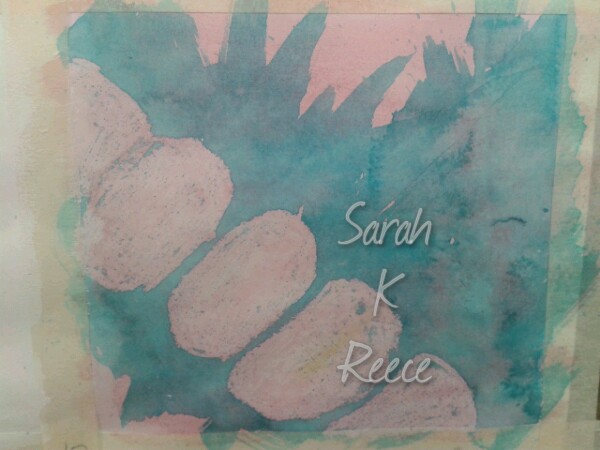
In Drawing class, which I think I’m still just possibly attending often enough to maybe pass, we were instructed to make many multi media images of a single item. I chose a dried cob of maize.

image

image

image

image

image

This last one is my favourite. I love inks. (They’re painted on white gesso)

Jumping at Shadows

I got really sick in 2001. It took another two years to get the first diagnosis that made any kind of sense – Chronic fatigue syndrome (CFS). Two years again to fill out more of the picture with diagnoses of Fibromyalgia and Endometriosis. It wasn’t until 2007 that severe Dissociation started to round out our understanding of my perplexing and severely disabling experiences. There are still some unknowns. For example, we know that none of the mucous producing cells in my body work very well, but we don’t know why. It doesn’t fit with any my existing diagnoses and I test negative for the only other diagnosis offered, Sjorgens. So I live with dry skin and dry mouth that destroys my teeth and dry eyes that cause widespread nerve die off and means I have to be very careful about caring for them because I can’t feel it when an irritant gets into my eye. The only other possibility offered to me is chronic anxiety destroying mucus function due to PTSD, which I developed as a child.

Today, it’s day 14 after the surgery and I’m home on the couch, completely exhausted and scared. I have some very, very bad memories, and at times like this I get scared. CFS and Fibro are diagnoses of exclusion. That means I spent years getting tests and seeing doctors. We learned things the hard way. Like that my liver doesn’t seem to work so well. Or that I’m allergic to opiates. I tried a lot of pain killers under desperate circumstances before someone figured out it was the whole drug family I can’t process. At one point, my health was crashing so fast and so catastrophically with no answers that a specialist warned me they might be figuring out what was wrong with me in an autopsy. My mother was told to be prepared for a funeral. There was so much fear. Bone deep, soul killing, trembling but nowhere to run, and no one to fight, and no point in screaming, and no escape, fear.

There’s host of horrifying memories. Lying on the floor vomiting due to an allergy to Digesic, stomach acid burning in the 6 stitched holes in my mouth, the sensation something like biting down on burning coals that don’t cool. Screaming, unbearable agony.

Memories more banal, the daily suffering. Not leaving the house in months except to see doctors. Being told everything was in my head and I just needed to exercise more. Passing out on the footpath while walking, trying to manage Depression I didn’t have. Endless rounds of job applications for work I wasn’t even slightly well enough to do. I remember months of severe dental pain, living on milkshakes and blended peas. I remember baths in my clothes so a family member could come in and wash my hair because I was too exhausted to lift my arms that high. Old friends asking me in bewilderment “What do you do all day?”, new friends telling me they wished they had CFS so they could have a holiday. Crying with frustration and wishing desperately for the day I would be well enough just to do half an hour of cross stitch a day, for my sight to return and the pain lessen and a tiny bit of energy to come back, not enough for a life, just enough for a tiny, quiet hobby to give some shape to the endless days. I would have given anything, just for that.

So there’s terror, and memories of terror, and a kind of survivor’s guilt. I know many people are still living in their nightmares, lives shortened by illness, chronic pain and disability destroying dreams and caging a big hopeful heart in a dark place.

Today I’ve been scared. I had a terrible down turn in my life after a surgery previously. It was to remove infected teeth, I was told the abscesses were drip poisoning me and I’d be much healthier after the op. Instead I had allergic reactions to everything and my health crashed. For the next few years I needed a wheelchair or electric scooter to be mobile most days, I was so exhausted and in such terrible pain. It doesn’t take much to bring back that fear.

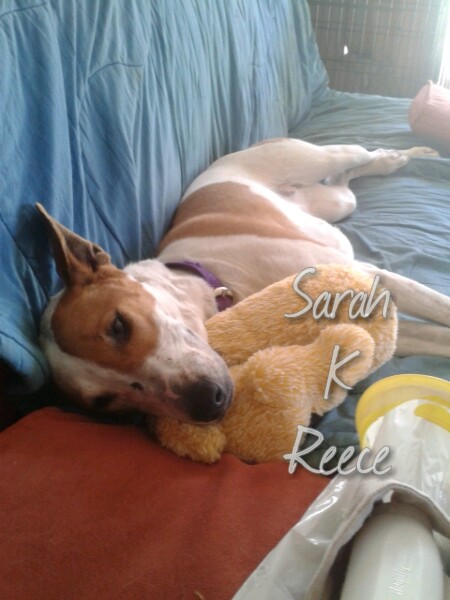
So today I’m reminding myself that those days are gone. Even if I got really sick again, it won’t and can’t be like it was. I’m no longer lost and bewildered in a dark woods full of monsters. I know the territory now, I understand the need for grief, the place of rage and humour. I’m not being tormented by a mad lover or spending energy desperately trying to hold onto empty friendships. I have names for what is wrong with my body, I have a safe public housing home to live in, a secure income on welfare, a lovely doctor who looks out for me. The nightmare that scares me is just a memory now, I’m jumping at shadows. So I sit here on the couch with my white and orange dog, and we eat Zooper Doopers and watch Buffy and life goes on. The fear that was choking me settles. The trembling in my bones calms. This is my life now, and sometimes it’s scary or painful or hard. But those terrifying days of loss and torture are gone. I made it through.

Determination

Oh dear lord, that was a hard week! 8 days post op and I’m still having trouble with the pain, but my headspace is markedly better. It’s been so demoralising to be so sick and in such pain. 😦 littered by all the ideas that haven’t worked, sometimes my future seems very bleak. I don’t want to live on support for the rest of my life but chronic illness just tramples everything I set up. So, I’m working on not failing my art classes at college, and I’ve been distracting myself by looking at pretty things on Etsy. It’s been inspiring. 🙂 I love sculpting my pendants and I’m really enjoying working in the smaller scale, which is good considering my studio space is very small at the moment.

I’ve also been lucky enough to arrange visitors every day, which has been really helpful, ditto actually getting out of the house here and there. Today I’m really excited about going to visit Sound Minds, the local hearing voices group. I haven’t seen them in ages and we set this date months ago. I’m bringing a very sad anime called The Children Who Chase Lost Voices to watch. They’re bringing ice cream. 🙂 I’m going to get through this!

Chronic pain

image
This is the chair where I’ve been living since Thursday. We go back a few years. I got it from eBay for $30 a number of years ago, and it’s been dragged through house moves and stashed during homelessness and followed me around all over Adelaide. A comfortable chair is desperately important when you have a chronic pain condition. Doubly so because with the fibromyalgia I have lost the ability to regulate my body temperature (this is common with many chronic conditions such as MS). This impacts me by causing deep pain in cold weather and heat stroke in warm weather. When I’m particularly unwell I move into heatstroke when the temperature is over 30, which happens an awful lot in South Australia. Many of the places I’ve stayed in only have air conditioning in the lounge, so if I want to stay out of hospital I have to sleep there through heatwaves. A comfortable chair that opens nearly flat is essential. I’ll still be horrendously unwell with fever, shakes, vomiting, weakness and so on, but under a wet sheet and if I can keep some fluids down it means managing at home which is generally much kinder to me.

I’m currently bunking in my chair because I have to sleep with my head elevated or the pressure in my sinuses gets intense and makes the pain worse, and I also have more problems with bleeding. It’s on its very last legs though, one arm has actually fallen off and is only held on by the fabric. It groans and creaks and is very difficult to put up or down… I’m half convinced that one night soon it will simply collapse under me and skewer me on terrifying springs and coils and inner workings…

I’m struggling to manage the post op pain. This morning when I found myself in tears despite ice packs and a slushie and ibuprofen, I relented and took 3 mg of codeine. It’s been enough to take the edge off and so far no hallucinations so my liver must be hanging in there.

I’m so aware of the veil of civilisation that buffers me from the anguish of my conditions. How fortunate I am to have a soft chair and a padded mattress and access to surgery and pain relief of sorts. Born into a poor country or an earlier time I would simply be a statistic, chronically ill, completely incapacitated by pain, finally killed by infection. Here and now, as deeply frustrated as I am by my limitations, I’m alive. I’m able to put some things between myself and agony, to stuff a wool lined chair and a box of antibiotics between me and the void. My life is full of relationships and books and art and using what I have to try and make the world a better place. I’m connected to my community, and I have a sense of the future. There’s so many other timelines where Sarah doesn’t make it this far. She kills herself at 10, or in a suicide pact at 19, or overwhelmed by intense dissociation, disability and loneliness at 23.
I’m still here at 31, trying to figure out how to be a good Mum with my disabilities, a loving partner, a loyal friend, an artist. My world has stopped completely while I’m so sick, I can’t manage my business or work on my assignments or visit my friends or clean my house. I live in this chair, blessed by visitors and the kindness of friends and family, utterly dependant and mostly helpless. But it is not meaningless. It is not about the limitations. I love and am loved. I’m touched by fire, kissed by darkness. Pain weaves itself through my life with the darkest of leaden threads and the brightest of red screams. I’ve also known ecstasy, wept with joy, been given gifts I can’t possibly repay, known the passion of laying with a woman who loves me, and the simple contentment of holding a child who feels safe in my arms. It’s been a full life, and I value it. Pain takes a lot away but it doesn’t take everything. It exists alongside quiet contemplation and the heights and the wilds and the little pleasures. It can be part of a deep experience of life.

Phobias ain’t phobias hey

Post op pain is a bitch. The ENT was kind enough to warn me that the procedures I’ve had done tend do two pain spikes, around days 3 and 7. Forwarned is forearmed, it helps a lot if you know to expect it and aren’t panicking that something has gone wrong. Mornings and late night are my worst times, which is usually the case for any of my conditions. Peak functioning and lowest pain is afternoons, best time for visitors, appointments, eating, and uncomfortable procedures. I’m have to drown myself on a regular basis with salt gargles, sinus rinses, and sinus sprays. This is the ickiest post op I’ve ever done, I spit blood and drip pus and generally ooze. It’s truly delightful.

I’m concentrating on staying out of trauma memories as much as I can. The difference when they’re triggered is huge, my whole perspective shifts and I feel physical pain more keenly through the lens of helpless misery. I also struggle with body memories such as feeling drips and needle pain that isn’t current, I radiate distress so people are stressed and alarmed around me, and I can’t access most of my skills to manage the situation because I’m so overwhelmed by emotional pain. Humour is currently my ally! Nothing breaks the state more effectively at the moment. As I deliberately look for something absurd to focus on, I can feel myself back swimming away from a dark vortex, and color returns to the world. I don’t understand it all yet but I’m trying to pay attention and not the details so I can unpick it later because there’s something very powerful in this.

My capacity to manage the needle phobia has run out for now, sadly. This op was my first time using fentonil for pain relief, and I should be getting as blood test done to see how my liver coped with it. Unfortunately the hospital needed my bed and moved me on without follow up, so yesterday Rose took me to my GP clinic. I can be really difficult to draw blood from, phobia aside my veins are good at hiding. After several harrowing minutes on each arm the GP gave up and I’ll have to drink lots and try again on Monday. Unfortunately this means we don’t know how my liver is going so taking any codine is an unknown risk. Hence high pain levels. The techniques I used to manage the drips in hospital just didn’t have traction, like they hadn’t recharged. My hands dripped with sweat and I shook. But it was brief (ish) and I recovered pretty quickly.

When I’m back on my feet I’m going to a hypnotherapist to try and make some sense of this. There’s a lot of needles in my future! On the plus side, the progress I have made will give up somewhere to start I think. I had a really, really bad reaction to a blood test as month ago and clicked that I don’t think I do have a true phobia, rather blood tests and needles seem to trigger a massive trauma reaction complete with flashbacks. That might explain why the phobia approaches haven’t been working for me. In hospital I used visualisations based on attachment needs to great effect, and found that whenever pain spiked I could concentrate and determine what were current sensations and what were memories to be brushed away.

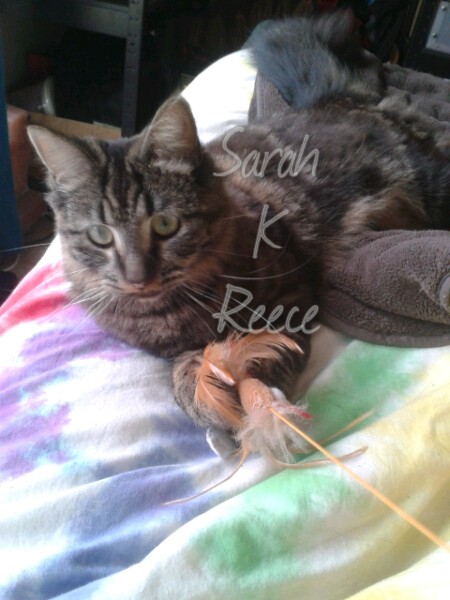
Anyway. So yeah, stuff. I’m taking notes and I’ll follow up later. For now I’m distracting myself with a Buffy marathon and stopping my jaw seizing by chewing licorice bullets. Tonks is being a crazy moth hunter and stalking the unit with gusto. Zoe is a total couch potato who will snuggle with any discarded clothes, socks, or, if she can find him first, my stuffed lion toy. Good company!

image

I’m alive

image

Rose has just left for the night. I’ve come through the surgery! My lovely visitors have bought beautiful gifts and made me smile far too much for someone with stitches in their face. The pain meds have stopped working very well which probably means my liver has had enough for now but it’s tolerable. I’m full of lines which keep blocking up but a new approach to the needle phobia is keeping things reasonably quiet inside. All in all, I’ve felt better, but I’ve also felt a lot worse.

Buoyed and touched and grateful for all the mad lovely people in my life wishing me well or reaching out to support Rose (who has been AMAZING). Rocking the orange eyebrows and tampon-on-face/world’s weirdest mustache.

Off to surgery!

I’m off to hospital at 9am tomorrow morning, for several hours of surgery on my sinuses and removing what’s regrown of my tonsils. At least, that’s the story at the moment. Apparently some people are being cancelled even after waiting in the hospital in a gown and slippers for several hours, so I won’t really know it’s going ahead until I’m wheeled into theatre.

I’m nervous. We’ve got the best ‘coping in hospitals’ part around, ready. Anaesthetics scare us, always afraid one day we won’t wake up. Resisting the urge to write wills and try to have all Christmas presents prepared, just in case…

I’ve scheduled a few posts for the week here, so there’ll be content happening, but maybe not updates for a little while.

I keep remembering things I meant to do before hand. 😦 I have been feeling a bit better today, and I’ve been able to sweep, mop, clean the bathroom and toilet, and finish some hand made gifts. I started the day playing with Tonks in bed, this is her favourite toy, it’s a tiny turkey on a string. Rose often does this, and it’s a cool idea. Ever since doing some intense processing around attachment, things have improved and I’m connected to and enjoying the company of my pets at last. 🙂

2014-10-07 08.51.45-1There’s so much I want to do. Art projects are calling to me and the garden needs some fertiliser and I want to finish a business project and the essay that’s due next week… and I want to snuggle up in bed with Rose and talk about our family and tell her how much I love and admire her and how glad I am to be with her.

Hope I’m home again soon!


Fear, grief, & chronic illness

I’m scared. I’m really sick, again, or still, depending on where we draw the increasingly fuzzy lines between one sinus infection and the next. The doctor I saw today confirmed I have laryngitis as well, and was worried I will not be well enough for my scheduled surgery this Wednesday. We’ve added steroids to the antibiotics and prescription for rest and fluids. With a present infection I’m also running a much greater chance of post op infection. I’ve experienced that before, severe secondary infection after having my tonsils removed at 10. I’d prefer not to do a repeat!

It’s hard to keep my spirits up. This week was set aside to get everything ready for my recovery period post surgery. I wanted to mop and clean and make sure there was blended food in the fridge and take as much of the load off Rose as I could. I also wanted to get my library books back, and finalise the essay and tutorial due next term in case recovery knocks me off my feet for longer than expected… So much for those plans.

I’m in a vulnerable place with my business. I’ve just emptied out the beautiful studio we had to close. I let a good friend down. I never even put a launch together for it. Everyone was really enthusiastic about it, but not enough to visit. I was sick and busy. Another learning curve, another failure. Something else to keep me up at nights. I’m so sick all the time. How am I ever going to make any business work? I keep trying. I’m working so hard and it’s just not enough. ‘I hate myself’ is a constant quiet drone in my head. There’s always so much fodder for it. There’s too much against me.

I’ve added mental health to all my promotional material but not had a chance to launch that side of the business yet to generate some work. In the meantime, my face painting business which was getting really busy has gone frighteningly quiet. The booked and cancelled surgeries are costing me work with long term clients, my bread and butter relationships. And maybe I’ve made a terrible mistake and people are too frightened by the new marketing to hire me. It’s too early to tell what’s costing me the most, I have to wait for surgery to be done then reassess, because the illness and hospital will keep destroying anything I set up in the meantime. A small business like mine is so vulnerable to any perception of unreliability. I’m so replaceable. My sickness is tearing apart everything I build.

So, hopefully, after I recover, I’ll find that place of hope again and keep building, and something worthwhile will come from all this hard work and heartache. And if I keep being sick, I’ll have to change it all again. Move to product creation instead of service delivery, something I can do even if my health keeps crashing. I’m so tired and so discouraged. 😦 I’m doing everything right and it’s not enough. If I could just disentangle the grief and self hate and overwhelming sense of failure and the gap maybe then I could breathe.

This really hurts. It’s like being down the bottom of a deep pit. It’s so painfully lonely. I know other people handle their pits with positivity, or that other people have deeper pits, but somewhere in claiming the right to my own pain and fear, to name it and call it what it is, to express some of the bitter disappointment at how things work out, I find strength. It’s my story. I don’t need to compare it to anyone else’s, I don’t need to win some ‘tragedy of the year’ competition to feel hurt, I don’t need to handle it in some publicly approved way to have the right to be hurting in public or to reach out.

The funny is, when I let myself own my pain, the loneliness eases a little. The gap becomes a thing I can navigate again. I can find humour, wear the loss a little more lightly, present the face of disability the world tolerates better – articulate, insightful, optimistic, discrete. Carve myself some space to grieve. There’s so much grieving in sickness.