My book is back

image

Yesterday I woke up with a book in my brain and my heart light. I sat out in the backyard all day and worked on how to put this massive amount of information together in a useful way. After some lovely conversations with perceptive friends I have decided on a new structure for my book. I am constantly overwhelmed by my own inane desire to write a comprehensive treatise, a PhD thesis on the entire history and cross cultural perspectives on multiplicity, a summary of everything I’ve ever experienced, heard, read, encountered, or wondered. Obviously, for people who need information in a simple, manageable form, this would be about as useful as a free aardvark. For anyone in crisis, it would be about as useful as a free colony of rabid bats delivered to your living room. I know this, but it’s hard to let go of anyway.

So, I am not writing a book any more. I am writing a series of booklets. Smaller, simpler, more accessible, on a very specific topic, and as I publish them I can if I wish and there seems to be interest, group a relevant collection into a master volume. Otherwise tentatively called a book.

A friend kindly pointed out to me yesterday that it’s interesting that a book about multiplicity, written by a multiple, is constantly changing structure. Many of us are working on this and clearly we all have different ideas about structure. Obvious when you think about it! So far this new approach is working, partly because it makes room for a number of different approaches to be part of this series, distinct but connected, such as collections of diverse stories from other people, poems and artwork, workbooks with exercises and tools, crisis resources, and so on.

The first is going to be a summary of my understanding of the experience of Multiplicity – the inevitable “So what is it?” component of every talk I give and the necessary link in the opening paragraph of every blog post on the topic. (when I’m being conscientious) It seems like a good place to start. I’m happy to be working on it actively again.

Today was harder, I had a rough night and feel sick again with nausea and crampy pain. Rose and I took a drive through the hills, admiring the autumn leaves. We bought a few plants for the garden and had teary conversations. I’ve been reading the emails that people have been sending in to grieve with us out loud to her, and we are both so deeply touched by them and feel so glad to have made a small space for others to grieve their own losses too. Much love to all of you. xx

Trauma is not everything

Bear with me, all those of you who are still fighting like crazy to have trauma recognised as important, relevant, meaningful to people’s experiences and struggles. I know that for you the idea that trauma can be overstated or misapplied may seem ridiculous because in so many areas it’s still fundamentally so ignored! But the fields are not flat – in some areas trauma is the focus in a huge way, and sometimes this is unbalanced and makes life harder for people.

I was discussing this issue once with a sexual therapist who was being driven to distraction by the assumption that trauma underlies all challenges people have. People were being presumed to have been sexually abused merely on the basis of having some issue they would like to seek support from a professional like her. The gender and sexuality diverse community has laboured under this myth for many years! I still hear from friends that some doctors and psychiatrists believe that being queer in any way is a sign of sexual abuse in childhood, or means they have unresolved issues with a parent. (Who the hell doesn’t have an unresolved issue of some kind with a parent??)

Trauma being a central focus can also cause problems because of people’s natural desire to arrange things in some kind of order. People often create a hierarchy to trauma experiences and feel humiliated and mystified when their trauma history isn’t ‘bad enough’ to justify their current struggles. Context – so dull and yet so key to the story of post trauma stress – is so often forgotten. Friends, connections, and meaning play such a huge role in our response to trauma. It’s not all what happened to you, it’s also how people treated you afterwards. Some of the most undramatic stories in our lives, loneliness and loss, leave the deepest wounds. Resources that focus on trauma either exclude those needing the same support but due to anxiety or other kinds of distress, or they broaden the definition to the point where all people are traumatised and the answer to every question and result of every equation is trauma.

It’s easy to look at a misfit like me and see trauma, and trauma is a big part of my story! But it is not the only part. I was a creative oddball long before school bullies and self harm. Claiming and understanding my trauma history and how it has shaped me has been essential to understanding myself, but I also find that at times I have to reclaim myself from the overwhelming trauma narratives. My life includes these things but does not revolve around them. I am more than what has happened to me. I am more than a sad story of harm or a triumphant story of recovery. I am also a life, a human life, with all the sorrow and pain, and the confusion, and the sublime. My story is not more or less meaningful, my pain not more or less real, my joy nor more or less extraordinary. I am human, and trauma narratives can take that away from me and put me in some other box of people who are different, lesser, or special. I am not other. I am human.

I remember going to Melbourne to see the Tim Burton exhibition and reading about his childhood and early life as an artist, expecting to see a trauma story given his proclivity for the gothic misfit. There wasn’t one. He was a creative oddball who didn’t fit well – his portrayal of the blandness of suburban life are now legendary! (think Edward Scissorhands for example) Trauma is part of the story of many artists lives, but for many it’s not, and we misunderstand something about the nature of creativity and restlessness when we forget this. When we don’t recall that many artists don’t ‘fit’ at first, we turn that ‘not fitting feeling’ into something about trauma. Being an outsider is always a strange, challenging, and blessed experience whether you’re super smart, disabled, or vaguely mad. Trauma may be a result if you’re isolated or bullied, but it’s not always a cause. 

I find myself wanting to talk about how harm can happen when all our dominant narratives become about trauma. When friends struggle through extremely poorly delivered child abuse awareness training where they are told definitively that people who are sexually abused as children are damaged for the rest of their lives and never recover normal relationships or sexual intimacy, I’m so angry. And when those friends try to speak up and say – hey, that was me, and yes, it’s the most horrible thing – but don’t write off our lives! We DO have lives! And are instead told their personal experience is clouding their judgement so they are failing to appreciate the catastrophic impact, I think something is wrong.

I’ve read ‘trauma informed care’ documents that make victims of trauma sound like helpless children, or that insist that healing only happens in therapy and close connections to a traumatised person should never be attempted by someone not ‘suitably trained’. You can almost hear the void around the hurting person as everyone steps back and waits for an expert to come along. In other contexts, we call this ‘the bystander effect’. It’s not a good thing. Friendships and relationships have a language of their own that should be respected! Communities have been finding ways through trauma – well and badly, for thousands of years before we invented therapy. Therapy is one of many tools, and it does not ever replace community and a sense of belonging. (many trauma therapists know this, of course!)

I’ve sat in talks about multiplicity that were so concerned to let us know we may be triggered, we were welcome to leave partway, caring staff were on hand if we needed to talk to someone etc etc that I seriously wondered if they’d considered that I manage pap smears, nightmares, losing people I care about to death and suicide – on top of the various traumas in my more distant past. The focus on my vulnerability left me extremely angry and unseen –  my strength, my coping, my competency were all invisible in a space that marked me as a trauma survivor and permitted me to leave the room where the important educated people were discussing the difficult topics of the life and recovery of people like me.

There’s a fantastic looking conference happening later this year I would love to attend and speak at. It’s being held by the International Society for the Study of Trauma and Dissociation. Unfortunately it’s happening the month after I’m due to deliver our baby, so I’m not going to put an abstract in. But reading the front page of info really made me want to, because its called Broken Structures, Broken Selves, and describes “The very structures given the responsibility to protect these children, broke down their basic trust in the world, and therefore their very essence – Self – so necessary for their future development.” And I so want to go there and talk about the harm we do when we constantly refer to people as broken! The number of times terms like fractured, broken, fragmented, and developmental failure turn up in books and articles about multiplicity is absurd. People are harmed when we constantly describe them this way! People are harmed when there is no concept of healthy multiplicity, non-trauma-origin multiplicity, or healthy dissociation. I KNOW there is a profound need for awareness and sensitivity to the impact of trauma, to normalise and support people especially when their only other framework is “I’m crazy!” People are harmed by trauma, yes! But when inbuilt defense mechanisms like dissociation act exactly as they are supposed to, I would argue they are a very long way from broken. It is those who harm people who are broken. That is the inhuman behaviour.

I can’t go along this time and say any of that, I’m hoping that someone will anyway, there’s a diverse group of people interested in this field and I don’t but heads with all of them! Some of us have fought so long and hard to have trauma recognised as important, we need to be careful of what happens when it does gain that recognition and becomes the dominant framework. It can be inconceivable that something so fundamentally respectful of people, something so essential and good could be misused or harm people. But such is the risk when any perspective becomes dominant. There’s more to us, to our stories, our lives, and our selves than trauma. Part of what it is to be human is to feel broken, to be aware of our own incapabilities and limits, to mourn what we could be. That story isn’t just about trauma, it doesn’t cut us off from those who lived blessed lives. We don’t have to sit on our side of the fence hating them, watching them live in the sunshine while we drag our mangled hearts through the darkness. There’s pain in all of us, loneliness, brokenness, and hope. This is the human story. It seems so deeply important to me to place trauma in that context, to – if you will – integrate it with our stories of what it is to live and love and be a breathing living collection of fears and dreams all wrapped in skin.

What’s the deal with Integration?

Integration can be a Hot Topic for those of us with multiplicity. It used to be (and sometimes still is) pushed as the cure for our illness, our only chance to be a normal person, and have a normal life. People who couldn’t integrate, didn’t want to, or tried to and had it fall apart on them were seen as more sick, less recovered, less committed to recovery, treatment resistant, or basically in some way a failure. So it can be loaded topic with heated diverse ideas and often some firm opinions and rough experiences for people. Hence why in 3 years of blogging about multiplicity I haven’t wanted to tackle it before now!

It doesn’t have to be so divisive of course, the issues really aren’t about integration, they’re about this idea of failure. If integration is an option rather than a cure, a lot of the heat and stress goes out of this topic. That’s certainly how I prefer to talk about it.

So, let’s start at the beginning, what the heck is it? Well, that can be tricky to define, because different people and different books use the word to mean different processes.

Fusion or Merging

This is the most common use of the word integration. It refers to the combining of two (or more) parts into one. Separate consciousnesses, or selves, become a single self, combining memories, skills, and attributes of both. For those who use a clinical dissociative framework, an analogy might be the dissociative walls between parts coming down, so that every part can be out together, all the time, sharing all of life, all the memories, and all the energy. Generally speaking integration is only used to describe the merging of all parts into one, but sometimes I have come across variations in that too. There’s a experiences of fusion shared in the biographies The FlockKatherine It’s TimeA Fractured Mind, and Not Otherwise Specified.

Retirement

Some people use integration to describe a system where all the parts but one have been retired from coming out. One part now runs all the life, and the rest live inside where they may be sleeping, playing, advising, or doing their own thing, but they don’t come out any more. An experience of retirement is shared in Today I’m Alice.

Passing On

Some people use integration to mean that all the parts except one go away. People might pray away parts, have them exorcised, experience them ‘die’ (without harming the body), or simply find that they have fulfilled whatever function they were needed for and disappear. Sometimes passing on happens spontaneously, sometimes it is the specific goal of therapy or an intervention of some kind. There’s experiences of passing on in Little Girl Fly Away, Fractured, and A Life in Pieces.

Co-operation

While most people see this as an alternative to integration, sometimes this is described as integration, which can really be confusing! With co-operation the parts work together as a team, sharing the body and life and making decisions together. Basically, it’s a multiple system that functions well with parts looking after each other, sharing information and resources, and putting effort towards common goals. There’s experiences of co-operation shared in First Person PluralWhen Rabbit Howls, The Sum of My Parts, and Five Farewells.

Several of these outcomes are described in In Two Minds. Most of these books can be borrowed from the DI Library.

So, if you’re reading or hearing someone talk about integration, it can be really helpful to know what they’re using the term to mean! Of course, a person with multiplicity may use all of these approaches, at the same time but with different parts, or at different times in their life – perhaps they work on co-operation which leads to fusion, or perhaps some parts fuse, some retire, some pass on, and the rest co-operate.

Integration is a word that also has different meaning in other contexts. It’s often used in trauma therapy to refer to someone’s ability to process, think about, and link into a personal narrative an experience that has been jarring and out of sync with their sense of themselves and their story about their life. In that context it is always seen as a highly positive thing, and that may be part of the challenge about the way it is used with multiplicity – because in this case it describes a process that people experience in diverse ways, ranging from profoundly welcome and life-saving, to highly distressing, destructive, and disabling.

Integration can mean a connection, as in technology or biology when we’re talking about different processes working together – for example “visuomotor integration” – how well our sense of sight and our muscles work together. Integration can be about harmony in difference, such as architecture that integrates well with the landscape. In science integration is the inverse of differentiation – one example of differentiation from biology is the process by which cells change from being generalised (such as the stem cells that start off building an embryo) to being specialised – becoming nerve cells, muscle cells, and so on. Integration is the opposite of segregation when we’re talking about civil rights or putting kids with disabilities in mainstream schools. When we’re talking about immigrants and culture, the word integrate is often used to mean assimilate – that is, the minority or inferior group should adapt and conform, to become absorbed into the dominant culture.

I see some obvious parallels in these various uses of the word integration and how it is experienced by people with multiplicity. Some people see either fusion or co-operation as the best goals for people with multiplicity. Some see passing on as the only possibility. Some people with multiplicity deeply desire fusion, while others are aiming for co-operation. Some people are terrified of losing parts. Some systems have different parts with very different goals, which they may try to impose on each other and team up with other people such as a therapist, to try to enforce.

Where the big issues come into play is often not what the goal is, but who chooses it and how it is defined. If a therapist, healer, priest or so on chooses the goal for a system then their efforts to create that may be highly traumatic, no matter what the goal is, or how well intentioned that person. If a goal is presented as the only possible option for a good life, then people can be devastated if their system simply doesn’t fit it or can’t sustain it. There is not one experience of multiplicity out there, there are hundreds of thousands. There is not one experience of integration either. Here are some diverse stories I am aware of:

  • A person with multiplicity who works hard in therapy to fuse back to one part, and discovers that for them, a great deal is lost in the process: memories, skills, and so on.
  • A person with multiplicity who experiences a part telling them that they have done what they were here to do, and their lifespan is over. A ritual goodbye is performed, and a small private funeral. The part ‘dies’ at peace.
  • A person with multiplicity who draws upon their faith to pray with a trusted person in authority to have deeply distressed or disturbed parts taken away, and experiences relief.
  • A person with multiplicity who found a new, more calm and grounded part formed in adulthood and guided their system through stress and conflict.
  • A person with multiplicity who over many years, without therapy, learns about their other parts, negotiates their way through differences, and comes to work together as a team.
  • A person with multiplicity who works hard in therapy towards fusion, who’s other parts experience grief at their loss of separate self, but who finds deep wholeness and relief in integration and embarks on a new life direction with zest and hope.
  • A person with multiplicity who transitioned and went through sex change surgeries so the part of that gender could have time in a body they felt comfortable with.
  • A person with multiplicity who has no intention of fusing but finds that fusion happens gradually and naturally as part of trauma healing, and comes to term with their new single identity.
  • A person with multiplicity who is convinced by someone in authority that an exorcism of demons is their only hope for a good life, and finds it ‘works’ for several years as the other parts are deeply alienated and buried in their psyche, but then they return even angrier and harder to communicate with than before.
  • A person with multiplicity who is thrilled to fuse with their other parts, only to find that when they are stressed they split back into parts again.
  • A person with multiplicity who thinks that all the parts have gone, only to find a batch of new ones they didn’t know anything about.
  • A person with multiplicity who fused, split, fused, split again, and finally fused for good!
  • A person with multiplicity who had parts die only to come back to life some years later.

As you can see, people’s experiences are diverse!

So the stress about integration comes from many places, people who want to fuse but can’t seem to, people who are frightened that parts may die, people who are being strongly pushed into a process that doesn’t fit them well, or who are being told they cannot be whole or healed unless they do a particular thing or do it in a particular way. For some people fusion is amazing. I have seen it and it’s a marvel. For others it is akin to gay reparative ‘therapy’ for people who don’t want it, where people are trying to ‘cure’ something that is a natural difference in how people are, in the process making them much more vulnerable to suicide and self harm. I believe the risks of harm are higher when people are afraid, made to think one way is their only hope, and when they have no exposure to peers and diversity and are vulnerable to the ideas of a person with power in their life. I think the risks of harm are lower when people are able to sit with the idea that there may be many paths for people, and one is not necessarily better or worse than another, that what is supposed to happen for them will happen, and that whether you have single or multiple selves if you are decent to people, animals, and the planet, you are not a failure.

It is entirely possibly there is more than one form of multiplicity, some of which respond well to fusion or other types of integration, and some of which don’t. Certain philosophies and branches of neuroscience consider that it is a sense of having a single self that is an illusion and that all people are a collection of multiple selves and processes. The mind and consciousness are simply amazing. Please be reassured that if you have had bad or frightening experiences trying to navigate multiplicity that you are not alone in that, and that people, parts, and systems can recover.

Personally, when I was first diagnosed with DID in 2007, I had a plan. I was going to be a model patient, obey every instruction, and integrate within a year. I wanted more than anything in the world not to be multiple. I wanted to have a life, to finish my degree, to have a job, to be a parent – and I didn’t think I could do that if I was multiple. Putting my system under that pressure knocked us around badly and our functioning started to fall apart. We’ve ended up walking a much more roundabout route, focusing on specific challenges such as accepting our sexuality and rebuilding our social support, and figuring that if fusion is supposed to happen for us, it will happen in its own time. I’m okay with that! I don’t need to be multiple, it’s not what makes me special or gives my life meaning or gives me an identity. I’ll still be the strange mad creative oddball we are now. I also don’t need to be single to be whole, healed, or have hope. I don’t think single is the best, right, or only way for people.

For more information see articles listed on Multiplicity Links, scroll through posts in the category of Multiplicity, or explore my Network The Dissociative Initiative.

Tribe Night

image

At least once a month Rose and I set aside some time to spend just the two of us. No friends or kids or work or stress, just us, celebrating us. Often we don’t call this a date night as not everyone in my system is ‘dating’ her, but instead she’s coined the rather lovely phrase Tribe Night. What we do depends on who feels like they need some time together, and how much money we have. As Rose is still waiting unpaid for her new job to start, tonight is a budget one. We’ve got movies from the local hire store, popcorn, and the half eaten gorgeous gingerbread house that was a Christmas gift from a generous, creative friend who cooked it in her tiny toaster oven in her apartment and probably lost a few more sanity points in the process.

Other favourite tribe night things to do are nights at the beach, hanging out in the trees at our local park, going to the movies, our favourite local Asian fusion restaurant, going out to fun art or cultural events, especially the free kind where dressing up can happen, hanging out in the nude with all the curtains drawn and good music, (some of us are lovers), camping nights away, and for the really introverted, reading together in bed.

Sometimes we have to work around health issues too, I read this gorgeous blog post the other day and thought it had great ideas for not-well hang out times: 10 Crip Date Ideas for the Disabled/Chronically Ill/Mad Person in Your Life

Have a good one folks. Don’t forget romance is not the sole domain of lovers.

Inner children – shame and threat

For many of us with multiplicity, figuring out how to live with inner children can be a huge challenge. I’m certainly no expert on this and don’t have this all figured out with my own, but some guiding principles have worked well for us that might be of help or interest to you.

The first massive challenge for us was to learn to cope with the deep shame we felt about them. For example, we have one who is 5. She’s very sweet, curious, and playful. We first noticed her when we attended uni one day, and she turned up thinking it was her first day of school. She was fascinated by the shiny wrapped chocolates in vending machines and terribly anxious that maybe she’d forgotten to put her underwear on that morning. We were co-conscious and felt blind terror that someone might notice her ‘weird’ behaviour. Our ‘intellectual adults’ in particular were dismayed at being mistaken for this impulsive, cheerful creature who balanced on the edges of the garden beds and skipped down stairs. It felt like a profoundly visible difference, a severe disability that would stop people seeing us as smart or dignified or other things that are really important to some of us. So our first reaction was mainly horror.

Shame went deeper too. Having kids tell the white lies all kids tell, exaggerate an event, make it sound more exciting or themselves more brave, skip something they’re worried they’ll get into trouble over… We didn’t cope. We first hated ourselves with a deep passion. When we realised we were multiple, we hated them instead. For a long time we did our best to completely suppress them.

Reducing this shame was partly about understanding them in context. It helped us to read about attachment disorders and realise that the issues we struggled with were very common. It also helped to spend time with other kids that age and realise that our expectations were crazy high for our own. It helped to look at photos of ourselves at those ages and realise that although we had felt mature and responsible and old at the time, we were just very little. We had some mad ideas about ourselves as children that we had to confront, and some internalised ideas from other people we had to start to question.

Fortunately, system members who felt less threatened by the kids had very different reactions to them. One in particular was very co-conscious and curious about the way that people didn’t pick up even when the 5 year old was out. People just don’t think of multiplicity. Even pretty overt behaviour wasn’t noticed, particularly by strangers who didn’t have any idea of who we were usually, or what to expect from us. It was a startling kind of freedom.

We also started to notice some of the pain of being a child in an adult world. How difficult life could be for them, how lonely they were, how bewildered they were by adult concerns and choices. Once this sweet little girl came out, curled up on the couch, and waited for someone to bring her something to eat. She ‘wasn’t allowed’ to open the fridge or the freezer or make a snack, and she didn’t know that no one was coming. Life can be strange and lonely when you miss great chunks of it and the rules change without anyone telling you.

Being able to take a step back from feeling overwhelmingly threatened and just observe and learn was important. This was a slow process for us, years rather than weeks. A system in survival mode is a system geared to feel suspicious and threatened by everything! Initially there was no trust between us and a lot of scrambling to stay in charge and in control by the ones who so deeply feared losing it. All our models of losing control were about disability and loss of functioning, people who wound up in hospital needing constant care. For a long time it felt like we were fighting for our life, and fighting a doomed battle at that, that life long severe mental illness was our destiny while these parts existed. Discovering that sometimes kids brought joy and hope too was a massive surprise and helped us begin to question our assumptions about what it was to have inner kids.

Humour and compassion are powerful alternatives to shame. Over time I found I could re-tell the story of having a five year old switch out at uni and glue herself optimistically to vending machines for significant periods of time hoping chocolate might come out of it… and laugh, and make other people laugh. Life is bizarre and absurd! Taking it, and ourselves, utterly seriously is a quick way to find ourselves forever disappointed, threatened, and miserable. Embracing the humour and pathos in equal measure has served us well. It’s not about laughing instead of crying, but as well as crying.

These processes of learning and listening and questioning built some empathy and we began to relate to the kids as real people instead of just a burden or nuisance. They weren’t just symptoms of a disorder, or here to make my life difficult, they are just as real as I am. Their joy and pain just as real. It became less stressful to let them have some time out. These days if the 5 year old is out when we’re buying groceries (or more likely, candy) then people such as check out operators generally talk to us as if we are intellectually slow. We’ve stopped being so threatened by that and take it in our stride. There are some awesome people out there with intellectual disabilities. Being mistaken for one of them at times isn’t the end of the world. This is part of what it really means to be inclusive and to believe that people with disabilities are still people. If you think you’re comfortable with and inclusive of a group but are mortified if someone mistakes you for one them, then you’re a long way from walking your talk.

(I’ve seen this a lot, where the act of reaching out and connecting with a marginalised group is supposed to reflect well on the generous supporter, and it’s really all about their needs. They love to be seen as inclusive and brave but it’s nothing to do with equality. Try mistaking a mental health worker for one of the clients and see how thin the veneer of their ‘community’ is as they jump to assert their true status. This is doubly offensive if you’re there as one of the clients!)

Of course, threat doesn’t just go one way. An inner 14 year old who has figured out that their body is adult and flirts with scary drunk men has learned a powerful way to scare and punish the rest of a system who are constantly trying to suppress her. (ask me how I know this!) Kids get scared by their inner adults who are angry, powerful (but not all powerful) figures who feel they are more real, more important, their needs paramount, and their ideas about life decisions the ones that should happen. Kids don’t just get out voted, they often don’t get a vote at all in these systems. Imagine the sense of threat that comes from having other people who don’t like you, don’t care about your pain or needs, and don’t even see you as ‘real’ making choices about your life, your home, your family, and your body. Sound familiar? For some of us, we build our systems on the same dynamics of family or school, the world we grew up in, and sometimes that’s a terrible thing.

Systems that are structured on abusive dynamics, as mine was, deal with the fall out of that. The most powerful might win all the time out and decision making, but the alienated rebel, undermine, sabotage, manipulate, seethe with resentment, or submit and hate themselves. Those who have no choice or overt power protest in passive aggressive ways and behave without dignity. The traumatised stay locked in severe trauma, the isolated express pain and loneliness through symptoms such as phobias, nightmares, flashbacks, tics, and sickness. This is often what we call DID or multiplicity, when in fact it’s a normal response to a really abusive system. Multiplicity with a healthy use of power internally looks very different. It often doesn’t even fit the diagnostic criteria for DID, and we have no alternative framework or language to describe it.

With time and gradual connection, there’s more empathy and less dehumanisation. With this has also come a sense of protection and responsibility. As we’ve learned to unpick our sense of shame about our inner kids we’ve found it easier to understand and interact with them. Long ago, pre diagnosis for myself, I was reading about multiplicity because someone close to me had been diagnosed. I read about a woman with multiplicity who registered that the other patient she saw in her therapists waiting room was also multiple. She gave the shrink a gift of crayons to pass along. When I read that, something deep inside me burned with fierce desire. I wanted my own box of crayons, my own signal that this was okay. At the same time, the iron fist of suppression, refusal, denial locked me down. I absolutely could not do something as simple as buy myself crayons, because that was opening a forbidden door. It was years before I bought a packet of crayons and a colouring book for us, and it was for us, like each step on this road, an act of courage and faith. So very simple, looking back, but so profound and needing such bravery to be willing to face what came up, to trust that there would still be life and hope. When we started Bridges, the face to face group for people with dissociation and multiplicity that we ran weekly for 2 years, we brought crayons and paper to every meeting, trying to pass on this gift.

How simple it has turned out to be, to understand that we’re all sailing in the same ship together. To find joy in the differences between us. Everything we read was about coming together, becoming more like each other, finding a common ground and merging into it. Everything we’d tried was about drawing a line that defined who ‘Sarah’ was and only allowing out those of us who fit within it. Peace has been the opposite process for us. Letting go of that attempt to control who we are and accepting who is here. It’s okay if people get very different ideas about who Sarah is depending on who they meet first. We lead the way by being okay with it ourselves, and most people simply follow suit. We had a house-guest here for a few days this week, who quietly observed to Rose – “Wow, it’s like Sarah’s a different person. I didn’t think she’d be the kind of person who games (first person shooters, by preference, particularly L4D2). There’s a photo of a pretty butterfly on one of her computer screens, and she’s killing zombies on the other!” To which Rose responds “yeah, I see what you mean. Some people are like that!”

For more information see articles listed on Multiplicity Links, scroll through posts in the category of Multiplicity, or explore my Network The Dissociative Initiative.

Buck Angel – trans and diversity

image

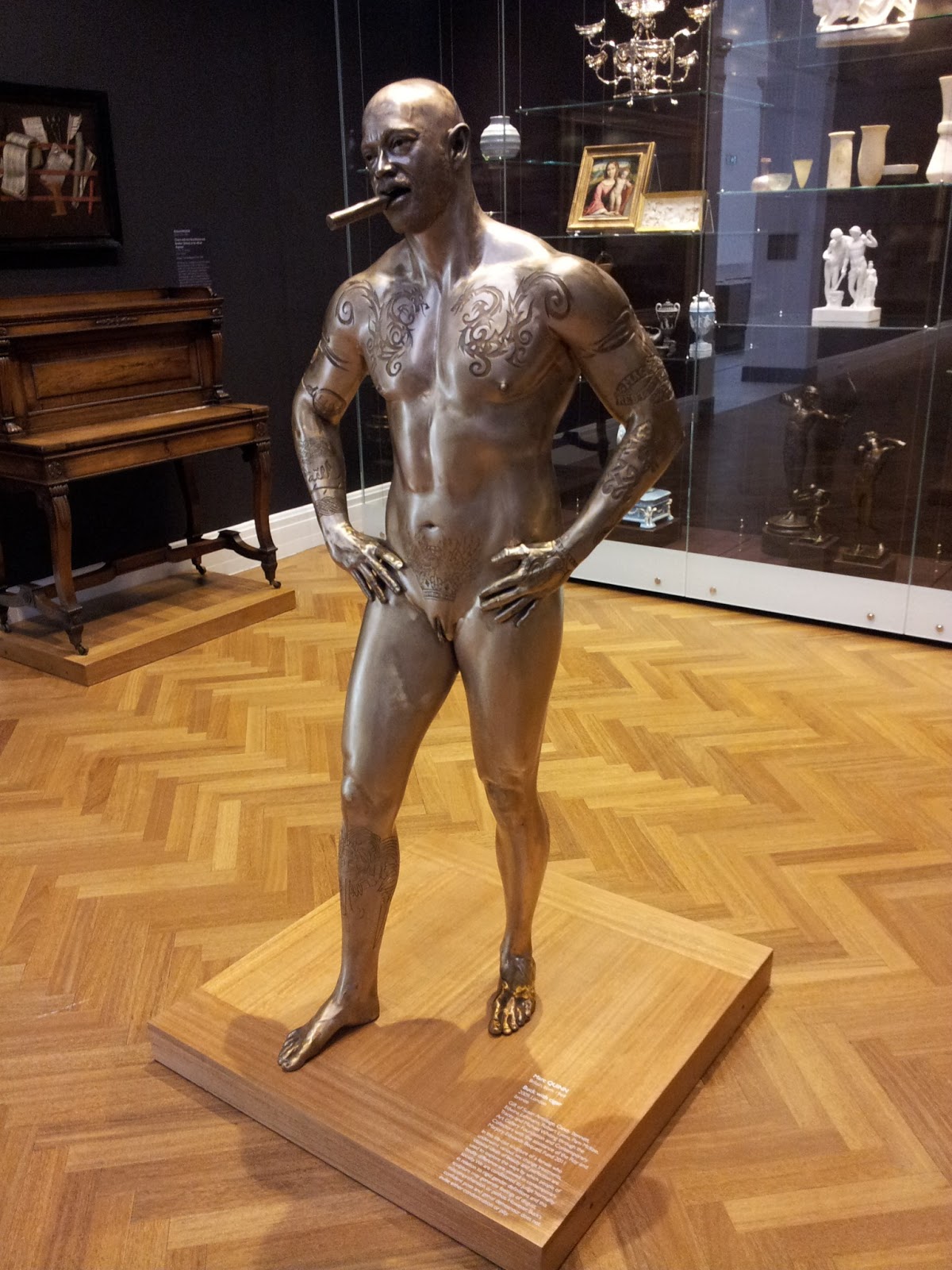
This awesome dude is Buck Angel. He was in Adelaide recently doing a number of shows at part of our Feast Festival, which is our annual queer pride event. I was fortunate enough to get along to several of them. I first met Buck as an amazing life size golden statue of him by artist Marc Quinn, that’s in our Art Gallery of South Australia.
image
Photo from this blog.

I was blown away when I first saw it, that confidence, the way his tattoos have been carved deeply into the statue… So beautiful. To display his unusual body (Buck went through ‘top’ but not ‘bottom’ surgery) with such a sense of contentment and certainty about who he is just blew me away. Apparently it’s not unusual for people to be deeply moved, particularly trans folk.  Then I heard the subject was coming here and I got to hear some of his life story, his transitioning, to hear about how this statue was made and brought all the way to SA. It’s been amazing.

I talked with him a little about the overlap between the trans and multiple communities, the need for more understanding and acceptance. I’ve been building more links between these communities in my work on the Dissociative Initiative. My experience has been that there’s a lot of trans people who experience multiplicity, and a lot of people with multiplicity who have trans parts/personalities. The mental health and the trans supports however, don’t always get along.

Buck got it. His messages of loving your body, and embracing your identity, and not letting the world tell you you have look a certain way or have certain body parts to be who you know you are is a powerful one, especially for trans members of multiple systems. Some of us transition and some, like me, never will. (More about my experiences in What is a man?) I live as a male in a system full of female personalities and a body identified as female. Learning to be comfortable with this is so much easier when you have a hyper masculine, “I love my vagina”, pro diversity role model like Buck.

We talked a little about the massive changes legally and socially that have happened, just in the time since he’s transitioned. It makes me hopeful that things are going to change for those us with multiplicity, who currently are seen as mentally ill, treated as dangerous, or the punch line of a joke. There’s a whole community of trans people who can relate to our experiences around those issues! These are people who understand fears of being outed, how our relationships, housing, and jobs can be at risk, the pressure of trying to pass so no one will know we are different. That’s the reason I’m public about being multiple, to start that change happening. We shouldn’t have to hide! We can find ally’s in communities like this and support each other.

Buck told me – it doesn’t take many of us speaking up to change things. Just a few voices make a difference. I believe that.

Book is happening

2014-12-13 20.59.20-1It’s consuming. But it’s happening. A book about multiplicity. It comes in spurts, days where it’s writing itself in my head constantly and flowing, then depressing blocks where nothing makes sense or connected with anything else. I think I may have finally found a structure that works more closely with the way I write this blog – which I should find a lot easier to work with. I’ll keep you posted!


The Void: dissociation, amnesia, and identity

Dissociative amnesia is not often spoken of. It doesn’t have the fascinating glamour of other forms of dissociation such as ‘multiple personalities’ or fugue states. It seems at times that there’s little to say of the losses of memory, of how frail our sense of the world is when we can’t recall it. It’s subtle but insidious, far more important and powerful than people think.

Some people with multiplicity also have very high levels of amnesia, a form of dissociation in memory. In this case, memories are laid down and stored in the brain, but the dissociation between different parts prevents access to them. So people can live in this surreal twilight world of ‘coming to’ and trying to figure out from context where they are and what has been happening. Life is a bewildering series of changes, something that slips through your hands as fast as you try to grasp it. Other parts live according to their own values, needs, fears, and understanding of the world, and you return to inherit their choices. The world of cause and effect can become brutal when you cannot recall the causes but must live with the consequences. Between skips of memory can pass hours, days, or years. Like Rip Van Winkle, you can wake to find your whole world is unfamiliar.

Other people experience amnesia without multiplicity. Sometimes it gets forgotten that this is very possible. People are told that if they cannot remember great chunks of their day – or their life – that they are probably multiple and other parts must have been living them. It’s actually very common to have amnesia without dissociation in identity, trauma both physical and psychological will often affect our capacity to remember, as can a massive collection of physical illnesses and injuries. Emotion is a key aspect of memory, so dissociation or disconnection in emotions can also affect our capacity to remember. Our ability to remember is also linked to our awareness of the passing of time. Memory is very complex and not particularly well understood.

We’re familiar with the challenges of minor memory loss, the scattered way of life when you’re constantly looking for your shoes, keys, car, phone. It’s not hard to extrapolate that to bigger, but still tangible losses – having found my car at last in the shopping centre car park, I can’t remember where I live. Standing at the checkout desperately trying to remember my PIN number, crying with frustration because I’m 19 but it feels like I have dementia. Trying to fill out welfare forms and having to ask other people what my birth date is. These bigger gaps are like black holes in the world, only in your world. Other people walk over an unbroken path, I fall through, into an emptiness. I float in a void and hope desperately I’ll find the other side of it, pick myself up quickly, dust myself off and keep walking, hoping no one notices my lack of normal functioning.

Other losses can be profound, harder to imagine. People who recall nothing of their lives before the age of 35, except small scraps. People who find that amnesia follows them, at a distance, like a stray dog, eating recall of all memories older than two years previous. People who wake in the morning next to their partner of 20 years and find they don’t recognise them. People who look in the mirror and are bewildered and surprised by who looks back at them. That moment of panic as a stranger approaches you in the street with an easy smile and greets you by name. For some there’s an overwhelming sense of shame, of being damaged and desperately trying to pass for human. For others the loss takes even the grief of loss, there’s a shrug, or a little wistfulness, or even relief. For some, behind the shield of amnesia, dreams and nightmares and all the things they once felt deeply about lurk in their shadows, haunt their sleep, beat against glass walls in their mind, evoking terror.

Without memory, it is difficult to have a stable sense of self. State-dependent memory cuts off a sense of connection to other parts. Each part has their own memories of life and draws their own conclusions based only on their own experiences. Mood dependent memory is the way we recall with ease our happiest moments when happy, and drown in all our saddest when sad. For people in the grip of intense, flooded emotions, such as some who are given the diagnosis of Borderline Personality Disorder, their whole lives and sense of self changes with each feeling. We sparkle when happy, and our whole world is beautiful! We are generous, kind, loving, full of good humour and good will. We bathe in the milk of human kindness, nothing is too big to forgive, too much to ask. When sad, the world is black, bleak, dark, terrifying, choked with misery, full of bad omens and evil portends. We radiate despair and flood everyone near them. We are preoccupied, desperate, overwhelmed by a sense of doom, like prophets who understand the world is ending and shake our warnings at people too blind to stop their partying and take up the ashes and sackcloth. When threatened we are sharp toothed, short of temper, we jump at shadows and see danger everywhere. We bite hands that come too close and nurse the aching wounds of all the wrongs ever done to us. We see the world as violent, unpredictable, deceptive. We look for the trick in every gesture, the hidden meaning in every word. We live with our teeth bared and bite before we’re bitten.

There are a thousand shades of emotion that people don’t even consider, like shades of colours. We are swept from heights to valleys, through quiet contemplation, deep sorrow, burning rage, cheerful spring mornings, restless wild moods, agonising pain, mischievous playfulness. When these states are split off from each other, people’s sense of self changes with each of them. Our sense of the world completely changes, our values and goals change, our expectations of the future changes, our approaches to our relationships change. The thread of consciousness that gives us our sense of stable self is snapped and chopped into bits. What has the potential to be a deeply lived, vivid experience of life becomes fractured, tormenting, and without growth.

For people with parts, fractures along these lines are common – one part will remember all things wonderful in life, another all things painful. When switching and trying to understand the self, multiples get lost in the many versions of self that leave evidence in their lives, the many handwritings in their journals. As a child I sometimes asked other people to describe me, feeling devoid of clarity about myself and seeking to use their eyes as a mirror. There’s an empty feeling beneath shattered memory that can make people feel like they don’t exist. Switching can be like forever walking into a room at the moment someone else walks out.

I once watched a documentary about Clive Wearing, who suffers from chronic severe amnesia due to a virus that damaged his brain. He has almost no recollection of his past (although he has what is called procedural memory, that is he can still do things he once learned to do, such as walk, dress himself, and play music). Clive cannot hold onto to new memories for longer than about 30 seconds. He lives entirely in the moment. He has a diary that moves me deeply. Each previous entry he crosses out, as he cannot recall having written it. Each new entry is achingly similar.

8:31 AM: Now I am really, completely awake.
9:06 AM: Now I am perfectly, overwhelmingly awake.
9:34 AM: Now I am superlatively, actually awake.

There’s an agony here, an awareness of loss and a claiming of life that turns out to be without permanence or meaning. It’s deeply painful to see his distress and be unable to knit back together the damaged areas of brain that leave him in the void. The process is familiar to me, I recognise echoes of the same voids in myself and others.

For those of us with multiplicity, even when co-conscious, the emotional distance of watching but not living all our lives can create subtle breaks in our sense of self. Disconnection in emotion can fragment our ability to emotionally process our lives. Switching can be our own version of suddenly feeling awake. We sweep aside all the knowledge of other parts, sometimes even of our own previous memories, with this sudden conviction that now, I am truly awake. That now, I am really alive. This time, I understand. That this time, I’ll make it work. We do the same things, with the same tools, from the same values, backed by the same seeping aside of our history, and are horrified, surprised, and devastated when we get the same results. We cut ourselves off from our own wisdom, learn nothing from our history, disregard all previous insights. We make abrupt, unsustainable life changes, that change only the names and places, but repeat the same crisis dynamics over and over. When we are briefly aware of this sense of being trapped in a cycle, we feel so helpless and ashamed that it’s a relief to let amnesia or switching sweep it all aside. It’s like having an internal reset button, we go back to the start of the maze and go looking for the cheese all over again, often with the support of people around us and mental health staff who are pleased we’ve stopped being paralysed by our awareness of our futile cycles and are tackling our lives with vim again.

Health and recovery is sometimes sold to us as stopping this process. Limiting the extremes, preventing the switching, shutting down the states. A single part is chosen to be the ‘real’ one, a single emotional state or small collection of them are selected as the ideal, calmest and most rational. All the knowledge in the rest is discarded, all the wildness that gives life deeper mythic meaning, the wrestling with angels and demons, the being moved by things we can’t name are suppressed instead of connected. The goal becomes staying still instead of learning how to dance through them. Life becomes staid, the suppressed grow wilder and stronger, we find ourselves fighting not only with our weaknesses but also our strengths. We dissociate more and more from ourselves and our experience of life.

These processes are not unique to multiples. We all use dissociation to contain memories and feelings, to compartmentalise our worlds so that we can function. Not enough dissociation, being unable to contain emotions and memories can be just as destructive. It can be very difficult for any of us to step back and see the whole, to watch our own patterns and honour our history. We are all partly dependant on the stories we’ve told through which we understand ourselves and the world, and the perspectives of others. Sometimes they help, something they make us blind or tell stories that do us harm. Step back too far and we become numbed observers. Remain forever utterly in the moment, and we fall into the void. In that place, we run to anything that makes us feel better, calmer, safer, no matter how crazy. We self destruct with passionate, spectacular indifference. We search for a sense of self that the search itself destroys. The experience of the void can induce a sense of absolute panic, a desperate, frantic need to DO something, anything, to feel like you exist. Even blood, agony, the fireworks from your whole world being destroyed can feel better than the void.

For me, my journals – and now this blog, are the trail of breadcrumbs I leave for myself to help me see my selves. I write, and then I read, and re-read, seeing my selves through different eyes, charting my life. I find causes for effects. I learn about those people who have the most profound impact upon my life, but whom I have never really met – my other parts, the rest of ‘Sarah’. I am startled by the complexity of life, all the things I do not see that they do, the vast spectrum of colours I cannot perceive, of feelings I know only as words. There’s a sense of being blind, but learning life and self by its feeling in my hands, its taste in my mouth. Sometimes someone comes out who is missing so many threads of information, so much of what we have learned and how we have changed. Sharing our history connects them back to us, to the present moment, to all the gains and losses of our life.

I reconnect the thread of self by honouring that I am alive now, and that I have always been alive. All the parts are real, all the emotions are meaningful, all the experiences are important. I look for the common ground between all the states and parts, and I also learn to celebrate such wildly diverse ways of experiencing the world. I find the things that stay the same no matter what – a fear, a value, a need, a tiny chip of identity. I look for ways to carry them with me through all the changes, I notice the way that feelings or switching changes a value like kindness, the way different light sources make a gemstone look like it’s a different colour. Ideas are refined. A sense of self is not so much found as created. The void remains, but it no longer consumes everything, and my life is no longer spend running from it in fear and back to it in need.

Multiplicity and Love

How do you get engaged when there’s more than one of you?

There’s a million different ways. I’ve written before about multiplicity and relationships, and also about how switching affects relationships. Some people don’t know they have multiplicity when they enter into long term relationships. Some have a single part bond – one part is engaged, the others may have reactions ranging from excitement to indifference to horror, or be entirely unaware this is happening until they come back out maybe months or years later. Some may have group bonds where many parts have relationships of various kinds with the other person.

I’ve done romantic relationships before I knew about parts. They were tremendously challenging. Things would be going brilliantly and suddenly completely derail without warning – what I now know was being caused by different parts switching and needing completely different things. Child parts would be distraught at being kissed on the mouth, wild parts would need to run in the night, the poets needed ink and solitude and contemplation and freedom to be melancholy, the researcher craves new information and sharp minds to discuss with. The experience for the partner is one of ‘consistent inconsistency’. Some days I drink my tea this way and some that. Some days I love licorice and some days hate it. Some days I sink into a hug and some days flinch. Part based roles make it challenging to engage relationship boundaries – this part remembers all the good things, that part the bad. When the former part is out they are happy, easy to get along with, generous, and malleable. When the latter is out, they are frustrated, suspicious, and desperate to repair whatever trust has been broken or boundaries violated. Hence the bounce between ‘everything is awesome’ and ‘everything is broken’.

The real challenge was in discovering that they are both right but also both a little unbalanced because of the skewed information they have to work with. For years we thought my part who recalls the painful and frightening things was simply us being ‘depressed’, and that we should ignore everything we think and feel during those times as merely being the product of mental illness and low mood. Turns out she actually had some really important points, and that without her perspective we’re really vulnerable to exploitation and abuse. On the other hand, most of her proposed solutions were drastic and destructive. We had to take her input and work on something more useful to do with it.

I’ve also tried my hand at romance once I knew about my multiplicity but wasn’t ready to share it. That was challenging in a whole different way. Concealing switching was easy because that’s how my system usually works anyway, but trying to get a partner not to take it personally or think they’d done something wrong when I needed things to be platonic for child parts, for example, was really hard for me. I found that I started to feel like a sleeper agent with a cover story. There were real feelings and people and lives around me, but a central secret about who I was disconnected me, and the constant need to conceal and the terror of being outed caused me tremendous distress.

I’ve been in romances with multiples as well as singles, guys as well as girls. They are wildly different in some ways, but I wouldn’t describe any of them as fundamentally ‘easier’, just different. I’ve found that we gravitate towards people who have access to a wide range of ‘sides of themselves’ if they’re not actually multiple. That is, what we usually mean when we talk about parts of ourselves; ‘part of me wants to study tonight, part of me wants to go hang out with my friends’. People who have found one way of being in the world and stick with it through all circumstances tend to confuse and sadden me. I can often ‘feel’ their buried parts or cut off emotions, and struggle not to interact with those sides of them. I can find myself impatiently waiting for them to reveal more of themselves – particularly when their approach to life is clearly not working for them – why don’t you switch already? Sometimes I feel like the lucky one and people with so little access to other perspectives and ways of being in the world feel like the ones who need help.

That’s not to say that these other ways can’t work! At one point I was in a relationship, as an undiagnosed multiple, with another undiagnosed multiple. When it worked it was beautiful, a synchronicity, us against the world, at last someone who functioned the way I did, needed the things I needed, saw the world the way I saw it. When it didn’t work it was agony. People find themselves in very different situations and navigate their relationships in different ways. There’s no right or wrong answer here, just different ones, and the challenge to love without harming or being harmed.

Rose is the first person I’ve been involved with as an ‘out’ multiple. I vastly prefer it! It means that the night one of my deep, very wounded parts came out and had a panic attack when Rose touched her made sense. I could explain what happened. Rose could adapt. Rose now recognises almost all of my system by sight – how we talk, walk, hold our body, the colour of our eyes. She knows our individual personal names. Even when she can’t tell who it is, she can tell the basics that she needs to know – adult/teen/child, male/female/other, romantic/platonic, reassured by touch/traumatised by touch. With that information we can both navigate the switching and build and maintain relationships between everyone. She’s met most of us who switch out, and with most has formed a strong relationship of some kind. In our case, there’s several who are romantically involved with her, then there are friends, ones who relate more as sisters, ones who only get involved occasionally, and so on. We’ve proposed as a group, and so we didn’t ask her to marry us, but to be our family, because what we’re asking for and offering is different for each of us.

There’s challenges! Everyone doesn’t always get along. Parts have different needs. It can be easy to fall into a carer/caree dynamic as that is how we are seen in the mental health world. There’s the added pressure of being treated as ‘trailblazers’ who are proving that relationships with multiple are (or are not) possible. Rather similar to the way that our relationship is seen as representative of all lesbian relationships in friendship or family circles who haven’t been directly exposed to any others. There’s the challenge of embracing Rose without writing her into my system – letting my child parts love her but not treat her as a parent (that’s our role), not catching her up in the inevitable rescue fantasies that most of us who have at some point been deeply hurt find written into our approach to the world, not seeing her as others who have hurt us when things aren’t going well.

There’s also upsides. Like the time she asks for the part who handles physical aggression when we’re walking at night and group of guys is watching us in a scary manner… and I can say to her – already here love, don’t worry, I’ve got your back. It’s late night video games with my kids, it’s climbing trees with the wild ones, it’s sharing stories of homelessness with the survivors, and having huge conversations about peer work and youth work and social work and community and mental health and power and families. It’s Rose having someone who gets her experiences with flashbacks, nightmares, body shame, and self loathing… and can make her laugh about them. It’s about us having the stamina to switch out the tired ones and make it through a week of Rose in hospital, also keeping the pets alive, easing her trauma reactions so she doesn’t wind up sectioned as well, being there through severe pain, and putting all our needs on hold until it’s over. It’s about the contradictions that make up all people, writ large; the edible glitter on cupcakes and the goth nightclubs, the gardener and the naked body painter in a psychotic whirl, the person who takes lizards off the road and nurses orphaned kittens and the one who burns with rage when Rose is being hurt.

As I keep saying, multiplicity is normal human function, writ large. It’s a dance, between adult and child, light and dark, male and female, the apparently functional and the apparently wounded, the ones who fit in and the ones who don’t fit anywhere. We dance together, sometimes she needs me to make her laugh and my cheeky imp turns up and turns the house upside down. Sometimes I need her to hold me and tell me “don’t worry love, everyone gets to see your charismatic ones. I’m privileged to know the ones who don’t stand up in front of crowds”.

There’s days she cares for me but she’s not my carer. There’s times she feels deep empathy for me, but she’s not with me because she feels sorry for me. There’s needs she has that I’m good at meeting, but we’re not together to exploit my capacity. There’s ways in which we’re similar and also big differences. Navigating multiplicity is a key aspect of every day and every part of our relationship, and in another sense, it’s irrelevant. Once you get used to kids turning up in the lolly aisle at the supermarket and know not to be scared and wander around hand in hand talking about the virtues of kinder surprises vs gummi bears, knowing that I’ll switch back to an adult in time to drive home, it’s just not that big a deal. Once you’ve learned what helps in a bad night, then swinging into action to rub my back and listen empathetically as some wounded soul howls or flashbacks or recounts a nightmare is just part of our life. Trauma is part of our world, some times a big part to manage, sometimes so small it’s barely there, but it’s just something to live with. It’s not a source of shame or fighting or horror, we make plans around it just like we would if I was still in a wheelchair. We don’t compete about who is in the most pain, we don’t treat my experiences or my multiplicity as worse or more important or more amazing than Rose’s experiences of trauma and loss and triumph. She is neither healthier, nor sicker, nor luckier, nor less creative, than we are.

We’re both just people, frail humans, with capacity for light and dark, with frustrating and enduring weaknesses, with amazing strengths. We work to keep our power in balance, to love each other, to own our own stuff, and to make a great life together. Just like anyone else. Love is love.

New resources

Another day working on my free community resources. I’m still crook but able to get things done, albeit slowly. Very focused on the work today but also very dissociative and spacey. Hoping tomorrow will be easier.

Today I have

I would love to hear your thoughts. The DI site is almost to the point where I’m happy with it and ready to move on and properly flesh out the Hearing Voices site, then I can get on to the Homeless Care site and back to my own Business development. Tired! But happy with the progress.

Do you need a ‘DID expert’ therapist?

This is an assumption I come across a lot. People with dissociation or multiplicity are supposed to need extensive, painful therapy, by an expert in the condition, to stand any chance at a decent life. Hogwash!

First, the caveats: can therapists be awesome? Oh you bet your last cup of coffee they can! Can experts who have trained highly in their field, who are passionate and informed, be a huge damn relief to talk to and learn from? Hell yes. I’ve already written a little about what the point of therapy is and how to recognise good therapy.

Having said that, I tend to beat the drum of ‘you don’t need a shrink to have a life’ quite a lot for a person who sees shrinks. Why? Isn’t this ridiculously hypocritical of me? Do I just not want to share my shrinks? Well, it goes like this. I used to see shrinks because I was scared and overwhelmed and had no idea what the hell was going on in my head/relationships/life. It was SCARY. Super scary. I was terrified of everything about the process and used to sit frozen on my allocated seat, hanging on every word uttered by the shrink who was almost godlike in status and had the power to uplift or doom me with a word. I discovered over time that the idea that psychiatry is a science, that diagnosis is an accurate and sensitive tool, and that shrinks are infallible and highly knowledgeable about the complexities of life and how people work on the inside is pretty laughable. I collected diagnoses like some people collect shoes. Pick your shrink’s speciality, pick your diagnosis. I’ve seen a lot of shrinks over the years. Some have been great, some have been average, some have been horrible. Most have been at least a somewhat mixed experience – partly helpful and partly not. Horrible shrinks have been as much, if not more of a threat to my mental health than other horrible people in my life.

Going off to see shrinks meant I had ventured into a world that was selling me a bunch of ideas about myself and my life such as: I was sick. That someone else’s ideas about me (after a 45 minute conversation) were more accurate than my own. That all shrinks should be trusted, immediately, and any reluctance or failure on my part to engage in that proved that I had problems. That massive power imbalances in relationships are helpful for people with trauma/abuse backgrounds. That having a good shrink is the most important thing you need in order to have a decent life after crap has happened (not friends, or housing, or access to a really, really good library, shrinks). That I needed ‘expert therapeutic help’ to be able to function. That I needed someone in my life who could take control away from me and put me into hospital. That multiplicity meant I was broken, damaged, or in some way inferior to other people. That someone else can heal my pain. That my history and pain is about my choices and my reactions rather than a broader social context. That my suffering is caused by a random breakdown in my brain.

I haven’t found any of these ideas to be at all helpful. I see shrinks now, because I value having a safe place to talk about really tough or very personal things. I love to team up on thorny issues, to pick their brains about information I don’t have, and to explore difficult territory without shame. I do the same things with some of my closer friends.

I don’t give shrinks any power over me. If I disagree with them, I argue. If I’m not happy with their approach, I leave and find someone else. If they’re ignorant, narcissistic, or in some other way a person I really don’t like the idea of spending an hour with, I don’t hang around and let them start playing with my brain. I run the show. I choose who, when, and how to engage. My shrinks don’t cure me. They join me in my process, or they get out of the way. I employ them to help me achieve my goals. They are equals on an exploration, they are not a surgeon with a patient waiting numbed beneath the knife. Am I discounting their skills in describing them this way? No! It takes a lot of skill to be an explorer. Any old hack can cut into a vulnerable person, and every other bugger is convinced they can run anyone else’s life better than they can. But exploring? Now THAT takes skill. You have to be able to not know answers, to explore new territory, to listen – really listen, to be equally vulnerable and human, to be able to be present in the face of pain, to construct theories and ways of understanding the world, and be willing to turn them inside out when they don’t work. Good shrinks are highly skilled, wonderful people, and I love working with them. I’m aware of the context of the relationship – that is, the ideas embedded in psychology/psychiatry/counselling etc that I disagree with, and I make efforts to prevent them from taking up residence in my brain.

Frankly, interacting with shrinks takes a lot of skills, and this is often not acknowledged! You need to be able to tolerate the power imbalance. You need to be able to assess them for safety. You need to able to walk away from the bad ones. You need enough assertive skills to be able to give them feedback about their approach. You need enough articulation to be able to communicate with them. You need a whole stack of courage, a whole huge stack of it, to actually make therapy useful by being willing to get into some tough stuff. You need the ability to be able to keep seeing the shrink as a human being – either when you feel dependant on them, or pissed off with them, or really excited about them (or in love with them), it really helps the whole process if you can not turn them into angels or demons in your brain. (in some therapies, I grant you, that is the process) Basically, you do a lot of work! In fact, there’s a tenant of therapy I love which is ‘Never work harder than your patient’. The person who does the work, has the power. As imbalanced as the relationship is, it is still a relationship. Some of us are better at eliciting useful responses from our shrinks than others. This is also a skill. You also need to be able to grieve everything your shrink is not and cannot be for you, that they can’t be your parent or partner or lover or take away what you’ve come through. Sometimes this grief is so intense it overshadows every other aspect of the relationship.

Therapy is not useful for everyone, and not useful at every point in life. Even the very best therapy. Nor are support groups, or books, or meditation, or almost any approach to pain except keeping on breathing. Therapists are human. Even the best ones make mistakes, have areas they don’t know much about, or use frameworks and ideas that get in the way instead of helping. I’ve learned a lot from the good shrinks I’ve seen over the years and I really appreciate that. But no shrink has had all the answers or all the skills. I’m glad I’ve seen a few, as frightening and stressful as it was to lose or walk away from a good one. It’s been liberating to discover that I can find new good shrinks and get something useful from their different approach, and that I can cope without a shrink and look after myself.

I’m often contacted by people who are frightened they can’t navigate DID without a shrink. A good shrink will help this a lot, yes, but no shrink is way, way better than a bad one. If bad ones are your only options, get the hell out of there! It’s messy, but frankly, so is therapy. If you think trying to make sense of DID on the back of your book reading, some rudimentary peer support online, and a lot of slowly learning about yourself is really hard, then spare a thought for all the people dealing with involuntary hospitalisations, parts who hate the shrink and go berserk whenever an appointment comes around, and littles who bond to them as if they’re parents and are heartbroken when they can’t come over and hug them after a nightmare… it’s not all roses! Having another person involved with your system can be tremendously supportive, but it’s also a whole additional person with their blindspots and history and reactions and crazy ideas to deal with.

I’m often asked what kind of therapy is best for DID… and I can’t answer that question because there is no therapy for DID. There are a bunch of therapies for people. Some of them help shrinks to be better, more courageous, more patient and inspired shrinks. Some of them have frameworks and approaches that are more useful for more people. Often the type of therapy is way less important than your relationship with the shrink. Some of the most useful therapy I’ve had was counselling through a sexual health clinic, which has nothing to do with DID and yet – conversations about shame, development, desire, abuse, power, and love – everything to do with DID!

Experts are also often not all they’re cracked to be. Being an expert in something sometimes means it’s hard to see everyone as new and different. You get used to seeing the same patterns and using the same frameworks. You have blind spots, which over time you become less and less aware of. What was once a guide, over time hardens into dogma. As an expert therapist, you speak with authority, so less people turn up in your office and contradict you, so you don’t get exposed to new ideas. People get used to your ideas and approach and don’t feel like spending money to sit in a room with you and be told their approach is wrong. The expert position can be an ego boost, and a pretty comfortable chair to sit in. Dismantling it from time to time can take a fair bit of energy and courage. Great experts do this! They are proud of their work and passion and history with the topic, but they wear the label of expert pretty lightly, and they keep in mind that none of it outweighs the expertise in their own life of the person sitting in front of them!

One of the psychologists I saw for a year had no expertise in DID. I spent about the first 6 sessions having to reassure her that this wasn’t a problem. As I said to her – you don’t need to be an expert in multiplicity – I am! Sometimes there’s advantages to learning with a shrink, because you find and fit frameworks to your experience, instead of the other way around. Good shrinks that don’t know anything about multiplicity but are willing to engage it anyway are worth 100 experts who don’t click with you, listen to you, or understand your unique quirks.

So, by all means, go hunting for a therapist if you want one. 🙂 Look for someone who has heard of the word dissociation, and who can spell it… But don’t panic if you’re among the masses of people who can’t find this, or can’t afford it. You have lived with this a long time! You have a massive store of wisdom within you, and clearly, a will to survive. And if you’ve found someone good but totally out of their depth – great. Go exploring together. Don’t believe everything you read, try stuff out, be open to new ways of thinking about things, and go make a life. If you’ve fallen on your feet and have a great shrink who is helpful and knowledgeable about DID, awesome! I hope it’s brilliantly helpful, try not to be too surprised if things don’t go exactly as you think they will, and don’t be too scared if you lose them or things change at some point. Get the most out of it while you can. 🙂

For more information see articles listed on Multiplicity Links, scroll through posts in the category of Multiplicity, or explore my Network The Dissociative Initiative.

What is it to have child parts?

It’s many things; funny, beautiful, inconvenient, sad.

This morning it was waking when the front door clicks shut,
to realise she’s leaving like the last ship
pulling away from shore.
There’s a teddy left on her side of the bed and a house
so stuffed with emptiness I can’t breathe.

It’s calling out her name and running
to the door to blink through tears
and try to memorise her face, to beg
a last cuddle before she walks into her day
and we creep back to bed
where the nightmares are waiting.

Happiness

image

Rose and I are away again, house sitting in the hills with Zoe. It’s bliss. Yesterday friends visited for fire baked spuds and card games. I’ve spent today sleeping or reading in front of the fire. Rose is spoiling me. Last week was busy, I’m still embroiled in tax paperwork, my cert 4 in small business management started and there were some stressful emotional days. By Friday night I was teary with exhaustion and pain was making me short fused. The effort of getting out of the house, especially with the dog crate and so on for Zoe, was almost too much. But we did it, and it’s been wonderful.

I was thinking the other day how normal it’s become to be multiple. When Rose I go shopping, and I switch to a little kid in the lolly aisle, we are both so unconcerned. Mostly people don’t notice, and we don’t draw attention to ourselves. But we’re not afraid or ashamed either. Those who do see something different probably assume that I have some kind of intellectual disability or delay. I’ve long stopped being distressed by that or feeling ashamed of being seen that way. So what? In some ways, I am ‘delayed’ at that moment, by about 25 years. 😉 I’m not afraid of being thought of as disabled because I don’t think about disability the same way any more. Me switching is so normal for us, not a big deal, not a source of shame or anxiety. (I switch many times a day, and my system ages range from 5 up and cross various experiences and expressions of gender – most who don’t know me well would not be able to tell that I’ve switched – Rose usually can)

This is such a difference from the years I was terrified of someone else finding out, from my first disclosures where people reacted so badly. So different to being diagnosed with a “terrible disorder” that would prevent me ever getting work, that would ensure I spent years in and out of psychiatric facilities, that would wreak havoc on my relationships and require thousands of excruciatingly painful hours in therapy for any hope of peace or happiness. I feel like someone who was told they would never walk again who goes dancing on Saturday nights. They got it all so very wrong, and I’m so glad I didn’t listen.

So I’m different, in some ways that people can’t see, and in others that are at times visible. So what? Welcome to the world, it’s a very diverse place. I’m not a freak show, and I’m not scared of a conversation about dissociation with a checkout operator either. I am so blessed, so at peace. I don’t live like a spy in a foreign land any more, watching everything I say, always concealing some truth of my identity that would destroy everything. How much of what we put down to the ‘mental illness’ is the stress of this way of living? The loneliness of it, the chronic, grinding fear? I’ll never forget having new members to Bridges, the group for people who experienced dissociation and/or multiplicity that I ran for several years, weeping when they first attended, because it was the first time in their lives they’d met anyone else like them. I’ve been lucky to know and care for and love and learn from so many people, and so many fellow multiples over the years. I’ve made mistakes, I’ve lost a few along the way, but I’ve learned, I’ve been humbled, I’ve tried to take the lessons with me, the hard won wisdom whether through success or terrible disaster.

I feel set free from those old, dire prognosis, and I hope my work, my choices, the way I live my life, also helps to set others free. My life is not without pain, I live in chronic physical pain, I have experienced extreme emotional anguish. My story includes grief, darkness, suffering. I live with ghosts and old wounds that are very deep. I am not ‘recovered’. But I’m also not waiting to get better before I feel alive, or at peace, or hope. All lives touch pain, tragedy, disability, loss. Some more than others, yes. I don’t have a good life in spite of multiplicity or illness. I have a good life because I’m here, present in it, drinking it in, the sorrow and the joy, the pleasure of driving myself hard at work, and the bliss of a day reading by the fire. The warmth in the arms of my lover. I love and I am loved. It is my heart that is the source of my greatest pain, and my brightest happiness, and in matters of the heart I have been fortunate indeed.

For more information see articles listed on Multiplicity Links, scroll through posts in the category of Multiplicity, or explore my Network The Dissociative Initiative.

Freedom

26-2014-01-09 17.50.10

I sat down yesterday and wrote about how my world is opening up, changes in my system and approach, how I’m managing the ‘adult’ world of tax and business and admin completely differently and with far more skill. Then I found myself going back to old posts about my experience of psychosis, reading my sharing of the darkest nights of grief and loss. There’s a disconnection at first, that familiar awareness that I’m reading someone else’s writing, reading about someone else’s life. And then the growing recognition of us, that tiny glimpse of how far we stretch – from the darkest poet to the lightest administrator. And I find myself marvelling how freedom has changed everything for us. Where the literature wanted each of us to compress, to move closer together, become more similar, compact ourselves into a box marked Sarah and never step out of it again, we have found life in the opposite process. I am more ‘mentally ill’ and yet more functional. I have parts, and psychotic episodes, and days I shut myself in the house and do not speak, and sometimes I wear wrist poems as dark, painful souvenirs of a scream that sounded in my skin at 3am. And yet, I’m getting up and doing my tax with a clearer mind than I can ever remember. We’re getting out of each other’s way. We’re sprawling, stars filling the sky from horizon to horizon. I don’t have to choose one colour, one perspective, one way of living, one identity, one name, one life. We are moving around each other and enriching each other’s lives instead of stealing time and fighting for control. There is trust and sorrow and joy and anguish and pain and nostalgia and hope. This is not what it is to be a multiple – it is what it is to be a human. This is what life is, beautiful and tragic. I’m not turning into a ‘recovered patient’. I’m no one else’s success story. I’m not always comfortable to be around. I’m not leaving anyone behind, or killing anyone, or carving anyone out of my system. I’m finally keeping regular sleep hours but without excluding the poets and night people all the time. (that’s still a big work in progress) We’re building a business and a life as a structure that protects what is vulnerable and precious and unique about us, instead of excludes it, relies on pretending it doesn’t happen, or exploits it. In a weird way, it feels like integration, without fusing us back to one. It feels like I’m finally figuring how to grow up without dying inside.

So much to tell you…

image

image

image

Wowee what a week! I have so much to tell you about!

Rose and I have just come back from a couple of days away in the bush, celebrating a friends birthday. It was a bit hectic fitting it around work (still doing too much work on my weekends) and only possible at all because kind friends came to our rescue last minute and dog-sat Zoe for us. 🙂 But we had the most wonderful time connecting with a new bunch of people. It’s often still so novel when we’re in a room full of queer families, we’re used to being ‘representative’ but in a space like this we weren’t the queer couple, we were the young couple among many other families queer or queer friendly, with kids already. Awww it was nice! Having conversations about donors with other people who have been there, being part of a beautiful little community of people navigating the complications and joy of rainbow families. The location was spectacular, with clear starry skies and kangaroos outside the windows. Rose and I feel so at home out in the scrub, and sharing meals and bathing kids in a tin by the fire, it was a wonderful taste of things to come. We fell asleep on the couch by the fire, watching the stars out the window, and soaked up the beautiful countryside on all the driving. We’re now planning to do something similar for Rose’s next big birthday – rent a large space somewhere beautiful and have friends and family visit us. It’s a sign of how much things have been changing for us that we can even consider spending money like that – Rose’s job has been a blessing and my business plans are looking hopeful!

image

Life continues to be whirlwind! I’ve written my first business proposal – for all my plans around freelance mental health work – and have just been accepted into the free Cert 4 in Business as part of the NEIS training – a government scheme to provide support to people receiving some form of welfare who wish to start a small business. I’m going to be doing my first online study, which is exciting because it will be a test run to see how well that format suits me… If well, then it opens the doors to finishing my psych degree or any other study that keeps my researcher part happy and not left to pick wallpaper off the walls. 😉

So this will take three months and overlap somewhat with the Cert 3 in Micro Business I already have. However I’m still keen because I’ve been finding that with all the work I’ve been doing lately on mindfulness and my anxiety levels, and having finally seen a tax accountant to get all my overdue paperwork sorted out, my mind is so much clearer and I am coping with and processing this kind of information so much better. I am gradually transforming into a business woman! It’s been a long, tiring, amazing, complicated process, but I am watching it happen. It takes a lot longer than people seem to think to regain mental space for skills like this after crisis and homelessness. I think the sexual health counselling also made a huge difference, in that I am feeling less out of my depth, less like these things are part of an adult world I don’t and can’t understand. I’m not corporate or comfortable with bureaucracy by nature, but I’m finally seeing past the bluster, the incomprehensible language, and really there is only a little man behind the curtain. For the first time in my life I am doing admin without panic attacks – in fact without even stress. I’ve had to rewrite my excel spreadsheets for expenses/income/profit and loss to accommodate changes recommended by the tax accountant, and although I could certainly think of more fun ways to spend my morning – and also appreciate friends who help trouble shoot for me!! – it wasn’t a big deal. Which is blowing my mind. I’ve also opened new bank accounts, started new systems for tracking receipts, and had possibly the most productive week in my life, lol.

I’ve overhauled my Glitter Tattoo kit and completely restructured how we store and display them at gigs – I had the change to test it a couple of times over the weekend and it WORKS so well! I’m enjoying the realisation that I am good at setting up systems that work and tweaking designs and procedures to make them easier and more efficient. I now have nearly 200 tattoo stencil designs that I use at gigs, which needed a very different set up from the 40 I started out with a year or two ago. It’s these little successes that make me feel so self-satisfied, ha haa. 🙂 And I’m thankful for that because it’s helped to buffer other moments this week where I’ve felt very vulnerable or disappointed, like my new little fish dying unexpectedly, or getting a stack of abuse from the member of an online support I volunteer admin. It’s amazing to shift from the glow of contentment to feeling so fragile and hurt, but I seem to be bending with the wind and bouncing back better.

I’ve also been doing a lot more to be aware of my system and cues that I haven’t been noticing. Such as picking up on when inner kids are close to the surface and my ability to be adult is fragmenting – before an actual switch. If I keep pushing and don’t pay attention to those needs – often around feeling vulnerable or bored – child parts naturally try to balance my adults who are all work and no play – then things get really hard. I keep working, I’m still adult and still able to reference an adult perspective but my needs and emotional responses become more and more child like and my capacity is reduced. It’s like revving the engine with the handbrake on, I do make progress but it’s ridiculously slow and frustrating and overall pretty damn hard on the car. Really, this whole mindfulness process is just taking my capacity for self awareness and extending it into all kinds of areas of my self and life I hadn’t thought to before… this is about moving out of that crisis functioning where you have to ignore limits and push right through them, and back into thriving in regular life, where the more sensitive and aware of your own cues, triggers, and needs you are, the more responsive you can be to them before you’ve pushed yourself into burnout, collapse, or internal war. It’s about listening to the small voices. Everything feels different with this sense of being tuned in. I don’t feel that horrible sense of being a machine anymore, with parts as cogs that turn, trapped and dehumanised. It feels like I remember it used to, back before diagnosis and self consciousness; a dance – spontaneous, responsive, beautiful. The system feels organic instead, something that lives and breathes and grows. It’s goddamn beautiful.

2014-06-26 07.52.33-1In other news, now have a dishwasher. I was super lucky and given one for free by friends of friends who found themselves with a spare. WOW. I have been in two big crunch spaces recently – handing up a semesters worth of assignments at art college, and doing tax, and my house is still reasonably clean and functioning – due entirely to this awesome machine. I can cook and trash the kitchen for dinner, then clean everything into the dishwasher and run it twice a week! No more back pain leaning over the sink, no more constant shame and frustration at the state of my house. I don’t actually have room for a dishwasher in my unit, so I’ve removed my washing machine and put it in the laundry. Going to the laundromat once a week is a nuisance, but far outweighed by the benefits! The energy I’m not using to stress about my dishes is being used to keep up with tidying, sweeping, cleaning the bathroom – or at the moment, mainly tax admin. I’m so happy about this!

Health wise it’s also been a busy week. I’ve seen a lot of specialists lately and that’s likely to continue for a little while yet. I’m coping okay with this! I have a sense of humour, I feel more in control of the process and less overwhelmed by memories of being vulnerable. Which is a massive turn around from the three week triggered spiral I went into after seeing the gastro-enterologist recently. The consensus has been that my sinus surgery IS needed and important and likely to help, and that I’m in good hands with that specialist. That’s a huge relief. Just to underline my awareness of the need, I have another sinus infection and feel like I’ve had a few good punches to the face again. Argh! I’ve had the astonishing rare experience of specialists including each other in their letters/advice, the TMJD dental specialist actually wrote not only to my referring dentist, but also to my GP, sinus specialist, and physiotherapist! I’ve been encouraged to go back to the physio, and use heat, massage, and stretches to manage the facial pain (when there isn’t active infection going on) which is great news for me as surgery or medication options will have large down sides with my liver. Basically I need to try to budget for physio type care in my business plans to keep me as well as possible and manage my pain levels better with all the work I’ve been doing. I also need a different car, preferably with power steering and a good heater/air conditioner. So there’s things to work on that don’t involve hospital/being a patient/being in pain/destroying my liver. Also continuing to look into more options for fun ways to exercise (Rose and I are starting trial classes in martial arts!) going on more walks with Zoe when I’m well enough, and cooking healthier foods.

My new book that teaches how to use In Design has arrived at last – I am going to set aside 1/2 a day a week to study it and learn how to lay out my own books for self publication. This morning I’m up blogging in my dressing gown while Rose catches up on sleep. The garden is beautiful, the animals are lively, I have friends visiting for afternoon tea, and I’m feeling on track and excited about life. It doesn’t get a lot better than this. 🙂 I may consider shifting my blogging schedule now that I’m working so actively on my books, I love and value sharing here but certainly can’t keep up with my daily posts. I may go to weekly, or do little photo-based updates instead of longer posts. I know that mostly it’s the mental health information that is so valuable to people, but it’s challenging to create that in book and blog form at the same time. Maybe I’ll just learn to be more concise. 😉 At any rate, chronic infections and tax notwithstanding, life is pretty awesome over here. I hope you are also feeling good to be alive and connected to yourself. 🙂


What is a man?

Happiness is trying on men’s clothes at a second hand shop with your queer girlfriend.

At least, that was yesterday’s definition over in my world.

Some multiples have parts who have a different sense of gender. I’ve touched on this before in About Transgender. This can be a challenge. We have one who doesn’t identify as male or female, but who doesn’t come out very much. We also have a couple of guys in a female – dominated system, and a female body. We’ve struggled with this. The neat and simple thing to do is to accept and welcome and move on with life. Some multiples manage this really well. We, for various reasons, haven’t. It’s not neat or simple or easy at all for us. Gender is a loaded concept for us, with lots of baggage. So we’ve suppressed and hoped we didn’t have to engage. Why have male parts? Why are they here? Why continue to be here? Can’t they let go of their sense of male identity? What is a male identity anyway? Why do they feel so different from our ‘tomboy’ parts, those who tend to reject the feminine while still feeling female. How do we create a safe space for them when most people don’t cope with parts on any level?

When we first started to make sense of the mutliplicity itself, we were so suspicious about it all. Like a lawyer, we attacked every aspect of it – how do I know I’m multiple? Have we invented it to please the shrink? Is it iatrogenic? Do we just want to be ‘special’? What if we’re mistaken? I find the same suspicion about the trans parts. Do you have to be this bloody complicated? Can’t you just all identify as female? Do you have to have recognition externally, isn’t it fine if people just think you’re butch? Aren’t you just trying to alienate yourself/piss off your father/prove something? Wouldn’t you have to let go of your sense of identity to integrate anyway? You’re holding us back. You’re making us vulnerable. Go away.

You’re not a real guy.

You’re not a real trans either.

There can be a powerful sense of being an imposter when you’re a trans part. I don’t belong to the trans community because I’m only a part. And most of my system is female and out a lot more than I am. We’re never going to transition. But what makes a guy, anyway? It can’t just be about bits. It can’t be about a bit of flesh in my hand, or being able to pee standing. It can’t just be hating my breasts and thinking I’m ugly and weak. It can’t be rejecting the feminine, I like poetry and reading and have a system full of women and girls I think of as my sisters. I’m not into misogyny or rejection. But I know being called a woman makes me angry enough to spit. I know that the thought of my girlfriend recoiling from me in fear or disgust makes me want to die. I know that I want to be a better man than my father. I know that the cultural ideas of masculinity seem like grotesque parodies of the tenderness and strength and complexity I admire in good men.

I now know that having Rose take me shopping to buy guy clothes, to laugh at the shop assistant who looked at us in disgust, to go home with a bag of trousers that are too long in the leg and tshirts with collars on them and guy shoes makes up for the glitter nail polish on our hands and the nose piercing and the way we are always identified as lesbians when we hold hands in public.

What makes one belief acceptable and another one psychotic? If I thought I was a rabbit or an astronaut instead of a guy, what then?

I’ll never forget watching a movie, many years ago. The main characters kiss. We switch back and forth, one moment the woman feeling his stubble graze her skin, another the man, tasting lipstick and the sweet drink on her breath. Co-consciousness can be mind bending at times.

I think of Jung’s ideas of anima and animus, the male and female aspect in all of us. I think of an old boyfriend, when I was young, pointing to the ground – here is male, and across from it is female. Then in a diagonal cross – and here I am, and here you are. Both and neither. Different but connected by our inability to relate entirely to one or the other. I remember borrowing his clothes to wear some days/

With suppression comes shame and loneliness. There’s been a kind of hope that without a place in the world, we would quietly unravel, unknit back to yarn, the raw stuff of self. Let go of shape and identity. It hasn’t worked. I can’t answer the question ‘Why am I here?’, but maybe I hold the key to some of the self hate. ‘What would you tell someone else in your situation?’ Rose asks me. Your approach isn’t working for you, try something else. 

It is what it is. There’s glitter on my nails. Rose holds my hand, unthreatened, unafraid. The words and labels are only ways to describe and explain things that are far deeper than words. She pays for a bag of clothes for us, makes a space in the world for us, tries to use the right pronouns. I’m part of a whole, and most of that is female. I refuse to be afraid of that.

What to do with a suicidal part

I am so damn tired. It’s been a rough week with a lot of stress in my head and the lives of a few of my close friends. On the upside, I have a lot more material for the part of my book that’s about managing overwhelming emotional pain… sigh. Silver linings!

One of my big stresses recently was a part becoming suicidal. This can be a huge issue for multiples! I get a lot of emails and contact from people who are struggling with one or more parts who are in absolute meltdown. Whole systems can fall apart under the stress, and processes which were fair or reasonable can become abusive and totalitarian.

Most people who have felt acutely suicidal have experienced that disjointed place of desperately wanting to die and being terrified of your own feelings and actions at the same time. It’s a profound conflict, an inner struggle that consumes all resources and leaves people utterly drained and deeply afraid of themselves. For multiples the struggle and the conflict can be more polarised and even more intense. Parts who don’t feel suicidal are often terrified of being killed – as far as they are concerned, not by suicide but murdered. Fear does not make us kind. We recoil, disconnect, and attack when we feel like our lives are being threatened. Systems can rapidly devolve into massive power struggles, and outright war with other parts trying to permanently suppress or annihilate suicidal parts. Child parts especially may become so terrorised that they dehumanise a suicidal part and see them as a witch, demon, monster, or other evil creature. Being trapped in a body/mind with a suicidal part can be very traumatic. Experiences of fear, horror, and helplessness may contribute to the development of severe trauma responses in other parts, including PTSD. As a suicidal part becomes increasingly attacked, dehumanised, and alienated from the rest of their system their despair usually intensifies, their behaviour becomes more dangerous, and the restraining factors of empathy, connection, and a sense of responsibility to the rest of their system are eroded. Sometimes this ends in catastrophe. The loss of anyone to suicide is utterly devastating. Having spoken with frightened, non suicidal children and other parts in the hours or days prior is almost unfathomable.

Versions of this dynamic tend to repeat themselves with parts who self-harm, have addictions, re-contact abusers, suffer eating disorders, or have other frightening and self destructive behaviours, with varying levels of intensity. There is no one magic fix for this situation, and different multiples manage it in many different ways. I can share some thoughts and ideas that I’ve found useful and you can possibly use them as a spring board to trial your own approaches.

My first observation is simple but important. When we are frightened, we will try to control. When we are frightened of someone, or some part, we will probably want to reject, dehumanise, and alienate them. It’s okay to have these impulses, they are human! It’s okay to feel everything this horribly stressful situation makes you feel – scared, frustrated, confused, angry, overwhelmed, defeated, hurt, exhausted, burdened… It’s a really hard place to be in. Some of your feelings are going to want to make you act in ways that will feel right but make the situation worse. You have every right to feel everything you’re feeling, but you need to be careful before acting on impulse.

Exactly the same goes for the suicidal part/s. You probably can’t make them stop feeling the way they do and rejecting their feelings and pain will probably intensify them. They have every right to be feeling the way they are, it’s their impulse to act on them that is the issue. I have one part who has a strong desire to self harm, and at least two who are very vulnerable to feeling suicidal. So how come I’m still here (touch wood)? My observation has been that parts who are at greatest risk of killing themselves are parts who:

  • misunderstand the nature of multiplicity and think they can kill the body without the rest of the system dying. This is pretty common and important to check with any suicidal part!
  • are disconnected from or rejected by their own systems and don’t feel empathy towards the other parts
  • are being abused by their own systems
  • are being abused by other people in their lives
  • are angry and resentful towards their own systems and deliberately seeking to frighten or punish
  • do not feel loved
  • do not feel hope, and feel responsible for finding a sense of hope for the whole system
  • have horrific roles within the system – for example, the part who remembers all the bad things, the part who feels all the shame, the part who acts out all the stress for the system, and so on
  • do not get their needs met
  • do not feel safe
  • feel overwhelmed by guilt or shame, believe they are evil, believe their death will protect someone or make the world a better or safer place

Obviously there are other risk factors too. Some of the protective factors I’ve found support suicidal parts are:

  • having a safe place or person to express their intense feelings without censoring or judgement by their systems – other parts often feel shame about these feelings and may refuse to allow a suicidal part to speak to a therapist, write honestly in a journal, and so on.
  • feel a sense of connection and love from their systems. They work together as a team to manage the feelings and impulses. Their system expresses empathy for their situation, and they can feel empathy for the situation their feeling puts other parts in
  • understand that suicide will kill everyone in their system
  • are able to allow other parts or people to find or create hope in their lives, accept support from others
  • are able to negotiate some role changes when needed
  • are given respite from demands of life. eg. when out, these parts are allowed to stay in bed, email the therapist, not leave the house etc, or they are willingly switched back inside if functioning is needed that day
  • are willing to compromise on ‘needs’ – so eg if the intense experience is a ‘need’ to cut, they work with their system to find alternatives that sate that need somewhat, such as Ink not Blood.
  • are treated with respect and gratitude for their role
  • are treated as though they are important, valuable, significant members of the system

As you can hear, a lot of this is about relationship. This kind of connection takes more than an afternoon to build, and for a system under such extreme stress it’s a hell of an ask. On the other hand, it could save your life. In my experience there’s usually one member at least who is able to connect and empathise better with a suicidal part, and it can become their role in the early stages to intervene on behalf of a suicidal part and the rest of the system (assuming a system of more than two parts). Part of the basis for this can be realising that there is a lot more common ground to your situation than it seems at first. Suicidal and non-suicidal parts are both often feeling trapped, stressed, scared, overwhelmed, and unhappy. If you keep seeing the problem as being the suicidal part, all your reactions and solutions will be about controlling or eliminating them. If you can see the problem as the experience of being suicidal, you can approach the part with more empathy and team up with them to help manage that experience. Here are a few approaches that people sometimes find helpful:

  • directly influencing a part’s feelings, memories, or autonomy. Some systems or parts can do this, some can’t. Sometimes you can directly engage to dial down intense emotions, shift who is ‘keeping’ bad memories – perhaps spread the load a little more evenly, or keep a part inside in lockdown while they are a danger.
  • engaging suicide on a symbolic level such as allowing a part to ‘exit’ from life, refuse to come out, disengage from relationships, change their name and so on
  • killing or supporting the part to die without affecting the body. Some systems can do this, some cannot. There are complex ethical concerns here that suggest this as an option of last resort.
  • containing the part except for safe locations – eg. hospital, in therapy, in a ‘safe’ place where they can express feelings (safe is dependant on their likely methods of suicide – it may be an empty beach if drowning does not appeal, or a craft room if scissors are not a concern, etc)
  • increasing the part’s dissociation so they are buffered from their intense feelings and less likely to act on them. eg. sometimes if a suicidal part is close to the surface whoever is out in my system will trigger dissociation by surfing the net, watching tv, sitting in the bath, anything that makes us ‘zone out’ until we feel safer
  • comforting the part internally by doing things such as hugging them, talking to them gently, singing to them, making a safe nurturing space for them internally (not all multiples have internal worlds, and not all multiples can communicate internally)
  • take on the parts’ unmet needs as problems the whole system needs to engage and manage. eg. if they need better social support the whole system works on building stronger supportive friendships or finding a good support group online, or if they need a musical outlet the system works together to save money for an instrument and lessons. Take the burden of solving problems, finding hope, and meeting needs away from the part who isn’t coping.
  • explain the part in non-frightening ways to scared system members such as children. Humanise them and help to develop empathy towards them. Sometimes kids will have the most profound and effective connections with deeply wounded parts.
  • make the most of the multiple experience of never really being alone. Support and be with each other.
  • stagger behaviour in order from least to most harm done. If an extremely bad night is going to be survived only with self harm then better that then death. I write more about this kind of approach in ‘Feeling Chronically Suicidal‘.
  • merge or fuse a suicidal part with a hopeful or naively optomistic part to create a more balanced single part from them both
  • try taking a caring, invested, parental approach to a suicidal part. Coax, coach, nurture, and set limits with them
  • understanding and affirming that no systems are invulnerable without also being psychopathic. Part of what it means to be human is our capacity to feel shame, suffering, and hopelessness. We also have the capacity to heal. Most people who survive a suicide attempt later feel far better and are relieved they did not die. I’ve no reason to think that parts are fundamentally different. Keep these things in mind if killing or otherwise removing a suicidal part is your intention, there may be unintended consequences assuming you are successful.

In some ways, what helps suicidal parts is pretty much what helps anyone. Other approaches are more specific to being multiple. Some of these ideas may seem increibly far away or even impossible for you, especially if your system is at war. Please be assured that even small steps make huge differences. Little gestures of compassion or connection can start turning everything around. Only you and your system can find what works best for you, and only you can decide your own take on the values and ethics with which you will engage these very challenging situations. Please be assured that you are certainly not alone in these struggles, and that it possible to live with suicidal part/s. Wishing you all the very best.

For more information see articles listed on Multiplicity Links, scroll through posts in the category of Multiplicity, or explore my Network The Dissociative Initiative.

Soul

Yesterday was an extraordinary day. The pain has eased, not that in my body, but the soul pain that was driving me insane. I can breathe again, the phrase was like heart beating in my mind, over and over. Monday is art college day. We always learn something, no matter how sick or exhausted or in pain, no matter the occasional tutor who drives me up the wall, or the frustration of ‘concept development’ invading every class I have loved. Today I painted with oil washes for the first time, creating a likeness of a small creature I first crafted from newspaper:

image

image

image

I’ve never worked with oils, inks, and charcoal in the same painting before. I like him.

In photography class I talked with my painting tutor about our project topic – identity. I had been exploring pain, disability, illness, public and private selves. We talked openly about being multiple but that we did not want to explore that in a crass way for the project. The reductionism of the assumptions about identity grated, people were making their sense of self down to lists of attributes, to collections of likes and dislikes. I am not these things, I argued. The tutor said self is a synthesis of these things. I said no. If you ask me to photograph my self, I want to photograph my soul.

We switched, away from madness and suffering and despair, away from the futile rage. Tonight Rose and I ate dinner on the beach, watching the planes fly in over the water. My heart cane back, my dark heart, my poet, my one who eats pain and is not driven mad. All the world shifted and there was no despair any longer, no anguish. The night sang, sweet and wild and beautiful. I thought about so many people being driven mad by pain, trying to learn how to eat it. I thought about how the life that distracts me, the pain that prevents me from making art is not a distraction but is the subject of art, something I understand intimately. That things of which I’m ashamed, like my need for wrist poems, are places where art keeps me alive, where art gives me unscarred skin. And here, on this blog, it’s where I tear down my public image, over and over, before it crushes me. Where I search constantly for the truth of my own story, for my humanity.

Tonight the shackles fell away, and I was alive, and free as anyone can be. It won’t last, but then, what does? I don’t need it to. It is enough to drink the night and hear the ocean and breathe the stars and smell the skin of my lover, her hair like jasmine and her mouth like roses. Everything can be broken and wrong and heart full of grief and body of pain and still there is this place in the night, beyond fear, where something within you can fly if you remember how. I hope you know it too.

It’s my birthday!

I often struggle around my birthday, but fortunately Rose is very good at celebrations so I’m getting spoiled. We usually get badly depressed this time of year, but with some extra loving and being the other side of 30, it hasn’t been intense this year. Plus my life has gone through so many changes over the past month that my head is still spinning, a birthday hasn’t really had a look in. I’ve finished my working week, which was painting at the Zoo again, good work but painful. Last night was dinner and cards and chocolates with friends, a good laugh as always and just what I needed after a hard week.

Today is presents and breakfast in bed, a trip to the plaster fun house for my kidlets, and a campfire with friends around tonight. There will be baked potatoes and chocolate pudding and hot spiced mead and bunting in the trees. We’re a bit excited! We might be going out dancing at the local goth club tonight too. One or two of us who just freak out have had some time to write in the middle of the night and hide out. Birthdays can be complex when you’re multiple!

Tomorrow Rose is whisking us away on a surprise holiday to I don’t know where. I love trips and I love surprises so this is pretty special. People are looking after my animals while we’re gone. I used to be so lonely and miserable on my birthdays, a hang over from years without friends. Now my world is taking good care of me, and I’m very lucky.

Recovery & contradictions

I’ve found something I love now that this blog is nearly three years old. I’ve written enough to be able to take some of my earlier articles and write the shadow article, the contradictions. For me, a huge aspect of being multiple is that there is so often more than one reaction or opinion going on. I have to clarify my thoughts to be able to share them, here or in my work or relationships. Often this process over simplifies, it strips back complex concepts to a simple one. There’s huge value in this, especially for people who are in crisis or new to a field of information. They need somewhere to start, something that can be easily grasped hold of. But it gives me such a shiver of delight to be able to go back and contradict myself, to write in the shadows cast by all these ideas. Grounding techniques can be the most amazing tools for managing chronic dissociation and trauma issues. They can also be completely and utterly the wrong approach at times. Sometimes you do not need to be more grounded, more adult, more sane, more sensible and responsible, more a creature of the day. Sometimes the screaming and the madness are because the night is calling you and your spirit needs to fly. Sometimes it is not that you are too dissociated, but that you are not dissociated enough. Sometimes you need less safety and more adventure.

In the talk about recovery I give at Tafe, I usually point to a number of contradictions in my story, precisely because they are so commonly overlooked and reduced to a single, simpler story. I mention several in particular –

    • My childhood was terrible/my childhood was wonderful
    • Dissociation takes away from my life/dissociation protects my life
    • I am vulnerable/I am resilient
    • I need help/I can offer help to others

Each of these things is true, I say. And yet so often one obliterates the other. One story hides the other in its shadow. They are posited as ‘either/or’ facts when they are ‘and’. My childhood was both terrible and wonderful. So often when we talk about recovery, we hear a story arc that goes – Things got hard, I got sick, I found help, I recovered. Recovery is an endpoint where madness is no longer welcome. We do not talk any more about agony. There is a bizarre idea – totally at odds with my experience of life – that mentally healthy people do not suffer pain. Wildness is gone. The contradictions are all neatly ironed out, no more wrestling with doubt. Everything makes sense and all the loose ends are tied.

The human experience is so complex and strange. I like the contradictions and I’m suspicious of stories that don’t have any. Within contradictions I find an honest reflection of life; of the magnificent beauty, the breath taking, heart rending love, the horror, anguish, and misery of what it is to be alive. To love vulnerable and flawed people, to have dreams and watch some of them die, to struggle and succeed and fail and find that life is complex and unexpected. This is what it is to be human. Recovery as an idea, if it is to have any worth, must embrace that complexity rather than shrink from it. It cannot be a whitewashed place of pretending that we no longer bleed when pricked. That is a trap in which peer workers, those who’s very jobs depend on their capacity to prove they have ‘recovered’, will starve.

So, we have the idea, and the shadow of the idea. To be able to pick it up, turn it over, look beneath it, scrape the soil from the underside and smell the cold night scent of it, this is what I love. I built theories and frameworks and ideas and I love to do this. It helps me, like navigating the night by the pattern of the stars. I love to take masses of complex, unrelated information, break them down, and put them next to each other to see what happens. I love building ideas. And I love knocking them over, not treating them as sacred, not being scared of the truths in the shadows. I believe with my whole heart in the work that I do, and I love it down to my bones. But it’s not a house of cards that a contrary wind can blow over. They are stones in the palm of my hand. They are boulders on which I can stand. They reveal a truth, and they conceal another truth. I make them and I love them and I love the shadow beneath them. Life is not meant to be a neat, comforting story. In the contradictions are the depth and beauty. People are not meant to be so recovered that they walk without touching the ground, with no shadow, no dark uncertainty, no hint of wild abandon. We should not abandon complexity and uncertainty to territory marked ‘sickness’, ‘madness’ or ‘here be dragons’. Contradictions are also part of health, freedom, and love, an essential part of what it is to be human and to be alive.

About Growing Up

I’ve been thinking a lot about this lately. Some people with multiplicity point to key experiences such as wishing whatever was happening, was happening to someone else. I’ve never been able to relate to that. But the idea of not wanting to grow up? Oh yes. And what better way to achieve that then splitting off child parts and forming more parts when circumstances required new skills?

There was not a single adult in my world I envied. No one whose life I wanted to have. What I saw around me was a lot of pain and loneliness. Often they didn’t even seen to be aware how unhappy they were, but for me it was painfully visible. I could smell it on the air, feel it in my chest. An empathic child, I felt the cast off emotions and denied anguish of everyone around me. I felt stuck, in a body growing older, when there was nowhere I wanted to grow to. Perceptiveness can be lethal. I saw, and understood, far more than I could emotionally process. I was constantly caught between the dark and the light, between the way everything seemed to be on the surface, and the underworld. A good loving family, and the constant threat of violence. An upright private school, and the casualty list of victims too underprivileged to be worth protecting from the bullies.

Adults close to me had their own issues with the adult world. One told me that the process of growing up kills your spirit. Adults don’t play anymore, don’t climb trees on the way to work. They’re numb. I promised myself I wouldn’t turn into an adult. Another told me how children are innocent but adults lose this. In Sunday School we were told stories about children who could ask the challenging questions of hurt and angry adults, and be heard, where another adult would have been shut out. Many used me as a secret keeper. I heard horror stories that many had shared with no other person. I became tasked with this impossible goal, of not growing up, by adults who were mourning their own lost inner children. I tried very hard to comply. I kept the secrets of my peers also, even those who bullied me. I was steeped in the knowledge of unspoken pain.

“Adults are the corpses of children.”

Oddly enough, I was expected to function at an adult level at a very young age. For an oldest child in a family under massive stress, this isn’t an unusual story. Not all of that was a bad thing. But some of it hurt. Some of it was lying in the dark at night, afraid of the shadows, because I was now too big a kid to have a light on. Some of it was lonely and overwhelming, heavy burdens of expectations and responsibly.

I grew up surrounded by the myth of the Golden Age of Childhood. Constantly being told these were the best years of your life. I swore to myself never to rewrite my history and pretend this had been the case for me. I lived in this surreal world where everyone was locked away with their private pain, where everyone pretended there was no war and no dead bodies. It was like being able to see blood all over the walls and no one else acknowledging it was there.

A boy stalked me when I was 14. He was profoundly distressed, suicidal, and self harming. When I sought help for him from the head of our school department, I encountered endemic denial. The boy had started coming to school with extensive fresh injuries on his arms from cutting. I begged the head teacher to intervene. He asked the boy how he received the injuries. He reported back to me that they were ‘from falling into a rose bush’. I cried and said you know that’s not true! The teacher said well there’s nothing else we can do, with the relief of an adult out of their depth who has been allowed to keep running with the easier cover story. You could scream for help very, very loudly in my world without anyone hearing.

My peers were not the same. They yearned for adulthood. They craved power, freedom, and sex. Impatient with childhood, they raced towards an adult world that contained everything they desired and were denied. This difference became a rapidly widening gulf between us, bigger every year.

My sexual development was screwed up by weird attitudes, secrets, teachings, and abuse. I feared my own desires. I feared power and corruption. I had no illusions about the freedoms of adulthood. The only freedom I craved and lived for was to leave school. Responsibility and failure weighed heavily upon me.

I’m 30 now, undeniably an adult, at least physically. I have child parts, and sometimes I think they are the best of us. We have on some levels, admirably succeeded in our attempts to not grow up. It has been a painful mess. Sometimes I think that child in an adult body is one of the loneliest creatures in existence. My little 5 year old would sometimes just switch out and sit alone on the couch, waiting. She was hungry and wanted ice cream, but kids aren’t allowed to open the freezer so she would just wait for a grown up to come and help her. I live alone, no one was coming. I feel them yearning in me when we pass children at the park. When I read about a multiple giving a box of crayons as a gift to another newly diagnosed, a great desire leaped in my heart. It was another year before I was brave enough to buy crayons for us.

So here I am, painfully suspended between the worlds of child and adult. There’s so many ideas to untangle. That adults live in the ‘real world’. I’ve spent a lot of time trying to fit myself to that real world – the world of admin and responsibility and success and bills that need paying. I also keep rebelling against my own goals, switching in the rain, running away from my own life. I’m starting to develop new ideas. I’m starting to think that perhaps the task of all adults – multiples and otherwise – is to love and look after their own inner children. I’m starting to think that there is no ‘real world’, that the real world is just as much a dream as any other. When I live in a caravan, what am I ‘really’? White trash or a gypsy dreamer? Adults get together and dream up their version of what reality is, of what love is, and what success is. I think my idea of the real world is a nightmare. A bad dream, dreamed by a lot of hurting adults with very lost and lonely inner children. It’s not even about success, when I look at some of the ‘successful’ people I admire – like Amanda Palmer – she doesn’t live in the real world! Oh, she does admin and pays her bills, but only as a means to ends, not as a goal in themselves. They are the poles that keep up the tent in which the magic happens. The magic is the real world, the creating and adventuring and connecting and being uniquely oneself.

I’m starting to dream new dreams of adulthood that don’t scare me so much. Some days I have the most glorious glimpse of life as a mother who is very imperfect, who is sick and strange and full of dark art. And I see her painting the kids to be dinosaurs and chasing them round the yard. There’s joy and freedom and silliness. There’s a different world, that has nothing to do with the real, nothing to do with adults who are dead on the inside.

Rose and I have both been so sick this week, and yet, when I let go of the idea of what we should be doing and how I expect this to play out, something magic happens. The day becomes infinity. I’m captured by the fall of the light through the curtains, by the colour of the skirts of leaves, by the warmth of her skin, the feel of ice water in my mouth, watching the kitten chew the dog’s foot and laying back to laugh. What was a wasted day, a sick day, a day in which nothing good would happen, a day to be endured as I wait to get back to the real world, becomes the most beautiful day of my week. I read lovely books and slip in and out pain and sleep and let go of the driving and the haunting sense of failure and I am given back the most beautiful day.


Maybe crisis was the best thing that could have happened

Sometimes when I’m working with other multiples who are in crisis and feeling overwhelmed by their internal chaos and frightened and frustrated by their parts, I think to myself that discovering I have parts and then going through a few years of crisis might have been the best thing that could have happened to me. It’s a weird thought, because if I could take back years of homelessness, isolation, confusion, and pain, I would in a heartbeat. And yet, it provided an odd protection for me. I rallied, or rather, we rallied. To survive. And the thing we protected ourselves from, most of all, was a story about what it means to be multiple that would have crippled us.

I recall, back when I was working with a MH PHaMs worker, her sending around emails trying to find me a psychiatrist to work with. At my request she was asking for someone willing with to work with a person with DID without trying to integrate them at this stage. At the time I was homeless, caring for someone who was suicidal and often in hospital, highly vulnerable and under horrific stress. I was well aware that having parts was greatly helping me. While some parts were burning out, others would step up and take on our very complicated and painful life. We were running a complex relay where infighting and conflicts gradually made way for a deep mutual respect.

Like a platoon of soldiers in an appalling conflict, we started to bond. We started to realise how deeply we relied on each other, that we were all in this together, even the ‘crazy’ ones you would never have befriended back home, even the ‘useless’ ones you would never have chosen to have by your side in a war. You fought for them, you protected them, you demanded their respect, simply because they were your platoon. We might hate each other, we might not understand each other at all, we might be very, very different from each other, but we’re fighting the same war. We’re mates. So you don’t steal each other’s rations. You don’t play mind games with each other. You might yell sometimes. You might hold your hand over the mouth of the one who won’t stop crying, just until the enemy pass by. You might hit them when they bite you. But then you say sorry and you tussle their hair and when you find a box of pencils you save them for them.

Maybe over time you find they’re not as crazy as you thought. Maybe you find that when you’re kind to them they don’t cry so much and don’t screw things up so much. Maybe you get to the point where you can let them sleep next to you and when they can’t sleep for the nightmares, you sing a little to them. Maybe someday an old story comes out about them, about how they were in the war long before you, back in the early days. About how brave they were and how broken they were, and you realise that really, they were protecting you, all along. They look like crazy kids because they were young and they got hurt early and being brave wasn’t enough, and their army wasn’t big enough to win. So you hate them a little less and you make sure they get a bowl of soup when there’s soup to be had. It’s hard to be disgusted by someone, however weird, when you find out they’ve saved your life. Things change, they have to.

I was lucky because the war was still going on, so I didn’t see my parts as the enemy. They weren’t destroying my life, outside forces were still doing that. They were still trying to keep us alive. So the story never really fit me – this ‘once having parts was helping you but now it’s messing everything up’ story. I know it fits other people, but it didn’t fit us. We couldn’t afford to have our most useful way of managing crises removed from us while we were still in crisis. And we really couldn’t afford to abdicate responsibility to a shrink. So the ‘you must have weekly therapy for years to manage DID’ story didn’t fit well either. Most people couldn’t manage what I was managing, and most shrinks were rapidly out of their depth too. Some just denied the DID or laid the chaos at my feet – your life is a mess, you must be borderline. Which is a lovely cop out for the brutal reality that life can be extremely bloody hard at times, and sometimes that’s just bad luck. Some laid the mess at the feet of the DID – you will always be lonely and chaotic while you have it, you need to integrate as rapidly as possible. But I was watching friends and family burn out and fall away, where I could keep going. I was doing the impossible, every day. I could switch instead of freeze and face down the most violent and frightening person in my life – someone I had never seen anyone stand up to, someone who scared even the therapist. And I could do this because we were parts, separate, because we could switch to whoever had the most useful approach. I simply couldn’t deny the reality that having parts was currently keeping me alive.

So I had to build different stories. And the more I looked, the more I realised how narrow the old stories are. There are so many people they don’t fit. There are so many people who get lost in this idea that someone else – a shrink – is the best person to lead their lives, because they are broken and damaged. There are so many people trying to figure out their parts and fit them into frameworks of ANP’s or ISP’s or Protectors, and in such fear and pain when they don’t fit. When the stories fit they can be so liberating – someone else knows what I’m going through! But even then, they obscure. There is such uniqueness to each person. I have heard hundreds of stories of multiplicity and YES of course I tell people ‘such and such is common!’ when they feel crazy and scared, but I also constantly want to honour the diversity. Each story is so unique. And I’m so sad at the long, painful, tortured road so many people seem to have to take through years of treatment to get to a place that crises got me to so quickly – I’m blessed.

Even my most dysfunctional parts are trying to help us survive. That love is the best way to engage a system. That I’m not crazy or broken, or at least, no more so than anyone else. I can’t helping thinking how much quicker and less painful this road is if you don’t start with stories about sickness, brokenness, needing other people to help you survive. Maybe this is what happens, all over the world, in places where they’ve never heard of psychiatry. Maybe this is what happens to thousands of people who don’t quite meet the criteria for DID and never get that diagnosis, as they come out the other side of crisis and take stock. There are so many stories about multiplicity we never hear.

I’m not anti-integration! One of my favourite lines is from The Flock, saying that perhaps it will happen when and if it is supposed to. I have personally approached it, initially with great enthusiasm, and now with caution. I don’t see it as my goal. If it happens as a by-product of my living and healing, how wonderful! If it does not, how wonderful! Life is a strange and amazing thing. There is no one road, we all walk our own. But certainly, sometimes, when I’m listening to people taking on the standard stories about multiplicity, framing it as an illness, seeing their parts as the problem instead of their inexperience, self hate, or trauma as the problem, I’m so sad! It seems I was lucky that life gave me another kick in the teeth just after I was working this out, because it sure has helped us work together. It’s an odd thing to wish for someone else, especially someone already struggling, and it’s not really true. I don’t wish crises or suffering on others, but I do wish they have the chance to write new stories.

Most of all, I want people to be free from other people telling their stories for them! I want people to be free not to fit themselves into other people’s frameworks, but to find their own. I want them to have the chance to greet the possibility they have parts with courage and love and joy, instead of stories of terror, loss, and suffering. It all rather reminds me of a strange old prayer:

A Franciscan Benediction

May God bless you with discomfort,
At easy answers, half truths, and superficial relationships,
So that you may live deep within your heart.

May God bless you with anger,
At injustice, oppression, and exploitation of people,
So that you may work for justice, freedom, and peace.

May God bless you with tears,
To shed for those who suffer from pain, rejection,
Starvation and war.
So that you may reach out your hand to comfort them
And turn their pain to joy. 

And may God bless you with enough foolishness,
To believe that you may make a difference in this world,
So that you can do what others claim cannot be done.
Amen