Maybe crisis was the best thing that could have happened

Sometimes when I’m working with other multiples who are in crisis and feeling overwhelmed by their internal chaos and frightened and frustrated by their parts, I think to myself that discovering I have parts and then going through a few years of crisis might have been the best thing that could have happened to me. It’s a weird thought, because if I could take back years of homelessness, isolation, confusion, and pain, I would in a heartbeat. And yet, it provided an odd protection for me. I rallied, or rather, we rallied. To survive. And the thing we protected ourselves from, most of all, was a story about what it means to be multiple that would have crippled us.

I recall, back when I was working with a MH PHaMs worker, her sending around emails trying to find me a psychiatrist to work with. At my request she was asking for someone willing with to work with a person with DID without trying to integrate them at this stage. At the time I was homeless, caring for someone who was suicidal and often in hospital, highly vulnerable and under horrific stress. I was well aware that having parts was greatly helping me. While some parts were burning out, others would step up and take on our very complicated and painful life. We were running a complex relay where infighting and conflicts gradually made way for a deep mutual respect.

Like a platoon of soldiers in an appalling conflict, we started to bond. We started to realise how deeply we relied on each other, that we were all in this together, even the ‘crazy’ ones you would never have befriended back home, even the ‘useless’ ones you would never have chosen to have by your side in a war. You fought for them, you protected them, you demanded their respect, simply because they were your platoon. We might hate each other, we might not understand each other at all, we might be very, very different from each other, but we’re fighting the same war. We’re mates. So you don’t steal each other’s rations. You don’t play mind games with each other. You might yell sometimes. You might hold your hand over the mouth of the one who won’t stop crying, just until the enemy pass by. You might hit them when they bite you. But then you say sorry and you tussle their hair and when you find a box of pencils you save them for them.

Maybe over time you find they’re not as crazy as you thought. Maybe you find that when you’re kind to them they don’t cry so much and don’t screw things up so much. Maybe you get to the point where you can let them sleep next to you and when they can’t sleep for the nightmares, you sing a little to them. Maybe someday an old story comes out about them, about how they were in the war long before you, back in the early days. About how brave they were and how broken they were, and you realise that really, they were protecting you, all along. They look like crazy kids because they were young and they got hurt early and being brave wasn’t enough, and their army wasn’t big enough to win. So you hate them a little less and you make sure they get a bowl of soup when there’s soup to be had. It’s hard to be disgusted by someone, however weird, when you find out they’ve saved your life. Things change, they have to.

I was lucky because the war was still going on, so I didn’t see my parts as the enemy. They weren’t destroying my life, outside forces were still doing that. They were still trying to keep us alive. So the story never really fit me – this ‘once having parts was helping you but now it’s messing everything up’ story. I know it fits other people, but it didn’t fit us. We couldn’t afford to have our most useful way of managing crises removed from us while we were still in crisis. And we really couldn’t afford to abdicate responsibility to a shrink. So the ‘you must have weekly therapy for years to manage DID’ story didn’t fit well either. Most people couldn’t manage what I was managing, and most shrinks were rapidly out of their depth too. Some just denied the DID or laid the chaos at my feet – your life is a mess, you must be borderline. Which is a lovely cop out for the brutal reality that life can be extremely bloody hard at times, and sometimes that’s just bad luck. Some laid the mess at the feet of the DID – you will always be lonely and chaotic while you have it, you need to integrate as rapidly as possible. But I was watching friends and family burn out and fall away, where I could keep going. I was doing the impossible, every day. I could switch instead of freeze and face down the most violent and frightening person in my life – someone I had never seen anyone stand up to, someone who scared even the therapist. And I could do this because we were parts, separate, because we could switch to whoever had the most useful approach. I simply couldn’t deny the reality that having parts was currently keeping me alive.

So I had to build different stories. And the more I looked, the more I realised how narrow the old stories are. There are so many people they don’t fit. There are so many people who get lost in this idea that someone else – a shrink – is the best person to lead their lives, because they are broken and damaged. There are so many people trying to figure out their parts and fit them into frameworks of ANP’s or ISP’s or Protectors, and in such fear and pain when they don’t fit. When the stories fit they can be so liberating – someone else knows what I’m going through! But even then, they obscure. There is such uniqueness to each person. I have heard hundreds of stories of multiplicity and YES of course I tell people ‘such and such is common!’ when they feel crazy and scared, but I also constantly want to honour the diversity. Each story is so unique. And I’m so sad at the long, painful, tortured road so many people seem to have to take through years of treatment to get to a place that crises got me to so quickly – I’m blessed.

Even my most dysfunctional parts are trying to help us survive. That love is the best way to engage a system. That I’m not crazy or broken, or at least, no more so than anyone else. I can’t helping thinking how much quicker and less painful this road is if you don’t start with stories about sickness, brokenness, needing other people to help you survive. Maybe this is what happens, all over the world, in places where they’ve never heard of psychiatry. Maybe this is what happens to thousands of people who don’t quite meet the criteria for DID and never get that diagnosis, as they come out the other side of crisis and take stock. There are so many stories about multiplicity we never hear.

I’m not anti-integration! One of my favourite lines is from The Flock, saying that perhaps it will happen when and if it is supposed to. I have personally approached it, initially with great enthusiasm, and now with caution. I don’t see it as my goal. If it happens as a by-product of my living and healing, how wonderful! If it does not, how wonderful! Life is a strange and amazing thing. There is no one road, we all walk our own. But certainly, sometimes, when I’m listening to people taking on the standard stories about multiplicity, framing it as an illness, seeing their parts as the problem instead of their inexperience, self hate, or trauma as the problem, I’m so sad! It seems I was lucky that life gave me another kick in the teeth just after I was working this out, because it sure has helped us work together. It’s an odd thing to wish for someone else, especially someone already struggling, and it’s not really true. I don’t wish crises or suffering on others, but I do wish they have the chance to write new stories.

Most of all, I want people to be free from other people telling their stories for them! I want people to be free not to fit themselves into other people’s frameworks, but to find their own. I want them to have the chance to greet the possibility they have parts with courage and love and joy, instead of stories of terror, loss, and suffering. It all rather reminds me of a strange old prayer:

A Franciscan Benediction

May God bless you with discomfort,
At easy answers, half truths, and superficial relationships,
So that you may live deep within your heart.

May God bless you with anger,
At injustice, oppression, and exploitation of people,
So that you may work for justice, freedom, and peace.

May God bless you with tears,
To shed for those who suffer from pain, rejection,
Starvation and war.
So that you may reach out your hand to comfort them
And turn their pain to joy. 

And may God bless you with enough foolishness,
To believe that you may make a difference in this world,
So that you can do what others claim cannot be done.
Amen

Ink Painting – From the stars

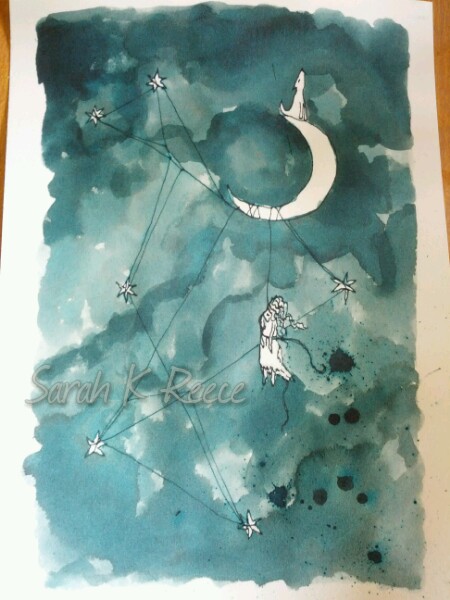
I sat up late last night in my studio, painting with inks again.

I’m sad and tired and can’t seem to shake it. World weary and weighed down. I thought painting might help. All my images were of grief. It did and it didn’t. It didn’t and it did. I re-read Greylands by Isobel Carmody. I’ve looked for furniture for my studio at local second hand stores. I’ve discovered that the name we were going to use for it is already being used. I’ve looked up new names, none of which quite fit.

My basil plant is huge and fragrant and full of bees. My sage is dying, despite all love. Life is strange and sad and my heart is full of broken glass.

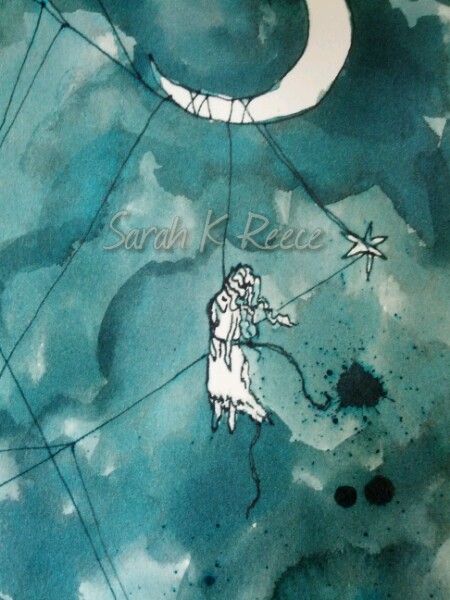
I’ve painted this dead woman and her howling dog, she’s hanging from the moon and stars, tangled in the dreams she was weaving.

image

image

image

Dissociation is a super power

“Please tell me there is an bright side to dissociation“. Someone found my blog the other day by searching for this phrase. It makes me ache with frustration and sadness!

Of course there is a bright side! There are so, so many bright sides. They get lost when we talk about illness, disability, deficits. When we share the ‘once it was helpful but now it’s a problem’ story. When we collapse a whole life into a single, painful narrative of difference and limitations. Dissociation can be horrific and devastating and I don’t make light of it or of the suffering people experience. But this isn’t the whole story! Let’s start talking about bright sides, shall we?

Not all dissociation is pathological

Dissociation has been broadly defined. This means a LOT of highly valuable, important skills are being included in the category. Some level of capacity to dissociate, when it is broadly defined like this, is actually essential in our ability to function. Disconnecting from things is helpful in our ability to focus. People who struggle to damp down any of their sensory input are overwhelmed and highly distracted by it. Being able to put aside most of the input (the sound of a fly buzzing, the prickly feeling of rough socks, the worry about your friend who isn’t talking to you, the slightly sick feeling after drinking too much water) to focus on something important, like an exam, is very helpful!

People who are struggling with severe and chronic dissociation, the kind that leaves you numb, confused, lost, unable to feel, taste, touch, smell, or remember the faces of the people you love, often think of these kinds of dissociation as existing on the other side of a continuum of health. That once they’ve got the ‘bad’ dissociation under control, and they’re back to ‘normal’, maybe then they will get to experience some of the good kinds.

I disagree. Those of us who are drowning in the kinds of dissociation that takes away instead of enhances our lives are closer to the useful kinds of dissociation than many regular people. We are well versed in it, we are used to it, we have a huge aptitude for it, and often we are only drowning in it now because we once stumbled across it as something incredibly helpful. Do we need skills other than dissociation to navigate life? Certainly! Does depending on dissociation exclusively leave us uneven and struggling? Of course. But, sometimes when I’m talking to people who are absolutely overwhelmed by intense dissociation, I talk about dissociation as a super power. Sometimes working on reducing it through grounding techniques and trigger management just isn’t working. Sometimes the first step is to learn how to live with it better, how to use it to your advantage, how to stop hating it and feeling destroyed by it. Sometimes we need to become better at being dissociative, rather than less dissociative.

We are so used to this idea that dissociation is bad. We are so used to this idea that our minds are damaged and broken, and that we need expert intervention to help us be more normal and functioning. Dissociation can be a terrible thing. But it can also be a gift.

  • Dissociation can be learning self hypnosis to turn off your experience of pain during a dental visit.
  • Dissociation can be letting go of the bad memories for awhile so you can have new experiences.
  • Dissociation can be the ability to attend uni and study despite homelessness and self harm and carer responsibilities and your dog dying.
  • Dissociation can be discovering that you have a part who has not experienced any of the loss or heartache, a part who loves like their heart has never been broken, who hopes and dreams and cares and helps to lead your whole system to better places.
  • Dissociation can be sobbing into the night, overwhelmed with grief at the loss of your child, and still being able to get up the next day to hug and cook breakfast for your other child.
  • Dissociation can be disconnecting from the panic and terror and the overwhelming smell of blood to be able to help out at the car accident.
  • Dissociation can be laying in her arms and touching her face and feeling the minutes stretch out to whole days, to years that you’ve lain here like this, alone together with no world intruding.
  • Dissociation can be not noticing you haven’t eaten all day because the book you’re reading is absolutely brilliant and captivating and you can see all the characters in your mind and hear them talking to each other and at night you dream about them.
  • Dissociation can be walking away from every cruel and unkind thing ever said about you and finding new ways to think about yourself.
  • Dissociation can be having other parts to ask for help, not being alone anymore through any of the hard things.
  • Dissociation can be a four year old inside singing you to sleep when you’re lying awake worrying about the world.
  • Dissociation can be going numb when you’re feeling suicidal.
  • Dissociation can be reliving the most wonderful, exciting, hopeful, inspiring moments of your life as if they happened this morning.
  • Dissociation can be smelling a perfume and vividly remembering your Grandma’s garden and the feel of her hugs.
  • Dissociation can be having a conversation on the phone with a sick friend, getting the lunch boxes packed, finding your shoes, filling up the cat food bowl, helping knot a tie, and getting out of the house on time to catch the bus.
  • Dissociation can be the way, for just a moment, while you’re swimming, or drawing, or listening to your favourite music, or watching him play, everything in the whole world is okay.
  • The ability to compartmentalise is what helps us to do our best in a situation. For a doctor to concentrate on a patients needs even though their marriage is rocky and they’re stressed and anxious about it.
  • Dissociation can be part of the experience of artists who lose time when they paint, and athletes who forget they are tired when they’re running, and happy nerds who don’t notice someone calling their name when they’re lost in a good book.
  • Dissociation can be about mindfulness. The ability to be captured by the movement of the breeze in the lavender bush, to taste every drop of beer and be immersed in the smell and laughter of other humans.

You can learn how to use your dissociation. If you can turn it on, you can turn it off again. You can learn how to trigger it, how to use anchors, how to dial it up and down, how to go with the flow. When to trust it, when to shape it, when to learn other skills. We have so much to learn! Something that can help you put aside overwhelming feelings, or not feel physical pain is simply amazing! We have this idea that you have to lose all of those things in order to be well, in order to not be overwhelmed by dissociation in a way that steals life. Maybe this is true for some of us. But I’d caution making that assumption for everyone. And if you’re stuck (at least for now) with some of the downsides of being highly dissociative, why not at least explore the upsides? Maybe we don’t overcome everything by fighting it.

There’s balances. My experience has been that using dissociation as a blunt instrument for every purpose has great costs. Choosing not to feel all the painful feelings often costs you all the wonderful ones as well. Containment often works better than suppression. Being guided by your own needs rather than imposing a schedule or ideas from outside. But if I told you that some people can choose not to feel pain when they’re injured, not to remember awful memories when they are busy getting out of that life, that some people still watch movies like little kids do, where the characters are real and make them cry, that some people find that doing their favourite thing in the world makes time stretch into something approaching infinity… you wouldn’t tell me these people are sick, you’d say they have super powers.

Psychosis & Secrets

I’m sitting on the pavement outside my car, waiting for the RAA to come and deal with the keys locked inside. I’ve just been to Sound Minds, our local South Australian Hearing Voices Group. I love getting along to this one.

We had a pretty full room. At one stage someone was chatting away and one of the members got the giggles. Everyone was trying to listen and keep a straight face. One by one more and more of us succumbed until we had to stop the conversation to laugh. A good belly laugh, about nothing at all. These beautiful people ground me.

I told them my good news, that my GP is on board with my unconventional approach to psychosis. A couple of us chatted about how destructive the idea of schizophrenia can be, life long illness, life long medications, being forced to confront your new reality in the interests of ‘having insight’, employers unwilling to take a risk on you, friends scared of you, family confused by you. I talked about how shame and secrecy can feed psychosis because people let them run unchecked, and try to maintain their usual activity level instead of resting, driving themselves deeper and deeper into it. How destructive the idea of a life long disability with no upsides is! How secrecy can often be woven into the fabric of psychosis, preventing the possibility of sharing the details and getting helpful reality checks. People are driven to this when saying ‘I think I might be hallucinating’ or ‘I’m feeling a bit paranoid’ would scare away friends or see them fired from jobs. One group member reminds me of the saying ‘You’re only as sick as your secrets’. Good point.

I’m not saying people who have to conceal mental illness, or those of us who prefer not to live our lives publicly on social media and blogs are sicker than the rest! I’m saying that cultural shame and fear trap people into keeping the kind of secrets that can make them very sick and very lonely.

Scars & stigma

We’re in the process of job hunting in my world again, or at least, Rose is. Some industries tend towards the kind of contract or short term grant based work that make this a regular occurrence. I remember the days of job hunting before I came down with Chronic Fatigue and Fibromyalgia, and it was a pretty simple business. Write a nice resume, arrange some referees, and send them out.

Now, the resume is only the start. Rose spends entire days writing long, detailed letters that must address each point of a job description. It’s basically like a math equation given in word form: If John had seven oranges… You have to repeat all the information that’s already in your resume, in interesting sounding ways, and big note yourself for pages whilst also sounding humble and grounded. Then you might get to an interview. This often requires bringing in a truly astonishing collection of forms already filled out. Some interviews also contain written test components and require you to wait while they are scored and then be called back. One really frightening one went for most of a day and involved a bunch of psychological assessments and group work with all the other hopeful applicants. I find myself increasingly jaded by the whole idea that this is a good way to select an appropriate employee. It seems like a good way of recruiting very slick, charming, narcissistic people, and probably a good few psychopaths. I know a lot of brilliant, caring, highly committed people who would never shine in this kind of setting. Fortunately, Rose does.

We were chatting with friends today about issues of disclosure around mental health when job seeking. For those of us with visible scars from self harm, it can be very challenging to confront questions in interviews. It always plays against you, no matter that is often part of a past that involves a lot of wisdom and strength and self awareness to have survived. There was talk about checking over the organisational policies to try and get a feel for their stance on mental illness in their employees. The consensus was to wear long sleeves and keep it hidden. One friend did that for the entire duration of her job because the organisation treated employees with mental health problems as liabilities. This was a mental health organisation, offering support to people in the community. The wrongness of this makes me sick.

All these places talking about stigma as if they have the answers, as if they, the enlightened few are here to tell everyone else, the ignorant masses, how to be better people. And these places are so often hotbeds of systemic stigma and discrimination. I remember when I spoke at Parliament House about mental illness, disability, and barriers to employment. I was asked what the government could do to encourage employers to retain people with disabilities. I said – lead by example and show it can be done. Demonstrate how to overcome every concern and issue the wider community expresses, with transparency and dialogue. Then people will be less afraid and more willing to engage. It might have been my imagination but this didn’t seem to go over brilliantly. The problem is never with us, and the solution is never ours to implement. It’s always someone else’s fault and someone else’s responsibility. We stand around telling each other to be brave and honest and  our every other sentence is a lie.

I’m very angry about this tonight. My faith and my hope keep being rewarded with hypocrisy and harm. Oddly enough, I’m starting to be glad that the Dissociative Initiative has been so hard to get off the ground, that most of those who shared my dream have been occupied by other dreams, or become too overwhelmed by the needs of their condition, to continue with me. It’s breaking my heart, but it’s also saving me from a form of failure that comes wrapped in a package that looks frighteningly like success. I’m starting to think that organisations or any kind of corporate structures should not have anything to do with the support of people in pain. But oh, how I do miss my little team. How my heart hurts every time someone emails me saying, please when is that Bridges group starting again? And how angry I feel every time I confront the sick reality of the profoundly flawed frameworks we have constructed with which to engage the most wounded, vulnerable, lost, and suffering members of our community.

Why do I need a job and an income? Can’t I just open a shelter for everyone who needs it? How do I engage without burning out? How do I not scream with frustration at the burden of all the terrible things I hear, when I walk in a world that is mostly unaware of this suffering? Trapped in secrecy and lies and the requirement that we pretend not to be what we really are, as if self harm scars are slave brands or the tattoos of a criminal, shameful pasts that you cannot escape but must forever conceal. As if being human and having suffered is something to be ashamed of, a weakness, a liability. This is wrong! I hate it! I hate it and I refuse to have any part in it. I will not lie, I will not conceal, I will stand and be counted, I will use my voice to speak for all those who cannot, because the risk to job, or to family is too great. This is wrong. Structures without courage or integrity cannot ever really serve people. They may abuse openly or poison slowly, but they always do harm. There is always a cost for engaging with them. It’s always too high.

When Multiplicity doesn’t protect us

For most of us who come to multiplicity by way of trauma such as abuse, neglect, bullying, or chronic pain, we’re familiar with the idea of multiplicity as a creative defence mechanism, something that helped us to survive. This can be a powerful re-framing of the idea of multiplicity as an illness, and very helpful! For some people it’s not all of the story. In some ways, multiplicity can make you more vulnerable to harm.

Many of us with multiplicity start out with no idea that we have parts, either we lose time due to amnesia, or experience the world through the hazy confusion of co consciousness. For many of us, the dissociation is highly functional, breaking up information and containing it in ways that help us to manage life, and allowing us to adapt simultaneously to a variety of different environments with very different social requirements. We have found a way of growing and navigating life that works for us, even if we are completely oblivious to it.

I’ve been talking lately about how powerful triggers and anchors can be for people with parts, but it needs to be said that they can also be abused. Even when the multiplicity is hidden or unknown, sometimes abusive people figure out by accident or instinct that certain things will keep a compliant part out, or trigger a part who discredits themselves to other people. They may not interprete these things using a ‘multiple’ framework and language, but they stumble across triggers and anchors and use them to their own ends. It’s worth mentioning that these factors are at play for people who don’t have parts too, in that all people are vulnerable to things like finding they are more submissive in certain settings, or more likely to act out when treated certain ways. But it can be devastating when dissociative barriers prevent a person from being able to access memories or skill sets to help them protect themselves. This can be the catastrophic downside to multiplicity as a protective mechanism.

Sometimes harm is done with no intent to harm. Triggers may be avoided or used unintentionally by family or friends who tell a person with parts that  ‘You’re not yourself today’ when they switch to a part their family doesn’t get along with. Sometimes others may learn to fear certain triggers such as what happens when the person gets drunk, or listens to certain music, and switches to a part who’s disoriented or aggressive. People with parts can find themselves under a constant subtle pressure to keep out the parts other people like, get along with, or find easy to manage. Other parts can spend many years trapped inside and be frozen at certain stages of development, never getting the chance to hone crucial social skills, tell their stories, use their talents, or connect empathically with other people. This can leave systems extremely uneven in their ability to function and their experience and expectations of the world. Systems can easily become polarised into the compliant parts and rebellious parts. Sometimes therapy can also play into this dynamic where the parts that the therapist relates to or finds easiest to get along with get to have key roles, while other parts are excluded, supressed, ‘fused’, ‘integrated’, put into lockdown, or convinced they are no longer needed and have no further role to play in life. (that’s not to suggest that these approaches are never useful or necessary)

Self awareness can make a huge difference for people with parts. Understanding that you have parts can be tremendously helpful in buffering the issues that multiples in a non-multiple world can have. Whether it’s someone saying that they like this artwork/outfit/meal better than that one – and inadvertently hurting the feelings of the part who worked on the less well received item, the frustration of losing skills and abilities as parts surface and go away again, or simply the phenomenal daily challenges posed by differences between parts as large as gender or sexual orientation, or as seemingly small as the part who does the grocery shopping love oranges and yoghurt and never buys any bread even though the rest of the parts love toast for breakfast and never eat oranges. Knowing why you have conversations in your head, 4 different opinions about almost everything, why you can be feeling happy, sad, bored, and curious all at the same time, or for that matter, hot, cold, scared, and sleepy… can help make a lot of sense of what has just been one more bizarre and confusing experience.

However, awareness alone is not sufficient for protection. Awareness of multiplicity can make you vulnerable through exposure to the massive stigma about these experiences. People’s relationships and jobs can be at risk if they are outed. There’s also a vulnerability in inheriting a whole stack of rigid ideas about what it means to multiple, for example when people are told that their systems must have a certain number or type of parts, or that they will inevitably remember horrific abuse, or that therapy is essential, long term, and extraordinarily painful. People can be vulnerable due to the language of symptoms where the number of parts, degree of dissociation, or level of incapacity is used as a measure for the severity of pain and worthiness of support of the person. People can also be vulnerable when multiple communities behave in alienating ways, such as being overly concerned with ‘faked DID’. Sometimes people find that their systems are overly fluid, or overly rigid and fixed in ways that make growth and adapting to new circumstances extremely difficult. The dissociation can limit the healing effect of positive life circumstances and loving relationships.

There can also be vulnerabilities in other people being aware of a person’s multiplicity. Sometimes abusive people use multiplicity against a person. This can happen with children who are being poorly treated, but adults can also be vulnerable. For example, people with parts who are in abusive relationships can have horrific experiences such as having a young part who has previously been abused being triggered during sex for the titillation of their partner. Multiplicity can be magnificent and protective, but it can also be devastatingly vulnerable. People with parts who find that their multiplicity is not effective to protect them from abuse or trauma may become extremely fluid, chaotic, poly-fragmented, or build massive numbers of parts. (this is not the only reason systems can function in these ways!) Systems that have experienced this kind of harm can be like labyrinths designed to confuse and hide essential information from an abuser or series of abusers who have discovered how to use the dissociation to their own advantage. Often this design also confuses therapists and the person with parts, and can frighten and overwhelm those who are seeking to understand, map, and make sense of themselves. Realising that confusion is the intention and that it serves a very important purpose can be a valuable first step in learning to love an inner labyrinth. Understanding triggers and anchors and knowing how to use them can be a powerful way of ensuring that abusive people cannot use them against you.

Known multiplicity can also be interpreted in ways that are harmful. For example, some people are put through traumatic exorcisms to get rid of parts who have been understood as spirits or demons. People with parts who have different gender identities have accessed trans support services that haven’t considered multiplicity as a possibility and have unintentionally suppressed and rejected all the parts of one gender. Multiplicity can be misdiagnosed and mistreated, for example if it’s seen as schizophrenia treatment may concentrate on keeping the person lucid and stopping the voices via medication – which can translate to tranquilising the person until they can’t hear their parts, and trying to prevent switching. Some people have accessed therapy that has interpreted and navigated their multiplicity in ways that they later come to believe was deeply harmful.

Multiplicity can also make you more vulnerable alienation, loneliness, and self hate. These are simply things that everyone without a peer group is vulnerable to. For people who don’t have parts, there’s often something strange and fascinating about the idea. What it can be difficult to understand is just how strange people without parts can seem to those of us who have them. This is our ‘normal’, and we can feel very alien and alone in the world. This can be compounded by the issue of masks. Many people wear social masks, the face they present to the world. People with parts are often thought to be wearing masks and then revealing their ‘true’ self when they switch. Pre diagnosis, everyone in my life had a different idea of who Sarah really was, and we ourselves couldn’t figure out who we ‘really’ were. Different people formed bonds with different parts, and most of my relationships were one-part bonds only. Switching caused chaos. I would invite friends over to visit, then switch later on and be confused and frustrated that people who didn’t seem to particularly like me were on my doorstep. They, on the other hand, experienced me as moody, unpredictable, and very strange. A freak. I also had big issues with connecting with other people’s buried parts – not the dissociative kind, but the kind we all have. For example, someone who presents themselves to the world as together and successful may have a hidden part that is lost, afraid, and steeped in grief. For some of us with parts, we are used to hearing and feeling things beneath the surface and we accidentally interact with and draw out the hidden parts of other people in ways they can find both deeply moving and intensely uncomfortable. Certainly not necessarily conducive to stable relationships!

It’s hard to be the only one of your kind. This is why bridging the Gap and finding points of connection and similarity common to all people can be so desperately important! It’s also why connections with peers and peer workers are crucial. Everyone needs a space in which the way they function in the world is ‘normal’ and for a few hours they don’t have to explain everything in full, because people get it. Being the only deaf person, the only kid with two Dads, the only scholarship student can be hard. Diverse communities help, and contact with other people who share your experiences also help. However multiple/multiple relationships can also be fraught, while there’s a common language and understanding, there’s also the complexity of two systems and a different type of relationship between each possible pair of parts who are out, as well as the loss and grief of forming connections with parts who go away or are supressed or overruled by other system members. Friendships between multiples can be wonderful but also fragile.

Multiplicity can be life saving. It can help people to contain, protect, and adapt. It can also be a difference that leaves people at greater risk of abuse, exploitation, and isolation. Here lies a tension that many of us peer workers with parts are struggling to engage. We need to hear that multiplicity can be healthy and useful, that there’s hope and that the illness model isn’t the only story that can be told. But it’s the vulnerability of multiplicity that drives us, the knowledge that people are struggling and suffering and being harmed that makes us want to speak out and create resources and healthy communities. The less stigma people encounter, the easier the path to healthy multiplicity is. (this path doesn’t exclude the possibility of integration or fusion) We’re often sold an idea of multiplicity that is about being broken, profoundly alienated from self, where the multiplicity is conflated with the trauma history in a way that makes it difficult to think creatively and respond with enthusiasm to the task of understanding, accepting, and making a wonderful life with yourselves. We don’t have to pretend that multiplicity is any easier than it is, nor do we have to choose only one way to understand it. Like anything in life, and like any kind of difference, there’s deep complexity and ambiguity in our experiences. We need the freedom to be able to engage those honestly, and we need opportunities to be able to combine our collective wisdom and help to reduce some of these vulnerabilities for people.

For more information see articles listed on Multiplicity Links, scroll through posts in the category of Multiplicity, or explore my Network The Dissociative Initiative.
My approach to first episode psychosis

After my first experience of psychosis, I did a lot of thinking and wondering about where it came from. I visited my psychologist and we talked about all these different ideas, and put together a strategy in the aftermath. We agreed that the idea in John Watkins book Unshrinking Psychosis that there can be many different reasons for psychosis, including positive ones such as personality reorganisation, or a spiritual awakening, was a good foundation. We drew no conclusions about why I’d had the episode, and made no assumptions about what it meant. Going forwards we decided the best approach was

  • For me to work on accepting the idea that I am a person who sometimes experiences psychosis as quickly, gently, and positively as possible. It can be a huge shift in self-perception and identity, and if too large, or threatening to hope and self esteem, people stay mired in denial.
  • To reduce my fear of the experiences and anticipation of possible new experiences. To be careful not to develop frightening personal narratives about the experience, or of being sold into anyone else’s ideas.
  • To that end, to do my best to avoid mainstream mental health services.
  • To develop my social support to meet this new challenge. At that time, my networks are very supportive when I’m physically unwell, or struggling emotionally, but many of my friends have no experience of psychosis except for a lot of fear based cultural ideas about schizophrenia. People don’t know what to do or say or how to be helpful. I can work on this by using times when I’m not psychotic to gently educate my networks about what it is and how it works. To also connect with other peers who experience psychosis (through the Hearing Voices Network)
  • Welcome psychotic experiences into my life. To make room for the possibility that I will have more episodes, without being paranoid or fatalistic. So, make life, relationship, and career choices that will accommodate the occasional episode with a minimum of stress, and without having to be overly secretive or afraid of being outed.
  • Approach the psychosis from a place of gentle curiosity rather than fear.
  • Reduce shame, secrecy, and isolation. Stay connected to people. If I ever start to struggle with my reality testing, research suggests that close, trusted relationships with people who are not afraid of me or the psychosis will be the most helpful in supporting me to make sense of what is real and what is delusional.
  • Learn. And accept not knowing things. Tolerate ambiguity, uncertainty, complexity.
  • Grow. Use times that I’m not psychotic to explore ideas and needs that may underlie the psychosis, things that I’m drawn to or that feel significant during the episode. I may not be able to prevent another episode, but may instead be able to reduce how distressing the experience is for me. If I’m going fall into an inner world, maybe by taking good care of myself I can help the world to be one of dreams rather than nightmares.

I’ve since had a second episode and I’m working on making sense of that. But I’m still really happy with this approach. It makes a lot of sense to me, and it’s helped me navigate a second experience without shame or terror. It’s such a different way of looking at psychosis to that found in mainstream mental health services. I can’t help feeling deeply fortunate, and so sad and angry that my story and experience of psychosis is so unusual. I knew what was happening as soon as it started. I had experienced people to talk to about it who offered wisdom and support. No one panicked. No one made me feel I couldn’t handle what was going on, or that the safest approach would be to lock me up and tranquillise me. So, I didn’t have a load of shock, trauma, and fear to deal with on top of the psychosis. I was instead able to put together a plan with the support of people around me, which included options for outside support if managing at home became overwhelming. I don’t know what my future holds. Neither does anyone else. I’m free of dangerous, life limiting assumptions, free of a model of psychosis that speaks only of loss and limits, free of an enshrined cultural terror of madness. Don’t misunderstand me, this is not a polyanna, naïve approach, ‘mental illness’ of any kind can be terrifying and destructive. But as an approach, this has worked well for me. I hope it might be helpful for others too.

A second experience of Psychosis

Well, I’ve come through a second brush with psychosis surprisingly well. The process this time was very different to my first episode. This time, I locked myself in my house alone, and made art. Dark art, yes, strange art, certainly. Intense art. I painted myself and took selfies on my phone. The results resonated with me. They’ve stayed, the way a cut on the wrist stays, so that the morning after the black night, you cannot simply walk away and pretend it didn’t happen.

As soon as we shut ourselves away and negotiated the freedom to create whatever art we wished (provided we didn’t publish anything online), the psychosis eased, and an intense state replaced it. The hallucinations, the fraying, the collapse of my sense of reality all lifted like so much smoke. I fell into darkness that did not hurt, like falling into a river in my soul. For a time I was free of everything that is used to define me, free of roles, relationships, expectations, free of need, or name. In this space, art was easy. No limitations blocked me. I could see through the things that stop me from creating. My hands were alive and my mind was burning clear. Art came as easily as speaking. I did not speak. I spoke in art, in paint, in my eyes in photos, my hands.

This time there was no terror, hiding from the sky in my bed for days. No fear of the dark. No nightmares. This time once the psychosis lifted it stayed away instead of drifting through my life gently for days or weeks.

I won’t pretend it isn’t crushing to have a second experience. There’s always that hope that the first will be the only one, and for many people that is true. Yet, I am also not giving up. Maybe this is now something I will have to manage regularly. Maybe I will have only two. No one can possibly know. I’m not panicking. I’m learning. I’m listening, unpicking the knotted threads. There’s a relationship here between art and madness that I don’t understand, nuances I can’t yet hear or speak. There’s also beauty, something that deeply moves me. This is not just loss, or brokenness, not just a mind overwhelmed by stress. Maybe there is danger here, and loss, and woundedness. Such is life. There’s also fierceness, joy, freedom. There in the shadow, I breathe the night. And then I let it go.

Using Anchors to manage Triggers – Multiplicity

I’ve been writing about triggers lately. This post is specifically about how triggers can affect parts for people with multiplicity, it builds on the information I’ve already shared in

  1. Managing Triggers – an overview of how triggers work and many different approaches to managing them
  2. Mental Health needs better PR – the risks and benefits of the different ways we think about triggers and why we want to manage them
  3. Using Anchors to Manage Triggers – exploring how anchors work and can be used to help with triggers around trauma, anxiety, and other distress

Sometimes parts get stuck, inside or outside, and this can cause problems. Sometimes a part may stop coming out when their trigger to do so disappears, and this can be a terrible loss. Perhaps a child part only came out around a favourite aunt who has passed away. Perhaps a quiet, studious part only came out at uni, and now that you’ve finished the course that part has gone missing. I have one who only comes out at night, down the beach. Wounded and different they have retreated from all the rest of our lives and it is moonlight and solitude that calls their name. When I was originally diagnosed and my shrink was hoping to make contact with some of these parts, we told them with despair that a counselling office was not their world and I had no idea how to get them here, or even if that was a good idea. The shrink was likewise baffled about how to engage with parts who only came out at school, or during storms, or in candlelight.

Two things lay beneath this dilemma – a fundamental question of the purpose and direction of therapy – was it about us making ourselves function and presentable in the shrink’s world, or about the shrink being able to follow us into our own… or some kind of collaboration and bridging of this Gap? Was it about illness or a Grand Adventure? The other was simply the lack of awareness on both our and the shrink’s part that triggers can be changed and wielded deliberately.

Sometimes it helps to change the triggers that call parts out. I have one in particular who responds to threat and manages violence. Parts with roles like this can become restless and destructive when things start to improve in your life, because they are inadvertently being written out of the life. As this role is needed less and less, they come out infrequently, sometimes inappropriately, and the rest of the system responds with frustration instead of gratitude. Heroes of the old regime, these parts find there’s no room for them in the new world order. Changing the trigger that calls them out can be a powerful place to start changing or expanding their role to have more life in it.

This can be a simple matter of forming a new association with being out. Every time they are out, to have a new chosen trigger present – someone calling their name, a piece of music, a bracelet, bare feet on grass, pink nail polish. It needs to be something they want and have chosen, something that resonates with them. A trigger that doesn’t evoke a response of some kind, an emotion, a feeling in the body, a memory, a sense of connection – is no trigger at all. In order to work as a trigger, it must evoke something, it must connect with something that is unique to this part and in some way represents them. Over time this trigger becomes more connected to the experience of being out. Once this link has been made, it can start to become strong enough to be used as an anchor, something that can be used to call them out and invite them to be present.

For my system there’s a sense of distance inside, sometimes some parts are close to the surface and easy to call out, while others are far out in the deeps and beyond any call. Some parts always respond to their triggers, others are unpredictable. Each system is unique, and the process is often more organic than mechanical.

Sometimes parts have a difficult time staying present when they want and need to. It might be that other parts are being triggered out, or that they habitually go away inside under certain types of stress. Sometimes some parts just seem to have a tenuous grasp on the moment, in the body, in the world. They are more like smoke on the wind than a plant in the earth. Anchors can help parts to stay present in times when switching would be dangerous, traumatic, or inappropriate such as driving, sex, or delivering a presentation at work. Clothes are an anchor my system often uses to help to keep a part present. If this part has her boots on, or that part her pearls, it’s much easier for them to stay present. Music is another powerful one, and it can have a lingering effect. An hour of listening to P!nk at high volume before leaving the house can be the anchor a part needs to stay present through the morning. Or the right music on the radio in the car can stop a child part switching out when we’re driving.

We were in some training a while ago and struggling badly. The facilitation was extremely poor, and most days at least one student became distressed by bullying behaviour. I spent a lot of time following people into toilets to offer comfort, and biting my lip during lectures. The group dynamics were being encouraged in such a poor direction that distressed students were maligned as ‘low functioning’ and probably unsuitable for study, rather than offered support. Each day that went by I became more enraged. The part who handles threats was constantly triggered, but their expertise is physical threat – violence, sexual assault and the like. This was an incredibly inappropriate environment for them because none of their skills were useful here. They could not physically respond, even by screaming, to the increasing sense of being trapped and forced to watch as people were hurt. In fact all their responses; their obvious pain, their supressed anger, their capacity for action, played against us in this setting. We lacked credibility when we responded this way, tongue tied, vehement, and desperate to escape.

It took a lot of thought but we finally were able to come up with a better approach. A different part who could handle this kind of ‘threat’ that was psychological and subtle rather than physical and overt. Someone who wasn’t afraid and therefore wasn’t sitting at a desk with their adrenaline thrumming. Someone who could speak up without anger in their voice, and who therefore couldn’t be told off for being rude. Someone who could laugh and break tension while speaking our truths. Once we figured this out, we changed which clothes and makeup we wore to the classes, changed where we sat and how we engaged. It was still a deeply unpleasant experience, like being a participant in a social experiment about power. We still had some troubles with the furious part being triggered out. But we had a better approach and were able to finish the course without being reprimanded for any behaviour, without self harming to cope, and without becoming compliant and submissive to the bully. Anchors can be powerful.

Sometimes they can be also be used against us in ways that hurt us. Multiplicity sometimes makes us more vulnerable.

Using Anchors to manage Triggers

Anchor is a term I use to describe deliberately using a trigger to help me function. Triggers get talked about lot in various communities – those of us struggling with various forms of mental illness such as eating disorders, those of us working on recovering from trauma, and those of us with multiplicity. For an overview of triggers and a range of different suggestions about managing them, please start by reading Managing Triggers. This post has stories about using anchors to help manage anxiety, trauma issues, and other ‘mental health’ problems. Information about using anchors to manage things that trigger parts for people with multiplicity is coming in a couple of days.

Some of us just drown in triggers. Our world feels like a giant pinball machine where we are constantly ricocheting back and forth, never able to be still or to direct our own course. Some of us are not this chaotic, but we find our efforts to reach goals and build a good life get randomly capsized by triggers we can’t seem to get a grip on. Sometimes this sensitivity is something we can harness instead of trying to overcome. Sometimes the best way to mental health is to find and use the strength that’s hidden in the ‘weakness’ or vulnerability that’s overwhelming you. If being less reactive to triggers isn’t helping, maybe you can use your reactivity in a useful way. Sometimes the goal isn’t to stop feeling things, it’s to feel things that are helping you build your life.

That’s where anchors come into things. An anchor is a trigger you deliberately use or cultivate to help buffer you from the effects from other triggers. It’s strong enough to overwhelm the impact other triggers have on you.

Here is one of my old anchors:

2014-01-09 16.12.01-1

Yep, it’s a bag of stones. But not just any stones, MAGIC stones! No, actually, just stones. Ahem. This started when a stressed younger part in my system stole a stone from a potted plant at our shrink’s office. It was something she could look at later, to remind herself of good conversations and a sense of acceptance that we experienced in that place when they seemed unreal and distant. It was a way of finding some Object Constancy. A few other stones were added later, such as one from the garden of the shelter we stayed at the first time we were homeless, as a reminder that we’d survived. They could be carried everywhere, tucked easily in a pocket or the bottom of a bag. They were tactile and comfortable to hold or rub with fingers. And they triggered something, they evoked a strong sense of connection to people, places, and times in my life. When I felt empty and hopeless, that sense of freefalling and disconnection, these anchors reminded me that all those things had really happened. They helped to connect me to my own life story.

I often use perfume as an anchor to literately and deliberately overwhelm my own hypersensitivity to the smell of strangers, which is a strong anxiety trigger for me. I’ve written about this before as part of ways to help manage Using Public Transport. Heightened senses can play a huge role in our sensitivity to triggers, and it’s common for people who have been traumatised or who have PTSD to find that certain senses seem to always be straining, very alert and very receptive. Instead of getting caught in the chronic hyperarousal, with all the frustration and irritability that a sense on high alert all the time can bring, why not see it as a superpower and use it to your advantage? For years the smell and proximity of strangers made public transport, crowds, shopping centres, and concerts almost impossible for me. I spent a long time trying to dull this useless, hypersensitive awareness, trying to make it normal again. I ricocheted between dissociative numbness and agonising sensitivity, flooded with sensation.

I finally started to realise that problem might also be the solution. Scents evoke memory in a powerful way. I once smelled a perfume that took me right back to my childhood, playing in the garden, so powerfully it took my breath away. I think my beloved elderly neighbour must have worn it. I have a bottle of it now myself. It’s very precious to me. When I smell it, I feel loved, and beautiful, and carefree. I started to explore scents. I bought an oil burner, essential oils, and books on how to create blends. I joined forums about fragrances, and discovered a whole world of people for whom scent is a complex ecstasy, people who visited perfume houses, who reminisced about perfumes now unavailable, who . I bought samples of strange perfumes from eBay and discovered that a heightened sense can be a source of delight. I grew fragrant plants in my garden and loved the way I could still smell them hours after brushing past them. I learned how to wear perfume as an anchor, to lift my wrist to my face when the smell of someone very afraid, when the odour of hospital cleaner, when the tang of blood overwhelmed me. Any Sensory Supports can function as anchors if you respond to them.

As a young person struggling in school, I used to carry my journal everywhere. It was one of my first, most successful Grounding Techniques, a place I could honestly express all the intensity that burned in me. I wrote myself into being, wrote myself through pain, back from the edge of self destruction, asked myselves questions and pondered the answers. Tried to make sense of my world. The actual journal itself became an anchor, a physical representation of all that writing meant to me. I could walk back into school with the weight of it in my bag. I held it to my chest like a shield. I used it as Artificial Skin when the world was unbearable.

When struggling with the overwhelming urge to self harm, one of my approaches is the Ink not Blood idea. In very bad times I have painted ink wounds on my arm and bandaged them, and that bandage has become an anchor, something to touch and hold, for fingers to worry at, a physical reminder of pain and of loving choices made when in pain. It is comforting in the way that a healing and tended wound can be comforting for some of us who struggle with self harm.

When I’ve written about managing chronic suicidal feelings, I’ve talked about things I use as talismans against death, things that keep me holding on.

They are my talismans against the dark, and they fail when the darkness is great. I hold one until its light goes out, then I put it back and take out another. The power of feeling suicidal is that it strips meaning from that which means most to us.

Some of these talismans are ideas or experiences or quotes or relationships. All of them trigger something in me, some courage, or hope, or acceptance. Some of them are physical things that could be understood as anchors. They are things that weight my soul in life, that help keep my boat here when the tide is pulling me over the edge of the world. The stub from a concert ticket. The peace lily my friend bequeathed me after she died. A poem on my wrist, or a Ray Bradbury book. A bag of stones. They are things that keep a good, healing story about my life alive for me.

Anchors are about taking your sensitivity to triggers and learning to use it, to hone it like an instrument and play beautiful music with it. They are not always the answer, they are not the only way to manage triggers, and they don’t always work. But they can be beautiful, turning what has been a curse into a blessing. Sometimes we live best when we embrace what it is to be human, to be vulnerable and moved, full of memory and feeling. If the only song triggers ever play in your life is the one of suffering, perhaps it’s time for some new music.

For more information about using triggers to support your mental health if you are multiple, go to Using Anchors to Manage Triggers – Multiplicity.

Awesome quote – Grand adventure (or, my philosophy of multiplicity in a nutshell)

I’ve told this story before, but it’s worth giving it’s own post to. A few years ago, I was seeing a therapist I was not getting along with at all. My life was chaotic, lonely, and very painful. I was scared and confused about my diagnosis of DID. I felt trapped between a therapeutic approach that felt deeply wrong for me (such as getting rid of parts deemed by the therapist to be either too damaged, or too hostile to be integrated) and all the books I’d read that said without therapy I would never recover. Caught in this dilemma, I called Lifeline.

By sheer luck, I spoke with a guy who clearly knew a lot about DID. He listened very attentively as I explained my situation and how distressing I was finding it. He drew out of me my inarticulate intuition that this therapy was not the right place for me. Then he framed what I was feeling in a neat summary that has stayed with me ever since.

Just because you’re split, doesn’t mean everyone else is whole. You can choose to engage this as an illness, or you can go on a grand adventure of self discovery.

That’s it – my philosophy of multiplicity in a nutshell. I don’t mean that people who find a medical model approach to their multiplicity can’t also be on grand adventures of self discovery! But that for me, at that time, these were different options. I couldn’t have both, not with this therapist. So I took a risk that all the books were wrong. I started to wonder how, if we only ever studied those who were formally diagnosed with DID and stayed in therapy, we could possibly know that people never recovered from, or lived with DID successfully without therapy? I set up this idea of The Grand Adventure as my guiding star, my compass that let me know when I was on the right path or not. When a choice would take me further away from it, I didn’t take it. I kept to the paths that moved me closer to treating my life, and my multiplicity, as a grand adventure. Adventure can be painful, even agonising, but it is also awe inspiring, beautiful, profound, and challenging. It takes you places you couldn’t have dreamed of. It’s a very long way from my original plans to be the perfect patient in therapy and ‘heal’ as quickly as possible to get on with my life. And it’s served me well. I’m not waiting for therapy to finish, or integration, or fusion, or to feel like I’ve got over my childhood, to begin living. My life is a grand adventure. Some of it hurts terribly. Some of it is breathtaking. All of it is worthwhile.

For more information see articles listed on Multiplicity Links, scroll through posts in the category of Multiplicity, or explore my Network The Dissociative Initiative.

Dark bodypainting self portraits

26-2014-01-09 17.50.10

It’s been a rough few days. Yesterday, I barely spoke all day. I remember when I was living in a caravan park, this used to happen. Days in a row would go by in which I was silent, except for my journal, except for the weeping. There’s a relief in it, sometimes. I hide from the world, lock the doors, keep the curtains drawn. My paints sang to me and the day turned into a collage of sleeping, body painting, and photographing myself. When all else makes no sense, make art. I have my souvenirs from the underworld. Yes, it’s strange, but it’s cheaper than hospital. I’m still cleaning paint off the bathroom floor. It’s better than cleaning up blood. These are a small sample of the photos I took.

09-2014-01-09 17.36.50-2

04-2014-01-09 22.00.29

03-2014-01-09 22.16.35

12-2014-01-09 18.26.54

07-2014-01-09 20.38.11

So many questions. Why the psychosis? How is it linked to art? Why does creativity, not just any art, but the dark kind, help? How much of this do I need? Can I pre-empt the fraying? How do I fit this into my life plans – a job, sharing a house, becoming a mother, when it’s strange, anti-social, dark? I want to get my camera fixed, the good one, and buy a tripod. I’m supposed to be going back to college soon. I can’t fit it all in. My inks are singing to me. Is this how I heal? Ink not blood, and Wrist poems, and Making art. I don’t know. This is not about pain. There’s something else down the bottom of this well, this rabbit hole. Something I don’t understand. The voice of the night wind perhaps. Something – some one – needing a voice and a place at the table, even if the cup is chipped and the soup is watered down. A sense of freedom from the world, a place where my identity is solely that of ‘artist’.

Wrist Poems

Wrist Poems are an art form I have been exploring since my youth. During school years I would write poems or draw images onto the skin of my wrists, arms, and breasts as a way of communicating, connecting with myself, owning my own skin, and protesting a highly censored and restricted environment. I have since come to love body painting, tattoos, henna, and other forms of skin based artwork. Wrist poems continue to be part of my art practice and my own self care.

I have struggles with self hate and self harm. I use wrist poems as an alternative to bloodletting. There are no images of real self harm or blood anywhere on this blog. These are part of my Ink not blood response to the impulse for pain and self destruction. The titles of each are links to more images or information about that Wrist Poem.

Blue Rose:

wpid-20150129_234742_wm.jpg

This is not my Hand:

wpid-20150630_073311-1_wm.jpg

Alone at 4am:

Alone at 4am

Looking for self compassion:

7e1cc-img_20130415_192700_wm

Body Painting Glove Project:

Body Painting

Wrist Poem – Nobody:

Nobody wrist poem

Wrist poem – Broken:

Wrist Poem - Broken 1

Sickness and Health:

Health & sickness 1

Ink not Blood city:

wpid-IMG_20131208_235709_wm.jpg

Still here

Still here. Black and bleak and locked in my house but here. Not fraying anymore. So tired my eyes feel like hot black coals. I’ve slept all night and half the day. Dreamtossed. I start dreaming the moment I close my eyes. I’m sailing out on the tides, and it’s stopped hurting for now. No screaming fire pain, no anxiety making my heart run like a rabbit. Just my breath, moving in my mouth. Numb air cool against my tongue. There’s the sweetness of poetry, running like juice down my chin. I could not come to the night, so the night came to me. My hair smells of frankincense and my skin of memories.

My wrists have stopped singing to me. It’s my inks and paints I can hear. I want a souvenir. (something I can hold in the palm of my hand) When the dawn strips me of everything. I want to remember.

On thin ice

Yesterday was an okay kind of day, some good stuff, some difficult. I’m home now at the end of it and I’m fragile. I’ve been doing a lot of things lately that asked a lot of bravery of me and perhaps I’ve misjudged somewhere. My head is full of parts who are screaming and I’m massively dissociative and in the early stages of a possible psychosis. I’m deliberately cultivating the dissociation in the hopes that will be protective against the psychosis. It’s a really weird feeling to go from being fine, to that sudden sense of being on very thin ice, where a wrong move will tumble me down a rabbit hole that’s cold, dark, lonely, and populated with nightmares.

I can feel my hands fraying into the night. There’s screaming under the water, and a shrill kind of silence that’s like pressure in my ears. And then, in the next moment, we switch, and there’s breath in my throat again and nothing seems more ridiculous than the suggestion that we’re in any kind of trouble. Breathing in and out and watching the night go from peaceful to terrifying. Not looking at the starless sky. I take three steps back inside my own skin. I pull the ash of the zombie years over my skin, use it to weigh me down so the wind cannot blow me away. I withdraw my consciousness from my hands. These are not my hands, not my fingers, these hives on my wrist are not mine. I am a candle deep inside a lantern of skin.

No crying now, just the little eye roll of the unperturbed. Someone who has to stay up all night with a sick child or creature. Someone stolid, who settles in with a book and a cup of coco, who has brought a blanket to wrap in against the cold, to do what must be done without trauma or exasperation. Tomorrow is another day, it’s another day.

About Transgender

For those of us who are a bit new to the idea and language around what it is to be trans, it can be a bit confusing or intimidating. Some of us are just baffled, some of us are trying to engage but worried about getting it wrong and being offensive. Some of us are loud and offensive about being baffled.

Some cultures cope just fine with the idea that some people have a strong sense of gender that is different to their body. On the whole, Western culture has not. We divide our world by gender starting at or before birth, and people who find their bodies place them on the wrong side of that divide are highly vulnerable to ridicule, disgust, and violence. This divide also causes strife for gay people, partly because the idea behind it is that all boys and all girls have more in common with their own gender than with each other, and that safety and discretion are obtained by separating them for private acts such as toileting, changing clothes, sports, and medical care. When we think that our young girls are made safe from feeling exposed by segregation from boys, having a gay girl (or a girl who is thought to be gay) in the class can trigger a powerful sense of threat, and with that fear often comes rejection or even violence. The same goes for when a young trans girl (ie a girl with a male body) uses the girl’s facilities – or the boy’s facilities. These minority gender and sexual identities are often highly vulnerable and don’t have a safe place in a world divided by gender and assuming that everyone is straight.

So what is trans? A quick guide to the language – someone who is trans has a sense of gender identity that is different to their body. Those of us who have a gender identity that is the same as our body are not called ‘normal’, but rather cis-gendered. This is because it is normal for some people in every community to be trans. Some people with a female body have a strong sense of being male. This is different to feeling like you are female but masculine (or male but feminine) – I have tomboy girls in my system and their sense of themselves is completely different to the guy parts. Being trans doesn’t mean you’re gay. There’s a difference between gender identity and gender expression, and also with our connection to the traits we’ve bound up in our ideas about what is feminine and masculine. They are all connected, certainly, but also distinct. Some trans people are gay, or bi, some are straight. (I touch on this is my post What bisexuality is and 9 things it isn’t) Some trans people take hormones or have surgeries to help themselves look and feel more like their real gender. Some trans people don’t have the money or social support to come out. The rates of suicide and violence against trans people are far higher than average.

In some ways and areas the trans community has been able to get legal supports more quickly than the gay community, in areas of recognition such as legal documents and relationships. In other areas the trans community is still far more vulnerable and at risk, particularly when it comes to social acceptance. Part of the struggle for this is that many gay people are willing to openly identify as gay, and want their lives and love and families to be visible. Many trans people do not identify as trans, they identify as male or female, and what they desire is to be accepted and to ‘pass’ for being their real gender. For many people, being trans is a source of shame, and being identified as trans is humiliating. This means that there are not many trans people willing to become activists to help to raise awareness and further the cause of social justice. So the community is very vulnerable. This is changing more and more, as is the traditional either/or binary of identifying as male/female. Some people identify as both, or as neither, or feel different on different days. There’s nothing wrong with any of this!

Trans issues and needs are highly relevant in my own work with people who have parts, because it’s quite common for different parts to have a different gender identity. This can be tough for people, sometimes trans supports aren’t multiple friendly and want people to choose to be either male or female all the time. Sometimes multiple supports aren’t trans friendly and treat being multiple as if that means it’s never healthy to access trans supports or to want to identify as trans. The reality of course, is more complex. Sometimes multiple systems want to transition because their primary part or parts who run the day to day life are trans. Sometimes one part is trans and wants to know about temporary devices and supports (such as prosthetics, makeup, or breast binding) to be able to be out as their gender and go to a movie or out to dinner. Many multiples who are gender diverse have great difficulty with things like using public, gender specific toilets, or engaging with gendered communities and activities such as sports. Sometimes supporting a trans part can be as simple as buying a pair of guys or girls shoes for them to wear, or having a partner willing to use the correct gender pronoun when they’re out. Sometimes trans parts in a girl body will find it easier that they can wear male clothing in the western culture and this is pretty normal for girls today, sometimes being seen as a tomboy rather than a guy just makes them feel painfully invisible. Sometimes trans parts in a guy body find that the rest of their system feels so threatened by being seen as female that it’s very hard to get any gestures of being female accepted.

I have male parts in my own system and we’re still struggling to figure out how to engage this positively. One of mine is a black humoured cross dresser who wears more makeup than most of the girls in my system and finds it deeply amusing that he can go to work in drag without anyone being the wiser. Another is a gentle and shy gay guy who is so lonely and quiet that I know almost nothing about him. I come from a background where women were run down and the feminine was treated with disgust and disdain. Being female was equated with being weak. The only women who were treated with respect were highly masculine. I remember the courage it took to tell people that I wanted children, that I felt highly maternal. It took a lot of processing to embrace being female, to find strength and beauty in it. It took possibly even more to reconcile myself to some aspects of the feminine, and to my attraction to women. So it’s been highly threatening to process that some parts of us feel male. And even more confusing to us, that they are not necessarily particularly masculine guys at that. We’re working on it, gently. In our culture, gender can bring out a deep sense of threat and fear even in those of us who consider ourselves to be very accepting.

So, let’s work to make more room in our lives for diversity in gender. Let’s embrace the trans people in our communities, in our own systems, in our schools and workplaces. Let’s stop trying to force people to ‘choose a side’ when their real, authentic state at the moment is confused, ambivalent, both, or neither. Some trans people find that after years of only identifying as their real gender, through all the hell of outing themselves and transitioning, they are finally safe to acknowledge that they like some activities, or qualities, or have some skills or interests that are traditionally seen as being of the other gender, and that’s okay. So do most cis-gendered people. 🙂 Let’s be honest about fear and threat and work to make everyone feel safer, and be safer. Let’s make it possible for trans people who want more than anything to pass, to not have their trans identity subsume all the rest of who they are, and to not have to live in fear of being outed. Let’s support the trans activists and people who live openly and answer questions and humanise, and remind us of the painful, awful statistics that show we have such a long way to go for social acceptance of trans people.

If you’d like to read some more about trans issues or find some support, here are a few links I’ve come across recently that I liked. If you’d like to add any other links or thoughts, particularly if you’re trans and feel I’ve misrepresented you in some way, please comment or email me. 🙂 As I’ve said, this isn’t my ‘home turf’, I’m somewhat new to the topic and might step on toes or repeat myths without being aware of it. Wherever you stand, I hope this article has given you some food for thought.

Readers’ Top 10 Transgender Stories of 2013 | Courtney O’Donnell.

All About Trans | Encouraging better understanding of trans people in the UK.

From bullied child to transgender woman: my coming of age | Paris Lees | Society | The Guardian.

35 Trans Women I Had #Herocrushes On In 2013 | Autostraddle.

Awesome Quote – Self Care

Sometimes someone else says something to me that just clicks. Like a bell ringing deep in my chest, there’s a sense of connection to something I needed to hear. It will often stay with me for days, sometimes even years, and get woven into my complex personal philosophy of life, or trauma recovery, or community building, or whatever other framework I’m currently working on.

This one was by a friend and fellow peer worker with DID, who like me works a lot with other multiples. She was sharing how sometimes people get frustrated that she is able to function in the world – she has a home and a long term relationship and a job and all those things that both give and require stability. For some of us with DID, these can seem like impossible dreams. She said to me one of the things she tells them, if it’s appropriate is:

I can do what I do, because I spend a minimum of 3 hours a day on self care. When you do 3 hours of self care a day, you too will be able to do these things.

This resonated.

On one level, both she and I know it’s not this simple. Bad luck, abusive relationships, sickness, homelessness, and so on can all strip any person of the capacity to work full time or do many other things that need a lot of sustained energy and emotional stability. There’s more to recovery than self care, there’s also things like community, opportunities, and a decent dose of luck. Self care, like self love, often needs to be done in a context – we are better at loving ourselves when we are loved by others, and when we see others loving themselves too. Sometimes the first goal of self care is to find or create some spaces where we can care for ourselves without being attacked or belittled.

But on another level, this idea about self care boils down a whole stack of complex concepts to something incredibly simple. Are you getting what you need to function? Are you sabotaging yourself? Are you neglecting yourself? Are you trying to run on empty? Do you even know what you need? Are you waiting for someone else to do it? Do you wait until you crash and burn before being caring? Do you look after yourself, with your specific and unique needs, a lot, every single day? How do you expect to function if you don’t?

It was a powerful reminder. I have big dreams. I have big expectations of myself. I need to match them with a powerful commitment to looking after myself. That can’t be self care that would work for someone else. It can’t be punitive, traumatising, or harsh. It needs to genuinely be the unique things that support me. The kind of care and devotion I have learned to give to my pets and garden, applied to me. It may not be easy, but on one level it’s stunningly simple.

Renovating the house (and bits of my life)

I am darn excited! As I’ve mentioned before on this blog, I’m a ‘change the furniture around’ kind of person. Part of my dissociation is that I find I numb and disconnect to a home that never changes (see Dissociation and tricks of the brain). It doesn’t have to be massive change – a new bunch of flowers or moving a lamp will do. I’m in the middle of a big shift and repair job inside and out that is making me very, very happy.

First off, a new fan! I was given a Bunnings voucher from a friend and went and bought this huge, almost industrial wall fan to hang over my bed. It’s amazing!! Far more powerful than a ceiling fan. When I get one of the other projects done – fencing off the window from outside so I can replace the screen without Zoe destroying it, it will be like a completely different room to sleep in. Happy happy.

2014-01-01 18.04.42-1

Another project is improving the airflow through the house. Two screens need replacing and the Zoe fence needs building for that.

Zoe free areas in the house – planning to buy child gates second hand online to keep her out of the kitchen and studio. This will also limit the dog hair to certain areas of the house! Well, ~ish.

Renovate my studio. Again. Hurrah! My whole studio has been clogged up by the dog crate, completely inaccessible and filling up with clothes I can’t reach the wardrobe to hang back up. Tonks knocked a set of hollowed egg shells from an old art project called Taboo over and Zoe kindly chewed them into very small bits and scattered them through everything on the floor ie most of my clothes and hats and scarves and shoes and many art projects. So! The new plan is – no pets in the studio, and no table making it hard to access the wardrobe. The table is now gone, as is the dog crate.

2014-01-01 18.05.19-1

Zoe’s dog crate now lives in the loungeroom where the people are and away from the art supplies. Hurrah! The dining table now lives in the studio where the pets and pet hair is not. This is also a good thing.

2014-01-01 18.05.33-1

This means Zoe inherits the little fan I was using in my bedroom. 🙂

2014-01-01 18.05.54

A new mattress! Part of a Christmas gift for Rose, I’ve upgraded my rather awful matress for a really nice pillowtop I found at a salvos store that begged me to bring it home and see what it would do for sore backs. So far, it’s been a huge success. 🙂 Upgrading old furniture is an important and fun part of the housekeeping process, especially when you shop in the hard rubbish collections.

The last of the lawn is going! I’ve been in the process of replacing all the lawn in my front yard with a mulched garden bed full of herbs and flowers. My Mum has kindly done most of the work on this as I’ve been crook or flat out busy with work. We’ve brought some more mulch down and the last of the grass is being smothered under cardboard. My first seedlings are planted in a mini greenhouse for sprouting, hopefully I will soon be adding chives, thyme, and other seedlings to the garden.

All the curtain rod hangers in the house need replacing to double hangers suitable for an extra rod for netting. This will stop my curtains falling down every other time they’re opened or closed, and keep the neighbours from watching me cook in the kitchen and so on. A small but important detail that I’m really looking forward to!

My new art studio at Rockabilly BODY is still under construction and coming along really well. Once the walls are up and ready I’ll be off there to paint them and start furnishing it.

So there you have it. A catalogue of renovations and exciting changes. My roses are in full bloom, my figs are fruiting, my home is a bit of a mess but will be good before my rent inspection, all going to plan, and my heart is happy. 🙂 I know it seems crazy that it’s so crowded when I live alone in a 2 bedroom unit but between the 2 cats, the dog, Rose being around a lot, entertaining friends and family, and that I’m living here, using a room as a professional arts studio, using another room for my Temporary Body Art business stock/kit/paperwork, storing my library, and running the DI out of the place, my challenges to fit it all in using cheap or free furniture and limited energy are more understandable. Hopefully the new arrangements and also the new studio might improve things a bit, not to mention Rose and my sister moving in nearby when they find a place! 🙂

On setting goals for a new year

2013 is finished. It’s been a mad, mad year. I’ve learned a hell of a lot. I’ve lost a couple of friends, one to suicide and two to fights. I’ve learned how to actually critique criticism that’s sent my way, to evaluate it on the basis of my own values – to take in what would bring me closer to my values, and ignore what would take me further from them. It’s only taken me 30 years and it’s not perfect but WOW what a difference skills like this can make. I’m finally starting to wrap my head around the idea of adulthood in a way that’s exciting instead of skin crawling. Awesome.

One skill I do have that I’m often asked about is goal setting. This is always fun for a multiple because there’s so many, and very divergent, goals, needs, and desires. Every year for the past 5 or so years, I write up a goal list. It’s not a list of resolutions. It’s about things I want to do or try or learn, and it’s there as a reference, partly to help guide choices, and partly to try and make sure no one part’s goals are constantly forgotten. Every year I get some goals done and others get added to the year after or left behind as circumstances change. Every year I’m surprised by some wonderful unexpected opportunities that open up that weren’t on my goal list and I go through those open doors and enjoy a life that isn’t always planned and doesn’t always turn out how I think it will. This is how goals work best for me – as guiding lights. They are the things that help me seek after things I desire in life. I’m always happy to be waylaid, and some goals remain frustratingly out of reach. But there are so many things I love and want to do, this isn’t the end of the world.

So, for example, back in 2011 my personal goals list included items such as:

  • Establish myself as an independent artist
    • get an ABN
    • make a website
    • start a blog
    • arrange business cards
    • attend MYOB training at WEA
    • attend any other available training about business for artists
  • Continue with ACA visual arts degree in Semester 2
  • Continue working with MIFSA/as a peer worker
  • try to pick up about 2 days p/wk total workload
  • Continue working with the Dissociative Disorders workgroup
    • possibly develop a talk for THEMHS
  • Arrange suitable short-medium term living quarters
    • shed?
    • caravan?
  • Apply for training with Lifeline to become a telephone counsellor
  • Apply for training with Radio Adelaide/Poets on Air
  • Take back up Sunflower Shop voluntary position if time permits
  • Publish or get ready for publication a booklet of poems and an introduction to managing DID
  • Investigate becoming a mentor or foster carer with Life Without Barriers
  • Take up learning Japanese
  • Explore Japanese style ink paintings and poetry
  • Develop my camera skills
    • create a portfolio of work based on Singapore trip
  • Develop work for exhibition
    • SAW
    • Mental Health Week
  • Continue to develop my health support system
    • find and begin work with a good psychiatrist
    • continue building my personal library
    • continue to investigate options for health, buteyko, chiro, massage, diet etc
  • Pick up at least one form of regular physical exercise
    • dance
    • pilates
    • martial art/self defense
    • cycling
    • walking
  • Continue to develop social networks – major goal to have at least one physical location (however small) and one person for each member of my system to feel safe and at home with.
    • goth community
    • alternative/hippy community
    • christian community (maybe salvos?)
    • creative community
    • DID/MH support
    • gay/queer/trans community
    • dating and friends

Some of these things were far easier to pull off than others. When life had so many barriers and so few needs being met, I found it was far more effective to focus energy on the goals that were proving easier to meet rather than impose my own hierarchy on them. I also found that sometimes obvious sequences of goals were not that way at all – for example I expected that I would find housing, do a degree, then get work. Things worked differently for me. Housing was phenomenally difficult, whereas I found many passions and work opportunities (usually unpaid, admittedly) first. So part of what makes goal lists work for me is that they are only ideas to navigate by, not things I MUST do or things to make myself feel shame about. I still haven’t taken up Japanese, and I’m okay with that! Maybe I will one day, maybe I’ll never get to it.

I also break my goals down into very small steps. If I try very hard to reach a goal and can’t, I haven’t made the step small enough. For example, I had a number of failed attempts to get back to uni after becoming very unwell and derailing my life plans. Each of these attempts took up all my time and energy, and each time the sense of failure was profound and massively eroding my confidence and sense of hope. I finally decided that this was too big a jump – from bed bound by illness to university. So I did smaller steps. I started to do one day classes at the local WEA. Then I took on two day classes. Then classes that lasted over three or four weeks. I got myself back into routines of travelling to a place to learn each week, of finding my materials from last week, doing homework, navigating parking and the lifts and new people. Then classes that ran over a term. Finally I graduated to term long Tafe ‘Short Courses’, and then I took on semester long classes as an external student, from the visual arts degree in college I wanted to get into. Finally, I enrolled in the degree. I have finished exactly half of my first year so far, and it’s slow and difficult, and I love it, and I’m often very sick and unable to attend. This process has been humbling and frustrating and time consuming, but ultimately far more successful and exciting.

Without To Do lists my life would be impossible. I’m a dissociative multiple who struggles to track information and I have many projects going at once in different life areas. My goals list is another way I check out how things are going in major life domains – social, spiritual, work… and to remind myself about important new journeys I want to take – whether that’s finding a friend to go to the goth clubs with, or exploring the local permaculture groups. Sometimes life is best navigated by going where it takes you. Sometimes you need to run into it, go exploring, try something new, and find new passions, friends, ideas, and experiences to speak to your soul. Goals are best when they are in service of a great life, congruent with your values, and easily cast aside when they come into conflict with values. It’s about living thoughtfully, giving consideration to the life we build every day, so often without thinking about it or realising that our ‘normal’ is a choice and we can make other choices. This is not about success or failure, it’s about maps and star charts and sailing the high seas, about tacking into the wind and setting forth to have a meaningful life.

Power shifts in a multiple system

I gave a couple of talks recently about supporting people through a dissociative crisis (more info and resources here). Some of this talk was focused on supporting people who have parts, and explored some common crisis points for people with parts. One of these I described as ‘civil war’ – ie major power shifts and fights between different parts.

Many people with parts or with DID are a mix of aware and unaware of other parts. An internal war like this can be very similar to the kind of massive conflict that everyone can also go through when there’s a lot of stress and contradictory frameworks for how to respond to it. Sometimes the fighting is as clear and overt as Paul hates the way Sky is running things and her choices about friends or career, and has decided he would do a better job. Sometimes the struggle is underground, messy and confusing and conflicted. When parts are at war with each other they can do a pretty effective job of tying the shoelaces of every other part so that no one can function very well and no one gets any needs met. If this is intense and continues for a long time, profound distrust, loathing, terror, confusion, and dysfunction can result. On the other hand, if one or two parts are more powerful and able to dominate, they can effectively become dictators to the rest of the system. If they are compassionate and caring of weaker and more vulnerable parts their leadership can create great stability and peace. If they are brutal and uncaring awful abuses can occur.

Power is an interesting concept to define in regards to how a multiple system works. It can mean different things. Sometimes having the most life skills gives a part power because all other parts will have to allow a switch at some point to be able to manage life. Sometimes it can be having the ability to stay ‘out’ in the body the longest. Sometimes it’s force of personality, or the capacity to be heard by all the other parts as a voice and so influence them, or the ability to chose which parts can come out and when, or being the most frightening part, or being a part most other parts trust and put faith in, or having a lot of environmental triggers that bring a part out often, or getting along the best with the therapist or other people with power in their world, or having been around a long time, and so on. Some forms of power are the same kinds of power we see in any group of people such as the person who knows a great deal and who’s opinions are therefore treated with respect. Some forms of power are quite specific to the way internal multiple communities can work with regards to switching and control over each other.

People with DID have often come through some pretty awful things. Many of us have had little or no experience with healthy communities. Many of us have had little or no experience with the responsible and ethical exercise of power. So it’s no surprise that sometimes our internal communities are structured in ways that partly work and partly cause harm. If all our role models for strength, leadership, and power were abusive, ineffectual, unaware, or disconnected, it’s a challenge for parts to use their strength and power in ways that are connected, insightful, and empathic. If all our experience of group dynamics is that the strongest get their needs met while the weaker ones struggle, the really vulnerable get humiliated and tortured, and the alienated ones rebel, of course we find similar dynamics in our own systems. One of the challenges of being part of a multiple system is to help the structure become one that brings out the best in each part. Many multiples are a complex combination of some great internal dynamics and some awful. The more awful the dynamics often the more intense the suffering, and sometimes the more severe the dysfunction.

In speaking of my own system, I’ve been through a number of major power shifts, some of which were extremely distressing and some of which have been brilliantly helpful. One of the first civil wars for us was when we were 10. 10 was a bad year. People died. Pets ran away and didn’t come home. We moved house. More pets died. Sarah, ie all of us, crashed. The rather fragile sense of emotional security we’d managed to develop was completely swept away. Death bowled us over like a flash flood through a house of sticks. We became paranoid and suicidal. We started self harming in a creative variety of ways. We decided that we could no longer cope with bullying and loneliness at school and did whatever it took to be ill enough to not have to attend. Chronic, severe tonsillitis led to recurrent hospitalisations, tonsillectomy, and severe secondary infections as our immune system struggled. Nightmares became intense, often we would be sleepless and walk through the house at nights checking on sleeping family members to make sure they had not died. We developed elaborate plans for fighting, restraining, or poisoning possible home intruders who might try to kill a family member. In short, it was a catastrophic collapse of the approaches we had been using to navigate life until then. Crisis.

War ensured. Two primary powerful parts with completely different frameworks tore everyone to pieces in a tug of war over who’s approach was best. One of the parts was primarily concerned with ethics and moral behaviour. She’d been educated in sunday school in a deeply unbalanced ‘turn the other cheek’ way where love, self sacrifice, self hate, and shame were deeply entangled. She was also highly empathic and intelligent and understood that surviving was more than a bodily thing, it was about remaining recognisably human. Her deepest fear was making life choices that meant she could no longer have respect for herself as a person. The other part was primarily concerned with survival. She was lonely and disconnected and made choices in the absence of grounding relationships. She had a pragmatic approach to philosophical challenges such as ‘is it better to be a dead pacifist or a live, lapsed pacifist’ and was unhesitating in responding to violence, deprivation, or abuse rapidly and without concerning herself with ethical frameworks to understand or justify her choices. She could stand up to any authority figure if she believed they were wrong on the basis of gut instinct, and either take punishment or run from it. Her deepest fear was death or being trapped.

We have since come to understand that these very different perspectives are both vital. They balance each other and are both needed. At the time however, all hell broke loose as we began to shift from being ruled by twisted ethics to being ruled by anything goes if it helps us survive. We radically changed our sense of what was acceptable behaviour, for example, parts began stealing, while other parts became suicidal with shame about the stealing which they had only the vaguest and most confusing of senses was not actually being done by them. The brain was a battleground while the body was under assault. The head noise was unbearable, and the sense of disconnection not only from peers or family, but from all other humans, became profound.

TW for religious content

We had terrifying experiences of co-consciousness and became secretly convinced that we were possessed by the devil. On occasions we’d lock ourselves in the bathroom and stand in front of the mirror and watch the switching happen, where the face was the same but the eyes were no longer my eyes, and try to work out how something that felt so profound internally as a switch could make so little visible change from outside. Some parts developed a terror of the mirror and became convinced that another girl lived in it and pretended to be us. We had a psychotic fear that if she walked out of the frame first we would be trapped within the mirror as a reflection and she would inhabit our life. Mirrors became fascinating and terrifying daily encounters with something deeply confusing about ourselves we had no language to explain. Religious experiences within a pentecostal Christian church deepened beliefs of possession and demonic power, and terror that we could not be cured, were personally directly responsible for all suffering and evil in the world and the crucifixion of god, and were beyond redemption. Self harm and painful medical experiences served as self punishment and torture for being evil, and helped to keep suicide at bay. Other parts took on nihilistic beliefs instead that made them suicidally depressed.

End TW

This particular war settled when the twisted ethics part won the upper hand again. A number of things led to this, intense experiences of shame, punishment, and a particular conversation with an adult who was desperately important to her who told her that due to her behaviour they no longer believed that she loved them, and she would have to work hard to be obedient and good enough to prove this to them. As this spoke directly to her worst fears she gathered all her strength in a desperate effort for dominance and won. Life returned to the profound dark/light split of the compliant and rebellious who operated independently and knew little of each other. Stable, but remaining profoundly unhappy, different parts gathering various symptoms of a person in a state of extreme distress, and chronically suicidal.

As an example of a different kind of power shift, we once found ourselves homeless and on the run from an abusive relationship. The part who had been running most of the day to day life was exhausted, broken hearted, and suffering from intense anxiety. The rest of us were becoming increasingly frustrated with her dominant role considering her incapacity. She was used to her role and did not trust anyone else to be as competent. (for more about this, see Understanding Roles) After a great deal of arguing, the rest of us teamed up and deliberately moved her to a place deep in the system, far from the surface, where she could not be triggered out. This was never intended to be permanent and was not done with malice. Then we proceeded to celebrate our newfound freedom and start learning some new skills and discovering what we liked to do.

After a short time things started to go badly wrong. Burying this part so deep had an unexpected side effect. Dissociative containment between her and the rest of us started to break down. Her intense anxiety began to flood the whole system. Parts who by their confident (some might say cocky) nature, simply don’t experience anxiety started having panic attacks. They were not only inexperienced and ill equipped to handle this, it deeply threatened their sense of sense and was putting the whole system at risk of extreme dysfunction.

We quickly brought the anxious part back out to the front of the system, and containment reasserted itself. But the experience was not wasted. Rather than being angry or frightened at her treatment, she was relieved that we’d proved we could function without her intense over involvement. Like a worn out mother of adult children who had displayed surprising capacity she began to step back more and more and allow other parts to take on more roles and skills. Many other parts were made eager by their taste of a life that was direct and personal rather than vicarious and second hand, and they keenly enjoyed the opportunity to develop and grow with more time out. This power shift was slower, but far more stable and effective.

As this is getting very long, I’ll continue in another post. The third power shift I want to share about was as a result of diagnosis and interacting with the mental health system, and it too has proved to be very stable and useful.

For more information see articles listed on Multiplicity Links, scroll through posts in the category of Multiplicity, or explore my Network The Dissociative Initiative.

I am a Tardis

Yesterday was very hard. I woke early because my bedroom retains heat badly and after several days over 40C it was a sweat box this morning. I was weeping with frustration and exhaustion after efforts to rig a temporary screen so I could keep the window open overnight while Zoe was indoors (she destroys it when she’s outdoors) and to drag my small but awkward portable fan into the room, followed by a cold shower still left me dripping with sweat and sleepless.

Work was a 7 hour gig which turned out to be incredibly busy. Rose worked it with me and fell into all the traps I struggled with at first in this line of work, not stretching or taking enough breaks or moving her injured leg around often enough. By the end of the day we were both sitting in the car park in horrible pain and completely exhausted.
Some of the parents were depressingly scary and aggressive with their kids, and the last guy in my line, who’s kid I’m painting after my finish time, unpaid, because they had been in the line, laughs at me when I wince in pain and jibes about how ‘hard’ a job where you sit around all day must be.

Years ago during a time of crisis in my life, pre diagnosis with DID, I can clearly recall one of us saying to the rest of the parts – any of you who will not survive what is going to happen over the next few months, go. Hide in burrows and caves. Come back later. I’ll get us through this. At the time it made little sense to me, but sure enough all our inner kids and more vulnerable or hopeful and gentle parts disappeared for a long time, and severe dissociation descended.

Fast forward to the small hours of the morning now, several intense and distressing conversations with no resolution later and my head is finally almost calm. There’s been screaming and weeping and now a kind of quiet. No one has hidden in burrows. Things are not all okay yet either. Some of us are holding the fort. Some are deep inside, ships far out at sea where their pain can’t harm. Sometimes all us parts are close together, bunched up tight listening to each others thoughts and watching life over each others shoulders. Sometimes we’re spread far apart. At the moment I feel like there are whole deserts and jungles and oceans between us.

Tonight I am a Tardis, much bigger on the inside.

And so we hope. We hurt, safely. We bring what skills we can to the present, what gentleness this easing of pressure inspires. We drink bitter drinks to ground, lay naked in the dark, surrender to the demands of sleep.

Thoughts about peer work and DID and community

It is incredibly hot here again. It’s currently 42.3C and I feel like my face is melting. Hot weather and I do not get along since I developed fibromyalgia. So I’m home, in front of my little portable air con, preparing for my drive off to Mifsa to give the talk Supporting Someone in a Dissociative Crisis this evening. Apparently I decided the best way to prepare for this would be to spend the day on the net getting into big conversations with people.

I’m getting frustrated again that I can’t blog as much as I want to. I have so many things I want to share, my list of posts to write goes into several pages. I’m still hoping to find time to blog about all the great talks I got to hear from at the World Hearing Voices Congress last month. And I’m often in amazing conversations, taking down quotes to write about later but so rarely get to come back to them. I think part of the problem is that often the topics I’m wanting to write about are big ones – suicide, multiplicity, sexuality and so on – and I really want to do a decent job. Sometimes I let myself just spiel and post, but often, especially if it’s a post that I’m hoping will have useful information in it instead of just a bit of a glimpse into my own thoughts and life – it’s not something I can write in a moment. I need to get several parts to read over it, I try and edit it from very different perspectives, and I try and include links to other information or resources when I’ve found them. That’s not a short process. I wish it was. Or I wish I was paid for writing them so I could more easily carve out time each week for those kinds of posts. Which I guess kind of brings me back to my idea about writing a book…

What do you think? A book is a great thing. You can borrow it from a library or friend. You can pick it up and put it down and carry it around with you. You can underline bits and cross things out and write your own thoughts in the margins. But a blog is good too – it’s always free, especially if you use the net at the local cafe or library. You can even contact the author or write comments underneath. It’s a growing, evolving process, with small bites of information. I like the format, it has a lot going for it.

So, today I was talking online with a friend about internet safety, and scams, and how important it is for people to be aware, and I thought to myself I keep hearing this word awareness. I hear it all the time around the ‘days’ we have like the International Day for the Elimination of Violence against Women or raising awareness about MS, or how to talk with people in wheelchairs without driving them nuts. I have a whole stack of physical and psychiatric stuff going on, and my awesome friends likewise, I still have no hope of remembering everything I’m supposed to be aware of. I find myself wondering if a different approach wouldn’t be more helpful – like a ‘how to engage stuff you don’t know much about in a way that doesn’t drive people crazy’ approach. How to generally be a helpful person open to hearing new things you hadn’t considered instead of trying to be aware of every illness, condition, social concern, and so on.

Isn’t this partly what we’re doing in spaces like Hearing Voices groups – the facilitators don’t have to understand everyone’s different perspective or experience, they are just trying to hold a safe respectful space where everyone can speak for themselves and engage each other… maybe we can support better and more respectful ways of engaging with things we haven’t personally experienced that are easier than massive lists of things to be aware of? Even as someone working to raise awareness of mental health experiences such as multiplicity I think this. Maybe if we work together to create a model for engaging with our diverse communities we can relieve some of the burden of anxiety so many of us feel when we are aware we lack awareness and wind up not engaging or falling over our own feet with stress worrying that we’re being unintentionally wildly offensive or upsetting.

On that note… I read a blog post today where a person with DID is expressing deep frustration with some current ‘awareness raising’ stuff going on over in the UK that they feel falls so far short of the mark that it’s actually worse than the usual ignorance and myths about DID. I felt that Bourbon made some really good points about issues with sensationalism in the media, and misconceptions about how parts can function and overlap. I recommend going over to have a read of it – What is DID? (a response to media campaigns). When Bourbon started talking about their (gender neutral as I’m not sure of pronoun preference) perception of what DID actually is, I was concerned. Here’s a brief quote from the end of the article:

In reality, those with DID feel far from special and intruiging.  A life with DID is actually spent hiding away, keeping yourself as small as possible so you don’t get noticed.  There is often so much fear and pain and confusion coursing around you and the whole system it can feel like you are paralysed.  Of course there are teeny tiny moments when life with DID doesn’t feel THAT BAD, but that can only really be fully appreciated when you take note of the alternative extreme lows.

This is where I feel deeply concerned. I don’t know Bourbon, I’ve read a little of their blog today, some of the earlier posts have been made private but they’ve been writing for awhile and I can see a whole lot of work going into being open and supportive about a life with DID and all the challenges that can pose. It’s always difficult to try and respond as respectfully as possible to someone who’s clearly upset about something that really hurts them, while disagreeing with them. We had a bit of a conversation in the comments before they closed them for a break (which is brilliant, and something I wish I’d thought of with this blog instead of closing the comments entirely for the first 2 years. Although sadly that meant it ate my last reply which was quite long and thought through, sigh). I thought I’d share my thoughts about this here too, because there are some amazing people, like Bourbon, out on the net and in their communities, all trying to raise awareness and share information. And yet so often we make each other uncomfortable in some way, or somehow our stories obscure other people’s stories that are very different. It’s not an easy situation, there’s a lot of effort and goodwill and yet the community as a whole can quickly fracture instead of pulling together.

I was going to just pull a few quotes from our conversation in the comments, but then it seemed like that could be picking and choosing to make things fit my perspective best. So I thought I’d quote the lot instead, although I haven’t run that part Bourbon (as they’ve currently closed the comments and I have no way of contacting them). The comments and blog post are both public and I’ve linked to it so I don’t think that will be a concern. Correct me if I’ve got that wrong!

Sarah:

I get that you are really pissed off and feeling unheard but I was uncomfortable with some of the ways you were presenting DID too. I think for me (as someone with DID) one of the ones I wanted to speak to is your statement that having DID is primarily about suffering, with only tiny moments of relief. That really distresses me. I absolutely get that pain and distress is a HUGE amount of the picture for many, many people, but that doesn’t speak to my experience. I suffer when I’ve been hurt and traumatised, and I’m in terrible pain when things have gone appalling wrong in my life with things like homelessness, but it’s not my DID that makes me suffer. That’s a subtle difference but for me, an important one. When anguish and agony are presented as normal – even inevitable and inescapable daily realities for everyone with DID, that worries me. I think we accidentally set people up for much worse experiences when they don’t hear other stories and ways of thinking about their situation. When we expect suffering we miss opportunities for joy and hope and delight and wonder. I don’t think it has to be this way – and that certainly hasn’t been the story of my own life 

Bourbon:

I’m really pleased for you that your DID doesn’t cause great suffering in your life now and I am sorry that you feel distressed by me pointing out that a lot of DID is pain and confusion. Don’t think I don’t delight in the fact that one of my littles experiences true joy for half an hour when with my therapist, or I am not appreciative of the fact that I have an alter who reacts quickly to external danger from other people. But at the moment, whilst I am engaging in heavy duty trauma therapy, this is not what my DID is primarily about. I experience joy in my life that has nothing to do with my DID – and that is what is important for me. Life outside of a disorder is important to me.

I take your point that educating people with all the negatives/realities of DID MAY set people up for worse experiences in their own lives – but what I am not going to do is exaggerate and ‘liven up’ the positives in the eye of the public at the expense of showing what DID is like for a lot of sufferers. Like I said, there are little moments when life with DID doesn’t feel that bad; and maybe I could have actually given some examples, like I have done above, but that is as far as it goes.

Reality with DID is tough. Yes our attitude can soften the edges (because even a little having fun in therapy can be viewed as a negative to the disorder – who actually WANTS to be in a 26 year old body but behaving like a 5 year old?) but the public doesn’t need to be educated about our attitude. They need to be educated about the facts, the symptoms, the reality. Attitude is a side-line; not a focus.

Sarah:

What you’ve said here is that you’re doing heavy duty trauma work and that is painful as all out. I don’t see that as being about the DID, if you’d been awfully traumatised and didn’t have DID you would still be hurting like hell and having some horrible therapy sessions. For me they are separate things – the experience of being multiple and the experience of having been chronically traumatised. While they can be deeply connected it’s not the DID that is hurting. Reality as someone who has been deeply hurt is tough. That doesn’t haven’t to be reality with DID. Yes there’s confusion and shame and challenges, I’m really not making light of that. But then, there is for all life, however we experience it. Challenges like how to feel alive, how to connect with communities, how to learn more about who we are, these are universal quests and struggles, experienced as much by people with deafness, people from backgrounds with money and power, people whose babies die young, as they are for people with DID – and for people who used to have DID. The specific challenges might be unique but the call to find ways to live well with others and ourselves is the same. So I don’t see this as ‘just’ an attitude. It’s an essential aspect of what it is to be human. When we tell ourselves that suffering is our lot we lose the capacity to engage life in any other way. When we hold up as examples other people who share experiences with us and write off their lives as being primarily about pain we shut down other ways our communities can live.

Years ago, when I was early in the stages of diagnosis, deeply distressed and struggling to find a therapist to work with, I called Lifeline one night. I was in the early stages of working with a new therapist who’s approach I was finding deeply distressing. By luck I spoke with this guy who actually knew something about DID. He encouraged and supported me while I wrestled with this dilemma – keep working with a therapist who was approaching DID in a way that felt completely wrong for me, or go against all the advice I’d read about how you MUST have therapy to heal from DID and walk away knowing it might be months or years before I found another one? He said something to me that has always stayed with me “Just because you’re split, doesn’t mean they’re (other people) whole. You can choose to engage this experience as an illness, or you can go on a grand adventure of self discovery.” (which will of course sometimes also be painful and confronting and so on, like all adventures)

Being invited to think about DID in a different way has been life saving for me, in that I have a life with DID. I don’t think of myself as disordered because I have parts. I don’t think of my parts as symptoms of my illness, which made me fear and resent them. I struggle and suffer at times. I also have amazing and wonderful experiences at times. Playing co-consciously with a 5 year old part was a profoundly moving moment for me, because I’ve spent years getting over my sense of shame and humiliation about having a 5 year old part. So much of what we with DID are wrestling with are things that everyone who has been hurt are wrestling with, and things that everyone who is trying to be human are wrestling with. We don’t have to sell people an idea about DID that is about sickness and anguish, not to each other and not to the public.

Bourbon:

I understand the distinction you are making. I really do. I first started blogging on here saying that I was going to refuse to call it dissociative identity disorder because it isn’t a disorder. But since realising the turmoil me and my system are in day to day then I realise how much of a disorder it is. It seems to me your experience of multiplicity isn’t just about trauma. Fantastic. You’ve built a life outside of that. But my DID is all about trauma. We are riddled with it. My system operates by way of abuse. What I mean by that is abuse is still going on, internally because that is what we grew up believing was the norm. It sounds like you are so much further along your healing that you have made peace with your past and become close to your system. I’m young and only two years into my diagnosis. But I am in therapy with an excellent therapist who has been working with DID for twenty years and one who has written books on the subject. So maybe I will find a way to live with DID in joy like you have. Or maybe I will integrate and be cured of this disorder. Who knows where life will take us? Personally, I hope I’m integrated. But we all know, well all DID’ers do, that is a choice.

I appreciate your words. You are very uplifting and hopeful and maybe this post does need a bit of that so thank you for dropping some with us. It hasn’t gone to waste.

Moral of the story: there are positives and negatives to everything (however large or slight) and BOTH need to be expressed if you are wanting to educate the public about DID to give a fair picture.

This is such a thought provoking conversation for me and something I’ve given a lot of consideration to over the years. I really appreciated the way Bourbon heard me out and didn’t get defensive. I have such respect for that willingness to engage with opinions and difference. It’s not easy, especially when you’re already feeling hurt and unheard yourself. I see so much divisiveness in so many communities I care about. I’m coming to the conclusion that it is such a huge challenge to create and be part of healthy communities with diverse members because most of us have never experienced that or even seen it before. Many of the people I come across in my peer work are being abused or belittled by their communities, they are at the bottom of their family and friend social heirachies, low ranking at work or unable to work, isolated from people like themselves and suffering from the impacts of all of these things such as low self esteem, depression, and self hate – all of which are seen as personal deficits by the mental health system rather that social issues. I’m reading an amazing book The Still Point of the Turning World, written by Emily Rapp about her experiences having a terminally ill young child. She talks about her rage at being dehumanised and having her experience, and her son, treated as a case study, as an example of the worst possible thing that can happen to someone, something to make other people feel better about their own lives. She talks about life as a Dragon Mother, her description of the unique agony and priviledge of loving and caring for a dying child. And I think again of The Gap, of how many gaps there are. Of a world of people who are living and hurting, who are divided rather than united by those most human of experiences – pain, suffering, loss, loneliness. 

Then I think about how fractious so many of communities of hurting people are. Love and acceptance start to be treated as limited resources that everyone’s in competition over. The division of people into the camps – people with problems/people who can help – dehumaises both groups as the helpers burn out and the ones with ‘problems’ never have the opportunity to recognise their own gifts of love and compassion. I see a lot of these kind of fractured communities, corporations that work on what is effectively a class structure – with separate facilities, entrances, work and rest areas for each level of client/volunteer/worker/management/upper management and strict rules about how each class is to engage those ‘above or below’ their own. I am at times contacted by hurt and angry members of other DID support groups who want to inform me that a certain member has been removed from their network for ‘faking’ DID or not having ‘real’ DID. I see a lot of hurt, angry, lonely people desperate for someone to reach out to them who alienate everyone who tries to. I keep coming back to an idea – that those of us who are alienated, alienate. Having experienced abusive communities, we reject new ones, or we rebuild new ones with the same imbalances and flaws we’re familiar with and just exchange the roles. It’s such a risk for everyone who feels hurt and disconnected, including me.

Then I think about the challenges of the entire issue of how we as a culture engage with diversity and disability. I’ve written before about whether mental illness is a disability. I drew upon two other communities to explore some of my ideas – that of the Deaf community and that Autie/Aspie communities. I have had brushes but not extensive contact with either groups so my ideas may be uninformed and ignorant – but that’s partly my point – the impressions those of us who have little contact with the communities develop are based party on the most vocal peers who have engagement with the media (and partly on the media itself but that’s another post). So, in this conversation with Bourbon, am I the equivalent of a person with a disability who is not suffering because of it, accidentally drowning out the voice of a more vulnerable person who IS suffering and who desperately needs better supports and resources?

I’ve wrestled with many of these things on this blog – the tension in trying to be seen as a whole person in The Disability Tango. Challenging conventional and sanitised stories of recovery in Recovery is not a one-way street. The risks and usefulness of using labels to describe behaviour and vulnerabilities in Labels – helpful or harmful? About my ambivalence about the way mental illness tangles good and bad experiences together and the way mental health is presented as being ‘normal’ in Mental health needs better PR. I’ve also done my own getting really angry about the limitations of diagnosis and how DID is understood and presented such as Introducing DID brochure and unplanned rant.

So, what is my role? What is a responsible way to present DID? How do I make sure that the voice I have is being put the best possible use? How do we build diversity into the stories we tell about conditions and experiences? I do a few things already – such as whenever I give a talk about DID or dissociation or hearing voices (and so on, or facilitate a group) I love to present with another peer worker whenever I can, and for preference I like to choose someone who has a really different experience from me. I presented at TheMHS with Cary and we deliberately wrote our ‘my story’ experiences to highlight the ways in which we were different (eg. I’ve never been in psych hospital, Cary has had many stays; I find gardening grounding and hate the gym, Cary kills plants by being in the same room with them and runs every morning almost without fail even if she’s injured). I try to write a ‘People with DID are not all the same’ paragraph into every resource I create and explore some of the common differences to reduce the impact that the way my system works has on people’s idea of what ‘normal’ DID is. I love to do as much community consultation as possible when I’m working because so many other people have experiences or ideas I would never have thought of and I learn so much all the time. So that’s a start.

To this other topic – does me talking about DID as if it isn’t all about suffering help or harm other people with DID? As far as my own life goes – it just has to be authentic. I can’t pick an ideal ‘outcome’ and try to pretend my life story speaks to it, anymore than it’s fair to try and force an exhausted and overwhelmed peer worker to try and give messages of hope they can’t currently believe in. All we really have is honesty, as much of it as we are willing to share with each other. And for me, DID is a disability in that it is something about me that is different, for which I need care and support and room to function to the best the way I do. This is a little bit like the difference between creating prosthetic legs that are designed to look as normal as possible and help people fit in and help other people feel comfortable, and designing ones that look and function very differently to a human leg, but allow the person to run marathons. And that’s still coming from a DID is a deficit caused by trauma – model, which doesn’t fit everyone’s experience.

There is profound suffering for many, many people who have DID. The level of stigma for this experience is beyond anything else I have seen in mental health. When a psychologist was in the year long process of diagnosing me, I spent most of that time arguing and trying to convince him I had Borderline Personality Disorder instead. For any of us who know about the extreme prejudice which which many people with BPD and their families are treated by the Mental Health system, this should shock you. I’ve written a little more about this over at the DI page Why are we needed? My people, people like me, are in terrible pain, suffering appalling stigma and discrimination, living in secrecy and fear. Largely ignored and unacknowledged by the wider community and mental health system, people are stuck, in pain, and dying.

So why don’t I equate DID with this suffering? How can I be so indifferent to it? Because correlation is not causation. I do not believe that this anguish is a necessary result of having DID, while at the same time I acknowledge that it is the painful lived experience of many people. A massive amount of this pain is about trauma. Another massive amount of is about stigma and disconnection from community. And the last huge whack of it is about DID systems that are modelled upon dysfunctional communities. This is where my work comes in especially, because the framework we are currently provided to understand DID is, in my opinion, dangerously limited. People are being told they ‘must’ have an inner self helper. People are being told they CANNOT get ‘better’ without 5 years minimum of weekly therapy (and that if they can’t get it they are just screwed). People are being told that having parts means they are sick, that hearing voices means they are sick, that wellness is about being ‘normal’. People are being told that dissociation cannot be cured. People are being told that DID is all about suffering.

We know that there are issues with people living to their labels in DID as in other things. I don’t believe that DID is inherently about suffering, and I don’t believe that people are well served when this is the story we tell. The DID story is deeply tangled with that of suffering but I don’t believe that collapsing the two together helps people. I was utterly incapacitated by these ideas when I was newly diagnosed. I started off very gung-ho once I accepted the diagnosis – I was going to be one of those rare, wonderful patients who did everything right and progressed through therapy at a spectacular rate and was integrated and back studying my psychology degree in a year. I was terrified that most of the DID autobiographies I read ended with people still in a massive amount of pain and unable to work or keep their primary relationships etc. I was tied up in knots by the insistence on a ‘host’ or ‘primary’ or ‘core’ person and the way parts kept getting shuffled into a hierarchy when that felt so so wrong for us. I was scared and alone. I really wished I could talk to other people who had the same things going on, even better to talk to someone else who was maybe a bit further along than I was, maybe a little less scared. I decided to out myself and become a peer worker so that I could try and be that person for other people, to humanise and reduce fear – others’ fear of us, and our fear of ourselves. To some extent, choices I made such as refusing to give out a system map or let anyone know our individual part names was because we now perceived that the standard approach to DID was now the greatest threat to having the kind of life we wanted to lead. Where once that threat was experiences of abuse, it was now the treatment. We grasped onto the lifeline guy’s phrase – ‘A Grand Adventure of Self Discovery’ and used it to navigate every ‘treatment’ offered to us. When ‘trauma recovery’ treatment was more agonising than the original trauma we walked away. When ‘mental health’ was presented as a greyland of limited emotional range and hyprocritical superiority over all the other ‘sick people’ we built our own ideas about health and recovery. When DID was presented as the worst of all possible disorders, impossible to navigate independently, needing extensive treatment from experts, a humiliating, painful, and protracted process of recovery, we asked ourselves is this how we want to spend the next ten years of our life?

What I keep seeing is that when people are supported to find their own paths, instead of being fit into boxes, amazing things happen. I see people who get to have experiences of healthy communities and model their internal communities on those principles – love, fairness, diversity, respect – and these people are not suffering because of their DID. I keep seeing that when people are exposed to ideas about freedom and joy and community, where they are not alone any more, healing and hope can occur. I think that it is extremely important to make room for people who find the psychological model that DID is a mental illness and that they suffer from a disorder, useful and helpful to them. But there are so many people who don’t find that approach helpful, who get hampered by the illness model and can’t find hope or joy or relief from pain when their parts are presented as symptoms of a sickness, that I can’t use this framework in my peer work. Like telling people who’ve had two psychotic episodes they have ‘schizohprenia’ and will suffer from it for the rest of their lives – it’s not only inaccurate it’s such a disservice to the person.

If we struggle against the effects of stigma, if we build better resources and community responses to trauma, if we try to prevent abuse, if we create and model healthy inner and outer communities; I do not believe suffering has to be the lot for people with parts, or that not having parts any more is the only way to not be in pain. Pain is part of our lives, and how we understand it, the stories we tell about it, and the way we respond to pain as communities make all the difference in whether that pain consumes and destroys people, or can become one aspect of lives that are still rich, deep, meaningful, and connected. The same goes for disability, for illness, for trauma, for DID, for anything and everything that opens a Gap and challenges us to find ways of bridging it.

And now I have to run off and give a talk Supporting Someone in a Dissociative Crisis. Wish me luck. 🙂

For more information see articles listed on Multiplicity Links, scroll through posts in the category of Multiplicity, or explore my Network The Dissociative Initiative.

Finding life

In the middle of a hot week here. Today reached higher than 40C,  and tomorrow is forecast the same. Rose and I had a weird, fractious day, but ended it down at the beach, swimming in the shallows in the dark and watching the moon rise. They are so precious, times like this.

I had a good appointment with my psychologist earlier this week, and I realised that in caring for Rose I’d dropped and forgotten all the work we’d been doing lately on self care. The sense of being connected to my own inner wisdom was gone, no intuition guiding my choices, no small voices speaking of deep soul needs. I’d become locked into my roles, feeling exhausted and in chronic pain. It was like feeling the walls close in about me, trapped in a box that was shrinking every day. Focusing more and more energy on Rose (not necessarily in a way that she enjoyed) as I became caught in that most common of caring binds: ‘If I can just make her well, then I’ll be able to get some of my needs met.’ I’ve watched family members burn half their lives away trying to do just that.

I came out of the appointment remembering that my journey is just as important, and that Rose neither wants nor needs a frantic carer driving her into directions that may not be right for her. She needs a gentle nurse and friend, who is still invested in their own life and heart so she is free to care for her own also.

Suddenly that tiny airless box blew open in my mind. The railway tracks were gone, the limits were gone. I felt free, free to call Rose and apologise, free to do anything I wished with the afternoon, to engage it in any way I chose. Where there had been stoic endurance of a trap, there was now freedom to explore what might be possible. My intuition was back, and my joy. The small voices were back and the ear to hear them with.

It’s a strange thing, life. We find it and lose it and find it, all over again.

Ink not blood city

image

Tonight I’m deeply sad. Treading water, far from land, memories that chill me slowly numb. Wrists that want to weep. The comfort of self destruction, mind turning over all the most delicious ways to die. Riding it down as night falls in my heart, as winter falls, as the sirens call to me with their tongues like knives and I find myself wishing for blades, wishing for someone who would beat me until I could cry and melt the frozen place in my heart. Some part of my mind separate from the engulfing despair, enough control to get the car safely home, no kissing trees with bumpers, enough to shuffle us into bed with inks and books as substitutes for blood and torture and loneliness.

I have memories of love and brokenness, some nights the ghosts rise from graves and their chill comes over me and I’m haunted by that which once comforted me. Smaller losses evoke larger ones, the petty indifference of day calls to the memories of an indifference so large and collective it tore spirit from flesh, it first sang blood into my life.

My inks speak to me and for me and of me and of pain. Sleep aches in my bones like desire, in rest will I be sanctified? [‘I went to reach a pannikin off the shelf, in it was a dead man’s brains’] I’m standing in a field of snow, enchanted by glitter until I realise it’s glass dust from a lifetime of broken dreams. The secret seems to be to love anyway, to be willing to bleed, to dream just one time more. It’s ground into my skin, in the light I have a halo, in the mirror I’m an angel with a scarred face and ruined breasts, ink running from my mouth.

Love, I say to her, darling, (they don’t give a f**k about you, like I do) this is my spirit which was broken for you, put your fingers into my palms and believe.