Punch drunk

Ever have those mornings where you wake and feel dazed, shuffle back into a life that seems to be a bad joke, a series of punchlines at your expense. There’s this sick feeling in your gut and an emptiness in your chest but in your head is a moving headache like a dog that can’t lie still, and an anxiety that’s kind of a high pitched whine in your ears. Everything that seemed easy a week ago is hard, your hands hurt, your eyes are not your eyes but some old gritty hand me downs from before colour was invented. Your knees ache.

The song in your heart is gone, there’s just a bucket of something unidentifiable that smells of dead herrings and an IOU from a nightingale that’s flown south. The world is empty and pointless for you, amazing things are happening out there, brilliant conversations and intelligent people making art and changing the world. It’s all beyond you. You wake into the backwaters of cultural development, the Siberia of party invitations. The world expects you to attend anyway, and sends you final demands and tweets. I’m not at home, you say, I can’t come out to play. I’m a facsimile of me, you’ll be terribly disappointed. When you open your mouth, toads and tax forms fall out. Your hands are sticks with no poetry left in them. You must have left the plug out in the bed again and it all drained away while you were sleeping.

The world takes too much out of you, needs to much courage. All these things you’re supposed to be doing weigh in on you like snowfalls on the roof, like being asked to come outdoors into the blizzard and make the world warmer. You’ve two pieces of coal left in the burner, half a packet of porridge and a soggy onion. You’re wearing socks on your hands and trying to listen to a radio that’s held together with duct tape. Keeping your world running is taking everything you have, you can’t shovel through 10 feet of snow in front of your door and do anything about the blizzard.

There’s a desert in your brain where no rain falls, no plant grows. You would hate yourself if you could find the energy. Under your arm there’s this missing rib and the gap still aches. Your eyes have seen the dust beneath the couch. Ever have those mornings?

… No, me neither.

When Multiplicity doesn’t protect us

For most of us who come to multiplicity by way of trauma such as abuse, neglect, bullying, or chronic pain, we’re familiar with the idea of multiplicity as a creative defence mechanism, something that helped us to survive. This can be a powerful re-framing of the idea of multiplicity as an illness, and very helpful! For some people it’s not all of the story. In some ways, multiplicity can make you more vulnerable to harm.

Many of us with multiplicity start out with no idea that we have parts, either we lose time due to amnesia, or experience the world through the hazy confusion of co consciousness. For many of us, the dissociation is highly functional, breaking up information and containing it in ways that help us to manage life, and allowing us to adapt simultaneously to a variety of different environments with very different social requirements. We have found a way of growing and navigating life that works for us, even if we are completely oblivious to it.

I’ve been talking lately about how powerful triggers and anchors can be for people with parts, but it needs to be said that they can also be abused. Even when the multiplicity is hidden or unknown, sometimes abusive people figure out by accident or instinct that certain things will keep a compliant part out, or trigger a part who discredits themselves to other people. They may not interprete these things using a ‘multiple’ framework and language, but they stumble across triggers and anchors and use them to their own ends. It’s worth mentioning that these factors are at play for people who don’t have parts too, in that all people are vulnerable to things like finding they are more submissive in certain settings, or more likely to act out when treated certain ways. But it can be devastating when dissociative barriers prevent a person from being able to access memories or skill sets to help them protect themselves. This can be the catastrophic downside to multiplicity as a protective mechanism.

Sometimes harm is done with no intent to harm. Triggers may be avoided or used unintentionally by family or friends who tell a person with parts that  ‘You’re not yourself today’ when they switch to a part their family doesn’t get along with. Sometimes others may learn to fear certain triggers such as what happens when the person gets drunk, or listens to certain music, and switches to a part who’s disoriented or aggressive. People with parts can find themselves under a constant subtle pressure to keep out the parts other people like, get along with, or find easy to manage. Other parts can spend many years trapped inside and be frozen at certain stages of development, never getting the chance to hone crucial social skills, tell their stories, use their talents, or connect empathically with other people. This can leave systems extremely uneven in their ability to function and their experience and expectations of the world. Systems can easily become polarised into the compliant parts and rebellious parts. Sometimes therapy can also play into this dynamic where the parts that the therapist relates to or finds easiest to get along with get to have key roles, while other parts are excluded, supressed, ‘fused’, ‘integrated’, put into lockdown, or convinced they are no longer needed and have no further role to play in life. (that’s not to suggest that these approaches are never useful or necessary)

Self awareness can make a huge difference for people with parts. Understanding that you have parts can be tremendously helpful in buffering the issues that multiples in a non-multiple world can have. Whether it’s someone saying that they like this artwork/outfit/meal better than that one – and inadvertently hurting the feelings of the part who worked on the less well received item, the frustration of losing skills and abilities as parts surface and go away again, or simply the phenomenal daily challenges posed by differences between parts as large as gender or sexual orientation, or as seemingly small as the part who does the grocery shopping love oranges and yoghurt and never buys any bread even though the rest of the parts love toast for breakfast and never eat oranges. Knowing why you have conversations in your head, 4 different opinions about almost everything, why you can be feeling happy, sad, bored, and curious all at the same time, or for that matter, hot, cold, scared, and sleepy… can help make a lot of sense of what has just been one more bizarre and confusing experience.

However, awareness alone is not sufficient for protection. Awareness of multiplicity can make you vulnerable through exposure to the massive stigma about these experiences. People’s relationships and jobs can be at risk if they are outed. There’s also a vulnerability in inheriting a whole stack of rigid ideas about what it means to multiple, for example when people are told that their systems must have a certain number or type of parts, or that they will inevitably remember horrific abuse, or that therapy is essential, long term, and extraordinarily painful. People can be vulnerable due to the language of symptoms where the number of parts, degree of dissociation, or level of incapacity is used as a measure for the severity of pain and worthiness of support of the person. People can also be vulnerable when multiple communities behave in alienating ways, such as being overly concerned with ‘faked DID’. Sometimes people find that their systems are overly fluid, or overly rigid and fixed in ways that make growth and adapting to new circumstances extremely difficult. The dissociation can limit the healing effect of positive life circumstances and loving relationships.

There can also be vulnerabilities in other people being aware of a person’s multiplicity. Sometimes abusive people use multiplicity against a person. This can happen with children who are being poorly treated, but adults can also be vulnerable. For example, people with parts who are in abusive relationships can have horrific experiences such as having a young part who has previously been abused being triggered during sex for the titillation of their partner. Multiplicity can be magnificent and protective, but it can also be devastatingly vulnerable. People with parts who find that their multiplicity is not effective to protect them from abuse or trauma may become extremely fluid, chaotic, poly-fragmented, or build massive numbers of parts. (this is not the only reason systems can function in these ways!) Systems that have experienced this kind of harm can be like labyrinths designed to confuse and hide essential information from an abuser or series of abusers who have discovered how to use the dissociation to their own advantage. Often this design also confuses therapists and the person with parts, and can frighten and overwhelm those who are seeking to understand, map, and make sense of themselves. Realising that confusion is the intention and that it serves a very important purpose can be a valuable first step in learning to love an inner labyrinth. Understanding triggers and anchors and knowing how to use them can be a powerful way of ensuring that abusive people cannot use them against you.

Known multiplicity can also be interpreted in ways that are harmful. For example, some people are put through traumatic exorcisms to get rid of parts who have been understood as spirits or demons. People with parts who have different gender identities have accessed trans support services that haven’t considered multiplicity as a possibility and have unintentionally suppressed and rejected all the parts of one gender. Multiplicity can be misdiagnosed and mistreated, for example if it’s seen as schizophrenia treatment may concentrate on keeping the person lucid and stopping the voices via medication – which can translate to tranquilising the person until they can’t hear their parts, and trying to prevent switching. Some people have accessed therapy that has interpreted and navigated their multiplicity in ways that they later come to believe was deeply harmful.

Multiplicity can also make you more vulnerable alienation, loneliness, and self hate. These are simply things that everyone without a peer group is vulnerable to. For people who don’t have parts, there’s often something strange and fascinating about the idea. What it can be difficult to understand is just how strange people without parts can seem to those of us who have them. This is our ‘normal’, and we can feel very alien and alone in the world. This can be compounded by the issue of masks. Many people wear social masks, the face they present to the world. People with parts are often thought to be wearing masks and then revealing their ‘true’ self when they switch. Pre diagnosis, everyone in my life had a different idea of who Sarah really was, and we ourselves couldn’t figure out who we ‘really’ were. Different people formed bonds with different parts, and most of my relationships were one-part bonds only. Switching caused chaos. I would invite friends over to visit, then switch later on and be confused and frustrated that people who didn’t seem to particularly like me were on my doorstep. They, on the other hand, experienced me as moody, unpredictable, and very strange. A freak. I also had big issues with connecting with other people’s buried parts – not the dissociative kind, but the kind we all have. For example, someone who presents themselves to the world as together and successful may have a hidden part that is lost, afraid, and steeped in grief. For some of us with parts, we are used to hearing and feeling things beneath the surface and we accidentally interact with and draw out the hidden parts of other people in ways they can find both deeply moving and intensely uncomfortable. Certainly not necessarily conducive to stable relationships!

It’s hard to be the only one of your kind. This is why bridging the Gap and finding points of connection and similarity common to all people can be so desperately important! It’s also why connections with peers and peer workers are crucial. Everyone needs a space in which the way they function in the world is ‘normal’ and for a few hours they don’t have to explain everything in full, because people get it. Being the only deaf person, the only kid with two Dads, the only scholarship student can be hard. Diverse communities help, and contact with other people who share your experiences also help. However multiple/multiple relationships can also be fraught, while there’s a common language and understanding, there’s also the complexity of two systems and a different type of relationship between each possible pair of parts who are out, as well as the loss and grief of forming connections with parts who go away or are supressed or overruled by other system members. Friendships between multiples can be wonderful but also fragile.

Multiplicity can be life saving. It can help people to contain, protect, and adapt. It can also be a difference that leaves people at greater risk of abuse, exploitation, and isolation. Here lies a tension that many of us peer workers with parts are struggling to engage. We need to hear that multiplicity can be healthy and useful, that there’s hope and that the illness model isn’t the only story that can be told. But it’s the vulnerability of multiplicity that drives us, the knowledge that people are struggling and suffering and being harmed that makes us want to speak out and create resources and healthy communities. The less stigma people encounter, the easier the path to healthy multiplicity is. (this path doesn’t exclude the possibility of integration or fusion) We’re often sold an idea of multiplicity that is about being broken, profoundly alienated from self, where the multiplicity is conflated with the trauma history in a way that makes it difficult to think creatively and respond with enthusiasm to the task of understanding, accepting, and making a wonderful life with yourselves. We don’t have to pretend that multiplicity is any easier than it is, nor do we have to choose only one way to understand it. Like anything in life, and like any kind of difference, there’s deep complexity and ambiguity in our experiences. We need the freedom to be able to engage those honestly, and we need opportunities to be able to combine our collective wisdom and help to reduce some of these vulnerabilities for people.

For more information see articles listed on Multiplicity Links, scroll through posts in the category of Multiplicity, or explore my Network The Dissociative Initiative.

My approach to first episode psychosis

After my first experience of psychosis, I did a lot of thinking and wondering about where it came from. I visited my psychologist and we talked about all these different ideas, and put together a strategy in the aftermath. We agreed that the idea in John Watkins book Unshrinking Psychosis that there can be many different reasons for psychosis, including positive ones such as personality reorganisation, or a spiritual awakening, was a good foundation. We drew no conclusions about why I’d had the episode, and made no assumptions about what it meant. Going forwards we decided the best approach was

  • For me to work on accepting the idea that I am a person who sometimes experiences psychosis as quickly, gently, and positively as possible. It can be a huge shift in self-perception and identity, and if too large, or threatening to hope and self esteem, people stay mired in denial.
  • To reduce my fear of the experiences and anticipation of possible new experiences. To be careful not to develop frightening personal narratives about the experience, or of being sold into anyone else’s ideas.
  • To that end, to do my best to avoid mainstream mental health services.
  • To develop my social support to meet this new challenge. At that time, my networks are very supportive when I’m physically unwell, or struggling emotionally, but many of my friends have no experience of psychosis except for a lot of fear based cultural ideas about schizophrenia. People don’t know what to do or say or how to be helpful. I can work on this by using times when I’m not psychotic to gently educate my networks about what it is and how it works. To also connect with other peers who experience psychosis (through the Hearing Voices Network)
  • Welcome psychotic experiences into my life. To make room for the possibility that I will have more episodes, without being paranoid or fatalistic. So, make life, relationship, and career choices that will accommodate the occasional episode with a minimum of stress, and without having to be overly secretive or afraid of being outed.
  • Approach the psychosis from a place of gentle curiosity rather than fear.
  • Reduce shame, secrecy, and isolation. Stay connected to people. If I ever start to struggle with my reality testing, research suggests that close, trusted relationships with people who are not afraid of me or the psychosis will be the most helpful in supporting me to make sense of what is real and what is delusional.
  • Learn. And accept not knowing things. Tolerate ambiguity, uncertainty, complexity.
  • Grow. Use times that I’m not psychotic to explore ideas and needs that may underlie the psychosis, things that I’m drawn to or that feel significant during the episode. I may not be able to prevent another episode, but may instead be able to reduce how distressing the experience is for me. If I’m going fall into an inner world, maybe by taking good care of myself I can help the world to be one of dreams rather than nightmares.

I’ve since had a second episode and I’m working on making sense of that. But I’m still really happy with this approach. It makes a lot of sense to me, and it’s helped me navigate a second experience without shame or terror. It’s such a different way of looking at psychosis to that found in mainstream mental health services. I can’t help feeling deeply fortunate, and so sad and angry that my story and experience of psychosis is so unusual. I knew what was happening as soon as it started. I had experienced people to talk to about it who offered wisdom and support. No one panicked. No one made me feel I couldn’t handle what was going on, or that the safest approach would be to lock me up and tranquillise me. So, I didn’t have a load of shock, trauma, and fear to deal with on top of the psychosis. I was instead able to put together a plan with the support of people around me, which included options for outside support if managing at home became overwhelming. I don’t know what my future holds. Neither does anyone else. I’m free of dangerous, life limiting assumptions, free of a model of psychosis that speaks only of loss and limits, free of an enshrined cultural terror of madness. Don’t misunderstand me, this is not a polyanna, naïve approach, ‘mental illness’ of any kind can be terrifying and destructive. But as an approach, this has worked well for me. I hope it might be helpful for others too.

A second experience of Psychosis

Well, I’ve come through a second brush with psychosis surprisingly well. The process this time was very different to my first episode. This time, I locked myself in my house alone, and made art. Dark art, yes, strange art, certainly. Intense art. I painted myself and took selfies on my phone. The results resonated with me. They’ve stayed, the way a cut on the wrist stays, so that the morning after the black night, you cannot simply walk away and pretend it didn’t happen.

As soon as we shut ourselves away and negotiated the freedom to create whatever art we wished (provided we didn’t publish anything online), the psychosis eased, and an intense state replaced it. The hallucinations, the fraying, the collapse of my sense of reality all lifted like so much smoke. I fell into darkness that did not hurt, like falling into a river in my soul. For a time I was free of everything that is used to define me, free of roles, relationships, expectations, free of need, or name. In this space, art was easy. No limitations blocked me. I could see through the things that stop me from creating. My hands were alive and my mind was burning clear. Art came as easily as speaking. I did not speak. I spoke in art, in paint, in my eyes in photos, my hands.

This time there was no terror, hiding from the sky in my bed for days. No fear of the dark. No nightmares. This time once the psychosis lifted it stayed away instead of drifting through my life gently for days or weeks.

I won’t pretend it isn’t crushing to have a second experience. There’s always that hope that the first will be the only one, and for many people that is true. Yet, I am also not giving up. Maybe this is now something I will have to manage regularly. Maybe I will have only two. No one can possibly know. I’m not panicking. I’m learning. I’m listening, unpicking the knotted threads. There’s a relationship here between art and madness that I don’t understand, nuances I can’t yet hear or speak. There’s also beauty, something that deeply moves me. This is not just loss, or brokenness, not just a mind overwhelmed by stress. Maybe there is danger here, and loss, and woundedness. Such is life. There’s also fierceness, joy, freedom. There in the shadow, I breathe the night. And then I let it go.

Using Anchors to manage Triggers – Multiplicity

I’ve been writing about triggers lately. This post is specifically about how triggers can affect parts for people with multiplicity, it builds on the information I’ve already shared in

  1. Managing Triggers – an overview of how triggers work and many different approaches to managing them
  2. Mental Health needs better PR – the risks and benefits of the different ways we think about triggers and why we want to manage them
  3. Using Anchors to Manage Triggers – exploring how anchors work and can be used to help with triggers around trauma, anxiety, and other distress

Sometimes parts get stuck, inside or outside, and this can cause problems. Sometimes a part may stop coming out when their trigger to do so disappears, and this can be a terrible loss. Perhaps a child part only came out around a favourite aunt who has passed away. Perhaps a quiet, studious part only came out at uni, and now that you’ve finished the course that part has gone missing. I have one who only comes out at night, down the beach. Wounded and different they have retreated from all the rest of our lives and it is moonlight and solitude that calls their name. When I was originally diagnosed and my shrink was hoping to make contact with some of these parts, we told them with despair that a counselling office was not their world and I had no idea how to get them here, or even if that was a good idea. The shrink was likewise baffled about how to engage with parts who only came out at school, or during storms, or in candlelight.

Two things lay beneath this dilemma – a fundamental question of the purpose and direction of therapy – was it about us making ourselves function and presentable in the shrink’s world, or about the shrink being able to follow us into our own… or some kind of collaboration and bridging of this Gap? Was it about illness or a Grand Adventure? The other was simply the lack of awareness on both our and the shrink’s part that triggers can be changed and wielded deliberately.

Sometimes it helps to change the triggers that call parts out. I have one in particular who responds to threat and manages violence. Parts with roles like this can become restless and destructive when things start to improve in your life, because they are inadvertently being written out of the life. As this role is needed less and less, they come out infrequently, sometimes inappropriately, and the rest of the system responds with frustration instead of gratitude. Heroes of the old regime, these parts find there’s no room for them in the new world order. Changing the trigger that calls them out can be a powerful place to start changing or expanding their role to have more life in it.

This can be a simple matter of forming a new association with being out. Every time they are out, to have a new chosen trigger present – someone calling their name, a piece of music, a bracelet, bare feet on grass, pink nail polish. It needs to be something they want and have chosen, something that resonates with them. A trigger that doesn’t evoke a response of some kind, an emotion, a feeling in the body, a memory, a sense of connection – is no trigger at all. In order to work as a trigger, it must evoke something, it must connect with something that is unique to this part and in some way represents them. Over time this trigger becomes more connected to the experience of being out. Once this link has been made, it can start to become strong enough to be used as an anchor, something that can be used to call them out and invite them to be present.

For my system there’s a sense of distance inside, sometimes some parts are close to the surface and easy to call out, while others are far out in the deeps and beyond any call. Some parts always respond to their triggers, others are unpredictable. Each system is unique, and the process is often more organic than mechanical.

Sometimes parts have a difficult time staying present when they want and need to. It might be that other parts are being triggered out, or that they habitually go away inside under certain types of stress. Sometimes some parts just seem to have a tenuous grasp on the moment, in the body, in the world. They are more like smoke on the wind than a plant in the earth. Anchors can help parts to stay present in times when switching would be dangerous, traumatic, or inappropriate such as driving, sex, or delivering a presentation at work. Clothes are an anchor my system often uses to help to keep a part present. If this part has her boots on, or that part her pearls, it’s much easier for them to stay present. Music is another powerful one, and it can have a lingering effect. An hour of listening to P!nk at high volume before leaving the house can be the anchor a part needs to stay present through the morning. Or the right music on the radio in the car can stop a child part switching out when we’re driving.

We were in some training a while ago and struggling badly. The facilitation was extremely poor, and most days at least one student became distressed by bullying behaviour. I spent a lot of time following people into toilets to offer comfort, and biting my lip during lectures. The group dynamics were being encouraged in such a poor direction that distressed students were maligned as ‘low functioning’ and probably unsuitable for study, rather than offered support. Each day that went by I became more enraged. The part who handles threats was constantly triggered, but their expertise is physical threat – violence, sexual assault and the like. This was an incredibly inappropriate environment for them because none of their skills were useful here. They could not physically respond, even by screaming, to the increasing sense of being trapped and forced to watch as people were hurt. In fact all their responses; their obvious pain, their supressed anger, their capacity for action, played against us in this setting. We lacked credibility when we responded this way, tongue tied, vehement, and desperate to escape.

It took a lot of thought but we finally were able to come up with a better approach. A different part who could handle this kind of ‘threat’ that was psychological and subtle rather than physical and overt. Someone who wasn’t afraid and therefore wasn’t sitting at a desk with their adrenaline thrumming. Someone who could speak up without anger in their voice, and who therefore couldn’t be told off for being rude. Someone who could laugh and break tension while speaking our truths. Once we figured this out, we changed which clothes and makeup we wore to the classes, changed where we sat and how we engaged. It was still a deeply unpleasant experience, like being a participant in a social experiment about power. We still had some troubles with the furious part being triggered out. But we had a better approach and were able to finish the course without being reprimanded for any behaviour, without self harming to cope, and without becoming compliant and submissive to the bully. Anchors can be powerful.

Sometimes they can be also be used against us in ways that hurt us. Multiplicity sometimes makes us more vulnerable.

Considering publishing a book

I’ve just calculated that in the past three months, I’ve written, edited, and published 40,000 words on this blog.

I’m finding that rather mind boggling! Wow. It’s been very good for my writing, in learning to write more frequently, clearly, to edit quickly and make it all happen. Last year I was writing the talk on Supporting someone in a dissociative crisis and I found that it was quickly turning into a synthesis of a lot of my thinking and reading over the past 8 years. I put up a page on the DI website with links to articles I’d written so that people could further explore topics I could only touch on briefly in the talk itself. I wondered if this was the bones of the structure of a book.

If I can write a first draft of 80,000 words in under a year, that seems surprisingly within reach, and I’m excited by that. I’m mulling over different ideas – how broad the topic to work with, how to structure it, how on earth to get it to people who actually might find it useful, or get paid for any of my time on it, if it can be worked on alongside a blog, or if I need to pause the blog for awhile, if self publishing is still the best format, who I could recruit as support people – encouragement, editing, marketing, if it would be best to start with a small project where all the learning and mistakes will be cheaper and easier to manage…

40,000 words. Blimey. It makes me feel like a real writer, helps me to really grasp just how important this craft is to me. That’s a lot of hours. And at the moment, since the Hearing Voices Congress, my brain is alight with ideas. I’m drafting blog posts in my head while driving to the shops, while lying in bed trying to sleep, while watching movies. I’m writing them on my phone while waiting for appointments. There’s a lot of inspiration and drive. It may collapse at some point, or some other project may demand more time, but things written once, remain written. I’m giving serious thought to this.

I took a while day off this week to write on this blog, preparing a series of posts ahead of time. It was thrilling! I headed off to friends for dinner and card games, then cane home brimming with inspiration and wrote into the small hours as well. I was in that place where I’m so happy my heart is thrumming, where I feel like I’m going to burst with joy.

I’ve been debating setting my time up differently this year, and trialling a system where each day of the week is overtly given over to something specific, such as art, college work, writing, admin, the face painting business, and time off. Yesterday was an admin day, and my house proud part came out and cleaned and bought things and organised to her hearts content. The problem was trying to make her stop! At 3.30 am we finally managed to switch her out while she was cleaning and rearranging the pantry. She was the happiest critter in the world. The best part was that Rose did an admin day too, so there was no sense of being rushed or taking away from our time together. It was great! I may be onto something with this system!

In high school my English teacher had set aside Fridays to work on his novel. I always envied him this idea. Now I think I might embrace it.

Using Anchors to manage Triggers

Anchor is a term I use to describe deliberately using a trigger to help me function. Triggers get talked about lot in various communities – those of us struggling with various forms of mental illness such as eating disorders, those of us working on recovering from trauma, and those of us with multiplicity. For an overview of triggers and a range of different suggestions about managing them, please start by reading Managing Triggers. This post has stories about using anchors to help manage anxiety, trauma issues, and other ‘mental health’ problems. Information about using anchors to manage things that trigger parts for people with multiplicity is coming in a couple of days.

Some of us just drown in triggers. Our world feels like a giant pinball machine where we are constantly ricocheting back and forth, never able to be still or to direct our own course. Some of us are not this chaotic, but we find our efforts to reach goals and build a good life get randomly capsized by triggers we can’t seem to get a grip on. Sometimes this sensitivity is something we can harness instead of trying to overcome. Sometimes the best way to mental health is to find and use the strength that’s hidden in the ‘weakness’ or vulnerability that’s overwhelming you. If being less reactive to triggers isn’t helping, maybe you can use your reactivity in a useful way. Sometimes the goal isn’t to stop feeling things, it’s to feel things that are helping you build your life.

That’s where anchors come into things. An anchor is a trigger you deliberately use or cultivate to help buffer you from the effects from other triggers. It’s strong enough to overwhelm the impact other triggers have on you.

Here is one of my old anchors:

2014-01-09 16.12.01-1

Yep, it’s a bag of stones. But not just any stones, MAGIC stones! No, actually, just stones. Ahem. This started when a stressed younger part in my system stole a stone from a potted plant at our shrink’s office. It was something she could look at later, to remind herself of good conversations and a sense of acceptance that we experienced in that place when they seemed unreal and distant. It was a way of finding some Object Constancy. A few other stones were added later, such as one from the garden of the shelter we stayed at the first time we were homeless, as a reminder that we’d survived. They could be carried everywhere, tucked easily in a pocket or the bottom of a bag. They were tactile and comfortable to hold or rub with fingers. And they triggered something, they evoked a strong sense of connection to people, places, and times in my life. When I felt empty and hopeless, that sense of freefalling and disconnection, these anchors reminded me that all those things had really happened. They helped to connect me to my own life story.

I often use perfume as an anchor to literately and deliberately overwhelm my own hypersensitivity to the smell of strangers, which is a strong anxiety trigger for me. I’ve written about this before as part of ways to help manage Using Public Transport. Heightened senses can play a huge role in our sensitivity to triggers, and it’s common for people who have been traumatised or who have PTSD to find that certain senses seem to always be straining, very alert and very receptive. Instead of getting caught in the chronic hyperarousal, with all the frustration and irritability that a sense on high alert all the time can bring, why not see it as a superpower and use it to your advantage? For years the smell and proximity of strangers made public transport, crowds, shopping centres, and concerts almost impossible for me. I spent a long time trying to dull this useless, hypersensitive awareness, trying to make it normal again. I ricocheted between dissociative numbness and agonising sensitivity, flooded with sensation.

I finally started to realise that problem might also be the solution. Scents evoke memory in a powerful way. I once smelled a perfume that took me right back to my childhood, playing in the garden, so powerfully it took my breath away. I think my beloved elderly neighbour must have worn it. I have a bottle of it now myself. It’s very precious to me. When I smell it, I feel loved, and beautiful, and carefree. I started to explore scents. I bought an oil burner, essential oils, and books on how to create blends. I joined forums about fragrances, and discovered a whole world of people for whom scent is a complex ecstasy, people who visited perfume houses, who reminisced about perfumes now unavailable, who . I bought samples of strange perfumes from eBay and discovered that a heightened sense can be a source of delight. I grew fragrant plants in my garden and loved the way I could still smell them hours after brushing past them. I learned how to wear perfume as an anchor, to lift my wrist to my face when the smell of someone very afraid, when the odour of hospital cleaner, when the tang of blood overwhelmed me. Any Sensory Supports can function as anchors if you respond to them.

As a young person struggling in school, I used to carry my journal everywhere. It was one of my first, most successful Grounding Techniques, a place I could honestly express all the intensity that burned in me. I wrote myself into being, wrote myself through pain, back from the edge of self destruction, asked myselves questions and pondered the answers. Tried to make sense of my world. The actual journal itself became an anchor, a physical representation of all that writing meant to me. I could walk back into school with the weight of it in my bag. I held it to my chest like a shield. I used it as Artificial Skin when the world was unbearable.

When struggling with the overwhelming urge to self harm, one of my approaches is the Ink not Blood idea. In very bad times I have painted ink wounds on my arm and bandaged them, and that bandage has become an anchor, something to touch and hold, for fingers to worry at, a physical reminder of pain and of loving choices made when in pain. It is comforting in the way that a healing and tended wound can be comforting for some of us who struggle with self harm.

When I’ve written about managing chronic suicidal feelings, I’ve talked about things I use as talismans against death, things that keep me holding on.

They are my talismans against the dark, and they fail when the darkness is great. I hold one until its light goes out, then I put it back and take out another. The power of feeling suicidal is that it strips meaning from that which means most to us.

Some of these talismans are ideas or experiences or quotes or relationships. All of them trigger something in me, some courage, or hope, or acceptance. Some of them are physical things that could be understood as anchors. They are things that weight my soul in life, that help keep my boat here when the tide is pulling me over the edge of the world. The stub from a concert ticket. The peace lily my friend bequeathed me after she died. A poem on my wrist, or a Ray Bradbury book. A bag of stones. They are things that keep a good, healing story about my life alive for me.

Anchors are about taking your sensitivity to triggers and learning to use it, to hone it like an instrument and play beautiful music with it. They are not always the answer, they are not the only way to manage triggers, and they don’t always work. But they can be beautiful, turning what has been a curse into a blessing. Sometimes we live best when we embrace what it is to be human, to be vulnerable and moved, full of memory and feeling. If the only song triggers ever play in your life is the one of suffering, perhaps it’s time for some new music.

For more information about using triggers to support your mental health if you are multiple, go to Using Anchors to Manage Triggers – Multiplicity.

My day in photos :)

I got very little sleep between my fan shorting the safety switch, and my dog going mad about the thunderstorm. In a fragile state in the morning I wound up sharing my shower with a large huntsman spider who would not be shoed out. Half way though it got too wet to remain clinging to the wall, slid to the floor, and picked its way over to the door stop, which it climbed up upon like a bouy at sea, and clung to in a damp, huddled kind of way.

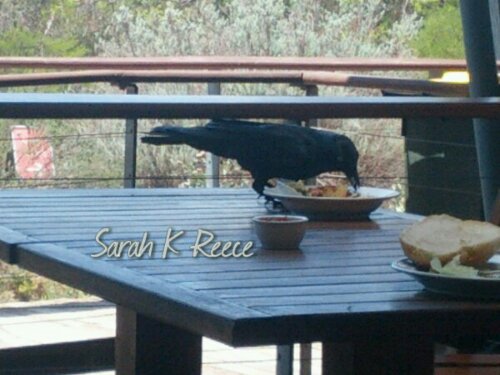
Then I went to work. It was a very quiet day. I watched the birds eating nachos.

image

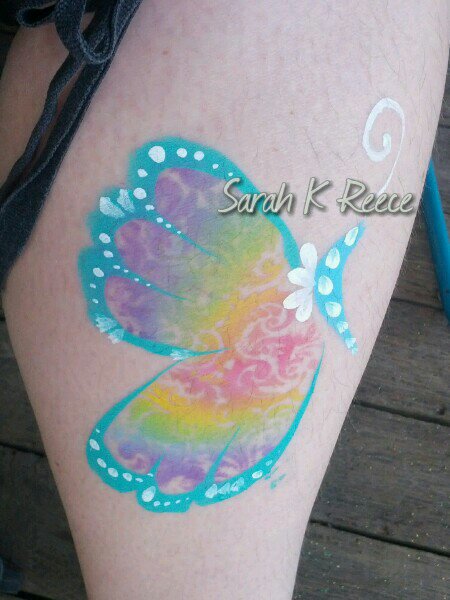
I painted some people.

wpid-IMG_20140118_141229-1_wm.jpg

image

image

image

image

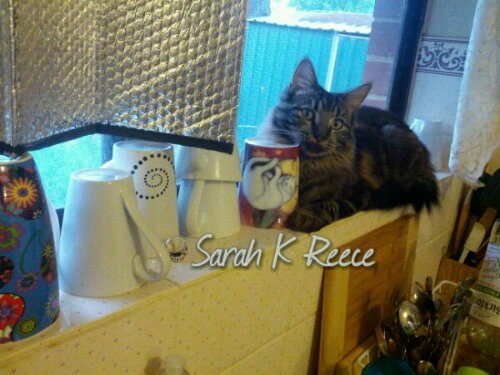
I opened the house up to start it cooling off. Tonks sat on the kitchen window sill and claimed the cat mug as hers.

wpid-IMG_20140118_195618_wm.jpg

I wrote my very first policy/procedure checklist for the DI Open Group on fb (about how to handle spam). It’s short and easy to follow and makes sense. I also updated the info page on the website to answer questions I find myself having to address a lot in the group. I was so excited at making sense of this, and having two new admins on board for the group, that I spent the evening bouncing with excitement despite all the sleep deprivation!

Friends came round for pizza and cards night. Due to slight heavy handedness with the cheese, the pizza’s were drowned. And delicious. I managed to stop myself making them all read my new policy and procedure and information page. Just.

wpid-IMG_20140118_201131_wm.jpg

In celebration of surviving the heatwave, and recognition of a week of being very sensible, responsible, having good fluid intake, and so on, Rose and I stayed up late playing Donkey Kong Country on the Wii. Yay! 🙂

Surviving a heatwave

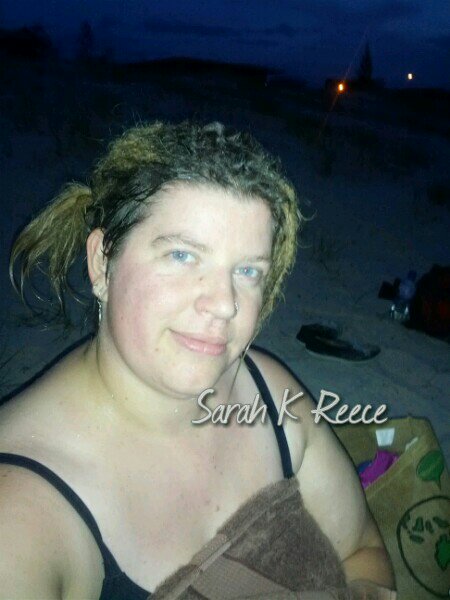
Rose and I are hanging in there through this heatwave. At night we head to the beach to cool off. Around midnight there’s only a few souls around so Zoe can have a good run and splash, and we can lie about in the shallows and feel our brains cool.
image

During the day I’m shut in at home, curtains drawn against the heat, feeling ill. We’ve worked out a system. Cold shower, then lie under a fan for a bit. Cold foot baths, sit in front of the air conditioner. Lots of bottles of water in the fridge. Sleep if you can, read books or watch movies to pass the time. The pets have ice cubes in their water and get rub downs with wet towels when they look stressed. I’m sleeping on the couch at night and waking for cold showers when it gets too hot.

Cool baths are the last line of defence against heat stress and nausea, they gently leach heat from the body without dropping your temperature so fast that you feel sick. Be really careful of sudden temperature drops with small children especially. Gently cooling them down with wet towels and a fan is better than a sudden change in body temperature for a baby or anyone ill or vulnerable. When I worked as a child care worker I once witnessed a very distressing incident where a mother took her overheated, sick baby into a cold shower and accidentally triggered febrile convulsions. It was very distressing for everyone involved and resulted in a trip to hospital.

Snacks are fruit, or Anzac biscuits. Food is cereal, toast with tomatoes, salads, or if I can’t eat, banana milkshakes and ice blocks.

The news is covered with terrible updates about fires and blackouts and people in trouble. I feel terribly cut off and helpless. Hiding here in the dark while the world burns. Remembering summers before, spent in a shivering, dehydrated mess, vomiting even water and desperately unhappy. I keep telling myself that looking after myself well enough to stay out of hospital is worthwhile and frees up those resources for other people. I wish there was more I could do.
image

Down at the beach at night is like walking into another world. We walk fully clothed into the water and float in the shallows, watching the moon rise. It’s utterly beautiful, a world of ultramarine and silver light spangling on the black water. Zoe kicks up her heels and chases wavelets along the shore.

We stay a long time, the cool salt water eases stressed skin, we’re itchy with hives and heat rash. A good soak cold is enough that we can sleep when we get home. We set up the animals, run a sprinkler on the garden, have a cold shower, and sleep through the morning.
image

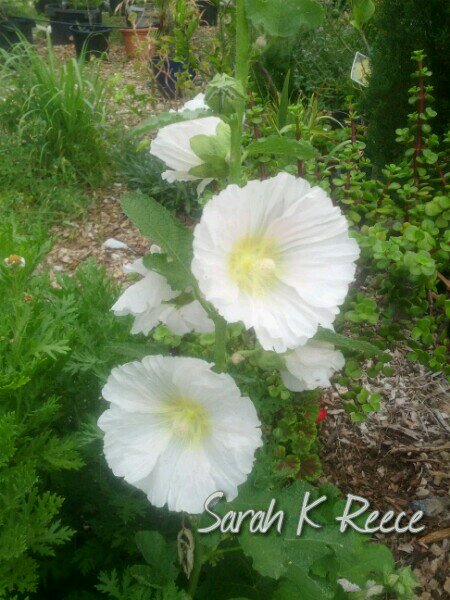
This is the very first heatwave I’ve been in where so far I haven’t lost any of my plants. Between the sprinkler and my last minute dripper system, everything is still alive! My hollyhock is even blooming at least, huge single white flowers. I’m really lucky. It’s such a relief at the end of the day to stumble outdoors and see this glorious greenery instead of the usual crispy brown sticks that usually greet me at the end of a super hot day.
image

image

I hope that those of you who are in this heatwave have a good way of managing it and were able to do enough preparation that you’re stocked with supplies. Take care of yourselves and your pets. If you have decent air conditioning at home and you can, invite friends around who don’t and help out. Especially if you can accommodate and extra pet or two for a couple of days, this can make the difference in the world to someone else. If you only have one room or space that’s chilled, kids can sleep on a sheet on the floor. A wet sheet on top of them and fan can help tremendously, and keeping a bucket of water in the room to soak the top sheet in periodically can help make it easy to keep them cool enough to sleep.

If you are out and about and pass anyone sleeping rough, please spare some change or buy them a bottle of cold water of you can. One of the best ways to cool down when you’re sleeping rough in the city is if some kind person gives you a metro ticket so you can ride the air conditioned buses. Most public buildings will ease up in their usual policies of moving obviously homeless people on, so if people can get to a shopping centre or library they may not be shooed off the seats. But public transport is always a good bet for some peace and air conditioning. The downside to all these options is that they’re often crowded with very stressed, tired, short tempered people.

With regards to pets, smaller creatures especially like rabbits, guinea pigs, and rats will die easily in this hot weather so use fans, chilled water, ice cubes, wet towels, and keep them inside where you are. Ice bricks (for those that don’t chew) can be wrapped in a towel and stuck in the bedding. For those that do chew, use frozen bottles of water instead. For some little creatures you can buy a small metal plate for chilling in your freezer then putting in their cage. I lost a sweet little guinea pig called Henry a few years back in a heatwave. They can go from being okay to heat stroke and death very quickly!

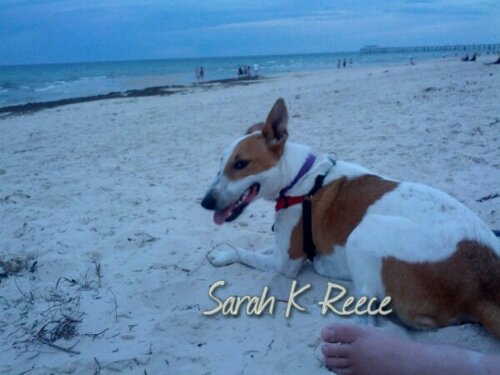
Be really aware of how hot the pavement is and don’t walk dogs if it’s hot to your hand. You can severely burn a dog’s feet otherwise! Never use dog boots in hot weather, it doesn’t protect their feet from hot surfaces, it just prevents them being able to sweat and cool off through their feet, which can be very dangerous! Most cats hate baths but you can chill their drinking water, supply wet food instead of dry, and give them a rub with wet hand towels if they’re looking stressed. Dogs love a cool tiled surface to sleep on if possible, and you can easily spray them down outdoors (make sure all the hot water from the hose is emptied first!) or give them a quick bath or shower when they’re struggling. Ice cubes and frozen dog treats are great, and Zoe loves a fan by her bed.

Be really careful about transporting your animals (and kids!). Most nights we’re taking Zoe with us to visit someone with better air conditioning and staying there for a few hours. We never leave her alone in the car and we run the air conditioner for the trip. As it was, last night she got really stressed so we went through a fast food drive through and ordered slushies for us and a big cup of ice water for her. Most places will give out tap water and ice so even if you’re broke, if you, a child, or animal is stressed, get to the nearest place and ask for help.

Be mindful of other outdoor animals, not all of them will handle this weather well. Chickens and other poultry can also seem okay and then suddenly die from heat stress. One technique we used to use when I looked after a big flock of chickens as a young person was to put a sprinkler on the roof of their roosting shed and keep it cooler that way. If you have only a couple, it may be better to crate them and bring then indoors if you can. If your laundry or bathroom aren’t hot they can emergency places for outdoor pets during the day. Bathtubs (empty of course, lined with newspaper or straw) are great for little animals like guinea pigs if you don’t have an indoor cage.

Native animals can get very heat stressed too, at this time of year many dehydrate as water supplies dry out, and there’s also issues with desperate animals drowning in swimming pools when they can’t get out again. If you can leave out a proper water supply that is not allowed to run dry that will help. If you have a pool that lacks a ramp out, you can improvise one or cover it and put out a pot of water or a half clam shell pool instead. If you find a bird or animal that is injured or stressed, please contact Fauna Rescue or your local native animal support group for help and instructions.

The government has been publishing health warning and instructions which are great. The heat bothers some people very little, but for babies and kids, pregnant women, the frail aged, those of us with illnesses, disabilities, mental health problems, or who have been going through surgery or exhausting treatments such as chemotherapy, it can be devastating.

Disorientation is a common sign of heat stress and dehydration, as is irritability. People can be quite unwell without realising it, so be careful, be extra considerate, and try to avoid arguments, triggers, and needless stress. Vomiting and diarrhoea can mess up medication absorption which can make people ill very quickly in some cases. Those of us who have issues that affect our ability to care for our bodies, such as eating disorders, or self harm will often be more vulnerable and struggle to provide appropriate care for ourselves. Those of us with vulnerabilities to issues like dissociation and psychosis can find that heat stress and dehydration present as an episode. It’s important to track physical health and care, to make sure enough food and water are being taken on board to keep the body and brain functioning. Lack of food, water, or sleep will all cause problems for anyone, for some of us we are extra vulnerable to these issues.

Take care everyone, my thoughts are with you.

Rainbow Salad

image

I crave salads in hot weather. I love them anyway, but a cold, crispy, crunchy, tasty plate of veg is particularly delightful when it’s so hot you can feel your eyeballs boiling in your skull.

Rose has a friend who brings the most amazing Rainbow Salad to gatherings. She was kind enough to share her recipe, which is more of a loose guide, and we’ve been creating our own. They are delicious! Here’s how to do it:

Grate some colourful hard vegetables, such as carrots and beetroot.

Finely chop some greens. Lettuce, spinach, kale, cress, rocket, or any combination.

Finely chop any other vegetables you want to add such as cucumber, capsicum or tomato. Remove the seeds from anything that will make the salad soggy. Add in any small items such as herbs or sprouts.

The idea is to go for a great mix of colours. 🙂

Next, lightly pan fry whatever handful of seeds or nuts you fancy. Hazelnuts, pepitas, pine nuts, sesame seeds… Add them to the salad.

If you’re feeling fancy you can add extra protein such as egg, chicken, sliced beef, or fried haloumi.

Dress with any mix of oils and acids such as olive oil, grapeseed oil, lemon juice, vinegar, verjuice… Don’t dress it until you’re about to eat. It will keep in the fridge if sealed, before you dress it.

It tastes amazing, and different every time. It’s my new favourite salad.

I’m horribly low in iron at the moment and apart from supplements my doc has recommended I eat a lot more red meat, in small portions. Apparently even a little serve of red meat with a leafy green salad like this one boosts your ability to absorb the iron from the salad.

Heatwave

We’re in a heatwave here, 5 days in a row at or over 40C. My place isn’t ideal for this, although I’m a lot luckier than some people. Spare a thought (and some change, or a cold drink) for all the people on the streets at the moment.

Fibromyalgia stuffs up my ability to regulate my body temperature and makes me vulnerable to hot and cold weather I used to simply enjoy or ignore. I get heat stroke very easily now. It makes weeks like this extra tough, I want to be able to keep working and functioning and really my top priority is staying well enough that I don’t need to go to hospital for hydration. I’ve had some very bad summers where heat stress stops me sleeping and brings on shakes, vomiting, and migraines.

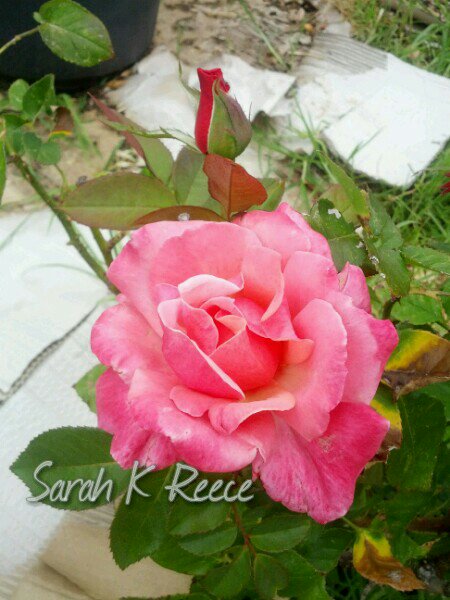
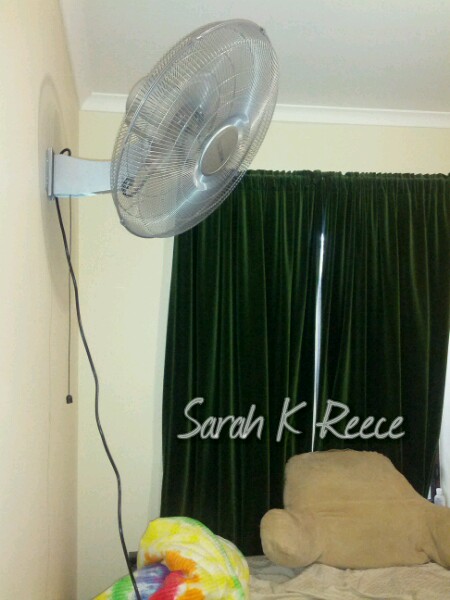
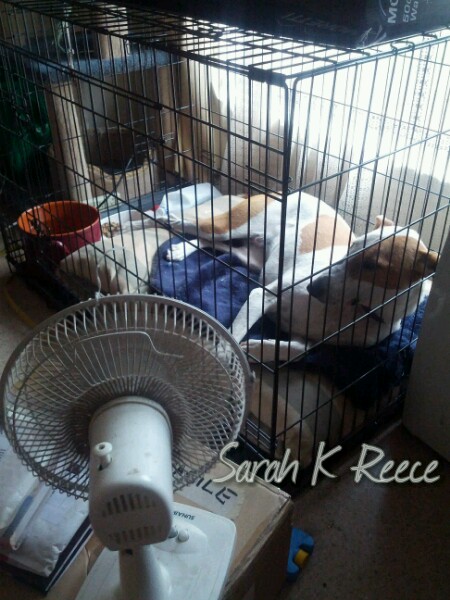
So we’ve adapted the unit as much as possible before this hit. Zoe has her crate in the lounge with her own little fan. I’ve put up an extendable towel rail and pinned a curtain to it to keep cool air in the lounge room and stop it all dissapaiting into the dining room and kitchen. The west facing kitchen window is blocked with a silver foil car window shade. I’ve bought and badly installed a basic dripper system for my potted roses. It’s not pretty as it’s coiled around the pots and stuck down with silver gaffa tape, but it seems to be working. I have a fridge full of cold bottled water and salad ingredients. I keep the bath half full of cold water and get in it frequently. The massive fan on my bedroom wall helps a lot once you’ve got water on your body.

Zoe and Tonks are doing ok. Rose’s place doesn’t have good air con and her cat Baby has been losing condition lately, so we’ve relocated her to my sister’s place where she’s in the cool, hiding behind the couch, and hissing at Kiki. Rose is doing ok now that her cat is in a better place and eating and drinking again. So everyone’s okay.

I’m so depressed I can hardly function. I am supposed to finishing this backlog of admin and filing it with all the appropriate, terrifying organisations. I’m running out of time and it’s so overwhelming. I’ve spent the past couple of days in a teary misery of self loathing and nausea. I’m certain that once I’ve sorted all the figures out that I’ll owe money somewhere, partly because I’ve forgotten or misplaced paperwork showing where I’ve spent it, and partly because I was supposed to have organised all this paperwork before I started trading so I’d know how much to put aside each week, or at least been self disciplined enough to put some aside anyway to manage it. Having said that it’s not that I’ve been very frivolous, it’s hard to second guess any of my decisions or purchases and see what I shouldn’t have done (or not done yet, maybe that’s more the case? Timing rather than choices?) So my business working and being successful is actually just making me feel more scared and overwhelmed and like a failure for doing such a poor job of managing it. I hate being self employed sometimes. 😥 Today I want to go back to every bright and cheerful person who ran the cert in home business I did last year and break one of their fingers for every time they said ‘It’s easy!’

It’s been a big week. I had a (great) final appointment with a counsellor, who I didn’t see very often but has been really helpful. I want to write a post about it when I can think straight again. I just found out a psychologist I started seeing so that I would have someone to talk to when the counselling finished up is retiring this year anyway. I’m so sad. There’s so much knowledge that I won’t be able to access when I get stuck and run out of resources. I was coping okay with the loss of the first one, but losing the second feels like more than I can handle dealing with at the moment. I read some really distressing things in a parenting forum I was part of, where people with great intentions are encouraging practices for each other with their kids that are highly destructive. I left a warm but concerned reply, but those in an ‘expert’ role in the group encouraged parents with hysterically distraught children to keep doing what they’re doing. I had a pretty strong body reaction when I read it. I don’t have enough head space to think any more about it or respond again but’s stayed in my mind and is very distressing.

I’ve navigated another psychotic episode and done really well but it’s still left me rattled and trying to figure out how to get ahead of them and stop them happening in the first place (if I can). I’m finding the pull to make the kind of art where I don’t need to consider what anyone else wants or feels (face/body painting is all commissioned work, a series of small commissions where you try to gather what they want or like and make it for them, and give them a good, fun, and respectful experience) is strong at the moment, it’s hard to focus on anything else. It’s hard to focus at all. Until I have cleared this backlog of admin it’s frightening to be doing more work and adding to the weight of the problem. It’s hard to stay professional and engaged.

One of my bright ‘preparing for the heatwave’ ideas was to buy a bracket to wall mount my exciting new (well second hand, but a Christmas gift, so new to me) flatscreen TV. This turned out to take half of the day yesterday. It’s larger than my old one (well, longer, it’s much smaller in depth) and didn’t fit in the spot on the wall where the studs are to screw it into, without moving a dresser. Which meant moving a bookcase. Which meant a whole stack of stuff is now piled into my dining room, studio, and all over the lounge. My house went from being pretty organised and comfortable to half trashed, and I’m too wrecked to do anything about it. It took ages longer than I thought it would, and while it’s kind of been successful, the TV sinks to the left by about 15 degrees and we couldn’t figure out how to fix it. On the upside, the old TV took up about 1/4 of my lounge room so there’s so much more space in here now. The screen is big and pretty and I can’t wait to re watch all my old favourites on it again – Bladerunner night is definitely on the cards. On the downside my unit is a mess and you have to tilt your head to the left to watch TV.

Lots of my lovely friends know that I don’t handle the heat well and keep offering to be helpful but I am so stressed and confused and switch-y that co-ordinating anything, especially as it has to include Zoe (can’t leave her in the back yard in this weather) and preferably not involve me turning up to their place as an overwhelmed ten year old who sobs hysterically on their couch all day, is just beyond me.

I don’t have much in the way of perspective when the weather is like this, as you can see. The only thing I feel I’m doing well on any level at the moment is this blog. I don’t know why but for some reason I’ve been very inspired about writing it lately. I’ve also been getting some really wonderful feedback (most of which I am too overwhelmed to reply to) but it helps me feel that I’m doing something good in the world, getting something right. The blog is possibly going to be the first draft of a book, which is a very inspiring thought.

I’m going to pay my phone bill. And reply to a couple of urgent emails, even if just to say ‘I’m sick, sorry, I’ll get back to you”. And have another cold bath. And probably cry again. But there will be passionfruit and cold water. Hanging in there.

Awesome quote – Grand adventure (or, my philosophy of multiplicity in a nutshell)

I’ve told this story before, but it’s worth giving it’s own post to. A few years ago, I was seeing a therapist I was not getting along with at all. My life was chaotic, lonely, and very painful. I was scared and confused about my diagnosis of DID. I felt trapped between a therapeutic approach that felt deeply wrong for me (such as getting rid of parts deemed by the therapist to be either too damaged, or too hostile to be integrated) and all the books I’d read that said without therapy I would never recover. Caught in this dilemma, I called Lifeline.

By sheer luck, I spoke with a guy who clearly knew a lot about DID. He listened very attentively as I explained my situation and how distressing I was finding it. He drew out of me my inarticulate intuition that this therapy was not the right place for me. Then he framed what I was feeling in a neat summary that has stayed with me ever since.

Just because you’re split, doesn’t mean everyone else is whole. You can choose to engage this as an illness, or you can go on a grand adventure of self discovery.

That’s it – my philosophy of multiplicity in a nutshell. I don’t mean that people who find a medical model approach to their multiplicity can’t also be on grand adventures of self discovery! But that for me, at that time, these were different options. I couldn’t have both, not with this therapist. So I took a risk that all the books were wrong. I started to wonder how, if we only ever studied those who were formally diagnosed with DID and stayed in therapy, we could possibly know that people never recovered from, or lived with DID successfully without therapy? I set up this idea of The Grand Adventure as my guiding star, my compass that let me know when I was on the right path or not. When a choice would take me further away from it, I didn’t take it. I kept to the paths that moved me closer to treating my life, and my multiplicity, as a grand adventure. Adventure can be painful, even agonising, but it is also awe inspiring, beautiful, profound, and challenging. It takes you places you couldn’t have dreamed of. It’s a very long way from my original plans to be the perfect patient in therapy and ‘heal’ as quickly as possible to get on with my life. And it’s served me well. I’m not waiting for therapy to finish, or integration, or fusion, or to feel like I’ve got over my childhood, to begin living. My life is a grand adventure. Some of it hurts terribly. Some of it is breathtaking. All of it is worthwhile.

For more information see articles listed on Multiplicity Links, scroll through posts in the category of Multiplicity, or explore my Network The Dissociative Initiative.

Love & Narcissism

I’ve touched before on my dissatisfaction with our cultural ideas around romantic love, in posts such as Being in Love. Considering my personal experiences of attachment issues, loneliness, abusive relationships, and being stalked, I’ve done a lot of thinking about love in my life. It’s certainly clear to me that we get confused about love and obsession and often tangle the two together – one doesn’t have to watch a lot of romantic comedies (or kid’s movies!) to find examples of that. This confusion has certainly cost me dearly at times, when I thought that I was rewarding persistence, or that if the other person felt so strongly about me then maybe they were seeing some possibility for us that I’d missed.

Narcissism is another quality that we get confused with love, and tangle into our romantic relationships. I’ve been dating Rose for over a year now, and it’s wonderful and life changing and unforgettable and sometimes damn hard work. (for both of us, not that she’s hard work, but that our relationship is hard work) Considering that I’m a multiple, that we each have trauma histories, and that we’re gay (ie vulnerable to issues such as prejudice, judgement, and ignorance from our communities), this is entirely to be expected. Sometimes I find it helps to remind myself of a truth it’s easy to forget: that Rose was not put here on this earth to become my perfect partner.

She is in fact an entirely separate person, with her own journey. That her path and mine have crossed is joyful and wonderful. That she has tremendous skills in supporting and loving another fierce, dark, vulnerable person is something I’m grateful for. That she has wonderful qualities of compassion, loyalty, and honesty is something I admire. But when I’m scared for us and how vulnerable our little family is (on so many levels, financially, socially) or how vulnerable I feel at times when the skills she lacks (or we both lack, like budgeting), or her choices are not what I’d have chosen in my perfect partner, it can be hard to remember that that is not actually her role in life. It is also a liberating realisation, because it likewise frees me from trying to fit or be fitted to an idea she has in her head about her perfect partner. We each of us are free to be who we are, and then to engage compassionately with the ways in which that can be hard or painful at times, and to rejoice in the unexpected blessings that a partnership between equals who are different and who are free can bring. Sometimes I think one of the greatest challenges in life is learning how to afford others the freedoms we so deeply crave for ourselves.

So we live alongside these ghosts, these dreams of idealised partners. We learn skills and take responsibility for the times we hurt each other. We build a relationship together that’s deeply passionate and loving, and also values freedom and authenticity. We celebrate not only our similarities but also our differences. We work to be good partners, a good team, to bring wonderful things to each other’s lives. But we breathe beyond that role and we live outside of that relationship also. Our lives remain our own. Love is not the key that locks the trap. There’s something frightening, but also profoundly exciting about not writing our partners into our own life story as supporting characters and trying to make them into our best version of them, but respecting and honouring that they star in their own story, that they are separate, and that for a time we are privileged to share their life and know their love.

Dark bodypainting self portraits

26-2014-01-09 17.50.10

It’s been a rough few days. Yesterday, I barely spoke all day. I remember when I was living in a caravan park, this used to happen. Days in a row would go by in which I was silent, except for my journal, except for the weeping. There’s a relief in it, sometimes. I hide from the world, lock the doors, keep the curtains drawn. My paints sang to me and the day turned into a collage of sleeping, body painting, and photographing myself. When all else makes no sense, make art. I have my souvenirs from the underworld. Yes, it’s strange, but it’s cheaper than hospital. I’m still cleaning paint off the bathroom floor. It’s better than cleaning up blood. These are a small sample of the photos I took.

09-2014-01-09 17.36.50-2

04-2014-01-09 22.00.29

03-2014-01-09 22.16.35

12-2014-01-09 18.26.54

07-2014-01-09 20.38.11

So many questions. Why the psychosis? How is it linked to art? Why does creativity, not just any art, but the dark kind, help? How much of this do I need? Can I pre-empt the fraying? How do I fit this into my life plans – a job, sharing a house, becoming a mother, when it’s strange, anti-social, dark? I want to get my camera fixed, the good one, and buy a tripod. I’m supposed to be going back to college soon. I can’t fit it all in. My inks are singing to me. Is this how I heal? Ink not blood, and Wrist poems, and Making art. I don’t know. This is not about pain. There’s something else down the bottom of this well, this rabbit hole. Something I don’t understand. The voice of the night wind perhaps. Something – some one – needing a voice and a place at the table, even if the cup is chipped and the soup is watered down. A sense of freedom from the world, a place where my identity is solely that of ‘artist’.

Wrist Poems

Wrist Poems are an art form I have been exploring since my youth. During school years I would write poems or draw images onto the skin of my wrists, arms, and breasts as a way of communicating, connecting with myself, owning my own skin, and protesting a highly censored and restricted environment. I have since come to love body painting, tattoos, henna, and other forms of skin based artwork. Wrist poems continue to be part of my art practice and my own self care.

I have struggles with self hate and self harm. I use wrist poems as an alternative to bloodletting. There are no images of real self harm or blood anywhere on this blog. These are part of my Ink not blood response to the impulse for pain and self destruction. The titles of each are links to more images or information about that Wrist Poem.

Blue Rose:

wpid-20150129_234742_wm.jpg

This is not my Hand:

wpid-20150630_073311-1_wm.jpg

Alone at 4am:

Alone at 4am

Looking for self compassion:

7e1cc-img_20130415_192700_wm

Body Painting Glove Project:

Body Painting

Wrist Poem – Nobody:

Nobody wrist poem

Wrist poem – Broken:

Wrist Poem - Broken 1

Sickness and Health:

Health & sickness 1

Ink not Blood city:

wpid-IMG_20131208_235709_wm.jpg

Still here

Still here. Black and bleak and locked in my house but here. Not fraying anymore. So tired my eyes feel like hot black coals. I’ve slept all night and half the day. Dreamtossed. I start dreaming the moment I close my eyes. I’m sailing out on the tides, and it’s stopped hurting for now. No screaming fire pain, no anxiety making my heart run like a rabbit. Just my breath, moving in my mouth. Numb air cool against my tongue. There’s the sweetness of poetry, running like juice down my chin. I could not come to the night, so the night came to me. My hair smells of frankincense and my skin of memories.

My wrists have stopped singing to me. It’s my inks and paints I can hear. I want a souvenir. (something I can hold in the palm of my hand) When the dawn strips me of everything. I want to remember.

On thin ice

Yesterday was an okay kind of day, some good stuff, some difficult. I’m home now at the end of it and I’m fragile. I’ve been doing a lot of things lately that asked a lot of bravery of me and perhaps I’ve misjudged somewhere. My head is full of parts who are screaming and I’m massively dissociative and in the early stages of a possible psychosis. I’m deliberately cultivating the dissociation in the hopes that will be protective against the psychosis. It’s a really weird feeling to go from being fine, to that sudden sense of being on very thin ice, where a wrong move will tumble me down a rabbit hole that’s cold, dark, lonely, and populated with nightmares.

I can feel my hands fraying into the night. There’s screaming under the water, and a shrill kind of silence that’s like pressure in my ears. And then, in the next moment, we switch, and there’s breath in my throat again and nothing seems more ridiculous than the suggestion that we’re in any kind of trouble. Breathing in and out and watching the night go from peaceful to terrifying. Not looking at the starless sky. I take three steps back inside my own skin. I pull the ash of the zombie years over my skin, use it to weigh me down so the wind cannot blow me away. I withdraw my consciousness from my hands. These are not my hands, not my fingers, these hives on my wrist are not mine. I am a candle deep inside a lantern of skin.

No crying now, just the little eye roll of the unperturbed. Someone who has to stay up all night with a sick child or creature. Someone stolid, who settles in with a book and a cup of coco, who has brought a blanket to wrap in against the cold, to do what must be done without trauma or exasperation. Tomorrow is another day, it’s another day.

About Transgender

For those of us who are a bit new to the idea and language around what it is to be trans, it can be a bit confusing or intimidating. Some of us are just baffled, some of us are trying to engage but worried about getting it wrong and being offensive. Some of us are loud and offensive about being baffled.

Some cultures cope just fine with the idea that some people have a strong sense of gender that is different to their body. On the whole, Western culture has not. We divide our world by gender starting at or before birth, and people who find their bodies place them on the wrong side of that divide are highly vulnerable to ridicule, disgust, and violence. This divide also causes strife for gay people, partly because the idea behind it is that all boys and all girls have more in common with their own gender than with each other, and that safety and discretion are obtained by separating them for private acts such as toileting, changing clothes, sports, and medical care. When we think that our young girls are made safe from feeling exposed by segregation from boys, having a gay girl (or a girl who is thought to be gay) in the class can trigger a powerful sense of threat, and with that fear often comes rejection or even violence. The same goes for when a young trans girl (ie a girl with a male body) uses the girl’s facilities – or the boy’s facilities. These minority gender and sexual identities are often highly vulnerable and don’t have a safe place in a world divided by gender and assuming that everyone is straight.

So what is trans? A quick guide to the language – someone who is trans has a sense of gender identity that is different to their body. Those of us who have a gender identity that is the same as our body are not called ‘normal’, but rather cis-gendered. This is because it is normal for some people in every community to be trans. Some people with a female body have a strong sense of being male. This is different to feeling like you are female but masculine (or male but feminine) – I have tomboy girls in my system and their sense of themselves is completely different to the guy parts. Being trans doesn’t mean you’re gay. There’s a difference between gender identity and gender expression, and also with our connection to the traits we’ve bound up in our ideas about what is feminine and masculine. They are all connected, certainly, but also distinct. Some trans people are gay, or bi, some are straight. (I touch on this is my post What bisexuality is and 9 things it isn’t) Some trans people take hormones or have surgeries to help themselves look and feel more like their real gender. Some trans people don’t have the money or social support to come out. The rates of suicide and violence against trans people are far higher than average.

In some ways and areas the trans community has been able to get legal supports more quickly than the gay community, in areas of recognition such as legal documents and relationships. In other areas the trans community is still far more vulnerable and at risk, particularly when it comes to social acceptance. Part of the struggle for this is that many gay people are willing to openly identify as gay, and want their lives and love and families to be visible. Many trans people do not identify as trans, they identify as male or female, and what they desire is to be accepted and to ‘pass’ for being their real gender. For many people, being trans is a source of shame, and being identified as trans is humiliating. This means that there are not many trans people willing to become activists to help to raise awareness and further the cause of social justice. So the community is very vulnerable. This is changing more and more, as is the traditional either/or binary of identifying as male/female. Some people identify as both, or as neither, or feel different on different days. There’s nothing wrong with any of this!

Trans issues and needs are highly relevant in my own work with people who have parts, because it’s quite common for different parts to have a different gender identity. This can be tough for people, sometimes trans supports aren’t multiple friendly and want people to choose to be either male or female all the time. Sometimes multiple supports aren’t trans friendly and treat being multiple as if that means it’s never healthy to access trans supports or to want to identify as trans. The reality of course, is more complex. Sometimes multiple systems want to transition because their primary part or parts who run the day to day life are trans. Sometimes one part is trans and wants to know about temporary devices and supports (such as prosthetics, makeup, or breast binding) to be able to be out as their gender and go to a movie or out to dinner. Many multiples who are gender diverse have great difficulty with things like using public, gender specific toilets, or engaging with gendered communities and activities such as sports. Sometimes supporting a trans part can be as simple as buying a pair of guys or girls shoes for them to wear, or having a partner willing to use the correct gender pronoun when they’re out. Sometimes trans parts in a girl body will find it easier that they can wear male clothing in the western culture and this is pretty normal for girls today, sometimes being seen as a tomboy rather than a guy just makes them feel painfully invisible. Sometimes trans parts in a guy body find that the rest of their system feels so threatened by being seen as female that it’s very hard to get any gestures of being female accepted.

I have male parts in my own system and we’re still struggling to figure out how to engage this positively. One of mine is a black humoured cross dresser who wears more makeup than most of the girls in my system and finds it deeply amusing that he can go to work in drag without anyone being the wiser. Another is a gentle and shy gay guy who is so lonely and quiet that I know almost nothing about him. I come from a background where women were run down and the feminine was treated with disgust and disdain. Being female was equated with being weak. The only women who were treated with respect were highly masculine. I remember the courage it took to tell people that I wanted children, that I felt highly maternal. It took a lot of processing to embrace being female, to find strength and beauty in it. It took possibly even more to reconcile myself to some aspects of the feminine, and to my attraction to women. So it’s been highly threatening to process that some parts of us feel male. And even more confusing to us, that they are not necessarily particularly masculine guys at that. We’re working on it, gently. In our culture, gender can bring out a deep sense of threat and fear even in those of us who consider ourselves to be very accepting.

So, let’s work to make more room in our lives for diversity in gender. Let’s embrace the trans people in our communities, in our own systems, in our schools and workplaces. Let’s stop trying to force people to ‘choose a side’ when their real, authentic state at the moment is confused, ambivalent, both, or neither. Some trans people find that after years of only identifying as their real gender, through all the hell of outing themselves and transitioning, they are finally safe to acknowledge that they like some activities, or qualities, or have some skills or interests that are traditionally seen as being of the other gender, and that’s okay. So do most cis-gendered people. 🙂 Let’s be honest about fear and threat and work to make everyone feel safer, and be safer. Let’s make it possible for trans people who want more than anything to pass, to not have their trans identity subsume all the rest of who they are, and to not have to live in fear of being outed. Let’s support the trans activists and people who live openly and answer questions and humanise, and remind us of the painful, awful statistics that show we have such a long way to go for social acceptance of trans people.

If you’d like to read some more about trans issues or find some support, here are a few links I’ve come across recently that I liked. If you’d like to add any other links or thoughts, particularly if you’re trans and feel I’ve misrepresented you in some way, please comment or email me. 🙂 As I’ve said, this isn’t my ‘home turf’, I’m somewhat new to the topic and might step on toes or repeat myths without being aware of it. Wherever you stand, I hope this article has given you some food for thought.

Readers’ Top 10 Transgender Stories of 2013 | Courtney O’Donnell.

All About Trans | Encouraging better understanding of trans people in the UK.

From bullied child to transgender woman: my coming of age | Paris Lees | Society | The Guardian.

35 Trans Women I Had #Herocrushes On In 2013 | Autostraddle.

Awesome Quote – Self Care

Sometimes someone else says something to me that just clicks. Like a bell ringing deep in my chest, there’s a sense of connection to something I needed to hear. It will often stay with me for days, sometimes even years, and get woven into my complex personal philosophy of life, or trauma recovery, or community building, or whatever other framework I’m currently working on.

This one was by a friend and fellow peer worker with DID, who like me works a lot with other multiples. She was sharing how sometimes people get frustrated that she is able to function in the world – she has a home and a long term relationship and a job and all those things that both give and require stability. For some of us with DID, these can seem like impossible dreams. She said to me one of the things she tells them, if it’s appropriate is:

I can do what I do, because I spend a minimum of 3 hours a day on self care. When you do 3 hours of self care a day, you too will be able to do these things.

This resonated.

On one level, both she and I know it’s not this simple. Bad luck, abusive relationships, sickness, homelessness, and so on can all strip any person of the capacity to work full time or do many other things that need a lot of sustained energy and emotional stability. There’s more to recovery than self care, there’s also things like community, opportunities, and a decent dose of luck. Self care, like self love, often needs to be done in a context – we are better at loving ourselves when we are loved by others, and when we see others loving themselves too. Sometimes the first goal of self care is to find or create some spaces where we can care for ourselves without being attacked or belittled.

But on another level, this idea about self care boils down a whole stack of complex concepts to something incredibly simple. Are you getting what you need to function? Are you sabotaging yourself? Are you neglecting yourself? Are you trying to run on empty? Do you even know what you need? Are you waiting for someone else to do it? Do you wait until you crash and burn before being caring? Do you look after yourself, with your specific and unique needs, a lot, every single day? How do you expect to function if you don’t?

It was a powerful reminder. I have big dreams. I have big expectations of myself. I need to match them with a powerful commitment to looking after myself. That can’t be self care that would work for someone else. It can’t be punitive, traumatising, or harsh. It needs to genuinely be the unique things that support me. The kind of care and devotion I have learned to give to my pets and garden, applied to me. It may not be easy, but on one level it’s stunningly simple.

Nurturing

My garden is blooming and beautiful. I love it so much. A number of years ago, when I was extremely unwell with severe dissociation, I read the book Women Who Run With The Wolves, which I loved. One of the suggestions was to grow things, to touch earth and become accustomed to the cycles of nature, of seasons, of life and death, of the needs of things that grow. Since that time, I’ve always had a garden, even if it was only some jonquils in a pot. Many plants have a special link for me, remind me of someone I have loved, or a time in my life, or a dream I’ve had. I bought some of these plants last year to celebrate the news that it seems I have intact fertility and will hopefully be able to have a child.
image

image

image

image

image

image

When I started growing things, I found myself slowly learning things I had forgotten in awful circumstances. In the grips of profound self hate, nurturing my plants was a small but powerful reminder that things grow best when they are loved rather than starved.

There’s a certain stereotype of the young person who has escaped from an abusive background, who find themselves something to nurture – a house full of cats, a volunteer role at the local nursing home, or a garden full of plants to tend. Somewhere in that act, I gradually began to learn how to tend for myself. It’s a process I’ve seen many people go through, people with such amazing qualities of generosity, compassion, tenderness, or wisdom, who have not yet learned how to treat themselves with this kindness, but who pour them out on others in a tangle of love and need and hope. For others they’ve yet to learn how to nurture, how to help something to live, to watch for signs of stress, to learn the language of need for another. They have yet to learn how to be still and listen, the attentiveness of love.

I remember the very first time I grew plants from seed, what a miracle it seemed to me. How magic that from these small inert bits of brown matter, green life springs. The incredible fertility of life, that from one seed, comes a plant that creates many many seeds. That all things die. That some things that I thought would grow, under my care, will not, and others that are thought to be difficult grow readily. Despite all knowledge there is mystery, even in this. Gardens reward attention, knowledge, and skill; with beauty and abundance. These observations are so simple and yet I find them deeply moving. Standing with bare feet on earth, in rain, wind on my skin, hands in soil, I find metaphors for the tending of my soul, of my family and friends, my world.
image

image

image

image

image

image

image

image

image

image

image

I find a sense of peace and connection in my garden. I hope you have or find places in your life that speak to you also.

Tonks the cat

I am exhausted. Today was 6 hours of face painting at the Adelaide Zoo, Thursday was 5 hours, I’m working again tomorrow. It’s been great to have it busy, but I’m also ready to pass out. And I’m out of orange paint.

Tonks reckons she’s had a tiring day too:
image

Friends are over for hibernate pizza and a cards night. I’m either going to switch to someone less trashed, or sleep under the table while they play. 😉

Renovating the house (and bits of my life)

I am darn excited! As I’ve mentioned before on this blog, I’m a ‘change the furniture around’ kind of person. Part of my dissociation is that I find I numb and disconnect to a home that never changes (see Dissociation and tricks of the brain). It doesn’t have to be massive change – a new bunch of flowers or moving a lamp will do. I’m in the middle of a big shift and repair job inside and out that is making me very, very happy.

First off, a new fan! I was given a Bunnings voucher from a friend and went and bought this huge, almost industrial wall fan to hang over my bed. It’s amazing!! Far more powerful than a ceiling fan. When I get one of the other projects done – fencing off the window from outside so I can replace the screen without Zoe destroying it, it will be like a completely different room to sleep in. Happy happy.

2014-01-01 18.04.42-1

Another project is improving the airflow through the house. Two screens need replacing and the Zoe fence needs building for that.

Zoe free areas in the house – planning to buy child gates second hand online to keep her out of the kitchen and studio. This will also limit the dog hair to certain areas of the house! Well, ~ish.

Renovate my studio. Again. Hurrah! My whole studio has been clogged up by the dog crate, completely inaccessible and filling up with clothes I can’t reach the wardrobe to hang back up. Tonks knocked a set of hollowed egg shells from an old art project called Taboo over and Zoe kindly chewed them into very small bits and scattered them through everything on the floor ie most of my clothes and hats and scarves and shoes and many art projects. So! The new plan is – no pets in the studio, and no table making it hard to access the wardrobe. The table is now gone, as is the dog crate.

2014-01-01 18.05.19-1

Zoe’s dog crate now lives in the loungeroom where the people are and away from the art supplies. Hurrah! The dining table now lives in the studio where the pets and pet hair is not. This is also a good thing.

2014-01-01 18.05.33-1

This means Zoe inherits the little fan I was using in my bedroom. 🙂

2014-01-01 18.05.54

A new mattress! Part of a Christmas gift for Rose, I’ve upgraded my rather awful matress for a really nice pillowtop I found at a salvos store that begged me to bring it home and see what it would do for sore backs. So far, it’s been a huge success. 🙂 Upgrading old furniture is an important and fun part of the housekeeping process, especially when you shop in the hard rubbish collections.

The last of the lawn is going! I’ve been in the process of replacing all the lawn in my front yard with a mulched garden bed full of herbs and flowers. My Mum has kindly done most of the work on this as I’ve been crook or flat out busy with work. We’ve brought some more mulch down and the last of the grass is being smothered under cardboard. My first seedlings are planted in a mini greenhouse for sprouting, hopefully I will soon be adding chives, thyme, and other seedlings to the garden.

All the curtain rod hangers in the house need replacing to double hangers suitable for an extra rod for netting. This will stop my curtains falling down every other time they’re opened or closed, and keep the neighbours from watching me cook in the kitchen and so on. A small but important detail that I’m really looking forward to!

My new art studio at Rockabilly BODY is still under construction and coming along really well. Once the walls are up and ready I’ll be off there to paint them and start furnishing it.

So there you have it. A catalogue of renovations and exciting changes. My roses are in full bloom, my figs are fruiting, my home is a bit of a mess but will be good before my rent inspection, all going to plan, and my heart is happy. 🙂 I know it seems crazy that it’s so crowded when I live alone in a 2 bedroom unit but between the 2 cats, the dog, Rose being around a lot, entertaining friends and family, and that I’m living here, using a room as a professional arts studio, using another room for my Temporary Body Art business stock/kit/paperwork, storing my library, and running the DI out of the place, my challenges to fit it all in using cheap or free furniture and limited energy are more understandable. Hopefully the new arrangements and also the new studio might improve things a bit, not to mention Rose and my sister moving in nearby when they find a place! 🙂

Graduated, and won an award!

A couple of bits of really good news have come in over the Christmas season and I have finally got a moment to share them. Firstly, I have finally graduated from the Cert 4 in Mental Health Peer Work! I have a certificate and everything. That was a very long 6 months, and an even longer wait to be able to graduate due to gastro making me miss out on three classes – which I had to wait until the course was offered again to be able to make up. So that’s that. It’s a bit appalling sad on the one hand that my highest qualification to date is a damn cert when various of my friends and colleagues have degrees or much higher, but I earned it, it’s mine, and it can’t be taken away from me. So there.

In other news, I found out that a short film I helped to write, film, and edit, called Regeneration was entered into the Picture This Film Festival in Canada. I loved making this film, it was my first time in a great little bootcamp and I learned a lot! I blogged about the process here. To my surprise, our film won an award! Regeneration was chosen as the winning film for a drama under 10 minutes, and will toured around Canada! I am thrilled! You can read more about the award and how that all works here on Mindshare.

Our 4 minute film is below, or if the link isn’t working for you, you can watch it over on vimeo here.

I would love to make more films like this. So many projects and passions, so little time!

On setting goals for a new year

2013 is finished. It’s been a mad, mad year. I’ve learned a hell of a lot. I’ve lost a couple of friends, one to suicide and two to fights. I’ve learned how to actually critique criticism that’s sent my way, to evaluate it on the basis of my own values – to take in what would bring me closer to my values, and ignore what would take me further from them. It’s only taken me 30 years and it’s not perfect but WOW what a difference skills like this can make. I’m finally starting to wrap my head around the idea of adulthood in a way that’s exciting instead of skin crawling. Awesome.

One skill I do have that I’m often asked about is goal setting. This is always fun for a multiple because there’s so many, and very divergent, goals, needs, and desires. Every year for the past 5 or so years, I write up a goal list. It’s not a list of resolutions. It’s about things I want to do or try or learn, and it’s there as a reference, partly to help guide choices, and partly to try and make sure no one part’s goals are constantly forgotten. Every year I get some goals done and others get added to the year after or left behind as circumstances change. Every year I’m surprised by some wonderful unexpected opportunities that open up that weren’t on my goal list and I go through those open doors and enjoy a life that isn’t always planned and doesn’t always turn out how I think it will. This is how goals work best for me – as guiding lights. They are the things that help me seek after things I desire in life. I’m always happy to be waylaid, and some goals remain frustratingly out of reach. But there are so many things I love and want to do, this isn’t the end of the world.

So, for example, back in 2011 my personal goals list included items such as:

  • Establish myself as an independent artist
    • get an ABN
    • make a website
    • start a blog
    • arrange business cards
    • attend MYOB training at WEA
    • attend any other available training about business for artists
  • Continue with ACA visual arts degree in Semester 2
  • Continue working with MIFSA/as a peer worker
  • try to pick up about 2 days p/wk total workload
  • Continue working with the Dissociative Disorders workgroup
    • possibly develop a talk for THEMHS
  • Arrange suitable short-medium term living quarters
    • shed?
    • caravan?
  • Apply for training with Lifeline to become a telephone counsellor
  • Apply for training with Radio Adelaide/Poets on Air
  • Take back up Sunflower Shop voluntary position if time permits
  • Publish or get ready for publication a booklet of poems and an introduction to managing DID
  • Investigate becoming a mentor or foster carer with Life Without Barriers
  • Take up learning Japanese
  • Explore Japanese style ink paintings and poetry
  • Develop my camera skills
    • create a portfolio of work based on Singapore trip
  • Develop work for exhibition
    • SAW
    • Mental Health Week
  • Continue to develop my health support system
    • find and begin work with a good psychiatrist
    • continue building my personal library
    • continue to investigate options for health, buteyko, chiro, massage, diet etc
  • Pick up at least one form of regular physical exercise
    • dance
    • pilates
    • martial art/self defense
    • cycling
    • walking
  • Continue to develop social networks – major goal to have at least one physical location (however small) and one person for each member of my system to feel safe and at home with.
    • goth community
    • alternative/hippy community
    • christian community (maybe salvos?)
    • creative community
    • DID/MH support
    • gay/queer/trans community
    • dating and friends

Some of these things were far easier to pull off than others. When life had so many barriers and so few needs being met, I found it was far more effective to focus energy on the goals that were proving easier to meet rather than impose my own hierarchy on them. I also found that sometimes obvious sequences of goals were not that way at all – for example I expected that I would find housing, do a degree, then get work. Things worked differently for me. Housing was phenomenally difficult, whereas I found many passions and work opportunities (usually unpaid, admittedly) first. So part of what makes goal lists work for me is that they are only ideas to navigate by, not things I MUST do or things to make myself feel shame about. I still haven’t taken up Japanese, and I’m okay with that! Maybe I will one day, maybe I’ll never get to it.

I also break my goals down into very small steps. If I try very hard to reach a goal and can’t, I haven’t made the step small enough. For example, I had a number of failed attempts to get back to uni after becoming very unwell and derailing my life plans. Each of these attempts took up all my time and energy, and each time the sense of failure was profound and massively eroding my confidence and sense of hope. I finally decided that this was too big a jump – from bed bound by illness to university. So I did smaller steps. I started to do one day classes at the local WEA. Then I took on two day classes. Then classes that lasted over three or four weeks. I got myself back into routines of travelling to a place to learn each week, of finding my materials from last week, doing homework, navigating parking and the lifts and new people. Then classes that ran over a term. Finally I graduated to term long Tafe ‘Short Courses’, and then I took on semester long classes as an external student, from the visual arts degree in college I wanted to get into. Finally, I enrolled in the degree. I have finished exactly half of my first year so far, and it’s slow and difficult, and I love it, and I’m often very sick and unable to attend. This process has been humbling and frustrating and time consuming, but ultimately far more successful and exciting.

Without To Do lists my life would be impossible. I’m a dissociative multiple who struggles to track information and I have many projects going at once in different life areas. My goals list is another way I check out how things are going in major life domains – social, spiritual, work… and to remind myself about important new journeys I want to take – whether that’s finding a friend to go to the goth clubs with, or exploring the local permaculture groups. Sometimes life is best navigated by going where it takes you. Sometimes you need to run into it, go exploring, try something new, and find new passions, friends, ideas, and experiences to speak to your soul. Goals are best when they are in service of a great life, congruent with your values, and easily cast aside when they come into conflict with values. It’s about living thoughtfully, giving consideration to the life we build every day, so often without thinking about it or realising that our ‘normal’ is a choice and we can make other choices. This is not about success or failure, it’s about maps and star charts and sailing the high seas, about tacking into the wind and setting forth to have a meaningful life.
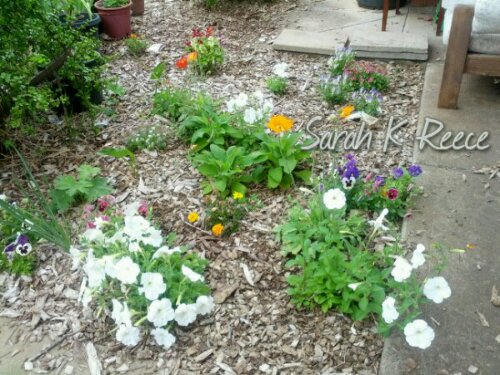
Rockabilly BODY and a new Art Studio

A friend of mine, Mel, has been setting up her own business called Rockabilly BODY around the same time that I’ve been working on my Temporary Body Art business. Where my business is mobile, hers is bricks and mortar. A team of people have been working incredibly hard to get her beautiful studio open this year. It’s been great to have someone else who is wrestling with the same things, working insane hours, experimenting with different forms of advertising, being surprised by the unpredictability of what service takes off and what doesn’t generate much interest. I admire her passion and dedication and hope like hell it all pays off for her. One of the down sides of a physical premises is the much larger risk factor. I’ve invested in my business minimally – a few thousand I’ve paid upfront instead of big investments with loans and leases and a hell of a lot more stress. On the upside however, her studio is simply gorgeous and I love being there! Checkout a couple of photos:
image

That slogan on the wall behind the manicure station reads

You can’t buy happiness, but you can buy nail polish, and that’s kind of the same thing.

Her whole studio is scattered with beautiful or funny quotes, she’s worked hard to make her studio alternative to the usual crappy nasty hype so common in the beauty industry. The place is designed to be friendly to guys, girls, trans, and queer, a safe place to pamper yourself with whatever beauty stuff floats your boat without being pushed into some standard of beauty you don’t like. Mel does a lot of work researching all her products and making sure everything is of a very high standard, which I like.

image

image

image

I’m kinda taken with it, as you can tell. 🙂 Plus, I won a gift voucher from an SAFM contest! Whoot! But yeah, I love getting my nails painted with that long lasting stuff in cool colours like BLACK. Rare to find that! If you’re around Royal Park area, I’d suggest dropping in. I particularly recommend the waxing for wildly sensitive skin, and the pedicures. But that could just be me. 🙂

The really awesome news from my own purely self involved perspective, is that I’m in the process of having a small studio of my own built in the premises! I’m SO excited about this! The plan is to set myself up there on a weekly basis to be able to offer exciting body art such as henna, temporary hand painted tattoos, and body painting for photo shoots! Finally people will be able to book me in directly for their own art instead of having to book a whole party with friends and get me out to their place! We’re also planning some exciting collaborations around parties and events as there’s a beautiful big space in Mel’s studio that’s perfect to host indoor parties, particularly if you like someone else cleaning up after you.

It’s a bit of a risk, I’ve not heard of any other body artists trying to set up a physical premises like this, but the crossover between Mel’s clients and my own is quite significant, our work is very complimentary, and it sounds like far too interesting an idea to turn down. There are further plans in the works around hair, painted shoes, jewellery, art prints, and exhibition projects but I don’t feel like letting all the cats out of the bag just yet. Right now, a small room the size of my master bedroom at home is being constructed. I’ve paid and delivered gyprock sheets and other necessities and I’m working on furniture, colour schemes, paint, and fabrics. Of all my many exciting plans for 2014, this is one that just makes me squee with excitement! I will have a physical location and mailing address for my work! I will have a public studio to display art! I will be able to set aside time each week to create art (yay!), and do admin (ugh), and try different ideas out on the public to see what people like. It may be brilliant, it may completely flop. I’ve no idea, and there’s only one way to find out.

Life is either a daring adventure or nothing”

“One can never consent to creep when one feels an impulse to soar

Quotes by Helen Keller