Inner children – shame and threat

For many of us with multiplicity, figuring out how to live with inner children can be a huge challenge. I’m certainly no expert on this and don’t have this all figured out with my own, but some guiding principles have worked well for us that might be of help or interest to you.

The first massive challenge for us was to learn to cope with the deep shame we felt about them. For example, we have one who is 5. She’s very sweet, curious, and playful. We first noticed her when we attended uni one day, and she turned up thinking it was her first day of school. She was fascinated by the shiny wrapped chocolates in vending machines and terribly anxious that maybe she’d forgotten to put her underwear on that morning. We were co-conscious and felt blind terror that someone might notice her ‘weird’ behaviour. Our ‘intellectual adults’ in particular were dismayed at being mistaken for this impulsive, cheerful creature who balanced on the edges of the garden beds and skipped down stairs. It felt like a profoundly visible difference, a severe disability that would stop people seeing us as smart or dignified or other things that are really important to some of us. So our first reaction was mainly horror.

Shame went deeper too. Having kids tell the white lies all kids tell, exaggerate an event, make it sound more exciting or themselves more brave, skip something they’re worried they’ll get into trouble over… We didn’t cope. We first hated ourselves with a deep passion. When we realised we were multiple, we hated them instead. For a long time we did our best to completely suppress them.

Reducing this shame was partly about understanding them in context. It helped us to read about attachment disorders and realise that the issues we struggled with were very common. It also helped to spend time with other kids that age and realise that our expectations were crazy high for our own. It helped to look at photos of ourselves at those ages and realise that although we had felt mature and responsible and old at the time, we were just very little. We had some mad ideas about ourselves as children that we had to confront, and some internalised ideas from other people we had to start to question.

Fortunately, system members who felt less threatened by the kids had very different reactions to them. One in particular was very co-conscious and curious about the way that people didn’t pick up even when the 5 year old was out. People just don’t think of multiplicity. Even pretty overt behaviour wasn’t noticed, particularly by strangers who didn’t have any idea of who we were usually, or what to expect from us. It was a startling kind of freedom.

We also started to notice some of the pain of being a child in an adult world. How difficult life could be for them, how lonely they were, how bewildered they were by adult concerns and choices. Once this sweet little girl came out, curled up on the couch, and waited for someone to bring her something to eat. She ‘wasn’t allowed’ to open the fridge or the freezer or make a snack, and she didn’t know that no one was coming. Life can be strange and lonely when you miss great chunks of it and the rules change without anyone telling you.

Being able to take a step back from feeling overwhelmingly threatened and just observe and learn was important. This was a slow process for us, years rather than weeks. A system in survival mode is a system geared to feel suspicious and threatened by everything! Initially there was no trust between us and a lot of scrambling to stay in charge and in control by the ones who so deeply feared losing it. All our models of losing control were about disability and loss of functioning, people who wound up in hospital needing constant care. For a long time it felt like we were fighting for our life, and fighting a doomed battle at that, that life long severe mental illness was our destiny while these parts existed. Discovering that sometimes kids brought joy and hope too was a massive surprise and helped us begin to question our assumptions about what it was to have inner kids.

Humour and compassion are powerful alternatives to shame. Over time I found I could re-tell the story of having a five year old switch out at uni and glue herself optimistically to vending machines for significant periods of time hoping chocolate might come out of it… and laugh, and make other people laugh. Life is bizarre and absurd! Taking it, and ourselves, utterly seriously is a quick way to find ourselves forever disappointed, threatened, and miserable. Embracing the humour and pathos in equal measure has served us well. It’s not about laughing instead of crying, but as well as crying.

These processes of learning and listening and questioning built some empathy and we began to relate to the kids as real people instead of just a burden or nuisance. They weren’t just symptoms of a disorder, or here to make my life difficult, they are just as real as I am. Their joy and pain just as real. It became less stressful to let them have some time out. These days if the 5 year old is out when we’re buying groceries (or more likely, candy) then people such as check out operators generally talk to us as if we are intellectually slow. We’ve stopped being so threatened by that and take it in our stride. There are some awesome people out there with intellectual disabilities. Being mistaken for one of them at times isn’t the end of the world. This is part of what it really means to be inclusive and to believe that people with disabilities are still people. If you think you’re comfortable with and inclusive of a group but are mortified if someone mistakes you for one them, then you’re a long way from walking your talk.

(I’ve seen this a lot, where the act of reaching out and connecting with a marginalised group is supposed to reflect well on the generous supporter, and it’s really all about their needs. They love to be seen as inclusive and brave but it’s nothing to do with equality. Try mistaking a mental health worker for one of the clients and see how thin the veneer of their ‘community’ is as they jump to assert their true status. This is doubly offensive if you’re there as one of the clients!)

Of course, threat doesn’t just go one way. An inner 14 year old who has figured out that their body is adult and flirts with scary drunk men has learned a powerful way to scare and punish the rest of a system who are constantly trying to suppress her. (ask me how I know this!) Kids get scared by their inner adults who are angry, powerful (but not all powerful) figures who feel they are more real, more important, their needs paramount, and their ideas about life decisions the ones that should happen. Kids don’t just get out voted, they often don’t get a vote at all in these systems. Imagine the sense of threat that comes from having other people who don’t like you, don’t care about your pain or needs, and don’t even see you as ‘real’ making choices about your life, your home, your family, and your body. Sound familiar? For some of us, we build our systems on the same dynamics of family or school, the world we grew up in, and sometimes that’s a terrible thing.

Systems that are structured on abusive dynamics, as mine was, deal with the fall out of that. The most powerful might win all the time out and decision making, but the alienated rebel, undermine, sabotage, manipulate, seethe with resentment, or submit and hate themselves. Those who have no choice or overt power protest in passive aggressive ways and behave without dignity. The traumatised stay locked in severe trauma, the isolated express pain and loneliness through symptoms such as phobias, nightmares, flashbacks, tics, and sickness. This is often what we call DID or multiplicity, when in fact it’s a normal response to a really abusive system. Multiplicity with a healthy use of power internally looks very different. It often doesn’t even fit the diagnostic criteria for DID, and we have no alternative framework or language to describe it.

With time and gradual connection, there’s more empathy and less dehumanisation. With this has also come a sense of protection and responsibility. As we’ve learned to unpick our sense of shame about our inner kids we’ve found it easier to understand and interact with them. Long ago, pre diagnosis for myself, I was reading about multiplicity because someone close to me had been diagnosed. I read about a woman with multiplicity who registered that the other patient she saw in her therapists waiting room was also multiple. She gave the shrink a gift of crayons to pass along. When I read that, something deep inside me burned with fierce desire. I wanted my own box of crayons, my own signal that this was okay. At the same time, the iron fist of suppression, refusal, denial locked me down. I absolutely could not do something as simple as buy myself crayons, because that was opening a forbidden door. It was years before I bought a packet of crayons and a colouring book for us, and it was for us, like each step on this road, an act of courage and faith. So very simple, looking back, but so profound and needing such bravery to be willing to face what came up, to trust that there would still be life and hope. When we started Bridges, the face to face group for people with dissociation and multiplicity that we ran weekly for 2 years, we brought crayons and paper to every meeting, trying to pass on this gift.

How simple it has turned out to be, to understand that we’re all sailing in the same ship together. To find joy in the differences between us. Everything we read was about coming together, becoming more like each other, finding a common ground and merging into it. Everything we’d tried was about drawing a line that defined who ‘Sarah’ was and only allowing out those of us who fit within it. Peace has been the opposite process for us. Letting go of that attempt to control who we are and accepting who is here. It’s okay if people get very different ideas about who Sarah is depending on who they meet first. We lead the way by being okay with it ourselves, and most people simply follow suit. We had a house-guest here for a few days this week, who quietly observed to Rose – “Wow, it’s like Sarah’s a different person. I didn’t think she’d be the kind of person who games (first person shooters, by preference, particularly L4D2). There’s a photo of a pretty butterfly on one of her computer screens, and she’s killing zombies on the other!” To which Rose responds “yeah, I see what you mean. Some people are like that!”

For more information see articles listed on Multiplicity Links, scroll through posts in the category of Multiplicity, or explore my Network The Dissociative Initiative.

Heartbroken

Today I’m heartbroken. Family friends have been in crisis so we’ve had a lovely guest here who needed someplace safe to stay. We’ve also had to collect and arrange to be surrendered to the RSPCA two families of cats that had been left without care. Rose, myself, and four other kind cat lovers spent a couple of hours in the rain catching half wild kittens and cats, and with a police escort rescuing two tiny, malnourished, sickly kittens from a house. We’ve just taken them all to the vet. We’d love to give them homes but our cat quota is full. (please don’t offer, they’ve been surrendered now and it’s all out of my hands) So we hope like hell that once they’ve been properly feed and cared for maybe they will be among the few lucky ones who find new homes, but we’re heartbreakingly aware this is unlikely. It was the right thing to do but so hard and so sad.

We got home at about 11pm, kissed our cats, and I took off my shoes and walked Zoe out on the grass of a nearby park, through rain and sprinklers and lightening. It’s raining here in South Australia. The bush fires are going out, at last. The night is beautiful, it smells of rain and grass and eucalyptus. Two families of cats who might be dead tomorrow are in my heart. Two families of cats who will no longer be hungry or sick, no longer have two or three litters of kittens a year, some of whom always die. No more fear, no more snatching food from neighbours bins, no more pain. They deserved so much more but it’s all I have to offer. I’m sorry.

One of the weird days

Yesterday was one of those blah days where nothing feels like a good fit. I tried lots of approaches, none of which helped, and shrugged, headed to bed and figured I’d feel differently after a sleep. Well, I was right. I had intense nightmares, of the kind where you wake up and feel so distressed you want to throw up. The content lingers like you’ve watched a vivid, personal horror movie that’s burned images into your mind. It’s been awhile since they were an issue! This morning was meltdown territory as a result, panic and intense dread. I took a bath, read some book, wrote in my journal, and scraped myself together enough for my appointments. Today was admin appointments, getting stranded with a vehicle that needed engine oil, and having a blood test – STILL no bad reactions, even on a horrible day like this one! Did, however, re count my days when I got home and discover I’d done this one a couple of days early by accident and will have to repeat it. Sigh.

I saw a disability employment person and cried about how stressed I feel about my business at the moment, wondering if I should be pursuing employment instead. She ‘reassured’ me that I wasn’t passing up some wonderful opportunity – most people like me with an episodic illness are unable to find good work. We get casual, short term, poorly paid work, issues with workplace bullying, and more often than not – contracted volunteering. So if I’m going to not get paid (or paid well enough to survive) and lose my job every time my health wipes me out for a month – I might as well be running my networks and continuing to build my business. Right? The anxiety levels have been tremendously high about it lately, I think trying to get pregnant is sending me into panic mode a bit. It a hard road to walk sometimes. And a brutal reality to face what my openness about multiplicity and psychosis are costing me – and what they cost millions of other people. I hate this.

On the plus side, I’m continuing to clean the house up (it got a bit swamped over Christmas, plus I need to make room for a guest and also Rose moving in soon), keep the garden alive through the heat, and sort out food and meals.

I feel way better than I did this morning, but still ‘off’. unsettled and not myself. Haven’t settled into the new year yet. I don’t have a sense of being on firm footing. I’m picking up on other people’s feelings, seeing the world through many different eyes (but not ours) – perspectives of friends, authors of books or articles I’ve read, proponents of particular ideologies. I move between them feeling the clashes and contradictions like burning places in my mind. Hot and sparky. Then I feel myself move back from all of them and suddenly nothing seems real. I find myself walking outside of my home and looking at a tree thinking – ah, there it is. Reality. The thing beneath all the theories. I feel slightly swamped and detached at the same time. And oddly lonely. Part of me is waiting to find out if I’m pregnant and it’s impossible to feel much about that so I’m not feeling anything. Not even numb, just like I’m holding my breath. I can’t breathe or feel again until the cycle ends. Last month I actually felt pregnant some of the time. This time I don’t at all. I don’t even feel like I’m completely here. Man, these reactions are unpredictable!

Ticking away in the back of my head, as always is the book. There’s always more reasons not to write it than there are to write it. I feel like I’m slogging through a thicket of brambles each and every time I just sit down at a keyboard or notepad and work on it for an hour. I don’t want to put myself out there as some kind of leader. I don’t want to present myself as an expert or have people follow my advice. I am aware – like most people who deeply investigate a topic – of the truly mammoth amount of material I haven’t yet read, ideas I haven’t digested, communities I can’t possibly represent. I hate it. I can’t do justice to the field. The only thing that keeps me going is reading what’s already out there and realising how huge the gaps are and that even my pitiful efforts are an improvement on some of the rank dogma that is messing with people’s lives. But hells, it’s hard to remember that.

So, here’s to the weird days. The not recovered, not perfect, not trying to lead anyone anywhere days where despite feeling like my brain is not entirely in this dimension I’m still a decent and useful human being. The biggest crisis today wasn’t even mine, I’m a support person in the backdrop of someone else’s rough time. (we have an extra house guest on our couch for a bit) I’m still needed and still loved and we all half limp half dance along together I guess. Missing my friend Leanne like hell. Signing off from the Colony. (she would get that, we used to write. My place was the Colony and her’s was the Outpost. All the shorthand and in jokes that die with a friendship.) Just breathing.

Poem – Witness to fire

Fires are still burning here in SA. It’s strange, sad, numb, and uncomfortable watching it from the sidelines and knowing that for some this is the most devastating time. There’s been massive community support, people have flooded MP offices and rec centres with food and supplies. Organisations are being run off their feet trying to coordinate volunteers and donations. Most of us are horrified at what we are witnessing. We want to help. Sometimes we can, and often we have to wait until the first few days pass and less obvious needs become apparent. Anger, fear, and helplessness sit beneath numbness. It’s difficult to put words to. And that’s when I write.

Fire eats the world here
And people are running like ash blown on the wind.
Paddocks empty of living horses
The net a hive of chattering fear
I lose nothing but a little sleep.

If you look into my eyes, I’m not there
My tides are far out, and my shores are empty
Driving home, I’m trapped in silence
I want to find a quiet place to park and cry
But don’t. There’s no tears in me.
I haven’t earned them.

I stop to buy milk and walk the aisles
Looking for I don’t know what
There’s nothing that can fill this emptiness
I leave with only milk.

Somewhere there are people weeping
People bringing rations to the dispossed
A pain that screams when your whole world becomes
A crematorium for all the things you
Didn’t know that you could live without.

Here there’s just the fan, that clicks as it turns
The way laughter seems falsely bright
The sense of guilt
As your horror spews from the tv
Flickering light without sound
The radio intones the towns evacuated
Like a list of the dead.

I think of the homeless and how strange it must seem to them
To see so many so moved by the plight of so few.
How blessed we were who had something to lose
Say we who have lost nothing but our sleep.

I have an appointment tomorrow –
I’ve no words for it.
Calendars and diaries seem obscene
There’s just the night and my bewilderment
One hand raised to stop the noise.

My cat’s a shadow by my side
The ghosts of a thousand animals fly
Across the land tonight
Utterly silent
I lie here beneath my fan, ears straining for their cries –
I cannot hear anything at all.

We are safe from the SA Bushfires

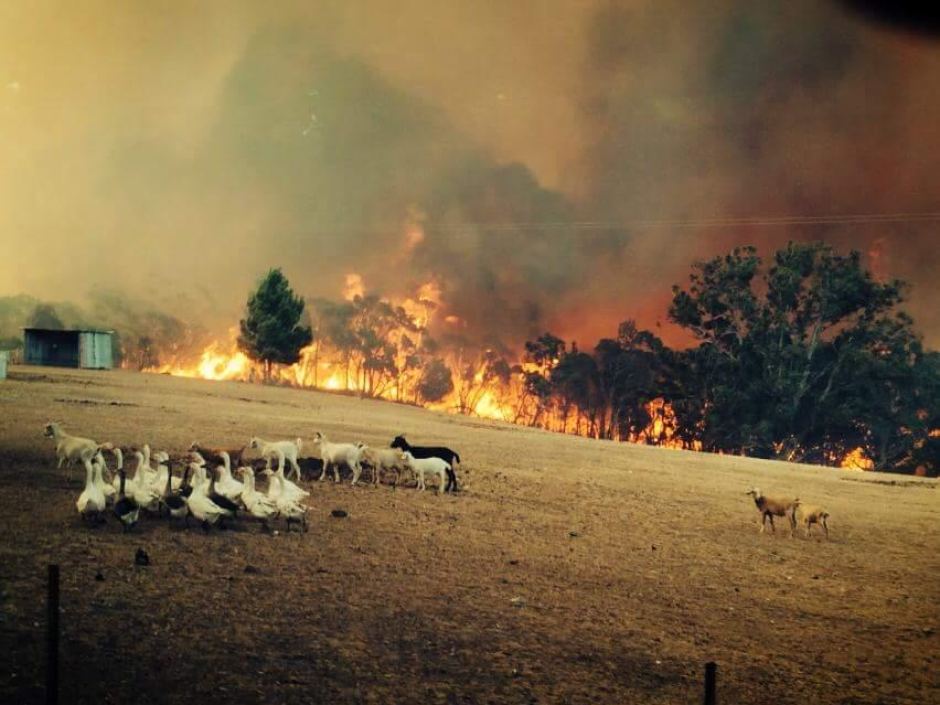
There are catastrophic fire conditions here in SA at the moment. I just want to let you know that my home is nowhere near the danger zone. I’ve been up late watching things unfolding and reading to swing into action if I’m needed. A few of my friends and family are near danger and our home is open to them or their pets if needed. Huge grassroots community efforts are complementing the country fire service and emergency services work to keep people and animals safe. We’re lucky to have the net and communications networks we now have. I’ve been reading about awful situations where animals have died, and other amazing ones where whole boarding kennels have been evacuated safely. Over 100 fires have started in the past 24 hours, almost all have been contained but one massive one remains. So far houses have been lost, animals have died, and properties have burned but no human lives lost. Today brings severe storm winds and dry lightning so conditions are terrible. Smoke is blowing across the suburbs and city, causing troubles for those with respiratory issues.

We are safe, home, cool, waiting and watching to see where we might be needed.

Happy Bookworm

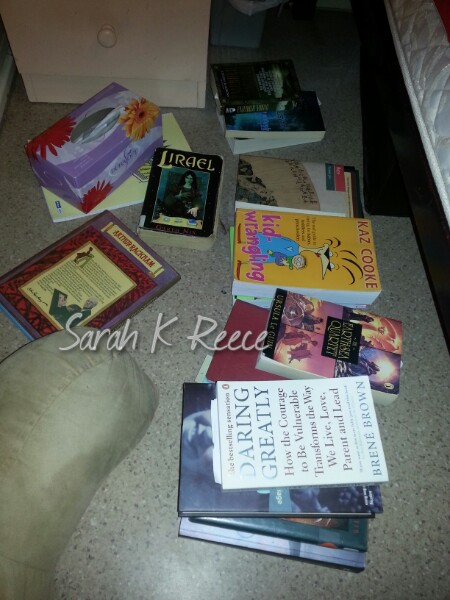
imageI got a number of new books for Christmas, and bought a few for myself too, with donations that came in through this blog. Squee! I love books. I love reading. This is my current collection by my bed. I’m usually reading between 5 and 15 books at the same time. Rose and I are currently reading Lirael by Garth Nix, and Harry Potter and the Goblet of Fire to each other. It’s soooo wonderful reading aloud or having read aloud to you a favourite book. 🙂 Since we met, we’ve read the other earlier Harry Potter books, Sabriel, and a Tanith Lee one called Companions on the Road, which Rose kept falling asleep to because it’s very lyrical and rhythmic in style. Reading to each other is our secret weapon against insomnia and nightmares. 🙂

I used to go to my local library with a shopping trolley and just browse the shelves, pulling a few books from each to read until I’d reached the 50 book loan limit. These libraries that make you browse electronically and only take out 10 or less books at a time! Wow, not my style. 😦

So, at the moment I am reading Focusing by Eugene Gendlin, about a self awareness/self care technique for learning how to listen and understand where you’re stuck and how to move forwards. So far I love it.

Emerald magic – a collection of short stories set in Ireland, fantasy. One is by Tanith Lee, a favourite author, another by Ray Bradbury, THE favourite author.

Double Exposure by Brian Caswell, excellent author

Up the Duff by Kaz Cooke, about pregnancy, great black sense of humour, a welcome change from all the ‘pastel’ books out there. I also got given Kid Wrangling by the same author which I’m looking forward to.

Somebodies and Nobodies about rank and abuse of power, which I’m loving. It’s what I’ve been screaming about in mental health for years and SOMEBODY gets it! More, they have practical wisdom about maintaining what is useful about rank while getting rid of rankism. I am so enjoying this book.

Parenting for a peaceful world by Robin Grille, about child raising over the centuries. This one is very intense, but extremely important. It’s been incredibly difficult to read about child raising approaches in cultures that routinely abuse, kill, or sacrifice their children, and to see the development of ideas over time – children as property to children as people. I’m looking forward to reading other books that take such a broad sociological approach to this topic because a lot of the parenting books are alarmingly narrow in perspective and we often assume that normal ideas for us today (parents bond with a protect their children, for example) were always normal ideas. It’s also of interest to me considering that for many of my friends and people I work with, their families were definitely not the current norm, and actually operated on principles of abuse or property that I can read about from other cultures or earlier times. It’s also interesting to me how much of things like infant mortality we put at the feet of improved sanitation (very important) and don’t talk about the changes in child raising practices which were probably as or even more important.

Daring Greatly by Brene Brown, another one full of great ideas about leadership and vulnerability that I’m reading in small portions to allow me to digest it

Lost and Found, fiction, Rose bought it for me when I was sick, unusual but enjoyable style.

And re reading the Earthsea set again – one of my canon I re read yearly. Absolutely beautiful series.

Plus some I haven’t started yet, Bapo, Embracing Our Selves, and Shadow Dance. How wonderful. 🙂

Rose tells me she can always tell how many nights it’s been since she slept over last as her side of my bed progressively fills up with books and journals. Reading and writing are key parts of my life, they get me out of my head, share creativity and wisdom with me, help me learn new ideas, and upskill. It’s a joy for me that very little can ruin, even grief, pain, illness. I delight in it.

What are you reading?

Giveaway – computer monitor taken

Update, it’s found a home 🙂

First in best dressed – I’ve upgraded my computer monitor and have one to give away, ideally to someone who’s in a squeezy income and can’t afford one. It’s nothing special, but if you need one, it’s awesome. 🙂

It’s a 19th inch Acer LCD monitor, manufactured in 2008. I think I have the cables for it too, but need to double check. Pickup close to Adelaide – can possibly deliver if you don’t have transport. Works fine.

2015-01-02 13.26.08-1

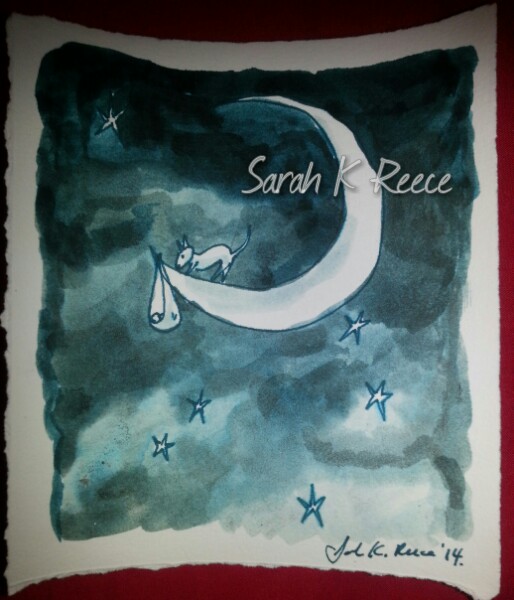
Ink Painting – Waiting for you

image

A new ink painting! We’ve started our second cycle of trying to get pregnant today. The mood is optimistic about our house. We’ve been cautioned and chastised a few times since we started on this path about how openly we’ve chosen to share our experiences. Each to their own of course!

I was talking with Rose about this again recently and asked her if it was harder or easier to experience loss or disappointment in secret? She said, for her, it was harder. Secrecy bred shame, layered confusion into relationships where people didn’t know why she was reacting the way she was, it left her alone in grief. Personally, that’s certainly been my experience also. When it’s chosen as a preference, it’s privacy. When it’s imposed by others, by culture, by friends or family who don’t want to talk about it, then it’s something else much more lonely and painful. As with so much of life, it’s about having the freedom to choose. I’m glad to not be alone in this.

Awesome quote: mental health and dungeons

I’ve written before that I learn as much from fiction about madness and sanity as I do from my library of books on mental health. For the Pratchett fans among us, I’ve always loved the mottos Vetinari (the leader of a large city) lives by, such as :

Never build a dungeon you wouldn’t want to spend the night in yourself. Never build a dungeon you can’t get out of.

I feel this is highly applicable above for those of us working in mental health, that is :

Never create a resource it would be beneath your dignity to seek support through.

Would not the world then be a much happier place? I rather think so.

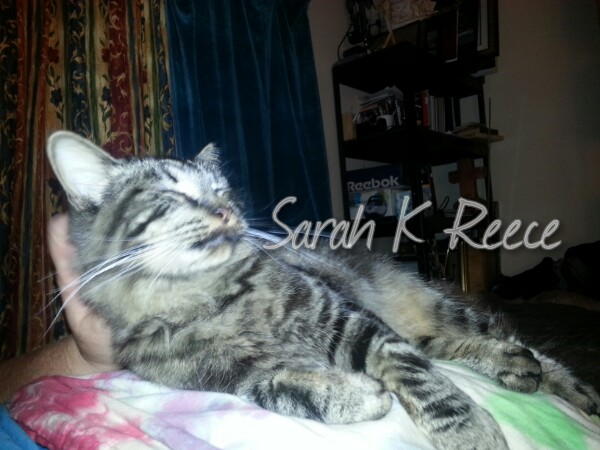
Tonks went walkabout

image

It’s been a crazy kind of day. Tonks went missing all night and most of today, coming home dishevelled and hungry after we door knocked the area, so we think she was shut in somewhere. I got turned down for a job I really wanted, but Rose was offered a job starting in late January! The relief is massive!

In between tears and anxiety, we’ve made gifts, shopped, and wrapped presents and visited friends. It’s nearly 2am and we’re finally in bed, ready for a huge day of baking tomorrow. We’re desperately relieved to have Tonks back, she’s getting a triple helping of cuddles tonight.

Home Again

image

Home again safe. My sister drove to Melbourne with me (interstate, about a nine hour drive) as for Christmas she gave me a ticket to see Nick Cave. It was a great concert and trip. We drove home through the Grampians, got bogged once in soft sand and spent the night there, but dug out this morning and headed on. I missed Rose like crazy, and it was strange and painful to be dealing with our first finished cycle apart. But it also kind of worked. We both did our thing and came back together at the end. Cave was perfectly timed, reminding me that I’ve never sought a life that’s less painful, I’ve always wanted a passionate life. To be deeply alive.

I hurt like crazy and went down into that and came up again to find myself feeling deeply contented.  We drove through bush, slept under stars,  did a lot of thinking about and writing for the book, and a lot of gentle sitting with my own headspace. Something in me runs free when I’m out in the bush. I’m very lucky to live in this country.

And home again, to beautiful Rose, and a long shower, and my own bed, and the animals. Glad to be here, glad to be alive.

I’m not pregnant

So, first cycle over.

I’ve learned a few things.

Like it’s impossible not to hope even when I try.
That wondering if I’m pregnant makes me feel like death is following behind me. It’s a shadow behind every footstep and a chill under all my thoughts. Life in my left hand and death in my right.
That trying not to be affected by it, not to give it meaning, not to feel anything, is the loneliest place. It hurts more when I try to pretend I’m not hurting.
The road other people walk, or pretend to walk, or tell me to walk, is not my road.
Trying to bring a child into the world makes me miss everyone I have ever loved, who they will never get to meet.
That it’s possible to step far enough back from the world that all the ideas that have trapped me, the standards of beauty I’ve hated my body for, the approval I’ve worked for, the trying to find a place to belong are just ideas. I can smile like I’ve seen the joke and it’s a little sad. I can see how I’m consumed by things of no importance. I can see how it’s all just moments, strung together, heartbeats, the song of a bird in flight. (Bright the hawk’s flight on the empty sky) This is my life (ending one minute at a time) and it’s brief. (Sometimes I wonder was she ever really here at all?) Joy washes in with one wave and sorrow with the next. This is what it is to be alive, and I’m grateful.

Life is brief.

Feeling things

I’ve just wept through Nick Cave’s spectacular concert.

Nights like tonight, it makes no sense to me
That when we need to feel something, or feel something different
We go to a doctor. Why? They’re terrible at it!

Making you feel things is what artists, musicians, actors, and writers are for. And they’re much better at it.

Buck Angel – trans and diversity

image

This awesome dude is Buck Angel. He was in Adelaide recently doing a number of shows at part of our Feast Festival, which is our annual queer pride event. I was fortunate enough to get along to several of them. I first met Buck as an amazing life size golden statue of him by artist Marc Quinn, that’s in our Art Gallery of South Australia.
image
Photo from this blog.

I was blown away when I first saw it, that confidence, the way his tattoos have been carved deeply into the statue… So beautiful. To display his unusual body (Buck went through ‘top’ but not ‘bottom’ surgery) with such a sense of contentment and certainty about who he is just blew me away. Apparently it’s not unusual for people to be deeply moved, particularly trans folk.  Then I heard the subject was coming here and I got to hear some of his life story, his transitioning, to hear about how this statue was made and brought all the way to SA. It’s been amazing.

I talked with him a little about the overlap between the trans and multiple communities, the need for more understanding and acceptance. I’ve been building more links between these communities in my work on the Dissociative Initiative. My experience has been that there’s a lot of trans people who experience multiplicity, and a lot of people with multiplicity who have trans parts/personalities. The mental health and the trans supports however, don’t always get along.

Buck got it. His messages of loving your body, and embracing your identity, and not letting the world tell you you have look a certain way or have certain body parts to be who you know you are is a powerful one, especially for trans members of multiple systems. Some of us transition and some, like me, never will. (More about my experiences in What is a man?) I live as a male in a system full of female personalities and a body identified as female. Learning to be comfortable with this is so much easier when you have a hyper masculine, “I love my vagina”, pro diversity role model like Buck.

We talked a little about the massive changes legally and socially that have happened, just in the time since he’s transitioned. It makes me hopeful that things are going to change for those us with multiplicity, who currently are seen as mentally ill, treated as dangerous, or the punch line of a joke. There’s a whole community of trans people who can relate to our experiences around those issues! These are people who understand fears of being outed, how our relationships, housing, and jobs can be at risk, the pressure of trying to pass so no one will know we are different. That’s the reason I’m public about being multiple, to start that change happening. We shouldn’t have to hide! We can find ally’s in communities like this and support each other.

Buck told me – it doesn’t take many of us speaking up to change things. Just a few voices make a difference. I believe that.

Gifts

People are sending me money through the donate button on this blog, and it’s blowing me away! People I’ve never met, people who have found this a useful resource, who know how many unpaid hours I work and want to say thanks. One came in last night while I was hanging out with friends and I cried. Several times. It’s just incredible to me that people would offer to pay me for something I’m already giving for free. There’s a lot of love out there! This was the message that came with one:

Cheers to hope and the spirit of multiplicity

Hells yes. I’ll drink to that! And write to that! It’s deeply inspiring and a lot of work is happening to figure out my approach to hope and multiplicity and weave it together to form the book I’m working on.

So, I’m rewriting parts of my business. I’ve been trying to turn myself into someone who is comfortable with money and goes and writes grant applications and asks for good money for some resources so I can fund others to be free… but wow it’s so not me, or at least, not yet. I’ve learned to stand my ground and ask for pay in face painting otherwise all my weekends would be free charity work, but in mental health it just feels different. I’ve always wanted to be paid a salary so I can offer resources for free… This model of inviting those who can to pay and support free work for those who can’t seems to be working… and right now I can cope with it. So I’ve started to trial it in other areas.

I’m now offering henna or skin inks for people who are grieving with a ‘pay what you can’ approach. I’m also opening the door to more direct contact. I’ve always been happy for people to email me looking for help (sarah @ di.org.au) and I get back to them as soon as possible. Now I’m arranging phone calls with people who want to talk to someone – not a therapist, counsellor or doctor, just a peer. I’m also arranging catch ups with people looking for contact, for private art tutoring, whatever skills I can share. I’ve been carefully opening these doors these past few weeks, inviting people to pay what they can, if they can, and only if they find it helpful.

I’m anxious about being overwhelmed by how many people are looking for support, or finding myself offering so many free services I don’t have time for paid work, which I just can’t afford to do with a family to think of, but so far… well so far it’s good. And I’m getting to do what I love doing – build my networks, reach out, connect, offer hope.

I shouldn’t be surprised that people can be so generous. I’ve devoted a lot of time to writing and running groups and so on, why would I think other people don’t reach out to support things they believe in? I think my time working in mental health has closed my eyes to the real kindness that can exist between people. I’m glad to have them opened again. You guys are amazing. You are changing my world.

Book is happening

2014-12-13 20.59.20-1It’s consuming. But it’s happening. A book about multiplicity. It comes in spurts, days where it’s writing itself in my head constantly and flowing, then depressing blocks where nothing makes sense or connected with anything else. I think I may have finally found a structure that works more closely with the way I write this blog – which I should find a lot easier to work with. I’ll keep you posted!


Schroedinger’s Uterus

A friend joked that I currently have Schroedinger’s uterus – I may or may not be pregnant. That’s exactly how it feels. I ovulated 7 days ago. Sometimes I feel pregnant. I’m queasy, my nipples are tender, and there’s a slowly kindling sense of hope that we’ve been wildly fortunate and conceived on the first cycle. A deep peace settles in my bones and all the noise and fuss of life goes quiet, like someone has closed a window on the traffic noise. It’s beautiful. Other times there’s nothing there, no sense of a presence, just an empty box, an egg timer with no sand in the glass. More painfully, sometimes there’s the fear that a tiny life was present that has gone or is fading. I find myself talking to it and begging it to stay.

I’m busy at the moment, following up all the wild interest in the Hearing Voices Network. I’ve been to conferences and workshops before where there was this huge surge of potential connections afterwards (although that’s not always the case) and I was too shattered from the travel and my own crash following it all, and my anxiety about putting myself out there to follow any of it up. This time I’m determined to ride the wave, write back to every email. follow every lead. But although I’m busy I also feel like I’m not rushing. There’s this even pace, nothing frantic, a kind of quietness. My head is full of network and plans and new friends and book drafts. But beneath it all I have one ear cocked towards the shadows, listening for my baby. Are you here yet? Are you with me? I love you. It’s like working in a house on the beach, listening to the roar of the ocean and always quietly alert for the tide to bring something in, for the waters to rush back into the darkness and leave something precious glistening on the shore.

Art with friends

I had the most relaxing evening last night, showing a couple of friends the basics of painting with inks.

image

It was wonderful. We discussed the possibility of starting a local art mental health group, I’m kinda keen, but also busy and needing to earn money, so it’s a hard call. It was really fun though.

In other news I’m doing free local talks and meets around Adelaide and I’d love to see you at one of them! More details in the newsletter from the Hearing Voices Network of SA: Dates to meet in SA, free events

Trying to get pregnant

Trying to get pregnant is weird. Coordinating with our donor when we didn’t get any warning about ovulation was quite challenging. We pulled off three inseminations over the last three days. Don’t talk to me about making sure the stupid cup lid isn’t cross threaded and leaking! I’ve spent a lot of this weekend feeling exhausted and lying around with pillows under my bum. I’m off my antihistamines and feel like I’ve been left on an ant hill. I’ve got big patches of zinc cream over missing skin. The fricking soles of my feet are so itchy I could happily shred them over a cheese grater. I can’t remember what I’m allowed to eat or drink. Rose randomly does things like poke me in the nipple and ask if they’re tender (they are now!). I can’t tell and I suspect if I knew all the symptoms I’d have them just out of general hopefulness. Trying to get pregnant is moving, beautiful, strange, funny, irritating, and icky. In so glad we’re doing it at home instead of through a clinic where it’s just another medical procedure. I’m already finding that aspect stressful, being able to go with things and play music and talk baby names and cuddle and have a chocolate or whatever we feel like together is so much nicer. Every sign of possible pregnancy seems to be uncomfortable, icky, or inconvenient. I just realised this morning that I didn’t start the martial arts course I was interested in yet, so I’m not allowed to now.

I wish I owned a vacuum cleaner, there is so much pet hair in my unit. Rose offered me one for Christmas, which I turned down because it was unexciting, but now I’m wondering if looking a perfectly good gift vacuum in the mouth wasn’t a stupid idea for a possible mum to be. Rose’s work are playing an exciting game of seeing how close to Christmas it can be before they tell us if she has a job. It’s like playing chicken with a small creature on the road, running it over or swerving at the last minute, and laughing at it because it looked stressed. She’s applied for about one billion others, but the ones that short list her are all out in the country… Work are also docking her pay randomly, apparently for overpayments they don’t specify. We’re pretty sure this is illegal but the payroll department seem to get away with it by not answering their phone or returning messages.

I’m really tired. Thank gawd college is over for the year. I’m going to go bathe in vinegar before I take off any more skin. I may or may not be pregnant. I am definitely itchy and bewildered.

Systems & pathology, & mental health

I’m doing a lot of thinking about these things. Starting up a not for profit like the DI throws you into this world of systems, policy, organisations. Small orgs like ours are often friendship based, very informal, sitting around dining tables. They happen in homes, spare rooms, basements, the local pub. They are relational. People come and go as relationships and life circumstances change. There’s a flexibility and vagueness of roles that is closer to our family structures. People do stuff, they harangue each other about the stuff they’re doing or not doing, they gravitate to roles they like and are most skilled at. Those with the least popularity or power do the jobs no one else likes. Success – and money – often transforms this process. What was a community or a loose organisation becomes a corporation. Every part of the process is systemised. Roles are defined and assigned by management. People rise through a hierarchy to better paid and more respected jobs until they reach the limit of their skills, or their position of incompetence. Relationships are controlled by the organisation and often arrange themselves in a class system where people are only permitted to befriend those in their own pay grade, rather than those above or below their position, and often not the clients, at least within the ‘helping people’ professions.

There’s upsides to the corporate structure. Systems can be highly useful. Little beats the sheer efficiency of a good system. Sound emergency response systems save lives. The efficient distribution of aid in the wake of disasters are often a reflection upon the quality of the system in place to anticipate and manage such needs. Fairness is another benefit, where resources are allocated and people are supported according to need rather than who they know. A third benefit can be transparency – systems are often far easier to examine and assess than are loose collections of relationships in communities. When you’re asking a question about what works and why, or if a group is efficient or fair, systems where everyone operates the same way are far easier to explore.

Where we hit problems are when we implement the wrong systems for the situation, where a system based response is inappropriate and a poor fit to the situation, or when the systems have been constructed on the basis of values or assumptions that cause problems.

There’s a lot of talk in mental health about ‘the system’ and the flaws in it. Often such talk is rapidly derailed into suggestions about why it is so flawed, and who’s fault that is. Our entire psychological services, community sector, and to some extent, our non-clinical support services such as churches, support groups and so on, are all based around systems. The process is often highly mechanistic in that each member or employee, functions as a cog in a machine. If the cog breaks or goes away, you replace it with another cog. Cogs are interchangeable. Cogs have limited control over their roles and tasks. They are moved around and assigned projects by management, who are also cogs. There are assumptions about power and safety that drive common practices such as professional distance. Relationships are either ignored or forced through team-building exercises. These kinds of systems tend to naturally degrade over time into highly complex bureaucratic processes. They consume a lot of resources to function. They often become inflexible and highly inefficient at taking up new technologies, approaches, or research. Communities that are successful at raising money and awareness tend to evolve into organisations, and organisations tend to evolve (I would argue degrade) into corporations with all the legal and social responsibilities and inherited ideas that come with that.

I find the corporate structure deeply unpalatable for many reasons. The astonishing inefficiency of resources is a big one. Where three people in a room will often constantly be seeking for cost effective methods to reach their goals, corporations routinely completely overlook new technologies or methods. They gear towards stability. Having figured out a way to operate, they stick with it. They keep paying massive phone bills despite advances in VOIP technology. They print masses of paperwork needlessly. They attach money to respect and create expensive norms, such as putting visiting guests up in hotels, where the small community would house them in spare bedrooms. They consume. Over time the organisational goals become less about their aims or mission statement, and more about self preservation.

Another problematic aspect of the corporate structure is that it is often very controlling and hierarchical. People at the top tell everyone else what their job is, the best way to do it, how they should dress, interact, and function. We tear down divisive and dehumanising class structures in other aspects of our societies, and rebuild them within corporations. When groups of people are clustered together like this, we often see a loss of diversity, and a loss of individuality. With those losses, other losses are predictable – such as innovation. We also see huge challenges in the area of ethics.

The Neuremberg defence, I was just following orders, nauseates us. We tend to expect and demand that all people are responsible for their individual actions, and answer to a moral as well as a legal code. This is a whole lot more problematic than it sounds at first. Corporations tend to subsume the identity of those involved with them, they set codes of dress and conduct. People are told not only what they are allowed to say, but instructed on what they must believe or value. Obedience is insufficient. An employee who obeys a rule – such as confidentiality, or equal access for GLBTIQ people, or to deny assistance to a person in distress – but who clearly does not believe in this rule is unlikely to remain for long unless a shortage of other workers in that region keeps their position safe. No individual within a corporation is permitted independent moral action, but must instead come into line with the policies and procedures of the organisation or risk being fired. However, no member of the corporation is assigned responsibility for assessing the morality of the organisation as a whole. It is assumed that ethics, and the translation of values into policies (which is a hell of a lot trickier than it sounds) will be key parts of the processes of those few who have the responsibility for writing them.

So we have a diffusion of responsibility for ethics, between a small handful of people in managerial and board roles, enforced across an entire organisation. Many of those people arrive in their positions having first spent years working as regular members of an organisation where their opinions about ethics were specifically prohibited from their work life. Employees in the mental health sector, for instance, are routinely forced into the bystander role where they must watch harm being done, or help not being offered, to someone in need. Sometimes they are forced to be the person who does the harm or withholds the help in order to keep their jobs. Organisations who are fortunate to have highly ethical, insightful, reflective people with excellent management skills and a deep understanding of the complex relationship between values and policy in the management and board will tend towards better practices as a whole. Those who lack either the will or the capacity to create highly ethical practices will not. Groups have a natural tipping point at which the number of people who care – or do not care – about something becomes the dominant organisational culture. Authority also dramatically influences our capacity to think or act otherwise, so the influence of the beliefs of those in such positions upon the workforce as a whole can be significant. The alternative is a fractured organisational culture where the management and workers operate semi independently of each other in a kind of chronic low grade class war.

This adds up to a training ground for management that starts by spending years employed not being allowed to consider ethics in their work life, and ends in positions of high responsibility, little or no attention to work relationships, and the requirement to ensure that every member of the organisation adheres to the policies and procedures to protect everyone from risks of litigation, bad press, and loss of funding. Corporations naturally decay into behaviour that in individuals we call psychopathic and narcissistic, unless a lot of effort goes into protecting them from that outcome. They often operate in dysfunctional ways. When a system subsumes individual identities behind roles, and replaces relationships with mechanical structures (cogs in a machine), they also tend to replace values with rules, and to confuse obedience to these rules as being the same thing as ethical behaviour and as loyalty to the system or organisation as a whole. The idea that one can be loyal and devoted to the organisational aims but have sidedness of opinion about the ethics of how those aims are meet is not one most corporate structures entertain.

This cog in a machine structure is extremely problematic in mental health because relationships are so key to support. It’s not enough to see a social worker every month, is far better if it’s the same social worker we’ve built trust with. Case notes do not replace a history and connection between two people. ‘Cogs’ are dehumanised by this model, and tend to be further alienated from the people they are supposed to be ‘fixing’ and moving on as quickly and cheaply as possible without making friends with them. Friendships are the primary model for support in our culture and yet are infrequent or expressly forbidden within corporate structure and mental health especially.

There’s tremendous tensions between the organisation and the individual. If we think of corporations as multiples, where the corporation is a person, and the people that make it up are parts, these parts often lack voice, power, validation, and the right to be diverse. Dictated to by a dominant part or groups of parts, the rest are hostages who are managed or exploited. The corporation as a whole had a name and logo (face) presented to the world, and the parts must be brought into line with, present consistently the same, and hide diversity or division. I personally do not function at all well in corporate structures for precisely this reason: my system does not cope with a model of authority so completely at odds with our own, and we not accept the idea that ethical behaviour is the responsibility of someone else in the workplace.

If we think of a corporation as a tribe, being a member of that tribe carries a very high price in terms of individual identity and freedom. Perhaps this is simply more difficult to see in corporations because we are accustomed to them and accept them as normal, in the same way that we accept as normal that most people hate their job, find their boss very stressful, and hate their bodies. We in the west tend to be highly sensitive to incursions on the rights of individuals in other cultures, and yet oddly blind to the same dynamics in our own. One of the simplest and most obvious examples is that of our widespread exclusion of people with disabilities from the workforce for the simplest of reasons – lack of access, and our inability to work predictable hours when illness interferes. Tribal cultures are frequently organised on more flexible principles, where those who work do so, and those who are sick or injured contribute what they can, as they can. This simple conflict of structure in what we have created in our highly mechanical post-industrialist society, and the needs of those of us with sickness or disability underlies a massive problem of social justice, inclusion, welfare, discrimination, and invisibility. It is one more aspect of the loss of diversity.

So, what are our options? How do we navigate this? I would argue that systems have value. Patterns and routines can save us from being paralysed by the requirement to discuss and examine every action at length. They help us to function in groups, to take care of vulnerable people, to act quickly. Maybe a lot of our issues are not with having systems, but with having mechanical systems. I often draw inspiration from ecosystems when I’m trying to better support a family or group. The ideal is a balance of flow of energy, no one at the bottom, exhausted and neglected, no one at the top, consuming without giving back. Everyone connected but separate, giving and receiving. There’s many ‘natural systems’ I’ve no interest in replicating, such as the dynamics of a termite mound. But there are principles of connection and freedom that may help to inform systems that are a better fit for the people within them and the people they serve. Here’s a few thoughts about these kinds of systems via Communities as Living Systems (how nature can inspire fresh perspectives on complex problems) | joannahubbard.

  • Living systems experiment-they don’t seek a perfect solution, just a workable solution.
  • Within a living system something is always working.
  • Nature seeks diversity – new connections open up new possibilities for the system’s survival.
  • A living system cannot be steered or controlled – only teased, nudged and titillated.

We’ve done so much talking in mental health about how destructive the system can be, not only to clients/patients, but often to those compassionate people trying to work within them. We often treat relationships and systems as being at opposite ends of a spectrum, and yet our culture organises relationships into family structures and expects the protection of vulnerable members. On one level, families and friendship networks operate as a socialist sub-set within a capitalist culture. The wheels are oiled by a massive number of volunteers and unofficial support between people. This is still a form of system, a pattern of organising a community. (It’s also one that doesn’t fit everyone, as minorities such as the GLBTIQ community seek access to legal and social recognition for their relationships) We cannot build a perfect system or utopia, but we can build something more in line with the needs people are communicating and what we are learning helps people to recover from crises and distress, such as relationships.

Systems are not inherently destructive, nor are they inherently devoid of ‘natural’ relationships. They can be extraordinarily complex and difficult to set up, and often have unintended outcomes. They can fail in a myriad of ways, and funding success can destroy their capacity to function well just as spectacularly as financial ruin. Systems must operate according to (or at least, interact with, even if intending to disregard) the legal requirements of the countries they are set up within. This can necessitate a high level of creativity, innovation, and courage, because the easiest path is simply to recreate the structures we are familiar with, however appalling. Great intentions are insufficient – the mental health system has undergone many reforms and each was driven by people with excellent intentions. The asylums from which we are rescuing people were built by those distraught by the fate of madmen who were starving in the streets. I don’t have an answer or a solution. What I do have is some experiences about what does and doesn’t work – in my own life, and in the groups I have created. I have some values about human rights and dignity. I have some hope that we can – all of us who are wrestling with this complex challenge – creativity engage and inspire each other to create organic, living systems that change and grow with us and with our cultures. I think some key aspects to this in mental health are:

  • Transparency
  • Freedom
  • Mutual Relationships

How these translates into systems and policies is something many people are exploring. Some groups are trying to set up suicide services that are ‘self check in’ to remove the barrier of having to prove you need help before you can access it. Other countries are running mental health services on the principles of Open Dialogue where patients are part of every conversation and always have access to their own records. None of us are going to come up with a single, perfect answer. A big part of what we need to move forwards is safe, respectful places to have conversations and share ideas, so that we can pool our experiences and wisdom and create something better.

I’m ovulating!

image

OMG. You’re supposed to get a couple of days warning, but apparently I don’t. This would of course be on the day that we have 3 people coming round for cards and dinner, and are babysitting a very little person until midnight. O.o Currently figuring logistics out with our donor. Oh gods! Eee!