The overarching topic, containing everything I’ve written in this blog about Mental Health. For content specific to only one Mental Health area, eg. multiplicity, use that link instead.
Mary O’Hagan is a brilliant woman I’ve been fortunate to hear speak on several occasions now. She has had an incredible personal journey from her experiences of ‘madness’ as a young woman in a psych ward, through her to role as the New Zealand Mental Health Commissioner. Her insight into the Recovery Model and commitment to better services is inspiring. She’s also behind the fantastic Peer Zone project. You can learn more about her work here:
On this blog, I’m extremely careful to be aware of that intersection between my stories and other people’s stories. I own my own stories but I have to be very mindful of when telling mine starts to tell other peoples. So while this blog is all about me – my thoughts, my poems, my experiences – because that is what I know and own to share, it can create an odd kind of impression that I exist in isolation, without reference to others and their thoughts, feelings, and experiences. Nothing could be further from the truth. I have learned so much from so many other people in my life. It delights me when someone like Mary has her work recognised publicly like this, not only because that’s always a wonderful thing to celebrate, but because it gives me a public platform to share about them.
I first met Mary at a conference in Melbourne many years ago. She stood in front of the room and spoke openly about “being mad” with such honesty and simple acceptance I was deeply moved. She was the inspiration behind me standing up in front of rooms of people and making jokes that I might have multiple personalities, but don’t worry! Not a single one of them is an axe murderer! And the room would laugh with that relief that I could be so bold and comfortable, and that slight nervousness you often get when you use humour in mental health that means “are we allowed to laugh about that? Are you sure?” I borrowed that frankness from Mary.
Later on I was lucky to get into talks she gave locally. Local services have been very generous at times to broke peer workers. Her Recovery Approach to Risk workshop in particular was memorable. Workshopping creative and compassionate solutions for people caught between their own complex needs and the madness and limitations of the services here to support them, I could see another way of working in mental health. She put a lot of my thoughts and feelings into words, and that’s always a cherished experience. I know I do the same at times for some people and how appreciated that is.
Mary has been generous with her time. I’m often isolated and struggling to get projects off the ground here in SA. In fact I’m pretty certain my international reputation at conferences and such is very much informed by my tendency to cry at the back of the room in talks, partly because I’m so lonely and broke and struggling to bring my values into the mental health sector here, and partly because it’s so overwhelmingly moving to hear from so many other people – almost all more networked, older, wiser, more experienced, perhaps at times too a little more battered, world weary and disillusioned. The recent ISPS conference in Melbourne? Cried then too. Sat at the back, listening to a German psychiatrist discuss the critical importance of peer experience in their roll out of Open Dialogue, and the way they drew upon Systems Theory to inform their adaptation of the model and I l wept, because I’ve only recently heard of systems theory in art class and it immediately seemed totally relevant for mental health to me but it sounds crazy when I say that because I’m just a mad artist – and here was this psychiatrist saying that and showing how the team he was part of had implemented it…
And suddenly I’m not alone. I’m not the Greek prophet doomed to know the future but not be believed. I’m part of something great. An international community of people who are incredibly skilled, incredibly diverse, all reaching towards humanity, seeking to understand, alleviate suffering, bring hope. Even my most original ideas have probably been thought of by someone else and are being hard fought for to develop. I’m not alone, I’m not the only one, and I don’t bear the sole weight of responsibility for that hope.
To hear these voices confidently share what I’ve thought or felt privately, to be able to talk to others who take as given assumptions I have to fight so hard for everywhere else (like the value of peer work), it’s a precious thing. And to have them give me a voice, respect my thoughts and experience too – well in mental health, that’s almost impossible for me usually.
Mary has made time for me, shared lunch with me, let me bounce my grand mad ideas off her. She’s played a small part, I don’t mean to suggest that we’re best mates, but she’s an important member of my community. I’ve learned a lot from her and been blessed by her acceptance of my knowledge and the value of what I’m trying to do too.
This is my tribe too – all these people moved by pain. Sharing deep truths of their own experience, or fighting for better quality research, or struggling to translate values into policies, or volunteering on a Monday to sit with frightened and lonely people in hospitals. I am part of a great whole, valuable but not, thankfully, essential. My knowledge is built on the back of a great history of those who have come before me, their legacy of successes and failures, their deeply personal experiences, their hopes and imperfections and own moments of being moved to tears. People like Mary are generous with their knowledge and their passion and experience, and because of that it lives on in me and in the next generation beyond me.
So, go read her book. Get to know her. Attend a talk if you get the chance. Learn from her, argue with her, honour the gift that honest telling of personal stories in public settings always is. Honour the value of it and the cost of it. She’s brilliant, go learn something.
We, the 30 or so of us who make up Sarah, do not share our personal names. Now, we’re pretty relaxed about the whole multiplicity thing. Open and out! But, we never give a fixed number for how many parts there are in my system, because I never assume that our system map is completely accurate and finished, and I’m comfortable with that.
We have never been happy about openly identifying as individuals – on many blogs by multiples there will be a page where you can read about their system members – and I’ve always admired that, but it makes me feel incredibly exposed. Because we are highly co-conscious and switch many times a day, there’s a degree of fluidity, of somewhat ‘integrated’ functioning. In arguments a whole bunch of us may switch through, speak our piece, finish each other’s sentences, drop back inside. There’s a sort of unconscious dance between us, a façade of unity, and a lot of largely unconscious and instinctive effort to prevent anyone from noticing switching or the differences between parts.
Some of us would love to identify ourselves openly and use our real names, but for others this is an unthinkable violation. The degree of exposure stress is intense – far worse than stripping in public, for some of us this is more akin to taking off clothes, then skin and bone, pulling out organs and uncurling brain matter for people to play with. It violates a deeply held need to pretend not to be multiple. Because multiplicity has worked brilliantly for us as a way of navigating horrible situations, but revealed it can actually make you more vulnerable rather than less. Every time someone not incredibly close to me has noticed or had their attention drawn to an obvious switch, very bad things have resulted. People are positively phobic about switching, and scared people do not react well.
For us, our names are also triggers that often cue a switch. Talking about a part and using their truename will frequently bring them out – or at least to the surface to hear what is being said about them!
Names and identifying ourselves individually are highly personal, private, intimate things. Only my lover, my very closest people, at this point are granted that information. I do not even permit my shrinks to know this or know me like this. This may change later, it may not.
Our feelings on this matter are almost certainly informed by our background in sci/fi and fantasy. Anyone who has loved works such as the Chronicles of Morgan, Prince of Hed, or the Earthsea cycle will recognise the idea that names have power, and that truenames are intimate. Does this mean I’ve imagined my multiplicity to fit with wild fantasy ideas? Snort. It means that my experience of my self and the world has been informed in many ways, by many people, and for me writers have often been better guides than shrinks. I’m grateful to have books like these in my life. I’m grateful to be a writer. And it’s not just writers – theatre, songwriters, painters – all the arts. They tell us so much about what it is so be human. They are so real and so raw and so essential to my life. Without Cave, or Bradbury, I would not be here. I would have broken, broken far beyond repair. I needed others who saw the world the way I saw it, who hurt, or hoped, or learned, and shared in such ways that I felt what they felt, lived their lives with them. I have written often about my love of the arts, how much they have given, how they are the foundation of my ‘mental health’.
Before language about multiplicity, there was just the noise inside. Just the kaleidoscope shifting as switching changed everything about the world. We wrote to each other. We wrote hate. We wrote terror. We wrote love poems. We wrote to see ourselves, and re-read what we had written, and slowly learned about ourselves.
Hate that Cat is a book in poems. It reminded me of that process – instinctive, inarticulate, confused, driven, full of pain and bewilderment. Not done as a ‘therapy’ as ‘obedience’ to some grant recovery plan. Done, in fact, in opposition to those who accused me of wallowing. But somehow my lifeline to my self, my mirror of the world. I understand understanding yourself and your world through poems. They are our first language, our first connection, our home. Other people have other first languages.
How blessed I have been in this. We who write ourselves into being at the edge of the night, how fortunate we are. There is so much richness in the works of those I love. They have been my friends, mentors, parents, companions, ghosts. They have held my heart when it was too broken to live in my body any more. They have kept alive a dream that one day I would have a place in the world, a tribe, a sense of connection. That one day there would be love, there would be intimacy, closeness, people who could hear my soul, those who knew how to listen. Or at least – that there had been others like me, even if they were now long dead. I might be the last of my species, ruined and broken and hopeless, but I had a species. Other people also had breakable hearts, had bled in poems. I might be alone but I was not alone through all time and space. Not the only one ever.
That was, and is, deeply precious to me. Isn’t this what we all need? Isn’t being human finding a way to sing the song I’ve sung to Tamlorn, and finding people who will sing it back to us? To be loved that deeply. What does that have to do with art? Everything. What does art have to do with pain, madness, grief, suffering, mental illness? Absolutely everything.
So much is happening it’s hard to find time to write here at the moment. Life is wonderful. Everything is taking off. My mind is so clear and so full of ideas and connections. I’m having to be careful around overwork – being driven and destroying my new found health is a particular vulnerability of mine. So I’m matching my work week to Rose’s as much as I can. Working when she works, coming to bed when she does, getting up with her in the mornings. Not only is it helping to get us both back more in sync with each other, it’s forcing me to take much more time off than I would otherwise. This is making me very, very efficient when I do work, and thrillingly happy to be having time for fun, family, rest, reflection, and pour some of this energy back into my family, friends, home and garden. I’m so well at the moment, and so happy.
Two really wonderful highlights of the past weeks have been gifts. I was taken to see Cirque Du Soliel’s Totem as a Christmas gift by my best friend. It was stunning. What an experience! And the most perfect rejoiner to my visual artist lecturers who have imbibed the modern visual arts obsession with ambiguity – in their words, giving space for the audience to come to their own conclusions about a work and bring their own perspective to it. In the words of media tropes: “real art makes no sense”. This is a major point of difference between my own art and the kind that gets my lecturers excited, I am intending the clearly communicate meaning. I want my art to make sense to my audience. It’s challenging at times to love a kind of art that’s not wildly embraced where you study art. Totem was beautiful, clear, emotive, moving. Great art can be very clear indeed. It doesn’t have to be, but it certainly can be. That feels wonderful.
The other wonderful gift was a shed. Combined birthday and engagement present, this is absolutely wonderful. Just look at it!
We haven’t even really started to fill it yet, but already it feels like I’m living in a new house, there’s so much more space indoors. My two bedroom unit fits myself, my partner Rose, our three cats, our medium sized dog, our combined book and DVD libraries (which are considerable), all the paraphernalia for my face painting business (which has henna kits, glitter tattoo kits etc), all the belongings of each of my networks: the DI, the HVNSA, and Homeless Care SA, the library of books related to each of those networks that I loan out, and my art studio, and all our baby items including a fairly significant collection of baby clothes, baby carriers and wraps, a fantastic huge pram and bassinet, a change table (also really appreciated gifts!) etc etc etc. It’s rather a lot.
With this extra shed I have room to start breaking down the mess, compiling what isn’t needed in the house itself, sorting camping supplies, packing away tools, all sorts. I’m thrilled. I’m tackling the house but by bit and it’s wonderful. The kitchen functions. The floors are easy to clean with our new vacuum cleaner (another fantastic gift for my birthday). The lounge has heating and cooling. There’s a whole shelf of board games for our game nights. It’s the most wonderful home.
This is the tribe I’ve been talking about. I’ve been so lucky with such support. There are friends who listen and give me great advice on bad days, people who send me money so I can pay for fuel or plane trips to conferences, friends who pass on items they don’t need anymore like their beautiful pram, people who share their ideas and experiences, share my passion for the networks, include me in training, help me find the people I need to get my projects off the ground… This is much bigger than just me, now.
I gave my recovery story talk to the Tafe students again this week. It was wonderful. I told them about being so alone in the world that when my car broke down there was not a single soul to call for help and no money for the RAA or a taxi. I abandoned my car and walked home, sick and in terrible pain, alone in the dark and very afraid. And look at me now. I have a tribe. They are generous, loving, caring people, and we look out for each other. I’ve been there for them, some in little ways and some in big. I’ve looked past bad first impressions or things I thought were weird about them and they’ve treated me with the same grace. Some relationships are closer than others, some are easy and some more complicated. Together, we are so strong.
I could disappear, into work. Into study, busyness, into important things, important meetings, important people, the doing. And my heart would wither and my health would fade. There must be being also. There must be time to sit and laugh, or cry, or reflect. I’m not good at using health wisely, I’m very out of practice. I’ve so rarely had any! But I’m determined not to just work, not to miss out on my life, miss out on my people.
I found out the other day that a friend is in Intensive Care with kidney failure. I can’t visit, I haven’t heard anything back from her family. I don’t know if she is going to pull through. She’s in my thoughts every hour. She’s the most amazing person, her story is incredible, so much wisdom, so much patience and compassion. She’s very dear to me. I’ve always wanted to ghost write with her, to tell her story to a wider audience. I hope, deeply hope, that I one day get the chance. I miss her already.
This is my life, and I don’t want to miss any of it. It’s extraordinary.
If you wish to experience (not intellectually understand, but in your body, feel) a culture gone mad, go and watch Mad Max 4. Preferably alone, on a large screen, with the bass up high. Preferably when you will come out of the theatre afterwards into the night, with the feeling lingering, the recoiling horror.
All my life I’ve been haunted by a powerful sense that the world does not make sense. All my life I’ve sought to understand this, to find where the flaw was, to unpick and rebuild the reasoning that led to unsolvable equations, data errors. Mad Max was a final piece for me, not known but experienced – experience being the key way we are designed to learn – mind and body in a feedback system of what is felt not just what is known. Into this space; the understanding of people as creatures of prediction, comes art, comes imagination.
Culture is our first, last and most powerful religion. It defines our beliefs. Our response to it, our acceptance or rejection or critical engagement with it determine key aspects of our lives. Culture tells us what is ‘normal’, and normal is holy.
Madness is the (often involuntary and destructive) rejection of culture. Common when the culture prevents a fundamental need from being met. In madness lie the seeds of our greatest strength – to reject the culture and to define our own.
All things have a culture. Your time in the history of the world. Your nationality. Your race. Your religion. Your gender. Your home town. Your workplace. Your family of origin. Your home. Your lovers. The inside of your own mind.
In all these places, normal is defined, holy is defined, insanity is defined. In all these places we succeed or fail, we fit or don’t fit, we embrace or reject, we obey or are excluded. In all these places, we are in a world unto itself, and must transition to the slightly different, or radically different cultures of the other worlds. Each world brings out a different ‘self’ in us, if we are adaptive. Each transition, each culture in context of another culture, creates tensions. Our plurality is both essential and potentially lethal, becoming deceit, two-faced, double minded, double-think, compartmentalisation not only of action and belief but also values. Or a terrifying simplicity of one value – to obey the culture – if this world tells me to love I am loving, if that world tells me to kill, I kill without regret.
Obedience to culture destroys freedom. Rejection of culture isolates and alienates us. To perceive culture as artificial, a construct, built by fallible minds, by accidents, by use and misuse of power, by the most glorious dreams and horrifying nightmares of human capacity is to take the first step back from fusing with it. No culture is ‘natural’. No cultural claim to truth, beauty, normality, holiness, or sanity is above examination. To grasp the power to shape culture, to assimilate that which seeks to assimilate us, is the work of a lifetime. To digest culture, embrace what is valuable, reject what is degrading, and bring your own wisdom to the challenge knowing you are also fallible, and to accept the costs of doing so, is a kind of freedom, and a kind of bondage.
What is it to be human? Culture gives us answers, so surely and subtly we don’t recognise we imbibe them. Culture is Kant’s Guardians who brook no questioning. Freedom and power and great suffering and loneliness lie in seeking or being forced to seek our own answers to those questions.
A conference is like a theatre production. A marathon. A community event. A childbirth. Moving house.
Rush and noise and excitement and energy and frustration and new people and hard work. Adrenaline and boredom and getting lost.
Stray dogs, gas leaks, brilliant observations, clasping hands with strangers, insomnia, homesickness. Sensory overload. The musky smell of strangers, the way his coat feels against my ear, the speckles in her eyes and how she hides her face in her hands in embarrassment when someone compliments her about them.
Writing brief descriptions of people on their business cards so I might remember who belongs to which when I get home. Worrying they might see them and feel hurt by being reduced to a brief reference “black hair, laughs a lot”, “husband and wife team, he’s a sculptor”.
Facial blindness making it difficult to find the speaker in the crowd afterwards to say hello or thankyou or I liked this point or that idea. Anxiety that I’ll shake the wrong hand and launch into an idea from the talk leaving a trail of baffled non-speakers wondering who this strange person was and what they were taking about.
On the train home now. Bus, train, train, bus, flight, friend in a car. I yearn for home. I want to see my loves, smell familiar smells.
I’m tired. My eyes are hot and heavy, my voice husky. I feel content. A completed thing. It’s done and was worth all the effort. I’m bringing gifts home with me, new knowledge, new ideas, new connections. New friends, new opportunities, new networks. Ideas challenged, or deepened, or spoken of in a different language with its own nuances and perspective. Great richness for me, and great richness I hope for my networks, my family, my arts practice, my communities.
Thankyou for all those who have supported me to get here, and once I was here, and getting home again, with food, transport, donations towards the costs, conversation, hugs, kindness, and caring for Rose back home who had been extremely sick with bronchitis and asthma. Your kindness and faith in me is so appreciated. I hope I have represented you well. I am not alone but part of a tribe, many tribes.
Day one of the ISPS conference on psychosis is over. I’ve wept, I’ve met many new people, I’ve made friends, shared ideas, had paradigms challenged, found support, listened, learned, talked, shone, and soaked up all within reach of me. I’m back in bed now, dazed, sleep deprived, and changing gear. Poetry is a good place to come back to when you’re feeling skinless, so:
We have blazed brightly and now
At the end, alone in the dim
Comes the haunting fragility – the nakedness
Away from the theatre, from the pagentry
The balloons deflate
Not because it is not real
But because life cannot always be the lights and noise,
The parade of new fascinating people,
The urgent connections, sudden introductions, immediate revelations…
Thankfully.
I’ve lost count of how many people I’ve told today that I’m sometimes psychotic or always multiple.
Or shared unfinished thoughts with, not polished and perfected but still forming
How many times I’ve stood tall in my boots, grasped firmly my right to be here, to have a voice, an opinion, an experience, a right also to hear, to be part of these precious conversations, to drink from the cup of privileged knowledge.
To be grateful and enlightened.
And now?
I’ve gorged on food too rich for my spirit.
At some point even the largest, most gluttonous python must go into a cave,
Sleep in the dark and digest.
Now my boots lie empty beside the bed. I’m alone and naked in the darkness
Shedding all the roles like skin
I’m no one again, and glad for it.
I leave the world to Atlas and go to bed.
Tomorrow the sun will rise without me
The world will be beautiful and horrific and I’ll play no part in either, for just a few hours.
Shivering in the cold,
My soul slowly wanders back into my body,
Tremulous and tender, silent and gentle
Like a small creature, I feel it curling round,
Patting down the ground of me with tiny paws,
Making a bed of me to sleep.
How blessed I am to have such a soul
To lie here trembling with it
Listening to its silent, bewildered language
Watching the dreams come in, like fog feeling its way blindly over the bay.
I’m in the zone, powering through my mammoth workload with fierce joy. I’m currently hand sewing an art book about grieving unborn children.
I watched Mad Max 4 yesterday in 3D at the cinemas… I’m so broke but I think I’m going back to see it again. It was stunning. The cinematography, direction, visuals, and sound were superb… visual poetry with an impressive philosophy and psychology. I was enchanted. I felt something click in my head, one of my frameworks about life gently get the last piece needed. Something closed over and I exhaled with a sense of peace. The world makes sense. It’s not okay, it’s not all answered, I haven’t found the truth or understood every question, but a sense of total disconnection and bewilderment that has been with me all my life suddenly healed over.
I’m flying.
My midnight and my noonday are close enough to spark life between them. The sublime and the domestic burst into each other with abundance. I’ve bridged a gap between the internal and external.
It’s like I can run after spending my whole life dragging a ball and chain behind me. I feel so alive and so free. My mind is so clear. Everything sings to me, everything speaks to me. I turn the radio up loud and sing in the car when I’m driving. I can feel the touch on my skin when I think of my favourite scenes from Mad Max, but it’s not psychotic or deranged. The stars sing to me, my bones sing to me. The world is full of life and it makes sense to me. Everything speaks in its own language and I’m spinning with the whirl of stars, grasping life to me with passion. It’s not a mind puzzle solved in disconnection, it’s felt in the body, it’s experienced in the soul. I breathe and the world breathes into me, through me. I’m not disconnected any more, not set apart, not broken by the contradictions. I feel like I’ve swallowed the planet, my heart finally big enough.
There’s no glass. No railway tracks. No rules I can’t break, should I choose to. I am apart from it all, all the fences and the traps. I am a little bag of skin, sewn over dreams, painfully fragile, singing with life. I’ve drunk many bitter cups to taste this sweetness. I’ve loved and been broken by love. I’ve faced the things that hunted me in the night, made some peace with my ghosts.
My voice, my lovely anguished voice, she is transformed. She infuses with me something beautiful that is not voice, that is a language without words. The void is outside me, not within. The shadows are populated, my ignorance stretches before me like a vast unknown land full of terror and possibility. We are Sarah. I know my own name, I know who I am. I have seen through to the bones of life, I have seen the joke and I can’t help but laugh. Agony and beauty, spun together. The anguish is not gone. I am not safe. I am not safe and yet there is this freedom, this song in me. The world it screams and it sings and I can hear it all.
Between Rose and myself, today has involved touching base with or trying to arrange supports for 3 suicidal people. We’re home now, the doors are locked, the phones are off the hook, and we’re sharing dinner. Rose has cooked using these beautiful little tomatoes from our garden. Someone stole our trowel and I got paid today so I bought her another one. It’s become a project we love working on together, a little hub of abundance in the middle of our busy, at times tiring, lives.
We both know what it’s like to be in that place, how dark, lonely, and desperate it feels. Sometimes there’s concrete things we can do to help, linking people to resources, taking people to hospital, going around and giving them a hug. Sometimes there’s so little we can do except bear witness. To find some way to say “I see you. I hear your pain. If you should die tonight you will be mourned.” I told a friend today that working in mental health with a system that doesn’t support people in ongoing crisis, at times I feel like I am standing at the gates to Auschwitz, helpless to intervene, marking a tally of those who enter and will never return to us. Sometimes counting the dead is all I can do, and it kills me inside. I’ve written about bearing witness before:
These are people, who get thrown out of hospital for being a nuisance, who get turned away from services for being too sick, too suicidal, too much hard work. These are people who are dogged by the impact of chronic trauma and abuse, who fight so hard to stay alive through so many dark nights and simply run out of fight, people who want to live but can’t bear the pain any more and who sometimes want to die, whose ambivalence is misinterpreted as manipulation, whose suffering is disregarded as attention seeking. They are real people. Under the labels like Borderline Personality Disorder, Dissociative Identity Disorder, under the other labels used (mostly) when they’re not in the room – asshole, stupid, FITH ‘fucked in the head’, bitch, waste of space, they are humans. They are dying. And if they die, they should not die unloved. If they die, we shall mourn them. If there truly is no hope (a common reason services withdraw help, because they’re ‘probably just going to die anyway’) we should not throw them out of services but move them to compassionate palliative care services. That’s what a caring society does for people who are dying.
I’ve seen this too often. I’ve had to contact media to force a hospital to admit a friend who had been left, untreated, without food or water, in the ER for ten hours with her arms lacerated by self harm. I’ve had to coax a friend into drinking activated charcoal to absorb the poisons that were killing them from a suicide attempt, because they had been marked a chronic complainer with behavioural issues and the entire state public mental health system had been closed to them – even sympathetic doctors could no longer admit them. I’ve myself turned up to ACIS, our crisis support service, homeless and acutely suicidal and been turned away because “we don’t treat people with DID very well, you’ve got a better chance of surviving on your own”… and that doctor was right. I did. I’ve supported people to increase their level of dissociation to survive the night when distraught and suicidal and unable to access any kind of support. I’ve visited people dying of self inflicted harm in hospital. I’ve sat on their bed and held their hand and shared ice cream with them. If I had a dollar for every email from a person with multiplicity who was confused, suffering, lost, and being more harmed than helped by the mental health services, I wouldn’t have a lot of debts left. I’ve lost friends to suicide, and supported others grieving after losing someone they loved to it, and shared poetry about it, and exhibited artwork in exhibitions to raise awareness. Since I was first suicidal at 10, it’s been part of my life.
So today – please bear witness with me. I’m not breaking any confidentiality, I’m not exposing anyone. I’m telling you that people like me stand at the gates and we tally the dead. Everyone we lose is a loss to all of us. A book too short, tragically ended, a life cut off. This is not the way people are supposed to leave us. Each loss makes the world a little darker, the night a little colder. We must find ways, together, to see people in pain. To bear witness to their lives. To sit with their pain. To mourn and to scream and to find ways to live. To burn brightly. To bring warmth.
If you are feeling suicidal yourself, or care for someone who is, you might helpful:
Took this photo in the bathroom at college today when I realised I looked like a green haired Marge Simpson… I’ve been working on a lathe and other equipment where dangling hair could get me scalped, so I put my dreads up them covered them with this gorgeous yak wool beanie from Nepal. When I put my dreads right up on the top of my head like this, I’ve got quite a bit of height going on!
I’m into the last 3 weeks of this semester. I have 2 essays, 3 artworks, and 3 journals due. It’s packed in and needing my total attention. I’m flourishing. I’m hitting my stride and finally finding my feet. I’m also rapidly recovering from my sinus infection, which is fantastic. I was told, after the surgery, I’d still get them but likely get over them fast, (previously they went bacterial then crashed my immune system so I got everything else too) and that’s holding true so far… Fingers crossed it still works for me over winter.
Working hard and learning many new skills. Can’t wait to show you, I’ve got a handmade art book, a wooden doll, and a tactile rain stick in development. I’m so content to be developing as an artist. I’m home, I’m home, I’m home. I can be what I really am and still make a difference in the world, still be an ethical and responsible citizen, using art as a language to say the things I want to say, using it to keep me sane and keep me mad in ways that don’t destroy my life. Keep that spark alive.
I wanted to go out to the post card fund-raiser for NePal tonight after college but my mind and body were saying ‘home’. So home I came. I’ve cut the dead roses back, done some weeding in the soft wet soil, planted out a rose I gave to Rose for Mothers Day, put out the bins, and cleaned something pink off the car. (did someone throw a drink over it? No idea) Rose and I are cooking pasta and waffles for dinner together and then cleaning the kitchen.
There’s a purr of happy contentedness in my chest. Is this what learning your own rhythms feels like? Tuning into the language of body and brain? It’s the most wonderful thing. It feels like I’ve finally learned how to follow the steps of a dance I’ve been doing wrong all my life and now it just… Flows.
Precious, lovely Rose is going through a rough time. She’s been tangled in a bad depression since Tamlorn died. There’s some days that are better than others, but the bad days are very hard right now. If could, I’d sweep her up and squeeze all the darkness out of her, the deep pain, the dread, the despair, the exhaustion and fear that maybe life will never feel better again. It’s wonderful that I’m in a good place right now, because both of us being in misery is very hard. But it has its own pain for her too, a fear of holding me back, a sense of failing. Complicated grief, with deep sense of brokenness.
I can’t make it better, but I can make a space for her where she doesn’t need to hold up the sky or live up to expectations, or be worthy. Together, we can make our home a refuge.
Yesterday was a bad day. I wanted to give her some token she could carry with her, through all the dark hours. So I made this memory locket. I gave her one last year with little crystals in it to represent her family – her, and me, and 6 for the little babies who have died unborn. I broke it accidentally when trying to place a little charm in it that didn’t fit. So for her birthday this year, I replaced it with a new shiny one. I was going throw the old one away but her talk of brokenness made me see the possibilities in it. For those of you who aren’t familiar with memory lockets, they have a little window on both sides, giving them a front and reverse side. I used water colours and ink to create this little artwork, you can flip it back and forward in your hand to see each side.
She loved it. She doesn’t have to believe it. It doesn’t take away the pain. But it’s something. There’s a kind of peace there.
I’m somewhere between hitting my stride, mad obsession, and betting kicked in the head by another sinus infection. Last week I worked all day every day on business and networks – which are growing at a phenomenal rate as all kinds of things are clicking into place about marketing, communication, and finding a language for what it is I do. Changing gears or taking time off is somewhere between very difficult and completely impossible. I had my first migraine in years the other day and had to stop everything and go lie down in a dark room. For me these have only ever been drug allergies… was it a food allergy? Driving home through incredibly bright afternoon light in the hills (if you haven’t experienced Australian evening light when the sky is clear, try driving with a industrial spotlight in your face)… or trying to stop the cascade of information in my head? I don’t know. If it happens again I’ll know more, but one incident is not a pattern.
I am drafting policy documents for the networks and not for profit. I don’t mean to be, but I can’t stop it. Things that never made sense to me are making sense, and in this clarity everything I’ve ever thought, read, or experienced, comes rushing into view… a new perspective. I’m finally learning a new language and everything is translating itself into and out of it. Art and mental health are sparking each other in a continuous loop in my mind. The tip of my index finger has now become permanently numb from writing.
I need to get college homework done. I have 3 artworks and 2 essays due soon, and work do do on 3 journals. It’s almost impossible to make time for it. But I will. Last night I set myself the task – no business or networking work at all until after 5pm today. At all. Even returning a phone call or an email. I don’t have the control to just do one thing, so it needs to be a closed door. Panic and frustration screamed inside me. So then I did whatever I had to until the screaming quieted. I set up my work table. I cleared away all network and business paraphinalia. I checked my do list and updated my post it notes so I wouldn’t forget anything important – and didn’t have to waste mental energy remembering it. I got out my papers and sewing machine and library books and notes and journal and all the inspiration and trappings of one of the art projects I need to work on. I could feel the screaming settle inside and my mind change focus, start to pick up the threads of this project with keenness and interest, start to knaw at the problems and muse about the possibilities. I went to bed with the art project brewing and my mind mollified, like taking a toy that needs washing off a child and giving them a different, but still interesting toy to investigate instead.
Today I’m up. I’ve slept, I’m rested. My sinuses are horrible but I still have half a box of tissues so I don’t need to go anywhere. The lounge is set for art. I’ve filled two buckets with weeds and rose trimmings from the garden – starting by getting my hands in soil. I have water to drink and Radiohead playing. This is how I cross the threshold and shift my focus – I change the environment. I’ve always known this but not known what I was doing. The artists in my system have turned up, like wolves sniffing the air. Something for them. The papers and inks call to my hands. A language of their own.
Out in the yard, I’ve set the sprinklers as the garden was dry. It’s easy to miss that during the cold months, but here in South Australia just because it’s cold doesn’t mean rain has fallen. You need to walk in the garden to notice all the little signs of stress in the plants that ask for water. And I think to myself – that’s another language, of a kind. All these different languages the world speaks. All these different worlds, nested alongside each other. And here’s me, changing shape, colour, name, and mother tongue. Figuring out how to open the doors and cross the thresholds and move between the worlds.
In the grey light, the water drops hang silver on the plants. The garden is strewn with pearls.
I had a lovely lunch with a wonderful friend today and we were musing about my recent post Self Care and a Myth of Crisis Mode. She made an excellent point I wanted to share, which was that for her, crisis mode was being triggered, not by trauma but by being the ‘bottom line’ in a number of areas of her life at the moment. This really resonated with me and fit the pattern of a number of people I know who struggle with constantly being in crisis mode and all the distress around that experience.
Being the ‘bottom line’ is being in a place where you must function because there is no one else to pass important tasks off to or take on the role you are doing. It can be a part of trauma and crisis, for example a soldier on active duty must function and do his job well. But it can also be a part of everyday life in ways that aren’t so much about trauma as they are about being under pressure. So, having tight schedules and a demanding job where you can’t easily be replaced can put you under a lot of strain. Being a parent with children who are sick or have high needs in some way is exhausting because you are always the bottom line, and even if they are being cared for by someone else for a night, you know that if the wheels really fall off the train, you are going to get a call at 3am and you had better be able to turn up and fix it all again. There’s a kind of chilling reality of adult life going on here, that is possibly more about our fractured social networks and isolation than it is about being adult. It’s the culture we live in where each family is responsible for it’s own and asking for help outside of that family can be extremely challenging – or getting it, for that matter. I remember a few years back when I was single, I was very sick and desperately needed some support – having a friend who would offer to come over and fill a script for me, or another who kindly drove me to the doctor, or another who came down at short notice late at night to sit with me so I didn’t have to let a stranger into my house by myself when the locum called… such kindnesses were the difference between a challenging situation and a desperate one. We all need the networks and capacity to drop our bundle from time to time. In fact, know that we can drop it and things will still be okay is a big part of what helps us be more resilient! It’s a kind of foundation upon which we can stand and face the world and fulfill our responsibilities.
So, being the bottom line is about pressure. Some pressure is fine, it’s manageable, even helpful. Too much is destructive. Where that line is, is different for each of us. And some of us put ourselves under a lot more pressure than the situation warrants. I’ve talked with lovely, hyper-responsible people who are acutely suicidal and at extremely high risk who simply will not cancel something they are booked in to, because they must keep their word, must do what they’ve said they will do, and because they think they are basically a lazy or overly dramatic child who needs to be pushed into doing the right thing and not allowed time off whenever they feel like it.
Oh boy, is this me. Rose and I have had some memorable show downs where I’ve been acutely unwell – physically, or at extremely high risk emotionally and I’m still trying to get off to college or keep a work commitment of some kind – even when I’m so stressed about it I’m shaking and hysterical! In fact, the more stressed out I am, the more likely I am to not think clearly and default to my preferred stance of “it’s not that bad, I’m just a sook, and I must do whatever I was scheduled to do”. Rose, who is at that point thinking considerably clearer than I am, is the one who both demands that I take better care of myself, and gives me permission to.
I’ve been a little like an exhausted horse who’s rider is flogging it with a whip to keep it moving, except I’m both the horse and the rider in one. The more the horse collapses and staggers and foams at the mouth, the more the rider beats it and drives it on. Over time the rider becomes absolutely convinced that the only way the horse will ever be kept moving is with this driven brutality, because whenever they try stopping the horse collapses and doesn’t move at all. It takes some serious convincing to get the rider to understand that the horse wants to run, and that if they tried caring for it instead, letting it rest and feed and move at a pace it can handle, it will carry them joyously and loyally. This is the driveness I’ve described so often on this blog, and it costs me a great deal, not to mention sucks a lot of the joy out of life.
We don’t generally come up with these ideas by ourselves. Most of us put ourselves under pressure, are brutal about withholding things we need, and suspicious that we are actually just weak or lazy because at some time, in some way, someone has treated us this way, or treated themselves this way and modeled this for us. We internalise this kind of approach whether it was parenting, or teaching, or an impossible standard to live up to, or high expectations of our capacity, or low empathy for vulnerability, or the idea that austerity and self denial makes us strong. These are the voices we hear in our head, they are the inner voice we talk to ourselves with. If they were harsh, we are harsh. If they had no grace, we give ourselves none.
Sometimes it was overt trauma, situations in which we simply had to push past our limits to survive, had to endure the unendurable, face the horrific, know things we absolutely could not bear knowing. And somewhere in that we lost trust in ourselves and started to use pressure and contempt to motivate ourselves and now we are too afraid to let go of that tool even when it’s destroying us. I’ve written more about self hate as a form of motivation in
When I put myself – or others put me, under the intense pressure that says I must function no matter what it costs me, this sets me into crisis mode and makes self care impossible. If I try to do self care from within crisis mode, I do it as a task that I must perform – something to keep my shrink happy or prove to my doctor that I am a responsible patient. I am unable to actually benefit from it. I schedule in fun and try to have it and feel totally detached and find myself looking sideways at myself to see if I’m having fun yet. I sit in a hot bath and it’s not a luxurious break from my day, it’s just a tub of warm water. My body is still rigid with anxiety and becomes more so as I start to wonder why I’m not relaxing properly and why I’m even failing at this simple task. Self care become exhausting and depressing, one more thing I should be doing to keep people off my back and prove I’m being a responsible person. I’ve written more about this in
Self care that breaks me out of crisis mode feels completely different. It is felt. The body calms and unknots, not because I make it but because it is genuinely relaxing. My mind calms, the anxious tension eases, the self hate settles. I don’t have to do anything, accomplish anything, prove anything. I’m not under attack, I don’t need to prepare a defense, and I’m not under pressure to perform. I can just be, and follow my own impulses. In this place, it’s easy to do self care. It’s easy to tell what would be nice, there’s a strong pull towards a bath or the beach or a Blackadder and popcorn night, and none of it feels like work or something I can fail at.
I’ve noticed certain trends such as – everytime I’ve fallen into a sick exhausted heap and had to step back from all my passions and projects and just BE for a little while, I’ve suddenly radically improved. Everytime I’ve been given permission to be human and vulnerable and have limits and needs, I’ve suddenly found things easier. The more I’ve been coaxed and cajoled (and modelled) to take care of myself instead of pushing myself way past my limits all the time, the better I’ve functioned. Walking out of things that stress me like a really triggering talk or film took immense courage the first few times and now I can do it easily. Having to cancel on someone still eats me up inside but with coaxing from Rose I can do it when I have to. Just being given permission to stay home when I’m having a meltdown oddly enough means that I often suddenly feel up to managing the trip. Feeling past my limits and trapped in a situation where I must function is the exact set up that means I’m least able to. Chronic pressure and long term crisis mode are killers.
A shift has taken place inside me. The better I look after myself, the more I stay out of crisis mode, and the less pressure I put myself under, the more I can actually do. I was a high achieving, intelligent child of whom great things were expected. I was often able to accomplish them but at huge personal cost. Learning that I get to stop when it’s too much has taken me a lifetime because that’s not how things worked when I was a kid. I was often past my limits, exhausted and suicidal and yet things like school remained a brutal, inescapable reality I simply had to endure. Permission to be human and take care of myself have been difficult to learn. I’ve had to start by finding other people who do this themselves, and who could help me do it without putting me under the intense and impossible stress of forcing me to do it before I was ready. It’s taken courage to explore self care when I was convinced that I did not deserve it and that it would make me weak. But the place it’s taking me to is that my inner horse runs free; it runs, not because it must, but because it loves to, from a place of heart singing joy.
Things are still wild here. Poor lovely Rose was up half the night vomiting bile. We think she might have food poisoning, and we’re going off to see her doctor soon. Around 4am she finally stopped long enough to keep an anti-emetic down, thankfully, and has only vomited a couple of times this morning.
I’m sleep deprived but still good. There’s been a fair bit of plans going astray and wheels falling off and last minute shocks lately, but after the inital feeling awful and hopeless I seem to be bouncing back incredibly quickly. My mind is still clear, and still going a million miles an hour. I actually have a callous on my fingers and a permanent numb patch from writing so much lately. I can barely keep up, ideas are flowing through me like a constant sleet of inspiration. I’m having to work thoughtfully to find ways to calm my mind enough to focus on driving – I’m constantly having to pull over to write things down – and sleeping. Last night I was writing after waking up with Rose sick – she went back to sleep but my brain woke up and began to spit an entire theoretical framework for mental health service provision at me. I wrote and then put the pen down and turned off the light and after 10 minutes gave up and turned the light back on to quickly capture the next few ideas spilling into my brain, then turning it off again. I did that for about an hour as the pace slowed down. Finally there was only a trickle, and then a pause. I had the sense that in that pause I could tip the balance – in one direction I would go back into intense idea generation. In the other, I could close the valve gently and let all the ideas spin and burn safely in my subconscious. I gently learned in the direction of the closed valve and instructed my mind “No more for now, we must sleep and rest, let all the ideas keep going in my subconscious, but do not allow any more to come up into consciousness”. I also used an energy visualisation. I saw and felt my energy as light and buzzing and whirling, currently in my brain. I gently moved it down from my brain, into my body. From there, I moved it out of my body, into the room, changing from a whirling ball and into a peaceful, illuminating soft light, the gentle touch of awareness. I immediately felt my mind and body settle and calm. I felt a sense of connection with my surroundings, a kind of mindfulness that was highly aware without being alert. A kind of resting state that was still aware – possibly the same state hypnotists help people access. And then sleep came deeply and peacefully and I slept in through the morning to catch up.
Today it’s back. I cannot keep up with the ideas. Inspiration is everywhere. There are connections in everything. Profound realisations happen every hour. I’m constantly writing. I’m a prolific writer and blogger anyway, but I’ve never experienced this level of output before. It’s phenomenal. It’s still – to use Kay Redfield Jamison’s delineations in her book Exuberance: The Passion for Life in the territory of Exuberance rather than mania, but it’s pretty mind blowing. A short quote that sums a lot up from this fantastic book:
If exuberance is the champaign of life, then mania is its’ crack cocaine.
I have astonishing resilience at the moment – there have been some major setbacks this month and they still impact me and knock me over – but I bounce back like I never have before, within hours, strong and calm and ready to deal with it. My fibro is lesser than it’s been in many years – in fact I don’t think I’ve been this physically well since I was about 9 years old. It might not last, but it doesn’t have to. I’ll use the time I have.
Everything I’m learning about theory and history in my Visual Arts Degree is having profound implications for my mental health work. I’m learning more about the history of psychiatry and the developments of the science/humanity split in our disciplines than I ever did in my time trying to do my psychology degree. It’s so pertinent and explains so much about our current models, how we’ve developed them, the context we were responding to, and the losses that have happened along the way. I feel absolutely vindicated in my school time stress at being required to choose a stream when actually I love both science and humanities. They have so much to offer each other and so much to learn from each other, especially in a field like mental health that needs input from both to function – the rigor and research metholodoly of the sciences, their morally neutral assessments of ‘madness’ and hope for restoring health, and the human skills of connection, relationship, rapport, communication, and bringing hope. For the first time I firmly believe that I have made the right call to train in the arts while working in mental health. I am learning unique skills and insights that are essential to my work in mental health – which is so surprising and unexpected! I do not want to be a psychologist or a counsellor or a psychiatrist or a social worker – not because I do not value those disciplines but because that is not how I want to practice. I want to be a peer, a communicator, a community hub person that is friends with people and helps to connect them with the resources they need. I want to collaborate with the mental health disciplines and form alliances with them and work along side them, but as who I am now and the roles I naturally play best – artist, entrepreneur, activist. We need people like me in this field, we just hadn’t realised it before. So I will work as a freelancer and build the role around me and my skills – just as many others have in the past. We will bring new voices to the conversation and champion inclusion, community, and hope.
And I will do more figuring out how manage this exuberance, to shepherd it wisely, and to calm my brain and sleep.
There’s general agreement about self care, it’s good stuff, we should do it and so on. There’s a lot of talk about meditation and exercise and bubble baths in ways that bewilder the more adventurous of us, nauseate the more masculine, and create yearning for those who actually like these things!
If only it was that simple. For some people it is – figure out what you need and do it. For others, it goes more like figure out what you need, try to do it. Run into walls and blocks and internal obstacles. Fight them like crazy and manage to it only sometimes. Kind of hate yourself a lot and feel ashamed and confused. Get stuck. And hate everyone who tells you to ‘take care’.
Yeah, been there. Lots! Sometimes we have to spend a bit of time unpicking the things that make self care impossible. There’s many, many reasons. One of them is when we are crisis mode, self care feels wrong, even dangerous. Crisis mode is a state of high alertness and changed priorities that we use to manage extremely volatile challenging and threatening situations. It’s important and essential. We all do it and we all need to do it. It’s triggered by a sense of threat. That’s important to understand becuase often that threat is in response to an external situation of violence, homelessness, or some less tangible risk of loss such as widespread retrenchment in your workplace. Other times it’s triggered by an internal threat, or a memory of threat, or by unworkable core beliefs such as “I must be better than everyone at everything or I’m not worth anything” that make threat an inevitable, permanent part of social interactions.
Crisis mode is the thing that shifts our brain from higher functions and long term planning to immediate threat response. It’s primal. It’s the thing that makes us run toward a screaming child, react to a dog attack, drop our toothbrush and put out the fire in the kitchen. It’s flight or flight stuff and it uses our brains in a very different way. It’s triggered by the strong emotional sense of threat and fear. When people suffer some kinds of brain damage or are heavily dosed on tranquillisers or mood dampening drugs, they can be missing this response completely and struggle to react appropriately to threat. There is a sad case study of a man who continued to brush his teeth while his kitchen burned down, because this kind of brain damage was present. He heard the smoke alarms screaming and intended to respond, but without the emotional reaction kicking him into crisis mode, he stayed with his current plans for the evening which involved brushing his teeth and so on, and merely tacked ‘do something about the kitchen fire’ to the end of his mental to do list. Crisis mode dumps our previous to do list and rapidly reorganises with with a focus on threat and survival. It’s brilliant and essential.
However, like any system, things can go wrong or get stuck. Some people don’t have crisis mode activate at all when they need it. Some find it kicks in too often or for the wrong kinds of crises such as interpersonal conflicts or existential threats where a loading of adrenaline and a hyper focus on the threat is exactly the opposite of what would be helpful. There can also be issues with staying in crisis mode too long. There’s complex biology behind this about the sympathetic and parasympathetic nervous system and long term cortisol levels and adrenal fatigue and so on. But the bit I want to focus on is the clash between crisis mode and self care.
When things are very hard in a longer term way than short urgent crises such as a car accident – whether you’re homeless, suicidal, or facing horrific debts, you can get stuck in crisis mode long term. The self care side of things is actually about getting yourself out of crisis mode. It’s about relaxing, taking intense focus off the threat, calming down brain and body, and getting out of that flight/fight/freeze mode. The aim is to reduce the intense emotions that are triggering the crisis, make space for the ones that need to happen post the crises – so where terror triggers crisis, a wash out of grief, sadness, and fear following a crisis can be an essential part of moving out of crisis mode where such feelings are numbed in order to function. However, in longer term crises we can hang on to our crisis mode because we feel we need it. We can’t rest yet, stop yet, relax yet, feel things yet because it’s still happening!
Worse, when we try to, we feel weak and vulnerable and emotional. We may even radically decrease our functioning and go from being able to keep up the ‘front’ and hold up work and study and getting dressed in the morning – to falling in a heap and not being able to get out of bed or stop crying. This is a natural result of making a safe space in our lives, all the feelings we’ve pushed aside turn up. If we’ve pushed very BIG feelings aside, or been pushing them aside for a long time, we will probably feel very big feelings at this point. So we, and the people around us, get scared. We think we’re getting sick, losing control, going crazy, or falling apart. And we can’t afford to fall apart!! The crisis is still happening! So our sense of terror and threat kicks back in and we go back into crisis mode, that urgent, hypervigilent, holding-on-with-white-knuckles approach to life. And we feel incredibly strained, but at least we’re ‘strong’ again. If we can just fix the problem, then we’ll go and self care!
There’s the myth – it’s better, safer, more efficient to stay in crisis mode than to go into and out of it all the time. Self care can wait until the crises are all over.
Emotional Flooding – learn more about ‘feeling’ weak and how suppression of strong feelings and containment of them are different
Carpe Diem – exploring the way I look strong in crisis and look weak when it passes but they’re the same process at different parts of the response to life events
Welcome to major issues. This is a poor strategy for managing crises. It feels right and makes sense intuitively, but it destroys us. Our bodies and brains are not designed to be in crisis mode long term. (Not that brain and body are truly separate, but this still how people think of them) When we put them in this mode for a long time, they change. This is adaptive. Basically our body and brain go – well, I guess this person is unlucky. They are living in a really dangerous time and place. We will adapt and help them to have the kind of brain and body that can survive in a really high risk environment. We will make them hypersensitive to any hint of threat. We will give them a hair trigger to kick into adrenaline. We will change their cortisol levels to crisis mode ones all the time. We will wake them up if the tiniest noise happens. We will help them problem solve the bad things by making them dream about them over and over until they figure out how to manage them. We will keep them obsessively focused on the problem so they can fix it. We will help them be the highly sensitive, alert, focused, reactive person they clearly need to be in order to keep them alive.
Our body changes too. Our muscles stay chronically tense in what is known as ‘guarding’ where they literally try to armour us against physical harm. Chronic muscle tension has implications for blood flow, immune function, and lymphatic drainage. It is linked to chronic pain caused by chronic tension and issues with poor lactic acid drainage following exertion. We feel both wired and exhausted and in pain and numb. Our senses may become heightened as they can when a sense is lost. Like a blind person noticing tiny noises, we are deeply attuned to anything that suggests danger, noticing smells and sounds we’ve never been able to pick up before. This may destroy our usual levels of helpful dissociation, so we can no longer tune things out. People crunching foods now drives us up the wall. We can’t listen to a conversation with the radio in the background. We can’t sleep if the neighbours check their mail.
We have to let go of the idea that long term crisis mode is helpful. This is the ‘being too strong all the time’ that sets us up for chronic health and emotional problems and sometimes a huge breakdown when it suddenly fails. No one can be strong all the time without rewiring their body and brain to believe that their life is under constant threat. Those re-wirings are what we call Posttraumatic Stress Disorder or various other dissociative, psychotic, and anxiety disorders. (psychosis and crisis a topic for a different post) For people in constant danger, they are useful. For people who are under threat but not the kind that can be solved by this approach, or who are actually in intermittent crises but try to stay in crisis mode and be strong all the time just in case, these changes are extremely destructive and distressing. Even noticing that these changes are happening can make some people kick into crisis mode as they fight them and try harder to be ‘strong’. This sets off a spiral that can result in tragedy and severe impairment. Accepting that our brains and bodies are wired to survive and that we are carried along by that process, able to influence and direct it but not solely in control of it – and for very good reasons, is critical. We can’t control it because the whole point of crisis mode is to hijack our brain and body without us having to think about it and straight away convert us into crisis mode so we have the best chance of surviving. It is extremely rapid and we don’t have to try and think it into happening, or we’d all be tiger food.
So, if survival and functioning isn’t about being strong all the time, what is it about? There are lessons to be learned here from those who work and manage extreme environments such as the Arctic. The best model of survival is not a constant state, but a cycle. When a crisis is right now happening, respond to it. Drop everything and do what must be done! When a crisis is not happening right now, right this very moment, this second, that we can do something urgent about, then use self care and grounding to get yourself out of crisis mode as quickly as possible. It is the turbo boost on your car, you should not use it constantly. It is the cheetah’s top speed, you can only hit it once a day before you wear out or change how you function. If you don’t want the changes (PTSD) then get OUT of crisis mode at every opportunity you can. Notice how quickly you kick back into it and rely on that – if it is needed you will be able to activate again, so quickly you won’t even think about it. But get out of it. I’ve discussed ways to do this and more behind the idea in other posts:
Survival Lessons – how do ‘professional survivors’ of extreme environments do it?
5 Hours After an Assault – my partner Rose and I personally navigating a crisis, with explanations of the basic threat responses fight/flight/freeze/fold/tend-and-befriend
Awesome Quote – Self Care – how do other people who have come through a lot of hard stuff still manage to function?
It’s not just okay to be ‘weak’, it’s essential to your survival. It helps you recharge and build strength for those times you urgently do need to respond to life. It also kicks you out of crisis mode in your body and brain, and back into your higher functions. For simple urgent issues like ‘I’ve just fallen in the lion enclosure’, or ‘he won’t get his hand off me’, crisis mode is perfect. (By simply, I do not mean ‘easy’, nor do I mean ‘not awful’. Some of the simplest crises you could ever face are some of the most traumatic and horrific!) You will react to the threat instantly, before you can even think about it. Non essential brain and body functions are powered down. That means memory, logic, digestion, and peripheral circulation, among other things. You become designed entirely to survive – to fight, run, or freeze. To survive blood loss, lift fallen trees, scream for help, run for miles, cope with intense heat or cold or severe injury, numb and dissociate through the unendurable and un-survivable.
When your crisis is complex – as ours often are in a first world country – and longer term – problems like chronic unpredictable relationship violence, gambling addiction, a stressful workplace, or a sick child needing round the clock care – crisis mode is mostly unhelpful. Yes, the adrenaline will help you sit up all night with the sick kid, but it will also give you the jitters, stop you sleeping the rest of the week, trigger heightened alertness to sounds, cause gut problems as you try to eat normal foods with a digestive system that’s basically in ‘standby’ mode, and make it very difficult to think clearly. You need your higher brain functions to manage these issues, and they are offline in crisis mode.
So, whether you’re facing something tough now, or dealing with the fallout of it, you are best served by making crisis mode as brief a part of your response as possible. Get out of it whenever you can – even if that’s only a 10 minute break sitting in the backyard while your Mum cuddles the screaming baby, get your system out of that mode and back into your higher functions so you can think and problem solve and navigate our complex world. Crisis mode will be there again when you need it, and hopefully your time spent out of crisis mode helps you set your life up so you need it as little as possible.
Best wishes all. There’s nothing wrong with you if you’re struggling with these things. Your brain and body are supposed to work like this. It’s called adapting to your environment. You just have to understand that they read all crises the same and try to manage them with a crisis mode that’s sometimes exactly what you need, and sometimes really unhelpful. You can work with your brain and body to get the best out of them, learn to ‘speak their language’ and accept how they work – just had a bad meeting with your boss? Well that anxious I’m going to throw up feeling is crisis mode – your body is full of adrenaline, your digestions has shut down, and your muscles are ready to run or hit someone but of course you’re not allowed to do that so you’re clamping down on your crisis mode like you’re holding someone down who’s struggling with everything they’ve got. Now you’re staring at your lunch feeling wound up and spaced out and thinking about having a panic attack or punching a wall or eating all the chocolate in the vending machine because all of those options would actually help your brain and body resolve the crisis mode and settle. Or you can take a brisk walk around the block to work off the adrenaline and vent on the phone to your best friend while you do it, and that will also get you out of crisis mode, back to higher functions, able to eat your lunch, sit still, focus on something other than your boss, and use the more complicated parts of your brain to figure out what you want to do about the situation. It’s not rocket science, but knowledge is power. You have a body and brain that want you to survive. Work with them! 🙂
I got back 12 hours later following a full day of college, and a wonderful dinner with the lovely people at Community Health Onkaparinga down south. I am very tired, and, in the words of my mother “high as a kite”. She’s not wrong. My brain is going a mile a minute. I have frantically written notes, literally cramping my hand trying to keep up. I am in a state just before mania – exuberant, brilliant, full of passion and the ideas are flowing thick and fast. It’s not mania yet because I’m still coherent and cogent, the ideas make sense to other people, and I am able to finish what I’m starting. But it’s intense. I did a whole day on 3 hours sleep the other day and no one could tell. I have endo and adeno kicking my butt and no one can tell that either. I am talking a mile a minute and in such a state of nervous system arousal that I’ve got insomnia and restless legs going on. I have made major breakthroughs in all of my work – college, the upcoming talk on psychosis, the networks, the book, the next few books.
It’s wild. Being an artist is like this – cycles of output and energy and quite times of rest and reflection. This is pretty full on but I’m still this side of an issue. Going to have a pj day tomorrow following a face painting gig, and take the whole weekend as gently as possible, especially considering we have mother’s day here in Aus on Sunday.
Today was very long and very challenging. I did great and good stuff happened, but other stuff wasn’t great and the whole lot together was exhausting. The energy has gone completely. I was extremely dissociative by the evening.
Thankful for friends who let me curl up on their couch with a blanket and ice-cream, so I don’t go straight home and debrief with my tired hard working love who needs a break.
Thankful to be home now, curled up on my own couch, in my Totoro onesie, with my love.
I felt like I’d hit a solid wall at 100 miles an hour today. Hard work. The shock is easing and the dissociation is reducing now, and the feelings come up and pass through and my system gathers itself back from the burrows and deeps. Thinking is happening. I’m bowed but I’m not out off the fight. Definitely happy to be running of to the Medieval Fair this weekend though. No welfare office, no mental health work, no being confronted by my own naivete. Velvet dresses, swords, camp fires, chain maille… that’s my kind of crazy.
A friend tried to complement me today by telling me I was normal. I got where they were coming from, in mental health that’s the highest compliment for someone like me. But we had a laugh when I said that’s wasn’t really ever my aim. I don’t really understand people who want to be normal. It’s never been my holy grail.
I am offering a talk in May to share my personal experiences of psychosis and suggest options and resources for people to draw on. So often in mental health we are simply lamenting the lack of funds and resources, especially for those in the country. I want to talk about a situation that is usually an acute crisis needing inpatient treatment and help people create tools to manage safely at home as much as possible. There will be resources to take home and an opportunity to ask questions at the end or privately via email.
This talk is suitable for people with lived experience of psychosis, as well as friends and family, and mental health staff working to maximise supports with limited resources. If you find it useful, I am happy to discuss delivering an appropriate version of this talk to your group or organisation.
For so many people, psychotic episodes are profoundly destructive. Recovery is often a complex process of grieving and repairing damage done to relationships, career, and stable life choices. Sarah is an artist, writer and peer worker who considers herself very fortunate to have already been familiar with diverse approaches to psychosis when she had her first episode. She’s navigated psychosis and prodromal phases successfully at home with peer support, without meds, and without the kind of widespread destruction so commonly part of these experiences. Sarah is a prolific blogger who shares art and writing throughout her episodes. Come and learn about the ideas that have informed her approach, and have the rare chance to hear an articulate, intimate account of psychosis from the inside.
This is a FREE forum at
Mifsa – The Mental Illness Fellowship of SA
5 Cooke Terrace, Wayville SA
1.30 – 3pm
Wednesday, May 27th
Rose has arranged a few days away for us both as a birthday gift. We’re running away from home, but we’re packing all our vulnerabilities, the broken bits of heart into our suitcase. Bringing all the demons along, the way it feels like I can’t quite catch my breath all the time. Bringing the nightmares, the portal into darkness and loss, waking with the memory of rope tight on my wrists, the burning lights of his touch in my skin. Bringing the dreams where I try to make things work out, dreaming the same dream a hundred times and no matter what I try it all ends in loss. Bringing the pain in the lines around my mouth and the futility in my hands at rest. I’m running away from the days that flip from good to dangerously bad without warning, from nights where I only go to sleep after checking with my love if she’ll be safe in the darkness. I’m running from the split in my world: it’s a beautiful day/I’m dying inside: because they’re both deeply true and tearing my heart apart. I’m running away from feeling so good, so loved, so blessed that I’m holding myself back from lying my head in friends laps and crying with joy. I’m running away from biting down on the scream in my chest because there’s nowhere in my world that could bear that kind of pain without catching fire. Running from the house full of tender soft baby things. I’m taking the self hate with me, sewn into every inch of my skin. Running somewhere with wide open skies and deep black nights, somewhere my heart can swell to its true size, feel all the love and all the pain without waking the street.
I’ve been very sad today. It’s three weeks after the miscarriage surgery today. I feel heavy and tired and dazed. Plodding along in my own little world at my own tired pace while life moves on around me.
There’s been a lot of things to manage and arranging Tamlorn’s cremation keeps getting pushed back. I have a folder of beautiful and touching contributions by other people. I’m still wordless myself. I turn towards it and look at it and there’s just nothing in me. No poetry, no artwork, no words at all. Just a sadness, unfathomably deep.
I seem to have spent today weeping in cars after very nice visits with lovely people. As soon as I walk away there’s a terrible emptiness, a loneliness in me.
I keep working on the book. It’s something I can do. It’s an anchor when I feel lost. I don’t know that it will be worth anything, useful to anyone, worth all this time and love. I don’t know that anyone will read something so obscure by someone so unknown with so few credentials. Self published at that. I feel very small. There’s a weight of self hate like a blanket over me. I need to be doing homework, chasing up money issues because departments that were supposed to call me haven’t. But the words are flowing. My mind is teasing out the knots and puzzles of multiplicity and my life and my approach, constantly. Between emptiness, nightmares, moments of connection with others like candles being lit in a windy place, there’s the riddle to be solved. There’s just grief and the book at the moment for me.
Oh, the joys. I’ve been wanting to write this for ages, but it’s large and complex. I haven’t entirely done it justice here and I’ve touched on some areas that I’ve covered in other posts in more detail so I’ve linked instead of repeating myself. A lot of us with troubles with flooding get diagnosed with things like Borderline Personality Disorder, and although having a word for it can help, it can also leave us feeling very powerless and different from other people, which in some ways can hurt a lot worse. I don’t think we are either powerless or even particularly different. I think we are experiencing powerful things that our culture isn’t good at handling, and often convinces us to respond to in the worst possible ways.
What do I mean by emotional flooding? That place in which you are drowning. Emotions are so intense, so deeply felt, and so long lasting that you feel like your very identity is dissolving in them. You can’t clearly remembering not feeling this way and you start to lose hope you will ever feel differently again. We have a term for this when the feelings are really good ones – mania. But for the black depths of emotional pain or the anguished hypersensitivity of the chronically triggered, we don’t have a lot of words. Which doesn’t help! Decompensation is one way of putting it, but it’s not pretty and describes the effect of it, not how it feels on the inside.
I call it flooding. It’s the opposite to numb. It’s breaching containment. It’s not just taking the lids off boxes full of strong feelings and painful things you don’t like to think about, it’s falling in and having them snap shut on you so you can’t get out again.
Flooded can be an enduring state or a temporary crisis. I’m really familiar with it because I’ve spent a lot of my life flooded. It’s the state of being without ‘skin’ described by people trying to recover from trauma. It’s the ‘highly sensitive person’ label used by those who flood easily but don’t usually identify trauma. It can be hell. Exhausting, overwhelming all your resources to cope, and rapidly getting you to the point where you hate yourself and your life. It often leads to a state of frantic agitation which can be dangerous. People feeling frantic distress may resort to self help measures that seem crazy to those around them, and often to themselves once the crisis has passed.
I can only really describe flooding from my own perspective and much of this may be fairly unique to me, but I’m hoping there’ll be points of recognition and useful ideas for others too.
I flood quickly under certain circumstances. The first is when I’m chronically triggered. That might be a particularly bad week where a lot of big triggers happened to line up, or it might be that I’m particularly vulnerable at the moment and triggers I could otherwise handle are setting me off. One big trigger can cue a level of sensitivity and vulnerability that make me exquisitely attuned to all other triggers around me – I lack psychological ‘skin’ and can’t buffer the world anymore. Everything gets ‘under my skin’, everything feels personal, I can’t shrug anything off, and the littlest things feel like the straw that broke the camel’s back. I’ve touched on these issues before, you can read a little more about them and my coping strategies:
The opposite process can also flood me, not triggers from outside but the result of internal processes. When you’ve come through anything that causes big feelings and intense thoughts and questions, most of us learn that to get out of bed in the morning we have to contain them. We put them in a mental box (or the cellar, or walk away from the big pit, or however our mental landscape works) and go focus on the rest of our day. This is a really useful skill. However it has a couple of risks. One is that triggers can set off a really huge reaction if they breach this containment. That’s why I can go from completely fine to a panic attack or overwhelmed with tears about baby stuff at the moment. My miscarriage is fresh and I have a lot of big stuff in boxes that can flood out and overwhelm me. The second risk is that, once we’ve boxed up the big stuff, we can find that walking back towards it voluntarily takes a bit more courage than we can coax up. Worse, our culture of ‘move on and get over it’ and our warped ‘recovery oriented’ mental health supports – when they think recovery means not feeling big stuff, can punish us for opening those boxes and warp our mindset to a point where we think that being in pain is sickness, failure, or us doing something wrong.
At that point we can shift our focus from containment – a highly necessary skill! to suppression. Where containment boxes stuff up so we can focus and be safe and do day to day things until we have a safe and appropriate time to feel and think and open the box back up, suppression coats the box in concrete and drops it in a lake. We box things up with no intention of ever going back for them. When they rattle and howl and start keeping us awake at night, we concrete the lake too. The trouble with this is that this stuff has buoyancy. The deeper we push it down, the harder it pushes back up.It also contains key aspects of our self. Little bits of us gets boxed up too. The reason the stuff wants to come back up is because we need it. Like iron filings trying to reach a magnet, it tries to come home. But we have split off from it and don’t recognise it as ourselves anymore. It’s like your lost cat turning up on the doorstep in a storm, wet, covered in mud, howling like mad. We freak out and slam the door and shut the windows while it cries, growls, and starts to attack the door.
Suppressed material isn’t trying to torture you, it’s trying to finish a key part of a process that you started – reconciliation. When we never make space for it, it randomly ruptures through a thousand feet of concrete and bursts all over our life with the intensity – and sometimes the unseeing rage – of an abandoned child. When we finally get it back ‘under control’ we feel vindicated that of course this is the right way to deal with it, because it is completely irrational, intense, dangerous, and unmanageable. It is flooded. But the truth is, this is the outworking of our process.
In suppression, we often turn against ourselves with shame, rage, fear of this feeling of being out of control, and often harsh self punishment. This is what does the harm, not the flooding, but our misunderstanding of it and response to it. Intense feelings and confusing questions are a normal part of life. They are frequently but not always triggered by experiences of change, loss, or trauma – not always our own. They are not mental illness or weakness or brokenness. They are our responsibility to figure out how and when to deal with them. Being flooded is not an excuse for flooding or abusing those around us. But it’s not a bad thing, not something to be ashamed of. It’s just human. We need food and air. And sometimes we need to feel very big feelings and ask very hard questions. There’s nothing wrong with us.
Shifting from suppression and self loathing (I hate myself) back to containment is possible. When suppression has been used a lot, initially the mind fights all forms of containment. Even putting aside little feelings can become impossible because you have broken trust – your mind no longer has faith that you will come back for anything you manage to compartmentalise. In an effort of elf preservation, it tries to stop you adding anything at all to the massive, growing collection of suppressed material you already have trying to break back through into awareness. Basically it doesn’t want you to feed the volcano any more. As you start learning how to safely let out small amounts of contained stuff, without blowing up the whole volcano every time (it’s not always possible), your mind shifts gears. It gets that you’re back on board and starts working with you to contain things. You have to coax and prove that you’re trustworthy, but it can turn around surprisingly quickly. This can simply start by inviting your mind to help you put aside your reactions to a trigger until you can get home, and then promising you will make a cuppa and sit in the back yard and let the feelings and thoughts come up – or however it is you prefer to feel big things.
For those of us with multiplicity, parts can be flooded, that can be their role. We often hate the part instead of hating and dismantling the role. In fact, whole groups of parts can be flooded. While they can feel like the worst thing imaginable, and impossible to let out or connect with, they are probably what stands between you and a lot of big stuff. They flood so you can feel sane and think straight. For me, I have taken on the idea that my job isn’t to reject them but to start to figure out how to look after them. If my most likely to self harm part comes near the surface I push her away until we’re home safe, and the she can sit in the bath or write in the journal or paints inks on our skin as she needs. (Wrist poems)
Another common trigger for being flooded is approaches that treat the flooding itself is useful. Ideas around catharsis, ‘letting it all out’, the need for big ’emotional releases’, and some approaches to anxiety use flooding because on the other side of flooding is some outcome they want. A common example is people who have a perfectionist approach to therapy or self improvement and try to ‘process’ all their feelings or triggers all the time. I explore this more in
Flooding can activate attachment and makes us bond to others nearby. This can be a very valuable experience of being safely supported and connected with when we are overwhelmed. It can also be a form of dangerous trauma bonding in which attachment figures are sometimes experienced as safe and sometimes so frightening or intrusive that we flood – and in response to that flood they shift back to being caring so we bond. Some parenting approaches teach parents to deliberately induce flooding in children using methods such as restraints, because the resulting bonding is thought to be helpful – however, most therapists argue that bonds created under such duress are problematic and that the experience of being so intruded upon and overwhelmed that you are pushed into flooding does long term harm to a child’s perceptions of safety and autonomy that the trauma bonding merely conceals for a time. When this occurs without good intentions on the part of the adult the same process may be described as ‘child grooming’.
Some approaches to phobias also deliberately flood people ‘Flooding’ is in fact another name for ‘exposure therapy‘ where someone is deliberately overwhelmed with triggers to try to break the link between the trigger and the flooded state. Forced to confront what they would far rather avoid, for some it may reprogram that link so that trigger no longer evokes panic. It can be a powerful way to reality check a broken internal alarm system – see, you were so scared, but nothing bad actually happened. For others they may simply snap from being flooded into being dissociatively numb. The way exposure therapy is timed – some therapists take patients beyond the point of hysteria, while others move extremely slowly and practice relaxation and calming skills through the process, and the way it is handled – if the patients wants it or is being forced into it, possibly impact which outcome occurs – a genuine changing of the trigger or simply a dissociative break.
We ourselves can trigger these same dynamics with rapid changes of approach to our own triggers and vulnerabilities – going from extreme avoidance to extreme confrontation of triggers is common for those recovering from trauma. It often sets off cycles of being flooded and numb. We also feel deeply frustrated that ‘no matter what we do’ we still feel out of control and overwhelmed.
We can cycle between numb, ‘normal’ and flooded. This makes us feel chaotic and crazy! We can also get stuck in a flooded or numb space. For those with multiplicity, this kind of cascade switching can be a system desperately attempting to self regulate by giving each kind of part some time out. (Multiplicity – rapid switching) The problem is that you don’t get to choose when it happens and feel horribly out of control. You also probably use all the times that you’re numb or feeling okay as ‘proof’ that you’re not ‘really’ needing extra care or having big feelings, you’re just kind of faking or being weak and need to try harder – ie need to suppress more. Self care becomes suspicious self indulgence in your mind, especially if it acts as a trigger and the mind assumes that self care means its an appropriate time to let out some big feelings. It doesn’t work, we think to ourselves. It just makes me weaker and sicker! Being mean to myself is much better, it makes me stronger.
Other people being kind to us or praising us can have the same effect – sudden flooding can be cued simply by feeling slightly emotionally safe. This can make you try to self regulate by maintaining a chronic feeling of being unsafe. Over time you exhaust as well as emotionally starve and your containment starts to fail. Flooding becomes a regular part of your life and you are at constant war with your mind to keep it at bay, using what has always worked in the past – punishment, self hate, chronic anxiety, and staying away from people who treat you well. Traumatic replay of horrible events can easily be part of this dynamic too. These approaches make complete sense but they take you nowhere good in the longer run! Bits of them here and there aren’t the end of the world on bad days, but if this is how you always approach flooding you are in for a rough time.
For me, being pushed for intimacy instead of invited into intimacy can also trigger flooding. Some situations (eg therapy with someone I don’t trust yet, or a relationship where connection is being demanded) will inevitably flood me. If we are being asked for things that are currently in our mental boxes, being contained – whether that is ‘be more vulnerable with me’ or ‘I need you to show me how you feel’, my mind will open all the boxes if that is the only way to be obedient or to have a connection. That isn’t the end of the world unless I or the other person don’t cope with the flooding or I get stuck in it. I’ve had this happen a couple of times and ruin friendships. These days I’m a lot more careful of this dynamic. People who have empathy for your vulnerability will usually cue it just by being attentive. Those who demand it are often those who are least equipped to cope with it.
Good trauma therapists are familiar with these dynamics and don’t panic if someone floods, but they also don’t try to open all the boxes at once. I recall a great example given by Barbara Rothschild where she uses the metaphor of carefully opening a shaken bottle of fizzy drink bit at a time, so you don’t get yourself covered in drink. Here’s a talk by her about this idea with a couple of easy to understand examples like that one:
It takes some practice to learn containment again and work with your mind when you’ve been using suppression and feeling intense fear or shame about your flooding. It’s especially challenging when your social network doesn’t get these ideas and supports the suppression-and-shame approach without realising what that’s costing you. A lot of the ideas around phase-oriented trauma therapy is giving people time and support to really learn, experience, and trust this different approach before opening the really frightening boxes. Of course, you don’t need a therapist to change how you think about and respond to flooding, and many therapists will actually make this process worse. I know of one locally who would insist that any client who wept must leave the room and stand outdoor the closed door. They were not permitted back until they ‘had themselves under control’. Bad therapy frequently confuses obedience and suppression with ‘recovery’ and would make this process of turning towards yourself, tuning in to yourself, and working with instead of against how your mind is trying to work, much more difficult.
It can be done. You can normalise flooding and have compassion for yourself in this state without just being overwhelmed by it or fighting it. You can learn how to open and close boxes again – not perfectly, not always exactly the way you would like, but enough to be both human and able to function. You can find value in the intense states and learn with experience that you do pass through them. It’s not fair that some of us have a much rougher road and a lot less skin and we build up huge amounts of intense stuff to deal with. But it’s also part of a more profound experience of life. Intensity isn’t just about mania or despair or depersonalisation. For myself at least, there are also experiences of deep connection, spirituality, the profound, the sublime. I envy the undisturbed a lot less when I realise how deeply connected to my own heart I am, the passion with which I have lived my life. It is precious to me that I can feel, even that I can be stripped of name and self, that I can find myself at 3am naked on the cliffs before the void in my own soul, in a kind of utter freedom. That I can sink so deeply into love, contentment, peace. I have lived deeply, and I would not have it any other way. I have suffered, but my heart has also been made larger. The size of the cup that brings pain and bitterness to my lips is the size of the cup that brings joy. Even in pain there is something of value, something human. To be deeply moved, to know passion, to know life. To know and recognise and be able to sit with flooding in others without being swept away. It takes courage to live in hard times, to live with an open heart. It can be a thing of great beauty.
I bought my book with me on holiday and I’ve been developing it some more while my companions had afternoon naps. It’s at rough draft stage now, and comes in at around 23,000 words. I still have question marks over particular topics I’m not sure whether to include or exclude. There’s a big editing job to be done. But it’s taking shape! I plan to have it published this year.
I’m exploring the questions so infrequently touched on, or so often dogmatically responded to in the other books on Dissociative Identity Disorder I’ve read, as I find ways to communicate my own, diversity friendly, take on the topic:
What is multiplicity? What is a singular sense of self? What is consciousness? Where does identity come from? Where do parts come from? Where do voices come from? Where do dreams and psychoses come from? How does identity develop? Why don’t some people have one? What about people who lose theirs? What causes multiplicity? Is there such a thing as healthy multiplicity? What does multiplicity tell us about being human? What about being human is important to keep in mind when engaging with the topic of multiplicity?
Being an introductory guide this booklet will not answer all of these questions, but it will at least acknowledge their existence and how problematic it is to declare simple absolutes in this field. It will be as inclusive and useful as I can make it. Somewhere between the rigid dogma and the bewildering lack of certainty are paths, guides, tools, and principles that help people find their own way.
Yesterday I woke up with a book in my brain and my heart light. I sat out in the backyard all day and worked on how to put this massive amount of information together in a useful way. After some lovely conversations with perceptive friends I have decided on a new structure for my book. I am constantly overwhelmed by my own inane desire to write a comprehensive treatise, a PhD thesis on the entire history and cross cultural perspectives on multiplicity, a summary of everything I’ve ever experienced, heard, read, encountered, or wondered. Obviously, for people who need information in a simple, manageable form, this would be about as useful as a free aardvark. For anyone in crisis, it would be about as useful as a free colony of rabid bats delivered to your living room. I know this, but it’s hard to let go of anyway.
So, I am not writing a book any more. I am writing a series of booklets. Smaller, simpler, more accessible, on a very specific topic, and as I publish them I can if I wish and there seems to be interest, group a relevant collection into a master volume. Otherwise tentatively called a book.
A friend kindly pointed out to me yesterday that it’s interesting that a book about multiplicity, written by a multiple, is constantly changing structure. Many of us are working on this and clearly we all have different ideas about structure. Obvious when you think about it! So far this new approach is working, partly because it makes room for a number of different approaches to be part of this series, distinct but connected, such as collections of diverse stories from other people, poems and artwork, workbooks with exercises and tools, crisis resources, and so on.
The first is going to be a summary of my understanding of the experience of Multiplicity – the inevitable “So what is it?” component of every talk I give and the necessary link in the opening paragraph of every blog post on the topic. (when I’m being conscientious) It seems like a good place to start. I’m happy to be working on it actively again.
Today was harder, I had a rough night and feel sick again with nausea and crampy pain. Rose and I took a drive through the hills, admiring the autumn leaves. We bought a few plants for the garden and had teary conversations. I’ve been reading the emails that people have been sending in to grieve with us out loud to her, and we are both so deeply touched by them and feel so glad to have made a small space for others to grieve their own losses too. Much love to all of you. xx
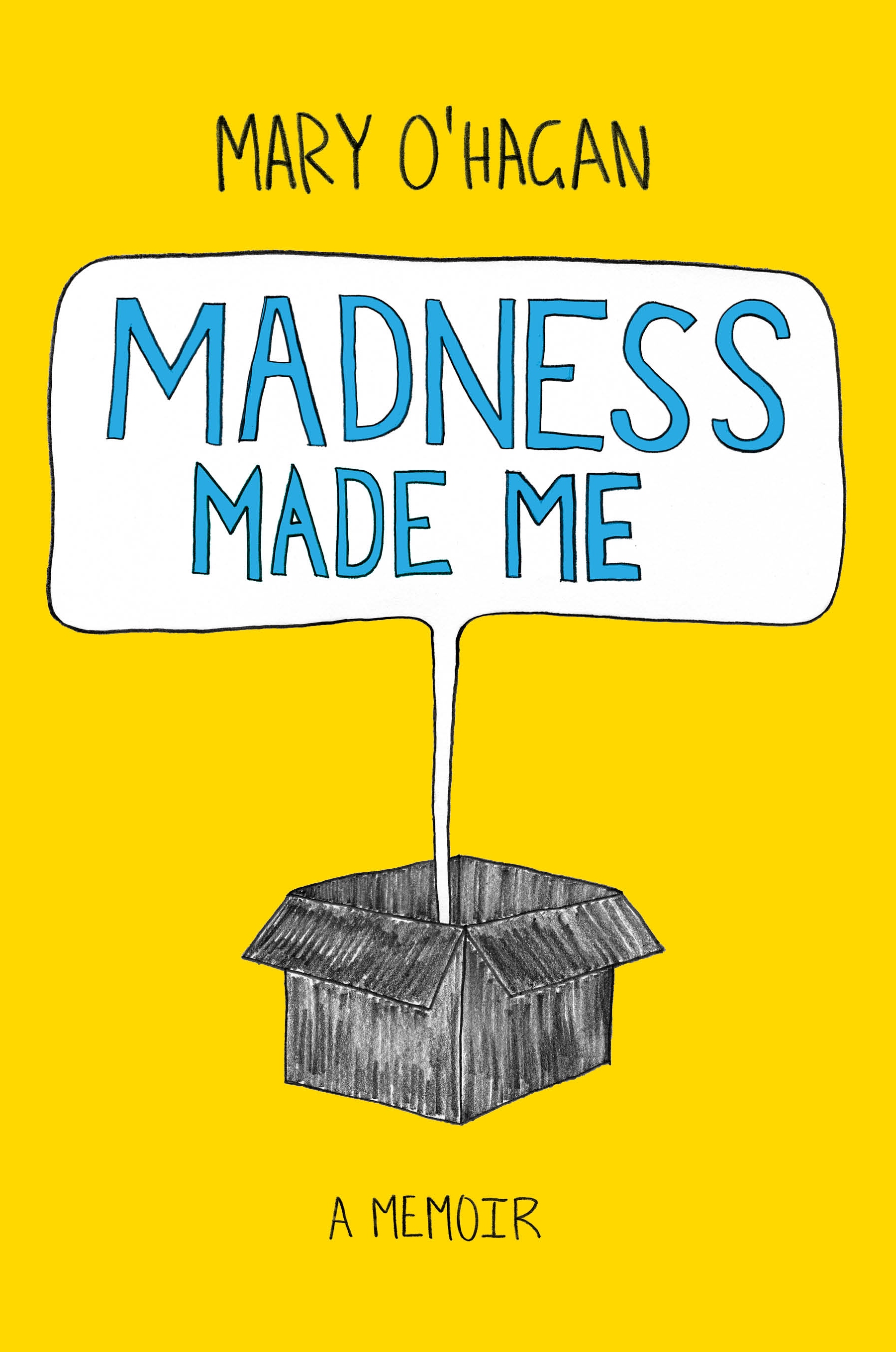
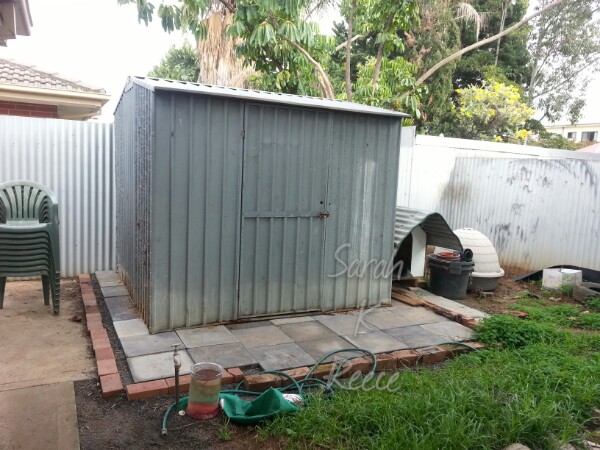
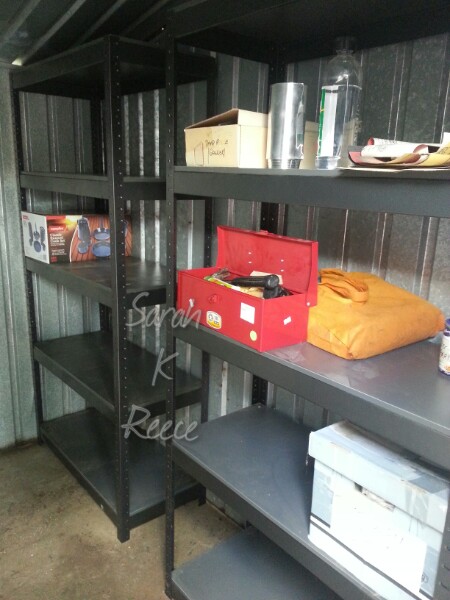

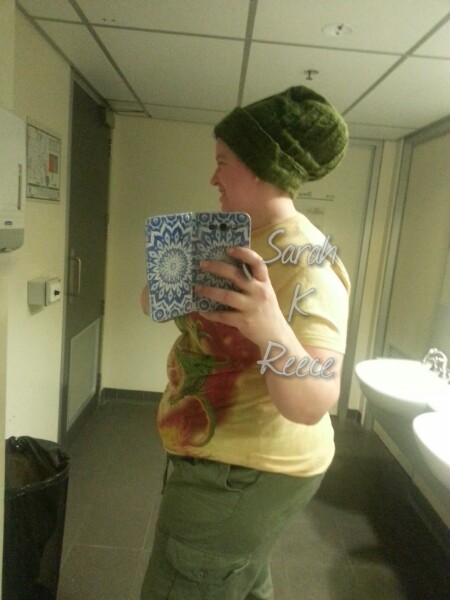
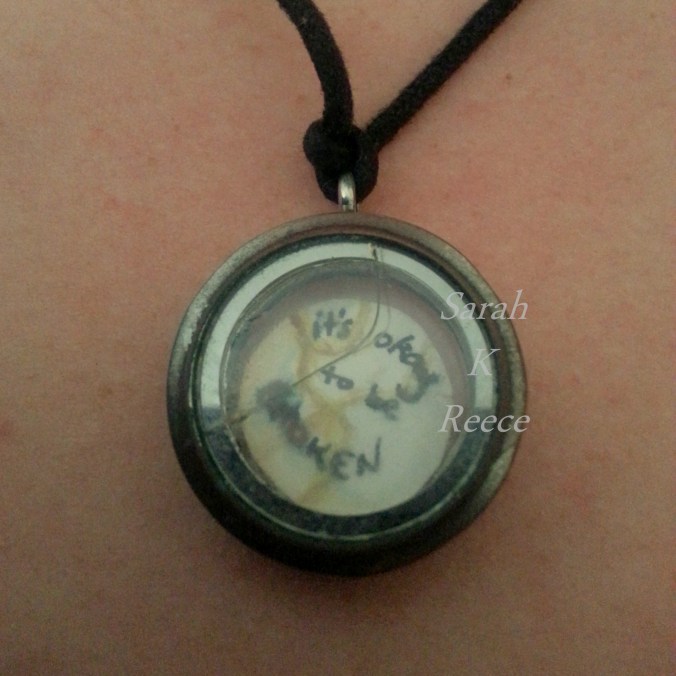
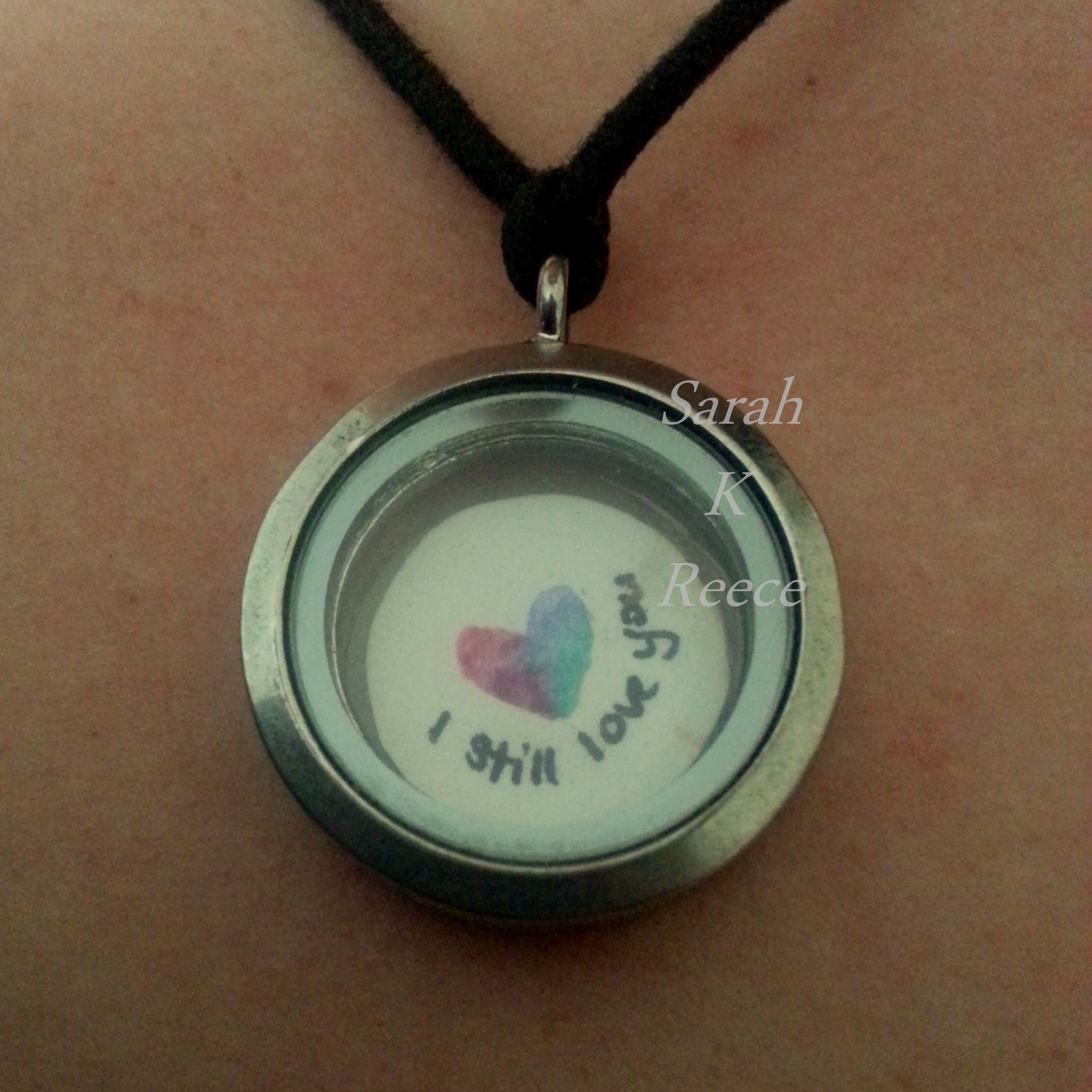


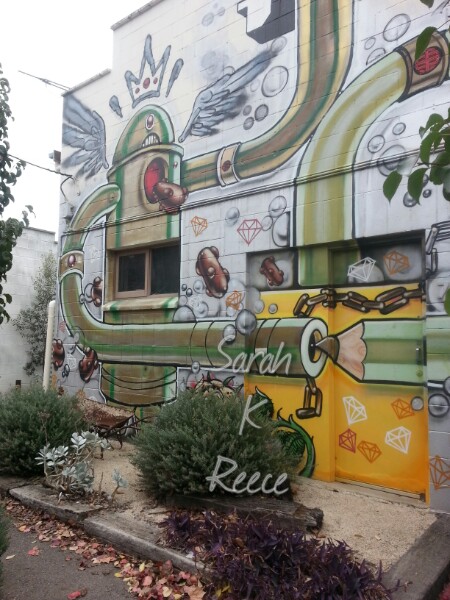


 Sarah K Reece