Contribute to Mindshare

Mindshare is a new online Mental Health community, and they’re very keen to hear from other people who live with or care for someone with a mental illness. The site has a regular blog from guest bloggers – including myself! There’s also an area for creative content such as artwork, music, and poetry. They have a page listing mental health related Services, and an area called Consumer Resources which includes current news, events and articles. Well worth keeping an eye on as new content is being added frequently. The home page will always show the newest additions.

So, if you’ve a short story, some thoughts you’d like to write into a blog post, or art you could photograph, why not submit it? You can ask to have your work put up under a pen name if you’d prefer to remain anonymous. You can read the instructions for how to submit your work here, if anything’s not clear, give them a call and they’ll help you out. Very friendly people!

You can have a look at my entries on Mindshare here. 🙂

Sculpture – stone and glass

Small Object Making class: start at the beginning:

Another fantastic class at Sculpture tonight. Next week I hope to get down there a bit more often now that some of my extra training has finished. I’ve still some material experimenting to go and must get working on my two final projects. Today I decided to tackle two materials I have little to no experience with, stone and glass. The stone is limestone, we were allowed to appropriate chucks of offcuts from the larger sculptures some other students are making. It is very soft and porous and easy to work for a total beginner. My chunk of stone was roughly pyramidal, about the size of your hand with all your fingers stretched out. This is what I turned it into:

It’s actually a proper three dimensional shape, not just a flat plane, hard to show in a photo without angled lighting:

I’m thrilled! I don’t have the hang of knowing what I’m trying to accomplish yet, a good sculptor would have probably been able to remove chunks of unneeded material at the outset. I filed most of it away by hand, feeling my way along. The risk is a little like cutting a fringe when you’re inexperienced… you just cut a bit off the right side to straighten it up, then just off the left to straighten, then the right again… before you know it, you’ve sculpted a pebble and a lot of sand.

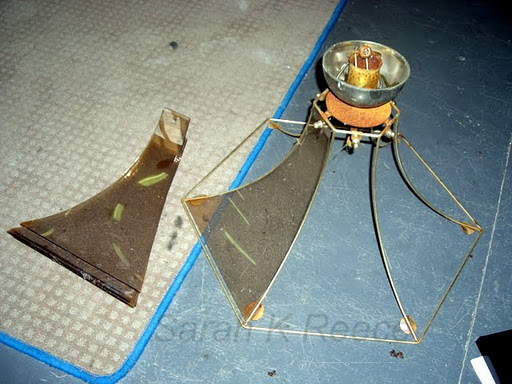
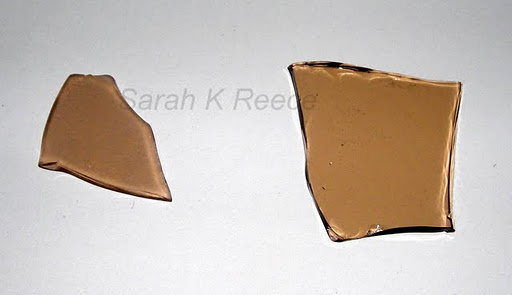
I also had a try at working with some glass. We don’t have the equipment to melt and shape it, but that wasn’t what I had in mind. I wanted to be able to take the sharp edges off broken glass so I could safely create shapes with it. Well, here’s the process:

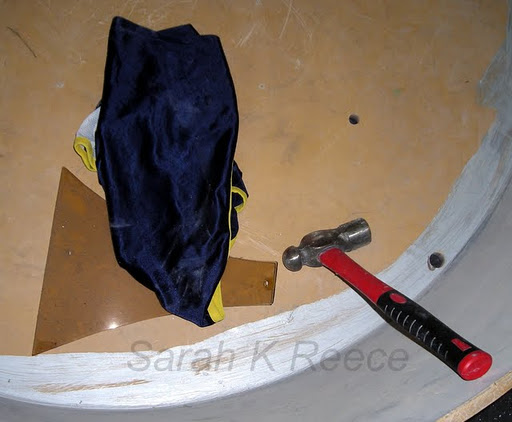
Find some glass – in my case, an old light shade from the hard rubbish collection. Yay recycling! Then safely break in a contained space with cloth over the top to prevent it flying everywhere:

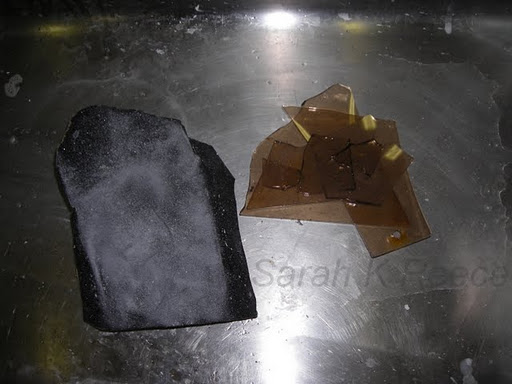
Next, carefully take off the sharp broken edges with wet and dry sandpaper. The glass dust this forms is quite nasty stuff, you don’t want any in your skin, eyes, or other art projects, so it’s best done in the sink, re wetting often.

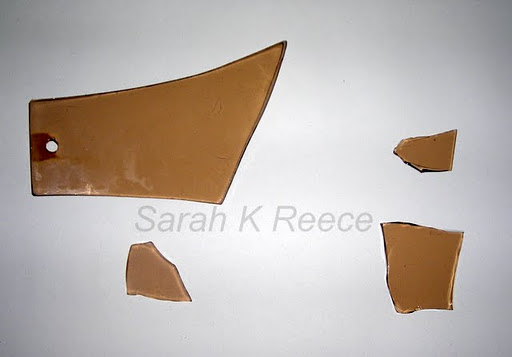
I had time to make two shards safe to handle and I was so pleased with the result! This is something I can do at home to be able to start making art with glass in a small way.

The softened edges of the sanded glass reminded me of sea glass, those dusky glass pebbles all worn down by the sand. So I asked our lecturer about sandblasting, and he put a small piece in the massive sandblasting machine and abraded one side. It looks awesome! (sandblasted on the left, un-sanded clear glass shard on the right)

So I’m going to buy some wet and dry sandpaper and keep experimenting at home… I think my second sculpture project may be made out of glass. I really like the sound glass makes when it chimes gently, so I’m thinking about suspending lengths of sanded glass in a kind of beach inspired wind chime… I also like the way light plays through the glass so the other thought is using it to create interesting shadows.

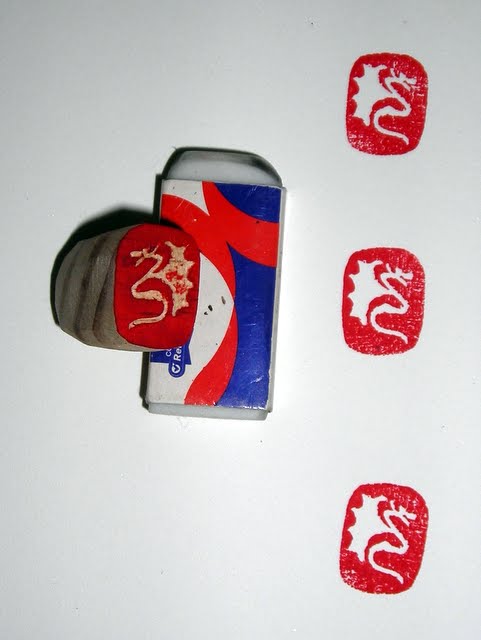
Lastly, I’ve has another try at a home made chop with my dremel engraving tool and this time I’m really pleased with the result, a little flying dragon:

Thursdays are a really long day at the moment, but they’re pretty awesome. 🙂
To see the next post in this series

Understanding Roles

One of the topics discussed in Bridges last week was how we take on certain roles in our lives and how this affects us. We all play roles in life as part of our identity development. Teenagers especially may try out different roles over time or in different social settings as they try to balance needs to distinguish themselves as separate  and the desire to belong. We may also be given certain roles or defined in certain ways by our family or our peer group – ‘Paul is the quiet one’. Roles can be part of how we feel a sense of stability and belonging – ‘Mum always makes a cake for our birthday’. Developing our identity is also strongly linked to adopting role models – ‘Shane’s just like Grandpa’. We may struggle to show attributes we haven’t seen in someone else. People often start to adopt the mannerisms and characteristics of others we admire or spend a lot of time with.

Where roles can a problem is when they are limiting in some way, at odds with who we want to be, or have terrible costs we don’t want to pay anymore. We can find that other people’s idea of who we are can be rigid, not accounting for growth and change over time. Paul may long to be a more outgoing kind of guy, Mum may be desperate to swap roles at times, Shane may be rocked when Grandpa behaves badly. Sometimes teenagers identify with rebellious loners and find that the social cost to this kind of identity is depressing them.

Understanding roles can also be very helpful for multiples. There’s often a reason different parts of a system feel and act the way they do. Sometimes systems are very role-bound, Brenda manages work duties, Bren deals with emotions and relationships, Anne holds bad memories, Dilly stops Anne from sharing them. Understanding what role you and your parts play can be very helpful, not only in the outside world, but in relation to each other. Sometimes entrenched hostility, denial, abuse, or acting out can be better understood when you unpick what role the parts are playing and what drives this behaviour. It’s worth noting here that you yourself play a role with regards to your system too. Sometimes multiples, particularly those with a system that has developed as a central person (you), and a group of alters you didn’t used to be aware of, can forget that how you react and relate to the rest of your system is also having an affect. Your lack of awareness may have been the role you played – to suppress and hide the others so you can function day to day.

So, as a singleton or multiple, you’re aware that you’ve somehow become stuck with a role you don’t like. How do you change it? Good question! As usual, there’s more than one way to go about this. I find looking at the way teenagers manage issues around developing identity useful, because it’s not uncommon for them to experiment and try out different roles and approaches to life. They can be quite fluid while they’re finding where they feel most comfortable. It can be a bit trickier as we get older because we get so used to thinking of ourselves in a certain way, and people around us can re-enforce this, making it hard for us to change.

Something to consider is what function the role you’ve been playing has, and if you need to find a new way to perform that function, or if you want to leave it behind completely. Next, what kind of roles are you drawn to? Who do you want to be? Look around for role models, these don’t have to be people in your life, they might even be fictional characters. Look for ways to model what they do. The Magic of Make Believe by Lee Pascoe instructs how pretending to be a person we admire for a short time can help us to step outside our fixed idea of ourself and take on new characteristics. To a certain extent, we are who we think we are. Just because we’re not teens any more doesn’t mean we have to get stuck with roles we chose at 17 for the rest of our lives.

Another way of looking at roles is to borrow from Jungian archetypes. It may be that you don’t want to give up the role you’ve been playing, it’s valuable and useful and fits for some situations. Perhaps a more useful approach would be to expand the number of roles you can play. This idea simply put is that we all contain a whole bunch of different ways of relating to life – broadly speaking, roles. We get stuck when we’ve limited ourselves to only one or two. The idea in this case is to try and connect with some of the archetypes you’ve lost touch with. So for example, a very conservative straight laced person who’s feeling tired and lacking creativity might look for opportunities to play a Trickster role to liven things up. The theory is that all of us have within us the capability for all roles, the kind of flexibility that allows actors to find any character within themselves for a time. It’s a little like the difference between having only three cards to play, and access to a full deck. Being able to access and live out a peaceful, centred role when we’ve been stuck in chaos, or an assertive role when we’ve felt trapped by shyness, or an introspective role when we’ve been exhausted by driven productivity can free us to express many different sides of ourselves and be able to adapt and respond to many different situations in life. 

Some of the books that talk about Dissociative Identity Disorder also explicitly talk about how to change roles. A not uncommon issue is a part within a system who has played the role of abuser to other parts in the system. These can be strong, assertive, independent parts, who may have complex reasons for taking on this role. It may be an attempt to be protective (it will get worse if we tell, I’ll make sure no one does), it may be a form of self loathing and self abuse – in multiples parts may hate themselves, or may express self hatred by hating other members of their system, it may be behaviour that’s been learned and modelled from people in real life – in some cases the only modelling of a strong person who doesn’t get hurt has been an abusive person. More than one reason may be tangled in together, and the initial reason we take on roles can end up being quite different from why we keep hanging onto them. 

Roles are not static things, they are also about relationships. Roles such as parent/child are mutually re-enforcing. Even if you had no intention of playing the role of a parent with someone, if they keep behaving as a child, you may find yourself starting to behave as a parent. We ‘hook’ each other into roles. So roles that are played within systems are also about the relationships between parts. In the example of someone who’s got the role of an abuser, part of helping them put that role down is getting the rest of the system to no longer relate to them as an abuser – with fear and anger. Part of that process is about rebuilding the relationships – helping the abusive part to see the harm they’ve been doing, to develop empathy for the other parts, and to genuinely apologise for the role they’ve been playing. Helping the abused parts to articulate their pain and fear, to learn how that role came into being and why it was played, to start to connect with the strengths and good qualities of that part they haven’t been able to see before, and to let go of the old dynamic of abuser/abused and hook into new roles. 

If you’re struggling to take on new roles, it may help to link a new role to skills and strengths you already possess, instead of totally different ones. Abusive parts are often coached towards being protectors because their strength makes them great at both roles. There’s many different way of framing roles and the ones that feel positive and achievable may well be easier to take on. Good luck!

Exhaustion

One of the biggest draw backs to visual art for me is that it is a solo endeavour. I’ve always quietly envied musicians who jam together, making art can be rather lonely. I’ve tried being part of art groups, but it doesn’t fit me. Feedback in the middle of the process derails me. I actually went for about 8 years completely unable to make any art. Regaining it has taken a lot of time and patience and unpicking knots I’d become tied up in. So the process is rather fragile and necessarily done in a studio space by myself. In addition, one of the things I value most about my art practice is the absorption, where I tune everything else out for a time and become totally focused on my work. This is difficult for me in a space with lots of other people constantly interrupting. Crafts is a whole other ball game, doing cross stitch while nattering away is achievable and enjoyable. But making art for me must be a private process.

The business of being an artist, like any sole trader, has the spectacular downside of also being an individual journey. There’s no one there to look out for you except you. I’m constantly amazed at how many people think being an artist is really easy. Paint stuff and sell it – how hard can it be? Running any small business requires phenomenal dedication and a broad range of skills across many different areas. For an artist, they require not only creative artistic skills, but business nous, accounting skills, the ability to organise, to liaise with other people, maintain networks within the art industry, and learn many other skills that don’t often come easily to creative types. All against a background of constant devaluing (what’s the point of art anyway, it’s kind of useless) and the ever present risk of not being able to afford the rent.

I was at my last day of SmART training yesterday, and I’m exhausted. Not enough sleep, too much output, not enough places to talk, not enough downtime all combined to leave me on the verge of collapse. My whole body shook gently all morning and I spent the day trying not to cry. Dissociation kicks in and I have to work hard to focus and stop my vision blurring. Emotional exhaustion means the shields I keep strong emotion behind start to fail. Raw nerves are easily scraped. Intensity makes people distance in discomfort or move too close. I miss the team approach of shared work, even while I hate the politics, gossip, power dynamics, and personality clashes. I miss having a supervisor to turn to on days like today. My tolerance for any form of positive psychology is depleted to zero. My ability to believe things will all work out is zero.

This cynicism and emotional burnout is deeply uncomfortable to experience in a social setting. It’s actually an adaptive response. My life has burned down on more than one occasion. Losses, trauma, and chronic stress come out of nowhere like bush fires. Going into shock about it isn’t a survival trait. After the first time, you look for signs it might be happening again. Of course, that process can become self fulfilling. Hard balance to find. It hurts just as much each time, but seeing it coming you can at least brace yourself. So, days like this I find it’s best to be alone, in a space where no one will try to cheer you up, explain that life is what you make of it, or need you to hide the disturbing evidence of your chewed up heart. Trying to be ‘okay’ all the time only deepens the exhaustion. I give up on accomplishment or connection, pour a glass and have a black celebration.

Tomorrow is another day.

SmART Training

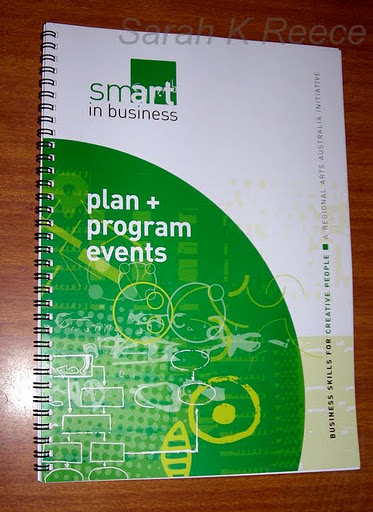
One of the fantastic opportunities I’ve been busy with lately (instead of getting reasonable amounts of sleep) is a couple of modules of SmART training, which is billed as ‘business skills for creative people’ and aimed at people with a disability. Last week we did 2 days on how to plan and program events, and this week we’re doing 1 day on people skills. May I say if you are creative and have a disability – get in to this training! It’s been offered by the Community Arts Network and Disability Arts Transition Team, ignore the dreadful website, the training was really useful and the take home manual comprehensive. It was also a great chance to meet some other creative folks with a variety of disabilities themselves, and to me, that’s as valuable as the training. 🙂 So, keep an eye out and if you see any more of this training, snap it up! I’ll post any info as I become aware of it at my What’s On page.

I hadn’t realised until this course just how much event running I’ve been involved in! I’m the primary event person in my family and social network, every year Christmas and Birthdays etc tend to fall to me. I’ve also been involved in some biggies like the school formal, theatre productions, engagement parties. In fact I gained a reputation for being able to work with people, produce the spectacle and stay in budget. My big weakness to date has been the paperwork side of things as most of what I’ve been involved in has been informal and running to a very tight budget. Things like grant applications haven’t been on my radar. But, I enjoy writing, and if I can master the transition in style from poetry to essay – the former came naturally to me, but the latter took serious effort – then I can learn the language of proposals and applications.

These are very exciting skills to be learning, not only for use in my creative projects, but also for the development of further resources in mental health. That’s a very exciting prospect and I’m keen to take things further and also try to make sure the resources I’m involved in now are sustainable over time. These are key projects I’m very passionate about and committed to, and it’s clear to me that at this point I need to be able to drive and manage them at least until I’ve found existing compatible projects to nest them into or some way to ensure they keep running. It’s an odd quirk of life, but currently art is my ‘day job’ and peer work my unpaid indulgent hobby!

What does Recovery mean?

Like any field, Mental Health has its own language and uses certain words in specific ways. If you’re new to the field, this can be confusing and frustrating. If you’re currently on the fringes of the Mental Health field, you will probably have heard the word recovery banded about a bit, with no one ever really explaining what it means. In the general culture, to have recovered from something means you’re completely better, cured. The recovery model uses the word in a different way, to mean that people with Mental Illnesses still have something to offer, still have rights, and can still live meaningful lives – whether they get completely better, live with and manage their condition, or remain very unwell. The recovery model was moving away from some of the issues with the medical model. Like anything, some people like it and some don’t. I like the model itself a lot, but the way it is implemented can leave something to be desired. Unfortunately, I don’t think we’re ever going to find models that are so perfectly designed we can’t screw them up.

What is a recovery focused service supposed to look like? There’s some great ideas and articles about this out there. I like the work of Marianne Farkas, who in this article sums up the recovery approach into four main values.

Person Orientation

This means not seeing people just as ‘sick’ or mentally ill, but recognising that outside of that role, they are whole people with many different characteristics. This is very important to me, whenever I have a new worker of some kind of in my life, the relationship begins very role-bound. As quickly as I can I move towards a relationship that has two unique people in it, rather than a ‘service provider’ and ‘service user’. By that I don’t mean that it becomes inappropriate or unprofessional. Rather, that I am seen as more than just ‘someone with a mental illness’ and we move away from that unpleasant dynamic of me needing help and having no answers, and them having all the answers and needing no help. I’m always more comfortable when there are two humans in the room!

Person Involvement

Person involvement means including me in all stages of services, how they are planned, created and delivered. The ‘patient’ role favoured by the medical model is a very passive one, I as the patient go in for treatment and hopefully come away cured. My job is to turn up on time and follow instructions. In mental health this passivity is painfully destructive. Firstly, selling the idea to people than someone else can fix your mental illness is cruel. Recovering from a mental illness is an active affair! No one can pluck it out of you. The more you engage, the more you learn about your situation, and develop awareness of what works for you, what makes you worse, what keeps you stable and well, the better the outcome often is. That doesn’t mean doing this alone! But a passive patient in mental health can give no useful information to the people who work with them. The service providers are ‘flying blind’ and reduced to guesswork about what the person needs and what approach might work. Collaboration, where you are in the drivers seat as much as possible, and their role is support you, encourage you, keep you safe, and help you access resources, that is about recovery.

Self Determination

This means having choices! The right to choose one service over another, to refuse services that you don’t like, and to be allowed opinions about your own care. The medical model doesn’t just invite a passive approach, it often requires it and punishes any other response. People are assessed on the basis of their ‘treatment compliance’, how submissive and agreeable they are. Being labelled as ‘non-compliant’ can cause you major problems with getting help, doctors may refuse to treat you or hospitals to admit you, you may have problems with Centrelink, and the public health system is not geared towards choice – staff rotate on their own rosters and you don’t have much power to request to stay with someone you got along with. In fact trying to access the same person can be interpreted as attempting to ‘manipulate’ the system and be another ‘non-compliant’ act, even though most of us understand that good rapport is important and changing service providers regularly is very stressful and tends to result in fragmented care. Choice is about understanding that people are different, there are ‘horses for courses’ and allowing people to settle with providers and approaches that work for them.

Hope

Sadly, this is an easy value to lose. Those who constantly work with the most unwell, disadvantaged people can lose sight of hope. Carers or staff begin to think of all people with mental illnesses as being profoundly disabled. Discouragement sets in, and people with illnesses start to be set up for failure, being told things like ‘schizophrenia is a degenerative disease, you’re only going to get worse’, ‘it’s very unlikely you’ll ever be able to work again’, ‘you’re a hopeless case’. Despair and frustration characterise the conversation between service providers and users, and the level of animosity can become very deep and very entrenched. Hope isn’t supposed to be naivete, but an awareness that things can change for all of us. The most profoundly unwell person still has growth potential! And those of us doing great have the potential for illness. Current roles of ‘well’ and ‘sick’ are not permanent, they may even be exchanged over time. This awareness helps us to interact in a more humble and respectful manner. People can remain stuck and overwhelmed for many years before something clicks inside. I know people who’ve spent many years in hospital and been told they would never recover who are now living independently. Things can change, roles can change, and service provision should always be about nurturing that potential for growth, not making the environment so hostile and depressed that it has little chance of taking root.

I’m pretty keen on all these ideas and I’d love to see more of all of them in our services. In my experience, we’re using the terms but not always understanding just how profound the power shift is supposed to be. There’s still a long way to go in improving the quality of mental health services and developing systems that are designed to be flexible, adaptive and responsive to individual needs. At the moment we often have systems that are limited and restricted, with some awesome people struggling to work within them. Getting your degree – or diagnosis, can be like being invited to a war. You’re given your uniform and told what side you’re on, and from that point forwards everything is ‘them’ and ‘us’, and no one is rewarded for seeing the other point of view. There is a better way, and I think recovery values are part of this.

Poem – At least the night howls

If you’re going to be homeless
Autumn is the season.
The rain is desolate I know,
but in a shelter or a cheap hostel
easier to keep warm than to cool down.

The heatwaves have passed.
I will pack my permitted 2 bags
layers is the key – layers of clothes
socks with stockings under pants under skirts
the waddling walk of those too poor for heating.

I’ve been here before.
When the world ends, I know what to bring
to make it easier to bear;
a box of Lady Grey teabags
a comb
my own shampoo
that smells
   like something from a world
       in which this sort of thing
           simply does not, cannot happen.

Besides, it is easier to be lost and hurting
when the wind cries
when the stars are blurred by rain
water on the roads, dead leaves in the gutters
trees aching in the cold.

All the people may continue
their lives, utterly undisturbed
but at least the night howls.

About Bridges

Our weekly therapeutic group Bridges is going well.  I’m so pleased with how it’s developing. We’ve had no major incidents or problems, and the feedback about the group has been excellent. (‘We’ are a few people working together in the dissociative initiative, a group developing resources around dissociation.) It’s not the ideal space for everyone, but it’s clearly going some way to meet a need in the very under-resourced area of dissociation.It’s actually a pretty exciting project, there are very very few peer-run dissociative groups out there. We did a lot of talking, reading and research before we launched the group to make sure we came up with a good model. It was about a year in the making between discussing creating a group and actually having our first meeting. Part of that time was also spent developing resources such as basic information about DID and Dissociation, and giving talks about the topic to start raising awareness of the needs in this area. We also gathered feedback directly from people with these conditions to check that our assessment of what people wanted was on target.

We ended up drawing a lot from the model used by the Voice Hearing groups, particularly in regards to the open nature of the group – it is held weekly but there is no pressure on people to attend. While a group like this can be a huge support and resource, it can also be unsettling and disruptive, leaving people feeling ‘stirred up’. We wanted people to feel a sense of belonging even if they only chose to come occasionally, and to have the opportunity to self-regulate, that is, to decide for themselves when and how often attending the group was going to be helpful. The feedback we’ve had from people has suggested that this approach is working well, and just knowing that the group is there and available even if someone isn’t attending every week does help to create a sense of being welcome and accepted somewhere.

Some of the group models we encountered exerted a high degree of control over participants, for example, requiring signed documents from treating psychiatrists that the person had a dissociative disorder, was in active current therapy, and had the doctors permission to attend the group. Some of the models were also very regimented, with a strict schedule of discussion topics, and required attendance at each meeting.

We felt these approaches were inappropriate and wanted to create a safe space that was flexible and adaptive to the particular needs of the group members on any given day. We also wanted to emphasise the ‘peer’ aspect of the group, the Voice Hearers groups are ideally faciliated by people who themselves hear voices. This can really help to create an inclusive space where people share from a more equal place. We decided to work according to the following values:

  • Safety everyone has the right to experience a sense of safety and support within the group. We ask people to be mindful of not distressing each other by discussing sensitive things such as graphic abuse memories. Everyone is encouraged is speak up if something they are not comfortable with is being discussed. The personal sharing within the group must remain confidential. Some people attending have not disclosed to other people in their life about their experiences, it is especially important to not accidentally ‘out’ anyone. The group facilitators are available if anyone needs to debrief or wishes to discuss something further outside of the group.
  • Respect each person, their ideas and perspectives. We don’t need to agree with each other and we try to avoid advising each other as the recovery process is very individual and what works for one person may not be the best approach for another. We do share our thoughts, ideas and experiences so that we can learn from each other, but we don’t try to make other people agree with us. We all have the right to understand our experiences in our own way.
  • Recovery the focus of the group is to share, listen, feel heard, and develop strategies to better manage dissociative experiences. It is okay to be struggling or frustrated, but the goal of the group will always be to grow and develop our own recovery journeys.
  • Acceptance the group will aim to make room for all people who benefit from attending and each person is welcome to be however they need to be at the group, as long as safety and respect is maintained. Group members are at different places on the dissociative spectrum, and have different experiences around dissociation or multiplicity. We will not diagnose one another or in any way encourage a worsening of symptoms. Some people may switch during group, and there is no problem with this. While we especially seek to make people with multiplicity at home, no condition or experience is more important than any other.

The format of Bridges is that anyone who experiences dissociation and/or multiplicity is welcome to come along. They can contact us first if they wish, or they can just turn up on a Friday and see how it feels. (Do check MIFSA is open, it will close for a little while over Christmas for example) People don’t need an official diagnosis or even to be certain that dissociation/multiplicity is what they are experiencing. It can be very confusing, and it’s okay to come along while you work out what is going on. People are welcome to bring a support person along with them if they wish, such as a friend, carer or worker. We don’t allow support people to come by themselves unless they also experience dissociation/multiplicity as group members can feel a bit exposed otherwise. We do recommend that people consider bringing a support person or making safe arrangements to get home from group if they anticipate being too stirred up to safely drive or navigate public transport after the group!

I do prepare a range of relevant discussion topics in advance, but we aim to uncover them naturally as people share ideas or concerns within the group. Every week I post here some aspect of our conversation that may be useful, partly for the benefit of people who can’t attend, and partly because many people who experience severe dissociation have difficulty retaining information and having a written history of group topics to refer to can be a useful resource.

I’m continuing to grow our little library so that people who find bibliotherapy helpful (like me!) can freely access relevant books. We would love any donations if you can help! One of my next major goals is to work on developing a way to include rural or house bound people. Another is to see if we can source some funding to pay us a little for our work. There’s also a tremendous need for specific carer support in this area. I went out this week and bought some new supplies for Bridges. I now have a receipts book and coin purse to handle the deposits for my library books, the Bridges notebook for details such as possible discussion topics, and the pencil case, pencils and crayons are for people to draw or colour during group if they wish. The table is always set with books to browse, water and snacks, and colouring in paper. Doing something with your hands can be a useful distraction to calm down when feeling anxious. Colouring supplies also help make Bridges a safe space for younger alters. 

I’m very proud of this group, for everyone who comes along it is such a huge achievement considering the atmosphere of controversy and hostility that sadly dominates conversations about dissociation. I’m hoping this group is a small step in the direction of changing things and improving the support offered to people who experience dissociation.

Sculpting in metal

Small Object Making class: start at the beginning:

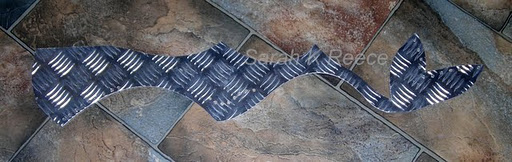
Still working hard at Tafe on my material experiments, this week I was working on metal. I haven’t had much experience in this area so I’m pretty excited. I found a piece of scrap aluminium and learned how to use a metal bandsaw to cut it. Aluminium is pretty soft and has a low melting point so it has to be handled pretty slowly on these tools or it starts to melt and clogs everything up. I had some fun cutting curved lines, which is a bit trickier, and then drilled some holes in it with a drill press, and filed and sanded all the sharp edges. Here’s where it’s at so far:

It’s going to be a stem with a flower bursting from the seedpod. It’s about as far away from the rose petal bowl in technique as I can get!

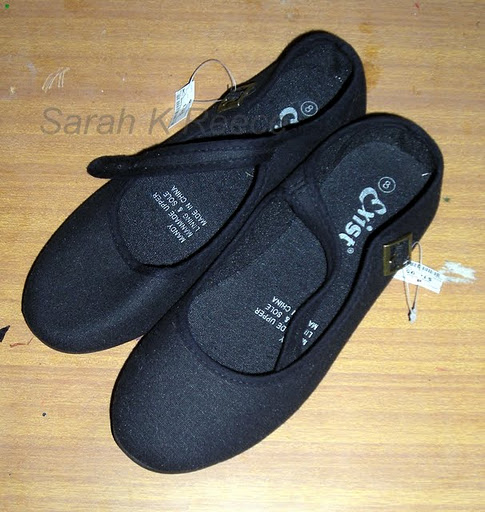
I’m also excited as I have a customer! Here’s the new pair of shoes I’ll be working on, they’ve requested bugs and butterflies like this pair. I love a fresh canvas just waiting for me to get to it, always makes my heart happy.

But for now, with all my extra training this week and a few evening events, I’m beat! Looking forward to sleeping in this weekend and catching up a bit. Almost there…
See the next post in this series

Follow up to the Inquiry

During the Inquiry into Mental Health and Workforce Participation, myself and a few colleagues talked at Parliament House and we were asked some great questions. I love being asked great questions, it shows that the other person was really listening and engaged with you. And then I get all excited and my brain buzzes as I try to engage back and come up with good, useful responses framed in a way that will make sense. Between the nerves and the excitement, it’s a bit like skydiving! We ended up sending in a letter with a more detailed reply afterwards to make sure we’d really answered everything. I thought I’d share the gist of some of this with you.

Q: What would have helped you to access education or employment when you initially became unwell?
A. For myself, I really needed targeted support on campus at university that was geared to assist people with mental illness and multiple disabilities. One of the difficulties with the disability sector is that it often operates on a limited framework, assuming only one condition per person. For people like me with difficulties in more than area, support can be limited and fragmented. The kind of support I have needed on campus is a safe place to retreat to – be that a quiet room, a group meeting area, a small cafe or space in the library. For me it needs to be small, quiet, out of the way, open all hours and easy to get to. Libraries have traditionally been my safe haven, but uni libraries are very large and confusing and I tend to get lost in them!

I also needed someone I could talk to who was willing to provide emotional support while I oriented myself and became more comfortable on campus. I struggle in new environments and with lots of strangers around. The counselling I accessed during my time at uni was unsuitable. The counsellor was extremely anxious about my mental illness, geared for short term goal-oriented counselling, and outraged that I was just seeking emotional support from them. A better understanding of the nature of mental illness would have been very helpful.

Similarly, making more disability friendly the other pathways back to work and study would have been very helpful, such as volunteering and short courses. Helping people like me to feel useful, connected and to find a road back to our study and work goals is crucial.

Another thing that’s often overlooked is that good mental health is built upon a foundation of stability and security. Mental illness can arise from major life challenges, and can create major life challenges. Many people with severe mental illnesses also face complex issues such as homelessness, family breakdown and domestic violence, isolation, drug and alcohol issues, and physical disability. All these contribute to instability and make maintaining work or study extremely difficult. It may not seem intuitive to support employment for people with a mental illness by providing services such as appropriate housing, but this kind of foundational, practical support is key to creating the kind of life where day to day survival is less consuming, so there is time for the pursuit of education and work goals.

Making it easier to link into services would have been incredibly helpful. As a young person I was given no information about my mental illness, local services available to me, and I had no idea there were things I could do to improve my mental health. My doctor or the university could have provided this kind of information, or a referral helpline could allow people to find out about services in their area. Making support services more friendly and accessible would also help. I was initially extremely afraid of the mental health system and deeply intimidated by the labels. It took a mixture of courage, exhausted indifference, and desperation for me to be willing to walk into buildings with words like “Mental Illness” on them. Many of the services available are also very restricted in the kind of support they provide and who they accept as clients. Many services provide support based on the label of your condition, for those of us with poorly funded conditions or rare ones, we can really struggle to find anyone to look out for us. Even if you can access a service, growing older, moving house into a new postcode, getting a new diagnosis, or becoming homeless can all see you become ineligible and exited from the system. Flexible and tenacious support is key. Had I been linked to a PHaMs worker back then, things may have been very different.

Reducing fear and stigma in the community will also make it easier for people with mental illnesses to seek early help and stay engaged. School aged education about mental illness, self care, early warning signs, and hope for recovery could help students struggling with emerging mental illnesses to recognise their condition, know where to go for help, and feel more comfortable about doing so. The opportunity to connect with Peer Workers who have come through mental illness can help enormously to encourage people that a mental illness is not the end of the world.

Q. What can the Government do to encourage employers to employ people with a mental illness?
A. Far more powerful than telling the business world how they should be including people with mental illnesses in their workforce is to model how it can be done. This would normalise the practice and show commitment to meaningful inclusion. There are already people within Government departments who are managing a mental illness, and they could be approached as a resource to develop policies around the employment of people with a mental illness. If the Government leads the way by supporting people with a mental illness within their own workforce, other organisations and employers are more likely to follow this example.

FaHCSIA has models such as PhaMs that require Peer Workers, so having experienced a mental illness is a prerequisite of the position. The Government could ensure that current and future models be designed to have the same requirements, for example respite services, community based mental health programs, Centrelink, or Medicare. Include Peer Work positions in service agreements, then follow up, review and support organisations to implement them.

Education, training, and ongoing support for employers about managing a workforce containing people with a mental illness will help to reduce some of the fears that employers have. An example of this is the Remind Education Program. Ideally, this kind of training should be provided by people with a mental illness themselves – this will reduce stigma and create jobs directly for those individuals. A helpline for employers may be an appropriate format for providing ongoing support.

Peer Workers play a crucial role in raising awareness and reducing stigma. Peer Work positions value the ‘on the job training’ of people who have learned to manage a mental illness, so that it in some way stacks up when compared with people who have theoretical training. The Peer Work Program can be supported as a pilot model for the employment of people with a mental illness. This model can then be expanded to be used for the employment of people with a mental illness in any role.

Lastly, creating safety nets so that people with a mental illness can manage episodes of illness without losing their jobs or having crucial tasks left undone will promote employer confidence and employee security. For example, having a disability employment support who make a staff member available to fill the individuals role should they become unwell. Less pressure on staff with a mental illness can lead to greater productivity.

Q. What are the risks to Peer Workers? For example, are they similar to those faced by Peer Workers in the Drug and Alcohol sector?

A. I found this a really interesting question. The risks to the health of Peer Workers in the field of Mental Health are very different to those faced by recovered addicts/alcoholics who work in the Drug and Alcohol sector. The development of a mental illness is quite different from the addiction model. There is nothing ‘tempting’ about spending time with people with a mental illness. I’m also not aware of any evidence that spending time as a peer with people with a mental illness will in any way make someone more vulnerable to mental illness or a decline in their mental well-being. That certainly hasn’t been my experience, on the contrary, being part of my groups has been of tremendous benefit to me!

Having said that, Peer Workers do have risks to manage. Some of these are simply the kind that anyone in the workforce has, such as coping with life stressors or balancing work and family responsibilities. There are also some issues that are particularly relevant to anyone working in the mental health sector, such as the possibility of burn out, and the importance of minimising vicarious traumatisation. Lastly there are some issues specific to the role of Peer Worker. Peer Workers have a ‘foot in both worlds’ as it were, partly staff and partly consumers within the mental health system. Membership to more than group in this way can be stressful, particularly at times when those groups are in conflict and each is demanding the exclusive loyalty of the Peer Worker. As the role is relatively new, sometimes Peer Workers work under unclear job descriptions, experience workplaces that don’t model good mental health practices, or struggle with a lack of support from management. Sometimes Peer Workers can be under extra pressure to prove they are managing their mental illness. Boundary issues can be difficult to negotiate, and some Peer Workers have lacked access to relevant training and support.

My experience has been that Peer Workers often report that their work is part of their recovery journey rather than a risk to it. In work environments that are supportive and well matched to their skill set, Peer Workers can flourish. The opportunity for employment and the chance to give something back is a meaningful part of the recovery process. Peer Workers can also appreciate the transformation of experiences that have previously been a liability into an asset.
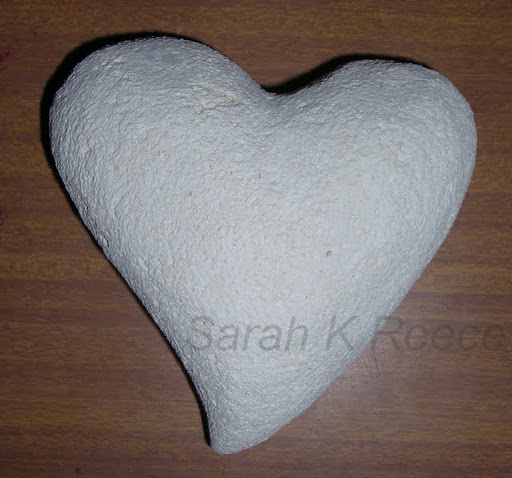
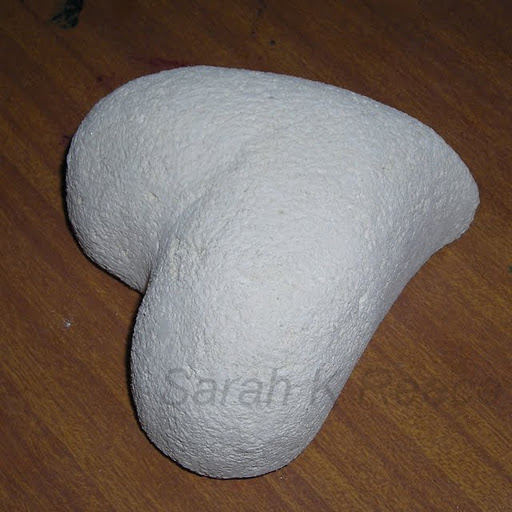
Sculpture class – wood

Small Object Making class: start at the beginning:

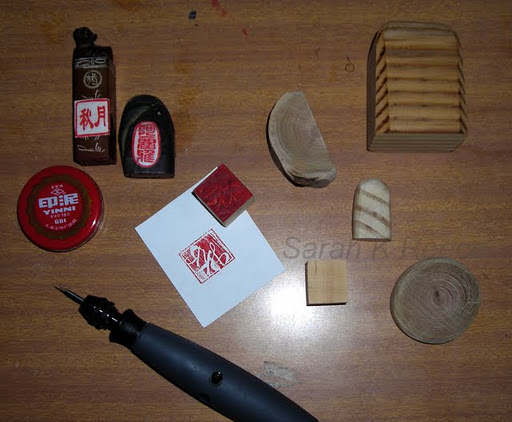
Well, I’ve been getting in some homework for my Tafe class. My journal is looking a bit healthier, or it will once the glue has started to dry anyway. I’ve been exploring the use of wood as a sculpture material. In class on Thursday I learned how to use a band saw and belt sander and other large and dangerous pieces of equipment. I also tried my hand at using an oxy-acetylene torch to heat metal and then beat it. It was tremendous fun but a lot of hard work! So having cut wood into very small shapes and then sanded them into even smaller shapes, I started to think about sculptural shapes and uses. Some of the small squares suggested themselves to me as seals, or chops. Some of the larger discs seemed ideal for carvings or woodcuts. I love the way different art forms blend into one another. I bought two chops in Singapore earlier this year and use them for some of my artwork such as the haiga. So I tried a simple engraving of my initials, but when I went to test it realised I’d forgotten a small but crucial detail:
…you have to carve in reverse if you’re going to stamp with it! Whoops! I’m keen to try some more traditional carving in my next session, I’m thinking of trying to carve a little girl in a cloak. She appears in some of my paintings and as she’s a fairly simple shape I’m hoping she won’t be too complex or beyond my current skills.
For my journal I also have to look up other sculptures for inspiration and ideas. Here’s a few made from wood that I enjoyed:

See the next post in this series

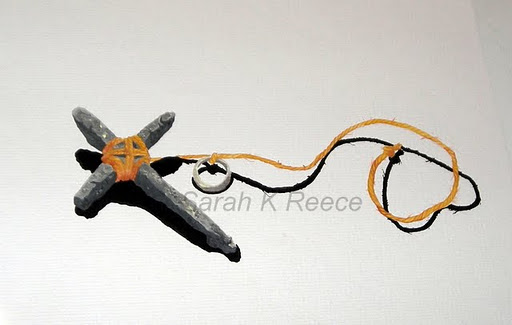
Other media

Broken and Loved Pendant

2015-05-19 09.33.45

Broken and Loved 2 sided pendant

Painting Mandala Stones

wpid-20150513_164346_wm.jpg

Painted mandala stones

Fire Journal Cover

See me as I am Mixed media; acrylic, yarns, wood, beads, wire, polymer clay 1.5 x 1.2m

Wedding ring, to the sea returned Watercolour

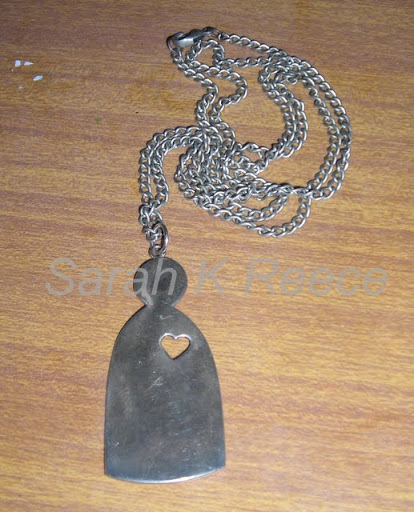
Sterling Silver Pendant

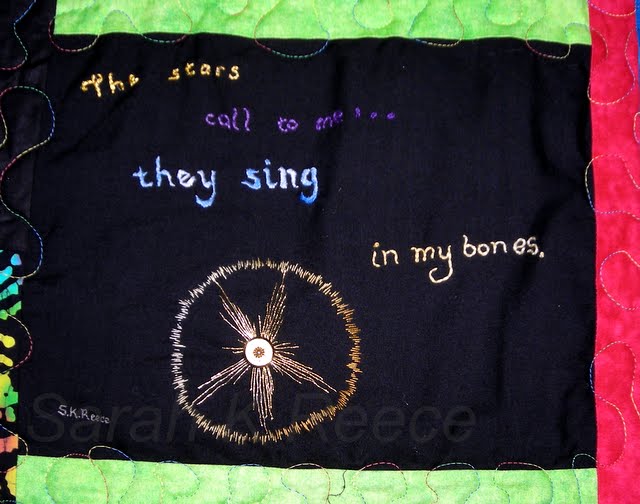
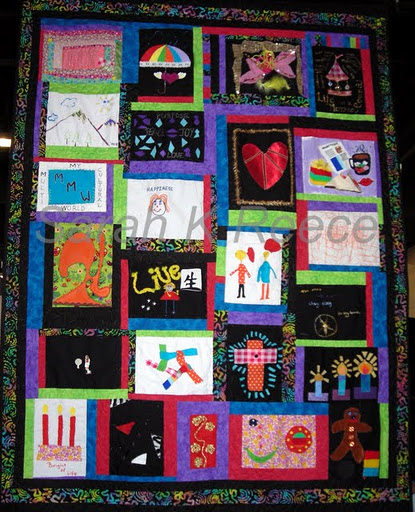
TheMHS Group Quilt Project

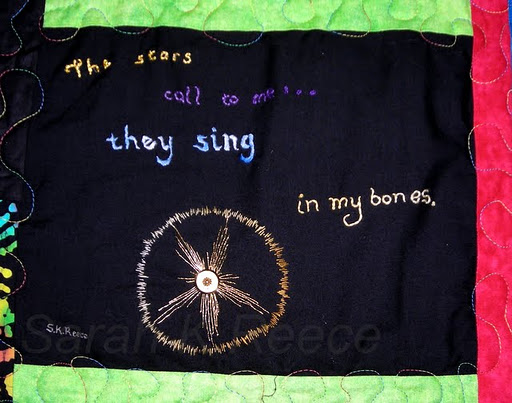
Embroidered panel for group quilt

Wooden dragon chop

Moon and tree chop

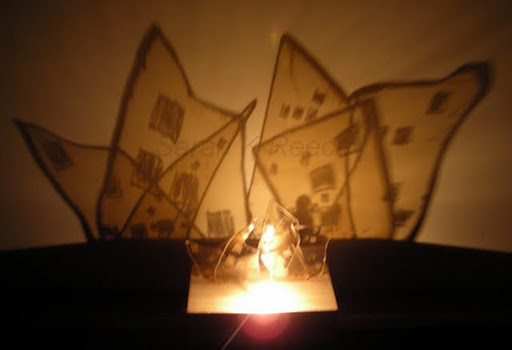
Broken City Sculpture:

Broken City Glass and shadow sculpture 

Beaded jewellery

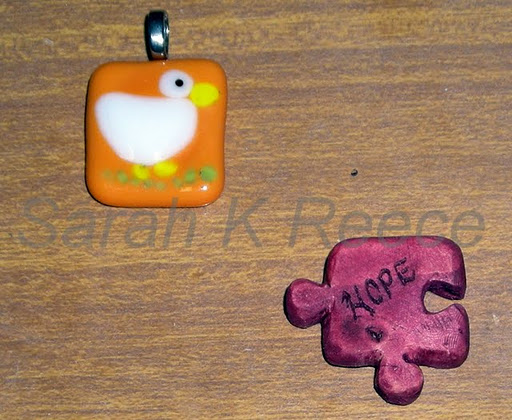
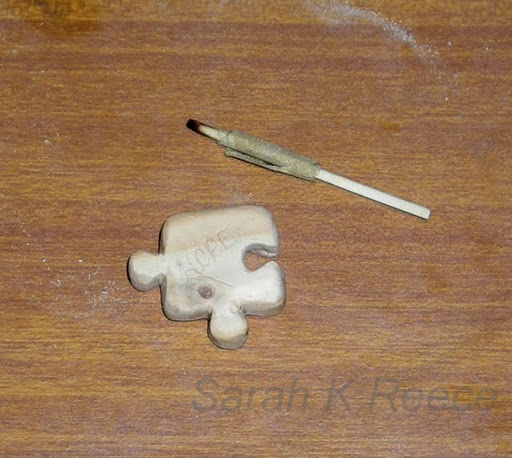
Kiln fused glass Leunig duck pendant Hand carved wooden Hope pendant

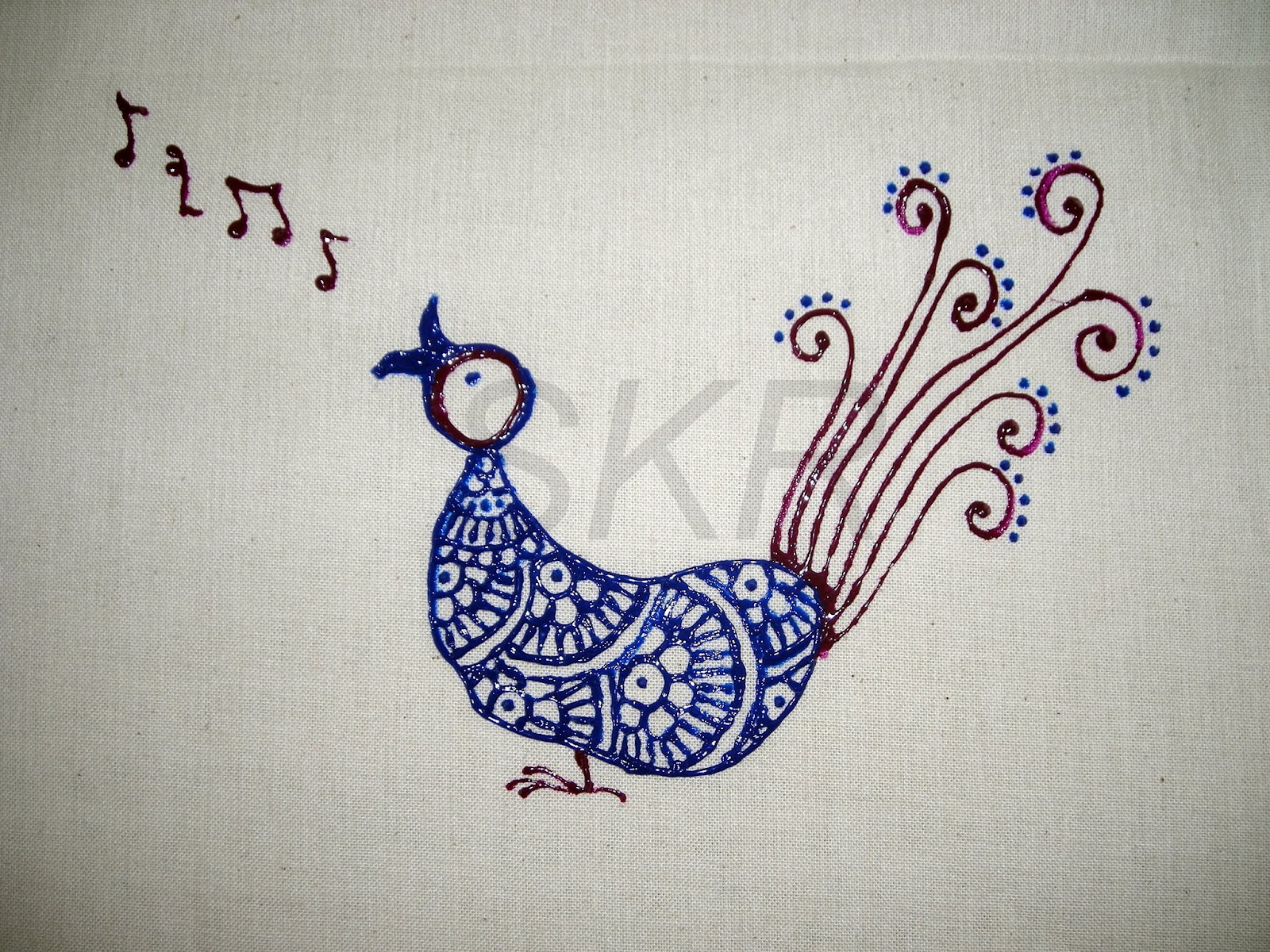
Blue bird of happiness – Fabric paint on linen

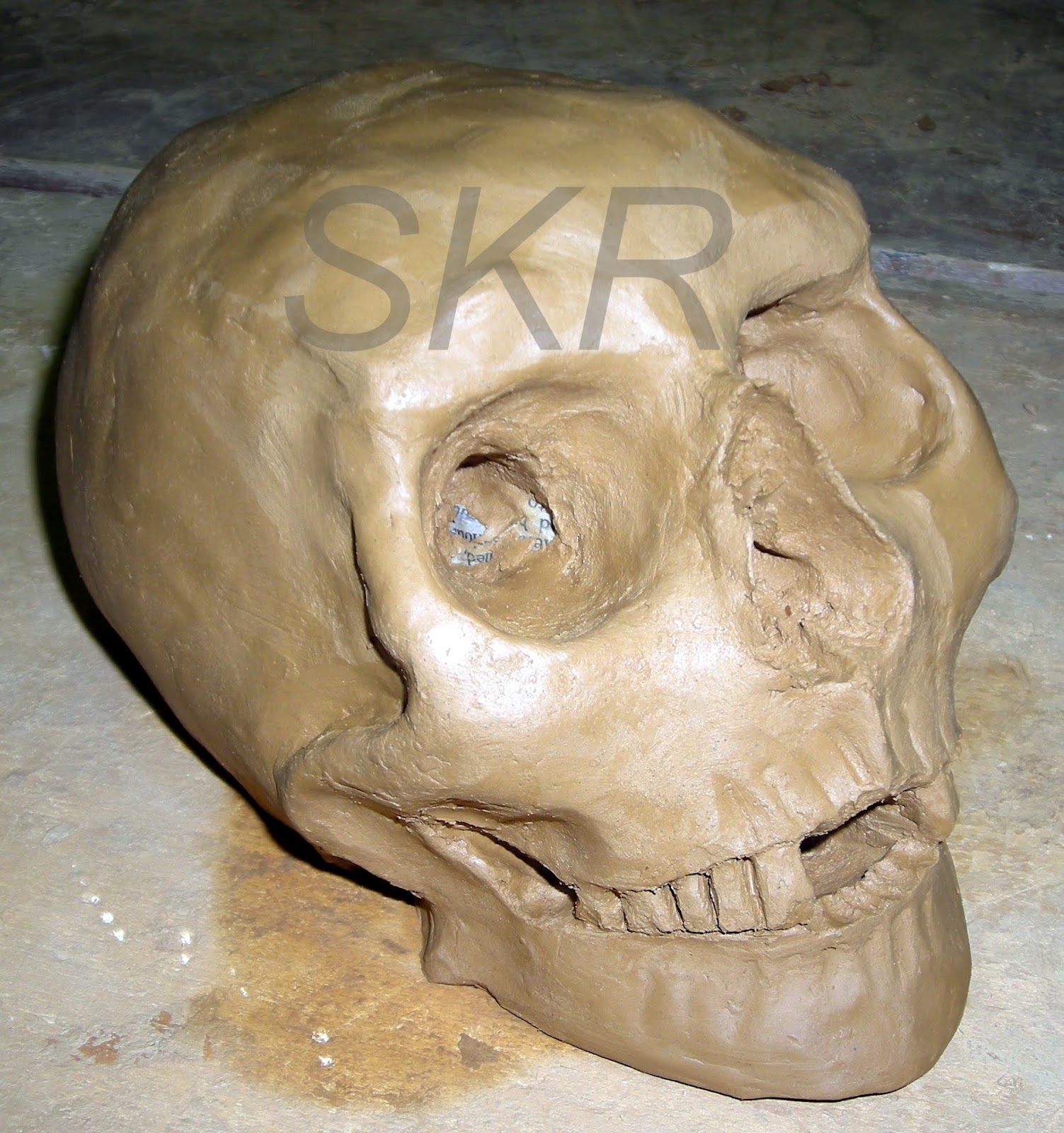
Human skull

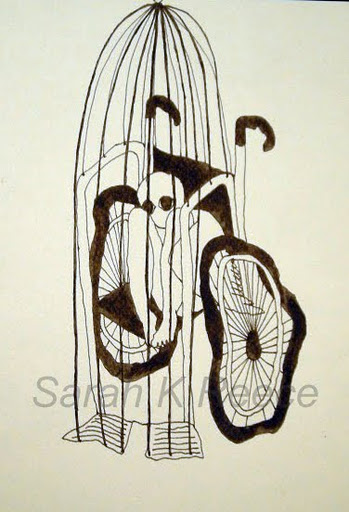
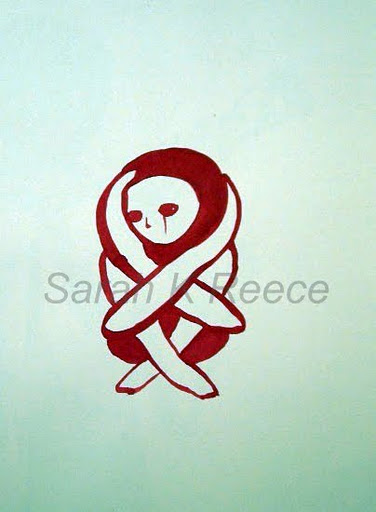
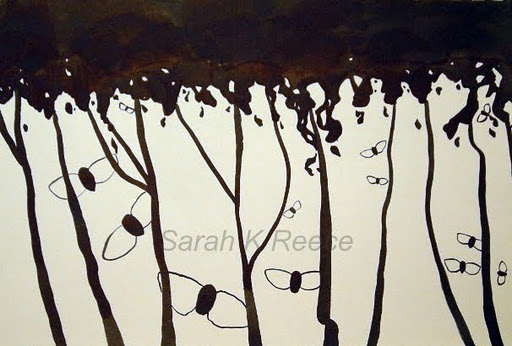
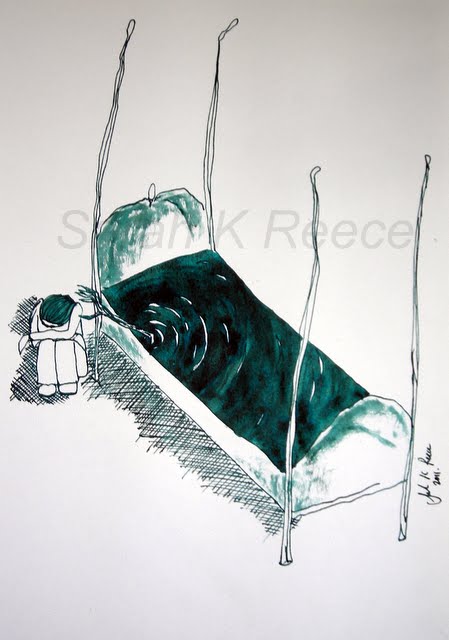
Ink Paintings

 2013-05-29 14.24.52-4
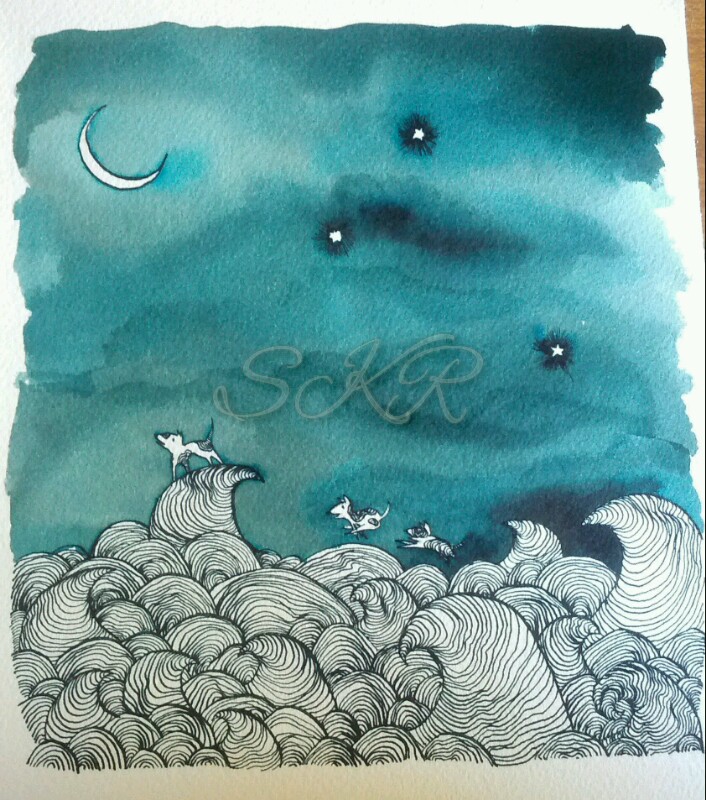
Sea dogs romping
Ink on paper
She Loves - Sarah K Reece
She Loves
Ink on Paper
74a8c-dscn8165
The Gap
Ink on Paper
Spent my prize money!Creativity – Expressing Pain
Chinese Inks on Paper
wpid-IMG_20140221_133708_wm.jpg
Tangled
Ink on paper
Feeding the monster
Feeding the Monster
Ink on paper
Reza Barati 2014
Reza Barati
Ink on paper
Bare feet watermarked
Bare feet on grass
Ink on paper
I returned to find me
Ink on paper
A4 size
Art commission ink drawing
Despair tears me open, blood turns the rain black
Ink on paper
A4 size, framed
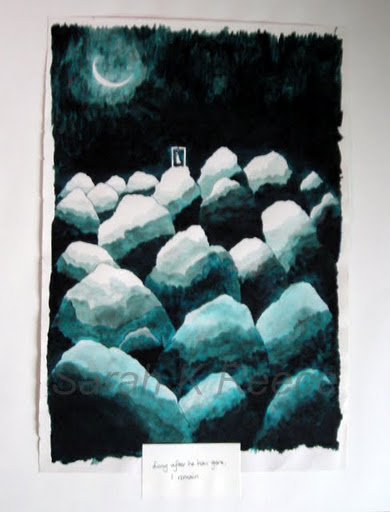
Long after he has gone, I remain
Ink on Paper
A3 size, framed
received commendation MIFSA Art exhibition

Tree spirit burning
Ink on paper
A5 size, framed

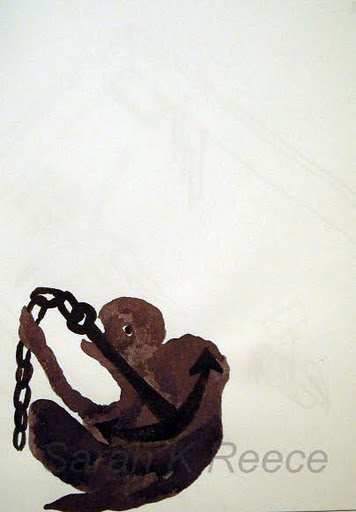
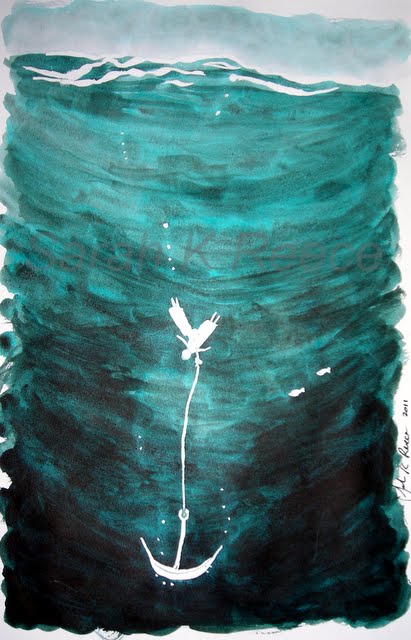
It is love that anchors us
Ink on paper
A5 size, framed

Disability (a strange freedom)
Ink on paper
A5 size, framed

Shattered
Ink on paper
A5 size, framed

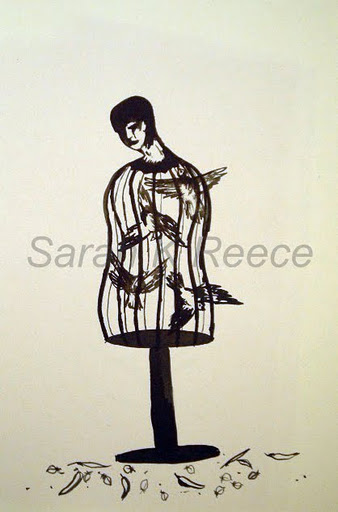
The Dream Keeper
Ink on paper
A4 size, framed

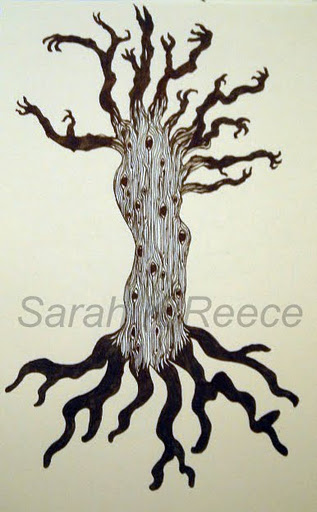
The Tree of Anguish
Ink on paper
A4 size, framed

Mum and Dad are fighting
Ink on paper
A5 size, framed

Midnight
Ink on paper
A3 size unframed

New Growth
Ink and gold leaf on paper
A3 size, framed

Nightmares
Ink on Paper
A4 size, framed

Not Alone
Ink on Paper
A4 size, framed

Homelessness
Ink on paper
A5 size, framed
Sold
won award for expression in Big Circle Arts exhibition

The Gap
Ink on Paper
A4 size, unframed

Progress
Ink on paper
A3 size, unframed, commissioned work
Sold

The Weaver
A4 size, unframed

Smoke and dragons
A4 size, unframed

She Falls
A4 size, unframed

Listening to your dreams

Not the ‘hearts desire’ kind, the ‘strange stuff your brain gets up to while you’re sleeping’ kind. Although, the overlap of these two rather different concepts with the one word really interests me. In our group Bridges last week we talked about this. There’s a whole fascinating and complicated science to dreams, how they work, when they occur, why some people remember them and some don’t and all sorts of interesting things. But that’s not what I’m going to get into here. As someone with PSTD, dreams and nightmares are a big part of my world. I’m one of those highly creative types who dream furiously, frequently, in colour, and have some control in my dreams. (which doesn’t stop awful things happening – kind of like life) I’m also a highly traumatised person whose subconscious at times seems to be a swamp full of pain and misery, and nightly immersions can be distressing and exhausting. So doctors are often very surprised when I say that were there a medication that could stop all my dreams, I wouldn’t want to take it.

This isn’t masochistic, it’s because my dreams are an important source of information about how I’m travelling. For someone who’s severely dissociative, I am so accustomed to numbing and walling myself off that I can be in quite serious trouble and not notice until I collapse. My dreams are a nightly consultation with my mind in which the truth of how I’m going is revealed. For a few hours I sit in a theatre and watch  my inner world play out upon the stage. I need the information to make good choices in my life.

I’m not a huge fan of interpreting dreams, I think taking them literally and getting hung up details or thinking they are predictive is misguided. It can be kind of fun to read other people’s ideas about what things mean in dreams, but in my experience, people’s personal internal symbolism can be highly specific and unique. Not all dreams are in any way useful. I don’t rely on my dreams to the exclusion of all other sources of information, it’s just one more way to collect data on myself and see how I’m doing and what I need.

When I dream of being hunted I know I’m feeling afraid and overwhelmed. I need to retreat to safe territory, perhaps spend a day at home or cut down on some of my activity for a little while. When I dream of reuniting with people who once loved me I know I’m grieving and lonely. I need to give myself time to hurt and look for a chance to connect socially. When I dream of torture I’ve learned that means I’m under intense stress and at high risk – even if I don’t feel like I am. I use this awareness to help me look after myself better. Dreams can be a way of gauging how you’re going inside, and of helping information to cross dissociative barriers.

There’s another reason I wouldn’t want to stop dreaming. As someone with a severe dissociative disorder, I’m well aware of what walling off your pain can do. I know the weird disjointed feeling of surface calm while deep inside the screaming wont stop. I don’t want to forget I have nightmares. I want to calm my pain so I don’t have so many. As a child I valued my dreams deeply. No matter what happened during the day, at night I was free from the world. I traveled my imagination like an astronaut in space. It was something that couldn’t be taken away from me.

For multiples, dreams can serve as an even more important source of information – communication between parts. Again, this isn’t universal so try not to feel stressed if you don’t work like this. But if you are a multiple it may be worth considering paying some attention to your dreams if you recall them. Some people find that different parts have their own dreams. Some people find that dreams are how deeply buried parts who never come out communicate their fears and desires. It can be a way of system mapping and learning what other parts of you feel and need. You may be able to open a channel of internal communication by letting your system know that you’re paying attention. Try staying in bed in the morning for a moment to reflect on your dreams. If you don’t think about them in the first moments of waking they tend to fade away. Perhaps your dreams will help you listen to yourself and hear an uncensored reply. Or perhaps not. People are funny that way.

I talked at Parliament House

Earlier this year I was invited to go to Parliament House with a small group of people, talking to a committee who were part of an Inquiry into Mental Health and Workforce Participation. I shared my personal struggles with trying to engage higher education and work once I’d become unwell. Afterwards, myself and another Peer Worker who’d attended, Lisa, sat down and wrote an article about the experience for the MIFSA newsletter. You can read it here. (various of the projects I’ve been involved in are mentioned in that newsletter, you can read about them or see some of my artwork on pages 1, 5 , 6, 11, and 12)

It was an exciting opportunity to be able to say what hadn’t worked, what the obstacles to education and employment for me have been, and to suggest things that would help me to overcome these obstacles. My story was picked up by the Sydney Morning Herald, who wrote this article. That was quite confronting and left me feeling a bit wobbly and exposed. I was pleased however that it seems the way I’d framed my experiences and the words I’d chosen had impact and meaning. We also wrote a follow up letter to better address some of the great questions we were asked. This is what I shared:

I’ve had a long difficult road trying to continue my education and gain employment. At times it has been so demoralising and discouraging I’ve been at a loss to work out how it was ever going to happen. The chronic stress of seeking work and not being able to gain it was extremely debilitating. I’ve also struggled to remain engaged with university and each time I’ve been forced to withdraw the blow to my confidence has been major and taken a lot to get over.

I became very unwell in the first year of university and all my plans fell apart. I was unable to stay at uni, dealing with severe undiagnosed physical illness and mental illness. Without a diagnosis or support for my condition I was required to look for work. I spent about a year actively job hunting and was turned down for everything. The change in my hopes, from having an excellent academic record and sights set on postgraduate work, to applying for jobs pushing trolleys and being knocked back was devastating. My self worth plummeted. My academic successes so far actually played against me in the job market, at the one job interview I secured I was told they had no intention of putting the time in to train someone who would only be off to university in a year or two anyway. I promised I wouldn’t, at that time uni seemed as unattainable as the moon, but it made no difference. Trying to downplay my academic focus in my resume left me with very little to show my work ethic and good character. I started a small home business that failed, and then a second that never got off the ground. My health spiralled and my world collapsed.

Later I reset my sights on uni and tried to get back to my original plan. The support for someone in my situation was completely inadequate and I struggled terribly. Major health problems or life crises constantly interrupted my efforts. On one occasion I had to pull out of my course because I was hospitalised with chronic appendicitis, complicated by medication allergy reactions. On another I found myself homeless a week before the exams. Each time I was forced to withdraw again the sense of failure and hopelessness was overwhelming. Finally I decided this approach was futile and setting me up to fail. I changed gears again.

The years passed and the gap in my resume became larger and larger, with nothing to show for the phenomenal amount of work I was doing just to survive. It hurt so badly to be left behind, to watch my peers complete their degrees and gain work. I felt totally derailed, I’d not just fallen off the tracks but over a cliff, and all my planning and work wasn’t enough to get me back on that track again. I watched other people’s lives from a distance, with pain, humiliation, and desperate envy.

I decided to seek volunteer work as a pathway back to improving my resume, building my confidence, and allowing me to feel useful and connected to my community again. To my surprise, I was consistently knocked back by organisations who didn’t see me as someone with anything to offer. The few who were happy to have me had rigid requirements I couldn’t meet with my health problems, such as minimum 6 hour shifts on my feet. I could donate money but not help out in any practical way.

A couple of things finally changed for me. I found MIFSA, who were happy to have me volunteer in various capacities. I decided that getting back into education needed to be tackled in very small steps, and started to work on  my goal by taking up short courses with the WEA. Lastly, the idea of Peer Work was introduced so that people like myself, who are highly skilled but short on academic credentials could actually use our hard-won experience. My resume is a lot fatter, I’ve been making connections, building networks and finding out about events and training opportunities. I’m spending time now with people who think I have potential, and who also get how debilitating my invisible disabilities are. I’m finally starting to glimpse a future where someone like me, with both my strengths and limitations, has a place.

It shouldn’t have been this hard.

Handling ‘hot’ material

Emotionally ‘hot’ material, like trauma memories, grief, or the intense feelings associated with a relationship breakup for example can be very difficult to handle.

When you’re dealing with something like this it’s easy to become exhausted and overwhelmed, whether that’s from the stress of such strong feelings, or from the effort of trying to suppress them. It’s a tough time and I’ve found a really simple idea that has helped me not to wear out so quickly.

When I was a kid, I came home one day from school and didn’t notice that our little dog wasn’t there. I played away the evening until my Dad came home from work, when the neighbours handed him a shoe box with our dead dog in it. She’d got out onto the road and been hit by a car. I was devastated, even more so because I’d failed to notice she wasn’t there, and had been playing and enjoying myself while our adorable faithful little dog was lying dead in a shoe box. I felt like the worst pet owner in the world, and in that unhelpful way kids often do, I concluded that the whole event was my fault. I felt terribly guilty and miserable. So for the next while, I concentrated on making myself feel as bad as I possibly could. I cried until I ran out of tears. Any time I caught myself feeling happy, laughing about something or having fun, I brought up memories of my dog and how disloyal I had been until I cried myself out again.

Around this time my Nan also died, and I used a similar approach. I tried to prove how much I had loved her by grieving intensely without any relief and by punishing myself whenever I lapsed. I did not have a good year. I held onto my ‘hot’ material permanently, scorching myself deeply and remaining flooded with distress.

I’ve noticed over the years that people are often polarised in how they handle their own hot material, some people flood, like I was doing. Other people wall it all out and ignore it long past the point it needed some attention. Finding any kind of balance is really hard.

A few years ago I had another experience with grief, this time losing my beloved Grandma. It was a difficult time for many reasons and I was under a lot of pressure trying to hold everything together. I was watching my mental illness warning signs increase and my symptoms become less and less manageable. I was really concerned that I was going to collapse under the strain. So I set up a night time ritual that I still follow today. I arranged to borrow some Terry Pratchett books, which for those of you unfamiliar with the Discworld, are brilliant, funny and irreverent. Every night in bed I made time to read some. No matter how sad or overwhelming or painful the day had been, I gave myself permission to take a break every night and even have a good laugh. I didn’t force myself to grieve all the time, and I didn’t let the warped thinking that having a giggle somehow proved I hadn’t really loved Grandma stop me from looking after myself. I was quite stunned at how much difference this little bit of time out made to my ability to endure a very difficult situation.

I’ve found that the best way I handle hot material is to ‘pick it up and put it down’ on a regular basis. I have a tendency to carry it around with me all the time, and this exhausts me. I use this for mental illness and other hot topics too, sometimes I’ll read about trauma, or be writing a lot about my situation and feelings. Then I put it all down and spend a day in the garden, just being a person. For that day I don’t have a mental illness or a trauma history, I’m just enjoying the weather and tending my roses. Later on I’ll pick it up again for awhile. I have to work on letting the process take time, or I get trapped in a mentality that says ‘I’ll have a life once I’ve finished sorting this out’, hoping to work through it really fast and then enjoy myself. This doesn’t work well because without getting some rest and nourishment, I run out of ability to keep going. I’ve also watched other people who have more trouble with picking their stuff up in the first place, who run like mad from it and exhaust themselves trying to escape it when taking an hour to do some journaling, cry on a friend’s shoulder or read up a bit about their condition would take a lot of the pressure off and give them some breathing room. So, if you’re struggling to cope with hot material, try picking it up and putting it down and see if that helps you get through it.

Sculpture – rose petal bowl

Small Object Making class: start at the beginning:

Continuing with the experimenting with materials we have to do for Tafe, I came up with this mad idea and was very surprised at how well it worked… One of our final projects for the class is to come up with some kind of bowl inspired design. It doesn’t have to be functional or long lasting, and needs to be small enough to put on a mantelpiece.

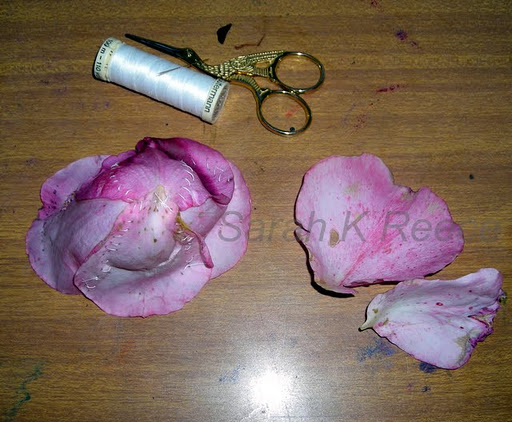
Fresh rose petals from my garden, plus a fine needle and white cotton thread:

Isn’t it gorgeous? Incredibly fiddly and tricky, the petals tear easily and have to be sewn very very gently with short lengths of thread.

It’s lovely like that but won’t last long, it will wilt, then dry out and become incredibly brittle. So, I decided to crystallise it. That involves painting it gently with egg white inside and out, then powdering with fine sugar, propping on paper and gently drying it out in the oven.

I’m really stoked that something so far out worked so well!

It’s really delicate and lovely. I want to try again with a larger bowl, and also experiment with different ways of preserving it and see how it works. The sugar somewhat disguises the stitching which is a shame, it’s quite a feature of the work. More experiments to come!

See the next post in this series:

Sculpture class – Hope pendant

This post is the 2nd in a series about my Tafe class Small Object Making. See the first post here.

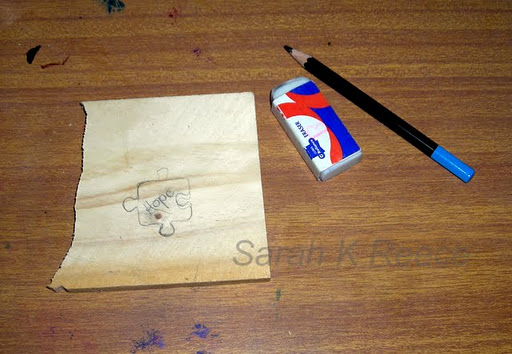
In this Tafe class we’re supposed to experimenting and exploring different kinds of materials that we can possibly turn into a sculpture. We’ll then be working on two projects, a small sculpture of any kind, and something shaped like a bowl, plus keeping notes on everything in a journal. To get us started we’ve been told to explore paper, wood, metal and plastic. I decided to have a play with my dremel at some wood carving. Here’s how it starts, draw my design – I’ve deliberately captured the lovely small knot in the wood:

Some carving and very fiddly sanding with fine grain sand paper wrapped around a match stick to get into all the little nooks and crannies:

Next, testing of a paint ‘stain’ on the engraved ‘Hope’:

And all finished and waxed:

Just needs a bail and it’ll be a lovely pendant. Made of pine so it’s very light and the wax finish is very smooth and nice to the touch. Very happy! I have decided I love carving.

The next post in this class is

Introducing Posttraumatic Stress Disorder

Posttraumatic Stress Disorder (PTSD) is a mental illness within the anxiety category in the DSM IV. It has been said to sit on an intersection between anxiety and dissociation because both these issues feature strongly in the symptoms. PTSD is only ever diagnosed following a traumatic event of some kind. It is a trauma origin mental illness, that is, a mental illness that occurs following some kind of trauma.

What exactly is a trauma? There’s a lot of different opinions about this. For awhile, a traumatic event was defined as one that you wouldn’t ordinarily expect to encounter in your life. Some people have tried to write definitive lists of things that count as trauma. Other people have made the idea of trauma so broad that every person on the planet would count as being chronically traumatized! Trauma isn’t all that easy to pin down as an idea.

Here’s how I see it – we all have stories, and we all have pain. We’ve all got losses, regrets, challenges. Trauma is different from these things and affects us differently. Traumatic events evoke intense feelings such as terror, helplessness and horror. They can profoundly alter our perspective of the world in a few moments. Traumatic events may involve things happening to us – such as being in a terrible car accident, or things being threatened to be done to us, such as being robbed at gun point. Traumatic events may also involve situations where things happened or harm was threatened to other people, such as seeing someone die.

There’s a common misconception that if something wasn’t done directly to you, or if something was only threatened, then it doesn’t do as much harm. If the situation was one where intense feelings were created and the person knew they were trapped and couldn’t escape, then the effect and the distress sadly is much the same, often with the additional shame for reacting so strongly when “nothing really happened to me”. This issue touches on an important concern when talking about trauma. Humans like to categorize and rank things, and trauma is not easy to do this with. People do react differently to similar circumstances. There’s also a risk of misinterpreting symptoms as being proof of emotional pain. Someone does not have to develop a mental illness in the wake of a traumatic event to ‘prove’ that it was terribly and deeply affected them! Mental illness is not shorthand for describing an experience as appalling.

There is a clear link between the severity and the duration of the trauma and the kind of harm people are left with. For example, soldiers who experience combat with more intense fighting and for longer periods of time are more likely to develop issues such as PTSD than soldiers who experience less duration and intensity of fighting. This is called a ‘dose response’ curve – the greater the ‘dose’ of trauma, the higher the ‘response’- developing PTSD.

More is at play in the development of PTSD than the trauma however. Most people who experience a trauma do not develop PTSD. There are a number of other risk factors that make people more vulnerable to developing PTSD. These are the kinds of things that damage our ability to be emotionally resilient, such as poverty, having few friends or social supports, already struggling with other mental illnesses, being young, and already having come through other traumas. PTSD may also involve certain genetic vulnerabilities that make it difficult to keep fear reactions appropriate. So, a number of different things collide to form PTSD. While we all have our breaking point, some of us have fewer supports and are more vulnerable than others.

For a diagnosis of PTSD to be made, a trauma must be identified, severe symptoms must be present, and they must persist for longer than 1 month. In the immediate aftermath of a trauma, deeply disturbed or distressed people may be diagnosed with an Acute Stress Reaction instead. PTSD does not always start immediately following the trauma, it may be a delayed reaction that starts months or years later, sometimes (but not always) in response to a trigger of some kind that brings back feelings of the initial trauma. The symptoms of PTSD fall into three categories, called hyperarousal, intrustion, and constriction. (they are listed in a slightly different order in the DSM but I find this way of grouping them easier to understand – taken from Judith Herman’s Trauma and Recovery)

Hyperarousal
These are symptoms that stem from a person being on ‘high alert’ all the time. It’s as if they are always scanning their environment for danger, it’s suddenly impossible to settle and relax. This hyperarousal may present as trouble sleeping, because to sleep is to turn off and relax, and trust that nothing terrible will happen if you do. So many people with PTSD have trouble falling or staying asleep, and may sleep very lightly, easily waking because of normal night sounds. Another common symptom of hyperarousal is called hypervigilence, where people see danger everywhere and are suddenly alert to things like needing to be near exits, or not being comfortable around people who appear bigger or stronger than they are. An exaggerated startle response is also common, this means reacting very strongly to anything unexpected. Someone may scream if a door slams unexpectedly for example. Most of us will have heard of Vietnam Vets falling to the floor in response to a car backfiring. This can also make it difficult to tune out ordinary things in our environment such as the sound of a tap dripping. When someone is experiencing hyperarousal their brain is like a stressed out cat, leaping into the air every time anything happens, even when the person knows nothing dangerous is happening. They can become very sensitive and easily upset. Being on the alert all the time like this is very exhausting, and people often become irritable and have a short fuse.
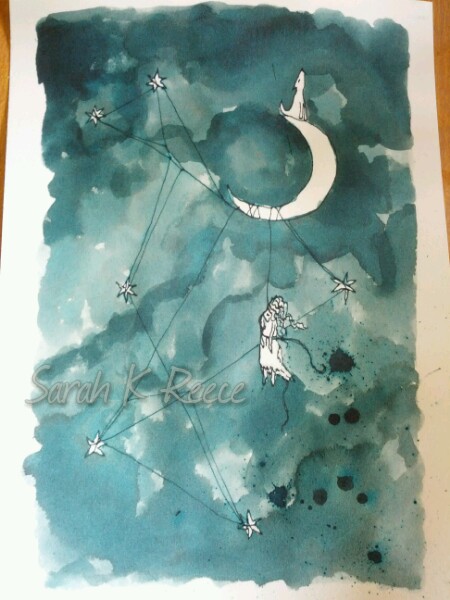
Intrusion
This refers to different ways people relive aspects of the trauma. People experiencing intrusion can’t ‘move on’ because memories and feelings keep interrupting their lives with such intensity it’s as if the trauma is happening again. Emotions are involved with how we remember things. Strong emotions create different kinds of memories to the every day. That’s why we can clearly remember our best friend’s wedding day ten years ago but not be sure what we had for dinner two nights ago. In the case of trauma, the intense emotions burn those memories into us, while at the same time often triggering massive dissociation as we try to protect ourselves from the overwhelming feelings. So the intrusion of the trauma can take different forms and is often fragmented and broken up. People may have flashbacks when they encounter something that reminds them of the trauma, a smell, a sound, a location. These flashbacks may be like reliving the whole experience, or more commonly, may be very fragmented, perhaps sudden intense fear, or flashes of visual images of the trauma, or sudden body memories.

Another common way intrusion affects people with PTSD is through nightmares. These can be chronic, intensely distressing, and repetitive. They can involve exact memories so the person feels like they are back in the trauma. They can seem like a broken record, bringing up the most distressing memories over and over as if the mind is stuck on them. They can also be less linked to the specific trauma but play out deep fears by ‘imagining’ other terrible things that could happen that invoke the same feelings of being helpless and trapped. Another way that the trauma intrudes is through behaviour, by involuntarily reliving the trauma. Traumatized children may re-enact events in their games or art or writing. People may also inadvertently create the same circumstances in their lives, which seems to be driven by both a desire to prove the trauma didn’t harm them, and a need to make it somehow turn out better this time around. Like many symptoms of PTSD, this can be baffling to other people!

Constriction
These symptoms don’t get as much press as the first two, because they are less dramatic in nature than nightmares or hypervigilence. Issues with constriction may also persist longer, and go unnoticed because they are subtle. However, they can be very destructive to quality of life. Many of these symptoms are dissociative, such as traumatic amnesia, where people can’t remember hours or even months around the traumatic event, despite also reliving fragments of it. Another is emotional numbing. Many people with PTSD alternate intense negative feelings with feeling flat, numb, and cut off from their feelings. They may go for long periods of time without being able to feel certain emotions at all. It can be difficult to understand that intense distress and numbness can happen at the same time. One way I describe my own experience is that it’s like someone’s screaming in another room. The terror and horror are still happening, but I can’t feel them any more, I’m just distantly aware of them. People with PTSD may feel disconnected from their relationships and may seem distant, irritable and distracted.
Avoidance is another symptom of constriction, where people try to manage their chronic fear by avoiding everything that triggers it. They may avoid speaking about the trauma, or doing anything that may trigger fear or memories. Sometimes people are aware of their avoidance, but it can also operate on a subconscious level. In my life I’ve often found that I’ve inadvertently made choices that lead to terrible isolation without being aware I was doing this. When I’m stressed, I become nocturnal, which is a very effective way of distancing me from life. Constriction also limits the way people think about the future. It can be difficult to imagine having a future, and people with PTSD may show a lack of motivation and ability to plan.

PTSD is also commonly associated with psychosomatic symptoms and chronic suicidal thoughts or feelings. It’s common for people who have PTSD to also have other related issues such as drug or alcohol problems, other anxiety or mood disorders, or other dissociative conditions. This is partly just the way our medical model categories this kind of intense distress. It’s so common for people with DID to also have PTSD that it’s been suggested that DID may actually be PTSD in a more severe form. People who have PTSD can seem to be stuck and often struggle with symptoms that frustrate the people around them. It’s important to realise they are deeply frustrating for the person experiencing them too! I will post another time about some suggestions of how to best respond to someone after a trauma.

There is currently debate about creating a new diagnosis related to PTSD, possibly to be called complex-PTSD. This is because the type and severity of symptoms experienced by people who’ve endured chronic ongoing trauma is a little different to PTSD, often including the kinds of symptoms that people with Borderline Personality Disorder experience. For example, people who were prisoners of war for many years, or people who were repeatedly sexual abused throughout childhood often struggle with severe dissociative symptoms, distortions of personality, chronic shame and self harm issues, and significant psychosomatic problems.

If you are looking for more in depth information about PTSD and recovering from it, I highly recommend the book Trauma and Recovery by Judith Herman. I was diagnosed with PTSD when I was fifteen, and at the time I had no idea what was happening to me. I wasn’t offered any information or treatment, and when I came across this book a few years later, so much made sense and I finally had hope that things could get better for me. It’s unfortunately been a long road, but knowing what was happening and what I needed to heal has made a lot of difference for me.

Tiger is being adopted!

Update: sadly the adoption fell through with the new owner making other arrangements. So Tiger is still looking for a new home, even better if he can take his friend Cleo too. 🙂

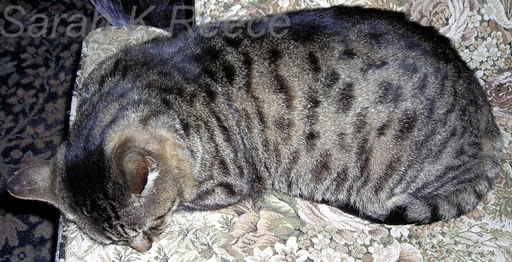
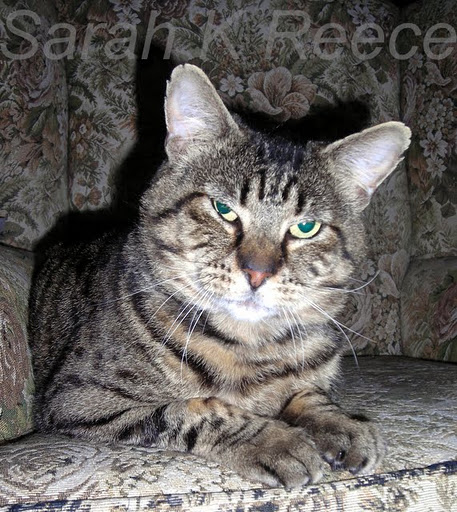
Wow, today we heard that someone wants to adopt my gorgeous foster cat Tiger! I’m so thrilled for him! He’s such a trooper, very stable and settled, lovely temperament and markings. He’s in wonderful condition, all healed up and fat as a pig. 🙂 He’s in excellent health, hasn’t had any issues at all except for a little hay fever on high pollen days. He’s quite content to be indoors too. He wandered out one morning when I was signing for a package, and I was able to pick him up and bring him back inside without any fuss. I’ve just dosed him and Cleo this week with Revolution flea/worm treatment.  Here he is dozing on his favourite chair:

And those lovely yellow eyes:

But he’s not so keen on the flash lol:

Awww, I’m so excited for him, but I’ll be so sad to have him go! We’ve already got another foster cat lined up, a Mum cat with four kittens who needs a peaceful safe home. Cleo will be getting lots of hugs and cuddles to cope with all the change! She sleeps on my bed every night and I won’t change that, whatever happens with adorable newcomers during the day she’s got snuggles at night. 🙂

TheMHS quilt and last chance for exhibition!

I forgot to post pictures of the gorgeous TheMHS quilt back when the conference was on. This was a great community project, I and many other people contributed a single patch each that were all sewn together into a total of six amazing rainbow coloured quilts! I’d love to be a part of more community/public art like this. Here’s my little patch, I embroidered it at a carers’ retreat earlier this year, using a line from one of my poems.

It reads the stars call to me, they sing in my bones. Here’s the whole quilt, my patch is the middle right hand side:

And here’s the whole row of three, people were fascinated by them and spent a lot of time looking at all of the panels. 🙂

And a quick last reminder, I currently have artwork in two exhibitions. The box factory one will be taken down on Friday, so this your last chance to see all 6 artworks – oils, ink paintings, linoprints, and a huge kite! And Homelessness is on display at the Diamond clubhouse until the end of November, when she will be going home with a new owner! I promise you they are far more lovely in person than the photographs you get here. Get in quick, free entry for both! Promise you’ll tell me all about it if you do make it in.