Poem – Voices in the Night

I wrote this yesterday, after driving home from a full, wonderful day of Tafe, excitement, and visits with friends. I often crash and become depressed at the end of days like this, this time a conversation happened inside on the drive home and a different part came out instead.

Home, through rain and night, after a day
Bright with people, the suns of their hearts, warm company
My house aches ahead on the road, cold and empty
And I feel the chill in my chest
Heart constricting, streetlamps
Pierce me with white knives
Rain falls like swords, and on the road
Black water pools like mirrors and
the night gathers close around me.I’m afraid
yes
To be alone
don’t be
I’ll catch you falling

It hurts
yes
it’s also beautiful
why does the light have to go?
because this is where the art lives
I love the people, their voices, my voice
I know. I love the silence, the strength in solitude. We walk both worlds.
Will I come back?
always
am I loved?
always
let go, and the fear will ease
yes
burrow down in my heart, 
this dance is mine.

See more like this:

Amanda Palmer spoke to me, and other wonderful things

Yesterday, I got into using Twitter, and posted my Homelessness & Poverty post online with a link to her as it was inspired by a post on her blog. I got this back:

@amandapalmer: @sarahkreece amazing. beautiful. mind if I quote some of it in blog??

Shared via TweetCaster

Wow, talk about make my day!

I’ve been having a lot of conversations lately about life, and safety, and community, and mental health work. I saw my shrink on Monday and literally stalked about her office waving my arms around talking about this stuff, grief, frustration with services, and my burgeoning recognition that a life goal I have working hard towards: full time work and being off welfare, is not currently an option for me. I’m just not well enough to pull that off. I’ve also spent the past several years building a resume and career in mental health but I’m starting to hate the sector. It costs me so much to maintain credibility in that world. I want to make a difference and I want to be an artist. I think maybe I can do both from the same place. I think that maybe getting out of a framework where I feel a like a failure for needing welfare, useless and irrelevant, might be the most exciting thing I can do.

It’s finally occurred to me that I’m not at risk of the same kind of homelessness this time. I have people to store my books while I travel. I have access to a van with a bed in the back! I have a community of people who don’t just pity me, they value me! I bring good things into their lives. I don’t have to feel like a charity case because I have something to offer. I can afford to take risks.

I can walk out of the world of mainstream mental health and still have a voice and still make a difference. I can write, tweet, talk, and build services. I can also stop feeling like I have to fit in.

Whoo hoo! This is a good place for me to be. Today I dragged my bones out of bed and went to Tafe and gave a mad, passionate talk about mental health and Recovery. (see Recovery is not a one-way street) Tonks didn’t make getting out of bed easy
image
But I did it, and loved it, stalked around the room waving my arms around (See a theme?) reading poetry and raving about trauma informed care, and the need for freedom and dignity and real relationships. It was awesome. World Hearing Voices Congress 2013, here I come! I think I’ve found my feet.
See more like this:


Countering DID myths – we’re not all the same!

In my recent post Common DID myths, I spieled a stack of common misperceptions I’ve encountered that bug me as a person with DID. It got a lot of interest from people, with the odd misunderstanding or uncertainty about what I DO think about DID. To go through each point alone would be a huge post, but I can counter a bunch of them in easy to handle groups.

If you’re new to the topic of dissociative identity disorder, there’s a great, easy to read introduction here, or a shorter brochure version designed to be an easy place to start when educating other people – you can tailor it to your own experience by sharing the ways it does and doesn’t fit for you. I wrote these a few ago, back when I was starting out on my journey of being a peer worker coming out about having DID myself. Since then, I’ve learned a lot and my perspectives have changed in some ways. These days I’m far more interested in talking about multiplicity (an experience) than DID (a mental illness)… rather the way that that organisations like Intervoice talk about hearing voices instead of schizophrenia. Why? Because it takes the conversation away from the medical model. It moves us away from needing experts to tell us what is going on with ourselves. (not that collaboration with other people isn’t very helpful!) It moves us back into being the expert in our own lives, where our own opinions, experiences, and ideas matter. It stops pathologising all these experiences – did you know that a lot of people hear voices that are not distressing, cause them no harm, and that they have no other symptoms of schizophrenia?

Plenty of people with multiplicity have been diagnosed with DID or DDnos (which is the grab-basket diagnosis for people with major dissociation things going on who don’t quite fit into the diagnostic category of DID) and that’s great, and I work a lot in the mental health system where DID is what we talk about. But for me, it’s important to separate experience from diagnosis, and to remember that not everyone with that experience fits or identifies with the diagnosis! Read more about my thoughts on the relationship between multiplicity and the diagnosis of DID on Introducing DID Brochure and unplanned rant!

One the biggest issues with misunderstandings around multiplicity, as a lot of people pointed out, is the absolutes! Everyone with DID does this, or needs this, or feels this way, or recovers like this… So the first thing I do believe is this:

People with DID are not all the same

There are many spectrums within DID that vary widely from person to person, and also within the same person at different times. Some common ones I’ve come across are:

  • Degree of amnesia – some people have no idea what has happened when another part is out. Some people are aware of things while they are happening, or get updated after they have happened. This can be different at different times – I have a lot more amnesia when I’m stressed. It can also be different for different parts, some may always be aware, some may always be amnesiac within the same system. For more information see what is co-consciousness.
  • Obviousness of switching – for some people it is obvious when they switch, for others it is so subtle that only someone who knew them very well might be able to tell. My switching would be obvious if I allowed it to be a lot of the time, but years of keeping it hidden mean most people do not pick it. Some people are more sensitive to subtle switching than others.
  • Number of parts – this can range from just two, to hundreds or more.
  • Nature of switching – some multiples switch all through the day, others only very occasionally, and some people never switch, but they talk to their parts and hear them in their mind, or see them as people outside of themselves.
  • Degree of internal control over switching – some multiples can chose which part is out, others have no control over this. Sometimes some parts have more control than others, or can set up triggers to deliberately switch – eg. I will wear certain clothes and bring certain foods and smells with me to make sure my researcher stays present during exams.
  • Degree of fluidity – some multiples have very fixed systems with, say, 5 members who have been there for years and have not changed at all in age, self identity, or roles during that time. Others are more fluid, they are difficult to learn about as they are constantly changing with new parts forming and old ones going away. Neither of these is necessarily better than the other – fluidity can be chaotic, but rigidity can prevent growth.
  • Other diagnoses – people with DID may have other physical or mental illnesses which will change how they experience life.
  • Degree of impairment – some people with DID are extremely unwell and struggle to function, perhaps spending a lot of time as inpatients, while others live and work unnoticed in the community, perhaps with no one around them aware of their condition.
  • Degree of separateness between parts – some people’s parts are closer to each other in the sharing of psychological space, they can do things like share tasks in the body (one running the mouth and eyes while another chops food for dinner), merge and blend skills, feel each other’s emotions – eg. a content adult is enjoying their evening, until they start to be disturbed by a growing feeling of anxiety that seems alien to their own mood – because an inner child is distressed by the movie and their feelings are blending across, or influence each other mentally such as giving or taking away words in their mind, showing images to each other, and so on. Other people have parts who are completely separate and share no common psychological space or resources. Both within the same system is possible too.
  • Polyfragmentation – some people with DID have mini systems within their system, or have parts who have themselves split to form parts of their own.
  • Degree of diversity within the system – systems can form with parts who are extremely similar in personality and nature, or extraordinarily different. One system may have 5 parts all called Geoffrey, all somewhat shy, introverted guys who hold different memories and range in age between 35 and 50. Another system may have highly diverse parts who identify at different places across a spectrum of gender, sexual orientation, age, ethnicity, species (some people have parts who identify as being animals, spirits, fae etc), and so on.

DID is about identity – it is therefore extremely individual in the way it presents and is experienced!

This is contrary to all the myths based on absolute assertions, such as

  • People with DID can’t work.
  • Everyone with DID has an inner self helper, an inner protector, an inner wounded child (and so on).
  • People with DID are manipulative.
  • People with DID can never control their switching.

These myths are often perpetuated by people who have had some kind of contact with the multiple community, rather than the set I come across when speaking to people who have never heard of DID. Humans do seem generally to be wired towards absolutes, and you’ll find myths based on absolutes abound in most areas of human endeavour. All lesbians are vegetarians, all Indians like cricket, all domestic cats hate water. They are true some of the time, or even lots of the time, but they do not capture everyone’s experiences.

What particularly frustrates me is that so many of these myths are embedded in our resources. Throughout many of the books about DID, and the frameworks about working with DID given to us by the ‘experts’ are absolutes. These people should know better. I’m sick to the teeth of reading books that tell me things like all people with DID have an inner self helper (a very useful type of part who knows a lot about everyone in the system). What they actually mean is all people with DID I’ve worked with have an inner self helper or, if I’m being particularly cynical; having absolutes makes me less anxious about working with people so I strongly encourage all my clients to present their DID to me in a way I’m comfortable with. That is harsh – as people we are often unaware that our absolutes don’t include someone until that someone tells us. The problem is that when a whole stack of people agree on an absolute like this, it creates a culture where people who don’t fit are not invited to share their experience. If that culture becomes rigid and deeply embedded, then people who don’t fit will be ignored and excluded even when they do.

I get angry about this because I work with too many people who are stressed and scared that they don’t seem to be fitting the frameworks they’re reading about or that their therapist is working from. Frameworks are really valuable!! They give us direction when we feel lost and hope when we feel overwhelmed. But I believe that holding any framework too tightly, or trying to force a framework into a situation or onto a person when it isn’t fitting and when it’s creating instead of alleviating stress is wrong and harmful! Some people don’t get stressed, they just exit the supports. They maintain their own sense of identity and truth, alienated from the community and unable to access the services if they ever do struggle. This is not a good thing.

Lastly, I think some of these myths about absolutes are basically Black-swan fallacies. “Every swan I’ve ever seen is white; therefore; there are no black swans”. I read a lot of these in the literature. All DID is caused by trauma. All DID is formed before the age of (pick one) 10, 8, 7, 5, 4, 2. All people with DID need extensive therapy. People with DID never spontaneously integrate. These are based on the experts not having witnessed anything else – but that does not mean that anything else isn’t possible. In fact, considering that you are not permitted to self identify as having DID (because that is self diagnosis and therefore lacks validity, a claim I’d be more comfortable with if I believed any form of diagnosis had much in the way of validity), then research is never going to include people who haven’t had contact with the mental health system, so there is actually no way to hear about things like people living with DID who don’t use therapy. In some cases, the limited way the diagnosis of DID has been constructed contributes to these fallacies – for example there’s a case study in Trauma and Recovery by Judith Herman (Chapter 4, The Syndrome of Chronic Trauma) about a woman who was a political prisoner, who describes a degree of internal splitting as an adult – “My second name is Rose, and I’ve always hated the name. Sometimes I was Rose speaking to Elaine, and sometimes I was Elaine speaking to Rose. I felt that the Elaine part of me was the stronger part, while Rose was the person I despised. She was the weak one… Elaine could handle it.” I’m not saying Elaine developed DID, but this experience of parts, some degree of multiplicity, gets excluded from conversations about DID, and I think we need these.

These types fallacies are being exposed in the field of psychosis as space has been made for more people to join the conversation. So much of what we think we know about hearing voices is based upon the experiences of people within our mental health systems. Many people who hear positive, helpful voices or only briefly hear voices do not tell anyone. Why? Because of absolutes such as ‘everyone who hears voices is mentally ill’. They’re not invited to the party. If they do turn up, they’re offered a label, a diagnosis, a straightjacket, and all their thoughts and ideas from here on out are delusional, unless they agree with their treating doctor, in which case they’re insightful. Through the work of mental health activists – both of the peer and expert kind, new parties have been created where people get invited to share and amazing things are being learned – like LOTS of people hear voices, many voices are not distressing, some voices only become distressing when people are counselled not to listen to them, and that different people find different approaches best.

If we keep talking about DID and multiplicity using absolutes we are excluding so much of the diverse experience and wisdom of our own members. There IS common ground – people with DID have parts – and generalisations can be useful: people with DID often get frustrated about having to explain our condition to everyone, people with DID feel scared and isolated when we don’t know anyone else with DID, people with DID want to be believed and accepted. I believe that people with DID are a highly diverse community, with many different experiences, ideas, understandings, and ways to live life most fully.

For more information see articles listed on Multiplicity Links, scroll through posts in the category of Multiplicity, or explore my Network The Dissociative Initiative.

Amanda Palmer makes my life better

Last night was Amanda Palmer and the Grand Theft Orchestra in concert at Thebarton Theatre. Amanda is a wild artist, most recently famous for crowd funding her latest album Theatre is Evil. She’s bisexual, (like me) married to author Neil Gaiman, has a brilliant sense of humour and is deeply unconventional in her approach to music, relationships, beauty, and life. I admire her.

Yesterday I slept from 5am into the early afternoon. I woke to paint my sister for the gig so she could line up early. Rose was pretty unwell and slept through until about 20 minutes before the doors opened. It was rushed and wonderful and decadent. This concert, with all the wonderful misfits that would be going, is a perfect place to wear paint. I started with the face and couldn’t restrain myself spilling down onto neck, back, arm, chest. The white has blinged under the flash a little, it wasn’t as stark in real life. I love doing this, I want to keep doing many more.

image

The lineup was unique in my experience. Instead of a supporting band, a range of other artists entertained us, including members of the Grand Theft Orchestra playing their own work. It was amazing. There were mad songs about bananas, deeply moving music about loneliness, surprise nudity. We laughed hard, a girl next to me gasping for breath and holding her stomach. Band members climbed into the box seats to sit on the balcony and ring tiny bells through a song so affecting no one in the theatre even whispered. We just breathed, as it sang us. All the artists had things for sale in the foyer or had sold out of them. It felt respectful of all the artists involved in a way that’s still ticking in my brain. It was the last night of the tour, and everyone looked exhausted and triumphant. image

Amanda and the band were amazing. They played, laughed, hugged, humped, danced, and sang their hearts out. I ran into a number of other friends there, old and new. The room was full of people like me, poets, artists, visionaries, people who wanted to connect and be inspired. image

Amanda was herself, raw, lusty, generous, connected. She sang two of my favourite songs from the new album, Do it with a Rockstar, and Not the killing type. Her work is intelligent, passionate, and layered with meaning. These are not safe for work or kids.

She’s not afraid of us. There was no barrier before the stage. We pressed ourselves against it and reached out to her. She dived into the crowd, wearing a coat with a massive sheer train. We held her while she sang, under the umbrella of her coat. She touched us, kissed us, trusted us. We gave her back to the stage.

image

She sang a love song and asked to have all the lights turned out. We stood there in the dark, swaying, and singing ‘I love you so much’ together. She told us, if we felt brave, to hold a strangers hand ‘in a non -rapey way’. I held the hand of a beautiful woman next to me I’ve never met before. She told us, for tonight, we were all friends.

She came and crouched at the edge of the stage and held my sister to her and sang. This was not entertainment, something we watched. This was something that happened to us, with us, an experience. She never talked to us like we were fans, something less than her, she talked to us like we were fellow artists.

Christy and Amanda Palmer

She told us stories, funny ones, sad ones, ones about people she admires or loves. She told us that since her crowd funding success, people keep asking her what the future of the music industry is. She said she has no idea, but as long as people keep paying to hear music we’ll be alright. She said

I’m just trying to be an artist; to have a job I don’t hate, to entertain people, to pay my bills, without being accused of being a narcissist.

I love that. It makes sense to me.

The concert ended. We ran back to the foyer and bought T-Shirts. We were promised a surprise if we waited around. We admired the crowd, the hair, the clothes, the comradery. Amanda and the acoustic part of the band set up unobtrusively in a small room. We all crowded in, lining the walls and sitting on the floor. For someone with PTSD this was a nightmare. There was no possible way out, I was surrounded by strangers, pressed close enough to be touching several at once, the smell of people. And yet, I was ecstatic. It frightened me but in a way that made me feel alive. Amanda sang, with her utterly raw, ripped up, end of tour voice. She played her ukulele. She was accompanied by magnificent strings.

image

We listened, with our whole hearts. My feet were swollen and extremely painful, standing for the whole concert had been agony. I was sitting on them now, knees and hips screaming. Amanda started to sing Radiohead’s Creep. Her voice cracked. We all picked it up and sang it with her.

This packed room of mad people sang “I’m a weirdo/what the hell am I doing here/I don’t belong here” together.

I cried, silently.

Once, when I was a young child, in a fundamentalist Christian church, with their expectations of friendship and closeness, instead of the distant secular professional boundaries world I now live in, have I felt that sense of belonging. Not often since.

The woman next to me I’ve never met hugged me.

Amanda told us not to give up and be overwhelmed by things like Abbot running our country. She said, we were there, with Bush, for 8 years. She said gather together, love each other, fight for what you believe in. Grow stronger. Stop hating, stop complaining. Make great art. She looked right at me and told us that artists matter, that art changes the world.

We were a community, connected by things by passion. Not by mental illness, loneliness, poverty, loss, although I bet plenty of us there experience those things. It didn’t matter that I have multiple personalities or a history of trauma, homelessness and poverty. I wasn’t a victim, or even a survivor. I was a fan, I was a fellow artist. A few years ago when I went into college to get a Disability Access Plan to help me with my visual art degree, the woman I spoke with was fascinated by the DID. At the end of the appointment, which was all about my physical illnesses and psychiatric problems, she told me I was so interesting. I said to her, rubbish, that’s just my problems. You haven’t seen my art yet.

We lined up for Amanda to sign things. I could barely hobble. She looked exhausted. I knelt by her table while she signed my T Shirt that says “We are the Media” and said to her

A friend of mine killed themselves last week. I wish they could have been here. I just sat with you and a room full of strangers singing ‘I don’t belong here’ and felt a stronger sense of belonging than I have in a very long time. Thankyou

She listened. She looked grieved. She held my face, and told me I was welcome. I got to tell her. I didn’t get to tell so many of my other heroes who have died, like Bradbury, how much they mean to me.

Home then, exhausted and into bed. I reached out to some local arts communities I saw there. I followed Amanda on twitter to say thankyou again, not wanting the night to end, not wanting to lose the sense of hope and life that burned brightly within me.

But sleep did not come. Rose and I were awake until 5am talking about life and art and love and babies and freedom. We finally fell asleep in each other’s arm, at peace. 

I want out of the conventional life I keep somehow sliding into. I want more artist friends. I want to make great art. I want to feel alive.

Since last night, I believe that artists can help mental health as much or more than psychologists, can build communities as much or more than social workers. The world is a better place.

Common DID myths

I was asked today by email if I’ve encountered any common misconceptions about Dissociative Identity Disorder (DID). Where to start I wonder?? Here’s my reply:

  • We’re all serial killers.
  • We’re all dangerous.
  • We cannot be trusted.
  • We are liars.
  • We are attention seekers.
  • We are all messed up victims with nothing to offer anyone else and no capacity to function without extensive support.
  • We are so weird, different, and bizarre that we are basically aliens, utterly unlike other people in any regard.
  • We are psychics, in touch with the spirit world and merely misunderstanding our gift and thinking we have DID instead.
  • We are gullible vulnerable people our shrinks have implanted with the idea that we have DID. (see Is DID iatrogenic?)
  • All people with DID are the same. (See Multiplicity and relationships)
  • DID is only ever the result of the most extreme, inhuman, unimaginable child sexual trauma you can possibly think of.
  • All people with multiplicity lose lots of time. (See What is co-consciousness?)
  • People with DID can’t work.
  • Everyone with DID has an inner self helper, an inner protector, an inner wounded child (and so on).
  • All people with DID should integrate.
  • Integration means you are now ‘well’ and all your problems go away.
  • The goal of every person with DID is to become a normal person.
  • DID is basically just a complex way to try and avoid your problems.
  • DID is just a way to avoid taking responsibility.
  • DID is just an excuse to be lazy and confusing.
  • Everyone has DID.
  • People with DID are extra special people who are nicer, more intelligent, more creative, and more wonderful in every possible way than all other people.
  • People with DID are all conscientious and loving and would never hurt anyone.
  • People with DID are crazy.
  • DID is the same thing as schizophrenia.
  • DID is the same thing as PTSD.
  • DID is the same thing as BPD.
  • People with DID have ESP and other otherworldly characteristics.
  • People with DID can never recover.
  • People with DID are impossible to work with.
  • People with DID are manipulative.
  • People with DID should pick one stable part to be out all the time. (See Parts getting stuck)
  • People with DID are merely under the delusion that they have alters.
  • People with DID always have a ‘real person’ and a bunch of alters.
  • If you hear voices inside your head you have DID, if you hear voices through your ears you have schizophrenia. (See Parts vs Voices)
  • It’s not possible to have DID and psychosis.
  • If you have lots of parts you have less chance of recovery.
  • Switching is always really obvious.
  • It’s always easy for other people to tell the difference between parts.
  • If anyone you knew had DID it would be easy for you to tell.
  • Alters always know who they are. (See Multiplicity – Mapping your system)
  • Alters always have a complex back history of their identity.
  • People with DID can never control their switching.
  • People with DID always know they have it.
  • People with DID are always in control of their switching. (See Multiplicity – switching and relationships)
  • People with DID make each other worse if they spend time together.
  • People with DID only get better in therapy.
  • People with DID never have any other challenges (disability, poverty, discrimination on the basis of sexual or gender orientation etc).
  • All people with DID are white, straight, cis women. (See Another coming out)
  • DID is always formed when an abused child imagines that the abuse is happening to a different child instead.
  • People with DID never spontaneously integrate.
  • People with DID who integrate never split into parts again.
  • People with DID always have lots of parts.
  • DID is the worst thing you could ever wish on someone.
  • DID is caused by things other people do to you. (rather than your response to those things)
  • DID is all about pain. (See I am not Sarah)
  • You either have DID or you don’t, there’s no spectrum of multiplicity.
  • If you have more than one diagnosis, you are sicker and weaker and less likely to recover.
  • All people with DID are going to recover horrific memories of traumatic events they hadn’t been aware of.
  • People with DID understand each other in far deeper way than a singleton will ever understand a person with DID.
  • DID is an adaptive gift and never really causes any problems for anyone. (See Adaptation and Control)
  • People who say they are DID are just trying to get out of a crime.
  • The United States of Tara is an accurate representation of all people with DID. (See my review here)
  • People with DID have to be careful not to encourage or allow their parts to become any more separate than they already are. (See Multiplicity – Is naming parts harmful?)
  • Parts will always hate each other. (See A poem conversation between parts)
  • Most psychiatrists, psychologists, and doctors know a lot about dissociation and DID (See DID Card)
  • There’s lots of good resources for people with DID
  • It’s easy to find quality, reliable information about DID
  • Most therapists are willing and capable of supporting someone with DID
  • Carer supports don’t need to be tailored to the experience of loving a person with parts.
  • People with DID are the most unwell, challenged, vulnerable, and needy members of any family or group. (See Caring for someone who’s suicidal)
  • Regular mental health services are appropriate and good supports for people with DID.
  • People with DID should all be locked up away from the regular community.

Yeah, I know I changed first to third person. I’m tired, and you get my point. I don’t think the list is complete, that’s just off the top of my head at the end of a long week. Have any to add?

Edit: Just to be very clear that I’m presenting all these ideas as myths. I don’t agree with any of them. The links in the text are to other posts I’ve written that explain why not in greater detail, and what I do believe instead. I think that maybe reading such a big chunk of myths, particularly very common ones, perhaps it’s more difficult to remember I’m presenting then as myths. I think I’ll put up a counter – post where I summarise what I do believe about DID…. Watch this space! 🙂

For more information see articles listed on Multiplicity Links, scroll through posts in the category of Multiplicity, or explore my Network The Dissociative Initiative.

Into Art

I’m writing from the SA Writers centre, where I’m attending an all day workshop about how to work with communities as a writer. I’m glad I came, despite my horrible lack of sleep and sense of total emotional exhaustion. It’s interesting to reflect on groups and dynamics as an artist rather than a peer worker. Always learning.

This week was incredibly difficult. Amanda’s funeral was beautiful and draining. I’ve had a bunch of big, emotional conversations with various people over the week. Bridges has been in a very painful place. I’ve worked hard this week. I’ve drained my capacity to the point where I’m shaking with exhaustion and feel like I’m going to throw up. Finally, now that it’s Saturday, I don’t have to be okay. I don’t have to be a peer worker, don’t have to make sense of anything, don’t have to be responsible for anything except my own head space.

I woke up this morning drowning in self loathing. Deep in the pit, a place I retreat to when the only way I can feel safe is to try to hate myself more than anyone else possibly can. Shutting myself down from blogging, from reaching out to my networks on Facebook, because I’m afraid of any of the people I’ve shared a crisis space this week reading themselves into my words, being hurt or angry, of undoing all the effort I’ve put into reaching out and building connections. Trapped in a space where I can’t speak, can’t connect, and cannot myself be deeply wounded.

Today I could have stayed home, tried to rest, and collapsed deeper into the pit. Instead I found Nine Inch Nails and the brutal liberation of being only my own person, the freedom of being allowed to be a little bit brilliant and a lot messed up.

So, on goes the blue lipstick today. Today I’m an artist. Don’t follow me anywhere. Don’t listen to me. Don’t look up to me. Don’t need anything from me. I don’t speak for anyone else. I don’t have answers. I have rage, passion, joy, insight, longing. All I promise is to be real.

Can I finally breathe again?

Honey, like this, I can fly.

Preparing

Yesterday I woke up to cancelled work gigs. I’d spent the early hours of that morning rejigging my art website sarahkreece.com.au – go and check it out, it’s very pretty – so losing work was particularly depressing. I dragged my bones of of bed feeling very discouraged and found a bunch of flowers and a sympathy card on my doorstep from friends. It turned my day around.
image

Rose was still awake after a night shift and feeling sleepless and rough, so I sat on an old couch in my front garden and read to her. This seems to work for both of us when we’re not able to sleep, particularly books that have a lyrical style of writing. I moved this old couch from my porch to a spot by my studio window. I’ve had some help with my garden lately and it looks a whole lot better than the over grown neglected mess it has been. My awful neighbour is very loud, she leaves her front door open and harasses me whenever I’m out the front. The studio window is a little further away and sheltered at least from sight. I can still hear her, she’s very loud, but if I play music as well its not so bad. I love being able to sit outdoors, it’s very grounding for me. I’ve been out there every day since I moved the couch. It’s good to sit there in the drizzle and my beautiful plants. Sarsaparilla loves it and comes and sits on my lap.

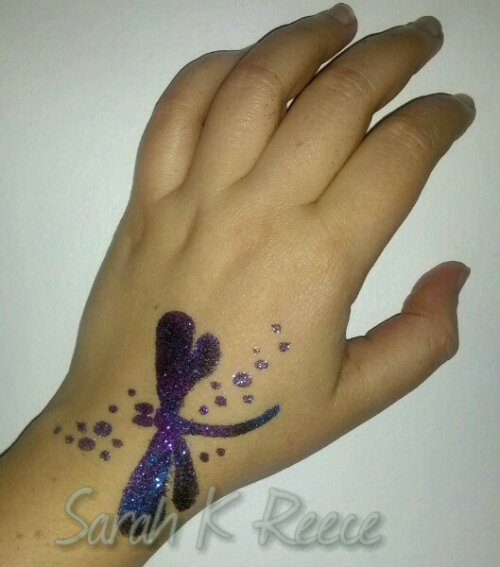
It turns out I picked up a whole lot more work today, teaching art classes, which I’m really excited about. I love workshops, they are interactive and supportive, encouraging people to learn and enjoy new skills. I’m very happy about it. I’ve been developing new glitter tattoo designs and experimenting with different colours patterns, which also brings me joy. Funny how such small things can make such a big difference to my outlook on life, feeling loved, feeling hope about my future.
image

In the evening I went and cuddled my goddaughter, who is going to turn 1 shortly. She is so beautiful, my hands itch to hold her when she’s in the room. I can’t wait to be a mother myself.

In the early hours I’ve been cleaning. I’ve had a hot bath, sat in my garden, read, keep company with my pets. I’m as ready as I can be for the funeral tomorrow. We’re ready.

Boat over black waters

I sail my little boat over black waters at the moment. Old wounds in me suppurate, old rage is fresh again. I find myself grappling with new questions – how to be wounded in community? Where do I take this pain? If I hide it all I build a wall between my heart and the people I love. I live alone with it, in a cold place where love does not reach me. If I share it all, I spread it, like a disease. There’s so much loss in the lives of those I love, so many bad stories waiting in the shadows. I want to bring love, not fall like dominoes. I find myself tangled in dilemmas of ethics and honesty and respect. I know how to grieve, and I know how to suffer alone. I don’t know how to place my friendships. There’s a terror and a brutal loneliness in psychosis for me that hasn’t entirely gone. There’s gaps between my friends who grieve Amanda and those who didn’t know her I’m struggling to connect. I find myself struggling to move between sarah-in-community and sarah-alone, between the peer worker and the friend, one who offers and one who likewise needs.

Last night Rose visited. We were both fragile, we arranged; no heavy conversations, no reaching into that pain. Just companionship. Like boats rocking over black water, we knew but did not need to speak of it. I found poems to read her to sleep. She stroked my back, touch grounding me, writing me back into being. We were careful with each other’s brokenness, held our limitations gently in our hands.

There was no screaming spiral of pain that sings to pain, destruction unknitting all that we are, souls seared by scars. There was tenderness, acceptance, closeness. We didn’t ask of each other more than we could give. Somehow, instead of loneliness, there was love. There was love.

See more like this:

Poets

Having lost myself I start to reach for those things that might be maps or guide, but gently so as not to tip the boat. I find my poets, people who’ve also grieved. Their words unlock my heart. Their words become my voice.

The moon lights a thousand candles upon the water

Douglas Stewart,  Rock Carving

It’s a nightful of ghosts, but then all nights are now.
It’s a long way on until dawn.

Ray Bradbury, Once the years were numerous and the funerals few

Where have you gone? The tide is over you,
The turn of midnight water’s over you,
As Time is over you

Kenneth Slessor, Five Bells

Oates in the pool of remembering.
And clambering out, like some water monster
Lumbering ahead through leaves and lanes and lovers –
Memories, memories, memories, faces like moons

Douglas Stewart, The Fire on the Snow

Waves of sadness

Tired now. Amanda’s funeral is Thursday. Last night I didn’t sleep at all. Got a few hours today after going to bed at 9am. Fragile and hurting, overwhelmed by waves of sadness. Today I can’t be the diplomat, can’t bridge the gap between myself and others, think through their perspective and mine and find a way to connect them. I do this a lot. Some days I’m just too exhausted.

Lay in bed last night with someone inside me begging to be allowed to self harm. Intense and distraught. Self care become alien, painful even, unsettling, impossible. It takes all day to talk myself into breakfast, having a shower.

Woke up tangled in grief and anger and frustration and called lifeline instead of venting on friends or in any public spaces. Struggling to navigate pain and vulnerability in the context of a community. Are we not all on some level alone with our pain? It’s not easy to face our limitations. I’m under no illusions that if Amanda had only reached out to me, she’d have been okay. What then do I believe?

Some days it feels to me that how I manage my pain alone at 3am is then brought before my world at 10am for judgement. We can’t always be there for each other. (and yet we say it, we need to believe it, need to extend hands of friendship over the chasm and hope they will never lean on it too much for us to bear) Trying to understand the chill in my heart, the way my bones grow cold. Is it me, or them, or all of us? I hate myself. I can’t let love in, but indifference and disdain I eat off the floor. I’m lost. Trying not to need, not to lean, not to bleed out, not to disconnect, lash out, break everything apart, walk away from it all.

I’ll find a way through, but tonight I’m lost.

Dazed but loved

image
 
Yesterday I went to the Adelaide Show with a bunch of my favourite people. They took care of everything including the driving, and generally spoiled me. One of my younger, less traumatised parts spent most of the day out and had a great time. We were exhausted from lack of sleep and the fibro pain was pretty severe but it was a good day.

My dissociation level is incredibly high and I’ve been having a lot of flashbacks the past couple of days. Lying in bed that morning having a stressful conversation on the phone, I could feel my sense of my own body dissolving, fraying, like oil spreading over water. I’m not driving until it settles. Tonight is a friends birthday costume party, I’ve gone along in my purple dragon onesie and eaten a lot of sugar. People have been kind. Gradually my sense of self will return, like scattered birds flying home. The flashbacks will go back to rest, ghosts back to graves. I’ll be patient.

See more like this:

Poem – The things we don’t speak of

From my journal, 2011

And you want to know
about the things we don’t speak of
the places
only the mad ones go
that world is an island
we always walk alone

there is no speaking of it
who am I to break the silence?
to admit to agony
to betray my loneliness

if I only could
I would take you there
I would meet you there
where the light is orange
and the shadows breathe

if I only could
I would walk those streets forever
and you would hear my song
come in through the windows
closed against the night

you would meet me here
and there would be no words
or need for words
in that night there is only
the language of tears
and of touch.

See more like this:
Quietness
Coming home
WEA – Self Publishing

Losing a friend

After a lovely anniversary dinner with Rose last night, we went back to her place, settled in front of the tv to look for a movie to watch, and I picked up my phone for the first time in a few hours to discover that a friend has died by suicide.

The loss is terrible. Amanda was my age, a beautiful caring person with an amazing childlike sense of humour. We first met through this blog and became online friends about a year ago, meeting at events here and there. I was hoping to get to know her better over time. We have mutual friends who are also hurting.

Rose and I, it turns out, are both sensitive to grief and suicide and react to it in very different ways. Last night was painful and fractious. Today is tender and raw. I feel dazed.

There’s an inclination after suicide to think that the person, in a sober mind, looked at their life with a detached eye and concluded that it was not bearable. Those of us who are vulnerable ask “If they couldn’t make it, how can I?”, “If all their wisdom/support/resources/insights were not enough for them, what can save me from my pain?”. I think this approach supposes a level of rational thinking, and a capacity of looking at life as a whole that many of us lack when we are suicidal. Sometimes it is not a summary of their life, it is a bad night. It is overwhelming pain, a loss of hope. It doesn’t take away from all that they’ve done, their kindness, joy, insights, tenderness, humour. Their life’s story is still about everything dear to them, the values they lived by, the way they loved, their passions and sorrows. Suicide is a part of that but not all of it, pain is part of that but not the whole of it.

This may not be Amanda’s story. I don’t know what happened at the end, if mania or despair took her. I only know my loss.

Death shatters us. Each is unique, suicide is different from accident, which is different from murder, or negligence, or long illness, or sudden loss, one person or a whole car of loved ones, a child, a parent, a lover. All have their own deep pain. All make us feel very alone. We struggle to find ways to unite deeply divided responses – I forgive you and I hope you are at peace / Please don’t go, it will tear my world apart. I love you / I hate you / I should have done more / You should have done more/ How did I fail you? / How could you do this to me? We try to find ways to speak that don’t glamorise or demonise ending your life, and it’s not easy. There’s a sudden ending to their story that we were not ready for. We haven’t said all we wished to. We didn’t know that hug would be our last. We review the past weeks and months with a new eye, jaded and worn by grief. Every word and gesture is imbued with new and terrifying meaning. We try to judge the tipping points, the final straws, the real reasons. We try to weigh your life in the balance, to work out why you left it behind. We feel sometimes that we have inherited, like unclaimed mail, the burden of pain that overwhelmed you. We feel stripped bare by the loss that love has brought into our lives.

Our culture is not good with grief. We have no shared days of mourning for lost loved ones. Grief often isolates rather than connects us. Our lives are structured in such ways that it’s difficult to find time to grieve at first, we’re numbed by work and funeral arrangements and all the administration of a life ended. Then there is too much time, alone and absorbed into a pain so deep and enduring we know in our hearts that we will never be the same and never be without it. We grieve in different ways, so that’s it hard to share, our cycles of needing to go into our pain and move away from it do not exactly match any other person. We fear death and pain and loss and withdraw from those who have been touched by it. It overwhelms us, takes us into dark places, cuts us off from life, and hope, and loved ones, and the needs of the living.

I don’t believe this has to be the way we mourn. Life, love, and death are deeply intertwined. Today, on facebook, another friend has given birth to a daughter. Her joy is palpable. With grief, we can warp around it in ways that wound us. I’ve felt this – it’s R U OK day today and I’m grieving the loss of a friend. I’d briefly thought about writing about R U OK on this blog a few days ago but let the idea go. I’ve been busy with art and business plans and relationships. I feel guilty for that. I wonder if Amanda was reading my mental health struggles here and they added to her burden. I wonder about our mutual beautiful and likewise vulnerable friends. I wonder about how to navigate a loss that is personal and public, as Amanda was a member of groups I look after. I wrestle with trying to find ways to respond that are respectful, that give everyone space to react as they need to. If I don’t take care, grief will tell me stories that harm me, like I am responsible for things I am not, or that life is brutal and without hope, or that I will never be happy again, or that love is too painful to bear. Without these wounds, grief isn’t lethal, it doesn’t destroy me in the same way.

For myself, I seem grieve best when I give myself to it. Grieving is like dying. Pain, numbness, apathy, rage, anguish. If I can accept it and make space for it, it makes me feel like I am dying but does not kill me. I make time to hurt and weep. I accept the numbness as a relief without fear or judgement. I accept the times of peace or even happiness without hating myself or wondering if I did not care enough. I move into and out of grief as my heart dictates. No one to tell me to move on or get over it, and no one to judge me for shock, dissociation, or still finding pleasure in life. I do not run from it in fear, and I do not hold myself in it to torture myself. I hold to two beliefs: they were deeply important, their loss, and my pain, must be marked and recognised. Life is also deeply important, and to be lived rather than shunned, both pain and joy. Grief then, is less a garrotte around my throat, barbed wire biting into my heart, and more a tide washing in and out, overwhelming me so deeply one moment that the world turns black and I cannot remember what life was like before it, and another moment withdrawing into a vast ocean and leaving me laying on the sand beneath an endless sky of dazzling stars. Like Persephone, my heart goes down into the underworld, and rises into spring, over and over.

This is only one way. There are a million ways to grieve. This is how I have grieved in the past, when I finally let go of the impulse to use death to terrify and torture myself. I may grieve differently in the future. I have lived in the fear of death, where in nightmares I lost all I loved. Since a small child I have attended my mother’s funeral many times in dreams. I used to drive home and see in my mind vivid images of my family slaughtered in the house and lying in their blood. My heart would pound until I laid eyes on a living person. I have been chronically suicidal and have cared for other suicidal people. I try to make peace that some of my friendships may have a short time in this world. I also rage against it, hold tight to my belief that hope is precious and essential, that our love for each other makes a difference. I remember the studies that talked with people who had tried to take their lives but survived, most later were glad to have lived, had lives they loved. Things had changed and hope had come back to them.

So, I’ve cleared a couple of days off. I’ve cried and slept a little. It’s raining softly here, I’m going to go and sit in my garden and plant some tiny plants into the earth. I’m going to give myself time to understand that Amanda is gone. I’m going to tell her how wonderful she was anyway.

Go gently.

If you need crisis support yourself, or just a listening ear, you can find hotline numbers and resources here. Read how to call ACIS.
See more like this:

This blog is official!

Whoo hoo! Google has discovered this blog! Rather excited it. I moved my 2 year old blog here, with all 650+ posts, in August when my blogger account crashed and locked me out for a fortnight. Then I decided to stay. The original blog is still running however because I discovered one small, but important details – every single backlink I’ve ever made (ie when I’ve written about multiplicity and provided an in text link to my page about that so that those who want to know more can easily find it) all point back to my old blog. I’m in the process of going through every single post, improving the formatting that’s been altered in the transfer, occasionally replacing a photo that’s gone missing, and fixing the backlinks so that they point to that post on this blog. It’s going to take me a little while!

Unfortunately, having the previous blog still listed on the net has penalised this blog – the duplicate content means that google initially treated this blog as a spam site, a valuable process designed to prevent buggers who steal all your content to create fake spam sites from getting higher up the search engine ranks than your real site. But, now that this site has been running for a couple of months and the old blog has delisted from search engines, things have been corrected. This site now shows up in google instead of the other one when people search for it. I had my first referral from google today. Yay!

The clean up process is definitely daunting… but on the other hand it’s been good to re-read. I do this with my own journals pretty regularly and I always learn a lot, gain a new perspective… Bear with me. 🙂

In other exciting news, I’ve added a ‘random post’ button. How awesome! Now that I’ve so much material online, I’m always looking for ways to make it easier to access relevant stuff. I’ve also started a couple of new, more specific topic categories such as multiplicity. On that note, if you’re looking for a good reader to keep up with your favourite blogs now that google reader is dead, I’ve been using feedly and really liking it.

See more like this:

A year with Rose

On this day last year, my girlfriend Rose became part of my life. We first met online and started dating shortly after meeting in person. She’s a beautiful, generous, complex person I feel very privileged to know and love.

mUbNVVk-001

Photo courtesy of Marja Flick-Buijs http://www.rgbstock.com/gallery/Zela

We’ve dealt with a lot over the year. We’ve both had health troubles. We’ve found ways to support and care for each other, to navigate the challenges of having two trauma histories and find joy in each other. I found myself reflecting upon a quote today:

Mama used to say, you have to know someone a thousand days before you can glimpse her soul.

Shannon Hale, Book of a Thousand Days

365 days today. I’ve glimpsed a little and what I’ve seen moves me.

Dating as a multiple is… interesting. Different parts have different relationships with Rose. Some date, some are friends, some more like colleagues, or little sisters. Each takes time and effort to cultivate, each brings something different to the relationship. Where one is tender and nurturing, another is mischievous and energetic. There’s a lot of adapting, and a lot of talking things through. It takes an extra special effort to be honest and authentic. Friendship is the foundation.

We’ve been talking about moving in together for a while now. It’s exciting but also stressful. For both of us, we risk losing our secure housing in a gamble on our relationship lasting – or at least our friendship lasting. As we’ve both been homeless, it’s a very raw area. One thing adds a sense of urgency to our plans, which is that we both want children. Considering the challenges of conception in a woman/woman relationship, health concerns, and our desire to have settled into living together long before we start trying, there’s a certain keenness.

When I met Rose, she had been trying for a baby as a single woman. She’s been pregnant and suffered losses before, a grief that is still very fresh for her. I, on the hand, as a sick single woman approaching 30, had all but given up on my own dream of children. Last year I started reading books on grieving infertility. To my surprise, I was given a clean bill of fertility earlier this year. With Rose’s deep love for children, and my sister back in the country, my own health limitations no longer seem such an impediment. I visit my delightful goddaughter Sophie almost every week and fall more deeply in love with her. We’ll keep dreaming and talking, trying to find a balance between pragmatism and optimism.

Falling in love with Rose has been amazing, maddening, glorious, exhausting, healing, and deeply satisfying. She’s the first woman I’ve fallen in love with, and she’s been a gentle and caring partner, laying to rest my anxieties that perhaps I was mistaken in thinking I was attracted to women. I’m now very settled in my identity as bisexual, or queer. I’ve ended many years of choosing to be single, which was the right choice for me at the time. Being in this relationship has given me so many opportunities to grow and learn, and unlearn, to share and celebrate life. It’s been eye opening to realise how much difference it makes to have such support, little things like watering the garden when I’m ill, big things like supporting my efforts in business. We’ve made the most beautiful memories, that I’ll always treasure. I’m grateful and I feel blessed.

See more like this:

Storms at Sea

Last night was fantastic. It was rainy and stormy here, squalls of rain, then cold bursts of wind… so Rose, my sister, Zoe and I went down the beach. It was wonderful. I ran around whooping like a madman to encourage Zoe to run. The waves were high, the wind biting. We drank coco from a thermos, ate slightly sandy strawberries, and Zoe dug big holes to stuff her head into.

I felt free.

A part came out a few nights back who hasn’t been here in a long while. She bonded to Zoe, cleaned the house, and picked a fight with Rose. The fallout has been oddly settling. I feel attached to my dog for the first time in a long time. There’s affection when I look at her. Rose and I picked ourselves up and sorted things out. A cold wind blew through my heart. I love my house. There’s determination that, stay or go, I’m going to enjoy my time here, make the most of it. There’s good memories here, there’s scope for more.

Time off has been good. Less work, more rest, more chance to spend time connecting with friends – by which I mean more than just being in the room with them. Spring has walked through the windows and changed the colour of the light and the smell of the air. There’s a fierce joy in me suddenly, burning strong. The desire to devour life, drink deeply, inhale, crack the bones, run in the storms.

See more like this:

Home Base for Homeless People

So you have a friend who’s homeless, or one at risk. You can’t take them in at your place (for whatever reason). What can you do? There’s a whole lot of ways to help. One pretty easy thing you can do is to provide a home base. A lot of folks spend time travelling and backpacking and having a ball living a very transient lifestyle, and part of the thing that makes this fun instead of traumatising is that somewhere they have a home base where their stuff is kept safe. For most of us as younger people, this is a parent. There’s a spare room, a garage, or an attic stuffed with boxes of paraphernalia that’s really meaningful to us but which we don’t have to carry around. Most of us don’t even bring this stuff with us when we move out as students or young workers. Small units or share houses are not the best place for excess belongings, so they wait until we’re older and way more settled. Many of us also have things of great sentimental value that we don’t own but will probably inherit one day and will remember family members or great childhood events by. These all stay safe in the care of whoever currently owns them. Lastly, many travelers have their VIP documents stashed safely with someone who can look after them, scan and email them to us if we suddenly need them.

Treasure chest

Image courtesy of Roger rgbstock.com/gallery/rkirbycom

This home base is one of the things it’s easy to take for granted if you’ve always had it. Most people who are homeless do not. Anything they can’t carry is lost to them. Any items of sentimental value are left behind, there’s no extended family to just take over looking after the dog, there’s no security even for the things they are able to carry around. This loss is drastic, it hurts like hell. It’s part of the reason people are so reluctant to leave violent partners, it’s something abusive parents can hold over their children, it’s another Gap that opens up between happy adventurers and distressed homeless people.

Depending on your situation, you might be able to offer to look after their cat, to put some important paperwork in your filing cabinet, to keep their digital photo collection stashed on your computer, to keep some of their best clothes in a rack in your wardrobe, to have a box of food they can use as a pantry, to hold onto some precious jewelry. You can help them find cheap public lockers to stash shoes and a phone charger, or long term storage if they’re salvaged larger items. Things they can’t keep you can take photos of; kids sports trophies, a record collection, the cross stitch Nan made for them. Having a record can help when you have to let go of so much at once. There’s such a dislocation that looking through photos later can be something that helps to process it all, to link the old life and the new life together. There’s free cloud storage for digital photos through services like dropbox or google plus.

Homebase can also be about providing a little normality to an experience that is surreal and disconnected. Having someone round for a meal once a week, hanging out and watching tv together afterwards can be a routine that anchors them to a world where things are still safe and predictable. It can help to ground someone who is spiraling. Don’t assume that this happens in services. Most of the services are not good at providing any kind of emotional support or stability. Being up to hang out with you at the dog park for an hour can be the most normal thing that has happened to that person all week. Getting people out of services, even if it’s just for short breaks, can be critical to keeping them sane. Being surrounded by other traumatised people and the extremely weird combination of ‘normal privacy doesn’t exist, normal relationships don’t exist, professional boundaries limit connection, and everyone else is an expert on your life’ that characterises extended contact with staff in services is very hard on people. Helping them get breaks from this and to reconnect with a world where they are regular people for awhile can make a big difference.

Listening and providing emotional support can also help a lot, although I do suggest that you don’t get in the way with this. This kind of crisis can be emotionally overwhelming. A lot of people need not to feel anything very much, because they’ve got so much to do. Dissociation can be the thing that’s keeping them safe. If they want practical help – using your phone to contact services, filling in forms, borrowing your car to get to an appointment – and shy away from your sympathetic ear, let them be. Don’t be surprised if an emotional crash comes later on, sometimes after the drama is supposedly over. I did this with one unit I was in after a period of homelessness, and most of my then friends were confused and a little frustrated with me – wondering why I still wasn’t happy. Delayed reactions aren’t uncommon.

People can also regress, which can scare you if you haven’t experienced it before. Psychological collapse can happen where they freeze and stop looking after themselves at all. Sometimes people wind up in psychiatric services at this point. They may become wildly manipulative and unpredictable as their sense of desperation spirals. They may also just disappear and try to manage on their own. Anything is possible, the stress is intense.

Lastly, one of the things a home base does is keep a safe place somewhere in the world where you are loved, and thought well of. However dark it may get elsewhere, somewhere you are treated with dignity. Like anyone in bad circumstances, a massive amount of victim blaming happens. Our culture is not kind to people who’ve suffered this kind of tragedy, we have a lot of terms for poor people and few of them are something you could maintain a sense of self worth and identity with. Experiences like homelessness assault our sense of safety, our expectations of our lives, and our identity. Home base can at least be a place where our identity is preserved, where we remain a friend rather than a ‘homeless person’. Anything that buffers us against the acid erosion of self will help. Anything that helps us to function more as a traveler does, with some dignity and a keen sense of the absurd, will help. Meaning, hope, acceptance, these are things that help people get through dark times.

This is what home feels like

Yesterday, here in Australia a very conservative, anti-gay rights, hostile to refugees group was voted into power. It’s going to be a tough few years for a lot of people. Instead of curling into a small ball of misery, or seceding from the country and going to live up the tree in my backyard, I had a group of friends over. We made awesome homemade pizzas and played cards. It was blissful. We made each other laugh. I remember that this is what home feels like, people around my dining table, everyone helping out with something, closing the door on a confusing and often hostile world. Letting go for an evening of the crushing sense of responsibility for the world. There’s pain and suffering out there, so much of it, and I’ve voted and done what I can, which is not enough, even slightly enough to make up for my very privileged world, but for an evening there is feasting, black humour, laying my head in my arms on the table to laugh myself weak. Being able to take it in, the glass walls down, dissociation low, I can feel it when they touch me, can feel the warmth in hugs, the light of our voices as we talk into the night. Rose comes off 24hrs of straight work to fall exhausted into my bed. My sister sleeps on my couch. Zoe sleeps in front of the bathroom. Tonks migrates through the house, a happy furball of purring joy, taking it in turns to sleep everywhere. Today I make smoothies for breakfast. Spring is here.

See more like this:

Sophie is adorable

Yesterday was kind of weird and a lot of it was difficult. I didn’t get very much sleep the night before. My system sort of imploded in the middle of the night. Things can get really rough if a part is in major distress, even if the rest of us are ok. One of us crashed into some big trauma triggers and went into melt down. We’ve spent most of the day since then trying to contain things. After Bridges, a chance to hang out with my lovely goddaughter and her dad, and a painful talk with Rose which somehow ended reasonably well, (I don’t know how we pull that off sometimes, but I’m incredibly glad that we do)

I’m now in a strange place. I’m physically tired but also kind of wired, happy about the almost tangible memory of Sophie in my arms, frustrated by how short of sleep I’m getting, not a great pain day, lingering anxiety and concern about my messy head, a strange sense of disconnection from myself, like I don’t recognise who I am at all, like I’m a stranger to myself; confusing and unpredictable. It’s unsettling and I don’t like it.

I’ve not been able to see Sophie for several weeks, she’s so beautiful.

image

image

If I’m lucky, tomorrow will be easier. There’s so much going on in my head at the moment, the hours where there’s some kind of peace are terribly precious.

See more like this:


Spoken Poem – Night

I’ve been wanting to experiment with spoken poems and podcasting for awhile now… art rather than sleep happened last night which is, right this moment, something I’m quite happy about. I’ve been doing a staggering amount of admin and paperwork lately and feeling rather fragile, so this is something I’ve been wanting to reward myself with.

Made in adobe premiere pro, which I’m still quite a novice at using. It’s not perfect but for an evening’s work I’m very happy with it. If the link below doesn’t work for you, go here. You can read the poem here.


See more like this:

Slipping beneath the water

Today… or yesterday (it all begins to blur) I took the day off. It wasn’t a good pain day and I am still tired from the amount of paperwork I’ve been doing lately. I am very very behind in a lot of admin and reporting I need to do. I’ve made a good start. I woke very early and not feeling well. Rose stayed over and didn’t have to run off to work straight away. That’s been rare, a morning in bed together. She made strawberry milkshakes and I made bread and honey. When she left to run errands I opened the window and lay in the sunshine, finished reading a book that’s overdue at the library, and actually napped for an hour. That’s very unusual for me, once I’m awake I’ve usually got too much driven energy and mind chatter to nap. It was very peaceful.

I thought about how much I love living alone, how long I’ve waited to be in a home of my own. I’m very social. I love my friends deeply, care for a lot of groups, have a busy online network of people, and pine when I get stuck home sick and lonely. But I also love the time to myself that closing my door on the rest of the world gives me. More, I love having my own home, where I set it up the way I want it to be, where no one trashes my space or borrows my things and doesn’t bring them back. Where I know the contents of my fridge, where I can bake at 3am without disturbing anyone, where there’s peace when I need there to be quiet. One of my favourite places is standing in the kitchen by the sink, looking into my backyard. It’s a mess at the moment, I haven’t been able to get to the lawn or tidy it in a while, but the plum tree is scattering white blossoms through the yard, the sun sets behind my back fence, the moon sails there in the small hours. It feels like I only just moved in here. Sometimes it feels like life moves too fast.

I was also thinking about how much I love to live with and care for other people. It makes my heart sing when I can share what I have, to be able to cook for sick friends, to offer a couch to sleep on for someone needing a place to stay for a few nights, to tend my garden and collect fruit and vegetables from it to give away. I love being part of communities. I love the quiet of a home life, the tending of a home, to clean and sweep and find order. I love being able to let go of the drivenness for awhile, to slip out of it like slipping beneath the water in my bath, a place where I can only hear my own heartbeat. To walk in the sun, to gather mulberries.

In the back of my mind, there’s guilt. There’s a sense of time passing, my life slipping away, so many big goals yet to be accomplished. With a bit of hand holding from Rose, I put it aside. I look after her, she has some residual pain from an accident recently. I keep the freezer stocked with icecubes for the cold pack, prepare dinner while she naps before her nightshift. I lie on the couch and watch tv, moving position every 10 minutes to ease the ache in my bones.

Tomorrow I’ll work on more paperwork, admin, bank things. Today is an island of calm. The night flows around me. I solve no problems, answer no questions, have no insights. I’m just here. Sleep will come for me soon.

See more like this:

Homelessness & Poverty

There’s an interesting conversation going on over on Amanda Palmer’s blog about the difference between asking and begging. They’re talking about it from the perspective of the relationship between artists and fans, crowd funding vs labels and agents, which interests me a great deal as an artist, but I’m also interested in the ideas as a person who’s been homeless.

Homelessness is one of the most screwed up, misunderstood, pervasive mess of a thing in our world. It’s a monster we don’t really even begin to understand. It’s something I’m wrestling with as I try to make life decisions about housing. It’s changed me in ways I’m still coming to terms with. I’ve never slept rough but I’ve run from violence. My girlfriend Rose has done both, first on the streets at 13. I’ve slept in shelters, on couches, in my car, and lived in a caravan park. There’s two big, complex, deeply unfair aspects to homelessness that most people do not appreciate when they give the topic a cursory glance:

  1. We have an absolutely bizarre, expensive, exclusive, complex system of housing. No other animal on earth has to spend a third or more of their lives working to own a home. Only a couple of hundred years ago, here in Australia we were settled by people who built their own homes from wattle and daub and whatever other materials they could find, in an act that is now illegal. Indigenous Australians certainly didn’t spend most of their lives trying to afford basic shelter. We have created this problem.When I had nowhere to live it was illegal for me to squat in disused housing. Illegal for me to sleep in my car on public property. Illegal for me to put up a tent on the beach, in a park, or by the side of the road. Illegal for me to find shelter in stairwells, drains, porches, bus stops, or emergency waiting rooms at hospitals. Illegal for me to camp out in the backyard of a friend in public housing. Illegal for me to stay more than a month at most caravan parks. We have made housing extremely difficult to attain for a lot of our population, while making being homeless illegal.
  2. Homelessness is not just about shelter. It is also about community. To be in a place where I am sleeping in my car means I have run out of social support. I have no friends who own investment properties they can rent out to me. I have no family willing or safe or in the same country. I have no mates who can drag out the sofa bed. We do not solve this problem merely by providing shelter to people, because if you’ve been homeless for awhile, you change. Your social world changes. You make friends on the streets. Most people learn how to steal food and basic supplies because getting welfare without a fixed address and a lot of paperwork is extremely difficult. Once you’ve adapted to that world, being dropped alone into an empty unit with no furniture, no community, and the culture shock of a world that includes a shower every day and a toothbrush is overwhelming. Many people go back to what they know. It took me over a year to get back my basic routines like brushing my teeth, for them to be easy and automatic processes I went through every day. That process was filled with shame and loneliness.

Homelessness has changed me. The cost was extremely high. It alienated me from my own society in ways I’m still struggling with. I hated everyone who had a place of their own, somewhere to keep their belongings safe, somewhere safe to sleep, a hub where they could sit behind windows and look out at the world and decide what they were going to do, and when, and how. Being homeless was about constant change, moving from one place to the next. It was about loss – my belongings, my pets, my garden. It was about failure – having to withdraw from uni studies because it was impossible to sustain them. Life becomes day to day, about survival, about where is the next meal coming from. Driving around Adelaide with a cardboard box of food as my pantry. Living on sandwiches from the service stations. Homelessness was about desperation and fear and shock.

I begged services for help. I rang every single service I could find and begged. There was no asking. Asking can accept a yes or no. I needed. I begged. I was told no. I got into free counselling at a local clinic. The counsellor told me there are empty beds in empty houses all through Adelaide. I just have to be persistent enough to get one. Keep ringing them. Insist. I keep ringing them. I was refused. Over and over. I was four months too old to access the youth homelessness program. Frustrated workers got angry with me, implied that it was my fault I was homeless. They told me that 26 year old people don’t become homeless. They told me that no one cares if they do. Told me I could sleep in the parklands. Told me to stop calling. The humiliation was unbearable. I stopped begging.

With my friends, I didn’t even ask. I couldn’t bear to. I knew that I’d beg, and that if they said no, I wouldn’t be able to look them in the eye again. Wouldn’t be able to pull a blanket of deniability over my pain and shame. I figured that if anyone had a resource they could share, they’d offer it. I embarrassed no one. When sleeping on couches, I left when asked. I didn’t cry, didn’t beg, didn’t ask for another night. Somewhere in my heart is a frozen scream that makes it almost impossible to love, or forgive, or believe in other people. Shame and rage.

Asking vs begging.

Asking comes from a place where the other person is free to say yes or no. Begging comes from need, from desperation. I want to be in a world where I’m never begging. I want to be in a world where all my friends are always free in how they respond to me, where they offer from love, deny from love, where guilt and fear and shame and power never enter our relationships. Because my homelessness was not their doing, and their burdens were already many. We tangle want and need in our culture, use the same terms for both. Need is raw, and harsh, and when we speak from it, it sears us. We’re ashamed of it and we feel deeply betrayed when other people don’t hear that we’re not asking, we’re begging. Ask anyone who’s ever been life-threateningly ill and watched most of their friends drift away. We’re used to being able to ask. Begging, when we’re forced to it, is something else entirely.

Begging, and the loss of dignity that comes with it – for the one who begs and the one who is begged of, is the reason we have welfare.

A poor man, as distinct from a complete pauper, has at least some sort of dwelling and he does not dress in rags but respectably. Poverty can be noble, by pauperage is repulsive… You are the powers that be, and your primary responsibility is to ensure that every inhabitant of this province has a piece of bread and roof over his head, since without these basic necessities man cannot have any dignity, and a man without dignity is not a citizen. Not everyone can be rich… but everyone must be fed – not only for the sake of the destitute but for everyone else’s sake as well, so that they do not have to hide away shamefacedly from the poor as they eat their fine white bread. Those who feast in the midst of wailing and misery will not be dignified.

from Pelagia and the White Bulldog by Boris Akunin.

It’s the reason we need a radical shake up of how our housing works. We don’t have to have the system we are used to. Many other places in the world use completely different approaches to housing, housing where all homes are owned by the state, and all tenants are paying to own rather than to rent. Housing that can be built by communities or individuals, and cost a few months wages rather than 10 years. I’m not saying it’s easy or that all the alternatives work, issues with tent city slums and high rise ghettos are terrifying. But what we have is appalling, we have maintained the dignity of the housed by keeping the homeless in our midst invisible.

We can also look at a community and culture change. I remember once speaking with a lovely hippy girl at a party. When the topic of homelessness came up I talked about how painful it was when a worker told me derisively that I was lucky to have a car to sleep in, with the implication that I had no right to whine because so many other people had it worse. The hippy gave me an odd look and told me that, well, I WAS lucky to have a car to sleep in. I felt punched in the gut.

I’ve thought it over a lot since and come to consider that community is probably the difference between her situation and mine. When you are part of a broad network such as the hippy subculture, home isn’t bricks and mortar. Ownership isn’t the same. Some degree of nomadic travelling is normal. Barter trade for handmade goods is normal. WWOOFING (working for rent) is normal. Home is your friends, is your experiences, is your capacity to offer something to that community and to rely on it.

This is not what I experienced because I lost almost my entire social network through relationship breakdown and domestic violence. I didn’t have a sense of family anymore, much less an extended one. I had nothing to trade or barter because I was exhausted, extremely sick, and in severe mental and emotional pain. I had no safe hub to keep precious belongings. I had no idea what the next week, month, or 5 years held for me. I lived on the edge of my life, with a tenuous hold on the world, fighting to survive and chronically suicidal. I was disabled by chronic physical illness and barely able to care for my basic needs. The first time I was homeless I had not yet been diagnosed with Dissociative Identity Disorder, but I was a switchy, confused mess, drowning in a dissociative crisis. When my car broke down one night driving back to a flat I rented with the help of a friend for a year, there was no one to call, no money for the RAA. I walked kilometres home in the small hours of the night, alone and afraid to a unit that I could not afford to stay in for long although I loved it dearly. On another occasion, I was on the run with a family member who was in the grip of a mental breakdown. I stayed for the allowed 2 weeks in a motel organised by a domestic violence service. At night I would lie in the bed, listening to the sounds of glass breaking as the men came to the motel, which was well known as a cheap local place that women on the run were housed, and reclaimed their women. During the day I fought with the mental health services to find care for my desperately suicidal family member, and tried to coax them to eat anything. There was a screaming pain in me that never went away.

Begging changes you. Every support I accessed, every bit of generous assistance I was offered by friends or by services, frightened and humiliated me. There’s a bitterness and a terror of being beholden to other people that has profoundly affected my capacity to engage with other people. My experiences with services were brutal and degrading. After being in a homelessness shelter in 2006, I made the call that next time, suicide would be higher on my list of personal responses to homelessness than seeking support from a shelter. I was surprised by people’s sympathy for my life in a caravan park, which was often peaceful, and their assumptions that a shelter run for women escaping domestic violence would be safe and peaceful, when my experiences with the staff were anything but. They refused to allow me to bring my scooter even though I was very ill and unable to walk far unaided. On cleaning days we were locked out of the facility and told to walk into town. Unable to walk that far I sat in the gutter and cried. I watched as young women who had bravely fled their known, but violent, lives for the total unknown of a DV shelter with two bags of clothes get housed in boarding facilities full of older violent men with criminal histories and drug addictions. Such courage rewarded with such suffering. For this, we are expected – we are required – to be grateful. We exchange the brutality of domestic violence for state sponsored violence against our dignity for which we are to blame and for which we should be grateful.

When I was incoherent with rage, a friend once summed up my own feelings for me; I’d rather die on my feet than live on my knees.

Another friend once kindly drove me around Adelaide in a heatwave to buy me one of the last evaporative (water cooled) air conditioners going because my health problems were causing me to suffer chronic heat stroke. I sat in the car in a frozen state, unable to speak, my hands dripping with sweat from anxiety, feeling like I was going to vomit, as around and around my brain two voices looped endlessly: “What is this going to cost me?” and “I hate myself“. My response to their generosity was terrified withdrawal, silence, an inability to tolerate touch or make eye contact for months. I remember stuttering as I forced myself to look them in the face to say thankyou when they left, hoping that somewhere through my terror I’d been polite, that I’d communicated that I appreciated their gift. There’s no dignity in this.

A generous friend who’d helped with money over and over during my homelessness once visited to say sorry for not offering to house me when I had nowhere to go. And I couldn’t deal with it, couldn’t reply, because by saying it they’d broken my pact not to look it in the face. How then could I respond? I had no words to explain the mess inside of me, that I loved them for their kindness, and envied them their house, and hated them for having what I did not, and felt grateful and blessed and humiliated by their care, and worthless, and that I forgave them, and that I could not forgive them or anyone else for the suffering I’d been through while they had not, that my world has collapsed while theirs continued, and that I hated myself and wanted to die and felt broken beyond mending and unworthy and defiant and furious about issues between us I couldn’t resolve because I owed them too much to make any criticism of them, and that I had words for none of this.

How to speak of the nights where the ghosts of everyone in my former life came and stood my bed as I tried to sleep, and tormented me in nightmares? How to speak of my rage when new friends told me that things would be okay now, when I knew my life was built on dandelion and would blow away in the next breeze, like it did, leaving me homeless again. The raw intense rage and pain I was always swallowing down and trying not to show. The Gap between me and the rest of the world. My desperation not to destroy the few relationships I had left. I was paralysed. Living in agony amidst regular lives and trying to hide the signs so that I wouldn’t be rejected. Most of my friends – for various reasons – trying to do the same.

Homelessness and poverty. Asking and begging. Alienation and community.

Sitting in my public housing unit now, watching the afternoon sun grow golden against the far wall. There’s a hate in me that would do violence against even the good people, a dog that bites the hand that feeds. I understand the rage of the disenfranchised, the place where dreams and dignity break and all that remains is an empty amusement at the world of attachment – at people so hopelessly invested in their lives that they hurt when you take things from them. These are the young on our streets, setting fires, breaking windows, tearing apart what little safety we’ve been able to craft for ourselves. They are part of the chaos and the pain now, it speaks through them and moves their hands to spread the night.

How to find grace in this place? I have been a poor leper, shrinking from touch.

The Lepers Who Let Us Embrace Them
by Kathy Coffey

Youthful, healthy, oozing joy,
Francis gets the credit.
Yet what of one who watched
him coming, dreading charity?

Which one is named saint? One rose
beyond hostility and shame to grace.
Centuries owe the leper thanks; he,
compassionate, accepted Francis’ kiss

(see the whole poem here)

How to forgive myself? How to forgive anyone? How to build a life from this, this wreckage, more, this black earth, so rich and fertile. Where lies our security? Where is my home? How do I, as a person who is often sick, who needs welfare to survive, who lives in this culture, this strange world, live and make choices with dignity? Asking vs begging.

Long grow the shadows into the light.

Tonks is having a good day

I can’t really say the same. This is what my loungeroom currently looks like. I’m also columns deep into various excel spreadsheets, trying to sort out all the records for my business. I didn’t know how to set this up when I fell into my business last year, so it’s a nightmare mess. I’ve been at it all for a lot of hours now and I’m starting to flag. I have paperwork due tomorrow that I simply can’t get ready in time without the help of an accountant, which I’m in the process of organising. Still, I’m making progress, and I haven’t had a panic attack. I think that once I’ve got my record keeping paperwork and files set up, I’ll be okay, data entry is fine it’s knowing what records need keeping and trying to work out an efficient way of keeping them that’s causing so much of the stress.

image

I’m keeping pretty cool because last night I had a great time out at my local goth club. Bit of a boost before the crushing reality of our modern ‘paperless’ office, ha. Here’s the face paint I designed for the occasion:

image

And, as promised, a photo of Tonks. He and Sars are getting along really well these days. Here they are cuddling on my couch. He’s currently asleep on my pile of paperwork marked ‘VIP Business Docs’.

image


See more like this:


Thinking on safety

Today, I woke to a unit full of people (Rose, my sister) sleeping, and animals (Tonks, Sars, Zoe) doing likewise. I resolved that today my goal was just to stabilize and have a half way decent day. I painted faces for a birthday party this afternoon. This evening we three went out to dinner at a local food van gathering. We sat on the grass under the trees and shared tasty food. I could feel the breeze on my face, the grass under my toes, my lover holding me tight. It was magic.

Maybe… maybe in trying to plan for a good life for many years to come, I can’t let go enough to enjoy what I have. Maybe planning only gets you so far. Maybe what we have is here and now and you make an amazing future by making an amazing life today. Lots of days, joined together. I’ve spent so long chasing and working towards security and stability… they’re not quite what I hoped they would be. With my health, my experiences… a regular life isn’t working out so well for me. Do I embrace the risks? The gypsy life – see where it takes me? I don’t know yet. I’m afraid of being broken, alienated, suicidal… but that’s what the last couple of weeks have been like anyway.

Freedom and safety… such difficult needs to meet.

Significance  *  Security  * Belonging

I remember reading about these basic human needs years ago and thinking at the time I don’t have a sense of any of those… Now I wonder, from what do we derive our sense of security? Mine has been the capacity to be independent. To walk away from anyone or anything that hurts me. Only a few generations ago I would have been trapped and dependent for survival upon men who treated me badly. I’ve had the freedom to run and start again – at a high cost, but it’s been possible. Do I now take risks and trust to my networks, that I’ll have resources this time? Couches to sleep on or driveways I can park in? Am I there yet? Will the bitterness of being homeless again kill me and drive my friends away? If I can only have one – safety or freedom – which is more important to me?

I don’t know. But today was a good day. Today I felt whole. Free to feel again, to be in love, to celebrate being alive.

Tonight I’m going to hang out at my favourite goth club. Solve no problems, accomplish no great things, need no mental health support. Walk in a different world for a while, with my fellow freaks. If I’m lucky, they’ll play my favourite songs and I’ll dance. It’s enough, more than enough, for today.
See more like this:

Medibank & Ramsey

If you rely on private hospital cover to access psychiatric services, be aware that policy changes can impact you and you may not find out about them until you are in a crisis and go to claim. 😦 Medibank Private is no longer partnering with Ramsay Health Care. For those of you who use this insurer and access Ramsay hospitals (such as The Adelaide Clinic) or other services, this will mean a significant out of pocket cost for you after August 31st.

This doesn’t impact me as I don’t have hospital cover but it has come as a surprise to a few friends of mine. They’ve told me that Bupa (formerly Mutual Community here in SA) is one possible alternative for people who need access to TAC from time to time. Go and do some digging if you might be in the same boat.

Actually while we’re on the subject of unpleasant surprises, can I also say that it’s worth asking a LOT of questions about travel insurance when it comes to psychiatric problems? I was once travelling overseas with someone who suffered a breakdown and needed inpatient care – which is when we discovered that no psychiatric issues of any kind, pre existing or new, were covered by their insurance. This was not in the fine print or mentioned anywhere in the paperwork and we didn’t discover it until after we needed a hospital for them.

On that note, if you ever need to transport someone home from overseas who’s in a bad place psychologically, you could be in a hell of a lot of trouble. Regular airlines will not be happy about taking them, and medivac, an air ambulance, is hundreds of thousands of dollars. According to the person I spoke with at the Red Cross when this happened to me, this is a devastating problem faced by more travelers than we realise. Be careful and plan well!


See more like this: