Hearing Voices Congress 2025

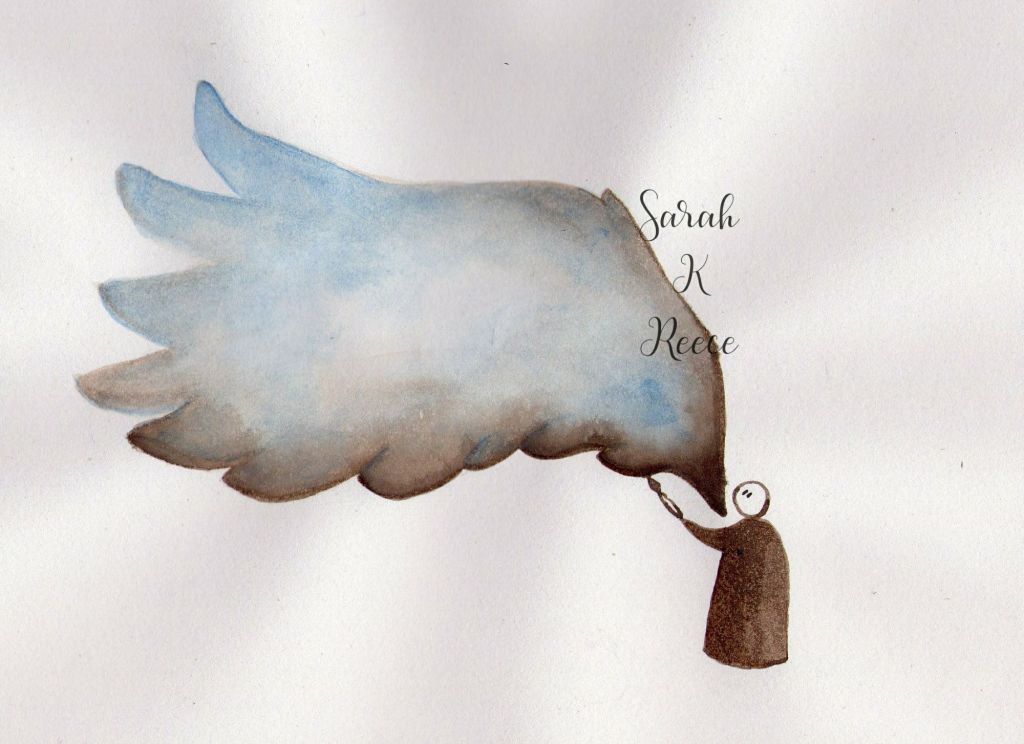
ID ink painting of a figure in brown with a paint brush, painting a large blue and brown wing from one their shoulders

I was late to the conference today, my system went haywire this morning and there was much arguing about clothes and adornments. When it gets like this, everything feels wrong to someone and there’s no peace for any of us.

Yesterday at the conference we were watching some of the presenters pause mid speech to listen to a voice, or sometimes pass on a comment or correction their voice had made. It was beautiful to have it so normal in this space. I remember what that was like, hosting the hearing voices group Sound Minds. I remember them sitting in my backyard around the little bathtub with the campfire in it, laughing about how anyone else would say they were crazy, but in this space they were normal.

I have been learning a lot about autism over the past 10 years and one thing that comes up is the idea of unmasking, which is often vaguely defined or badly defined but which I see as being aware of how you actually feel and function and to make choices about that instead of being so buried beneath the mask of being “normal” you can’t even tell. In here with ear buds for when the microphones are too loud, and a little stone to rub when I need something to do with my hands, and a hard mint to suck on it need something grounding because I know I’m going to be raw and heightened and tired and my senses will be intensified or dulled. I’ve come prepared because I know this about myself. Unmasking can be messy but it’s also liberating and moves you away from the bewildering crashes you don’t even see coming.

We live as if we’re not multiple. We live as if Sarah is one person. We are constantly masked. My staff and clients don’t understand this about me. My children don’t. Nightingale took me shopping before we came here, to make sure everyone who wanted to attend would have something to wear they felt comfortable with. It was complicated. She’s well aware of this because shopping for wedding outfits was similar, full of internal comflict and hope and joy and shame and embarrassment and vulnerability. Both invisibility and exposure are unbearable.

So we listened to people bringing their voices with them, and this morning our pantheon turned up and wanted to be present, not just the confident and joyful presenters, the messy and vulnerable and anxious collection of all of us, wanting to be here and be seen and steal a taste of the sense of safety and acceptance we had witnessed.

So we’re doing what we used to do at these conferences, sitting at the back in tears.

I carry burdens of doubt and guilt and isolation. There are scars and vulnerabilities and insecurities that are painfully present. So I am here with both hats – someone who can offer help, and someone who needs help.  It’s not comfortable but it’s who I am and how we are human.

The sense of being allowed to be the way you are is unspeakably precious and difficult to explain to those who create the hideously dehumanising mainstream services. The sense of acceptance and willingness to see value in devalued experiences is a profound shift. It’s healing to hear people passionate about consent and self determination, people creating different, easier ways to communicate and hold safety and equalise power.

I find myself wondering if I could take these notes and links and resources back home and share them. There’s only a handful of Australians here, and there’s so much knowledge being shared that’s so needed. I’m not sure. Waiting for me at home are so many responsibilities, and such a fragmented community. It’s mostly people like me, working hard and doing their best in their own little corner, with their family or clients. It’s definitely heavier carrying that torch of diversity and self determination by ourselves.

I’m Presenting in Prague

I’ve just arrived in beautiful Prague today.  I’ll be presenting an online keynote and workshop at the International Hearing Voices Congress 2025 for Intervoice Day on the 9th Oct. You are welcome to attend that day online for free by contacting Kellie Stastny (Chair of Intervoice) at her email: kelnco87@gmail.com.

I haven’t been to a Hearing Voices Congress since 2013 when it was held in Melbourne. Back then I presented Introducing Multiplicity explaining the different ways people experience voice hearing, dissociation, and multiplicity/plurality, and a second talk about using the Hearing Voices peer based group model to support people with other experiences with my co-presenter Jenny who passed away recently. We used to facilitate the local hearing voices group Sound Minds together.

This time the conference is themed around the topic of supporting young people. I’ll be delivering a keynote called Gary: supporting young people with complicated minds, and then in the afternoon holding space in a workshop about finding hope when supporting people with ’embodied voices’ – all kinds of multiplicity and plurality. 

I used to exclusively support adults in the community services sector, but NDIS has brought me into contact with many families, children, and young adults over the past 5 years, and as a parent of 5 kids, and someone who was themselves a ‘Complex’, ‘at risk’ kid, I’ve learned a lot. There’s always so much more to learn, but I also recognise that a child who hears voices or switches between different personalities is for most people so far outside of their comfort zone they don’t know where to start. I certainly don’t have all the answers but I do know where to start.

I was once that strange child who felt possessed. I’m still ‘possessed’ in that we’re still multiple/plural, we’ve grown up but we’re still a group. We are married and own a house and raise our children and run a business and employ a team of people. I have supported other people and families and witnessed from afar even more people finding good lives. It isn’t hopeless and it doesn’t have to stay scary.

So, I’ve created a collection of new ink paintings in purple and black ink and put them into a powerpoint, printed out a stack of Welcome Packs about multiplicity and dissociation, brought warmer trousers and packed melatonin and sensory items.

ID ink painting in dark purple of a downcast young adult with an arrow in their chest, pinning a card to them with the word Complex on it. Their dark hair tapers into fern like curls, which are also the pattern on their pants.

I’m so looking forward to meeting familiar faces again and getting to know some new people. This movement is precious and they sheltered me when everyone else rejected me. They saw capacity when everyone else was consumed by my limitations. They welcomed me to grow in the local group and then use it as the fertile soil in which to plant my own strange ideas and grow resources for others out there on the margins who were also excluded and alone. They’re messy and imperfect and certainly not a Utopia in any way, but their values are excellent and the observations and knowledge and hope they hold for people written off as crazy and doomed is unparalleled.

It’s a big deal to come here, it’s expensive and time consuming and it means a week without my family, with my beautiful wife holding the fort with the kids and the business. We talked about it for months, going back and forth about the value of it and the cost and the potential risks. During that time, we also had 4 funerals over 5 weeks, one of them Jenny’s. She was an unfailingly kind soul, who welcomed everyone and spent years spreading her story of acceptance and hope. I carry that story with me, alongside so many others.

Nightingale and I found ourselves asking what we will have wished we had done with them if we knew we only had a year or two left ourselves? Our children are our world and everything is wrapped around our family, as it should be in our circumstances. But my world pre and post covid looks vastly different and I am aware of the losses, the things I used to do and the voice I used to use. Movements struggle when people can’t show up for them. Nightingale and I keep coming back to this – finding safe and accessible ways to share this kind of information. Making the terrifying understandable, the unspeakable bearable. Facilitating conversations. Holding hope. Diversity like this has a suffocating weight and people – and children – around the world are drowning under it. They don’t need to be alone.

Empowering therapists and parents and partners and doctors to become comfortable with people like me, hearing stories of hope and meaningful lives, having a language for experiences so you can share them, and meeting others like yourself are powerful antidotes to isolation, darkness, and terror. So I’ve flown half way around the world to reconnect with a movement I believe in and add my small candle to all the lights people are holding out there in that darkness.

Diversity at its darkest: speaking out against disgust, dehumanisation, and shame

I don’t print chirpy stickers about diversity because I think it’s easy. Difference can be extraordinarily painful. I was very moved by this powerful article about Patrick Burleigh: I was a four year old trapped in a teenager’s body. It’s a man’s reflection on his childhood with a very rare hormone disorder that makes puberty start in infancy. While my life has been very different and my responses to the circumstances I was in about the opposite of his, there was still a lot of common ground.

He wrote about how other people responded once they learned about his disorder:

Revulsion. Disbelief. Lurid fascination.

That’s a familiar place. Not all multiples/plurals experience this but many of us do. I wrote about the toxic culture of fear, fascination, and disbelief around multiplicity back when the movie Split came out, in I’m multiple and I don’t kill people. He’s right about the revulsion aspect although I suspect he gets a much stronger response of that and I get more disbelief and fear. (There’s not a lot of serial killer movies about people with rare hormone disorders murdering folks, although there are many about people with physical or facial differences doing so)

A few years ago when Star was in the worst grip of her eating disorder, I was researching to help her and came across some interesting ideas about how and why we eat. Certain impulses are innate at various strengths at different times, and help to balance each other. For example; fear of a new food we haven’t seen someone else eat, disgust at foods we have previously felt sick after eating, suddenly feeling revulsion for favourite foods when we have eaten them too often in the context of a too limited diet, and so on. These are protective impulses that help us eat sufficient foods in sufficient variety to be healthy, and to reduce our chances of being harmed by spoiled or poisonous foods. Hormones can have a big impact on which impulses are strongest (as most folks who have been pregnant can tell you) and in disordered eating, poor nutrition can change hormone production in a nasty spiral where those deep, involuntary impulses that cue hunger or revulsion are causing horrible harm instead by making it incredibly difficult to eat.

Difference and disgust have a strange relationship, not just in food but in culture. When things are out of the norm they can trigger the same deep involuntary revulsion culturally that being served raw fish, offal, or eyeballs can to someone for whom this isn’t part of their normal diet. We’ve seen this with the knee jerk reaction to LGBTIQA+ people, with the added twist that some of the most intense negative responses are from those who are themselves queer and hiding – shame and disgust appear to have a relationship – the inward and outwards face of the same rejection and loathing.

One of things I find so pernicious about the serial killer trope is that it re-enforces this response. It gets up close and personal with difference in a way that encourages revulsion and fear – which are appropriate responses to a human predator – but attached instead to people who are simply different, themselves the victim of predators, or in terrible emotional distress. When plurals and victims of trauma and abuse suffer this social burden while the people who harm us often blend in to society incredibly well, there’s a bitter irony here. There is a brutal double impact of not only being traumatised but bearing the abuser’s social stigma and shame. This can do far more harm than the abuse itself, and dealing with it is one of the reasons that people who are deemed ‘lucky’ because they were only ‘almost harmed’ by rape, assault or family violence frequently struggle in very similar ways to those who were obviously and overtly harmed. They were still powerless and traumatised. They are still impacted and different. The harsh reality is that all too often, being different can expose you to much more social harm than being predatory.

Something I find of immense value about articles like this one, is the way it links the different experience back to the universal human experience. When you are first coming to grips with something difficult or different, it tends to be consuming. At first it utterly isolates, and it feels like you are the only person in the world dealing with it. Then, if you are fortunate, there’s powerful moments of connection and recognition, finding language for experiences and peers you hadn’t known about. That’s often the case whatever the difference is – chronic illness, neurodivergence, queer identity… And for a little while you dive deeply into the new world and consume it. It’s often a life saving discovery.

After a time for most of us it eases back a little or even a lot. It ceases to be front and center of our minds and our lives. And we start to discover different threads, common ground with other people. We find that other people too, have suffered and struggled in ways that are similar and different and parallel. These connections are just as important to make, they form our bridges with humanity across deep gulfs and gaps in experiences. They help us remember all the other aspects of our identity that tend to be overshadowed for a time. There’s a rebalancing process that can involve a shuffle with how we engage communities. Queer folk get tired of their activism. Sick people decide to spend their spoons on a hobby night rather than a support group. Other aspects of life calls.

For us, when we were 10 years into multiplicity advocacy we found we reached a place where we were over it. The fear and the fascination had long gone. We couldn’t find any enthusiasm to read another book or article with a slightly different take on the same stories and ideas. The difference stops being defining, becomes part of your experience of life but no longer the terrible secret, bewildering loss, or deep wound. And in that space we are no longer captive to it. We become – both to ourselves and our communities – human. Not curios or ambassadors or there-but-for-the-grace-of. Multifaceted, members of more than one community, imperfect. Just human.

We have needed time away from the world of plurality to focus on the biggest changes in our life: letting go of Rose, grieving Star, raising Poppy, falling in love with Nightingale, bringing Bear and Calliope into the world, caring for Nemo. Building my business to the point where I’m not dependent on welfare anymore. Buying a home together. So many huge things I’ve been adjusting to, soaking up, learning about. So many precious dreams I’ve chased.

Nightingale takes me out to dinner. We discuss our good luck, our privilege, ways we can give back. She raises the Multiplicity book again. How huge the need is still in this space, how vulnerable and alone and hidden so many people still are. We turn it over and over, how it might help, how to fit the research and writing and editing into our incredibly busy lives. A fire rekindles and we find ourselves unexpectedly ready to take up the torch again. This is not all of who I am, but it is part of who I am, how we live in this world. It is complicated and isolating and beautiful and I’m not ashamed of it or willing to be utterly defined by it.

I’m also autistic, and as I discuss inclusion in schools, workplace accommodations, and police training I’m often struck by the extreme lack of parity. Can you even imagine what it could look like if plurality was given the same platform, treated with the same sense of importance and validity?

We deserve a lot better. So much of the destruction people suffer has nothing to do with the experience of plurality and everything to do with the context in which we live and are not accepted. We are human and we deserve a seat at the table.

Find more of my work about plurality/multiplicity here.

Understanding Resilience: Trauma is not just what happened to you, it’s what didn’t happen

Trauma is such an important issue to understand, – it underlies every DSM diagnosis, is a profound risk factor for all kinds of poor physical health, and is the often un-examined context for a huge range of ways people suffer and struggle.

But ‘trauma’ as we usually understand it and think about it can also mask crucial issues, which I’ve explored before in my article Trauma is not everything. A set of scales has been developed called Adverse Childhood Experiences, or ACE’s. It’s a clunky and challenging thing to try and clearly define adversity or trauma, given how contextualised and individual they are. It has limitations and issues. However, as a research tool, ACE’s have been fantastic at bypassing the limitations of the DSM. The linear model of one thing causes one disease/bad outcome keeps all information trapped in tiny silos. The vast landscape of adversity with all the complexity of our responses, adaptations, trade-offs, and suffering is so much broader than that approach.

Most research focuses on a single trauma or risk factor, or a single diagnosis or problem outcome alone. ACE’s allow research on clusters of adversity of all types, and finds they are risk factors for clusters of struggles of all types. Mental health is not like the epidemiology of infectious diseases where a single disease can be traced to a single bacteria or virus. It’s more like studying immune function, exploring why this person contracted the disease when exposed and that person didn’t. The gaps between exposure, colonisation, and infection. Why does this person have staph bacteria causing no problems in their skin, but that person has open wounds  infected with staph?

Vast research studies show important information such as – ACE’s are risks for every DSM diagnosis. Whether someone winds up with an addiction issue, anxiety, ADHD, or an eating disorder, exposure to ACE’s increases risk of struggle and suffering in a wide range of ways.

Another key finding was that adversity compounds. People exposed to multiple ACE’s face much higher risks of challenging and painful outcomes. Many of these outcomes are also risk factors themselves – for example childhood poverty increases the risk for depression in adulthood. But depression is also a risk factor for heart disease. And heart disease is a risk factor for depression, which is a risk factor for poverty. These vicious cycles abound, far outside of the sight of a model designed to explore one issue and one outcome.

This may seem like stating the obvious but that’s only because the outcomes of studies like this have gradually become part of popular culture – commonly accepted wisdom. Back in the 1980’s, it was ‘common wisdom’ that children were much more resilient to trauma than adults. Psychological support would be arranged for adult victims or witnesses of horror but children were assumed to be unaffected. The younger the child, the less the impact. Of course, the reverse is true. Early trauma impacts development in more profound ways than it does to an adult.

This brings into focus a common myth about resilience. Because young children rarely show distress in ways adults expected, they were seen to be coping. Their distress was overlooked, delayed, or misdiagnosed. This remains a common problem. People who ‘appear to be coping’ are often held up as examples of resilience, when the reverse is the case. If ‘coping’ is defined as not appearing overwhelmed or hugely affected, it’s actually associated with worse long term outcomes. Coping has an inverse relationship to resilience. I always think of a story from the incredible author Jackie French about this idea. She was talking about how trees deal with heatwaves and drought. The gums look awful immediately, shedding leaves and even whole limbs. The birch trees on the other hand seem to be coping, fairly unaffected except for a little drooping. But over time, the birch struggle more and more, unable to adapt, and by the end of the bad spell, most have died. The gums had fewer leaves and limbs to keep alive and shut down as much as possible through the bad patch. At the end of it they spring back into life, albeit scarred, and recover well. This is resilience.

In the alternative mental health sector, informed by consumer experiences, it’s been a common refrain to argue that the bio-medical model starts with the question “What’s wrong with you” with all the implied assumptions of personal disorder and brokenness that comes with that. The argument has been that we should instead be asking “What happened to you?” in an attempt to recognise the impact of the environment, the circumstances people are in, and the social determinants of health. It’s a powerful paradigm shift.

But this focus on Trauma can cast a shadow over something even more destructive and nebulous. If you define trauma for a moment as an adverse experience – the presence of something destructive such as a natural disaster, abusive parent, or sexual assault, we often struggle to see trauma when it looks like absence. We call it neglect when parents grossly ignore the physical needs of their children, and poverty when it’s an absence of money and resources, but struggle to even name the losses faced by a child without friends, or with loving parents too unwell or overwhelmed to attend to emotional needs. We don’t have a counterpoint for the words ‘widow’ or ‘orphan’ for when parents lose a child, and we’re still struggling with stigma around issues like infertility.

I am often asked what happened to me, what went wrong for me to have PTSD and DID. People assume there are Traumas that can be neatly summarised and have clear impact. And some can – I can talk about the stress of being stalked by a suicidal classmate who wanted more of the only person he felt understood by, even if that harmed me. But the chronic suffering of loneliness doesn’t fit expectations. As a story it lacks drama, there’s no beginning, middle, and end, no peak point of conflict to tell, no vicarious horror, no real narrative. By comparison to the unspeakable stories of violence and violation, it’s all too speakable but has no real words to convey the depths of pain. It is more likely to cue stigma than sympathy – culturally loneliness is costly to admit to, and within the rooms of mental health professionals it often earns diagnoses that assume you lack social skills or sabotage relationships. Loneliness is not only radically ignored as a source of harm, it’s taken as evidence of personal failure and defects, not of community failure. Many traumas of lack carry this stigma, the assumption that you should have tried harder or that in some way it’s your fault. If you admit to them, you’re more likely to be invalidated than supported.

There are many more losses like these that live in the shadows of the big stories of trauma. They are broken dreams and broken promises and crushed hopes. One reason they are so important is that there’s research suggesting they are even more crucial than ‘things traditionally understood as traumas’ in predicting risks of harm. By which I mean, a child without caring relationships, quality education, or safe predictable environments is at higher risk of harm than a child who experiences other traumas but also has good support. I recall reading a study following up the children who witnessed awful things during Hurricane Katrina. And yes, those who had more intense experiences, witnessing people die or in terrible pain, they were more impacted. But down the track the biggest predictor of resilience had littleto do with the severity of their experiences. It was whether they made friends in their new school. Those with friends were largely free of the chronic symptoms of traumatic stress. Those without friends lacked the social support to protect them and allow them to recover. They were experiencing significant symptoms and distress.

The presence of something bad is less destructive than the absence of good things.

This notion is not yet accepted wisdom. And because it is often misunderstood, it informs a great deal of our conversations about resilience, where people who have suffered major trauma but had great support are held up as examples to people who have struggled without essential resources but have no trauma to point to. A great deal of the time, resilience is simply about access to these resources. The presence of love, compassion, consistency, even among the devastation of chronic multiple traumas, has a profoundly protective impact.

Many of my family and friends are outliers. We have experienced severe trauma but are not addicted to ‘recreational’ drugs, victims of polypharmy, or dead. We are extremely unusual among our peers with similar experiences. People often point to our resilience as if it is a personal characteristic. While it’s true that personal characteristics play a role, there’s a lot of invisible resources and luck that play a larger one. It’s stumbling into a hearing voices group and having access to free social connection that normalised kindness to distressed freaks and outsiders. It’s having someone safe to call at 4am from the police station when you can’t go home. It’s finding a psychologist who works with you through all the missed appointments and panic attacks and ambivalence and stands by you as you find your strength to engage trauma therapy. It’s services that provided access to affordable food, it’s the friend who gave us money that went straight towards therapy, it’s the person who paid for the assessment to access support. It’s the meal on the doorstep and the voice on the phone.

Resilience is about community resources, family resources, friends, programs, money, housing, access. Invisible support. Not what happened to you, but what happened next.

And here lies our power. We may not be able to prevent the bad thing. But trauma comes with a hidden insidious message of powerlessness. And myths of resilience as a personal characteristic isolate and blame those most in need of connection and care. Trauma tells us we are helpless, not only those of us to whom it happens but those who love us. It reminds us we will never be unblemished again, that we cannot heal all the wounds or hide all the scars. It tells us a lie about our inability to protect ourselves and each other. But showing up for people is powerful. When what happens next is love and kindness, people do well. And when we understand the trauma of lack and loss as real and significant, we look at both trauma and resilience differently. We show up for each other differently. We understand that mental health support is access to counselling, but it’s also good housing programs, affordable food, and inclusive schooling. We start rewriting the narrative around trauma and resilience, about the personal characteristics of those who have suffered, and what we owe to each other.

Journalist seeking experiences of plurality/multiplicity

I’ve had a chat with Alana who is looking to write an article about this topic and hoping to speak to folks with lived experience. I don’t know her personally so this isn’t an endorsement, but her values sound aligned with my own around raising awareness in a manner that humanises and holds space for the diversity of experience so I’ve offered to reach out through my networks for her. Here’s her intro:

I am writing an article on plurality and plural pride. The story will look at plurality against the backdrop of pervasive prejudice and poor understanding of dissociation, especially among mental health professionals. I also plan to discuss internal family systems, a therapeutic modality that normalises the existence of parts, to suggest shifts in on how plurality is understood. 

The story has not yet been commissioned- I am in the process of writing a proposal.

I am a journalist and registered psychologist.

I hope to speak to people who identify as plural. I am interested in how parts are experienced. I am also interested in the experience of stigma.

I hope to use names in the story.

I have included my contact details below. For anyone who is interested, I’d be happy to chat informally before you decide whether or not to take part in the story. If you do decide to take part, I would show you what I write about you and seek your approval before I submit the story.

I have pasted below links to some of my article. The articles are fairly old. (I am returning to writing after some time.)

Best, Alana Rosenbaum

0412 806 475 alanarosenbaum@me.com

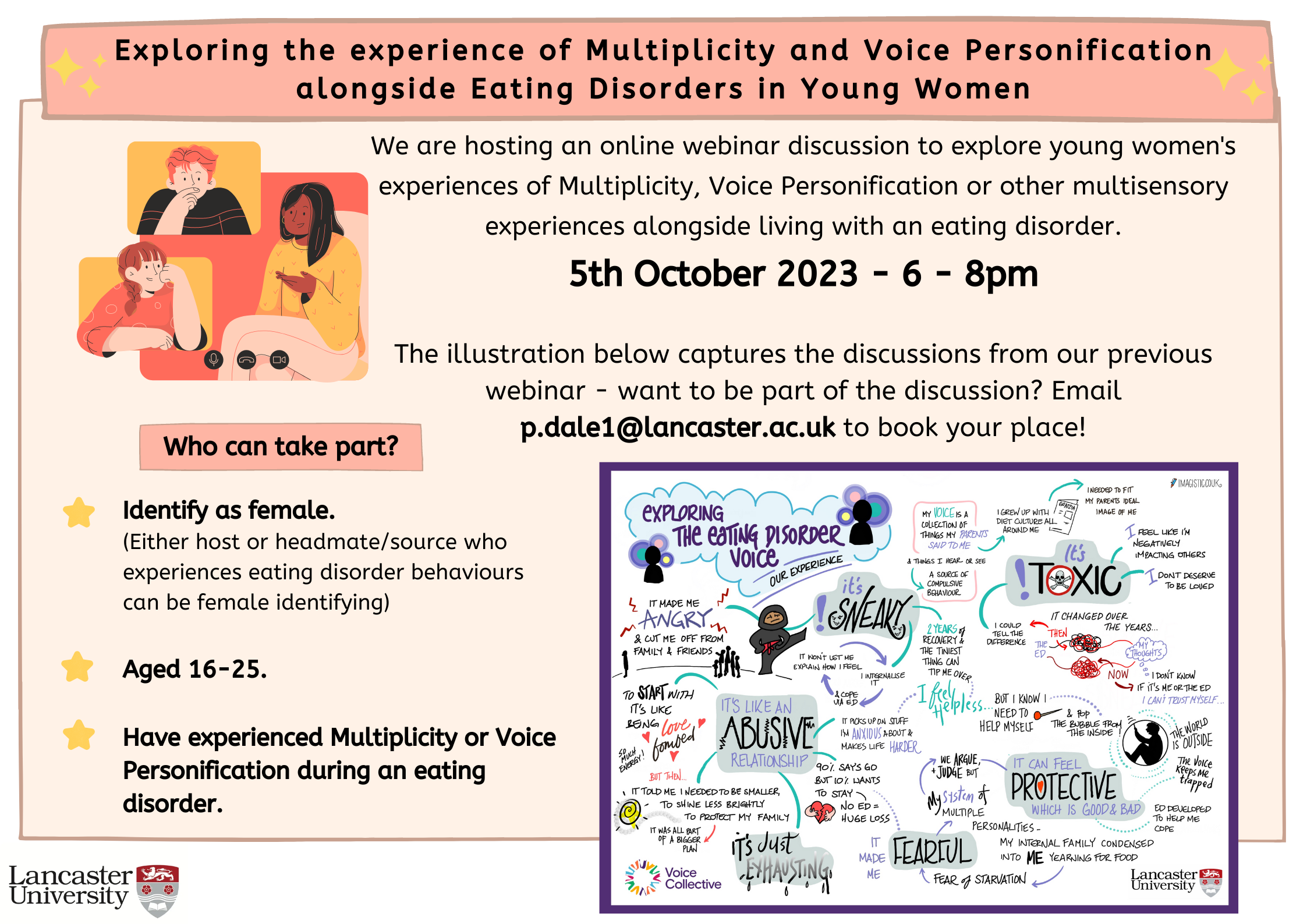
Research opportunity – the eating disorder voice

Phoebe is doing a PhD in the UK exploring the ‘eating disorder voice’, and has asked me to share their research in the hopes of reaching a more diverse group of people to be involved. I don’t personally know Phoebe so I can’t vouch for them, please take care to verify anything you get involved in. I’m always excited to hear of research in this area, it tends to be very isolated and disconnected between the different diagnostic categories and there’s a huge need for linking up and learning from these varied experiences.

Phoebe writes:

I am a trainee clinical psychologist based at Lancaster University in the UK.

I am completing research exploring the eating disorder voice, a voice which comments on eating, shape and weight. This is a common experience within the eating disorder community. Currently little is known about the eating disorder voice, with questions about whether it is more consistent with the experience of plurality/multiplicity, voice personification (when the voice has it’s own agency but not considered part of the self) or other multisensory experiences. My research aims to explore these experiences in relation to eating disorders further with young people who identify as female.

How to be involved:

I am hosting a webinar on Tuesday 5th October 2023 at 6pm-8pm (UK time) via Microsoft Teams. The webinar will be confidential and anonymous.

Email p.dale1@lancaster.ac.uk to book a place.

The webinar will be an open space to discuss your own experiences. I will present some of our findings so far to explore our current understanding and ask for feedback on whether those attending the webinar feel it represents their own experience of multiplicity or voice personification alongside an eating disorder.

Plurality/DID sensitivity reader wanted

Hey folks, I’ve been approached by a person who’s written a screenplay and is looking for a sensitivity reader to advise about the character with DID. Contact me if you’d like me to pass on your email.

My main focus when I engage with any media about plurality/DID is does it make it clear this is one representation of it, or does it imply this is the norm and everyone’s experience? The former makes me happy.

You can check out a couple of my reviews of other media here:

My favourite representations so far include Burton’s Alice in Wonderland, The Spiral Labyrinth, and Jam and Jerusalem.

Mental Health Master Class

Hey lovely folks! I’m thrilled to be getting back into my workshops. I shut down all my public speaking, workshops, and consulting when the pandemic took hold and it’s absolutely wonderful to be dusting it all off and getting back into it. Keeping my clients alive and figuring out how to hire folks to be their teams was absolutely consuming and I simply couldn’t juggle anything else for the last couple of years. Yet I have missed it so much, there’s a special kind of magic in these spaces you don’t get in one to one work. Groups have so much power to validate and support each other. Nightingale is kindly sorting out the important things like room bookings and dates so things actually happen and I will be turning up to the correct location and on the right day!

This time I’m running a session on mental health on Friday 3rd of March, so if you’re interested share this post. This is a fabulous introductory price so grab your tickets asap. 

You will get to spend a day redefining mental health from my unique perspective. Mental health training is all too often divorced from the real world. Services are imperfect, frameworks have limitations, and sometimes our madness is what saves us. Embrace the contradictions and find hope rather than confusion in the complexity. Support others to find their own meaning and discover the most useful resources they navigate a mad world.

When: Friday 3rd March, 10am – 4pm 
Where: 19 On Green*
How Much: $300** (GST included)
If you don’t have NDIS funds and are experiencing financial hardship, please contact us. Some reduced price tickets available. 
admin@sarahkreece.com
Where to Book: https://www.eventbrite.com.au/e/545817403547

*Fully mobility accessible venue with breakout room.
**NDIS payment accepted for self and plan managed participants, please contact us if you need an invoice sent to your plan manager. 

I would love to see you there. This is suitable for people with no experience at all, or those who work in mental health but would value a fresh perspective. Carers and people with lived experience are very welcome.

My intro to mental health talk

Hey lovely people! I’m running a session on mental health on Monday, so if you’re interested share this post, and if you’re available grab a ticket asap.

ID: flyer with prominent teal artwork “The Gap”. A downcast individual stands alone on an island in the ocean. On a different land mass a group are talking and gesturing at them.

Even before the pandemic, it could be tough to understand and navigate mental health and supports. This session is an intro to my master class and will give you a starting point for making sense of different approaches to mental health and how to help others.

When: 6th Feb, 11am – 12pm
Where: 19 On Green – The Brickyard*
How Much: $10**
Where to Book: www.eventbrite.com.au/e/intro-to-mental-health-tickets-530014125517

*Fully mobility accessible venue with breakout room.
**NDIS payment accepted.

Birth trauma

I’ve come home from the dentist today feeling shattered. I’ve struggled with medical appointments since Poppy’s birth. I was not treated well during surgery and that left me furious and frozen in medical settings. I’m very overdue for dental care and have started the grueling process of attending appointments for 11 new fillings. It was miserable today, my saliva thickened and I gagged a lot with my neck extended to allow access to the inside of my top front teeth. It took nearly 2 hours and other teeth are still irritated and sensitive from the previous session.

I’ve never been able to write Poppy’s birth story. Now so many of the details are hazy. I’ve struggled to understand the impact on me and the contradictions in the experience. I’ve felt deeply unreasonably humiliated by my struggles. I know trauma, it’s one of my major areas. I had PTSD at 14. I’ve read the things and been to the therapy and run the workshops and supported others. Somehow instead of creating grace for myself, my experience drowned me in shame. I should be immune? I should be able to deal with this? I shouldn’t feel the way I do. I trekked through a number of birth trauma specialists I didn’t find helpful, froze and forced myself through dentists and pelvic exams hoping I would just adapt. Then turned away from the whole mess.

Lately going to prenatal appointments I’ve run into all these ghosts. Going for a scan and finding myself in the room where they confirmed Tam had died. There’s ghosts of me throughout the hospital, screaming soundlessly and running with dark hair matted and white gown flailing. A portrait of derangement and madness. I sit in appointments, incoherent with rage and painfully aware that I present as rude, distrustful, obnoxious. All my energy goes into not screaming, stuffing all the words back into my mouth, not shaking, not biting the hand that touches without permission, not raving at the language that is so devoid of the concept of consent. There’s nothing left for the smiling and eye contact and apologetic shrug and recruiting them to accommodate us in any tiny way. I’m so tired until I’m sitting there, then I’m so angry and so aware my anger instantly strips me of any credibility or power I might have had in this place. They think of trauma as the panic attack, the victim. I am on fire with fury, watching their every move and listening to every word and seeing ghosts of myself weeping and running through every corridor, abandoned and untended.

So we’ve put aside some money to spend on a good dentist, and today on catching an uber home again because I’m usually too ill to drive afterwards and couldn’t find a lift. She uses the anaesthetic that doesn’t work as well but I’m less allergic to. And she says things like “you’re in control, let me know anytime you need a break”. I lay very still and my tears roll down my temples into my hair.

I come home and Nightingale brings me mashed potato and pasta and sympathy. I’m going to hurt for weeks and it’s exhausting.

I’m talking to people about birth trauma and how stuck and silent and alone I’ve felt. I know better. I know shame isolates. I know hundreds and thousands of other people will have come through something similar. I know how to use art, writing, talking, and research to process things. I know that knowledge doesn’t protect you from experience. I know it’s not punishment. I know self compassion is crucial. And I know it’s difficult to do when no one in the medical environment sees the injury, or responds with compassion. It’s difficult when it makes you feel weak and vulnerable. It takes patience. And a dentist who’s had good trauma informed care training. I wanted to be doing that training by now. Frustration and roads untraveled.

I feel voiceless a great deal of the time about most of my life, in a way I can’t express well or articulate even to myself. There’s been so many changes and challenges to my ideas about my life, my relationships, who I am, what it means and what to expect. Trying to understand late in life diagnoses of autism and ADHD, what they are, what that means for me, my family, my children. The ending of an eight year relationship with the parent of my child. Beloved Star cut contact with all of us last year after joining a church. Getting married, a new baby. Work stabilising and becoming less overwhelming. The awareness in the back of my mind that I’ve been diagnosed with something that indicates I lack social awareness and the resulting severe loss of confidence to speak and own my own story. Lost about how to be authentic and work, navigate complex relationships, parent. I miss having a voice and a community. I put a call out yesterday for help to attend the dentist and got no reply. Covid has not been kind. There are empty gaps in my world and they hurt. There’s so many ghosts.

I have birth trauma. I’m trying to find my voice again. I’m trying to make sense of which stories I can share and how. Today I was brave. I’m hurting. I’m not alone. We’re all alone. It is what it is. I’d rather take the slower and more dignified route to knowledge, through study. But lived experience brings not just the silence and scars, when we wrestle with it, it comes with powerful inside knowledge. When we can speak we break the shame that binds us all. I didn’t think it would happen to me, but it did. I didn’t think I would get stuck, but I did. I couldn’t fix this one myself. But someone like me must have found a way to speak to a dentist and because of them I could get broken teeth fixed today. And tomorrow I’ll pay that forwards.

To the victor goes the spoils: why perpetrators are treated with sympathy

In the aftermath of public cases of violence, rape, and abuse, the conversations and reactions tend to be polarised between hatred, fascination, and sympathy. Some perpetrators such as those who’ve asexually abused young children are dehumanised and reviled. Some such as serial killers are the subject of intense curiosity and speculation. Many are instead regarded in a sympathetic light that can have brutal consequences for victims.

People are not split into single categories such as victim and perpetrator. We may wear many hats and fit many labels in different contexts and across various relationships. It’s not inappropriate to consider the history and context of perpetrators and their actions. However, how we experience sympathy has a profound impact on social justice. We have a range of bias that favour perpetrators at the expense of victims, and if we are unaware of these we are easily recruited to behave in ways that protect perpetrators and further harm victims. Understanding these bias can help explain horrifying social, political, and organisational responses to violence and abuse. We can maintain compassion and curiosity without becoming part of systemic abuses by understanding how sympathy is elicited and countering the bias.

It is critically important to understand how sympathy is formed because when we sympathise with someone we are more likely to perceive them as credible, and less likely to see them as responsible for the circumstances. As strange as it may sound, there are many factors that stack the deck strongly in favour of sympathy with perpetrators. Here are two excellent articles exploring sympathy for perpetrators in more detail:

Sympathy follows specific trends that can be researched and understood. For example, we find it easier to sympathise with someone when we know more about them, when we share characteristics in common with them, and when sympathy with them doesn’t contradict our need to believe in a just world. To put that another way, we are more likely to sympathise with people when we feel they are like us and when it doesn’t cost us anything to do so.

The just world belief refers to the underlying hope that if we do the right things and are good people, bad things won’t happen to us. It draws on ideas of social justice and fairness and yet leads us to behave in ways that violate them. It’s a key aspect of victim blaming and part of our cultural demands for ‘model victims’. Our fear of being victimised ourselves influences how we respond to the harm experienced by others. This is a good article with more details:

Many of the characteristics of model victims – such as sharing a lot of personal information, making the listener feel comfortable, having strong but not intense, appropriate emotional responses that are clearly visible to the observer while discussing the events – are specifically inhibited by trauma responses. Numbness, rage, confusion, and reduced emotional range are extremely common responses to trauma and these directly inhibit the development of sympathy in others. Judith Herman explores these ideas in more detail in her excellent book Trauma and Recovery. Memory loss is an incredibly common symptom of trauma and yet it often severely damages the credibility of a victim because our expectations of their capacity to recall and communicate the experience are completely at odds with the reality of how the brain functions in those kinds of circumstances.

The standards to which we hold victims are impossible for anyone traumatised to attain. They are also astonishingly high. Victims of rape or sexual abuse must defend their sexual history, clothing choices, and personal virtue. A less than perfect victim is accorded less sympathy. In contrast the standards perpetrators are held to to garner sympathy are astonishingly low. Flagrant, sadistic, violent, or cunningly concealed abuses may be rendered less horrifying by any small presence of a humanising factor.

It’s particularly interesting to note that the same mitigating factors when present for either the victim or perpetrator tends to favour the perpetrator. If the perpetrator was drinking, suffering from mental illness or cognitive impairment, or experiencing life stress they are seen as less culpable. If the victim was experiencing any of those things they are seen as more culpable and less innocent.

Those same circumstances that can make us feel sympathy for the perpetrator as less culpible, can also make us dismiss a victim as less socially valuable. In the same way that less outrage is raised for missing black children than white children, harmed disabled people, less attractive women, queer people, poor people, and marginalised people of all kinds are already perceived as damaged or at higher risk, and at times we are less confronted by and concerned by their abuse and less sympathetic towards them when they’re harmed.

Perpetrators ask very little of us, they want to continue the status quo, stop having the uncomfortable discussions, and keep the focus away from the victim.  Their desire to minimise, deny, downplay, forget, move on, and avoid change are all socially and politically comfortable.  Victims on the other hand need us to recognise the scope of their losses and suffering, to respond to their pain and rage, to address their vulnerability or accept the inevitability of harm to some.  The absolutely fair and reasonable needs of victims are considerably more difficult to respond to than those of perpetrators.

Strangely enough, in many circumstannces, the more clearly innocent the victim is, the more likely they are to be blamed. By using a combination of sympathy bids and DARVO, perpetrators persuade organisations and cultures to allocate sympathy in ways that betray victims. DARVO stands for Deny, Attack, and Reverse Victim and Offender, a common set of perpetrator behaviours that flips responsibility for abuse onto victims.

This betrayal trauma sets victims up to blame themselves, and makes them more likely to suffer long term mental health impacts, and be victimised again in the future. It represents an abuse of our privilege and social power to respond in this way.

So the next time you find yourself trying to process your feelings about abuse or assault, be aware that we are easily hijacked for many reasons to sympathise with the perpetrator over the victim. Shame in perpetrators predicts high levels of re-offending – I’m not advocating for hate. But participating in the betrayal of victims as a community harms the victim and makes re-offending more likely by the perpetrator. It is essential to hold perpetrators to account and maintain a deliberate focus on the losses suffered by the victim, not those suffered by the perpetrator. Justice and compassion are not served well when perpetrators are able to keep us focused on their humanity and their losses, generating sympathy and reducing responsibility while distracting us from the humanity and suffering of those they’ve harmed. Be careful where your sympathies are drawn.

Mental health in lockdown

Every lockdown I hear about folks with psycho social disabilities being abandoned by their support providers. Welcome to an NDIS that is largely informed by people with a disability background, with mental health as a last minute tack on. Yes, maintaining supports for people with high physical needs is obviously essential – people who need support to transition out of bed into their wheelchair, or assisted showering or feeding must be able to access their services. It may be less obvious, but it is just as essential to maintain support for people with high mental health needs! Lockdowns are a highly stressful event with well documented mental health impacts. Our most vulnerable people are of course going to feel this impact even more. I am deeply frustrated by the lack of recognition of how real these needs are and how serious the outcomes can be for people.

As a small provider of support teams I recognise there’s a huge logistical challenge in lockdowns. It’s tempting to ignore all but the most obvious care needs. It’s critically important to make sure mental health is part of this. Here’s a quick run of the process I’ve developed for my team:

Risk Assessments

Each client is assigned to a low, medium, or high risk category for that lockdown. These are specific to the needs of the client for each lockdown, and not a static unchanging category. Low risk clients are those who are well prepared and resourced and highly independent or with excellent in home supports. Children with parents at home who have organised all the needed resources, adults who have excellent independent living skills and only need support with transport or gardening or other non essential tasks are examples of low risk. This assessment is based on contacting each client and their primary support worker, if both agree all is well then halting all in person services for that client is likely the safest response. Continuing in person service provision for these folks will put them at far more risk than halting services. Some low or moderate risk clients will still need supports that can be provided online or over the phone, for example assistance to purchase online supplies, or help to access covid testing if needed.

High risk clients have vulnerable health or mental health needs and/or living circumstances that mean they will need in person supports during the lockdown. Examples of high needs from a mental health perspective include clients who will not eat without support, those who struggle with paranoia or persecution type delusions, and those with high sensitivity to loneliness or perceived abandonment. Just because someone has the physical capacity to feed themselves does not mean they will be able to do this under stress. For these clients a personal safety plan is created and shared with their team. A template of my plans is available here, you are welcome to use this for your own circumstances, it suggests opportunities to engage some of the key mental health impacts of lockdowns according to the current research.

Reduce risk of client to client transmission

Support workers who will be needed for in person support are assigned to one client each. Where possible it’s best practice to try and prevent one worker travelling between multiple clients. Bear in mind that some support workers will also be carers and travelling to support family or others with high care needs in their personal time. Clients with high needs will need a small dedicated team to limit risk of losing staff due to illness or hotspot exposure. Other support workers can remain in reserve to replace any face to face staff who have to isolate themselves. Support workers should attempt to minimise needless transport and perform necessary travel on behalf of vulnerable participants. It’s also very important to ensure participants are receiving updated health advice in a format they can understand – this may be a plain English print out for their fridge, or a morning phone call to check in.

If you have mental health challenges or a trauma history or are supporting someone who does here are a few key support needs and considerations I have found helpful:

Food challenges

Most people with issues around food struggle more during lockdown. There’s many ways to assist depending on what the challenges are and how well you know the person’s specific needs. If they have helpful support from a dietitian or GP they may be able to inform this process A few options might be: shop for supplies of that person’s safe foods, the things they find easiest to eat even when they are stressed. This might not be varied or nutritious but all food getting in and staying down is a positive thing when restriction is an issue. Meal replacement shakes/drinks/supplements may be an important resource. Shared meals can be helpful for those who find social support useful. Distractions in the form of movies, puzzles, conversations, and board games can assist. Company for an hour following meals can assist with preventing purging. Meal planning can support those with lower capacity to plan and manage tasks. Eating to a schedule of 3 meals 3 snacks can assist those who struggle with bingeing or restricting (it sounds counter-intuitive but regular food is a very strong preventative for bingeing). Having meals provided or portioned can assist those who struggle with that aspect. Obviously some of these approaches will be unsuitable or even harmful for some people – tailored support is essential for good outcomes.

Anxiety/Paranoia/Psychosis

Folks who struggle with these issues are likely to have increased difficulty during lockdowns. Anxiety generalises easily so people may express fears about the virus and their loved ones through other seemingly irrational fears or get locked on to concerns that compromise their safety or provision. For example some people who need personal support in showers may suddenly refuse this, or be unable to cope with showering altogether. Issues with neighbours may flare up into huge problems, minor conflicts with family or housemates may become unmanageable. Phobias can become so intense people can’t function, and if paranoia increases too much people may come to fear and reject their team, refusing medical care or food or support.

It’s important not to get too caught up in the expression of fear, but to recognise this is not intentional, and to engage the underlying needs as best as possible. Yes the person may be talking crazy sounding things about being poisoned by the neighbours, but arguing about this is likely to leave them feeling more alone and unsupported, and even afraid that you might be part of that plot. Someone who has become so phobic of birds the house has to stay completely closed up in case they see one through a window may well know on some level that this is irrational, but the brain link to their fight/flight response isn’t something they can think their way out of, and adding shame and embarrassment to the situation rarely helps. The real needs are often about control, territory, and connection. When people feel unsafe they experience and express this in a variety of ways. Any small things that can restore or preserve control, territory and connection can reduce the distress. The sad thing about experiences like psychosis is that they often impact the very things people need to be able to manage them safely, so it falls to us to be aware of this and try to work around it.

Meeting needs for control can be as simple as asking the person to help draft their own safety plan, to decide if they want to cancel the GP or change the appt to telehealth, to invite them to choose a meal plan you can help them shop for. For people with traumatic histories around psychiatric inpatient experiences or residential care, anything that helps their home still feel like a home and not like a formal care environment can help reduce triggers. Be mindful that sometimes simple things like our communication books or weekly roster shouldn’t be on display but digital because of that history. For other people having access to the communication book will help them feel more in control. It’s individual.

This links into territory too, who’s home is this and how safe does this person feel in it? Do they have retreat spots where no one is allowed to disturb them? Are there issues with housemates? Can they change things around to help them feel more in control of the environment? This might as simple as asking them where PPE like masks and sanitiser are kept, or helping them to create a quiet nook in their bedroom where they can hide out and use headphones when things are a bit overwhelming. Some more thoughts about territory here.

Connection is vital, we don’t endorse phobias or delusions as real to us but we do endorse them as very, very real experiences for our clients. We may not see what they are seeing or sensing but they absolutely do, and they have to navigate all the feelings that come with that experience. Validation is incredibly important, as is understanding that people trying to reassure someone their phobia isn’t really harmful, or delusion isn’t real, is actually in it’s own way very confronting and isolating. Read more about my experiences with psychosis here. Maintaining the same team wherever possible, ensuring the team is large enough to cope with a number of people being removed and required to isolate, and wherever possible using a co-design approach to all changes, introductions of new people, new routines, and so on can all contribute to emotional stability and reduced distress.

Self harm

Are there appropriate medical supplies in the home for the clients preferred methods of self harm (burn cream/antiseptic for burns, butterfly stitches for cuts, etc)? Is there access to a local nurse or GP who can assist with any more serious injuries? Mental health informed and non-judgmental vastly preferred! Will this person be safer if access to risky supplies is prevented, or safer if they are not searching for new unfamiliar materials to self harm with? Eg if there are parents providing supervision then reducing access can be very helpful – parents may for example lock away knives. If there is no supervision then reducing access can be risky – people searching for new tools can use items that are far more dangerous. Does this person have alternative options for managing self harm impulses? For example, a grounding kit, ink not blood, Dialectical Behavioral Therapy skills, safe people to contact? Are their support workers and housemates compassionate and informed about self harm, or stressed, confused, scared, or angry? Do they need more information and training? A place to start might be My experience of self harm. We need compassionate and regulated people in support roles, not overwhelmed, horrified, and confused folks. This also goes for our approach to ourselves when we are struggling with these issues.

Confusion

For folks with severe dissociation, dementia, psychosis, and various other challenges the higher stress and disruption of the usual routines can lead to high levels of confusion. This might mean forgetting crucial information, mixing up important lockdown guidelines, missing essential appointments, taking medications inappropriately my mistake, and other errors that can have huge implications. People who are usually able to drive might not be safe to, or those who independently manage their medications might need more scaffolding for the lockdown. Draw on resources from supporting clients with dementia such as whiteboards, alarms, reminders, checklists, and countdown clocks.

Make sure you are checking for higher needs that might be unintentionally concealed, or intentionally hidden by embarrassed clients or those afraid that higher supports might never be reduced down the track. Short periods of more intensive support can be the difference between riding out a tough time and full breakdowns with serious consequences and sometimes much more long term loss of capacity. Again, good relationships, a high sense of safety, and clear communication assist this process.

Insomnia/hypersomnia

Sleep disturbances are really common during times of stress. The latter is disruptive but the former, like food stress, needs to be regarded as a warning sign. For many people it will be unpleasant but reasonably benign, and resolve itself. For some it will become a major problem that can endure over many years – particularly for those with trauma issues that cause hypervigilence. A period of severe sleep deprivation can have a catastrophic impact on people’s cognition, behaviour, and health. People may be unsafe to drive, make judgement errors, experience various forms of dissociation, have disrupted emotional regulation, and have loss of physical coordination similar to being drunk. This can result in a higher rate of home accidents and injuries, poor caregiving and child supervision, self harm and abusive behaviour. Sleep deprivation is a common precursor to episodes of mania, depression, and psychosis for those vulnerable.

When sleep issues are being triggered by a lack of sense of safety, I’ve found it more successful to address that as a priority over ‘sleep hygiene’ responses. This might mean supporting someone to change their bedroom around, increase mess in their home!, or sleep on the couch, to read books over the phone to help someone’s hypervigilent nervous system to calm down, or to help them build a nest in the cupboard to cocoon in.

Depression

For those with severe depression, functioning can be profoundly impacted. Scaffolding can make a major impact for someone in a bad episode who can’t get themselves out of bed, into the shower, or attending to admin and self care needs. Phone calls, prompts, help with routines, alarm reminders, friendly check ins, and visits to help coax folks back into routines and help reduce the spiral of shame, isolation, and overwhelm is really helpful. Normalising the response and reducing the impacts of the initial loss of function can prevent the development of a viscious cycle of neglected tasks causing further stress that increases the depression. There’s many approaches and treatments for depression which is far beyond the scope of this article, but a couple of things to keep in mind are: depression is a normal response to highly stressful life circumstances, depression becomes self reinforcing when it destroys our sense of self worth and connection to our community, and depression can respond well to opportunities to explore and grieve losses, choosing to focus on our values and what gives our lives meaning, and support that helps us still see ourselves as useful, valued, and capable.

Addictions

Folks with addictions are at high risk during lockdowns. It can be counter-intuitive but there’s very real research behind odd sounding decisions such as keeping bottle shops open during lockdowns. Withdrawal without support can be dangerous or for some folks even fatal. Withdrawal can also increase other risks such as domestic violence. So as strange as it may sound, this is actually about risk management and harm minimisation. Do not use a lockdown as an excuse to try to make a person give up or cut down on their addictions.

Safety at Home

Not everyone is safe in their home. Both the environment and the people can present huge risks and lockdown can be a pressure cooker that exacerbates those. It’s crucial not to make assumptions about the home. It’s been a long standing issue that there are limited or sometimes no homelessness support services for people with disabilities, based on a naive assumption that people with disabilities are always well cared for. The reality is that people with some forms of disabilities are simply more likely to be abused in situations and homes they can’t leave. For other forms such as mental illness we’re more likely than non disabled folks to wind up homeless or in prison. In all instances we’re at higher risk of being harmed. We are also sometimes the folks who harm others.

One of the biggest privileges of being a carer or disability support worker (carers are unpaid people in our personal lives, support workers are staff paid to be there) is our high level of access to people’s lives. Where a psychologist has to make sense of a person’s circumstances in an hour a fortnight, filtered through that person’s perspectives, or a GP has to understand at times very complex interplays in health outcomes for patients in 10 minutes a month, we have vastly more access. When I am working with someone in their home 10 hours a week for 6 months, I have a depth of knowledge about them and their circumstances. All that knowledge can be utilised to create highly individualised responses to challenges such as lockdowns. This is where the NDIS approach excels. Where it tends to fall down is the lack of utilising that knowledge beyond one carer or worker. Without a team who make time to pair up the front line worker knowledge with management bigger picture systems/public health/service design knowledge we get a disconnect. Management make calls that make sense in a big picture but can so utterly fail to fit an individual client it can do harm. And excellent front line staff can get caught between their personal knowledge and the guidelines of their work, or left to fend for themselves without the team support needed to get good sustainable outcomes in complex and intense situations.

One of the principles behind all these approaches is called trauma informed care and they apply both to those of us with trauma histories and those without. They are also universal in that they are just as important to keep in mind for staff, families, carers, and the clients. Sleep deprived staff can’t be their best, and some staff are in highly vulnerable and challenging circumstances with uncertain work hours, high responsibilities at home, and loss of income during lockdowns. Excellent care of people with disabilities doesn’t happen in contexts of burnt out carers and exploited staff. Understanding the risks of this kind of work, which are largely relational/emotional and rarely well addressed by OHS&W myopic focus on physical health risks, can help us to identify and address the things that cause common issues for excellent staff such as struggling to switch off after work when they are worried about a client, feeling unheard and unsupported when they have concerns, working outside of paid hours and outside of policy guidelines alone to meet the genuine needs of clients they are worried about, and being abused by clients who have control over their work hours or firing them. Promoting resilience is about understanding these contexts and being able to tailor services to support appropriate self care for clients and staff. A few thoughts about that in Self care and a myth of crisis mode, and crisis mode and being under pressure.

Hope there’s some helpful food for thought here for you or the folks you care for. Lockdowns don’t impact us all equally, they have a far greater impact on some of our most vulnerable people, and those of us with mental health issues are commonly being overlooked in rushed and inadequate risk assessments. This is a horrible reflection of poor planning and lack of familiarity with mental health and it causes needless distress and risks to many people. If you are in that situation I hope you feel able to advocate for yourself or your client or loved one, and please do reach out beyond your service providers if they have shut down services and you are in need. There are online groups on social media such as facebook where people find independent support workers, and a host of online platforms such as Mable. If you are in any kind of online support group associated with your disability many of those people will have a lot of experience and service provider recommendations. Sometimes you just need a small rejig of your current services to include a good lockdown plan and a team leader who can coordinate staff for you, or a little bit of training around trauma informed care or whatever your specific needs are. Mental illness shouldn’t be the tack on to the end of the disability approach, the impacts are just as real and the needs are just as valid.

Be safe and best wishes.
Dealing with Trauma during a Pandemic

Hey folks, I know many of us with trauma are having a rough time at the moment too. Some of us are not safe in our homes, are facing increased risk of harm from people close to us, or are struggling terribly with awful triggers such as feeling trapped, abandoned, and not having enough resources to survive. Shops don’t feel safe anymore, many of us are losing access to essential supports and are finding our brains are blowing up under the strain.

I’m very busy at the moment supporting my family and clients, but some of my beautiful contacts have been swiftly responding to create free resources for people.

A friend of mine, Jade, is running beautiful resources such as reading kids books online particularly for little’s and kids in multiple systems – check out her work here. Jade has been co-admin of the Dissociative Initiative facebook discussion group for many years, she’s incredibly thoughtful and compassionate. She wrote a huge blog and has published a range of stunning books on trauma, multiplicity, and recovery.

Another friend of mine, Raven, is part of a huge free online conference for survivors. It is accessible from anywhere, and takes place between 23rd-27th of March. Raven is well known for her amazing Puppetry (R)Evolution using creative techniques and hand made puppets to discuss issues such as child sexual exploitation. Her 25-minute video is about using creativity and activism in healing on the 26th March, and I’ve been assured it will include puppets. Here’s the schedule and list of speakers with their topics: http://walkingwithoutskin.com/rape-and-resilience-summit-speakers .

I’m hearing a huge surge in self harm, suicidality, eating disorders, and PTSD symptoms. Anxiety and depression are high, right when everyone around us is telling us to not panic and go out and do a lot of things. Executive function skills are in short supply and bad memories are looming large.

Some of us know that if there are shortages, we’re not on the list of people who will be prioritised. That alone is a kind of social shame and rejection that can send people down a dark spiral. It’s hard to put into words, but we all need to feel like our lives have meaning and purpose, that we’re not just here to consume, and that we’re not expendable.

If this is you, or someone you care about – hold on. If the old stories have kicked back in and death and self destruction feel like valid – or the only – reasonable response to such widespread terror and shortages, hold onto the knowledge that we need you. If the ‘broken people’ trauma narrative has you feeling that you’re not destined or worthy of survival, if the idea of taking up essential resources that someone else might have to go without makes you want to run rather than fight for a place in the world, if it all feels too hard to hold on while the planet tips into darkness anyway…

I’m so sorry. I’m so sorry for what you are going through, and for the people who don’t understand. I’m so sorry that at the point where you want to stand up and shine brightest you’re falling apart. I know what it is to feel tuned to the agony of the world, to feel the death of every person, every creature, in your own skin like a million needles. I know what it is to be seduced by the idea of scapegoating yourself, that perhaps the world would be a better place without you in it. That perhaps someone more worthy would have a meal or medicine. That perhaps you could take with you all the darkness and anguish and dive over the edge of the world with it clutched to your heart and vomiting from your mouth and dripping down the inside of your legs and leave behind you a brighter and gentler dawn.

These stories are like parasites that eat us alive and turn our minds against ourselves. I say to you – what kind of world do we want? Because if you want a world that is a little kinder to the so-called broken people, we need you in it. If you want a world that is loving to those in pain, we need you to bear the pain and find the love. You cannot make any of it better or reduce the suffering even one mite by tearing another hole in the fabric of the universe on your way out of it. Stay here. Hold it with us. Mourn it with us. Love it, with us. Stay.

Where I’m going in 2020

I’ve just arrived safely in Melbourne for the LGBTIQA+ “Better Together” conference. (Say hello if you’re coming too) I’m tired and excited and really looking forward to it and meeting all the other amazing folks.

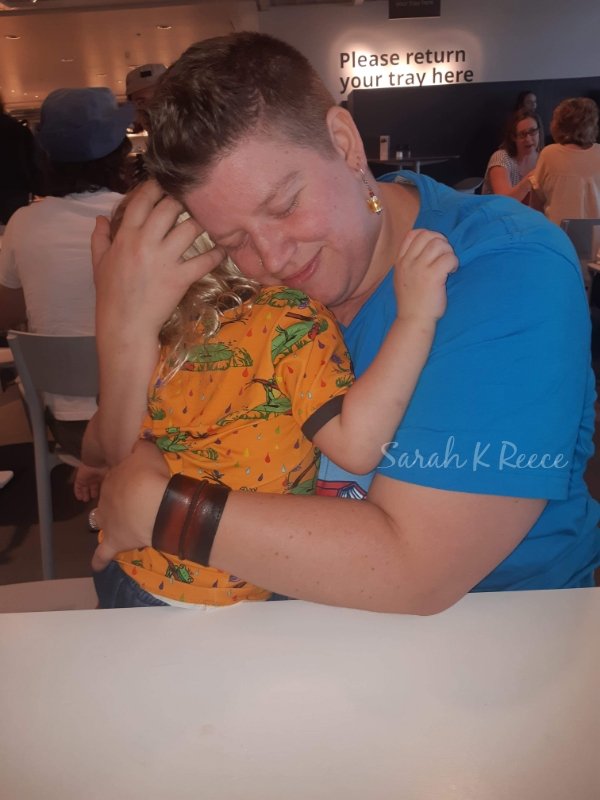
Image description: smiling person with short hair and a bright blue shirt with the image of a kitten asleep under a book and the slogan “Curl up with a good book”.

I have Rose to thank for the cool t-shirt. I’ll be away for 5 days and my heart aches knowing the nights will probably be tough for Poppy. I, on the other hand will probably get a bit more sleep while I’m away. Parenting dilemmas!

ID person in a blue shirt and a child in a yellow shirt tendering hugging each other

It’s been a full on couple of months. Massive bushfires have been destroying huge areas of Australia. It’s an unprecedented disaster with the largest evacuations we’ve ever experienced. The losses are staggering. Some folks are in the thick of it, while those like me who are lucky to be safe are watching with horror and confronting survivor guilt and vicarious trauma. Helping out through donations and community support eases the helplessness and is a small balm to the fury and grief. Sometimes it’s big things, others it’s smaller gestures like taking fruit to the local wildlife carers or joining in a working bee for a local damaged farm. Anything helps to unfreeze, to ease the impact of months of bad news and horrifying casualties.

If you’re feeling paralysed, silent and distraught like I’ve been, you might find it helpful to look for something small you can do and do it. Look for good news, for people’s kindness, and share that too. Walk away from it at times to build your capacity to stay engaged and not burn out.

A lot of people are in terrible pain, facing life threatening conditions, or handling thousands of burnt animals. These are all high risk for trauma, and the survivor guilt of those of us who are lucky can lead us to torture ourselves as if more suffering would somehow help. This is part of vicarious trauma, and things that help with this are connection with community, breaks from it, humor, and keeping a clear sense of responsibility.

It is not my fault, I do not deserve either my good fortune or to be punished. I am a better ally and supporter when I’m not overwhelmed.

The other major focus for me has been my work and studies. I’ve been in an intense process of wrapping up projects and studies and launching new ones.

I’ve completed my grad cert in public health with mostly high distinctions. The mentoring program with Sally Curtis has started and been full of invaluable learning already.

I’ve started in two new LGBTIQA+ representative positions, one on the Consumer board with the Southern Adelaide Local Health Network (the hospitals, rehab facilities and so on). The second with the Freelance Jungle as an admin on the team which supports a 5,800+ online group of Australian and New Zealand freelancers. I’ve been a member and then patron of the group for a couple of years, and it’s a fantastic resource with a great focus on mental health and inclusion. The Better Together conference will help me understand both the needs and resources of the wider community.

Consulting and community development work has been so satisfying last year with a creative health project in prisons with SHINE SA and a peer based research project about systems change for people living with chronic illness with TACSI. I was so pleased to support these, they were both work I’m very proud of and look forward to sharing more about.

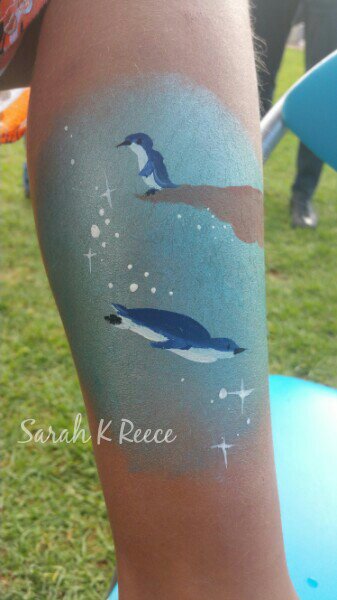
With face painting I’ve been getting more work from councils and organisations aligned with my focus around diversity and inclusion, such as schools for autistic kids, or queer events, which I’m very happy about.

I’ve launched a whole new arm of my business, providing independent support work for folks through the NDIS, with a special focus on mental health and diversity. It’s going very well and I’ve found that I love it even more than I anticipated. Being able to cone alongside people in their lives and homes and provide personal peer based support that is therapeutic but not ‘therapy’ is simply wonderful. Like a doula it’s a flexible mix of practical and emotional support, looking towards bigger goals but also very present in the moment.

It’s very similar to the group work I used to do in mental health services, such as facilitating the hearing voices group. I’m part of a small community of practice with a professional organiser and a handyman, and I’m setting up supervision and a network of resources. I’ve been extremely busy with it which was a bit unexpected – it’s taken off very quickly and I’m largely booked already.

I’m also booked to deliver a new series of local creative workshops which I’ll share more about shortly.

My work life is all coming together under an umbrella of creativity and diversity. I’m very passionate about it and excited to watch it grow in 2020. I’m putting applications in for further part time studies to continue to develop my skills in this area, and looking forward to getting back in the studio sometime to pick back up my current project there.

Thank you all for your encouragement and support, it’s taken me awhile to find my niche but I’m incredibly happy to be doing what I am, and feeling very aligned with the values and quality that links my different business areas together. 🧡 If I can support you or your project in some way, get in touch and let’s talk.

Shut up

When the world is built on principles that make pain private and unspeakable, anyone in pain feels alone.

When those in power make the rules that hide their indiscretions, their avarice, and the suffering left in their wake, it is literally unspeakable. The nature of oppression is the way it can not be spoken or at times even thought.

The average customer satisfaction rating is above the national guidelines which is a fantastic indicator of success. Within the dissatisfied customers are a smaller, highly diverse group of people so harmed and traumatised they would rather suffer great pain and risk terrible harm than be exposed to them again. We do not collect that data. We not speak of them.

Friendship is the building block of every community, an elastic concept applied to the closest confidant and loosest acquaintance but all with an implication of acceptance and mutuality. It saves us from impersonal formal care, and it fails us in ways too painful to put into words. It is at once more robust and more frail than we think.

Therapy is at times merely an expensive process of transferring trauma in contained doses from one person to another.

Bitterness is almost beautiful – Wendy Orr

I cannot speak of your brutality and of your tenderness at the same time, people hear with only one ear, listen to only one story.

We do not speak of the truly horrifying things. And when we do, we mouth platitudes and vomit rage and break spirits.

After all these storms and tears, I must go home, and face the truth that no one dies of loneliness. More’s the pity – it seems the obvious solution.

On the floor of the therapists’ office I die and come to life. I break into a thousand pieces and walk out again with my face almost but not quite put back together. Pretending to be human with everyone else pretending to be human.

It would be funny if it wasn’t so absolutely f#@$ing sad.

It nearly destroyed me last time. The moment I feel blamed I’m leaving.

Such perfect companions. You betray me and I betray myself, and all who love me. We are always fated to find each other, through history and all of human life, a pairing that inevitably meets over and over again.

Good intentions are not enough. They are all I have. My hands are empty. The ones who did such harm while doing their best, the unquiet ghosts.

Sex and rape look pretty much the same if they are described in writing with no attention paid to the ‘customer experience’. My health and hospital records also probably read quite well, good care, good outcomes. So what’s the problem?

But how was the play, Mrs Lincoln?

Trauma creates a form of diversity. Brains are literally wired differently and it’s visible on scans and tests.

We all want to be virtuous but we don’t like risks and we don’t want to be uncomfortable.

Sometimes I hate myself so much it’s hard to breathe, speak, feed myself, stay alive. Yet it’s like a safe cave for me, when I step outside of it and see the vastness of the pain and betrayal that’s waiting for me, I don’t know how to bear that and I turn back around and hide in my cage. It anchors me.

How can you be so mean to someone so meaningless? – Batman Returns

Stockholm syndrome applies in some degree to every human in existence. We all need to eat and so we all need to lie to ourselves. All our captors are kind and brutal in turn. We empathise with them.

I was not punched or raped. My trauma is not trauma the way we think of it, my scars are self inflicted partly out of a craving for scars, pain I can see. Yet I am a freak, different, awkward, unlovely, excluded, and painfully unsubtle about my feelings on the matter.

I first wanted to die when I was ten.

People reassured me the nightmares would go away when I became an adult. They were wrong. They started to ease off when I came out at 29.

I spent the precious hours after my daughter was born sobbing and unable to move, strapped to a table while vapid doctors sewed me up like a lump of meat. Something in me broke that I can’t mend. It remains stubbornly misshapen and brutalized as a monument to an act of harm that would not even be remembered by the white coats who perpetrated it, utterly secure in their certain good intentions. Only I know if it was sex or rape. They didn’t ask. It wasn’t sex.

I have only ever wanted to belong. We do not create mental health resources for the oddballs, like everything else they are written for the normal, white, cis, straight, middle class, able bodied who have gone through a rough patch and just need to hold on for things to get better.

The very best part of my days is the night, sleeping next to my child. The smell of her hair, warmth of her breath. I soothe the growing pains, calm the bad dreams. When she is content my world is at peace.

Everything anyone has ever thought is true – Phillip K Dick

You’re a hopeless romantic… It would be funny if it were not serious. – Ray Bradbury

You’ve got to jump off cliffs

All the time

And build your wings

On

The

Way

Down.

– Bradbuy

We are all multiple, and so are the people who hurt us

This morning was a rare one, everyone in my little family home for breakfast. I cooked pancakes and realised my heart is never so full as when we are together. My girls are so precious to me, I feel warm, strong, fierce, joy-sadness when I’m with them. Their happiness is my happiness and their hurts break my heart. It breaks and mends over and over.

I am different with them. There’s a theory about the ‘self’ which states that who you are is not a fixed thing, like a rock or a plant. It’s a unique dynamic. That ‘self’ is what emerges in relationship with another. So each ‘self’ in each setting, each relationship, is slightly unique, and has aspects that may differ from all others. This is both separate to and part of multiplicity. I experience this in both which parts are brought out and also the different selves we all have. This is an aspect of multiplicity which is universal to all of us.

This dynamic also goes in two directions. We ‘hook’ each other into roles. When I feel young I bring out the parent in you, and vice versa. You may recoil from my aloofness or warm to my charm. Relationship dynamics bring out age old stories and patterns between us. They move us deeper into the grove of who we have been accustomed to thinking of ourselves as being, or bring to light new aspects of ourselves we had forgotten or didn’t know were there.

This curious TED talk “Rethinking Infidelity” explores the idea that being in search of a self we have lost for a long time is an aspect of why we are unfaithful to each other. (jump to 9.30 if you want to skip to this part) That in time we put away the parts of ourselves that don’t fit with our partner and community. And a new, different person can bring to light a self that makes us feel more vital and alive than we have in years. Unable to see that this is a normal challenge of navigating community – finding the balance between the social homogeneity and the wild individual – we embrace the new person as a salvation and shatter everything we’ve build and loved until now. And then we do it again.

It isn’t that we are looking for another person, but for another self.

Esther Perel

Integrity is about the threads of beliefs and values we hold through these transitions. The nature of universal dissociation is that it is entirely common to have three beautiful relationships and one in which we are horrifically abusive. Some nazi guards came home from violence and were loving to their families. A man may be kind to his children and friends and brutal to his wife. A mother may love three children and hate and abuse the fourth. When you think of self as one static thing this is horribly confusing and we keep trying to understand which story is true and which self is real – the kind or the vile. When they are understood as both true, real, genuine, there’s both a kind of devastation and a relief in being able to hold them equally in mind. No longer are they different sides of a coin that cannot be viewed at the same time, they are different aspects of the same person and both true.

So the abused person who struggles to find their way to the ‘truth’ of their situation – wrestling with competing stories of who their abuser ‘really’ is, finds a way out by embracing the whole of them. They are both Jeckyll and Hyde. They are sweet, wounded, sincere, and savage. It’s all real, inasmuch as any self is real. You cannot have a relationship with only one of them, however wonderful they are and however much you adore them. And you cannot soothe the savage ones through further abasement, sacrifice, and suffering. Until and unless the sweet ones take responsibility for the savage ones, they will continue to let their demons take their pain and rage out on you, debasing and destroying you both in the process. In some cases the savage selves use the sweet selves as little more than bait to trap the people they envy and wish to harm.

Some relationships – and these are the precious ones – help us be our best selves. With my girls I have the opportunity to parent, mother, mentor. There’s a groundedness and centredness I feel in that role that I treasure. An opportunity to be someone I have always wanted to be. I am incredibly lucky to have the chance to help them grow up and find who they are.

Finding Ways out of Burnout and Overwhelm

Poppy and I went adventuring in a creek recently. It was so peaceful. There are struggles and difficulties all around, then there are these islands within it all that are so precious, where everything is still.

I clear a space and ignore my phone. No multi tasking. The curse of the freelance life – work creeping into every waking moment, is deliberately put aside. I don’t problem solve, plan dinner, handle admin. There is a rare clarity, ice clear and deeply refreshing.

Since I last burned out a couple of years ago, I’ve been quietly exploring a private project: what creates overwhelm, and what reduces it? Burn out is bigger than overwhelm, but for me it was the biggest and longest issue I had to deal with. I see overwhelm everywhere, not just at work but in everyday life, most especially for parents. It’s often framed as part of various mental illnesses and disabilities, but it’s such a common and difficult experience I feel it needs its own name and space to be understood.

For me, overwhelm is a chronic state of exhaustion, scattered thought, poor concentration, emotional intensity and changeability, and inability to grasp or manage tasks.

Reflection

I’ve been borrowing ideas from many sources, and using my own therapy as a kind of compass to treat my own overwhelm. I try things out and notice if my overwhelm deepens or eases. I’ve found reflective journaling is ideal for this. Each day or two I journal and notice what’s helping and what’s making things worse. I get an overview that’s nearly impossible for me to find any other way.

Some days when my overwhelm is high, I can barely walk into my shed. It’s way too much to handle, a million things all needing organisation I simply don’t have and I feel such panic that even opening the door makes me want to cry. Other days when my mental space is going well I can walk in and my mind is clear. It’s really not so bad, just a few bits and pieces. I can see what needs to be culled or sorted, packed better, given away. It’s so manageable. The difference can be startling!

Trying harder doesn’t help

For example I’ve found overwhelm is often embedded with false beliefs about productivity – that doing more and working harder and longer are essential to productivity. So my intuitive solution for the early signs of overwhelm (one of which is reduced productivity) is unfortunately to do a bunch of things that are likely to make it worse.

As counter intuitive as it feels, rest, doing something completely different, and setting aside proper time to deep dive instead of scattered multi taking are all very useful for productivity.

Understand the weight of the invisible mental load

One of the challenges about burnout in life rather than work is how difficult it can be to get a break from it or even see it clearly. Some of us find a lot of our work isn’t only unpaid but unrecognised, even by ourselves. We feel exhausted but can’t name what we’ve done all day, can’t take time off but don’t use the concept of being ‘on call’, and end up fitted to the gaps in the somehow more important activities of study or formal paid employment being carried out by those around us. Being able to notice what we do and who we do it for can be essential to recovery. I have found simply tracking my time has been eye opening in terms of things like how much sort work I do for others on a daily basis. This isn’t a bad thing – unless I don’t factor it in. This is a very interesting article on the topic of invisible mental load.

Executive function capacity is a limited resource

I’ve also found it useful to consider ideas around ‘executive function’ from the autism community (here’s a great post about an adult autistic’s perspective on his struggles with executive function limitations). Executive function issues also turn up a lot for folks with ADHD, trauma, and dissociation. They relate to our ability to plan, sequence tasks, keep track of time, and prioritise.

Many higher level brain processes are limited resources. If I’m living such a chaotic life that I need to use a lot of thought to plan hanging out my washing, that’s a lot of capacity being used up on tasks of daily living. Routines, structures, and rhythms are ways I can take those tasks out of intense intellectual activity and into habit, which is largely mindless and takes little mental energy. (which can help explain why some folks become very wedded to routines – if you have limited executive function your routines are your safe way of keeping life going)

It’s the same process that makes driving an intense intellectual process for a new driver, and something that can be done on autopilot for an experienced one. Autopilot frees up capacity for other tasks, or mental rest.

The impact of decision fatigue

Decision fatigue is also an important aspect of overwhelm, and one that burdens those of us in poverty much more than others because poverty involves constant trade offs – and these are the most mentally exhausting decisions we make, between two or more important things when we can’t have both (like food or medicine). There’s a great article here that unpacks this more as well as a lot of interesting research behind the ideas.

Sometimes the job is impossible

Overwhelm is often a response to a catch 22, or an impossible ask. Parenting through adversity of any kind often involves trying to accomplish very challenging tasks, such as supervising very young children while severely sleep deprived or ill, or trying to provide quality childcare and household management simultaneously,or meeting the physical, social, and emotional needs of several children of different ages/needs, at the same time.

I sometimes find it helpful to think of parenting as if it was a job, and thinking about what my union might be asking for when they want better, safer conditions. Do I need less tasks? More time? More skills? Rest? Support? All of the above, of course, but some weighed more than others, and some easier to find solutions to.

When I ask myself ‘What’s usual in thr paid versions of this role?’ sometimes the pressures and catch 22s emerge in a way I couldn’t see before. It can also help me to see and articulate difficult concepts such as I love being with my kids but I hate trying to create fun safe times together and also sort out all the washing. When everything merges together it can hard to figure out where things are actually working because it all feels awful.

‘All or nothing’ is a game you always lose

Another thing I’ve been finding helpful is to watch out for the ‘all or nothing’ mindset that kicks in when I’m overwhelmed. I know I need a break and I’m dreaming longingly of the weeks away on camp, but turn down the opportunity to have ten minutes to myself because frankly, what’s the point.

I have been finding it difficult to make ‘wild time’ since the kids came along. I miss my long late nights writing poetry, driving under stars, and sitting by the sea. For the last month I’ve experimented with 10 minutes by myself in the bedroom each night, with candles and my journal. Part of me hates this – where’s the spontanety? The stars overhead? The long hours? How can wildness be scheduled?

That part is right, it’s not the same.

And yet, it’s better than not doing it at all. It’s still a candle, a bone pen, a sacred space. It might be a snack instead of a full meal, but it still nourishes my soul. And a nourished soul speaks its needs louder, is more playful, resilient, and certain. It keeps seeking a heartful and passionate life. 5 minutes of painting is better than not touching the brushes for 5 years because you don’t have the time.

‘Freeze’ is a type of threat response that looks like overwhelm

I’ve found helpful with overwhelm to understand what scares me. This is much harder than it sounds. Sometimes I know I’m scared, sometimes I just get sick, or develop new pain or symptoms. As someone with childhood trauma I have the common but deeply frustrating experience of sometimes learning about my feelings through problems with my body and health. This means having to interpret the myriad of random symbolic issues that turn up. It can be a slow and frustrating process.

Other times I’m well aware I’m stressed, panicked, frozen, blocked. But I often have little idea why or how to get past it. Why is it that some days emails make me freeze and are impossible to reply to? I’m sitting at my desk in tears, humiliated and full of frustration and self loathing, but I cannot make myself do the un-doable task. We’ve all heard of flight and fight but are less familiar with freeze. If you are scared and don’t feel up to a task you are facing, some of us freeze and shut down.

Overwhelm can be a response to abuse

Not being able to think straight, remember, plan, or use higher mental facilities around an abusive person has long been recognised as a common problem for people being harmed. Making plans away from them is often essential because deciding what to in the moment can be impossible. There nothing wrong with you and it’s not unusual

It’s also not uncommon when the abuse is internal. For example, if I’ve often used a ‘stick’ to motivate myself with, forcing compliance even when I’m frightened, tired, or overwhelmed, using meanness and bullying to push myself through hard tasks, I’ve set this scenario up. Overwhelm at some point is as inevitable as a plant wilting without water.

Empathy is restorative

Making safe spaces to deeply listen and empathise with myself has been crucial. I’ve been working with an art therapist on this, instead of trying to push through or problem solve, instead to deeply and non judgementally listen. It’s harder than it sounds!

Deliberately seek the opposite

There are many opposites of overwhelmed such as calm, content, flow state, and confident. Some of them will resonate as more important to you than others, and you can explore more about those ones.

For me one of the biggest costs of overwhelm is in my confidence, so a side project that’s developed out of this one has been: what builds my confidence? I’m finding resources like this TED talk insightful. Repetition builds confidence which is useful to be aware of given how often I work at edge of skill, seduced by the appeal of a challenge. I adore challenges but I’m also anxious, vulnerable to imposter syndrome, and discouraged by failure and rejection. Learning to pull back on the challenges a little and build on more successes is helping greatly. Intentionally working to reduce my overwhelm this way has been incredibly helpful for me.

If you are struggling with overwhekm or care about someone who is, take heart. I hope there’s been some useful food for thought here. Our interdependence is invaluable in situations like this. Someone we can swap scary tasks like booking each other’s dentist appointments. Sometimes the one with more executive function can help break down a task or sequence a series of goals for someone struggling. Many articulate people with these challenges are sharing their strategies so others can borrow and build on them. You can tweak and change and develop things so that the overwhelm eases and you can think again. Best wishes.

Gender, diversity, and health

Recently in my public health studies, I was asked to explore some ways in which gender has an impact on health. Here’s some of my thoughts:

Experiences, health conditions, or personal identity that deviate from cultural gender norms can expose people to considerable health risks. Stigma, rejection and/or victimisation from family, peers, and community, and lack of access to resources such as education, work, and medical care, each compound in a vicious cycle for many people. As a result, they then face all the health risks of people exposed to unemployment, loneliness, poverty, mental illness, and so on.

There’s a range of ways people can violate gender norms. The norms themselves vary from culture to culture and at different historical times. Cultures are more flexible about some variations and more rigid about others. Some cultures have more overlap between qualities seen as ‘male’ and those seen as ‘female’, and the value placed on each varies. Many cultures have third gender, transgender, both gender and other options. When gender is a rigid organising principle it often determines opportunities, risks, and the power permitted in various life spheres.

In many cultures ‘female’ identified skills, roles, and behaviours are associated with less power in their personal and political lives, less access to the market economy, and are seen as less essential. Some cultures (such as ours) permit women to identify or behave in ways seen as ‘male’ more readily than the reverse because of this disparity. So it is now largely acceptable for girls to wear trousers, while boys wearing dresses/skirts/kilts is a source of controversy.

Women are more likely to operate in a gift/barter economy alongside the men in their lives, performing more unpaid work such as child raising, care giving for sick and elderly, housekeeping. When women are employed they are more often part time and unemployed, and more often working in the lower paid ‘welfare workforce’ using ‘traditionally female skills’ such as child care and support work. They are more vulnerable to poverty, domestic abuse, depression, homelessness, and lack of control over their bodies and choices.

In such an arrangement, men are less socially connected, have more options for education and wealth without having to choose between paid work and having children, and are less likely to participate in unpaid work. They are more vulnerable to loneliness (particularly once retired), less likely to seek support, slower to access health care particularly in matters that contradict ‘male’ stereotypes such as for concerns about virility or mental health, more likely to be assaulted by other men, and much more likely to kill themselves.

The health risks and vulnerabilities are considerably higher for those who do not or cannot fit this binary. Binary transgender people (those who were identified as male at birth but experience themselves as female, and vice versa) for example are at much higher risks of suicide, violence from strangers and family, rejection, homelessness, mental illness, and unemployment. Non-binary people (who identify as agender, gender fluid, both genders, multiple, and so on) are likewise disadvantaged. People who are attracted to their own gender are often also the recipients of social rejection and stigma as attraction to the ‘opposite’ gender is often a key aspect of the gender norms: ‘manly men’ are ‘supposed’ to be attracted to women, not men, for example. Same sex attraction violate gender segregation norms that presume same sex spaces are free from attraction. People who identify as the gender they were assigned at birth but who diverge from it in choices such as career, interests, or appearance also face risks.

Intersex people and those with hormone variations and disorders can experience severe medical trauma within health services that seek to ‘normalise’ them and fit them back into a gender binary they may not identify with.

Many of the groups already experiencing some other form of disadvantage are more represented in gender diverse communities, such as autistic people. Experiencing more than one form of diversity such as being disabled and queer, or indigenous and queer puts people at much higher risk due each community not understanding the other. For example for many years ‘bisexual privilege’ was spoken of with the assumption that being able to blend in and ‘look straight’ gave bisexual people an advantage over monosexual queer people (lesbians and gay men) who were constantly dealing with the stress and risks of being outed. More research suggests the opposite, that the stress of being invisible and feeling unwelcome at times within both straight and queer communities seems to be the cause of the much higher rates of physical and mental illnesses suffered by bisexuals than straight or queer monosexuals. Bisexuals who are in same sex relationships and are validated as queer face fewer health risks than those in binary relationships who are usually assumed to be straight.

This suggests that not only does each gender experience health risks differently, but some forms of divergence from gender norms are associated with greater risks than others. Some resources are safer and more accessible for some forms of ‘validated diversity’ and may be hostile or harmful to others who are divergent in other ways. There is for example, conflict at times between binary and non binary trans people about the legitimacy of their identity and how they are perceived by the wider community.

A final group who face severe health risks due to gender are often forgotten about. In the book ‘Dead Boys Don’t Dance’, a study found that suicide rates were higher for queer boys than straight boys. But the highest rates of all were in a largely unstudied subgroup – boys who had been perceived as and labelled by their peers as gay, but who did not themselves identify that way. These straight boys experienced all the risks and rejection from the straight community suffered by queer boys, and also lacked the protection of a sense of engagement and belonging with the queer community. Their invisibility, misidentification, and lack of peers was frequently a lethal combination.

So when we talk about gender and health, the costs of a rigid gender binary, norms, roles, we are talking about costs for all these people. Different levels of risk and types of vulnerability, but no one escapes a troubling cost to losing access to some aspects of what it is to be human and what we need in order to thrive. There’s no winners in this list,but some of the people paying the highest prices are also the most invisible and overlooked in conversions about gender and health. We can do better.

Parenting with Trauma

Having our whole family sick together is an exercise in the logistics of rationing and portioning a tiny amount of energy to extract the maximum benefit. If I take her for an hour late tonight, then you do the morning, I’ll get you a nap at noon then you take her to the park for two hours so I can work on my assignment… The shifting priorities of dishes, doctors, meals, laundry, and mental health. It’s considerably more exhausting than being sick without kids, largely because of the difficulty of getting enough sleep to properly recover.

Monday Poppy and I went into the city. Rose had important appointments and Poppy was full of restless toddler energy. We had an argument on the bus about her not biting me which concluded with her screaming while strapped into her pram and me not making eye contact with a bus load of strangers. She got her own back by refusing to fall asleep for her afternoon nap. Usually she’ll snuggle down in her ‘cave’ made by covering the pram with a cloth, and knock off. That day she leaned as far forwards as her pram seatbelt would let her to fight sleep. 4 times she gently drifted off anyway as I paced around Rundle Mall rocking and circling the buskers. Each time she’d slip sideways as sleep relaxed her, clonking her head on the frame of the pram and waking up with a howl. Gently tipping the pram up evoked rage rather than sleep, and the fifth time she started to fall asleep I stopped and tried to gently settle her back which cued 20 minutes of hysteria.

I thought she might fall asleep in the art gallery but unfortunately that was the end of the whole idea. She talked to the other patrons, wanted to know all about the art, and once we found the kid’s studio space spent a happy hour cutting a sheet of paper into very tiny pieces.

The studio was set up to invite self portraits, with mirrors and oil pastels. This was mine:

I was glad of the space, it’s the most at home I’ve felt in the gallery.

I’ve realized that PTSD has interrupted our usually very calm parenting approach. Kids this age can be intense, they have huge feelings, test boundaries, and have way more energy than seems sensible. Poppy is fearless, explorative, passionate, creative, and stubborn. Generally Rose and I navigate these traits patiently and with appreciation of their positive aspects. But when she hurts us deliberately we’ve both struggled and the conflict has been charged and difficult to resolve. We’ve been worried about what it means and stressed by our own responses. I in particular lose patience and get angry, but Poppy isn’t easily intimidated which leaves me in a bind where I either behave in more frightening ways until she’s cowed and takes me seriously, or I find another way of approaching this. It speaks to the heart of parenting approaches to obedience and discipline. Do children follow instructions because they are frightened of us, or of the consequences? Or because they are connected to us and trust us? Is it appropriate to scare your child? If so, when and how much? Are boundaries about anger or love? Is breaking the rules or pushing the boundaries about immaturity, defiance, conflicting needs, forgetfulness (it’s easy to over estimate the memory capacity of a small child), or something else?

I’ve been starting to do a bit more reading on parenting her age group and it occurred to me that Rose and I are generally excellent at not taking difficult behavior personally, setting boundaries with warmth, and redirecting troubling behaviors. So when Poppy was getting into constant trouble for climbing furniture in the house, she now has a climbing frame outside for her to monkey around on. But when she hurts us there’s no such framing. We see no positive aspect to such behavior, no legitimate need looking for expression. We talk instead about her being mean, we privately discuss her sensitivity to our stress, her restlessness, her trying to get our attention. We’re troubled by a normal child behavior and framing it as lack of empathy. It’s triggering, evoking memories of being hurt by others and we both move into threat responses. Rose tends to freeze and withdraw, I get angry.

It occurred to me recently we’re misframing the behavior due to our histories. Most children this age want to roughhouse. Wrestling and tumbling and play fighting is a normal developmental behavior. Engaged with care it’s a place for learning about how to hold back and not hurt each other, how to apologise and caretake when accidents happen, and it satisfies the touch hunger and intense energy of very young children. Learning how to wind down into calmness following rough play is a key part of regulating such excitable and energetic kids.

Last night when Poppy started to get rough with Rose who was crashed out on the couch with a migraine, I didn’t get charged. I chose to see her inappropriate behavior as a need for rough housing and set a boundary with patience rather than frustration. I told her Mamma was sick and could only have gentle play around her. When Poppy kept being rough I removed her to the bedroom not as punishment but as an appropriate location for rough play. I gently with her permission threw her onto the bed, threw a big stuffed lion at her and told her this was where the fierce and grouchy creatures play. She was thrilled. She ran growling at me to the edge of the bed, waited for me to put my hand in the centre of her chest, then braced herself for me to gently push her back, screaming with laughter.

Later that night with Rose asleep and me exhausted on the couch with Poppy, she started to rough play again and I forbade her from getting on the couch with me. For the first time she was easily redirected into quiet play and spend a calm hour making complicated meals with her toy food instead.

There’s no problem with her empathy, Poppy is an incredibly affectionate and loving child. She’s not unusually aggressive or showing signs of attachment damage or deprivation. In mislabeling her normal needs as something that disturbed us, we introduced a charge into our relationship that she gravitated towards. Kids do this without knowing why, they can sense it and it’s irresistible. It’s why they do mad things like grin at an adult who’s already at the end of their rope and angry with them. They are still getting a sense of their own power in the world and what they can and can’t do. Navigating our own trauma as parents is about recognizing blind spots like this, paying attention to threat responses needlessly activated, and prioritizing basic needs like sleep, connection, and companionship so we function as best we can. For me at the moment on bad days I’m dealing with chronic irritability and low grade suicidality. Sleep deprivation and feeling isolated turn my world black. Over and over in a thousand little ways we choose safety together, celebrate freedom and autonomy, look for loving ways to speak about the unspeakable things, and link into the world around us. Without our wider networks of friends, family, therapists, without kids rooms in art galleries, and foodbank, and doctors who see trauma survivors rather than welfare bludgers, we couldn’t do this. But together there is so much strength, sufficient grace. Enough to let us all grow.

Community Mural in Development

At my birthday party last weekend, my friends started this mural with me. I’ve wanted to paint murals for a long time, and trying to think of something fun to host it seemed like a good idea. I bought a panel of marine ply, undercoated with Rustoleum, and we used house paint brushes and bulk size artist acrylics in a limited palette (blue, red, yellow, brown, and white). I mixed the colours people chose and gave a bit of instruction on using brushes but that was it. The design – children playing in a tumble of autumn leaves – I drew on freehand with a sharpie.

20190420_145155_wm811177233.jpg

Those who wanted to join in chose whichever part they liked and painted. It was cool to see people experimenting with textures and brush stroke styles. The limited colour range keeps it all cohesive despite many different hands, and the limited palette means all the colours relate well to each other. The only thing I’ve noticed so far is a tendency for not a lot of variation in value (darks and lights) which doesn’t matter so much in such a cheerful piece.

I was hoping to create something fun and heartfelt to display in our backyard. It will cheer up and add colour to the play area for Poppy, and remind me of my friends and family who’ve added to it. I know it’s often stressful to make art when you haven’t done it in a long time, so I wanted to make it feel safe and meditative. Creativity loves a bit of challenge, but too much is inhibiting and creates frustration. I also reassured folks that I will be going over the design when it’s finished and outlining everything so there was no need to worry about imperfect edges or the odd smudge. They really do add to the texture.

I have been doing some research in the local hardware store and I think for future murals I will consider buying exterior paint for the added UV protection to help it last. I’ve been making more artwork on board rather than canvas lately, which I prefer for indoor or outdoor larger scale artworks, so this was a fun way to explore that.

I’m looking forward to finishing this and fixing it in place. Probably another 2-3 arty afternoons will have it done, weather permitting.

My birthday was harrowing this year, I spent half of it crying and was horribly suicidal. I’m glad it’s behind me and I’m going to put some real thought into understanding how I can deal with it differently for next year. So far none of my approaches have been great.

But my favourite part of this was those small moments when I could see someone else disappearing into the art, the steady even brushing of paint, blending into paint. Those moments are a kind of meditation and they are precious. May we all have many more of them.

To not be here for a little while, please

I would like not to exist this week.

My birthday continues to be one of my most vulnerable times of the year.

I’m not all that adult around my birthday. I’m 10 years old and so lonely I want to die. I’m traumatised and confused and out of step with everyone. I’m surrounded by people I can’t seem to connect with. I’m alien. No one speaks my language. No one touches me. My loneliness and vulnerability mark me as rejected and make me a target for bullying.

I have built so much since that time. My advocacy and this blog has been a huge part of that. I have a community.

Respected is not quite the same as loved.

I am in so much pain.

I am hiding it because I have learned to be ashamed. Because I am afraid of being hurt. Because I don’t want to pressure anyone. I don’t want to take, devour, consume. I don’t want charity, pity, resentment. I want to share, to be connected. To give and be given to.

There’s times I feel myself part of the world, woven into a web of many people’s lives, seen and seeing, connected, useful, of worth, wounded and imperfect but sufficient and loved.

There’s times I free fall. I can’t see or feel anyone. I’m alone in the dark. There’s a memory of pain in me so huge it blots out the sun. I was a child who wanted to die. My birthday is reliably a time I fall. Every year I’ve tried a new approach and every year at best it partly works. There’s no hole deep enough for me to hide from it. I can’t bear to ignore it, to mark it, to celebrate or hide. There’s no right answer, no way out of the pain. It’s miles of barbed wire and the only way out is through.

I wish it was different.

But I can find a way out of the shame and the silent trap. Hey there, lovely ones. This is me right now. I’ll be okay. Don’t panic. It’s not the end. I don’t need to be rescued. Don’t overwhelm me with eulogies. But be kind right now. My moon is dark. Drop me a line. Offer a hug. Invite me for coffee. Send me a sympathetic we’ve-all-been-there nod across cyberspace. Tip your hat in the street, give me that goth-kin wink.

I know I’m incredibly weird and intense. I know I’m not the only one with my heart broken, baying at the moon. I see you too, I see your bewildered and terrified 10 year olds, being eaten by the night. It will pass. We’re all just holding on, my friends. Together and apart, friend and freak.

I would like not to exist this week. But given I’m stuck with it, how then shall we pass the time? I’ll bring the accordion, you bring the tambourine. I’ll bring the communion wine, you bring the hymns. I’ll bring the black lipstick, you bring the fishnets torn at the knees. I’ll bring the pack of cards, you bring the cheeseboard. We’ll meet under the bridge, in your dining room, on the front line, out back of the hospital. I’ll check you out of the ward for the afternoon and we’ll bum a few smokes. I’ll come to tea in a ridiculous hat and sit with my knees together. I’ll read you Keats and Slessor on the jetty over the water and we’ll cry into the wind. You’ll take my hand and I won’t feel a thing. Not a thing.

Using language to support parent infant bonding

Language is so powerful. When Poppy was born we found many people would frame our experiences or her behaviour in ways that were not helpful for us. It’s amazing how many of our common phrases ascribe bad intentions to the child. It may seem like nit picking to fuss over a word, but words build the story that impacts how we understand each other. They create the filter through which we interpret each others intentions.

I first learned about attribution theory in uni, studying psychology, and a lot of things clicked in my mind about people I’d known. Most anyone when depressed or overwhelmed sees the world and other people through a filter that makes the innocuous seem hostile and the mildly difficult downright sinister. Some of us are more prone to this more of the time, living in a world where grey runs to black. How we feel can strongly change the way we interpret others and the world around us.

Many of the stories created by common phrases used about children would pit Poppy against us, as if she was indifferent or even cruel. People would say things like she was “being a jerk” if she wouldn’t stop crying, was “too smart for her own good” if she climbed something and fell off, “had us wrapped around her little finger” if we went to comfort her after she fell over.

On one level this is a way to be light-hearted about the stress of parenting, laugh it off, and validate how awful and exhausting it can be! But for some, in the context of stress and sleep deprivation, this can also take the relationship between parent and child into dark and risky places.

It can be difficult to understand just how painful things can get if you haven’t been there. In the early months of Poppy’s life, I was often sick, very sleep deprived, and feeling at the end of my tether. I’ve noticed that a kind of flip in thinking can happen when things are really bad. If you feel stretched past capacity enough, at some point it feels like it’s not possible for everyone to survive. Survival instinct and maternal instinct start to contradict each other. The maternal (or parental) impulse to protect and nurture is powerful and we tend to see it as the norm. But it’s not always the way, and when threat levels are high and bonding is distorted it may diminish or become secondary. The impulse to protect the child may dissipate next to the sense that there’s simply not enough resources for everyone.

Things can get really desperate if the child’s behaviour is framed as a threat in some way to your own survival. The shift in thinking from ‘we are all in this together, having a tough time’ to ‘they are sucking me dry’ is a risky one both for the relationship and the child.

This interesting article, the neuroscience of calming baby explores what’s going on behind a common phenomenon – babies are calmer when carried and held but will often become distressed when put down. It talks briefly about how important it is to understand that this is an inbuilt mammalian response, to “save parents from misreading the restart of crying as the intention of the infant to control the parents”. Soberingly, this is important because “unsoothable crying is a major risk factor for child abuse”. This is not in any way to blame a child for being harmed, or to excuse harm done to children. It is to examine the context in which otherwise devoted, well intentioned parents can find themselves struggling with furious impulses or not coping.

Ascribing bad intentions to a baby starts to activate a sense of threat, that the child is wilfully harming the parent, deliberately denying them basic needs of food, sleep, and relief from distress. When bonding is good and parent needs are getting met, these things don’t matter so much. But in harder times they can contribute to a sense of being tortured by the child rather than by the circumstances. It’s desperately important to see a child’s distress as distress rather than an attempt to control, manipulate, or do harm. Language is part of how we do this, helping to interpret and contextualise so we don’t distort what we’re experiencing.

It’s also critical not to set up impossible expectations such as “when you cry I will make it better for you” with a child. Overburdened by this sense of responsibility, parents are at risk of feeling intense distress in the form of failure, agitation, and frustration if confronted by distress they cannot sooothe or silence.

Rose and I translated a lot of common sayings when we encountered them. Someone would say to us things like:

  • “She’s fighting sleep” and we would agree but shift the intention- “yes, she’s struggling to sleep today”
  • “She’s not a very good baby” becomes “she’s having a hard time settling at the moment”
  • “She’s got you wrapped around her little finger” becomes “she sure is a little cuddle-bug”

This was incredibly helpful for me in a few instances where I was struggling. In early weeks I was prodromal (warning signs of psychosis) partly due to severe sleep deprivation. I would get Poppy confused with Tamlorn, the little one I miscarried. Rose and I would tag team Poppy all night to give each other some sleep. There have been times I’ve handed Poppy over in sobbing distress and Rose has taken her out for a morning drive because my nerves are shredded by her crying and my nipples are mangled from her biting and I’m losing it.

It makes a difference to understand that Poppy is behaving as she is supposed to, not to harm me. Human babies often want to be held all the time and use crying to signal fear, pain, hunger and every need they have. It’s also a biological norm for infant crying to send us round the twist, and being able to see our own limits coming up without hating ourselves for them is valuable. Infant needs can be more than a parent can meet, or impossible to understand at times. Nurtured infants need nurtured parents and few of have invested in those kinds of communities before bringing a baby into the world.

Parent needs are deeply important to meet in order to buffer that sense of threat and reduce the fight/flight response being activated in distress. Staying out of crisis mode is partly achieved by treating adult needs as real and significant, and using language wisely to tell the most helpful story about the situation.

So we found it helpful to say ‘squeaking’ instead of ‘screaming’ for example. “Our little person is squeaking again” sounded less dramatic and helped us keep perspective. We talked about “witching hour” and planned around the time every evening that Poppy would be overwhelmed and inconsolable. We used baby wearing to manage her desire to be close in a way that reduced our fatigue and back pain, learned how to rest her face on our shoulder so her screaming didn’t go right into our ear, and use as a mantra “I’m here with you, you’re not alone” in place of wanting to fix it when nothing was working.

In our case, ‘colic’ was managed by reducing stimulation. The lights went off every night at 6pm, Poppy had a warm bath as soon as she started becoming distressed, and we didn’t go out in the evening for many months until she passed through the phase.

Language is a big part of what helped us navigate these huge challenges well. The risk of psychosis in the early days, serious difficulties with breastfeeding, and a baby with undiagnosed functional lactose overload and colic caused by sensory overwhelm. Combined with 2 deaths in the family and a range of illnesses for Rose and I, it was not an easy start. We were and are ecstatic to have Poppy, she is an absolutely beautiful, loving, curious, adventurous child. Tending to the stories we told and the language we used helped us to bond together during those difficult times.

Many creative projects

I made it into my studio for a few precious hours today. I bought this lovely drying rack for hanging wet artworks, and worked more on my illustrated poem project. You can see some of the pages drying on the new rack here:

I have been often ill lately with high pain levels and have not had as much art time as I’d hoped. The top priorities I’m keeping up with: my time with family, my studies, work gigs of various kinds.

I was very pleased to collaborate recently with the Greens SA and paint creatures of the Great Australian Bight during a listening post. Illustrating campaigns that are close to my heart is a special joy.

I was also honoured to be part of a panel at Uni SA about alternative responses to psychosis. I spoke from my Psychosis without Destruction perspective. I gave a brief illustrated presentation using journal entries from my first two episodes, and the body painting I did during my second episode which resolved it.

I am keeping up with my public health studies and learning French. I’ve just handed in an assignment exploring the social determinants of health and proposing an intervention intended to reduce cardiovascular illness for people with severe mental illness.

I was planning an exhibition for my birthday but I’m going to push it back a month or so and see how my health goes. I’m happy with my priorities right now. Family, study, and work are all going well and art and other projects fit in where and as I can. 💜

Dancing with depression

I’ve been feeling raw and bleak at times lately. Today I was diagnosed with PCOS (a hormone condition) and PMDD (a sensitivity to certain hormones that causes a bunch of symptoms – my biggest struggle is severe depression on day 1-2 of my cycle. Given I already have mild endometriosis and severe adenomyosis, it’s making Poppy feel like a miracle and I’m holding her pretty close.

I’ve also had a severe digestive virus and a UTI/bladder infection which has knocked me for six.

It’s been a rough 6 weeks for me with many illnesses half of which have me quarantined and infectious. In between illnesses I’m happily enjoying downtime, and sunshine, and art, and chasing up friends for some much needed connection. I’m also about to be back in my studio working on a project dear to my heart which is exciting.

I’ve been rereading Lost Connections by Johann Hari recently which is a beautiful and well thought out book. Strangely enough in the light of it I’m about to try intermittent dosing of an antidepressant to see if it might help me manage the one two unpredictable days a month my head caves in. I don’t have a lot of treatment options left to try.

There’s a strange path I’m finding myself walking. Sadness, grief, loneliness all need to be heard and made space for. Given voice and listened to deeply. And the mind and heart also needs tending to ease them. It’s not a desperate fight against depression. It’s being open to it and the messages of it. Accepting and attentive and compassionate. While also working to be restored. The duality is strange. Burdened by a culture that sets us up to fight with our own mind and tries to numb our alarm systems instead of meeting needs and down regulating over sensitive alarms, I’ve swung far in the other direction of accepting whatever comes. Blown about on the tides. Actively working to change my state of mind or feelings is, in a way, as odd to me as most people find accepting and listening to them to be.

I have been lonely and sad at times lately. Two of my close friends are struggling with severe suicidal feelings. I miss spending more time with them. Did you know loneliness makes you much more susceptible to catching sicknesses? I’m reaching out when I can, being part of things. Glad for many good folks around me. Rose is, when she’s well enough, taking good care of me. We’ve been doing a lot of work to listen and empathise and reconnect and we’re feeling so much closer.

I’ve taken on temporary admin role in a beautiful online friendship group in crisis. I love groups and I’ve missed my groups lately. I’m hoping I can help restore some safety and sense of belonging.

I need some Narnia time out in the wilds, feeling the universe as a poem. I need my hands in earth, my feet in the woods. I need meaningful work and hope. I have a few more weeks before uni starts up again. I got a Distinction (84) in Epidemiology (honours level) so I’m feeling good about that, but I may drop a class to ease the stress if the health challenges continue. There’s a future there for me.

I’ve been struggling under the burden of several complex and sensitive old abuse issues for folks I love that I can’t speak about. A few recent days I’ve allocated to work or a Poppy adventure day, I’ve found myself spending most of it crying and calling helplines instead. I feel overwhelmed by the responsibility of navigating these relationships and conversations safely, compassionately, and fairly. Hopefully I’ll find a new support person soon.

In the meantime, in between sickness and sadness I watch the sun through the leaves. I touch Rose’s fingers, how soft and beautiful they are. I comb Poppy’s silky hair, listen to her stories, keep house.

And it’s the other way around too.

In between the most beautiful and tender life I suffer painful moments of sickness and sadness.

They weave in and out of one another. I’m here, hurting, and bursting with love. Holding it all to my heart.

Speaking of Suicide

Awake in the small hours this morning, enjoying the beautiful room here at the Langham hotel. It’s been a huge month for my family and we are feeling stronger and closer than ever. Soaking up all the experiences and processing so many conversations with new people.

I have been learning how to move through many different worlds with more grace. Messages of compassion, authenticity, diversity are reaching fertile ground. Doors are opening into new opportunities. The costs of this work are gradually becoming less, the transitions easier for me. I was raw and vulnerable the night before speaking, but not sobbing or sleepless with fear. Bearable costs becomes sustainable practice.

Yesterday at my work, we spoke of suicide and the aching gulf in those of us left behind. There was a moment of profound anguish, bewilderment, guilt, loss. In every space, every talk there’s a question brought burning in someone’s mouth, and if it’s safe to ask it will be asked. Sometimes it’s like a scream into the night, a supplication to a god, or the revealing of a hidden wound. Yesterday it was the aftermath of losing friends to suicide, and when the words were spoken, I felt like the floor fell out of the room into darkness and we were all strung like stars in the void, glittering with tears.

How do we make peace with such aching loss? How to bear the fear of future grief? How can we possibly understand such pain without also sharing it? How to live well with the ghosts of those we’ve loved who died before their time, leaving so many questions and taking all of the answers with them? What does it mean when people hide their pain from us?

There are moments when all that is different between us is suspended. Yesterday grief united us, here in this confused anguish is our shared humanity. Suffering and death a profound leveler. We are mortal and those we love, die. Sometimes alone and in terrible pain.

So we speak of compassion, dignity, connection, humanity, even in our places of work, those last bastions of self presented as invulnerable success. Not only for the benefit of those who struggle, but also those on the periphery, spared such agony but who do not wish to be left behind in doubt and sorrow. No one falls entirely alone, the cut threads unknit lives far beyond one loss.

We speak and unravel shame, ease the weight of secret burdens. The panel is gentle, compassionate, Georgie Harman lays a light hand on lingering guilt, Dr Eddie Mullen encourages learning and exploring – knowledge is power. They were splendid. I speak as someone who has been chronically suicidal and talk of the great gulf of fitting words to feelings, and of wanting to protect people around me. How deceits start small and with good intentions and grow large and overwhelming. I speak as someone who has cared for others who are suicidal, across a range of settings, and talk of the terrible fear of burdening loved ones, the twisted logic that draws darkened hearts into empty sacrifices that ease no pain.

The moment concludes, we who have been the midwives of it talk, listen, debrief, break bread together, shake hands, conclude. We part ways, step out into the rain.

I hope we honoured your dead, and gave some balm to the living. I hope you felt heard, held in dignity. I hope we served our goals well, safe shepherds for first conversations. The task of being human and remaining humane with each other is not always an easy one, and not without risk or pain. But it what we are for and where we shine brightest.