Star is having rough time

It’s long past time I did an update about Star. It’s not easy to write and this is about the 5th draft I’ve worked on. First – the good news. We have had the first stable week in 9 months, since I quit work, pulled Star out of school, and started an intensive treatment 10 days ago. She has responded to it magnificently, we are already seeing improvements and are ecstatic to have found the right track at last. We have a team of support personally and professionally and we will continue to refine the approach over the next few months of recovery.

The knee injury last year started a mental health decline for Star that we have struggled to stop. She faced multiple challenges across many life areas – busting up with her boyfriend who went on to date the girl who injured her and then denied it. Having her reputation harmed by a boy who lied about her. Being ‘slut shamed’ by a group of guys who bullied her. School went from being her safe place and haven to a misery. Her mental health disintegrated and she found it harder and harder to eat, drink, and look after herself. We wound up in medical crisis with chronic dehydration and lack of food, the start of purging, warning signs of heart problems, disrupted sleep, mood, thinking, and memory. We tried lots of approaches which didn’t work, or didn’t work enough, or even made things worse.

The approach that is working is called Family Based Treatment (FBT). It’s intense and at times incredibly stressful. Star is with someone at all times, and required to eat 3 meals, 3 snacks, and drink 6 cups of liquid every day. Sometimes that is pretty easy and sometimes it takes everything.

We have bounced around the public mental health system, through emergency departments, ACIS, SEDS, a number of possible diagnoses and various specialists using the money originally fund raised for her knee surgery. We are making progress on the jigsaw puzzle of how we got to this level of crisis and what to do about it. There’s a number of diagnoses being explored to help us develop the best approach. It is looking likely that Star is autistic – something often missed in girls because it presents very differently to boys. The chronic strain of trying to cope with and hide differences such as her sensitivity to noise, difficulty with change, and a very literal approach to communication has taken a toll on her mental health. We are currently in the process of formal diagnosis with a specialist psychologist.

She is also likely dealing with a type of restricting eating/feeding disorder called Avoidant Restrictive Food Intake Disorder (ARFIDS) which in her case means her sensory issues with with things like the texture of food have led to huge food and fluid aversions. Most of us can make ourselves eat or drink something we don’t like every now and again. In Star’s case her aversions have been getting much worse over time, and after a while it simply becomes impossible to make yourself eat and drink when you find it revolting and distressing. We are working with a team of people to help tailor the Family Based Treatment around these issues and hopefully she will not just become more medically and psychologically stable, but we will also be able to help her desensitise so that the whole process of eating is much easier and she can be back in control of it herself. Our backup plan is inpatient treatment in a hospital interstate. We are also digging into her long history of digestive issues (she was premmie and very unwell as a child) and gathering scattered medical records to try and understand these issues better. It may be that something such as a food allergy has been missed which is causing chronic pain and nausea. The more we know the better we can tailor the treatment.

Eating disorders and restricting are often very difficult to understand, for the person who is struggling with it as well as others who don’t know what it feels like. There are a lot of myths and misinformation out there which make life a lot harder for everyone. Star is not merely being stubborn or in a power struggle with us. Star has a strong needle phobia and yet at one point recently was submitting to a blood test in the emergency dept rather than drink a sip of water – it is that powerful and that hard for her at times.

I have had to overhaul a lot of my parenting approaches and go back to a basic principle of ‘do what works’. Our gentle trauma informed care approach has had to be modified to fit a very authoritarian ‘I know better than you what you need right now’ approach as the starvation has a severe impact on judgment. Watching Star sit in medical appointments apparently indifferent to the health risks has been chilling. And so far the signs are all extremely promising. We are seeing significant improvements for Star already. She has worked incredibly hard – all meals and drinks taken in and no purging. We are seeing signs of our bright bubbly girl again.

It is not Star’s fault she has struggled with this so much – that sounds so obvious and yet when faced with someone who seems simply stubbornly unwilling to take a sip of water, it’s hard to remember that no one chooses to have an eating disorder. She is a brilliant, diligent, caring young woman, and devoted sister to Poppy. It has been a roller-coaster for the past few months and I expect it will be more the next few too. But right now, the signs are good that we are on the path out of this dark time in her life.

Muse Magazine Interview: A day in the life of a multiple

About a year ago I was interviewed for the launch of Muse Magazine about my experiences with multiplicity. I was holding off on sharing until they put the article online, but there’s been a hiccup with the mag (hopefully temporary) and it still hasn’t happened. So I wanted to share part of it, I was asked to write a snapshot ‘day in my life’:

Beautiful artwork – not mine though

A few days ago, I was struggling with severe stress at work. My partner, Rose, is worried about us. She’s looking after our baby, Poppy, on standby for supportive phone calls all day. I have a very stressful meeting that doesn’t go as well as I’d hoped. I feel numb and dissociated. There’s very few private places for me to call her. I sit in the empty foyer and phone. My system switches through several people who handle situations where we feel powerless, unsafe, unheard. We are all numb.

Rose is gentle on the phone, human and safe. She directs us outside. We go and stand out by the gardens and the numbness eases. Switching rapidly between parts with different emotional responses and needs, we pace in a circle by the garden, debriefing on the phone. Rose holds the space for us. We calm, like a flock of pigeons that flew up into the air in distress and now feel safer and return to the ground. We can advocate for ourselves again, contain the feelings, feel less frozen.

That night, Rose has a trip planned. I’m home from work and the autumn sunlight is calling to us. I need to be outdoors, I feel dissociated and airless inside. We text our elder girl, Star and arrange to collect her after school from a bus stop in town. We pack nappies and snacks and jumpers for everyone. Rose drives us all into the hills to feel the wind on our faces. We have the windows down. I sit by Poppy in the back to keep her settled. Our primary parent parts watch her tenderly. After a while she starts to wail and can’t be settled. Star needs the toilet.

We reflect inside how we are parents now, not lovers to wander where we will. Now there are noses to wipe and people with short attention and many needs. Rose stops at a park in the hills. I’m enchanted by the trees and switch to a 12 year old who adores trees. Star comes back from the public toilets stressed because the walls are covered in millipedes and she’s afraid they will fall on her. We switch the ones who are frustrated, who want her to be different than how she is away to the back of our system. Gentle parent part comes forward and walks to the toilet with her, feeling for that place between compassion and encouragement. Inside us the child yearns and watches the trees hungrily. The toilet trip is a success. A frustrated part comes out and silently takes a millipede off the wall, not to stress but simply to show that courage is a good thing in life, that the danger is not as bad as it may feel.

For a moment no one needs us. The child switches out, takes off our shoes, runs to the trees. Presses his face against the bark and feels webs in his eyebrows. Feels dead leaves underfoot. Feels human.

Rose calls out for our phone. Poppy is being adorable and she wants to take a photo. We switch to parent again and walk over. Then back to child, enchanted by the sunlight through the leaves. He points it out to Star, but she is feeling cold and goes to sit in the car. Still learning how to be free in these places. Rose comes back with a bag of snacks, shares chocolate and strawberries. The light changes colour. We switch. The carousel inside turns. We soak up life.

Switching is different for all multiples, not everyone switches this quickly or this often or has this number of parts. Some have many more or far fewer or they are all the same age or they switch only every few months or once a year! Please don’t take my system as the ‘norm’.

But that snapshot is quite normal for us, a group existence with many, many switches every day, often quite brief, and frequently triggered by what is needed from us by those around us, or what calls to us in our environment. A carousel that keeps turning.
For more information see articles listed on Multiplicity Links, scroll through posts in the category of Multiplicity, or explore my Network The Dissociative Initiative.

Hope for self hate

I’ve been reading again, avidly, using apps on my phone and ebooks. (Poppy destroys physical books) It’s wonderful. For fiction I’m reading works by Tanith Lee, Patricia A. McKillip, Jonathon L. Howard, Sonya Hartnett, Matthew Hughes… For lovers of multiplicity in fiction I highly recommend his Henghis Hapthorn series!

Nonfiction I’ve been reading about scanners in books by Barbara Sher, rainforest minds (a guide to to the well-being of gifted adults and youth) by Paula Prober, and The Artist’s Way by Julia Cameron.

Giftedness, scanners/polymaths/multipotentiates, and creatives are all areas I’m exploring. How do other people function? What kinds of work are they suited to? What are their vulnerabilities and how do they navigate them? I enjoyed reading this article of career advice about combining different skills by the cartoonist behind Dilbert. This quote in particular resonated with me:

The weakness of an art is its dogma. And when I’m competing against an individual from a different discipline, I try to find the dogma of that discipline. When I’m competing with someone within a discipline, I try to find their personal dogma. — Josh Waitzkin, Chess Grandmaster & World Tai Chi Champion

How fitting, and fascinating. I recall when I was wrestling with my sexualities in counseling, being revolted by some of the ideas espoused by the facilitators of the local support group for same sex attracted women. I was disgusted by the use of the word ‘het’ as an insult, by bi-erasure, and what felt to me like being indoctrinated into a culture – what music I was supposed to like, clothes to wear, how to style my hair. A closed and exclusionary world. It took me a short to move from deeply intimated and anxious/submissive to stripping away the dogma and embracing the beautiful history, courage, and love that is the best of queer culture. And wearing my hair however I damn well like.

So I’m moving past dogma in other areas and reading about people who are hypersensitive, intensely emotional, rapid learners, who constantly seek challenges and struggle with anything once there’s little left to learn. It’s been quite profound. Scanners as label warms my heart, partly because it’s not linked to anything as complicated and grotesque and risky as IQ, with all the challenges and misunderstandings we have about intelligence and human worth.

It’s a box I’ve left closed for a long time. Opening it has been fascinating. The most interesting outcome so far has been the first shift in my voice “I hate myself” that I’ve experienced in many years, a sense that beneath the rage and self loathing lies a different truth altogether: “I don’t understand myself.”

So I’m working to create a new space. Currently I’m most overwhelmed in the area of work/business/career. I am polarised between being barely able to think about it, and drowning in total overwhelm. I’m using my Morning pages (3 hand written pages about anything, a reflective tool suggested by Cameron) to wrestle a new space: gentle curiosity. Why am I blocked? Where is the pain and fear coming from? If this (life, work) was set up perfectly suitable for me, what would it look like?

It’s always an amazing experience, reading about yourself in others’ stories. It’s happened for me many times: reading about PTSD at 18. About attachment disorders, about victims of abuse. In some ways about multiplicity but mostly I didn’t fit the dogma and common stories there. About queer identity. It’s been some time since I found myself reflected in another face. Reading about scanners and rainforest minds has been the most hopeful thing I’ve found in a long time. There are many other people out there like me in these ways. Brilliant people who take 15 years to get an undergraduate degree, or never do. People who thrive on challenge and are constantly being told to slow down. People who can tie themselves up in moral knots so tight they can’t breathe. Obsessives who can’t “focus” and want to explore everything.

And just as I’ve done with being queer, or being multiple, they find friends who are not threatened so they can shine and struggle. They find careers that are good enough and leave them time to explore, or that embed challenge and variety and meaning in them. They stop trying to be what they are not, and learn what they are, and work with that. Which exactly what I’m trying to do. These books give me hope.

Cookies and campfire

Surfacing from the terrible week, my mind has been clearing. Today it offered only a handful of “I hate myself”s almost like afterthoughts. I’ve been noticing that there seem be to be a particular vulnerability around an bring to do with work or my business. I feel fragile but settled and even joyful.

Yesterday Poppy and I painted in the backyard. She chose a pearl purple paint at Officeworks the other day and spent an hour exploring how it changed her paint water and running it through her fingers. She painted my hand with her finger with such careful seriousness, the moment felt profound. I’m so glad to be a parent, to have these precious girls in my life.

Today we had my birthday party, a backyard campfire with cookies. I decided on cookies because it was much easier to bake a range to fit various dietary needs, and I made large batches and sent gift bags home with the guests. It was such a joy.

Our baker has not been out in awhile, in fact few of us have been out except for the one being totally overwhelmed, and switching was wonderfully liberating. There’s a common misconception that multiple can simply switch out whoever they want, or get rid of anyone being inconvenient. Few systems work that way, and constantly suppressing inconvenient parts tends to have its own downsides. Having someone distressed stuck out is horrible, but it does happen. It has been a relief to get a break from it here and there and see the world through different eyes.

Our baker wanted to make everything, spent a happy morning writing a huge list of everything she c felt like baking and narrowing it to 5 recipes, compiling the ingredients list and cross referencing with what we already had in the house. We made dairy and gluten free peanut butter chocolate cookies, gluten free gingersnaps, regular anzac biscuits, and sugar free banana date balls. We baked spuds on a fire and folks brought toppings with them to share. There were marshmallows and cold drinks. The kids played on the play ground or in the loungeroom with a train set and toy kitchen. It was happy mayhem for the most part.

Birthday over for another year. Thank goodness for that. Hoping this week is better.

On Loneliness

It’s my birthday again. I’m 35 today.

I’m not very good with birthdays, I’ve been stressed and tangled all week.

I was a very lonely child, friendless for much of my childhood. Periods of respite usually ended in disaster or betrayal. Loneliness was a great threat to my life for many years.

Birthdays seem to distill that time for me, plunge me back into it. I find myself paranoid and uncertain. Am I loved or merely tolerated? Do people care about me or simply feel obligated?

I freeze and panic. In my efforts to hide the overwhelming fear, pain, and self loathing of being unwanted, I’ve been told I greet friends with anxious preoccupation, react to well chosen gifts and thoughtful gestures with dissociation that presents as indifference. Every year I try incredibly hard to signal appreciation through my fog and I almost always fail.

I can’t stop hurting and I drown in shame.

I’m crushed between opposing needs and desires. Simple dilemmas leave me paralyzed. I want a party (but how ridiculous, at my age) but I can’t bear the risk that no one will come (there were many like this). Almost all my friends struggle with anxiety in large groups, so I want to keep it very small, but I’m overwhelmed by the image of someone not being invited and feeling left out and hurt, as I was, so many times. Half the people I love are not friends with the other half – a common problem made more intense by multiplicity and the wide range of people we connect with.

Each year I try to make sense of it, find a path through. I think I’ve done it but the year after is just as bad. All week I’ve been drowning in a voice that says “I hate myself”. Everything inside me is raw with shame and I can’t stop it. I do not want to be this vulnerable or have these memories. I second guess every decision. I just want to love and be loved, but I can’t trust anything. I can’t resolve the pain, can’t make it go away, can’t embrace and express it.

Nothing that happens now will ever take away the pain I knew then. I had parties that were well attended by children who tortured or could not care less about me. I had parties no one came to, or a couple of kids who didn’t know me bribed to come out to the movies. Birthdays were an annual accounting of my life: had I yet cracked the code of friendship and persuaded anyone I was worth caring about? Was I still the only freak on the planet?

The memory of that loneliness is so strong and so powerful for a week every year as well as the odd bad day here and there I am subsumed by it. I cannot feel touch or bear eye contact or believe in love. I walk about in a gaudy mask of my self, performing social acceptance and friendship, consumed by fear and self loathing and shame. My friends and family reach out with kind gestures I do not trust, and we do not speak of the stones in my mouth because above all I learned one thing, one cruel thing that fuels my current dilemma.

It is suicide to speak of loneliness.

We do not name shame.

You must pretend to be without fear, to feel no pain. To betray your wound is to be forever rejected and cast out. It is like the stench of rotten offal. Unless you learn to hide this very, very deep, no one will come near you.

Humans are cruel. Nature is cruel. The mother duck does not wait for the sickly infant, she leaves it to die. There are wounds that trigger compassion in others, and those that trigger recoil. Loneliness is like the mark of Cain, it tells a person you have been rejected by your kind and found unworthy of embrace. It is the red of a poison mushroom, the stench of a dead fish unsafe to eat.

‘Fake it until you make it’ the advice that leaves you hidden even from yourself. Learn to hide the flinch and the yearning. Don’t embarrass yourself. Some years it was only the doctors who touched me. Some years when a stranger sat beside me on the bus, the unfamiliar intimacy would turn my whole body pink on that side, my skin hot.

I lived inside out, the reverse of everyone I ever met. Deepest feelings on show, longing for closeness. I had to learn to turn myself right way round, to show skin to the world not soft viscera. To be patient with the pain and rebuild the layers of my world slowly, slowly.

My world was poisoned. I was a queer, bookish, freak in a tiny, regimented, religious hell where suicide was an unforgivable sin and nearly everyone I knew was unbearably lonely. They performed community, performed family. They were dying inside. I was dying. I wanted to die, rather than grow into a world this full of secret pain. I was surrounded by people every day of my life, and so lonely I wanted to die. None of us knew or one how to learn how to create safety, how to cross the voids, how to make each other feel seen, how to stop the bleeding and the quiet despair.

I grew up in a world where to grieve was to spit in the face of God. So we were always grateful and only our shadows grieved.

I grew up in a world where sex was sin, and love was duty, and to lack friends was proof of some fundamental flaw in you that you must work to overcome.

I am not lonely like that anymore but the memory of that loneliness is so powerful sometimes it feels like the only unquestionable truth of my life. The foundation of my existence.

I am not the only one who grew up in those places, not the only one to be stung by their own strangeness and the need for conformity and normality as the platform for acceptance.

Now, as adults those of us who survived are trying to knit community and diversity together in our own ways, with tools found washed up on the beach and precious few guides. Is this what it looks like to be loved? Is this the shape of your love? Is it that you touch me or I dream of touch? Am I safe now from rejection or if I show this scar will I be scorned? If I bleed when you hold me, will all the faces turn from me? Are you here because you love me or feel pity? What does your silence mean? What am I not saying in my own?

We question not just ourselves but each other – do I really want you? How much do I care about you? How long do I keep holding a space for you? Are you worth the time and energy I invest in you? All these calculations going on in secret, in a context where we can’t even admit we are lonely. And the loneliness of relationship – I don’t let you in to ease my loneliness, but if I do will you hurt me? I am bound into relationships everywhere and I can’t breathe or remember my name. Intimacy remains a gift out of reach or saved for the rare days – hospital, funeral, loss unlocking hearts for a short time.

The alchemy of friendship is strange. The balance of secrecy and openness, the rituals of sharing, the shift of each character closer to the other. The way we try to steal what we are afraid to ask for. The way we only speak of loneliness in the past tense, an old burden now resolved. Most of my heroes are lonely. I’ve spent my adult years building and then trying not to tear apart my community.

What forms a friendship? Proximity is cited most often, yet my childhood was a hell of bullies and emotional vapidity. Proximity to what, exactly? A hierarchy so brutal otherwise caring children sighed with relief that the position of social outcast was filled? That was my role, and it was essential and more complex than anyone let on. I felt not just my pain but all pain. Not just my horror at rejection but all fears of being found unworthy. I heard the bullies secrets, felt the loneliness of the adults, the secret soft pains of other children who did not fit. The structure that rejected us depended on us, needed us there to bleed for everyone, to feel the forbidden things.

Like ducklings abandoned, those of us rejected often die or self destruct. My early role of social outcast had in truth, very little to do with me as a person. The structure of that social dynamic demands an outcast. The child deemed least precious or most different is the likely candidate. It’s not personal. It’s driven more by survival instinct than malice a lot of the time. It was no more intended to leave life long wounds than when I come home from a bad day and am mean to Rose. Or the time I pushed away a friend who had poor boundaries after crashing with PTSD. Loneliness doesn’t mean we are safe or that we embrace affection.

Connection is strange because we also fear it. We both pursue and run from relationship. We don’t perform community, this is simply the best community we know how to create, with all our ambivalence tangled in. Come close, but not that close.

My Mother used to run classes for very young children. When teenagers would come to help there was one lesson she would teach them. If they could grasp it, they could stay. If not, she did not want their help.

The child who is most adorable is the one least needs your attention. The one you gravitate to, want to hug and sing to, who radiates vitality and affection is a well loved child.

The child who you feel uncomfortable around needs your time. The one with snot on their face, glue in their hair, getting in trouble for pushing the kid next to them. The one who doesn’t know how to signal for affection, who’s nervous system isn’t wired to dance in a feedback loop of connection but makes you feel jangled or frustrated. This is where love is needed, where it doesn’t want to look.

I received an email from a reader a little while ago, thanking me for this blog and telling me that they’d noticed since I was taking on more freelance work I was withdrawing from sharing certain kinds of posts. Drowning in that culture of success worship I was afraid to show my underbelly. How do I show a potential customer or client I’m competent if they’re reading about me weeping and sleepless at 3am before a morning meeting? Like loneliness, it’s poison. We don’t speak of it.

My reader understood, but they also said they’d miss the raw posts. I’ve been thinking about that for months.

In an online business group recently we were asked to sum up our business or work in a single sentence and finally something emerged. The heart of everything I do, the thread linking so many different things is about preventing loneliness. To know you are not the only person to think that, feel that, have been through that. To hurt, hope or need what you do. The common thread of humanity. That is what I do.

This morning I stood naked and sobbing in my back yard while my family slept. There’s a screaming pain in me I can’t speak to, it will not be expressed or comforted. Barraged by inspiration but drowned by doubt I can barely breathe or move my hand to paint. Self hate bleeds the life out of me. I have no answers. I want so much better than this. I will hold on and it will pass again. There’s so much life in between the shadows. Some pain you just wait out.

Oil paint swatches

My freelancing group have reminded me that if I’m stuck with the downsides of freelancing, it’s best if I really exploit the upsides such as flexible working hours. So I slept in until midday today, worked from home for a few hours, then went into the studio for a bit. It was delightful. I cleaned and organised, and planned to do some gilding I’ve been needing to find time for. But I really wanted to play with my new restricted palette and I decided I’d done enough stressful things today and could reward myself. So I took this lovely print of a Waterhouse painting, and I mixed all these colour swatches as if I was going to paint it. This colour mixing process works brilliantly for me, I’m so pleased. I’ve decided to start talking back to my limiting anxiety and tell myself I can reach the heights of any skill or profession I apply myself to. It’s helping undo a lot of blocks in my head, I can learn better and think a little more clearly. Every moment of that is a blessing I treasure.

I’m also starting new classes this week, courtesy of Rose. Meditative wood carving lessons, which she thought might help my anxiety. Looking forward to it.

Holding ghosts

This is always a hard week for Rose, with anniversaries of miscarriages and other losses. In the past she’s grieved alone, with no grave to mourn by and no recognition of her loss. So today I took her to a cemetery.

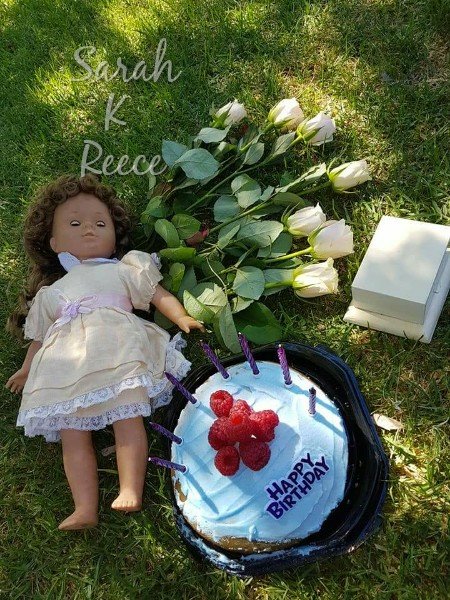
I had permission from a friend – the mother of a lovely girl who died far too young, to sit under her memorial tree and remember Rose’s little ones and our Tamlorn. We sat in the shade her beautiful tree with Tam’s ashes, shared a birthday cake for the 7 children not with us, and cried.

It hurt. It was hard to do, many kinds of pain are shrouded in shame and a trick of the heart that says don’t look, don’t go, don’t feel it, it’s too big and dark and will destroy you.

It hurt but it was not unbearable darkness.

It eased the loneliness of loss but it was not epiphany or resolution.

It did not cure, but it had meaning.

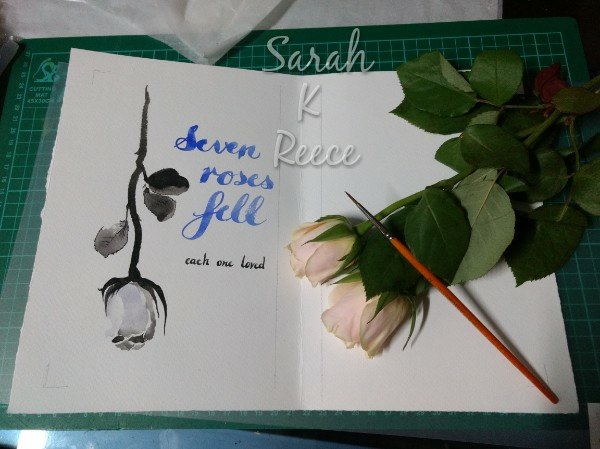
We left roses beneath the tree. I made an ink painting to remember the day. Then we left to pick up Poppy from daycare, and held her tight, all the rest of the night.

The prison project

I’ve been so looking forward to getting into prison. (Haha) There’s some fantastic work being done, in the UK they run hearing voices groups in prisons. Although I’m passionate about vulnerable communities and challenging circumstances, so far none of my projects or travels had taken me behind the wall of Corrections, until now.

Earlier this year I was invited to join an existing project by SHINE SA and Hepatitis SA that was being carried out in several local prisons. I jumped at the chance. A background check, some paperwork, and a recalcitrant retinal scanner later and I was holding my first art workshop and sexual health information session alongside my small team.

It was excellent! They were hungry for resources, for information, for a sense of hope and not being forgotten by the outside world. We provided accurate, non judgemental education together, and gathered a collection of submissions from them – art, poetry, stories, questions.

I’m now in the second phase of the project, curating the submissions and informational articles, and illustrating and laying it all out as a booklet. It’s a big wonderful job and as I’m pulling it together I’m finding certain faces come to mind from people I’ve met. I hope it will speak to them, usually in community development projects I have a much deeper understanding of who I’m speaking to, while I’m just getting to know these people and their circumstances. There’s huge overlaps in experiences though – common threads of poverty, trauma, mental illness, and hardship for many. Sparse resources, broken dreams, profound regrets, and lost identity I do understand. Sometimes peers can speak and sooothe and share hope in ways we simply won’t allow from others.

So I’m working on something beautiful, in the style of a handmade book that will go back out into the prisons. I can’t wait to show you when it’s ready.

TEDx Talk & Art: Emotionally Safer Sex

Here it is at last. 🙂

It’s big, it’s scary (for me, hopefully not too much for you), and I’ve only watched it once because it’s the mother of all vulnerability hangovers and makes me tremble for hours.

But I’m so proud of it. I hope it feels safe, a friendly invitation to think differently about things and see safety and freedom and pleasure as interconnected. We can take better care of each other.

Please share it freely as a resource anywhere.

Free – find more of my writing about Emotionally Safer Sex.

img_20180205_131501972_wm1445019766.jpg

‘Haven’ embellished with 24 karat gold

To make sure you hear about these big events like exhibitions and launches, join my mailing list.

Work, Failure, and Identity

My business mentor sent this amazing article to me and it made me cry. https://www.inc.com/magazine/201309/jessica-bruder/psychological-price-of-entrepreneurship.html

So many quotes spoke to me:

Though driven and innovative, hypomanics are at much higher risk for depression than the general population, notes Gartner. Failure can spark these depressive episodes, of course, but so can anything that slows a hypomanic’s momentum. “They’re like border collies–they have to run,” says Gartner. “If you keep them inside, they chew up the furniture. They go crazy; they just pace around. That’s what hypomanics do. They need to be busy, active, overworking.”

I know that place! This is explored in much more detail in Exuberance: The Passion for Life, by Kay Redfield Jamison, which I found very helpful for understanding the intensity I bring to my work and creativity process. My favourite quote from her book is “If exuberance is the Champagne of moods, mania is its cocaine.”

Back to Bruder’s article: from a guy who put everything including his house on the line and only came through with hours to spare at the worst point in his business.

Afterward, he made a list of all the ways in which he had financially overreached. “I’m going to remember this,” he recalls thinking. “It’s the farthest I’m willing to go.”
…emotional residue from the years of tumult still lingers. “There’s always that feeling of being overextended, of never being able to relax,”

I know this place too. I over reached, just before falling completely apart several years ago. I went way beyond my personal resources to attend a conference, and at the end they invited me to create a network and be paid to do so and I came home to choirs of angels singing. Then they all went back to their lives and not one single person moved the plan forward. I waited and sent polite emails and my stomach dropped and my heart broke. As my confidence fell apart, so did every business opportunity I’d been working on. 10 unrelated arrangements with different people fell apart and so did I.

The alternative mental health community has not been a safe haven for me in this way. It has contained essential and valuable ideas, but also Tall Poppy Syndrome, a lot of lone wolves with no community capacity, and significant issues with poverty and hostility to those who make money.

Some make successful businesses and ventures from their skills and experiences. Some, like me, struggle and struggle, looking desperately for a validated way to a fair income. Poverty and all that came with it for me – inexperience with money, self depreciation, discomfort with marketing, had a cost that got bigger every year. At one stage an interstate org was arranging me to visit for a week long series of training and workshops. I was ecstatic. When they asked me for a bio I froze up. They knew I was bad at marketing myself, and good at what I do, but the freeze spooked them and they canned the project. I hated myself so much I wanted to die.

In my little world I hear often of others success. Those chosen to give keynotes at conferences, invited to overseas opportunities, paid consultants with the ear of people who can fund their projects. There’s so much failure and comparison and fuel for self loathing. The standards are impossible. The hurdles to be included and treated as a professional are impossible. Peer work is a nightmare risk, and hidden behind our inspirational heros are so many untold stories like my own of exposure, unemployability, and brutal failure. It’s a cruel trick and the stakes are exceptionally high.

I’m painfully, constantly aware that for many others, my own modest successes represent the same pain and lost opportunities. That people look to me and feel the mix of inspiration, envy, and sadness with which I regard my own role models.

So does cultivating an identity apart from your company… “Other dimensions of your life should be part of your identity.”… it’s important to feel successful in areas unrelated to work.

For me, who has donated thousands of unpaid hours to my networks, considered a tattoo of my own logo, and invested my career with profound meaning about the value of life, my identity, and my place in the world, this advice is profound and difficult to follow.

I am so tangled with my business and career aspirations it’s hard to tell where one end and the other begins. It’s been an incredible challenge to set up any kind of business model because I am the business. Having missed out on formal education and all the doors opened by validated skill sets and access to professional memberships, I have found a side road to my goals where that validation is irrelevant and the professional bodies are largely nonexistent. It’s the Wild West of consulting and freelancing. The clients are gun shy because of slick assholes who overcharge and under-deliver. And the contractors are unprotected from most forms of exploitation, have no minimum hourly rates, unions, or HR. Just this last week a client decided not to honour my invoice and paid me only the amount they arbitrarily decided I should have charged. I’m so glad to have found pathways that bypass the formal with all those issues, and yet I’m so poorly equipped to navigate them. The very qualities that have driven me to freelancing are those that leave me vulnerable. Upskilling is largely a brutal process of learning from my mistakes. The mental health costs can be significant.

I’m tired. Several psychologists over the years have suggested I simply sit back and enjoy my pension. I’ve stopped going to therapy with them after that. There’s meaning in work, inclusion. As Helen Glover put it, you attain citizenship when you pay taxes. I want to be a ‘real person’. At times it’s killing me. Sometimes I have to step back from this capitalist cultural fusion of work, money, and identity. I have to find a way to embed compassion and the context of a culture that is often not kind to those with illnesses and disability into my own understanding of the value of work. I’m starting to shift how I see it all, and transitioning to a clearer business model where I sell certain skills or outcomes rather than clients asking for anything they want I can do- it helps. It puts a small buffer between my business and my soul.

Let me finish with a recent poem I wrote:

My business is not
Who I am in the world.
It is not
My identity, my value, my self respect
Not the sum of me
My place
My impact
My legacy.

My business is a project
One project among many
A way to earn money
Make a difference
A way to be in the world.
It is not the only way
The one, true, right, way
The sum of every effort until now
Validation for all that came before
The reward for every tribulation.
It is just my business, one dream
Among many.

My business is not
Proof that I’ve ‘made it’, or
Evidence I’ve settled, given up, sold out, lost faith.
It doesn’t mean I’ve gone over to the other side
Become a success or failed a character test
It’s something to be proud of but not the only thing
It’s a part of me but I am not
A piece of it.
If it died I would still be here.
My business is not
Who I am in the world.

TEDx Video Launch: Emotionally Safer Sex

The video of my TEDx Adelaide talk is coming online! Happy dance!

SHINE SA have partnered with me to celebrate the launch, and everyone is invited!

There will be a screening of the video, and an exhibition of the beautiful artworks I created to illustrate the talk. There will be nibbles, wonderful people, and an opportunity to hear more about the topic and behind the scenes of the TEDx talk.

I would LOVE to see you there.

  • Friday, Feb 9, 5:30pm
  • SHINE SA, 57 Hyde St, Adelaide

Grab your free ticket here (to help me cater, I hate running out of lamingtons!)

Facebook Event here.

For those who can’t attend, I will be sharing the video online and popping some gorgeous prints up in my Etsy shop. 🙂

“I believe that just as there are ways we can prepare for sex that make it physically safer for ourselves and our partners, there are things we can do to make it emotionally safer, too.”

More info:

Summary of TEDx video
‘Safer sex’ can be about much more than preventing unwanted infections. For many people, sexual experiences risk leaving emotional bruises, and sometimes our struggles and differences can make good sex seem out of reach.

Sarah K Reece shares personal stories, beautiful artwork, and practical advice about how seeking to make sex emotionally safer has helped her navigate challenges such as a trauma history, anxiety, queer identity, mental illness, chronic pain, and physical disability.

Art Exhibition
This intimate exhibition of 8 ink paintings explores our physical relationship with our own bodies and our partners. The artworks are hand gilded with 24k gold embellishments and show very human, diverse experiences of the joys and sorrows of sex.

*The artwork does not display graphic sex acts, nudity, or abuse and is suitable for viewing by children.

Bio
Sarah K Reece is an artist, writer, trainer, and community development consultant, managing or contributing to projects with a wide range of communities such as prisoners, rural carers, queer youth, and psychiatric inpatients. Sarah specialises in working with people who are vulnerable due to experiences of adversity or diversity, and has founded local and international networks that support more than a thousand people.

Endurance

I have lost my bounce back after too many crises this week. I am tired and angry and depressed. Every member of my family has been in crisis or the ER at least once, and my sleep has been badly interrupted.

Yesterday, Rose was cooking dinner with her broken/damaged ankle and using a chair to sit at the stove. She tipped a pot of boiling water and spaghetti into the sink. Some of the water caught in a bowl in the sink. Poppy climbed the chair like lightning and dunked her hand in the bowl of boiling water.

So, I sat in a cold bath in my underwear for 20 minutes with her, nursing and keeping a hose of cool water running into her burnt hand while she cried and fought me, screaming ‘no’ and trying to hide her hand from the water. It was very hard to hold her still without bruising her wrist or arm, and I found the best approach was to chase her hand with the hose and let the cool water run down her arm over it.

I hate having to do that, holding her down, no time to soothe her into complying, over riding her desperate attempts to protect herself. There’s a ball of pain and rage in me today that has nowhere to go.

Ambulance to the hospital for assessment and then home the same night. We were very lucky. She’d closed her hand so tightly the inside of it was barely burned and the outside was red and a bit swollen but nothing serious.

My nerves are shot. I want to cry, scream, shake, and throw up. I also want some quiet time to myself, maybe in a long bath, and about 6 hours more sleep.

I have nipple thrush again. Nursing feels like stabbing hot needles into my nipple. There was also a bit of a bacterial infection in one, it’s taking a long time to heal.

Some weeks are marathons, endurance tests. Can you get through them without discharging the stress in destructive ways? Eating everything/not eating/starting fights/self harm/insomnia/self medication… Whatever. The stress goes somewhere.

What helps reset when there are no reserve left to draw on, no spoons at the back of the cupboard?

Hand over the baby or walk away. Last night I was at the end of my tether with a worked up baby not sleeping at 1am. I dumped her on Rose’s lap with a movie and went to bed to sleep.

Connection and validation. We feel so alone in our dark hours. My future turns black and depression sets in. I feel trapped, doomed, and too miserable to even cry. I have to force myself to drag my focus away from my future and into now. What do I need right now? What do I need to do right now? Hang the washing. Eat something. Put out the fire.

Humour is an excellent remedy for self pity and taking life too seriously. A comedy or a mad friend are balm.

Sex or masturbation at the right moment can signal the end of crisis and a calming back to yourself or your relationship. Like a ship coming back to harbor or a bird to the nest.

Finding a way to scream. In my old life I would sometimes park somewhere undisturbed, wind up the windows, and scream. I’m crowded now and rarely have that chance. Finding a balance between discharging emotion without frightening the family – big feeling are normal. Write, draw, paint. Cry in the shower. Explain what’s going on and why, don’t make it a secret and don’t make them feel frightened or responsible for it. We feel the intensity of the horror ending whether it happened or not. Our bodies and minds react similarly to tragedy as they do to a near miss. Culturally we have less support for the time we need to process, but the feelings are the just the same. Denied, we will have to numb and discharge then in covert ways that often do harm. Set them a place at the table.

Yesterday I was calm, nurturing, pragmatic, and focused. Today I am rattled, angry, scared and despairing. It won’t last forever. This is not the future, not the new normal. Stay present in the moment. Listen to the pain. Be part of it.

My experience of self harm

Obviously this one is going to be totally unsuitable for some people. I talk about self harm frankly. I do not describe graphic accounts, but some methods are mentioned. There are no images. Please take care. 

I rea​d an article yesterday, called But Still, by Samantha Van Zveden. It reminded me of my own experiences, the fear, the ambivalence, the sense of compulsion, driving inexplicable need. It’s taken me most of my life, but it no longer has me by the throat. It’s an experience that bewilders people, and into the gap in our understandings pour myths, fears, and a kind of casual brutality that can still bring me screaming to my knees. 

They’re just doing it for attention. Doing it to be cool. Doing it for acceptance by other kids. Doing it to annoy her parents. Doing it because he doesn’t have enough to do. Doing it because it’s ‘in’. 

Falling far down the rabbit hole of trying to prove pain to people who do not believe you. Their belief, their compassion, their acceptance of your sincerity is an unwinnable thing. So many years and so much suffering poured out seeking it. Every day going down, deeper into self destruction, closer to death. I grew up in a world where pain was only real if someone else believed in it. Many people still live in that world. It took me a long time to escape it and reclaim my own mind.

Self harm is complex and full of contradictions. Something I often remind people is that it is common in the animal kingdom. Animals and birds experiencing inescapable pain – loneliness, captivity in an unsuitable cage: too small, too stressful, too close to predator species, overcrowded, or physically ill and suffering, many will head bang, pluck their own feathers, chew or lick off their skin, tear out nails and claws. On one level, self harm is a nearly universal response to certain kinds of suffering. This is the context, the broad picture. We are mammals, part of the world, nervous systems wired this way. 

Zooming right in, we get vast diversity in who, how, and why. Some find a single cause and many more a complex web of reasons, needs, struggles. 

Some harm to punish themselves. Some to break out of dissociation and stop feeling numb. Some to reclaim their own body. To mark important events, the way some cultures ritually scarify children becoming adults. To discharge suicidal distress and make it safely through the night. To trigger numbness when feelings are overwhelming. To push the boundaries of skin and self and rules of what is acceptable. To prove their pain to themselves or someone else who isn’t listening or doesn’t believe. To ease the screaming panic. To mark the empty days. To annihilate, piece by piece, every last bit of themselves. To get revenge on those who think they own us. To be ugly so we will not be desired and harmed. To make ourselves beautiful. To let out the badness. Because it simply, inexplicably, felt right. 

What it is not, and has never been, is the circle I hear so often. They self harm because they are mentally ill: we know they are mentally ill because they self harm. 

We self harm because something is wrong, because of pain, because it is the best way we’ve found to meet a need we don’t understand or accept or can’t express. 

I remember the first day I bought blades with the intention of self harming. I was suffering from severe PTSD and my world had become nightmares and panic and rage in a bed of grey, empty, exhausting apathy. I felt so utterly weak and damaged, all the time. Buying blades I felt powerful, defiant against all those who required that I show no sign of my suffering. That I should not be changed by my experiences. Breaking those rules felt like being true to myself. That link between owning my own pain and harming myself was powerful and took many years to understand and find an alternative for. Because for me, it clicked so strongly self harm immediately became an intense, consuming addiction. 

I experienced such relief from my anguish in self harm it was electric. Physical pain created an intense focus for my thoughts, it shifted me out of the mundane world into a deeply needed altered state and created a powerful sense of ownership over my body and proof of my pain to myself. It eased suicidal despair and sated my constant self loathing. For a short while the internal litany of how stupid, ugly, selfish, pathetic, and what a miserable freakish lonely failure I was would go quiet. It was peace. I felt strong instead of weak. I felt I’d proved something to myself. I felt like I could finally take off my armour and rest for a little while. 

The next morning I was drowning in shame, and the self loathing intensified beyond anything I’d previously experienced. The sight of the wounds would trigger rage at myself. Why was I so weak and pathetic? Such a drama queen. I sided with others brutal assessment of my character and motivation. 

Once the wounds healed and were less visible, I would feel panic. I needed to see them. I would desperately want new wounds. The longer I went without seeing my own blood, the more compelled I felt. I tried to meet this need in other ways, considering I have endometritis and adenomyosis and was bleeding heavily literally half of my life I couldn’t understand why that wasn’t enough blood, why it had to be this, too. 

So the experience, like all addictions, created the conditions to feed itself, becoming its own trigger and containing both the problem (shame, pain, self hate) and the remedy. Once inside the locked room I was trapped. The compulsion felt simultaneously too powerful to fight, and extremely minor, a mere suggestion that I was choosing to indulge. I could snap out of it anytime, stop anytime I wanted to. I felt divided.

When others reacted with intense anger, shaming, and minimising (you’re just copying someone else because you think it makes you interesting), I merely switched from my preferred methods of self harm to things that caused pain and distress but left no marks on my skin. They were a poor substitute for the rituals but not doing anything felt impossible. 

I read books and articles about it, talked to my doctor and shrinks. Nothing made the hunger go away. I tried ‘behavioural extinguishing’ where you simply refuse to engage the behaviour no matter what, and over time the urge will disappear. It did not. In 8 straight years of not harming at all I still struggled with the urge often. Some days it was louder and some quieter but always there. I often dreamed about it in terrifying ways, saw images of it unbidden in my mind when close to blades or while cooking, and when distressed or on seeing wounds or scars on others would intensely yearn for the release. 

I remember a friend confiding in me their teenage child had been self harming. I come home from the conversation to howl in bewildering agony – why do they get blades and not I? As if I was deprived of something essential to my survival. Part of my mind listening in, in absolute confusion and disgust. How could I be this messed up? 

I remember another friend confiding in me that they’d been to see a shrink and shared their awful compulsion to cut with them, and the shrink had brightly and inanely suggested wearing a rubber band on their wrist and flicking it when the urges come, to simulate the pain. It was like comparing a glass of water to a tsunami. I needed to scream so loud it tore my world apart, set the sky on fire, turned the rain to blood. I was drowning in unspeakable suffering, dying in plain sight, and the world of psychology offered a rubber band. My friend and I were mutually speechless at the gulf between our experiences and their understanding. The trivialising of the darkest hours of my life drove me further into darkness and further from understanding myself. What the hell is wrong with me?

I stayed away from medical care, aware that other’s responses fed the need on me, their callousness filled me with violent rage against myself, their compassion made me want to do it again to be treated with warmth and gentleness again. I listened to a young peer who turned up at ER one day, wild with pain and afraid she would self harm. They told her they would not admit her unless she had current wounds. So she walked out of the hospital and gave herself some, then walked back in. Then they admitted her. In that context, it was simply the admission fee for ‘care’. I noticed you often had to increase the dose over time to get a similar response from mental health staff. I called this ‘the language of symptoms’ and I fought not to speak it. With some peers, self harm was treated as the ultimate proof of your pain. It bypassed skepticism and got you into the club of people who had done it tough. I fought not to internalise this either. I read frightening books that made suicide seem the ultimate way to show other people you were genuinely hurting, and make them regret their indifference. I fought that framework too. 

I learned that for me, self harm was often about proving my pain, not only to other people in my world who were minimising my distress, but also to myself. It was a way of proving the suffering of the night before to whoever woke up the next morning. A kind of memo, written on my skin, that said: pay attention, we are hurting. Something that I could not ignore, could not find a positive light for or put a good spin on. Something animal and savage the intellectual part couldn’t explain away, something dark and forbidden the rule abiding part couldn’t condone or ignore. 

On bad days I spent hours in the bath, in self imposed quarenteen until I felt safe to walk past the knives in the kitchen. The longest bath like this I’ve taken was 9 hours. Letting out the cold water and adding more hot as my fingers and toes wrinkle. Waiting until the need reduces to manageable or the dissociation numbs it.

Substituting the need was my best approach. Less instant and complete, I learned to be patient with the alternatives and put up with partly met needs. It was by far the best relief I’d found. I developed Ink not Blood and discovered in a strange way that I was equally ashamed of simulated self harm as I was of actual wounds. The shame was more about the visibility of my pain than it was about the taboo of self harm. I felt deeply embarrassed I needed such a thing. Wrist poems continued to weave their way through my life as an alternative too. Talking to myself on my skin.

Psychosis resolved through body painting, full body art with simulated blood. Gold drips from my mouth, splashes of red across my hip. Simulated self harm and altered state on a massive scale with not a blade in sight. A wound in me heals, the need weakens. 

I read about the Bloggess, she discusses her self harm frankly, with neither pity not rage, simply that she ‘fell off the self harm wagon’. She dusts herself off and climbs back on. No one screams at her or takes her kids away. I can’t see anyone forcing her hands over to show mutilated wrists and dropping them with a lip curl of revulsion. I envy her. Self harm as a bad night, not a moral failing.

Then I’m pregnant and the proximity of children quietens the need. Star and Poppy arrive and it continues to fade away. The self hate stays, a near constant companion, the daily voice “I hate myself”. The nightmares of graphic self harm; dismemberment, self immolation, degloving, stop and don’t come back. The triggers lose their power, evoke a pang rather than a desperate thirst. I watch it drain out of my life with relief and confusion. I take less baths, wear less gloves and wrist cuffs, write fewer wrist poems. 

I still don’t entirely know why it’s gone, or if it’s ever coming back. Has it gone with some wild part of me I’m losing touch with? Is it a good thing that it’s eased? Has it been replaced by the depression, the sense of choking failure that haunts me? Health is not merely the absence of a symptom. Why didn’t it take the self loathing with it? What does it all mean? 

I don’t know. I’m glad not to be struggling with it, it was a many headed hydra that seemed to grow stronger the more heads I lopped off. Most days I’m glad my scars are so invisible. Some days I regret my restraint a little. I’m glad to have found that the symbol of harm, the imitation of it, has so much power for me, and learned that self harm is in itself a symbol of something else, a word in language you don’t yet speak but must learn to decipher. 

I don’t hurt like I used to hurt, stuffed full of secrets and bewildered by my pain. It’s in the open now and I have names for it (queer, trauma, multiple, altered state, creative). I’ve got other ways to scream and I don’t ignore myself so much. 

It’s such a victory, and yet, while the self hate remains it seems in many ways a hollow one. However far I go, it’s not enough. Have I won the war, or just stopped caring enough to bother fighting? Is it still a blessing if the screaming stops but the pain remains? I don’t know. I’m still working on it, feeling into it, trying to understand it. I’m glad to be out of the shame spiral, the snake vomiting its own tail. I’m glad my girls don’t live with it as a daily reality for their parent. I’m under no illusions though, I know exactly what it feels like to live with people who hate themselves and I try to be mindful of that, to decode it when I must and protect them as I can. 

I’ve come a long way. I’m not done yet. Self harm, for me, met a need. It also fuelled that need. Finding other powerful ways to meet it broke the spiral. (you don’t break addictions, you replace them) It’s nothing to do with the drug of choice, and everything to do with the environment. I had to make very hard, very painful choices to change my environment. In some ways much more painful than merely cutting myself. It was a substitute, a symbol, a signal of how trapped I felt in that life. 

I left. I severed relationships and found new ones. Came out as multiple, then again as bisexual, and again as genderqueer. Made art. Nurtured others. Found self compassion. Stopped trying to find my salvation in my own blood. Learned to live with the scars and the places where there aren’t scars. Go home and scream when people tell me self harm is attention seeking, but in the moment try to validate their bewilderment and anxiety, gently correct attention seeking to connection seeking. Try to bridge the gap and make the incomprehensible make some kind of sense, engender some kind of compassion. Try to make people rethink their instinctive revulsion, to question their belief self harm is always fundamentally wrong, that it deserves involuntary disgust of the kind usually reserved for rapists.

Our skin, like our bodies and our lives, is our own. It’s shame that kills us. Loneliness that destroys our lives. Love that saves us, that makes the pain bearable and heals the screaming wounds. It’s not always enough, but is always necessary for life. 
Marriage equality vote: yes

Australia has returned a majority vote of yes to marriage equality! It doesn’t mean the legislation has changed, it doesn’t currently mean anything for our family. But the cultural change is clear. One day my daughters will live in a world where it is normal that their mothers can be married. We danced and cried and celebrated in the rain in the city after the announcement yesterday. 

Then we spoke with a reporter about how hard this has been and the road yet to come. It was published at InDaily as A bittersweet victory, after months of heartbreak.


Post TEDx and life is good!

TEDx was amazing. One of the most challenging experiences, akin to giving birth (but much quicker and with more laughing). I’d only managed to finalise my script a week beforehand and I knew in my bones that I was too rusty to have a 14 minute monologue memorised in that time. I did my best, but still had embarrassing blanks on the red dot. Fortunately it still went well!

The rehearsal was terrifying. My first time standing on the red dot I spoke the first page of my script until I blanked, then I had to sit down right there because I was about to faint and/or vomit. I felt like a needy, insecure diva, which was not particularly nice. I’m more used to being the person holding things together than the ‘talent’ in the middle and I was very conscious of that different role and found it a bit awkward. 

But it was also wonderful. I gave myself permission to soak up all that extra care and nurturing. I felt like a star! So much love came my way. Friends attending on the day, gift bags and flowers, my family putting up with the talk consuming everything else for the week. It felt extremely special to be in the middle of it all, and I realised that it’s not wrong or bad to be in the spotlight like that, is merely that everyone should get it some of the time. We are all the talent in some way, all experts in something. So I soaked it up and hope to share it around. 

On the night itself, complicated arrangements happened to look after Poppy, and I changed into my new dress, pinned the top shut, ran my lines one more time, got fitted with the mic, and went on stage. 

There’s a moment where you flip from terror to connection, and standing in front of nearly 1,000 people I could feel them all, like a warmth, the weight of their attention and the questions they are asking of me. Can you be trusted? Will you hurt us? Can you show us what you mean? Will you take us somewhere we haven’t been before? Can you bring us home again? And I say to them with word and hand and smile and joke, yes. Come into my world for a little while. And so we did. I talked about sex and being human, and I lost my place and blanked so badly Rose had to rescue me and call my lines out from the audience. We lived what I was sharing about: that it’s possible to be imperfect with grace and humour, that a great partnership can navigate tricky situations. That a sensitive discussion can feel safe. People seemed to really connect with it, nodding and paying close attention. I muddled through and made it safe to muddle.

I had a heckler, which I did not expect! I heard later the people seated around him were angry with him and shut him up quickly. Apparently someone told him people like him where why I was doing a talk like this. I feel so honoured to hear that, there was such a sense of unity, of common ground. 

The messages afterwards from people there or over email have been very affirming. All the way through I’ve done my best to hold tightly to my reasons for doing something so extraordinarily difficult – that it is meaningful and needed. I watched a lot of TED and TEDx talks about sex while preparing and most were what we are used to about this topic- clinical or research based. That’s valuable for sure, but when I’m sitting in a bed in my underpants there’s a big gap between that knowledge base and the conversation and experience I’m about to have. I could have written that talk and it’s a lot more removed and protected, a lot less intimate and exposing. But I have found there’s value in sharing and talking about this on a personal level, and it seems I’m not alone in that.

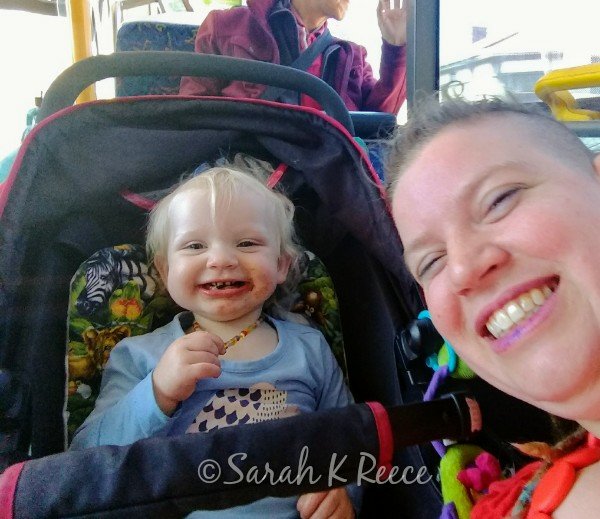
Poppy and I went off on a bus adventure yesterday! Here we are nibbling on plum leather from Grandma’s garden, and life is good.

I haven’t yet hit my anticipated post performance crash. I’m not sure why, I have some guesses…

  • It’s on its way but I’m still too excited currently. Maybe after the videos go up online? It doesn’t really feel over for me yet. 
  • I outsourced it. Rose had a couple of intense tired anxious feel awful days afterwards.
  • I did it before the performance. That sounds ridiculous, but to be honest the lead up was so difficult and since doing it my overwhelming emotion is relief. Intense, delightful relief! I did not enjoy the preparation much, but having gone through it I’m extremely glad and happy to have done it. I feel very fortunate and privileged. 

    We’ll have to wait and see what happens next! My awesome Office Manager suggested that I write down all the projects I could do next so I can start exploring my options, and it’s making my heart incredibly happy. I’ve had so many dreams for so many years and they all feel suddenly tangible and possible.

    I’ve so enjoyed taking the last few days off completely and absolutely soaking up my lovely family. Extra support and scheduling are making so much difference to my life. I can’t wait to sink my teeth into the next projects. And I can’t wait to share the TEDx video with you all. 

    Come and sample TEDx for free

    I’ll be in Rundle Mall today with the TEDx team, as part of an open mic event (details here). 11.30am, free, come along to meet the speakers, get a taster of the talks, and pitch your idea worth idea sharing. 🙂 

    I have finally finished my script about Emotionally Safer Sex, and have whittled it down to within my time limit! I am very excited about this, it was starting to feel impossible. I have a suite of artworks ready for the PowerPoint and only one left to paint today. I’ve reassured myself that all the beautiful stories and ideas I had to cut out of the talk can go into a book at some stage. It’s been a huge project, and it’s coming together at last. Next step is to memorize the script and digitally process the artworks. Onwards!

    TEDx – Emotionally Safer Sex

    My topic for TEDx Adelaide is close to my heart. Personal, meaningful, at times uncomfortable and vulnerable, but very precious.

    POSTCARD

    This is not easy. A friend noted yesterday that there’s some irony in what I do – working to make difficult things feel safer for others, in a way that so often feels risky and stressful for me.

    It’s not easy but it is an amazing opportunity. I love sharing ideas that make a difference in the world, that help free people from ideas that were harming them. I love to give people permission to examine what they think they know. I love to validate people’s real, often unspoken experiences. I love to talk about complex concepts in plain language, and use words that describe experiences from the inside, not as a detached observer. I love to ease isolation and needless suffering, and to help people find ways to bear the pain that is the unavoidable cost of loving and being alive.

    I don’t believe I have the answers, the map, the definitive guide, the solutions. What I do have is the capacity and willingness to share my personal experiences, the ability to absorb and synthesise a lot of research and written knowledge, and the opportunity to gather feedback from others and add it to my ideas.

    I can’t tell you what what emotionally safer sex, or mental health, or connected relationships, or a meaningful life will look like for you.

    But I can start these conversations in a compassionate and authentic way, and invite you along.

    Let’s talk about sex.

    Join me at TEDx Adelaide.


    TEDx sneak peak

    Today I delivered the first trial of my talk to staff at SHINE SA, who were wonderfully enthusiastic! I need to cut down the time a bit further so I’m going to drop a couple of points and work on making the remaining ones striking and simple.

    I’ve begun my illustrations, which are taking quite a bit of time because I want them to be a good representation of diverse people and bodies. I have finished 4 so far. 

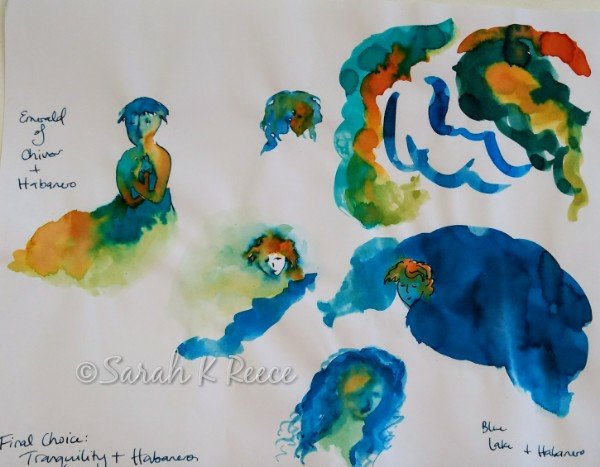
    It took a lot of time to find the right medium and colour for this series, I love the mix of teal (Robert Oster, Tranquility) and orange (Noodler’s Habanero). Here’s my final test sheet where I found the colour mix I wanted.

    I’ll be speaking at TEDx

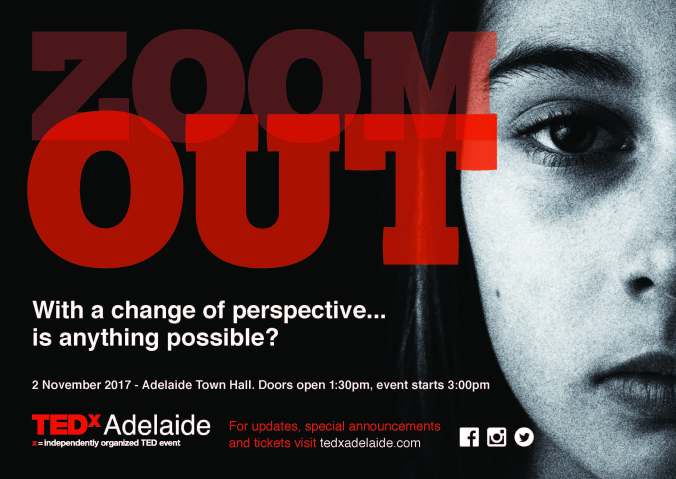
    I’ve been selected for a TEDx talk in Adelaide 2017! There’s a fantastic line up of speakers, I got to meet most of them earlier this week. See the whole bunch of us announced here.

    FACEBOOK_Cover_Image

    It’s brilliant, exciting, overwhelming, and my topic is personal so I’m putting thought into my supports because the highs and crashes on this one might be big.

    It’s an amazing opportunity to get some ideas out there that can make a difference to people’s lives. I’m thrilled and honoured. Thinking about authenticity on a larger stage, how to create connection in a bigger setting. There’s a lot of support available and plenty to learn from previous year’s speakers. I spent this morning feeling overwhelmed by everything I wish I could have ready before the talk – my next collection of prints, my new website… And decided the best thing to do to prepare was let the rest go and focus on giving an excellent heartfelt talk. As nice as it would be to feel I have all my ducks in a row, the other projects can wait. I’m looking forward to a beautiful online gallery of my art, and restocking my Etsy shop, but all things in their time. TEDx is a bigger stage and I don’t want to fall off it. I spent this morning feeling teary and tired, this afternoon having a lovely conversation with a friendly lawyer about collaborative arts practices, and then getting ink on my fingers in my studio, and now my heart is calm and settled.

    Testing a package of new ink samples

    As I find that place where it’s safe to think about difficult things, I can invite others into it, and good things will happen. 🙂 Watch this space!

    Poem: Marriage Equality

    Here, we are having a postal vote about marriage equality- equal rights for same sex couples. It’s been a nightmare, triggering abuse from strangers and bringing up terrible memories. Both Rose and myself come from backgrounds where who we are and how we love was not at all okay. There’s deep wounds there. It’s hard to understand what that feels like if you haven’t lived it. So here’s a small extract from my journal, recently. 

    I’ve no words for this, no words
    No persuasion, no speeches, no points strung together in sequence
    What I have is a strangled cry
    Tears I can’t weep
    I’m frozen and desiccated
    An old tree curled over itself
    Here is where my heart broke.

    This is me, as a child, curled on the floor
    Weeping and silently screaming as I beg god
    To make me other than how I feel.

    This is me, wanting to die
    In my body is still the memory of that shape
    Laying on the floor, wrapped around myself
    My hands like claws, the taste of vomit in my mouth.

    My body at night remembers the shape of that pain and returns to it
    I lay on my side, curled around a self hated so deep, a terror so profound
    I have no words or even tears, just the deep grieving in my bones
    The void in the pit of my gut
    The sickness in my heart, a kind of keening
    Oh, oh, ooh
    Let it not be
    Let it not be like this
    Let me keep my face turned from those days
    The voice in my head that tells me I’m worth less and should die
    Don’t make me look at the fear and loathing in your heart
    The darkness in your embrace, the disgust in your eye
    The purity of your sacrament that is not for me
    Let me keep my arms around the peices of my heart
    Don’t tear me open like this
    Don’t tear us open where
    All your hate falls out
    All your brokenness.
    How am I to bear it?

    I’m asked to speak
    To write, to share, to show
    We are normal/sane/loving/safe
    To lead from fear to hope but
    I’m not here anymore, I’m long gone
    I’m the little girl on the floor and I don’t have those words
    I’m stuffed with darkness and the night and the violence of your rejection that leaves no bruises
    I’m broken on the floor while the most sacred parts of my life
    The deepest and most beautiful things in my world
    My love, my beloved, my children, my friends
    Are tossed around me by
    People who are not choking on a memory of pain so vast
    It still reverberates in my mind and binds my tongue
    I’m still on the floor, screaming in fear.

    My little girl nurses at my breast
    Through the small hours where my sadness
    Demands company and keeps me awake
    She will not know this anguish
    It will be alien to her, outside of her
    One of your voices, perhaps, but not
    My voice
    Not her own voice
    Taken and used against her
    Not set into her blood or bone
    A wound from outside perhaps, but not
    Swallowed and poisoning from within.

    That is the world I want for her.
    No hand turned against itself
    No bloodletting agony or self flagellation.
    Where I know your rejection so intimately
    I want her to know only bewilderment, only confusion.
    To be outside of it,
    To have grace for it,
    To know for certain that she is loved.

    Beliefs that shape – and break – our mental health services

    Our minds attach labels to things in the surrounding world, and we interpret those labels as discontinuities. If things have different labels, then we expect them to be a clear line of demarcation between them. The universe however, runs on processes rather than things, and a process starts as one thing and becomes another without ever crossing a clear boundary. Worse, if there’s some apparent boundary, we are likely to point to it and shout ‘that’s it’ just because we can’t see anything else worth getting agitated about… 

    If we were less obsessed with labels and discontinuity, it would be much easier to recognise that the problem is not where to draw the line, it is that the image of drawing a line is inappropriate… 

    Even such obvious distinctions as alive/dead or male/female turn out, on close examination, to be more like a continuous merging than a sharp discontinuity.”

    From The Science of Discworld by Terry Pratchett p56.

    How relevant for the convoluted mess that is our attempt to make sense of mental health. There is no clear line between healthy and sick, or even sane and insane, competent and incompetent, normal and abnormal, functioning and impaired. 

    Why do we try to draw these lines?

    We are seeking clarity about madness and pain. That’s not a bad thing. Our conceptual frameworks are primitive but the need for them is valid. 

    We need to be able to identify incompetence when it puts others at risk. 

    We also use labels as a way to limit access to resources. There’s a number of beliefs that come into play here, such as the ‘deserving poor‘, or the ‘genuinely mentally ill Vs the worried well‘. There’s a fear that any truly valuable resource will be consumed by the selfish who’s needs are lesser. I’ve encountered this belief many times. When the resource is money there’s sense to being concerned about exploitation and corruption! But when the resource is a bed in a suicide prevention clinic, or a support group for bereaved parents, you wonder how many who don’t need or deserve support are going to want to spent their time like this.

    These beliefs are worth examining because the ideal of fair distribution of resources which is noble and appropriate, has a dark side which is gatekeepers and access difficulties. Whatever means are set up to ensure fair distribution are at risk for becoming the horrific hoops people have to jump through to get what they need. Unfairness, corruption, structural oppression, and inequality abound in such systems. 

    Getting back to a practical example: where I live a new scheme came out a while ago where a doctor could help anyone who had a mental illness access a number of sessions with a psychologist every year. It was astonishingly popular. Despite all the concern about people not asking for help and the power of sigma preventing people from connecting with services, thousands of people went to their GP, asked for help, were diagnosed and put on a care plan and went to see a psychologist. The budget for the project blew out. 

    We have a number of options at this point. The path chosen so far was to restrict the number of appointments each person could have every year. Restrict allocation of the resource. Everyone gets less. It’s been a bone of contention since, a glaring contradiction between public health announcements telling people to seek help, and massive feedback that 10 sessions of support a year is hugely inadequate for many people who are struggling. 

    There are other ways to balance budgets for projects like this and we see these often in public health. Restricting access is a common one- erecting more filters to prevent people regarded to be at lower risk or need or more able to meet their support needs independently from accessing the resource. The NDIS operates in this way, meaning that a whole army of support workers are now administration workers whose job is to help vulnerable clients tick enough of the right boxes to qualify for assistance. 

    Filters are valuable but they are also risky. They erect barriers to resources and are never elegant enough to ensure that the most vulnerable are not inadvertently screened out. As an example of that, consider the hundred of people we have living on our streets who do not have the basic financial support of welfare because the process of accessing it – proving their identity, having a fixed address of some kind for correspondence, and navigating the paperwork is beyond them or judged by them as too harmful to their mental health. 

    Hand in hand with filters is often the use of expertise. We set up systems whereby those with professional expertise (ie competence) apply the filters, to ensure the right people are accessing the resources. This approach often creates valuable fail-safes. It helps to limit self serving behaviours by those who would benefit from creating dependence on resources and by those wanting to access more than their fair share. It can reduce waste where resources are squandered on a first come first served basis, rather than an allocation of need. It can also provide valuable guidance for those in need so they do not ricochet between different resources trying to find what is helpful.

    The dark side of expertise is gatekeepers. People who have the power to deem you unsuitable and block your access. Again, systemic inequality is a huge risk, and the harder it is to become a gatekeeper, the more unlikely that gatekeepers themselves will have much in common with the most vulnerable members of society whom they are intended to facilitate access for. Across these gulfs – race, gender, culture, region, diagnosis, experience – we see that diversity is the stumbling block. A homogenous group of gatekeepers will prioritise access for those people they most identify with, empathise with, and understand. The minority, who are often the most vulnerable simply due to being in a minority, find that gatekeepers all too often erect access barriers and exclude rather than champion. As an example, trans young people locally can greatly struggle to access mental health services. The gatekeepers to these services (doctors, hospital registrars etc) frequently have an uninformed and prejudiced idea of what it is to be trans, and deny access based on these ideas. The very diversity that underlies the need is also the factor that makes access to resources such a challenge. 

    In setting up systems of distribution of resources with the aim of fairness, we need to be wiser. First we should always explore and uphold the option of self referral wherever we can. What would happen if anyone could access a psychologist, to return to the initial project I mentioned. Would it truly be a financial disaster as hundreds of thousands of people self referred? How do we know this?

    What about if we added to the budget for the psychologists all the money we are currently spending on the experts facilitating access? The thousands of GP appointments to assess mental health and set up care plans. 

    What about if we also decided that we would spend less money telling people to ask for help and more money making sure help was there when people asked for it? Add a chunk of anti stigma campaign and educational campaign money to the pot too. Perhaps if the help was more accessible and more reliably helpful we’d find people would tell each other about it and save us the bother.

    How is the budget looking now? How is the access looking? Is it choked by the less needy or full of the vulnerable? Are the resources going where they are really needed, generally speaking? Are we erring on the side of risking allocating to some who could do without, or risking some who need not being able to access? This a similar question to one we ask in the structure of our judicial system – given the imperfect nature of all systems, is it better for some innocent people to be punished, or some guilty people to go free? 

    We don’t need to stop at self referral. But it’s such a powerful tool and so often overlooked. It’s the nature of governing bodies to want to govern, to assume that more regulation and restriction is what they are here to do and to reach for those tools over and over again in service of admirable values and goals such as fair distribution. But it is also the nature of systems to be flawed, and of all policy and law to have unintended consequences. Wisdom is in assuming flaws and exploring how to mitigate them, assuming there will always be bad unintended consequences and watching for them as they unfold. Trying to set up utopias on paper can be high risk for nightmare realities for those we intend to protect. Self referral is part of self regulation, a need and capacity of all species and all too often overlooked in policy and governance which starts with the assumption of incapacity and then tries to meet the need on individuals or communities behalf. On a personal level, self regulation is experienced as ‘freedom‘, one of the primary universal human needs, and often a key need obliterated by the current operating of our high needs mental health supports.

    There are people exploring this idea in practice, for example suicide support services that allow self referral. Part of the difficulty with enacting policies like this is they outrage our sense of the way things should be done – our culture of experts and assessments is well embedded in mental health. They also reallocate many people within the system, making many gatekeeping roles redundant and moving our experts into roles of resources themselves or facilitators. It’s not always a comfortable change. 

    Another way we can respond to our basic supply and demand problem with access to psychological services is to explore the demand in more detail. 

    • Why is there so much of it? Can we do anything to reduce the need? 
    • Is any part of the demand an unintended consequence of a policy or public health approach that we could change? For example, are our mental health public education campaigns accidentally making people feel inadequate to navigate life challenges themselves? Are our attempts to ensure fair distribution of welfare causing severe psychological distress? 
    • What is the demand actually for? What combination of needs are people accessing this resource to meet? Could some of them be adequately – or better – met by other resources or in other ways? Could the resources be delivered in a different way and still meet needs? Are the needs being adequately met by the resources or are the resources false satisfiers creating the illusion of meeting the need but actually only increasing it? 

    So, for example, are many sessions being used up as people try to find a psychologist with whom they have a good fit, or conversely are people too afraid to waste the sessions and are staying with psychologists they are poor fit with and getting less out of the sessions? We could change the structure to address this if it’s an issue, for example better supporting networks to help people find psychologists with interests in the areas in which they are struggling, creating a different time and fee structure for first appointments, creating opportunities for people to see psychologists work, videos, or writing before choosing one, and so on. 

    Would some people be happy in group settings? These are usually less expensive and have greater reach, they also add in access to peers. What kinds of models do people want? A group run by a facilitator is very different to a group designed to be clinical treatment, as is a peer based group. Online and face to face have differences also. 

    Are some people primarily bringing community needs – such as loneliness, into psychology sessions where they cannot be met? What other formal resources can we create for these people?

    We can celebrate the success of a service without having to erect access barriers. Creatively engaging the challenge of budgeting resources opens so many opportunities for diverse, meaningful community development. Exploring the beliefs we bring to service design and delivery can give us so much scope to see where good intentions founder and to be part of better systems. 

    So often I’ve found that when unpacked, the ideas we have about the scarcity of resources come from a very limited perspective. The things that people need, the things that really matter, are not in short supply. Love, compassion, respect… These things are not used up or diminished by being shared. We do not need to be in competition over them. There are a thousand ways a community tells its members they are valued, and that’s as it should be, a thousand different ways people hear that best. So often the question people are really asking when they turn to our carefully guarded, expensive mental health resources are ones of worth. Does anyone care if I kill myself? Does my pain count? Am I worthy of compassion? Am I loved? It is very dangerous to ask questions like these of such a fallible and broken structure as the mental health system. 

    When designing services and governing resources it’s worth keeping in mind that most of us will have moments when we will need to ask such questions of our community, whether we are made vulnerable through tragedy, illness, or our own mistakes. We all need a community that answers ‘yes, you have value’. If it is about drawing a line, we should all be on the inside of it, dignified and human. 

    Star needs surgery

    Our lovely Star has badly injured her knee while sparring in her Taekwondo class. A black belt student accidentally kicked her with so much force it’s ruptured the ACL, torn cartilage, bruised the bones, and sprained another ligament. She’s spent a week in a splint from her hip to her ankle, another week going around to medical appointments, and is now in the care of a physio and walking short distances. The knee has begun to seize so she’s on a program of gentle exercise, rest, and ice to squeeze the fluid out of the joint and regain some of her range of motion in preparation for surgery. 

    She will need a reconstruction of the ACL, which is done by harvesting from her hamstring muscle/s. Until then she is not able to do any sports or other activities apart from walking. 

    This would be tough for any young person but there’s an extra dimension for Star. She’s been struggling with back pain since she came into our family, and we found a gentle and skilled osteopath to support her. Her assessment was that the pain was being caused by chronic muscle tension – related to trauma and anxiety. (On a small level we all do this when stressed – grind our teeth or get tension headaches. Some of us hold more tension through all our body and unless we take care to tune back in and ease the muscles, we can suffer terrible pain as a result) Star’s osteopath eased the pain with massage and recommended a regular exercise program. 

    It took a long time for Star to find something she felt comfortable with and we were surprised to discover she turned out to love and excel at Taekwondo. She’d recently graded, getting 94% and progressing to yellow belt. She was in the process of arranging to train an extra day a week, as well as taking on a yoga class with me every fortnight, and with the regular exercise was no longer needing to see the osteopath.

    I can’t emphasize how essential care of your body is when there’s trauma or anxiety. I didn’t know this when I was young and went on to develop fibromyalgia and suffer intense pain for many years. Posttraumatic stress is a risk factor for fibromyalgia. I’ve been thrilled to see Star’s back pain reduce and her sleeping improve, and I’m daunted by how we’re going to manage now she’s only able to walk.

    It’s looking like it will take a couple of years for her surgery on the public system wait list, so we are currently exploring ways of funding it privately. It will cost about $9,000, plus rehabilitation. Unfortunately when I sought private health cover we were unable to include her in our family cover because she is not our biological child, and she was too young to sign herself up independently. So we expect to have a little cover through the sports club insurance, but most of the cost we’ll need to arrange ourselves. We’re still figuring that out. After the surgery she will still be off sports for another year while her knee strengthens. 

    It’s been a big blow for her and us. But we are doing our best to support her through it and scaffold her with the resources she needs to recover. She’s had the most incredible response to it, from using breathing techniques to deal with the initial severe pain while waiting for the ambulance, to her resolution to practice life skills for when things don’t go according to plan. Her willingness to accept and embrace her own real, painful feelings but also look for the positives is admirable. I am so proud of her. We never choose life experiences like this, but we can learn a great deal from them, especially with some support to process and reflect. So that’s what we’re doing!

    Pain

    I’m just going to lie here and try to remember that I am an okay person and all the pain and darkness in the world is not my fault and does not need to live within my skin. I’m just going to lie here and feel the tension of public life like a child trying to decide whether to tell the adults about the bad things happening, wondering what it costs me to be honest or to keep secrets, in my heart I’m walking the ocean alone by the sea grass and the pelican bones and I’m so flooded with ghosts I’m choking on them.

    I’m just going to lie here and try to follow instructions, recall my successes and my skills, feel them in my body in my breath, in the bones of me, really feel them. I’m just going to try and stop the avalanche of self hate and darkness and failure that’s killing me that’s making so much noise I can’t hear the sound of my own tears falling or the breaking of my heart.

    I’m just going to lie here and breathe and remember that I’m not alone and that my darkness is not even mine, it is ours, that I’ve borrowed it from one neighbor and it will pass from me onto another, that it climbs in the chest of all people on one night or another and turns us in violent panic against ourselves.

    As I lie here I can feel myself moving in and out of anguish like the tide or waves of darkness or sex or rape. Self hate changes to deep sadness, to a howl of anguish that is somehow cleaner and deeper a wound but cut so far into the heart of me I can’t bear it and go back to self hate and the drums of war in my flesh.

    Some days all my dreams are broken ships or wounded satellites, falling. I find myself walking a strange world dressed with lies I can’t believe and people who cannot love or speak the truth. My hands shed despair like skin or shadows and I remember that this is part of what it is to be alive, the anguish in the night and the sad wild cry of gulls and the body broken. I withe on my rack because we do not do pain in public in our world, we do not howl at graves or beat our breasts at funerals, we do not cry at work or scream at school or cut ourselves on campus or we’ll be escorted off and banned and no one minds terribly if you kill yourself as long as you don’t do it on public property or let your kids find you. It’s a strange and broken world and I’m just going to lie here. I’m just going to lie here.

    My amazing day off

    What a glorious day. 

    I stayed up to 3am last night finishing the major project my team and I have been working on for weeks, the state wide consultation. Today was planned for a quiet, family day… Taking Poppy to a sensory play group, hanging out with Rose, catching up after all the long days and late nights I’ve been working lately… Tonight was date night and I had free movie tickets from my birthday waiting to go. Thursdays seen to be difficult days to make plans for lately. 

    Instead of most of that we wound up supporting friends through labour and birth! Rose cared for kids while I was support person in the birthing room next door to the room I birthed Poppy nearly 10 months ago. What an extraordinary privilege! 

    So strange that so many things I’m doing at the moment overlap the same skills sets – birth support, facilitating groups, mentoring, consulting, crisis support, workshops and education, parenting​… Being able to connect, listen, tune in, hold the space, and get out of the way are all essential skills in each of those areas. I feel like I’m falling over my primary saleable skill set, the one linked to income, finally making sense of it. Funny, just the other day I was writing up a consult that discussed the formal vs informal economy and I thought about how much my world has been in the informal and how people have been incredibly generous and supportive because I have been generous and supportive. As I’ve transitioned to full time work I’ve been feeling a little sad at moving away from the informal, at being less available for friends and family and attaching a dollar value to my skills and time. 

    But on the other hand, at times I’m able to do what amazing people have done for me – throw money at a problem and help it go away. That’s new and wonderful.

    Today was an opportunity to be there for a friend and I felt so many shifts in myself too. I’ve been struggling with birth trauma since Poppy came into the world nearly 10 months ago. I rarely talk about it and I’ve been wrestling with it, finding little keys or insights here and there but still deeply lost. Today, seeing birth through the eyes of a support person instead of the one giving birth, it felt like a circle that had been broken came together again. I could see things differently, literally from the other side. I could experience and connect back to my self in that place. I could be an anchor and hold the space for those there today. Being present and connected and witnessing something incredibly precious.

    When baby was safely here and everything was settled I dashed off to pick up Poppy from daycare. When she saw me she lit up and I curled down on the floor to meet her. She crawled into my arms and I tumbled her to smell her hair, kiss her face, hold her hands, her tummy, her feet. She feels new and glorious and her eyes are full of stars. Rose and I manage to meet at the last movie session of the night and we sit in the aisle while Poppy plays, we cuddle and hold Poppy and hold hands and change nappies and eat popcorn and ice cream all the way through Pirates of the Caribbean. It’s been a glorious day.