Poem – Outside it rains softly

outside it rains softly 
inside the incense burns
music plays and my eyes
are full of the shadows of rushes
thistledown drifts past my face
i am alone here
and the world has not ended
i am the only one left awake in the world
i am the only one left alive in the world
with my lungs full of incense
and lights in my hair
the trees sing a watchful lullaby
but i will never sleep here
i am alone but the emptiness
does not devour me
i don’t remember loneliness
those days are gone
my eyes are dark and my hair
smells of incense.
those days are gone, love.

Poem – Rainmoths

Two am
The white moon rises
into the embrace
of luminescent gumtrees
Smooth fleshed and supple limbed
it is netted but not caught
sailing free through an indigo sea.


My candle kisses its reflection
music plays in another room
there is peace here,
and the smell of freedom on the cool wind


Outside, rainmoths have risen from their cocoons
to beat the silvery air with wings of dust
and cling to walls and trees
shivering away from the cruelty of children and cats
Trusting their huge soft bodies to us
these fragile angels of December
Reminding us that life is brief
reminding us to be kind.

Poem – On a hill by the sea

While I’m on the topic of poems about homes I’ve had, here’s one from 2009 about a unit I lived in at Henley Beach.


Here, in my house on a hill by the sea
I feel myself begin to heal.
When I stand by the water
I no longer feel that call to flee.
When I pass drains I no longer
resist the desire to disappear
into the shadows.
An agony eases a little inside me.
The tree is no longer burning
in the wind, flame raging
in the hot breath of the desert.
I am no longer drowning 
in the dark water, hearing blood
scream in my ears, the deep
burning aching need for air.
Beached by the waves, planted
in sand I cough up oil and bile
New buds appear on burnt and withered limbs
My starved and maddened brain
brings forth new dreams.

Poem – My Ship

Written back in 2006 when I moved into a caravan.

Look at my home!
So flimsy, so fragile
The timbers thin as a bubble,
Frail as tissue paper skin hung
On a wire skeleton
Like a kite in the autumn air,
A montgolfier in the sky
A Chinese lantern, set to sail
The dark river, with a prayer of light
A paper boat, stuffed with dreams
A shadow theatre made of sheets and lamps,
A circus tent, billowing magic,
It is a frail and perfect thing, my home
A drum beneath the rain,
A flag upon the wind
It shrinks from fire
But fills with warmth
   from only a candle flame
So sensitive, so permeable, so safe
The perfect home for the artist poet
Seeking farer weather and kinder winds.

Poem – ode to skin

The magnificence of skin
wrapping heart, guts, brain and somewhere, soul
it links me to the world
whispers to me of the delight of wind
tells me stories of fire, snow, grass.
Contains a million million nerves that feather finely
that sing below the skin, a sweet orchestra, or a shrill harpy choir
holds in the blood, knits over wounds, renews
bears scars, traces memories, maps life, anguish, loss
breaks on impact, stretches, wrinkles, softens, thins
bends over finger joints, folds into elbows, delicately glides over eyes
wears hair like tiny quills, like hills flowing into gullies,
dances in air and water, in smoke, in thistledown,
is perfumed by earth, by sweat, piss, flowers, wine, salt,
and the trace of another’s skin upon our own.

Poem – Art, darling

Art, darling, I am coming home
To you at last, my head was turned
By love and reason; I have been unfaithful
But I return.


I am tired and careworn; be patient with me
Be my lover, not my master
I need muse and inspiration
No recriminations, no withholding
I will take my leap of faith, in doing
What I love, life may come
That sustenance will follow dreaming.


Ahh, never mind that now,
Let us lay still awhile
And breathe each other in
I have missed you
It is good to be home.

Poem – She falls

walking into the adult world
layers of illusions peeling away
and the emptiness beneath us all coming into view

the veneer of our security so thin
we are a lost race on a world
falling into space and our dreams
are a taste of death, first thing in the morning
and the last hour of night

in my minds eye
everyone I love is gone
it falls away

no island so remote
as to be beyond the touch of tragedy
we destroy it all and it destroys us

we live on borrowed time and the pain
catches up in the end
we pay for all our sweet days
all the debts are collected

There is no peace.

there are moments of joy.
touch on my skin
love in their eyes
dreams in my heart

but the dark always comes
and the light is so frail

all our hopes unwoven
our allotted happiness
spent like sand through glass

what does it all mean?
I hold her hand
and I can feel her slipping
night has its teeth in her skin

We live, we love and we die.

each moment is pulled like a cloth
over the emptiness beneath us
over the screaming terror and the helplessness
the hours that torture and the dreams that sustain

We fly a little, and then we fall.

Poem – Night

The wind speaks softly and my candle is dim
the shadow of a cross is cast upon my wall
and the room trembles with the traffic passing,
hissing upon wet roads.

Beneath all these sounds, there is here
a deeper velvet silence
a space inside me that should be filled
by the beating of my heart
but is only a yearning darkness
a wing-pinned bird stirring in dream.

I remember what it was to love.
I remember standing naked in the rain.

I’m going to Broken Hill

Back in October 2010, Mum and I went off to Broken Hill for a holiday. By happy coincidence, we arrived on the right week, and stayed in the right hostel, to bump into a whole bunch of poets all there for a poetry event. And I’ve just found out they’re doing it again! So for Australia Day next year we’ll be taking the train up again for another wonderful few days of poetry, drinking, talking, and wondering around art galleries. I can’t wait! If you’ve an interest in poetry yourself and a few days free, why not join us? Broken Hill is a fantastic experience. (and if you’re on a pension, the train trip is almost free with your vouchers)

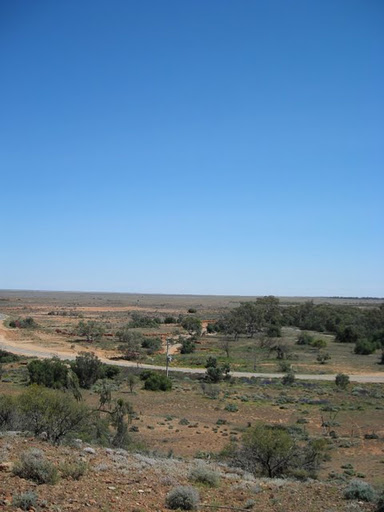
As you can see, I loved the massive stone sculptures. The countryside is harsh and wild and stirring.

There’s surprising beauty:

And interesting galleries to visit:

Or if your tastes run in a different direction: a Mad Max exhibit:

and at The Tourist Lodge this January, there will be poets by the pool.

What more could you ask for? Email me if you’d like all the details. 🙂

Poem – My Beautiful World

Dirt-stained, I creep to bed
And in the night outside are the plants I have pressed into soil
The seeds I have touched with my fingers
Like bestowing tiny blessings
 
I feel them growing
I feel their dark world, and the longing for light
The dream of leaves unfurling
The yearning, and the painful patience
 
I feel these things
For my spring too, is yet to come
We nestle in shadows, secret and trembling
Singing softly of hope to each other.


See more like this:

UnBOUND Art Sale

I’ve signed on to be part of an art sale called unBOUND happening in early December. It’s being run by the Disability Arts Transition Team, and Community Arts Network. The artworks will be all be unframed, available for under $100 (possibly not including the commission – I’m not quite sure about that) and all by artists with a disability. We each need to offer at least 20 works for sale, so I’m working on some ink paintings and haiga, in between my other projects. This will be a great opportunity to snap up some lovely original artworks very cheaply!

The work will only be on display for two days, 10 & 11th December, with new art works being displayed as others sell.

Juxtapose Studio Gallery
Shop 6, Cinema Place
Adelaide
MAP

I have a lot of painting to do! Tonight I’ve been collecting a list of short poems that might work in a painting. Wish me luck.

Here’s one of the short poems I’m thinking of painting into a modern haiga:

My skin tells lies
Conceals worlds
Bears no trace of tears.

Glass and shadow

Small Object Making class: start at the beginning:

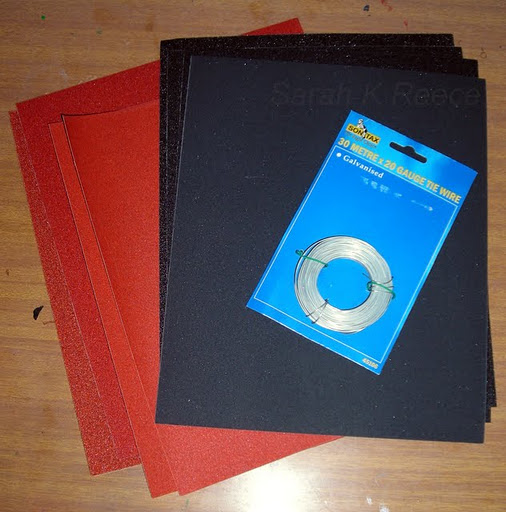
My glass project is finally coming together! I am feeling so much more relaxed about getting everything finished in time, it was all hanging over my head and feeling stressful. At last the experiments have paid off and I’ve found a design I’m really happy with. I’ve gone from tense to very relaxed overnight. 🙂 I went to Bunnings and bought sandpaper and wire. The orange papers are for wood, the black ones are wet and dry papers suitable for glass.

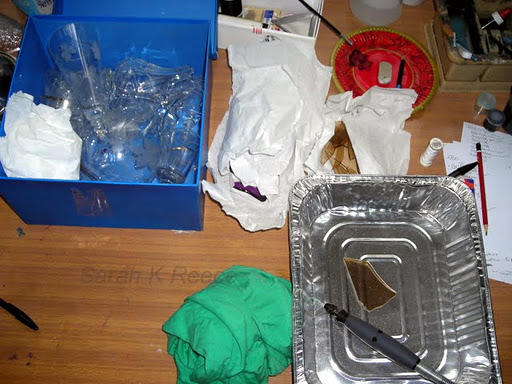
I did a lot of experimenting with my Dremel too, there was no way to get hold of a cement mixer cheaply (you can use it to make sea glass) but I needed a way to work the glass faster than the hours of work with wet fingers that the sandpaper takes. The dremel has a grinding attachment that works great after some fiddling with it. The key is to keep the speed fairly low so it doesn’t chip into the glass, and wear lots of safety protection! Glass dust is nasty.

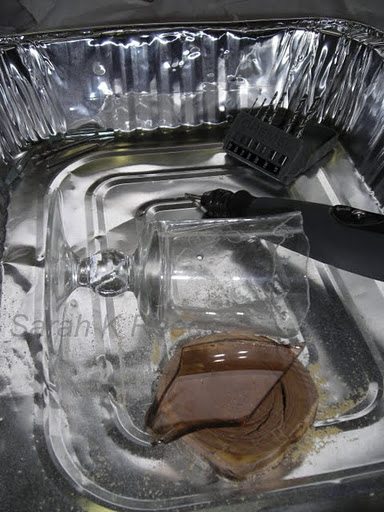
I also tried out my two diamond tips for the dremel, they are supposed to work on glass for cutting, engraving and such. I had a number of different end designs in mind, some of them involved hanging the glass and I wanted to try and drill holes in it. You can see etchings and one hole in this broken glass:

Unfortunately, this was hard on my diamond tip, it actually stripped the tip completely rendering it useless. 😦 They’re quite expensive so I was pretty disappointed. All part of the process unfortunately. I loved the effect of carving this purple glass, the purple is in a layer on one side, so engraving it is very effective.

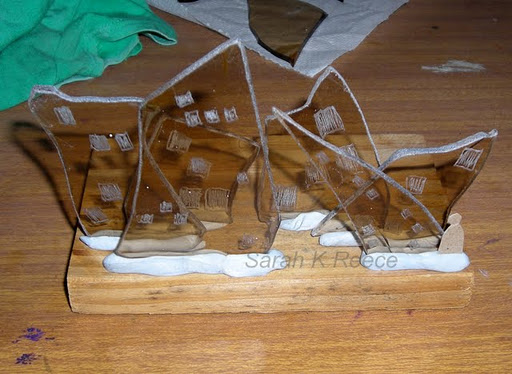
This was my final design however – using the curved smoky glass shards from a light fitting to represent a broken city. The shards are ground smooth and then have little windows etched onto them.

Here they are roughly assembled. The final project will obviously be properly finished, not just tacked on with blue tack, but this is the design. I experimented shining various light sources through it and the effect is fantastic (although difficult to capture on camera). With the right light in a dim room, the buildings are projected as huge shadows onto a wall, with the little dark figure walking through the broken city. It’s beautiful and evocative and I’m stoked. You can see a little of the shadow cast here because of the flash:

So the next stage is to look at incorporating different light sources – their distance from the glass is important because it brings the shadow into focus when you get it right, then choosing an appropriate base and fixing everything to it. I’m thinking of carving the figure (far right) out of wood to replace my little cardboard person too. The inspiration was a few lines of a poem from my 2002 journal:


I catch the midnight ferry
and sail from the broken heart of this city
Far out of town I stand by a broken wall
and warm my hands at the dying of the sun.


To see the next post in this series

Poem – Doubt

I sit by your bed in hospital and say
I love you, don’t go
and say – endure!
and say – it will get better!

I sit by your bed and hope
you wont make a liar of me. 

I sit by your bed and beg

for one more day
of the screaming pain
the nightmare you can’t wake from
and the darkness

strangest thing – they tell me
it is you who is selfish.

Poem – At least the night howls

If you’re going to be homeless
Autumn is the season.
The rain is desolate I know,
but in a shelter or a cheap hostel
easier to keep warm than to cool down.

The heatwaves have passed.
I will pack my permitted 2 bags
layers is the key – layers of clothes
socks with stockings under pants under skirts
the waddling walk of those too poor for heating.

I’ve been here before.
When the world ends, I know what to bring
to make it easier to bear;
a box of Lady Grey teabags
a comb
my own shampoo
that smells
   like something from a world
       in which this sort of thing
           simply does not, cannot happen.

Besides, it is easier to be lost and hurting
when the wind cries
when the stars are blurred by rain
water on the roads, dead leaves in the gutters
trees aching in the cold.

All the people may continue
their lives, utterly undisturbed
but at least the night howls.

Poem – Loss

Loss is 
being tuned
to the sounds of the old life
keys in the door
footsteps on the stair
listening forever.


That particular ache
something deep inside
stopped like a watch
telling the hour of devastation
that eternal stillness
forever waiting for the hand
that will never start the world again.


All the rest is unfamiliar strangeness
just passing time and changing the scenery
while the soul, like a hound on a grave
waits in patient expectation
one day a familiar sound
will break the dream
and I will understand the world again.

Poem – Dissociation Is

To touch life with gloves on
To sit at a banquet and taste only ash
The void into which I fall
Colours turning grey.

To touch life with gloves on
Nerves burned out by fire
A room with walls so thick I cannot hear the screaming
To sail my little boat away from shores of pain
To drown in that empty place
To feel dead.

To touch life with gloves on
Mirrors that lie to me
Memories that fall like snow
Not knowing if I’m dreaming or awake
To always be alone
To always be lost and looking for home.

To touch life with gloves on
To laugh at pain
To be wild with recklessness
To never flinch
To turn my face from the world
To stand in sunshine and see only night
To ask ‘are you there?’ and not hear the answer
To become so cold that I never feel cold again
To be haunted by life
To be forever falling
To touch life with gloves on.

Poem – darkness behind my eyes


darkness behind my eyes
I know you can smell it
can see the taint in me
the freshly turned earth
new graves
for dead hopes
I’m trying
to hide it
to fit in
to protect you
I do my best
to follow the script
to make you comfortable
to show no scars
but
in my mouth
beneath
all my words
is a scream
and under
my platitudes
a raging despair
I reassure you
I’m doing okay
but tonight
I want
to claw
the nightmares
from my brain.


Poem – Home

Whee! Tafe tonight was amazing and I’ll post pics and tell you all about it as soon as I have a moment I promise! I’m finalising my talk for the big conference tomorrow and putting in my entry to the Open Your Mind poetry competition at the moment. So, in lieu of a real post, have a poem!

Home

Walking one afternoon I take a different turn
And find that secret other world
Hidden behind the houses
Lanes that lead to abandoned lots
Where kids ride bikes over dirt hills
Old rope swings hang from trees
Ducks explore the drains.

The plants, they may all be weeds
And the river may be bricked
Full of bamboo and plastic bottles
Foam and oil slicks
But it’s so beautiful to me.

Surfacing from dissociation

In Bridges last week we shared the incredible experience of surfacing from chronic sensory dissociation. Sometimes people experience short episodes of dissociation, lasting hours to days. Some of us experience chronic dissociation that can last for years, sometimes punctuated by little episodes of reconnecting. When this happens, it is a very precious experience and important to make time to treasure. I’ve experienced chronic dissociation where for months my sight has been dim, colours seem dark and dull to me, my hearing is poor, my taste and smell are dulled, and my skin doesn’t perceive touch clearly. Everything is dulled, far away, darkened. It feels like being a zombie, alive but dead.

Coming back to life, even if it’s only brief, is glorious. To taste, smell, or feel things clearly, sharply, is intense. Being numbed by dissociation can be like walking about muffled in a huge overcoat. Taking this off and feeling the breeze on your skin, the sunlight, the smell of gum trees or grass, is an intense and sensual experience. Chronic dissociation can leave you raw, like feet kept in shoes all winter long, they are tender when you first walk barefoot in the spring. If you experience chronic dissociation, treasure any moments it subsides. Take time to touch life, to breathe it in, to remind yourself what it feels like to be alive. These are the memories that keep us going when our world goes dark again. This is what we are fighting for.

After the weeks made dim
By fear and stress,
incessant storms,
bloody foam
on the black water

A day like today
is so strange and welcome
To wake, and find the devils gone
No shades at my bed – misery,
loneliness, hopelessness, and bleak 
despair
All mysteriously called away
And instead the day is mine, to fill with my own things
Bliss.

The anxiety and the wrenching pain
Drive me before them,
bound and bruised,
Resentful and unable to escape
Burning with black dreams
Enslaved to brutal masters
On whom I wish evil ends.

To be free of them – is to fly!
I enjoy everything, the sunlight through the windows
Bare feet on carpet, the colour of my dress,
Smell of my skin
My mind is clear, clean as snow melt
My fingers are alive; I perceive and create
I soak it all up
To get me through
When the haunting starts again.

Competitions and Resources

Just a reminder – the Open Your Mind Poetry Competition is on again this year, accepting entries until Sept 9th. I’ve been invited to be one of the speakers at the ceremony announcing the winners later this year. 🙂 For more details about that, see my new Upcoming Events page.


The competition is run by the Mental Health Coalition of SA, who are also the awesome and very busy people running the Big Circle Arts Collective, arranging the Mental Health Week art exhibitions and the TheMHS exhibition, and setting up Mind Share – which will be an online blogging community, showcasing creative projects with mental health information and resources. You can still submit art, poems, and short stories to them, or offer to become a regular blogger. As you can see, I love all their projects and jump in with nearly everything they run!


The other folks behind the Open Your Mind poetry competition are the SA Writers Centre who host the event. I went for a visit the other day and met up with the absolutely lovely Jude Aquilina to ask for publishing advice about my various presentations and projects. I am working on converting some of these into a printed form and trying to decide between various publishing opportunities. Jude was very encouraging! If you are also inclined in the literary area, I highly recommend introducing yourself to this wonderful resource. They have a regular newsletter full of information, competitions, opportunities and advice. 

Recovering from Trauma – Object Constancy

At Bridges this week we talked about ways people recover from trauma, beginning with the area of Object Constancy. Simply put, object constancy is something children generally develop as they grow. It is about attachment, and means that – when Mum is out of the room, the child understands that she still exists, and is able to be comforted by the thought of her. Children who do not have object constancy have an ‘out of sight – out of mind’ kind of experience, where if Mum isn’t in sight, she ceases to exist entirely, which is frightening and upsetting. A lack of object constancy in adulthood can be a painful part of a number of different mental illnesses. Many people with dissociative disorders have difficulties in this area.I’m no exception. I’ve discovered that managing chronic dissociation is often about finding creative ways to help information cross dissociative divides. So, I have learned that I need reminders of my important relationships around me, such as photographs. I wear perfumes that have links to people that are special to me, such as my Grandma, or my lovely neighbour Marie when I was a child. I have had to write the names of my friends on paper and pin them somewhere I can read them regularly, or when I am stressed, I forget that these people exist and care about me.

That sounds cosy and simple. The reality is more complex. Sometimes there are no relationships to draw comfort from. Sometimes there are relationships, but they are cold, or distant, or abusive. None of these qualities inspire attachment. There’s no point in trying to overcome dissociation to be more connected to an existence that is painful and destructive. There’s often a reason it’s there in the first place. Sometimes relationships can look and seem close, but be missing essential qualities that create connection. Sometimes, feeling lonely in a relationship can be indicative not of attachment problems, but of a relationship that is disconnected on some fundamental level. I once had a close relationship with someone like an aunt in my life. Increasingly discontented and confused by my sense of distance I tried to rebuild a closeness between us, sending gifts and cards and calling by. Eventually when confronted she told me that she had stopped loving me years before, but still maintained the semblance of a friendship so that I would not make a fuss. Having attachment issues does not mean that all your relationships are good and any problems are always you.

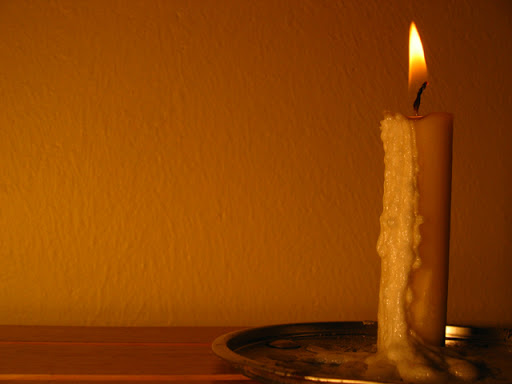
But, when there are good caring people around you, having them cease to exist on an emotional level the moment they leave your side is a horrible and frustrating experience. So, carry pictures of your children with you. Keep tokens that remind you of your loved one. I have a candle I burn at Christmas in memory of my Grandma. She’s still with us every Christmas. I wear jewellery given to me by people special to me. I keep cards on display for months. This is the place I’m trying to stay out of:

I can’t feel you

or see you
everything is dark here
and you are
only a story told to me
so alien and lovely
I try to believe
That the world is not empty
That other hearts beat in the dark
But it is difficult
On the edge of my vision, you blur into the night
Becoming only shadows and whispers
The wind speaks cruel things to me
And I wonder
If there is any love left in the world.

Submission to Mental Health Week Exhibition

Well, I have sent off my submission, so I’ll stop boring you all with a blow by blow description of a life in the week of a mad artist. And hopefully catch up on some more sleep. I hate this part of the artistic process – the framing is painfully time consuming especially when you don’t have any of the right tools (on my wish list) and are too short of money to pay for those nice mats and large bits of appropriately coloured card to mount the work. Everything must have a wire for hanging across the back of the frame – which is a lot of extra time nailing/screwing/gluing all as carefully as possible so you don’t stress the glass too much and bust it – been there done that.

And paperwork! I spent an hour filling in the damn form, it’s a docx download which I don’t have the software for. I converted it and filled the whole thing in, saved it and tried to attach it to my email to submit – and discovered the converter had crashed and corrupted the file so badly it couldn’t be opened anymore. This was at midnight. I cried. I then filled out everything again – they want up to 100 words of what each artwork is about, plus mind numbing details such as the exact size of each frame. And as it’s a word document, you have to keep reformatting it as you add information and deleting pages of little dots. I could print, complete by hand, then scan and email, but that means manually counting the words in each category. Grrrrrr.

In the end, I submitted 5 works, three ink paintings – 2 I’ve already posted here, this is the third:

It’s called Homelessness, something with which I am all too depressingly familiar. Instead of a description of my experiences, I included this short poem:

I only want a home
a small safe place to bed
a burrow to hide in
a pillow to catch my tears
an oven to cook my meals
windows to keep out the rain
so precious
so precious when you have lost them
I want so much
a place to call my own.

I also included a linoprint series and a pic of my kite in progress, and offered if they were happy to let me submit it I’d keep working on it and finish it up asap. No reply yet, we’ll see what they think about that.

Managing Triggers

I led the discussion in our group Bridges yesterday, on the topic of managing triggers. I thought I’d share it here for the benefit of a wider audience. 🙂 Just brushing the surface of what can be a very big topic – What are triggers? Anything in our environment that ‘triggers’ a reaction so quick or so strong it bypasses our conscious control is a trigger. On a simple level, touching something hot and recoiling without thinking about it is an example of a trigger. When we use the term in mental health, we’re usually talking about things that trigger strong emotions, strong memories or flashbacks, dissociation, or for those with DID/DDNOS (Dissociative Identity Disorder or Dissociative Disorder not otherwise specified), perhaps alters. Really, anything can be a trigger. Some of my triggers are certain smells, such as a particular brand of cologne associated with bad memories for me, sounds such as certain songs or music, places – such as my old school ground, and situations such as encountering someone aggressive or violent.

Everyone has some things that trigger a reaction in them, and triggers are not necessarily a bad thing. It isn’t just strong bad memories or strong negative emotions that can be triggered. Positive memories and emotions can also be triggered by things in our environment. Hearing ‘our song’ on the radio, being present at a birth, smelling something that we associate with a loved one – great grandma’s perfume. All these things can trigger a strong, even overwhelming reaction in us, and this is a good thing. To be moved by things is part of what it means to be human. So for those of us who find triggers difficult to cope with, it can help to remember that the goal is bringing them back to something manageable, not getting rid of them altogether.

I’ve pulled out of my journals this poem I wrote about being triggered in a positive way. At this time in my life I was suffering from severe dissociation. Most of my senses were dulled severely, I could not taste, my sight was limited and colours were dull. My sense of touch was reduced, a hand on my arm felt faint and far away, I couldn’t feel my feet touching the ground. It was a very bad time and very distressing. On that evening I was coming back from an event, being driven through the city. As I came along King William Street, the bells of St Peter’s Cathedral rang out. And the sound triggered me, I surfaced through the dissociation and suddenly felt alive again, for a brief moment.

The Fire
Yesterday I woke with a fire in my chest.
All the leaves of autumn burned.
My thoughts were sharp and clear
The night was sharp and clear
I awoke
From where I had been lost
In dream-haze, in exhausted slumber.
I reached out
To the sound of bells that rang
Through the city.
I tasted the air and felt my mind inhabited
I turned and looked with eyes that turned and looked with me.
Like a vault opened to the light
Like a moth from a cocoon I awoke
The fire stirred me.
And beneath the clarity like diamond-fire
Was the little tightness
The knowledge that fatigue, like wolves
Would return when the flame was ash.
This respite from the haze that is my life
Was brief. For a glorious moment I touched the night.
I knew myself familiar.
Stranger! I cried
I had missed you
Lost you
Loved you
And I know you will not stay.

However, triggers can make life very difficult! If, like me, you find that you are very reactive and struggling to manage many triggers, here are some starting points on ways to try and calm things down.

One of the first options most of us try is to avoid. It’s worth mentioning because it is a legitimate option! If the trigger is something easy to avoid, like a particular location you don’t need to go near – for me, my old school, then avoid it! Easy. This option falls apart a bit if you have lots of triggers or triggers that are really common in your everyday life. Then you end up not being able to get out of bed. But there’s no prizes for stressing yourself out trying to make yourself cope with a bad trigger you don’t need to confront.

Desensitisation is another approach. This comes from treatments for anxiety and phobias. The idea is that you gradually build up your ability to cope with a trigger, until it gets to the point where it no longer affects you. For example, for awhile there the smell of rosemary was a trigger for me. It would immediately make me feel extremely nauseous. So, I used to occasionally put an oil blend containing a tiny amount of rosemary in an oil burner on days I was having a good time, friends over, feeling good. It would bother me a little bit but not much. Over time I increased the amount slowly, and kept linking the smell to good, fun experiences. Now, it doesn’t bother me at all and own a rosemary plant I cook with all the time. This concept of association is what gives triggers their power to affect us – they have been associated with a strong feeling or memory. Sometimes you can in time break down that association and create a new one.

I often cope by trying to overpower triggers. Smell is one of the most potent memory triggers for all people, and I use my perfumes to help me cope with other triggers in my environment. I find the smell of strangers upsetting, so in situations like public transport I can become very distressed. If I am wearing my own perfume, a smell that is comforting and familiar, I can breathe this in and literally overpower the other triggers. But it can also work on other levels – for example, I have a ring that reminds me of my sister, which is a comforting thing to me. I wear it to work on days I know will be stressful, and I touch it and look at it to ground myself and remind me I am safe and loved. I use it to overpower those things in my environment that are triggering fear and threat in me. Another way of putting this is that I use the strength of a positive trigger to help me deal with a negative one. I call this anchoring and I’ve explored the idea more in

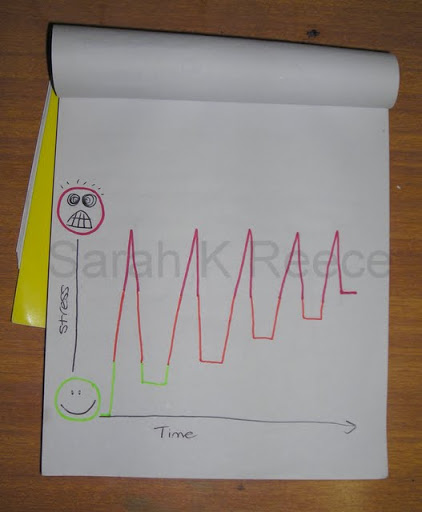
If you find yourself jumping at shadows and reacting to everything, then going through each trigger one at a time is probably going to be time consuming and frustrating. In that case it may be a better idea to work on lowering your reactivity. If your baseline stress levels are really high, you are much more sensitive to triggers. What do I mean by that? Your baseline is what you return to after stress. So, in this picture, those red spikes are periods of massive stress, while the green zone done the bottom is you feeling all chilled out and okay with the world.
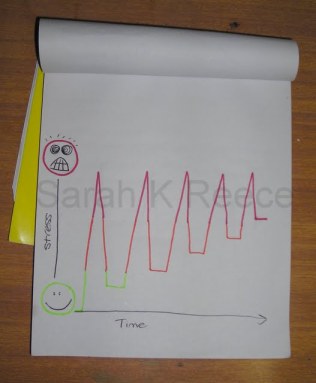
As you can see, for some of us, when we go through major stresses, we don’t ever quite get back to as chilled out as we used to be. Each episode leaves us more stressed and anxious and highly strung than the last. Our baseline – how we feel when nothing is actually happening to stress us out, gets so high that we feel permanently stressed out. When we’re in this space, we are highly reactive. Nearly everything is a trigger. The idea is try and recover better from stressful events, so our baseline looks more like this:

When we’re getting good time cruising along in that green space, we’re less reactive and will find triggers easier to manage. For more ideas about how to get back to the green space see:

Something else to bear in mind if you’re having troubles in this area, is that you may find taking some time to process your stuff can help. If, like me, you get through the day by burying a lot of what you’re feeling and thinking – this can come back to bite you. Sometimes triggers are the price you pay for using suppression to cope. It can be like trying to hold a beach ball under water – at some point it will get away from you and come hurtling up! If you have grief or trauma to work through, making some space for that in your life can help to reduce your reactivity to triggers. This doesn’t necessarily have to be intense, anguished and time consuming. It can be as simple as starting a journal where you write about some of those feelings, going to a counsellor to talk about grief, or putting up a photo in memory of someone you’ve lost. Sometimes very small things that signify to yourself that you are listening and paying attention to your own needs can make a big difference with how well you cope in other areas of your life. For an example of this see

And lastly, for the multiples, if the big issue you’re having is trying to prevent things that trigger alters, then you can try everything listed above – and it may indicate you have some system work to do. If you’re functioning by suppressing everyone else in your system – some of them are going to fight you. And they can gang up on you, be very persistent and wear you down. Working to make some safe time and space for everyone to get a little of what they need – which sometimes is just to be acknowledged that they exist – can make a big difference in coping with triggers. If your team are working together instead of fighting each other, then things that trigger switches aren’t such a big deal. You can also learn about how to use triggers to generate useful switching, see

I continue talking about the management of triggers and the risks and benefits of the way we think about them in Mental Health needs better PR.

Haiga!

Ahhh busy busy. I’ve spent several days condensing a number of longer poems down to something resembling a haiku or senryu. Let them all percolate for another couple of days, then sat down to start painting today. (well, yesterday now) I chose two that brought to mind a clear visual image that was linked to the content without just directly illustrating it. I feel the art aspect of the haiga should add something more to the poem. It is a tricky balance though, a direct illustration can help make the poem’s meaning more clear… I worked fairly quickly in that I didn’t let myself over think the topic too much or I knew I would buckle to nerves and not be able to make anything. It was a glorious day, I threw wide all the windows and just basked in the sunshine. First day I’ve sat in my studio to make art barefoot and in a t-shirt! Very bohemian, I like it. Might even find a nook to put the little heater away instead of falling over it all the time.

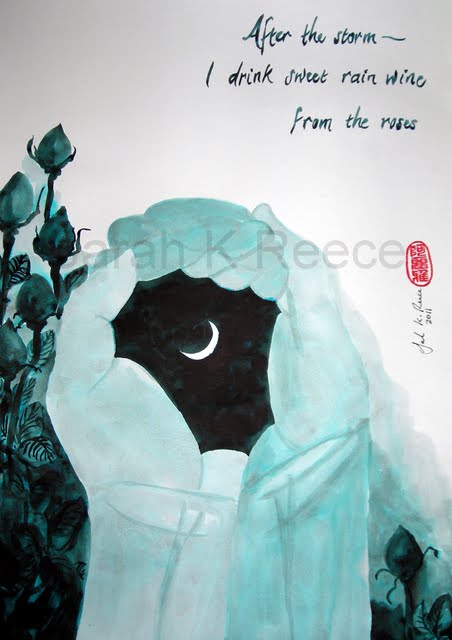
So, here they are, my very first ever haiga: After the storm

This is all ink painting with a single watercolour brush. The hands are mine, but upsized – they wanted the art in A3 size. This is my favourite colour for inks at the moment, it’s Air Corp Blue Black, which is one of Noodler’s inks. It dries water fast so you have to work very quickly because once a layer dries you cannot blend it. It’s rather unforgiving! But I just love the shades you get from it, I have my ink pots lined up, 6 of them from almost completely water through to almost completely ink and I often load my brush with more than one at a time to get that lovely gradient of colour in a single brush stroke.

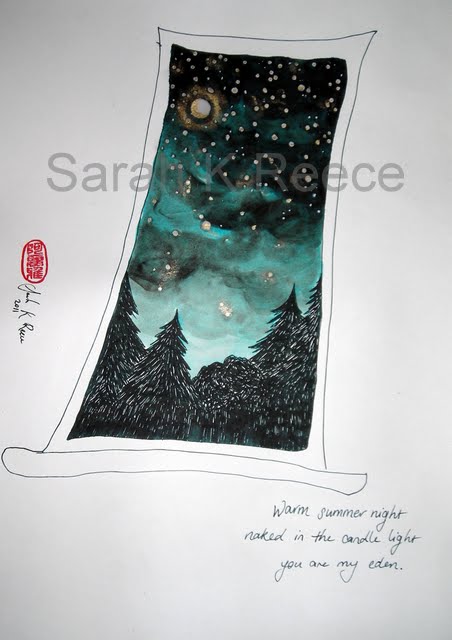
And the second haiga: Warm summer night:

This is done with both brush and pen – Noodler’s ink is designed for use in a fountain pen, as you can see it writes very dark, almost but not quite black. I had a lot of fun with this painting, the window and trees are all pen, and then I decided to use a wax resist for the stars in the sky. I dotted candle wax all through the sky – more where it is darker, added a moon, then painted the sky in ink. I ironed off the wax into hand towels afterwards, and added the gold ink. I particularly love the halo around the moon. I also like the contrast with the poem – the image feels quite ‘cold’ for a warm summer night – although I was thinking very late at night, after midnight. I also like that I’ve shown what the lovers would see rather than painting them, it connects with the direct ‘you’ in the poem – we are in that place, not observing someone else in it.

One of the things I really like about haiku and senryu is their immediacy. You can’t write them without practising mindfullness, being entirely in the present moment. So both images put the viewer into the situation described – looking down at hands full of rainwater, or out of the window at night. I don’t think I’ve tried that approach before, of putting the viewer into the work; it quite tickles me.

I’m also thrilled to have the chance to appropriately use my new Chinese seal from Singapore. I chose the Chinese name 阿丽雅 (Aaliyah) because it has the same meaning as my English name – Princess. The red seal is so strong and striking. When I first saw it used on work, I used to feel it was unbalanced and harsh. But now it’s grown on me, there’s a lovely contrast between the red and the blue black. It’s always a difficult decision about where to place it, traditionally it is not hidden away like a signature generally is at the bottom of a painting. I’ve placed it quite prominently in both of these, but added my signature and the date, considering that my audience is likely to be predominantly English and may not be familiar with the use of a seal.

And emailing it all off! Always a nerve wracking process. I checked everything five or six times, re read all the instructions several times over very carefully – it’s depressing how often I discover some important thing I’ve missed doing this. The specifications are for the images to be suitable to be reproduced at A3 size – which gives me some trouble as if it was A4 or smaller, I’d just print and check! I did some net trawling looking for advice about pixels and dpi and generally became more and more confused about it all and seriously worried that my photos weren’t up to standard. Then I finally found a photo print shop which kindly had the general specs listed. According to them, I’m okay! As I don’t have any way of taking any higher resolution images, I’m choosing to believe that and have sent everything off. Several days early too, I think that has to be a first!