Drawing using a ground

image

image

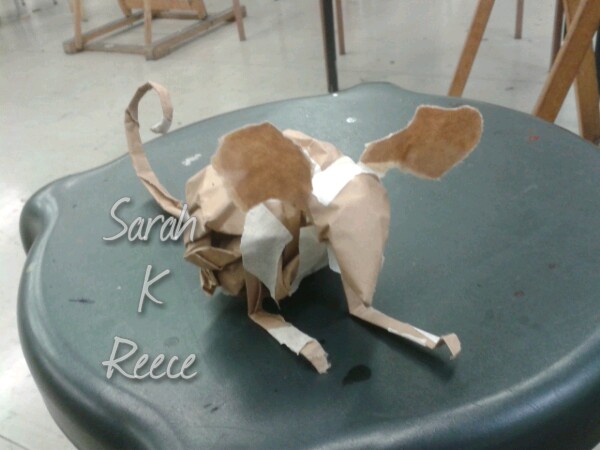
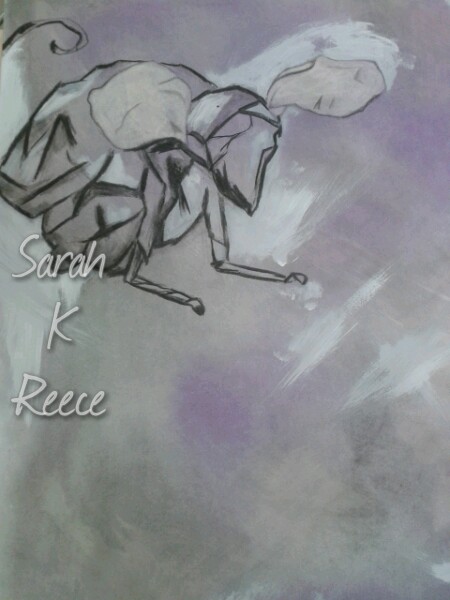
Working on a new drawing in art class, familiar theme, had to make an Australian animal from brown paper, then draw it. We’re working a lot lately with preparing that paper with a ground. (That’s the background, in this case a mix of gesso, willow charcoal, and chalk pastel) I hate blank white paper, as an artist and a writer. Ruining it with random mess means anything I add to it can only be an improvement. That can free up the creative process a little.

The is only half way done, well be working on it more next week.

Finished pendant: ‘Vision of motherhood’

Today was a rare day. We had terrible nightmares and someone woke to an unfamiliar world. We live so much in the day at the moment, our strange poets have been pushed into the shadows of life. Full of intensity and desperate to make art, she tried to stay out but couldn’t shake the sense of displacement from being out in the day. Rocked in their wake we reached for stillness and tried to listen closely.

We worked through last weekend so were due a day off. We decided to stay home and hope to make art. We’ve been severely blocked, not short of ideas but unable to create, overwhelmed by an appalling inner presence who dominated and destroys the process. All our efforts to work around or reduce the impact of this introject have been unsuccessful. We’ve made no art unless required since our friend Leanne died and we sculpted a pendant in her memory.

Somehow today we found a way through. Someone turned up who is silent and who listens to silence. All through the day we didn’t speak or play music or do admin or touch Facebook. Out on our island another world descended and the block was left behind. We cleaned up or studio space until we could function in it, and then spent the day sculpting, painting, and carving. We painted the pendant we’d made for Leanne. It’s burnished silver which doesn’t photograph easily, with swarovski crystals, a pearl, and paua shell. I’m very proud of it, and deeply relieved to have found some way to create again.

image

image

image

Frameworks in art

Art history fascinates me. Here, I find the origins of the tangle of ideas around art that have so confused me today. I was thinking about my initial approaches to psychology the other day. I started out both attracted and hostile to the field. The first time I saw a shrink, they terrified me. Each of us colluded in a bunch of ideas such as they knew more than I did, and that their opinion was more informed, more rational, more accurate than mine. I’ve learned a lot since then. I’ve learned the language, and I can use it with the best of them. I’ve learned about factions, arguments, reforms, and a complex if very short history of the field. It’s been highly empowering. I still have those two basic reactions- attraction and hostility. There’s great wisdom in it, and terrible harm and ignorance. Knowledge has given me what I need to be able to navigate it and choose what I will take on for myself.

In art I’m terrifyingly ignorant. I was the first ‘PES’ art student in the 20 year history of my school. I got a perfect score, but with almost no education in art history. I did patchy research on Dadaism and Van Gogh, but had no broader contexts, no frameworks for my understandings. Later in my first aborted attempt at uni, I found the lecturers deeply embedded in a Post Modernist framework that utterly alienated me and I dropped out after 3 weeks of being told that any art that has been commissioned is not ‘real art’, and that technical skill is irrelevant.

I like frameworks. They are how I make sense of my world. Understanding the ones I’m using and the ones other people are using and where they come from and how they intersect is incredibly useful to me. It maps the terrain and gives me information about perspectives, motivations, and the massive and all too common communication challenges when we’re all speaking different languages and making different assumptions about the world. In art and the art world, I’m blind. I don’t understand the territory, I haven’t known the history, and therefore I can’t navigate. My most important goal of operating ethically cannot be achieved if I can’t articulate the context of my choices. When faced with moral problems in the field – should I accept money from drug companies? Is my work sufficiently useful to the community to accept grant money from councils? and so on- I can’t make decisions because I do not know what the broader implications will be. Without a clear framework for ethical action, I freeze up and withdraw. I can’t engage if I can’t engage ethically.

So I’m loving art history classes, because I’m starting to see the broader context and the frameworks that underlie my confusion. Yesterday our researcher part turned up and read half the internet looking for answers to two simple questions – what is art, and what is an artist. Fascinating. I’m working on a thorny essay question that sounds simple at first:

Investigate the available data on the visual arts as part of the wider arts industry in Australia. From your research, how do visual artists fare financially compared to their fellow workers from other areas of the arts? What strategies have been applied to help remedy this situation? What additional initiatives could be used to improve the financial outcomes for artists?

Dig a little and you’ll find an embedded series of assumptions that direct the way people even think about this question. Question those assumptions and the whole field really opens up. How do we define an artist? How do we define a professional artist? How do we define the arts industry? Why should this ‘situation be remedied?’ Who by?

What is art? What is an artist? The answers are implied but there’s so much more to explore. What I’m finding is that the answers to those questions are dependant on the context in which you ask them. Art has many domains, some entirely distinct, and some overlapping. As I tease them apart and articulate them individually, so much of what has confused me becomes clearer. I’m starting to understand the territory, and with that, starting to gather the knowledge I need to act, to position myself, to function in relationship to it.

Do you need a ‘DID expert’ therapist?

This is an assumption I come across a lot. People with dissociation or multiplicity are supposed to need extensive, painful therapy, by an expert in the condition, to stand any chance at a decent life. Hogwash!

First, the caveats: can therapists be awesome? Oh you bet your last cup of coffee they can! Can experts who have trained highly in their field, who are passionate and informed, be a huge damn relief to talk to and learn from? Hell yes. I’ve already written a little about what the point of therapy is and how to recognise good therapy.

Having said that, I tend to beat the drum of ‘you don’t need a shrink to have a life’ quite a lot for a person who sees shrinks. Why? Isn’t this ridiculously hypocritical of me? Do I just not want to share my shrinks? Well, it goes like this. I used to see shrinks because I was scared and overwhelmed and had no idea what the hell was going on in my head/relationships/life. It was SCARY. Super scary. I was terrified of everything about the process and used to sit frozen on my allocated seat, hanging on every word uttered by the shrink who was almost godlike in status and had the power to uplift or doom me with a word. I discovered over time that the idea that psychiatry is a science, that diagnosis is an accurate and sensitive tool, and that shrinks are infallible and highly knowledgeable about the complexities of life and how people work on the inside is pretty laughable. I collected diagnoses like some people collect shoes. Pick your shrink’s speciality, pick your diagnosis. I’ve seen a lot of shrinks over the years. Some have been great, some have been average, some have been horrible. Most have been at least a somewhat mixed experience – partly helpful and partly not. Horrible shrinks have been as much, if not more of a threat to my mental health than other horrible people in my life.

Going off to see shrinks meant I had ventured into a world that was selling me a bunch of ideas about myself and my life such as: I was sick. That someone else’s ideas about me (after a 45 minute conversation) were more accurate than my own. That all shrinks should be trusted, immediately, and any reluctance or failure on my part to engage in that proved that I had problems. That massive power imbalances in relationships are helpful for people with trauma/abuse backgrounds. That having a good shrink is the most important thing you need in order to have a decent life after crap has happened (not friends, or housing, or access to a really, really good library, shrinks). That I needed ‘expert therapeutic help’ to be able to function. That I needed someone in my life who could take control away from me and put me into hospital. That multiplicity meant I was broken, damaged, or in some way inferior to other people. That someone else can heal my pain. That my history and pain is about my choices and my reactions rather than a broader social context. That my suffering is caused by a random breakdown in my brain.

I haven’t found any of these ideas to be at all helpful. I see shrinks now, because I value having a safe place to talk about really tough or very personal things. I love to team up on thorny issues, to pick their brains about information I don’t have, and to explore difficult territory without shame. I do the same things with some of my closer friends.

I don’t give shrinks any power over me. If I disagree with them, I argue. If I’m not happy with their approach, I leave and find someone else. If they’re ignorant, narcissistic, or in some other way a person I really don’t like the idea of spending an hour with, I don’t hang around and let them start playing with my brain. I run the show. I choose who, when, and how to engage. My shrinks don’t cure me. They join me in my process, or they get out of the way. I employ them to help me achieve my goals. They are equals on an exploration, they are not a surgeon with a patient waiting numbed beneath the knife. Am I discounting their skills in describing them this way? No! It takes a lot of skill to be an explorer. Any old hack can cut into a vulnerable person, and every other bugger is convinced they can run anyone else’s life better than they can. But exploring? Now THAT takes skill. You have to be able to not know answers, to explore new territory, to listen – really listen, to be equally vulnerable and human, to be able to be present in the face of pain, to construct theories and ways of understanding the world, and be willing to turn them inside out when they don’t work. Good shrinks are highly skilled, wonderful people, and I love working with them. I’m aware of the context of the relationship – that is, the ideas embedded in psychology/psychiatry/counselling etc that I disagree with, and I make efforts to prevent them from taking up residence in my brain.

Frankly, interacting with shrinks takes a lot of skills, and this is often not acknowledged! You need to be able to tolerate the power imbalance. You need to be able to assess them for safety. You need to able to walk away from the bad ones. You need enough assertive skills to be able to give them feedback about their approach. You need enough articulation to be able to communicate with them. You need a whole stack of courage, a whole huge stack of it, to actually make therapy useful by being willing to get into some tough stuff. You need the ability to be able to keep seeing the shrink as a human being – either when you feel dependant on them, or pissed off with them, or really excited about them (or in love with them), it really helps the whole process if you can not turn them into angels or demons in your brain. (in some therapies, I grant you, that is the process) Basically, you do a lot of work! In fact, there’s a tenant of therapy I love which is ‘Never work harder than your patient’. The person who does the work, has the power. As imbalanced as the relationship is, it is still a relationship. Some of us are better at eliciting useful responses from our shrinks than others. This is also a skill. You also need to be able to grieve everything your shrink is not and cannot be for you, that they can’t be your parent or partner or lover or take away what you’ve come through. Sometimes this grief is so intense it overshadows every other aspect of the relationship.

Therapy is not useful for everyone, and not useful at every point in life. Even the very best therapy. Nor are support groups, or books, or meditation, or almost any approach to pain except keeping on breathing. Therapists are human. Even the best ones make mistakes, have areas they don’t know much about, or use frameworks and ideas that get in the way instead of helping. I’ve learned a lot from the good shrinks I’ve seen over the years and I really appreciate that. But no shrink has had all the answers or all the skills. I’m glad I’ve seen a few, as frightening and stressful as it was to lose or walk away from a good one. It’s been liberating to discover that I can find new good shrinks and get something useful from their different approach, and that I can cope without a shrink and look after myself.

I’m often contacted by people who are frightened they can’t navigate DID without a shrink. A good shrink will help this a lot, yes, but no shrink is way, way better than a bad one. If bad ones are your only options, get the hell out of there! It’s messy, but frankly, so is therapy. If you think trying to make sense of DID on the back of your book reading, some rudimentary peer support online, and a lot of slowly learning about yourself is really hard, then spare a thought for all the people dealing with involuntary hospitalisations, parts who hate the shrink and go berserk whenever an appointment comes around, and littles who bond to them as if they’re parents and are heartbroken when they can’t come over and hug them after a nightmare… it’s not all roses! Having another person involved with your system can be tremendously supportive, but it’s also a whole additional person with their blindspots and history and reactions and crazy ideas to deal with.

I’m often asked what kind of therapy is best for DID… and I can’t answer that question because there is no therapy for DID. There are a bunch of therapies for people. Some of them help shrinks to be better, more courageous, more patient and inspired shrinks. Some of them have frameworks and approaches that are more useful for more people. Often the type of therapy is way less important than your relationship with the shrink. Some of the most useful therapy I’ve had was counselling through a sexual health clinic, which has nothing to do with DID and yet – conversations about shame, development, desire, abuse, power, and love – everything to do with DID!

Experts are also often not all they’re cracked to be. Being an expert in something sometimes means it’s hard to see everyone as new and different. You get used to seeing the same patterns and using the same frameworks. You have blind spots, which over time you become less and less aware of. What was once a guide, over time hardens into dogma. As an expert therapist, you speak with authority, so less people turn up in your office and contradict you, so you don’t get exposed to new ideas. People get used to your ideas and approach and don’t feel like spending money to sit in a room with you and be told their approach is wrong. The expert position can be an ego boost, and a pretty comfortable chair to sit in. Dismantling it from time to time can take a fair bit of energy and courage. Great experts do this! They are proud of their work and passion and history with the topic, but they wear the label of expert pretty lightly, and they keep in mind that none of it outweighs the expertise in their own life of the person sitting in front of them!

One of the psychologists I saw for a year had no expertise in DID. I spent about the first 6 sessions having to reassure her that this wasn’t a problem. As I said to her – you don’t need to be an expert in multiplicity – I am! Sometimes there’s advantages to learning with a shrink, because you find and fit frameworks to your experience, instead of the other way around. Good shrinks that don’t know anything about multiplicity but are willing to engage it anyway are worth 100 experts who don’t click with you, listen to you, or understand your unique quirks.

So, by all means, go hunting for a therapist if you want one. 🙂 Look for someone who has heard of the word dissociation, and who can spell it… But don’t panic if you’re among the masses of people who can’t find this, or can’t afford it. You have lived with this a long time! You have a massive store of wisdom within you, and clearly, a will to survive. And if you’ve found someone good but totally out of their depth – great. Go exploring together. Don’t believe everything you read, try stuff out, be open to new ways of thinking about things, and go make a life. If you’ve fallen on your feet and have a great shrink who is helpful and knowledgeable about DID, awesome! I hope it’s brilliantly helpful, try not to be too surprised if things don’t go exactly as you think they will, and don’t be too scared if you lose them or things change at some point. Get the most out of it while you can. 🙂

For more information see articles listed on Multiplicity Links, scroll through posts in the category of Multiplicity, or explore my Network The Dissociative Initiative.

Spring has sprung

If nightmares in any way predict reality, I’d like to suggest steering clear of four-wheeler motorbikes, underground earth caverns, and singing ghouls that turn up during storms and if you hear their song it kills you and turns your soul into part of their undead cohort.

In other news, Spring has sprung. My plum tree has dropped its blossoms, my poppies are blooming, the roses have come out in leaves, and the nights are warm enough to change the sheets back to cotton. Transformations are taking place! Yesterday Rose and I packed down the studio and brought it home. A sad, failed venture. Business, like life, is full of so many of these. Rose and I did a lot of talking about the structure of our households and family. I culled half a wheelie bin of worn out clothes, made room for the studio things, and re-organised drawers of clothes and art supplies. I’m eyeing my bookshelves next for a cull. If I’m going to fit Rose, and her preposterously large furniture, into this unit, I’m going to have to make a lot of space. I’ve lived in a caravan and the upgrade to the size of a unit was huge for me. Rose has come from house-sharing massive places with two lounge-rooms, a shed to store things in, and entire rooms set aside for formal dining areas or kids play spaces. o.O Merging households is going to be challenging, to say the least. We’re moving very slowly and doing lots of groundwork.

There’s a shift in me that’s making this process easier. I’m filtering everything through the eyes of a parent. Some things I needed as a single, childless person are not important anymore. Other things are very important, such as having an art studio, but something has to give so I’m having to be creative about the use of space and resources. The psychological and physical preparations are also progressing. I have one more big fertility test to undergo, and I’m waiting on the results of another one I’ve had recently. So far there’s mostly highly positive results, with some questions about a possible condition that’s been missed. That’ll be ruled in or out shortly and I’ll know where to go from here. I’m still waiting to be rescheduled for my sinus surgery and there’s been no news. I chased up the cost to have it done privately, but it’s $7,500. There’s no guarantees when the public system will catch up with the backlog. Rose and I keep brainstorming ways of raising the money to do it privately – there’s no way I can try to get pregnant until I’ve had the surgery, but at the moment it looks like we’re stuck waiting. In the meantime we’re adding to our stocks of baby clothes and supplies. On our recent holiday we collected this little gem – a baby hammock. I used a makeshift one of these with much success when I was caring for a disabled gosling. Crazy as it sounds, the needs of human and goose infants are not that dissimilar. We’re going to have a couple of ceiling hooks put in at strategic places in the unit so we don’t need to set up the stand.

2014-09-06 14.07.04

It’s Spring. It’s a good time for cleaning and clearing out and nesting. 🙂

Wrangling eating disorders

Wednesday
I’m sick, not, hopefully, with gastro like Rose, but with the pain and misery of too much work on not enough sleep. I hate Wednesdays and I’m under pressure to stay in the morning classes that are so distressing and exhausting me.

Thursday
Today I wrote and worked more on my business site, attended a morning and night class and an apt with my disability employment provider. I’m shattered. I’m in so much pain I’ve been doing that awful gasping breathing for hours. I updated the About Sarah K Reece page on this blog, and suddenly felt over exposed. The thought of business clients coming here is powerfully silencing. Something in me growls and I found myself writing as very dark bio indeed, like marking my territory… All that out there might be brought and cheerful and child friendly but here things are said as they are… Four more edits later and it’s still dark but doesn’t actually bite anyone on the throat.

What the hell am I doing?

And then my business cards turn up in the post, and they’re so beautiful I can’t stop looking at them. To see my own artwork on them, my design that means so much to me, all my skills listed together and unified… This new business model I’ve worked so hard on and that feels like such as risk… It’s so powerful and moving. I get excited on Facebook and people kindly write to me inviting me to send them some. I have no idea what I’m doing but I seem to be muddling through.

Friday
My exercise program is working. My capacity is far improved, I’m building muscle tone and losing weight. Irritatingly I can’t track the latter well as none of the scales at my doctors office work or agree with each other. I’ve been tempted to buy a set for myself, the first I’ll have owned since I really struggled with disordered eating. I’m telling myself I can manage, that I’ll hide them and only check once a month, but the massive emotional high of stepping on them and finding a lower weight is telling me otherwise. The huge low if the number is the same, or higher, is telling me I’m not as far away from trouble as I think.

It takes huge effort to confess this to Rose, to talk honestly about the battle in my mind, how there’s such a desire to restrict food a and how difficult it is at times because it’s so tempting to let that disordered eating self (ED) take over the weight loss and then try to stop it later on… But when I ask myself questions like; how much food should I eat today, ideally, and find the answer is ‘none’; or what my ideal weight should be, and find the answer is ‘less than the last time I weighed myself’, I know there’s nothing more dangerous than letting those ideas take hold. I could look like I’m doing everything right, get all the kudos and compliments, but actually be moving into seriously unhealthy and dangerous territory.

So, I won’t buy the scales. That’s so hard, and the fact that it’s this damn hard tells me it’s the right call. I’ll keep walking and exercising. I’ll keep trying to listen inside and identify the different voices – when it’s my healthy self saying I don’t really want that treat, and when it’s my ED self saying I don’t want to eat at all. Talking with Rose the other night, for the first time it occurred to me that I might have some very healthy impulses wired into my ED self. I want to defy my father, who spent my teenage years telling me I’d get fat as I got older. I want the limberness of a thinner body, able to sit on the floor with little kids more easily. I want to be able to buy nice clothes without having to pay three times the price at specialty stores. Some of these desires have been cross wired into my ED self. For the first time it’s occurred to me that I can work on reclaiming them, that I can undo some of the things that give my ED self such power. Issues like self hate I’m still working on and obviously that plays a role, alongside anxiety and dissociation and shame and having been badly bullied… But where those are vulnerabilities I’m trying to strengthen, these other drives are strengths I want to reclaim, want to guide back into becoming strong, useful, motivating forces for health in my life. That’s a very different perspective for me, and a much more hopeful one.

Gently does it, gently does it.

What Do I Do? Booklet

image


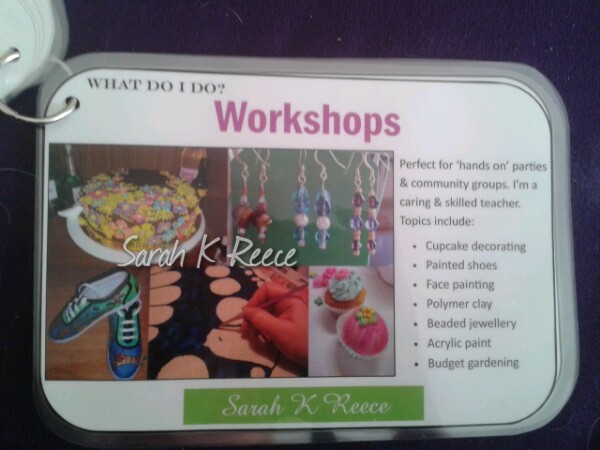
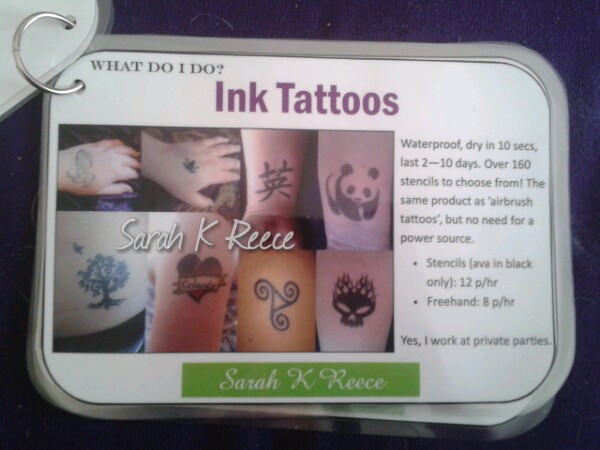
Still working hard on business and marketing… this is the latest project, a laminated flip book of my services. There’s still a few pages to be added, and I’m still tinkering with my website so that everything matches up, but I’m super excited and think it’s looking a lot better than my previous design… this is about the only way I’m actually able to get anything done – not trying to make it perfect, just better than what I was using before. I guess in a small, diverse business like mine, tinkering while I get feedback and a response (if any) from the market is going to be the norm, it’s probably for the best if I’m not massively invested in the idea that my current approach is perfect! 🙂

I really like this. It’s easy to swap out/update a page if I want to, it’s mainly pictures which is always more interesting, and it’s pretty clear. I’ve used a much less professional looking mini photo album without any of the mental health stuff in it for this job before, and people do always pick it up and look at it.

I think it’s also child friendly and shouldn’t freak out any but the most conservative of people, who are not really my client base anyway. Goddamn I hope so! image

image

image

Hills & valleys

It’s been a wild few days here. Rose and I ran away to Remark for the weekend to celebrate our two year anniversary. We had an awesome time, sleeping in a van, cooking on a BBQ by the river, swimming and reading and talking about the future and investigating second hand shops and eating something approaching our own body weight in delicious dried apricots. I don’t know why we find it so hard to get away at times, once we’re out there everything is awesome and we have a fantastic time. Everything is tinged with the rosy glow of hoping that we’ll come back sometime soon with our kid/s.

Home again was brutal, Rose has gastro. We did a long trek back across the state for a funeral, punctuated by emotional breakdowns and major stress. Last night was vomiting and broken sleep, today was major dizzy spells and exhaustion. I’m not feeling awesome, but I’m definitely the brighter member of this relationship at the moment, so I’m doing the driving.

Business building is still going well. Today I laminated an updated flip book of the services I offer, especially to have on my table during big public events. It’s looking really good. It all links up to my website, one page in the flip book is one page on my business website (in a very condensed form for the book, obviously). I think it looks excellent. I need to add a few more pages but it’s looking really professional and with the lamination it should survive all the handling my stuff gets with kids around at face painting gigs. Making progress, making progress…

With any luck the next few days hold some decent sleep and regaining equilibrium for us both.

What is it to have child parts?

It’s many things; funny, beautiful, inconvenient, sad.

This morning it was waking when the front door clicks shut,
to realise she’s leaving like the last ship
pulling away from shore.
There’s a teddy left on her side of the bed and a house
so stuffed with emptiness I can’t breathe.

It’s calling out her name and running
to the door to blink through tears
and try to memorise her face, to beg
a last cuddle before she walks into her day
and we creep back to bed
where the nightmares are waiting.

It all comes together…

Tired but happy. Business building continues to go well. I’m a little obsessive, but that’s not the end of the world. My to do list is manageable. Pending a couple of questions to be answered by my accountant, I think I’ve finally finished all my tax paperwork for the past 7 years! This has been a mammoth project that has taken months of work. My filling cabinet is sorted. My computer files are well arranged. Business admin is current and easy. And it’s growing! I feel about 1,000 pounds lighter in spirit. It’s working, at last! I’m figuring it out and it’s becoming easy, even pleasurable.

I’m still terribly anxious about mixing my mental health work with the face painting and accidentally killing off my only current paid work due to stigma… I can’t tell if this is going to work or not until I try it. I’m ecstatic to be pulling my networks together, they are alive and safe and going to keep running… That makes my heart so happy. Hard at work at the moment, growing growing growing it all. Nearly ready to order the new business cards… Putting finishing touches on the first flyer… You can see the website here: sarahkreece.com.au hopefully looking bright and friendly and very child safe, which of course I am.

I’m so happy to see it all coming together. It’s really the culmination of years of work and volunteering. There have so many low points, failed ventures, terrible illness, phobias, and sheer hard work, but this part is just a pleasure. Maybe I’ve finally reached the point where I’ve learned enough and failed enough to pull this one off. I really, really hope so!

What is Pre-Conception Care?

It’s come to my attention that I’ve been throwing this term around without explaining it! Oops. Simply put, it’s the preparation you do before trying to have a baby. It can take many forms, depending on your situation, gender, family type, & and if you or a partner will be carrying the child or if you’re approaching parenthood via surrogacy, adoption, or another means. Some folks have surprise pregnancies and shuffle the pre-conception care side of things into the pregnancy or early years. Some folks find conception very challenging and the pre conception stage can go from exciting to agonising. Everyone puts their own emphasis on the areas that are important to them, and completely skip other areas they don’t feel are necessary, or don’t think about, or are too overwhelmed by. Here’s some rough areas people may work on during pre-conception care:

Physical Health

Your health impacts everything – your chances of conception, rates of miscarriage, how tough you might find labour to be (birth mums and everyone else in the room!), attachment to the baby, managing sleep deprivation with a wailing person in the house, and keeping up with small terrors who have something like 10 times your energy levels. 🙂 Rose and I have been working a lot on health, particularly as we both have diagnosed fertility issues so the scales are already tipped against us. In our case, we’re working on improving our diet to be primarily home cooked, with a focus on fresh fruit and veg and good intake of red meat. We’re spending more than we used to on food to make sure there’s healthy snacks and things to take for lunches, we’ve moved to low fat dairy products and we’re trying to avoid transfats. We’re doing this very carefully as there’s a lot of vulnerability around food and body image. There’s no point at all in losing weight at the cost of physical and emotional health.

I’m doing a lot of work around exercise, and I’ve taken up walking as regularly as I can manage. The key is being gentle, building up gradually, not pushing myself to walk when I’m just not well enough, and for me – tracking my progress because that makes me feel awesome. 😉 On my good days I’m building capacity. My longest walk so far is 3.6km. I’ve walked a total of 41.7km over the last 8 weeks. Whoo!

Health is also about things like – reducing or eliminating risky habits such as smoking. Finding alternative meds for those you need but that aren’t safe to use in pregnancy. Getting fertility issues properly assessed and if needed, treated. Getting on top of chronic issues as best you can. I’m still waiting for my sinus op, and I won’t be trying to get pregnant until it’s happened, because there’s no way I want to risk bad liver reactions to anaesthetics and pain relief when I have a baby on board.

In my case, this is also about looking at pregnancy and parenting through the lens of disability. One example is that my fibro leaves me vulnerable to higher levels of pain and fatigue in doing certain things. (this is different for everyone with fibro, and good days vs bad days are also different) In my case I recover much more quickly from an hour of gentle walking than an hour bending and digging and weeding in my garden. Something I’ve noticed from looking after my gorgeous goddaughter is that the lift/bend/twist action of putting a child into a child seat in the back of a car is hard on me. 2 door cars are way worse than 4 door, and seats by the edge are harder than seats in the middle (where I can rest on a knee on the seat). So with this in mind, Rose and I are working on fixing up and selling my car so we can buy a 4 door. This consideration is also guiding our choices around housing, bedding, choice of a nursing chair, and so on.

Mental Health

All the risks that poor physical health can increase also apply to your mental health. Some people have to figure out the risk/benefit ratios of psych meds that increase miscarriage rates. Sometimes they can swap to a less harmful med, sometimes they can taper their dose, sometimes they can get off the med entirely, sometimes they stay on it and deal with the consequences. I’m personally not only any psych meds so I don’t have anything to worry about here.

Do you have good supports and resources if someone struggles with post partum depression or other challenges? Are you able to recognise problems developing early and communicate about them? Is anyone likely to be struggling with complex responses to a pregnancy or baby – such as, people who have previously suffered pregnancy loss, are currently grieving a dead or terminal friend or person, were abused as a child and are likely to find some trauma things resurfacing, have existing relationships with abusive people, or are facing other major life challenges in the domains of health, housing, employment, poverty and so on? Giving some thought and preparation time to this can be the difference between a challenge met well and a quietly unfolding crisis, kept secret through shame.

In my case personally, there’s been a lot of hard work to build the kind of life stability I want and need. Housing is secure, income is low but safe, I’m building a business, my disability is well managed, my relationship is solid, and my mental health is in a good place for the massive amount of dedication and devotion needed to care for a child. This isn’t a guarantee that things won’t change! We’re all vulnerable to bad luck and difficult circumstances, none of us are beyond the reach of tragedy. But I’ve done what I can to set myself up.

Household

Babies have profoundly different needs from adults! Some won’t become apparent for awhile while others are really important to have ready before they arrive – like making sure your pets are child safe. Transport, location, house layout, safety, and extra resources can all also be given some thought to early. Rose and I have a pretty awesome collection of baby clothes, baby wearing wraps and carriers, we’re travelling out country shortly to buy a baby hammock, and we’re starting to keep an eye on key furniture in second hand shops and over eBay.

Structure

Every family is different! Time to talk about how you want to do things can help you to think more creatively and not just do what ‘everyone else’ does whether it suits you or not. How are you going to divide household tasks? Keep income happening? Do you have good routines for maintaining a home? Do you have any experience with children or babies? Do you communicate well? Are you going to involve anyone else? eg extended family members or friends who will live with you or nearby or offer support on an emergency or regular basis. Do you have enough skills to keep things running if something goes wrong? Can you adapt when things don’t go to plan? Can you support each other through grief? Are there good support people around you that you’re both comfortable with? You’re a team! Who’s on your team? How does this team work? What’s important to you, what don’t you care about, what skills do you need to develop more?

Family

If you don’t already think of yourselves as a family, planning for a child shifts all that. In our case, Rose and I are making a lifelong commitment to each other as co-parents, whatever might happen within our romantic relationship. We are building a family in which our devotion to this/these children is the foundation, our commitment to set up a safe, fun, loving little culture, to the best of our abilities. Our family is not just an extension of our romance, it’s separate from it. That doesn’t mean we don’t expect to stay together or that we don’t think having love and affection are important – we’ve been inspired by families where parents have changed their relationship dramatically but maintained their parent role with devotion, such as parents who split up but stayed living in the same house with the kids, and down the track each had their own other partners who visited but the family home remained intact. Others who bought a unit and the parent who wasn’t working with the kids that day would move to the unit, instead of the kids moving between houses. There are many aspects to my relationship with Rose, we’re friends, lovers, sometimes carers for each other, and soon, hopefully, co-parents. Each of these domains can shift and change with life, without destroying that last one.

Setting up a new family can benefit from some reflection at every step of the process. Each family has its own culture – values, rituals, norms. Preconception care can be about starting to define your own family culture. This can be about discussing family of origin and childhood experiences… what were the best parts? The worst? What do you want to replicate? What are you scared of replicating? Part of this process can also be your current relationships with friends and family. For troubled families, you need as much time as possible to start working on healthier dynamics. If there are big problems around abuse, distance, or power issues, it’s often more effective to start early and make gentle changes than suddenly try and change how you respond once a baby is here. If you want to build some more closeness with someone important to you, start now before you’re tired and need all your attention for a baby. If you need to set up some better boundaries and practice some communication and conflict resolution skills, ditto.

You all need to talk about safety and make sure children are never going to be left unattended with anyone either of you know is likely to harm them. That might sound obvious, but in complex families it can start WW3 to privately decide that you’re not going to leave a baby unattended with grandma because you have some bad memories about her when you were young that you’ve never shared with anyone else. For some families, the idea that you have the right to restrict power over or access to yourself or your children is a new and explosive idea. Of course, especially when there have been issues in the past this can also work the other way, and people can be terribly distressed when an over protective new parent cuts out loving people they suddenly see as a threat. It helps to start having these conversations early and often, and being very honest with your partner or co-parent in them. A baby can change everything, and things you have been tolerating or ignoring for years can suddenly become important to manage when you realise they will impact a tiny person who has no say about any of it. Safety is one of the most basic rights a baby should be able to expect.

In our case, another aspect of this is navigating a relationship with a known donor, making sure that we have sound legal advice, that we are open about our hopes and circumstances with them, that neither we nor the donor are in a vulnerable place where someone can be exploited, and that there’s a clear understanding of how this new family will be set up. 🙂 Whoot!

So there you have it. Pre-conception care can be as broad or narrow as you need it to be. As a general rule, those of us with fertility issues or in same-sex relationships put more time into this, and that can be a wonderful thing. It can also shift your whole life into a state of perpetual readiness that can turn into agony if a child takes a long time to come or never comes at all. For some of us, facing grief, loss, heartsick longing, and insensitive people can be a critical and deeply challenging part of pre-conception care. But nothing is wasted. All efforts to build healthy families are valuable, and it is not children who make a family but love. Any people who love each other are family. If you’re on this path, best wishes! And wish us luck, we’re exited and hopeful and anxious and positively quivering with anticipation. 🙂

I love public speaking

Wow, what a day. What a week! Today I went off to talk to a bunch of students about my experience of mental health recovery. I do this particular talk about every 6 months to the new group of students, and as I’ve been giving it for a few years now, it’s really interesting to notice the changes. I reworked a lot of it this morning and updated both the artworks used to illustrate it and the poems used. I remember the day I decided to be open about my experiences of DID, instead of talking only about PTSD. I remember deciding to openly discuss the contradictions about my story and experiences that are so easily missed in a snap shot presentation of my life. Today I pulled out my diagnoses as a focus and talked instead about key experiences – dissociation, multiplicity, voice hearing, psychosis, trauma recovery. I am really comfortable with the development I’ve done.

It went down really well. This one’s a long talk, over an hour, and that can be insanely dull, especially if everything’s done in chronological order or read off a power point. No matter how many times I’ve shared, it’s still an intense experience. My hands shake and my heart races. I remember good advice from an amazing public speaking trainer I saw once – ‘don’t interpret those reactions as fear, think of them and speak of them as excitement’. Fear freezes us, but we can ride the adrenaline waves of excitement. It works for me. I concentrate on not talking too fast (I’m so bad at that, especially when the time frames are tight), making eye contact, being present. People watch me avidly. Sometimes they cry. I’m so moved. I want to hug all of them. I want to sit them down and listen to their stories. I want to hear why they’re in this course, where they’ve come from, what they’re scared of, what they’re hoping to do with their lives. They all have stories.

I can’t talk about the past without going there on some level. I read poems about homelessness or loneliness and there’s a cry in my chest and a cold wind that blows through me. I take people there and I walk them back out again. There’s a lot of courage needed for people to be willing to walk down that path with me, a lot of trust that I won’t leave them in the pit with the bodies, that I’ll help them make some sense of the pain. People are amazing.

I’m home now, on a high. This is predictable, there’s a euphoria for me in connecting with a bunch of people like this, in such intimacy with strangers, in sharing what had been the nightmares and the failures of my life and in doing so, transforming them into sources of wisdom and hope and inspiration. It makes meaning for me. 

A crash usually comes later. At some point, there’s the predictable exposure stress, the sense of rawness and loss, the shattering impact of finding that meaning and hope and connection do not erase pain, that I’m still vulnerable and still haunted. I know it might be coming but I’m still flying, soaking up the high for as long as it lasts. 

This time it’s special because I’m working so hard on my business at the moment and talks are a huge part of that. Getting such warm feedback is a huge boost that I’m on the right track and this is possible. I’ve been quiet on the blog this week because I’ve been so busy writing new content for my websites and working on promotional material for my talks. It’s a huge project but I’m well into the zone, working every moment I get on it all and feeling it all flow. It’s coming together in my mind so well, what’s been confused and chaotic is becoming clear and I can see the next steps. That’s amazing, because I’ve felt lost and stuck since I started at NEIS and found myself embroiled back in the admin based assessments of the small business cert 4. Now I’ve hit the wall and put that to one side, I’m flying again and the business is developing daily. 

If you want to check out my works in progress they are all linked to from this hub site: sarahkreece.com

  • My Business Site – I’m taking a leap here. This is the site for all my face painting and custom art, I’m planning to properly add all my mental health/queer/community sector talks and workshops here. At the moment that aspect is undeveloped because I’m still working on the final draft of my master version of the pdf that will be used to advertise my talks. Once it’s more complete, I think I’ll make this my official hub site and close the other page down, or redirect it there.
  • The Dissociative Initiative – many of you are familiar with this, but it’s been in stasis since my board collapsed. I’m updating it and linking it to everything else I do.
  • The Hearing Voices Network of SA. I’ve wanted to start this resource for years, and tried to pull together interest from local people without success. So I’ve decided to host it myself and then liaise with the interested parties. Why not? There’s nothing to stop me, and we need it!
  • Homeless Care – This one is actually my partner Rose’s fault lol. She got inspired and started a facebook group then picked up lots of work and got too overwhelmed to do anything about it. I’ve decided I’ll take it on as I’m feeling pretty comfortable about being able to hold the space – assemble the website and start some gatherings to work on resources and projects. 

Feedback is very welcomed, as is any assistance for the free networks. Or passing on my details to anyone who might want to hire me. 🙂 I don’t know if I’m going to be able to achieve my goal of self sufficiency, but I’m going to work on it. At the very least, I now have the dignity that comes with having a public identity – an answer to the question ‘What do you do?’ that doesn’t involve talking to strangers about chronic pain and illness. (I try to never ask this question, it always hurt me so much. I try to ask about people’s interests/passions/hobbies instead. Sick people still have those.) And at last, I can see how to support my free resources, keep them alive and gather support for them. I’ve had so much trouble feeling uncomfortable about marketing myself, about asking for money and moving into a ‘small business’ mindset, but I’m starting to see that for someone who is disabled and dependent on welfare, this is also about dignity. I have a right to use all the skills I have to make myself as independent as possible, to care for my family and prepare for my child. It’s not greedy or grasping, I’m not cheating anyone or looking for pity. It’s not my fault that industrialisation has changed the nature of ‘work’ in ways that are extremely difficult for ill or disabled people to fit. In a different time I would live in a family or tribe and help out as and when I was able to, and give my all when I was well. (assuming I didn’t just die of course) In my own way, I’m doing my best to be part of good changes in the world. I will do what I can, and what I can do will be enough. 

Poem – Finding the end

Sometimes I must let thoughts swirl all unformed, nebulous, stars seen through water, no patterns or constellations, just points of light.
I wait and I follow
One thread and then the next, one path
Then the next through the labyrinth, as
The kaleidescope gently tilts and the light changes to green
Then amber, as floor becomes wall and then ceiling.

I found a limit this week, an end of myself, of my capacity
To believe, to hope, to conceal my terror like stuffing all the things
I don’t know what to do with into a spare room and closing the door
Like so many times before it isn’t like the ending of a film
Or a piece of string or the daylight but
Like stepping out of bed in the dark and padding down the hallway
Opening the kitchen door to find
A gaping hole where once there was a floor
A cliff that tears downwards and a dark wind rushing up with the smell of water
The house, the earth, the country itself all fallen into the sea.
That is the coming upon the end of my strength.

At first I am hysterical.
I howl like a dying animal and force my palms into my eyes as if to stop the rain
I take my body and my mind like they are metal I can beat upon an anvil, hot with self hate, and turn into a bridge between
Who am I now and who I wish to be
Who I owe to my loves to be, to my child yet unborn, to the world.

Sanity returns as we start to topple.
I do what all do who stand upon cliffs, and become still.
And there’s a place on the edge that’s without pain
Or joy or hope or love. Blood no longer runs in veins,
There is no more screaming. I look
Perfectly normal. Where my heart used to be
Is an empty restlessness, the dangerous torment of the numbed.
I am alone on a dead planet.

Later I take a step back. My thoughts return
Like gulls wheeling over me. All the threads snapped. Only fragments remain. A memory of skinned
Raw anguish from which all decent people flinch.

I draft no plans and write no treaties
Just rest in the night with the gulls wheeling over
Listening to the tiny whirring of the compass inside me
That will say ‘that way’ and then there’ll be
No night or cliff or screaming in my mind
Just a path and the moon and the next step waiting before me.

Staying a person within the mental health sector

I’ve just read this article 20 Ways to Combat Rankism, by Robert W Fuller, and it resonates with me. I’ve been talking about this issue of what I’ve called a class divide in mental health. I’ve watched organisations that started as peer based, consumer-led, with a lot of flexible cross over between the service users and service providers become dramatically divided into distinct classes. The service users and providers become totally different from each other in dress, language, culture, attitudes, expectations of behaviour, and places they are permitted to access. Most of the power in this unequal relationship resides with the providers, who also bear responsibility for ensuring good outcomes to justify funding. These groups become rapidly polarised when mutual relationships are not holding them both aware of their shared humanity. The roles of provider and user can each be rigid and dehumanising. Those of us who are service providers find ourselves trying to achieve two contradictory aims – preserve the system of professional divide between users and providers, and build and strengthen communities.

Please don’t misunderstand me. We’ve created our therapeutic distance for very important reasons. Whether the system actually works is another conversation, but the needs and challenges are very real. I don’t have simple answers.  But I am deeply disturbed by the divide. When I started working as a peer worker, I thought this was an answer, that we would be able to bridge this divide, those of us who are both service users and providers. That we would bind the two communities back to one whole. But that’s not what I’m seeing. What I’m seeing is a whole community of peer workers who are paralysed by their basic human need to keep their own job. Who are being asked to be braver and wiser than everyone else in the system who has more voice, more power, more status, and more money. I’m also noticing the change of the idea of what a ‘peer’ is. I’ve sat in meetings where Peer Work was described as a career path. As it’s fitted to the mental health model and turned into a job, it’s being torn away from its roots; a place of shared humanity. Back when Soteria was running, the peers who supported people having psychotic experiences did not themselves have to have experienced mental illness. They were peers because they were people.

I wrestle with all of these things because I’m no more immune to their influence than the next person. Do you not think that after years of being poor, bullied, marginalised, and homeless that I cherish having a voice? An income? That somewhere inside I laugh when people who ignored me as a patient pay money to listen to my ideas now that I’m refashioned into a public speaker? I keenly feel the paradigm and the tension of my place within it, allied to both groups and refusing to rescind my membership with either. I was told by my PHaMs worker once that my attempt to insist on my right to maintain the friendships I had with other service users was pointless as it was clear that I was nothing like them and would “leave them all behind” as my career developed. The last time I sat talking with a friend who works at a local NGO mental health org, a staff member popped their head around the door to inform us we needed to leave as we were the last people present and it was now against organisational policy for a staff member and a consumer to be alone on the premises. I had not until that moment considered that I was in that context classified as a service user. I have tried to create change within these systems as a service user, but the total lack of power and voice, the constant dismissal by those who could make changes but do not have any comprehension of the subtle violence their systems do to people finally convinced me that it was not possible to do what I was trying to do. The system does not accept dual citizenship – I may train all I like and create and maintain as many services as I wish but if I fight for my right to make friends with whomever I choose and if I regard service users as my peers I am never to be one of them.

So we have two groups of people, disconnected from each other. They do not use the same entrances to the buildings. They do not share the same toilets. They do not lunch together. One usually arrives by car, the other by bus. On one the burden of healing the sick is placed. On the other, the burden of recovery. There is often conflict between the two, sometimes subtle, sometimes open abuse or violence. Those who seek to bridge the gap are often alienated by both groups and exhausted. Many leave the system. The culture is fatally flawed.

I go and give big presentations in front of important people in big shiny buildings and I feel the lure of power. As a young peer worker, some of my work was being done while at night I slept at the local backpackers. The divide in my world, and in my mind, was overwhelming. One moment I would be treated as a loser, a failure, a pathetic social parasite by a bored, tired, angry worker at the local welfare office. The next I would get a standing ovation and a hundred hugs from an audience. My life flickered between being nobody and somebody. The experience was agonising and illuminating. I also felt the structures, the hierarchy, the expectations and the culture, set itself up in my head. I started to see people through this lens of nobody or somebody, to try and attract the somebodies, to give less time and attention to the nobodies. And to panic that this would cost me, that success in my goals, of employment in mental health, would undermine my values and turn me, slowly, into somebody I do not want to be. I’m not strong enough. Some people are, but I imbibe the cultures around me. I sink into them and they into me and years and years later I’m still crashing into them into my mind. I adored my local Hearing Voices group because I walk into that space full of people without power or voice or money and we would be kind to each other – nothing more, and I would feel like a human again. Not a nobody or a somebody. Just a person like them. It was like being able to breathe again after coming off some hideous drug. It makes me cry to think of it. They became my grounding point, a place where I felt real again, somewhere to return to after debasement or accession.

Now I’m in the NEIS scheme, working to set myself up as a freelance artist/writer/poet/community builder… And I don’t know what I am. I’ve investigated my insurance options as a freelance mental health worker and it’s possible. Mind blowingly expensive but yes I could set up privately to do my talks, workshops, groups, even one to one support. It’s about 3 times the cost for me than for someone who has a degree in the field. And for awhile I wondered if I should go and finish my psych degree to make life easier. Then I realised, I don’t want to be a psychologist, or a psychiatrist, or a counsellor. I never really have. I want the information, the access to materials, but I don’t want to practice the way they do. I don’t want to do therapy. In fact, I’ve been fighting for the right not to have to for years. I don’t want to take my place in this hierarchy presented me. I don’t want to choose between being a user or a provider. I don’t want to pick which side I’m allowed to find my friends from. I want to be an artist. I want to help people be more free, more informed, and more connected. I want to be a peer worker. I want to be a member of any group I help to run. I’m tired of the roles and being dehumanised by them. I don’t want to be a somebody or a nobody, I really just want to stay myself. I want to help other people be their own selves. That’s probably not very useful to write on my professional indemnity insurance application. But I guess I don’t want to be a professional. On the other hand, I do need to make a living. And there’s the clash. I do need to understand and work within the legal and cultural frameworks I’m presented with. I haven’t found a path yet. I’m still hacking at the jungle and hoping there’s a way through. I’m still trying to get out from under the paralysis that trips me up when I feel like success is as much a threat to me as failure.

Sarsaparilla online

Wednesday’s are currently my crazy day. I start the day online at 9.30am for my Cert IV in Business, and finish it at 8.30pm at College for a Drawing class. Inevitably by then I am exhausted, sick, and in awful pain and very sad that I’m not enjoying a class I would usually love. I’ve been working hard on making Tuesday evenings restful and taking time off between my classes on the Wednesday to reduce the impact. Being able to borrow a car to get to my evening class, or beg a lift from someone kind also helps. Today is extra challenging as I’d cancelled both classes expecting to be in surgery! But it’s going well so far. The morning class is over. I went for a walk to the Post Office with Zoe and a friend. I’ve received a package of items for my face painting business that must have been held up for weeks in customs – they were so delayed I was sure they’d been lost or stolen. Given that it cost $150 I’m pretty ecstatic they’ve arrived! I went for out for coffee and a chat, ordered a tablet online to replace my smartphone, and signed up the SA Writer’s Centre to see if I can get some help laying out my book ideas. I’m a little bit excited about that. I’ve got dinner sorted out, and I’m about to have a bath and a rest (nap if I’m lucky) before heading out for the evening again. The dishwasher is unpacked, and life feels more under control again.

A friend posted this cute link about cats on dating sites and I thought I’d join in. If my cat Sarsaparilla had an honest online profile, I think it would read something like this:

wpid-IMG_20131008_165958_wm.jpg


  • 7 Year Old Male 
  • Seeking occasional companion for warm naps 
  • Spayed 
  • Body type – fit and muscular
  • Breed – domestic shorthair
  • Hair colour – Black & White Tuxedo
  • Catnip – not interested, can’t detect it. Don’t like any cat toys at all, or cat beds, cat scratchers, and so on. Will sleep on books, newspapers, homework, keyboards, laptops, and sleeping people.

More about me: I live a peaceful life of roaming. Can’t tie me down! I come and go as I please and eat the best of the treats on offer from any family who’ll give them out. I love sleeping in the sun, separating the other neighbouring tomcat from a decent amount of his fur. When I’m super happy I purr and dribble at the same time. I can be skittish. I do not recognise my own humans if they are wearing new shoes, jumpers, or a hat I haven’t seen in a while. I loathe and avoid dogs and pretend they do not exist. All cat doors in any houses are a personal invitation. I love pigeons, rats and mice, particularly the middle bits. I leave the end bits like feet, tail, feathers, and beak, for my humans. I am adept at hiding my gifts beneath the middle of the queensize bed where they cannot be reached. I love to sit on sleeping people’s chests. If extra happy, I will paw their faces and dribble onto their necks. I’m not sure why they don’t enjoy this. I lead a simple, happy life, with the occasional dog chase over a fence to keep me in good shape. 

Seeking: You must not be clingy or nervous, or I will panic. I can mewl for 12 hours straight if I’m upset about something. I do not adjust to being kept indoors. I can be upset about something for 4 months straight without adjusting to it. I have a very small, high pitched squeak for such a large cat – you should never draw attention to this! You will allow me to enjoy my wayfaring lifestyle, and never ask for cuddles unless I initiate. You will not pick me up, you will not put me in cat boxes, you will never take me to the vet, you will not give me tablets or pastes or treatments of any kind. You should keep a towel handy to put over your lap for cuddles or I will add a complex poem in Braille punctures on your thighs. You should understand a guys need to dribble with happiness from time to time. You will not own a dog. Other cats are okay provided I am given lots of treats and a couple of months to adjust. They should be smaller than me. If you really love me, you will let me eat rats in the bed and piss on your clothes and/or curtains. As you can see, I am fairly poorly treated by my current humans who do not appreciate any of these things. They are lucky I still choose to visit.

Medicine for a bad day

It’s not been a good day. Robin Williams has died, and my online world is flooded with unbearable sadness. People are asking what hope there is when someone so inspirational, wise, and successful, couldn’t find a way to make it through the night. I shared a post I wrote in the wake of the loss of a friend of mine to suicide, with my thoughts about grief and loss.

My surgery was cancelled at the last minute, so all the plans Rose and I have made, gigs cancelled, days taken off work, study arrangements and so on have become moot. I’m back on the wait list and told I’ll be mailed a new date sometime in the next several months. I’ll have to cancel a whole new round of my work, and go in again for another 3 hours of pre-op tests and appointments. I’ve called the private hospital this afternoon where my surgeon works, but apparently they are taking weeks to months to get back to prospective patients with a quote for the surgery. The wind has been taken right out of my sails. I’ve mucked up my week, Rose’s week, friends and family who were making soup or picking me up from hospital, and all the clients I’ve pointlessly cancelled on. The careful effort to  have my system in the right place to cope with the surgery and the anxiety around my allergies goes up in smoke and is replaced with massive stress and upset. A couple of hours of crying later, and reading the entire amazing Hyperbole and a Half book, which was being saved for post-surgery depression, and I’m feeling less overwhelmed.

My car isn’t running. My phone has suddenly died. My home phone only works erratically. My caseworker is away sick, I’m two weeks behind on homework, the house is messy, and all the plans are awry. I’ve bought a new season of Flashpoint online, because nothing puts a bad day in perspective like watching someone else’s really bad day handled with care, and I’m trying to navigate options for phone and selling the car.

Into all this, a friend contacted me to offer commiserations, and in the course of the conversation asked me for some blog posts on a particular topic. I’ve spent a happy half hour looking a collection up and improving their backlinks. How wonderful to feel that something I do matters. It takes so much of the bite out of a bad day. I feel so much calmer and able to cope. Meaning and purpose and connection – how much they can ease our pain.

Learning the business language

So, I’m knee deep in study again, and falling horribly behind as my sinuses continue to prove the upcoming surgery is sorely needed… I’m working really hard on being able to undo the blocks in my mind and understand the terms. I’m not stupid but wow I’ve found this hard. I hate so much about the corporate and bureaucratic worlds, and feel so out of my depth in them that my mind just shuts down. I’m trying to figure out what I need to be able to engage with it all. So far one little useful shift has been to see it all as a new language that I’m learning. It really is in so many ways – a whole bunch of new words, or new meanings for words, and a whole underlying world-view and series of assumptions that I find subtle and often very distasteful, such as the idea that everyone wants to make massive amounts of money. I’m coping better if I think of it as a new language and culture – I need to learn it to be effective in my freelance work, to navigate the complex world of organisations and legislature. But learning another language doesn’t mean I have to go ‘native’. I can choose to retain my own values and frameworks. It’s a huge challenge for a mad artist to venture into this world and try to find things of value when my overarching response falls somewhere between suspicion and terror. But there are others who’ve walked this path before me, and often humour is the way they’ve coped with the hypocrisy, inefficiency, and dehumanisation that are so often part of these processes. That is a comfort to me!

Happy Birthday to Rose

It’s the birthday of my beautiful girlfriend Rose. 🙂 What a wonderful opportunity to appreciate this lovely woman! She’s worked so hard to be here, lived such a complex and challenging life. It’s left some scars, but it’s also brought out such wonderful traits. She’s kind, loyal, brave, fun, generous, and complex. I’m so fortunate to have her in my life. So much has changed since I met her. I’ve found whole new directions, doors opened that had been closed, deeper understandings of worlds I’d not been to before. Sometimes we go and sit by trees she once slept in when she was homeless. At night we take turns reading Harry Potter to each other. Some nights she talks to me in her sleep. My inner children trust and love her. They play with her, cuddle up to her, cry in her arms when they’re scared or sick. She knows us, she picks switches, uses our names, knows the right pronouns. We’re so different! She loves Hilltop Hoods, I’m into David Bowie. She struggles to get her motor running for work. I struggle to turn mine off. I’m into anime and foreign films, she’s… coming around ha haa. We’re so similar too, both with our dark, wild sides, longing for the domestic but also needing to run free under the stars, to remember that we’re strong.

It’s not always been easy to build a relationship between us. We’ve both worked hard, paid attention, learned a lot. We’ve come through a few ‘shall we call this off?’ conversations. Building a relationship is complex. It’s like a whole additional person, separate from each of us, that we’re both constructing. The dynamics have a life of their own. We each bring ghosts with us. At times we can barely see each other because our memories are in the way. At times words are too hard, or closeness is unbearable. But we’ve kept building, because it’s been worth it for both of us, our connection makes our lives better. We’ve made something that works, that shelters us, that brings out our best, that gives us the freedom to keep rebuilding it as times and needs change. We’re a good team, and that’s a precious thing. We’re family, and I adore her.

I’ve changed. She’s made my heart bigger. I’m gentler than I used to be, more careful. I’m angrier too, more protective. My life is so different, full of all her networks too, the people she loves and the children dear to her. We can’t go anywhere without running into someone she knows some how. In my tiny art class at college, 2 of the 7 other members know her – from different times and places. Her networks are as vast as my own – but where mine are often online, hers are local and often part of her long work history. She teaches me too – her passion for all things child related is without rival. Where my knowledge was abstract and book based, she has shown me how to baby wear a child, check if a nappy is dry, keep a restless young one entertained in the car without taking your eyes off the road. We’ve each been the foundation for each other. I help with lunches and early morning starts with her job. She drives me to far away gigs and washes out my brushes afterwards. We each play supporting roles in each other’s lives, no one person the sun around which the other orbits, but an exchange of energies. We watch and try to tend the change which bringing our lives together creates for all our other relationships. We nurture those who are loving and allow to fall back a step those who cause pain and chaos. Everything changes with the start of a new family. Our friends rejoice in it and become part of it.

I’m a small part of Rose’s story, but I hope to be a good one. She deserves such devotion and care, a safe place to be vulnerable, to be flawed and human, to make mistakes and learn and have your best efforts and good intentions count. She deserves the things I’ve been seeking, real attachment, empathy, honesty, a place to be real, to know and be known, a place to grow love. I’m not good enough. Sometimes I’m mean. Sometimes I’m intrusive, or demanding. Sometimes I’m exhausted and have little to offer. It’s been a journey to process her grace in the face of my flaws, in her love I find moments of being able to accept them in myself, to draws lines between intent and effect, to be humbled without being debased. To be able to accept my failures and own them, and say sorry without collapsing into terror and self loathing. I find I have to accept the limits of my role. I am a partner, I cannot make up for the tragedies of the past. I cannot make her happy. I should not fight her battles for her. I am on her side, on her team, a retreat from the world, and I can love her and do my best to meet her needs and bring out the best in her. I can let go of the rescue fantasies and help us both to be a great team. I can help us to navigate the disastrous risks of the roles of carer and caree when one or the other of us is sick. I can accept that she too is human, that she cannot take away my pain or erase my past or meet all my needs. Sometimes that’s laughably easy. Some times, at 3am, when reason has fled and the world is dark, and our partner it cast in the role of the only fire at which we can warm our hands, that’s difficult.

How fortunate I’ve been! To get so close and spend so much time with such an incredible person! How wonderful to be able to spoil her a little, to know enough about her to be able to put together good gifts, and gentle care for the sadness of a day that’s also an anniversary of pregnancy loss, so often forgotten about in the excitement. I love her tremendously and can’t wait to be by her side for another year. 🙂

Surgery coming up

I have a date for my surgery now – this Wednesday. They didn’t give us very much notice so I’m scrambling to get everything organised. Yesterday, between my Cert 4 in small business class that morning, and my night class for the Visual Arts degree, I was at the RAH going through several hours of pre-op tests and appointments. It’s exhausting. I’m constantly sick with this sinus infection, my weeks are full of medical tests and specialists appointments, I’m falling behind on all my homework, and the short notice has forced me to let down customers and cancel long standing bookings for work. I hate it when my schedule falls apart like this. 😦 I can’t wait for it all to be over.

It’s not helped by various other things not working. My car isn’t running properly and I need to sell it. My phone is dying and needs replacing. My beloved Rose has her birthday and an anniversary of pregnancy loss this weekend. One of my test results didn’t come back quite normal and I’m now booked to see a gynaecologist after this surgery, with a possible exploratory surgery and biopsy on the cards. I can feel the rest of this year slipping away from me.

So I’m working hard to stay present. I’m asking for help with the things that are wiping me out into massive anxiety, like my car. I’m plodding through the most important admin on my better health days. I’m exploring options to reduce my workload. I’m spending an hour here and there crying hysterically on the couch when it all gets too much. I’m eating and drinking and remembering my meds and touching base with friends and enjoying my pets. I’m not as prepared as I’d like – usually I’d have a bunch of blended soups frozen for recovery, but nothing is going to fall apart either. I have some new movies I’m looking forward to watching, and lots of books to read. Rose is preparing to support us to keep our most hospital friendly part present. We’re talking through the anxiety and sense of helplessness that being a patient in the public system creates. I don’t even know who will be performing the surgery as the surgeon who ordered it will be away. But, curled up at night reading Harry Potter with Rose, or walking with Zoe in the golden sunshine, everything is okay. There are better times ahead, and there are still good times now. Riding it out.

Looking for a donor

Not since I once sat in a church, covered in rat piss and hoping desperately to fit in with my new lesbian friends, have I felt so damn awkward. Searching for a donor is an astonishingly strange process. It involves using the word ‘sperm’ in conversation more frequently than I have in the entire rest of my life. It’s nerve wracking and vulnerable and exciting and sad and weirdly similar to dating, if dating involved no sex and unusually frequent references to sperm.

Let me take you through the process so far. Rose and I need a donor as neither of us produce sperm. Plenty of couples find themselves in this boat for many reasons. Our first idea was to cross the genetic lines of our families – as we are both keen to carry a child, to ask for support from male relatives on both sides. Sadly that hasn’t worked out for us. Our second idea is to find a known donor that we are already friends with, or whom we become friends with, to help us have a child – maybe more than one with the same guy if that works out. Anonymous donation doesn’t appeal to us. There’s upsides, for sure! A total lack of drama for one. Less anxiety about relationships fragmenting. But Rose has never known her father. We know what it feels like to have a big empty space in your biological history. We don’t want that for for our kids. We’d love someone who we can point to and say ‘that’s the guy’. This is your donor. He’s not your parent, he’s not responsible for you, he doesn’t pay your medical bills or sit up with you when an assignment is due the next morning, but he’s a family friend. You can ask him questions. You can figure out how you want to relate to each other over the years. We’re not scared of him or threatened by him and we don’t want to hide him or pretend he didn’t exist. He’s part of the story of how you came into the world. There’s no shame in that. In fact, he’s a pretty awesome guy. We chose him, just like we chose to have you.

Being a known donor is a big ask. It’s a weird role. The closest parallel I’ve been able to come up with is that of an uncle. You’re involved in the child’s life to some extent, there’s a recognised relationship that may be closer or distant. There’s a biological tie. There’s no legal or social responsibility or rights. A fight with the parents could see you on the out. You’re kind of invested but also in a vulnerable position. If things go wildly wrong you may one day be asked to see if you’re a match for bone marrow for a kid that’s not yours. For many guys this role is a really poor fit. They want to become a donor anonymously and stay distant, or they really want to be a father, not a donor, and they’ll be intrusive and suffer greatly if their access to the child or their desire to relate as a parent is limited in any way. It’s a pretty unique kind of situation and it doesn’t fit everyone.

So Rose and I have been casting our net wider, so to speak. We’ve put up profiles on local dating websites, and we’re sharing our search with friends and contacts. We’re moving slowly and seeking to have a good foundation of friendship in place before we start trying to conceive. Talking with strangers on the net about donors has been… Illuminating, entertaining, bizarre, funny, and creepy. We’ve met some really lovely guys. We’ve deleted a lot of wildly unsuitable ones. We’ve explained that sex is not involved in being a donor, a LOT.

As I said, it’s oddly similar to dating. You get neurotic easily (am I talking too much? Too little? Am I mentioning the donor thing too often? Not often enough?). You get excited quickly and dream a whole future that dies a deeply disappointing death when things derail. You’re flooring the accelerator with excitement and hitting the brakes with anxiety at the same time. You’re keen for no one person to feel under pressure, so you’re still talking to other new possible guys, but that also feels weirdly like cheating or snubbing the ones you do like who have expressed interest in being involved. Communication is a challenge. Them reading this blog and having to process a whole bunch of stuff about someone fairly out of the norm is a challenge. Them worrying about being exposed when interacting with someone who lives a very public life is a challenge. The whole process is rather strange and fragile.

So, this is our online profile:

About Me

Female 31 Australia

We are 2 awesome ladies who have been together for nearly 2 years and are looking for someone fantastic to help us to have kids. We’re 29/31 and looking at starting within the next couple of years. We work in Youth Work/Alternative Education, Mental Health, and do face painting work on the weekends at kids parties. We’re smart, creative, silly, and a bit nerdy. Love reading, cooking, camping, card nights, and hanging out with our mates.

Seeking Criteria

  • Members anywhere in South Australia.
  • Friendship with a man or a woman.
  • Between 25 and 40 years of age.
  • Members who speak English.

What I’m Looking For

Someone awesome to be a sperm donor and help us start our family. We don’t mind what nationality, sexuality, or gender identity you are but you do need to be between 25 and 40. Single or part of a couple is welcome. What’s important to us is that you don’t carry any known major genetic illnesses, that you’re happy to be tested so we all know that everything is safe, and that you’re a great person with similar values to us and excellent communication skills. We’d love to have a long friendship with our donor, and to have our kids know you and know their genetic history, so our first preference is to go down the DIY road rather than anonymous donation.We are also open to talking about supporting you to have children if you are gay or your partner is unable to bear children. We’re not in a rush, we’d love to meet up, get to know each other, talk things through, and make sure everyone is comfortable and on the same page.

Also happy just to make some new friends. 🙂

The process of donation involves coordinating with each other to pass along a sperm sample during the most fertile time of the month. Happy to talk about that in more detail. 🙂 Sex is not involved!

It can be a little awkward to start conversations about being a donor dad, so we’ll leave the first move to you. It just feels a little odd to say to a stranger – hey you seem nice, can we have your sperm? Feel free to strike up a conversation if you’d like to chat! 🙂

I’ve also taken to having the following spiel saved in a word document so I can copy and paste, seeing as it comes up in every conversation. It’s the basic run down of the process for when you’re using artificial insemination (AI) at home.

The first step is making friends. Donating can be a bit of a process and it’s best if everyone gets along and feels comfortable with each other.

The next step is getting tested. Sperm samples can contain STI’s such as HIV, so it’s super important to know no one will get sick.

So once everyone has the all clear, some paperwork is signed to say that this is a donor relationship, and no sex is happening. That protects the guy from being sought after for child support, and allows us to try and get both of us legally recognised as parents on the birth certificate.

The process of donating is quite simple. A couple of times a month the donor and we arrange a time that suits everyone on the days we know the biological mum is most fertile. The donor puts a sperm sample into a sterile cup that we provide. Then within one hour we arrange a handover – he drops it off or we pick it up.

Sperm dies really fast outside of the body, so that bit can be tricky to arrange, especially if the donor and us don’t live close.

But basically that’s it. This goes on every month until a pregnancy occurs, then if we’re lucky, all goes well and a baby is born. 

Please be aware if you’re thinking of going down this road yourself that there’s some important considerations to keep in mind! Firstly, someone can have HIV but not show up as HIV positive in testing for a couple of months. So a clear STI test doesn’t always mean you are safe. When you’re using donor sperm and a clinic, the usual practice is for the clinic to freeze the donor sperm for 3 months or longer, with an HIV test for the donor at the start and end of that time. If both are clean, then the sperm is considered safe to use. Obviously you can’t do this at home, so you need good, honest conversations with a donor you trust about their risk of contracting HIV. Despite popular belief, the health of the donor is also very relevant to the chance of conception and a healthy pregnancy. It’s probably far more important to look at factors such as current drug use rather than education level or eye colour when you’re choosing a donor.

Another important thing to consider is the laws where you live about donors and parental rights. Everywhere is different. Don’t assume that just because you’ve used AI instead of had sex that you’re all safe and legally protected. Not all the laws recognise donors outside of a clinic, and not all the laws recognise that a same sex couple can both be parents. There are occasional horror stories about donors being pursued by the state to pay child support, or a non-biological partner being denied access to their own children following the death of the biological parent, or breakdown of their relationship. Do your homework! You may need to lodge forms, sign stat decs, and jump through various bureaucratic hoops to make sure your relationships are all legally recognised the ways you’re setting them up. If you are trying to set up a poly relationship or clan with more than two parents being recognised legally, you need advice from a specialist lawyer because this is extraordinarily difficult to pull off within current legal frameworks. It’s also important to mention that, all jokes aside, please don’t use regular household items such as your kitchen baster for DIY insemination. You can buy single use, sterile medical supplies online discretely through sites like DIY Baby. The last thing anyone needs is infection at early stages of pregnancy.

Another consideration is that around half of all fertilized eggs are lost to very early miscarriage. Women who conceive through sex are often not aware they were even pregnant because it happens so early in the process. But for those us using donors, we’re watching the whole process and often confirming pregnancy very early. So while our chances of miscarriage may not be any higher than anyone else’s, we can be aware of early losses other people aren’t and this can be very painful. It’s worth keeping this in mind and remembering that sadly, losses are to be expected as part of the process. (just as a side note, this is not what has happened with Rose, all her losses have been later, hence our care to go through fertility testing and work on pre-conception care to reduce our risks) There are things you and a donor can do (such as not smoking) to reduce your risks of miscarriage, but the base-line stats even for healthy people with low risk factors are still a lot higher than most people realise, and this can be a shock, both for you and your donor.

Lastly, even with the best of care in tracking your fertile window each month, it can take a while before conception and pregnancy result. When you’re inexperienced and excited it’s easy to think of a sperm sample as being a magic ticket to a baby – especially so if you have friends who’ve been more fertile than they wanted and had pregnancies on the pill, or when you’ve all spent your whole adult lives being super careful to avoid getting pregnant and worrying that the smallest mishap will inevitably result in an unwanted pregnancy. Both you and your donor need to be prepared that this could take a little while, and that’s normal. You may be lucky, so be ready, but you may also spend months arranging collection of samples with a donor who needs to remain a low HIV & miscarriage risk throughout that time. It can be a lot more drawn out and inconvenient than anyone was expecting. It may be worth having conversations at the outset about how you will approach things if someone’s circumstances changes and they want to stop. Donors have lives, sometimes their kid gets sick, or they get an interstate work offer, or start a new relationship, and what was a wonderful idea six months ago has become a stressful imposition. Sometimes too, your circumstances change and you change your timetable, perhaps you need time to grieve after losses, or you suddenly have to move house, or find yourself caring for a sick parent. Putting this on the table at the outset can help those important conversations to happen early and calmly if they need to. This is doubly important if you have a reciprocal arrangement with a donor – ie two families assisting each other to have children via sperm donation and surrogacy. There’s a lot of opportunity for heartbreak and hurt in these situations, as well as connection and joy.

If you’re curious to learn more about different family structures, including families with a known donor, I recommend (and own) the book Baby Makes More. There’s a wonderful range of families who have shared the good, bad, and ugly of their choices, their struggles for acceptance, and their efforts to find a language to communicate about their relationships. The legal trend is gearing generally in the direction of known donors after many years of anonymous donation. Some children born with the help of an anonymous donor experience the kind of dislocation that children born in closed, secret adoptions do, and go searching for information and history as they get older. In recognition of this, legislation is beginning to change in places and enforce that more information needs to be disclosed for secret donor arrangements, and that adult children conceived with a donor should be able to access identifying information. This is not to shame or judge those who have chosen to use an anonymous donor, merely to point out that we are moving in this direction culturally and we need to find more comfortable language for families and relationships like this. Where once it was thought that secrecy helped people, that children were more secure if they didn’t know their ‘big sister’ was really their biological mother, or that people would cope better with sickness if they were not told how bad it was, things are swinging more in the direction of disclosure and openness being essential to trust and a healthy sense of self. It’s no guarantee, and there’s certainly downsides, but we are starting to embrace that family comes in many forms, and that these complex ties of love and blood are part of all our lives – for good and ill.

Old stories of the Art World

The more I learn the more I’m realising that the confusion I’ve felt about art is not mine alone but a clash of different stories and ideas, a shipwreck of notions of what it means to be an artist, and of what art is. I find myself not liberated by the breaking apart of all these ideas, but confused by them, drowning in the foam and flotsam.

I’m loving art history lessons. I didn’t expect to, but I find them thrilling. I feel like I’m trekking through wild country with a good guide. I have no idea what I’m doing or where I’m going. I’m completely out of my depth. But I’m exhilarated, soaking it all up, starting to see the patterns and frameworks that move beneath the surface like the skeleton of a strange new creature.

Something strange happens in the classes. I find the blocks in my head ease. Something in me lets out a breath. I can imagine a place for myself in this vast, complex, and colourful landscape. Most of the time I can’t. I feel small and stuck in a cage I don’t understand and can’t escape. A lot of my art happens only in the driving of great need. (that’s not true of everyone in my system) I hope to change this. Experiences of freedom and belonging in this world, however brief, are hopeful.

We live (and try to create art) in a post modern landscape littered with many broken stories about the people of art and the place of artists. I experience intense ambivalence about art. I love and hate it. I find it essential to my life, but also vapid and pretentious. I love and admire some creative people, and loathe and detest others. My own stories about my place in the world as an artist don’t make sense. They’re broken fragments of older stories, and they both link me to a meaningful history, and cut me off from a coherent future.

Today in class we discussed art in the context of the sacred, of making holy objects. Our lecturer drew parallels between the language used to describe artists, and that used to describe shaman, people who cross the thresholds between the domestic and the sacred world. It’s one more story of art, flightless and yet with an old power in it.

I think of wrist poems that save my blood, and descending into my own underworld with body paint during psychosis. This is not who I am, but it is part of my story. I’m learning more about the ghosts and relics of the art world and in this dark confusion I see a rich source of new stories and understandings. I’ll find a way out of the cages in my mind. I’ll tell a new story, weave a new vessel to travel in.

Fat Shaming

Someone I hardly know has just had a go at me on my facebook page for daring to mention that I’m sick when I also happen to be overweight. Fat shaming is pretty endemic in our culture, and random attacks from near strangers are often the price I pay for the public way I’ve chosen to live my life. Being open on a public blog and willing to ‘friend’ strangers unfortunately means that every now and then a kind of critical mass builds up and those who have been silent in the wings decide now is the time to speak out. It’s happened before and it will happen again. It always hurts, it always makes me angry. There’s a sense of betrayal about having honesty and openness rewarded with judgement. But every time I’m also so aware that I’m actually okay. This kind of bullying is now reasonably rare in my life. I don’t let the bigots and the bullies near me anymore. People who scare me, shame me, put me down, or abuse me don’t get to be part of my inner circles! How many of us can’t say this? How many of us suffer because this happens, not with a stranger over the net, but at the dining table every Christmas, or in bed with our partners? I’m pretty tough, and I’ve got great friends. I’m not drowning anymore in negative messages about myself. I’ve escaped those environments and left those people. Every now and then I just have to cull my online networks a little to prune out the people who don’t get it, and who think my patience is a free ticket to hurt me. It’s not such a big deal for me, but it’s a huge deal for so many of us.

Sometimes I’m harassed for being openly gay, and that can range from daft to really frightening. Sometimes it’s about my alliance with some kind of minority group. Today it’s ostensibly about my weight. And of course, I can argue. I could justify myself in so many ways. I could talk about how I suffered severe joint pain back when I was a healthy weight, in fact much worse pain than I do now, pain so crushingly severe I was in a wheelchair. Exhaustion so debilitating I could not raise my arms over my head for more than a moment. I needed assistance to wash my hair, at times even to dress or eat. I could talk about how my weight is partly the result of medications I have to take to manage another chronic pain condition. I could talk about how my health is actually better now, at the weight I am today, than it used to be when I weighed less, how my blood cholesterol is lower and my diabetes indicators have gone away! I could talk about our lack of understanding of the relationship between weight and health, how our assumptions are wrong and profoundly unhelpful. I could talk about my history of an eating disorder and how tender and sensitive my relationship with food and my body can be, how vulnerable someone like me is to shame and self loathing. I could talk about how my weight went up during periods where I was homeless, on the run from domestic violence, and doing intensive, exhausting, terrifying caring for a suicidal family member. How issues like weight become so irrrelevant when you don’t have anywhere to sleep, when you’re sitting up late again eating service station food because you don’t have anything to cook on, and the person you care about needs to be watched so they don’t try to kill themselves in the night.

But really, so what? So what if my extra weight was simply because of my lifestyle? So what if all my medical problems stemmed directly from my weight? I don’t actually need all these justifications to say that fat shaming is wrong. I’ve worked in Eating Disorders. I’ve worked with people who starve, binge, cut themselves, dissociate, and put their lives at risk. I’ve worked with people who were beaten as children when they gained weight at the weekly weigh-in. People who were starved through deliberate abuse or chronic neglect. People who spent parts of their childhood stealing food and eating out of bins. People who tried to cut out their own fat at 12 because they were being bullied. People who compulsively hoard food because they so often went without. Forget about weight being a health issue for a moment. There’s some grey area about how exactly all that works. What I can tell you, is that shame is lethal. It kills people. It profoundly distorts our sense of self, of being an okay person. Fat shaming makes people hate their bodies. It makes us embarrassed to eat in public. It makes us burn our skin. It makes us hide food in secret stashes that we consume with the guilt and craving of an addict. It makes us starve ourselves. It makes us refuse to be naked with our partners, or unable to imagine we might one day have a partner. It makes us settle for terrible partners who fat shame us and abuse us, who make us feel worthless and lucky that someone is willing to put up with us, and even to have sex with us. Even if sex hurts, even if it makes us feel degraded and scared. It makes us scared that we’re being passed over at work, constantly judged as lacking in self control or self respect. It makes us obsess over the weight of our children in ways that shame them also. It makes us kill ourselves.

So, if this is about health and caring for people, don’t shame. Don’t make someone’s weight the first or second ever conversation topic. Don’t assume that those of us with health problems and illness have them caused by our weight, it’s often more complex. Don’t assume laziness and self indulgence. If you want to demonstrate your caring, be open, listen, openly reject shaming. Acceptance and compassion are the places where people might open up to you. Public struggles like weight can be exhausting and leave people tremendously vulnerable and isolated. Be friends. Be vulnerable yourself. These are the places where people feel safe enough to share and ask for help. These are the ways we can start to have conversations about what’s going on and how you might be able to be a support. Not all of us who are overweight have shame issues, other things can be at play. Sometimes a kick in the pants for a person who thinks they’re immortal can be a help. But many of us are vulnerable. So unless you know us very, very well, and know how to pull off a kick in the pants without shame, don’t ever kick. Reach out.

Fat shaming isn’t about caring. It’s partly about making yourself feel superior to a clearly visible group of people. It can be about narcissism, it can be about insecurity, it can be about shame! All the traumas I’ve just described can make people engage in fat shaming too! Whatever the cause, it leverages your own sense of being okay at someone else’s expense, and that’s really the heart of bullying. In this case, I think it’s also about silencing people with disabilities. I have often been told that I’m not supposed to share my bad days. People are uncomfortable with hearing about things like chronic pain, sickness, vulnerability, incapacity. It’s scary to think it could happen to us. It’s awful to feel bad for someone and not be able to fix it. Being exposed to someone’s disability can leave us almost vibrating with this urgency we can’t manage. We want to fix it or run away, and often we manage this by blaming the person or shaming them into silence. I share so much that’s positive. So many good days, so much about my thoughts and ideas that are hopeful and excited and full of healing. The ratio is a very good one, far more positives to negatives. But sharing that I suffer from chronic pain can still make people tremendously uncomfortable. It’s hard to walk alongside those of us who have been forced to become living reminders of everyone’s mortality and fragility! Silencing becomes a way to maintain cultural denial. It keeps things comfortable if people like myself don’t share. If we’re still shut away in back rooms, or locked up in institutions. In some ways it’s almost worse if we can be articulate about our experiences, if our sharing evokes a kind of unwanted empathy. It’s painful. People who don’t know what to do with that pain can cope with it by lashing out. I get that!

But we need people like me to talk. In fact, we need everyone to talk! We need to listen to each other and hear the tremendous variety of life experiences out there! We need to know that we are mortal and fragile, these are things that make us kiss our children before bed every night, that makes us hold our tongue when we want to spit cutting words at someone. We remember that we’re human and that life is often painful and overwhelming, as much as it is also beautiful and amazing. None of us need more shame. None of us need to feel alone, afraid, trapped, less than human. We all deserve to live our lives as openly as we wish, to share our experiences and be known, to be vulnerable and to love with courage. Don’t shame each other. Don’t let those who do shame you into your heart. You have the right to feel worthwhile, you are no more, and no less, than any other person. In our imperfections are the seeds of our humility. We can meet each other with love.

Holding my childhood to ransom turns 3!

Wow, three years of blogging. I love it. Writing used to be private and solitary. I adore the interaction of a blog (admittedly, most of my interactions still happen over at facebook or via email, but it’s still awesome to get feedback, critiques, or opinions straight away for something I’ve written or shared). I follow a many other blogs and enjoy the sense of connection and sharing of information. I continue to try and make the leap from blog writing to book writing, but I struggle with the impulse to share my thoughts straight away, with the concern that someone somewhere might be looking for help, and with the change in format from posts to chapters… I think in blog posts now! It’s been a year now since I moved from blogger to wordpress and I’m still happy with that change. I still don’t make any money from my writing, which is a little sad considering how passionate I am about it, and how much time I devote it… and that it’s one of my few skills that doesn’t generate joint pain for me. I still haven’t figured out how to get google analytics to work on here so I’m only guessing about my site stats.

My top 5 most popular posts of all time are:

The most popular search terms that bring people to this blog are about psychosis, empathy, bulling, chronic illness, trauma, multiplicity, dissociation, feeling suicidal, and face painting. I have published 894 posts in 19 categories. As usual for me, it’s been a busy year. I saw Amanda Palmer in concert, then got onto twitter for the first time, talked to Amanda Palmer, and tweeted short poems. I grieved for two lovely friends, Amanda, and Leanne. I celebrated a year with my gorgeous girlfriend Rose. I wrestled with challenges facilitating various groups, delivered a talk at the World Hearing Voices Congress in Melbourne, discovered our cat Tonks is a she, not a he, navigated life and my relationships, and other people’s reactions, when you have chronic illnesses. I had rough nights and used ink on my skin. I had my second experience of psychosis. I graduated and won an award! I figured out to use routines to my advantage. I wrote a lot about triggers, love, dissociation, stigma, recovery, growing up, sexmindfulness, and crisis. I nailed down my philosophy of multiplicity in a nutshell. I set up my first art studio! I turned 31. I hung out with my goddaughter, Sophie, and shared a lot of art from my bachelor degree. We spent more time getting to know our trans guy parts. I was sick a lot, managed a lot of pain, and did a lot of system work. Rose and I moved into preconception care as we plan for children of our own. It’s been a pretty wild ride!

It all started with this post, on Aug 1st, 2011 – What am I up to at the moment? If you’d like a summary of the blog in development, check out my yearly updates on Holding my childhood to ransom turns One, and Two.

Thankyou to everyone who has visited, read, shared, commented, or emailed me. Your kindness, insights, and willingness to share are a blessing. I’m thrilled to have journeyed with you through the last three years. I hope you’ve learned as much as I have.

I’m not sure how long I’ll keep blogging for. I can see that book writing and blogging may not both fit in my life and I’m sad and unsure about that. On one level I love being here and being so open and I am anticipating sharing the joys and sadness of starting a family. But I’m not wedded to the idea either, it’s been a huge project and I may need my time and passion to go elsewhere. For now though, you’ll be hearing from me soon. 🙂

Motherhood with Rose

Rose and I talk a lot about having kids. When, how, child raising values, options for donors, financial pressures, housing challenges, and the unique concerns and possibilities afforded by a pair of women in a relationship. (we are by far luckier than a pair of guys in South Australia trying to start a family – sorting out a donor is a lot easier than finding a surrogate) Financial is a messy, tricky one. I don’t want to raise kids in poverty. On the other hand, our poverty, here in Australia, is comparable to some pretty serious wealth in many other parts of the world. It’s a weird one. We’re working on various options for long term financial survival despite health and disability issues. Rose’s job is a blessing in this respect, and I’m trying to juggle my health, my business plans, study, and home life. Some days it feels like it’s all working out, others I’m buried by it all.

I recently discovered that if Rose and I have a child together, that we cannot have both of us on the birth certificate as parents. I’m crushed. I’d been told that this was possible now in South Australia. Apparently there’s a time factor. Both same-sex parents can only go on the birth certificate if they have been legally recognised as defacto partners for several years. This seems arbitrary and ridiculous to me. One night stands resulting in pregnancy are recognised, while both of us loving and planning and being cautious about living together before we’re ready have to go to such lengths to prove we are parents. I hate it.

One of the challenges I find is that culturally we have this idea of the real Mum. A lot of us don’t fit it. A step mum isn’t a real Mum. A transwoman can’t be a real Mum. An adoptive mother isn’t a real Mum. And the first time someone asked Rose which one of us was going to be the real Mum, I realised that we weren’t going to fit it either. One of us, the one who carries the child, is seem as the real Mum. The other of us will be the other mother, an oddly dispensable role, and one with eerie echoes of the creepy bad character from Coraline. The person who isn’t on the birth certificate, who has no automatic legal recognition, and who is often seen as a kind of watered down, inadequate father, or an unnecessary duplicate. A kind of spare Mum, in case something happens to the real one.

Gender roles can be a real headache. I hate them when I’m in a relationship with a man. I hate them when I’m in a relationship with a woman. I hate being asked ‘which one of us is the man’ as if being male and being the ‘dominant’ partner are synonymous, and as if every partnership must have a man or a man substitute in it to be legitimate. I find it deeply offensive to be told that ‘all relationships, even gay ones, have a male and a female in them’, and Rose and I have encountered this idea more than once! Or to be asked which of us is the ‘butch’ one, or which is the man of the household. (obviously, that’s my cat, Sarsaparilla) One of the funnest things for me about dating a woman is that there are no clear social roles. Who pays at dinner? Do you open doors for each other? Who cooks the BBQ’s? You get to define all these between the two of you to be whatever you like. This is awesome! You can figure out what suits you with a whole lot less social friction around defying traditional gender roles. Unless of course, you’re in networks who need women to be ‘girly’, or need one of you to be clearly defined as the ‘manly one’.

The same gender role issues happen when you start planning a family. I don’t like being seen as a castrated father to a child Rose carries and delivers. I am a real mother. The clearly defined roles of mother and father that have been inherited from a terrifyingly rigid 1950’s model, get instead broken down and parcelled out to each parent, each aunt and uncle and family friend and godparent and grandparent. Everyone brings something different, something unique, to the life of a child they care about. We’ve spent so much time in our culture having arguments about gender and how being a mother and being a father is different, more or less important to a child. Gender is important, if for no other reason than it is an intensely key aspect of how our society thinks about and treats people. But, like relationships, parenting roles work best when they’re fitted to skills, interests, and passions, rather assigned based on gender.

People are often baffled or weirdly thrilled when Rose and I tell them we each hope to carry a child. On the one hand, this fits us neatly into the gender roles of female. On the other, it defies the belief that even queer relationships have strictly separate male and female roles. And here’s the real kicker – to both be legally recognised as parent of our own children, we would have to be living together in a defacto relationships for a number of years – which is assessed by welfare and would radically reduce my pension without considerably reducing our expenses. This doesn’t happen for any other type of relationship. I could live with my sister or any other family member, any friends, anyone else in the world, provided we’re not having sex. We could raise children together, share household responsibilities, in all other ways be a family… we could even be ex’s or one could be full time providing care for the other through sickness or disability. But if we are currently in a sexual relationship, I become immediately forced to be financially dependant on Rose, and both of us struggle to pay the bills. You know what – I realise that we’re so used to this idea it seems ‘normal’ to us, that we have spent a very long time building our notion of family around a sexual relationship between a single couple, but I’m repulsed by this. It makes me feel like my government is prostituting me. Rose and I could support each other as straight single Mums, raising each other’s kids together, we could relate as sisters, we could build our own family on any number of wonderful different ways, but sex is different. Sex means I can’t maintain my financial independence, my own balance of power, my separate self. We’re a halfway secular country still running on ideas of ‘becoming one flesh’. This makes people like me highly vulnerable. I have watched so many people, often but not always women (that’s another post!), become so vulnerable because of our ideas around housing, finances, and sex. It’s time for change. If we want to stop the merry go round of vulnerable people winding back up on the streets or in shelters, we need to make it much, much easier for them to explore new relationships without losing their housing or income! This bizarre privileging/excluding of sexual/romantic relationships apart from all other kinds of relationships is so unnecessary. Families come in many different formats. Love is what binds us together. There are platonic flatmates out there with 1,000 times the compassion and devotion to each other than exists between some mothers and their children, or some husbands and wives. Sex with someone should not collapse you into a single legal entity, financially or in any other way. We are beyond this now, thankfully, here at least. We are not property. We are not resources to be sold or bargained over. Marital rape is a real thing. Domestic violence is a real thing. Queer relationships are no longer illegal or mental illnesses. Fostering, adopting, kinship care, and step families are part of our normal family make-up now, as are extended communities of ‘family’ we may have no blood or marriage ties to. More than one sexual partner in our lifetime, casual sex, poly relationships, and defacto relationships are happening all the time. When our laws around tax, marriage, lineage, and legal standing haven’t caught up with the social changes, people are highly vulnerable, such as trans people having their marriages dissolved whatever their wishes. People get hurt!

So, Rose and I live in separate houses, because it has worked for us. It keeps us both independent financially, it gives us each a sense of secure home that isn’t threatened by hitting a rocky patch in our relationship, (because we have not got our shit together around housing and homelessness in this culture!), it holds onto my public housing unit while we try to decide if we’re financially secure enough to let it go, and stops our cats from killing each other. We’ve made it work for us. We love our little commune of close friends. It’s unusual but not unheard of, Frida Kahlo and Diego Rivera lived in adjoining houses, as do/did Tim Burton and Helena Bonham Carter. We’ve taken the challenges and found a way to make them work for us. We’re now faced with the bizarre scenario that the only way we can both be entered onto the birth certificate of our child (and therefore legally recognised as joint parents) is to trek across state borders towards the end of pregnancy, and make sure that we give birth to any children in Victoria, where the laws are different. The only alternative is to give up on the birth certificate and pay lawyers a lot of money to draft parenting agreements. But that empty box on the birth certificate, it’s haunting.

We’ll figure it out. We’ll be okay. We’ll make it into an adventure, a wild story to tell, I hope. We are so damn fortunate, we have so much protection and so many rights, bought through much struggle and courage by people who have come before us. We have some of the most beautiful friends and family in the world, people who see us as people rather than living embodiments of gender roles. People we love as family, who are excited for us and supporting of us. We are blessed indeed. But this mess around both of us being recognised as mothers makes me very angry. We deserve better.