Surgery coming up

I have a date for my surgery now – this Wednesday. They didn’t give us very much notice so I’m scrambling to get everything organised. Yesterday, between my Cert 4 in small business class that morning, and my night class for the Visual Arts degree, I was at the RAH going through several hours of pre-op tests and appointments. It’s exhausting. I’m constantly sick with this sinus infection, my weeks are full of medical tests and specialists appointments, I’m falling behind on all my homework, and the short notice has forced me to let down customers and cancel long standing bookings for work. I hate it when my schedule falls apart like this. 😦 I can’t wait for it all to be over.

It’s not helped by various other things not working. My car isn’t running properly and I need to sell it. My phone is dying and needs replacing. My beloved Rose has her birthday and an anniversary of pregnancy loss this weekend. One of my test results didn’t come back quite normal and I’m now booked to see a gynaecologist after this surgery, with a possible exploratory surgery and biopsy on the cards. I can feel the rest of this year slipping away from me.

So I’m working hard to stay present. I’m asking for help with the things that are wiping me out into massive anxiety, like my car. I’m plodding through the most important admin on my better health days. I’m exploring options to reduce my workload. I’m spending an hour here and there crying hysterically on the couch when it all gets too much. I’m eating and drinking and remembering my meds and touching base with friends and enjoying my pets. I’m not as prepared as I’d like – usually I’d have a bunch of blended soups frozen for recovery, but nothing is going to fall apart either. I have some new movies I’m looking forward to watching, and lots of books to read. Rose is preparing to support us to keep our most hospital friendly part present. We’re talking through the anxiety and sense of helplessness that being a patient in the public system creates. I don’t even know who will be performing the surgery as the surgeon who ordered it will be away. But, curled up at night reading Harry Potter with Rose, or walking with Zoe in the golden sunshine, everything is okay. There are better times ahead, and there are still good times now. Riding it out.

Looking for a donor

Not since I once sat in a church, covered in rat piss and hoping desperately to fit in with my new lesbian friends, have I felt so damn awkward. Searching for a donor is an astonishingly strange process. It involves using the word ‘sperm’ in conversation more frequently than I have in the entire rest of my life. It’s nerve wracking and vulnerable and exciting and sad and weirdly similar to dating, if dating involved no sex and unusually frequent references to sperm.

Let me take you through the process so far. Rose and I need a donor as neither of us produce sperm. Plenty of couples find themselves in this boat for many reasons. Our first idea was to cross the genetic lines of our families – as we are both keen to carry a child, to ask for support from male relatives on both sides. Sadly that hasn’t worked out for us. Our second idea is to find a known donor that we are already friends with, or whom we become friends with, to help us have a child – maybe more than one with the same guy if that works out. Anonymous donation doesn’t appeal to us. There’s upsides, for sure! A total lack of drama for one. Less anxiety about relationships fragmenting. But Rose has never known her father. We know what it feels like to have a big empty space in your biological history. We don’t want that for for our kids. We’d love someone who we can point to and say ‘that’s the guy’. This is your donor. He’s not your parent, he’s not responsible for you, he doesn’t pay your medical bills or sit up with you when an assignment is due the next morning, but he’s a family friend. You can ask him questions. You can figure out how you want to relate to each other over the years. We’re not scared of him or threatened by him and we don’t want to hide him or pretend he didn’t exist. He’s part of the story of how you came into the world. There’s no shame in that. In fact, he’s a pretty awesome guy. We chose him, just like we chose to have you.

Being a known donor is a big ask. It’s a weird role. The closest parallel I’ve been able to come up with is that of an uncle. You’re involved in the child’s life to some extent, there’s a recognised relationship that may be closer or distant. There’s a biological tie. There’s no legal or social responsibility or rights. A fight with the parents could see you on the out. You’re kind of invested but also in a vulnerable position. If things go wildly wrong you may one day be asked to see if you’re a match for bone marrow for a kid that’s not yours. For many guys this role is a really poor fit. They want to become a donor anonymously and stay distant, or they really want to be a father, not a donor, and they’ll be intrusive and suffer greatly if their access to the child or their desire to relate as a parent is limited in any way. It’s a pretty unique kind of situation and it doesn’t fit everyone.

So Rose and I have been casting our net wider, so to speak. We’ve put up profiles on local dating websites, and we’re sharing our search with friends and contacts. We’re moving slowly and seeking to have a good foundation of friendship in place before we start trying to conceive. Talking with strangers on the net about donors has been… Illuminating, entertaining, bizarre, funny, and creepy. We’ve met some really lovely guys. We’ve deleted a lot of wildly unsuitable ones. We’ve explained that sex is not involved in being a donor, a LOT.

As I said, it’s oddly similar to dating. You get neurotic easily (am I talking too much? Too little? Am I mentioning the donor thing too often? Not often enough?). You get excited quickly and dream a whole future that dies a deeply disappointing death when things derail. You’re flooring the accelerator with excitement and hitting the brakes with anxiety at the same time. You’re keen for no one person to feel under pressure, so you’re still talking to other new possible guys, but that also feels weirdly like cheating or snubbing the ones you do like who have expressed interest in being involved. Communication is a challenge. Them reading this blog and having to process a whole bunch of stuff about someone fairly out of the norm is a challenge. Them worrying about being exposed when interacting with someone who lives a very public life is a challenge. The whole process is rather strange and fragile.

So, this is our online profile:

About Me

Female 31 Australia

We are 2 awesome ladies who have been together for nearly 2 years and are looking for someone fantastic to help us to have kids. We’re 29/31 and looking at starting within the next couple of years. We work in Youth Work/Alternative Education, Mental Health, and do face painting work on the weekends at kids parties. We’re smart, creative, silly, and a bit nerdy. Love reading, cooking, camping, card nights, and hanging out with our mates.

Seeking Criteria

  • Members anywhere in South Australia.
  • Friendship with a man or a woman.
  • Between 25 and 40 years of age.
  • Members who speak English.

What I’m Looking For

Someone awesome to be a sperm donor and help us start our family. We don’t mind what nationality, sexuality, or gender identity you are but you do need to be between 25 and 40. Single or part of a couple is welcome. What’s important to us is that you don’t carry any known major genetic illnesses, that you’re happy to be tested so we all know that everything is safe, and that you’re a great person with similar values to us and excellent communication skills. We’d love to have a long friendship with our donor, and to have our kids know you and know their genetic history, so our first preference is to go down the DIY road rather than anonymous donation.We are also open to talking about supporting you to have children if you are gay or your partner is unable to bear children. We’re not in a rush, we’d love to meet up, get to know each other, talk things through, and make sure everyone is comfortable and on the same page.

Also happy just to make some new friends. 🙂

The process of donation involves coordinating with each other to pass along a sperm sample during the most fertile time of the month. Happy to talk about that in more detail. 🙂 Sex is not involved!

It can be a little awkward to start conversations about being a donor dad, so we’ll leave the first move to you. It just feels a little odd to say to a stranger – hey you seem nice, can we have your sperm? Feel free to strike up a conversation if you’d like to chat! 🙂

I’ve also taken to having the following spiel saved in a word document so I can copy and paste, seeing as it comes up in every conversation. It’s the basic run down of the process for when you’re using artificial insemination (AI) at home.

The first step is making friends. Donating can be a bit of a process and it’s best if everyone gets along and feels comfortable with each other.

The next step is getting tested. Sperm samples can contain STI’s such as HIV, so it’s super important to know no one will get sick.

So once everyone has the all clear, some paperwork is signed to say that this is a donor relationship, and no sex is happening. That protects the guy from being sought after for child support, and allows us to try and get both of us legally recognised as parents on the birth certificate.

The process of donating is quite simple. A couple of times a month the donor and we arrange a time that suits everyone on the days we know the biological mum is most fertile. The donor puts a sperm sample into a sterile cup that we provide. Then within one hour we arrange a handover – he drops it off or we pick it up.

Sperm dies really fast outside of the body, so that bit can be tricky to arrange, especially if the donor and us don’t live close.

But basically that’s it. This goes on every month until a pregnancy occurs, then if we’re lucky, all goes well and a baby is born. 

Please be aware if you’re thinking of going down this road yourself that there’s some important considerations to keep in mind! Firstly, someone can have HIV but not show up as HIV positive in testing for a couple of months. So a clear STI test doesn’t always mean you are safe. When you’re using donor sperm and a clinic, the usual practice is for the clinic to freeze the donor sperm for 3 months or longer, with an HIV test for the donor at the start and end of that time. If both are clean, then the sperm is considered safe to use. Obviously you can’t do this at home, so you need good, honest conversations with a donor you trust about their risk of contracting HIV. Despite popular belief, the health of the donor is also very relevant to the chance of conception and a healthy pregnancy. It’s probably far more important to look at factors such as current drug use rather than education level or eye colour when you’re choosing a donor.

Another important thing to consider is the laws where you live about donors and parental rights. Everywhere is different. Don’t assume that just because you’ve used AI instead of had sex that you’re all safe and legally protected. Not all the laws recognise donors outside of a clinic, and not all the laws recognise that a same sex couple can both be parents. There are occasional horror stories about donors being pursued by the state to pay child support, or a non-biological partner being denied access to their own children following the death of the biological parent, or breakdown of their relationship. Do your homework! You may need to lodge forms, sign stat decs, and jump through various bureaucratic hoops to make sure your relationships are all legally recognised the ways you’re setting them up. If you are trying to set up a poly relationship or clan with more than two parents being recognised legally, you need advice from a specialist lawyer because this is extraordinarily difficult to pull off within current legal frameworks. It’s also important to mention that, all jokes aside, please don’t use regular household items such as your kitchen baster for DIY insemination. You can buy single use, sterile medical supplies online discretely through sites like DIY Baby. The last thing anyone needs is infection at early stages of pregnancy.

Another consideration is that around half of all fertilized eggs are lost to very early miscarriage. Women who conceive through sex are often not aware they were even pregnant because it happens so early in the process. But for those us using donors, we’re watching the whole process and often confirming pregnancy very early. So while our chances of miscarriage may not be any higher than anyone else’s, we can be aware of early losses other people aren’t and this can be very painful. It’s worth keeping this in mind and remembering that sadly, losses are to be expected as part of the process. (just as a side note, this is not what has happened with Rose, all her losses have been later, hence our care to go through fertility testing and work on pre-conception care to reduce our risks) There are things you and a donor can do (such as not smoking) to reduce your risks of miscarriage, but the base-line stats even for healthy people with low risk factors are still a lot higher than most people realise, and this can be a shock, both for you and your donor.

Lastly, even with the best of care in tracking your fertile window each month, it can take a while before conception and pregnancy result. When you’re inexperienced and excited it’s easy to think of a sperm sample as being a magic ticket to a baby – especially so if you have friends who’ve been more fertile than they wanted and had pregnancies on the pill, or when you’ve all spent your whole adult lives being super careful to avoid getting pregnant and worrying that the smallest mishap will inevitably result in an unwanted pregnancy. Both you and your donor need to be prepared that this could take a little while, and that’s normal. You may be lucky, so be ready, but you may also spend months arranging collection of samples with a donor who needs to remain a low HIV & miscarriage risk throughout that time. It can be a lot more drawn out and inconvenient than anyone was expecting. It may be worth having conversations at the outset about how you will approach things if someone’s circumstances changes and they want to stop. Donors have lives, sometimes their kid gets sick, or they get an interstate work offer, or start a new relationship, and what was a wonderful idea six months ago has become a stressful imposition. Sometimes too, your circumstances change and you change your timetable, perhaps you need time to grieve after losses, or you suddenly have to move house, or find yourself caring for a sick parent. Putting this on the table at the outset can help those important conversations to happen early and calmly if they need to. This is doubly important if you have a reciprocal arrangement with a donor – ie two families assisting each other to have children via sperm donation and surrogacy. There’s a lot of opportunity for heartbreak and hurt in these situations, as well as connection and joy.

If you’re curious to learn more about different family structures, including families with a known donor, I recommend (and own) the book Baby Makes More. There’s a wonderful range of families who have shared the good, bad, and ugly of their choices, their struggles for acceptance, and their efforts to find a language to communicate about their relationships. The legal trend is gearing generally in the direction of known donors after many years of anonymous donation. Some children born with the help of an anonymous donor experience the kind of dislocation that children born in closed, secret adoptions do, and go searching for information and history as they get older. In recognition of this, legislation is beginning to change in places and enforce that more information needs to be disclosed for secret donor arrangements, and that adult children conceived with a donor should be able to access identifying information. This is not to shame or judge those who have chosen to use an anonymous donor, merely to point out that we are moving in this direction culturally and we need to find more comfortable language for families and relationships like this. Where once it was thought that secrecy helped people, that children were more secure if they didn’t know their ‘big sister’ was really their biological mother, or that people would cope better with sickness if they were not told how bad it was, things are swinging more in the direction of disclosure and openness being essential to trust and a healthy sense of self. It’s no guarantee, and there’s certainly downsides, but we are starting to embrace that family comes in many forms, and that these complex ties of love and blood are part of all our lives – for good and ill.

Old stories of the Art World

The more I learn the more I’m realising that the confusion I’ve felt about art is not mine alone but a clash of different stories and ideas, a shipwreck of notions of what it means to be an artist, and of what art is. I find myself not liberated by the breaking apart of all these ideas, but confused by them, drowning in the foam and flotsam.

I’m loving art history lessons. I didn’t expect to, but I find them thrilling. I feel like I’m trekking through wild country with a good guide. I have no idea what I’m doing or where I’m going. I’m completely out of my depth. But I’m exhilarated, soaking it all up, starting to see the patterns and frameworks that move beneath the surface like the skeleton of a strange new creature.

Something strange happens in the classes. I find the blocks in my head ease. Something in me lets out a breath. I can imagine a place for myself in this vast, complex, and colourful landscape. Most of the time I can’t. I feel small and stuck in a cage I don’t understand and can’t escape. A lot of my art happens only in the driving of great need. (that’s not true of everyone in my system) I hope to change this. Experiences of freedom and belonging in this world, however brief, are hopeful.

We live (and try to create art) in a post modern landscape littered with many broken stories about the people of art and the place of artists. I experience intense ambivalence about art. I love and hate it. I find it essential to my life, but also vapid and pretentious. I love and admire some creative people, and loathe and detest others. My own stories about my place in the world as an artist don’t make sense. They’re broken fragments of older stories, and they both link me to a meaningful history, and cut me off from a coherent future.

Today in class we discussed art in the context of the sacred, of making holy objects. Our lecturer drew parallels between the language used to describe artists, and that used to describe shaman, people who cross the thresholds between the domestic and the sacred world. It’s one more story of art, flightless and yet with an old power in it.

I think of wrist poems that save my blood, and descending into my own underworld with body paint during psychosis. This is not who I am, but it is part of my story. I’m learning more about the ghosts and relics of the art world and in this dark confusion I see a rich source of new stories and understandings. I’ll find a way out of the cages in my mind. I’ll tell a new story, weave a new vessel to travel in.

Fat Shaming

Someone I hardly know has just had a go at me on my facebook page for daring to mention that I’m sick when I also happen to be overweight. Fat shaming is pretty endemic in our culture, and random attacks from near strangers are often the price I pay for the public way I’ve chosen to live my life. Being open on a public blog and willing to ‘friend’ strangers unfortunately means that every now and then a kind of critical mass builds up and those who have been silent in the wings decide now is the time to speak out. It’s happened before and it will happen again. It always hurts, it always makes me angry. There’s a sense of betrayal about having honesty and openness rewarded with judgement. But every time I’m also so aware that I’m actually okay. This kind of bullying is now reasonably rare in my life. I don’t let the bigots and the bullies near me anymore. People who scare me, shame me, put me down, or abuse me don’t get to be part of my inner circles! How many of us can’t say this? How many of us suffer because this happens, not with a stranger over the net, but at the dining table every Christmas, or in bed with our partners? I’m pretty tough, and I’ve got great friends. I’m not drowning anymore in negative messages about myself. I’ve escaped those environments and left those people. Every now and then I just have to cull my online networks a little to prune out the people who don’t get it, and who think my patience is a free ticket to hurt me. It’s not such a big deal for me, but it’s a huge deal for so many of us.

Sometimes I’m harassed for being openly gay, and that can range from daft to really frightening. Sometimes it’s about my alliance with some kind of minority group. Today it’s ostensibly about my weight. And of course, I can argue. I could justify myself in so many ways. I could talk about how I suffered severe joint pain back when I was a healthy weight, in fact much worse pain than I do now, pain so crushingly severe I was in a wheelchair. Exhaustion so debilitating I could not raise my arms over my head for more than a moment. I needed assistance to wash my hair, at times even to dress or eat. I could talk about how my weight is partly the result of medications I have to take to manage another chronic pain condition. I could talk about how my health is actually better now, at the weight I am today, than it used to be when I weighed less, how my blood cholesterol is lower and my diabetes indicators have gone away! I could talk about our lack of understanding of the relationship between weight and health, how our assumptions are wrong and profoundly unhelpful. I could talk about my history of an eating disorder and how tender and sensitive my relationship with food and my body can be, how vulnerable someone like me is to shame and self loathing. I could talk about how my weight went up during periods where I was homeless, on the run from domestic violence, and doing intensive, exhausting, terrifying caring for a suicidal family member. How issues like weight become so irrrelevant when you don’t have anywhere to sleep, when you’re sitting up late again eating service station food because you don’t have anything to cook on, and the person you care about needs to be watched so they don’t try to kill themselves in the night.

But really, so what? So what if my extra weight was simply because of my lifestyle? So what if all my medical problems stemmed directly from my weight? I don’t actually need all these justifications to say that fat shaming is wrong. I’ve worked in Eating Disorders. I’ve worked with people who starve, binge, cut themselves, dissociate, and put their lives at risk. I’ve worked with people who were beaten as children when they gained weight at the weekly weigh-in. People who were starved through deliberate abuse or chronic neglect. People who spent parts of their childhood stealing food and eating out of bins. People who tried to cut out their own fat at 12 because they were being bullied. People who compulsively hoard food because they so often went without. Forget about weight being a health issue for a moment. There’s some grey area about how exactly all that works. What I can tell you, is that shame is lethal. It kills people. It profoundly distorts our sense of self, of being an okay person. Fat shaming makes people hate their bodies. It makes us embarrassed to eat in public. It makes us burn our skin. It makes us hide food in secret stashes that we consume with the guilt and craving of an addict. It makes us starve ourselves. It makes us refuse to be naked with our partners, or unable to imagine we might one day have a partner. It makes us settle for terrible partners who fat shame us and abuse us, who make us feel worthless and lucky that someone is willing to put up with us, and even to have sex with us. Even if sex hurts, even if it makes us feel degraded and scared. It makes us scared that we’re being passed over at work, constantly judged as lacking in self control or self respect. It makes us obsess over the weight of our children in ways that shame them also. It makes us kill ourselves.

So, if this is about health and caring for people, don’t shame. Don’t make someone’s weight the first or second ever conversation topic. Don’t assume that those of us with health problems and illness have them caused by our weight, it’s often more complex. Don’t assume laziness and self indulgence. If you want to demonstrate your caring, be open, listen, openly reject shaming. Acceptance and compassion are the places where people might open up to you. Public struggles like weight can be exhausting and leave people tremendously vulnerable and isolated. Be friends. Be vulnerable yourself. These are the places where people feel safe enough to share and ask for help. These are the ways we can start to have conversations about what’s going on and how you might be able to be a support. Not all of us who are overweight have shame issues, other things can be at play. Sometimes a kick in the pants for a person who thinks they’re immortal can be a help. But many of us are vulnerable. So unless you know us very, very well, and know how to pull off a kick in the pants without shame, don’t ever kick. Reach out.

Fat shaming isn’t about caring. It’s partly about making yourself feel superior to a clearly visible group of people. It can be about narcissism, it can be about insecurity, it can be about shame! All the traumas I’ve just described can make people engage in fat shaming too! Whatever the cause, it leverages your own sense of being okay at someone else’s expense, and that’s really the heart of bullying. In this case, I think it’s also about silencing people with disabilities. I have often been told that I’m not supposed to share my bad days. People are uncomfortable with hearing about things like chronic pain, sickness, vulnerability, incapacity. It’s scary to think it could happen to us. It’s awful to feel bad for someone and not be able to fix it. Being exposed to someone’s disability can leave us almost vibrating with this urgency we can’t manage. We want to fix it or run away, and often we manage this by blaming the person or shaming them into silence. I share so much that’s positive. So many good days, so much about my thoughts and ideas that are hopeful and excited and full of healing. The ratio is a very good one, far more positives to negatives. But sharing that I suffer from chronic pain can still make people tremendously uncomfortable. It’s hard to walk alongside those of us who have been forced to become living reminders of everyone’s mortality and fragility! Silencing becomes a way to maintain cultural denial. It keeps things comfortable if people like myself don’t share. If we’re still shut away in back rooms, or locked up in institutions. In some ways it’s almost worse if we can be articulate about our experiences, if our sharing evokes a kind of unwanted empathy. It’s painful. People who don’t know what to do with that pain can cope with it by lashing out. I get that!

But we need people like me to talk. In fact, we need everyone to talk! We need to listen to each other and hear the tremendous variety of life experiences out there! We need to know that we are mortal and fragile, these are things that make us kiss our children before bed every night, that makes us hold our tongue when we want to spit cutting words at someone. We remember that we’re human and that life is often painful and overwhelming, as much as it is also beautiful and amazing. None of us need more shame. None of us need to feel alone, afraid, trapped, less than human. We all deserve to live our lives as openly as we wish, to share our experiences and be known, to be vulnerable and to love with courage. Don’t shame each other. Don’t let those who do shame you into your heart. You have the right to feel worthwhile, you are no more, and no less, than any other person. In our imperfections are the seeds of our humility. We can meet each other with love.

Holding my childhood to ransom turns 3!

Wow, three years of blogging. I love it. Writing used to be private and solitary. I adore the interaction of a blog (admittedly, most of my interactions still happen over at facebook or via email, but it’s still awesome to get feedback, critiques, or opinions straight away for something I’ve written or shared). I follow a many other blogs and enjoy the sense of connection and sharing of information. I continue to try and make the leap from blog writing to book writing, but I struggle with the impulse to share my thoughts straight away, with the concern that someone somewhere might be looking for help, and with the change in format from posts to chapters… I think in blog posts now! It’s been a year now since I moved from blogger to wordpress and I’m still happy with that change. I still don’t make any money from my writing, which is a little sad considering how passionate I am about it, and how much time I devote it… and that it’s one of my few skills that doesn’t generate joint pain for me. I still haven’t figured out how to get google analytics to work on here so I’m only guessing about my site stats.

My top 5 most popular posts of all time are:

The most popular search terms that bring people to this blog are about psychosis, empathy, bulling, chronic illness, trauma, multiplicity, dissociation, feeling suicidal, and face painting. I have published 894 posts in 19 categories. As usual for me, it’s been a busy year. I saw Amanda Palmer in concert, then got onto twitter for the first time, talked to Amanda Palmer, and tweeted short poems. I grieved for two lovely friends, Amanda, and Leanne. I celebrated a year with my gorgeous girlfriend Rose. I wrestled with challenges facilitating various groups, delivered a talk at the World Hearing Voices Congress in Melbourne, discovered our cat Tonks is a she, not a he, navigated life and my relationships, and other people’s reactions, when you have chronic illnesses. I had rough nights and used ink on my skin. I had my second experience of psychosis. I graduated and won an award! I figured out to use routines to my advantage. I wrote a lot about triggers, love, dissociation, stigma, recovery, growing up, sex, mindfulness, and crisis. I nailed down my philosophy of multiplicity in a nutshell. I set up my first art studio! I turned 31. I hung out with my goddaughter, Sophie, and shared a lot of art from my bachelor degree. We spent more time getting to know our trans guy parts. I was sick a lot, managed a lot of pain, and did a lot of system work. Rose and I moved into preconception care as we plan for children of our own. It’s been a pretty wild ride!

It all started with this post, on Aug 1st, 2011 – What am I up to at the moment? If you’d like a summary of the blog in development, check out my yearly updates on Holding my childhood to ransom turns One, and Two.

Thankyou to everyone who has visited, read, shared, commented, or emailed me. Your kindness, insights, and willingness to share are a blessing. I’m thrilled to have journeyed with you through the last three years. I hope you’ve learned as much as I have.

I’m not sure how long I’ll keep blogging for. I can see that book writing and blogging may not both fit in my life and I’m sad and unsure about that. On one level I love being here and being so open and I am anticipating sharing the joys and sadness of starting a family. But I’m not wedded to the idea either, it’s been a huge project and I may need my time and passion to go elsewhere. For now though, you’ll be hearing from me soon. 🙂

Motherhood with Rose

Rose and I talk a lot about having kids. When, how, child raising values, options for donors, financial pressures, housing challenges, and the unique concerns and possibilities afforded by a pair of women in a relationship. (we are by far luckier than a pair of guys in South Australia trying to start a family – sorting out a donor is a lot easier than finding a surrogate) Financial is a messy, tricky one. I don’t want to raise kids in poverty. On the other hand, our poverty, here in Australia, is comparable to some pretty serious wealth in many other parts of the world. It’s a weird one. We’re working on various options for long term financial survival despite health and disability issues. Rose’s job is a blessing in this respect, and I’m trying to juggle my health, my business plans, study, and home life. Some days it feels like it’s all working out, others I’m buried by it all.

I recently discovered that if Rose and I have a child together, that we cannot have both of us on the birth certificate as parents. I’m crushed. I’d been told that this was possible now in South Australia. Apparently there’s a time factor. Both same-sex parents can only go on the birth certificate if they have been legally recognised as defacto partners for several years. This seems arbitrary and ridiculous to me. One night stands resulting in pregnancy are recognised, while both of us loving and planning and being cautious about living together before we’re ready have to go to such lengths to prove we are parents. I hate it.

One of the challenges I find is that culturally we have this idea of the real Mum. A lot of us don’t fit it. A step mum isn’t a real Mum. A transwoman can’t be a real Mum. An adoptive mother isn’t a real Mum. And the first time someone asked Rose which one of us was going to be the real Mum, I realised that we weren’t going to fit it either. One of us, the one who carries the child, is seem as the real Mum. The other of us will be the other mother, an oddly dispensable role, and one with eerie echoes of the creepy bad character from Coraline. The person who isn’t on the birth certificate, who has no automatic legal recognition, and who is often seen as a kind of watered down, inadequate father, or an unnecessary duplicate. A kind of spare Mum, in case something happens to the real one.

Gender roles can be a real headache. I hate them when I’m in a relationship with a man. I hate them when I’m in a relationship with a woman. I hate being asked ‘which one of us is the man’ as if being male and being the ‘dominant’ partner are synonymous, and as if every partnership must have a man or a man substitute in it to be legitimate. I find it deeply offensive to be told that ‘all relationships, even gay ones, have a male and a female in them’, and Rose and I have encountered this idea more than once! Or to be asked which of us is the ‘butch’ one, or which is the man of the household. (obviously, that’s my cat, Sarsaparilla) One of the funnest things for me about dating a woman is that there are no clear social roles. Who pays at dinner? Do you open doors for each other? Who cooks the BBQ’s? You get to define all these between the two of you to be whatever you like. This is awesome! You can figure out what suits you with a whole lot less social friction around defying traditional gender roles. Unless of course, you’re in networks who need women to be ‘girly’, or need one of you to be clearly defined as the ‘manly one’.

The same gender role issues happen when you start planning a family. I don’t like being seen as a castrated father to a child Rose carries and delivers. I am a real mother. The clearly defined roles of mother and father that have been inherited from a terrifyingly rigid 1950’s model, get instead broken down and parcelled out to each parent, each aunt and uncle and family friend and godparent and grandparent. Everyone brings something different, something unique, to the life of a child they care about. We’ve spent so much time in our culture having arguments about gender and how being a mother and being a father is different, more or less important to a child. Gender is important, if for no other reason than it is an intensely key aspect of how our society thinks about and treats people. But, like relationships, parenting roles work best when they’re fitted to skills, interests, and passions, rather assigned based on gender.

People are often baffled or weirdly thrilled when Rose and I tell them we each hope to carry a child. On the one hand, this fits us neatly into the gender roles of female. On the other, it defies the belief that even queer relationships have strictly separate male and female roles. And here’s the real kicker – to both be legally recognised as parent of our own children, we would have to be living together in a defacto relationships for a number of years – which is assessed by welfare and would radically reduce my pension without considerably reducing our expenses. This doesn’t happen for any other type of relationship. I could live with my sister or any other family member, any friends, anyone else in the world, provided we’re not having sex. We could raise children together, share household responsibilities, in all other ways be a family… we could even be ex’s or one could be full time providing care for the other through sickness or disability. But if we are currently in a sexual relationship, I become immediately forced to be financially dependant on Rose, and both of us struggle to pay the bills. You know what – I realise that we’re so used to this idea it seems ‘normal’ to us, that we have spent a very long time building our notion of family around a sexual relationship between a single couple, but I’m repulsed by this. It makes me feel like my government is prostituting me. Rose and I could support each other as straight single Mums, raising each other’s kids together, we could relate as sisters, we could build our own family on any number of wonderful different ways, but sex is different. Sex means I can’t maintain my financial independence, my own balance of power, my separate self. We’re a halfway secular country still running on ideas of ‘becoming one flesh’. This makes people like me highly vulnerable. I have watched so many people, often but not always women (that’s another post!), become so vulnerable because of our ideas around housing, finances, and sex. It’s time for change. If we want to stop the merry go round of vulnerable people winding back up on the streets or in shelters, we need to make it much, much easier for them to explore new relationships without losing their housing or income! This bizarre privileging/excluding of sexual/romantic relationships apart from all other kinds of relationships is so unnecessary. Families come in many different formats. Love is what binds us together. There are platonic flatmates out there with 1,000 times the compassion and devotion to each other than exists between some mothers and their children, or some husbands and wives. Sex with someone should not collapse you into a single legal entity, financially or in any other way. We are beyond this now, thankfully, here at least. We are not property. We are not resources to be sold or bargained over. Marital rape is a real thing. Domestic violence is a real thing. Queer relationships are no longer illegal or mental illnesses. Fostering, adopting, kinship care, and step families are part of our normal family make-up now, as are extended communities of ‘family’ we may have no blood or marriage ties to. More than one sexual partner in our lifetime, casual sex, poly relationships, and defacto relationships are happening all the time. When our laws around tax, marriage, lineage, and legal standing haven’t caught up with the social changes, people are highly vulnerable, such as trans people having their marriages dissolved whatever their wishes. People get hurt!

So, Rose and I live in separate houses, because it has worked for us. It keeps us both independent financially, it gives us each a sense of secure home that isn’t threatened by hitting a rocky patch in our relationship, (because we have not got our shit together around housing and homelessness in this culture!), it holds onto my public housing unit while we try to decide if we’re financially secure enough to let it go, and stops our cats from killing each other. We’ve made it work for us. We love our little commune of close friends. It’s unusual but not unheard of, Frida Kahlo and Diego Rivera lived in adjoining houses, as do/did Tim Burton and Helena Bonham Carter. We’ve taken the challenges and found a way to make them work for us. We’re now faced with the bizarre scenario that the only way we can both be entered onto the birth certificate of our child (and therefore legally recognised as joint parents) is to trek across state borders towards the end of pregnancy, and make sure that we give birth to any children in Victoria, where the laws are different. The only alternative is to give up on the birth certificate and pay lawyers a lot of money to draft parenting agreements. But that empty box on the birth certificate, it’s haunting.

We’ll figure it out. We’ll be okay. We’ll make it into an adventure, a wild story to tell, I hope. We are so damn fortunate, we have so much protection and so many rights, bought through much struggle and courage by people who have come before us. We have some of the most beautiful friends and family in the world, people who see us as people rather than living embodiments of gender roles. People we love as family, who are excited for us and supporting of us. We are blessed indeed. But this mess around both of us being recognised as mothers makes me very angry. We deserve better.

Deviant

So, yesterday Rose and I are hanging out at a medical centre, waiting for an ultrasound. They’re running late and I am starting to worry I’m about to pee on the carpet. I had remembered many years ago going for an ultrasound and being told I must not have drunk enough, so they made me drink another litre and hang about the waiting room for an extra hour and a half. I may have gone a little overboard as a result, it felt like I had a watermelon in my bladder!

They start on the top of my tummy. My bladder looms like a huge black lump on the screen and the technician tells me that I’ve definitely drunk more than enough. Rose and I keep getting the giggles and I have to keep telling her to shut up or this is going to get awkward! The tech, we agree later, is very sensitive and professional, and rather cute in a very straight way. I was surprised that she was taking pictures so close to my pubic bone. After seeing all those images of disembodied reproductive organs, mentally I’d kind of strung mine out and looped them all through my stomach. She said lots of people make that mistake, they’re actually only a couple of inches big. Things you learn!

She has quite a bit of trouble taking some images internally, and I ask if having a retroverted uterus makes that job trickier. At which point she tells me that my uterus isn’t so much retroverted as deviated, and Rose and I get the giggles so badly she can’t take any more pictures for a few minutes. I’m a deviant! Medically confirmed. Septum (bit in your nose) AND uterus.

That’s almost as funny as the graffiti we found scratched into the back of Rose’s car the other day – dyke. Misspelled. ‘Dike’. As if pointing out that she’s into women would surprise, confuse, or shame her! It’s no more offensive than someone writing ‘woman’ on my door, or yelling ‘hey, she has feet!’ when I walk past them. Although a friend pointed out its hard to tell with the barely literate, they may have been going for ‘dick’.

Life is so much better when you have a sense of humour.

Pre-conception Care

image


It’s been an amazing day. Rose and I have started pre-conception care. We’re buying and borrowing good books, looking for info on SA queer friendly lawyers (there’s paperwork involved with rainbow families!), working on diet and exercise, saving money, starting conversations with possible donors, discussing household and family structures, and starting the process of medical assessments. Today was a very medical day. I’ve had a bunch of tests done, including coping great with my first trans-vaginal ultrasound (to see how my womb health is going, considering that I have endometriosis) and I am so pleased! I was pretty nervous about it, and for the first time Rose and I were together for these tests, so we’re starting down the road of learning how to support each other through them. I’m so glad. Coping with medical touch can be a challenge but lots of hard work I’ve done over the years is fortunately paying off really well. Hurrah! I had to explain to Rose how not to fuss over me too much, because it spooks my inner kids and makes it all a lot harder to cope with. It was a ‘I’ve got my great big boots on and I can laugh anything off’ kind of day, and I’m damn proud of myself and very excited! I’m glad that we’re getting a chance to learn how to look after each other in medical fertility appointments before the really big ones where they’re listening for heartbeats or giving bad news.

We celebrated with chai lattes in my favourite local cafe, and went and bought a bag of 50 jonquils to plant in the garden. Flowers always feel like the perfect way to celebrate hopeful baby events. We have appointments coming up for further tests at Repromed, a local fertility clinic with a good reputation for being welcoming of queer couples. There’s challenges but it’s so exciting to be on the road! Even already, we’ve noticed the sense of vulnerability, how quickly we get excited and then crash when things don’t work out as we hope, a possible donor can’t be involved, or we can’t get test results for weeks. We’re moving quickly but being gentle too, laying lots of groundwork to be able to process events and take good care of each other. This can be really hard on couples! We want to ride it out together.


Goodbye Kiki

image

There’s much sadness and heavy hearts in my world. My sister’s darling little cat Kiki was found dead a couple of days ago. A vet was unable to tell us if the cause of death was accident or intentional, only that it was a trauma, and probably mercifully quick.

Every now and then an animal comes into your life at exactly the right moment. Kiki was our cat Tonks’ sister, and she had an incredibly bright spirit, deeply loving and full of mischief. She and my sister shared a deep bond, and the shock of her passing so young and so senselessly is huge. My sister is a wonderful woman who has gone through far too much upheaval. Diligent, loyal, intelligent, fierce and gentle, she has endured much loss and disappointment. Kiki was a constant, a bright spark of warmth and life that cheered flagging spirits and made it easier to lay to rest long days and start new ones with energy. Whatever other changes were happening, there was Kiki. Curled up in bed at night, following her around the house, or riding on her shoulder. In many ways, Kiki was my sister’s home. Without her, everything is wrong, home is not home, there is no anchor holding fast. We all know it, and we’re all reeling.

We shatter apart and come together again, recognising the loss and the changes. Rose and I hold each other in the dark and whisper of her lost babies, of what it will feel like if we lose more. I remember Leanne and Amanda with an aching heart. We talk about grief, about life after death, about family. We feel the shadow of Death upon our lives, the senselessness of it, the sharpness of cut threads, the unknown timing to the ends of our stories. A cold wind blows.

We gather to bury Kiki, talk about good memories of her, honour a rare and special connection between human and animal. We wake to a new world, changed, sadder, grieving. Kiki’s body lies beneath snowdrops blooming. Life goes on, all around us, under us, over us, it hurts, and it is beautiful.

Happiness

image

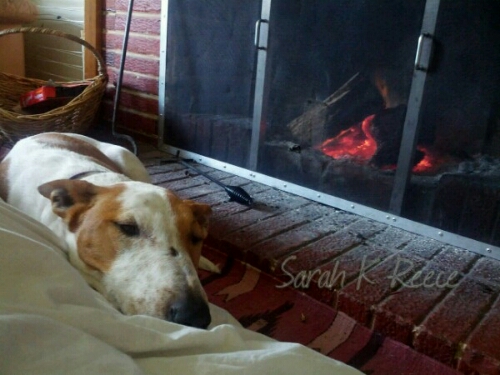
Rose and I are away again, house sitting in the hills with Zoe. It’s bliss. Yesterday friends visited for fire baked spuds and card games. I’ve spent today sleeping or reading in front of the fire. Rose is spoiling me. Last week was busy, I’m still embroiled in tax paperwork, my cert 4 in small business management started and there were some stressful emotional days. By Friday night I was teary with exhaustion and pain was making me short fused. The effort of getting out of the house, especially with the dog crate and so on for Zoe, was almost too much. But we did it, and it’s been wonderful.

I was thinking the other day how normal it’s become to be multiple. When Rose I go shopping, and I switch to a little kid in the lolly aisle, we are both so unconcerned. Mostly people don’t notice, and we don’t draw attention to ourselves. But we’re not afraid or ashamed either. Those who do see something different probably assume that I have some kind of intellectual disability or delay. I’ve long stopped being distressed by that or feeling ashamed of being seen that way. So what? In some ways, I am ‘delayed’ at that moment, by about 25 years. 😉 I’m not afraid of being thought of as disabled because I don’t think about disability the same way any more. Me switching is so normal for us, not a big deal, not a source of shame or anxiety. (I switch many times a day, and my system ages range from 5 up and cross various experiences and expressions of gender – most who don’t know me well would not be able to tell that I’ve switched – Rose usually can)

This is such a difference from the years I was terrified of someone else finding out, from my first disclosures where people reacted so badly. So different to being diagnosed with a “terrible disorder” that would prevent me ever getting work, that would ensure I spent years in and out of psychiatric facilities, that would wreak havoc on my relationships and require thousands of excruciatingly painful hours in therapy for any hope of peace or happiness. I feel like someone who was told they would never walk again who goes dancing on Saturday nights. They got it all so very wrong, and I’m so glad I didn’t listen.

So I’m different, in some ways that people can’t see, and in others that are at times visible. So what? Welcome to the world, it’s a very diverse place. I’m not a freak show, and I’m not scared of a conversation about dissociation with a checkout operator either. I am so blessed, so at peace. I don’t live like a spy in a foreign land any more, watching everything I say, always concealing some truth of my identity that would destroy everything. How much of what we put down to the ‘mental illness’ is the stress of this way of living? The loneliness of it, the chronic, grinding fear? I’ll never forget having new members to Bridges, the group for people who experienced dissociation and/or multiplicity that I ran for several years, weeping when they first attended, because it was the first time in their lives they’d met anyone else like them. I’ve been lucky to know and care for and love and learn from so many people, and so many fellow multiples over the years. I’ve made mistakes, I’ve lost a few along the way, but I’ve learned, I’ve been humbled, I’ve tried to take the lessons with me, the hard won wisdom whether through success or terrible disaster.

I feel set free from those old, dire prognosis, and I hope my work, my choices, the way I live my life, also helps to set others free. My life is not without pain, I live in chronic physical pain, I have experienced extreme emotional anguish. My story includes grief, darkness, suffering. I live with ghosts and old wounds that are very deep. I am not ‘recovered’. But I’m also not waiting to get better before I feel alive, or at peace, or hope. All lives touch pain, tragedy, disability, loss. Some more than others, yes. I don’t have a good life in spite of multiplicity or illness. I have a good life because I’m here, present in it, drinking it in, the sorrow and the joy, the pleasure of driving myself hard at work, and the bliss of a day reading by the fire. The warmth in the arms of my lover. I love and I am loved. It is my heart that is the source of my greatest pain, and my brightest happiness, and in matters of the heart I have been fortunate indeed.

For more information see articles listed on Multiplicity Links, scroll through posts in the category of Multiplicity, or explore my Network The Dissociative Initiative.

Links between childhood trauma & adult chaos and hoarding

I know these two things don’t seem to be related, but my experience has been that for some people, there’s several links that can be very difficult to manage. Not everyone who was traumatised or abused as a child struggles with mess & chaos as an adult – and vice versa! Plenty of people who’s personal style is more ‘trench warfare’ than ‘glossy magazine’ haven’t been abused. And there’s a natural diversity here that I don’t wish to pathologise! But for those who have experienced childhood trauma this can be a difficult aspect of their lives, one that causes conflict and shame, and can be depressingly resistant to efforts towards change.

I once had a friend, I’m going to call them Nicole, who really struggled in this area. Their living space, and most especially their bedroom, was in a constant state of chaos and uncleanliness. Things were not just messy but in major disarray. Lack of clean clothes, bedsheets unchanged, food leftovers not picked up, mess from pets not cleaned away. Her spaces ranged from untidy to actual health hazards with moulds on walls or tiles surfaces and in food areas, and food scraps attracting rodents and bugs. I remember being initially confused and then repulsed by the state of her home. I couldn’t understand how anyone could live this way. I would help out from time to time when Nicole became really overwhelmed by it all, and between the two of us we would clean everything back to sparkling and she’d vow to do better. It never lasted. The more I helped out, the more I realised that there was more than messiness going on here. I’ve lived with messy people, they’re a pain to pick up after, but if you’re fairly diligent and there’s not too many of them, you can keep up with things. With Nicole it was different, it was more like she was at times actively trashing her space. And yet, she hated it. She wouldn’t invite friends over because she felt so ashamed of her home. When she house-shared, it was a constant source of massive conflict with her house mates who became fed up with promises to change that never came through. She struggled to maintain work when she couldn’t find any of her resources, important documents, or food for breakfast or lunch. When things got very bad her personal hygiene also suffered, without clean clothes it seemed pointless to shower, the bathroom was unpleasant to spend time in so she would also stop brushing her teeth and hair. Profound humiliation set in as she would take long stretches off work on the basis of anxiety, and self harm and suicidiality would be the result of this awful spiral.

It was so distressing to watch. We talked about it and over the years we started to tease together some idea of what was driving it. Nicole isn’t in my life anymore, but I’ll never forget the conversations we had, and my slowly dawning awareness of the links between her mess and her history of child sexual abuse. We coined a phrase – graphic, but appropriate, for the need that the mess sated – it was her moat of corpses. For a child who hadn’t been safe in her own bed at night, surrounding herself with filth and mess made her feel safer. She slept better at night with the comforting notion that anyone sneaking into her room would fall over the trash so she would hear them coming, would be put off by the mouldy food, might decide it was all just too much trouble. Once articulated however, this idea simply made her feel more humiliated and helpless, like confessing as an adult to a fear of the dark or still wetting your pants. (Neither of which are uncommon for people sexually abused as children when they are triggered and stressed) On some deep level, her inner child was still terrified of sleeping in bed, and found the mess a comforting barrier, and the idea of being unclean and unattractive far safer. These needs, difficult to explore or understand as they were, were far stronger than Nicole’s other needs for order and cleanliness and comfort in her own space. The essence of the struggle was a profound sense of not being safe, and a struggle for control between her deeply ashamed adult self, and her terrified and abused child self. (using this language in the sense in which we all have parts, rather than that of multiplicity)

I’ve since come across this dynamic many more times, with friends or loved ones, or people I’ve reached out to in my mental health work. At times issues like this are driving the cluster of behaviours we call ‘hoarding’, although there are many other things that can instead be at play. I’ve noticed a few more links between childhood trauma and chaos, one is that of the child who is raised in chaos and has no models of how to use adult routines and systems. If you’ve ever helped a child to clean up their room when it’s been completely trashed, you’ll know that children struggle to work out how to break such a big task down to small steps. Helpful adults show a child how to tackle tasks like these ones, perhaps like this; start by putting all the laundry and bedding on the bed, then let’s put all the shoes in the shoe box, now the toys back on the toy shelf, now the lego back in the lego box, now we’ll sort the clean washing from the dirty… and helpful adult have set up basically useful systems in their houses – like having a toy shelf and a place for shoes to go, and a routine at evening where everyone brushes their teeth before bed. Chaotic houses are not like this. The adults in these houses are often either distracted (such as with a very sick child in hospital), overwhelmed (with mental illness, grief, or addiction), lacking in these skills themselves, or abusive or neglectful and do not invest energy in the child’s environment and well being. It’s important to note that chaotic households are not always abusive, particularly in the instance of very bonded parents there may be a great deal of love and fun in all the chaos! But without someone to model how to use systems and routines, kids struggle to develop these skills. In houses that at times also felt unsafe and highly stressful, this effect is compounded in that it can be harder to simply tack on a few extra skills once adulthood is reached.

In other situations I’ve seen children who come from highly organised households still have huge struggles in these areas. Sometimes an abusive parent is not chaotic, but rather wears a mask of caring investment in their child. Children of these parents often reject their hypocritical role model – and so also reject the valuable skills around maintaining a home. It takes a lot of processing, maturity, and self esteem to be comfortable in any way resembling someone who has badly hurt us, or whom we despise. Sometimes it is not the parent who is abusive, but in strict households where order and neatness of appearance are prioritised over connection and expression of emotion, children who are traumatised or being abused in another setting can find themselves under tremendous stress at home when their ‘normal’ reactions to those experiences are interpreted as disrespectful and disruptive. Huge power struggles over issues of neatness and hygiene can result, with the underlying issues of poor self-worth, emotional exhaustion, alienation, and intense emotional pain going completely unnoticed. Rebellion against house rules that are perceived to be overly strict, or designed with the intention of ‘looking good for other people no matter what’s really going on’ can become an entrenched behaviour into adulthood. For many people in this situation, arguments about cleanliness with family members continue well into adult life and remain a constant point of conflict. Awareness that developing these skills and resolving the issues around chaos would meet with family approval can completely block any progress in this area when this approval would be distressing. At times the need to be in opposition to people is far stronger than our need to feel successful in our own lives.

There’s a lot of overlaps between the kinds of dynamics I’m describing and those I see in families where someone is struggling with dangerously disordered eating. There’s both the issue at hand, and the challenge of the massive stress it causes in key relationships. Caring about someone who is a trauma survivor can be challenging. Sharing a space with someone who keeps trashing it can be a source of intense distress! The conflict of needs is not just within the person, but within groups of families, friends, housemates, and neighbours. In severe forms, this can be a health hazard. People can get sick from improperly stored food, or where fridge or freezer doors are left open, moulds can trigger allergies and respiratory issues, and the psychological impact of living in a permanent tip can be huge. It may not be possible to have friends to visit. It can be a huge struggle to maintain your own life and routines when there are not only no clean dishes, but even the dirty ones haven’t been put back in the kitchen and you have to go looking for them every morning if you want breakfast. Mail gets lost. Important things are left in the rain. Broken glasses are trodden on at night in bare feet because no one cleaned them up. The back yard is a mass of dog shit, broken toys, and flies. Undesexed pets spawn litters that are sickly and difficult to home. For some people, the shame is catching, and living with a parent, sibling, or housemate who generates this kind of chaos can make people feel very ashamed. A sense of misery and hopelessness descends. It’s a difficult environment to take good care of yourself in, to feel a sense of dignity and self respect in, even to think clearly in. With all of this comes a sense of being held hostage to someone else’s demons. Efforts to fix everything don’t last or are rejected. Cycles of feeling sorry for them, of ignoring it all, of being really angry with them, cleaning it all up, and numb depression never seem to resolve, except with explosive ruptures where households disband. The underlying shame is re-enforced and there’s no way out.

If you are someone who struggles with chaos, take heart! You don’t have to be caught forever in a spiral of shame and rejection. You may be able to find ways to resolve the needs and learn the skills needed to keep a home ticking over, or you may remain messy and chaotic, but either way you can manage this. The very first thing people often need is a way to be able to think about this without hating themselves. You’re not just a horrible person. It’s not that you don’t try hard enough. I know that you have huge blocks in your head that make this incredibly difficult to even think about, much less act on. It’s not your fault.

If you are living with someone like this, also take heart. You can break out of the cycle and find ways not to be drowned by it all. You don’t have to be caught between feeling sympathy for them (and putting up with it), or hating or leaving them. You are allowed to love someone who is flawed and has been wounded, and struggles with chaos as an adult. You’re also allowed to insist on your right to feel safe and not at risk of harm in your home.

Being able to accept that this is an issue can be a radically different approach when everything you’ve always tried has been either fix it/live with it. This approach is about reducing shame and trying to untangle all the different valid needs that people have. Shame often intensifies the stress that drives this behaviour, creating a loop that drives everyone insane.

Containment is a key need. The spiral I described that Nicole would get into started with messy bedroom > chaotic home > work stress > lower personal hygiene > self harm > feeling or acting on suicidal feelings. If she was flat sharing, the messy bedroom wasn’t the end of the world, but the chaotic home stressed her flatmates, and self harm or suicidal impulses made them scared, angry, and tended to blow up simmering stress into major rejection and restructures. If the spiral can be interrupted, and the chaos can be contained to some level, the catastrophic results don’t come into play. There’s many different ways this can happen. Perhaps 1/2 day a week, everyone cleans up the house together. The rest of the time it might be trashed, but this is a regular enough team effort that it is never too unmanageable to live with. Perhaps rules around safety are agreed upon and the home is allowed to be incredibly messy provided there’s no fire or health hazard. Perhaps the person with the chaos lives alone, or in a separate space, which can be trashed without distressing their partner or family. Perhaps some more money is needed to help set up systems – shelves for boxes, wardrobes for clothes, a fridge with a door handle. Poverty and chaos are often tangled together and they can re-enforce each other. Considering that each often generates disgust and contempt from other people, those struggling with both these issues are in for a very challenging time.

Perhaps different home set ups are explored – often when these dynamics are in play it’s like there’s only two options – trashed, or magazine perfect. Homes come in so many different flavours! Sometimes the magazine look is a huge trigger, but a hippy home full of lamps and rugs, or a thousand knick knacks on shelves, or a collection of indoor plants becomes a space that feels safe and able to be tended and looked after. Sometimes rooms need to be set up differently! If bed feels unsafe, maybe you need to sell the bed, sleep on the couch with the dog for a year, set up that sewing room you’ve always wanted. Maybe you need to move away from our modern trend towards open plan living, and set your bedroom up as a labyrinth, with shelves in front of the door, a box to step over, a lego bucket as the world’s most lethal moat, a lock on the windows. When you’re not feeling overwhelmed by shame, and that not having this problem any more is the only way you’ll be acceptable to friends and family, suddenly you can tap into your creativity and find other ways to manage it.

It’s important to protect other people from our demons, and in some cases where chaos is a trigger for your friend or partner, it can be very difficult! Sometimes our particular demons do not play well together. It’s not the end of everything, you can create enough safe space for your relationships to be happy despite these challenges. They don’t have to dominate your life, threaten your relationships and self respect, and bring social workers into your home. There’s some great resources online such as Unfuck Your Habitat. Part of this is about skills, but a lot of it is about the blocks that can make those skills so hard to learn as an adult. There’s room in life for blocks, we all have them! You can find ways to manage the stress and limit the damage. Good luck!

Power, status, and corruption

image


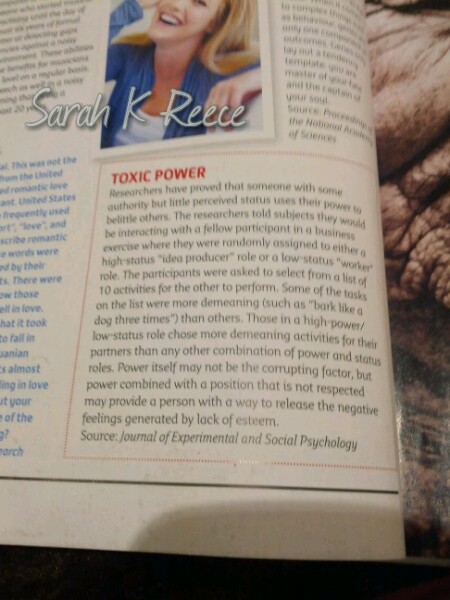
I came across this interesting article in Issue 136 of the Wellbeing magazine (more doctors appointments means catching up on magazines) and for someone who has always unquestioningly believed that power corrupts, absolute power corrupts absolutely, it was thought provoking. The fear of corruption has made it incredibly challenging for me to grasp and exercise my own power in many contexts. My confused take on these ideas has meant that situations look like a choice between hammer and nail, I’ve chosen to be the nail. But many of the people I admire are those who have grasped power and used it to do good things in the world. I’m hoping to be one of them. Perhaps it will not be as destructive to my self as I have feared. Love and dignity and self-respect might change the equations.

Mini holiday

image

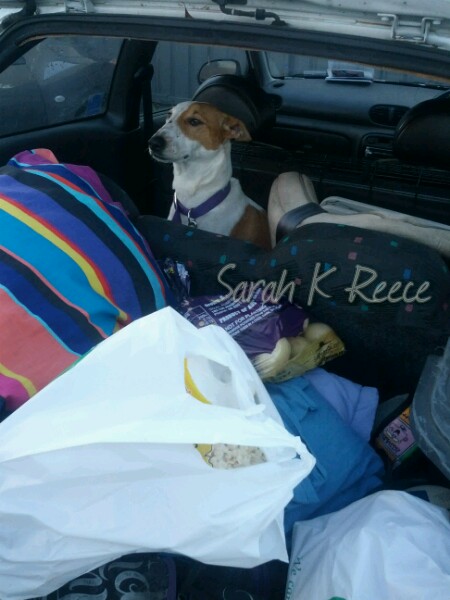
Rose and I are away on a mini holiday with Zoe. Whoop whoop! Friends are away and we’ve borrowed their place. This new work practice of taking time off properly to enjoy ourselves is paying off in spades. My fibro is rough but I couldn’t be happier! I’m not caught and trapped by the railway tracks anymore, we make plans and get out into life and soak it up! It’s not all about sacrifice or working towards a future. It’s also about living in the moment and taking it all in.

image

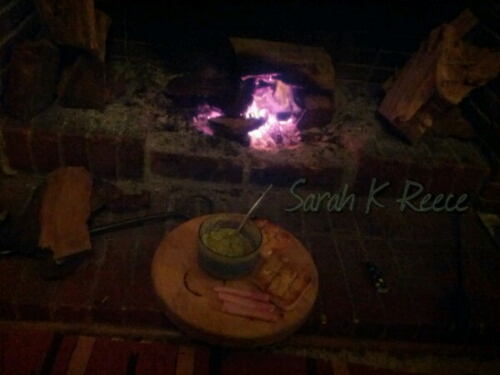
Supper by the fire last night… We sat up late talking about our family and names and baby plans. How did I find this beautiful woman? By what magic are we, both so wounded, making something so beautiful? I feel so blessed.

Exercise for fibromyalgia

Brrr it’s cold in Adelaide at the moment! My fibro pain is pretty horrendous as a result. I’ve taken most of the school holidays off to finish all this overdue tax paperwork and it’s certainly lost whatever novelty value it may once have had. Being patient and having the occasional tantrum about the sheer tedium.

Still working on this mindfulness/anxiety awareness process, which is helpful instead of just drowning. I’m starting to gently get more exercise happening and noticing what it does for my mood and pain levels. I know that gentle movement does help with the pain, up to a point where it then creates new pain. Tuning in and noticing those points is what I’m currently concentrating on, so i can do the right amount to be helpful and not make it all worse. Movement gets your lymphatic system going which is pretty critical and can help a lot when pain is due to things like lactic acid build up in the muscles. But I don’t find that image motivating.

Instead I’m thinking of a cold engine trying to run with no oil yet heated and thin and lubricating the parts. It’s not biologically accurate but that’s how my knees feel and it seems to be working to encourage me to walk them around the block and get them lubed up again. I keep thinking about the importance of reconditioning a body like mine – lots of small bits of exercise, gently does it.

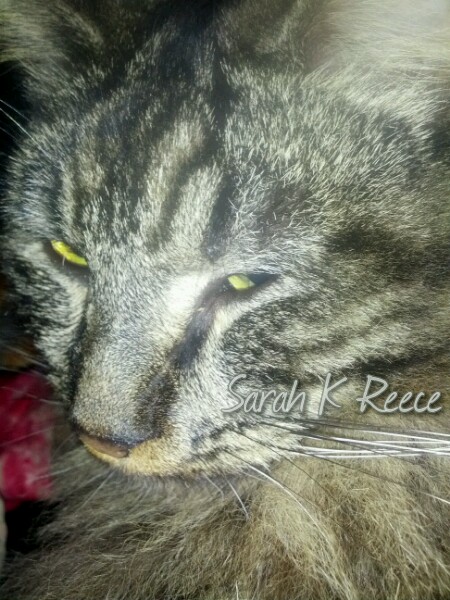
So today I’ve woken up, let Tonks back in the bedroom where she says hello like this:

image

From a distance of about 2 inches. Which is why she doesn’t sleep in the bedroom, because a cat trying to sleep on your face is a challenge to a peaceful night. I’m going to have breakfast, clean the kitchen, and walk Zoe to the Post Office before sitting down to another few hours of tax. Tonight I’ve got a gig I’m hugely looking forward to at The Mill Adelaide and then I’m taking the rest of the evening off and hopefully having fun with some friends. That feels like a pretty well balanced day to me. Good luck with yours!

Facial steaming

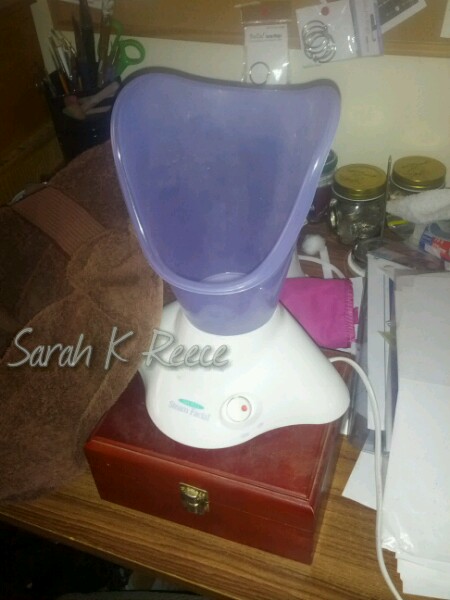
2014-07-10 15.05.56-1

Meet my current best friend. My sinuses seem determined to emphasise the need for the planned surgery by being persistently horrific. If you also suffer with hostile sinuses, I suggest you get one of these. They are only supposed to be a facial steamer, but they work so well to relieve pain and pressure, considerably better than pain killers. I add tea tree and eucalyptus oil to mine, just a couple of drops, and sandwich myself between a soft dry towel and a tissue box. It’s a simple device, it just heats a very small basin of water to steaming point. I much prefer it to the old bowl of hot water and a towel over your head method, because I don’t like lugging kettles or bowls of hot water around the house when I’m feeling horribly unwell and more likely to trip or drop things. I think I paid $10 for this one second hand from eBay.

Baby dreams

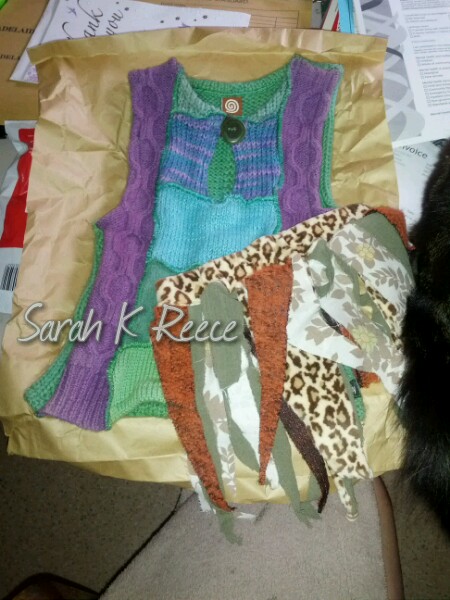
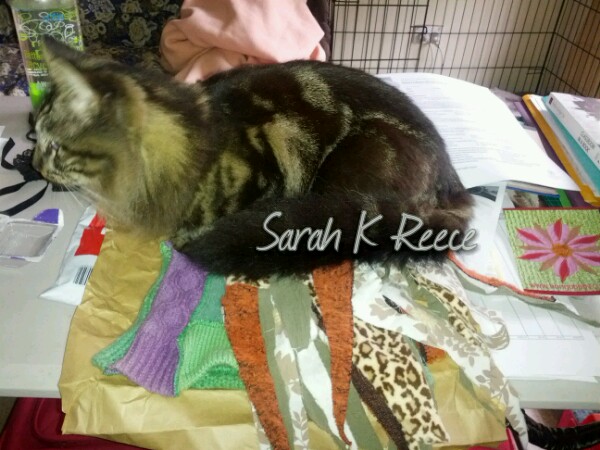
2014-07-08 10.21.38-1It’s started… Rose and I are putting together a collection of baby things, despite not yet having a donor or everything else sorted out. I was having a cuppa and chatting to friends online this morning when a package arrived containing these gorgeous handmade clothes from Bongo Baby! Eeee! Tonks was also thrilled.

2014-07-08 10.22.51-1 2014-07-08 10.22.24-1

Rose and I have both been doing so much work lately on managing our work lives and keeping a house running and looking after each other that a really lovely shift has taken place. We feel like a family right now. It’s waking up to find that Rose has rinsed the tea dishes before work, it’s baking banana bread for lunches, it’s whizzing off for a picnic dinner on the beach with Zoe… Little treats and the effort to pull together household/s that runs smoothly where everyone has clean socks and the cats get fed… It feels really beautiful. We make a great team. I’m so tremendously in love. 🙂


Freedom

26-2014-01-09 17.50.10

I sat down yesterday and wrote about how my world is opening up, changes in my system and approach, how I’m managing the ‘adult’ world of tax and business and admin completely differently and with far more skill. Then I found myself going back to old posts about my experience of psychosis, reading my sharing of the darkest nights of grief and loss. There’s a disconnection at first, that familiar awareness that I’m reading someone else’s writing, reading about someone else’s life. And then the growing recognition of us, that tiny glimpse of how far we stretch – from the darkest poet to the lightest administrator. And I find myself marvelling how freedom has changed everything for us. Where the literature wanted each of us to compress, to move closer together, become more similar, compact ourselves into a box marked Sarah and never step out of it again, we have found life in the opposite process. I am more ‘mentally ill’ and yet more functional. I have parts, and psychotic episodes, and days I shut myself in the house and do not speak, and sometimes I wear wrist poems as dark, painful souvenirs of a scream that sounded in my skin at 3am. And yet, I’m getting up and doing my tax with a clearer mind than I can ever remember. We’re getting out of each other’s way. We’re sprawling, stars filling the sky from horizon to horizon. I don’t have to choose one colour, one perspective, one way of living, one identity, one name, one life. We are moving around each other and enriching each other’s lives instead of stealing time and fighting for control. There is trust and sorrow and joy and anguish and pain and nostalgia and hope. This is not what it is to be a multiple – it is what it is to be a human. This is what life is, beautiful and tragic. I’m not turning into a ‘recovered patient’. I’m no one else’s success story. I’m not always comfortable to be around. I’m not leaving anyone behind, or killing anyone, or carving anyone out of my system. I’m finally keeping regular sleep hours but without excluding the poets and night people all the time. (that’s still a big work in progress) We’re building a business and a life as a structure that protects what is vulnerable and precious and unique about us, instead of excludes it, relies on pretending it doesn’t happen, or exploits it. In a weird way, it feels like integration, without fusing us back to one. It feels like I’m finally figuring how to grow up without dying inside.

So much to tell you…

image

image

image

Wowee what a week! I have so much to tell you about!

Rose and I have just come back from a couple of days away in the bush, celebrating a friends birthday. It was a bit hectic fitting it around work (still doing too much work on my weekends) and only possible at all because kind friends came to our rescue last minute and dog-sat Zoe for us. 🙂 But we had the most wonderful time connecting with a new bunch of people. It’s often still so novel when we’re in a room full of queer families, we’re used to being ‘representative’ but in a space like this we weren’t the queer couple, we were the young couple among many other families queer or queer friendly, with kids already. Awww it was nice! Having conversations about donors with other people who have been there, being part of a beautiful little community of people navigating the complications and joy of rainbow families. The location was spectacular, with clear starry skies and kangaroos outside the windows. Rose and I feel so at home out in the scrub, and sharing meals and bathing kids in a tin by the fire, it was a wonderful taste of things to come. We fell asleep on the couch by the fire, watching the stars out the window, and soaked up the beautiful countryside on all the driving. We’re now planning to do something similar for Rose’s next big birthday – rent a large space somewhere beautiful and have friends and family visit us. It’s a sign of how much things have been changing for us that we can even consider spending money like that – Rose’s job has been a blessing and my business plans are looking hopeful!

image

Life continues to be whirlwind! I’ve written my first business proposal – for all my plans around freelance mental health work – and have just been accepted into the free Cert 4 in Business as part of the NEIS training – a government scheme to provide support to people receiving some form of welfare who wish to start a small business. I’m going to be doing my first online study, which is exciting because it will be a test run to see how well that format suits me… If well, then it opens the doors to finishing my psych degree or any other study that keeps my researcher part happy and not left to pick wallpaper off the walls. 😉

So this will take three months and overlap somewhat with the Cert 3 in Micro Business I already have. However I’m still keen because I’ve been finding that with all the work I’ve been doing lately on mindfulness and my anxiety levels, and having finally seen a tax accountant to get all my overdue paperwork sorted out, my mind is so much clearer and I am coping with and processing this kind of information so much better. I am gradually transforming into a business woman! It’s been a long, tiring, amazing, complicated process, but I am watching it happen. It takes a lot longer than people seem to think to regain mental space for skills like this after crisis and homelessness. I think the sexual health counselling also made a huge difference, in that I am feeling less out of my depth, less like these things are part of an adult world I don’t and can’t understand. I’m not corporate or comfortable with bureaucracy by nature, but I’m finally seeing past the bluster, the incomprehensible language, and really there is only a little man behind the curtain. For the first time in my life I am doing admin without panic attacks – in fact without even stress. I’ve had to rewrite my excel spreadsheets for expenses/income/profit and loss to accommodate changes recommended by the tax accountant, and although I could certainly think of more fun ways to spend my morning – and also appreciate friends who help trouble shoot for me!! – it wasn’t a big deal. Which is blowing my mind. I’ve also opened new bank accounts, started new systems for tracking receipts, and had possibly the most productive week in my life, lol.

I’ve overhauled my Glitter Tattoo kit and completely restructured how we store and display them at gigs – I had the change to test it a couple of times over the weekend and it WORKS so well! I’m enjoying the realisation that I am good at setting up systems that work and tweaking designs and procedures to make them easier and more efficient. I now have nearly 200 tattoo stencil designs that I use at gigs, which needed a very different set up from the 40 I started out with a year or two ago. It’s these little successes that make me feel so self-satisfied, ha haa. 🙂 And I’m thankful for that because it’s helped to buffer other moments this week where I’ve felt very vulnerable or disappointed, like my new little fish dying unexpectedly, or getting a stack of abuse from the member of an online support I volunteer admin. It’s amazing to shift from the glow of contentment to feeling so fragile and hurt, but I seem to be bending with the wind and bouncing back better.

I’ve also been doing a lot more to be aware of my system and cues that I haven’t been noticing. Such as picking up on when inner kids are close to the surface and my ability to be adult is fragmenting – before an actual switch. If I keep pushing and don’t pay attention to those needs – often around feeling vulnerable or bored – child parts naturally try to balance my adults who are all work and no play – then things get really hard. I keep working, I’m still adult and still able to reference an adult perspective but my needs and emotional responses become more and more child like and my capacity is reduced. It’s like revving the engine with the handbrake on, I do make progress but it’s ridiculously slow and frustrating and overall pretty damn hard on the car. Really, this whole mindfulness process is just taking my capacity for self awareness and extending it into all kinds of areas of my self and life I hadn’t thought to before… this is about moving out of that crisis functioning where you have to ignore limits and push right through them, and back into thriving in regular life, where the more sensitive and aware of your own cues, triggers, and needs you are, the more responsive you can be to them before you’ve pushed yourself into burnout, collapse, or internal war. It’s about listening to the small voices. Everything feels different with this sense of being tuned in. I don’t feel that horrible sense of being a machine anymore, with parts as cogs that turn, trapped and dehumanised. It feels like I remember it used to, back before diagnosis and self consciousness; a dance – spontaneous, responsive, beautiful. The system feels organic instead, something that lives and breathes and grows. It’s goddamn beautiful.

2014-06-26 07.52.33-1In other news, now have a dishwasher. I was super lucky and given one for free by friends of friends who found themselves with a spare. WOW. I have been in two big crunch spaces recently – handing up a semesters worth of assignments at art college, and doing tax, and my house is still reasonably clean and functioning – due entirely to this awesome machine. I can cook and trash the kitchen for dinner, then clean everything into the dishwasher and run it twice a week! No more back pain leaning over the sink, no more constant shame and frustration at the state of my house. I don’t actually have room for a dishwasher in my unit, so I’ve removed my washing machine and put it in the laundry. Going to the laundromat once a week is a nuisance, but far outweighed by the benefits! The energy I’m not using to stress about my dishes is being used to keep up with tidying, sweeping, cleaning the bathroom – or at the moment, mainly tax admin. I’m so happy about this!

Health wise it’s also been a busy week. I’ve seen a lot of specialists lately and that’s likely to continue for a little while yet. I’m coping okay with this! I have a sense of humour, I feel more in control of the process and less overwhelmed by memories of being vulnerable. Which is a massive turn around from the three week triggered spiral I went into after seeing the gastro-enterologist recently. The consensus has been that my sinus surgery IS needed and important and likely to help, and that I’m in good hands with that specialist. That’s a huge relief. Just to underline my awareness of the need, I have another sinus infection and feel like I’ve had a few good punches to the face again. Argh! I’ve had the astonishing rare experience of specialists including each other in their letters/advice, the TMJD dental specialist actually wrote not only to my referring dentist, but also to my GP, sinus specialist, and physiotherapist! I’ve been encouraged to go back to the physio, and use heat, massage, and stretches to manage the facial pain (when there isn’t active infection going on) which is great news for me as surgery or medication options will have large down sides with my liver. Basically I need to try to budget for physio type care in my business plans to keep me as well as possible and manage my pain levels better with all the work I’ve been doing. I also need a different car, preferably with power steering and a good heater/air conditioner. So there’s things to work on that don’t involve hospital/being a patient/being in pain/destroying my liver. Also continuing to look into more options for fun ways to exercise (Rose and I are starting trial classes in martial arts!) going on more walks with Zoe when I’m well enough, and cooking healthier foods.

My new book that teaches how to use In Design has arrived at last – I am going to set aside 1/2 a day a week to study it and learn how to lay out my own books for self publication. This morning I’m up blogging in my dressing gown while Rose catches up on sleep. The garden is beautiful, the animals are lively, I have friends visiting for afternoon tea, and I’m feeling on track and excited about life. It doesn’t get a lot better than this. 🙂 I may consider shifting my blogging schedule now that I’m working so actively on my books, I love and value sharing here but certainly can’t keep up with my daily posts. I may go to weekly, or do little photo-based updates instead of longer posts. I know that mostly it’s the mental health information that is so valuable to people, but it’s challenging to create that in book and blog form at the same time. Maybe I’ll just learn to be more concise. 😉 At any rate, chronic infections and tax notwithstanding, life is pretty awesome over here. I hope you are also feeling good to be alive and connected to yourself. 🙂


Booked for surgery

Yesterday had a bit of shock in it, I went off to see a sinus specialist and I’ve been booked in for surgery! Sometime in the next three months the hospital will call and arrange the date. That does make it quite difficult to plan for. I’ll be having septoplasty, ethmoidectomy, antrostomy, and tonsillectomy. The first three are surgery on the structures of my nose, hoping to improve the functioning of my sinuses. The last I’ve already had as a child due to severe and chronic tonsillitis, but enough tissue has regrown that I’m getting bouts of it again frequently.

I wake up most mornings feeling like someone has punched me in the face. I’ve never had troubles with my sinuses until 2 years ago, when severe facial pain was misdiagnosed as TMJD (pain due to tightness in the muscles of my jaw) – which I also suffer from chronically. Unfortunately, in that case, I actually had an infected tooth that had developed into an abscess. The infection went unchecked for long enough that it breached through my gums into my sinuses and caused a severe sinus infection. I was very, very sick and in terrible pain! Fortunately my doctor became concerned and ordered a cat scan which revealed the problem. I went onto steroids and antibiotics for the infections and had a root canal on the dead tooth.

One year later and I’m getting constant sinus infections. That winter my immune system crashes and I develop along with sinusitis, laryngitis, tonsillitis, bronchitis, and severe inner infections in both ears. I am profoundly ill for three months, and in recovery for longer.

Two years on and I’m suffering severe anaemia due to unmanaged endometriosis, chronic facial pain, and constant low grade sinus infections with the occasional flare into a full blown severe infection needing antibiotics. The structure of my sinuses has been altered so they no longer drain, despite treatment with steroid sprays we can’t make the chronically inflamed and swollen drainage do it’s old job. So sinus fluid stays trapped in my face, as stagnant ponds ready to host the next infection.

Fibromyalgia for me has brought with it not only a fragile liver that no longer processes many common medications I used to handle fine, it’s also shut down my mucous producing cells. This means things like – I don’t produce enough saliva, and without sufficient saliva to protect them, my teeth decay at many times the rate of most people. So there will be a lot more dental work and infections in my future. An average year for me has between 5 and 11 new caps and fillings applied to my teeth, under minimal anaesthetic. With this in mind and the potential for chronic tooth infections to be travelling into my sinuses, the specialist was unhappy about proceeding with any more conservative approach and booked the surgery on the spot. I’ve also been advised to avoid extraction of any top jaw teeth at all costs and continue to use root canals as the teeth die,as any extractions risk creating holes into my sinuses where infection can travel from my mouth.

I’m off tomorrow to a TMJD specialist dental surgeon to discuss the role that TMJD is playing in the chronic pain, and for a specialist opinion about shadows on my xrays that may be chronic infection at the roots of my teeth, or may be merely scar tissue from previous infections. Obviously you handle those situations quite differently, so it’s important to assess them correctly.

All very well and good, but the last times I’ve had minor surgeries, things have been pretty rough. One was the extraction of 5 teeth and a salivary biopsy. I wound up with no pain relief after 24 hours as I was psychotic as my liver began to break down. The pain was intense as stomach acids ate into the 6 wounds in my mouth, the vomiting caused by allergic reactions to the pain relief. I remember sobbing on the floor thinking that if childbirth was going to be worse than this, the vivid feeling of biting deeply into red hot coals, then I would never be able to be a Mum.

Another surgery was supposed to be day only but I wound up in hospital for a week with allergic reactions to the anaesthetics and everything else. It triggered a major fibro flare that saw me into a wheelchair for mobility for a long time.

So, I’m nervous! This could be great, I am very frustrated by being constantly sick and run down with chronic infections and pain. On the other hand, I am probably in for some pretty bad pain, allergic reactions, and possibly another med induced psychosis. The breezy 10 day recovery time suggested in the literature may extend considerably for me. And the whole hospital experience is one I find pretty traumatic.

The plan is to keep my inner kids away from the whole experience as much as possible as they’re scared. With the exception of the 12 year old who is the only one of us who handles hospitals. Rose will take a couple of days off work once we come home, and we’ll plan for the possibility of an extended hospital stay if it’s needed. Apart from that, mindfulness, being present, managing the anxiety around possibly getting very sick again, and spending time doing fun things with friends. Focusing on healthy eating and exercise with the idea that the better shape I’m in, the better I’ll bounce back from the surgery, and continuing with my business plans. I’m so lucky to have friends and family who care about me, it makes such a huge difference to handling scares. I won’t pretend I’m not spooked and in need of some extra love – cuddles from Rose, dinner with Mum, killed a lot of zombies with my sister last night (Left for Dead 2, best game ever!). But I’m also determined not to let anxiety cloud my days and steal my joy. Life is still good! Carpe diem. 🙂

Life is good

image

Life is good. I’ve uncovered a whole new world of things to explore in the work I’ve been doing lately around anxiety and mindfulness. I finally had my paperwork in order enough to take to a tax accountant last week and I’m in track to fix up 5 years of backlog. There’s a lot more work to do but I’m not worried about it. I’m coping fine with days of tax and admin. I’m even enjoying myself. With this area more under control my mind is clearing. I can think straight. I don’t feel burdened by massive guilt and anxiety.

I feel like I’ve got my life back. I’m noticing how I spend time, I’m finding I feel like I have choices again. A couple of weeks ago, I noticed that after a hard day, Rose was numbing herself, dreading a week of hiding whatever was going on inside her to manage her job, and I was using my work as displacement activity for my anxiety. We are both struggling with a key skill – how to come down out of a ‘work’ mindset. So last week we both put thought into it. I worked both days this weekend but it didn’t feel like a working weekend. Apart from an unpleasant bout of food poisoning, we had fun. We did other things. I didn’t obsess. We slept in. We watched movies. We treated each other.

I feel less trapped and bound by the adult world. I’m switching more. I sleep well (although often not enough) and wake early, snatching my traditional late night hours of writing and contemplation in the early morning. I feel excited when I wake up, free to  choose how I’m going to spend my time. The day is a gift. What a wonderful key this line of thinking has been, the dovetail between things I’m working on about anxiety with my shrink, about making my business work better with my mentor, and about art and identity in college. I feel incredibly blessed. 🙂

My experience of sexual health counselling

A few years ago, I took myself off to see a counsellor at my local sexual health clinic. I was anxious as all hell, looking for some support while I grappled with my sexual orientation and dysfunction after previous distressing sexual experiences. What I thought was going to be a brief fix to my anxiety, sending me on my way with some reassurance, has turned out to be some of the most useful and powerful therapy I’ve done. This is completely at odds with everything that says that people with DID need intensive therapy by experts in dissociation and multiplicity. To be honest I manage a lot of that side of my life pretty independently. But help in some areas, such as sexual health, has been invaluable for me.

I didn’t see the counsellor very frequently, often we had a month or two between appointments, but the conversations have changed my life. I developed a routine for sessions, I’d follow them with a trip to the Shine SA resource library and borrow books about bisexuality, sexual dysfunction, sexual development, sexual health in seniors, feminism, gender, and culture, essays about being the children of gay parents, and so on, then I’d head over to a café to sit and ponder the session, write in my journal and sometimes cry into a my chai latte.

What I’ve learned is that sex isn’t a side issue the way we think it is. It’s treated as a specialist topic, quite separate from other issues such as trauma recovery or mental health. But for me, it’s not an issue off to the side of my life, it’s part of my foundations. My experiences and beliefs about sex impact my sense of self, my approach to life, my ideas about relationships. Conversations about identity, power, communication, relationship, love, consent, and desire have had a profound impact upon most aspects of my life and health.

I started with thorny confusion about things like: I think I’m into women, but what if I’m wrong? What if I start dating, some lovely woman falls in love with me, and I break her heart? What if my attraction to women is caused by abuse? What if I’m just trying to piss off my father? …Or conversely, what if I only think I’m attracted to some guys because I’ve been culturally conditioned to think that’s normal? Or because of abuse? (if abuse can make a straight person think they’re gay, can’t it also make a gay person think they’re straight?) Does God hate me? Is this about lust or love? Can it be both? Does what happened to me ‘count’ as abuse? Does my history mean I might abuse other people? How do we define abuse? How do we engage as sexual adults when we’ve been traumatised as children? Does abuse really destroy you forever? Is it possible to have a great sex life after trauma and abuse? How do I navigate coming out late in life?

I have never been able to discuss most of these things with other therapists. Even those who specifically work in the area of trauma and child sexual abuse have not been comfortable discussing sexual matters explicitly and matter of factly. We would talk in generalities, but never openly. Usually the therapist would look deeply uncomfortable and change the topic.

In this therapy, all things were discussed, without shame. There was space for frank discussion, it was respectful, appropriate, and very real. I remember one session starting with the therapist looking me in the eye and saying “so let’s talk about masturbation”, as I blushed with embarrassment and laughed with relief that here, the taboos could be spoken of. (obviously we had a rapport at this point) What use is therapy, if not for the discussion of things you can’t speak about?

These conversations have touched on crucial issues that have helped me to understand so many other areas of my life, such as key experiences that drive my intense self hate, my distress and confusion about the exercise of power, and my tangled and painful sexual development and struggle to reconcile myself to my sexual orientation. More importantly, they’ve helped to free me from them.

A while ago, I said thank you and goodbye. I was sad and grateful and looking to the future. I have navigated coming out as bisexual, and found myself a comfortable place under the umbrella term queer. I have started dating and fallen in love with a beautiful and complex woman, Rose. I have gently ended seven years of celibacy and discovered it is possible to have a wonderful sex life despite having an abuse history and issues with trauma. I have learned a vocabulary I am comfortable with to think, read, and talk about sexual matters. I have overcome sexual dysfunction. I used to suffer from vaginismus, an involuntary flinch reaction due, in my case, to traumatic experiences. While I still don’t like them, I can usually handle medical interventions such as gynaecological exams. I no longer sob with some undefinable, overwhelmingly intense grief every time I masturbate. I’m learning to embrace the diverse gender identity within our system. I have a context for pain and confusion in my childhood. I have begun to understand the cost of family secrets and cultural norms that I inherited, to find ways to face and understand legacies of shame and fear. I no longer think that I was a monster as a child. I am beginning to understand just how little we do understand about sex and sexual development. I am facing my demons and finding some frameworks that make sense. I am looking to the future and thinking about how I engage the world as a parent.

I’m not finished. I’m still living with trauma. I’m still living with the devastation of a family divided by abuse, shame, secrets, and fear. I’m still living in a culture that treats sex as a commodity, that confuses love with narcissism, that struggles to understand consent, that traps victims of abuse in a place of disconnection, silencing, and the expectation of permanent dysfunction, and groups all offenders, those fearful they could be offenders, sadists, the abused, children, criminals, people in breakdowns, pimps, into one box marked ‘inhuman, evil, kill on sight’. I still have questions, losses to grieve, things to understand. But I don’t look at the world, or myself through the old frameworks any more. On the one hand I have a powerful legacy of trauma, distress, self hate, and confusion. On the other hand, there’s absolutely nothing wrong with me and never was. I don’t need to hate myself or to fear sex.

Our ideas about child abuse are often inadequate and ill informed. In the same way that I hear so often often from people struggling with multiplicity who “are not a real DID” (their words, not mine), we don’t have a good understanding of the diversity of people’s experiences that cause pain and suffering. Each creates its own ‘Gap’. There are those who experienced the horrible, sordid stories we are familiar with, who understand how effortlessly lives are split into day and night, the things we speak of and the secrets we keep. There are those who’s stories sit further down spectrums of torture, victims of organised crime or isolated with inventive sadists and debased in ways that defy our sense of hope in humanity. There are also those who experienced harm in contexts that left them wondering if they had any right to claim refuge under the term ‘abuse’, cousins on the farm making grotesque comments about animals mating, a teacher who stood too close and arranged too many private conversations and spoke about his sex life but never touched, an aunt who left porn lying around the house. There are also people who’s harm was not exposure to sexual contact but to silence and fear and shame about anything sexual; menstruation, nocturnal emission, infatuation. People who have never been sexually abused but who have been told they are ugly and repulsive for years, who find this makes sex an experience of painful exposure and deep shame. People who were told they were lucky because they were only ‘almost raped’, or because they were beaten instead of molested. People who struggle to make sense of their experiences and untangle their unique combination of terror, numbness, excitement, shame, curiosity, self loathing, comfort, and loneliness. Some stories have a familiar anguished simplicity to them, the brutality of a more powerful person taking from a more vulnerable. Others are paralysingly complex, people who found some comfort in the sexual experiences when the other parent was so terrifyingly violent, or children who re-enacted sexual abuse in games with each other without realising their gravity. We tend to want to rank traumas but my experience has been that anything that makes you feel disconnected from yourself and the world around you, any story you can’t share and own, anything that makes you hate yourself, has the power to kill you.

There are not many in my past who did wrong with the intention to harm me. Some of my bad experiences for example, were by a peer, then also a child, who had themselves been terribly abused. Sadism is present in my story, but it doesn’t dominate it. Most of my ‘monsters’ were themselves profoundly damaged and abused, which is in some ways easier to process and understand, and in other ways harder. Part of my pain was stories told and secrets that were shared that needed keeping still, and part of it was also being forced to observe sexually abusive behaviour between other people in my personal life. Self hate and a profound conviction that I was evil, and myself a monster, stemmed not only from abusive experiences, but from confusion about my own culpability as a young child, from appalling frameworks that made it impossible to develop any interest in sex without being framed as a monster, creep, unfeminine, dirty, or unholy. Frameworks where being queer, multiple, having a complex relationship to gender, and being attracted to other women were all seen as sickness, sin, and depravity. Frameworks where I was not allowed to control my own body, not allowed to say no to touch that made me uncomfortable, where I must play a role and obey social convention. Frameworks where my body belonged to someone else for their pleasure, where the stakes were astonishingly high and the risks of failure to be perfect and behave as I was required to could not just impact my life but damn my eternal soul. (this is not to suggest that all religions have harmful attitudes towards sex, or that all non-religious cultures are sex-positive)

Like my experiences with bullying, the incidences of contact we think of when we talk about child abuse are not really where the most damage was done to me. There was a much more mundane, insidious harm. The cultures of ignorance, secrecy, shame, confusion, and victim blaming is where I suffered. These cultures can harm people without any direct abuse ever taking place. When we make all the conversations about trauma, and a narrow definition of trauma at that, so many people with struggles miss out on support and resources. I remember once asking a psychologist I was seeing if I could attend the ‘sexual abuse support group for women’ he was facilitating. He told me that my none of my experiences of trauma really qualified as abuse, and that would make the other women feel uncomfortable. It’s been cold comfort to later piece together the complex jigsaw of my life and determine that some of my experiences certainly did fall within that definition.

Like many of us with bad experiences, I’m still grappling with how to translate my knowledge into something that is an asset rather than a poison for my own children, into wisdom and courage instead of paranoia and shame. How can we bear it, those of us who know exactly how vulnerable children can be, and how dark the world but can get? I cannot go forward with the belief that I can control everything and prevent terrible things from ever happening. I can hope that my familiarity with this particular underworld may have sharpened my senses. I put my faith in all the learning that tells us it is not so much the act of being touched that does such harm, it is the lack of support and love, it is the world shattered by secrets, it is the stories we tell to and about children who’ve been hurt, and the stories the abusers tell them, and the stories children tell to themselves. Terrible things sometimes happen to children. This knowledge makes me want to scream at a pitch that will shatter the world. But people also heal, and they heal very well when they know that the world can be terrible, when they can speak about their pain, and when they have love and support and skills to navigate trauma. Many, many cultures in this world who have been destroyed by war, famine, poverty, crime, earthquakes, and the horrific sex crimes that often accompany crisis and social breakdown would attest to this. Resilient cultures mourn and rebuild. I will try and figure out how to be part of a resilient culture, and how to support my children to be resilient. I will try to make sure the frameworks are good, healthy, sex-positive ones. Between the rage and the terror, I will try to accept my limitations in making the world a safe place for my children. I will fight and be aware and do everything in my power, and then I will try to have faith in our capacity to grieve and heal.

I am less afraid. I can speak now. I can read books, search the net, look for information when I’m lost and confused. I’ve found that I’m not alone. Conversations about sex happen everywhere in my life now, and there’s so many people struggling. People with abuse histories, with disabilities, mental illness, with orientations, identities, or desires that mean they don’t fit in the majority, people with anxiety and confusion about sexual health, desire, love, consent. The need is so much greater than me, which is why I started writing my series about emotionally safer sex. I’ve not been struggling and confused because there was something wrong with me. I was struggling and confused because the whole world is conflicted. Mixed messages, terrible advice, wild assumptions, misinformation, disconnection, disappointment, grief, and confusion are everywhere. We confuse privacy with shame, bragging with honesty, coercion with romance, obsession with love.

In sexual health counselling, I found what I needed to be able to engage with this part of the world, and this part of adult life. I don’t have all the answers, but I have a place to stand. The most useful part of this counselling for me, when I drown in shame, confusion, and silence, is the very clear memory of someone speaking with me with compassion, without disgust, without fear. Conversations that untangled sex from shame, and desire from destruction. My hope is that, in some small way, sharing such a personal experience with you will help you also to find this place within yourself, or to be a gentler and more loving support to someone else who hasn’t found it yet.

Anxiety & Mindfulness

I’m working on this a lot lately, as it has huge implications for my health and business. When I’m highly anxious my eating becomes disordered, and I tend to over work obsessively and only half productively, without giving myself real time off to recharge. This can spiral badly. I’m in a short intensive mentoring course for my business and we’re identifying the key areas that are causing stress and limiting my ability to be productive and efficient and energetic. I’m having a lot of trouble with anxiety as stress comes in from all angles. This morning I was overwhelmed by a to do list of terrifying things and time pressure to get them done in. I woke at 5 and couldn’t get back to sleep but was exhausted and wired and paralysed by anxiety.

After talking things through with a couple of friends and doing some journaling, I finally reached this place:

Right here and right now, everything is okay.
All the fears are just fears
They’ve no more substance than shadows
I don’t have to live my whole week this morning
I just have to be present in this moment,  to pay attention to it, to be aware of it, to enjoy what beauty there is in it.
I will eat and rest and do the tasks at before me, and stay in today.
That way, there will be more than just stress
There will also be noticing my lily is blooming, and enjoying my breakfast, and texting with my love, and all the other little unexpected treasures of the day.

Right here and right now, everything is okay.
Stay present.

It helped. I had a good day, I did a lot of work on my tax paperwork without much stress, enrolled in college, and did my business planning. I wrote in my journal:

Anxiety is a thief that steals each day from me, so distracting me with visions of a future on fire that I do not even notice the loss.

Today it took nothing. 🙂

“When sex gets hard’ – Sex & disability forum

Content warning for explicit but not gratuitous discussion about sex.

I was lucky to attend this forum recently, and promised to blog my notes for all those interested parties who couldn’t attend. This is not an exact record of the event, I scribbled notes as quickly as I could but none can be considered true quotes. I have paraphrased and may have misunderstood or mis-attributed in places. This was a forum arranged by the Society of Australian Sexologists. It’s a topic close to my heart but difficult to find training in, so I was really pleased to hear about it at the last minute and be able to squeeze in. It was an excellent, wide ranging conversation and I came home even more enthused about being part of cultural changes and a movement towards more freedom and joy in sex for people who have traditionally been marginalised. The panel was made up of:

  • Assoc Prof Greg Crawford, a Palliative Care Physician who works with people and sexuality in the context of end of life care
  • Dr Tabitha Healy, a Medical Oncologist who works with sex in the context of cancer and cancer treatments – she’s become known as the ‘dry vagina doctor’
  • Assoc Prof Sharon Lawn, a Mental Health Academic who described herself as being married to a lovely man with paranoid schizophrenia
  • Dr Jane Elliott, a GP who specialises in treating women who are struggling with menopause
  • Sonia Scharfbillig, a Pelvic Floor Physiotherapist – this is working with the muscles of and around the pelvis to help restore function, elasticity, sensitivity, or ease problems such as chronic pain
  • Naomi Hutchings, a Sexologist who has worked with SHineSA, and in youth work
  • Nick Schumi, also a youth worker, and representing the views of those with a lived experience of disability
  • Kelly Vincent, member for Dignity for Disability, partnered with Nick, and likewise representing lived experience, with additional interests in sex abuse, and sex work

Q: Why don’t doctors talk about sex more?
Greg: Doctors often don’t like to talk about sex. There are cultural issues with many doctors and nurses coming from Asian backgrounds who are very uncomfortable with the topic. There’s a lack of training provided.

Tabitha: Oncologists don’t talk to patients about sex for three main reasons:

  1. I don’t know enough about sex to feel comfortable discussing it
  2. There’s not enough time to bring it up
  3. Isn’t that topic someone else’s problem?

Meetings like this tend to preach to the converted. Training must be compulsory or those who are most vulnerable or anxious will never learn the skills.

Sharon: Mental health clinicians don’t discuss it because they don’t want to open the ‘child sex abuse’ box, because they don’t know what to do once it’s open. Sexuality itself is often pathologised in mental health, especially for young men with psychosis. All their sexual behaviour is interpreted as part of their disorder, and possibly dangerous. Delusions about being pedophiles or rapists are common with such young men, and it’s not hard to trace where the ideas have come from. There are also issues with overmedication when people only have support from mental health teams. Because this often causes sexual dysfunction, then we see non-compliance and often then treatment orders. It’s a big problem.

Kelly: There’s a lot of issues in the disability sector too with people being unwilling to acknowledge that a person with a disability can be sexual or want to have sex… It also helps to ignore cultural ideas about what ‘real sex’ is (ie penetrative sex) to be able to relax and enjoy whatever sexual activities people really want and feel ready for. There are a lot of unhelpful myths about what sex is.

Naomi: There are a lot of issues with doctors not disclosing that mental health medications can kill the libido.

Jane: On the other side of ‘not acknowledging that people want a sex life’ is that if women weren’t ‘distressed by their symptom’ (low libido) they don’t have a problem. Women are sent to me by husbands and whoever to be ‘fixed’. Problems with dry vagina can be resolved by using oestrogen in the vagina. Fixing menopausal symptoms can fix sex issues just by allowing everyone to get more sleep and be less stressed. Testosterone can ‘turn up’ sexual feelings a bit for women where everything else is alright. It won’t overpower depression. Low doses only are safe. High dose patches etc have been taken off the market for good reasons.

Naomi: There can be troubles with partners who have a desire mismatch. Sometimes women come to see me for help because their libido is improving after treatment and they’re excited, but their partner is very unhappy – they were actually content with the low amounts of sex they were previously having.

Sharon: There can be issues with partners wanting people to stop taking their meds so that mania would happen and they would have lots of sex. People can be very vulnerable.

Q. How can we better support people who are having sexual problems due to disability eg. stroke etc. ?

Naomi: Unpacking penis-in-vagina as the only form of sex is helpful but so complex! There are huge cultural issues – emasculation issues – some men feel anxious about not using their penis the way they’re used to. I talk to people about having more ideas and opening up more options. You don’t have to orgasm! Presenting this as an expanding of experiences, not a loss of options. A freely available resource is the Masters and Johnson sensate focus exercises. I start the conversation – what do you think sex is? “If my penis didn’t work today, I’m not a good lover” – well, there’s thighs! And hands, and eyes, and so on. Being sex positive. Exploring what you can do – especially for people with physical disability. Learn what your limitations are. It’s not about what you do, but how it makes you feel. There’s an adjustment process to illness or disability – “This is not the end”. Another suggested resource “Sexuality Reborn” a DVD about disability and spinal injuries and sex, contains suggestions for comfortable positions and so on. Available from the SHineSA resource library.

Kelly: It’s about using bodies in alternative ways. Many women especially are taught that masturbation is masculine and selfish. The reality is that trying to live up to a partner’s expectations while learning about your own body can be exhausting.

Greg: You know the Old Testament story of Onan – who incurred the wrath of God for spilling his seed on the ground? In the hospice, they have a budgie called Onan.

Sharon: Carers, especially those caring for people who have had strokes, or war vets and so on are striving for relationship and dignity with their partner. Systems often focus on the burden of caring, helping you with your tasks. Carers themselves want support with intimacy, connection, maintaining dignity.

Sonia: Working with pain. My role is often about the mechanics – being able to achieve or tolerate penetrative sex. Often women are motivated only by love for their partner, not personal desire. Women are often at their wit’s end and don’t want a bar of sex. Mine is a very clinical approach, stretches, relaxation – taking the sexual side away from it and approaching it like you would any other group of muscles. In my work I differentiate between ‘intercourse’ and ‘outercourse’. I refer to sexologists such as Naomi for the psychological aspects.

Naomi: It helps to de-medicalise issues like vaginismus. The process is often:

  1. Take penetration off the table for now
  2. Work on communication
  3. Rebuild normal patterns of arousal and pleasure
  4. Undo the aversion

It’s important to find time to feel sexual that’s normal and not medical.

Jane: The importance of understanding limerance, that sexual desire changes as relationships develop. A loss of libido can be about unrealistic expectations about desire. Sometimes ‘decision driven sex’ can be a key resource – Rosie King, Where Did My Libido Go?

Kelly: With disability those expectations are often reversed. For example, I was once phoned by the head of the support agency who provided care for me, after sex at 22, in my own home. They were smirking. I told them the phone call wasn’t appropriate. Their response was “We thought you were a good girl”. My agency called the residential care agency who provided support to the man in question (who had an acquired brain injury). They discussed the situation and decided to resolve it by no longer providing transport support for the man to visit me. It was only many years later that I discovered this breach of my confidentiality and collusion by two support agencies to prevent a sexual relationship between consenting adults.

Nick: I was once working in consultation with SHineSA in a supported accommodation situation, providing education about ‘safe sex’. Young men were taught to put condoms on by using broomsticks as an example. One night, two of the young people got together. The workers discovered them in the same bed, with two broomsticks in the room with condoms fitted to them! It’s important to educate in relevant ways so people understand! Just because you do have to educate in different ways, shouldn’t mean people get excluded.

Tabitha: Porn can be a huge issue in that it sets up expectations and distorts the sexual norms. Young men are now often confused by pubic hair on women. There is an expectation of penetrative anal sex. The accessibility of porn and lower age of sexual onset can cause problems. The most effective recommendation I have to support people’s sexual functioning is exercise. It boosts oxytocin and serotonin, the happy hormones. Exercise has been shown to have extraordinary outcomes for cancer, health, mental health, sexual health. It is more effective than antidepressants by far in trails. It’s also good for body image and so on. There’s debate about radical mastectomy vs breast conservation surgeries. All women have different relationships to their breasts and sense of femininity and sexuality. The biggest single factor that impacts on a woman’s health, body image, and happiness post mastectomy is their partner’s response to the surgery. Weight gain associated with chemotherapy and hormone therapy is often more deleterious than mastectomy to body image. It’s important to ask questions, identify problems, and refer to a useful network. None of us can ‘do it all’ or be the one answer.

Sonia: For men with prostate cancer, physio can help hugely with bad pain. Anatomically, men are similar to women with regards to their pelvic floor. Pain can cause a pelvic spasm that perpetuate pain. Relaxation and sometimes dilators can help. Retraining the brain about responses to pain – to prevent the muscle tension. Pelvic Floor Physiotherapists work in private practice and through public hospitals – they are available at Flinders, the RAH, Lyell Mac and so on.

Greg: Men going through prostate cancer often have to deal with a life threatening illness, plus feminisation by the meds, plus loss of libido (due to anti-androgens). Many of the meds cause terribly side effects such as fecal incontinence and so on.

Tabitha: The psychology is important – masculinity, erections, identity, sense of self, and confidence all have a relationship. Men who undertook a structured exercise program had 50% improved erectile function – for much better outcomes this must be started as early as possible post treatment, and also to maintain erections via masturbation. Women going through radiotherapy are often not told that their vagina can seal shut if they do not use it – with dilator etc. There is a real ‘use it or lose it’ aspect to this.

From the audience: As mental health workers we are witnessing sexual exploitation, abuse, risk taking, but we’re not supposed to talk with our clients about it. We’ve been told us talking to them about sex is akin to prostitution. We’re not allowed to discuss safer sex. Clients are not supposed to be having sex.

Sharon: The Mental Health system is obsessed with risk. There are huge issues with risk management marginalising people, othering people, and increasing risks. Many other issues compound for people, such as poverty, grief, abuse, low self esteem.

Kelly: Often the problem (refusing to discuss sex, othering the client) doesn’t come from the workers, it comes from the bosses.

Q: How to support people dealing with chronic illnesses, where low energy levels impact on libido?
Tabitha: Fibromyalgia is common in cancer. Reconditioning program – twice a week in a gym with a personal trainer for 6 weeks – the difference is extraordinary. We talk about “A new self in chronic illness” – it’s key to reset expectations. Being chronically stuck in a world where you’re trying to be who you used to be is horrific, people become distraught and self destructive. Guided programs are key! People are too sick and overwhelmed to do this on their own.

Sharon: Start early! Exercise after de conditioning and weight gain is much harder for people.

Kelly: Exhaustion and muscle fatigue are limiting. Nick and I have found working activities that help with energy and muscles into the sexual wind up process eg stretches, massages, some forms of exercise – become part of sex. We take a very physiotherapy approach to the nits and bolts of muscles and energy. There are many resources available on the net and youtube! For example, if you need resources about having sex for a client in a wheelchair, google wheelchair sex positions, you will get a lot of information. This kind of sharing of lived experience is very valuable for people.

Q. Kelly, where do things stand with the decriminalisation of sex work in South Australia?
Kelly: Stef Key from the Labor Party was recently involved in drafting bills to protect rights. It didn’t pass. For more information about sex work and disability, there’s an organisation in NSW called Touching Base. Touching base was started by Rachel Waters to teach sex workers how to engage with clients with a disability. SIN (Sex Industry Network) also do good work in this area. People with disabilities may seek out sex workers for different reasons – and some absolutely do not want it, or it would have detrimental effects on self esteem and so on. It’s a complex story with many different aspects. Choice is important. There is some danger in looking at sex work only through a disability perspective.

Someone mentions that clinic 257 (the STD clinic at the RAH) codes sex work as a community service. Kelly argues against this, using the example of sheltered workshops being moved out of industrial relations and into the community services bracket – that this creates a damaging view of disability.

The wrap up – that it’s helpful to build a vocabulary to have these conversations. Redefining our ideas about ‘normal sex’ is also crucial. And that our obsession with normality makes us slaves to our cultures.

This was an exciting forum, very encouraging in light of the work I’ve been doing regarding Emotionally Safer Sex. I’ve also recently completed some work with SHineSA, supporting the development of training about sexual health specifically for mental health work. I’m looking forward to seeing the first round of training offered later this year and hope that this goes some way towards busting stigma and starting good conversations for people. I’ve also decided to share my own experience of sexual health counselling. There is much yet to be done!

No stars

There’s no stars visible in the sky, just a deep endless inky blue. I’m alone tonight, saving Tonks and Zoe, as alone as I get anyway. Rose is sleeping over with family. Funny how it transports me straight back to being single, so many nights like this, when I turn out the lights there’s only the sound of my breathing, the whoosh of blood in my ears like the echo of the ocean in a shell.

Today was a good day. I’ve finally come out of the trigger spiral I’ve been in since the Gastro-enterologist tried to put me on a diet. I can think clearly again and the voice of self hate has gone quiet. You can’t stay triggered forever, wait long enough and they pass.

There’s hard things going on, as usual, but I’ve found a calm centre for now. I’m working on the triggers and issues around food with a new shrink. We’re looking at ways of reducing the intense agitation I’ve been struggling with. There’s been a lot of anxiety for me this year, at the height of it I’ve been having about 3 panic attacks a week. We dug into mindfulness stuff last session, something I’m very good at but can’t access and get tasks done once I’m highly distressed. I’m spending a lot of time working on home and business things and study, in a state of intense self loathing and high anxiety. It’s exhausting and inefficient and my ability to manage food well suffers.

I know I have issues with success. There’s so much baggage. Ridiculously high expectations, the pressure of peer work where people are often telling you that you have to ‘make it’ so they know there’s hope for them, a sense of responsibility to those who haven’t survived, it feels like dragging a lot of rocks around with me all the time. It makes it so hard to think clearly, be brave and bold, use my creativity.

I’ve just noticed that there’s also issues around how I believe I will make it. I seem to have become indoctrinated with a lot of ideas about what it takes to be successful that are instead half killing me. Success is achieved through pain, sacrifice, hard work, drivenness, focus, pushing yourself past your limits and so far outside of your comfort zone you can’t remember what it looks like. I think I’m partly right but also very wrong. For me I need downtime, rest, playfulness, freedom, and space in my comfort zone to recharge. The drivenness becomes exhausting and destructive when it gets out of hand. The ridiculous thing is, at the moment I have actually been getting more done on my days off than my work days, and done easily and joyfully.

It parallels the journey and learning about physical health I’ve done. After years of tests and agonising or uncomfortable or stupidly restrictive treatments I finally stated to get better when I walked away from trauma and abuse, started spending money on things I enjoyed instead of supplements, and went back to eating a regular diet. The thing I’d been promised over and over – that if I suffered enough, drank enough nasty things, restricted and controlled enough, there would be healing – that never happened. I don’t think I can sacrifice my way to success either. Some sacrifices are necessary, yes, but my balance is far out of whack. In one sense, the best way to create an awesome future is to create an awesome today. Every day, over and over.

So I’m focusing on living more in the moment and my heart is singing and I feel whole again. I’m watching my work hours and refusing to let myself work into my evenings. It’s harder than it sounds. I’m asking myself what I want to do with my time off instead of filling it with more jobs. I feel freer. This is more sustainable. This is where I find my joy and my heart. Success can spring from those rather than pain and stoicism. Or not, one never knows. But I’d rather fail on these terms than succeed on the other. It’s a far better place to be in. Peace to you also. x

Morning in the garden

image

It’s so beautiful here. My arum lily is about to open the first bloom of winter. I love the light in the mornings, it’s soft and golden, slanting in to gild the garden that’s still wet with dew. It’s been a good week. I’ve some peace in my heart, some clarity in my mind. I’ve finally settled again since the gastro-enterologist appointment last month, my mind isn’t full of self loathing, I can eat calmly again. The frenzy passes and the triggers lift like fog. I feel human again.

I have a dish washer! Friends of friends were giving an extra one away and I was lucky enough to snare it. I’ve just weighed it down with bricks and put it in my laundry where my washing machine used to be. I can wash my clothes at the laundromat, but dishes are my bane. I’ve been cooking again, baking banana cakes for lunches, proper meals for dinner, spontaneous desserts, and every night my kitchen is cleaned and packed away. I’m mopping and sweeping and cleaning, my house proud parts are singing. Rose is settling into her job and I’m providing back up support in the way of meals and motivation to get out of bed in the morning. I’ve synchronised my sleep patterns to hers and I’m rebuilding my business to fit to her new 9-5 work hours. We have proper containers and options for lunches every day now. Once we crack the exercise block too, we’re going to feel so much better, I know it.

I sat down to a hot bowl of porridge yesterday morning, and it tasted so bad I figured I was having taste hallucinations again. It turned out, you shouldn’t keep a stick of mettwurst that close to your paper bags of pre made porridge… This morning I’ve made my own from rolled oats on the cook top and finished it off with honey and chopped banana. It tastes like baked camp fire bananas.

Everything is not right. I haven’t been camping for months, I have hours of tax work to do, there’s frustrating blocks and shut downs inside. But I can breathe again, I can see a way through and feel hope and joy, rest a moment and know how blessed my life is, how lucky I am to have Rose and my friends and my home and to be making art.