Rain at Night


Rain drops on my car windscreen catching the light. It’s a beautiful sight and has always enthralled me.

Not enough sleep, dreams full of struggling, waking and sinking back into them. Getting through the day with teeth gritted determination, one foot in front of the other, watching the room gently dissolve, casting around for anchors and grounding, stilling the agitation that rises, waiting for the darkness to pass, the veil will lift, it will lift again.

White Cat Art Journal

Cat art journal 1
I’ve been busy painting a new blank art journal. The background is iridescent, which doesn’t show up in photos but looks pretty speccy.
Cat art journal 2
I’ve used crystal extra fine glitter for the beetle wings and left a blank white space on the spine.
Cat art journal 3
I’ve also signed and decorated the title page inside. I’m pretty pleased with how it all turned out. 🙂

Cat art journal 4

Logo for group The Gap

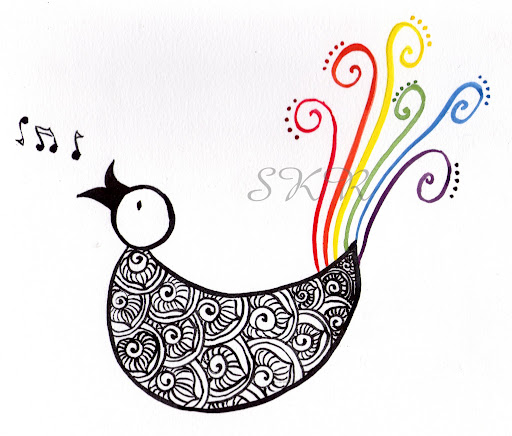
Today I finally bunkered down in my studio for some non-art degree related art making. 🙂 One of my projects was this; to make the logo for one of the groups I co-facilitate. The group is called The Gap, and is for same-sex attracted women aged between 18 – 40. Hence the ‘gay rainbow’ represented in the tail feathers (traditionally using only 6 colours) for this bird of happiness. This work has been made with ink on archival paper, the bright colours are Chinese style ink paints which are beautiful and vibrant. The bird’s body is inspired by traditional henna designs.

Draft one of our postcard advertising the group can be viewed here.

Is Schizophrenia having ‘Multiple Personalities’?

The short answer here is no. Multiple personalities (now called Dissociative Identity Disorder, or DID in the DSM) is classified as a type of dissociative disorder, while schizophrenia is a type of psychotic disorder. Very shorthand descriptions of these types of conditions are:

  • dissociation involves a disconnection of some kind, in this case between parts of identity
  • psychosis involves an addition of some kind – hallucinations, delusions etc.

From the perspective of the DSM they are entirely separate and distinct, with fundamentally different processes involved and treatments. There are certainly huge differences between many of the experiences.

Popular culture often mixes them up, which tends to enormously irritate people with either diagnosis. I have some degree of sympathy for the confusion however, because even the concept of what schizophrenia, or for that matter, multiple personalities, actually is changes quite regularly and I get that folks outside of psychiatry aren’t getting the memo and keeping up.

The longer answer is still no, with some qualifiers.

Schizophrenia roughly translates to split mind. This does not traditionally refer to the idea of split personalities, but instead to divided mental process or a split from reality. Schizophrenia is a fairly poorly defined cluster of symptoms that has changed significantly over the years and since the previous term ‘dementia praecox’. ‘Multiple personalities’ has also been understood in various different ways over the years – as an experience of spiritual possession, a subtype of schizophrenia where the person is in fact suffering from the delusion that they have other personalities, and so on.

Where things get really tricky, even with the current rigidly defined separation between these two conditions, is in the overlap of presentation or experience. And there are a lot of them. Firstly, Schneiderian First-Rank Symptoms, which were once thought to be extremely diagnostic of schizophrenia (and involve experiences such as thought insertion, thought withdrawal, and voices heard arguing) have been shown in some studies to be far more indicative of DID. What this means is that telling the two conditions apart on the basis of observing a person, or even learning what kinds of experiences they are having can be very difficult.


Secondly, psychosis and dissociation often seem to co-occur in my personal experience. Many people with a psychotic condition find that massive dissociation is part of the prodromal (or onset) phase, just prior to a major break. Some people with a dissociative condition, like myself, experience psychotic symptoms such as hallucinations. PTSD is an excellent example of this. Technically classified as an anxiety disorder, people diagnosed with it commonly experience both significant dissociative and psychotic symptoms.

Thirdly the whole area of voices, which I think is what really confuses things in popular culture. The DSM perspective is that voices are hallucinations, while alters are split off parts of personality. The fact that some people who have DID can hear their alters as voices blurs the two categories. Having some people experience their voices as stable personalities who perceive themselves as separate but alive, likewise. There is a considerable space here where people from both diagnostic categories meet. For more on this overlap, see Parts vs Voices. For a lovely description of working with voices as parts, see Creating a New Voice by Indigo Daya.

For some people, the diagnostic labels are very useful and important. It can be a great relief to have a name for distressing or confusing experiences, and I’m not in any way trying to take that away. These frameworks have their uses. But they also have limitations, and when you move beyond the boiled down Psych 101 spin, life is more complex than these discrete packages of symptoms can really capture.

For more information see articles listed on Multiplicity Links, scroll through posts in the category of Multiplicity, or explore my Network The Dissociative Initiative.

Multiplicity – parts getting stuck

One of the topics that came up at Bridges today was parts getting stuck. Now, for some multiple systems, parts are fighting to be out, and sometimes that means that some parts are getting overpowered and stuck inside. This doesn’t just make them unhappy, they are often lonely and unsocialised, not having a voice or getting their needs met, and their unhappiness may well bleed through and cause troubles for the whole system through general distress such as not being able to sleep, nightmares, rashes, the sound of crying or screaming inside and so on.

Another kind of getting stuck can happen when someone comes out and can’t seem to go back inside again. In this case they may be quite overwhelmed and traumatised and not want to be out, or not be able to take on roles being required of them – perhaps they can’t drive, or lack the skills needed at work, or don’t eat. Rather like putting a stick in the spokes of a wheel, what was working gets locked up and stuck and things can get pretty tricky.

I’ve had to deal with both kinds of getting stuck at different times and I’ve learned a few keys to help get things moving again that work for me. The biggest issue for me is always working out what the problem actually is. Before we knew that we were multiple, we still picked a few things that helped with this sense of being stuck. One of them was changing environments – as that often triggers a switch for me. Thresholds of any kind – doorways and windows and the transition from concrete to sand to grass to earth, often have the capacity to draw out of me a different part to engage the new environment. When I am really stuck, I lose my capacity to initiate this change, I spiral down into a dark overwhelmed place where even if I can work out what I need I have lost the power to do it. This is where friends can be really helpful, to help me out of that place.

I can also often call out a different part by using other things that will likely trigger them, such as wearing ‘their’ clothes, putting their music on, going to their favourite places and so on. This was somewhat effective even before I had much information about who was who.

Now that I’ve done more system mapping, most of us can ask for another part by name to trigger them to come out. This is very useful but has the downside of making it difficult to talk about the parts by name without switching.

For me, some switches are automatic – for example in instances where I’ve been physically threatened, there is a particular part who will immediately turn up, without fail (to date). On the other hand, I’ve floundered badly in uni when I’ve ‘lost’ my researcher/study part and the rest of us have struggled terribly because writing essays are not in our skill sets . For us there’s a kind of dance that needs to keep moving for us to keep functioning, of appropriate switching so everyone in the system can be at their best, get their needs met, and use their strengths. We get stuck when this dance stops.

Another approach we’ve found useful to support very wounded parts is to allow them the right not to have to be out or have to try and function. They’re allowed to hide out inside where it’s safe, or to stay in bed. They need rest and peace.

As far as making sure unhappy buried parts get time out, I’ve a couple of approaches that help me. One is to fill my environment with things special to – and therefore triggering of – everyone. My home has to have things in it that represent or speak to every member of the system. Another is to keep a private system map that you check regularly. If you’re co-conscious or can track what you’ve been up to in some way, you can notice if someone hasn’t been around lately and make time for them.

For me, I’m getting much quicker at working out if getting stuck is the problem. Over the past week I’d noticed that although we were getting downtime and rest time overall there was a sense of chronic tension. We figured after a while that probably someone wasn’t getting out to get their needs met and made space for some switching to parts who haven’t been out in a while. That helped a lot.

For more information see articles listed on Multiplicity Links, scroll through posts in the category of Multiplicity, or explore my Network The Dissociative Initiative.

Enjoying the storm

The highlight of Thursday was going to the beach in the storm with some friends. I’ve been feeling a bit run down so I took the day off and didn’t get out of bed until I had some decent hours, if rather broken sleep, and the worst of the joint/muscle pain had eased off. I am loving the warmer weather, even this morning it was not as cold to curl up in bed, which is great from a joint pain perspective.

I ducked off to Tafe to get some more work done on my seascape moulds, then drove up to the beach. It was wild! Wild winds and high seas and foam flying over the pavement. We trekked to the end of the jetty and screamed and howled into the night. Cold stung our faces and our hands and feet went numb. Sea spray flew like darts and the waves heaved and crashed. I love weather that makes you pay attention to it. 

The shops and cafes were all closed up against the storm, we stood on the pavement in the rain and had to knock on a snack shop door to be let in. Inside the floor was a huge puddle and cheerful staff. We ordered a big bundle of hot chips and went to go huddle in the car to eat them. If I’d just got organised enough to bring a thermos of hot chocolate, the evening would have been complete. If I owned a drink thermos. Hmm, I’ll add that to my wishlist. 🙂 I need to go camping again.


Lived Experience Workforce

On Wednesday I attended a Lived Experience Workforce morning, for Peer Workers to talk about their concerns with their role and problem solve ways to improve things. The Peer Worker role is not new to health, but very new to Mental Health, and certainly new as a paid position. There are many complicating factors for peer workers in their jobs such as unclear job descriptions, divisions between clinical and non-clinical staff, difficulty accessing useful training and so on. One of the biggest difficulties in my opinion is the multiple roles and relationships that most peer workers have to juggle. When I walked in to the room yesterday, within a small bunch (say 30 – 40) of peer workers, there were people who are or once were:

  • in a position of some kind of authority over me
  • colleagues and co-workers
  • friends I have known from outside mental health
  • ‘consumers’ in situations where I was also a ‘consumer’
  • ‘consumers’ in my programs (where I am staff)
Wrap your brain around that!
I see two essential tensions for the peer worker role: 
  1. Either it changes the way the mental health system functions, to be more inclusive, less hierarchical, more client-centred etc. or the mental health system changes the peer worker role to better fit with the existing system, thereby reducing most or all of the effectiveness of the role.
  2. While it is absolutely appropriate for peer workers to campaign and advocate for better working conditions, appropriate supports etc. to always recall that as marginalised, disrespected and ignored as we are at times, the ‘consumers’ who we are supposed to represent are even more so and our primary job is to help change that. As a friend of mine said – peer workers may be on the bottom rung of the ladder, but consumers aren’t even on it. If we get a taste of the possibilities of respect, credibility, worth, and dignity, and pursue it for ourselves at the cost of pursuing it for consumers we will become merely one more cog in the machine that grinds over the bones of the little people. Our fight for decent treatment and conditions for ourselves is hand in hand with our fight for decent treatment and conditions for consumers. 

It was an interesting kind of morning.

Sculpture Lounge


This is the lounge area in my sculpture studio. I spent the best part of yesterday here. Much of the rest of the day was spent doing stressful things like accidentally catching an express bus to a long way from home, freaking out at a parking fine, having the mysterious intermittent electrical fault in my car play up again, and so on. Very drained, very in need of rest.

Studio Makeover

I have spent Sunday shifting the furniture around in my studio, making chicken stock with leftover roast chook, and wishing I wasn’t getting up so early for sculpture class first thing on Monday.

I’ve been wanting to rearrange the studio for a while now, and yesterday was a day I could ignore all my other obligations and shut down at home to get it done. It took forever and involved totally destroying the room. Midway looked like this:

Which was deeply demoralising. But I persisted and sorted a number of scary boxes and got rid of centrelink letters from 2004 which I really don’t need to keep anymore (yay!) and other such junk. The finished result at midnight was this:

Which is about 8 boxes fewer, and the new arrangement makes the wardrobe properly accessible so I can put away my coats. I do lose a bit of table space by putting them against each other, but I can easily access both grey shelves and I have somewhere to store the big easel when it’s not in use now:

Looking forward to getting in there and making some more journals and ink paintings soon. Must stop doing heavy lifting stuff on Sundays, everything hurts!

Queer – loves books, rats

It’s been a hell of a journey I’ve been on, clichĂ©d as that word has become. Claiming my sexuality has been stressful, frightening, and wonderful. I was in the library the other day, looking up resources for the dreaded Concept Development project on food. Thinking laterally, I flick through books about sex looking for information about supposed aphrodisiacs or games involving food. I find a book called the Lesbian Karma Sutra and add it to my growing collection to borrow. One of my local libraries has recently extended their maximum book allowance to 40, as a result I had to buy extra green carry bags from them this day. I’m aware of a tension between the old rules – that a book like this was forbidden – and the new world – where I can publicly acknowledge my interest in the topic. There’s a sense of reclaiming territory that should have been mine all along, that should never have been fenced off.

Of course, the one book that refuses to scan at the self-service checkout is the Lesbian Karma Sutra. I put on my brave face and go up to the librarian and look her in the eye and ask her to scan it through for me. I refuse to be intimidated! I do however, walk to the desk with the older female librarian rather than the older male. Not that liberated yet!

I’m loving spending time with other queer people, especially women. I have gay male friends but very few female. It’s been wonderful to meet other people and flesh out what have been mostly media-informed stereotypes in my mind. My initial sense of being totally out of my depth and uncertain is making way for a new sense of confidence and enjoyment. I love the company of these women, and I treasure feeling accepted by them. I’m also becoming ever more passionate about making safe spaces for queer people.

That’s not to say there haven’t been some interesting experiences. One day recently, I had a huge stressful day at work, dashed home to change and dress up – trying to find that line between just enough to look good and fit in and not so much that it looks like I think I’m on a date or trying too hard… gawd it’s like being a teenager again, worried you’ve got lipstick on your teeth and playing nervously with your hair. I drive off to a group I’m meeting up with. I’m nervous and excited and hypersensitive and jumpy. Watching them watching me watching them… wondering if any of these new friends have read any of my blog and if so what they thought about the crazy new group member or if that’s a conversation yet to happen, wrestling with a bra, my nicest one, whose straps climb off my shoulders every few minutes, and slightly freezing as we’re meeting in a big, cold hall.

A new member turns up with a pet rat tucked in her jacket and I can’t resist – I love rats. I wait patiently for a cuddle of him, he’s big and placid and sweet. He also quietly pees all down my jacket front. So, having gone through the anxious process of trying to dress up but not dress up too much – to work out which part wants to attend (the same one as last time or take turns? – this affects which outfit gets chosen) and the ramifications of that choice, trying to be friendly without over-sharing and fit in without pretending to be anyone I’m (we’re) not… I’m now sitting on the floor with all the carefully made choices about how I present myself to a new group of queer/lesbian friends rather foiled by the fact that I am wearing rat piss perfume.

After some thought, I give back the rat reluctantly, strip off my jumper as if I’m not cold, surreptitiously pat my tee-shirt to check if it’s wet, decide I’ve got away with it and finish out the evening. And laugh half the way home. Life is surreal! 🙂

Healing

Things have been going so well lately. Not perfect, (not manic), not without some confusion and struggle, but still; flying. Being ‘out’, especially as bi, is finally not just traumatic. It is liberating. I’m having positive dreams! Beautiful dreams, sad dreams, dreams of how things might have been for me growing up, if it had been safe to fall in love with women. Dreams that make my heart ache, make me cry when I wake up, curl back the curtain and cry in the golden light that spills onto my bed. Dreams of spring, blossoms on tree branches, light falling through orchards and curtains rippling in the cool air. Dreams that heal.

I’ve written before here about having ‘ugly days’, where my self perception is so destroyed I hate and loathe myself with an unbearable intensity.

I’ve been having ‘beautiful days’. Days I love what I see in the mirror, days where I dance, where my heart soars.

I feel like a little battery hen that has come at last to a world of green grass and blue sky and endless horizons.

It’s been a week since the psychosis workshop with Rufus May and my voice has been so quiet, but I can feel her, there’s no sense of absence or loss, I can feel her like a warmth in my chest, like a cat curled up tight around my heart. I am ecstatic.

I’m under no illusions, the work with this voice may not be done, there will be backsteps and bad days and times again of confusion and distress.

But, to make such a giant leap forward, after so many years of struggle… empowered really isn’t a strong enough word for how I feel. Perhaps hope is.

There’s been a lot of work happening over the past few weeks, so much thinking and remembering and making connections. Unpicking locks and following string into labyrinths. Coming to understand the things that trap me, the monsters that savage me, the ties that bind. Moving further into freedom and health. Feeling the sun on my face and the rain on my skin and being able to smell the cut grass in my yard. Washing off layers of secrets and shame like oil slicks. Feeling my system come alive, like a carousel turning with music and lights, that deep dreaming start up again, the wells flow with poems.

In the night

Running in the park with Zoe, in the night, bare feet on wet grass and the smell of rain, the drains singing in the shadows and above me the trees raining eucalyptus perfume, this is what it is to be alive, this is what it is to be free.

Sarsaparilla Comes Home

Since Zoe came to live with me Sarsaparilla has been spending more and more time away from home. I’ve finally hit a solution that is working. My bedroom window is left open just a tiny bit, with the screen off and a wedge in the window to stop it being opened any further. The door is always shut and Sars’ food and water dish are kept on the floor. It’s a Zoe-free space with easy access. Now he’s sleeping in there all the time and I get cuddles every night.

We did have one glitch with him proudly bringing home a dead bird to dismember on the bed. He’s now the proud owner of three lovely bells on his collar and that seems to have resolved that. He’s the most sweet and lovely cat. It’s wonderful to have all this company at home.

Gardening And Waffles

This is a very busy week for me, and I am remembering why I try to have a couple of days off after gardening; I’m pretty stiff and sore! The lawn was starting to devour the garden furniture though, so there was nothing for it but to roll up the sleeves. Here’s what it looked like at the start:

Then we got in there with a lawnmower borrowed from a friend… It was like magic once we worked out how to start it (hint, use your dominant hand for the pull starter).

Friends came round to help and we collected some plants that another friend had been looking after for me. Thrilled to have such a decent sized garden to be starting here with! A big task now is digging up the lawn and planting all the plants so I’m not struggling to keep them all watered in pots over the summer.

We planted a number of roses round the edge as a thorny fence to protect my veggies 🙂

Then, there were waffles! First cheese and corn:

Then apple and cinnamon with whipped cream:

Totally worth every ache. Can’t wait to get a veggie patch planted!

My personal experience of Voice Hearing

I came home from the Psychosis workshop by Rufus May the other day and recorded this clip about my experiences of the workshop and how it has changed my understanding of a voice that I hear. I’m hoping this will help people who don’t hear voices to better understand the experience, and give hope to those who do. I will be writing more about voice hearing, psychosis, and this workshop. 🙂

The Dissociative Initiative has Incorporated

We did it. A bunch of us met up again, spent about 5 hours wrangling with the Constitution, then voted the DI, and our first board into being.

What’s it like to give birth to an organisation? Exhilarating. We have come together and made something beautiful, something I love and believe in, something worth all the time and effort and anxiety of the process. Is it over? No. So much if the work is just beginning. We have policies and procedures to write, new groups and resources to create, funding applications to submit, collaborations with other organisations to work on. But we now exist as an entity; a not-for-profit, national organisation. It’s a huge step for something that started several years ago as a frustrated conversation about the inadequacy of supports for people who experience dissociation. We are making a difference.

Friday was very Big

I was at the Rufus May workshop, it was mind blowingly awesome. Fireworks went off in my brain all day and I am now utterly exhausted. It being Friday and the serious sleep shortage I’ve been running this week not much helping matters either. I’m so friggin excited about the workshop and developments in approaches to voice hearing and once I can remember where my head went when it fell off, I’ll tell you all about it. I’ve been meaning to do an ‘Introducing Psychosis’ talk at some point on here and now it’s coming together in my brain.

I got home this evening to find Zoe had climbed onto my study desk and carefully removed a single item from my pin board, a Blue envelope that must have caught her eye, before tearing it into small pieces. Shame it was a gift certificate for Eckersleys art shop! Now I’ll have to go find out how they feel about honouring gift certificates that have been torn into small bits, chewed lightly, drooled on, then sticky taped back together. While I was sorting that out, she tore a knob off the front of the oven and chewed it to bits. Argh!

Yesterday she chewed through the ethernet cable. Tonight I went off to Officeworks, which is dangerous as all out because I have a stationery thing going on and they always end lightening my purse more than I’d planned. I got a new cable on special, some clips to nail the cable to the skirting board, some duct tape to stick the rest of the cable to the floor, a new battery for my kitchen scales (feel super organised) and a free standing microphone for making better quality voice recordings on. Wow, does it ever work! And then I filled a script, bought milk, yogurt, custard, and bananas, because after a week like this I know I won’t be able to eat much, and then crashed out. Saturday is another DI meeting, hopefully to finalise the constitution. Wish us luck!

Sculpting The Sea

At Tafe I’m loving my sculpture class. This Semester we’re learning mould-making. We’ve been set the task of making a sculpture of small pieces that connect or interlock in some way. The originals are created from clay. I love clay. It’s a bit hard on my hands but there’s something magic about it, the transformation of base material to artwork. I’ve decided to make a small seascape, moulding waves and boats that can be fitted together. Here’s my first test mock up in clay:

This is the clay boat, the silicon mould, and the plaster boat made from it:


The wave shapes are more complex structures. I had to cut the clay original out of the mould:

Then make a two part interlocking plaster shell to hold the silicon in place when it’s filled with wet runny plaster:

Which all results in this plaster cast of a wave:

I’ve been buss-ing in every Monday for a 9am start, which is hard as I’m not getting to sleep until around 3am at the moment. I’m coping really well with the public transport though, that can be something I find stressful but I haven’t had any issues. My new super fast smart phone is awesome and makes using public transport so much easier. My car broke down for a few days recently and I kept all my appointments on trains and buses, very pleased with myself. So much easier when Google maps does all the route planning instantly! I’m loving all the extra walking too, it’s setting off a bit of tendinitis but nothing severe. Summer is going to make that hard so I’m making the most of the last of the cool weather where I’m able to be more active. The early mornings are surreal but manageable for now. I’ve a few extra ones coming up, like the Rufus May training, and that wipes me out. My schedule is pretty packed at the moment, I’m needing all the down time I can make in it. Worth it though. 🙂

Video update about Zoe!

Forgive the amateur quality, this is my first time playing about with new software on my home computer, so the audio quality could be a lot better for a start! I thought it would be fun to try something different to the usual blog post, and make you a video update about Zoe! There’s some gorgeous photos of her and a cute video at the end. I shot it on my awesome phone camera but forgot you’re supposed to always shoot video in landscape mode whoops! Too cute to trash it though. She’s adorable. 🙂

If the video isn’t working for you, you can go view it here on youtube. 🙂

Shifting the furniture

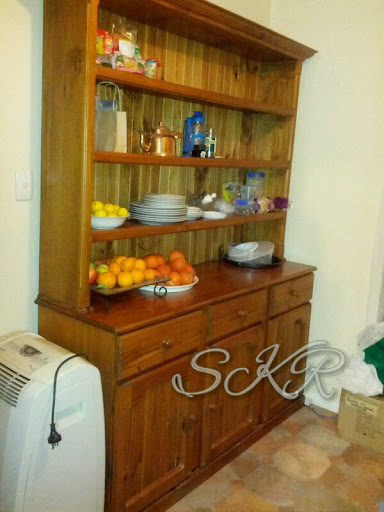
I have a gorgeous new dresser, inherited from a friend who is upgrading. Isn’t it stunning?! Look at all that storage space! Following the DI meet up the other day, a few friends stayed back and helped me move the furniture around. Lovely people. This is my ‘dining room’ space, which I use partly to store everything I can’t fit in the kitchen (there’s not a lot of storage space in the kitchen) and partly as my study area. Lately it’s been a hopeless mess, every surface covered with all the things Zoe would like to eat/chew/hide in the back garden. Now that Tafe has started up again, I really need my study space back so a rearrange was on the cards. I didn’t end up having to get rid of any furniture to fit it in (it is pretty huge), the cabinet that was here was able to be moved into the loungeroom, which has had a big of a spruce up now too. 🙂 
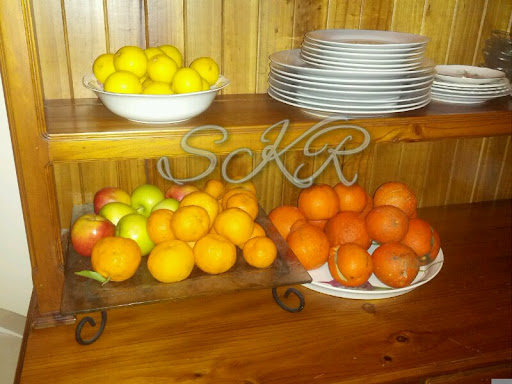
Look, somewhere to store all the lovely winter fruit people have been giving me. I love friends with gardens! Before the warmer weather really kicks in, I’ve planned a gardening day for this weekend to get some work done in my own. 🙂This is the other wall of the dining room now, with a decent study space.I’m not that happy about not having a dining table. I like dining tables. I like setting them, serving at them, sitting and eating at them, having a conversation over them, and using them to make complicated kitchen recipes that are so time consuming I need to be able to sit down for them. But, space is at a premium here and also I haven’t been able to buy any really nice really small dining tables, it seems I’m not the only one looking second hand. 
So for now, my study desk there by the window doubles as my personal dining table. I had breakfast there this morning, watching the rain fall on the garden while I ate my scrambled eggs and toast. Down the track I’d like to create a middle eastern style dining suite in my lounge room with pillows and low tables, I love the ambience and not having a whole room dedicated to a table that is barely used (or if it is used, needs to be cleaned off everytime you want to eat a meal there). In the meantime, I’m itching to rearrange my bedroom and studio and looking forward to getting into the garden. 
I love rearranging things here and there, it sets off a degree of dissociation for me, makes me look at everything with new eyes. I have a home, and a cat, and a dog, and a studio, friends, part of my week spent working towards a degree and part spent doing volunteer work that is deeply meaningful to me… life is pretty damn good. 

What is co-consciousness?

Co-consciousness is a term used to describe the experience of someone with multiplicity, where more than part is aware of what is going on. For someone with DID (formerly called multiple personality disorder), they have very high levels of dissociation both in identity and memory, which usually means that they are amnesiac whenever a different part is out. Amnesia can cause distressing experiences such as not being able to recall important personal information (name, date of birth, home address), years of your life, or daily struggles such as ‘coming to’ in an unfamiliar place and having no idea how you came to be there. Some people are really aware that they are losing time or memories like this, others are in a kind of confused fog where until someone asks them a question – where did you get those shoes? when’s the last time you ate? what did you get up to on Wednesday? – they’re actually unaware that they’re experiencing amnesia.

With classic DID, not only is the person experiencing amnesia, but they are confused by evidence left behind while other parts have been out. Obvious things may be clothes in the wardrobe that are unfamiliar and not to their taste, family members upset about arguments you don’t recall having, friends who think they know you by a different name etc. 

Co-consciousness describes switching without this amnesia, so that if one part is out going about their day, another part is aware of what is happening. Multiples with high levels of co-consciousness don’t tend to ‘lose time’ or have blackouts, they’re still aware of what is going on. This is mostly how I function, although under stress my levels of amnesia increase. Multiples who have high levels of amnesia often find that to be one of the most challenging and frightening aspects of the condition, and for most, gaining some degree of co-consciousness is an important part of therapy and recovery work. This process usually starts by working on building self awareness and mapping your system. 

There is a similar but slightly different called co-hosting or co-fronting, which you can read about here: What is co-fronting and blending?.

Co-consciousness can work practically in a few different ways. For some multiples, it’s like they are seeing and hearing everything that’s going on, even though they’re not the one moving the body. For others, it’s more like being told what happened, or watching a short video of memories. I used to be confused as a kid that so many of my own memories are in the third person rather than the first – that is, I see everything happening as if I’m up by the ceiling, looking down on everyone including me. I’ve since discovered that this is an easy way for me to tell when I’ve personally been out running the body and when I’ve just been watching – co-conscious. My own memories are in the first person, co-conscious memories are in the third. This is different for everyone though! I can really struggle sometimes with new friends or in new environments, especially if it wasn’t me who has met them before or been there before. People sometimes notice me pause as I’m asking inside for the information and if I’m lucky whichever part recognises the person or remembers the event will quickly fill me in, or switch out and take over. 

Co-consciousness is incredibly useful, but there are downsides. One of them for me is the mammoth amount of energy it takes for us to track all the different information and memories and hand them back and forth. It’s like I have a whole house full of filing cabinets in each room, and on a busy day I’m mentally running back and forth between them trying to make sure we can keep up and still function as one. The experience of co-consciousness can often confuse multiples who have only been exposed to the ideas of psychosis or DID and don’t feel they fit either box. It can also be distressing to be aware of what is happening but not in control of yourself any more. As a kid I had a number of experiences that frightened me so badly I became convinced I was being possessed by the devil. I often felt at war with myself, trying to stay out and in control, and when I’d switch we would look in the mirror and I would be terrified at this face that was mine and yet somehow clearly not me. Co-consciousness can make you feel both crowded and painfully alone at the same time. These kinds of experiences are called Schneiderian first-rank symptoms and were once thought to be highly diagnostic of schizophrenia. Now we’re discovering they are actually very common for people with dissociation instead.

The technical stuff aside, what does it feel like to be co-conscious? Well, that’s different for different people. In fact, different parts of my system experience that in their own way. Whoever is out is often aware if they’re running everything by themselves or if other parts are ‘close to the surface’ and aware of what is going on. Sometimes those surfacing parts might comment or advise about what they’re observing, sometimes they might be struggling to switch or being triggered to switch. For example, I gave a talk at a locked ward in a psychiatric hospital a little while ago, and it was going well. We got there on time, with the notes and presentation gear, there was quite a group waiting, and we had the right part out who had written and delivered the talk before. There was a slight hitch in that a sad, lonely song was playing over the radio. Music can be a powerful trigger for me, and a sad lonely part was called to the surface by the song and immediately switched and came out. We were panicking a bit because this part could not deliver the presentation, and they knew that and desperately didn’t want to be there. We kept still and quiet and finally the MC turned off the radio to introduce us. Once the music was gone, that part dived back inside and the right part came back out to deliver the talk. Phew! Being a multiple can be very complicated.

My friend Hope has a wonderful description of her take on co-consciousness over at her blog:

Imagine a Combi Van, grab a handful of people and put them in the van. One of those people will drive the van, one may sit next to them. The passenger may just watch where they are going of maybe give directions. They may even pull the steering wheel to try and get the driver to go where they want. The rest of the people are in the back of the van. depending on where they are sitting and if the can see out the windows they may or may not be aware of what is going on and where they are going. They may yell to the driver to go somewhere or slow down. Then right at the back of the van, you may have one or two fast asleep totally unaware of what is happening and where they are going… (click here to read her full article)

For me, my poetry often talks about wells inside, very deep, or an ocean where we are sometimes at the surface and sometimes in the deeps. Here’s a short extract of a poem that describes co-consciousness:

I feel her surfacing 
like a scream rising
like a knot of tears
in my throat – 
Fingernails into palms
I fight to stay
I can feel her so close.

I catch him
glancing at my eyes
perplexed
and I know he sees her
I know they’re her eyes now
but still my face, hands, body
still me if I can just drop my gaze.

In the car, on the drive home, alone
she steps into my skin
wears it a little differently 
adjusts the mirror, tucks
hair behind her ear
weeps alone in the night
as I fall, like a star, and fade out.

For more information see articles listed on Multiplicity Links, scroll through posts in the category of Multiplicity, or explore my Network The Dissociative Initiative.
Progress on the Dissociative Initiative!

We had a fantastic meet up today!

To catch anyone up who isn’t aware of what the Dissociative Initiative is (for those of you who’ve just tuned in…) I’ve been working for the past couple of years with some colleagues in a small community group. We’re now in the process of incorporating into a not for profit, national organisation. You can read more about the DI here.

The agenda was getting everyone together to assess the draft of the constitution and work on it, to plan for the board and talk about what a board is, and what being on one involves. A lot of this process was about translating the incomprehensible language in which constitutions are written into something we could understand so that it was actually possible to have an opinion about it. So, here’s Draft 3, please feel welcome to read it and offer any feedback!

We plan to meet up again within the week to finalise the constitution and vote in the first board. I am so excited! We’re particularly looking at the following areas (for those who want to spare themselves reading the whole gibberish-y document):

Definitions:
2.15        “Dissociation” means a disconnection in areas of psychological functions which would normally be connected such as memory, time, senses which may or may not be distressing or disabling, but which impact on a person’s experience of the world.

2.16       “Multiplicity” means experiencing dissociative barriers between parts of self, occurring on a spectrum of degree, which may be experienced for example as voices, alters, lost time, a sense of being fractured or divided.

2.17       “Parts” may also be known as “alters”, have a separate sense of self and function independently within the one body, switching with or without amnesia.

2.18       “Voices” can be understood within the context of multiplicity as parts who speak to each other. Not all voices fit within the framework of multiplicity, some voices can be parts who also switch

2.19        “Peer Worker or Peer” means a person who, working collaboratively with a person who is experiencing mental illness, intentionally uses their own personal Lived Experience of mental illness to support rehabilitation and recovery goals; and or, a person who uses their Lived Experience in a formal role associated with policy development, research and or systemic advocacy.

Values:
Query the need to reword to include the 4 group values overtly (Safety, acceptance, respect, recovery) Recovery is included overtly, Safety can easily be added to 4.1.1 avoiding re-traumatising practices, acceptance to the 4.4 social inclusion aspect

Expand/clarify: 4.7 Diversity of the experience and meaning people ascribe to events and opportunities

Objects:
Query grammar for 6.6 To directly address the disadvantage and distress experienced by those who live with dissociation and/or multiplicity, and their effects on health and social inclusion.

Any thoughts you have will be very welcome, please contact me. 🙂 And watch this space!