Remembering sickness and loss

I’ve been getting a painful up close reminder of how much being sick takes away from you. I still haven’t got through this pain flair up, I went off to the doctor yesterday who increased various meds, all of which have terrible side effects. I can’t get any decent sleep because the pain wakes me up all through the night and nothing much reduces it. It’s all a bit of a mystery, there’s nothing I’ve done to set it off, it’s not lack of self care or anything like that. There’s no reason I should be having regular flair ups. The usual story.

I find I can be pretty philosophical through a few bad days or weeks, but once it runs on too long or the pain level gets too high I start to run out. I’m spending half my time crying at the moment I’m so depressed and frustrated. Wednesday night was my sculpture class which I had to miss again. I have to cancel the rest of this week to keep medical appointments and have tests done. I remember this world, and even a small brush with it like this is terrifying. There’s so much grief in being ill, such a profound sense of loss.

Watching my peers go off to university while I was too sick to cook my own meals or bath unaided was an excruciating time in my life. Fear, misery, humiliation, and painful empty hope tortured me. Chronic pain is an evil thing that warps you, you notice yourself changing, becoming irritable, angry, losing your joy, and you watch it all happening and fight it with everything you have but you don’t always win. Then comes the shame, the fury with yourself for how weak you are, that if you only tried harder, you would be better.

You watch the toll it takes on relationships. You want to know the divorce rates when one partner has a chronic illness? Want to know the suicide rates? For the first episodes friends don’t take it personally when you cancel on them. After a while they decide it’s simply kinder to stop inviting you. It’s like watching your blood running down a drain from a wound you can’t staunch.

I remember this world. Going through a supermarket in a wheelchair and cringing under real and imagined glances of disbelief when you haul yourself upright to reach an item out of reach. Being taken aside to have whispered conversations “The rest of the students don’t understand why you’re using a scooter when you can walk”. Caught constantly between the pain of walking and the humiliation of assistance. Limping back to the car bent over the supermarket trolley handle to try and take the weight off the hip that is screaming. Biting holes in my lip to distract me. Staying home for so long the outside world became a memory, a dream. Tolerating whatever I had to do to be able to get back out there. But then, the feeling that my chair dominated me, that I didn’t have enough personality to fill it and radiate out beyond it, not enough confidence, that instead it defined me, caged me, engulfed me. I so badly needed another friend in a chair.

The assumption of personal failing, constantly having to deny that you have in some way done something wrong to bring this down on yourself, it’s type A personality, it’s about not enough sun, it’s because you don’t exercise enough, it’s because you exercise too much, it’s about blood sugar, about vitamins, about rare viruses, it’s all in your head.

“I hate myself” has been on loop for days now. I don’t hate myself. I just really, really, don’t want to be sick, I’m very tired and there’s a lot of bad memories in my head.

Charlie has a tree

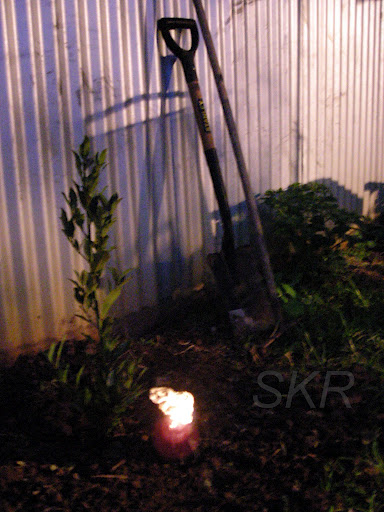
I’m still very under the weather with my pain flair up. I have a physio appointment soon which usually helps so fingers crossed. I was able to get Charlie’s grave finished the other day when we had some lovely warm weather, so I’ve planted a small bay tree over the grave by my back fence, and put a big black candle out there. I plan to print out a couple of good photos of him and put them up somewhere in my unit too, that will be good. Miss him like crazy, the place is so quiet without him! 

 And here is my lovely new outdoor dining set which I’m very excited about and can’t wait to start using when the weather warms up. 🙂 Once this flair up settles down again I’ll be able to sit out there in the cool, drinking hot chocolate and admiring my trees. There’s often beautiful cloudscapes or a lovely moon over the back fence to contemplate, it’s such a beautiful spot.

I have been giving a lot of thought to getting another dog and it turns out a friend rather urgently needs a new home for hers, so the plan is to have a trial period and see how the dog adjusts. I’m very excited and very nervous about it too. I am doing more and more talks which means times away from home so I need a dog that doesn’t mind too much being dog-sat by friends here and there and doesn’t do anything silly like howl the neighbourhood awake. Hopefully this is a good match and I’ll have a little hairy critter thrilled to see me when I come again. 

Abstract accepted!

Well, as I sat about today feeling like I’d lost a round or two with a boxer, into my inbox came a delightful email informing me that my abstracts for a 20 minute talk was accepted for the 25th Annual World Hearing Voices Conference this September! Here’s my abstract:

I hear voices as part of a dissociative disorder, and have done so since I was a child. I was diagnosed with PTSD at 14 and DID at 23. I now co-facilitate groups for voice hearers and people who experience dissociation or multiplicity, and chair a small Australian community group The Dissociative Initiative. Dissociation is often misunderstood and multiplicity especially is seen as rare and bizarre. My experience has been that multiplicity is a spectrum, and some voice hearers are struggling with dissociative issues and experiencing their voices as parts. I will share some of my personal experiences of how dissociation affects me, what it is like to have voices that are parts, and strategies I have used in my own recovery. I will also share a framework for making sense of the array of dissociative experiences, and how to understand ‘multiple personalities’ as a dissociative entity. For people who hear voices that are parts, there can be additional challenges to recovery such as when parts are able to control the body. I will explain some basic principles of working successfully with parts. I hope to inspire people to feel more comfortable and confident in navigating dissociative issues, and encourage people that it is possible to live well with voices who are parts.

The slight hitch is that the conference is in Cardiff, Wales. Which is a bit of swim. I’ve already made a couple of enquiries on the off chance my talk was accepted, but nothing has worked out so far. Now I’ll have to go hunting grants and funds and see if I can find a way to get there. Very exciting!

As I’ve been busy writing biographies which is like pulling teeth, and talk outlines, which are frankly more difficult to write than the talks, I thought I’d also update my pages here on the blog. The articles page is gone, collapsed into the New Here sitemap. I’ve uploaded all the PDF’s of articles into google docs and now just have to update all the links so they go to the right place. My Resources has been spruced up, and About Sarah has been updated. I’ve made a bit of leap in clarifying some of my diagnoses on that page, previously you had to know me or dig into the blog to work things out. Exposure is difficult and I’ve been managing it in staggered doses. Here goes, hey. 🙂

Is DID Iatrogenic?

Working (hah, and living) in the field of dissociation, I often come across the popular idea that multiplicity is iatrogenic, that is, caused by well meaning therapists implanting the idea in the minds of vulnerable clients. It’s almost impossible in the clinical sector to have a conversation about DID without someone raising this concern.

What really interests me is the clinical sector only seem to worry about this possibility with DID. I’ve never heard of anyone worrying about iatrogenic Depression or Schizophrenia. Surely people vulnerable enough to be convinced through suggestion that they are multiples could also become convinced of other symptoms? Iatrogenic mental  illness should be a huge concern for the psychiatric profession if this is the case: the whole process of assessment and diagnosis should be done in a way that reduces the likelihood of iatrogenic effects, with deep sensitivity to power imbalances, vulnerability, adaptation, and living to labels. So, is this what we’re doing? No, we have collared the word ‘insight’ and changed its meaning to ‘agrees with the doctor’. People are put in situations where to prove sufficient ‘insight’ to be allowed out of hospital they must agree that they have – whatever,  lets say Schizophrenia. Two months later a new treating doctor does more tests and changes the diagnosis to PTSD. Where does that leave the ‘insight’? Where does that leave ‘vulnerable people’ and iatrogenesis?

Secondly, when the iatrogenic argument is used as an attempt to explain that DID or multiplicity do not exist, we find ourselves in an unusual situation where apparently a doctor has the power to create a powerful belief and accompanying symptoms in a patient, but it is impossible for highly traumatised people under stress to create this same set of circumstances in themselves. Is the doctor magic? If doctors can do it, why not the rest of us? Of course, this leaves us with old definitions of multiplicity – that the person doesn’t really have parts, merely the delusion of parts – an approach which categorised multiplicity as a form of schizophrenia and led to therapeutic approaches that centred on denying the existence of parts and was generally pretty ineffective. But that’s down to arguments of cause and cure – the iatrogenic argument is still assuming that a ‘multiple state’ can  be created in someone vulnerable, but gifting this act of creation as the exclusive domain of therapists and presuming that no one else in any other context might be able to create this state also. Bizarre.

Do I think that everybody diagnosed as multiple must really be a multiple? Of course not. Mis-diagnosis is so rampart within the mental health system that it is actually the norm. It’s laughable to listen to the spin of the mental health sector about science and support and watch someone be given a diagnosis within a 15 minute assessment during high distress on admission to a psych ward, medicated and treated as if that diagnosis has merit over the next few weeks, and then watch it change as the psych on duty changes, and then again when the roster changes in two months, and then again… I’m  not making that up, I’ve supported people through that process. The whole idea that someone can sit in a room with you for a few minutes when you’re at your most incoherent (or drugged) and know better than you do what is going on inside you is laughable to me. I have huge issues with the DSM, with our diagnostic entities such as schizophrenia, and with the power imbalance of our process of diagnosis, where an ‘expert’ tells a vulnerable person what is ‘wrong’ with them.

Does my stance on DID (that multiplicity is certainly real and possible) mean I don’t worry about iatrogenic effects? Not at all. I’m very concerned because research consistently shows that people live to their labels – children treated as smart do great in tests, those treated as truants act out, those treated as caring are kind. We know this and have demonstrated the powerful effects of labels, obedience, authority, and adaptation in research over and over again and yet we pay very little attention to the massive risks of diagnosis, particularly being diagnosed with syndromes.

Let’s compare for a minute the diagnostic entity of Dysthymia with that of Schizophrenia. Dysthymia is chronic, low grade depression. Schizophrenia is a syndrome, a cluster of symptoms such as hallucinations, delusions, lack of motivation, lack of emotional expressiveness, and so on.

What are the risks of living to these labels? With both, there is an assumption of duration, that you will be ‘sick’ for a very long time, with schizophrenia most people are told they will be sick for the duration of their lives. How concerned are we that people who might not have struggled with these experiences for their lives will now live to that prophecy and fulfil those expectations? We should be very concerned about this!

In the instance of schizophrenia however, the labelling risk goes further. You can be diagnosed on the basis of a single experience such as hearing voices. On the basis of that ONE experience, people are told they have a condition that includes many other debilitating symptoms. We have just increased the likelihood that the person will experience all the rest of the cluster, and that when they do they will attribute them to the illness. It’s no surprise to me that many people with schizophrenia lack motivation, between the stigma, disruption, loneliness, and low expectations isn’t it the slightest bit reasonable that lack of motivation might occur? Is that really an ‘illness symptom’ or a reaction to circumstances?

Diagnoses often cluster many different symptoms and also make predictions about duration of experiences. My experience has been that while certain clusters are more common than others, we each of us have our own personal unique cluster. We should never ever be set up to expect that we will develop a whole range of other crippling symptoms if we don’t already have them! And I believe it is appallingly irresponsible to make miserable predictions about duration or quality of life when we have such an excellent evidence base that tells us people are vulnerable to making prophecies come true, however ill-founded they are.

So yes, I consider that DID is both over and under diagnosed. That in no way means that I assess people to try and determine if they are a ‘real’ multiple – it means I take your word for what is going on with you. I believe you are the expert in your own experience. I don’t care what your diagnoses are,  if you tell me you’re not a multiple, that’s cool. Right up to the point where you switch and introduce yourself as George anyway. 🙂 I think it is unhelpful when people are not dealing with multiplicity to have therapists trying to frame everything in that way – but not more so than therapists framing experiences as psychotic when they’re not or borderline when they’re not. All frameworks have limitations and that of multiplicity is no exception. It’s only valid if it’s helpful! I find it useful, and I find the notion of ‘healthy multiplicity’ useful and the idea that all of us have ‘parts’, that multiplicity is normal and healthy, merely the dissociative barriers are unusual. I’ve known people who needed to be more multiple, who had lost so many of their parts that they had become less then who they really were, shut down and limited and struggling. I’ve talked with people like this about Jungian archetypes, about the tremendous wealth of information and resources within us, about the need to react to life with a full deck of cards to play, not the same two cards over and over. But part of what makes these frameworks useful is that I have explored and adapted them to myself, not had them imposed on me from outside. (That’s not to say I haven’t been diagnosed, I was, but for me I went through a lengthy diagnosis process for myself to be satisfied that the language was accurate, useful, and not iatrogenic – see How do I know I’m multiple?)

For myself, like many other people, the simplest rebuttal to the iatrogenic argument is that my life, experiences, and journals all evidence significant signs of major dissociation and multiplicity long before I ever sat in a therapists office or came across the concept of DID. Not every multiple has this – and lack of it is not proof of iatrogenesis! Many people do have this; journals with different handwriting, different names used in different social networks, chronic amnesia, voices, and internal wars that predate contact with the mental health system. In some cases, a person’s medical notes carry all the evidence of distinct multiplicity documented many years prior to anyone considering a dissociative diagnosis, even noting the different names, ages, and functioning of parts but failing to consider multiplicity and conceptualising the observed behaviour as psychotic, borderline, or bipolar instead. Iatrogenesis is not a reasonable alternative to the possibility that multiplicity really exists. It is often framed in different ways, outside the west cultures may talk about people being possessed by demons or in touch with spirit guides, or speaking to to their ancestors, but the basic underlying experience of separate parts are what we have termed multiplicity and they certainly exist all over the world.

Excerpts from some very early journals of mine, many years before shrinks and therapy:

Oh how I envy you, 
who have nothing to suppress
but who are whole;
in this world.


What is this, that cries so plaintively, arcing wings within me?
Whose voice do I hear when the darkness descends?
If you put your head beneath the water, you can hear the screaming.


In dark mirrors my reflection is a strangers face
I cannot remember the sky or the feel of the rain.


For more information see articles listed on Multiplicity Links, scroll through posts in the category of Multiplicity, or explore my Network The Dissociative Initiative.
An unproductive Sunday

The weather is too cold, my home is too un-insulated, and my joint pain is flaring badly. I couldn’t get to sleep until about 7am, most of which was spent shivering in bed under all the blankets I own as my TMJ (pain in the joint of my jaw) reduced me to tears. I cannot tell you how much it sucks to have a chronic pain condition that also leaves you intolerant of most pain killers. The muscles spam in cycles, one moment I’m right as rain, the next I’m totally immobilised. I’m very depressed and feeling sorry for myself because I had much more exciting plans like making art and going to the beach. I am instead contemplating getting a new, faster phone with an inbuilt camera, which would make navigating a lot easier – google maps takes up to 10 minutes to load on my current phone, and allow me to easily post a picture and a short blurb on nights like this when I’m too trashed to post anything more coherent. I’m eyeing up a later model Samsung which should upgrade me about a decades worth of phone developments. 🙂 I’m looking at buying another electric blanket as mine is dying and on the setting 60C manages to get just past the sensation of ‘cold’ and almost into ‘tepid’ if you use your imagination. Considering that we’re only 10 days into winter technically, I don’t think I’m going to make it through to spring at this rate without some major improvements in my keeping warm approach. Curses!

On the plus side a friend dropped round today with a belated house warming gift of a little outdoor table and four folding chairs in a set with an umbrella, so that is set up in the backyard and I probably spent a little bit too long sitting outside in the cold just because I was so excited about it. It’s like having a little cafe setting in your own backyard. I hope to make a habit of eating breakfast out there when the weather warms up a bit. In the meantime, I’m back to bed.

Ray Bradbury died

On June 5th at the age of 91. He was one of my favourite authors and I deeply love his work. I first encountered him when I read Fahrenheit 451 for a school assignment and fell in love. He wrote about the world I saw and lived in and yet somehow lived in alone and could not share. He wrote about people like me, strange, and numb, and vulnerable to every breath of wind with hearts so painfully breakable. He gave me words to tell my own story, he made me feel less alone when I was so terribly alone, the only one of my kind with a heart like a net, catching all the flotsam of the world and a mind like a kaleidoscope full of lights forever falling. His characters were my friends, in the years where there were no friends. His books were hearths by which I warmed myself when all my world was cold. He spoke of life, and what it is to be human. He spoke in poems, my native language, spoke of sadness and the wind blowing through you, spoke of joy and the smell of cotton candy and the song of memory and nostalgia and nights that call you from bed. I loved him. When I’m lost in a world that isn’t mine, in a place of deadness, where all the adults are corpses of children and the day has sucked me dry and the night is without comfort and the rain does not come his books bring me home, his words sing me back into my soul, back into my body, sing my hands to life and make me weep. I loved him. Homeless, I took a book of Bradbury with me at all times, a tiny anchor, a paper bag to keep my heart safe, slept by it every night, where it went I was alive, where I lay it down at night I was home.

There will be no new books now, no more poems. I never told him how he saved me, how he wrote me into life, like a string through a maze when I had lost my way. Just a writer did this for me, broke the glass and whispered in my ear that I was not the only of my kind, not alone and not the only one. Gave me hope and set a candle in my heart that life is to be lived and not endured, that the moon sings us from the drudge of day and in the wind are wild longings that call us from sleep and float us through nights of endless stars. Sorrow, sweet sorrow and regret and love and blessings and books that grace my shelves. He who wrote with such compassion has died and I mourn him.

He wrote:

The good writers touch life often
The mediocre ones run a quick hand over her.
The bad ones rape her and leave her for the flies.

He heard voices and wrote them into his books.

He wrote:

To all your inner selves be true

He wrote:

Once the years were numerous and the funerals few,
Once the hours were years, now years are hours,
Suddenly the days fill up with flowers –
The garden ground is filled with freshdug slots
Where we put by our dearest special pets
And friends: wind-lost forget-me-nots.
At night a clump of wisteria falls to the lawn in a wreath
Our old cats underneath in the loam
Cry to come into our home. We wont let them.
We let the wind pet them and put them to sleep.
It’s a nightful of ghosts, but then all nights are now.
It’s a long way on until dawn.

Too many fresh dug graves in my life too. Rest in peace Mr Bradbury, you made a difference to my world.

DI Constitution draft

Constitutions are kind of tricky things to write when you haven’t done it before! I have been really, really pleased with how the Dissociative Initiative (DI) groups and resources have been going running them from values rather than rules or ‘norms’ and so I really wanted to make sure the DI constitution actually laid out the fundamental values and principles of the organisation. I’m a writer and words and language are my thing, but the language style of constitutions is highly formal and for a poet that is kind of a stretch. 🙂 It’s funny how hard it can be to try and pin down things that are as invisible as values, things I feel in my gut such as the instinct to be caring or respectful, to try and tease out what has (and hasn’t) been working from a group or program and write it into the structure for the next one. I’ve been floundering a bit, trying to find my feet in this area that I’m new in. One of the things I did a little while ago was write off to various organisations to see examples of their constitutions so I could get a better idea of how these things are put together. My favourite inspiration is still definitely the work over at Intervoice which has such wonderful community values. Anyway! Here’s some extracts of our working draft so far, please feel welcome to get in touch if you have any feedback you’d like to give. 🙂 If you want to read the full version I’ve hosted it online here.

Purpose

To promote better life experiences for people whose lives are touched by dissociation and/or multiplicity (and other similar experiences) whether directly (through lived experience) or indirectly (through a social/family/support role); respecting the diversity of ways in which dissociation and/or multiplicity can be experienced and the role that trauma can play in these experiences.

Values & Principles
Members of the Association acknowledge and value:

The principles of Trauma Informed Care

  • avoiding re-tramatising practices
  • respecting autonomy
  • supporting personal control
  • recognising strengths
  • healing occurs in a social and relational context

The Principles of the Recovery Model

  • person-oriented
  • personal involvement
  • self determination
  • hope

Equally the knowledge gained through lived experience and knowledge gained through training
Social Inclusion

  • Reducing disadvantage
  • Increasing social, civic and economic participation
  • People participating in decisions which affect their community

Building community by bridging divides and removing barriers to relationships
Collaboration with others to achieve common objectives
Diversity of the experience and meaning people ascribe to events and opportunities
Peer Work

Vision

We have a vision for a more inclusive community which understands and respects the experiences of our members

Objects (objectives)

  • Educate and raise awareness about dissociation and multiplicity
  • Reduce stigma and discrimination about dissociation and multiplicity
  • Support people who experience dissociation and their supporters
  • Create resources and facilitate access to resources about dissociation or that are ‘dissociation friendly’
  • Promote peer work and recovery
  • To directly address the disadvantage and distress experienced by those who live with dissociation and or multiplicity, and their effects on health and social inclusion.
  • To advocate for informed and ethical research that supports the further development of knowledge about dissociation and multiplicity and which informs recovery and or peer oriented practices.
  • To collaborate with other like-minded associations and organisations in the best interest of the Dissociative Initiative Inc.
  • To engage in any other activities which directly support these objects.

We’ve also had to try and define some difficult concepts. All the important terms in a constitution need to be clearly defined so that any reader can work out what you mean you use the word. I am keen to use definitions that are clear but also broader than medical/clinical terms because I know that different people have different understandings of their experiences of dissociation or multiplicity and I feel strongly that it is important to make everyone feel welcome and at home whatever frameworks they are using. I’m a little envious of the Voice Hearer’s movement in this respect because voice hearer is a neutral term, non-clinical and it presupposes no cause, diagnosis, or outcomes. Dissociation is tricky, poorly defined even in the clinical literature and clearly a clinical term. Multiplicity is non-clinical which is good but on the other hand reflects a whole spectrum of possible experiences which are also difficult to pin down briefly in a formal document. It’s really important to make these resources inclusive that they be defined around people’s experiences rather than diagnoses, but trying to capture that is not simple! Here’s draft one of attempts to do this!

  • “Dissociation” means a disconnection in areas which would normally be connected such as memory, time, senses which may or may not be distressing or disabling, but which impact on a person’s experience of the world.
  • “Multiplicity” means experiencing dissociative barriers between parts of self, occurring on a spectrum of degree, which may be experienced for example as voices, alters, lost time, a sense of being fractured or divided.
  • “Parts” may also be known as “alters”, have a separate sense of self and function independently within the one body, switching with or without amnesia.
  • “Voices” can be understood within the context of multiplicity as parts who speak to each other. Not all voices fit within the framework of multiplicity, and some voices can be parts who also switch.


Experiments with wax

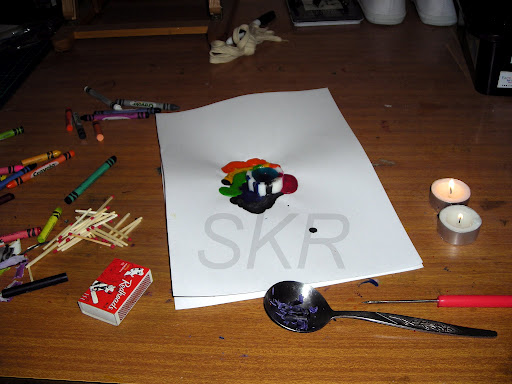
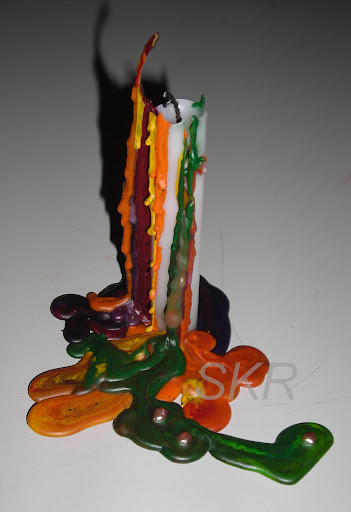
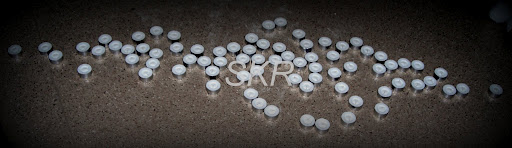
Continuing to develop my final project for sculpture class this term – an arrangement of between 50 – 200 objects in a 3 m square space, I have decided on my object – candles! Not just any old candles, candles that have been modified and turned into tiny fountains of coloured wax! My studio is currently covered in wax 🙂

This starts by raiding the broken up crayons from my Bridges kit and melting them 🙂 (I replaced them with some of those twisty ones)

 Experimenting with different ways of melting the wax

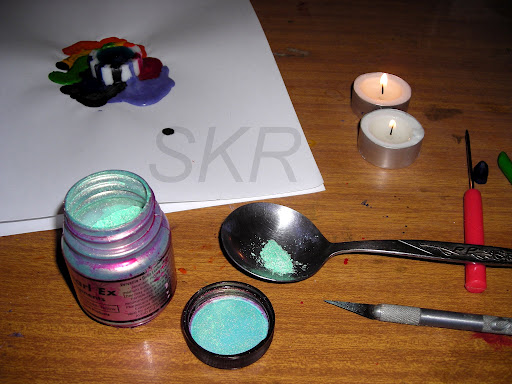
 Experimenting with colouring the wax with pigments

 Experimenting with additives = pigments, glitter, beads, pearls.

 Finding ways of melting the wax without getting black carbon in it.

 Playing with colours and glittery things

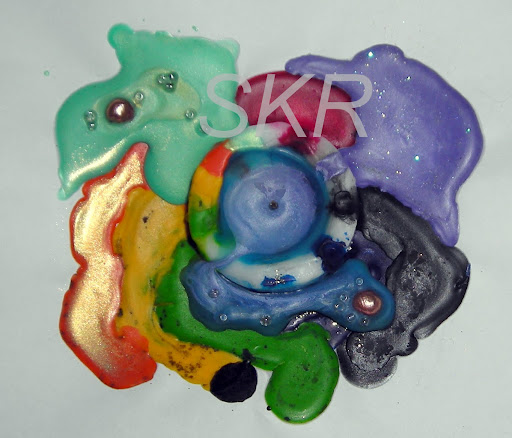
The first full candle – wax studded with pearls, the colours are too strong and gauche.

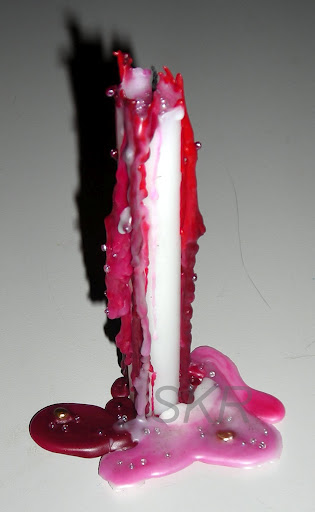
 Second candle, limited palette, lots more white wax in the mix to create tones and variation. The wax is studded with freshwater pearls and glass beads. No glue is used, I find different ways of heating and setting the jewels into the wax.

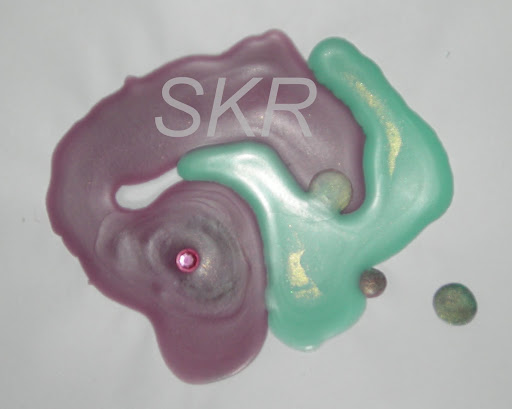
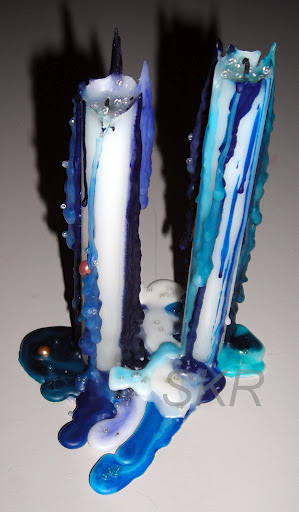
My first pair, blues and green hues, pink dyed freshwater pearls and glass beads.

Got the green light from my sculpture tutor today, full steam ahead with the project! I have a lot of candles to create over the next two weeks! Very excited 🙂

Poem – Rage of the broken ones

From March 2009 Journal

Such sweetness and
a delicate dream of safety.

f**k safety.
I’m a freak
does my nakedness
not terrify you?
don’t tell me
how sacred this is
It can never be free
of darkness
for such as I.

I want to taste your sweat
hold me and
hear my soul screaming
don’t turn away
face it
face the darkness and 
the horror of it
the blood and
the shadows under the bed
the memories that
never quite fade
the nightmares like
gin traps waiting each night
stalking and hunting my soul.

Howl with me
paint blood on your face
my demented soldier
come join my war
just don’t try to tell me
it’s all okay
it’s all okay now
it’s all in the past
don’t tell me
you don’t
see it too.

Don’t tell me its pretty
let me see the fire in your eyes
taste the acid of my rage
do I scare you?
do I disgust you?
I will take you down
where the shadows are
where the nightmares sleep
where the broken things
lie in pain.

You cannot make this better.

But you can hold me.
But you can
let me scream.

New library resources

I woke up the other day to find a parcel tucked into my door from the postie. I love waking up to nice mail, it really makes my day. This morning it was a collection I’ve had on my wishlist for the library for awhile, a collection of talks from the 2008 Recovery from Psychosis conference in Perth. The set was selling for about $30 plus postage, then dropped to $17 with postage so I couldn’t resist any longer. Here’s what was in it:

  1. “Hearing Voices and the Complexity of Mental Health Issues from an Aboriginal Perspective” 
  2. Dr. Helen Milroy (Australia)

  3. “The Personal is Political” Jaqui Dillion (England)
  4. “Hearing Voices with Children” Dr. Sandra Escher (Holland)
  5. “Voice Dialogue” Dr. Dirk Corstens (The Netherlands)
  6. “Understanding Psychosis” John Watkins (Australia)
  7. “Making Recovery Happen: From Rhetoric to Reality” Ron Coleman & Karen Taylor (Scotland)
  8. “Recovery with Voices: A Report on a Study with 50 Recovered Voice Hearers” Prof. Dr. Marius Romme (Holland)
  9. “Recovery from Psychosis: What Helps and What Hinders?” Lyn Mahboub & Mariene Janssen (Australia)
  10. “Working with Voice Hearers in Social Psychiatry”  Trevor Eyles (Denmark)

If you’d like to buy your own, you can get it here.

My library has grown substantially over the past month or so, there are actually some books in there at the moment I haven’t read yet – most unusually for me! I mentioned the new additions in the latest Dissociation Link newsletter, but if you didn’t get it, here they are:

I’ll be posting reviews and recommendations when I have time. All of these are available to borrow for a refundable deposit, if you have any to donate or to recommend as an addition, that is always appreciated too. 🙂

Sculpture Development

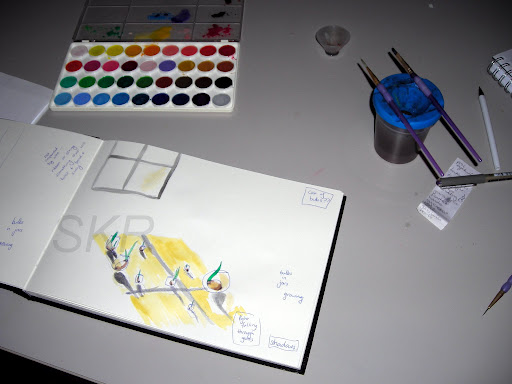
Now that I’m feeling a bit better I’ve been getting stuck into some sculpture homework! I can’t tell you how much I enjoy this. Our major project for this subject is to make an ‘arrangement’ of approximately 200 objects – all the same type, in approximately 3 metres square of space. I’ve been doing a lot of research into “Assembled art” and been surprised to find some examples I really like. Traditionally, this has not been a type of art I’ve had a lot of time for, it seems terribly lazy to arrange some cups on a floor and say viola! But I’ve been entering into the spirit of things and playing with colour, shape and arrangements myself.

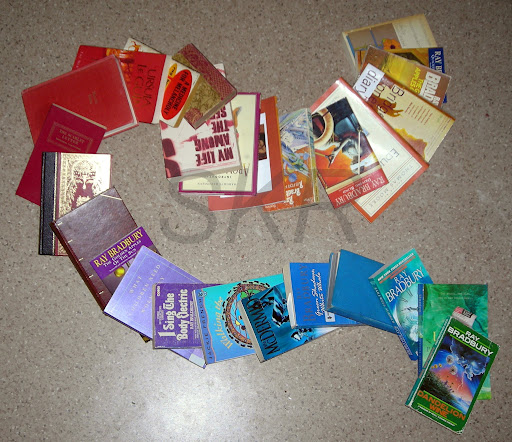
 I love books arranged by colour 🙂
Playing with candles:

 And cutlery:

My journal is looking a whole lot healthier, I decided to watercolour my design sketches in this one, ironing each page dry before I turn it (to stop them gluing to each other). This page illustrates the idea of arranging living bulbs in glass jars:

I have come up with a few ideas I’m really excited about. As soon as I get the go-ahead from my tutor, I’ll start buying and making the final project. Fingers crossed the one I really want to do gets a green light!

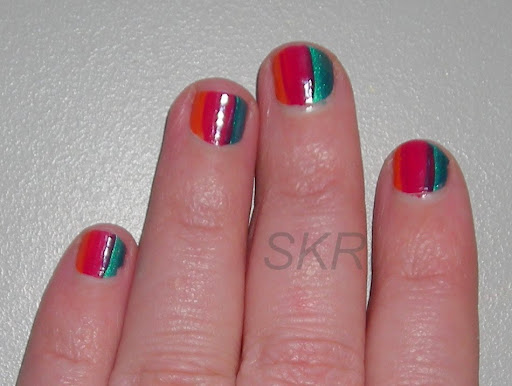
It is so good to feel back in the land of the living, I have been having a wonderful time! I painted my fingernails all stripy:

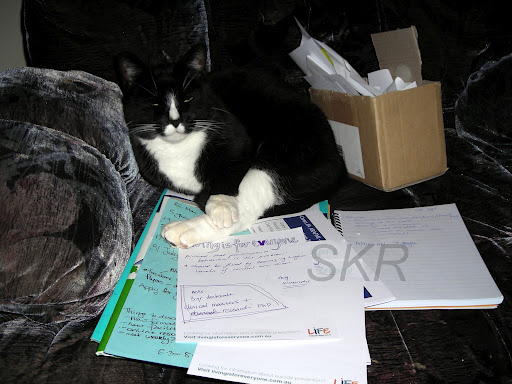
Sorted out a whole bunch of paperwork – well, went through it, took out the important tax stuff and put the rest in a huge pile in a cupboard anyway. My study desk looks great! Sarsaparilla helped lots:

And my lovely little geranium cutting is growing roots on my window-sill. I got all excited by the shadows cast by the glass when I was photographing it:

I’ve been able to get two loads of laundry done in this glorious weather and now I plan to work on tidying up Charlie’s grave and planting out my bay tree over it. I still can’t eat a lot of foods but I’m sure I’ll be fine in a few days.

Rainbow Boots!

I am at last feeling better after a nasty bout of gastro and celebrated by finishing painting my rainbow boots! I have just to heat set the paint and rethread the laces and I’ll be wearing these out and about all over town. 🙂

I love them! One is painted to look ‘smooth’ and one ‘furry’, just because. When I was a kid, I had a favourite pair of rainbow striped gumboots I adored. I was broken hearted when I grew out of them. Many years later I bought a pair of furry rainbow booties and wore them around the house until I wore the soles out completely. THESE should be a lot more durable! Hurrah!

Here’s what they started out looking like:

Then start adding paint:

And set to dry in the sun on the window-sill:

I’m sure these will be a hit when I go out face painting!

Recovery is not a one-way street

One of the things I’ve noticed in mental health (and to some extent the disability sector) is that we often clean up our autobiographies when it comes to the idea of recovery. I’m not talking about the Recovery Model here, which is simply gorgeous, I’m talking about the idea of recovering from something. Recovery is really messy. Really, really messy, in my experience. Recovery means having the ‘lightbulb moments’ (how I hate that phrase!) we all love to put in our memoirs, and it also means that three nights later we’re howling on the floor of the bathroom, wracked with fear and despair and convinced this will never get any better. Recovery is three steps forward, four steps back, two steps to the left and six to the right. Sometimes recovery means you are only losing ground slowly, under terrible circumstances, fighting like hell and only going downhill a bit at a time. That’s recovery. Sometimes recovery means you’re self-harming because it’s the only thing you can find that makes the suicidal urges go away. Sometimes recovery isn’t the smiles and sweetness we see in the brochures, it’s about trading an appallingly dangerous strategy for one that will kill us slower, because that’s all we can manage. And sometimes recovery is the way it looks in the movies, it is about light and hope and moving in the right direction and letting go of things that are tearing us apart. It is about healing and peace and green grass and kindness.

I give talks about my personal ‘Recovery Journey’ (ye gods) here and there. It’s a strange thing to do, and something I put a lot of thought into. I don’t want people to come away from them feeling overwhelmed or hopeless. Nor do I want to be part of the ‘spin’ in mental health, the messages I feel I’m supposed to be giving out that I do not believe and that my experience does not validate, such as “Just ask for help and it will all get better”. I know there are people for whom that has been their experience, and the last thing I want to do is deny their story. Their experiences are just as legitimate as mine. However, I also know far too many people for whom that has not been their experience, for whom the ‘help’ did harm. Life is complex.

Recovery is also complex. What we are recovering from is very different for many of us. What exactly is threatening to destroy us, to limit us, to cut us off from life varies tremendously. The strengths we use to recover are also highly individual. Recovery becomes pointless and limited when it is narrowed down to the same things for everyone, a one size fits all, eat your greens and get lots of exercise parental exhortation to conform. We can’t all recover in the same way, because we are threatened by different things and bring different strengths! Recovery works best when you tackle it with your unique strengths, whatever they are. For example, I write extensive journals which are mostly poetry. This has been absolutely essential to my recovery process. It is a safe place where I can be totally honest because I protect the integrity of my journals fiercely and anyone caught tampering with that process would be executed in a world of trouble. Ahem. In my journals I find the truth of how I was feeling, what was going on in my internal world at any time since I started when I was 14. I know that when I stop writing I have become silenced by something I am afraid to say. I feel very strongly about the value of a space to speak the truth, of creativity, of having a voice. I also know however, that not all of us are poets or writers. I am careful to encourage those who have these strengths to use them in their recovery, and not to impose the framework on people whose interests and talents lie elsewhere. If riding motorbikes is the thing that makes you feel alive, it can become part of your recovery instead. (Or as well as. You can be a poet-bikie if you want) One the most important principles of recovery I follow is to play to your strengths. Whatever it is you are good at, do well, whatever your unique personality strengths are – making friends, creating order, planning ahead, rolling with the punches, researching, expressing yourself, finding the funny side… they’re what you bring to the battle.

However, even doing this, recovery is not neat, not always uphill, not a one way street of ever increasing health. I think we do people a terrible disservice when we allow them to think this. Personally, as a peer worker, I am constantly caught in a difficult position between various of my values. On the one hand it is important to me to allow people to see the ‘rough edges’ of my process, the very real wounds I carry and difficulties I struggle with. Hence, this blog. I get stressed when I feel I’m starting to ‘spin’ mental health or the recovery process. Keeping things real and being truthful about the process is really important to me, and I get angry when people are set up to fail by being given the impression that if they just try hard/get help/take this pill, everything will be fine from then on. On the other hand, letting people see the very real pain and difficulty under this process can stress them out, make them feel anxious for me, and as a peer worker, can make them worry that I won’t be able to sustain what I’m doing and will leave them in the lurch. So I can get good feedback from both revealing and concealing distress – thankyou for being honest, it really helps, or thankyou for being professional and holding onto your own stuff to give me space to deal with mine. And I can get negative feedback from both revealing and concealing my distress – I’m stressed and worried for you, or you seem to have it all together while I’m a total wreck! I bounce about between values, and have learned that the line between is not only unclear – but what is helpful for one person is something the next complains about. The best path so far has been to listen to the feedback I get and adjust as I go, while keeping in mind that as a peer worker the attributes, such as respect and acceptance, that I am hoping to bring to my relationship to other people with mental illnesses, are also the attributes I have a right to expect that people will treat me with. Like recovery, relationship is a two-way street.

So, when I hear about services exiting clients who “aren’t recovering fast enough” I’m very angry, and I feel they’ve missed the point. When I have to fill in forms about my health and feelings to prove that I am recovering and the service I’ve been receiving is useful, I’m angry that a 5 point likert scale has more weight than my own thoughts and ideas about what is working for me and what I want. Even more, I’m angry that recovery is scored, at the idea that it shows a clear upward trend with no back steps. There have been times when a service has not been getting nice, joyous, increasing health scales from me, because I’ve been in severe crisis, where as far as I was concerned, still being alive at the end of the week WAS recovering! Recovery is more like a rollercoaster or a game of snakes and ladder than a “Go directly to GO” card in monopoly. Services that are genuinely client-centred and recovery model oriented will reflect that.


The Disability Tango

There are two sides to Sarah. No, this is not a declaration of multiplicity, rather a tension that I live with as person with a disability. One side of me is my potential. The talent and skills I have, my character strengths, experience, learning, everything I bring to my life that is an asset. Another side of me is my limitations. These are my illnesses, harm left by a history of chronic trauma, character weaknesses, things I struggle with. Something I’ve noticed that constantly frustrates me is that often people can see and relate to only one of these sides at a time. This results in a really unbalanced perception of who I am and often, a really unhelpful approach in relating to me.

Those who perceive only my potential often relate to me with frustration. A lot of pressure characterises these interactions. These people can see where I could go, and think that I am holding myself back or just need some encouragement to get there. They simply cannot conceive of my limitations, how real and binding they are. They push me to get into higher education, to write books, travel, give more talks, do more. They can’t see that I am already at my limit, doing as much as I can, as fast as I can. The effort it is taking to manage the cultural divides, to walk the world of community services when I am, at heart, a strange poet creature, the freak factor. The effort it is taking to disguise and contain the harm left by chronic trauma and abuse. I have had a personal goal not to cry at work, I don’t think I’ve ever made it more than three weeks without falling apart. So many triggers, coping with the bad days, trying to fit in, protect my credibility, look normal, contain my distress, not show the scars, do enough things that feed and nourish me so that I can handle the things that exhaust and deplete me. I am always at maximum output, because I have very big dreams and I have started a long way behind. It is very difficult for someone to come from where I have been and get to where I want to go.

So I work incredibly hard, and I live my life on the edge of a catastrophe curve, way out of my comfort zone, because that is where the change and growth happens. The level of pressure I put myself under is ridiculous and destructive, and the drivenness I live with is dangerously destabilising. Every strength run to excess becomes a weakness. My drivenness has got me through and kept me going when the world burnt down to the ground, but it is also volatile and costly and needs careful handling. But, and this is the important bit – it is still an asset, and it is a part of who I am now – I can no more get rid of it than you would pluck out your eye. I live with it and I try to live with it well. I will get better at it.

On the other hand, those who perceive only my limitations react to me with anxiety. Our conversations are frustrating because their reaction to every speed wobble is to tell me to slow down. Take on less, do less, cancel projects, rest more. What they don’t perceive is that when I was doing less, when I had almost nothing to occupy my time and no projects to pour my heart out into, I was not content. I was profoundly miserable. I need a sense of meaning in my life. I need projects to mull over, I need intellectual stimulation, I need things to do. I describe this to my friends using a dog analogy – my brain is like a dog, one of those really big, clumsy, active dogs. If it gets bored, it starts chewing on the furniture, digging up the garden, and inventing amusing games where it tears all the orange coloured clothes off the washing line because the neighbour rode his bike this morning and left the car behind. I need to keep it busy or it keeps me busy with amusingly intricate symptoms of mental illness, where I find myself re-categorising my freezer contents or developing new and interesting tics. Down that road, peace and harmony do not lie. Doing less is rarely the answer for me, and I feel incredibly frustrated by how often people want to slow me down – with the best of intentions! Want to send me back to bed, have me content living on my pension, resting comfortably within my limitations, pushing nothing, risking nothing, trying nothing, and never finding out just what I really can achieve. It’s stifling, patronising, and phenomenally dangerous.

Sometimes I fall apart because of things that would make anyone fall apart – I get sick, life crashes, pets die. It wouldn’t matter if I had spent the previous month working on my tan instead, these things would still bowl me over. They are nothing to do with my hard work or lifestyle. Sometimes, it’s true, I crash and burn because I’ve pushed things too hard. You know what? It’s MY life! I’m allowed to! If I accept that the occasional crash is the price I pay for pushing myself hard into recovery and growth and learning, then I’m allowed to pay it. My choice. I’m the one who lands in bed with headaches and joint pain and hallucinations, and I know this isn’t neat and tidy, but growth isn’t. It’s messy and strange and you learn on the fly. The thing is too, this isn’t my first rodeo. I’ve been really damn sick. I’ve been so severely dissociative that I’m blind and cannot feel touch. I’ve been so disabled by pain and fatigue that I’ve been in a wheelchair. I have learned the roller-coaster of chronic relapse because I pack a months worth of longing and dreams into the one good day I get and wind up in bed for weeks afterwards. I’ve been here, I’ve been on this carousel a lot. I’ve learned a lot. I’m a lot more tuned in, a lot more caring of myself, and a lot better than I was then. A day of pain and headaches as pay off for a week of accomplishments? You’ve got to be kidding, I used to pay a fortnight of agony for one trip to the doctor where I couldn’t get a close enough park. I am used to paying very high prices for the opportunity to live, walk places, be able to think clearly enough to read. This is nothing. And I have lost years of my life, I cannot wait any longer. Carpe diem quam minimum credula postero. Memento mori.

Health for me has been a complex balancing act, I’ve had to learn not to push the good days too far, setting myself back. I’ve had to learn that emotional stress costs me in illness, and that self care is not self indulgence. I’ve had to learn that intellectually understanding my trauma history in no way reduces it’s impact. I’ve had to learn that taking on board the cultural reactions to me; as a crazy person, white trash homeless, a battered wife, or a disabled person – will kill my spirit. I’ve also had to learn that if I become afraid of pain I will never push my limits and never get any better. I live with a degree of incapacity, pain, and distress, in order to live. Trading off painlessness and stillness for not accomplishing any of my dreams is a fraud.

The people who relate to me best are those who see both sides of me, my potential and my limitations. They don’t try to stop me working the way I work, they try to support me. Even if at times I drive them nuts, worry them silly, or get really snappy when they try to advise me. I’ve been alone an awful lot, I’m not used to community yet. I’m used to only relying on myself, and some days politely telling a well intentioned person to hang on to their advice because I don’t want it is stretching my patience.

What’s helpful is when people show me more efficient ways to do what I’m trying to do, and get it when sometimes options that seem easy and obvious to them are not workable for me. Some days I take the stairs despite the joint pain, because the PTSD is too bad to handle the lift. Almost all of my limitations are invisible, but I can tell you from inside here that there is always a reason I am doing things ‘the long way round’. And some of us have to learn things the hard way, we are stubborn and independent and scared of burdening other people. Don’t forget that’s part of why you love us in the first place! And think for a second what we would be like with the limitations and disadvantages we face if we weren’t so pig-headed. Believe me, this is the better of the options. If all else fails, remember you’re not perfect either and people still love you. 🙂

See more like this:

I’m sick

I’ve come down with gastro so I’ve had a very unpleasant couple of days. A locum doctor came out to the house yesterday but coundn’t rule out more serious conditions without tests, so I spent the evening in hospital having tests done and getting some water into me via a drip. The conclusion is that it is just gastro, nasty but not dangerous, so when my fever started to drop and on the proviso that I drink a lot of water they let me come home. This wouldn’t be such a big deal if I wasn’t needle-phobic, but I really hate hospitals, I hate needles, and I hate drips more than anything. The last thing you need when you have gastro is procedures that make you feel distressed and nauseous. Various meds are helping me keep water down so hopefully I will soon be feeling more human again. At least this didn’t happen last week I guess.

Sculpture – female head

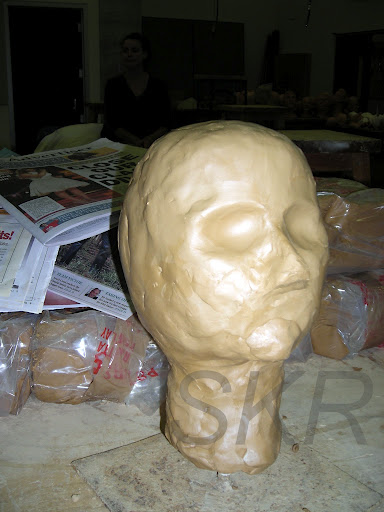
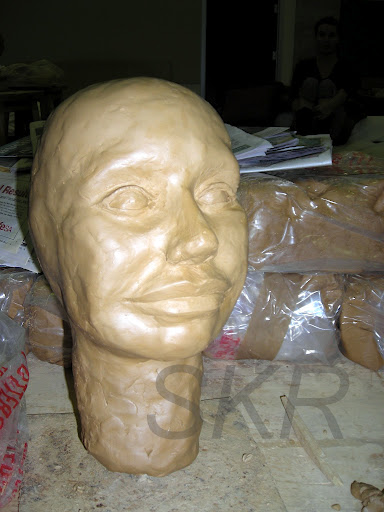
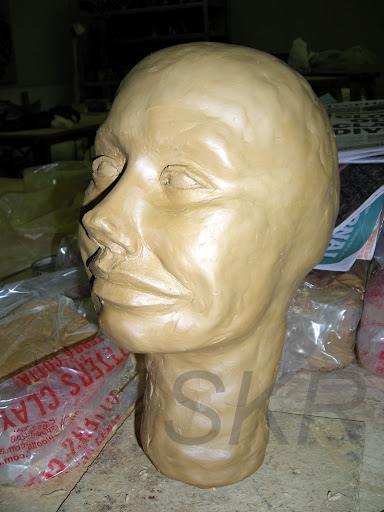
I have missed a class in Sculpture which is unfortunate as the rest of the class were already halfway through this project. We had a lovely life model come and sit for us and our task was to attempt to create her head in clay. I had to work pretty quickly to catch up, and I’ve never done any modelling from life like this. I’m pleased with my efforts although I’m made plenty of beginner mistakes. The most obvious to me is struggling to get all the aspects of a face in the right proportions! Here is the result of several hours work:

Which started out looking like this:

Wrapping clay over a centre of newspaper ensures the middle of the head is hollow, which is essential for being able to fire it.

Next, starting to develop the basic head shape. They look really creepy at this stage!

Adding some of the details…

And continuing to refine.

She still needs work on her throat, a second ear, her hair, eyebrows, and all the skin smoothed over. I’m hoping to finish her next week based on some photographs the life model kindly let me take (she won’t be back next week) while I continue to work on developing the ideas for my final project in this class. It’s gone by far too quickly! I am really looking forward to doing more.

Poem – into the great Dark

from July 2004 Journal

Things swell within me like poems surfacing
to be born into the great Dark
and the silence that has swallowed me.


But all my hourglasses are empty
I have no more time to give
they are words I do not speak
the silence remains
and all my dreams are stained with grief.


Multiplicity and relationships

This is an area I’m often asked about; how do people with ‘multiple personalities‘ have relationships? (if you need a refresher on common terms, that link will take you to a relevant brochure) Well, there’s not one answer! Different people adopt different approaches to relationships that suit them. Non-romantic relationships, friendships, family, co-workers, may be a bond between one part or many or all parts in a system. Friends may be aware of the multiplicity or may think they are always interacting with one person. If they only ever meet one part, this would be quite an accurate perception, although they might be surprised by some of the ‘out of character’ seeming hobbies or activities their mate gets up to at other times, or a bit confused by mutual friends who seem to be describing someone quite different. On the other hand, friends may already be meeting and spending time with many different parts, but unaware of this. A pretty common conversation when a multiple discloses their multiplicity is for the friend to to expect to see them switch to someone totally different, and be pretty surprised to hear that they’ve already been meeting 5 different parts without knowing it.

Roles that require specific skill sets are often taken on by parts most suited to them, so for some people only one part ever goes to work, for example. In other cases, parts share roles for example 10 parts may all be involved in different aspects of parenting; organising, nurturing, downtime, play, deep-and-meaningful conversations etc. There’s tremendous variation from person to person about how this works out.

Romance is the area that people can be confused about. I’ve observed a few different basic models about ‘multiple romance’. A common one is that only part has romantic feelings and inclinations, they are the part that forms the romantic relationship, or the only part allowed to form a romantic relationship. So for example, lets say Roxy who has a team of 4 other parts is in love with Justin. One of the other parts sees Justin as a friend, one of the other parts is very young and sees him as more of a father-figure, one of the parts doesn’t particularly like him and prefers not to spend time with him, and one of the parts is rather maternal and protective towards him. Roxy is the only part who spends time with Justin in a romantic way. This is in many ways not that different to relationships between non-multiples – some of the time is spent romantically, some of it as companions, some of it apart etc.

Another model I’ve seen is more than one part having a romantic attachment to the same person. In this example, let’s say Cassandra, Tayla, and Michelle are all parts of one system who are romantically involved with Olivia, but the other 10 parts in their system are not. Olivia has a romantic, girlfriend relationship with all 3 of those parts that is different and distinct to each of them; their tastes, personal interests, and personalities.

Another model involves more than one part with romantic feelings, but creates certain boundaries to maintain a monogamous relationship. For example, Samuel is married to Beth, but other parts Sam, John, and Sally are not in a romantic relationship with Beth. Samuel, Beth, and the rest of the parts have decided that Sam and Sally can express romantic feelings for other people, provided the other people know Samuel and Beth are married and that no physical contact takes place. John is not interested in romantic relationships.

I’ve also seen a model closer to poly-amorous relationships (having a romantic relationship with more than one person at the same time), where more than one part has romantic feelings for different people, and separate romantic relationships are pursued. For example, Stacey, Kelly and Cindy are all parts in the same system. Stacey and Kelly are both in long term relationships, Stacey with Paul and Kelly with Shane, and Cindy enjoys a night out with a new casual partner now and then.

Some multiples have no parts with romantic interests and are contentedly asexual, others choose a celibate lifestyle for many reasons such as reducing internal conflict or healing from past abuse. The complexity of multiple relationships can make it challenging to develop good communication and team functioning whilst trying to maintain everyone’s connection with outside people. Sometimes not engaging romantic relationships is a good option, certainly it’s one I’ve found very necessary for resting and recharging.

Some multiples choose not to develop long term relationships but have casual partners instead. Some multiples have truly poly-amorous parts that have relationships with more than one other person at the same time.

There are also multiples who get into relationships with other multiples. In this case, there can be a very complex web of relationships as every part can have their own unique relationship to every other part. If neither person is aware of the multiplicity that can add an extra layer of confusion to communication. This type of relationship is not as uncommon as you might think, most multiples have felt very ‘different’ without being able to describe exactly how or why, meeting another multiple can be the first time they have functioned similarly to someone else and felt like another person. This sense of kinship can be a strong bond. I have noticed that often the both multiple systems will create pairs or teams that often spend time together and get along – eg a parental adult part of one person’s system may often come out around the child parts of the other’s system, and vice versa. These teams can be asexual, as in the parent-child dynamic, or romantic relationships, and they may be based on similarity; eg both the party girls going out together; or on complimentary pairs, eg a skilled teacher and a keen student. This may not work harmoniously, for example a parental part and a teenage part may fight constantly, or two highly traumatised distressed parts may set each off badly. Not all the parts may ever meet all the other parts, and if some parts go away for a long time, or one or both systems are polyfragmented – that is, having groups of parts that operate completely separately from other groups of parts, then chaos and distress can be caused when relationships are suddenly disrupted or severed. If some parts hate parts of the other multiple the relationship can be fractious or abusive, even if other parts are loving and invested. I have noticed that often one person’s system will ‘lead’ by doing the switching, and the other person’s system will generally ‘follow’ by adapting to those switches, this can be an organic dance between them or can create a power imbalance between them.

Having parts with different senses of their own gender or sexuality is not universal to all multiples, but it is also not uncommon. Sometimes the minority gender or sexuality in a system can feel very isolated and get ‘outvoted’ on being allowed to openly identify or act on any of their feelings. Because multiplicity is often overlooked as a possibility, many people have spent a long time suppressing parts that are very different to them, or being confused by co-conscious switching where sometimes they ‘feel female’ and other times they ‘feel male’. It can be a great help to not have to ‘choose’ one identity but to respect the diversity internally and find ways to reduce shame, stigma, loneliness and misery for all parts. It is particularly helpful, given this, if queer and transsexual support services are sensitive to the needs of multiples and able to provide friendly support.

Sometimes too, parts have formed with a strong sense of identity that has developed in reaction to trauma or distress, for example a frightened abused girl may split and form a part who is a big strong adult man. Later in life that man may conclude that his sense of masculinity was a reaction to a terrible situation rather than an integral part of who they all are. Sometimes parts change their sense of identity and their roles over time. In other cases they don’t. Sometimes parts become more alike, systems with straight and gay parts become bisexual, or an all male system with one female part integrates and considers that part to be his ‘feminine side’. There is more than one way that multiplicity can form, and there is more than one way that people heal, grow, and have relationships. What’s more, people change over time, and models that worked really well at one stage of life can feel restrictive or exhausting or depressing later on.

However unusual or complex these models of relationships may seem, the goal is still the same as any other human being – to love and be loved. To find a place and a way of being in the world that is not lonely, painful, or causing any harm to anyone else. It might be a bit more complicated at times, or involve conversations, decisions, and compromises with other parts to get there, but it’s a good worthwhile goal. It might also help to remember that everyone brings all their parts into their relationships too, their competent adult parts or cheeky teen parts or hurting, selfish child parts. All relationships have to navigate the whole complexity of who a person is, has been, could be, to love them as they are and find ways to create space for growth. All love is complex, mysterious, amazing, and takes lots of work. It is certainly possible to love and be loved by a multiple.

For more information see articles listed on Multiplicity Links, scroll through posts in the category of Multiplicity, or explore my Network The Dissociative Initiative.
RIP Charlie

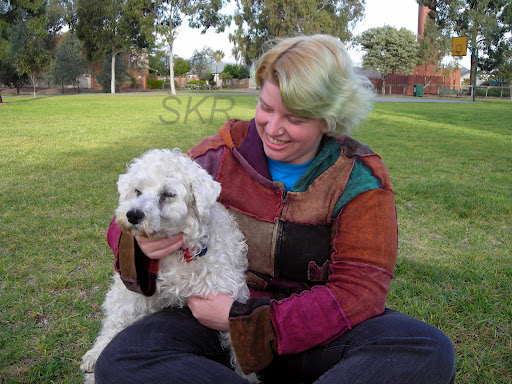
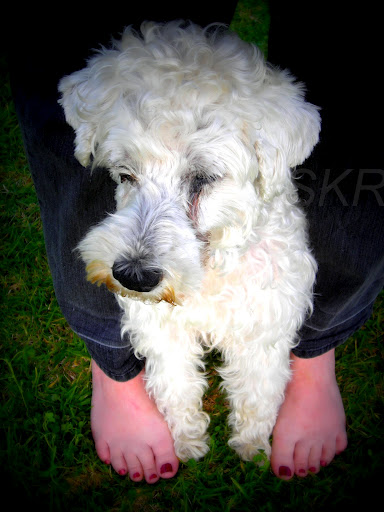
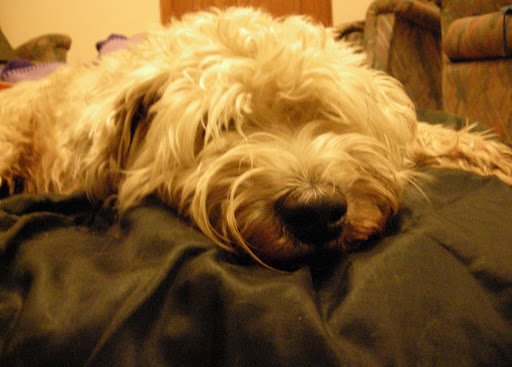
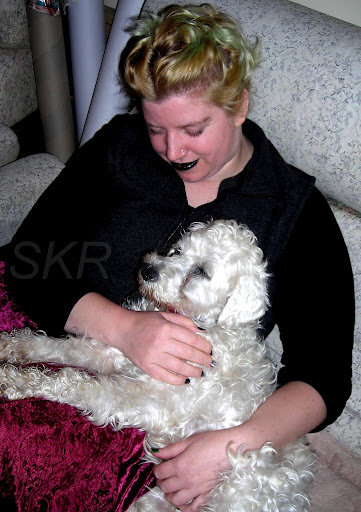
Charlie died at 4.15 on Tuesday. The decision to put him down was incredibly difficult to make. It was very quick and very peaceful, I stayed with him the whole time. He wasn’t stressed or upset and was happy gobbling treats from my hand. An overdose of anaesthetic stopped his heart. I miss him terribly.

The last week we spent together was very precious to me. We spent a lot of time in the sunshine down at the local parks, going for walks, or snuggled on the couch watching movies. I knew at the outset that once I’d decided I could no longer leave him at home alone and needed to put him down that I wanted to spend a last week with him. I often waver on those kind of gut instincts, I feel pretty strongly about following through on things I’ve said I’ll do. I’m so glad I didn’t this time.

I wanted to get him groomed and cleaned before the end, it took quite a bit to find someone who could fit him in and checks back and forth with the vet about his health and making sure it wouldn’t stress him. In the end the lovely people at Doghouse Daycare bent over backwards to look after him and treat him gently. I stayed with him as he was washed and trimmed. This made it easier for me to keep him clean and dry over the last few days.

He was such a funny little chap. I got him when he was 3 years old, as his owners were moving overseas and couldn’t take him. I took him off to the vet worried about his eyesight because he was running into things – trees, walls, posts. They had a look into his eyes and did some tests and said they were working just fine. As they were telling me this, he tried to walk straight off the examination table! The conclusion was that he was just a bit daft.

He had a tendency to explore life with his face, stuffing his nose into everything. Because he’s a schnauzer cross, he has lovely long whiskers and eyebrows, which he would constantly fill up with prickles and burrs.

After a bath when his coat was long, he looked a bit like a sheep with a static charge. The first time I got him clipped they did a very short cut all over and I didn’t even recognise him afterwards! He has a very fine pointed terrier nose under all that fuzz!

It’s been a very disrupted relationship, with the chronic homelessness I’ve experienced I’ve had and lost him many times. I gave up on ever seeing him again last year and was surprised to suddenly have the opportunity to get him back last December, and then horrified at the terrible condition he (and Loki) were in. It’s been really strange and stressful. I love him to bits but the bond between us got jammed. Mostly I felt overwhelmed by guilt and stress and wished I’d been able to give him a better life. I’ve known for the last several months that I’m kind of numb about him but I didn’t know how to fix it. This last week was very precious because it finally clicked. I haven’t been handling him very much, between pain, arthritis, incontinence and infection I’ve been fairly hands off. I mean, I’d scratch his ears and give him baths, but he wasn’t allowed on the couch because I’d have to keep washing the cushions, as it was I’ve been doing a couple of loads of laundry a week, most of them old soiled towels. He didn’t get a lot of cuddles and I don’t spend much time on the floor because my joints hurt. This week I threw all that out of the window. He got wrapped in towels and cuddled on the couch for hours. He went everywhere I went in the car. I sat on the grass in the park and played with him. I discovered he could still ‘dance’ when you played with him, pushing him over to rub his tummy. The extra affection really made him happy. He’d lie on the lawn in the backyard in the sun, chewing a bone and radiating contentment. When he was anxious he wouldn’t just come and find me, he’d learn against my leg and beg to sit on my lap. When I gave him a cuddle he’d snuggle his face against mine. It was like the difference between a baby who snuggles into your arms and one with autism who lies stiff against your hold. He felt loved and he snuggled, and when he snuggled all my numbness disappeared and I finally felt bonded. Too brief! But I’m so glad it happened.

Somewhere in the mess and pain of the last few years I seemed to have turned off the attachment part of me to stop being overwhelmed. But that’s not how I want to live, it’s eerie and painful to feel like there’s a layer of thick glass between you and those you love. I’m glad I accidentally stumbled onto what I needed to connect, even though I now feel heartbroken at losing him, at having so little time with him. I’m also so grateful. I’m going to dig back through the books and information I have on attachment. I need this back.
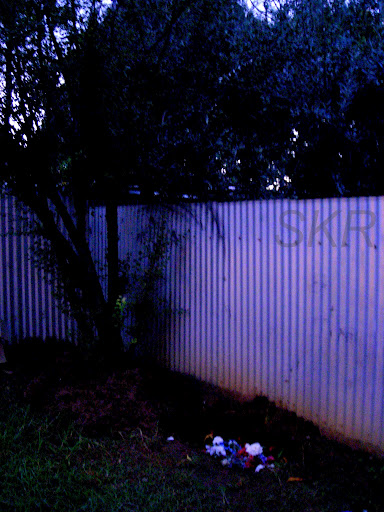
I dug (with help) a grave for him in my backyard. We filled it with autumn leaves and then covered him with flowers and buried him. I’m going to plant my bay tree there.
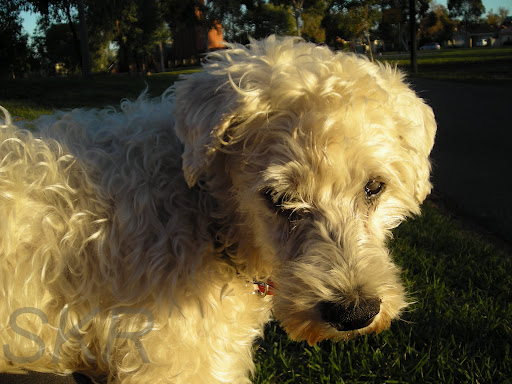
I wish we’d had longer, more years in the sun. Less pain and confusion. His life was harder than it should have been, but it still had value. He was loved, he is missed. RIP xxx
I can’t think straight

or see straight. I feel dazed and exhausted and hungover, keep going hot then cold, thinking in mad rapid spurts then shutting down so blankly I can’t work out what the next move is. Bone tired, with a hole punched in my chest, and the simple immutable fact that yesterday I had a dog who danced and today he is buried in my yard. Flashbacks to previous grief and loss, all these kind people who understand that he wasn’t just a pet, he was my dog and I loved him, so strange against the other times when my world has ended and I’ve mourned alone. Everything twists and tangles, memories collide, time distorts. I don’t care about any of it, I just want my dog back.

A poem for Charlie

Hear my song of love,
little white dog
let me wrap you in a spell
where no time passes and
no sickness creeps
only you and I, and the grass and sky
the sunlight falling pearl-white upon your fur
silken-eared, faithful heart
wind in your face and your body next to mine
all of life yet to be lived and no rush to do it
that is my wish for us, little dog
that is the spell my heart would weave

But all things have their seasons and yours is done
long gone the boundless joys of youth
time to be free now, I’ll not hold you here in a world that’s darkening
no pain for you love, no long anguish
just the trust, the loving hand, the light on the grass.
Only peace for you, leave that broken body behind
come here, take up your place in my heart
never sick again,
never again alone or apart.

Getting back into cooking

I’ve been doing a lot more cooking lately, which is something I used to enjoy a lot but kind of fell by the wayside when life got complicated about 18 months ago. Cooking is a good sign for me, a settled in, I-have-a-home thing. During times of crisis I eat tinned soup or sandwiches from service stations. I’ve recently bought myself a cheap 5 cup rice cooker, which is perfect for someone who lives alone. Here’s my first meal in it, chocolate, orange, and raisin rice pudding. These are awesome and can cook just about anything, I really recommend them. Certainly a lot easier than hand stirring a risotto!

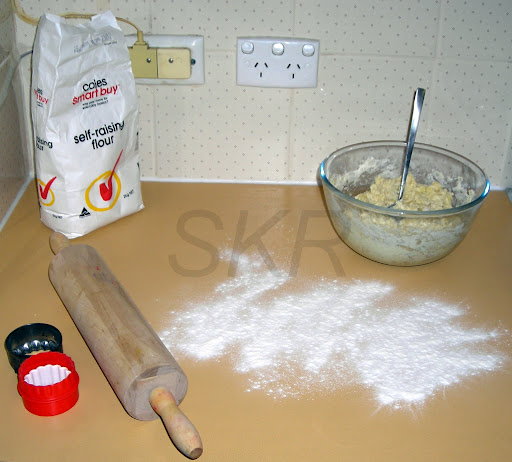
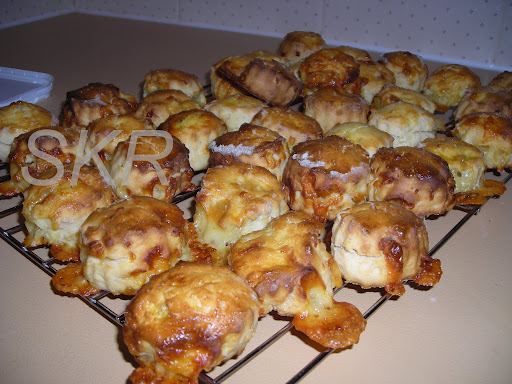
I also cooked a batch of cheesy mini scones recently. I love scones, they’re so simple and tasty.

Basic one-pan cooking for the person who lives alone 🙂

And the ultimate lazy meal – a bit of everything tasty from the fridge or cupboard. Feels good to be preparing my own food again.

House becoming home

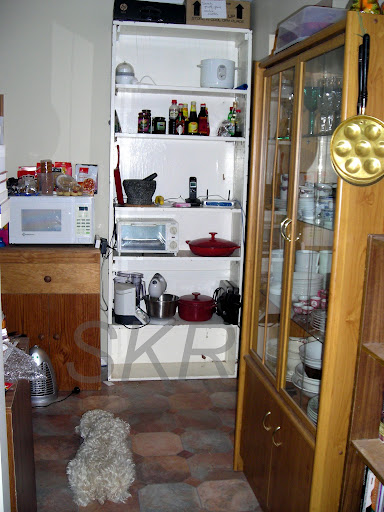
Moving in is still a bit of an ongoing project, and there are a number of things that I’m working on to help me feel safer and more at home in this new place. I’ve recently been adding some more furniture to my place, which has given me enough shelf space to finish unpacking the rest of the kitchen boxes. I’ve been working on getting my kitchen set up as functional as possible to make it easier for me to get back into more cooking. This is a good thing both because I enjoy cooking, and because cooking often leads to eating more frequently, which is still a struggle for me.

Here is my DI library, on top of my paper file, on top of the lovely new table I found on the side of the road this week. I’m very pleased to get this lot off the ground and out of the dust zone.

Also new is this fantastic bookshelf that was a side of the road find a few years back. It’s not pretty but it si extremely strong, which is something to be valued when you own cast iron cookware.

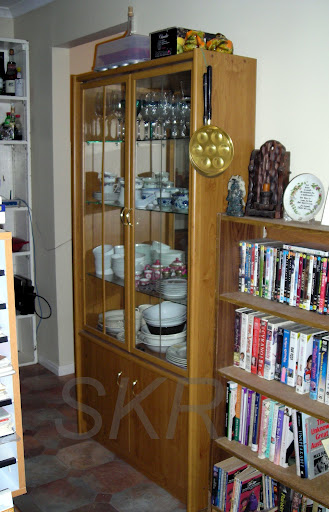
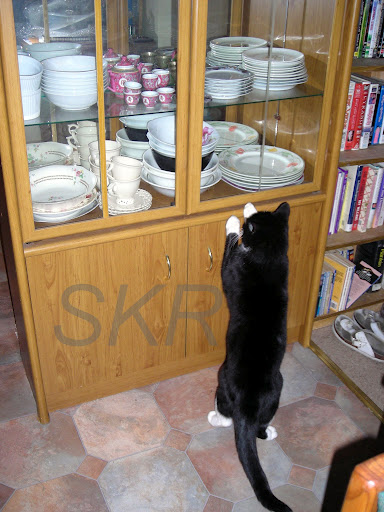
This beauty was a gift from a friend who didn’t want it anymore. Possibly the prettiest bit of furniture I have! I’m quite thrilled to have all my lovely table ware on display. 🙂

Sarsaparilla approves also. He’s aware something is going on and has been sticking close lately, and sleeping on my bed every night. Grateful for that.

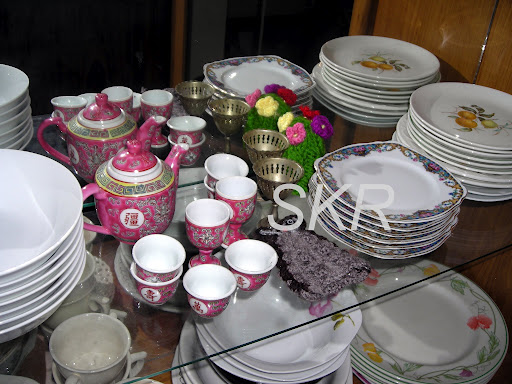
The lovely tea set I bought back from my trip to Singapore in 2011, and my favourite silver egg cups and egg cosies. None of my tableware matches in the strictest sense, I have found pieces here and there cheaply and assembled a collection. They are all united by my love of them and the medium, no stoneware, no porcelain.

This stunning blue set is also from Singapore, one of my absolute favourites. I love how the little tea cups have lids to stop the tea going cold.

My Asian foodware set, partly from Singapore, partly from here, and a lovely Arabic-inspired coffee set.

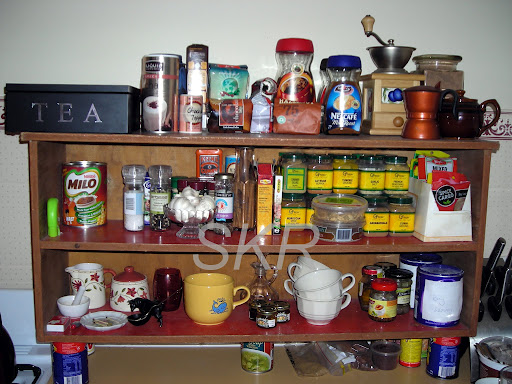
I’ve also re-organised my teas, coffees, herbs and spices to make things easier for me to find. I need visual reminders of what I have else I tend to forget about it and it languishes at the back of a cupboard. I like having my herbs, spices, and teas all close to hand.

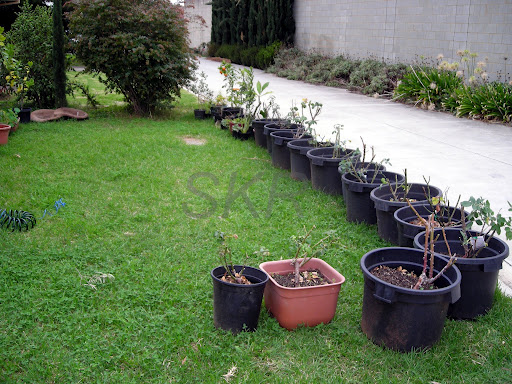
I’ve also been getting a hand bringing over some of my garden, which is really exciting. I’m planning to turn the front yard (which gets the most sun) into a veggie patch and rose garden. I own a fair number of roses in pots at the moment, I’m planning to dig out some of the lawn and plant in the roses while they’re dormant over winter. That will make my life so much easier when it comes to watering things in summer. I expect that next year these will really start to shoot up and I’ll get some wonderful blooms. I’m really looking forward to tending a veggie patch again, it’s one of my favourite grounding techniques, both the hard labour and the magic of growing from seeds and cuttings. I also love to cook with what I grow, and I can’t wait to have my own thriving herb garden again. I bought some plants from my favourite herb lady at the Medieval Fair as usual, I have a lovely lemon verbena, bay tree and perpetual basil all waiting to be planted out. It will be good to get my hands in soil again when I feel ready.