Great arty news, awards and so on

I finally got back the marks for my Digital Media class last year – I think is the best result I’ve had for anything in my Visual Arts degree so far –

HD digi media

This is for the stop motion animation project I did in a small group. See more details about the project here. Apparently the animation is now being used as an example for future classes. Wow, nice!

Considering that my first involvement with the medium of film: Regeneration won an award in Canada recently, I’m wondering if this means I should give film/animation/digital media more serious consideration in my degree or arts practice?

It’s also making me think that I work well in teams, and to deadlines, despite what I’ve always believed. Maybe I need to seek out some collaborative art opportunities? 🙂

In other exciting news, I collected the keys to my new studio today! It’s been build and is ready and waiting for me to paint it. I’ve bought the undercoat and today Rose and I selected a top coat colour that will harmonise well with the black/white/blue theme already present. I just have to make time to get in there and paint it now! I’m excited and anxious and overwhelmed by admin and homework and many other things – but it is happening, and I can’t wait to show you the results!

Health & pain

Rose and I are carefully putting some thought into our health, moving gently around mindfields of food issues and body image and social pressure. We are finding some things that are working for us without triggering bigger problems than they solve, which is saying something. 🙂

So far, we’re eating a lot of rainbow salads and other good foods, without worrying about restricting anything. I don’t do well with restricting and am vulnerable to binge/starve behaviour. So this gentle approach is working well for me.

We’ve also started exercising regularly. Rose loves swimming and I’m finding, to my joy, that swimming seems to really suit me! I’ve swum a little over a kilometre last week without any significant increase in pain! The lack of load bearing on my joints seems to make a big difference. I love having an exercise buddy and I’m feeling excited about building my capacity and my fitness. I’m hoping to gently increase my quantity of exercise with swimming and walking Zoe.

Exercise is a tricky one for me, too much leaves me shattered with fatigue and pain. Too little reduces my muscles tone and slows my metabolism in ways that leave me sicker. This is a common dilemma for people with fibromyalgia and chronic fatigue.

It’s very important to me to maintain my happiness with my body, it’s taken me a long time to feel content and settled in my skin and I still have bad days at times. There’s no point in me being successful with a fitness goal only to have my brain collapse. My aim is some more energy and better conception/pregnancy.

Unfortunately the endometrioses seems to have returned and I’m once again very sick for days each month. This is forcing me to either return onto the meds, which are associated with slow but steady weight gain, or step up my plans for parenthood. I’m ambivalent and wrestling with the options. One possibility may be going back onto the meds with some dietary modifications to try and reduce their impact. It’s a hard call.

In the meantime, I’m enjoying all the extra swimming and hoping it will pay dividends in increased fitness and pain reduction if I pace it carefully. 🙂

Falling into colour

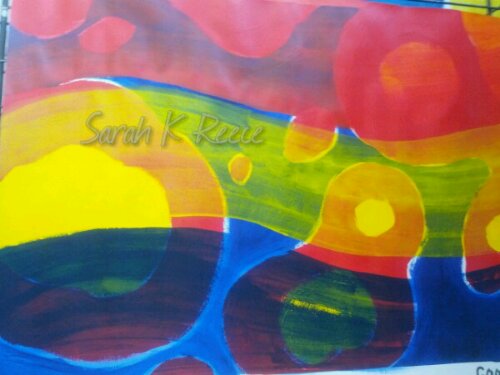
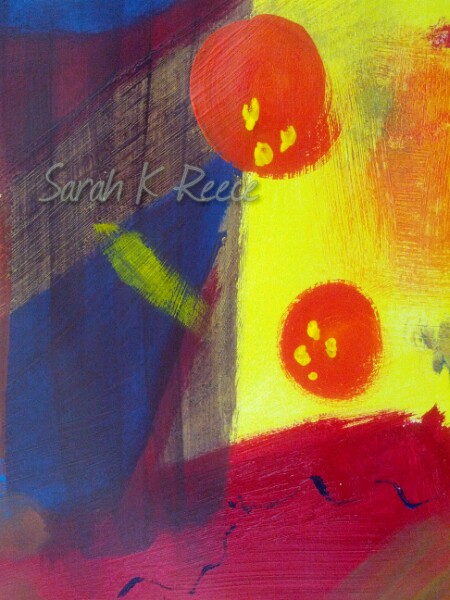
We’re exploring colour theory in Painting class at college and I’m loving it. Given permission – or rather, mandated to investigate different combinations of colours and ways of understanding the colour wheel, I’m in my element. I find that colours that I have an aversion to can be combined to create the most delicate and beautiful hues. I’ve bought a book about colour mixing and I’m starting, for the first time, to really understand the way colours work together. In a small way, at any rate. Here’s some samples of my experiments, I so enjoyed making these

This was blending different cool primaries together:

image

This one was about making glazes to paint over an existing work:

image

I was so taken by this wash of purples:

image

Basic glazes: warm colour glazes over warm colour block painting. I liked the red over the yellow particularly.

image

It doesn’t show up all that well in the photo, but this string of blends are each quite different:

image

Some close-ups. I kind of fell into this work. Stopped noticing how ill I was feeling or the passing of time. Just the stroke of my paint brush and the colours blending. There’s something very peaceful about making art this way.

image

image

image

image

image

Dissociation is a super power

“Please tell me there is an bright side to dissociation“. Someone found my blog the other day by searching for this phrase. It makes me ache with frustration and sadness!

Of course there is a bright side! There are so, so many bright sides. They get lost when we talk about illness, disability, deficits. When we share the ‘once it was helpful but now it’s a problem’ story. When we collapse a whole life into a single, painful narrative of difference and limitations. Dissociation can be horrific and devastating and I don’t make light of it or of the suffering people experience. But this isn’t the whole story! Let’s start talking about bright sides, shall we?

Not all dissociation is pathological

Dissociation has been broadly defined. This means a LOT of highly valuable, important skills are being included in the category. Some level of capacity to dissociate, when it is broadly defined like this, is actually essential in our ability to function. Disconnecting from things is helpful in our ability to focus. People who struggle to damp down any of their sensory input are overwhelmed and highly distracted by it. Being able to put aside most of the input (the sound of a fly buzzing, the prickly feeling of rough socks, the worry about your friend who isn’t talking to you, the slightly sick feeling after drinking too much water) to focus on something important, like an exam, is very helpful!

People who are struggling with severe and chronic dissociation, the kind that leaves you numb, confused, lost, unable to feel, taste, touch, smell, or remember the faces of the people you love, often think of these kinds of dissociation as existing on the other side of a continuum of health. That once they’ve got the ‘bad’ dissociation under control, and they’re back to ‘normal’, maybe then they will get to experience some of the good kinds.

I disagree. Those of us who are drowning in the kinds of dissociation that takes away instead of enhances our lives are closer to the useful kinds of dissociation than many regular people. We are well versed in it, we are used to it, we have a huge aptitude for it, and often we are only drowning in it now because we once stumbled across it as something incredibly helpful. Do we need skills other than dissociation to navigate life? Certainly! Does depending on dissociation exclusively leave us uneven and struggling? Of course. But, sometimes when I’m talking to people who are absolutely overwhelmed by intense dissociation, I talk about dissociation as a super power. Sometimes working on reducing it through grounding techniques and trigger management just isn’t working. Sometimes the first step is to learn how to live with it better, how to use it to your advantage, how to stop hating it and feeling destroyed by it. Sometimes we need to become better at being dissociative, rather than less dissociative.

We are so used to this idea that dissociation is bad. We are so used to this idea that our minds are damaged and broken, and that we need expert intervention to help us be more normal and functioning. Dissociation can be a terrible thing. But it can also be a gift.

  • Dissociation can be learning self hypnosis to turn off your experience of pain during a dental visit.
  • Dissociation can be letting go of the bad memories for awhile so you can have new experiences.
  • Dissociation can be the ability to attend uni and study despite homelessness and self harm and carer responsibilities and your dog dying.
  • Dissociation can be discovering that you have a part who has not experienced any of the loss or heartache, a part who loves like their heart has never been broken, who hopes and dreams and cares and helps to lead your whole system to better places.
  • Dissociation can be sobbing into the night, overwhelmed with grief at the loss of your child, and still being able to get up the next day to hug and cook breakfast for your other child.
  • Dissociation can be disconnecting from the panic and terror and the overwhelming smell of blood to be able to help out at the car accident.
  • Dissociation can be laying in her arms and touching her face and feeling the minutes stretch out to whole days, to years that you’ve lain here like this, alone together with no world intruding.
  • Dissociation can be not noticing you haven’t eaten all day because the book you’re reading is absolutely brilliant and captivating and you can see all the characters in your mind and hear them talking to each other and at night you dream about them.
  • Dissociation can be walking away from every cruel and unkind thing ever said about you and finding new ways to think about yourself.
  • Dissociation can be having other parts to ask for help, not being alone anymore through any of the hard things.
  • Dissociation can be a four year old inside singing you to sleep when you’re lying awake worrying about the world.
  • Dissociation can be going numb when you’re feeling suicidal.
  • Dissociation can be reliving the most wonderful, exciting, hopeful, inspiring moments of your life as if they happened this morning.
  • Dissociation can be smelling a perfume and vividly remembering your Grandma’s garden and the feel of her hugs.
  • Dissociation can be having a conversation on the phone with a sick friend, getting the lunch boxes packed, finding your shoes, filling up the cat food bowl, helping knot a tie, and getting out of the house on time to catch the bus.
  • Dissociation can be the way, for just a moment, while you’re swimming, or drawing, or listening to your favourite music, or watching him play, everything in the whole world is okay.
  • The ability to compartmentalise is what helps us to do our best in a situation. For a doctor to concentrate on a patients needs even though their marriage is rocky and they’re stressed and anxious about it.
  • Dissociation can be part of the experience of artists who lose time when they paint, and athletes who forget they are tired when they’re running, and happy nerds who don’t notice someone calling their name when they’re lost in a good book.
  • Dissociation can be about mindfulness. The ability to be captured by the movement of the breeze in the lavender bush, to taste every drop of beer and be immersed in the smell and laughter of other humans.

You can learn how to use your dissociation. If you can turn it on, you can turn it off again. You can learn how to trigger it, how to use anchors, how to dial it up and down, how to go with the flow. When to trust it, when to shape it, when to learn other skills. We have so much to learn! Something that can help you put aside overwhelming feelings, or not feel physical pain is simply amazing! We have this idea that you have to lose all of those things in order to be well, in order to not be overwhelmed by dissociation in a way that steals life. Maybe this is true for some of us. But I’d caution making that assumption for everyone. And if you’re stuck (at least for now) with some of the downsides of being highly dissociative, why not at least explore the upsides? Maybe we don’t overcome everything by fighting it.

There’s balances. My experience has been that using dissociation as a blunt instrument for every purpose has great costs. Choosing not to feel all the painful feelings often costs you all the wonderful ones as well. Containment often works better than suppression. Being guided by your own needs rather than imposing a schedule or ideas from outside. But if I told you that some people can choose not to feel pain when they’re injured, not to remember awful memories when they are busy getting out of that life, that some people still watch movies like little kids do, where the characters are real and make them cry, that some people find that doing their favourite thing in the world makes time stretch into something approaching infinity… you wouldn’t tell me these people are sick, you’d say they have super powers.

Rain & poets

Whew, it’s wet and humid here! I’ve just finished putting a casserole on to cook in my slow cooker. I have a bunch of friends coming round for dinner tonight. Next task is peeling a bag of spuds. I usually stick to easier meals like home made pizza but I wanted to do something a bit special tonight, it’s the first time my little goddaughter Sophie will be visiting my place!

The weather is crazy wonderful here. It’s been pouring with rain for a couple of days and lots of South Australia is beyond damp and into deluged. I’m happy as a duck. I like rain. I like being able to turn the fan on at night, huddle under my blanket, and stick out one foot for temperature regulation. If just my toes are poking out I’m cool. If half my calf is exposed I’m a little warm.

Weather is one thing that almost always makes us switch. I love it. There’s a fatigue that sets in when it’s been the same for too long. Life starts to feel flat, to stretch before me like a road going nowhere. Then a shift in the weather will spin my carousel round again and someone else comes out and breathes in deeply and we feel alive again. I love the weather. I love not being able to control it. I love that it intrudes into our lives in ways we try to prevent. It insists we pay attention to it, insists that we feel something. I love storms and rain and wind and lightening. I love going down the beach in crazy weather and screaming into the wind. I love staying up late with a hot chocolate and watching the lightening. I love the whisper of someone who has been forgotten about, left behind in the hustle of our life, especially our new life, so focused on accomplishment and productivity and efficiency and being adult.

Rain brings out the poets. It always has. Yesterday I was melancholy in that bitter sweet way that makes you want to savour it. Last night I sank into bed after cleaning the kitchen, and fell into a dream where my front yard flooded, and I started to pull trash from it only to find that there was no soil beneath the plants. A cave full of water and tree roots and water pipes lay under everything. Cold, and strange, clear water running. In one dream I fell into it and the sodden earth and lawn collapsed onto me. Their weight was intense, constricting my lungs, the feel of mud squeezing around me, making a perfect mold of my limbs. In another I sat by it, lifting this curtain of green things with my shovel to gaze at a world under my own world, unsuspected and singing to me.

I want to sleep outdoors again. I miss my caravan. Miss being deafened by the rain. I’d love to have a tent or yurt out in the yard and on good nights, nights when I’m not too sick or too scorched, to go and sleep there, listening to the night wind and the trains running in the distance, and the possums looking for dinner. There’s so much life here, if we don’t wall ourselves off from it.


Making marks

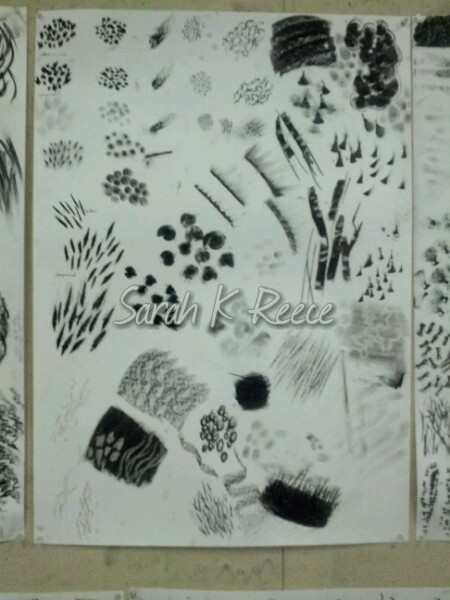
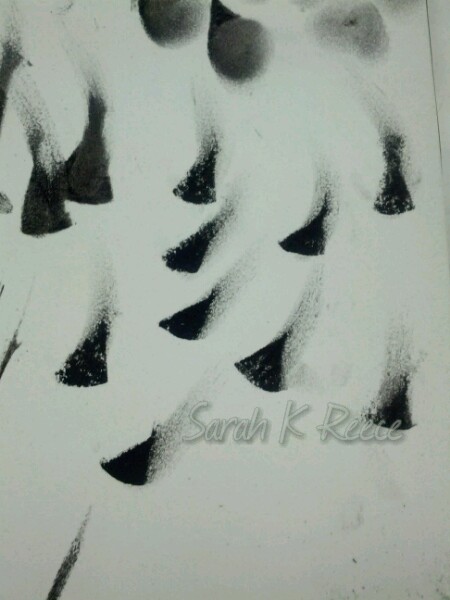
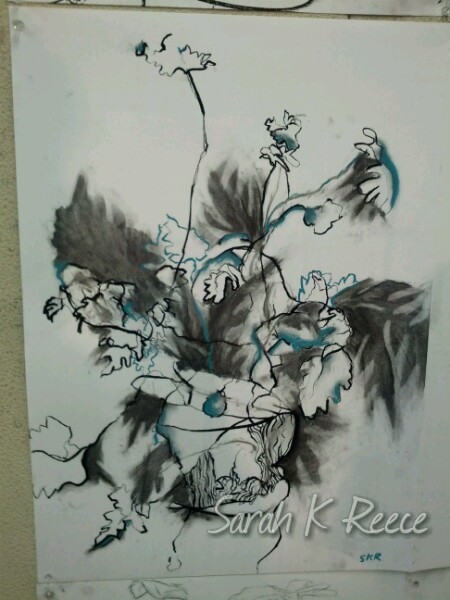
I was really sick at at college on Monday. Shaky, exhausted, nauseated, and really struggling to focus. I didn’t get much sleep the night before, and my plans to park by the tram stop and get in that way didn’t work out because all the parks by the tram stop were very time limited and didn’t give me enough time to get in and back again. In Drawing class we were investigating different ways of making marks with willow and compressed charcoal. I really struggled to stay focused and keep getting teary and needing to slip away to cry. I hate not being well enough to enjoy college. My tutor at the end of the lesson asked me if I was bored and I’m glad he did because I was glad to clarify that I was just sick!

I kept trying to figure out what was making us so sick, (apart from the usual) and if it was a parts based thing and we could switch. Sometimes I felt better for a bit when music was playing but I couldn’t seem to stabilise and make anything work. I think I need to find out replace my MP3 player and eight that helps keep me anchored if that was the issue. In the end I just let it roll over me and did my best to get through the day. Sometimes taking the pressure off is the best you’re going to get.
image

It’s an interesting process to see how many limiting ideas I have about art, and how little I let myself experiment when I’m anxious about the cost of the materials. How every piece must be good enough to justify the time and money spent on creating it. It’s not surprising that I find myself blocked and shut down with these mindsets. I’m hopeful about clearing my head more so I can be more creative and explore my favourite materials.

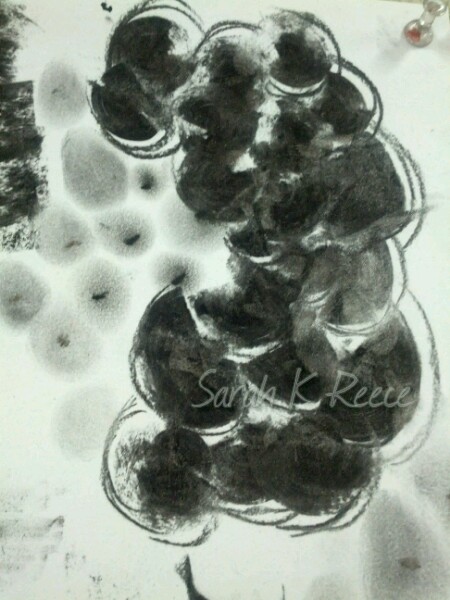
These were some of the marks I made with this process that spoke to me:

image

image

image

image

image
Rose was wonderful she made me this great lunch, dropped me off and picked me up after college. I was fragile and distressed so she took me home and read Harry Potter to me until I slept.

Photos of Glitter tattoo Body Jewellery

Other things I get up to when I’m not here blogging… 😉

Sarah K Reece's avatarSarah K Reece

One of my favourite parties of the summer was this fantastic girls Glitter tattoo party. It was a birthday for girls in that pre-teen to early teen bracket who are ‘too old’ for face paint and not yet old enough to have it in a spirit of youthful irony!

I was hired for an hour and 7 girls attended. Each chose a stencil tattoo to have applied with their favourite colours, then came back to have it decorated into a body jewellery design, and lastly received a sparkly ‘ring’ as well. When I left, they were all having a great time dancing. It’s a pretty special way of having a great party without a lot of fuss and preparation!

Glitter body jewellery is superb for active events such as dancing and festivals. It stays on despite heat, movement, and sweating so belly dance concerts, swimming carnivals, and nightclubs are all perfect opportunities…

View original post 33 more words

Ice cream cake

image

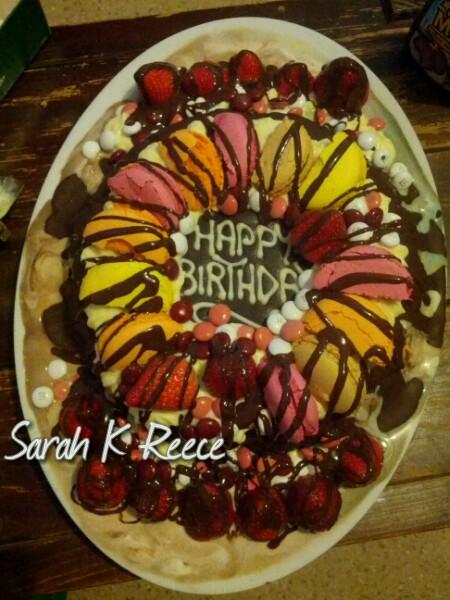
A friend of mine had a birthday recently. Rose and I made her an ice cream cake. It’s not too difficult, provided you don’t try to make it in 42C weather, so consider yourself warned!

We bought a nice quality vanilla ice cream, let it get a bit soft, then mashed treats into it. We went for chopped jelly lollies (they freeze into little rocks so be sure to chop them), peanut M&Ms, and chopped raspberry licorice logs filled with chocolate. We swirled some chocolate fudge sauce through it, and mixed up a second lot with ground cardamom and cinnamon, chopped Turkish delight, and flaked almonds. Then we poured it into a big basin and froze it overnight.

The next day I tipped it onto a plate and decorated it with fresh whipped cream, strawberries, raspberry M&Ms, a chocolate ‘Happy Birthday’ disc, and halved fruit flavoured macaroons. Everything is glued to the ice cream using a chocolate sauce.

It was a success, it’s a very rich dish and you only need a small serve! But it’s very simple, and great for a hot weather party. 🙂

Music is my drug of choice

Last night I went out to a new goth club. It was over 40C again here yesterday and I was bone tired, with that hot, angry restlessness that makes relaxing not just difficult but very unsatisfying. I met up with my shrink earlier in the week, who told me that I’m stressed and driven because I’m involved in so many ‘start up’ projects, all of which are high risk and take loads of work. She suggested that every project needs money and at least one partner to make it work without it killing me. I also met up with an amazing guy from Scotland, Ron Coleman, who said roughly the same thing but with a whole lot of practical suggestions and details about how the hell to do that. Damn exciting!

My shrink and I also talked about ‘adult days’ which are days where I have to be responsible and run things. It’s not that great a way to describe them, since some of my adult parts are decidedly not useful on adult days (like me!) and some child parts are, but it’s what we’re working with at the moment. I wind up with too many of them. It becomes like a parent who never gets a break, stuck in parent mode 24/7 and starting to crash. I don’t get a lot of days off from this. Everything gets scheduled. The anxious driven-ness can turn even fun and play and friends into work, something we have to do. There’s not a lot of room for going wild in any form.

Last night I went to a new goth club, and let a little bit loose. Many multiples will tell you that different parts handle things like alcohol differently. My system seems to have two settings – can’t handle it at all, no upside, no good feelings. The first drink makes legs prickle and any more make us sick. Or there’s me. I can’t seem to get drunk. I’m 30 (or at least, the body is) and I’ve never been drunk. We’ve been psychotic. Or high from allergic reactions. But never just gone out and got a bit plastered. This irritates me. I pushed things a bit last night and found that I never seem to get to a place where I feel anything. I don’t get sad, or giggly, or feel more relaxed. I just drink things, which to me taste like cordials. To the rest of my system taste like kerosene, mainly. At some point, if I drink enough, I throw up. That’s so bloody disappointing. I’m sitting in a club, dressed up, that mix of hyped and insecure that’s just begging for some alcohol to wash away the sharp edges, and I’m waiting to feel something. Nothing kicks in. I find myself thinking wistfully of the last time we had a local anaesthetic at the dentist and took all evening to get our head screwed on straight again.

Then Nine Inch Nails comes on and lights a fire in my bones. I get up to dance next to a speaker pounding bass through my body like an electric current, the air tastes of smoke machine and I’m shortly deaf in my right ear. And it feels fantastic.

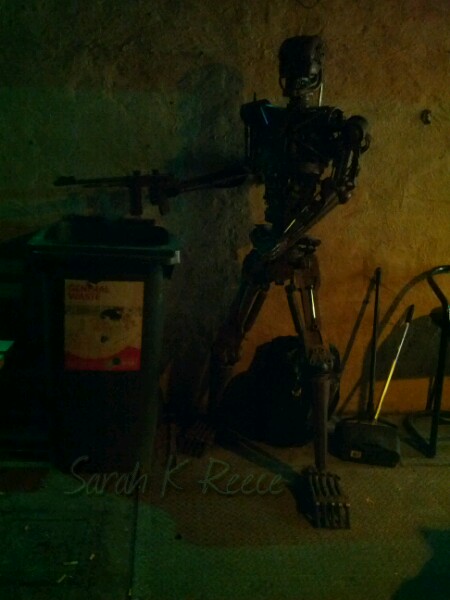
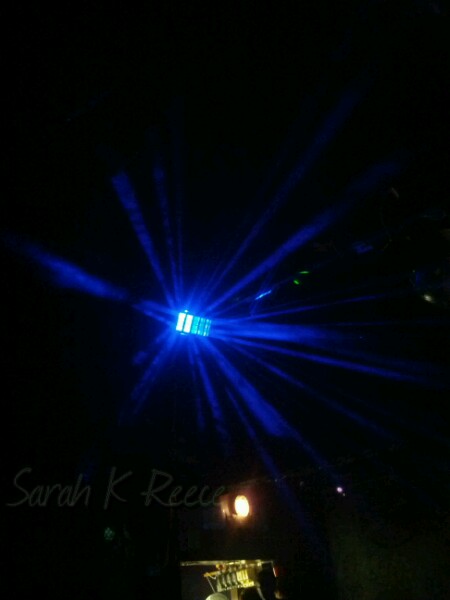
I love the contrast between the expectation and the reality of places like this. There’s no Matrix style stripped back nightclub full of harsh and frightening people. There’s young ones and oddballs and freaks having a good time in a safe place. A few dancers have come from a fancy dress party. One is super friendly and still has green body paint in his eyebrow. We commiserate about how difficult the green is to wash off. Another is still wearing his Crocodile Dundee outfit. He is fearless and theatrically acts out each song. During Billy Idol’s White Wedding he’s on his knees proposing and bouncing himself off the floor with one hand. People laugh and smile at each other, close their eyes to dance. The room has no air conditioning and feels like a furnace. I’m sweating everywhere. Even my wrists are beading sweat to drip off my finger tips. We dance and escape to the air con downstairs or the crowded beer garden, then dance again. I can’t dance as much as I’d like, so I take photos and amuse myself by irritating people following me on twitter who are used to sensible, thoughtful tweets about mental health.

Weirdly, this morning, no hangover. I’m the brightest and most cheerful person in my house. Considering that most mornings we feel pretty crap, and some mornings we get a really bad fibromyalgia ‘hangover’, this is weird, nice, but frustrating. I’d swap in a heartbeat, it would be much better to have the kind where you have a decent night first and no one to blame but yourself.

So, for now, I’m chalking that one up as a highly successful experiment and looking forward to more. Music makes me feel great. Alcohol is expensive and mostly irrelevant. I need better boots. ‘Not adult’ time is good for me. Cool bananas. I can work with that.

image

image

image

image

image


image

Drawing & painting classes

image

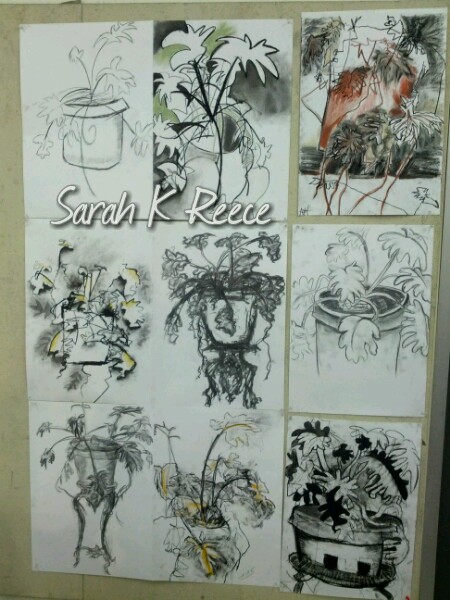
I started at college again this week. This tackle box is my drawing tutors collection of supplies. Is it not a thing of beauty? 🙂 I find myself a little anxious about formal training, reluctant to lose my own style. But it was exciting, the smells, the easels, the simplicity of being told to put something in pallet and doing so – sometimes this simplicity escapes me. I made two drawings and one pair of paintings in the cool and warm primary colours. It’s been a long, long time since I’ve handled charcoal. I don’t think I’ve ever attempted to sketch a pot plant before.

image

image

image

Here’s a sample of some of the other students work. Love seeing all the different styles.

image

I’m happy to be back. It was a supreme effort of will not to immediately book into another two classes and double my workload. Which, in it’s own way, is a good sign. So, at least one day a week is now college day. I’ve had a pretty good week, very busy, lots of seeing people and talking about plans for the year. There’s a lot of things in the works and I’m still working out my priorities. It’s sounding promising that I may have enough support now to kick the DI back into gear and get a face to face support group off the ground again. I’m finding ways to go forwards and figure a path through all of this. I’m finding some support, which is very, very needed. And a lot of inspiration. Feeling hopeful.

Psychosis & Secrets

I’m sitting on the pavement outside my car, waiting for the RAA to come and deal with the keys locked inside. I’ve just been to Sound Minds, our local South Australian Hearing Voices Group. I love getting along to this one.

We had a pretty full room. At one stage someone was chatting away and one of the members got the giggles. Everyone was trying to listen and keep a straight face. One by one more and more of us succumbed until we had to stop the conversation to laugh. A good belly laugh, about nothing at all. These beautiful people ground me.

I told them my good news, that my GP is on board with my unconventional approach to psychosis. A couple of us chatted about how destructive the idea of schizophrenia can be, life long illness, life long medications, being forced to confront your new reality in the interests of ‘having insight’, employers unwilling to take a risk on you, friends scared of you, family confused by you. I talked about how shame and secrecy can feed psychosis because people let them run unchecked, and try to maintain their usual activity level instead of resting, driving themselves deeper and deeper into it. How destructive the idea of a life long disability with no upsides is! How secrecy can often be woven into the fabric of psychosis, preventing the possibility of sharing the details and getting helpful reality checks. People are driven to this when saying ‘I think I might be hallucinating’ or ‘I’m feeling a bit paranoid’ would scare away friends or see them fired from jobs. One group member reminds me of the saying ‘You’re only as sick as your secrets’. Good point.

I’m not saying people who have to conceal mental illness, or those of us who prefer not to live our lives publicly on social media and blogs are sicker than the rest! I’m saying that cultural shame and fear trap people into keeping the kind of secrets that can make them very sick and very lonely.

Scars & stigma

We’re in the process of job hunting in my world again, or at least, Rose is. Some industries tend towards the kind of contract or short term grant based work that make this a regular occurrence. I remember the days of job hunting before I came down with Chronic Fatigue and Fibromyalgia, and it was a pretty simple business. Write a nice resume, arrange some referees, and send them out.

Now, the resume is only the start. Rose spends entire days writing long, detailed letters that must address each point of a job description. It’s basically like a math equation given in word form: If John had seven oranges… You have to repeat all the information that’s already in your resume, in interesting sounding ways, and big note yourself for pages whilst also sounding humble and grounded. Then you might get to an interview. This often requires bringing in a truly astonishing collection of forms already filled out. Some interviews also contain written test components and require you to wait while they are scored and then be called back. One really frightening one went for most of a day and involved a bunch of psychological assessments and group work with all the other hopeful applicants. I find myself increasingly jaded by the whole idea that this is a good way to select an appropriate employee. It seems like a good way of recruiting very slick, charming, narcissistic people, and probably a good few psychopaths. I know a lot of brilliant, caring, highly committed people who would never shine in this kind of setting. Fortunately, Rose does.

We were chatting with friends today about issues of disclosure around mental health when job seeking. For those of us with visible scars from self harm, it can be very challenging to confront questions in interviews. It always plays against you, no matter that is often part of a past that involves a lot of wisdom and strength and self awareness to have survived. There was talk about checking over the organisational policies to try and get a feel for their stance on mental illness in their employees. The consensus was to wear long sleeves and keep it hidden. One friend did that for the entire duration of her job because the organisation treated employees with mental health problems as liabilities. This was a mental health organisation, offering support to people in the community. The wrongness of this makes me sick.

All these places talking about stigma as if they have the answers, as if they, the enlightened few are here to tell everyone else, the ignorant masses, how to be better people. And these places are so often hotbeds of systemic stigma and discrimination. I remember when I spoke at Parliament House about mental illness, disability, and barriers to employment. I was asked what the government could do to encourage employers to retain people with disabilities. I said – lead by example and show it can be done. Demonstrate how to overcome every concern and issue the wider community expresses, with transparency and dialogue. Then people will be less afraid and more willing to engage. It might have been my imagination but this didn’t seem to go over brilliantly. The problem is never with us, and the solution is never ours to implement. It’s always someone else’s fault and someone else’s responsibility. We stand around telling each other to be brave and honest and  our every other sentence is a lie.

I’m very angry about this tonight. My faith and my hope keep being rewarded with hypocrisy and harm. Oddly enough, I’m starting to be glad that the Dissociative Initiative has been so hard to get off the ground, that most of those who shared my dream have been occupied by other dreams, or become too overwhelmed by the needs of their condition, to continue with me. It’s breaking my heart, but it’s also saving me from a form of failure that comes wrapped in a package that looks frighteningly like success. I’m starting to think that organisations or any kind of corporate structures should not have anything to do with the support of people in pain. But oh, how I do miss my little team. How my heart hurts every time someone emails me saying, please when is that Bridges group starting again? And how angry I feel every time I confront the sick reality of the profoundly flawed frameworks we have constructed with which to engage the most wounded, vulnerable, lost, and suffering members of our community.

Why do I need a job and an income? Can’t I just open a shelter for everyone who needs it? How do I engage without burning out? How do I not scream with frustration at the burden of all the terrible things I hear, when I walk in a world that is mostly unaware of this suffering? Trapped in secrecy and lies and the requirement that we pretend not to be what we really are, as if self harm scars are slave brands or the tattoos of a criminal, shameful pasts that you cannot escape but must forever conceal. As if being human and having suffered is something to be ashamed of, a weakness, a liability. This is wrong! I hate it! I hate it and I refuse to have any part in it. I will not lie, I will not conceal, I will stand and be counted, I will use my voice to speak for all those who cannot, because the risk to job, or to family is too great. This is wrong. Structures without courage or integrity cannot ever really serve people. They may abuse openly or poison slowly, but they always do harm. There is always a cost for engaging with them. It’s always too high.

Back to college

After two hours of sobbing in Rose’s arms down at the beach about all the ways I feel like a failure, I’m home again, showered, and going to bed for a 9am start to college tomorrow. I’m exhausted and my head hurts and my eyes hurt. I really don’t recommend this form of preparation.

But I’m also about 2 tonnes of high expectations and guilt and fear and confusion and self loathing lighter. Not enough to look at myself in a mirror, but enough to eat and drink and let someone say nice things to me, and if I’m very lucky, enough to sleep.

Threads

It‘s hot. I’m fried. Feel pretty terrible. Today and yesterday I’ve tried bringing Zoe to a friend’s to hang out in their air conditioning. It’s been trying, she’s whined in the crate and been desperate to chase the strange cats. Hopefully she’ll get used to it quickly. Or the vet will give me a clear idea of what temperature is ok to leave her at home so I can head off to cooler climes without her.

College starts tomorrow. I’m excited and exhausted. I had plans to paint my new studio this weekend that I had to put off due to the weather. I have massive admin to deal with although nothing urgent except my overdue backlog, which is nice. I keep getting sick. Endometriosis is making my life miserable. I may have to get back into the pill again, which is frustrating. This last year I’ve been off it is the first I haven’t gained weight. On the other hand in sick every month and very anaemic. Stupid health.

I’m not getting much sleep. I’ve just finished reading A million little pieces by James Frey, which is dark and interesting. A study in self loathing and rage and attachment damage and addiction. I have almost nothing in common with him, and yet there’s themes I can so relate to. I’m struck by his rejection of the 12 Step program, despite all evidence and pressure that it was his only hope. I understand being in a place where the only path open to you simply and profoundly rings false. I understand his terror of the converted, the way their stories fill him with emptiness instead of inspiration. The way both the depraved and the cured can seem to be trapped by scripts from which they cannot help but read, no freedom, no creativity, none of the bizarre tenderness of lives that are created by following that inner call to those things that deeply move you.

I have no idea what feels like to be him. Or to be a mother. Or a nun. Or a refugee. We are so limited to our own experiences. We live in different worlds. When we forget that, we pass harsh judgements on things we don’t understand. And yet, threads unite us. Like the tension between learning from the experiences of others and needing to find our own truths to live by.

Zoe says hello

image

image

image

It’s a bit warm here today. Zoe is chilling indoors with Rose and I, under fans. I’ve spent a lot of time home with her through these past couple of heatwaves. I’ve enjoyed it. She’s 21 months old now, and the mad puppy who chewed couches and demolished the back yard is fading into memory. She’s maturing into a really easy going dog. I love her to bits.

Her health has been fantastic and the vet was really happy with her at the annual checkup. She gets along really well with other dogs, sleeps very happily in her crate (was the easiest dog in the world to crate train, took no effort at all) stays behind the baby gates indoors despite being able to jump 5 foot fences, and only barks when people come near my place. She copes fine if I’m sick and can’t walk her for a day or two more, which takes off a lot of the strain for me. She could do with the extra level of dog training and I’d like to be able to get her into that this year.

We still have some areas that cause difficulties. She’s very afraid of thunder and fireworks, I’m going to buy her a snug dog jacket for dogs with anxiety attacks and see if that helps. I’m also going to fence off my window so that she can’t get to it and destroy the screen if she’s home alone when a bit of thunder happens. That’s going to make my life a lot easier. She’s also terrible for chasing cats. Not bad if they’re indoors, but outside is another matter. And I can’t leave her home while I go seeking cooler places to stay because it’s too hot for her out in my yard.

Today we’re going to try taking her and her crate out and see how she goes in someone else’s place. It would be awesome to be able to head off to cooler climes with her on days like this. Hope it works out 🙂

Being an adult and using routines to your advantage

I feel like I’ve mad a monumental discovery recently. It’s kind of stupid, probably won’t mean much to anyone else, and I suspect the rest of you were onto this way before it’s occurred to me, because I can be a bit dim like that… but ROUTINES! Wow. They make life so much easier.

What the hell am I talking about? A bunch of things all kind of linked up in my brain recently. One is that I have a new evening routine when I’m shutting my house down and going to bed. Zoe now sleeps in her crate in the lounge with food and water and a toy to chew and a treat, Tonks has her food and water on the washing machine in the laundry. I’ve finally created this little nightly ritual of feeding and topping up water for both of them, letting Zoe outside for a pee, putting her to bed with a frozen treat from the freezer stuffed into her Kong toy (usually wet dog food or yoghurt frozen in ice cube trays). Then I wrap any food scraps in newspaper and put them in the green bin, and clean out the litter tray into newspaper and put that in the green bin. Lastly turn on drippers onto potted garden, lock doors, and close or open windows depending on the weather.

Obviously there’s other routines such as brushing teeth etc but I think of them as separate because this one is pretty new and anyone can do it eg Rose and I take it in turns or take on different parts of it if she’s staying over and I do it on my own if it’s just me here. The first few nights it took almost an hour to do everything, partly because I kept forgetting bits of it and going to bed and having to get back up, and partly because of things like the dog food was kept in the laundry even though the dog bowl is in the lounge, and I have probably 5 places I kept old newspaper none of which I could find.

Now it takes about 10 minutes. If it’s bin night I add in putting the bins out. If I’m feeling sick I skip the litter tray and leave it for the morning. Linking these tasks together and turning them into a routine is making them much easier. I don’t have to think, or even be very awake. I can do them even if I’m feeling very depressed or sick or in a fair amount of pain (up to a point). They don’t take very long because there’s a pattern – let the dog out the back to pee, while she’s outside top up the cat’s food and water, while letting the dog back inside walk past the freezer and refill her Kong – it all works together. I don’t have to worry about when I last checked the water bowl. If I skip something for one night I know that it’s only been skipped for a night. I get more time in bed and less time staggering around my house. It’s a system. It’s a procedure.

Another thing – I recently wrote a checklist of how to get rid of spam for the DI Open Group on facebook. I have never understood or liked the corporate world of policy and procedures but I am starting to suspect that is for a few specific reasons such as poorly written ones, having them used in situations that can’t be reduced to a checklist, and not being allowed to question them when they don’t seem appropriate. This checklist was just writing down the process I do every time I delete spam. There’s a bunch of steps and if you forget one and get the order wrong, you can’t go back and fix it. Eg. if you delete the post before reporting it to facebook as spam, too bad. Having it written down has made this process so much simpler for me! I don’t have to remember the steps. It’s easy, it can be followed, it makes sense.

Another thing – I’m working on a post about dissociative amnesia and did some re reading of the topic recently. It reminded me about the different types of memory and what is called ‘procedural memory’ which is kind of like things you remember with your body instead of your mind. Like being able to remember your password as long as you have a keyboard in front of you, because your fingers remember which keys to type. Without a keyboard you find you can’t remember it. Procedural memory is very, very interesting stuff. It’s what emergency drills are trying to help you create, because it’s far less effected by stress. If you have a body memory of unlocking the fire door and going down the escape and counting heads in the safe point on the ground floor, you’ve got a lot more chance of being able to do those things in a real fire.

And that got me thinking about how, when I moved into a unit after a bout of homelessness, I found that I had lost all my routines. I had to mentally think about and plan every step of my day. Showering. Getting dressed. Brushing my teeth. Preparing food. Eating it. Putting dishes in the sink. Without routines, this took forever. It was incredibly frustrating and made me feel very slow and stupid. It took time before these things became more routine for me, so that I could just do them without thinking about them. Then they became easier and quicker and I could start to use the time to think about other things. Like brushing my teeth and planning what I’d eat for dinner.

Undoubtedly being multiple has added significantly to the difficulties I’ve had in this area. I have to write to do lists and keep a diary because I couldn’t possibly track my life otherwise. I would forget to pay bills, forget to turn up to college, forget about dates. My internal memory system is like a series of separate filing cabinets in different rooms. I can’t easily cross reference files. If I’m standing in one room looking at a file, it’s difficult to access any information from a different room. But, because I’m fairly co-conscious, some information is shared. It filters through all the rooms. Not in it’s entirety, not like sharing a file with all the rooms, more like an intercom in the rooms. A voice comes over explaining that a new addition has been made to a file. If you want more details, if you want photos and a blow-by-blow description of the file, you’ll have to go and look at it.

Procedural memory is not entirely shared either. One of the things that used to stress us is that when we used to sign to use our credit card, the signature was different depending on which part was out. Having said there, there is some overlap for my system. Many of us know how to drive, for instance, even if we have our own style and need the seat and mirrors to be at different positions. Routines in some ways seem to take this burden off other parts of our mind. We don’t have to think each step through and remember it all because it’s written down, and/or it’s in our procedural memory instead.

Lastly, this idea of growing up, and what it means to be grown up, the ways in which an adult and their place in the world is different from a child. I think a lot about this because it’s highly relevant to the way my system formed and the reason for being split. One of the things that seems to define adulthood is this notion of responsibility. Adults need to keep their own world running. They need to be able to pay bills and earn money and negotiate leases and pick up after themselves. They seem to be at risk from two different possibilities – one is not learning these skills and living a very chaotic existence, often at the expense of people around them who do a lot of picking up after them. The other is taking on these roles too much and losing what was childlike about themselves – no more play, or fun, or freedom – life becomes a routine that cannot be broken and that exists to serve the routine.

I feel like I’m starting to figure out that learning all these skills in the service of freedom and fun and play, is the goal. So I can go camping and walk in wild places because I’ve saved and bought good equipment and have a well stocked first aid kit and a lot of outdoor skills. If I go camping without them I’m in for huge trouble when something goes wrong. If I just save money I never go camping. If I build routines around things like keeping the house functioning, or doing admin, then I have free brain space to think about and plan other things that I like much more. I spend less time feeling frustrated and overwhelmed, less time looking for my shoes or discovering that dinner has gone mouldy in the fridge, and less time in crises because I’ve run out of dog food and money at the same time.

I think this is where routines work. Checklists that everyone in the household, or everyone in my own system can easily follow. Things that take away that burden of thinking and remembering every step. Things that free you to spend more time and more mental energy on the things that make you feel alive. It’s not an either/or, it’s a both/and. Learning more adult skills doesn’t have to lock me down to the kind of life I hate. It can help me build the kind of life I want. Well devised routines can give me back a chunk of the mental and emotional energy that I currently spend trying to track lots of things and make myself do them and hating myself when I fail. Rinsing a dirty dish or closing a cupboard door after opening it. Rewriting routines when they stop working because of new challenges or different work or other people in the home. Working around limitations instead of constantly smacking into them. If no one picks up their stuff, having a box outside everyone’s door and putting anything left in common areas into the boxes every night. There’s so many different ways of setting things up.

I’ve been trialling having ‘admin days’, ‘writing days’ and ‘house and garden days’ and I’m startled by how much more I get done when I give over a day to it instead of the multi-tasking, anxiety, and constant switching I’m more used to. Isn’t that half the battle? Figuring out how you work and what works for you? (figuring out how to be an adult when half the time you’re under 18 years old?) I think I understand why our post-industrialist society is so in love with routines and systems. They can work brilliantly. They can of course, also fail spectacularly, especially when they’re applied too broadly, or in the wrong areas entirely. Routines can be very destructive to creativity and relationships. But in some areas, they can be incredibly useful and give you back a lot of time and energy to pour into much more exciting things.

Soaring with Sophie

image

Visited my gorgeous goddaughter today. It was beautiful. We played chasie, airplane, tickle monster, and hide the corn chip up your nose.

It’s been a bit rough here lately. We’re about to have another heatwave. My health hasn’t been great. Rose and I have been stressed and struggling to find plans for our future that work around our limitations and fears. Anxiety about housing continues to be incredibly difficult to work around. There’s been a lot of earnest long talks through the small hours of the morning. Sometimes it seems that we have to unpick and rearrange our relationship every few months. We somehow seem to talk ourselves to the edge of an abyss, and then talk ourselves back again. It’s hard sometimes. But it is very real, and very precious.

I’ve had a good day. I went to see my gp about my lousy health lately and to get a stack of forms done. I had to tell her that I’m going to be losing the psychologist I’ve been seeing to retirement in a few months. I could have cried with relief that she endorsed the way we’ve been managing my experiences of psychosis, and asked for the psychologist to write it up as a plan so that we can take it to anyone new I have to work with. I’m lucky. It’s so important to have this kind of support. To have a doctor who agrees that doping me with heavy tranquillisers and watching my liver and weight suffer to avoid the occasional psychotic episode in which I retain full insight and am able to manage at home is an extremely poor trade off. The relief is huge.

So, today was better. Sophie is a delight. My home is beautiful. I’ve bought another wall fan for my bedroom in time for this heatwave. Rose and I are going well again. Tonks, Sarsaparilla, and Zoe are all good. Just got to keep my head down through the next few hot days.

Poem – Curled into her arms

From my Oct 2013 journal

Curled into her arms I laugh with joy
and the sound of it delights me, like a bell, like bird song
clear and pure and unrehearsed,
without audience or self consciousness,
she holds me and my skin
trembles in the candlelight, there’s a space
here within our arms, when we are breast to breast, where
darkness does not fall, for a night
or an afternoon
or a golden morning, I am without a past
no touch but hers, no memories of pain or blood or loss
we are shameless.

We are kites,
flying over all those burdens,
beyond the dark obsession,
the memory intruding,
the nightmares from which we wake
screaming, the cult of survivors,
the platitudes of therapists, the way
the social workers think they are being enlightened when they tell
us in the mandatory child safe courses that children who are abused
will never recover, the screams that
sound in our deeps,
that wait beneath our words, that we can hear
when we place ear to breast:
None of it is real.

 None of it is a truth we have to live forever,
some days the knots slip
and the strings fly free, we dance
on the other side of darkness, we are
reborn, into innocence, love
begets freedom, phoenix from ashes
there is laughter in our bed
joy in our love.

Punch drunk

Ever have those mornings where you wake and feel dazed, shuffle back into a life that seems to be a bad joke, a series of punchlines at your expense. There’s this sick feeling in your gut and an emptiness in your chest but in your head is a moving headache like a dog that can’t lie still, and an anxiety that’s kind of a high pitched whine in your ears. Everything that seemed easy a week ago is hard, your hands hurt, your eyes are not your eyes but some old gritty hand me downs from before colour was invented. Your knees ache.

The song in your heart is gone, there’s just a bucket of something unidentifiable that smells of dead herrings and an IOU from a nightingale that’s flown south. The world is empty and pointless for you, amazing things are happening out there, brilliant conversations and intelligent people making art and changing the world. It’s all beyond you. You wake into the backwaters of cultural development, the Siberia of party invitations. The world expects you to attend anyway, and sends you final demands and tweets. I’m not at home, you say, I can’t come out to play. I’m a facsimile of me, you’ll be terribly disappointed. When you open your mouth, toads and tax forms fall out. Your hands are sticks with no poetry left in them. You must have left the plug out in the bed again and it all drained away while you were sleeping.

The world takes too much out of you, needs to much courage. All these things you’re supposed to be doing weigh in on you like snowfalls on the roof, like being asked to come outdoors into the blizzard and make the world warmer. You’ve two pieces of coal left in the burner, half a packet of porridge and a soggy onion. You’re wearing socks on your hands and trying to listen to a radio that’s held together with duct tape. Keeping your world running is taking everything you have, you can’t shovel through 10 feet of snow in front of your door and do anything about the blizzard.

There’s a desert in your brain where no rain falls, no plant grows. You would hate yourself if you could find the energy. Under your arm there’s this missing rib and the gap still aches. Your eyes have seen the dust beneath the couch. Ever have those mornings?

… No, me neither.

When Multiplicity doesn’t protect us

For most of us who come to multiplicity by way of trauma such as abuse, neglect, bullying, or chronic pain, we’re familiar with the idea of multiplicity as a creative defence mechanism, something that helped us to survive. This can be a powerful re-framing of the idea of multiplicity as an illness, and very helpful! For some people it’s not all of the story. In some ways, multiplicity can make you more vulnerable to harm.

Many of us with multiplicity start out with no idea that we have parts, either we lose time due to amnesia, or experience the world through the hazy confusion of co consciousness. For many of us, the dissociation is highly functional, breaking up information and containing it in ways that help us to manage life, and allowing us to adapt simultaneously to a variety of different environments with very different social requirements. We have found a way of growing and navigating life that works for us, even if we are completely oblivious to it.

I’ve been talking lately about how powerful triggers and anchors can be for people with parts, but it needs to be said that they can also be abused. Even when the multiplicity is hidden or unknown, sometimes abusive people figure out by accident or instinct that certain things will keep a compliant part out, or trigger a part who discredits themselves to other people. They may not interprete these things using a ‘multiple’ framework and language, but they stumble across triggers and anchors and use them to their own ends. It’s worth mentioning that these factors are at play for people who don’t have parts too, in that all people are vulnerable to things like finding they are more submissive in certain settings, or more likely to act out when treated certain ways. But it can be devastating when dissociative barriers prevent a person from being able to access memories or skill sets to help them protect themselves. This can be the catastrophic downside to multiplicity as a protective mechanism.

Sometimes harm is done with no intent to harm. Triggers may be avoided or used unintentionally by family or friends who tell a person with parts that  ‘You’re not yourself today’ when they switch to a part their family doesn’t get along with. Sometimes others may learn to fear certain triggers such as what happens when the person gets drunk, or listens to certain music, and switches to a part who’s disoriented or aggressive. People with parts can find themselves under a constant subtle pressure to keep out the parts other people like, get along with, or find easy to manage. Other parts can spend many years trapped inside and be frozen at certain stages of development, never getting the chance to hone crucial social skills, tell their stories, use their talents, or connect empathically with other people. This can leave systems extremely uneven in their ability to function and their experience and expectations of the world. Systems can easily become polarised into the compliant parts and rebellious parts. Sometimes therapy can also play into this dynamic where the parts that the therapist relates to or finds easiest to get along with get to have key roles, while other parts are excluded, supressed, ‘fused’, ‘integrated’, put into lockdown, or convinced they are no longer needed and have no further role to play in life. (that’s not to suggest that these approaches are never useful or necessary)

Self awareness can make a huge difference for people with parts. Understanding that you have parts can be tremendously helpful in buffering the issues that multiples in a non-multiple world can have. Whether it’s someone saying that they like this artwork/outfit/meal better than that one – and inadvertently hurting the feelings of the part who worked on the less well received item, the frustration of losing skills and abilities as parts surface and go away again, or simply the phenomenal daily challenges posed by differences between parts as large as gender or sexual orientation, or as seemingly small as the part who does the grocery shopping love oranges and yoghurt and never buys any bread even though the rest of the parts love toast for breakfast and never eat oranges. Knowing why you have conversations in your head, 4 different opinions about almost everything, why you can be feeling happy, sad, bored, and curious all at the same time, or for that matter, hot, cold, scared, and sleepy… can help make a lot of sense of what has just been one more bizarre and confusing experience.

However, awareness alone is not sufficient for protection. Awareness of multiplicity can make you vulnerable through exposure to the massive stigma about these experiences. People’s relationships and jobs can be at risk if they are outed. There’s also a vulnerability in inheriting a whole stack of rigid ideas about what it means to multiple, for example when people are told that their systems must have a certain number or type of parts, or that they will inevitably remember horrific abuse, or that therapy is essential, long term, and extraordinarily painful. People can be vulnerable due to the language of symptoms where the number of parts, degree of dissociation, or level of incapacity is used as a measure for the severity of pain and worthiness of support of the person. People can also be vulnerable when multiple communities behave in alienating ways, such as being overly concerned with ‘faked DID’. Sometimes people find that their systems are overly fluid, or overly rigid and fixed in ways that make growth and adapting to new circumstances extremely difficult. The dissociation can limit the healing effect of positive life circumstances and loving relationships.

There can also be vulnerabilities in other people being aware of a person’s multiplicity. Sometimes abusive people use multiplicity against a person. This can happen with children who are being poorly treated, but adults can also be vulnerable. For example, people with parts who are in abusive relationships can have horrific experiences such as having a young part who has previously been abused being triggered during sex for the titillation of their partner. Multiplicity can be magnificent and protective, but it can also be devastatingly vulnerable. People with parts who find that their multiplicity is not effective to protect them from abuse or trauma may become extremely fluid, chaotic, poly-fragmented, or build massive numbers of parts. (this is not the only reason systems can function in these ways!) Systems that have experienced this kind of harm can be like labyrinths designed to confuse and hide essential information from an abuser or series of abusers who have discovered how to use the dissociation to their own advantage. Often this design also confuses therapists and the person with parts, and can frighten and overwhelm those who are seeking to understand, map, and make sense of themselves. Realising that confusion is the intention and that it serves a very important purpose can be a valuable first step in learning to love an inner labyrinth. Understanding triggers and anchors and knowing how to use them can be a powerful way of ensuring that abusive people cannot use them against you.

Known multiplicity can also be interpreted in ways that are harmful. For example, some people are put through traumatic exorcisms to get rid of parts who have been understood as spirits or demons. People with parts who have different gender identities have accessed trans support services that haven’t considered multiplicity as a possibility and have unintentionally suppressed and rejected all the parts of one gender. Multiplicity can be misdiagnosed and mistreated, for example if it’s seen as schizophrenia treatment may concentrate on keeping the person lucid and stopping the voices via medication – which can translate to tranquilising the person until they can’t hear their parts, and trying to prevent switching. Some people have accessed therapy that has interpreted and navigated their multiplicity in ways that they later come to believe was deeply harmful.

Multiplicity can also make you more vulnerable alienation, loneliness, and self hate. These are simply things that everyone without a peer group is vulnerable to. For people who don’t have parts, there’s often something strange and fascinating about the idea. What it can be difficult to understand is just how strange people without parts can seem to those of us who have them. This is our ‘normal’, and we can feel very alien and alone in the world. This can be compounded by the issue of masks. Many people wear social masks, the face they present to the world. People with parts are often thought to be wearing masks and then revealing their ‘true’ self when they switch. Pre diagnosis, everyone in my life had a different idea of who Sarah really was, and we ourselves couldn’t figure out who we ‘really’ were. Different people formed bonds with different parts, and most of my relationships were one-part bonds only. Switching caused chaos. I would invite friends over to visit, then switch later on and be confused and frustrated that people who didn’t seem to particularly like me were on my doorstep. They, on the other hand, experienced me as moody, unpredictable, and very strange. A freak. I also had big issues with connecting with other people’s buried parts – not the dissociative kind, but the kind we all have. For example, someone who presents themselves to the world as together and successful may have a hidden part that is lost, afraid, and steeped in grief. For some of us with parts, we are used to hearing and feeling things beneath the surface and we accidentally interact with and draw out the hidden parts of other people in ways they can find both deeply moving and intensely uncomfortable. Certainly not necessarily conducive to stable relationships!

It’s hard to be the only one of your kind. This is why bridging the Gap and finding points of connection and similarity common to all people can be so desperately important! It’s also why connections with peers and peer workers are crucial. Everyone needs a space in which the way they function in the world is ‘normal’ and for a few hours they don’t have to explain everything in full, because people get it. Being the only deaf person, the only kid with two Dads, the only scholarship student can be hard. Diverse communities help, and contact with other people who share your experiences also help. However multiple/multiple relationships can also be fraught, while there’s a common language and understanding, there’s also the complexity of two systems and a different type of relationship between each possible pair of parts who are out, as well as the loss and grief of forming connections with parts who go away or are supressed or overruled by other system members. Friendships between multiples can be wonderful but also fragile.

Multiplicity can be life saving. It can help people to contain, protect, and adapt. It can also be a difference that leaves people at greater risk of abuse, exploitation, and isolation. Here lies a tension that many of us peer workers with parts are struggling to engage. We need to hear that multiplicity can be healthy and useful, that there’s hope and that the illness model isn’t the only story that can be told. But it’s the vulnerability of multiplicity that drives us, the knowledge that people are struggling and suffering and being harmed that makes us want to speak out and create resources and healthy communities. The less stigma people encounter, the easier the path to healthy multiplicity is. (this path doesn’t exclude the possibility of integration or fusion) We’re often sold an idea of multiplicity that is about being broken, profoundly alienated from self, where the multiplicity is conflated with the trauma history in a way that makes it difficult to think creatively and respond with enthusiasm to the task of understanding, accepting, and making a wonderful life with yourselves. We don’t have to pretend that multiplicity is any easier than it is, nor do we have to choose only one way to understand it. Like anything in life, and like any kind of difference, there’s deep complexity and ambiguity in our experiences. We need the freedom to be able to engage those honestly, and we need opportunities to be able to combine our collective wisdom and help to reduce some of these vulnerabilities for people.

For more information see articles listed on Multiplicity Links, scroll through posts in the category of Multiplicity, or explore my Network The Dissociative Initiative.

My approach to first episode psychosis

After my first experience of psychosis, I did a lot of thinking and wondering about where it came from. I visited my psychologist and we talked about all these different ideas, and put together a strategy in the aftermath. We agreed that the idea in John Watkins book Unshrinking Psychosis that there can be many different reasons for psychosis, including positive ones such as personality reorganisation, or a spiritual awakening, was a good foundation. We drew no conclusions about why I’d had the episode, and made no assumptions about what it meant. Going forwards we decided the best approach was

  • For me to work on accepting the idea that I am a person who sometimes experiences psychosis as quickly, gently, and positively as possible. It can be a huge shift in self-perception and identity, and if too large, or threatening to hope and self esteem, people stay mired in denial.
  • To reduce my fear of the experiences and anticipation of possible new experiences. To be careful not to develop frightening personal narratives about the experience, or of being sold into anyone else’s ideas.
  • To that end, to do my best to avoid mainstream mental health services.
  • To develop my social support to meet this new challenge. At that time, my networks are very supportive when I’m physically unwell, or struggling emotionally, but many of my friends have no experience of psychosis except for a lot of fear based cultural ideas about schizophrenia. People don’t know what to do or say or how to be helpful. I can work on this by using times when I’m not psychotic to gently educate my networks about what it is and how it works. To also connect with other peers who experience psychosis (through the Hearing Voices Network)
  • Welcome psychotic experiences into my life. To make room for the possibility that I will have more episodes, without being paranoid or fatalistic. So, make life, relationship, and career choices that will accommodate the occasional episode with a minimum of stress, and without having to be overly secretive or afraid of being outed.
  • Approach the psychosis from a place of gentle curiosity rather than fear.
  • Reduce shame, secrecy, and isolation. Stay connected to people. If I ever start to struggle with my reality testing, research suggests that close, trusted relationships with people who are not afraid of me or the psychosis will be the most helpful in supporting me to make sense of what is real and what is delusional.
  • Learn. And accept not knowing things. Tolerate ambiguity, uncertainty, complexity.
  • Grow. Use times that I’m not psychotic to explore ideas and needs that may underlie the psychosis, things that I’m drawn to or that feel significant during the episode. I may not be able to prevent another episode, but may instead be able to reduce how distressing the experience is for me. If I’m going fall into an inner world, maybe by taking good care of myself I can help the world to be one of dreams rather than nightmares.

I’ve since had a second episode and I’m working on making sense of that. But I’m still really happy with this approach. It makes a lot of sense to me, and it’s helped me navigate a second experience without shame or terror. It’s such a different way of looking at psychosis to that found in mainstream mental health services. I can’t help feeling deeply fortunate, and so sad and angry that my story and experience of psychosis is so unusual. I knew what was happening as soon as it started. I had experienced people to talk to about it who offered wisdom and support. No one panicked. No one made me feel I couldn’t handle what was going on, or that the safest approach would be to lock me up and tranquillise me. So, I didn’t have a load of shock, trauma, and fear to deal with on top of the psychosis. I was instead able to put together a plan with the support of people around me, which included options for outside support if managing at home became overwhelming. I don’t know what my future holds. Neither does anyone else. I’m free of dangerous, life limiting assumptions, free of a model of psychosis that speaks only of loss and limits, free of an enshrined cultural terror of madness. Don’t misunderstand me, this is not a polyanna, naïve approach, ‘mental illness’ of any kind can be terrifying and destructive. But as an approach, this has worked well for me. I hope it might be helpful for others too.

A second experience of Psychosis

Well, I’ve come through a second brush with psychosis surprisingly well. The process this time was very different to my first episode. This time, I locked myself in my house alone, and made art. Dark art, yes, strange art, certainly. Intense art. I painted myself and took selfies on my phone. The results resonated with me. They’ve stayed, the way a cut on the wrist stays, so that the morning after the black night, you cannot simply walk away and pretend it didn’t happen.

As soon as we shut ourselves away and negotiated the freedom to create whatever art we wished (provided we didn’t publish anything online), the psychosis eased, and an intense state replaced it. The hallucinations, the fraying, the collapse of my sense of reality all lifted like so much smoke. I fell into darkness that did not hurt, like falling into a river in my soul. For a time I was free of everything that is used to define me, free of roles, relationships, expectations, free of need, or name. In this space, art was easy. No limitations blocked me. I could see through the things that stop me from creating. My hands were alive and my mind was burning clear. Art came as easily as speaking. I did not speak. I spoke in art, in paint, in my eyes in photos, my hands.

This time there was no terror, hiding from the sky in my bed for days. No fear of the dark. No nightmares. This time once the psychosis lifted it stayed away instead of drifting through my life gently for days or weeks.

I won’t pretend it isn’t crushing to have a second experience. There’s always that hope that the first will be the only one, and for many people that is true. Yet, I am also not giving up. Maybe this is now something I will have to manage regularly. Maybe I will have only two. No one can possibly know. I’m not panicking. I’m learning. I’m listening, unpicking the knotted threads. There’s a relationship here between art and madness that I don’t understand, nuances I can’t yet hear or speak. There’s also beauty, something that deeply moves me. This is not just loss, or brokenness, not just a mind overwhelmed by stress. Maybe there is danger here, and loss, and woundedness. Such is life. There’s also fierceness, joy, freedom. There in the shadow, I breathe the night. And then I let it go.

Using Anchors to manage Triggers – Multiplicity

I’ve been writing about triggers lately. This post is specifically about how triggers can affect parts for people with multiplicity, it builds on the information I’ve already shared in

  1. Managing Triggers – an overview of how triggers work and many different approaches to managing them
  2. Mental Health needs better PR – the risks and benefits of the different ways we think about triggers and why we want to manage them
  3. Using Anchors to Manage Triggers – exploring how anchors work and can be used to help with triggers around trauma, anxiety, and other distress

Sometimes parts get stuck, inside or outside, and this can cause problems. Sometimes a part may stop coming out when their trigger to do so disappears, and this can be a terrible loss. Perhaps a child part only came out around a favourite aunt who has passed away. Perhaps a quiet, studious part only came out at uni, and now that you’ve finished the course that part has gone missing. I have one who only comes out at night, down the beach. Wounded and different they have retreated from all the rest of our lives and it is moonlight and solitude that calls their name. When I was originally diagnosed and my shrink was hoping to make contact with some of these parts, we told them with despair that a counselling office was not their world and I had no idea how to get them here, or even if that was a good idea. The shrink was likewise baffled about how to engage with parts who only came out at school, or during storms, or in candlelight.

Two things lay beneath this dilemma – a fundamental question of the purpose and direction of therapy – was it about us making ourselves function and presentable in the shrink’s world, or about the shrink being able to follow us into our own… or some kind of collaboration and bridging of this Gap? Was it about illness or a Grand Adventure? The other was simply the lack of awareness on both our and the shrink’s part that triggers can be changed and wielded deliberately.

Sometimes it helps to change the triggers that call parts out. I have one in particular who responds to threat and manages violence. Parts with roles like this can become restless and destructive when things start to improve in your life, because they are inadvertently being written out of the life. As this role is needed less and less, they come out infrequently, sometimes inappropriately, and the rest of the system responds with frustration instead of gratitude. Heroes of the old regime, these parts find there’s no room for them in the new world order. Changing the trigger that calls them out can be a powerful place to start changing or expanding their role to have more life in it.

This can be a simple matter of forming a new association with being out. Every time they are out, to have a new chosen trigger present – someone calling their name, a piece of music, a bracelet, bare feet on grass, pink nail polish. It needs to be something they want and have chosen, something that resonates with them. A trigger that doesn’t evoke a response of some kind, an emotion, a feeling in the body, a memory, a sense of connection – is no trigger at all. In order to work as a trigger, it must evoke something, it must connect with something that is unique to this part and in some way represents them. Over time this trigger becomes more connected to the experience of being out. Once this link has been made, it can start to become strong enough to be used as an anchor, something that can be used to call them out and invite them to be present.

For my system there’s a sense of distance inside, sometimes some parts are close to the surface and easy to call out, while others are far out in the deeps and beyond any call. Some parts always respond to their triggers, others are unpredictable. Each system is unique, and the process is often more organic than mechanical.

Sometimes parts have a difficult time staying present when they want and need to. It might be that other parts are being triggered out, or that they habitually go away inside under certain types of stress. Sometimes some parts just seem to have a tenuous grasp on the moment, in the body, in the world. They are more like smoke on the wind than a plant in the earth. Anchors can help parts to stay present in times when switching would be dangerous, traumatic, or inappropriate such as driving, sex, or delivering a presentation at work. Clothes are an anchor my system often uses to help to keep a part present. If this part has her boots on, or that part her pearls, it’s much easier for them to stay present. Music is another powerful one, and it can have a lingering effect. An hour of listening to P!nk at high volume before leaving the house can be the anchor a part needs to stay present through the morning. Or the right music on the radio in the car can stop a child part switching out when we’re driving.

We were in some training a while ago and struggling badly. The facilitation was extremely poor, and most days at least one student became distressed by bullying behaviour. I spent a lot of time following people into toilets to offer comfort, and biting my lip during lectures. The group dynamics were being encouraged in such a poor direction that distressed students were maligned as ‘low functioning’ and probably unsuitable for study, rather than offered support. Each day that went by I became more enraged. The part who handles threats was constantly triggered, but their expertise is physical threat – violence, sexual assault and the like. This was an incredibly inappropriate environment for them because none of their skills were useful here. They could not physically respond, even by screaming, to the increasing sense of being trapped and forced to watch as people were hurt. In fact all their responses; their obvious pain, their supressed anger, their capacity for action, played against us in this setting. We lacked credibility when we responded this way, tongue tied, vehement, and desperate to escape.

It took a lot of thought but we finally were able to come up with a better approach. A different part who could handle this kind of ‘threat’ that was psychological and subtle rather than physical and overt. Someone who wasn’t afraid and therefore wasn’t sitting at a desk with their adrenaline thrumming. Someone who could speak up without anger in their voice, and who therefore couldn’t be told off for being rude. Someone who could laugh and break tension while speaking our truths. Once we figured this out, we changed which clothes and makeup we wore to the classes, changed where we sat and how we engaged. It was still a deeply unpleasant experience, like being a participant in a social experiment about power. We still had some troubles with the furious part being triggered out. But we had a better approach and were able to finish the course without being reprimanded for any behaviour, without self harming to cope, and without becoming compliant and submissive to the bully. Anchors can be powerful.

Sometimes they can be also be used against us in ways that hurt us. Multiplicity sometimes makes us more vulnerable.

Considering publishing a book

I’ve just calculated that in the past three months, I’ve written, edited, and published 40,000 words on this blog.

I’m finding that rather mind boggling! Wow. It’s been very good for my writing, in learning to write more frequently, clearly, to edit quickly and make it all happen. Last year I was writing the talk on Supporting someone in a dissociative crisis and I found that it was quickly turning into a synthesis of a lot of my thinking and reading over the past 8 years. I put up a page on the DI website with links to articles I’d written so that people could further explore topics I could only touch on briefly in the talk itself. I wondered if this was the bones of the structure of a book.

If I can write a first draft of 80,000 words in under a year, that seems surprisingly within reach, and I’m excited by that. I’m mulling over different ideas – how broad the topic to work with, how to structure it, how on earth to get it to people who actually might find it useful, or get paid for any of my time on it, if it can be worked on alongside a blog, or if I need to pause the blog for awhile, if self publishing is still the best format, who I could recruit as support people – encouragement, editing, marketing, if it would be best to start with a small project where all the learning and mistakes will be cheaper and easier to manage…

40,000 words. Blimey. It makes me feel like a real writer, helps me to really grasp just how important this craft is to me. That’s a lot of hours. And at the moment, since the Hearing Voices Congress, my brain is alight with ideas. I’m drafting blog posts in my head while driving to the shops, while lying in bed trying to sleep, while watching movies. I’m writing them on my phone while waiting for appointments. There’s a lot of inspiration and drive. It may collapse at some point, or some other project may demand more time, but things written once, remain written. I’m giving serious thought to this.
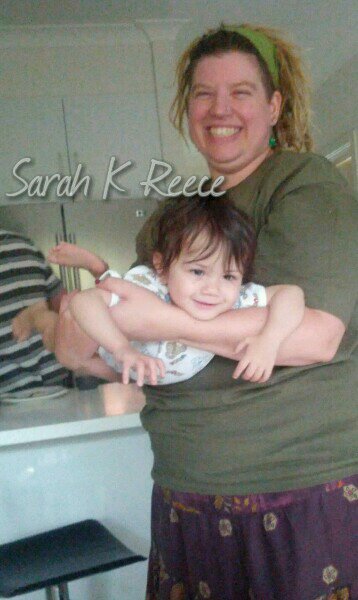
I took a while day off this week to write on this blog, preparing a series of posts ahead of time. It was thrilling! I headed off to friends for dinner and card games, then cane home brimming with inspiration and wrote into the small hours as well. I was in that place where I’m so happy my heart is thrumming, where I feel like I’m going to burst with joy.

I’ve been debating setting my time up differently this year, and trialling a system where each day of the week is overtly given over to something specific, such as art, college work, writing, admin, the face painting business, and time off. Yesterday was an admin day, and my house proud part came out and cleaned and bought things and organised to her hearts content. The problem was trying to make her stop! At 3.30 am we finally managed to switch her out while she was cleaning and rearranging the pantry. She was the happiest critter in the world. The best part was that Rose did an admin day too, so there was no sense of being rushed or taking away from our time together. It was great! I may be onto something with this system!

In high school my English teacher had set aside Fridays to work on his novel. I always envied him this idea. Now I think I might embrace it.