Poem – Snow

From my journals, Oct 2013
It snows in the Adelaide Hills a little, Rose and I catch the first glimpses of snow in our lives through the car windows on our way to face paint at Monarto Zoo.

Ice on the roads
We soar over
the frozen morning
the earth curves beneath us
as if we
are about to launch into the sky

to our left
snow falls on the black hills
snowmelt runs like clear wine
along the gutters
the world holds its breath

music plays loud and we
talk of the future
dreaming so hard
gathering speed through the days and long nights
gathering strength in each others arms
in each others tears, growing strong
speaking heart to heart, sadness to sadness, joy to joy
your brokenness that calls to my brokenness
our nightmares sleep by the fire together
while we run, while we run, while we
burst into flight.

Attack of the improbably large, surprise lynx

The talk last night about supporting people in Dissociative Crisis went really, really well. As it was stupidly hot there was just a small group of us so I shifted the format a bit and allowed comments and questions through the talk. There was such interest we wound up running horrendously overtime, by almost 2 hours! I got very positive feedback from everyone which was great. It’s funny the areas people find surprising or difficult to understand, I’m finding I have to keep emphasising the really severe level of stigma that people with DID often face. This morning I’m off to give the same talk again, it’s still pretty darn hot and I haven’t slept very well so hopefully I can pull it out of the bag again. I feel like someone’s tried to stove in the back of my head with a post, actually. I’ve just taken some pain killers and drunk more water and stuffed some books beneath my portable air conditioner to try and force it to actually direct some air onto me instead of over me and now I’m waiting for miraculous improvement.

Last night was very patchy sleep, irritated skin, cold showers, and weird dreams. I’ve just woken up from a weird lucid type dream where everything I was worried about happened. As in, I’m standing in an alley way, thinking to myself, ‘wow it would be scary if a big cat appeared just there, I wouldn’t have a hope of escaping’. At which point a Bengal tiger walks around the corner. Then, uncontrollably, my thoughts turn to ‘you know, a lynx would be even scarier’. The tiger turns into a lynx, but remains tiger sized. This is the largest lynx I’ve ever seen, with an oddly elongated and sinewy neck. It pads over towards me as I freeze and desperately try to remember the rules for not upsetting a lynx. I find myself looking into its eyes while my brain is screaming ‘are you supposed to make eye contact or avoid it? STOP UPSETTING IT!’ The lynx is clearly unhappy, backs off a few feet while watching me intently, drops to its belly and gives that tell tale wiggle while my brain goes into foaming panic, then springs at me.

At which point, I wake up.

So, apparently I’m secretly, deeply concerned that I haven’t brushed up on my Escaping-and-not-enraging-big-cats strategy lately. Anyone care to enlighten me?

Thoughts about peer work and DID and community

It is incredibly hot here again. It’s currently 42.3C and I feel like my face is melting. Hot weather and I do not get along since I developed fibromyalgia. So I’m home, in front of my little portable air con, preparing for my drive off to Mifsa to give the talk Supporting Someone in a Dissociative Crisis this evening. Apparently I decided the best way to prepare for this would be to spend the day on the net getting into big conversations with people.

I’m getting frustrated again that I can’t blog as much as I want to. I have so many things I want to share, my list of posts to write goes into several pages. I’m still hoping to find time to blog about all the great talks I got to hear from at the World Hearing Voices Congress last month. And I’m often in amazing conversations, taking down quotes to write about later but so rarely get to come back to them. I think part of the problem is that often the topics I’m wanting to write about are big ones – suicide, multiplicity, sexuality and so on – and I really want to do a decent job. Sometimes I let myself just spiel and post, but often, especially if it’s a post that I’m hoping will have useful information in it instead of just a bit of a glimpse into my own thoughts and life – it’s not something I can write in a moment. I need to get several parts to read over it, I try and edit it from very different perspectives, and I try and include links to other information or resources when I’ve found them. That’s not a short process. I wish it was. Or I wish I was paid for writing them so I could more easily carve out time each week for those kinds of posts. Which I guess kind of brings me back to my idea about writing a book…

What do you think? A book is a great thing. You can borrow it from a library or friend. You can pick it up and put it down and carry it around with you. You can underline bits and cross things out and write your own thoughts in the margins. But a blog is good too – it’s always free, especially if you use the net at the local cafe or library. You can even contact the author or write comments underneath. It’s a growing, evolving process, with small bites of information. I like the format, it has a lot going for it.

So, today I was talking online with a friend about internet safety, and scams, and how important it is for people to be aware, and I thought to myself I keep hearing this word awareness. I hear it all the time around the ‘days’ we have like the International Day for the Elimination of Violence against Women or raising awareness about MS, or how to talk with people in wheelchairs without driving them nuts. I have a whole stack of physical and psychiatric stuff going on, and my awesome friends likewise, I still have no hope of remembering everything I’m supposed to be aware of. I find myself wondering if a different approach wouldn’t be more helpful – like a ‘how to engage stuff you don’t know much about in a way that doesn’t drive people crazy’ approach. How to generally be a helpful person open to hearing new things you hadn’t considered instead of trying to be aware of every illness, condition, social concern, and so on.

Isn’t this partly what we’re doing in spaces like Hearing Voices groups – the facilitators don’t have to understand everyone’s different perspective or experience, they are just trying to hold a safe respectful space where everyone can speak for themselves and engage each other… maybe we can support better and more respectful ways of engaging with things we haven’t personally experienced that are easier than massive lists of things to be aware of? Even as someone working to raise awareness of mental health experiences such as multiplicity I think this. Maybe if we work together to create a model for engaging with our diverse communities we can relieve some of the burden of anxiety so many of us feel when we are aware we lack awareness and wind up not engaging or falling over our own feet with stress worrying that we’re being unintentionally wildly offensive or upsetting.

On that note… I read a blog post today where a person with DID is expressing deep frustration with some current ‘awareness raising’ stuff going on over in the UK that they feel falls so far short of the mark that it’s actually worse than the usual ignorance and myths about DID. I felt that Bourbon made some really good points about issues with sensationalism in the media, and misconceptions about how parts can function and overlap. I recommend going over to have a read of it – What is DID? (a response to media campaigns). When Bourbon started talking about their (gender neutral as I’m not sure of pronoun preference) perception of what DID actually is, I was concerned. Here’s a brief quote from the end of the article:

In reality, those with DID feel far from special and intruiging.  A life with DID is actually spent hiding away, keeping yourself as small as possible so you don’t get noticed.  There is often so much fear and pain and confusion coursing around you and the whole system it can feel like you are paralysed.  Of course there are teeny tiny moments when life with DID doesn’t feel THAT BAD, but that can only really be fully appreciated when you take note of the alternative extreme lows.

This is where I feel deeply concerned. I don’t know Bourbon, I’ve read a little of their blog today, some of the earlier posts have been made private but they’ve been writing for awhile and I can see a whole lot of work going into being open and supportive about a life with DID and all the challenges that can pose. It’s always difficult to try and respond as respectfully as possible to someone who’s clearly upset about something that really hurts them, while disagreeing with them. We had a bit of a conversation in the comments before they closed them for a break (which is brilliant, and something I wish I’d thought of with this blog instead of closing the comments entirely for the first 2 years. Although sadly that meant it ate my last reply which was quite long and thought through, sigh). I thought I’d share my thoughts about this here too, because there are some amazing people, like Bourbon, out on the net and in their communities, all trying to raise awareness and share information. And yet so often we make each other uncomfortable in some way, or somehow our stories obscure other people’s stories that are very different. It’s not an easy situation, there’s a lot of effort and goodwill and yet the community as a whole can quickly fracture instead of pulling together.

I was going to just pull a few quotes from our conversation in the comments, but then it seemed like that could be picking and choosing to make things fit my perspective best. So I thought I’d quote the lot instead, although I haven’t run that part Bourbon (as they’ve currently closed the comments and I have no way of contacting them). The comments and blog post are both public and I’ve linked to it so I don’t think that will be a concern. Correct me if I’ve got that wrong!

Sarah:

I get that you are really pissed off and feeling unheard but I was uncomfortable with some of the ways you were presenting DID too. I think for me (as someone with DID) one of the ones I wanted to speak to is your statement that having DID is primarily about suffering, with only tiny moments of relief. That really distresses me. I absolutely get that pain and distress is a HUGE amount of the picture for many, many people, but that doesn’t speak to my experience. I suffer when I’ve been hurt and traumatised, and I’m in terrible pain when things have gone appalling wrong in my life with things like homelessness, but it’s not my DID that makes me suffer. That’s a subtle difference but for me, an important one. When anguish and agony are presented as normal – even inevitable and inescapable daily realities for everyone with DID, that worries me. I think we accidentally set people up for much worse experiences when they don’t hear other stories and ways of thinking about their situation. When we expect suffering we miss opportunities for joy and hope and delight and wonder. I don’t think it has to be this way – and that certainly hasn’t been the story of my own life 

Bourbon:

I’m really pleased for you that your DID doesn’t cause great suffering in your life now and I am sorry that you feel distressed by me pointing out that a lot of DID is pain and confusion. Don’t think I don’t delight in the fact that one of my littles experiences true joy for half an hour when with my therapist, or I am not appreciative of the fact that I have an alter who reacts quickly to external danger from other people. But at the moment, whilst I am engaging in heavy duty trauma therapy, this is not what my DID is primarily about. I experience joy in my life that has nothing to do with my DID – and that is what is important for me. Life outside of a disorder is important to me.

I take your point that educating people with all the negatives/realities of DID MAY set people up for worse experiences in their own lives – but what I am not going to do is exaggerate and ‘liven up’ the positives in the eye of the public at the expense of showing what DID is like for a lot of sufferers. Like I said, there are little moments when life with DID doesn’t feel that bad; and maybe I could have actually given some examples, like I have done above, but that is as far as it goes.

Reality with DID is tough. Yes our attitude can soften the edges (because even a little having fun in therapy can be viewed as a negative to the disorder – who actually WANTS to be in a 26 year old body but behaving like a 5 year old?) but the public doesn’t need to be educated about our attitude. They need to be educated about the facts, the symptoms, the reality. Attitude is a side-line; not a focus.

Sarah:

What you’ve said here is that you’re doing heavy duty trauma work and that is painful as all out. I don’t see that as being about the DID, if you’d been awfully traumatised and didn’t have DID you would still be hurting like hell and having some horrible therapy sessions. For me they are separate things – the experience of being multiple and the experience of having been chronically traumatised. While they can be deeply connected it’s not the DID that is hurting. Reality as someone who has been deeply hurt is tough. That doesn’t haven’t to be reality with DID. Yes there’s confusion and shame and challenges, I’m really not making light of that. But then, there is for all life, however we experience it. Challenges like how to feel alive, how to connect with communities, how to learn more about who we are, these are universal quests and struggles, experienced as much by people with deafness, people from backgrounds with money and power, people whose babies die young, as they are for people with DID – and for people who used to have DID. The specific challenges might be unique but the call to find ways to live well with others and ourselves is the same. So I don’t see this as ‘just’ an attitude. It’s an essential aspect of what it is to be human. When we tell ourselves that suffering is our lot we lose the capacity to engage life in any other way. When we hold up as examples other people who share experiences with us and write off their lives as being primarily about pain we shut down other ways our communities can live.

Years ago, when I was early in the stages of diagnosis, deeply distressed and struggling to find a therapist to work with, I called Lifeline one night. I was in the early stages of working with a new therapist who’s approach I was finding deeply distressing. By luck I spoke with this guy who actually knew something about DID. He encouraged and supported me while I wrestled with this dilemma – keep working with a therapist who was approaching DID in a way that felt completely wrong for me, or go against all the advice I’d read about how you MUST have therapy to heal from DID and walk away knowing it might be months or years before I found another one? He said something to me that has always stayed with me “Just because you’re split, doesn’t mean they’re (other people) whole. You can choose to engage this experience as an illness, or you can go on a grand adventure of self discovery.” (which will of course sometimes also be painful and confronting and so on, like all adventures)

Being invited to think about DID in a different way has been life saving for me, in that I have a life with DID. I don’t think of myself as disordered because I have parts. I don’t think of my parts as symptoms of my illness, which made me fear and resent them. I struggle and suffer at times. I also have amazing and wonderful experiences at times. Playing co-consciously with a 5 year old part was a profoundly moving moment for me, because I’ve spent years getting over my sense of shame and humiliation about having a 5 year old part. So much of what we with DID are wrestling with are things that everyone who has been hurt are wrestling with, and things that everyone who is trying to be human are wrestling with. We don’t have to sell people an idea about DID that is about sickness and anguish, not to each other and not to the public.

Bourbon:

I understand the distinction you are making. I really do. I first started blogging on here saying that I was going to refuse to call it dissociative identity disorder because it isn’t a disorder. But since realising the turmoil me and my system are in day to day then I realise how much of a disorder it is. It seems to me your experience of multiplicity isn’t just about trauma. Fantastic. You’ve built a life outside of that. But my DID is all about trauma. We are riddled with it. My system operates by way of abuse. What I mean by that is abuse is still going on, internally because that is what we grew up believing was the norm. It sounds like you are so much further along your healing that you have made peace with your past and become close to your system. I’m young and only two years into my diagnosis. But I am in therapy with an excellent therapist who has been working with DID for twenty years and one who has written books on the subject. So maybe I will find a way to live with DID in joy like you have. Or maybe I will integrate and be cured of this disorder. Who knows where life will take us? Personally, I hope I’m integrated. But we all know, well all DID’ers do, that is a choice.

I appreciate your words. You are very uplifting and hopeful and maybe this post does need a bit of that so thank you for dropping some with us. It hasn’t gone to waste.

Moral of the story: there are positives and negatives to everything (however large or slight) and BOTH need to be expressed if you are wanting to educate the public about DID to give a fair picture.

This is such a thought provoking conversation for me and something I’ve given a lot of consideration to over the years. I really appreciated the way Bourbon heard me out and didn’t get defensive. I have such respect for that willingness to engage with opinions and difference. It’s not easy, especially when you’re already feeling hurt and unheard yourself. I see so much divisiveness in so many communities I care about. I’m coming to the conclusion that it is such a huge challenge to create and be part of healthy communities with diverse members because most of us have never experienced that or even seen it before. Many of the people I come across in my peer work are being abused or belittled by their communities, they are at the bottom of their family and friend social heirachies, low ranking at work or unable to work, isolated from people like themselves and suffering from the impacts of all of these things such as low self esteem, depression, and self hate – all of which are seen as personal deficits by the mental health system rather that social issues. I’m reading an amazing book The Still Point of the Turning World, written by Emily Rapp about her experiences having a terminally ill young child. She talks about her rage at being dehumanised and having her experience, and her son, treated as a case study, as an example of the worst possible thing that can happen to someone, something to make other people feel better about their own lives. She talks about life as a Dragon Mother, her description of the unique agony and priviledge of loving and caring for a dying child. And I think again of The Gap, of how many gaps there are. Of a world of people who are living and hurting, who are divided rather than united by those most human of experiences – pain, suffering, loss, loneliness. 

Then I think about how fractious so many of communities of hurting people are. Love and acceptance start to be treated as limited resources that everyone’s in competition over. The division of people into the camps – people with problems/people who can help – dehumaises both groups as the helpers burn out and the ones with ‘problems’ never have the opportunity to recognise their own gifts of love and compassion. I see a lot of these kind of fractured communities, corporations that work on what is effectively a class structure – with separate facilities, entrances, work and rest areas for each level of client/volunteer/worker/management/upper management and strict rules about how each class is to engage those ‘above or below’ their own. I am at times contacted by hurt and angry members of other DID support groups who want to inform me that a certain member has been removed from their network for ‘faking’ DID or not having ‘real’ DID. I see a lot of hurt, angry, lonely people desperate for someone to reach out to them who alienate everyone who tries to. I keep coming back to an idea – that those of us who are alienated, alienate. Having experienced abusive communities, we reject new ones, or we rebuild new ones with the same imbalances and flaws we’re familiar with and just exchange the roles. It’s such a risk for everyone who feels hurt and disconnected, including me.

Then I think about the challenges of the entire issue of how we as a culture engage with diversity and disability. I’ve written before about whether mental illness is a disability. I drew upon two other communities to explore some of my ideas – that of the Deaf community and that Autie/Aspie communities. I have had brushes but not extensive contact with either groups so my ideas may be uninformed and ignorant – but that’s partly my point – the impressions those of us who have little contact with the communities develop are based party on the most vocal peers who have engagement with the media (and partly on the media itself but that’s another post). So, in this conversation with Bourbon, am I the equivalent of a person with a disability who is not suffering because of it, accidentally drowning out the voice of a more vulnerable person who IS suffering and who desperately needs better supports and resources?

I’ve wrestled with many of these things on this blog – the tension in trying to be seen as a whole person in The Disability Tango. Challenging conventional and sanitised stories of recovery in Recovery is not a one-way street. The risks and usefulness of using labels to describe behaviour and vulnerabilities in Labels – helpful or harmful? About my ambivalence about the way mental illness tangles good and bad experiences together and the way mental health is presented as being ‘normal’ in Mental health needs better PR. I’ve also done my own getting really angry about the limitations of diagnosis and how DID is understood and presented such as Introducing DID brochure and unplanned rant.

So, what is my role? What is a responsible way to present DID? How do I make sure that the voice I have is being put the best possible use? How do we build diversity into the stories we tell about conditions and experiences? I do a few things already – such as whenever I give a talk about DID or dissociation or hearing voices (and so on, or facilitate a group) I love to present with another peer worker whenever I can, and for preference I like to choose someone who has a really different experience from me. I presented at TheMHS with Cary and we deliberately wrote our ‘my story’ experiences to highlight the ways in which we were different (eg. I’ve never been in psych hospital, Cary has had many stays; I find gardening grounding and hate the gym, Cary kills plants by being in the same room with them and runs every morning almost without fail even if she’s injured). I try to write a ‘People with DID are not all the same’ paragraph into every resource I create and explore some of the common differences to reduce the impact that the way my system works has on people’s idea of what ‘normal’ DID is. I love to do as much community consultation as possible when I’m working because so many other people have experiences or ideas I would never have thought of and I learn so much all the time. So that’s a start.

To this other topic – does me talking about DID as if it isn’t all about suffering help or harm other people with DID? As far as my own life goes – it just has to be authentic. I can’t pick an ideal ‘outcome’ and try to pretend my life story speaks to it, anymore than it’s fair to try and force an exhausted and overwhelmed peer worker to try and give messages of hope they can’t currently believe in. All we really have is honesty, as much of it as we are willing to share with each other. And for me, DID is a disability in that it is something about me that is different, for which I need care and support and room to function to the best the way I do. This is a little bit like the difference between creating prosthetic legs that are designed to look as normal as possible and help people fit in and help other people feel comfortable, and designing ones that look and function very differently to a human leg, but allow the person to run marathons. And that’s still coming from a DID is a deficit caused by trauma – model, which doesn’t fit everyone’s experience.

There is profound suffering for many, many people who have DID. The level of stigma for this experience is beyond anything else I have seen in mental health. When a psychologist was in the year long process of diagnosing me, I spent most of that time arguing and trying to convince him I had Borderline Personality Disorder instead. For any of us who know about the extreme prejudice which which many people with BPD and their families are treated by the Mental Health system, this should shock you. I’ve written a little more about this over at the DI page Why are we needed? My people, people like me, are in terrible pain, suffering appalling stigma and discrimination, living in secrecy and fear. Largely ignored and unacknowledged by the wider community and mental health system, people are stuck, in pain, and dying.

So why don’t I equate DID with this suffering? How can I be so indifferent to it? Because correlation is not causation. I do not believe that this anguish is a necessary result of having DID, while at the same time I acknowledge that it is the painful lived experience of many people. A massive amount of this pain is about trauma. Another massive amount of is about stigma and disconnection from community. And the last huge whack of it is about DID systems that are modelled upon dysfunctional communities. This is where my work comes in especially, because the framework we are currently provided to understand DID is, in my opinion, dangerously limited. People are being told they ‘must’ have an inner self helper. People are being told they CANNOT get ‘better’ without 5 years minimum of weekly therapy (and that if they can’t get it they are just screwed). People are being told that having parts means they are sick, that hearing voices means they are sick, that wellness is about being ‘normal’. People are being told that dissociation cannot be cured. People are being told that DID is all about suffering.

We know that there are issues with people living to their labels in DID as in other things. I don’t believe that DID is inherently about suffering, and I don’t believe that people are well served when this is the story we tell. The DID story is deeply tangled with that of suffering but I don’t believe that collapsing the two together helps people. I was utterly incapacitated by these ideas when I was newly diagnosed. I started off very gung-ho once I accepted the diagnosis – I was going to be one of those rare, wonderful patients who did everything right and progressed through therapy at a spectacular rate and was integrated and back studying my psychology degree in a year. I was terrified that most of the DID autobiographies I read ended with people still in a massive amount of pain and unable to work or keep their primary relationships etc. I was tied up in knots by the insistence on a ‘host’ or ‘primary’ or ‘core’ person and the way parts kept getting shuffled into a hierarchy when that felt so so wrong for us. I was scared and alone. I really wished I could talk to other people who had the same things going on, even better to talk to someone else who was maybe a bit further along than I was, maybe a little less scared. I decided to out myself and become a peer worker so that I could try and be that person for other people, to humanise and reduce fear – others’ fear of us, and our fear of ourselves. To some extent, choices I made such as refusing to give out a system map or let anyone know our individual part names was because we now perceived that the standard approach to DID was now the greatest threat to having the kind of life we wanted to lead. Where once that threat was experiences of abuse, it was now the treatment. We grasped onto the lifeline guy’s phrase – ‘A Grand Adventure of Self Discovery’ and used it to navigate every ‘treatment’ offered to us. When ‘trauma recovery’ treatment was more agonising than the original trauma we walked away. When ‘mental health’ was presented as a greyland of limited emotional range and hyprocritical superiority over all the other ‘sick people’ we built our own ideas about health and recovery. When DID was presented as the worst of all possible disorders, impossible to navigate independently, needing extensive treatment from experts, a humiliating, painful, and protracted process of recovery, we asked ourselves is this how we want to spend the next ten years of our life?

What I keep seeing is that when people are supported to find their own paths, instead of being fit into boxes, amazing things happen. I see people who get to have experiences of healthy communities and model their internal communities on those principles – love, fairness, diversity, respect – and these people are not suffering because of their DID. I keep seeing that when people are exposed to ideas about freedom and joy and community, where they are not alone any more, healing and hope can occur. I think that it is extremely important to make room for people who find the psychological model that DID is a mental illness and that they suffer from a disorder, useful and helpful to them. But there are so many people who don’t find that approach helpful, who get hampered by the illness model and can’t find hope or joy or relief from pain when their parts are presented as symptoms of a sickness, that I can’t use this framework in my peer work. Like telling people who’ve had two psychotic episodes they have ‘schizohprenia’ and will suffer from it for the rest of their lives – it’s not only inaccurate it’s such a disservice to the person.

If we struggle against the effects of stigma, if we build better resources and community responses to trauma, if we try to prevent abuse, if we create and model healthy inner and outer communities; I do not believe suffering has to be the lot for people with parts, or that not having parts any more is the only way to not be in pain. Pain is part of our lives, and how we understand it, the stories we tell about it, and the way we respond to pain as communities make all the difference in whether that pain consumes and destroys people, or can become one aspect of lives that are still rich, deep, meaningful, and connected. The same goes for disability, for illness, for trauma, for DID, for anything and everything that opens a Gap and challenges us to find ways of bridging it.

And now I have to run off and give a talk Supporting Someone in a Dissociative Crisis. Wish me luck. 🙂

For more information see articles listed on Multiplicity Links, scroll through posts in the category of Multiplicity, or explore my Network The Dissociative Initiative.

Finding life

In the middle of a hot week here. Today reached higher than 40C,  and tomorrow is forecast the same. Rose and I had a weird, fractious day, but ended it down at the beach, swimming in the shallows in the dark and watching the moon rise. They are so precious, times like this.

I had a good appointment with my psychologist earlier this week, and I realised that in caring for Rose I’d dropped and forgotten all the work we’d been doing lately on self care. The sense of being connected to my own inner wisdom was gone, no intuition guiding my choices, no small voices speaking of deep soul needs. I’d become locked into my roles, feeling exhausted and in chronic pain. It was like feeling the walls close in about me, trapped in a box that was shrinking every day. Focusing more and more energy on Rose (not necessarily in a way that she enjoyed) as I became caught in that most common of caring binds: ‘If I can just make her well, then I’ll be able to get some of my needs met.’ I’ve watched family members burn half their lives away trying to do just that.

I came out of the appointment remembering that my journey is just as important, and that Rose neither wants nor needs a frantic carer driving her into directions that may not be right for her. She needs a gentle nurse and friend, who is still invested in their own life and heart so she is free to care for her own also.

Suddenly that tiny airless box blew open in my mind. The railway tracks were gone, the limits were gone. I felt free, free to call Rose and apologise, free to do anything I wished with the afternoon, to engage it in any way I chose. Where there had been stoic endurance of a trap, there was now freedom to explore what might be possible. My intuition was back, and my joy. The small voices were back and the ear to hear them with.

It’s a strange thing, life. We find it and lose it and find it, all over again.

Everybody’s tired, Dave

(Red Dwalf, anyone?) Rose is tired, lugging around a moon boot and crutches, I’m tired working a lot of hours and not getting enough down time, the weather is hot so even the pets and plants seem tired. We trekked off to have Rose’s ankle cat scanned today, a friend kindly came round and did our dishes as my birthday gift (I’ve been saving that coupon for awhile) we’re trying to figure out what we can do about the Christmas gift situation as Rose is broke and won’t be able to earn money until next year sometime when her foot starts cooperating again, and I bought some stone fruit from the local market, which was lunch.

Rose is currently trekking around the kitchen in her keenness to be useful and making dinner for tonight (roast) and soup for the next few days as it’s forecast to reach 40C here this week and during that weather I do not run the oven under any circumstances. I think she’s mad and keep trying to persuade her to put her moonboot back on (too hot and heavy) or use her crutches (hurting her underarms and really inconvenient) or let me help (…) but sometimes one just has to shut up and go blog instead of trying to be sensible.

We had a funny little moment a few days ago when the reality of weeks off work and needing help to do basic things like shower suddenly hit Rose like a bucket of cold water. She said to herself with some shock “Oh gawd, this means I’m going to have to be careful and think about everything I want to do in terms of how much energy it will take and how much pain it will cause!” I was driving at the time and just gripped the steering wheel a little tighter and smiled to myself. The penny dropped and she looked at me, we both laughed. I’ve had fibromyalgia, endometriosis and other chronic pain conditions for more than 10 years now. It’s rare for me to not be in pain already when I wake up in the morning and for pain not be present, significantly, when I go to bed at night. Sickness and exhaustion are common parts of my life.

There’s a cool little explanation going around the net called The Spoon Theory. Trying to explain chronic pain and fatigue to people who have not been sick is always difficult. This approach is great, although to me it has one obvious limitation – that is the assumption that all of life is about giving, or using up, energy. I’ve spent a lot of time around people who think like this and for me, it doesn’t work.

People are not finite supplies of internal resources that recharge overnight only to be spent again every day. We are parts of much greater wholes, members in complex ecosystems where energy flows in and out and between every part. Some things take almost every bit of energy I have available to do, and yet in spending it, I am recharged. Not just resting, but meeting crucial needs for closeness, meaning, belonging, love. My volunteer work costs me much energy and yet gives me so much back. Relationships can be exhausting but are also a source of deep joy. Being involved, living, learning to re-interprete pain and exhaustion not as cruel bad luck, but as the cost of being alive, a price I willingly pay to live a life that is deep, passionate, abundant, and vital. Learning how to go gently and get out of the boom-crash cycle of spending energy into the red and making yourself constantly sick is incredibly valuable. But beyond that, conservation becomes miserly. Pain is part of being alive. Spend your spoons wisely yes, but do spend them! Be part of things that give you spoons back.

Ear Lizard week

It’s been a long week. I took Rose back to the hospital earlier for more xrays, this time they showed a small break and loose bone fragment. It was all pretty rushed and not exactly thorough so we followed up with her gp the next day and got some better pain relief (for her) and a referral for a cat scan next week.

I’m really tired, far more than I expected to be. I suspected a mild kidney infection but tests say no, it’s just fibro putting the boot in. It’s a handful trying to finish Christmas plans, keep work arrangements, and pick up the extra work of household chores and care for Rose. I was hoping to put up my tree and do some Christmas cooking but I’m trying to keep the pets and us fed, get the dishes done and find time when Zoe is indoors to hang a load of washing. A shower would be nice too. I have no idea what is going on with my gift plans, I just keep buying things and shoving them in a box in my wardrobe. I probably have 17 gifts for one person and nothing for anyone else. I certainly don’t have any chocolate. I usually like this time of year. Ah well.

Keep thinking what this will be like to deal with with a baby too, that’s a depressing thought. Can’t find time to blog or journal, snatching minutes to read before bed, pretty chronic pain and sleep deprivation, and carefully balanced plans where things get really difficult if the dishes don’t get done on time because the next 5 days are busy with other important things and now we’re all eating off paper plates and using the camping cutlery.

And just to illustrate the point that is hazily surfacing through this ramble of a post: ‘life is weird’, have a photo of an ‘ear lizard’ I painted on a kid recently. It was the kids request. No, I don’t know what an ear lizard is either.

image

Merry Christmas everyone.

Rose recovers

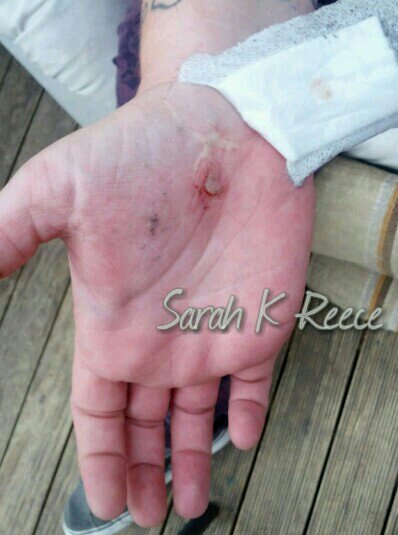
Rose is home now, but rather in the wars. I’ve dressed her injuries, watched an episode of Wire in the Blood to wind down, and now she’s sleeping.
image

image

image

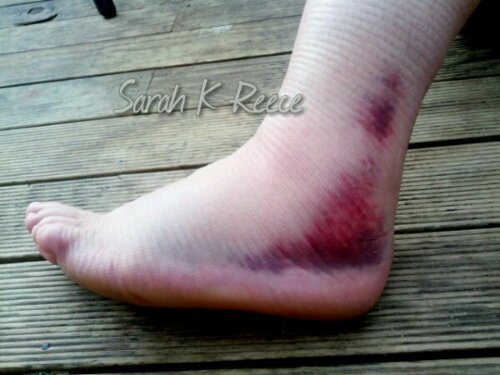
She has a severely sprained ankle with tendon and ligament damage, there’s possibly some small fractures too but the swelling was making the xrays difficult for the doctors to read. We need to go back to a hospital for more tests. She’s in a lot of pain and getting very broken sleep.

Continue reading

Rose is away

image

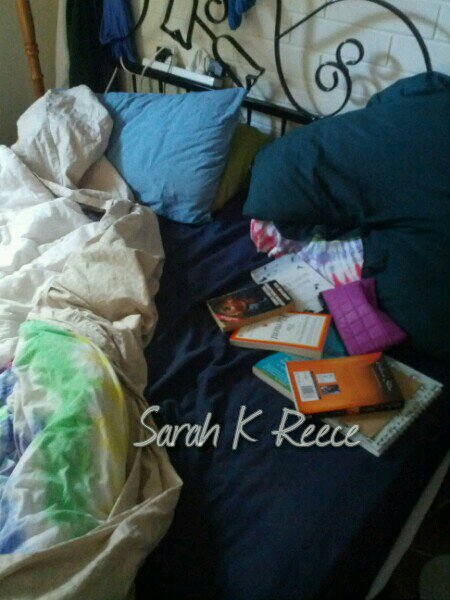
We miss her. At least, when we stop working and slow down, we miss her. This is how we usually sleep when she’s not around: the extra room in the bed occupied by books.
image

She’s away on holidays, coming back tomorrow. It’s been a bit of a challenging trip as she’s very broke. Tonight had been especially hard, she fell today and damaged her ankle, then wound up in hospital this evening for it. It turns out to be bad tendon damage rather than a break which is good news.
I’m tired and teary and need some sleep. Last night was severe nightmares. Today was surprisingly good, lots of catch ups with friends. Not much admin, sadly. But I’m tired now, been brave and adult all day and now just need a cuddle.

Twitter Poems

I’m becoming more comfortable with Twitter. One of the things I enjoy doing is writing and sending very short poems. For those of you who aren’t on twitter, or don’t yet follow me, here are a few I’ve sent lately, all my original work:

kitten softly stalks across my back
like tiny trees falling in a forest
where no one is there to listen

***

Long awake and having epiphanies
Like fireworks under my skin
Leaving me reeling, drunken, sun blinded
Sick with ecstasy

***

Sadness like wine;
limbs heavy as overstuffed pillows,
I’m safe here but the night will end
The weight of the dawn leaves me dazed

***

She sleeps in my lap,
holding onto my hand
each breath is a contract between us:
I trust you
Be safe.

***

My throat
Is full of tears
Every breath
Every word I speak
Anointed.
In my chest
The underworld
Cocks an ear
To listen

***

Curled in bed
I drink the sweet pain of my body
like nectar; the honey fire
of a day well lived.
Here, in my bones
the deep ache of life.

***

My heart
Bursts with joy
Splits with ecstasy
Is trampled & ravished
Then in sleep
Knitted whole by dreams
Ready to be torn again.

***

A new day
The world turns
I rise from ash
The pain dims
Anguish grown cold
In my heart, green things growing
Flowers in black soil.

***

Where now are my poems?
Where falls the starlight?
This is no night for lovers
There are no tears here
Only the red weals on my skin.

***

Photos: from butterflies to dragons

Sarah K Reece's avatarSarah K Reece

Summer is a very busy time for most face painters but I’ve been able to grab a few photos from recent events to share. Starting with my favourite kind of fellow madman, this guy in Woolworths who wanted a butterfly on the back on his neck.
image

image

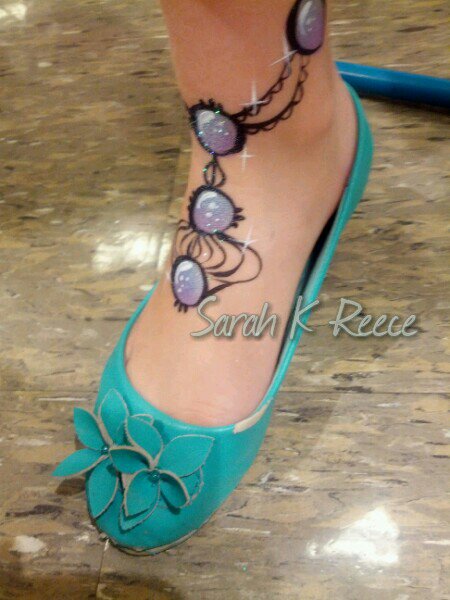
Painted jewellery is gorgeous, always comfortable and fits perfectly.
image

image

The slightly tired artist at A Christmas breakup party.
image

I love this one, what a gorgeous pair! Roses, and Minnie Mouse, and a little princess in pink.
image

image

Okay, so it’s not the best Night Fury around, but I had 5 minutes, no reference picture, and I hadn’t seen the movie in a couple of years. Actually it took me a while to realise what the kid wanted, as he didn’t ask for it by name, but for a black dragon, with four legs, two wings, lots of sharp white teeth, a really long tail… and…

View original post 18 more words

Ink not blood city

image

Tonight I’m deeply sad. Treading water, far from land, memories that chill me slowly numb. Wrists that want to weep. The comfort of self destruction, mind turning over all the most delicious ways to die. Riding it down as night falls in my heart, as winter falls, as the sirens call to me with their tongues like knives and I find myself wishing for blades, wishing for someone who would beat me until I could cry and melt the frozen place in my heart. Some part of my mind separate from the engulfing despair, enough control to get the car safely home, no kissing trees with bumpers, enough to shuffle us into bed with inks and books as substitutes for blood and torture and loneliness.

I have memories of love and brokenness, some nights the ghosts rise from graves and their chill comes over me and I’m haunted by that which once comforted me. Smaller losses evoke larger ones, the petty indifference of day calls to the memories of an indifference so large and collective it tore spirit from flesh, it first sang blood into my life.

My inks speak to me and for me and of me and of pain. Sleep aches in my bones like desire, in rest will I be sanctified? [‘I went to reach a pannikin off the shelf, in it was a dead man’s brains’] I’m standing in a field of snow, enchanted by glitter until I realise it’s glass dust from a lifetime of broken dreams. The secret seems to be to love anyway, to be willing to bleed, to dream just one time more. It’s ground into my skin, in the light I have a halo, in the mirror I’m an angel with a scarred face and ruined breasts, ink running from my mouth.

Love, I say to her, darling, (they don’t give a f**k about you, like I do) this is my spirit which was broken for you, put your fingers into my palms and believe.

Summer painting in the park

Sarah K Reece's avatarSarah K Reece

image

It was a beautiful day to be painting at a birthday party in a park today. 🙂 I took a couple of photos to share with you. If you’re planning your own events at this time of year it’s worth being mindful of the weather. Today reached about 30 degrees which was still okay for the paints although one or two people found that getting warm means a little sweat, and sweat and face paint are a difficult combination! This particularly applies for any poor cooks on BBQ duties. Shade is essential as even with sunblock, little kids burn so fast, as do face painters! It’s worth considering holding your outdoor event in the morning or evening rather than over lunchtime. If the weather gets especially hot I would strongly advise swapping from paint to glitter tattoos as these are waterproof and thus not bothered by sweat. The tattoos are…
View original post 48 more words

Sewing night!

image

I’m having an awesome day. My car came back completely repaired and running properly for a few hundred dollars from the mechanics I went to for a second opinion after a mechanic I’ve only seen once told me it needed a grand or more work to achieve that… Happy happy!

I’ve hung out at maccas all day waiting for my car, with Rose’s laptop, and got so much admin done I’m considering making that a regular thing!

I’m now hanging out with friends, eating macaroons and working on some really cool trousers to wear to work. I got really bad bruising from the fly and button on my regular work pants recently, face painting for 6 hours where you lean forwards is hell for that, so I’ve taken to painting in yoga pants (pantaloons) since which is brilliant, but I need some more. I found great green cheesecloth down at spotlight so here I am. I’ve loved green cloth ever since I read Playing Beatie Bow in high school, with her description of a pea green dress. Hope these work out, but having a great day either way. 🙂

My Garden

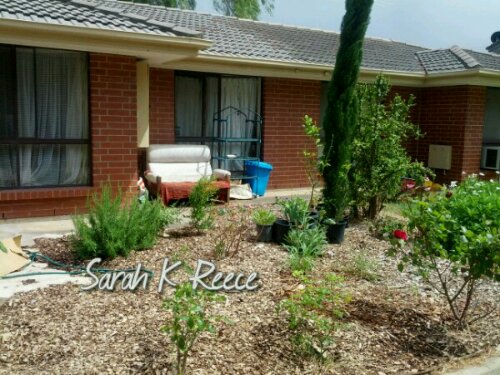
I came back from Melbourne to a wonderful surprise, my Mum had done hours of work in my garden. The lawn is mulched, most of the plants that could be planted out have been, and the rest have been grouped together for easy watering. I love it so much! So does Sarsaparilla who spends most of his time sunning himself outdoors these days.
image

I have a lot of herbs, some fruit trees (fig, lemon, lime, mandarin, pomegranate etc) and beautiful flowers all mixed in together. Here’s some pansies next to my old lounge out there:
image

This is my new favourite place to sit. It’s a bit sheltered so my really stressful neighbor can’t see me. I love eating breakfast out there or having a cuppa late at night. Between the new garden, and the great work area for my business stuff (in my dining room) I’ve fallen back in love with my home. I’m really really sad at the prospect of moving out sometime. I’ve planned more herbs and flowers and I’m watching all my roses bloom. I’m so happy to be here.
image

image

image

image

We’ve been starting to go to house inspections which is super exciting. 🙂  Rose and my sister are hoping to move in together somewhere very close to me, with the idea that sometime mid next year I’ll join them. This staggers the big move a bit, gives pets a chance to get used to each other and keeps lots of backup plans in place in case something doesn’t work as well as we’d hoped. I’m feeling very settled and very blessed. 🙂

Free Talk – Supporting someone in a Dissociative Crisis, 19th & 20th Dec

Back up and running – sorry for the inconvenience of cancelling the previous date. On the plus side – there’s now two of them!

Sarah K Reece's avatarThe Dissociative Initiative

New dates have been set! Both are free, one is within school/work hours, one outside of them. The same talk will presented at each time.

6.30 -8pm, Thursday 19th Dec

OR

11.30am – 1pm, Friday 20th Dec

Mental Illness Fellowship of SA, 5 Cooke Terrace, Wayville

This is the presentation I (Sarah) recently delivered at the World Hearing Voices Congress in Melbourne. It will run for an hour with an opportunity to ask questions. The talk was developed to help close a gap in the Mental Health First Aid training, which does not mention dissociative crisis. Principles of crisis work are covered, as well as recognising and usefully responding to severe general dissociation, and common crisis points for people with parts (Dissociative Identity Disorder, or ‘multiple personalities’). Sarah is a peer worker with lived experience of severe dissociation and DID, and many years experience in supporting other people in crisis.

Books…

View original post 58 more words

Temporary Ink Tattoos

Sarah K Reece's avatarSarah K Reece

These are a beautiful form of temporary body art that I’ve been working on getting ready to be offered to the public as another option for parties or custom design work. The inks themselves are skin safe, a pigment suspended in alcohol that does not stain but sits on top of the skin. I apply these by hand with brushes. They last from 2 to 7 days usually, they’re waterproof so people can still shower or swim. What they don’t like is being exfoliated or rubbed a lot, or alcohol or oils. They come off very easily using things like alcohol hand sanitizer, or alcohol medi swabs, which is an advantage over some of the other forms of temporary art I offer such as glitter tattoos or henna if you do need to remove them for work or something else. 🙂

The aftercare instructions are therefore pretty simple – try…

View original post 179 more words

Community and dreadlocks

I’ve been trying to write a post here for a couple of days, but life continues to be hectic, mostly in a good way. 🙂 I’ve snatched a moment now where Rose, my goddaughter Sophie, and her Dad are all napping. I don’t do naps. I blog!

News! This is what my shower currently looks like. It’s been blocked since Friday. Can’t use the bath either. So I’ve been cleaning myself under my sprinkler, having sponge baths, and borrowing friend’s showers.
image

This is the bucket of tree roots a plumber has pulled out of the drain so far. Some of them are quite large! Apparently someone will come by sometime this week with a high pressure jet thingy and blast them free.

Until then, I’m glad I own a sprinkler and thank god for friends willing to share bathrooms.
image

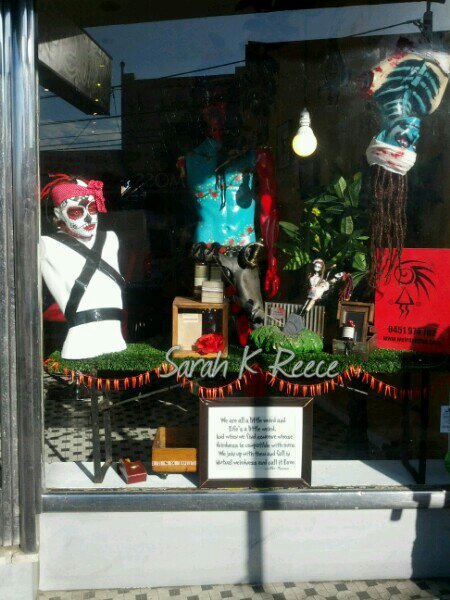
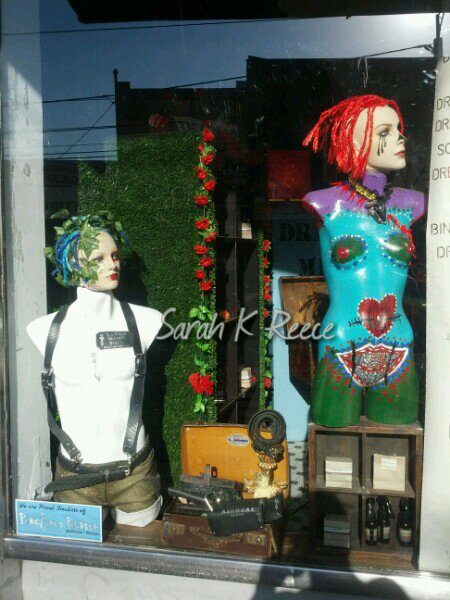
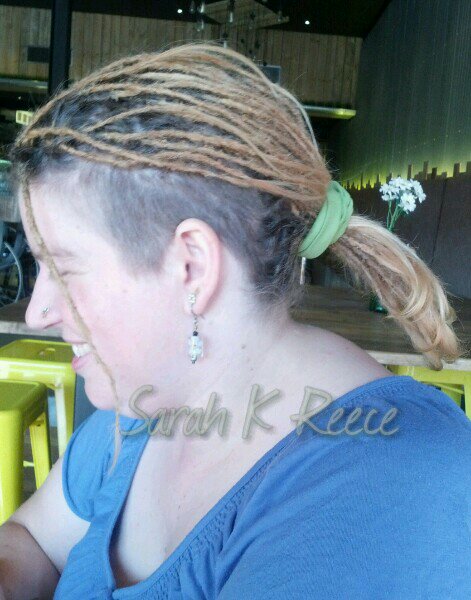
For those of you here who may not have caught up with things, I now sport a whole head of beautiful dreadlocks! I got them done on a whim while in Melbourne, after the parts who can give talks and be brave and whatnot made it abundantly clear they were not impressed about doing this with really boring hair. It seemed a fair trade. So after waking past this shop:
image

image

I said to myself, this is my kind of place. The lovely Weird Sistas shaved the sides back and wove the most beautiful, natural, clean, product-free dreads I’ve ever seen.
image
More than that, we had the most wonderful conversations about life, community, getting screwed over, love, voices, parts, taking risks, and serendipity. I was utterly blissed out and I love my dreads. They are beautiful, smell amazing thanks to the cinnamon spray I got to take home, and incredibly easy to care for. My usually hyper sensitive irritated scalp has settled down considerably since I’ve had them woven in. Happy!

Rose is inspired and excited, and hoping to take their classes and learn to weave dreads herself. This could be the most wonderful opportunity for us both to be in a creative, artistic, people oriented, alternative field, and we’ve been talking about little else all week!

On a personal level obviously it would suit me to have her able to maintain my own dreads, but bigger than that, doing dreads is no more all about hair than doing body painting is about paint. It’s about community, connection, listening. You’re doing something very personal with another person, something creative, but also an exchange. People who sit for the hours of dreads generally talk. They share what’s on their hearts. You need to love people, to be an exceptional listener, to have a genuine heart for then to do this work. Rose most certainly does.

I love that this isn’t mental health work the way my peer work is, and yet it’s not nothing. There’s something about an exchange of kindness – in my own work, about the privileged space in which people may be literally naked, where you work with them to bring a new artwork into the world. (through body painting) To be more embedded into our local alternative communities feels absolutely right. To be making choices about career that fit so well into our hopes for children soon. There’s so many exciting things afoot!

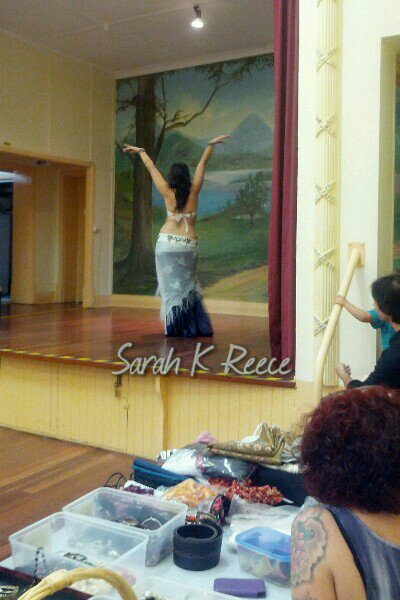
The other day I mentioned I was hiding from admin at a local belly dancing event. It was wonderful! Piles of beautiful fabrics, jewellery, lovely cheap good food served with gracious care. Henna art, chai tea, women of all ages and shapes adorning themselves, feeling good about themselves, feeling a sense of connection to a community.
image
I love these groups so much. I feel so at home in them, the poverty that isn’t brutal, the sharing, the artistry.

I’m finding different cultures and connecting more and more with them. Getting out of the straight jacket of middle class ideals imposed onto a life of low income and disability. There are so many other ways to live. Alone, I’m so, so vulnerable. As a group, nearly anything is possible. People share spare rooms, lemons, recipes, child raising ideas. It’s such a different world from the fearful one that’s been engulfing me, all of us alone in our homes with our appliances for company, trying to stop anything in our world changing. I’m found people who believe in sharing what you have, who think that blood doesn’t make family, who understand that life doesn’t always go to plan, and that sometimes that’s a wonderful thing.

I’m not so afraid of winding up homeless again anymore. I love and tend to a whole community of people who love and tend me back. I think if I fall again I won’t be alone. I’m finding different ways to live and love and risk, and that gives me so much hope.

Avoiding responsibilities

I have a lot of admin that’s getting urgent, some business planning that needs doing, websites that need updating and housework that’s overdue for attention. About 50 blog posts are waiting to be written up. To make life extra fun my application of drain cleaner to the shower drain has turned it from show draining to not draining at all (cannot even fathom what’s going on there) and the bath drains using the same drains so I can’t shower or bath at my house…

Therefore I’m ignoring all of it and going up into the hills today to watch a belly dance concert then having family over for dinner.

On the plus side it’s raining so staying clean won’t be too challenging today. 😉

Sleep deprivation & tattoos

I am very, very tired today. There’s been a lot of energy output lately and far too much kitten going on at 5 or 6 am, when Tonks inexplicably seems to feel lonely and demand attention…

On the plus side, I hung out with a friend at her awesome salon Rockabilly Body, and we talked about possible business collaborations which is really exciting. Then I trekked off to a mates party and offered hand painted temporary ink tattoos as a birthday present. And, you know, managed not to pass out. I think I may even have been friendly, but I couldn’t attest to that.

Here’s the big design chosen by the birthday girl:

image

These are very cool, I hand make the stencils based on the clients choice of design the night before the gig, then transfer the pattern onto the skin and hand paint the tattoo inks over that. They don’t stain the skin at all, just sit on the top of it, and can be completely removed with alcohol. If you care for them they’ll last usually 2-7 days. Rose gets about 15 hours out of hers, I get about 12 days. Different skin types very widely. They are time consuming but pretty darn awesome. 🙂

Commissoned Works

I’m sometimes contacted to create an artwork to fulfil a specific need such as to illustrate an idea, emotion, or situation. I take these on a case by case basis. It’s best if you’ve had a look at my gallery to see the kinds of work I make and styles I use, so you can see if your idea fits my work, and you can tell me what existing works I have that inspired you.

Click on the title for more information about each work.

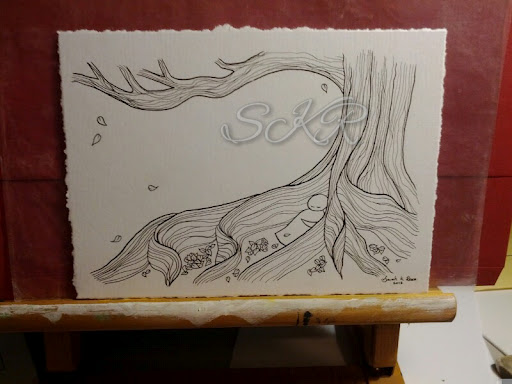
Ink Painting – Child and Tree

Art commission ink drawing

Ink Painting – Tigers and Trucks

bfb63-dscn9077

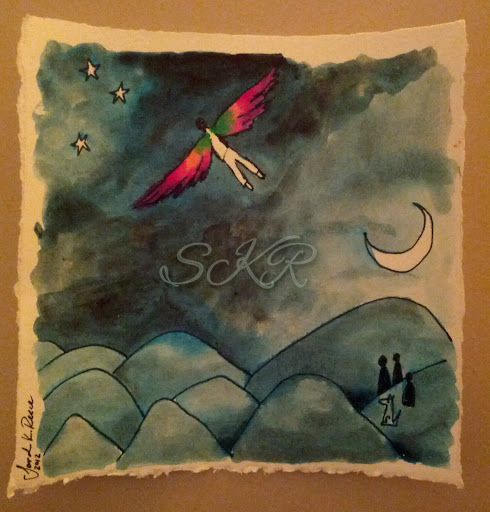
Ink Painting – Bright Wings


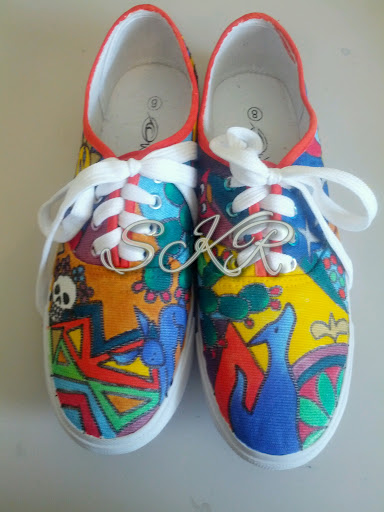
Art Shoes – Space

space shoes

Art Shoes – Mexican Folk Art

mexican shoes 3

Art Shoes – Wedding Peacocks

peacock shoes 2

Logos & Art in Presentations & Brochures

Please click on the titles to see more information!

Handyman Logo & Marketing

Business Card Draft 5

Logo: The Undivided Heart

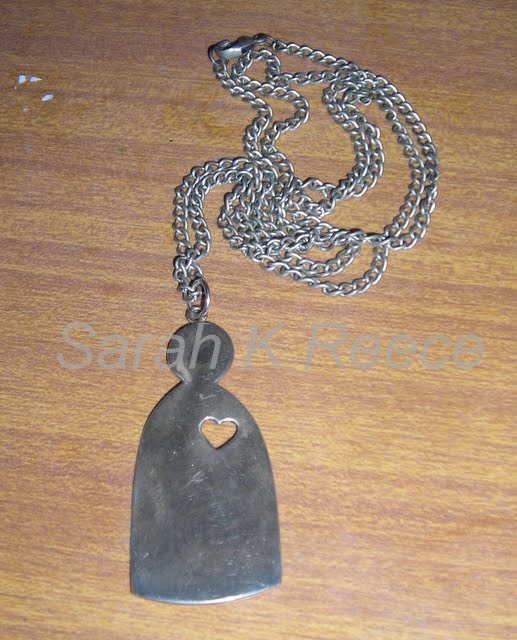
I developed this coloured pencil drawing for the multiple community, and also the same design in sterling silver as a pendant.

0158c-img006 69197-dscn7763 Watercolour logo cropped copyright

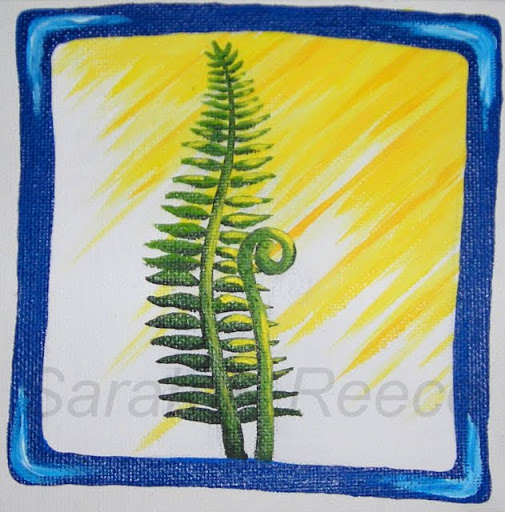
Sound Minds Logo: Hearing Voices group at Mifsa

Developed in consultation with the group members who chose the fern in sunlight, and the colours, to represent growth and recovery.

Hearing Voices

Logo for group The Gap: supporting same-sex attracted women aged 18 – 40

Logo for group The Gap

Developed in consultation with the group members, who chose this fabric painting by me as a start point:

Fabric Painting

Creativity Talk

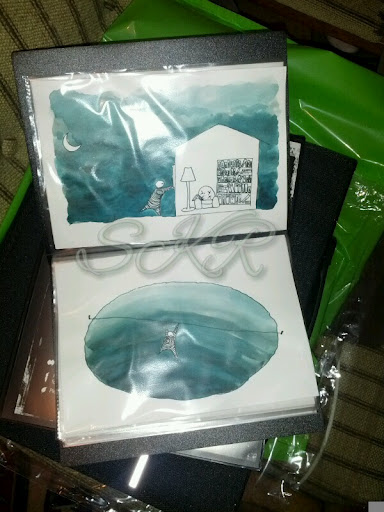
A series of ink paintings created to illustrate a talk about using creativity to manage mental illness and other life challenges.

82fdb-communication-1

Introducing DID Talk and Brochure

These acrylic paintings were created to illustrate my very first presentation about Dissociative Identity Disorder, and the subsequent brochure I created.

77161-containment2

About Dissociation Talk and Brochure

These ink paintings were created to illustrate talks where I am explaining what dissociation is and giving conceptual frameworks to understand it.

About Multiplicity

Consumer-Led Service Delivery Talk

This talk was developed in partnership with Ben Swift, Team Leader of the Education and Therapeutic Groups Program at Mifsa. We delivered it at the SA Mental Health Conference, and again to staff and clients at Birches locked ward at Glenside. This topic is a passion of mine. The illustrations are coloured pencil.

What does Recovery mean?

About Multiplicity Talk and Online Resource

This talk was developed to give an overview of a simpler and more inclusive framework for understanding the experience of ‘multiple personalities’. The ink painting illustrations form a key aspect of the presentation.

About Multiplicity

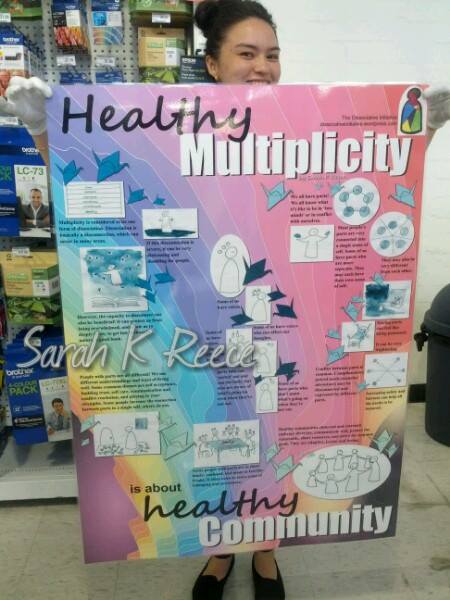
Healthy Multiplicity Poster

Presented at the World Hearing Voices Congress 2013, I created this poster using images from my Introducing Dissociation and Multiplicity talks.

Multiplicity poster

Peer Work: A Consumer Perspective Talk

Delivered at the FAHCSIA Peer Work Conference in Melbourne, I created a series of ink painting to illustrate my experiences in the mental health system before and after the introduction of the peer worker role.

Consumer Perspective

Artwork Purchased by the Bipolar Caregivers Association

Follow the link to see my artwork being used in their brochures and online.

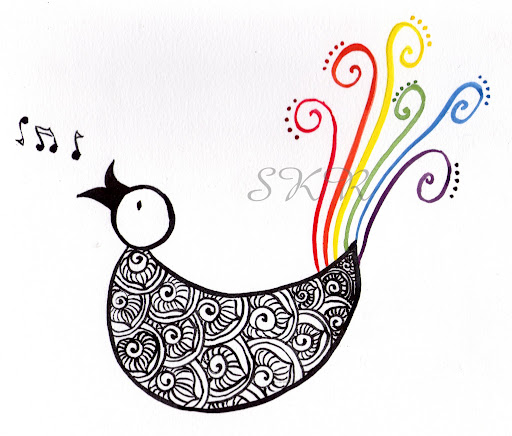
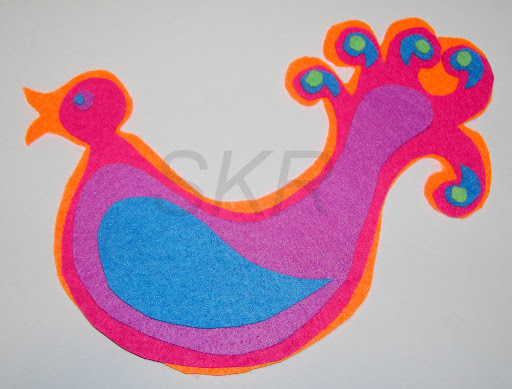
Recovery: Rainbow Bird

Made from felt, this bright, happy birds represents qualities such as community and creativity, which have been key components of my own recovery. The tail feathers resemble the tears of grief and pain that are also part of this process.

Trauma Informed Care

Stress Vulnerability Coping Model Poster

I created this during a Cert IV in Mental Health Peer Work. Markers on Paper.

Stress Vulnerability Coping Model

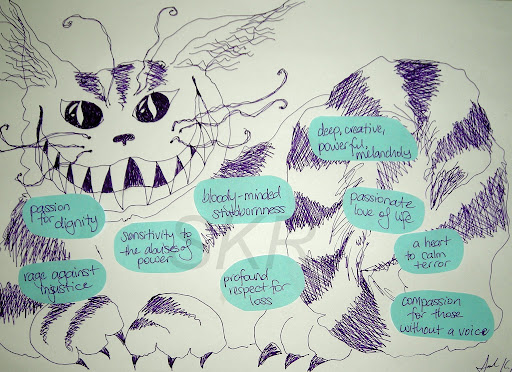
Fantasti-cat: Art under duress

Unimpressed by yet another mandatory craft activity during the Mental Health Peer Work Cert IV, I was brutally honest about my assessment of my own strengths.

Peer Work course

Things to Watch or Hear

Click on the titles:

I’ve done some training in media through Radio Adelaide, and also enjoy creating small projects such as films, animation and spoken poems. Here’s a scattering of my work over many years, some very early:

Short Film Clip: Sarah K Reece on the Enriched Workplace

4 minute clip discussing mental health in the workplace.

Podcast: Interview on Radio Adelaide Arts Breakfast

My experience of miscarriage as an artist, my 2016 exhibition Waiting for You, and the launch of my first artbook Mourning the Unborn.

Short Film: Regeneration

The result of a Film Making Bootcamp, collaboration with three other people. We were given the topic ‘Mental Health and Community’.

Spoken Poem: Night

My first recording of reading one of my own poems.

Podcast: My personal experience of voice hearing

Following a Rufus May workshop back in 2012, I shared my thoughts about my experiences and understanding of my own voice.

Stop motion Animation: Dogboy and the Gift

A college assignment, collaboration with 2 other people. We had to make a stop motion using the idea of chewing gum in some form.

Experiences of spiritual emptiness and hope

I caught up with my local Hearing Voices group in SA yesterday. It was so good to see everyone again. I love this group, they will always be close to my heart. One of the first places I felt at home and started to see another way of engaging my own pain and loss. One of my first experiences of community. I was so happy to be back, particularly as I’m not a co-facilitator anymore and can just be my own mad self. 🙂

At one point, a member talked about experiences of spiritual emptiness. How I love this group, that these conversations happen. I constantly learn so much, feel so humbled. We talked about emptiness, shame, connection. I talked about my experiences coming home from the World Hearing Voices Congress and starting to struggle. At the congress I had the most amazing experience of connection with a whole room of like minded people. The first night alone in my flat was a transition. I’ve never been particularly good at object constancy. I can’t easily retain a sense of emotional connection to people when they’re not present. For the first 6 months of dating Rose, I would wake up every morning and go and find a photo of her to remember what she looked like, and to try and find that sense of connection to her inside me. I have issues with facial blindness, and often cannot picture the faces of my loved ones in my mind. I disconnect quickly. This can be really tough. I keep a lot of photos on my phone and around my unit to help me with this.

So, at the congress, all the connection, the hugs (we did a seriously AWESOME job of keeping out the parts who would get the most out of and be the least stressed by the congress! Very proud) the amazing conversations, they were all buoying me up. It felt like everyone I’d spoke with was a big red helium balloon, and I was holding the string. Feeling connected to them all, to a whole amazing community of people who treated me with care and respect, was half like flying. I was uplifted and full of hope. I felt like I could do almost anything.

Home alone in the night and the strings started to pull through my fingers. A profound sense of being empty and alone and very small in a very large, dark world crept over me. Hollow inside, doubts crept in, shame, every compliment in my memory twisted into a recrimination, every connection seemed imagined. I fell into the pit.

This time I took that image of the balloon strings slipping through my fingers and asked myself – what would help me hold onto the strings? I found that a question that resonated with me, there was a sense of fumbling in the dark towards answers. I took out my conference name tag and pinned it to my bookshelf where I could see it. I posted how I was feeling on this blog. I got up the next morning and watched Patch Adams over breakfast – marveling at the parallels, at the way so many of us are fighting the same fight, dreaming the same dreams. And how some of us simply cannot fit in, cannot help but be madmen. It’s not about what will work, or what’s practical, or even what will further our ideas best, it’s simply who we are.

I keep listening to small voices inside, keep looking for where my energy is. Keep trying to find ways to be more human, more honest, stronger in myself, more vulnerable in my interactions. I know that I cycle, it’s the nature of the carousel of parts. But I also know that strength deep in the system, that experiences of meaning, connection, community, and hope are deep and profound foundations even for the most wounded and disillusioned of us.

Being counter to mainstream culture can be hard. All of us need ways to keep our dreams alive, to maintain a connection to the things that are meaningful to us. I hope you are able to find ways to grasp the slipping strings in your own life, ways to tolerate the nights that are empty and find your way back to hope again.

A quote from Patch himself (not the movie):

you don’t kill yourself, stupid; you make revolution.

Vive la revolution!

Facilitating is a challenge

Today was good but tough. It was hot. I have a lot of admin and housework since the trip I’m still to catch up on. And a big conversation happened in the DI Open Group on facebook, where I’m the sole facilitator (not by choice!). I’m lying on the grass in the dark at the moment, down the local park with Zoe. It’s beautiful. There’s a cool breeze on my skin, stars overhead. So many things are running through my mind.

I think one of the hardest parts of being a facilitator is that people can very quickly lose faith in you. We’re so used to being lied to, being subject to marketing campaigns, advertising, slick company spin. It’s really difficult to be a genuine, human voice in the role. People quickly start to hear insincerity and feel you’re lying to them, bull shitting, setting them up. Once that trust has been compromised, real conversation is hard. People start looking for ulterior motives. Everyone is desperate to feel people are hearing then, agreeing with them, on their side. It’s a challenge to inspire everyone to also want to hear each other. People struggle not to become defensive or disengage. Conversations, real conversations not just fights, are hard for everyone, ask so much courage, empathy, vulnerability of everyone involved.

As a facilitator I struggle because being in the middle of difficult conversations and trying to hold a safe space can quickly feel like I’m alienating everyone despite my best efforts. I can find myself feeling raw, beaten up, and distrusted by people I care about, whose opinions I respect.

We have an idea on our culture that you can be impartial. I don’t think it’s possible. You can be less invested perhaps… which sometimes means too far away from the topic to have any idea about it, easy to confuse or manipulate. You can be highly invested, such as when someone makes a complaint about a resource I have built, or about my behaviour as a peer worker. Man, is that hard! I’ve worked so hard to try and engage complaints in a non defensive way, to use them as an opportunity to learn and connect and build more genuine relationships. I don’t always succeed, although sometimes this works spectacularly well, and I count among my friends and colleagues some wonderful people who’s first real conversations with me were complaints. It’s still such a challenge to try and genuinely listen, especially if the other person is enraged, or making horrible assumptions about my motives. Sometimes I feel profoundly trapped and silenced by my own role, by the weird double standard work in the sector can bring, where a client can tear you to shreds, but you must keep your mouth shut about your feeling, needs, fears, or concerns. (in front of them at least) On the other hand I’ve also been the client so often, completely ignored, silenced, dis empowered, humiliated, minimised, dismissed, interrogated, asked to account for experiences, needs,  and reactions I can’t even put into words, by people I am deeply intimidated by.

This process sucks. This framework sucks. How do we just sit down as people, and talk? How do we create safe and fair spaces to discuss deeply complex, painful, urgent issues? How do we not burn out the facilitator who needs hugs at the end?

My ideas about the facilitator role have been informed by my experiences in hearing voices groups. I’m not there to privilege one opinion or idea above others. I’m not there to decide the ‘truth’ of why voices happen or what people ‘should’ do. I’m there to make the space a safe one for people to have their own opinions, share their experiences, change their minds, disagree with each other, and still have a space where mutual respect and care can flourish. This is kind a diplomat role – I’m there to try and hear and help everyone feel heard, and to try and support and encourage even people with completely different frameworks to engage each other respectfully. I’m trying to model a way of both having a voice, and listening. Of course, the nature of this role is that it’s depressingly easy to fail. It’s easy as all hell for everyone involved to feel that I’m against them because I’m trying to give space to opinions they disagree with. That I may also disagree with them, but see my role as one of making space for all voices doesn’t necessarily come into things! We’re not used to this model, most of us have never had a genuinely respectful conversation with someone who completely disagreed with us, or whose experiences were totally different from ours. If the topic is really crucial, if people’s lives or sanity hang in the balance, the chances of anyone listening to anyone else decrease, because everyone involved is so stressed, has such a real need to be heard and believed that it drives us. It’s so bloody hard to be patient and hear opinions that we believe are so deeply wrong they sicken us.

Some days I’m so, so tired of being the diplomat, the facilitator in the middle. I’d love to have some one else facilitate these conversations so I can just have my own point of view and argue that.

Some days I wonder if the facilitator role is a bit stupid. Why is it primarily one person’s responsibility for making sure a space stays safe, respectful, and caring? What would it be like to have a difficult conversation in a room full of facilitators, were everyone was working hard to make sure all voices get heard? Wow, I’d like to sign up to that conversation.

I’m so proud of the folks in the Open Group, they did a fantastic job of engaging even though it was really hard. No one has slung any insults, space is being made for different opinions. I keep thinking about the idea that complaints are a chance to become closer, more real, more authentic with each other. I keep thinking about tribal cultures where the whole group sit down together and talk things through, tell stories, sing, dance, talk into the night, for as long as it takes to find some kind of peace with each other. I keep thinking that roles are useful but limiting, even a facilitator role that I value and believe in I also experience at times as very dehumanising. I’ve got some ideas, some experience, some bits of wisdom gleaned from life or other cultures. But wow, it’s a tough gig some days. Thank god it’s not my whole life. I keep thinking that spaces where someone like me holds the space, holds the expectation that we can disagree and still be respectful, holds hope that community and diversity and honesty can all enhance each other instead of being at war, are rare and precious. So, it’s important not to burn out the facilitator. I still have to step out of that role, shed the skin, run naked under stars, laugh from that deep place in my gut where joy lives.

And so do all of us. xx