What’s the deal with Integration?

Integration can be a Hot Topic for those of us with multiplicity. It used to be (and sometimes still is) pushed as the cure for our illness, our only chance to be a normal person, and have a normal life. People who couldn’t integrate, didn’t want to, or tried to and had it fall apart on them were seen as more sick, less recovered, less committed to recovery, treatment resistant, or basically in some way a failure. So it can be loaded topic with heated diverse ideas and often some firm opinions and rough experiences for people. Hence why in 3 years of blogging about multiplicity I haven’t wanted to tackle it before now!

It doesn’t have to be so divisive of course, the issues really aren’t about integration, they’re about this idea of failure. If integration is an option rather than a cure, a lot of the heat and stress goes out of this topic. That’s certainly how I prefer to talk about it.

So, let’s start at the beginning, what the heck is it? Well, that can be tricky to define, because different people and different books use the word to mean different processes.

Fusion or Merging

This is the most common use of the word integration. It refers to the combining of two (or more) parts into one. Separate consciousnesses, or selves, become a single self, combining memories, skills, and attributes of both. For those who use a clinical dissociative framework, an analogy might be the dissociative walls between parts coming down, so that every part can be out together, all the time, sharing all of life, all the memories, and all the energy. Generally speaking integration is only used to describe the merging of all parts into one, but sometimes I have come across variations in that too. There’s a experiences of fusion shared in the biographies The FlockKatherine It’s TimeA Fractured Mind, and Not Otherwise Specified.

Retirement

Some people use integration to describe a system where all the parts but one have been retired from coming out. One part now runs all the life, and the rest live inside where they may be sleeping, playing, advising, or doing their own thing, but they don’t come out any more. An experience of retirement is shared in Today I’m Alice.

Passing On

Some people use integration to mean that all the parts except one go away. People might pray away parts, have them exorcised, experience them ‘die’ (without harming the body), or simply find that they have fulfilled whatever function they were needed for and disappear. Sometimes passing on happens spontaneously, sometimes it is the specific goal of therapy or an intervention of some kind. There’s experiences of passing on in Little Girl Fly Away, Fractured, and A Life in Pieces.

Co-operation

While most people see this as an alternative to integration, sometimes this is described as integration, which can really be confusing! With co-operation the parts work together as a team, sharing the body and life and making decisions together. Basically, it’s a multiple system that functions well with parts looking after each other, sharing information and resources, and putting effort towards common goals. There’s experiences of co-operation shared in First Person PluralWhen Rabbit Howls, The Sum of My Parts, and Five Farewells.

Several of these outcomes are described in In Two Minds. Most of these books can be borrowed from the DI Library.

So, if you’re reading or hearing someone talk about integration, it can be really helpful to know what they’re using the term to mean! Of course, a person with multiplicity may use all of these approaches, at the same time but with different parts, or at different times in their life – perhaps they work on co-operation which leads to fusion, or perhaps some parts fuse, some retire, some pass on, and the rest co-operate.

Integration is a word that also has different meaning in other contexts. It’s often used in trauma therapy to refer to someone’s ability to process, think about, and link into a personal narrative an experience that has been jarring and out of sync with their sense of themselves and their story about their life. In that context it is always seen as a highly positive thing, and that may be part of the challenge about the way it is used with multiplicity – because in this case it describes a process that people experience in diverse ways, ranging from profoundly welcome and life-saving, to highly distressing, destructive, and disabling.

Integration can mean a connection, as in technology or biology when we’re talking about different processes working together – for example “visuomotor integration” – how well our sense of sight and our muscles work together. Integration can be about harmony in difference, such as architecture that integrates well with the landscape. In science integration is the inverse of differentiation – one example of differentiation from biology is the process by which cells change from being generalised (such as the stem cells that start off building an embryo) to being specialised – becoming nerve cells, muscle cells, and so on. Integration is the opposite of segregation when we’re talking about civil rights or putting kids with disabilities in mainstream schools. When we’re talking about immigrants and culture, the word integrate is often used to mean assimilate – that is, the minority or inferior group should adapt and conform, to become absorbed into the dominant culture.

I see some obvious parallels in these various uses of the word integration and how it is experienced by people with multiplicity. Some people see either fusion or co-operation as the best goals for people with multiplicity. Some see passing on as the only possibility. Some people with multiplicity deeply desire fusion, while others are aiming for co-operation. Some people are terrified of losing parts. Some systems have different parts with very different goals, which they may try to impose on each other and team up with other people such as a therapist, to try to enforce.

Where the big issues come into play is often not what the goal is, but who chooses it and how it is defined. If a therapist, healer, priest or so on chooses the goal for a system then their efforts to create that may be highly traumatic, no matter what the goal is, or how well intentioned that person. If a goal is presented as the only possible option for a good life, then people can be devastated if their system simply doesn’t fit it or can’t sustain it. There is not one experience of multiplicity out there, there are hundreds of thousands. There is not one experience of integration either. Here are some diverse stories I am aware of:

  • A person with multiplicity who works hard in therapy to fuse back to one part, and discovers that for them, a great deal is lost in the process: memories, skills, and so on.
  • A person with multiplicity who experiences a part telling them that they have done what they were here to do, and their lifespan is over. A ritual goodbye is performed, and a small private funeral. The part ‘dies’ at peace.
  • A person with multiplicity who draws upon their faith to pray with a trusted person in authority to have deeply distressed or disturbed parts taken away, and experiences relief.
  • A person with multiplicity who found a new, more calm and grounded part formed in adulthood and guided their system through stress and conflict.
  • A person with multiplicity who over many years, without therapy, learns about their other parts, negotiates their way through differences, and comes to work together as a team.
  • A person with multiplicity who works hard in therapy towards fusion, who’s other parts experience grief at their loss of separate self, but who finds deep wholeness and relief in integration and embarks on a new life direction with zest and hope.
  • A person with multiplicity who transitioned and went through sex change surgeries so the part of that gender could have time in a body they felt comfortable with.
  • A person with multiplicity who has no intention of fusing but finds that fusion happens gradually and naturally as part of trauma healing, and comes to term with their new single identity.
  • A person with multiplicity who is convinced by someone in authority that an exorcism of demons is their only hope for a good life, and finds it ‘works’ for several years as the other parts are deeply alienated and buried in their psyche, but then they return even angrier and harder to communicate with than before.
  • A person with multiplicity who is thrilled to fuse with their other parts, only to find that when they are stressed they split back into parts again.
  • A person with multiplicity who thinks that all the parts have gone, only to find a batch of new ones they didn’t know anything about.
  • A person with multiplicity who fused, split, fused, split again, and finally fused for good!
  • A person with multiplicity who had parts die only to come back to life some years later.

As you can see, people’s experiences are diverse!

So the stress about integration comes from many places, people who want to fuse but can’t seem to, people who are frightened that parts may die, people who are being strongly pushed into a process that doesn’t fit them well, or who are being told they cannot be whole or healed unless they do a particular thing or do it in a particular way. For some people fusion is amazing. I have seen it and it’s a marvel. For others it is akin to gay reparative ‘therapy’ for people who don’t want it, where people are trying to ‘cure’ something that is a natural difference in how people are, in the process making them much more vulnerable to suicide and self harm. I believe the risks of harm are higher when people are afraid, made to think one way is their only hope, and when they have no exposure to peers and diversity and are vulnerable to the ideas of a person with power in their life. I think the risks of harm are lower when people are able to sit with the idea that there may be many paths for people, and one is not necessarily better or worse than another, that what is supposed to happen for them will happen, and that whether you have single or multiple selves if you are decent to people, animals, and the planet, you are not a failure.

It is entirely possibly there is more than one form of multiplicity, some of which respond well to fusion or other types of integration, and some of which don’t. Certain philosophies and branches of neuroscience consider that it is a sense of having a single self that is an illusion and that all people are a collection of multiple selves and processes. The mind and consciousness are simply amazing. Please be reassured that if you have had bad or frightening experiences trying to navigate multiplicity that you are not alone in that, and that people, parts, and systems can recover.

Personally, when I was first diagnosed with DID in 2007, I had a plan. I was going to be a model patient, obey every instruction, and integrate within a year. I wanted more than anything in the world not to be multiple. I wanted to have a life, to finish my degree, to have a job, to be a parent – and I didn’t think I could do that if I was multiple. Putting my system under that pressure knocked us around badly and our functioning started to fall apart. We’ve ended up walking a much more roundabout route, focusing on specific challenges such as accepting our sexuality and rebuilding our social support, and figuring that if fusion is supposed to happen for us, it will happen in its own time. I’m okay with that! I don’t need to be multiple, it’s not what makes me special or gives my life meaning or gives me an identity. I’ll still be the strange mad creative oddball we are now. I also don’t need to be single to be whole, healed, or have hope. I don’t think single is the best, right, or only way for people.

For more information see articles listed on Multiplicity Links, scroll through posts in the category of Multiplicity, or explore my Network The Dissociative Initiative.

Welding and pregnant

I’m 5 weeks pregnant today! The little one is about the size of a sweet pea (5mm) and has a heart beat. At the moment pregnancy is like a slightly rough day with fibro, only a lot more exciting.

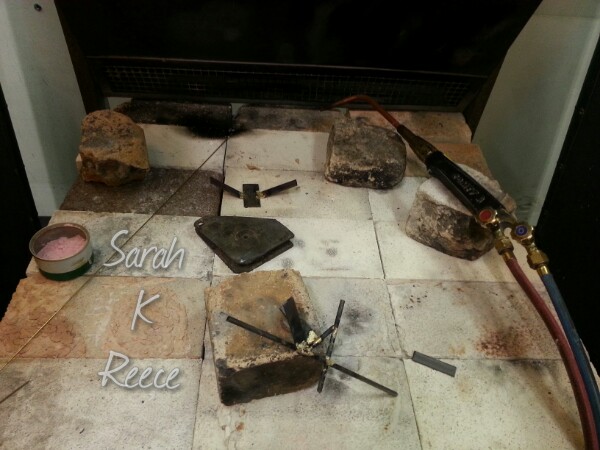
Today was sculpture class, which makes me feel so contented and at home. I learned to weld! We’re starting with brazing welding with the oxy-acetylene torch. I’m glad I’m pregnant in this class instead of painting – the fumes in painting can be a big issue as well as skin absorption. I made this little critter for my garden:

2015-02-18 15.29.56-22015-02-18 11.40.37-1It was wonderful. I’m so glad I’m still doing this degree. I have no idea how it’s all going to work out, but to spend time with other artists in a studio learning new skills makes my heart happy. And we have the best tutors in this class. Something good will come of it. Tonight and tomorrow are HVNSA and DI meets, something also very exciting and at times anxiety producing. Hoping we create something good out of that too. 🙂

Things without name

Appreciate darling Rose who had packed of lunch box of food unlikely to make me sick. I’m feeling nauseated a lot of the time, very tired, mad dreams. Pretty much like fibro really, being pregnant. I’m unsettled and feeling strange things that are hard to name. Oddly lonely.

Yesterday I was reading Idylls of the King by Tennyson for art homework. I also read a bunch of sites about starting Not for Profit orgs and setting up committees and so on, until the sense of displacement and anxiety crawled so high up my throat I couldn’t breathe anymore. Reading about Arthur, the ordained king and his knights in which he had such faith, their overturning of the old world and their bright hopes, all ashes by end, felt so fitting I cried. Of the original DI board, most are not speaking to someone else who was on it. We start things with such hope and end them in such ruin. And the ones that persist seem to lose all the glow of kindness and passion that brought them into life, becoming mechanical, unwieldy, inefficient, consuming. I have such hope but so very little faith. “Everything anyone has ever thought is true… I’ll be alright, and I’m going to die. Both of those are true too.” Do Androids Dream of Electric Sheep? Phillip K Dick

Here I sit between classes, feeling the slight stretch and pull of my womb growing, eating these small tokens of devotion like a sacrament, feeling blessed, feeling humbled, feeling out of step with the world. In a place where things are not themselves, not as they seem, names that do not fit. Like you, little nameless one inside me.

Rose and I hold each other in the soft hours, away from the critics and the judgement, feeling the faint terror under all our days, the burning love. Do you think we will feel less afraid when the baby is here safely? No, never again, it is to live with your heart outside of your chest. I’ve been here, waking from nightmares where my family are slaughtered, or sitting by the bed of someone beloved who is dying, saying goodbye and trying to fix the details in my mind. I’ve been here, feeling alone and exquisitly vulnerable in the vast darkness and fragility of life.

“The Sea of Faith
Was once, too, at the full, and round earth’s shore
Lay like the folds of a bright girdle furled.
But now I only hear
Its melancholy, long, withdrawing roar,
Retreating, to the breath
Of the night-wind, down the vast edges drear
And naked shingles of the world.”
Dover Beach,  Matthew Arnold

“It’s a wonderful, wonderful life, if you can find it.” Nick Cave

When it won’t rain so you can dance in it, turn on a sprinkler

The most fun thing I’ve done so far today was take off my shoes, turn on the sprinklers, and do an hours weeding and pruning in the garden. It’s hot here still so I wasn’t getting chilled, just feeling water streaming through my hair, mud sticking to my feet. I filled the massive green compost bin again with daisy, geranium, and basil, revealing a tiny ground cover daisy and a strawberry plant with two ripe fruits on it. After years of plants struggling along in pots I’m new to plants going so well that they take over my garden and eat other plants, pots, and garden lights. I’m learning to be harsher with my pruning so there’s room for everything. There’s probably some life metaphor in this navigating abundance but I’m sitting here in my underpants with wet hair just feeling a hell of lot better about life and happy to have some P!nk cranked so I can’t hear the neighbour anymore.

Still pregnant. Rose is still sick. She has woven a bunch of new colours into my dreads that look awesome though. 🙂

Still here, still pregnant

Whoo!

So, I did a 5 hour gig at the Adelaide Zoo today in 40C degree heat. Fortunately they put me indoors so I didn’t spontaneously combust at any point and merely came home fatigued and sticky. I painted people and wrote poetry and cautiously ate small healthy morsels of food, having learned to my dismay in the early hours of that morning that I am not processing rich foods well, and by rich I do not mean a litre of chocolate icecream, I mean stirfry with sauce on the noodles. Daaaaaymn.

I’ve binge watched Zero Punctuation game reviews, episodes of ER (yes, we are switchy, what of it?) and milled through that odd state where you’re too tired to do anything useful or focused but too bored to keep lying on the couch. I’ve bought groceries, and tidied the kitchen and sorted the dishwasher in 15 minute bursts.

2015-02-08 21.53.38-1

Games night it is! Trains, infectious diseases and so on to the rescue. Rose is trying to breathe through a head full of snot and feeding me large plates of salad that to her are currently merely an exercise in interesting textures. I have stocked up on nuts, seeds, fresh and dried fruit, and tried making my own orange juice iceblocks because I’m sick of the sickly tasting sweet ones from the shop. I have also bought honey macademia icecream, but as my insides feel like someone is actually rearranging the plumbing and may have left a few crucial parts out, I don’t think I’m going to try it tonight.

I sometimes share amusing stories about Rose sleep talking, which I love. She had a chance to return the favour recently. She woke up in the small hours and reached out for me and told me she loved me. I was still asleep but apparently reached over, gently patted her on the face and told her “Yes, I know. I love you too Zoe.”

Big News

Pregnancy AnnouncementYep, I’m pregnant. Positive test yesterday, doctor confirmed it today. 🙂 Whooooo hooo! All things being well, we’re due in October.

To anyone else who wants to tell Rose or myself not to get excited, that 4 weeks is early days, that half of all pregnancies this young are lost, and that we shouldn’t share about it until we’re further along, I have this to say: it’s probably a wise idea not to be standing in the same room as me when you plan on doing this. Seriously.

It does not hurt less when you don’t talk about it. (it does hurt less if people are less full of crap) It does not hurt less if you’ve tried really hard not to be excited first. It does not hurt less if you know all of the nasty statistics. You are welcome to navigate sharing, openness, and excitement however you want to. This is our way. Consider yourself warned.

We’re pregnant, third month of trying. We’re thrilled! We’re hopeful. We’re painfully aware of the possibility this will be a 7th loss. Doing the pregnancy test was, frankly, an act of courage, because it’s hard to do something you know will break your lover’s heart a little bit more. You have to wait three minutes for it to tell you results. I left it on a bench with a timer and wandered out of the room – Rose found it and told me, a delightful reversal of the usual roles.

I have a teeny little thing inside me that’s trying to grow into a person! So far health wise I’m okay. The sinus infection is more of a problem than the pregnancy.

We wouldn’t be here without Rose. I was never prepared to be a single Mum with my health issues, and I’d been told that with endo, 30 was my cut off to start trying. As 30 approached and I was single, closeted, and wrangling with a complicated life and head space, I let go of the dream that I would be a Mum. I borrowed books on infertility and started to mourn. Then this beautiful, smart, vivacious lady came into my life, with 6 losses behind her and a burning desire to be a Mama. Two and a half years of building a relationship, getting engaged, moving in, sorting out jobs and head spaces and life together and what feels like about 50 cats, and here we are. In with a chance at turning our lives upside down and inside out. Hoping like hell this one sticks.

I’m back at college

image

Continuing my marathon part time study in the bachelor of visual arts. This semester I’m doing Art history, another concept development class (hoping I hate this one less than the previous), and a sculpture class teaching is construction basics in metal and wood. I’m beyond excited by the sculpture class. We’re going to learn to weld! I’m deeply jealous of the other students who are also doing figure sculpture tomorrow, but I know I’ll try and push myself past my limits so I’m staying put with my timetable. I’m thrilled to be back and so tired I feel like I’m going to faint. I’ve picked up a head cold and I’m still adjusting to the early morning starts.

Rose has started her work again this week and I’m thriving on the extra structure and having an empty house regularly to get some work done. Hoping to nail regular cleaning, eating, and exercise routines. Doing okay with the first two but not so great with the third.

In concept class we were asked to do something with a piece of paper that expressed the concept of ‘essense’. I made this little branch from paper and leaves.

image

Weird forms

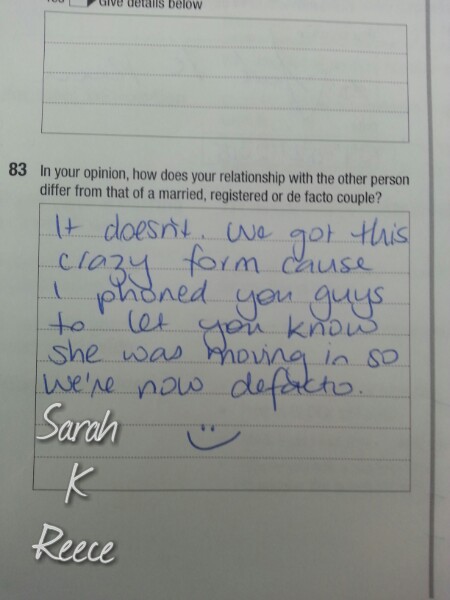
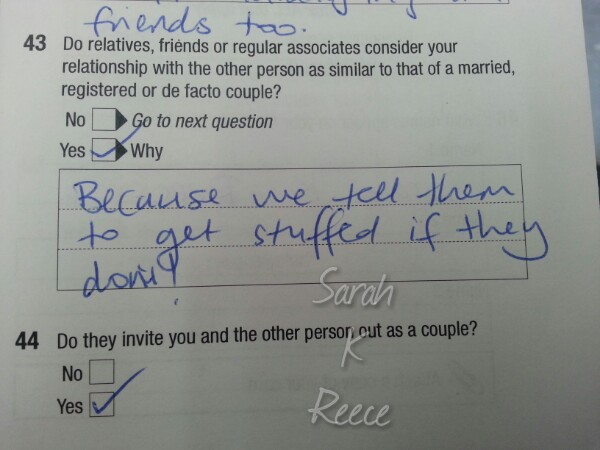
So. I receive support through welfare, and I called them last week to let them know beloved Rose was moving in and we are now defacto. They sent me this mad form to fill in which presumes we’re arguing that we’re not in a relationship. I’ve had to fill it in before when house sharing – apparently they don’t have one to just say ‘hey guess what, we’re partners!’ Strange people. So I’ve answered the following questions as honestly as I can:

image

image

image

image

Cat themed cupcakes


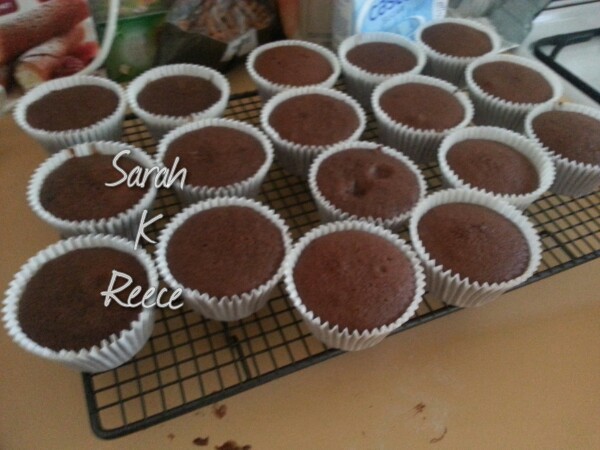
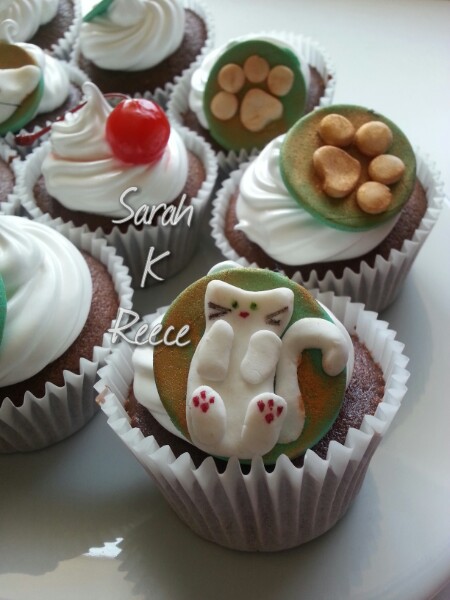
We baked!! I really, really wanted to make a cake for my awesome cat-obsessed friend. I asked her what she wanted and she threw me a little by asking for either a light chocolate cake or a pavlova (I’m kinda getting a reputation for my pavs :P)… so I decided to do both! Chocolate sponge cupcakes with meringue icing. People usually ask me for super rich desserts so I didn’t actually have a favourite light chocolate cake recipe and was a little nervous about this because I’ve also never tried making meringue icing before although I’ve long wanted to… and I only had the night before/morning of the lunch to prepare, which is not a lot of time for things to go wrong.


They didn’t go wrong. 😀 Baked a bunch of chocolate cupcakes:image


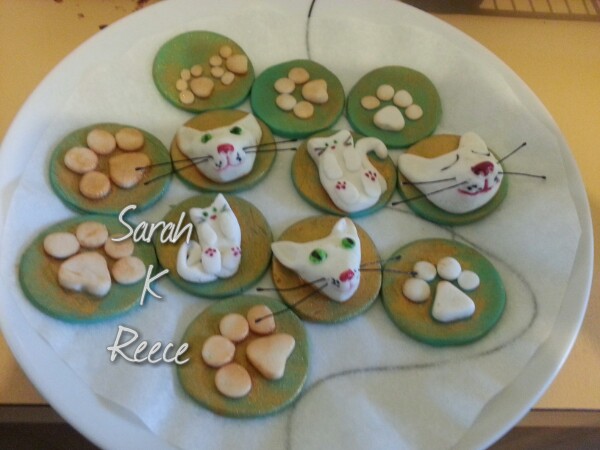
Sat in front of the air conditioner (it’s very hot here at the moment) and Rose and I sculpted these cat ‘toppers’ from fondant, hand painted them with food colouring and brushed them with edible gold dust. Whee!

image


Next I cut holes in each and filled them with a tsp of nutella. Mmmmm.

image


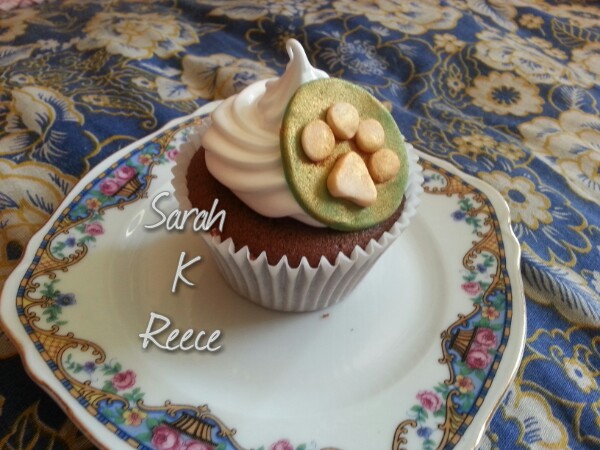
I whipped up some meringue icing, made by boiling sugar to soft boil stage then pouring it slowly into whipped egg whites. It’s like marshmallow fluff. Pipes perfectly.image


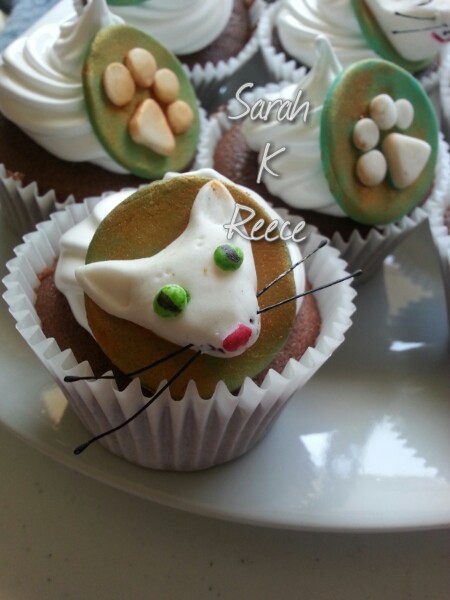
And assemble! Gorgeous!image


Here’s the collection all together. 😀 I hate cakes that look pretty but taste shabby. These were perfect. So pleased!image

image

image

image

We had a really nice party. 🙂


Alone and naked in front of the crowd

Stuck for words. It’s late at night again and I need to go to bed but I want to write. There’s so much going on and I want to share but I can’t put my thoughts in order or break things down to something that makes sense and stands alone.

I went to bed last night and broke into small pieces, sobbing my heart out while Rose sat with me. I wept until I couldn’t breathe. I cried so hard my eyes were still swollen this morning. I felt utterly lost and full of pain.

I’ve always been this way, cried like the world was ending. I’m reminded of a guy I read about who was suffering from severe depression until he figured out how to manage it ‘Now I just cry a lot’. I’m reminded of the people I’ve sat with as they sobbed with utterly broken hearts, how much courage it takes to sit with someone in that place.

I’m painfully aware of being on display at the moment, while we’re trying to get pregnant. Unsolicited advice, scrutiny, judgement. It’s hard to speak in this place, hard to share.

I went and saw my shrink today. We talked about work, about the self loathing that’s been so intense lately, the house move, the sense of doubt. We talked about my peer work, my sharing of my vulnerability, the way I pull apart my image of competence and show people my woundedness. She described it as being alone and naked in front of the crowd. The phrase has rung in my mind all day since. And this, the insecurity, the doubt, the pain, was the cost of that. Perhaps if I can accept that, there might be less to hate about myself. We talked about doubt being my gift, a thing that allowed me to untangle myself from beliefs that were killing me, to question powerful people and paradigms, to listen to people because I’m not certain I know the answers, and the cost of that, a sense of being lost and confused by the world. The prices we pay for our freedoms. It’s a strange and deeply relieving thought.

Trying to start the local Hearing Voices Network fills me with ecstasy and triggers deep self loathing. Imposter syndrome, a terror of leadership, of power, of people listening to me or following my advice comes over me, I find myself at the bottom of a deep ocean of self hate that’s almost unbearable. People reach out and their compliments are like a breeze blowing on the surface of the black water, down at the bottom I’m still drowning.

Rose and I had the most lovely evening together. She cooked me dinner, we baked a cake for a friend’s birthday. It was beautiful, full of simple joy. My mind was clear and quiet. I don’t feel like I’m drowning. We made little cupcake decorations and sang to each other. Every morning I’m still surprised to wake up and find her in my bed. This woman who glows in the afternoon light, who reaches out to touch my back when I cry, who reads me to sleep when the night stretches long before me. The people who have reached out, to say thanks or that I am in some way a useful person in this world, their words come back to me and I can hear them more clearly. There’s people, like Rose, who believe in me, for reasons I can’t fathom and in ways that make me terrified of failing them, paralysed by my conviction that I’m going to let them down. But there’s also the gasping breath after the sobbing cry, the kind touch, the sunlight golden through the window. The ocean has receded tonight and a cool wind blows in my mind. I’m grateful for love, grateful to be here in the dark writing, grateful for the days I can bear touch, can accept kindness.

I don’t believe in mental illness (or, rewriting the DSM)

I don’t particularly believe in DID, schizophrenia, borderline personality disorder, or post traumatic stress disorder. I don’t believe in mental illnesses as parallels of physical diseases – cholera is caused by a bacteria – schizophrenia is caused by faulty genes. I believe in people’s experiences. I believe that the pain, confusion, suffering, terror, and risks of what we have called mental illness are real. I believe that people experience multiplicity, mania, hallucinations, tics. But the way we understand them – as symptoms of illness, the process of diagnosis, categorisation, research, and treatment – I’m unimpressed.

I recently read a dark and brilliant review of the DSM by Sam Kriss – written as if the manual was in fact a dystopian novel. It is brilliant, sad, and moving.

The DSM is the ‘psychiatrists Bible’, a massive reference of all the diagnoses we hear about; depression, bipolar, schizophrenia. In my opinion it is a massive project started for very legitimate reasons that has become a horrifying millstone around the necks of many of us.

Every few years it is re-written, updated, with much argument. A diagnosis is removed, or several collapsed together. A dozen or a hundred are added. A few jump categories. A few thousand people are startled to wake up one morning and find their condition doesn’t exist any more. A considerable number of the conditions are very rarely diagnosed, particularly in poorer areas (at least locally) where Depression and Anxiety are the diagnoses favoured by doctors who are not even aware of most of the rest of the options.

The idea behind a manual isn’t a bad one, to my mind. Language is important. Having words for experiences can be profound, the difference between mute suffering and solidarity and strength in the face of adversity. Our diagnostic manuals (the DSM and the ICD) were developed initially as a way of communicating between shrinks. A shorthand for what a patient was struggling with. It was important to define the terms because shrinks working independently, separated by continents, were starting to use the same words to describe vastly different experiences. We were beginning to explore the idea of madness, to break it down and tease it apart and discover that it was not all the one thing but instead many different things. We built new words for these new ideas and then needed to secure their meanings so that the language was useful.

We modelled the language upon the medical language of disease, with the expectation that the same cause and effect approach would be helpful. This causes that. The reality of human psychology is at times, highly predictable. We share certain needs, certain fears are near-universal, certain responses instinctive to most of us. But we are also complex. We have drafted massive tomes about abnormal psychology and have little idea of what, if anything, is left to be understood about normal psychology. We are beginning to grasp the frustrating reality that more than one cause can have the same effect – people develop eating disorders through grief, dissociation, fixation on weight, and chronic digestive diseases. We are beginning to understand that one cause can have different effects – some people with dissociation struggle with eating disorder issues, others with chronic sensory losses, memory issues, or depression. As we attempt to capture these nuances, our manuals get thicker and thicker.

With thicker manuals comes a big issue – more and more human behaviour is gathered into this category of ‘abnormal’. Psychological illness, injury, and normal functioning become tangled. Defining abnormal becomes nearly impossible. For example; if more than 70% of people who suffer three major life stressors in a year will struggle with an episode of depression, is this a normal or abnormal process?

Furthermore, is it an illness? Physically sick people who are fighting infection experience depression during the illness because they should be resting to heal. Are we able anymore to delineate between depression as something that is harming us, sucking the life from us, killing our joy, and the lethargy and pain and inward gaze of grief?

Increasingly mental illness becomes fuzzy, difficult to define. Another marker of ‘abnormal’ has been ‘unusual’. This is why being gay was in the DSM. If more people are straight then gay, doesn’t that make gay abnormal? The dangers of defining human existence by the tastes and appetites of the majority are such that almost certainly all of us are in some way ‘abnormal’, and the cost of this, the rejection of so many people from this hallowed goal of normality, are massive.

Abnormal is often shorthand for extreme. Ah! they say, you simply fail to understand the spectrum! Yes we all experience a little of this and of that, but until you’ve seen mania full blown, an acute psychotic episode, someone so debilitated by anxiety they cannot leave their house, you simply can’t appreciate what real mental illness looks like. This definition seems to work until you look at other examples of ‘extreme behaviours’, at social activists who put their lives at risk for a cause they are passionate about, at kids moving across the country to have a chance to train in the artform they eat and breathe, all the hope and joy and optimism of a couple in love and about to get married. Extreme can be dangerous, can be horrifying and destructive. But its also the place of hope for so many, their centre, their joy.

Abnormal can be shorthand for pain. When I write things like “I don’t believe in mental illnesses” that does NOT mean that I think people are making their experiences up, that they’re weak, lazy, vain, or self indulgent, or that there is not a real, overwhelming experience of profound fear and pain that can destroy people’s lives. The suffering is absolutely, definitely real. I have been there myself, I have been there as others have been broken or battered by it. I don’t actually believe we need a shorthand for pain. People use their own language to describe their experiences. They talk about being broken hearted, or empty, about feeling like their life is on fire, about the void that eats them alive at 3am when all the world is sleeping. A lot of the reason our manuals remain in such use is simply that we have organised our systems of care around this process of diagnosis. It’s a way of discerning those who need help. But I have a massive problem with the kind of help that starts by assuming there is something wrong with the person in pain. Sometimes whatever form the suffering takes does come out of the sky like lightning without warning and seemingly without sense. For others, suffering comes out of loss, trauma, loneliness – things that always cause people pain. There is nothing wrong with someone who hurts when they are harmed. It should be possible to grieve, to suffer, to need time off, to recover, without signing up to the idea that this is wrong and there is something wrong with you. As I’ve said before, if the process of mental health is about not hurting anymore, no matter what, then we’re trying to create psychopaths, not support humans.

‘Abnormal’ is often these days simply a way of referring to anyone who needs time off work or income support. Which again, is heartbreaking. It’s one of the reasons that deeply grieving people are now able to be diagnosed with depressive or adjustment disorders – because without this label of illness doctors are unable to compassionately exempt them from work or support them to access counselling or other treatments. Mental health as an idea starts to become twisted into something hyper-individualistic; someone who experiences none of the extremes of the human experience and never needs help from anyone to navigate life.

The DSM goes beyond a dictionary of terms because it links descriptions of single experiences together into syndromes, collections of symptoms that are given a diagnosis. These clusters shape diagnosis, treatment, and research. For some people, the cluster is a very good fit, describing all of their concerns and neither leaving something out nor adding something in. For many, they are not broad enough, so in order to capture all of the troubling experiences, they wind up with many diagnoses. Because of the medical model framework, this is seen by most as a sign that this person is sicker than someone with only one – or no diagnoses, when it doesn’t indicate anything than not fitting the common clusters! For some, the diagnoses are wildly inappropriate, as they have only one or two markers but wind up being diagnosed with the whole set in a dangerous prediction of their future experiences.

Some of the clusters are so poorly defined that the people group described by them vary so widely meaningful research is nearly impossible. For example, Borderline Personality Disorder requires 5 of 9 symptoms to be significantly present. Some people have all 9, some have one set of 5, others have the remaining four and a single overlapping symptom! To make diagnosis of BPD extra complex, many people who have experienced particularly childhood trauma will have some or all of these experiences for some years, and many people in current life crises will experience them also – yet this disorder describes an enduring pattern that plays out over many years. My experience has been that most young, distressed women in the mental health system will receive this diagnosis at some point. That is NOT to suggest that people don’t struggle with these issues long term, clearly many people do and some are my dear friends! But how the heck are we using one term for two people who potentially share a single experience in common?

Conversely, some diagnoses are defined so tightly that hardly anyone fits. Eating disorders can be like this, where a single symptom such as menstruation can see a woman bounce between one diagnosis and another and back again. In some categories the diagnoses are so narrowly constructed that most people who are struggling with a major issue in that area are given the catch all ‘not otherwise specified’ diagnosis. Which makes me wonder how well we are doing at the initial goal of creating a useful language for people.

The clusters exist for a reason – because they are commonly observed. But there’s two obvious dangers with grouping experiences like this. The first is that ‘commonly observed’ is going to not fit some people. Maybe even a lot of people. Which would be less of a big deal if we treated these syndromes like syndromes, but we don’t. We treat them as scientifically valid disease entities, which is a huge problem when someone doesn’t fit. Generally we start stacking them, which is similar to the effect on the stigma the person experiences. Two diagnoses is twice as bad as one when you have to prove you’re ‘well’ enough to work. Some people wind up with ten or more, each of which is confusing, depressing, and further alienating them from any sense that they might just be a ‘normal’ human having a tough time.

The second major risk with these clusters is the grouping of cause and effect, the mixing up of correlation and causation. For example, schizophrenia, which links experiences such as hallucinations to others such as dulled emotional expression or withdrawing from relationships. Each of these is seen to be part of this disease and yet one can cause the other, can have nothing to do with the other, or might not even be present for someone. Isolation due to bullying makes children more vulnerable to psychosis, for example, but in this case the trauma is a a key cause of the isolation, and both the trauma and the isolation are triggering the psychosis. People who experience hallucinations often find their close relationships become a mindfield of misunderstanding, miscommunication, and power battles about how to navigate the experience. Dulled emotional responsiveness is a common effect of feeling stuck in a double bind. Some voice hearers have no other symptoms of schizophrenia yet find themselves with that diagnosis for the simple reason that no other ‘hears voices but isn’t harmed or impaired’ category exists. Just because things may occur together does not make them all symptoms of a disease. Even more importantly – we cannot easily even perceive things that fall outside of our categories and language, which is why the idea of hearing voices meaning severe impairment has lingered on for so long – voice hearers who are not distressed or impaired don’t tend to volunteer to go round to their local shrink and talk about it!

I agree that we need a language, but I disagree that the DSM provides a good one. Utterly embedded in a language of deficits and loss, there’s little room for individual experience, for hope, for complexity or nuance. Abnormal becomes nebulous, and normal becomes a flatland of limited emotional range reserved for those to whom little has ever happened. Something terrifying happens when people are seen through this lens.

It doesn’t have to be this way. We can structure things differently. Ron Coleman wrote his own DSM Zero, a blank book for people to fill in themselves. Another shrink who’s name I can’t recall said in his mind, the entire DSM could be summed up to three states: “I feel bad, I feel crazy, or I make other people feel bad or crazy.” The rest was merely details. The underlying assumptions of the DSM about sanity and madness, about what is normal, what is human, and where the fault lies when people are suffering, are ones I find toxic. They dislocate people like me from my own self, from my own language and from my sense of being human and part of humanity. We can pull apart the edifice we have created and build something new, the way I have done for myself in understanding my experiences of multiplicity and psychosis. Personally my suggestion is to define terms but not cluster experiences, to make support possible without indicating whether ‘pathology’ is internal or external (ie whether the person is needing extra support because of things happening inside them or to them), and to be willing to use and respect the common terms people find helpful instead of forcing them to learn a new language of complex pseudo scientific terms. I think it’s okay to say broken hearted instead of depressed, or empty and chaotic instead of borderline. I think research becomes more useful when it looks at experiences instead of diseases formed of clusters of experiences, and I think those of us who live outside the bounds of so-called ‘normal’ are more likely to find hope and joy when we aren’t sold a story about ourselves that’s saturated in ideas of mental deficiency and impairment.

Bouquet

image

image

image

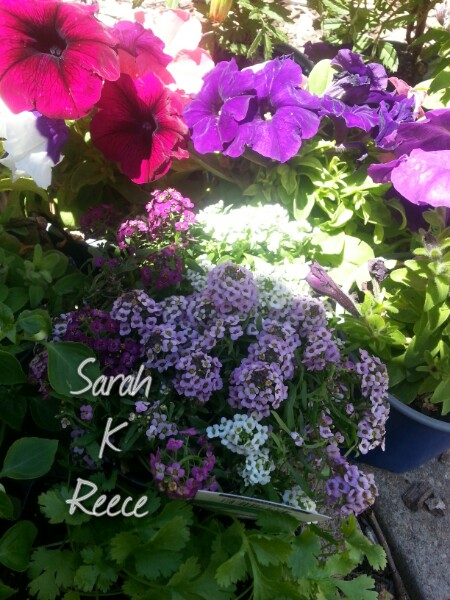
We bought Rose a bouquet to plant in the garden today, in purples and oranges to welcome her to our home.

Our injured neighbour is home now too. I took her a rose today and she showed me the horrific black bruising from her elbow to her hip. I’ve never seen such severe injuries on someone who wasn’t in a car accident. 😦 An artery was severed in the knife attack and she nearly died in surgery. She was walking around and pretty cheerful so she’s doing well. It’s sobering.

We installed weeping hoses in our potted trees today, and set up a sprinkler system for the rest of the garden. Rose dug out a new bed for strawberries. The bees are in the basil and the thyme is fragrant when you brush past it. I’ve hollyhock seedlings to plant out tonight when I get home and coriander to line a path. The autumn roses are blooming and the figs are ripening. It’s a small busy world to get lost in, one that almost makes sense, almost feels like home.

Games and gardening

image

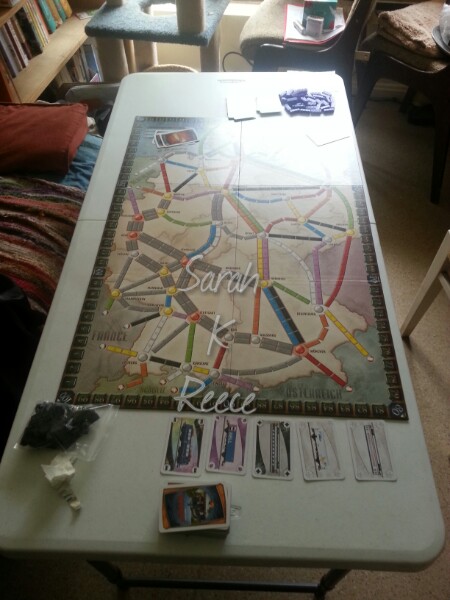
Rose and I are pacing ourselves through all the stress with good distractions. A couple of wonderful people have made donations through this blog recently, and we went out and bought this very cool game. To mark the official first day of living together, we stayed up very late playing it. We’ve since taken it with us around to several friends and family to introduce them to it.

Today we did a stack of stuff around work, the kind of ‘send people into panic attacks’ stuff, so we also went to Bunnings and bought a few things to do in the garden. We stayed out until dark today cleaning up the front of our place, sweeping, potting up plants and installing a watering system. I’m sore, tired, but happy to have a break from the big stuff.

I can hardly think straight. I managed some critical admin today, I haven’t replied to a stack of messages yet or managed to untie my tongue to thanks the kind readers who’ve donated and sent wonderful messages of support. I’m having a lot of trouble with my ‘I hate myself’ voice at the moment and I feel wildly undeserving, even ashamed, of such support. It’s really hard to respond to graciously the way I want to. I feel like I have all the words in my head and then just sit at a blank email like a kid with shorts soaked in pee giving a grown up that good look right in the shoes and I can’t find anything to say. But thankyou, you guys. I do appreciate it, a hell of a lot.

I also did some reading about not for profit structures as the Hearing Voices Network has some keen people behind it and I may if I’m lucky, not have killed off all the enthusiasm over the Christmas and mad January that I’ve made them wait. I’m stressed and anxious and can’t think clearly or find time to ask all the questions or share all the hopes and fears. I’m tired from moving house, feeling burnt out – but in other moments thrilled, on the cusp if something amazing if I just try a little harder… And, you know, possibly pregnant and in that irritating two week wait before a pregnancy test can be usefully done. This is cycle number three of trying.

I’m sharing a house again. This is a big change! I could hardly roll over in bed the other night for all the cats and woman next to me and I thought to myself get used to it! My brain feels a little stretched.

But the garden looks great.

Wrist poem – blue rose

image

image

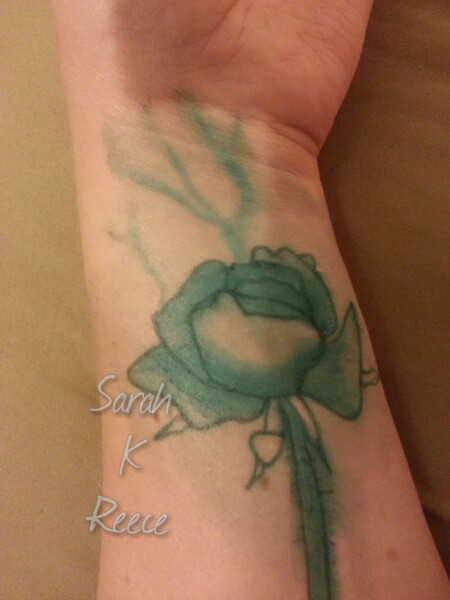
A line from my journal “the black rose blooms like a bruise beneath her fingertips.”

I’m feeling run down and burnt out by the house move, job stress, and recent violence. I sat in bed the other night and painted this on my skin. I accidentally spilled a container of ink, so I also have turquoise all over the sheets and one leg. Fortunately Rose is now familiar with the oddities of living with an artist and didn’t turn a hair. I, in the other hand, felt like I could breathe again, just for a moment, little snatches of feeling alive. I’m buried by self hate, fear, an empty feeling that haunts me, a sense that all my life has been laid out before me and there is nothing new, no hope or joy or excitement to be found in it. I feel bound by roles, silenced and unable to break out of expectations (I should be happy, I should be happy).  Ink on my skin breaks the story, helps me walk a different path. For the rest, I’m being patient. All the panes have been knocked out of alignment, out of sync out of kilter. They’ll come back.

Witnessing cruelty and violence

Tonight was a really rough one. Rose and I were witnesses to a serious assault, where one of our neighbours stabbed another neighbour. We ran out of the unit with our dog Zoe to investigate screams, and found a third neighbour wrestling with the attacker while the bloodied victim escaped back to her unit. (each of these neighbours live in their own unit in my street) Rose called the police and ambulance and Zoe and I stood between the attacker and victim and helped keep things calm while we waited for backup.

The victim was taken to hospital and we were told she is now in a stable condition. The rest of us were separated and spent considerable time giving detailed victim statements. That part is hard because things happen so quickly and you are very focused on certain details but not at all on others. We’ve both agreed to appear in court should it be needed, but the attacker stayed in a highly agitated state throughout he was clearly stating that he had intended to kill her and was upset that he had only wounded her, and said this to me, the ambulance officers, and I think also the police. So hopefully we will not be needed. He has been arrested which is a huge relief to all involved. I don’t know what the process is but things could be very difficult here for us if he is released any time soon.

There’s absolutely no doubt in my mind that our brave neighbour saved the victim from severe injury if not her life. He was deeply shaken particularly to see such cruel and callous behaviour from a neighbour he had otherwise got along with reasonably well – as had I. I’ve always found this street difficult, there’s a surprising amount of drug use and dealing, and various petty feuds that run for years and involve a stupid amount of hostility. This particular act of violence was revenge for the woman frequently allowing her guests to park in an unused parking spot that was not hers. It boggles the mind. I’ve lived in considerably lower socio economic areas that were more peaceful and friendly.

So, we’re rattled. Neither of us is a stranger to blood or violence and we acted quickly, as a team, and handled the situation well. The aftermath is disorienting, full of anxiety and distress about raising children in a place that feels so unsafe. Today was a ‘high fertility’ day, we had planned a meet with our donor this evening but cancelled as we were giving statements to the police instead. We then went round and checked in with the other two neighbours to say thankyou and well done and make sure they were holding up okay. There’s a lot of ‘would it have turned out differently if’ to work through after something like this.

Rose and I have talked through our options – stay here, sleep at a friends for the night, stay up and distract ourselves with movies, sleep the dog indoors tonight, and so on. We’ve talked a little about memories of other stabbings we’ve each witnessed, the sense of being trapped, the restlessness of adrenaline washing out. We’ve gone online to look for fun board games to play and hopefully we’ll find some time this week. We’ve ordered Ghost Blitz which we played with friends a few months back and really enjoyed. We’ve checked out Pandemic and Ticket to Ride and decided the purse won’t stretch to that yet. Maybe next week! Creating room for all the reactions is important so we’ll do that tonight, however we need to.

Only this afternoon I was ducking to the shops, feeling terribly low, and found a woman in a scooter weeping alone in the carpark. We stopped and reached out and she shared about how distressing she found it that she couldn’t walk anymore, that a car had frightened her on the road and yelled at her, and then a woman in the store in the line behind her had pushed past her and been rude. She was just so demoralised. I was able to share about my own time in a scooter and how embarrassing I found it to take up so much space, especially in shopping centre aisles and she was so glad to talk with someone who ‘got it’. I told her it helps a lot to know other people in the same situation and feel less alone. When I bought my items at the store her chips had been left on the bench so I paid for them too and took them to her. She told me I had no idea how much my kindness meant to her – I told her I knew exactly how much it meant because I had experienced it myself in dark moments and bad days, and that I bet she had been the person lucky enough to be kind to others before. She shared some of those times and lit up remembering them. It was so striking how used to being invisible and irrelevant she was. I thought about how people in her place are so rarely touched and gave her a hug.

Such a little kindness, and such a contrast with the rest of my night. How easily we lose sight of each other as human, how difficult we find it simply to be kind. I’m terribly sad. A man who once loaned me sheers to prune my roses is probably going to jail for a long while. A woman who waved to me while watering her garden is in hospital. We throw away what we have so quickly and over so little. A primal sense of threat about territory, a fear, a need to control. And the selfless act of courage, wrestling a man with a knife! That unthinking instinct to protect, to intervene, to prevent harm. In a street of many vulnerable elderly people, there were several of us out there with the screaming, calling police, doing our best to stop what was happening. Kindness and courage, such powerful forces. We didn’t just witness darkness tonight, we also saw light.

Very tired face painter

image

School holidays are done! In between moving house I’ve been over at Adelaide Zoo painting faces. Today I was a cheetah. I’m now home, totally exhausted, and not moving off the couch for many hours!

I’m pretty happy with my work. To make a profit at the zoo I need to be able to get kids on and off my chair within 4 minutes, that includes them telling me what they want and wriggling around! I’ve developed a great set of zoo faces that are really quick, look good, and don’t go near mouths (which mean they still have a chance of looking good after lunch). I’ve come a long way with this work and I still enjoy it. Skin as a canvas for paint still fascinates me. I’ve learned a lot about my tools and medium and the business.

We are nearly through the emptying Rose’s house side of the move. The finding homes for things in my house side of it will probably take a lot longer but won’t be as exhausting… That’s what I’m telling myself anyway. O.o We’re doing good, there’s clean clothes on the house, the kitchen is functional, and I’m mostly on top of the admin. The rest is coming along in dribs and drabs.
For fun I’ve been introduced to be board games Pandemic and Ticket to Ride, which I love. I’m a little addicted. If my friend doesn’t visit with them again soon she might find me outside her window with my nose pressed hopefully against the glass….

Moving with pets

My unit now has two people, three cats, and a dog calling it home. The new addition is a cat, Bebe, who had been living in the bedroom. The dog, Zoe, had worked out there’s a new vary in the bedroom and now spends every possible moment waiting by the bedroom door, nose pressed to the gap beneath, going for a chance to chase the new cat. She is ridiculously unmanageable as a result, despite lots of walks this week she’s full of manic energy and highly disobedient. Her entire brain is simply consumed by the excitement of a new cat. She’s frankly like an alcoholic living next to a pub.

The cats have been sneakier. Tonks stealthy steals all Bebe’s food despite having a full bowl of exactly the same food. Because obviously food belonging to the new cat tastes far better. Sarsaparilla growls at her through the window. But by far their greatest achievement to date has been the other night when both of them decided to sleep outside so we left the bedroom door open to give Bebe the run of the house. Well, at about one in the morning we were woken by the howling of a thousand demons from the nine hells suddenly inhabiting the space beneath our bed. Sarsaparilla, it turns out, has decided that the screens on our windows are more of a suggestion that he’s only permitted to enter the house through the door. He slashed himself a new cat size opening, let Tonks in also, and the two them ganged up on Bebe beneath the bed and all hell broke out. Fun!

I am completely over moving!

When sanity is lethal and madness has value

I’ve been thinking a lot lately about our cultural ideas of sanity. Being sane is seen to be about living in reality, or what we call ‘the real world’. Children naturally only partly live in the real world. They experience, interpret, and believe many things that would be considered psychotic in an adult, flights of fancy such as imaginary friends. Artists are generally not considered to live in the real world much either, but for most adults it’s mandatory and something we spend a lot of time teaching our kids to do. This is linked to some pretty harmful ideas about growing up.  It’s also generally the goal for people with ‘mental illnesses’.

I don’t think we do live in the real world. We talk about it, we make assumptions about it, we share in a mass set of beliefs we call ‘reality’, and we’ve built a mental health system on the idea that not only is there a shared reality, it’s also easy to define, simple to determine who isn’t connected to it any more, and that sanity and mental health is about people believing in it again. I disagree!

I don’t believe ‘the real world’ is reality. (Of course, that’s hardly definitive. According to most of the doctors I’ve seen, I have some collection of mental illnesses. The actual collection differs from doctor to doctor, and the implied level of insanity with it, but the general consensus has certainly been that I’m no poster child for the well adjusted and sane.)

Of all my family, I have the most significant list of mental illnesses, and on paper am apparently far less in contact with reality than the rest. But it’s not difficult for me to gather evidence that suggests something else entirely! At times, I’ve been the one left standing and keeping people safe through chaos, or the one who was able to see danger coming and put things in place to deal with it, or the one who went and found what we needed to make decisions and stay alive. Crises have both harmed me and taken me out of the role of the ‘sick one’ and thinking that multiplicity was the worst thing in the world.

We don’t overtly use words like madness a lot in mental health these days, but scratch the surface and you can quickly find that the premises underlie a great many of our ideas and assumptions. We now have the rather inadequate terms ‘mental illness’ and ‘mental health’ as part of the medical model re-visioning of psychological states. They are direct stand-ins for the concepts of madness and sanity, especially in the field of psychosis, with a veneer of ideas around non-culpability and potential cure. Let’s think about them for a minute. What are they? If sane is about being in contact with reality, living in the real world, madness is seen as the opposite. Loss of contact with reality. Distress, confusion, delusions, hallucinations, bizarre beliefs and behaviour. Not living in the real world any more.

Madness and sanity are presumed to be opposite states, on a spectrum of intensity. Doctors treat the severely or moderately mentally ill in the hopes of restoring them to at least mild levels of mental health. Psychiatrists and treating registrars make calls of madness and sanity in brief interviews with often heavily medicated and highly distressed people. The results can be almost comic in their fallibility. Eleanor Longden tells the story of a time she was sectioned as psychotic when a doctor thought her mention of her upcoming work on a local radio station was a grandiose delusion. Her understandable distress at being so profoundly misjudged was taken as further evidence of her mental illness. It’s a closed loop; the normal emotional responses to being assessed as crazy are used as proof you are, in fact, crazy.

And yet, most of us share a terror of madness. It’s one of the primary reasons people seek help, and are relieved by a diagnosis – “there’s a name for it! I though I was just going mad!” We are driven mad when people think we are mad. It terrifies and distresses us and we will go to great lengths to convince people we are not. This behaviour is the same for people are psychotic or simply misunderstood, and yet in the former it is assessed as anosognosia (lack of insight) when in fact it is an intact, normal response to being seen as mad that most people will have in those circumstances. Those who embrace that they have become mad are usually, at least for a time, crushed by it. It is a state that is utterly without value, completely terrifying, and puts people into a whole new class of humans who can swiftly lose many basic rights about their lives and medical care. Having been assessed as mad, even calm, normal human behaviour is distorted through a lens that amplifies diversity, individuality, and departure from the obedient patient roles and interprets it all as further madness. (See the Rosenhan experiments) The cost to a person’s credibility is high, and can be extremely difficult to restore.

Think about what this actually means. We have a massive collection of people employed in our police department specifically to try and figure out what reality is when there’s a possibility someone has been injured or laws have been broken. We have entire complex branches of science dedicated to determining different tiny detailed aspects of the nature of the world we live in. They regularly disagree with one another and update new theories as old ones are disproved. We have an entire judiciary system structured on the understanding that knowing the truth of a situation can be extraordinarily difficult and complex. The whole history of philosophical thought examines the nature of reality and finds that even defining the concept is astonishingly challenging. It’s difficult to find any three people on the planet with completely identical beliefs about the world and their place in it.

And yet, we sit a doctor and a patient down in a room, and assume the doctor can determine reality and can pronounce madness and sanity with excellent accuracy. Wow. Who are these marvels of discernment? They are us. Doctors, psychologists and psychiatrists have similar if not higher rates of ‘mental illness’, trauma histories, job burnout, and suicide, than the rest of the human population. They contain the same qualities we find in every other person doing a job – some highly skilled and insightful, some mediocre and clock-watching, some true scum bags. And yet we, as a whole culture, invest in the illusion that not only is reality easy to define, but that these people are experts in doing so. In fact, their testimony is frequently relied upon in situations such as custody battles. The presumption that they are sane, and highly skilled at determining not only what reality is, but also sanity: who is ‘in touch’ with reality, is infrequently challenged. In many situations, merely challenging these assumptions is itself seen as evidence of madness. A considerable number of patients stress tremendously about their ‘trust issues’ when they struggle to connect with their shrinks, when in no other context would we expect people to share with a complete stranger who is not likewise vulnerable and has established no trustworthiness beyond attaining a degree. My assessment is that there’s little sanity in any of these processes.

I believe that I am, like most people, both mad and sane. I don’t find the terms mutually exclusive. As for ‘the real world’? I would go a step further and argue that this idea is partly what drives my pain and dysfunction, and that my sanity often resides in refusing to believe in it. Lets look at trauma for a moment. We as a community believe a collection of things that are not true, but that are convenient to believe. For example, here in a first world country, we often believe that if we are decent people, we will be mostly safe from harm. Many of our child raising techniques are overtly designed to create and preserve this belief in children. Our sense of security rests on an illusionary contract with the world at large. This is what a horrific trauma incident can shatter. Having upheld our end of the bargain, our sense of safety is utterly destroyed when a violent, terrifying incident reveals that the world isn’t playing by our rules. We are devastated by our loss, overwhelmed by intense grief for a world we no longer feel a part of, and given the arduous task of rebuilding a sense of security in our new reality where we can’t always stop truly horrible things from happening. It’s a deeply personal experience of the scientific process of testing a hypothesis, finding it is terribly flawed, and having to devise a new one, preferably one we can live with, and even better, in some way explain to others.

The tension for people in this situation is that it’s not uncommon for the people around them to still believe in the very illusion they’ve just had shattered. Their idea of the ‘real world’ has not been destroyed by a personal confrontation with mortality, horror, and vulnerability. Their idea of sanity is to maintain a belief system that the traumatised person can simply no longer subscribe to. The traumatised person is newly exposed to the experience of helplessness and profound injustice. Their perceptions of risk are disproportionately high as they lack the buffering of any sense of emotional security. Aware that they are partly irrational, it is easy for them to subscribe to the idea that sanity is about restoring their old beliefs, so that they can once more grasp the emotional security their friends still enjoy. The bone-deep emotional reality of their experience will fight every attempt to re-instate the old beliefs through depression, distress, and other involuntary trauma reactions. Hence the war inside someone who has been traumatised, has been sold the idea that ‘going back to the way they used to be’ is how they will become healthier, and who is now fighting their own experiences and emotions in the hopes of restoring themselves to sanity.

What we call ‘the real world’ is not only more challenging to define than we have treated it, but it’s sometime actually the problem. I had a lovely friend called Amanda who killed herself. At her funeral, a theme that came up over and over again was one of failure. Diagnosed with bipolar, Amanda crashed and burned at just the time her peers were finding their wings. Struggling with university, struggling to work, to live independently, to attain any of the goals that had been set for her, Amanda drowned in a sense of failure. As someone who’s highest educational achievement to date has been a cert 4, who lives on welfare, in public housing, a mere disability statistic, I can empathise. Of course, this view of her and I isn’t reality. The reality is, we are each important members of complex social networks, highly skilled, compassionate, and primarily ‘disabled’ not through our challenges but because we live in a post-industrial society where we must be able to work reliably at certain days and hours each week, and where our public identity and sense of personal success relies on being able to secure and maintain such work. The ‘failure’ is not ours, yet we and people like us bear a terribly burden, often mistakenly equating our skills and intelligence with our mental health and doubting that we are genuinely disabled. We are haunted by fear that really, we are just weak, lazy, or useless. ‘The real world’ is that Amanda had failed and was continuing to fail. The reality is that she was amazing and deeply important and her life was beautiful and meaningful and lived with kindness, humour, and depth, and that she is profoundly missed.

I’m not naive. I’m very familiar with the world of psychosis. I’ve tried to calm people who are distraught because of hallucinations that are terrifying them. I’m well aware that many of us have a basic, blunt instrument kind of discernment of when someone is wildly delusional or hallucinating. The poor young man terrified that his neighbours are trying to poison him, the woman convinced she can fly from the top of the 9 story car park, the new Mum terrified of her growing conviction that her infant is evil. Buddhist philosophers may debate the nature of reality but they still look both ways before crossing the road. At times this may be very simple – I know the woman cannot fly and will be hurt or killed if she tries. At other times it only seems simple – the quiet young man, well dressed, with a job, and a calm gaze, is sane. The young woman huddled under the rug, weeping and tearing out her hair is mad. What the police and the paramedics cannot know, and the woman cannot articulate, is that the young man has been emotionally torturing her for months, and that night raped her when she refused to have sex, then used her distress and prior diagnoses to have her committed and discredit any possible allegations she might bring against him later on. This sort of thing happens. It happens more than we think. And when it happens often enough, the traumatised person loses the ability to tell their story, the credibility to be believed, and sometimes even the memory of what lies beneath their ‘madness’ and pain.

There is really no greater power in the world than to be the person who determines what is real and who is sane. And yet we wield this power so thoughtlessly, so convinced that good intentions will protect the vulnerable from exploitation and the powerful from corruption. This is naivete.

Sanity is relative.

It depends on who has who locked in what cage.

-CS Lewis

Reality is determined by the powerful. The powerful are not necessarily sane, they are merely powerful. Their ideas have popular traction and become what we think of as ‘normal’ or as ‘the real world’. The ‘real world’ once told me that I was poor, white trash living in a caravan park, fallen so far from my sterling academic success and the expectations of my school and family. To dig my way out of the pit, out of the catastrophic effect this had on my identity, self esteem, and hope, I had to reject this version of reality and construct my own. I had to connect with a different idea of success and find a new way to evaluate my life. Stumbling onto this power – to define my own life, my own reality, and make my own choices, saved me. It is still saving me. While sometimes our beliefs can threaten or destroy our lives – I know people who have tried to kill themselves, kill someone else, who became homeless, refused food, and many seriously destructive behaviours because of their beliefs – our basic need to be the architect of those beliefs remains. We are harmed when we are instructed or forced to substitute someone else’s ideas about reality for our own. When we’ve had our trust in our own beliefs taken from us, we lose something critical. The loss of it can drive us further into madness, or it can flatland our life as we remain fearful of our thoughts and mind and totally dependant on outside sources of information. Collaboration with outside sources is often useful, it’s the substitution of another’s ideas for any of our own that so disempowers.

Here’s the thing; I also know of people who are considered to be entirely sane who have tried to kill themselves, or others, who work jobs they hate, see family who make them miserable, enact policies that destroy people’s lives. Many of them are people who consider themselves to live ‘in the real world’ and think that because they do not hallucinate and at times I do, that they are saner than I am.

We are all philosophers and scientists, making sense of our own lives, coming up with theories, trading them in, building new ideas. When we build the myth that reality is fixed and easy to define, and that sanity is about consensus and submission to a group belief, we take away from people their most fundamental power to make sense of their own world. It is a violence, even when done with kindness. Collaboration and relationship are where we best seem to make sense of the world. It doesn’t take much imagination to realise that every person on earth believes some ideas that someone else considers to be madness. Simply imagine your most difficult family member being invested with the power to decide what is reality and who is sane, put them in the judge box, and justify your life choices and beliefs to them. There’s no way you’re going to come through stamped ‘sane’. The same is probably true of every family member or friend you have, to some degree. This is diversity.

I’m often asked to define reality. Even in my low position as a peer worker in mental health, people invest me with the power to tell them what is real. They come to me after talks and ask me if their behaviour is ‘normal’, which considering I’ve often just been describing my own so-called wildly abnormal behaviour (living as a multiple), is a curious expression of trust in my capacity to delineate between reality and madness, and an even curiouser idea that I am here to police their reality. I’ve spoken with people who have a spiritual understanding of the origin of their multiplicity (such as having a part that is the spirit of a dead family member) who’ve asked me if it’s real or not. I’ve been reported as abusive by a woman suffering with paranoia who was convinced I was hacking into her personal life to stalk her. I’ve instigated the forced hospitalisation of a person who had recently become homeless due to their unusual beliefs, and who I assessed to be at very high risk of assault or exploitation. I still consider that act of reporting to be an assault, and the person in question has never forgiven me. It was an incredibly difficult decision. I’m still uncertain about it, distressed and regretful and also far more aware of the horrific decisions like this so many people have to make on a regular basis.

It’s incredibly important to define what is real in some contexts, and almost impossible to in others. People are all both sane and mad. We all share some aspects of reality and have other experiences, quirks, passions and desires that are entirely our own unique way of being in the world. Something terrifying happens when we make social constructs ‘the real world’ and think they are reality. Reality is did you hit him or not? It is physical and measurable. It is not about the constructs that make up our ideas about ‘the real world’. It is not a flatland of emotional deprivation. It can exist alongside psychosis and dreams and surreal experiences. It is not freedom from pain. If you are human and alive, then you will sometimes suffer. You will have your heart broken, you will lose people you love, you will have dreams crushed. You will need to weep and scream and hurt. That’s a side of sanity we don’t talk much about.

So here’s a side of madness we don’t hear much about either: madness; our unique perspective and experience of life, is like fire, a great gift with destructive potential. Madness is part of reality, part of our sanity. It can protect us. Madness is disagreeing with ‘the real world’ and the way things are always done. Madness can be breaking out of roles and expectations and doing what’s actually meaningful to you. Madness can be joyful exuberance and childlike magic. Madness can be dancing in the rain, or communing with God, or sitting on the roof and watching the stars fall. It’s the sublime. It’s the things we don’t have words for. In some situations, sanity is a threat to our hope, our emotional stability, and our lives. Sometimes it’s sane to give up, to hate, to shut down, to want to die. Sometimes madness saves us.


little spark of madness

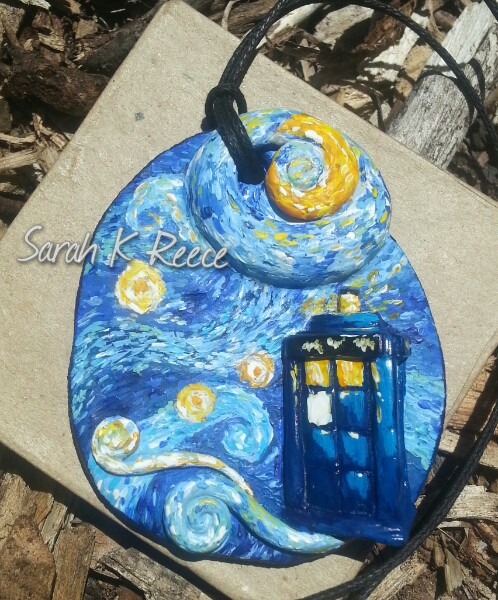
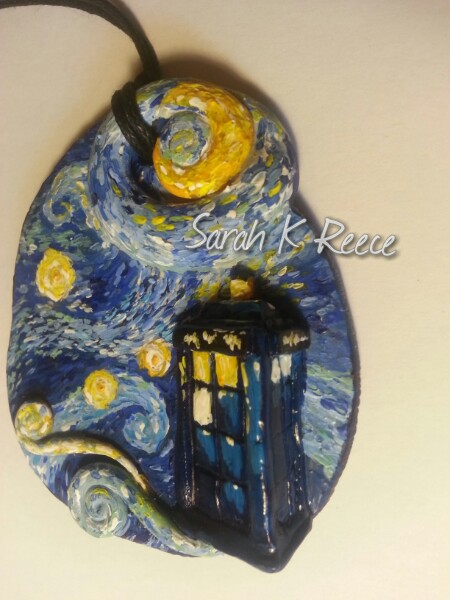
Sculpture – Dr Who, Van Gogh pendant

image

image
Polymer clay, acrylic paint, polymer gloss and matt varnish. I made this for friends for Christmas, as they’ve now received it I can finally share it with you! I used a tiny (000) brush for the painting, which took me as long to do as the sculpting did! I’m rather pleased of this one. The Tardis is protected with gloss varnish, the background with matt for a stronger contrast. The reverse is also painted in the ‘starry night’ style. It’s strung with waxed cotton and a silver clasp. I love sculpting in miniature, it’s actually possible in my tiny space, which is better by far than all the wonderful large ideas I have that I can never do… Art college starts again soon and I’m going to be doing another sculpture class finally… This semester will be wood and metal. I can’t wait. ❤

Poem – Here, in the dark

Here, in the dark, a deep contentment wells
I’m happiest here, alone with the books and poems
There’s such richness in them, such joy
I’m glad to be a writer, to count myself among them
They set my dreams free, ward off the creeping death
The chill, the grey, the numbness that overtakes me
The malaise I am too weak to fight alone
This strange religion so widely believed
That this is all there is and all that matters
These people whisper in my ear that I am mortal
That life is wondrous strange, that imagination is as real as shadow, love, hope, and the trembling sense
Of sublime meaning, that there’s some sense to the world, some pattern to our path, a meaning in our doings and our withholding
That such is a gift, as the trembling doubt is a gift, that they stretch our spirit and give us humble connection to each other, all bowed and small before the great tides, all with the knowledge of joy and loss, this thing that can unite us.

Little unborn child, I’m glad you did not rush your coming past me and my night, did not slip past the shadows and into daylight without my chance to wait with you, darkened world and dark womb, to wait with you and think on you and speak to you and write of you. Little unborn, so loved and so unknown. I wonder if you’ll have any night in your soul? Any darkness in your eye, any poetry in your heart?

If it’s the unlived lives of parents that marks children’s paths you’ve quite a labyrinth to walk, my love. My life may be only a small portion of the Life, but it’s dear to me, deeply lived, dearly loved.

Rudderless we lose our way. But I know what I believe. Whatever stories we tell, they stay the same. I believe in kindness, evil, love. They are real, and powerful, and come wrapped in strange disguises. I do not know why, if it has always been so and if it is the same everywhere, but the real world thins and fades fast, like candles wearing down, and must be renewed often. The key is in the seeing clearly, the right naming of things. If I understood this I would understand the language of owls and the dance of planets. Such is our life. We sing and falter and fall and rise to sing again. We are both darkeness and light, faith and doubt, sea and shore. Each of the seasons have their turn, we understand great wisdom, and lose it, only to gain it again. Somehow it’s not meaningless but beautiful. We are reborn.

There’s a quiet ecstacy in my bones, they chime softly to themselves and speak the language of planets, spinning in space. I’m inviting a family into my home, into my peace and solitude, and I feel ecstatic joy at the breaking of our time of quiet. I welcome the tearing down and the giving away. Wine is pressed from my trampled heart, flowing dark and sweet. I’m happy beyond speaking that my life has come to this. It’s worth the risks. Should all end in fire, I acted with courage, I dreamed a new dream and birthed it here, on my own, in the dark.

(don’t pity me, what’s to pity? I’ve lived richly, seen things you wouldn’t believe)

This is not the last night, there’ll be more nights, more writing, more poetry, pacing with babe in arms, walking in rain with dog, sitting up late by the ocean, listening to my heartbeat. I know this as surely as I know this is my hand and this my hip. I know this like I know the breath in my chest and pulse in my throat. I know it and I’m fiercely glad of it. It is a good thing to be alive, so deeply alive, so full of stars and night.

Endo & adeno 2: a hidden cost

I’m not pregnant again. And I’m crook, endo and adeno are knocking me around. We’re still moving house, and Rose has hit major unexpected issues with her job, so we’ve spent the afternoon at Centrelink starting the process for unemployment support in case it doesn’t get sorted out. It’s been a really tough couple of days. If you don’t know what endo and adeno are, see Endometriosis & adenomyosis 1. Trying to get pregnant with these is rough, it’s an extra kick in the teeth each month on top of the sad news we’re not pregnant. Right now I’m pretty fed up.

My experience with these conditions has always been pretty horrific. My first period was at 13 and pretty normal. My second happened to fall in a week that I was away with my school for a major convention. I packed a collection of sanitary items and my two school uniforms, completely unprepared for the pain and haemorrhaging I was about to experience. All my pocket money was spent on buying extra pads from the toilet vending machine. I was drenching to capacity a super heavy size pad every hour. I have a vivid memory of sitting by my window on the fourth floor in the small hours of the night, sobbing, my mattress stacked against one wall to dry after I’d tried to sponge it clean, and the floor between the shower and my bedroom wiped down with wads of toilet paper. I felt in that moment that I was the loneliest person in the world.

My periods were always extremely heavy, particularly in the first few days. I struggled to cope. Embarrassing leaks, constantly going to the toilet, and stains on clothes, bedding, and mattresses were suddenly a constant part of my world. Teachers were often suspicious that I was merely trying to get out class and it wasn’t uncommon to have desperate requests to go to the toilet denied. I carried 15 or more pads with me at all times, just in case. Bullies thought it was amusing to steal these or scatter them around the classroom. In later years, homeless or living alone, they were needed in case I was too sick or broke to buy more in that first miserable week.

The pain was severe and nothing provided much relief. My journals from this time are full of distraught descriptions of feeling that my pelvic bones had been turned to hot lead that was burning in my flesh and running down into my thigh bones, that something was raking a sharp stick across the inside of my rib cage, of intense cramps and contractions that exhausted me. I would spend days huddled around hot water bottles, alone in bed, sobbing, or curled around my gut in the bath, or weeping in the toilets at school or work, learning to dissociate to carry on.

My periods also lasted for much longer than usual, around 14 days a month. Literally half my life was now spent bleeding. I experienced a level of body dysphoria usually described by trans teens enduring puberty as the gender they do not identify with. I felt deeply ashamed of my inability to handle menstruation, unable to connect with, care for, or enjoy my developing body.

The worst of all this was that it was happening in a context that normalised it all. I was seen as a bit of a drama queen. Doctors offered neither information nor sympathy. The chronic pain was made a joke of as a rite of passage I had to learn to cope with better. I was an embarrassment to others when I failed to manage discretely. A conservative school and home environment exposed me to constant shaming with inadequate provisions in the way of bins, extra sanitary supplies, or discrete options to clean accidents or hide stains. Menstruation was not to be mentioned as I had a younger brother who was being kept ‘innocent’. Basic supplies such as bins or pads were not kept in the toilet or bathroom at home, despite actually begging for them. As soon as I had a home of my own, I was proud to put both in the bathroom – a woman lives in this house and her needs are not something to be ashamed of!

Unlike other experiences of illness such as the flu, I was not offered much nursing care or emotional support when my pain was related to ‘private matters’. I have the distinct memory of weeping in the toilets at my part time job in child care at 17, dizzy, weak, and in awful pain, but gathering myself to limp back into work, bitterly confused that other girls didn’t seem to find this so hard. Constant invalidation and cultural embarrassment about gynaecological issues meant that endo and adeno isolated me. Deep loneliness, shame, and pain intertwined and each made the whole experience far worse, contributing to self hate, food & body issues, and chronic suicidal feelings.

Painful periods just don’t sound that bad, and that was a huge part of the problem. It wasn’t seen as serious, but this issue alone was enough to cause serious harm to me. At times when pain interrupted sleep and guilt and confusion about puberty and sexual development added to my distress, the beginnings of psychosis can be seen. Nightmares intruded into my blood drenched reality in profoundly disturbing ways. I dreamed of rape, miscarriage, and abortion, of having demons inside me, of clawing babies from my own womb. Waking soaked in blood and knotted with pain blurred nightmare and reality. My usual teariness began to deepen each month into suicidal blackness. I still struggle with profound lows which are partly hormonal and partly basically emotional flashbacks to these awful experiences. I began to believe awful reasons I was suffering, such as punishment for sins, my body hating me, me being evil. People around me treated me as if I was bipolar.

These are the kind of experiences that come to mind when people talk about how mental illnesses would be better treated of they were more visible.

Really?? Ever had facial scars and had to handle the stares before, or needed to use a wheelchair and watched people pull kids away from you as if you’re going to run them over, or, you know, discovered you have blood on the back of your pants and had to walk through the whole shopping centre to get back your your car? Oh, I see, you mean visible, but in a nice, non threatening way that didn’t make people stare, laugh, or treat you weirdly. Good luck with that.

These are horrible, miserable conditions, for many people they cost us deeply. We battle with chronic pain and anaemia, doctors who don’t get it, difficulty accessing treatments, troubles getting support from family and employers, difficulties with our sex life, and fertility challenges. It should be okay to talk about it, easier to get help, and less embarrassing to have to explain regular illness. I shouldn’t have to push back against everyone telling me I’m clearly doing too much when these things knock me out for a week – they’ve little to do with how hard I work or whether I’m taking good care of myself. They definitely shouldn’t be a secret shame that messes up our relationships, mental health, and our lives.

Apology to the universe

We wrote this one a little while ago and let it wait in drafts a bit. Today it’s not where we are, but it was asking to be published.

I’m sad, sad, sad beyond bearing. I wake from honesty and find myself wordless and lost. I must dismantle it all again, over and over. (living is about betraying your own identity) The constant search for the point of balance between light and dark, day and night, responsibility and freedom, the place where my name has meaning and nakedness is possible.

I’m sorry!

I’m so sorry for a million things I can’t begin to put into words. I’m sorry that I don’t understand you better, that I can’t follow you, can’t hear your heart beating in this night. I’m sorry for all the ways I let you down, that I’m not who or what you need, that I leave you hurting, mouth full of black night, lips closed on black blood. I’m sorry it’s imperfect, so hard to speak truths at noon, so hard to bear touch without turning off your skin so you can hug without flinching, without the smell of another person getting into your nose and staying there like a cologne you can’t bear. I’m sorry that I’m broken too, that I don’t have answers and don’t even always understand the questions, that the night baffles me and the day dazes me, that I know so little and can’t draw you a better map. I’m sorry that it’s so hard. I can’t bear it either, some days. It just fucking hurts. It just bleeds from you.

I’m sorry that sometimes you still feel so alone, even when I’m right here, that there’s parts of you I can’t reach, that holding your hand or speaking your language isn’t enough to make you feel heard, safe, loved, connected. I’m sorry for the days we just feel like planets spinning in space, untouched and light years from touch. I’m sorry that words stick in my throat, that I find it so hard to play at being a good host, even when you’re so kind and respectful, that it takes days or sometimes months before I unfreeze and reply. I wish it didn’t, I wish I did better, but I get scared and I’m not even certain what I’m scared of.

And at the same time I say I’m so sorry I can’t make it better I want to tell you – beware those who tell you they can! Beware the gurus, the cost of their salvation is much higher than first apparent. Beware those who are healed and whole, who never suffer and are not lost, not bewildered by the world, not sickened by the violence, the rhetoric, the vile squabbling of those with full stomachs and empty hearts. These leaders who are fit to lead, confident, with their easy grace and their warm smiles, I know the lack of doubt is like sun after a long winter, like rain after drought, but be careful. Sometimes there’s a kind of healed that isn’t so much whole as it is wilfully not knowing about the cracks about the outliers about the contradictions. It’s fitting the dress because the surgeon cut out every part of you that didn’t, and don’t you wear it well? And aren’t we all so envious?

The world’s on fire some days, so full of pain I don’t know how to bear it. A thousand stars reflected in the ocean. The vast and distant echo of your pain sounds in my skin like a gong that is struck and reverberates on. I cannot bear it and I cannot bear for it to be silenced.

Be a little kind, a little brave. I’m tired of the boxes that we live in. There’s so much here, beneath the surface, that connects us. So much human feeling. None of us owns pain, any more than we own the cure. We’re all broken, and the ones who know it least are broken most.

The Big Move Begins

Simultaneously emptying my unit of excess paraphernalia, packing up all Rose’s belongings, and moving her in.

image

We’re using this room at my place to hold each days collection of stuff for sale, collection by a new owner, or donation to the local op shop.

It’s a big job, but we’ve made a start! Personally, I’m really excited. 🙂 Although I must say, it’s easy less fun than planning a wedding and the fanfare of that kind of relationship change. Once we’re sorted, I’m looking forward to planning a big, fun, engagement party.

(and probably building a cat run so we don’t find ourselves living in a cat war as Rose’s cat Bebe will be joining us very soon!)

image

Don’t talk to me about my To Do list.

Walking

Say hello to laser possum… I’ve been walking the dog every night round the block at least, come rain or heat. Tonight this chap was on our beat.

image

Today was strange. I’m good and fine and also sort of heartsick and world weary. My to do list runs onto several pages, none of which I feel like dealing with. Facebook feels icky instead of connecting. I’ve been cooking from scratch lately and enjoying that – pikelets, pancakes, waffles (savoury and sweet), and gluten and dairy free cake for a birthday today (surprisingly tasty!). It’s satisfying, especially cleaning the trashed kitchen into the dishwasher afterwards.

This week begins the big move – Rose’s lease is at an end. Next week work starts again. In between I expect lots of tears and stress. We started a day early on that today. After homelessness, I don’t think either of us are ever going to be able to do house moves without major stress. 😦 Patience and love in large dollops.

Strange dreams. Reading a lot. Writing a little when I can, impatient to start on my book again soon. Happy and not happy. Excited and dissatisfied. Moving toward good things, and away from good things. On the right path and yet missing something important. Such is life. One foot, then the other.

Tribe Night

image

At least once a month Rose and I set aside some time to spend just the two of us. No friends or kids or work or stress, just us, celebrating us. Often we don’t call this a date night as not everyone in my system is ‘dating’ her, but instead she’s coined the rather lovely phrase Tribe Night. What we do depends on who feels like they need some time together, and how much money we have. As Rose is still waiting unpaid for her new job to start, tonight is a budget one. We’ve got movies from the local hire store, popcorn, and the half eaten gorgeous gingerbread house that was a Christmas gift from a generous, creative friend who cooked it in her tiny toaster oven in her apartment and probably lost a few more sanity points in the process.

Other favourite tribe night things to do are nights at the beach, hanging out in the trees at our local park, going to the movies, our favourite local Asian fusion restaurant, going out to fun art or cultural events, especially the free kind where dressing up can happen, hanging out in the nude with all the curtains drawn and good music, (some of us are lovers), camping nights away, and for the really introverted, reading together in bed.

Sometimes we have to work around health issues too, I read this gorgeous blog post the other day and thought it had great ideas for not-well hang out times: 10 Crip Date Ideas for the Disabled/Chronically Ill/Mad Person in Your Life

Have a good one folks. Don’t forget romance is not the sole domain of lovers.